Publish with Us

Follow Penguin

Follow Penguinsters

Follow Penguin Swadesh

Traverse the Seven Sisters of North-East India with ‘Discover India’ Series

The Discover India series will take you on a grand tour of every single one of our country’s states. Join the adorable Pushka and Mishki and the wise and witty Daadu Dolma as they travel to the incredible seven sister states of North-East India. Get set to discover various festivals, dances, foods and places of scenic beauty.

Here are some interesting facts about the seven states!


Off to Arunachal Pradesh


Off to Assam 

Off to Manipur

Off to Meghalaya

Off to Mizoram

Off to Nagaland

Off to Tripura


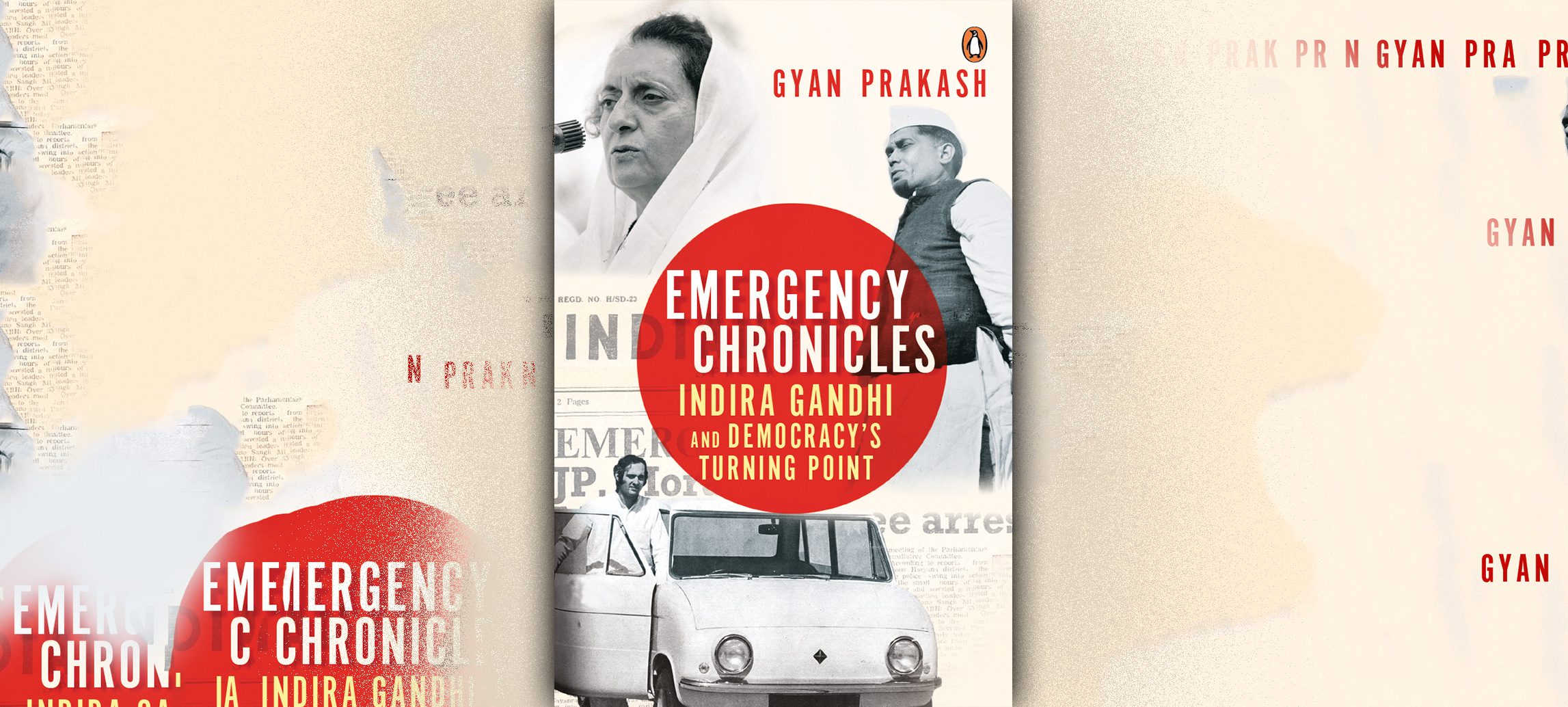
5 Reasons Why ‘Emergency Chronicles’ is a Must-read

On the recommendation of Prime Minister Indira Gandhi, the president of India declared a state of Emergency just before midnight on 25 June 1975, claiming the existence of a threat to the internal security of the nation. The declaration suspended the constitutional rights of free speech and assembly, imposed censorship on the press, limited the power of the judiciary to review the executive’s actions, and ordered the arrest of opposition leaders.

It is no wonder that the Emergency is remembered emotively in India. But its onset is also seen as a sudden eruption of authoritarian darkness and gloom.

Gyan Prakash’s Emergency Chronicles explores the challenge of popular politics in India’s postcolonial history and studies Indira’s Emergency as a specific event in its broader experience as a democracy. What follows is an Indian story in the global history of democracy’s relationship with popular politics.

Here are the 5 reasons why you must read this book:

Tells the story and the circumstances of the advent of politics into JNU

‘Founded to embody Nehru’s vision of a progressive, plural, an internationalist India, the university had witnessed no clashes over caste, religion, or region characteristic of national politics. The Emergency’s disruptive arrival on campus served notice that it would no longer be exempt from the convulsions of Indian politics.’

Explains how and when politics came out of the parliament and government offices and entered the streets

‘In framing the Indian Constitution, the lawmakers had assumed that adult suffrage, Fundamental Rights, and the social policies outlined in the Directive Principles would keep politics off the streets and in the institutions. This was not to be.’

It tells the story of the birth of the ‘Ambassador’ car in India

‘Faced with these impediments, Sanjay turned his access to power into his capital. His project failed, but it signaled that the Ambassador was destined to become an object of nostalgia, “a way into India” and its economy and culture of control.’

Highlights how exceptional and uncontrolled power can change and impact state and social relations and status

‘The lines between politics, law, and personal ambitions and opinions became blurred. This exceptional power remapped state–society relations and coerced the poor into complying with the revamped elite-driven modernization.’

Introduces and tells the story of Prabir Purkayastha and his resistance and criticism of the Emergency

‘When morning broke on September 25, 1975, PrabirPurkayastha had no idea that his life was about to change.’

On the day Prabir was abducted, Maneka arrived on campus just before 9:00 a.m. for her class in the School of Languages. She got out of her black Ambassador and walked to the elevator to go up to her classroom. As she waited, Tripathi, accompanied by other students including Prabir, asked her to heed the strike call and boycott classes. “You are one of us, Mrs. Gandhi Junior!” Maneka exploded in anger. “Just you wait and see. Your heads will roll on the ground!”19 Then she stomped off. An hour later, another Ambassador entered JNU, and Prabir was whisked off.


Every year on 26 June Indian newspapers publish articles remembering the day in 1975 when Indira Gandhi declared the Emergency. Writers recall the midnight knock and press censorship. Lest we forget, readers are reminded of the suspension of constitutional rights and the restrictions imposed on the judiciary. The commemoration of the day, however, portrays the Emergency as a momentary distortion in India’s proud record of democracy. Gyan Prakash’s book aims to explore how the present times are also reflective of an Emergency-like situation without the actual declaration of one.

Today, there is no formal declaration of Emergency, no press censorship, no lawful suspension of the law. But the surge of Hindu nationalism has catapulted Narendra Modi into the kind of position that Indira occupied only with the Emergency. When she could not get the constitutional democracy to bend to her will, Indira chose to suppress it with the arms of the state. Today, the courts, the press, and political parties do not face repression. But they appear unable or unwilling to function as the gatekeepers of democracy in the face of state power spiked with Hindu populist ressentiment. Like Indira, Modi is his party’s undisputed leader.

With a powerful leader like Narendra Modi at the helm of Indian democracy, the last words belong to B. R. Ambedkar.


Six Survival Mantras for Senior Managers From The Book ‘Crash’

While many people talk about the path to the top of organizations, very few are honest about how difficult it is to stay at that position. R. Gopalakrishnan analyses the ‘software’ challenges, which leaders confront every day, and shares the insights he has gained developing, managing, investing in and supervising a variety of companies.

Here are a few tips for budding leaders on surviving in the B-game –


You are completely accountable

“ Leaders operate in an environment, and their actions and judgements cannot be separated from their environment. So the totality of the event and the leader’s role in the event might offer more valid lessons than anything else.”

Experiential learning is the best teacher

“The model of three worlds indicates that leaders learn and develop in their inner world, the world of people, and the world of getting things done.Managers learn lessons through their insights and experiences. By definition, insight is experiential and cannot be taught or preached.”

 ∼

Absorb the surrounding culture around you

“Each leader described has been a professional of considerable accomplishment and flair, each of them had built a career which was exemplary. Each of them rose in the world of business during my own times, each was noticed by me as part of my readings, and each of them exited his/her position of power in spite of being acclaimed as a ‘terrific find’. These leaders did not part on ethical grounds or corruption, but because of ‘cultural differences’. They were all top-quality leaders, rose very impressively and exited, in most cases, due to some perception of the lack of the cultural fit of the candidate.”

 ∼

Don’t be surprised if your friend circle shrinks

“It’s lonely at the top is a popular adage. However, a leader should not make such a big deal out of it that he or she becomes isolated. Deep suspicions about the motives of your colleagues, silence when you should be speaking up and keeping your ears tuned to whispers and murmurs—these are all symptoms of a derailing leader.”

Always seek advice on difficult matters

“Don’t hesitate to show that you need advice or that you are unsure about which option you should pursue while addressing a particular problem. CEOs should not feel that they have to present themselves as the great, all-knowing leader. After all, deep inside, they know that they do not match that description.”


Filled with anecdotes, analysis of various situations CEOs may find themselves in and unconventional advice to help them, Crash: Lessons from the Entry and Exit of CEOs is for veteran leaders as well as for those who aspire to start their own ventures.


The 108 Upanishads – An Excerpt

The Upanishads contain the most crystallized bits of wisdom gleaned from Hinduism.In The 108 Upanishads, Professor Dalal explains the concepts at the core of each Upanishad clearly and lucidly. Moreover, her vast, diverse philosophical and theological readings add priceless scholarly context, making this volume indispensable for students of religious studies.

Here is an enlightening excerpt from the introduction.


“The Upanishads are a series of Sanskrit texts which contain a profound philosophy. They form part of the literature of the Vedas, the most sacred texts of Hinduism. The term ‘upanishad’ is often interpreted as ‘sitting near the feet of a master’, the word being broken up into ‘upa’ (near) and ‘nishad’ (sitting down).

However, different interpretations arise when ‘ni’ and ‘shad’ are separated. ‘Ni’ means ‘totality’, and one of the meanings of ‘shad’ is destruction’, and ‘upanishad’ therefore, is ‘that which destroys ignorance’. Shankara (Adi Shankaracharya), the eighth- to ninth century philosopher and the greatest exponent of the Upanishads, suggests this meaning. However, the original meaning of the word, provided in early texts, is ‘secret doctrine’. Yet another meaning of Upanishad is ‘a connection’ or ‘equivalence’; thus, the texts discover and reveal the connections between different topics.

Vedic Literature

How do the Upanishads fit in with the rest of Vedic literature? ‘Veda’ comes from the Sanskrit root ‘vid’, to know, and the word implies ‘divine knowledge’. The main texts of Vedic literature are the four Vedic Samhitas, that is, the Rig Veda, Yajur Veda, Sama Veda and Atharva Veda, along with the Brahmanas, Aranyakas and Upanishads. All these texts are said to be ‘shruti’ or ‘heard’, and are believed to be directly revealed from a divine source. These four categories of texts are broadly divided into two parts, the first consisting of the Samhitas, and the second of the rest. These texts are interrelated, yet different. Even the four Samhitas differ. The Rig Veda is the earliest text, usually dated between 1500 and 1000 BCE, though it could be earlier.”


The 108 Upanishads is a thoroughly researched primer on the 108 Upanishads, philosophical treatises that form a part of the Vedas, the revered Hindu texts.


Start 2019 Right with These Business Books

Nothing says a fresh start like the New Year. Whether your is business is booming, could do with a little push, or is yet to take off, we’ve got books that are sure to pique your interest.

Take a look at our business bookshelf for the month, and tell us which book you’re going to pick up first!

Get Better at Getting Better

To achieve extraordinary success, you need something other than core capabilities like analytical skills, people skills, conceptual and intuitive skills, hard work and hunger for success. Chandramouli Venkatesan identifies this as developing the capability to succeed and continuously improve that capability. He calls this the Get Better Model, or GBM-your model to continuously improve how good you are.


The Age of Awakening

The Age of Awakening tells India’s economic story since the country gained independence. It unfolds a tale of titanic figures, colossal failures, triumphant breakthroughs and great moral shortcomings. Weaving together vivid history and economic analysis, this book makes for a gripping narrative.


Game India

The book aims to unearth India’s strategic advantages; explore what has been done (or not done) to exploit them; what potential they hold out for people; and how they could redefine the game for this country.

Very well-researched, backed by personal anecdotes and industry lore which Bhaskar has been privy to for many years, Game India is essential reading for every Indian looking ahead.

Seven Examples From ‘Crash’ In Which Your Emotional Competence Affects Your Work Life

While many people talk about the path to the top of organizations, very few are honest about how difficult it is to stay at that position. Filled with anecdotes, analysis of various situations CEOs may find themselves in and unconventional advice to help them, Crash: Lessons from the Entry and Exit of CEOs is for veteran leaders as well as for those who aspire to start their own ventures.

Here are some crucial examples from the book that you should make note of –


“It is a common trap for us to overestimate our strengths and to underestimate our weaknesses. This is the root cause of indignation on being passed over for a promotion, and it also triggers the perception that the boss is giving you less attention when compared to a colleague. It is a universal bonsai trap. Associated with this basic trap are a number of other traps: arrogance, insensitivity, envy and many more. A deep sense of self-realization is required to appreciate your weaknesses. You learn about your behavioural bonsai traps (when a person ceases to grow mentally and experientially) all by yourself. Nobody tells you about them.”

“Unfortunately successful and ambitious business leaders feel convinced that they have no competent successor. Even if they don’t feel so, sycophants persuade them to believe it. Management academics point out that this is the result of that ambitious leader’s failure. To quote two academics, James Champy and Nitin Nohria, ‘To feel threatened by one’s successor is a futile but remarkably common reaction to inevitable departure.’”

“To be successful, a CEO requires cognitive intelligence as well as an intuitive emotional intelligence—which means he or she must have a responsive sense of empathy for the views of various stakeholders. In my experience, once a person gets into a leadership role, there are forces that cause his or her emotional intelligence or sense of empathy to shrink. This poses the real and hidden challenge.”

“Leaders tend to be self-assured, they need to be so if they have to lead their people, and the line that divides self-assuredness and overconfidence is a thin one. The leader’s confidence can be rooted in logic and data, or it can be rooted in feelings and emotions. If his/her confidence is based on the best-available data, then the leader comes across as authentic. It is a positive form of self-confidence. If the leader’s confidence is not data-based, the leader may seem impetuous or someone who is not rooted in reality.”

Differences will always come up in an organization. If the boss has consulted many and taken a different course of action than the one suggested by a person, he is likely to feel ignored. Ignoring some colleagues is unavoidable when the boss has to choose from differing viewpoints. Though this might lead to differences, leaders should not let them linger or persist. They should patch up so that the difference is an anecdote of history, much like tiffs between couples.”

“Any rising leader is prone to the dangers of hubris, ego and loss of emotional intelligence. This danger applies not only to CEOs, but also to chairmen and independent directors. These dangers are called derailers.Everybody has his or her set of derailers, distinctive and peculiarly individual. Our individual derailers are visible day in and day out to colleagues, observers and those close to the leader, but not to the leader. In fact, more often than not, the person might not be aware of the fact that the derailers exist in his or her personality and manifest in his or her behaviour; for example, egotism, excessive pride, arrogance, shifting the blame, poor communication skills and so on.”

“The ‘software of skills’ refers to the skills required to be effective. It’s just not the operating leader who undergoes brain damage but also the chairman and the board members, who too occupy important positions of power, who experience it. The fault may be with the candidate or the system in which he or she is operating. The cracks widen and develop a shape and size of their own. In many cases, the relationship between the newly appointed leader and the system in which he operates—directors, colleagues, shareholders—suffers irreparable tears, resulting in a parting of ways.”


In Crash: Lessons from the Entry and Exit of CEOs , the author shows that great leaders continue to excel not just because of their skills and intelligence but also by connecting with others using emotional competencies like empathy and self-awareness.


Make Learning Fun For Your Little One With These Books!

With the new year in full swing, Puffin brings forth an exciting new collection of books for your kids that will enrich their minds and entertain as well!

So, go on, make sure that your tiny tot doesn’t miss out on any of these!


In My Heart


A very special story to be read with loved ones, In My Heart takes us on a child’s journey of discovering who she really is and where she comes from. Warmly illustrated and deeply felt, this is a fearless and tender celebration of the magical ways in which different kinds of families are born.

Macbeth: Vocabulary Enhancer

Word power is an integral part of being able to express yourself-whether you’re in college, appearing for competitive exams or attending a job interview. It makes you an effective and confident communicator. This handy guide brings to you an abridged version of the timeless tragedy Macbeth by William Shakespeare to familiarize you with a must-read and equip you with new words.

Pride and Prejudice: Vocabulary Enhancer

Strengthen your understanding of the English language and enhance your vocabulary with this unique companion. This handy guide brings to you an abridged version of the timeless novel Pride and Prejudice by Jane Austen to familiarize you with a must-read and equip you with new words. 

There’s a Monster Under My Bed!

There’s something under my bed! What if it grabs my leg? What do children fear the most? From dark nights and eerie shadows to terrifying clowns, scary insects and huge monsters under their beds, conquer the biggest childhood terrors with this enchanting picture book.

Mumbai, Here  We Come(Discover India City By City)

Get set to discover Mumbai! Daadu Dolma, Mishki and Pushka are off to explore Mumbai. They’ve heard so much about its amazing people, its film industry and its buzz of activity. They’re going to have some great adventures in the city that never sleeps, so be sure to join them. Just get your backpack ready and plunge right in!

Delhi, Here We Come (Discover India City by City)

Get set to discover Delhi! Mishki and Pushka are longing to explore Delhi. They have heard about its incredible history, its amazing food, the stunning monuments and the unique Delhi lifestyle. Daadu Dolma is finally taking them for a visit. Are you going to join them? Then keep your cameras ready and get set for a wonderful trip!

The Parrot and The Merchant

Mah Jahan, a rich merchant woman, collects birds in cages. But when she brings back a gift for one of them, she learns a surprising lesson.This exquisitely illustrated story is an enchanting fable exploring how hard it is to let go of someone you love and give them freedom. Retold for modern-day readers, this classic tale by Rumi is brought to life by the award-winning illustrator Marjan Vafaian.


Twice Upon A Time

There is more than one way to be a girl! Keya is the real princess of a real kingdom, till she quits – and finds the least suitable replacement for the job! Can a brash, bubblegum-chewing girl fill some very fancy shoes? And what will happen when a real princess starts becoming a real person instead?From award-winning author Payal Kapadia comes this wickedly funny and action-packed novel about some real and not-so-real princesses.

Rhymes and Riddles – An Excerpt from ‘The Fork, The Witch and The Worm’

It’s been a year since Eragon departed Alagaësia in search of the perfect home to train a new generation of Dragon Riders. Now he is struggling with an endless sea of tasks: constructing a vast dragonhold, wrangling with suppliers, guarding dragon eggs and dealing with belligerent Urgals and haughty elves. The Fork, The Witch and The Worm features three original stories set in Alagaësia, interspersed with scenes from Eragon’s own unfolding adventure.

Relish the incomparable imagination of Christopher Paolini in this thrilling new collection of stories based in the world of the Inheritance Cycle.

Here is an excerpt from the book:


Rhymes and Riddles

Eragon stared across his desk at Angela the herbalist, studying her.

She was sitting in the dark pinewood chair the elves had sung for him, still clad in her furs and travel cloak. Flakes of melted snow beaded the tips of the rabbit-hair trim, bright and shiny by the light of the lanterns.

On the floor next to the herbalist lay the werecat, Solembum, in his feline form, licking himself dry. His tongue rasped loudly against his shaggy coat.

Billows of snow swirled past the open windows of the eyrie, blocking the view. Some slipped in and dusted the sills, but for the most part, the wards Eragon had set kept out the snow and cold.

The storm had settled on Mount Arngor two days past, and it still showed no signs of letting up. Nor was it the first. Winter on the eastern plains had been far harsher than Eragon expected. Some-thing to do with the effects of the Beor Mountains on the weather, he suspected.
Angela and Solembum had arrived with the latest batch of traders: a group of bedraggled humans, travel-worn and half frozen to death.

Accompanying the herbalist had also been the dragon-marked child Elva—she who carried the curse of self-sacrifice Eragon had inadvertently laid upon her. A curse instead of a blessing, and every time he saw her, he still felt a sense of responsibility.

They’d left the girl on the lower levels, eating with the dwarves. She’d grown since Eragon had last seen her, and now she looked to be nearly ten, which was at least six years in advance of her actual age.

“Now then, where’s the clutch of bouncing baby dragons I was expecting?” said Angela. She pulled off her mittens and then folded her hands over her knee and matched his gaze. “Or have they still not hatched?”

Eragon resisted the urge to grimace. “No. The main part of the hold is far from finished— as you’ve seen—and stores are tight. To quote Glaedr, the eggs have already waited for a hundred years; they can wait one more winter.”

“Mmm, he might be right. Be careful of waiting too long, though, Argetlam. The future belongs to those who seize it. What about Saphira, then?”

“What about her?”

“Has she laid any eggs?”

Eragon shifted, uncomfortable. The truth was Saphira hadn’t, not yet, but he didn’t want to admit as much. The information felt too personal to share. “If you’re so interested, you should ask her yourself.”


Get your copy today!

Wisdom from The Puranas

The word ‘purana’ means old, ancient. The Puranas are old texts, usually referred to in conjunction with Itihasa (the Ramayana and the Mahabharata).The  corpus of the Puranas is immense, in scope, as well as in length. Taken together, the eighteen Puranas are four times the size of the Mahabharata.

From Bibek Debroy’s translated volumes of the Bhagavata Purana, we extract the following quotes of wisdom.


A seamless blend of fable and philosophy, the Bhagavata Purana is perhaps the most revered text in the Vaishnava tradition.

New Year, New Books!

What better way to start the new year than with some new books? This year, let’s all aspire to read more and encourage others to, too! Penguin presents a list of new books for the month of January. Which one of these will you start your year with?


Democracy on the Road

On the eve of a landmark general election, Ruchir Sharma offers an unrivalled portrait of how India and its democracy work, drawn from his two decades on the road chasing election campaigns across every major state, travelling the equivalent of a lap around the earth.


Jallianwala Bagh: An Empire of Fear and the Making of the Amritsar Massacre

The Amritsar Massacre of 1919 was a seminal moment in the history of the Indo-British encounter, and it had a profound impact on the colonial relationship between the two countries. In this dramatic telling, which takes the perspectives of ordinary people into account, the event and its aftermath are strikingly detailed.


Ganga: The Many Pasts of a River

The Ganga enjoys a special place in the hearts of millions. In this unprecedented work, historian Sudipta Sen tells the fascinating story of the world’s third-largest river from prehistoric times to the present. Seamlessly weaving together geography, ecology and religious history, this lavishly illustrated volume paints a remarkable portrait of India’s most sacred and beloved river.


The Begum: A Portrait of Ra’ana Liaquat Ali Khan, Pakistan’s Pioneering First Lady

Begum Ra’ana Liaquat Ali Khan was the wife of Pakistan’s first prime minister. Three religions-Hinduism, Christianity and Islam-had an immense impact on her life, and she participated actively in all the major movements of her time-the freedom struggle, the Pakistani movement and the fight for women’s empowerment. She occasionally met with opposition, but she never gave up. It is this spirit that The Begum captures.


Kaifiyat: Verses on Women and Love

Kaifi Azmi’s literary legacy remains a bright star in the firmament of Urdu poetry. His poetic temperament-ranging from timeless lyrics in films like Kagaz Ke Phool to soaring revolutionary verses that denounced tyranny-seamlessly combined the radical and the progressive with the lyrical and the romantic.


Little book of Comfort

”So I went out into the night, walked up the hill, discovered new things about the night and myself, and came home refreshed. For just as the night has the moon and the stars, so the darkness of the soul can be lit up by small fireflies – such as these calm and comforting thoughts that I have jotted down for you…’ Ruskin Bond


Living Hell

All Nadeem Sayed Khatib, aka Nadeem Chipkali, wants to do is stay in his apartment all day, watch some TV and ignore his mounting worries. He is not in the best shape, cash-wise and otherwise, but let’s be honest: people seriously have it out for him. Sometimes, dangerous people. Set against the backdrop of a low-life Bombay that comes alive at night, Living Hell is a fast-paced noir murder mystery with dark humour and an accidental hero.


The Great March of Democracy: Seven Decades of India’s Elections

This book celebrates seven decades of India’s vibrant democracy and the Election Commission’s excellence and rigour, with a remarkable collection of essays written by those who have studied India’s unique experiment in electoral democracy, as well as analysts, politicians, social workers, activists, businesspersons and public servants.


Sitayana

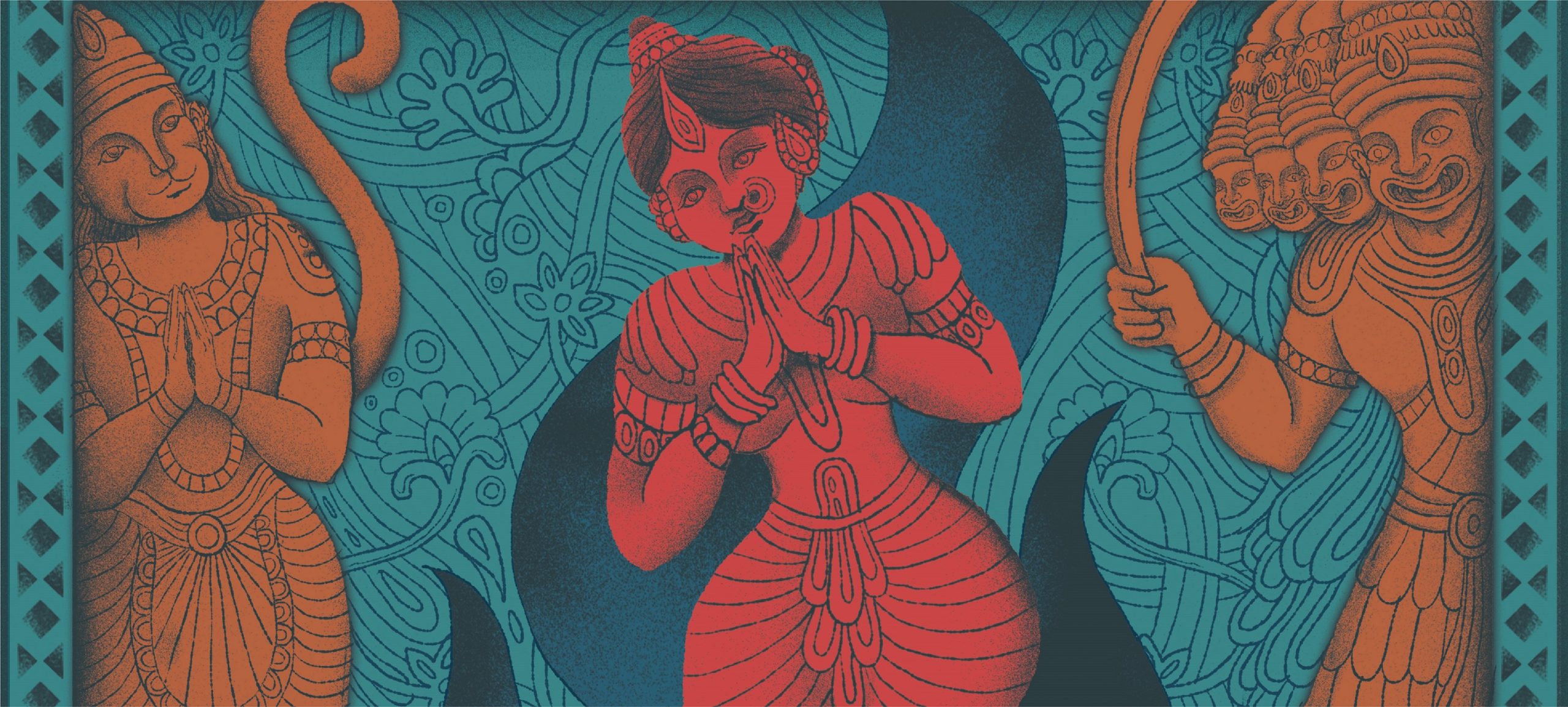
Majmudar tells the story of one of the world’s most popular epics through multiple perspectives, presented in rapid sequence-from Hanuman and Ravana, down to even the squirrel helping Rama’s army build the bridge.
However, above all, Majmudar focuses on the fierce resistance of Sita, letting us hear her voice as we have never heard it before.


Get Better at Getting Better

To achieve extraordinary success, you need something other than core capabilities like analytical skills, people skills, conceptual and intuitive skills, hard work and hunger for success. Chandramouli Venkatesan identifies this as developing the capability to succeed and continuously improve that capability. He calls this the Get Better Model, or GBM-your model to continuously improve how good you are.


The 108 Upanishads: An Introduction

This book is a thoroughly researched primer on the 108 Upanishads, philosophical treatises that form a part of the Vedas, the revered Hindu texts. These Upanishads contain the most crystallized bits of wisdom gleaned from Hinduism. Professor Dalal explains the concepts at the core of each Upanishad clearly and lucidly.


The Age of Awakening

The Age of Awakening tells India’s economic story since the country gained independence. It unfolds a tale of titanic figures, colossal failures, triumphant breakthroughs and great moral shortcomings. Weaving together vivid history and economic analysis, this book makes for a gripping narrative.


Bhagwaan ke Pakwaan

The rice beer bellies of a Christian village in Meghalaya; food fed to departed Zoroastrian souls; a Kolkata-based Jewish community in decline; Tibetan monks who first serve Preta, the hungry ghost; and fifty-six-course feasts of the Jagannath temple-these are the stories in Bhagwan Ke Pakwaan (or, food of the gods), a cookbook-cum-travelogue exploring the connection between food and faith through the communities of India. There are legends and lore, angsty perspectives, tangential anecdotes, a couple of life lessons and a whole lot of food.

In the City a Mirror Wandering

Unfolding over the course of a single day, Ashk’s sweeping sequel to Falling Wallsexplores the inner struggles of Chetan, an aspiring young writer, as he roams the labyrinthine streets of 1930s’ Jalandhar, haunted by his thwarted ambitions but intent on fulfilling his dreams. Intensely poignant and vividly evocative, In the City a Mirror Wandering is an exploration of not only a dynamic, bustling city but also the rich tapestry of human emotion that consumes us all.


Sweet Shop

Arising from visits to sweet shops in the by-lanes of Calcutta, these poems brim with the excitement of what it means to discover, marvel at, and taste the universe. As the first line of the book states, ‘The whole universe is here’. Showcasing the edible, the intimate, and the singular, this collection, like the sweet-shop shelf, is characterized by ‘an unnoticed balance of gravity and play’.


Belt and Road: A Chinese World Order

China’s Belt and Road strategy is acknowledged to be the most ambitious geopolitical initiative of the age. Bruno Macaes traces this extraordinary initiative’s history, highlighting its achievements to date and its staggering complexity. He asks whether Belt and Road is about more than power projection and profit. Will it herald a new set of universal political values, to rival those of the West? Is it, in fact, the story of the century?


Doab Dil

Employing a philosopher’s mind and an artist’s eye, Banerjee takes us to still places in a moving world, the place where two rivers (do ab) meet and forests write themselves into history.

error: Content is protected !!