Publish with Us

Follow Penguin

Follow Penguinsters

Follow Penguin Swadesh

Everything You Need to Know About Conducting a Sting Operation : The Anatomy of a Sting

Bhupen Patel has conducted many undercover operations over the course of his career. He’s exposed all sorts of rackets, from asylums admitting patients without proper medical examinations to discovering an illegal network of agents that arrange ‘temporary’ wives for Arab men looking to have a short fling.

Here are a few helpful lessons from The Anatomy of a Sting to give you a better insight!


A Sting is a Thorough Investigation

“A sting operation is nothing less than a police investigation. The difference is that reporters learn on the job without any specific training. Also, we rarely have backup and definitely don’t have arms for self-defence.”

Importance of a Spy Camera

“One can buy spy cameras for Rs 1500–2000, hidden in buttons, spectacles, watches, ties, etc. The ‘Made in China’ cameras can easily pull off three or four assignments without any glitches.”

It’s Essential to Cross-Check Every Detail

“I decided to do some groundwork first and stepped out to check if the address provided in the classified ad was legitimate. Since I would be accompanied by a female colleague and it would just be the two of us, it was important to have an idea of the surroundings, the number of people there and the escape routes.”

Be Prepared for the Worst-case Scenario

“As a team, it was important for Ruhi and me to be on the same page. All our research was in place but we had to be prepared for the worst. It was important that we discussed the characters we were about to play—the names, backgrounds, families, experiences, qualifications, likes and dislikes, all of it.“

Form a Personal Equation

“On the final day of the operation, there was not much to do. By now, the guards and I were friendly enough to greet each other with a smile and even exchange a word or two. Their dialect clearly revealed that they belonged to the remote districts of Maharashtra. It is always easiest and most helpful to strike up a conversation if you show interest in their hometown.“


The Anatomy of A Sting recounts in detail some of Bhupen’s most dramatic and hard-hitting operations.


Meet the Authors of The Ultimate Memory Handbook for Students

Aditi Singhal and Sudhir Singhal are the authors of The Ultimate Memory Handbook for Students. In their book, they provide the ultimate hacks to memorize information, understand vast topics and answers from particular course studies. Giving tips on how to enhance memory and activities to train the brain in order to retain a wide range of topics and subjects, this handbook serves you with ways to deal with problems such as memorizing the periodic table, long answers, easy ways of enhancing vocabulary, learning trigonometry formulae, history dates, countries and their capitals supported by some fun and interesting artwork that serves as a great visual aid.

Here we give you a few interesting facts about the authors, so you can know them better:


Ace your curriculum and assessments with these ultimate memory techniques in The Ultimate Memory Handbook for Students


The Economic Puzzle of Demonetization – an excerpt

In his book Of Counsel: The Challenges of the ModiJaitley Economy, Arvind Subramanian provides an inside account of his rollercoaster journey as the chief economic advisor to the Government of India from 201418. Subramanian’s trusteeship saw the country through one of the most hotly contested and turbulent periods of economic governance and policymaking in recent decades, including the controversial recall of 85 per cent of circulated currency during demonetization.
In a chapter titled The Two Puzzles of Demonetization, he lays out his hypothesis on the political and economic puzzles of demonetization as a post facto analysis based on publicly known facts.
Puzzle 1: Why was demonetization so popular politically if it imposed economic costs? Specifically, why did demonetization turn out to be an electoral vote winner in the short-term (in the Uttar Pradesh elections of early 2017) if it imposed so much hardship on so many people?
Puzzle 2: Why didn’t the draconian 86 per cent reduction in the cash supply have bigger effects on overall economic growth? To put this more provocatively, the question was not whether demonetization imposed costs—it clearly did—but why it did not impose much greater costs?
Here is an excerpt of the second puzzle.


Why didn’t the draconian 86 per cent reduction in the cash supply have bigger effects on overall economic growth? To put this more provocatively, the question was not whether demonetization imposed costs—it clearly did—but why did it not impose much greater costs?
Demonetization was a massive, draconian, monetary shock: in one fell swoop 86 per cent of the currency in circulation was withdrawn. Figure 1 shows that real GDP growth was clearly affected by demonetization. Growth had been slowing even before, but after demonetization the slide accelerated. In the six quarters before demonetization growth averaged 8 per cent and in the seven quarters after, it averaged about 6.8 per cent (with a four-quarter window, the relevant numbers are 8.1 per cent before and 6.2 per cent after).

I don’t think anyone disputes that demonetization slowed growth. Rather, the debate has been about the size of the effect, whether it was 2 percentage points, or much less. After all, many other factors affected growth in this period, especially higher real interest rates, GST implementation and rising oil prices.
I do not have a strongly backed empirical view apart from the fact that the welfare costs especially on the informal sector were substantial.
As a monetary economist, though, what is striking is how small the effect was compared to the magnitude of the shock. There are many ways of seeing this. Figure 2 compares what happened to cash with what happened to nominal GDP. It is a stunning picture. Prior to demonetization, cash and GDP move closely together. Then, currency collapses and recovers (the dotted line), but through all of this, the economy seems to have been chugging along almost unmindful of the currency in circulation. You have to squint to see any downward movement of the solid black line (for nominal GDP) after demonetization: in fact, there isn’t, and all the downward blips reflect seasonality, which leads to a lower level of activity in the first (April–June) quarter every year.

What could possibly explain this apparent resilience? A number of hypotheses need to be considered. First and foremost, it could simply be an artefact of the way that GDP numbers are created. In India, there are no timely measures of informal sector activity, so it is proxied by formal sector indicators. Normally, this is not a problem, since the two move in tandem. But when a shock like demonetization occurs that primarily affects the informal sector, relying on formal indicators to measure overall activity will overstate GDP.
This hypothesis goes only a small way towards explaining the puzzle, since any squeeze in informal sector incomes would depress demand in the formal sector, and this effect should have been sizable.
As a result, we need to search for other explanations. One possibility is that people found ways around the note ban, for example by continuing to use the Rs 500 note even after its use had been formally banned, so the currency shock wasn’t actually as big as conventionally measured. Another possibility is that production was sustained by extending informal credit: people simply agreed to pay their bills as soon as currency became available. Finally, to a certain extent, people may have shifted from using cash to paying by electronic means, such as debit cards and electronic wallets.
Or, there may be other, completely different explanations that have eluded my understanding of demonetization, one of the unlikeliest economic experiments in modern Indian history.


Recognized as one of the Top 100 Global Thinkers according to Foreign Policy magazine, Arvind Subramanian’s Of CounselThe Challenges of the Modi-Jaitley Economy is a deep-dive into the man, the moments, the measures and the means

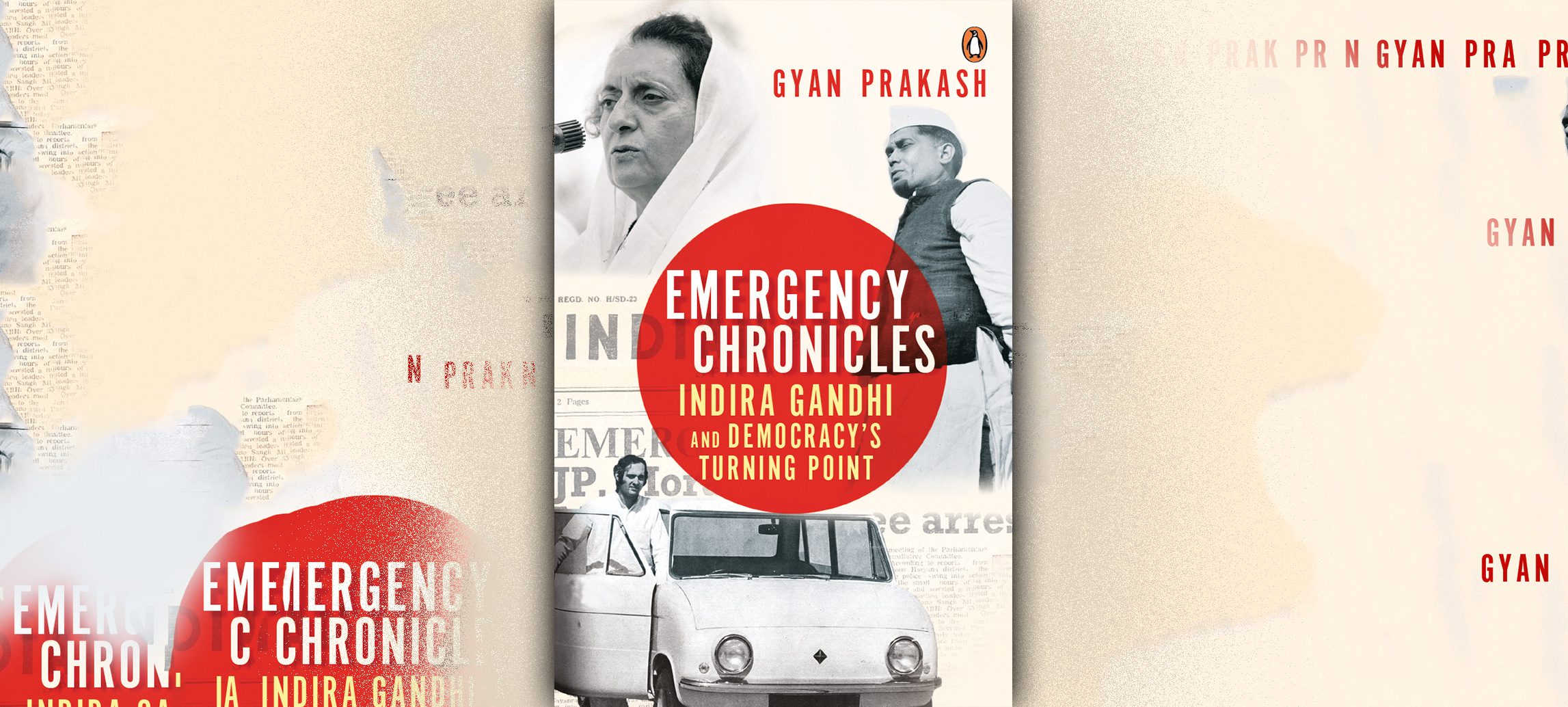
Emergency Chronicles: An Interview With The Author

As the world once again confronts an eruption of authoritarianism, Gyan Prakash’s Emergency Chronicles takes us back to the moment of India’s independence to offer a comprehensive historical account of Indira Gandhi’s Emergency of 1975-77. Stripping away the myth that this was a sudden event brought on solely by the Prime Minister’s desire to cling to power, it argues that the Emergency was as much Indira’s doing as it was the product of Indian democracy’s troubled relationship with popular politics, and a turning point in its history.
In this interview, he talks to us about writing the book!


How long was the research process for this book?
I began research in 2012 and continued it right up writing the first draft of the manuscript, that is, until the end of 2017.

What are some of the archival sources you looked through for this book?
The core of my archival research was at the National Archives of India and Nehru Memorial Museum and Library. Much of the research at NAI consisted of the depositions before the Shah Commission. While the published report summarized the Commission¹s findings, the depositions proved to be a treasure trove in composing a picture of the daily functioning of the Emergency. The private papers at NMML were invaluable in fleshing out the thoughts and activities of the individual actors. In addition, I trawled through the records of Ford Foundation at the Rockefeller Archive Center in New York to uncover the stories of pre-Emergency family planning and urban slum clearing programs. I chanced upon an unexpectedly rich archival resource consisting of prison letters in the collection of the Center for Research Libraries, Chicago. In addition, I searched through motor car archives in the UK to get materials on the Ambassador since Hindustan Motors claimed that they had none.

In your view, what is the biggest misconception about the Emergency?
The biggest misconception about the Emergency is that it emerged out of nowhere, attributable solely to Indira Gandhi’s desire to cling to power, and that it disappeared without a trace after 1977.  This is a comfortable myth because it permits Indians to believe that there are no deeper problems with India’s experience with democracy, and thus no long-term effects. Since this appeared patently implausible to me as a historian, I set about placing these 21 months in a longer historical perspective, examining both its antecedents and its afterlife.

What is some of the criticism you’re expecting to get for this work?
I expect that those who think that Indira, along with her coterie, as the sole cause of the Emergency would think, wrongly, that the book excuses her. I do not minimize her role, or that of her son, Sanjay; instead, I suggest that Indira did not function in a vacuum. What she and her coterie did was to ratchet up by few notches policies and projects that were long in the making.

What are some of the differences our country would have today, if the Emergency hadn’t been declared?
I think that the political crisis of the early 1970s existed prior to, and independent of, the Emergency. What the suspension of rights did was to turn a political crisis into a constitutional crisis. This produced the belief that Indira was only problem for Indian democracy, and that all that was needed was to restore constitutional rights  This prevented a full reckoning with the underlying crisis of democracy and governance that she had tried to salvage  through the declaration of Emergency. Without it, perhaps India would have confronted more squarely its failure to realize the promise of democracy as a value.


In Emergency ChroniclesGyan Prakash explains how growing popular unrest disturbed Indira’s regime, prompting her to take recourse to the law to suspend lawful rights, wounding the political system further and opening the door for caste politics and Hindu nationalism.

Books to Look Out For This Holiday Season

The holidays are here, and to add to the excitement and cheer, we’ve got another great set of books for you! Dive in to see the books to look forward to, this December.
Healed

Healed is the powerful, moving and deeply personal story of actor Manisha Koirala’s battle against ovarian cancer. From her treatment in the US and the wonderful care provided by the oncologists there to how she rebuilt her life once she returned home, the book takes us on an emotional roller-coaster ride through her many fears and struggles and shows how she eventually came out triumphant.
 
Delusional Politics: Brexit and Political Disorder

Delusional Politics looks at some of the tallest political leaders with the highest standing-in China, the USA, the UK, Pakistan and Sri Lanka, among others-to bring to light how these evolved statesmen are responsible for the rise of a new world [dis]order.
 
Of Counsel

In Of CounselThe Challenges of the Modi-Jaitley Economy, Arvind Subramanian provides an inside account of his rollercoaster journey as the chief economic advisor to the Government of India from 2014-18, succeeding Raghuram Rajan as captain of the ship. With an illustrious cast of characters, Subramanian’s part-memoir, part-analytical writings candidly reveal the numerous triumphs and challenges of policymaking at the zenith, while appraising India’s economic potential, health and future through comprehensive research and original hypotheses.
 
Flowers on the Path

This book is a compass which will lead you to that path of peace and enlightenment. It is a collection of articles by Sadhguru which have, for several years, healed many through their beauty, humour, clarity and wisdom. And like flowers, these articles have inspired and stimulated readers, wafting into their lives as a gentle fragrance on some mornings, and on others, startling them awake with fresh perspectives on age-old ideas and beliefs.
 
God of Sin: The Cult, Clout and Downfall of Asaram Bapu

Asaram originated the business model of branding goods and selling them to followers, using faith as a marketing tool-which other godmen emulated to great success. His commercial empire, now being investigated by economic offences agencies, was built on unaccounted donations, loans given on hefty rates of interest, investments in dubious companies, money laundering and dodgy real estate deals.
God of Sin pieces together Asaram’s journey to spiritual godhood, his fall from grace and the long and arduous road to bring him to justice.
 
The Hungryalists

This is the never-told-before story of the Hungry generation (or the Hungryalists)-a group of barnstorming, anti-establishment poets, writers, artists and activists in Bengal in the sixties. Braving social boycott, ridicule, and arrest, the Hungryalists changed the literary landscape of Bengal forever. Along the way, they also influenced iconic poets such as Allen Ginsberg who struck up a lifelong friendship with the Hungryalists.
 
If You See Me, Don’t Say Hi: Stories

In eleven sharp, surprising stories, Neel Patel gives voice to our most deeply held stereotypes and then slowly undermines them. His characters, almost all of whom are first-generation Indian Americans, subvert our expectations that they will sit quietly by. If You See Me, Don’t Say Hi examines the collisions of old world and new world, small town and big city, traditional beliefs (like arranged marriages) and modern rituals (like Facebook stalking). Ranging across the country, Patel’s stories-empathetic, provocative, twisting, and wryly funny-introduce a bold new literary voice, one that feels timelier than ever.
 
The Anatomy of a Sting

Bhupen Patel takes us through the entire process of a sting and reveals the amount of hard work it takes to not just uncover a story that requires further discreet investigation but also gather enough evidence to bring it to the notice of the public and authorities concerned. Each account will keep you on the edge of your seat and allow a glimpse into the life of an investigative journalist.
 
A Dream I Lived Alone

Padma Vibhushan-awardee Ustad Ghulam Mustafa Khan narrates his life’s story-from practicing music in a graveyard as a young boy to teaching stalwarts of the music industry, his journey is as lyrical as his songs. Captured in its essence by Namrata Gupta Khan, his daughter-in-law, A Dream I Lived Alone is a heart-warming story of love, riyaz, dedication and the maestro of music, Ustad Ghulam Mustafa Khan.
 
And Now and Here

Most of us look for security in our relationships and in our choice of living and working conditions. Underlying this search for security is a deep, instinctive fear of death, which continually colours our lives and drives our focus outward, toward survival.
But we also have a longing to turn inward, to relax deeply within ourselves, and experience the sense of freedom and expansion this brings. With this book the reader can start an exploration of his or her inner world.
 
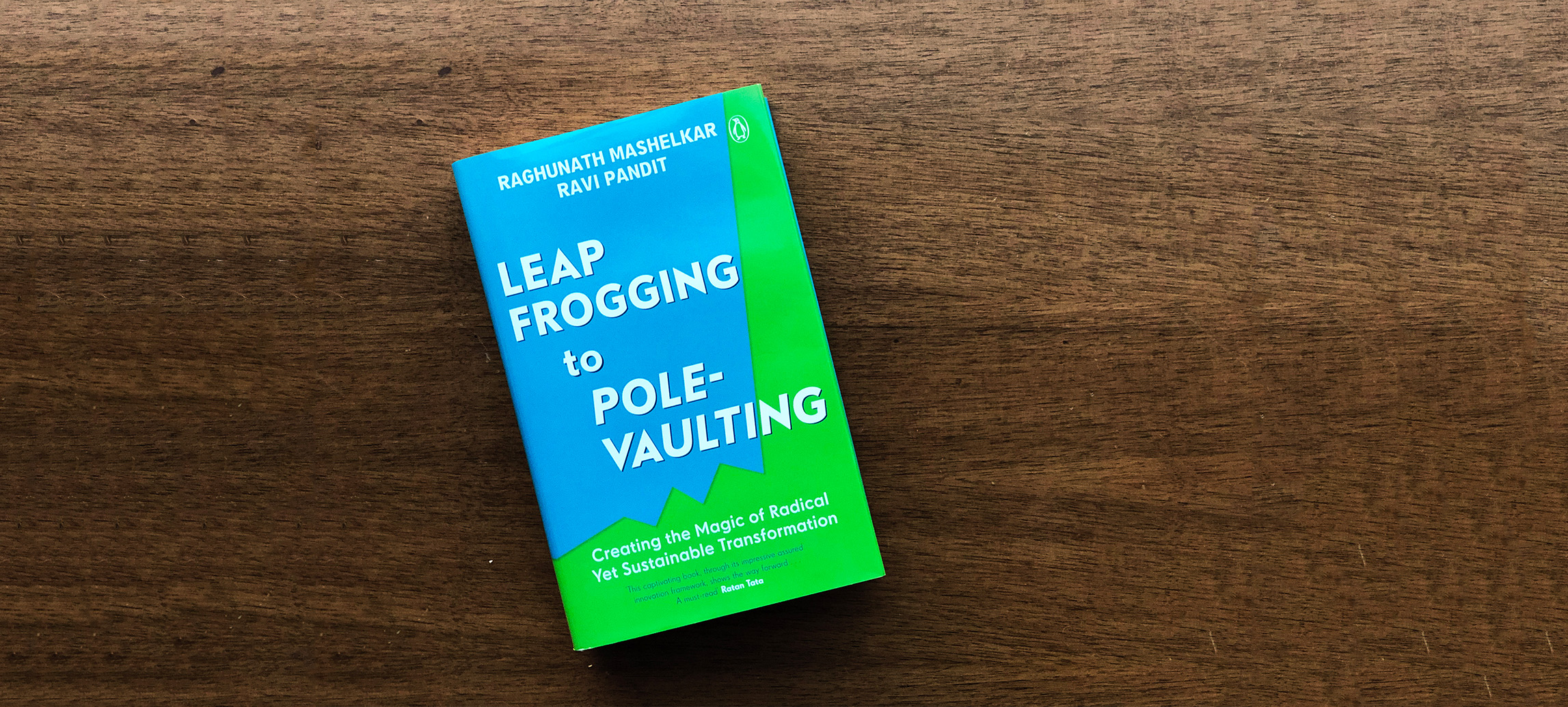
Leapfrogging to Pole-vaulting

From Leapfrogging to Pole-vaulting looks at the extraordinary challenges of creating disruptive solutions to burning problems in energy, environment and employment in India. We are guzzling expensive, exhaustible energy resources and precipitating enormous environmental crises in order to drive an economic engine that ultimately creates no jobs.
In this original and ambitious book, Dr Mashelkar and Pandit lay out a comprehensive roadmap to a new future, notwithstanding all the formidable obstacles, either perceived or real.
 
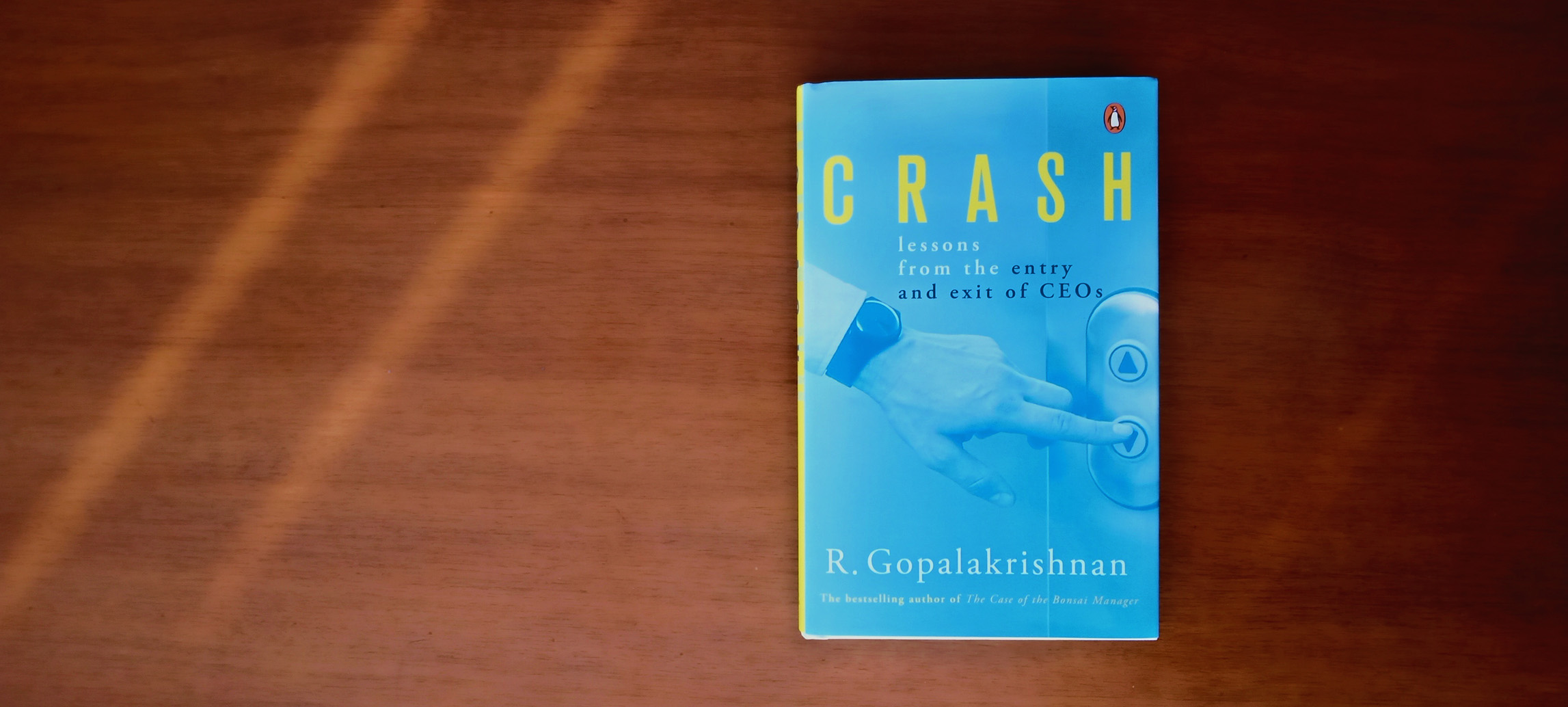
Crash

In this book, the author shows that great leaders continue to excel not just because of their skills and intelligence but also by connecting with others using emotional competencies like empathy and self-awareness.
Filled with anecdotes, analysis of various situations CEOs may find themselves in and unconventional advice to help them, Crash: Lessons from the Entry and Exit of CEOs is for veteran leaders as well as for those who aspire to start their own ventures.
 
 
Bhagavata Purana Vol. 1 + 2 + 3

A seamless blend of fable and philosophy, the Bhagavata Purana is perhaps the most revered text in the Vaishnava tradition. It brings to life the legends of gods, asuras, sages and kings-all the while articulating the crucial ethical and philosophical tenets that underpin Hindu spiritualism.
 
Partitions of the Heart: Unmaking the Idea of India

There was one partition of the land in 1947. Harsh Mander believes that another partition is underway in our hearts and minds.
How much of this culpability lies with ordinary people? What are the responsibilities of a secular government, of a civil society, and of a progressive majority? In Partitions of the Heart: Unmaking the Idea of India, human rights and peace worker Harsh Mander takes stock of whether the republic has upheld the values it set out to achieve and offers painful, unsparing insight into the contours of hate violence.
 
Finding Radha: The Quest for Love

Namita Gokhale and Malashri Lal, who brought us In Search of Sita: Revisiting Mythology, now present an anthology on the mysterious Radha, the epitome of love, who defies all conventional codes yet transcends social prohibitions through the power of the spiritual and the sensual, the sacred and the erotic. Finding Radha is the first of its kind: a collection of poetry, prose and translation that enter the historical as well as the artistic dimensions of the eternal romance of Radha and Krishna.
 
Trial by Silence

At the end of Perumal Murugan’s trailblazing novel One Part Woman, readers are left on a cliffhanger as Kali and Ponna’s intense love for each other is torn to shreds. What is going to happen next to this beloved couple?
In Trial by Silence-one of two inventive sequels that picks up the story right where One Part Woman ends.
 
A Lonely Harvest

At the end of Perumal Murugan’s trailblazing novel One Part Woman, readers are left on a cliffhanger as Kali and Ponna’s intense love for each other is torn to shreds. What is going to happen next to this beloved couple?
In A Lonely Harvest-one of two inventive sequels that pick up the story right where One Part Woman ends. But it has a different ending.
 
The Tata Group: From torchbearers to trailblazers

With over 100 companies offering products and services across 150 countries, 700,000 employees contributing a revenue of US$100-billion, the Tata Group is India’s largest and most globalized business conglomerate. The Tata name is known for salt, software, cars, communications, housing and hospitality.
How did they come so far? This book will tell you!
 
The Line of Control: Travelling with the Indian and Pakistani Armies

This vividly told, fast paced narrative brings the border area to life. Jacob was given unprecedented access by the Indian and Pakistani armies and he explores how the border is seen-both in the popular imagination and by those who exist in its shadow. He chronicles the lives of civilians and soldiers, their courage and resilience in the face of constant danger and the extraordinary similarities between the two sides.

Meet the Characters from Anand Neelakantan's 'Vanara'

Baali and Sugreeva of the Vana Nara tribe were orphan brothers who were born in abject poverty and grew up as slaves like most of their fellow tribesmen. Sandwiched between the never-ending war between the Deva tribes in the north and the Asura tribes in the south, the Vana Naras seemed to have lost all hope. But Baali was determined not to die a slave. Aided by his beloved brother, Sugreeva, Baali built a country for his people. For a brief period in history, it seemed as if mankind had found its ideal hero in Baali.
But then fate intervened through the beautiful Tara, the daughter of a tribal physician. Loved by Baali and lusted after by Sugreeva, Tara became the cause of a fraternal war that would change history for ever.
The love triangle between Baali, Tara and Sugreeva is arguably the world’s first. Written by Anand Neelakantan Vanara is a classic tale of love, lust and betrayal. Let’s meet the characters.


Baali – the chief of Vana Naras, an indomitable warrior, a noble savage, and straight as an arrow. He loves his brother Sugreeva deeply and would give him anything he asks for – except Tara, who is the love of his life.

~

Sugreeva – The greatest warrior in Vana Nara tribe after Baali. He loves his brother and would do anything for him. He has always been the second man and for him, the end justifies his means. If he wasn’t lusting after Tara, his devotion to his brother was incomparable.

~

Tara – Daughter of an impoverished but principled and kindhearted tribal doctor. She was considered to be the wisest of all and the most desirable women as per Baali. She was deeply in love with Baali, her husband. If Baali had not been there, perhaps Sugreeva had a chance of marrying her.


Shakespearean in its tragic depth and epic in its sweep, Vanara gives voice to the greatest warrior in the Ramayana-Baali.

Everything You Need to Know about the Dargah of Salim Chishti

Told through interesting stories with captivating illustrations, ‘Amma, Take Me’ series introduces readers to the history of different faiths and their associated monuments.
In Amma, Take Me to the Dargah of Salim Chishti, travel with Amma and her boys to the fascinating walled city of Fatehpur Sikri and behold the dargah of Salim Chishti shining like a white pearl in an oasis of red sandstone.


Here are some astounding facts about the much- revered Dargah of Shaikh Salim Chishti:


Hear the story of why the great Mughal emperor Akbar visited the Sufi saint Shaikh Salim Chishti and then had a mausoleum built in his honour.

Meet the firecracker protagonist of ‘You Are Here’

When it first came out in 2008, Meenakshi Reddy Madhavan’s You Are Here was a game changer: unexpectedly candid, surprisingly wise, audaciously explicit.It introduced us to Arshi, a bold and irresistible new voice.
Here are a few things to know about Arshi, the protagonist of the book:

Her blonde American stepmother tries too hard

“Every time I’ve visited their place, Barbara has appeared (in a sari sometimes, if she could contrive it) with a puja thali to do an aarti before I enter.”

Her job in a PR company is shit

“ One time,my boss, Shruti the Horrible, sent me to Janpath to pop in and out of the silver jewellery shops they have there with the list of journos who were invited to some pub inauguration to, get this, buy fifty-four one-of-kind silver earrings for women… Yes,ladies and gentlemen, this, this jewellery choosing, was my job description.”

She has a cool mom

“It wasn’t easy at all, being my mother’s daughter…She was too popular and the kids she taught (Class 9 and up) adored her… She wasn’t the kind of teacher who’d hover around if you wanted to escape somewhere with your best friend and talk for a couple of hours, or even if you wanted a moment alone with your boyfriend.”

Her ex- boyfriend is a lying-cheating-bastard

“We had been seeing each other for exactly a year and a week when he zoomed off to Manali with some colleagues, one of whom happened to be a pretty young thing who was also his work buddy…I guess they were pretty bonded. Evidently they got even more ‘bonded’ in Manali.”

Topsy, her flatmate and best friend, lives a double life

“But if you see Topsy around her parents, you’ll never think she’s the same girl who lives with me. She pulls out all the salwar-kameezes her mother bought for her to wear to college…and speaks in very soft polite tones in a mix of Hindi and English.I don’t know how she grew up the way she did, but she says it was boarding school and the Internet that changed the way she looked at things.”


She wished she had a normal childhood

“ I wanted to be like the ‘normals’ because it seemed like such a safe way to be. In my eyes their lives were superior in every way to the one my family lived.”


This 10th anniversary edition of You Are Here is a reminder of how much, and how little, has changed in the life of a single woman in India. AVAILABLE NOW

Books To Gift Your Little Ones This Holiday Season

It’s everyone’s favourite time of the year – the month of festivities and holidays, and along with it, the question of what to gift little children. We personally think books are a great present and so we bring to you a list of books from which you can choose what to gift your little one!
Amma, Take Me to the Dargah of Salim Chishti
 

Explore the places where we worship with Amma and her boys. Told through interesting stories with captivating illustrations, ‘Amma, Take Me’ series introduces readers to the history of different faiths and their associated monuments. In Amma Take Me to The Dargah of Salim Chishti, travel with Amma and her boys to the fascinating walled city of Fatehpur Sikri.
Of Course, It’s Butterfingers!

Even when Amar Kishen-better known as Butterfingers-isn’t stumbling through misadventures, he sure has disaster tailing him every step of the way. Join the irrepressible Butterfingers in this exciting and enjoyable instalment of side-splitting short stories.
The Adventures of Woka Chimni

Woka’s love for travel, helpful nature and ecological curiosity make her stories charming and memorable. Discover our country India’s splendour through this series of picture storybooks for kids, one exciting adventure at a time.
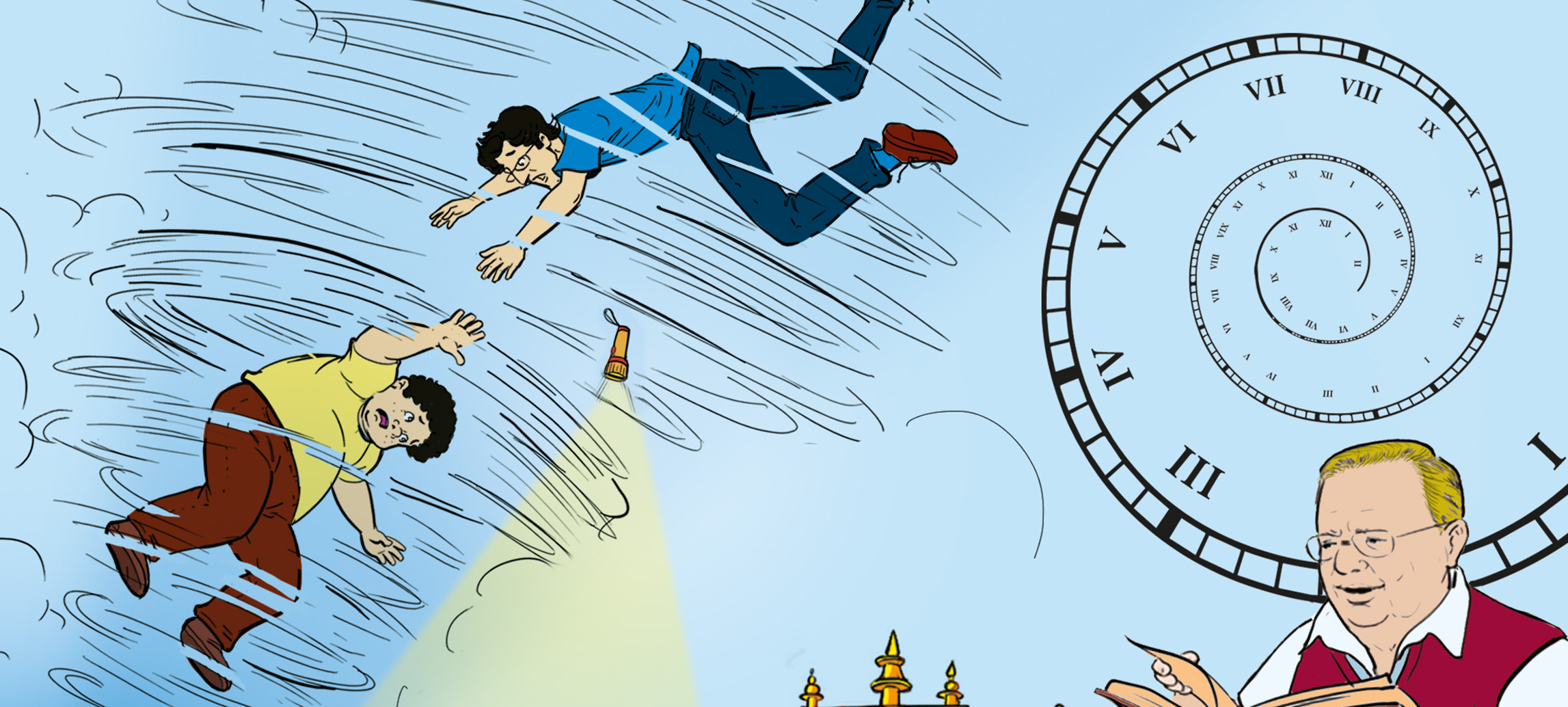
Magic in Mussoorie

Nakul Sahej and his friend Kuku stumble upon an antique book while on holiday in Mussoorie. The book turns out to be a magical one that transports the two back in time to the Mussoorie of over a century ago. Action-packed and unputdownable, this thrilling adventure is the first in a series of comic books set in the Garhwal Himalayas.
The Girl Who Went to the Stars and Other Extraordinary Lives

An unbelievable journey through outer space, the voice of a nightingale, a climb up the highest mountain, a leader of the nation. These are the incredible stories of fifty phenomenal Indian women, such as Amrita Sher-Gil, Arundhati Roy, Kalpana Chawla, Mary Kom, Indira Gandhi, Tessy Thomas and more!
The Ultimate Memory Handbook for Students

This book will serve as a handbook for you to memorize information, topics and answers from your course of study. Using memory-enhancing practices and techniques along with tips, activities and practice sections, you can train your brain to retain a wide range of topics and subjects. From the periodic table to trigonometry, history dates to countries and their capitals, master it all with these practical techniques, supported by some quirky and fun artwork that serves as a great visual aid.
Wonder Words

Wonder Words is a gorgeous, illuminating and often hilarious lexicon of unique words from all over the globe. It will open up your world, making you aware of emotions, cultures and practices from far and beyond. Join author-illustrator Rituparna Sarkar in finding the joy of new words in different languages that you always hoped would exist in English!
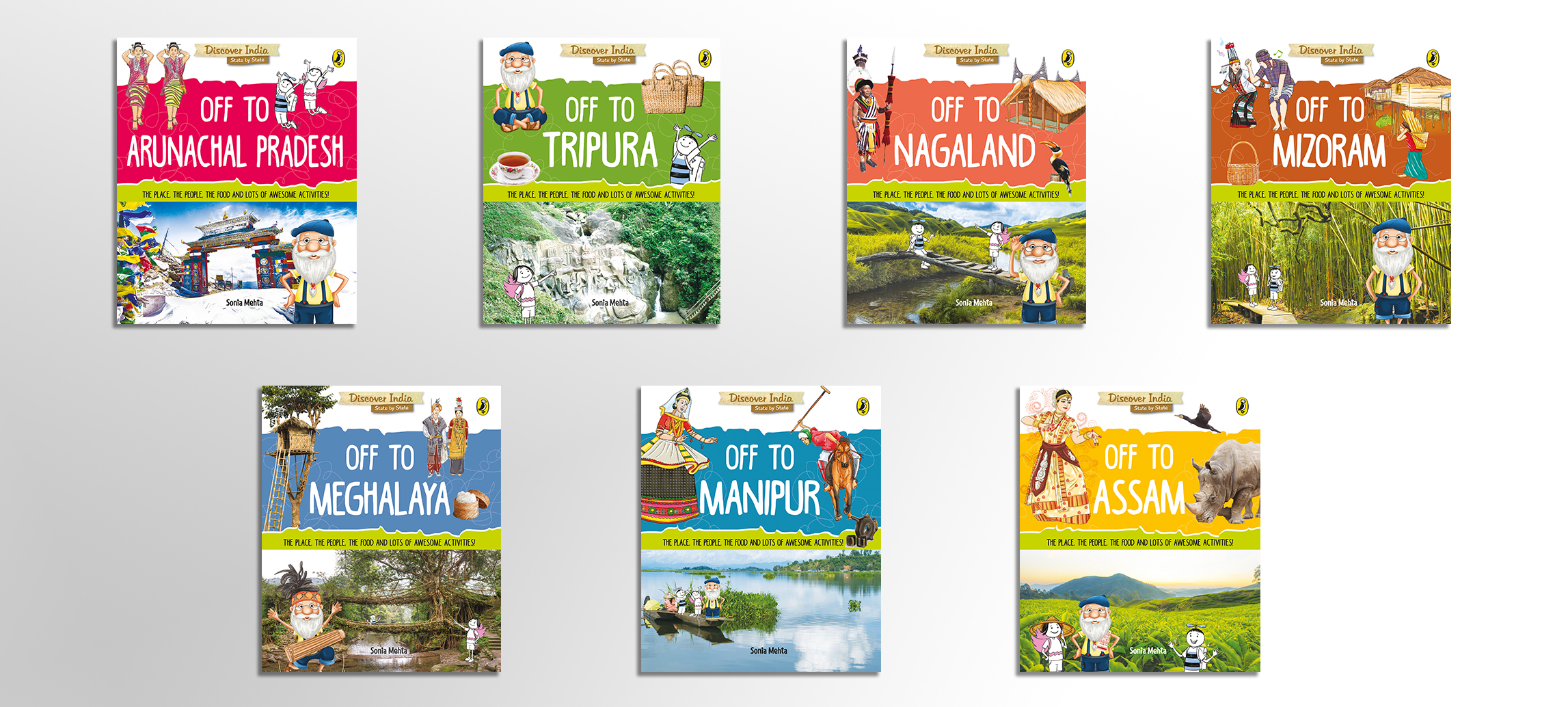
Discover India series

Sonia Mehta is back with her Discover India series, where the adorable Pushka and Mishki join the wise and witty Daadu Dolma as they traverse the length and breadth of India. This month, they explore Assam, Meghalaya, Mizoram, Arunachal, Nagaland, Tripura, Manipur and the Union Territories of India!
 

100 years of Sai Baba: His Journey on Life, Death and Everything in Between

Rabda has attempted suicide and chances are that he is going to die. Sai Baba of Shirdi enters the hospital room and awakens the spirit body of Rabda. The two, Master and musician, begin to converse about life, death and everything in between.
Set in the present, Rabda by Ruzbeh N. Bharucha takes the reader to the past, to when the Sai lived in His physical body and the life and philosophy of Sai Baba of Shirdi are revealed.
Here are seven quotes from the book that will show you Sai Baba’s path:
 

“ Each moment, every single moment, we either create a dream or a nightmare, as each moment we either choose to live or we choose to kill the opportunity to live.”

“Either you believe that God does not exist, there is no Supreme Power running this grand show, or you believe in a just God.You cannot believe in a God who exists but is unjust.”

   “The more selfless your love,the greater the happiness all around.”

“You may pronounce the words immaculately but if the words aren’t coming from the very breath of your essence, the very sigh of your soul,then those prayers might as well be verbalized by an intelligent parrot.”

“One needs to be careful of desires as once you have your desires under control,you shall move into the region of the heart.”

“When your thoughts rule you, you are like a slave in your own house.”

“So the only wise and commonsensical way of going through life is calmly,giving your best, and leaving the rest to Him.”


A powerful spiritual read, Rabda is a journey you really do not want to miss.
 

error: Content is protected !!