Publish with Us

Follow Penguin

Follow Penguinsters

Follow Penguin Swadesh

The Editor on Why Sohaila Abdulali's Book on Rape is Important

By Manasi Subramaniam

What We Talk About When We Talk About Rape comes at a time when we have just begun to talk – actually talk – about rape. There is a great danger in referring to such a book as ‘timely’. Not only does that seem opportunistic, it also trivializes and oversimplifies sexual violence entirely. In fact, I’ll go so far as to say that this book could have been published at any point in time since the dawn of civilization (or at least since the invention of the printing press) and it would have been just as timely and relevant. If the #MeToo discourse has taught us anything, it is this: violence affects all of us, and we need to be able to talk about it.
And yet, if I’m being honest, I’ll admit that I am terrified of robbing the debate of nuance by anything that I myself say. If I have enjoyed any clarity of thought on any subject in the world, it has always been through my reading. And working in publishing has offered me the good fortune of devising and disseminating the wisdom of others in the medium I have the most respect for. All of which is really a rather roundabout way of saying that this is a book I published because it was a book I wanted to read.
And so it was that I asked Sohaila Abdulali to write this book. She is a survivor herself, and she is thoughtful and brave and wise. These were the things I knew she would transfer into her book. And of course she did. But she did one more thing – a thing that I never expected. She made this book funny. Given the difficult subject it deals with – not to mention some of the details it contains – Sohaila did something extraordinary by keeping the tone light (but never unserious) and open (but never apologetic). It is the truly unique strength of this book that one comes away from it feeling empowered rather than broken.
Which is not to say that she does not have rage. She does. But she coolly channels all of it in this book with absolute precision. And the thing about her openly expressed fury is its rawness and its power and its capacity to encompass aggression and compassion. Page after page, I marvelled all the things that this book was doing, all the ways in which it was helping me structure my incoherent anger and helplessness.
What We Talk About When We Talk About Rape is a book that injects sensitivity, empathy and candour into the conversation surrounding sexual violence. It is entirely my privilege to have been a part of its making.


Writing from the viewpoint of a survivor, writer, counsellor and activist, and drawing on three decades of grappling with the issue personally and professionally and her work with hundreds of survivors, Sohaila Abdulali, in her book What We Talk About When We Talk About Rape looks at what we-women, men, politicians, teachers, writers, sex workers, feminists, sages, mansplainers, victims and families-think about rape and what we say.

Why Ambedkar is the Best Advocate of Equality

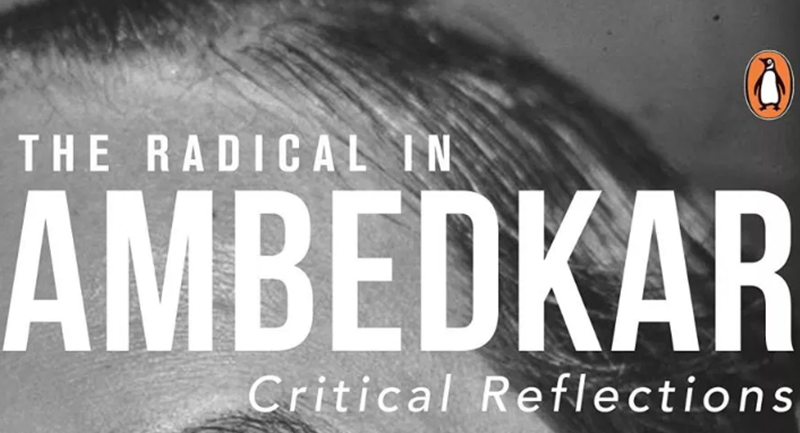
The Radical in Ambedkar: Critical Reflections edited and introduced by Anand Teltumbde and Suraj Yengde, establishes B.R. Ambedkar as the most powerful advocate of equality and fraternity in modern India. This remarkable volume seeks to unpack the radical in Ambedkar’s legacy by examining his life work from hitherto unexplored perspectives.
Read on to learn why Ambedkar is one of the most significant advocates of equality.
His belief in moral and ethical behaviour of people, not only the state, to achieve liberty and equality
“Aside from rationality, Ambedkar felt that democracy required ethics, or what he called morality. One aspect of this is the importance of ‘constitutional morality’, that is, of abiding by the spirit of the Constitution and not just its legal provisions. Going beyond this, Ambedkar felt that morality, in the sense of social ethics, was indispensable for the realization of liberty and equality. In the absence of morality, he thought, there were only two alternatives: anarchy or the police.”

~

His emphasis on international solidarity in combating social inequality
“Ambedkar explained that he had been a ‘student of the Negro problem’ and that ‘[t]here is so much similarity between the position of the Untouchables in India and of the position of the Negroes in America that the study of the latter is not only natural but necessary’.”

~

His vision of democracy and a ‘good society’
“Ambedkar’s vision of democracy was closely related to his ideal of a ‘good society’. He was clear about this ideal: on many occasions, he stated that he envisaged a good society as one based on ‘liberty, equality and fraternity’ (today we might prefer to call this ‘liberty, equality and solidarity’). Democracy, as he saw it, was both the end and the means of this ideal.”

~

His struggle for basic human rights in civic law and practice
“Dr Ambedkar continued to build up a civic notion of rights to challenge both religious democratization and a colonial order rooted in custom and identity. This is clearly demonstrated in his leadership in the Chavadar Tank agitation in the late 1920s. In 1927, Dr Ambedkar led a satyagraha to gain access to water from the tank, exercising a right to the public resources maintained by the state, which was guaranteed by the Bombay legislature but not enforced due to social sanction. The satyagraha was met by violence, and upper-caste Hindus filed a court case arguing that the tank was private property.”

~

His path-breaking legal argument for the independent agency of sex workers
“The Bombay Prostitution Act of 1923 did not abolish prostitution but sought to end its organized version and criminalize those who brought women into prostitution. In this case, the accused owned a house where the prostitute in question had met clients for a few hours. Ambedkar attempted to argue that the prostitute was an independent agent as evidenced by her short stay at the brothel and that the accused merely kept a brothel and was not a procuress. While Ambedkar’s own views of sex work are complicated, in the court he did make an argument for the independent agency of sex workers.”

 ~

His efforts to include oppressed communities across the spectrum in the Dalit struggle for justice
“In the Bombay Presidency, the differences and inequalities among Dalits came frequently in the way of Ambedkar’s struggles. Ambedkar, being a visionary with a strong support base of Dalits across India, particularly the Mahars in Maharashtra, attempted to address the issue of intra-caste conflicts. He also tried to build a broader platform for all Dalits by attempting to include non-Mahar Dalit castes into his organizations, the All India Scheduled Caste Federation, the Independent Labour Party, etc.”

 ~

His delineation of the government’s role in eradicating inequalities and in safeguarding the fundamental rights of citizens
“True to the basic principles he had publicly upheld for over two decades, Ambedkar proposed that the Constituent Assembly proclaim a set of fundamental rights ensuring equal civic rights and the right to vote of all citizens, freedom of religion, and the legal prohibition of discrimination and forced labour or involuntary servitude. He also suggested that the new Supreme Court be given adequate powers to protect these fundamental rights of citizens.”


An extraordinary collection of immense breadth and scholarship that challenges the popular understanding of Ambedkar, The Radical in Ambedkar is essential reading for all those who wish to imagine a new future.

If You Love Jane Austen's Emma, You'll Love Polite Society!

Everybody’s favourite Regency comedy of manners-Emma is coming to South Delhi in Mahesh Rao’s Polite Society! While Jane Austen’s Emma poked gentle fun at the little foibles and economic exigencies of the exceedingly polite middle-class and county gentry in Regency England, Polite Society reimagines Emma in contemporary Delhi to portray a society whose polished surface often reveals more than is intended.
Both Emma and Polite Society explore social mores through the overconfident yet inexperienced eyes of young women coming of age in an ornate world. As twenty-one year old Emma Woodhouse ‘handsome, clever, and rich, with a comfortable home and happy disposition’ and Ania Khurana- the ‘young beautiful and rich’ resident of Prithviraj Road, attempt to amuse themselves by applying their exceptional industry to their pet projects, they realize that youth, wealth and beauty will take you far in polite society but cannot influence individuals to your liking.
Emma and Ania are both incredibly blessed by both nature and society and thus have the benefits and pitfalls of a plethora of choices.
“The real evils, indeed, of Emma’s situation were the power of having rather too much her own way, and a disposition to think a little too well of herself; these were the disadvantages which threatened alloy to her many enjoyments. The danger, however, was at present so unperceived, that they did not by any means rank as misfortunes with her.”
-Emma
“It was not unusual for Ania to contemplate drastic hypothetical choices in this way. The comforts of her own life meant that she was seldom called upon to discriminate or restrict: in the Khurana household, they usually ordered four of everything. As a result, this kind of grandiose conjecture had always come to her as something of an exertion but also a thrill.”
– Polite Society

~

Emma and Ania barely remember their respective mothers. The most significant (though very indulgent) maternal figures in their lives are a charming governess–Miss Taylor and a maiden aunt–Renu Bua respectively. Both get married and move away at the beginning of both books (largely thanks to Emma’s and Ania’s matchmaking.)
“Even before Miss Taylor had ceased to hold the nominal office of governess, the mildness of her temper had hardly allowed her to impose any restraint; and the shadow of authority being now long passed away, they had been living together as friend and friend very mutually attached, and Emma doing just what she liked; highly esteeming Miss Taylor’s judgment, but directed chiefly by her own.”
Emma
“While Ania loved her bua’s presence in the house, finding in her someone even more indulgent than her father, she was stricken by what she saw as the tragedy of Renu’s life.  A firm believer in the elemental nature of soulmates, Ania felt that it was never too late.”
-Polite Society

~

Mr Weston, formerly of the militia, cheerful, popular and well-liked, marries Miss Taylor and could be the Regency twin of the genial Colonel Suraj Singh Rathore who marries Renu Bua.
He quitted the militia and engaged in trade, having brothers already established in a good way in London, which afforded him a favourable opening…He had, by that time, realised an easy competence—enough to secure the purchase of a little estate adjoining Highbury, which he had always longed for—enough to marry a woman as portionless even as Miss Taylor, and to live according to the wishes of his own friendly and social disposition.”
-Emma
“Colonel Suraj Singh Rathore, formerly of the Garhwal Rifles Ania discovered over the course of the afternoon that he was widowed, with no children, and owned a few bungalows scattered around the Kullu and Kangra valleys of Himachal Pradesh.”
-Polite Society

~

Harriet Smith and Dimple are Emma’s and Ania’s friends//protégés. Harriet is the illegitimate daughter of a tradesman and a student at a nearby school. She is starry-eyed at being taken up by so great a personage as Emma Woodhouse. Dimple is a small-town girl working for a PR-start up in Delhi, Dimple can’t believe that she has actually made friends with Ania Khurana who seems to move in a rarefied and almost surreal atmosphere of wealth and elegance.

“She was not struck by any thing remarkably clever in Miss Smith’s conversation, but she found her altogether very engaging—not inconveniently shy, not unwilling to talk—and yet so far from pushing, shewing so proper and becoming a deference, seeming so pleasantly grateful for being admitted to Hartfield, and so artlessly impressed by the appearance of everything in so superior a style to what she had been used to, that she must have good sense.”
Emma
 “Dimple almost glowed with pleasure. She had only met Ania a few months ago at a PR event and was still unaccustomed to the idea that she could be privy to plans involving the Khurana family.”
-Polite Society

~

The patronizing benevolence that governs Emma and Ania’s friendships towards Harriet and Dimple respectively

“‘She would notice her; she would improve her; she would detach her from her bad acquaintance, and introduce her into good society; she would form her opinions and her manners’.”
-Emma
‘In some ways, Ania’s initial interest in Dimple’s affairs could be placed on the same spectrum of charitable instincts as the one that led her to the animal shelter…But over time she had become genuinely fond of Dimple and didn’t see why the girl shouldn’t reap the rewards of a superlative Delhi social life just because of her unfortunate beginnings.’
-Polite Society

~

Robert Martin, the kind local farmer, and Ankit–resident of Lajpat Nagar and owner of Tip-Top fashions are perfectly likable but highly unsuitable (in Emma’s and Ania’s opnion) suitors of Harriet and Dimple respectively.
“His appearance was very neat, and he looked like a sensible young man, but his person had no other advantage; and when he came to be contrasted with gentlemen, she thought he must lose all the ground he had gained in Harriet’s inclination.”
Emma
“Dimple would defend him, it was in her nature: he had a lovely face, but more than that, he was respectful and honest; she owed the family many kindnesses. Besides their business was doing so well; in fact, they were opening a second branch of Tip-Top Fashions soon. But poor Dimple, it would all be such a terrible waste.”
-Polite Society

The persons of dubious character that the equally naive Emma and Ania find suitable for their protégés: Emma attempts to bring Harriet to the notice of Mr Elton, the local vicar just as Ania tries to set up Fahim, a rising journalist with Dimple. However these are serious miscalculations as both men don’t seem to notice the match-making efforts going on, and think that that the heiresses are romantically interested in them.
“‘She found her subject cut up—her hand seized—her attention demanded, and Mr. Elton actually making violent love to her: availing himself of the precious opportunity, declaring sentiments which must be already well known, hoping—fearing—adoring—ready to die if she refused him; but flattering himself that his ardent attachment and unequalled love and unexampled passion could not fail of having some effect, and in short, very much resolved on being seriously accepted as soon as possible.  Without scruple—without apology—without much apparent diffidence, Mr. Elton, the lover of Harriet, was professing himself her lover.”
-Emma
Fahim meanwhile thinks “‘Ania’s pursuit had been relentless. When he thought about the public praise, the constant communication, and the welcome into her home, it seemed almost starry-eyed. He was surprised by the awkward use of Dimple as some sort of fig leaf. He had never imagined that a girl like Ania would need the presence of an inconsequential friend to maintain a sense of propriety.’”
-Polite Society

 ~

The insufferably perfect paragons of perfection that Emma and Ania compete with (although they would never admit it) are Jane Fairfax and Kamya Singh-Kaul

“Why she did not like Jane Fairfax might be a difficult question to answer; Mr. Knightley had once told her it was because she saw in her the really accomplished young woman, which she wanted to be thought herself; and though the accusation had been eagerly refuted at the time, there were moments of self-examination in which her conscience could not quite acquit her.”
-Emma
 “Also lying there, in plain sight, was a copy of Kamya Singh-Kaul’s book. Her own novel, which she had introduced into conversations with such confidence a few months ago, now felt like a burden that oozed reproach, a secret failure that precipitated a rush of anxiety and hopelessness every time she thought about it. She picked up Kamya’s book and felt an unpleasant contraction in her chest as she read the cavalcade of breathless quotes from distinguished authors. Her author photograph—dark lips, cheekbones, the glaze of a museum piece—was exactly what Ania would have expected.”
-Polite Society

 ~

And finally, the significant others-to-be! Mr George Knightley, a family friend and relative by marriage is as dependable, intelligent, and unconcerned about appearances as Dev Gahlot, family friend and relative of Ania. Although both Emma and Ania often trade barbs and spar with Mr Knightley and Dev respectively, they also value their opinions the most.

“Mr. Knightley, a sensible man about seven or eight-and-thirty, was not only a very old and intimate friend of the family, but particularly connected with it, as the elder brother of Isabella’s husband. He lived about a mile from Highbury, was a frequent visitor, and always welcome.”
-Emma
 “The same jacket day after day, the satchel with a broken zipper, the fraying above the shirt pocket, she was convinced it was all an affectation, a way of indicating to the world that their owner concerned himself only with matters of sublime worth and not mere flummeries. They had practically grown up in each others houses and she could almost predict his every gesture.”
-Polite Society

~

Both Mr Knightley and Dev are quite clear-headed and warn Emma and Ania respectively about the dangers of treating their friend’s like improvement projects.
“How can Emma imagine she has anything to learn herself, while Harriet is presenting such a delightful inferiority? And as for Harriet, I will venture to say that she cannot gain by the acquaintance. Hartfield will only put her out of conceit with all the other places she belongs to.. I am much mistaken if Emma’s doctrines give any strength of mind, or tend at all to make a girl adapt herself rationally to the varieties of her situation in life.”
-Emma
“‘I made her feel uncomfortable? It’s not me who’s using her for my own purposes, adopting her for some kind of mission civilisatrice.’”
–Polite Society


Keenly observed, sharply plotted and full of wit and brio, Polite Society reimagines Jane Austen’s Emma in contemporary Delhi to portray a society whose polished surface often reveals far more than is intended

12 Books to Make Your Diwali a Little Brighter

Diwali is among the biggest Hindu festivals and is celebrated almost all over North India.
With the festivities going strong, what isn’t there to love about this time of the year? To add to the fun and excitement, we’ve put together a list of books for you to read this Diwali!
Take a look at our Diwali bookshelf, that is sure to brighten up your life even more!
Hindu Rites and Rituals: Where They Come from and What They Mean  

Millions of Hindus the world over grow up observing rites, rituals and religious practices that lie at the heart of Hinduism, but which they don’t know the significance of. This handy book tells the fascinating stories and explains the science behind the Hindu rites and rituals that we sometimes follow blindly. It is essential reading for anyone interested in India’s cultural tradition.
Hinduism : An Alphabetical Guide

Hinduism is one of the world’s oldest religions; an amalgam of diverse beliefs and schools, it originates in the Vedas and is rooted in Indian culture. Hinduism: An Alphabetical Guide illuminates complex philosophical concepts through lucid definitions, a historical perspective and incisive analyses.
The Book of Ram

Hindus believe that in stressful and tumultuous times chanting Ram’s name and hearing his tale, the Ramayan, brings stability, hope, peace and prosperity. Reviled by feminists, appropriated by politicians, Ram remains serene in his majesty, the only Hindu deity to be worshipped as a king.
Sita: An Illustrated Retelling of the Ramayana

This book approaches Ram by speculating on Sita—her childhood with her father, Janak, who hosted sages mentioned in the Upanishads; her stay in the forest with her husband who had to be a celibate ascetic while she was in the prime of her youth; her interactions with the women of Lanka, recipes she exchanged, emotions they shared; her connection with the earth, her mother; her role as the Goddess, the untamed Kali as well as the demure Gauri, in transforming the stoic prince of Ayodhya into God.
Book of Vishnu

Vishnu, the Supreme Being, is the preserver, the protector of the good and the guardian of dharma. Combining the skill of a storyteller with the insight of a scholar, Nanditha Krishna has brought to glorious life perhaps the most powerful and revered god in the Hindu pantheon.
Book of Hanuman

Hanuman is an outstanding scholar, a fearless warrior, and the ideal lieutenant: intelligent, totally committed to his master, selfless and humble. Drawing upon stories from Valmiki’s Ramayana, Parvez Dewan weaves an engrossing narrative that captures the significance of Hanuman, perhaps the most accessible deity in the Hindu pantheon.
The Book of Lakshmi

Lakshmi is the goddess of all that is good wealth (dhana), beauty (saundarya) and happiness (sukha). Using a range of sources, from ancient texts to sculptures and everyday religious customs and prayers, this fascinating and deeply-insightful book sheds new light not only on the figure of Lakshmi, but also on the fundamental tenets of Hinduism as it is practised today.
In Search Of Sita: Rivisiting Mythology

Sita is one of the defining figures of Indian womanhood, yet there is no single version of her story. In Search of Sita presents essays, conversations and commentaries that explore different aspects of her life. It revisits mythology, reopening the debate on her birth, her days in exile, her abduction, the test by fire, the birth of her sons and, finally, her return to the earth-offering fresh interpretations of this enigmatic figure and her indelible impact on our everyday lives.
The Ramayana

One of India’s greatest epics, the Ramayana pervades the country’s moral and cultural consciousness. Believed to have been composed by Vālmīki sometime between the eighth and sixth centuries BC, it recounts the tragic and magical tale of Rāma, the wrongfully exiled prince of Ayodhyā, an incarnation of the god Viṣṇu, born to rid the earth of the terrible demon Rāvaṇa. Widely acclaimed since its first publication in 1996, Arshia Sattar’s stellar translation is an absolute delight, successfully bridging time and space to bring us the wisdom, adventure and eroticism of this enduring classic.
Lost Loves : Exploring Rama’s Anguish

The essays in this book imagine what might have been the thoughts and feelings of Rama and Sita as they lived through those terrible years of trial and separation. They explore what happens to love in separation, and how public lives and private desires collide to devastating effect. By trying to see the events of their lives as Rama and Sita may have seen them, Arshia Sattar makes the existential conflicts of the Ramayana fascinatingly relevant and freshly inspiring for the contemporary reader.
Rig Veda
 

This selection of 108 of the hymns, chosen for their eloquence and wisdom, focuses on the enduring themes of creation, sacrifice, death, women, the sacred plant soma and the gods. Inspirational and profound, it provides a fascinating introduction to one of the founding texts of Hindu scripture – an awesome and venerable ancient work of Vedic ritual, prayer, philosophy, legend and faith.
The Upanisads

A brilliant introduction to the essence of living Hinduism the thirteen principal Upanisads, Sanskrit texts in the religious traditions of the Vedas, lie at the heart of Hinduism. This authentic and nuanced rendering makes accessible to the modern reader something of the beauty and variety of these ancient and rich texts of Hinduism. The Upanisads belong to the tradition of literature that is ‘heard’ rather than ‘remembered’, and in her translation Roebuck seeks to reveal the intent of the authors and arrive at ‘the original’ text.


Meet Krishna Trilok: the Author of 'Notes of a Dream'

Krishna Trilok’s Notes of a Dream records the life and music of one of the most celebrated musicians of India, A.R. Rahman. Based on interviews between the author and the musical maestro, this book brings forth the heartwarming story of a remarkable artist that makes for an inspirational read. Trilok’s achievement lies in his ability to draw out a reticent man like Rahman. Here are a few things to know about the about the man behind this wonderful biography:


Featuring intimate interviews with the soft-spoken virtuoso, as well as insights and anecdotes from key people in his life, this balanced, uplifting and affectionate book, Notes of a Dream is the definitive biography of A.R. Rahmanthe man behind the music and the music that made the man.
 

Get Smarter This Month With These New Titles

There is a lot to learn this November. This month, we have a number of titles that will teach you about important people who shape the India we know today, as well as some on interesting mythology topics. Lots of real life incidents are brought to you and – to keep things fun – we’ve thrown a love story into the mix!
Here is a list of books for you from our November bookshelf!

Vanara: The Tale of the Beast Slain for Love 


The love triangle between Baali, Tara and Sugreeva is arguably the world’s first. Written by Anand Neelakantan who gave a voice to Ravana in Asura, Duryodhana in the Ajaya series and Sivagami in the Baahubali series, Vanara is a classic tale of love, lust and betrayal. Shakespearean in its tragic depth and epic in its sweep, Vanara gives voice to the greatest warrior in the Ramayana-Baali.

All of My Heart


When Rehaan moves to London, he is hopeful to meet his childhood love, Zynah, whom he hasn’t been able to forget even after all these years. It turns out that Zynah is just as he remembers her-fun-loving, adventurous and beautiful. However, she is getting married. What will Rehaan do-risk ruining their friendship and tell her he loves her or let her marry the man she has chosen?

Didi: The Untold Story of Mamata Banerjee


Mamata Banerjee, with her unique style of politics, was able to defeat the formidable three-decade-old Left Front Government in 2011. Exploring her struggles and achievements, Didi opens a window to the life and times of one of the most dynamic politicians of our country.
 

26/11: Stories of Strength Book 1


In 26/11 Stories of Strength, The Indian Express dips into ten years of reportage on Mumbai’s terror survivors to find that single mothers have attended night school to get an education, children who lost a parent have dared to dream big, those who lost sons have learnt to find new purpose in living.
 

The Asthma Cure


Asthma Cure is a step-by-step practical guide with natural remedies, easy-to-follow wholesome recipes and daily food plans to help a person heal bronchial asthma, wheezing and other lung-related conditions naturally.
From outlining the relationship between food and inflammation to the role digestion plays in healing asthma, and the foods that strengthen and heal the lungs, this is the most comprehensive and solution-oriented book on the subject yet.

Duryodhanization: Are Villains Born, Made, or Made Up?


‘Duryodhanization’ refers to the birth and processes of development of a villainous character-whether in works of history or mythology. In this book, Uppal ekes out the dark side of management and leadership by studying fascinating characters from the Mahabharata. He probes into what it really means to be a villain, and if villainous traits are inherent or cultivated.

Nehru: Invention of India


The author of India: From Midnight to the Millennium provides a close-up portrait of Jawaharlal Nehru, India’s first prime minister, the influential politician who led his newly independent nation from colonialism into the modern world, and his lasting legacy in terms of India’s history and world.

Emergency Chronicles: Indira Gandhi and Democracy’s Turning Point


As the world once again confronts an eruption of authoritarianism, Gyan Prakash’s Emergency Chronicles takes us back to the moment of India’s independence to offer a comprehensive historical account of Indira Gandhi’s Emergency of 1975-77. Stripping away the myth that this was a sudden event brought on solely by the Prime Minister’s desire to cling to power, it argues that the Emergency was as much Indira’s doing as it was the product of Indian democracy’s troubled relationship with popular politics, and a turning point in its history.
 

The Tata Saga: Timeless Stories from India’s Most Iconic Group


The Tata Saga is a collection of handpicked stories published on India’s most iconic business group. The anthology features snippets from the lives of various business leaders of the company: Ratan Tata, J.R.D. Tata, Jamsetji Tata, Xerxes Desai, Sumant Moolgaokar, F.C. Kohli, among others. There are tales of outstanding successes, crushing failures and extraordinary challenges that faced the Tata Group.
Why I Am a Liberal: A Manifesto for Indians Who Believe in Individual Freedom

The stamping out of difference, the quelling of diversity and the burial of argument is, in fact, most un-Indian. Anyone who seeks to end that dialogue process is ignoring Indianness and patriotism.The liberal Indian argues for the rights of the marginalized in the tradition of Gandhi for trust, mutual understanding and bridge-building. Real patriotism lies in old-fashioned ideas of accommodation, friendship and generosity; not in force, muscle flexing and dominance. Why I Am a Liberal is Sagarika Ghose’s impassioned meditation on why India needs to be liberal.
The Book of Avatars and Divinities

This first-of-its-kind book brings together the major deities of the Hindu pantheon, describing the different manifestations by which they are recognized, celebrated and worshipped-from Durga to Sita to Kali, and from Narasimha to Parashurama to Krishna. The contributions by Bulbul Sharma, Namita Gokhale, Nanditha Krishna, Parvez Dewan, Royina Grewal and Seema Mohanty offer enchanting stories about our favourite divinities.

Vanara – an Excerpt

Baali and Sugreeva of the Vana Nara tribe were orphan brothers who were born in abject poverty and grew up as slaves like most of their fellow tribesmen. But Baali was determined not to die a slave. Aided by his beloved brother, Sugreeva, Baali built a country for his people. For a brief period in history, it seemed as if mankind had found its ideal hero in Baali. But then fate intervened through the beautiful Tara, the daughter of a tribal physician. Loved by Baali and lusted after by Sugreeva, Tara became the cause of a fraternal war that would change history for ever.
The love triangle between Baali, Tara and Sugreeva is arguably the world’s first. Written by Anand Neelakantan who gave a voice to Ravana in Asura, Duryodhana in the Ajaya series and Sivagami in the Baahubali series, Vanara is a classic tale of love, lust and betrayal.
Here is an exclusive excerpt from the book about Baali’s legendary duel with Ravana:


‘What are the rules of duels? I can’t be standing here the entire day watching my opponent dry in the sun,’ Ravana said to Nala.
Nala explained to him that there are four fountains at the four corners of arena. Whoever flips the opponent to all the four fountains will be the winner. Ravana remarked that that made his task easy. Baali was already sunk half in the western fountain. Many found the remarks witty. The Asuras tittered.
Ravana tried to lift Baali by his armpit. Baali didn’t budge. The entire episode was turning into a farce and the king of Asuras was enjoying it. Tara sat with her cheeks burning in shame. She could feel the sense of defeat among her people. A sudden gasp caught her attention. The crowd had gone silent.  Baali had caught Ravana’s head in his armpit. Ravana was still laughing, treating it as fun before he finishes off his opponent. Baali sat without moving. Only his bulging biceps betrayed his struggle. Ravana tried to free himself. His laugh had turned to a grunt. He started pummelling Baali’s back with his free hand but Baali was choking him. The pummelling soon became weak. Baali stood up with a roar. Ravana was still at the crook of his arm. He jumped into the fountain, dragging his opponent. He dunked into water, taking Ravana with him. The crowd watched with trepidation. Baali sprang up, dripping wet but Ravana’s head was still in his grip. He threw Ravana into water and walked out of the fountain. Behind him Ravana was struggling to get up. Baali stood at the edge of the water, beat his chest, threw back his head and roared.
The crowd erupted in a loud cheer. The Parai drums that were silent for so far, rolled in a frenzy. Many Vanaras were crying, hugging each other and Vanara women were ululating. Tara couldn’t control her tears or her smile. Baali walked to the centre of the arena. The Asura crowd was dangerously silent. Baali stood with his clenched fists pressing his waist. Tara wanted to cry, Baali, watch out, for she saw Ravana had recovered and was rushing towards Baali. Ravana kicked Baali, sending him sprawling on the mud. The Asuras roared with cheer, but it was short-lived. Baali rasped Ravana from behind, his arms locking the Asura king’s neck in a death grip. He dragged Ravana and threw him into the fountain on the east side of the arena. Baali let out his monkey roar again. Tara saw a few Asuras stand up. Their swords had come out of the sheath. Some were stringing their bows. The Vanara warriors on the other hand were busy cheering their chief. The moment Ravana was on his feet, Baali jumped into the fountain and caught Ravana by his long hair. He dragged the Asura king to the Southern fountain. The wild roar accompanied the pummelling of his chest. By now the Parai drummers had jumped to the arena and had started dancing. The drum rolls were deafening and the Vanaras were cheering in ecstasy. When Baali dunked Ravana in the Northern Fountain, the entire Vanara crowd rushed to the arena, erupting in joy. A monkey man had vanquished the mighty Asura emperor. The Asura crowd rose in anger, clanging their swords on their shield. They couldn’t believe their king, the greatest of all warriors who had conquered the entire Jambudweepa, under whose armies the mighty armies of Devas crumbled, was defeated by a black-skinned, thick-lipped, monkey man. The great scholar of Vedas, musician, scholar, statesman, warrior and dashingly handsome Mahabrahmana Ravana was squirming under the feet of a crude, low-caste, untouchable, illiterate, ugly monkey. The Asuras couldn’t digest the insult.
Tara screamed at her people to be alert. The Asuras were attacking against all rules of a duel. The Vanaras were busy celebrating their leader’s victory. Even the three council members were cheering. The freedom and honour of Vanaras had been protected by Baali. The Asura army descended on the arena like a storm. They smashed everything on the way. A section of the arena caught fire, perhaps deliberately set. The terrified Vanaras were scattered. Some ran to Baali, while others pushed and shoved to get away from the chaos. Tara struggled her way to reach Baali. Sugreeva was brandishing his mace at the attacking crowd, shielding Baali. Chemba was snarling at anyone who dared to come near his master. Unmindful of the din, Baali was giving his victory roar. Tara broke through the crowd and ran to Baali. His gaze fell on her and he stopped his roar midway. The Asuras had circled him. If they kill him, she would die with him, she decided.
‘Enough,’ Tara heard Ravana speak. The Asura king stood up, dripping wet. There were gashes around his neck where Baali had gripped him. He steadied himself, holding Baali’s shoulders.
‘Back off,’ Ravana commanded. The Asura army became still, but they were glaring at Baali and their arrows, spears, swords and lances pointed at her husband.
‘We fought face to face, as any man of honour would do.’ Ravana’s voice was even. ‘He won fair. I have no shame in admitting my defeat. That is the only honourable thing to do. And I am ready to die in his hands as per the rule of the duel. No Asura will raise even a whimper. If I have been a good leader, honour me at my time of death.’
The arena turned silent. Ravana knelt before Baali. He whispered, ‘You won monkey. Now kill me. I assure you that no Asura would object to my death. That is my word. Don’t be sacred. Do the honourable thing.’
‘Why should I kill you?’ Baali asked.
‘The reward of defeat in a duel is death. Don’t insult my honour, monkey. Make it fast.’ For the first time in the day, Tara heard Ravana’s voice shiver. The impending death was making him sound like an ordinary man. Tara wished her husband would finish the Asura king before Ravana lost his courage and nobility. The Asura army was fuming with the shame of a dishonourable defeat at the hands of those they considered barbarians.
‘We are Vanaras, Ravana. The rules of humans don’t apply to us. We fight only for food, territory or mate. The beast that gets defeated is spared unless the victor wants to eat the vanquished in our world. You are free to go. Never enter our territory again,’ Baali said and walked away. Asuras parted to make way for the Vanara chief. The wolf trotted behind him.


Shakespearean in its tragic depth and epic in its sweep, Vanara gives voice to the greatest warrior in the Ramayana-Baali.

The Heart before the Twentieth Century: A Timeline of What We Knew

The spark of life, fount of emotions, house of the soul – the heart lies at the center of every facet of our existence. It’s so bound up in our deepest feelings that it can physically change shape when we experience emotional trauma.
For most of human history, the biological function of the heart was a mystery. Here is a timeline of the heart, quoted from Sandeep Jauhar’s new book titled Heart: A History.
Ten thousand years ago, Cro-Magnon hunters in Europe knew about the heart – they engraved curlicue pictures of it on the walls of caves – but they had no clue about what it did.

Seven millennia later, the ancient Egyptians devised surprisingly prescient theories about the heart’s purpose. They believed the heart was where the soul resided, of course, but a classic document, the Ebers Papyrus, also described the heart as the center of the blood supply, with vessels directed toward the major organs.

Three thousand years later, the ancient Greeks had a mostly symbolic understanding of the heart. They believed the heart’s central location in the body meant that it was the center of life and morality.

Drawing conclusions from surgeries on wounded gladiators, as well as vivisection on an array of animals, Galen – a Roman physician – proposed a scheme in which the liver converts food into blood that, like water in an irrigation ditch, travels one way into the body to be absorbed and disappear, never to be used again.

Galen’s theories were accepted as the final word on cardiovascular – indeed all human – anatomy in the West. Through the Middle Ages, his writings were scripture, immune to questioning.

Physician Ibn al-Nafis wrote Commentary on Anatomy in 1242. In it, he wrote that the ventricles receive nourishment from coronary vessels – not, as Galen had claimed, from blood deposited inside their chambers – and that the pulse is due to the force of cardiac contraction, not as Galen contended, because of innate arterial contractility.

Perhaps no thinker of the Renaissance period did more to advance knowledge of the heart that Leonardo da Vinci, who considered it “an admirable instrument invented by the Supreme Being.” Among many of Leonardo’s anatomical illustrations, a great many are devoted to the cardiovascular system. Like his predecessors, he used natural phenomena and analogies to elucidate the workings of the heart.

Before a century had passed, raucous crowds were gathering at the University of Padua for public dissection. It was here – the center of European anatomy, where the world’s first anatomical theatre housed galleries for spectators – that perhaps history’s greatest surgeon, Andreas Vesalius, worked.

In De humani corporis fabrica (The Fabric of the Human Body), published in 1543, Vesalius corrected many of Galen’s mistakes about the heart and also reinforced some of his erroneous conclusions.

It wasn’t until William Harvey, the brilliant English anatomist who studied at Padua in his early twenties, that Galen’s theory of circulation was fully upended. Although Harvey discovered the mechanism of circulation in 1615, he waited thirteen years before publishing the results. He feared for his safety; challenging Galenic dogma was considered sacrilegious.

On a summer day in 1893, Dr. Daniel Hale Williams, a surgeon at Provident Hospital in Chicago conducted, what is believed to be the first open-heart surgery.


Affecting, engaging, and beautifully written, Heart: A History takes the full measure of the only organ that can move itself.

Your Go-To Guide to Choosing the Right Make-up

Skin Rules by Dr. Jaishree Sharad is a revolutionary book which talks about the best beauty hacks, making your skin radiant in just six weeks!
In this book, Dr. Jaishree Sharad talks about the fundamentals of the road to a glowing skin. From identifying your skin type, paying attention to the fine print on labels of various cosmetic products, to the newest advancements in skincare treatments. While solving all your skin problems this book also provides you with some of the best tips in order to choose the right make-up for yourself, keeping in mind what suits your skin and would’ve have the best effect.
Here are a few tips in order to help you choose the right make-up:

Never use alcohol-based toners and make-up removers. Alcohol is known to take the moisture away from the skin, leaving it dry. Instead, using oil-based make-up removers, balms, micellar water or rose water is better.

~

When buying make-up supplies, look for Matte products and avoid thick or solid make-up products like stick or creamy compact foundations.

~

A serum can be used as an effective primer before make-up, as it feels light on the skin and doesn’t create a thick film on the face. Choose a serum that will cater to your specific skin type.

~

If you have a family history of pigmentation, then it is advised that you avoid foundations and concealers as they can make it worse.

~

If you suffer from dry skin and have crossed your twenties, then you should choose a mousse or a cream or oil based foundation, making your skin look smooth and even.

~

If you are in your teen or twenties, you should opt for a non-oily, lightweight liquid foundation minimizing your breakouts.

~

If you have a highly acne prone skin, you should opt for a non-comedogenic foundation with salicylic acid. Another option could be Matte-finish liquid foundations.

~

Using a liquid concealer, for oily and acne-prone skin is the best to hide the blemishes.

~

Do not use fragrance-based make-up if you have sensitive skin.

~

If you have chapped lips, do not use matte lip cosmetics or smudge-proof lipsticks. They lack oils and certain emollients that helps keep the lips hydrated. Using glossy lipsticks and choosing lighter colours is better, as darker shades have more chemicals and make the lips drier.
 
You’d be amazed at what a short, six-week routine can do for your skin. So what are you waiting for? Pick up your copy of Skin Rules now!

Step into the Diary of a Wimpy Kid and Explore the Meltdown!

Jeff Kinney is back with another book in the Wimpy Kid series, titled The Meltdown.
When snow shuts down Greg Heffley’s middle school, his neighbourhood transforms into a wintry battlefield. Rival groups fight over territory, build massive snow forts and stage epic snowball fights. And in the crosshairs are Greg and his trusty best friend, Rowley Jefferson.
It’s a fight for survival as Greg and Rowley navigate alliances, betrays and warring gangs in a neighbourhood meltdown. Here are eight quotes from the book to give you an essence of what they’re going through!
“I probably should’ve realized it was International Showcase day when my friend Rowley came to get me for school wearing a crazy get-up. But he’s ALWAYS doing strange stuff, so I barely even noticed.”

~

“…before long the whole GYM was at war. Luckily, the bell rang, and school got dismissed before anyone was seriously hurt. But the whole situation doesn’t exactly five me a lot of hope for world peace.”

~

“Mom wants me to ‘branch out’ and make more friends in the neighbourhood. But I’m already friends with ROWLEY, and he’s all I can really handle right now.”

~

“Surrey Street is divided into two halves. There’s UPPER Surrey Street, which id the hill, and LOWER Surrey Street, which is the flat part at the bottom. And, even though we all live on the same street, the hill kids and the non-hill kids can’t STAND one another.”

~

“Grown-ups are always talking about how great sharing is, but personally I think it’s overrated.”

~

“The LAST time we had outdoor recess on a day like today Albert Sandy was saying it was so cold that your spit would freeze before it hit the GROUND. Well, it turns out he was WRONG, and recess that day was a total NIGHTMARE.”

~

“Our school is FULL of germs, and NOBODY covers their mouth they cough or sneeze. Walking down the hallway between classes is like walking through a war zone.”

~

“There’s a new kid named Shane Browning who came to our school in the middle of the year, and he looks a lot older than the rest of us. I’m starting to wonder if maybe HE’S a narc. So I’ve been giving him the inside scoop on my classmates, just in case he is.”

error: Content is protected !!