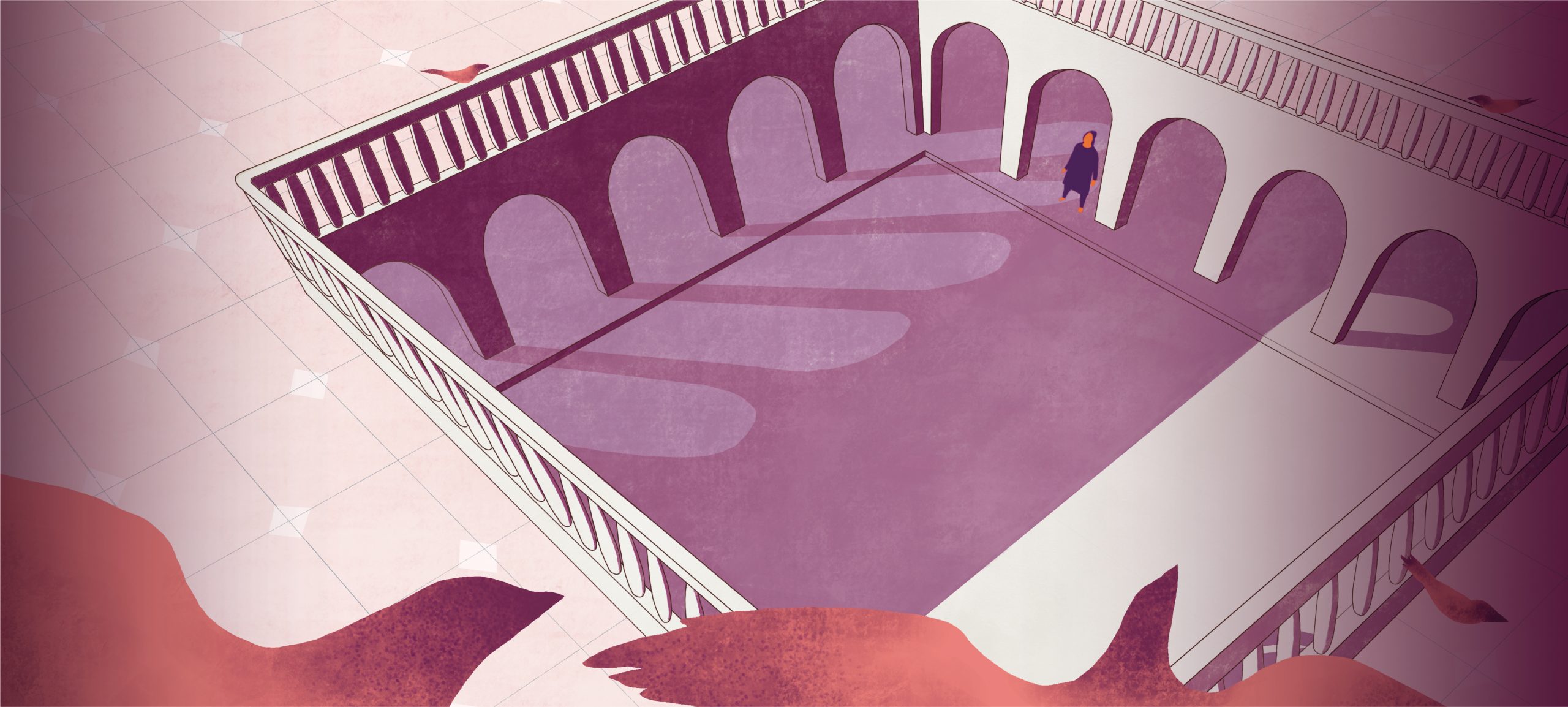
On his way back from Maine, Reacher decides to visit his father’s ancestral home – a place he’d heard a lot about as a kid. But the rural New Hampshire town turns out to be more of a mystery than a homecoming when he discovers no record of anyone named Reacher ever having lived there.
In “The Enemy” Reacher discovered his mother’s history. Now he’s on a quest to find his father’s.
CHAPTER ONE
Jack Reacher caught the last of the summer sun in a small town on the coast of Maine, and then, like the birds in the sky above him, he began his long migration south. But not, he thought, straight down the coast. Not like the orioles and the buntings and the phoebes and the warblers and the ruby-throated hummingbirds. Instead he decided on a diagonal route, south and west, from the top right-hand corner of the country to the bottom left, maybe through Syracuse, and Cincinnati, and St. Louis, and Oklahoma City, and Albuquerque, and onward all the way to San Diego. Which for an army guy like Reacher was a little too full of Navy people, but which was otherwise a fine spot to start the winter.
It would be an epic road trip, and one he hadn’t made in years.
He was looking forward to it.
He didn’t get far.
#
He walked inland a mile or so and came to a county road and stuck out his thumb. He was a tall man, more than six feet five in his shoes, heavily built, all bone and muscle, not particularly good looking, never very well dressed, usually a little unkempt. Not an overwhelmingly appealing proposition. As always most drivers slowed and took a look and then kept on going. The first car prepared to take a chance on him came along after forty minutes. It was a year-old Subaru wagon, driven by a lean middle-aged guy in pleated chino pants and a crisp khaki shirt. Dressed by his wife, Reacher thought. The guy had a wedding ring. But under the fine fabrics was a workingman’s body. A thick neck and large red knuckles. The slightly surprised and somewhat reluctant boss of something, Reacher thought. The kind of guy who starts out digging post holes and ends up owning a fencing company.
Which turned out to be a good guess. Initial conversation established the guy had started out with nothing to his name but his daddy’s old framing hammer, and had ended up owning a construction company, responsible for forty working people, and the hopes and dreams of a whole bunch of clients. He finished his story with a little facial shrug, part Yankee modesty, part genuine perplexity. As in, how did that happen? Attention to detail, Reacher thought. This was a very organized guy, full of notions and nostrums and maxims and cast-iron beliefs, one of which was at the end of summer it was better to stay away from both Route One and I-95, and in fact to get out of Maine altogether as fast as possible, which meant soon and sideways, on Route Two straight west into New Hampshire. To a place just south of Berlin, where the guy knew a bunch of back roads that would get them down to Boston faster than any other way. Which was where the guy was going, for a meeting about marble countertops. Reacher was happy. Nothing wrong with Boston as a starting point. Nothing at all. From there it was a straight shot to Syracuse. After which Cincinnati was easy, via Rochester and Buffalo and Cleveland. Maybe even via Akron, Ohio. Reacher had been in worse places. Mostly in the service.
They didn’t get to Boston.
The guy got a call on his cell, after fifty-some minutes heading south on the aforementioned New Hampshire back roads. Which were exactly as advertised. Reacher had to admit the guy’s plan was solid. There was no traffic at all. No jams, no delays. They were bowling along, doing sixty miles an hour, dead easy. Until the phone rang. It was hooked up to the car radio, and a name came up on the navigation screen, with a thumbnail photograph as a visual aid, in this case of a red-faced man wearing a hard hat and carrying a clipboard. Some kind of a foreman on a job site. The guy at the wheel touched a button and phone hiss filled the car, from all the speakers, like surround sound.
The guy at the wheel spoke into the windshield pillar and said, “This better be good news.”
It wasn’t. It was something to do with an inspector from a municipal buildings department, and a metal flue liner above a fireplace in an entrance lobby, which was properly insulated, exactly up to code, except that couldn’t be proved visually without tearing down the stonework, which was by that point already three stories high, nearly done, with the masons booked on a new job starting the next week, or alternatively without ripping out the custom walnut millwork in the dining room on the other side of the chimney, or the millwork in the closet above, which was rosewood and even more complicated, but the inspector was being a hardass about it and needed to see for himself.
The guy at the wheel glanced at Reacher and said, “Which inspector is it?”
The guy on the phone said, “The new one.”
“Does he know he gets a turkey at Thanksgiving?”
“I told him we’re all on the same side here.”
The guy at the wheel glanced at Reacher again, as if seeking permission, or offering an apology, or both, and then he faced front again and said, “Did you offer him money?”
“Five hundred. He wouldn’t take it.”
Then the cell signal ran out. The sound went garbled, like a robot drowning in a swimming pool, and then it went dead. The screen said it was searching.
The car rolled on.
Reacher said, “Why would a person want a fireplace in an entrance lobby?”
The guy at the wheel said, “It’s welcoming.”
“I think historically it was designed to repel. It was defensive. Like the campfire burning in the mouth of the cave. It was intended to keep predators at bay.”
“I have to go back,” the guy said. “I’m sorry.”
He slowed the car and pulled over on the gravel. All alone, on the back roads. No other traffic. The screen said it was still searching for a signal.
“I’m going to have to let you out here,” the guy said. “Is that OK?”
“No problem,” Reacher said. “You got me part of the way. For which I thank you very much.”
“You’re welcome.”
“Whose is the rosewood closet?”
“His.”
“Cut a big hole in it and show the inspector. Then give the client five commonsense reasons why he should install a wall safe. Because this is a guy who wants a wall safe. Maybe he doesn’t know it yet, but a guy who wants a fireplace in his entrance lobby wants a wall safe in his bedroom closet. That’s for damn sure. Human nature. You’ll make a profit. You can charge him for the time it takes to cut the hole.”
“Are you in this business too?”
“I was a military cop.”
The guy said, “Huh.”
Reacher opened the door and climbed out, and closed the door again behind him, and walked far enough away to give the guy space to swing the Subaru around, gravel shoulder to gravel shoulder, across the whole width of the road, and then to take off back the way he had come. All of which the guy did, with a brief gesture Reacher took to be a rueful good-luck wave. Then he got smaller and smaller in the distance, and Reacher turned back and continued walking, south, the way he was headed. Wherever possible he liked to maintain forward momentum. The road he was on was a two-lane, wide enough, well maintained, curved here and there, a little up and down. But no kind of a problem for a modern car. The Subaru had been doing sixty. Yet there was no traffic. None at all. Nothing coming, either way. Total silence. Just a sigh of wind in the trees, and the faint buzz of heat coming up off the blacktop.
Reacher walked on.
#
Two miles later the road he was on curved gently left, and a new road of equal size and appearance split off to the right. Not exactly a turn. More like an equal choice. A classic Y-shaped junction. Twitch the wheel left, or twitch the wheel right. Your call. Both options ran out of sight through trees so mighty in places they made a tunnel.
There was a road sign.
A tilted arrow to the left was labeled Portsmouth, and a tilted arrow to the right was labeled Laconia. But the right-hand option was written in smaller writing, and it had a smaller arrow, as if Laconia was less important than Portsmouth. A mere byway, despite its road being the same size.
Laconia, New Hampshire.
A name Reacher knew. He had seen it on all kinds of historic family paperwork, and he had heard it mentioned from time to time. It was his late father’s place of birth, and where he was raised, until he escaped at age seventeen and joined the Marines. Such was the vague family legend. Escaped from what had not been specified. But he never went back. Not once. Reacher himself had been born more than fifteen years later, by which time Laconia was a dead detail of the long-ago past, as remote as the Dakota Territory, where it was said some earlier ancestor had lived and worked. No one in the family ever went to either place. No visits. The grandparents had died young and were rarely referred to. There were apparently no aunts or uncles or cousins or any other kind of distant relatives. Which was statistically unlikely and suggested a rift of some kind. But no one other than his father had any real information, and no one ever made any real attempt to get any from him. Certain things were not discussed in Marine families. Much later as a captain in the army Reacher’s brother Joe was posted north and said something about maybe trying to find the old family homestead, but nothing ever came of it. Probably Reacher himself had said the same kind of thing, from time to time. He had never been there either.
Left or right. His call.
Portsmouth was better. It had highways and traffic and buses. It was a straight shot to Boston. San Diego beckoned. The Northeast was about to get cold.
But what was one extra day?
He stepped right, and chose the fork in the road that led to Laconia.
#
At that same late-afternoon moment, nearly thirty miles away, heading south on a different back road, was a worn-out Honda Civic, driven by a twenty-five-year-old man named Shorty Fleck. Next to him in the passenger seat was a twenty-five-year-old woman named Patty Sundstrom. They were boyfriend and girlfriend, both born and raised in Saint Leonard, which was a small faraway town in New Brunswick, Canada. Not much happened there. The biggest news in living memory was ten years previously, when a truck carrying twelve million bees overturned on a curve. The local paper reported with pride that the accident was the first of its kind in New Brunswick. Patty worked in a sawmill. She was the granddaughter of a guy from Minnesota who had slipped north half a century earlier, to beat the draft for Vietnam. Shorty was a potato farmer. His family had been in Canada forever. And he wasn’t particularly short. Maybe he had been once, as a kid. But now he figured he was what any eyewitness would call an average-looking guy.
They were trying to make it non-stop from Saint Leonard to New York City. Which by any standard was a hardcore drive. But they saw a big advantage in doing it. They had something to sell in the city, and saving a night in a hotel would maximize their profit. They had planned out their route, looping west to avoid the summer people heading home from the beaches, using back roads, Patty’s blunt finger on a map, her gaze ranging ahead for turns and signs. They had timed it out on paper, and figured it was a feasible course of action.
Except they had gotten a later start than they would have liked, due a little bit to general disorganization, but mostly due to the Honda’s aging battery not liking the newly crisp autumnal temperatures blowing in from the direction of Prince Edward Island. The delay put them in a long line at the U.S. border, and then the Honda started overheating, and needed nursing along below fifty miles an hour for an extended spell.
They were tired.
And hungry, and thirsty, and in need of the bathroom, and late, and behind schedule. And frustrated. The Honda was overheating again. The needle was kissing the red zone. There was a faint grinding noise from under the hood. Maybe the oil was low. No way of telling. All the dashboard lights had been on continuously for the last two and a half years.
Shorty asked, “What’s up ahead?”
Patty said, “Nothing.”
Her fingertip was on a wandering red line, which was labeled with a three-digit number, and which was shown running north to south through a jagged shape shaded pale green. A forested area. Which was obvious just from looking out the window. The trees crowded in, still and dark, laden down with heavy end-of-summer leaves. The map showed tiny red spider-web lines here and there, like the veins in an old lady’s leg, which were presumably all tracks to somewhere, but nowhere big. Nowhere likely to have a mechanic or a lube shop or radiator water. The best bet was about thirty minutes ahead, some ways east of south, a town with its name printed not too small and semi-bold, which meant it had to have at least a gas station. It was called Laconia.
She said, “Can we make another twenty miles?”
Now the needle was all the way in the red.
“Maybe,” Shorty said. “If we walk the last ten of them.”
He slowed the car and rolled along on a whisker of gas, which generated less new heat in the engine, but which also put less airflow through the radiator vanes, so the old heat couldn’t get away so fast, so in the short term the temperature needle kept on climbing. Patty rubbed her fingertip forward on the map, keeping pace with her estimate of their speed. There was a spider-web vein coming up on the right. A thin track, curling through the green ink to somewhere about an inch away. Without the rush of high-speed air coming in through her leaky window she could hear worse noises from the engine. Clunking, knocking, grinding. Faint, but definitely there.
Then up ahead on the right she saw the mouth of a narrow road. The spider-web vein, right on time. But more like a dark tunnel through the trees. At the entrance on a frost-heaved post was nailed a board, on which were screwed ornate plastic letters, and an arrow pointing into the tunnel. The letters spelled the word Motel.
“Should we?” she asked.
The car answered. The temperature needle was jammed against the stop. Shorty could feel the heat in his shins. The whole engine bay was baking. For a second he wondered what would happen if they kept on going. People talked about automobile engines blowing up and melting down. Which were figures of speech, surely. There would be no actual puddles of molten metal. No actual explosions would take place. Would they? No, it would just conk out, peacefully. Or seize up. It would coast gently to a stop. In the middle of nowhere, with no passing traffic and no cell signal.
“No choice,” he said, and braked and steered and turned in to the tunnel. Up close they saw the plastic letters on the sign had been painted gold, with a narrow brush and a steady hand, like a promise, like the motel was going to be a high-class place. There was a second sign, identical, facing drivers coming the other way.
“OK?” Shorty said.
The air felt cold in the tunnel. Easily ten degrees colder than the main drag. The trees met overhead. Last fall’s leaf litter and last winter’s mud were mashed together on the shoulders.
“OK?” Shorty said again.
They drove over a wire lying across the road. A fat rubbery thing, not much smaller than a garden hose. Like they had at gas stations, to ding a bell in the kiosk, to get the pump jockey out to help you.
Patty didn’t answer.
Shorty said, “How bad can it be? It’s marked on the map.”
“The track is marked.”
“The sign was nice.”
“I agree,” Patty said. “It was.”
They drove on.