Publish with Us

Follow Penguin

Follow Penguinsters

Follow Penguin Swadesh

The Struggle between Kama Pessimists, Optimists and Realists

Kama: The Riddle of Desire by Gurcharan Das is a fascinating account of love and desire that sheds new light on love, marriage, family, adultery and jealousy. The book weaves a compelling narrative soaked in philosophical, historical and literary ideas while talking about Kama optimists, pessimists and realists.
But how are these characterised? Let’s find out in these extracts from the book!
Kama Optimists
“Kama is a masculine noun, and in this speculative hymn is the first allusion to the cosmogonist function of desire. Although it does not explain which causes what, it does suggest that desire was the first act of consciousness, and links cosmic desire to the great heat of tapas, the generative heat of sexuality and consciousness.”

“It recognizes as well that desire leads to intention and intention leads to action. So before one can act, one must have the desire and the intention to act.”
 
Kama Pessimists

“This powerful, instinctual force easily gets out of hand. The renouncers cautioned the people about its link to our negative moral emotions – to greed, anger, attachment and other frailties of the human ego.”
 
Kama Realists
“Since kama is needed for perpetuating the human race, the establishment struck a compromise between the kama optimists and pessimists.”

“The Dharmashastras affirmed that kama is legitimate as long as it is for procreation in the second ashrama of life. Unlike animals, people are also motivated by fancy. Desire travels from our senses to our imagination, whence it creates an illusion around a particular person. Society ensures that this human ability is employed for marriage and the stability of society and survival of the species. Marriage has made kama acceptable by converting it into ‘conjugal sexuality’.”


In his magnificent prose, Gurcharan Das examines how to cherish desire in order to live a rich, flourishing life, arguing that if dharma is a duty to another, kama is a duty to oneself. Available Now!

5 Things To Know about Murakami's Killing Commendatore

1. Haruki Murakami’s new novel, Killing Commendatore, will be published in the UK on the 9th October 2018.
2. The novel is a two-part story in one volume – Part 1: The Idea Made Visible and Part 2: The Shifting Metaphor.
3. The novel is centred on art and its creation. The story centres on a painter dealing with his separation from his wife. He goes to stay in a famous artist’s house and discovers a mysterious painting in the attic that shares the book’s title.
4. The subject of this painting is a scene from Mozart’s opera Don Giovanni, showing the killing of Donna Anna’s father (Il Commendatore, the captain of a group of knights) by Don Giovanni, but set in 7th-century Japan and painted in a traditional style.
5. Murakami’s stories vary widely in tone and style. This haunting and multi-layered novel is reminiscent of his masterpiece, The Wind-up Bird Chronicle, and takes his narrative art in new and exciting directions.

Killing Commendatore by Haruki Murakami

The man was tall, and he was dressed the same as when I had seen him last. His face-that-wasn’t-a-face was half hidden by a wide-brimmed black hat, and he had on a long, equally dark coat.
“I came here so you could draw my portrait,” the faceless man said, after he’d made sure I was fully awake. His voice was low, toneless, flat. “You promised you would. You remember?”
“Yes, I remember. But I couldn’t draw it then because I didn’t have any paper,” I said. My voice, too, was toneless and flat. “So to make up for it I gave you a little penguin charm.”
“Yes, I brought it with me,” he said, and held out his right hand. In his hand—which was extremely long—he held a small plastic penguin, the kind you often see attached to a cell phone strap as a good-luck charm. He dropped it on top of the glass coffee table, where it landed
with a small clunk.
“I’m returning this. You probably need it. This little penguin will be the charm that should protect those you love. In exchange, I want you to draw my portrait.”
I was perplexed. “I get it, but I’ve never drawn a portrait of a person without a face.”
My throat was parched.
“From what I hear, you’re an outstanding portrait artist. And there’s a first time for everything,” the faceless man said. And then he laughed.
At least, I think he did. That laugh-like voice was like the empty sound of wind blowing up from deep inside a cavern.
He took off the hat that hid half of his face. Where the face should have been, there was nothing, just the slow whirl of a fog.
I stood up and retrieved a sketchbook and a soft pencil from my studio. I sat back down on the sofa, ready to draw a portrait of the man with no face. But I had no idea where to begin, or how to get started. There was only a void, and how are you supposed to give form to something
that does not exist? And the milky fog that surrounded the void was continually changing shape.
“You’d better hurry,” the faceless man said. “I can’t stay here for long.”
My heart was beating dully inside my chest. I didn’t have much time. I had to hurry. But my fingers holding the pencil just hung there in midair, immobilized. It was as though everything from my wrist down into my hand were numb. There were several people I had to protect, and all I was able to do was draw pictures. Even so, there was no way I could draw him. I stared at the whirling fog. “I’m sorry, but your time’s up,” the man without a face said a little while later. From his faceless mouth, he let out a deep breath, like pale fog hovering over a river.
“Please wait. If you give me just a little more time—”
The man put his black hat back on, once again hiding half of his face.
“One day I’ll visit you again. Maybe by then you’ll be able to draw me. Until then, I’ll keep this penguin charm.”
Then he vanished. Like a mist suddenly blown away by a freshening breeze, he vanished into thin air. All that remained was the unoccupied chair and the glass table. The penguin charm was gone from the tabletop.
It all seemed like a short dream. But I knew very well that it wasn’t. If this was a dream, then the world I’m living in itself must all be a dream.
Maybe someday I’ll be able to draw a portrait of nothingness. Just like another artist was able to complete a painting titled Killing Commendatore. But to do so I would need time to get to that point. I would have to have time on my side.
IF THE SURFACE IS FOGGED UP
From May until early the following year, I lived on top of a mountain near the entrance to a narrow valley. Deep in the valley it rained constantly in the summer, but outside the valley it was usually sunny. This was due to the southwest wind that blew off the ocean. Moist clouds carried by the wind entered the valley, bringing rain as they made their way up the slopes. The house was built right on the boundary line, so often it would be sunny out in front while heavy rain fell in back. At first I found this disconcerting, but as I got used to it, it came to seem natural.
Low patches of clouds hung over the surrounding mountains. When the wind blew, these cloud fragments, like some wandering spirits from the past, drifted uncertainly along the surface of the mountains, as if in search of lost memories. The pure white rain, like fine snow, silently swirled around on the wind. Since the wind rarely let up, I could even get by in the summer without air conditioning.
The house itself was old and small, but the garden in back was spacious. Left to its own devices it was a riot of tall green weeds, and a family of cats made its home there. When a gardener came over to trim the grass, the cat family moved elsewhere. I imagine they felt too exposed. The family consisted of a striped mother cat and her three kittens. The mother was thin, with a stern look about her, as if life had dealt her a bad hand.
The house was on top of the mountain, and when I went out on the terrace and faced southwest, I could catch a glimpse of the ocean through the woods. From there the ocean was the size of water in a washbowl, a minuscule sliver of the huge Pacific. A real estate agent I know told me that even if you can see a tiny portion of the ocean like I could here, it made all the difference in the price of the land. Not that I cared about an ocean view. From far off, that slice of ocean was nothing more than a dull lump of lead. Why people insisted on having an ocean view was beyond me. I much preferred gazing at the surrounding mountains. The mountains on the opposite side of the valley were in constant flux, transforming with the seasons and the weather, and I never grew tired of these changes.
Back then my wife and I had dissolved our marriage, the divorce papers all signed and sealed, but afterward things happened and we ended up making a go of marriage one more time. I can’t explain it. The cause and effect of how this all came about eluded even those of us directly involved, but if I were to sum it up in a word, it would come down to some overly trite phrase like “we reconciled.” Though the nine-month gap before the second time we married (between the dissolution of our first marriage and the beginning of our second marriage, in other words) stood there, a mouth agape like some deep canal carved out of an isthmus.
Nine months—I had no idea if this was a long period or a short period for a separation. Looking back on it later, it sometimes seemed as though it lasted forever, but then again it passed by in an instant. My impression changed depending on the day. When people photograph an object, they often put a pack of cigarettes next to it to give the viewer a sense of the object’s actual size, but the pack of cigarettes next to the images in my memory expanded and contracted, depending on my mood at the time. Like the objects and events in constant flux, or perhaps in opposition to them, what should have been a fixed yardstick inside the framework of my memory seemed instead to be in perpetual motion.
Not to imply that all my memories were haphazard, expanding and contracting at will. My life was basically placid, well adjusted, and, for the most part, rational. But those nine months were different, a period of inexplicable chaos and confusion. In all senses of the word that period was the exception, a time unlike any other in my life, as though I were a swimmer in the middle of a calm sea caught up in a mysterious whirlpool that came out of nowhere.
That may be the reason why, when I think back on that time (as you guessed, these events took place some years ago), the importance, perspective, and connections between events sometimes fluctuate, and if I take my eyes off them even for a second, the sequence I apply to them is quickly supplanted by something different. Still, here I want to do my utmost, as far as I can, to set down a systematic, logical account. Maybe it will be a wasted effort, but even so I want to cling tightly to the hypothetical yardstick I’ve managed to fashion. Like a helpless swimmer who snatches at a scrap of wood that floats his way.
When I moved into that house, the first thing I did was buy a cheap used car. I’d basically driven my previous car into the ground and had to scrap it, so I needed to get a new one. In a suburban town, especially living alone on top of a mountain, a car was a must in order to go shopping. I went to a used Toyota dealership outside Odawara and found a great deal on a Corolla station wagon. The salesman called it powder blue, though it reminded me more of a sick person’s pale complexion. It had only twenty-two thousand miles on it, but the car had been in an accident at one point so they’d drastically reduced the sticker price. I took it for a test drive, and the brakes and tires seemed good. Since I didn’t plan to drive it on the highway much, I figured it would do fine.
Masahiko Amada was the one who rented the house to me. We’d been in the same class back in art school. He was two years older, and was one of the few people I got along well with, so even after we finished college we’d occasionally get together. After we graduated he gave up on being an artist and worked for an ad agency as a graphic designer. When he heard that my wife and I had split up, and that I’d left home and had nowhere to stay, he told me the house his father owned was vacant and asked if I’d like to stay there as a kind of caretaker. His father was Tomohiko Amada, a famous painter of Japanese-style paintings. His father’s house (which had a painting studio) was in the mountains outside Odawara, and after the death of his wife he’d lived there comfortably by himself for about ten years. Recently, though, he’d been diagnosed with dementia, and had been put in a high-end nursing home in Izu Kogen. As a result, the house had been empty for several months.
“It’s up all by itself on top of a mountain, definitely not the most convenient location, but it’s a quiet place. That I guarantee for sure,” Masahiko said. “The perfect environment for painting. No distractions whatsoever.”
The rent was nominal.
“If the house is vacant, it’ll fall apart, and I’m worried about breakins and fires. Just having someone there all the time will be a load off my mind. I know you wouldn’t feel comfortable not paying any rent, so I’ll make it cheap, on one condition: that I might have to ask you to leave on short notice.”
Fine by me. Everything I owned would fit in the trunk of a small car, and if he ever asked me to clear out, I could be gone the following day.
I moved into the house in early May, right after the Golden Week holidays. The house was a one-story, Western-style home, more like a cozy cottage, but certainly big enough for one person living alone. It was on top of a midsized mountain, surrounded by woods, and even Masahiko wasn’t sure how far the lot extended. There were large pine trees in the back garden, with thick branches that spread out in all directions. Here and there you’d find stepping stones, and there was a splendid banana plant next to a Japanese stone lantern.
Masahiko was right about it being a quiet place. But looking back on it now, I can’t say that there were “no distractions whatsoever.”
During the eight months after I broke up with my wife and lived in this valley, I slept with two other women, both of whom were married. One was younger than me, the other older. Both were students in the art class I taught.
When I sensed that the timing was right, I invited them to sleep with me (something I would normally never do, since I’m fairly timid and not at all used to that sort of thing). And they didn’t turn me down. I’m not sure why, but I had few qualms about asking them to sleep with me, and it seemed to make perfect sense at the time. I felt hardly a twinge of guilt at inviting my students to have sex with me. It seemed as ordinary as asking somebody you passed on the street for the time.
The first woman I slept with was in her late twenties. She was tall with large, dark eyes, a trim waist, and small breasts. A wide forehead, beautiful straight hair, her ears on the large side for her build. Maybe not exactly a beauty, but with such distinctive features that if you were an artist you’d want to draw her. (Actually I am an artist, so I did sketch her a number of times.) She had no children. Her husband taught history at a private high school, and he beat her. Unable to lash out at school, he took his frustrations out at home. He was careful to avoid her face, but when she was naked I saw all the bruises and scars. She hated me to see them and when she took off her clothes, she insisted on turning off the lights.
She had almost no interest in sex. Her vagina was never wet and penetration was painful for her. I made sure there was plenty of foreplay, and we used lubricant gel, but nothing made it better. The pain was terrible, and it wouldn’t stop. Sometimes she even screamed in agony.
Even so, she wanted to have sex with me. Or at least she wasn’t averse to it. Why, I wonder? Maybe she wanted to feel pain. Or was seeking the absence of pleasure. Or perhaps she was after some sort of selfpunishment. People seek all kinds of things in their lives. There was one thing, though, that she wasn’t looking for. And that was intimacy.
She didn’t want to come to my house, or have me come to hers, so to have sex we always drove in my car to a love hotel near the shore. We’d meet up in the large parking lot of a chain restaurant, get to the hotel a little after one p.m., and leave before three. She always wore a large pair of sunglasses, even when it was cloudy or raining. One time, though, she didn’t show up, and she missed art class too. That was the end of our short, uneventful affair. We slept together four, maybe five times.
The other married woman I had an affair with had a happy home life. At least it didn’t seem like her family life was lacking anything. She was forty-one then (as I recall), five years older than me. She was petite, with an attractive face, and she was always well dressed. She practiced yoga every other day at a gym and had a flat, toned stomach. She drove a red Mini Cooper, a new car she’d just purchased, and on sunny days I could spot it from a distance, glinting in the sun. She had two daughters, both of whom attended a pricey private school in upscale Shonan, which the woman was a graduate of too. Her husband ran some sort of company, but I never asked her what kind of firm it was. (Naturally I didn’t want to know.)
I have no idea why she didn’t flatly turn down my brazen sexual overtures. Maybe at the time I had some special magnetism about me that pulled in her spirit as if (so to speak) it were a scrap of iron. Or maybe it had nothing to do with spirit or magnetism, and she’d simply been needing physical satisfaction outside marriage and I just happened to be the closest man around.
Whatever it was, I seemed able to provide it, openly, naturally, and she commenced sleeping with me without hesitation. The physical aspect of our relationship (not that there was any other aspect) went smoothly. We performed the act in an honest, pure way, the purity almost reaching the level of the abstract. It took me by surprise when I suddenly realized this, in the midst of our affair.
But at some point she must have come to her senses, since one gloomy early-winter morning, she called me and said, “I think we shouldn’t meet anymore. There’s no future in it.” Or something to that effect. She sounded like she was reading from a script.
And she was absolutely right. Not only was there no future in our relationship, there was no real basis for it, no there there.
Back when I was in art school I mainly painted abstracts. Abstract art is a hard thing to define, since it covers such a wide range of works. I’m not sure how to explain the form and subject matter, but I guess my definition would be “paintings that are nonfigurative images, done in an unrestrained, free manner.” I won a few awards at small exhibitions, and was even featured in some art magazines. Some of my instructors and friends praised my work and encouraged me. Not that anyone pinned his hopes on my future, but I do think I had a fair amount of talent as an artist. Most of my oil paintings were done on very large canvases and required a lot of paint, so they were expensive to create. Needless to say, the possibility of laudable people appearing, ready to purchase an unknown artist’s massive painting to hang on the wall at their home, was pretty close to zero.
Since it was impossible to make a living painting what I wanted, once I graduated, I started taking commissions for portraits to make ends meet. Paintings of so-called pillars of society—presidents of companies, influential members of various institutes, Diet members, prominent figures in various locales (there were some differences in the width of these “pillars”), all painted in a figurative way. They were looking for a realistic, dignified, staid style, totally utilitarian types of paintings to be hung on the wall in a reception area or a company president’s office. In other words, my job compelled me to paint paintings that ran totally counter to my artistic aims. I could add that I did it reluctantly, and that still wouldn’t amount to any artistic arrogance on my part.
There was a small company in Yotsuya that specialized in portrait commissions, and through an introduction by one of my art school teachers, I signed an exclusive contract with them. I wasn’t paid a fixed salary, but if I turned out enough portraits, I made plenty for a young, single man to live on. It was a modest lifestyle—I was able to rent a small apartment alongside the Seibu Kokubunji railway line, usually managed to afford three meals a day, would buy a bottle of inexpensive wine from time to time, and went out on the occasional date to see a movie. Several years went by, and I decided that I’d focus on portrait painting for a fixed period, and then, once I’d made enough to live on for a while, I’d return to the kind of paintings I really wanted to do. Portraits were just meant to pay the rent. I never planned to paint them forever.

Three James Patterson Titles your Little Ones Shouldn't Miss

James Patterson has created more enduring fictional characters than any other novelist writing today and has sold over 350 million books worldwide and currently holds the Guinness World Record for the most #1 New York Times bestsellers.
From Hero to Zero is his latest book, in which Rafe visits the incredible city of London with his class. Out of all of his adventures, this trip could prove to be Rafe’s most embarrassing yet, undoing everything good he has going for him back home!
Here are three titles in The Middle School series by him that your little ones must read.
From Hero To Zero

 
After a mostly-successful stint at Hills Valley Middle School, Rafe is excited to visit the incredible city of London with his class. But it’s no surprise that Rafe’s bad luck follows him across the pond, putting him in one crazy situation after another – all under the watchful eye of his bad-tempered principal.
The Nerdiest, Wimpiest and Dorkiest

 
Comedian Jamie Grimm can’t help feeling like he’s reached the top – he has his own smash hit TV show and he’s won a national funny-kid competition. But now he’s taking his fame and fortune to international levels by competing in the upcoming world kid comic contest! Will Jamie prove that he’s the funniest kid on earth – or does he stand (or sit!) to lose his crown?
Dog Diaries


Oh boy, oh boy, oh boy! I’ve been waiting for ages to tell my story, and now it’s finally happening! Being Rafe’s dog isn’t always easy, but it is always EXCITING! I’ve got so much to tell you about:
-How I protect the yard from birds, raccoons, squirrels, raccoons, mail carriers…and did I mention RACCOONS?
-Sniffing pooch posteriors for the latest canine news.
-And the terrifying monster hiding in the hall closet: the vacuum cleaner!

For more posts like this, follow Penguin India on Facebook!

And The Ocean was Our Sky – the Birth of the Idea

With lush and atmospheric art of Rovina Cai woven in throughout, “And The Ocean Was Our Sky” by Patrick Ness turns the familiar tale of “Moby Dick” upside down and tells a story all its own with epic triumph and devastating fate.
But where did the idea for And The Ocean Was Our Sky come from? Here is an excerpt from the introduction of the book by Patrick Ness, where he tells us just that. Take a look!


And The Ocean Was Our Sky started with a simple question, and then got weirder from there. I was thinking one day, “What if Moby Dick was told by the whale?” I’m always fascinated by who tells a story and how that changes it. A good example is a story like Wicked, where the Wicked Witch of the West has an entirely different take on Oz. I love that. Imagine if cats got to write all the books about what dogs are like.
But then the idea kept growing. What if whales hunted men like men hunted whales? What if there was a world where they both did that at the same time? What legends would arise? Most interestingly, how strange and compelling to look through the eyes of a main character who, at the start at least, views us as little more than prey.
Which spawned the character of Bathsheba, our narrator. Young, but tough. Moreover, a strikingly different kind of intellect and emotions than a human might have. I’m Scandinavian, and the stereotype about us is our stoicism. I’ve argued for years that stoicism doesn’t mean unemotional; it means privately emotional. And that’s what a whale felt like to me. There are deep, deep feelings in her, as deep as the sea. What happens when they get close to the surface?
And then the illustrations! Good God. I can barely draw a stick figure, and the beauty and breadth and drama that Rovina Cai has brought to this book – in much the same way the genius Jim Kay did on A Monster Calls – are astonishing to me as things I could never have thought of. She took the story to a whole new level. Bathsheba is alive and on the page. Facing her demons.
Because to my surprise, this became in the end a story of the devils we chase, the devils we hunt, the devils we perhaps create. And our need for constant vigilance over those very devils who would seek power over all of us. It became a very contemporary story of the power of rumour, the power that words have to change and sometimes even make reality. And not always in a good way.
And so here are the first couple of chapters of the story of my brave and powerful Bathsheba, coming to understand the scope of the world, hoping that she’s not too late…
All best,
Patrick Ness
March 2018

Kabul under the Taliban Regime – an Eyewitness Account from Chasing the Monk's Shadow

In 627 AD, the Chinese monk Xuanzang set off on an epic journey along the Silk Road to India to study Buddhist philosophy with the Indian masters. Records of his journey remain a valuable historical source. Fourteen hundred years later, Mishi Saran follows in Xuanzang’s footsteps to the fabled oasis cities of China and Central Asia, now vanished kingdoms in Pakistan and Afghanistan and India’s Buddhist centres. She chronicles her journey in the book Chasing the Monk’s Shadow.
This path breaking travelogue includes an extraordinary eyewitness account of Kabul under the Taliban regime, just one month before 9/11.
Here is an excerpt about this from the book:


Ashraf gave me a few survival tips. ‘At around 1 p.m. and 5 p.m., the ministry to fight vice and promote virtue patrols the city,’ he said. ‘That’s the time to be careful.’’
That was what kept Kabulis cowed, their eyes filled with fear, men and women. This old and gracious city stank of fear.
‘My barber trimmed my beard, but too much. I told him, you idiot, I’m too scared to go out now.’ Men as much as women felt the pressure of strictures imposed by the Taliban.
Tolibohn.
A semblance of calm drifted back into my head, but in thin layers. The Taliban brought peace, Ashraf said. Kabul was so divided among the fighters, divided by ethnic rule. We sipped our tea and chatted, but soon I wanted to take his leave and lie in my bed with the sheets over my head. It was a lot to digest.
‘Come,’ Ashraf said kindly. ‘Let me drop you back, I will show you around Kabul. We’ll say I’m a taxi driver. Actually, I did used to drive a taxi. You sit in the back so they don’t stop us, because men and women don’t sit together.’
As the afternoon faded into evening, we drove around Kabul. Ashraf pointed out from the front seat of his battered yellow car the old Indian embassy, the fortified Iranian one, the Turkish—all gone, all emptied out, locked up behind high walls. We drove by the Kabul Hotel where a bomb had, two weeks ago, smashed a wall in, so that a pile of rubble descended onto the pavement. Was it the opposition? A discontented Taliban faction? Nobody knew. The front line was once again just forty kilometers north of Kabul.
Ashraf harked back to 1994–5, when the two sides fought over Kabul, when shells rang across the city and the inhabitants crumpled in their homes.
‘Here is the office of the justice minister, he’s a hardliner,’ Ashraf lowered his voice. ‘Here’s the office of the finance minister, he’s also a hardliner.’
As we drew up at the Ariana Hotel gate, he pointed to the traffic circle ahead: ‘That’s where Najibullah was hanged from.’ My stomach lurched. There was so much I did not know, but I did know that in 1996 the world saw images of a mutilated President Najibullah hanging from a traffic post, that Najibullah’s widow had fled to New Delhi and still lived there. I tried not to look at the traffic circle, though it was empty and perfectly innocuous. It’s as though places where violence happened bore their traces. Nothing much, only that at dusk that spot was a darker shade of grey. The weekend trickled by. Ensconced in the Ariana, one afternoon, I simply decided not to be afraid. It was crippling me. I had come to Kabul pulling a truckload of inherited fear up the mountains with me. I had come in full mental armour, my mind clogged with walls of it. It was as though, expecting the worst, I had found a few butterflies, a rose garden and some bird droppings.
‘I need to telephone,’ I said to the man in the lobby, mimicking a phone, holding a fist to my ear with thumb and pinkie held out. In Urdu, we made arrangements to go to the public phone booth in the market. One of the Afghans from the hotel would escort me.
I phoned S. in Hong Kong. His voice quickened with worry.
‘I’m okay,’ I said. ‘I’m in Kabul. I’m staying at the Ariana Hotel.’ I got used to broken-down, beaten-up Kabul. I could banish the fear, but not the sadness. I felt wretched all the time, for this country, for the Afghan children who came up, fair, with pointed chins and clear eyes, to beg. They were tiny, their hair mussed and caked. The children, old men and women and sometimes a woman in a burkha lurched towards me, hands held out, whispering. I couldn’t see their eyes, dark behind the lilac net. But I could sense the desperation.
Unlike the Indians, who imbue their begging with a certain professionalism, even humour, these were not people used to supplication. An old woman hobbled up to me, palm held out. I handed her a bag of apples I had bought. She gestured, no.
‘What is she saying?’ I asked the driver.
‘She has no teeth, she says she can’t eat the apples.’
‘Oh.’ I took the apples back and gave her the peaches instead.


With its riveting mix of lively reportage, high adventure, historical inquiry and personal memoir, Chasing The Monk’s Shadow is a path-breaking travelogue. For more posts like this, follow Penguin India on Facebook!

Your Puffin Reads this Autumn

This autumn, we have a list of books full of adventure for your little ones! You can send them to solve a mystery with Feluda and Topshe or to meet the ghosts from Ruskin Bond’s world. They can hang with the two most popular avatars of Lord Vishnu or read Sonia Mehta’s fun series on how to deal with feelings!
Here is the list of Puffin Reads to choose from:

Feluda Omnibus by Satyajit Ray


Including three unputdownable mysteries by master storyteller Satyajit Ray, this omnibus edition is the perfect introduction to the greatest exploits of Feluda and his sidekick, Topshe. Traversing fascinating landscapes and electrifying escapades, this collection is an absolute classic and a must-have for fans of detective fiction.

The Upside-down King by Sudha Murty


The tales in this collection surround the two most popular avatars of Lord Vishnu-Rama and Krishna-and their lineage. Countless stories about the two abound, yet most are simply disappearing from the hearts and minds of the present generation. Bestselling author Sudha Murty takes you on an arresting tour, all the while telling you of the days when demons and gods walked alongside humans, animals could talk and gods granted the most glorious boons to common people.

Wind on the Haunted Hill by Ruskin Bond


A gritty, hair-raising story about friendship, courage and survival from India’s favourite teller of tales, this stunning edition is an absolute must-have to introduce young readers to the magic of Ruskin Bond’s craft.
 

Dealing with Feelings Series by Sonia Mehta


Sonia Mehta is a children’s writer who believes that sparking off a child’s imagination opens up a world of adventure. Here is a list of books by her, that your little one will enjoy (and learn from)!

  1. Being Happy Is Fun
  2. It’s not nice to be jealous
  3. It’s okay to be confused
  4. Being Sad isn’t any fun
  5. Being Bored isn’t fun
  6. Being Silly is Silly


For more posts like this one, follow Penguin India on Facebook!

Like the biological heart, the metaphorical heart has both size and shape

The spark of life, fount of emotion, house of the soul – the heart lies at the centre of every facet of our existence. It’s so bound up in our deepest feelings that it can physically change shape when we experience emotional trauma.
Here is an excerpt from Sandeep Jauhar’s book, Heart: A History that talks about the metaphorical heart.


If the heart bestows life and death, it also instigates metaphor: it is a vessel that fills with meaning. The fact that my mother associated my lack of courage with a small heart is no surprise; the heart has always been linked to bravery. During the Re naissance, the heart on a coat of arms was a symbol of faithfulness and courage. Even the word “courage” derives from the Latin cor, which means “heart.” A person with a small heart is easily frightened. Discouragement or fear is expressed as a loss of heart.
This metaphor exists across cultures. After my grandfather died, my father, only fourteen, enrolled at Kanpur Agricultural College, the first in his family to pursue higher education. Every morning he would walk six kilometers to the academy because the family could not afford a bicycle. On the way home, lugging his bag of borrowed books, he would meet my grandmother at an appointed spot on the dusty road. When he would complain of feeling tired or overwhelmed, she would admonish her grieving boy to show strength. “Dil himmauth kar,” she’d say. Take heart.
Shakespeare explored this motif in his tragedies. In Antony and Cleopatra, Dercetas describes the warrior Antony’s suicide by the hand that “with the courage which the heart did lend it, splitted the heart.” Antony was distraught over what he believed to be Cleopatra’s treachery, and in describing Antony’s heartbreak, Shakespeare refers to another conception of the heart: as the locus of romantic love. “I made these wars for Egypt and the Queen,” Antony declares, “whose heart I thought I had, for she had mine.” As the critic Joan Lord Hall writes, Antony is conflicted over two very different conceptions of the metaphorical heart. In the end, his craving for battlefield glory overwhelms his desire for passionate fulfillment and leads to his self- destruction.
The richness and breadth of human emotions are perhaps what distinguish us most from other animals, and throughout history and across many cultures, the heart has been thought of as the place where those emotions reside. The word “emotion” derives from the French verb émouvoir, meaning “to stir up,” and perhaps it is only logical that emotions would be linked to an organ characterized by its agitated movement. The idea that the heart is the locus of emotions has a history spanning from the ancient world. But this symbolism has endured.
If we ask people which image they most associate with love, there is no doubt that the valentine heart would top the list. The ♥ shape, called a cardioid, is common in nature. It appears in the leaves, flowers, and seeds of many plants, including silphium, which was used for birth control in the early Middle Ages and may be the reason why the heart became associated with sex and romantic love (though the heart’s resemblance to the vulva probably also has something to do with it). Whatever the reason, hearts began to appear in paintings of lovers in the thirteenth century. ( These depictions at first were restricted to aristocrats and members of the court— hence the term “courtship.”) Over time the pictures came to be colored red, the color of blood, a symbol of passion. Later, heart-shaped ivy, reputed for its longevity and grown on tombstones, became an emblem of eternal love. In the Roman Catholic Church, the ♥ shape became known as the Sacred Heart of Jesus; adorned with thorns and emitting ethereal light, it was an insignia of monastic love. Devotion to the Sacred Heart reached peak intensity in Eu rope in the Middle Ages. In the early fourteenth century, for instance, Heinrich Seuse, a Dominican monk, in a fit of pious fervor (and gruesome self-mutilation), took a stylus to his own chest to engrave the name of Jesus onto his heart. “Almighty God,” Seuse wrote, “give me strength this day to carry out my desire, for thou must be chiseled into the core of my heart.” The bliss of having a visible pledge of oneness with his true love, he added, made the very pain seem like a “sweet delight.” When his wounds healed in the spongy tissue, the sacred name was written in letters “the width of a cornstalk and the length of the joint of [a] little finger.” This association between the heart and different types of love has withstood modernity. When Barney Clark, a retired dentist with end- stage heart failure, received the first permanent artificial heart in Salt Lake City, Utah, on December 1, 1982, his wife of thirty- nine years asked the doctors, “ Will he still be able to love me?”
Today we know that emotions do not reside in the heart per se, but we nevertheless continue to subscribe to the heart’s symbolic connotations. Heart metaphors abound in everyday life and language. To “take heart” is to have courage. To “speak from the heart” conveys sincerity. We say we “learned by heart” what we have understood thoroughly or committed to memory. To “take something to heart” reflects worry or sadness. If your “heart goes out to someone,” you sympathize with his or her problems. Reconciliation or repentance requires a “change of heart.”
Like the biological heart, the metaphorical heart has both size and shape. A bighearted person is generous; a small- hearted person is selfish (though when my mother said I had a small heart, I believe she meant I had a surfeit of compassion). The metaphorical heart is also a material entity. It can be made of gold, stone, even liquid (for example, being poured when we confess something). The metaphorical heart also possesses temperature— warm, cold, hot—as well as a characteristic geography. The center of a place is its heart. Your “heart of heart,” as Hamlet tells Horatio, is the place of your most sacred feelings. To “get to the heart” of something is to find out what is truly important, and just as the statue or monument at the heart of a city often has something to do with love, bravery, or courage, so too it is with the human heart.


Affecting, engaging, and beautifully written, Heart: A History takes the full measure of the only organ that can move itself. For more posts like this, follow Penguin India on Facebook!

Things You Didn’t Know About R.K. Narayan

‘R.K. Narayan’s novels are like a box of Indian sweets. Each novel is a delectable treat, different in subtle ways,’ says Alexander McCall Smith. Being one of the leading authors who wrote Indian literature in English, Narayan received many honours including the Padma Bhushan. His most famous works include The Guide, Swami and Friends and Malgudi Days, which explore ordinary life with humour and compassion.
Here are a few things you didn’t know about R.K. Narayan:

A sweeping tale of abduction, battle, and courtship played out in a universe of deities and demons, The Ramayana is familiar to virtually every Indian. For more posts like this, follow Penguin India on Facebook!

The Penguin October Bookshelf: What to Read this Fall

This fall, we have a number of books, across various genres, for you to enjoy. You can choose by author or by subject, or pick something you’d never see yourself reading!

The Radical in Ambedkar: Critical Reflections – Anand Teltumbde and Suraj Yengde (Eds)


This landmark volume, edited and introduced by Anand Teltumbde and Suraj Yengde, establishes B.R. Ambedkar as the most powerful advocate of equality and fraternity in modern India. An extraordinary collection of immense breadth and scholarship that challenges the popular understanding of Ambedkar, The Radical in Ambedkar is essential reading for all those who wish to imagine a new future.

The Best Couple Ever – Novoneel Chakraborty


Do you flaunt your happy moments in the form of filtered photographs on Facebook, Instagram, etc.?
Do you and your partner set relationship goals for others on social media?
Do you make people jealous of the perfect life you are living?
If no, then chill. If yes, then congrats! You are their next target.

Open Embrace: India-US Ties in the Age of Modi and Trump – Varghese K. George


Varghese K. George, in Open Embrace, provides an overview of the changes occurring in America’s relations with the world under the Trump presidency and what it means for India. While Presidents Barack Obama and George W. Bush emphasized that the US’s relations with India would shape the twenty-first century, Trump’s ‘America First’ politics is a repudiation of the nation’s strategic culture.

Invisible Men: Inside India’s Transmasculine Network – Nandini Krishnan


In this remarkable, intimate book, Nandini Krishnan burrows deep into the prejudices encountered by India’s transmen, the complexities of hormonal transitions and sex reassignment surgery, issues of social and family estrangement, and whether socioeconomic privilege makes a difference. With frank, poignant, often idiosyncratic interviews that braid the personal with the political, the informative with the offhand, she makes a powerful case for inclusivity and a non-binary approach to gender.

The Great Smog of India – Siddharth Singh


With clarity and compelling arguments, and with a dash of irony, Siddharth Singh demystifies the issue of air pollution: where we are, how we got here, and what we can do now. He discusses not only developments in sectors like transport, industry and energy production that silently contribute to air pollution, but also the ‘agricultural shock’ to air quality triggered by crop burning in northern India every winter. He places the air pollution crisis in the context of India’s meteorological conditions and also climate change. Above all, and most alarmingly, he makes clear what the repercussions will be if we remain apathetic.

What China and India Once Were: The Pasts That May Shape the Global Future – Sheldon Pollock and Benjamin Elman


In the early years of the 21st century, China and India have emerged as world powers. In many respects, this is a return to the historical norm for both countries. For much of the early modern period, China and India were global leaders in a variety of ways. In this book, prominent scholars seek to understand modern China and India through an unprecedented comparative analysis of their long histories.

Sikkim: Dawn of Democracy – G.B.S. Sidhu


It was in 1973 that G.B.S. Sidhu, a young official with the newly set-up Research and Analysis Wing (R&AW), took charge of the field office in Gangtok in 1973. With an insider’s view of the events that led to the Chogyal’s ouster, he presents a first-hand account of the fledgling democracy movement and the struggle for reforms led by Kazi Lhendup Dorji in a society that was struggling to come to terms with the modern world.

Doab Dil – Sarnath Banerjee


Why was the appreciation of gardens considered a symbol of Victorian aristocracy? Why do the Japanese find it easy to power-nap in public spaces? Why did Charles Baudelaire ascribe Samuel Taylor Coleridge’s restless nocturnal wanderings to a pathological dread of returning home? And what do any of these mean for the average person immersed in the ‘daily decathlon’ of life?

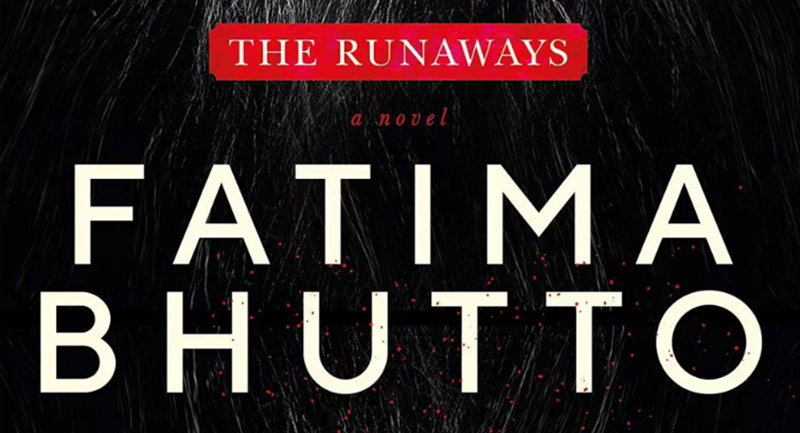
The Runaways – Fatima Bhutto


Anita Rose lives in a concrete block in one of Karachi’s biggest slums, languishing in poverty with her mother and older brother. On the other side of Karachi lives Monty, whose father owns half the city. And far away in Portsmouth, Sunny fits in nowhere. These three disparate lives will cross paths in the middle of a desert, a place where life and death walk hand-in-hand, and where their closely guarded secrets will force them to make a terrible choice.

What We Talk about When We Talk about Rape – Sohaila Abdulali


Writing from the viewpoint of a survivor, writer, counsellor and activist, and drawing on three decades of grappling with the issue personally and professionally and her work with hundreds of survivors, Sohaila Abdulali looks at what we-women, men, politicians, teachers, writers, sex workers, feminists, sages, mansplainers, victims and families-think about rape and what we say…and also what we don’t.

House of Screams – Andaleeb Wajid


When Muneera finds out she’s inherited her uncle’s old house on Myrtle Lane, she decides to move in with her husband, Zain, and their three-year-old son, Adnan. But they soon realize there’s more to the house than its old-world charm. As the terrors threaten to tear their little family apart, they discover the shocking extent of the house’s gory history. And unless they manage to leave, they’re going to become a part of it.

The Best Mistakes of My Life – Sanjay Khan


Once deemed the most handsome man in Bollywood, Sanjay Khan’s tryst with fame and stardom led him to many adventures across the world. Honest, engaging and revelatory, The Best Mistakes of My Life is the story of a star and a survivor who has resurrected himself with a vengeance each time life has thrown a curveball at him.

Skin Rules: Six Weeks to Glowing Skin – Dr Jaishree Sharad


In Skin Rules, Dr Jaishree Sharad, one of India’s top cosmetic dermatologists, gives you a revolutionary six-week plan to healthy, blemish-free skin. From the basics-identifying your skin type, acquainting yourself with the fine print on labels-to home remedies, choosing the right make-up and the latest advancements in skincare treatments, this book has the answers to all your skin woes.

Tryst with Prosperity: Indian Business and the Bombay Plan of 1944 – Medha Malik Kudaisya


The Tryst with Prosperity is the story of the Bombay Plan which was initiated in 1944. Eight remarkable individuals from the world of industry, like J.R.D. Tata, Lala Shri Ram and G.D. Birla, came together and drafted this plan. Seventy-five years later, the Bombay Plan’s legacy continues to be unmistakable in the economic life of contemporary India. Rivetingly told, business historian Medha M. Kudaisya, narrates an important chapter from the story of Indian business.

The Tata Saga: Timeless Stories from India’s Most Iconic Group


The Tata Saga is a collection of handpicked stories published on India’s most iconic business group. The anthology features snippets from the lives of various business leaders of the company: Ratan Tata, J.R.D. Tata, Jamsetji Tata, Xerxes Desai, Sumant Moolgaokar, F.C. Kohli, among others. There are tales of outstanding successes, crushing failures and extraordinary challenges that faced the Tata Group.

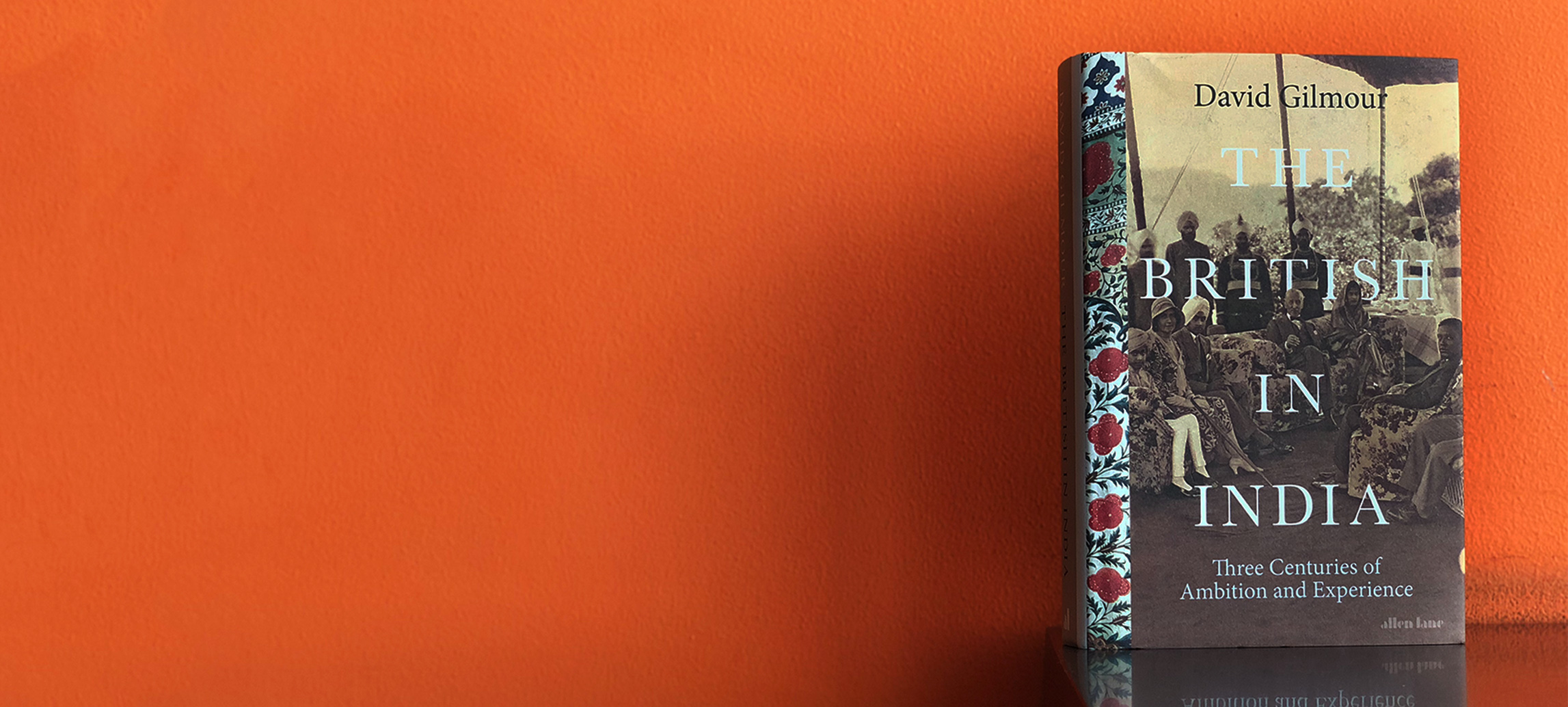
The English Maharani: Queen Victoria and India – Miles Taylor


In this new and original account, Miles Taylor charts the remarkable effects India had on Queen Victoria as well as the pivotal role she played in India. Drawing on official papers and an abundance of poems, songs, diaries and photographs, Taylor challenges the notion that Victoria enjoyed only ceremonial power and that India’s loyalty to her was without popular support. On the contrary, the rule of the queen-empress penetrated deep into Indian life and contributed significantly to the country’s modernisation, both political and economic.

Changemakers: Twenty Women Transforming Bollywood from Behind the Scenes – Gayatri Rangachari Shah, Mallika Kapur


This book tells the story of twenty incredible women, many with no prior connections in the Bollywood industry, who have carved successful careers despite significant challenges. They often work away from the public gaze-as studio heads, producers, directors, make-up artists, stylists, script writers, lyricists,editors, choreographers, stunt artists, set designers, and in the many other jobs that support the making of a movie.

The Non Violent Struggle for Freedom 1905-1919 – David Hardiman


It was Gandhi, first in South Africa and then in India, who both evolved a technique that he called ‘satyagraha’ that he characterised in terms of its ‘non-violence’. In this, ‘non-violence’ was forged as both a new word in the English language, and as a new political concept.
The Non-violent Struggle for Freedom brings out in graphic detail exactly what this entailed, and the formidable difficulties that the pioneers of such resistance encountered in the years 1905-19.

Red Card by Kautuk Srivastava


Set in the suburban Thane of 2006, here is a coming-of-age story that runs unique as it does familiar. Hopscotching from distracted classrooms and tired tutorials to the triumphs and tragedies on the muddy grounds, this is the journey of Rishabh and his friends from peak puberty to the cusp of manhood.
 

For more posts like this, follow Penguin India on Facebook!


error: Content is protected !!