



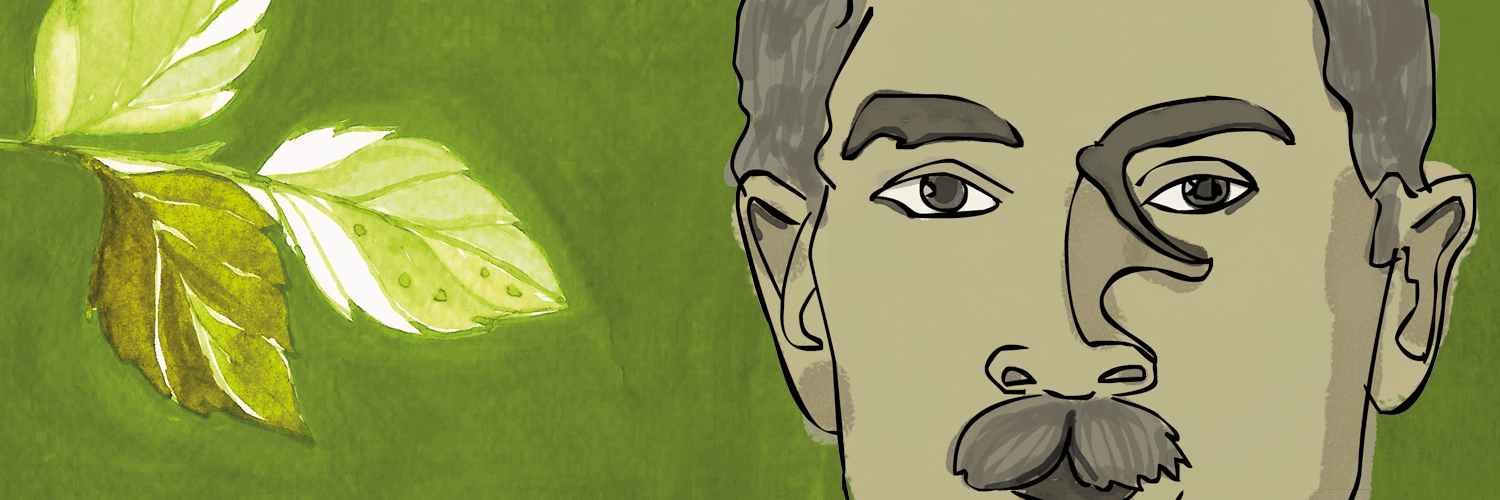
Munshi Premchand is regarded as one of the most important writers of Hindi-Urdu canon. His prolific style of writing widely contributed towards the shaping of the genre of short stories in India. Writing these short stories, Premchand used this opportunity to critique social issues such as moral bankruptcy, the plight of women, caste injustices, blind faith, patriarchy and many more.
Read on to know more details about the life of Munshi Premchand!
—————–
Premchand was born of Kayastha parents in a village called Lamahi, on the outskirts of Benaras. His mother passed away when he was eight years old and his father, a postal clerk, remarried soon after. He first went to school in Gorakhpur where his father was posted. Born Dhanpat Rai Shrivastav, Premchand was fondly called Nawab and published his early writings under the name ‘Nawab Rai’.
After passing his class 10 examinations in 1898, Premchand began a long career as a teacher and school administrator, during which he passed as a non-formal candidate in the class 12 examination. This was in 1916. Three years later, he did a BA with English literature, Persian and history as his subjects.
He published his first collection of five short stories in 1908 in a book called Soz-e Watan. The stories were all patriotic and the British government interpreted these as seditious. He had to appear before the district magistrate who told him to burn all copies and never write anything like it again. This incident gave birth to the new pen name Premchand. It was only the first of Premchand’s many brushes with authority though and he was required to deposit a security of Rs 1000 many times in the 1930’s.
Indian history and mythology, Indo-Muslim cultural history, contemporary society and his own wide readings of literature from across the world influenced Premchand’s work. He was the first Hindi and Urdu to writer to write in depth of the lives of the deprived sections of society. As a rule, he wrote on contemporary themes of immediate social and political relevance, after experimenting with a few short stories set in the historical past. His work became a vehicle for his socially engaged agenda of social reform.
In 1918, Gandhi had declared Hindi to be the national language and Premchand had, between 1915 and 1924 begun to write in Hindi instead of Urdu.
In 1921 he resigned government service at the call of Gandhi during the Non-Cooperation Movement. He bought a press in 1923 and started the publishing house Saraswati Press. Due to low income, he also worked as the editor of the Hindi journal Madhuri in Lucknow in 1924-25 and again from 1927-32. In 1930 he started a journal called Hans and two years later, took over another journal called Jagaran.
Premchand died on 8 October 1936, at the age of fifty-six. He had returned to Benares four years before, and lived in Lamahi in a bigger pukka house that he had built, which still stands. He had written what are now reckoned to be close to 300 short stories and published thirteen novels, including one left unfinished. At least four of his novels, Sevasadan, Rangbhumi, Karmabhumi, and Godaan are considered among the greatest written in Hindi.
——————

Meet the Caravan Family
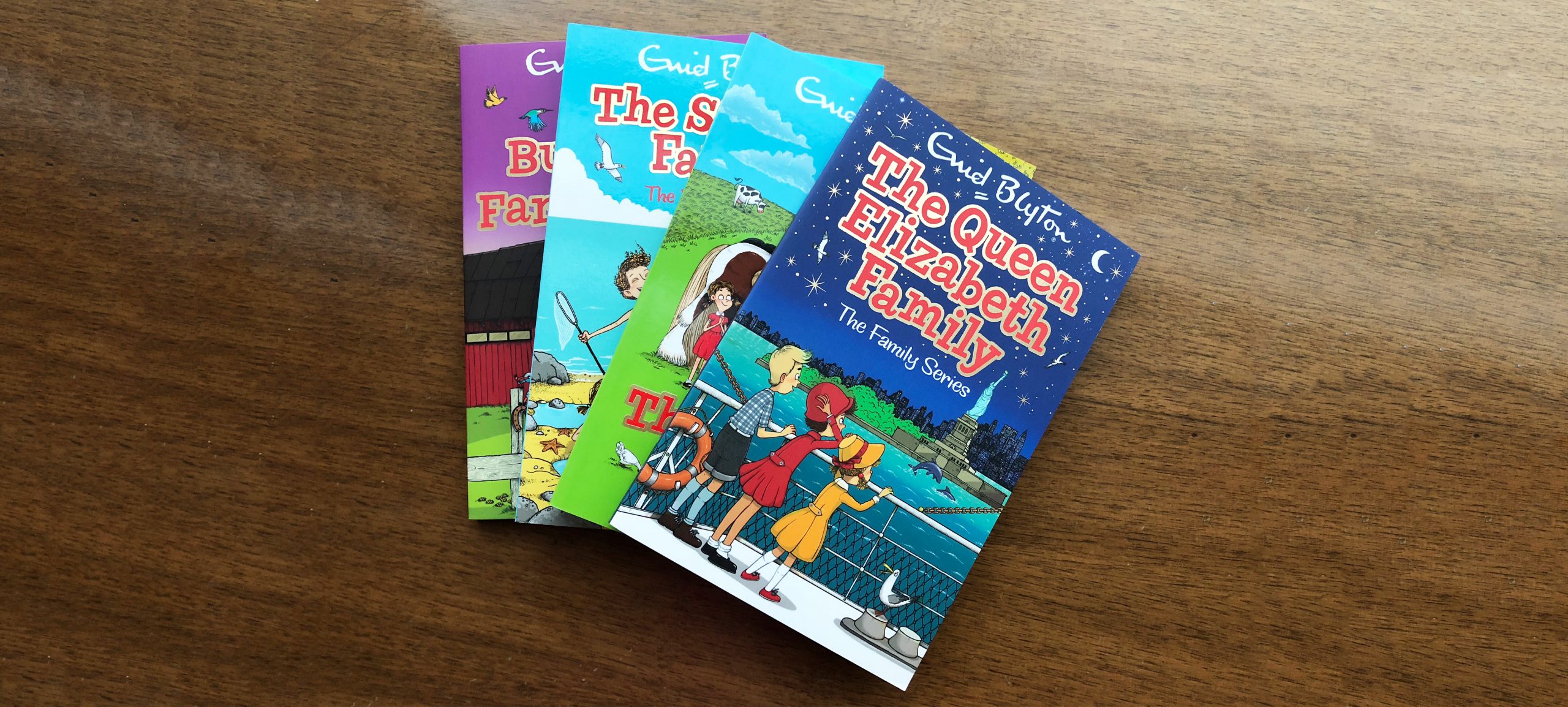
Everyone at school calls Mike, Belinda and Ann the Caravan Family, because they live in two caravans. The children live at school from Monday to Friday in term-time, and come back to the caravans at weekends. Their lives are full of adventure, as we can see in Enid Blyton’s The Family Series.
Let’s meet the family!
Ann is the youngest, and the baby of the family. Before the family’s trip to New York her parents are talking about sky scrapers and she says:
“‘I’d like to climb up to the top of one and catch a cloud,’ said Ann. ‘I’d tie it to my wrist and fly it like a balloon.'”
Mother is caring and kind, and before her and Daddy’s trip to America she tells the children, who are going to stay with their aunt and uncle on Buttercup Farm:
“‘Now mind you’re good and helpful,’ said Mummy. ‘And be kind to everyone, and remember to say your prayers every single night, and be sure to put Daddy and me into them.”
Responsible Belinda, when helping to take care of the hens at Buttercup farm, tells her aunt:
“‘I won’t get tired of it and give up. I promise I won’t. Well – if I do get tired, I still won’t give up! Will that do?'”
Daddy loves to take his family on holidays and adventures. When the children start to ask him if they can go to the beach, he says:
“‘Well, before you begin, let me break the news to you,’ said Daddy firmly. ‘Whatever ideas you’ve got in your head have got to come out. I’ve no money to spend on a summer holiday by the sea! That is – if you want to go to a hotel. The only thing I can do for you this summer is to let you go away somewhere fresh and new in the caravans.'”
Mike, who makes a selfless decision when their cabin on the ship has only one bed by the port-hole:
“He looked longingly at the bed by the porthole. He badly wanted it himself, but he was very unselfish with his two sisters.”
For more posts like this one, follow Penguin India on Facebook!
The Beauty of All Ruskin's Days: 5 of Our Favourite Things about the Author

Ruskin Bond is a favorite across generations. He has authored over 500 short stories, essays and novels, more than 50 books for children and two volumes of autobiographies.
As he himself says, The Beauty of All My Days is “a memoir in which each chapter is a remembrance of times past, an attempt to resurrect a person or a period or an episode, a reflection on the unpredictability of life.”
From it, we extract 5 of our favourite things about him to help you get to know him better!
Ruskin Bond meets his ‘fans’ at Mussoorie’s Cambridge Book Depot on Saturday afternoons.

He believes the qualities of intellect and sensuality he inherited from his parents are what shaped him into a writer.

Coming home from boarding school when he was ten, Ruskin demanded (and eventually got) a tiny room of his own. Under his bed, he kept his school trunk, which accommodated the following:

His first ‘novel’ was confiscated by his Housemaster (of the boarding school that he attended) in 1946.

Ruskin Bond discovered London by walking all over the city. He did the same in Delhi and other places back in India.

Each chapter of this memoir is a remembrance of times past, an attempt to resurrect a person or a period or an episode, a reflection on the unpredictability of life. For more posts like this, follow Penguin India on Facebook!
The Four Pillars of Beauty

Whoever said that great skin is purely genetic has obviously never harnessed the power of beauty foods. While it is possible to fake great skin with make-up, you can only be truly radiant when you nourish your body from within.
From basic garden-variety fruit and vegetables to potent Ayurvedic herbs, Glow by Vausdha Rai tells you what to eat to ensure beauty inside and out.
Here are four pillars of beauty as talked about by the author which will help you get that glow back:
- Vitality

Vasudha Rai emphasizes the importance of a strong immunity system in order to have a strong foundation for a beautiful body and skin. Having the energy to make strong decisions reflects a healthy mental and physical state, thereby boosting your appearance.
- Clarity

Here Vasudha Rai makes a relation between one’s habits, moods and the physical appearance. Therefore, she says that purifying one’s body is of utmost importance.
- Radiance

Once you achieve spotless skin, Vasudha Rai talks about radiance as another important aspect towards getting a luminous skin. She stresses on the beneficial properties of anti-oxidants for a radiant skin.
- Peace

Focusing on the larger effects of one’s lifestyle over one’s health and consequently the skin, Vasudha Rai here explains the disadvantages living a stressed life. Peace is an important component for one’s skin’s and body’s health and should not be taken lightly.
After all, outer beauty is only a symptom of inner health.
AVAILABLE NOW
Meet the author of The Last Englishmen: Deborah Baker

Deborah Baker is the author of Making a Farm: The Life of Robert Bly, In Extremis: The Life of Laura Riding, A Blue Hand: The Beats in India and The Convert: A Tale of Exile and Extremism, which was a finalist for the National Book Award in the nonfiction category in 2011.
The title of her new book is The Last Englishmen: Love, War, and the End of Empire.
Let’s get to know the author better!


The Last Englishmen is an engrossing and masterful story that traces the end of empire and the stirring of a new world order. For more posts like this, follow Penguin India on Facebook!
The Secret Of The Sage: The Birth of the Kalki Chronicles
Ever wondered what it takes to come out with a book: and a good one at that? What the book-writing process is and how the author plans everything out?
Abhinav, the author of The Sage’s Secret tells us – in this special piece – all about the birth of the Kalki Chronicles. The book is centered around one interesting question: What if the legend of Kalki, the tenth avatar of Vishnu, is an elaborate hoax created by Lord Krishna?
He takes us through the story behind Kalki, tells us about the research, the characters and explores the past and present. We must warn you though:
[Warning: Article Contains Spoilers]
THE STORY BEHIND KALKI
The Kalki Chronicles was conceptualized around six years back, with a simple thought behind it: What if Kalki was really to exist in our world? What were to happen if the last avatar has already taken birth?
As a child, tales and legends from the Indian mythology fascinated me. And this was when the allure of Kalki took hold as well. During my school days, one of my teachers broached the topic of Kalki, while explaining the concept of the Yugas. The idea itself was captivating: the tenth and final avatar of one of Hindu pantheon’s most powerful Gods that was yet to manifest, as told in legends. That’s where the story started. That is how the idea for the Kalki Chronicles came to me: the story of a god, the destructive avatar of the Preserver God, born in the current, modern era, trying to find balance. This paradoxical idea and the character in itself needed to be explored: his perception of the world, his life in the contemporary times, his motivations and sense of identity and agency, and the hardships the avatar would face when he tries to restore balance on earth. I wanted to know what would happen, so I began writing the story.
The Research
My earliest sources of stories from the Indian mythology were my grandfather and mom. Amar Chitra Katha comics, some articles I read here and there, and of course, the famous television series that aired during the time, added to it as I grew older. However, I always kept on going back to my grandfather’s oral narration. Sadly, as it happens, stories tend to fade away with the course of time. But the thirst of knowing more seemed unquenchable, when I look back now, and so I asked him to narrate more and more. And so, he picked and chose and told me more tales from the Mahabharata and the Ramayana, which I later weaved into the plot for the series. While drawing the blueprint for the series, I also read C. Rajagopalachari’s retelling of the Epic that is simply titled Mahabharata.
Exploring the Past and the Present
The Kalki Chronicles takes the reader through winding timelines that commences post the great war of Kurukshetra, and it doesn’t stop there. We are transported to the contemporary era, years 2005 and then 2025. For me, it was an obvious and logical choice that we started the journey with Krishna, one of the greatest strategists in any and all mythology, revealing a certain truth to Sage Dweepa around 28 years after the Great War. I think it will be fair to say we begin at the crest of the tale. Therefore, from the perspective of narration, the story flows from past and present and vice versa. At a personal level, this is what makes storytelling an exciting experience for me. So to keep the reader intrigued, I keep going back and forth between these two timelines. The past, for the most part, sees Krishna, while the present is Anirudh’s life.
As you proceed through the series you’ll notice two sequences at work—one that follows Kalki’s efforts to restore the balance between man and the universe, and the second which follows his fight against Kali (not to be confused with the Goddess Kali or Kalika). I wanted to add some elements of fantasy in this book and this plotline helped me explore the avatar’s supernatural powers. Another major theme, if readers read between the lines, is the concept of mortality, which helped keep things in close proximity with realism—something I didn’t want to let go off, lest the story became too fantastical in nature. I wanted to explore both these concepts, trying to strike a balance between the two, however, taking the liberty to let my imagination wander into various possibilities, at times.
The Gods and Characters
Sage Dweepa is one of the first characters we meet in the book. He is the sage in The Sage’s Secret. Hence one of the pivotal people in the book without whom the story would not advance and our protagonist would be, to put it simply, clueless. Some might consider him a sidekick of sorts, first to Krishna and then to Kalki. He’s one of those personalities that are generally silent but present in the backdrop, invisible but important to the storyline. So the sage here is the secret-keeper and the only person on Earth who knows about Krishna’s grand ‘lie’, his master plan. I needed a confidante who would share Krishna’s burden and undertake this quest with Kalki, and the Sage was the answer. Thus, “The Sage’s Secret”, rightly so, is the truth about the Kalki avatar which Dweepa treasures and has to live with, in the book.
It might be strange reading about the sidekick before the main character, but that’s how the story proceeds in this saga. But by no means is Anirudh on the sidelines; he is very much in the thick of things. I have tried to play with the characters of Krishna and Kalki; where one ends, the other emerges. As I elaborated the plot sketch for the series, there were a few things I perceived early on: that Krishna had to be one of the main focal points of this book. His role alongside Kalki’s kept coming up incessantly; however, there wasn’t any friction between the two characters in terms of space; the presence of both has a certain harmony and no one jostles for space. One of the reasons for this could be that Kalki is an extension of Krishna (somewhat). We don’t see a destructive God, obliterating his way to attain justice and eliminating evil. We witness a young boy all of twenty, who has a quiet but resolute personality, which is very much like his previous avatar. The age that I chose is intentional; Anirudh is beyond teenage but on the cusp of manhood. He’s not completely mature, but is getting there by his own understanding of the world and experiences. I wanted him to see the world as a grown man, but perceive it with a certain naivety. There is a assured innocence and immaturity in his perception at this age, which makes it perfect to introduce him to his destiny as Kalki.
And finally, we get to the antagonist. So, at this point, if you haven’t read the book and wish to, you should stop reading this article.
Kali (pronounced k-uh-lee and not be confused with Kali the Hindu Goddess, as I’ve said before) is the primary antagonist of Kalki. Therefore, I chalked out his personality and role in the series in the nascent stages. As I drew his role for the book, I remembered him as literally the personification of evil – as I recalled my conversations with my grandfather on this subject. It is called Kali Yug because of him; it is his era, the era of evil. My thoughts on Kali, as the antagonist of the book, made me dig deeper into my childhood memories and conversations, and also my knowledge of the Mahabharata, and lead me to the realization that it should all start with Krishna as it all leads back to Krishna, even Kali. And thus, the yarn started spinning and the thread led me to Krishna, again. When you read the story, you might understand as to why I chose to start this saga with Krishna – it is only befitting to the god, a master at strategy and foresight.
Make Money the Chanakya Way!

Radhakrishnan Pillai’s latest book, Chanakya and the Art of Getting Rich is a holistic study, written for anyone and everyone. The book is the result of his fascinating insight and research into the master diplomat, administrator and economist (before the term existed) and the man behind the Mauryan empire, Chanakya- the ancient author of the Arthashastra. Pillai has deftly extracted the maxims most relevant to wealth-creation from the Arthashastra’s vast scope of statecraft, economic policy and military strategy, and interspersed it with modern examples, bringing practical wisdom from the 4th century BC to guide contemporary ambitions!
Chanakya and the Art of Getting Rich begins with the simplest of questions-‘Do you want to be rich? If you replied in the affirmative to the most basic of all ambitions read on for some tips from the Guru of all gurus.
Aanvikshiki, the science and art of thinking.
‘Clear thinking is the foundation of all good decisions. According to Chanakya, clear thinking and calculated decision-making are the first qualities a person needs to develop. A person who cannot think clearly will always have great difficulty assessing a situation, evaluating the scenario and taking a decision that is the best in the given circumstances.’
Keep your spiritual and material life distinct
‘“No business in charity, and no charity in business” is a well-known adage in the business world. What this means is that one should never do charity for profit nor run a business as a charitable activity.’
Eternal Vigilance
‘One has to fulfill one’s duty of keeping an eye on the wealth one already has. If we are not alert and vigilant about the wealth we already own, it will deplete and eventually ebb away.
Ethical wealth is long-term wealth
Remember, the key to ‘big money’ is to understand the ‘right money’. One can become rich very fast too, but mostly through shortcuts. . Ethics are very important when it comes to amassing wealth. Illegal and immoral wealth does not stay for long.
Channel your ‘wealth potential’
Everybody cannot make money in every field. The smart ones are those who can identify which field is meant for them. Chanakya has a formula for that. In the first book of the Arthashastra, Chanakya talks about finding your swadharma. Swa means ‘your own’ and dharma is nature. If you come to know what your true nature is, wealth will come to you naturally.
Find your guru
‘You may have all the potential to become rich. But, the fact is that you still require a mentor and guide to become rich.’
Know your political environment
‘If you want to expand your business and become rich, think about the place you are in. Read about the government policies that affect your area, your city, your business, your country.. Any changes in policy have a ripple effect—if they don’t touch you directly they will affect other things that will affect you in return.
Keep your Equanimity and carry on
‘Equanimity Is of Paramount Importance A person who desires to become wealthy should also develop another important quality—equanimity. This state of mind is comparable to a lamp which is steady and calm, and the flame does not flicker.’
The Blueprint of Success
‘As the famous saying goes, ‘If you fail to plan, you plan to fail.’ So if you want to put into action any roadmap of wealth creation, then plan the whole strategy. It is like drawing your blueprints before you start the construction. Thinking is the blueprint required before you get into action’
Money attracts money.
‘Wealthy people become wealthier. But if you do not take care of the wealth you own, it will slip away. So learn the art of managing your wealth well so that it can grow, not deplete.’
Accountability in Accounting
‘Chanakya says, “He [the leader] should check the accounts for each day, group of five days [week], fortnight, month, four months [quarterly] and a year.”’
Partnership Is a Way to Wealth
‘No one person can have all the qualities required for success. Therefore, to succeed, it is good to have partners. Partnerships are about complementing each other. Partners make up for each other’s weaknesses and support each other’s strengths.’

Quotes to Celebrate Roald Dahl Day

Roald Dahl is one of the most beloved authors of our time and has encouraged children world over to read. Known to use fun, self-created words, he has created a magical world for children to grow up in, inspired from his own life as well as his imagination. With plenty of laughter and lots of lessons to be learnt, his books are the perfect companion for children (and adults too!).
On occasion of his birthday, we got together quotes from fifteen of his books to remind us why we love him so. Take a look!
“A life is made up of a great number of small incidents and small number of great ones.” – Going Solo
“It is almost worth going away because it’s so lovely coming back.” – Boy
“Well, maybe it started that way. As a dream, but doesn’t everything? Those buildings. These lights. This whole city. Somebody had to dream about it first.” – James and the Giant Peach
“No book ever ends, when it’s full of your friends…” – The Giraffe and the Pelly and Me
“It doesn’t matter who you are or what you look like, as long as somebody loves you.” – The Witches
“You can have a wonky nose and a crooked mouth and a double chin and stick-out teeth, but if you have good thoughts it will shine out of your face like sunbeams and you will always look lovely.” -The Twits
“The magic finger is something I have been able to do all my life. I can’t tell you just how I do it, because I don’t even know myself.” – The Magic Finger
“What I have been trying so hard to tell you all along is simply that my father, without the slightest doubt, was the most marvelous and exciting father a boy ever had.” – Danny The Champion of the World
“A little nonsense, now and then, is relished by the wisest men.” – Charlie and the Great Glass Elevator
“So please, oh PLEASE, we beg, we pray,
Go throw your TV set away,
And in its place you can install,
A lovely bookshelf on the wall.” – Charlie and the Chocolate Factory
“I understand what you’re saying, and your comments are valuable, but I’m gonna ignore your advice.” Fantastic Mr Fox
“For a few brief moments he had touched with the very tips of his fingers the edge of a magical world.” – George’s Marvellous Medicine
“Tortoise, Tortoise get bigger, bigger. Come on Tortoise grow up, puff up, shoot up! Spring up, Blow up swell up! Gorge! Guzzle! Stuff! Gulp! Put on fat, Tortoise, Put on fat! get on, Get on! Gobble food!!” – Esio Trot
“If you are good, life is good.” – Matilda
“’Meaning is not important, said the BFG. ‘I cannot be right all the time. Quite often I is left instead of right.’” – The BFG
The Roald Dahl Reading Challenge
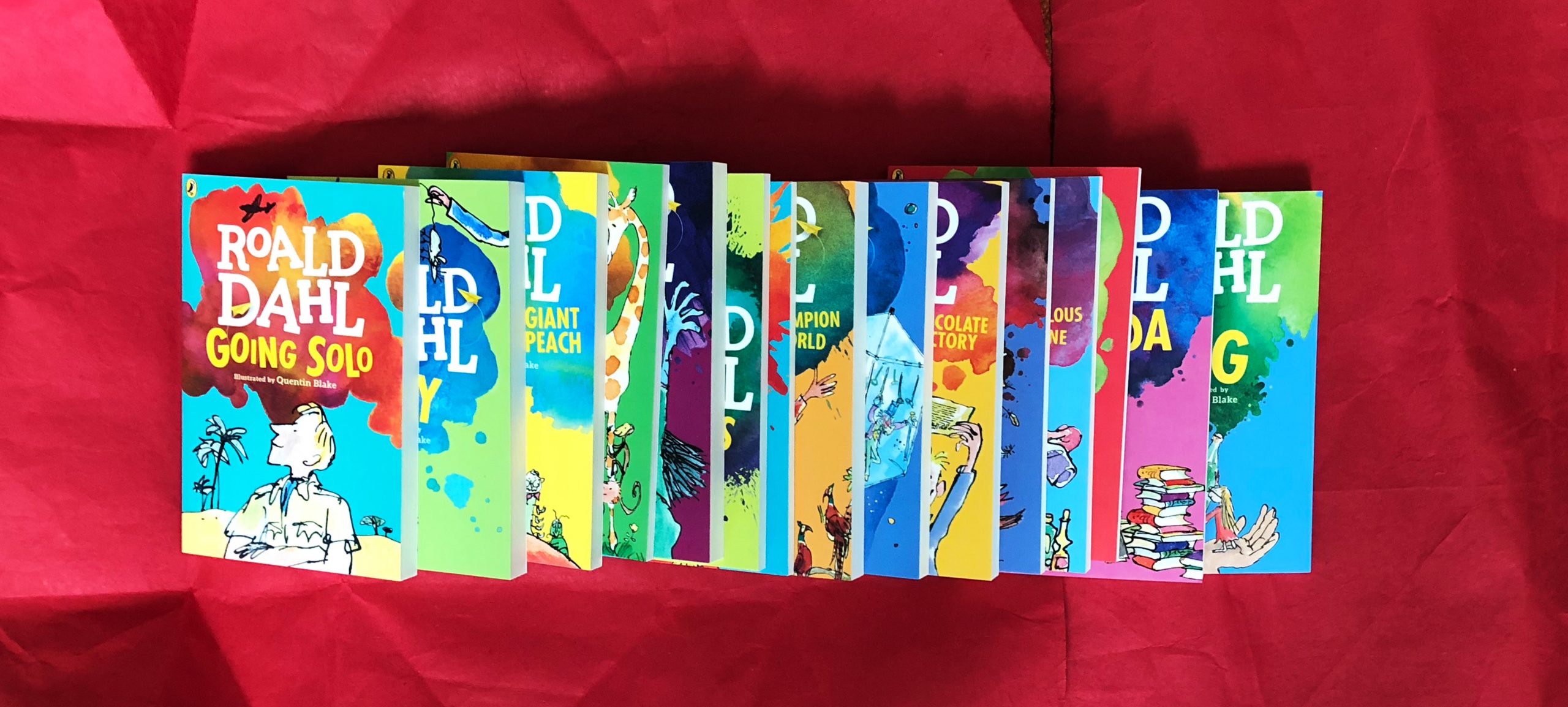
Author Kate DiCamillo said, “Reading should not be presented to children as a chore, a duty. It should be offered as a gift.” Which book or author would make the perfect gift of reading for a child? One name popular across generations is Roald Dahl.
Roald Dahl is a favorite among children and grown-ups alike, thanks to the fun adventures he takes us on! From books for 4 year olds to 13 year olds, all children are bound to love him! His loving characters and creative words are sure to keep your child (and even you) hooked!
Depending on their age, these are the books by Roald Dahl you should pick up for your little ones, and give them a fun challenge to read them all!
4-7 Years:
Opposites

Busy little hands can lift the flaps to discover the opposites with iconic illustrations of Dahl’s much loved characters from the one and only, Quentin Blake.
123

With beautiful, bright, colourful illustrations from Quentin Blake, plus a lift the flap surprise at the end, this is the perfect first baby book for all budding Dahl fans.
Billy and the Minpins

Billy’s mum says he must never go out through the garden gate and explore the dark forest beyond. So, one day, that’s exactly what he does! There he meets the Minpins, tiny tree-dwelling people whose children are the size of matchsticks. They live in fear of the terrible, galloping GRUNCHER. Will it gobble Billy too – or can he find a way to defeat the hungry beast?
8-10 years:
James and the Giant Peach

James is very lonely until one day something peculiar happens. At the end of the garden a peach starts to grow and GROW AND GROW. Inside that peach are seven very unusual insects – all waiting to take James on a magical adventure. But where will they go in their Giant Peach and what will happen to the horrible aunts if they stand in their way? There’s only one way to find out . . .
The Twits

With filthy hair all over his face and horrid plots growing in his mind, Mr Twit is one of the nastiest people you’ll ever meet and Mrs Twit is just as bad and even uglier! But they don’t stop at tricking each other: neighbouring children and even the local birds are in danger, and that’s where the Muggle-Wumps come in. This family of monkeys has had enough of the Twits’ tricks and, with the help of the handsome Roly-Poly Bird, they decide it’s time for sweet revenge…
The Witches

The Grand High Witch of all the World has gathered together the witches of England for an annual conference at the Hotel Magnificent in Bournemouth. Their agenda is the elimination of all the children in the country and the prospects for their young victims look bleak. But the Grand High Witch and her cronies have reckoned without the spark and ingenuity of a young guest at the hotel and his rather brilliant grandmother…
Charlie and the Great Glass Elevator

WHOOSH! Inside the Great Glass Elevator, Willy Wonka, Charlie Bucket and his family are cruising a thousand feet above the chocolate factory.
They can see the whole world below them, but they’re not alone. The American Space Hotel has just launched. Lurking inside are the Vernicious Knids – the most brutal, vindictive murderous beasts in the universe.
So grab your gizzard! Hold your hats! Only Charlie and Willy Wonka can stop the Knids from destroying everything!
10-13 years:
Boy; Tales of Childhood

As a boy, all sorts of unusual things happened to Roald Dahl. Boy, Roald Dahl’s bestselling autobiography, is full of hilarious anecdotes about his childhood and school days, illustrated by Quentin Blake.
Going Solo

In 1938 Roald Dahl was fresh out of school and bound for his first job in Africa, hoping to find adventure far from home. However, he got far more excitement than he bargained for when the outbreak of the Second World War led him to join the RAF.
Words of Wisdom from our Beloved, Ruskin Bond

Ruskin Bond has been capturing hearts with his writing for many years now. Most of us who grew up reading his work are happy to read almost anything by him especially as we realize how beautiful and relevant his quotes always are. Here are four quotes by him, that we hold close to our hearts from his new book, The Beauty of All My Days.


The Beauty of All My Days is Ruskin Bond’s latest book. Each chapter of this memoir is a remembrance of times past, an attempt to resurrect a person or a period or an episode, a reflection on the unpredictability of life. For more posts like these, check out our Facebook page!