




Borrowing from Sanghadasa’s Jaina version, Mandodari, authored by a passionate mythologist, Manini J. Anandani, gives a voice to Ravana’s wife, one of the least known characters of the Hindu epic.
Did you know there is version of Ramayana where Hanuman is not a celibate and one where there is no mention of Ravana? Different religions and societies in Southeast Asia have alternative narratives of the epic.
Here are some vastly different philosophies of various sects, that deviate from the traditional plot we are all familiar with:
Dasaratha Jakarta: The Buddhist version

Dasaratha is the king of Benaras and not Ayodhya, in this version. What’s also different from Valmiki’s version is that instead of being exiled from the kingdom, King Dasaratha sends Rama and Sita away to the Himalayas. He wants to protect them from his over pushy third wife Kaikeyi, who’s the only antagonist in the story. Twelve years later, Rama and Sita return to Benaras, and not Ayodhya, and get married.
Paumachariya: The Jaina version

Titled Paumachariya, in the Jaina version, Rama is a follower of non-violence. Being an ardent follower of Jainism, Rama is the supreme hero in this version as well, and cannot be a killer.
The Jaina version presents a rational view, unlike the Hindu one that is more fantastical.
Instead of a monkey army, this version suggests that there was a warrior clan that beared the monkey as their emblem.
The most intriguing feature in this version is the depiction of Ravana; who’s not shown in a villainous light. On the contrary, he is a magnanimous king and also a believer of Jainism.
Gond Ramayani: The Gond version
This adivasi community that hails from Madhya Pradesh, weaves their own plot into the texts of Ramayana and is called the Gond Ramayani. It is an oral narrative that consists of seven tales told in the folk tradition of the tribe. It also overlaps with some characters of the Mahabharata, for example, Bhim. In this narrative, Lakshman takes centrestage in his pursuit for a bride. Rama is not the protagonist in this version of the katha.

The first chapter is about Lakshman and Indra’s daughter, Indrakamani, with Sita stepping in frequently. In the last tale Sita is exiled by Rama into the forest where their first son Luv is born. Their second son Kush however, is not a natural born. He is created by sages taking care of Sita in the forest. The lore has a happy ending with the family reuniting and returning to their palace.
Ramakien: The Thai version
With a great influence on the arts and culture of Thailand, Ramakien, the Thai version of the Ramayana is considered as Thailand’s national epic, still taught in some schools in the country.

Although fatal, his pursuit for Sita is described as true love.
Though there are some similarities to Valmiki’s version, this tale lays more emphasis on Hanuman. He is not a celibate in this version, rather is quite popular among the women.
———–

Meet the two enthralling protagonists from The House Swap

Married with a young son, Caroline and Francis want to take a break from their humdrum lives and rekindle their relationship. They swap houses with strangers, for a week – going from their city flat to a townhouse in upscale London. Little do they know of the series of strange events that are yet to unravel.
Here’s a look inside the lives of these two self-destructive characters.
Meet Caroline
With her marriage in shambles, Caroline longs for a do-over in life. She often feels a sense of claustrophobia around her husband.

This makes her go down the dark memory lane of her past, one she’s been trying hard to leave behind.
—–
Meet Francis

His addiction to prescription pills worsens his behaviour towards his wife and son, thereby exacerbating the problems in his marriage.
He’s enthusiastic about the idea of a house swap and appreciates his wife for taking an initiative to work on their marriage, not anticipating how things could take a dark turn.
——

Things You Didn’t Know About Enid Blyton
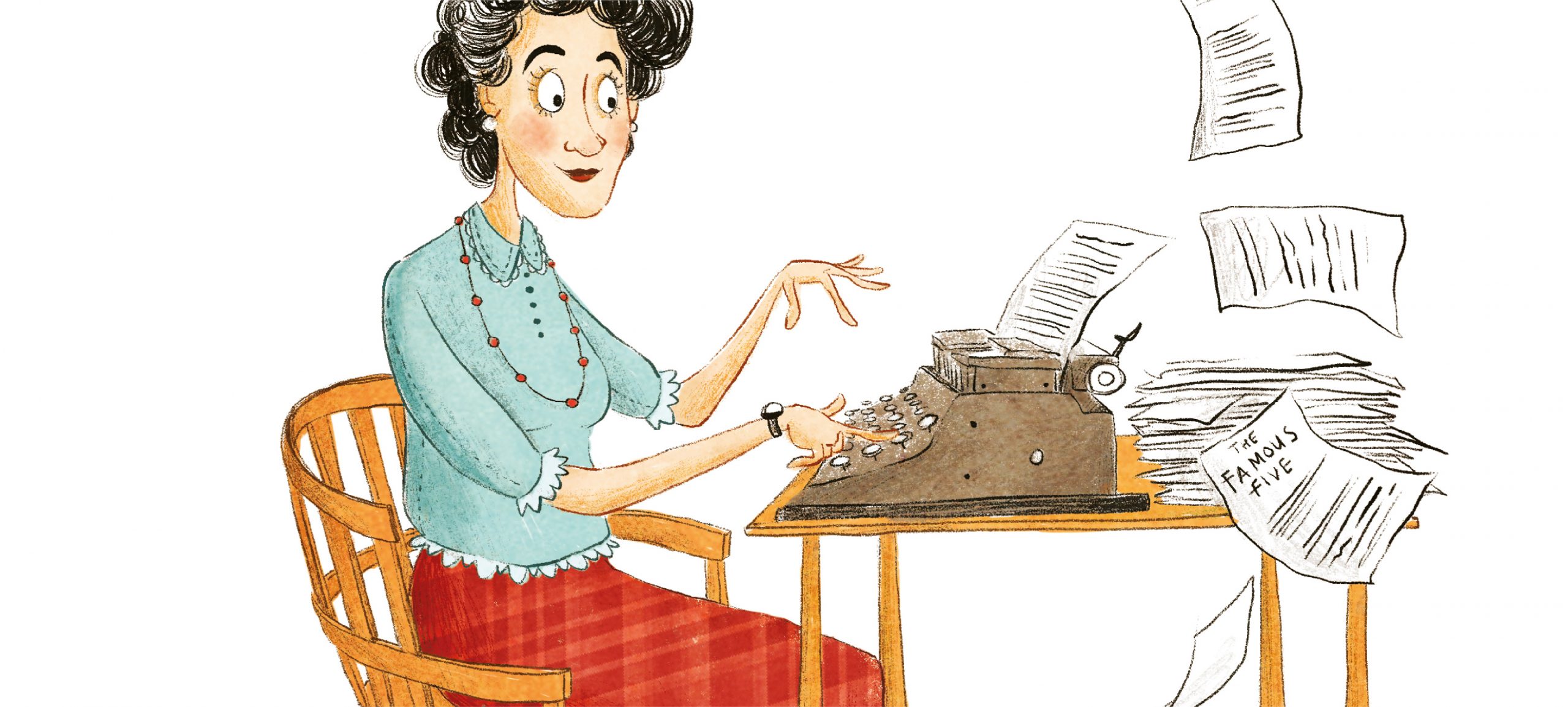
The name Enid Blyton has been synonym to the term children’s literature for over half a century. Being one of the world’s bestsellers in this genre, Blyton’s work continues to impact the sphere of children’s fiction till date. Her most famous works include Noddy, Famous Five, The Secret Seven, which have found a paramount place in libraries around the world. By mastering her passion, she has left behind an exceptional legacy in the field of writing.
Here are a few things that you did not know about Enid Blyton:


5 Things you Need to Know about the Author of Rich Dad, Poor Dad
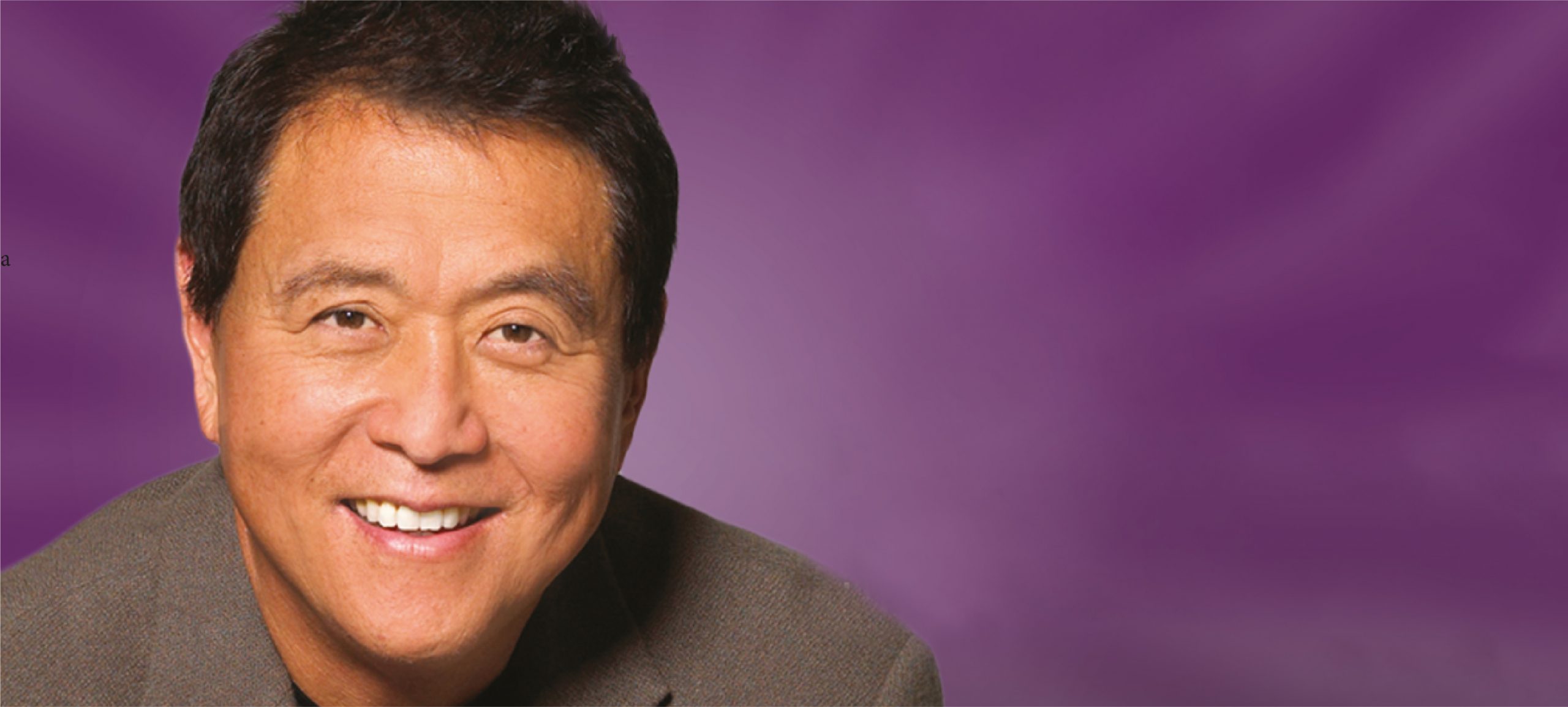
Robert T. Kiyosaki is best known as the author of Rich Dad Poor Dad and Why the Rich Are Getting Richer. In Rich Dad Poor Dad, he has challenged and changed the way tens of millions of people around the world think about money. The book talks about Kiyosaki’s background, his business ventures and investments and variation between possessions and liabilities and what importance they both have in terms of starting and owning a business. It also sheds light on the teachings given by rich to their kids, which is usually missed by poor as well as the middle class parents and why it is important to have financial literacy over and above all.
Here are 4 more things you need to know about the author.


5 Things to know about 21 Lessons for the 21st Century

21 Lessons for the 21st Century by Yuval Noah Harari calls to attention some of the most relevant predicaments of today. It asks about what we should teach the younger generation today in order to prepare them for the world of tomorrow. Spanning from nuclear war and environmental crisis to the disruptions caused by the swiftly developing technology in today’s time, this book gives a sweeping look at the future.
Here are five things you need to know about Harari’s upcoming book:


Five dialogues from Forever And A Day that make us love James Bond even more

When the previous 007 dies in the waters of the French Riviera, it’s time for a new agent to step up and take charge. Enter James Bond, still learning the ropes of the spy world.
This is the story of the birth of a legend, in the brutal underworld of the French Riviera.
With its elaborate action sequences and a plot that will keep you interested from the opening chapters and never let go, Forever and A Day will leave you wanting more…of Bond, of course.
Five dialogues that will leave you wanting more….of Bond, of course:


All About Jazz! 7 Things You Didn’t Know about Bombay’s Jazz Culture

Bombay, renamed Mumbai after the goddess Mumbadevi, defies definition. Vibrant, engaging and provocative, Bombay, Meri Jaan is an anthology as rich and varied as the city it celebrates.
Salman Rushdie, Pico Iyer, Dilip Chitre, Saadat Hasan Manto, V.S.Naipaul, Khushwant Singh and Busybee, among others, write about aspects of the city. In one piece within the anthology Naresh Fernandes explores the jazz culture of the sixties. Intrigued?
Read on to find out 7 things you didn’t know about the jazz culture of Bombay:
- There was a class divide between musicians and their audience

- There was no correct way to play jazz. You just went with the flow.

- Most jazz musicians were originally from Goa

- What was considered high praise by jazz musicians may surprise you…

- Bollywood songs were arranged and assisted by jazz musicians like Chic Chocolate.

- Jazzy weddings?A jazz song from Lorna Cordeiro’s album became a standard at Goan weddings

- Grave diggers were in high demand

Bombay, Meri Jaan, comprising of poems and prose pieces by some of the biggest names in literature, in addition to cartoons, photographs, a song and a Bombay Duck recipe, tries to capture the spirit of this great metropolis.
Available Now!
A Chat with the Author of Goodbye Freddie Mercury – Nadia Akbar
What is the story behind the title of your book?
Originally, Goodbye Freddie Mercury was a short story idea about a girl from a village in Pakistan writing a fan letter to Freddie Mercury, her connection to this star byond place, time, and culture. But once I started writing Bugsy and Nida, I realized that the title was really meant for them. It just made sense. Bugsy understood Freddie Mercury, he understood all that Freddie means and stands for as a celebrity and as a desi.
Name your all-time favorite song by Freddie Mercury.
Oh that’s difficult, there are so many amazing Queen songs. I think the one that I love best, though, the one that transcends, is You Don’t Fool Me. I made sure to incorporate it into the novel. It’s in the chapter where Bugsy drives Nida in his car. It’s a great metaphor for the politics of Pakistan. It’s a later song, constructed when he was sick, but it has all the classic elements and some new ones. It is a promise of what could have been.
Who is your favorite character from your book?
All of them are my favourites for their own reasons, it’s impossible to choose. I created them based on people that interest me—even Omer, if you can believe it. So I think I don’t have a favorite, but rather characters with diverse personalities who offer different things at different times.
If we have 2 hours to spend in Lahore- what is the ONE thing we have to do?
Lahore Fort in the Old City. It’s incredible. Along with that you’ll see the Badshahi Mosque, and eat the best food in the world.
Name the one person you would want as your neighbor?
Freddie Mercury (isn’t it obvious). I think he’d be tons of fun. And I could cuss at him in Urdu and he’d understand. I also love his vulnerability and his heart. I think he would have been a doll. In a lot of ways the novel is for him. Thanks Freddie.
What was the last gift you gave someone?
An eyeshadow palette. Urban Decay’s Naked2.
Coffee or tea? And how do you like to take it?
I like coffee in my ice cream and Bubbles in my tea.
Words you live by…
“If there’s a book that you want to read, but it hasn’t been written yet, then you must write it.” –Toni Morrison
The one destination you are currently crushing about?
China
Describe your book, Goodbye Freddie Mercury in one word.
Supercalifragilisticexpialidocious

Ravinder Singh on Road Safety

Ravinder Singh is a bestselling author. In his books I Too Had Love Story and Will You Still Love Me? he passionately advocates the need for road safety. In our new release, Your Happiness was Hacked authors Vivek Wadhwa and Alex Salkever talk about the importance of detaching from technology in order to lead more enriching lives and one of the issues that they deal with is the use of electronic devices while driving, which have led to increasing cases of accidents
Writing in a similar vein, Ravinder Singh addresses the dangers of using smart phones and how we can use smart devices under checked measures:
———————-
Research says that an average smartphone user checks his phone every six and a half minutes. Pretty consistent, isn’t it? But is this consistency something that we should be proud of?
Let us look at the bigger picture for a moment. Smartphones are the product of technology, something that was meant to save our time, make us efficient, and simplify our lives; but we know anything in excess is way more harmful than not having it in the first place. Nothing demonstrates this better than the perils of technology. In fact there is evidence that excessive use of technology can begin to actually rewire our brains to make us less adept at dealing with real human connections.
Linda Stone, who worked on emerging technologies at both Apple and Microsoft, coined the term “continuous partial attention”. This is the state of always being partly tuned into everything, and never being completely tuned into anything. In simple and millennial language: FOMO (Fear of missing out).
And this FOMO is exactly the reason why an average smartphone user checks his phone every six and a half minutes! Of course, there is science behind technology rewiring our mind in way that FOMO becomes our constant state of being, but that’s a different discussion altogether.
In 2016, using mobile phones while driving led to 2100 deaths in India. And these are just the reported figures, released by Ministry of Transport.
It’s not that we are not aware of the fatal risks involved in using mobile phones while driving, but we are so anxious about missing out on calls or social media updates, that we completely ignore the fact that this could cost us our life! By using mobile phones while driving, we not only put our lives in danger, but also the lives of others on the road.
This is not the not the first article that talks about the importance of using technology consciously to ensure road safety. It won’t be the last either. Enough has been said about the dangers, the accident figures, and risks involved. Let us discuss what each one of us can do, to ensure that we don’t fall victim to “distracted driving”, a concise term for falling prey to FOMO while driving:
On the surface:
- Find a safe spot:
Should it be urgent to attend to that call/text, find a safe spot, stop the car/bike, and then attend to it. Period. No alternate option here.
And this is not just for the time when you are driving, but also for the moments when someone else is driving the car, and they receive a phone call. Agreed, not every person would take that nudge positively, but how about leveraging the power of reverse psychology here? For instance, when my cab driver receives a call while driving, I don’t question or snap at him, instead, I very patiently tell him – I understand your call is important, but please stop the car on the side, and then attend to it. And voila! In most cases, the driver then chooses to not attend to the call at that moment. This simple nudge, in a positive way, triggers an awareness in the driver’s mind, which leads to him feeling not-so-good about wanting to attend an unnecessary call while driving, and he is then able to better prioritize the importance of attending or not attending to that call, in that instance.
- Judicious use of time at the traffic signal:
Agreed, more often than not, traffic signals can be boring and long, and a quick call or response to a text can be accommodated. But again, a ‘quick’ call or ‘a’ text. Getting into a long conversation, while waiting at the traffic signal and not disconnecting the call when the signal turns green, brings you back to square one.
- Connect with yourself:
In her widely acclaimed book Thrive, Arianna Huffington says, “Technology allows us to be so hyperconnected to the outside world that we can lose connection to our inner world”. With corporates and societal pressure pushing people to be connected and available all the time, this couldn’t be more true.
And what does this result in? An anxious mind, a stressed body, and a robotic lost soul, functioning on auto-pilot! How about using your driving time to connect with yourself? How about utilizing this driving time, as your “me” time? Isn’t that something we all need, but just can’t seem to have time for?
So, start by turning your phone on silent, no vibration, and not synced with the car audio system. And then, choose what you want to do with your “me” time. It could be anything: listening to the music you love, practising mindfulness (ways to do this while driving are widely available) or just enjoying the journey!
- Use Post-its!
Sounds cliched, but extremely effective! Nobody gets up every morning and says to themselves, “Today I am going on have an adventure by talking on phone while driving, because although fatally risky, it gives me the thrill!”. We do what we do, out of habits of convenience that we formed over the years.
Naturally, when you try to change them now, your mind will resist the change. You might turn your phone on silent one day, and then forget from the next. Isn’t this what that happens every time we try to change a habit? The mind loves to be rigid and can trick you into giving up.
A simple reminder, put on your dashboard in a visible spot, can centre you back, remind you the purpose of what you are doing, and hence help you sustain the activity, till it becomes a habit.
Remember, your life is precious. You are precious, for this world, for the people around you, and the people waiting for you back home!
Your Happiness was Hacked turns personal observation into a handy guide to adapting to our new reality of omnipresent technology.
AVAILABLE NOW!
Things to know before reading 21 Lessons for the 21st Century

Sapiens questioned the past and Homo Deus imagined the future. Yuval Noah Harari gives a thrilling account of the history of the humankind and its future with a blend of science, history, philosophy and every discipline in between in these two books. Occupying the space between these books is Harari’s latest work 21 Lessons for the 21st Century which talks about the present scenario of the world with its deep-rooted problems regarding technology and ecological cataclysms.
Addressing the issues that are staring humankind in the face, Harari’s 21 Lessons for the 21st Century is a marvellous follow-up to his earlier works.
Here are some things you should know about his previous books before reading the latest one:
The history of humankind and its progression.

In his book Sapiens, Yuval Noah Harari spans the entire human history, from the earliest humans to walk the earth to the recent breakthroughs of the Cognitive, Agricultural, and Scientific Revolutions. Deducing on conceptions from biology, anthropology, palaeontology, and economics, he studies how the trends in history has shaped the human societies, animals, and plants around us.
The consequence of coupling the old myths with new-age technologies, such as artificial intelligence and genetic engineering.

In Homo Deus, Yuval Noah Harari maps the new destinies that are in store us. Looking at the future Harari traverses how global power might shift, pertaining to the principal force of evolution – intelligent design replacing natural selection.
Footer:
In 21 Lessons for the 21st Century, Yuval Noah Harari explores the present and confronts some of the most urgent questions facing every human being.
Click here to know more!