




Ruskin Bond has been capturing hearts with his writing for many years now. Most of us who grew up reading his work are happy to read almost anything by him especially as we realize how beautiful and relevant his quotes always are. Here are four quotes by him, that we hold close to our hearts from his new book, The Beauty of All My Days.


The Beauty of All My Days is Ruskin Bond’s latest book. Each chapter of this memoir is a remembrance of times past, an attempt to resurrect a person or a period or an episode, a reflection on the unpredictability of life. For more posts like these, check out our Facebook page!
Facts on the Formative Years of the Most Powerful Corporation in the History of the World

The East India Company controlled half of the world’s trade and deployed a vast network of political influencers at home and abroad. Yet the story of the Company’s beginnings in its formative years remains largely untold.
In A Business of State, Rupali Mishra offers critical insights into the rise of the early modern English state and the expansion and development of its nascent empire.
Here are some interesting facts about the Company’s inception, the way it maintained secrecy and access to information and how it managed its reputation in its initial years:
The formation


Secrecy and Access


Reputation


Drawing on a host of overlooked and underutilized sources, Rupali Mishra’s account of the East India Company reconstructs the inner life of the Company, laying bare the era’s fierce struggles to define the difference between public and private interests and the use and abuse of power. Available Now.
For more posts like these, follow us on Facebook!
4 Brands that Won Customers’ Hearts

‘Your most unhappy customers are your greatest source of learning’ – Bill Gates
Games Customers Play by Ramesh Dorairaj deep dives into how reaching out to end consumers can give brands actionable insights. Such insights can then be translated into some change in the brand’s product design or delivery or service management, which makes their product or service more desirable.
Here are case studies of successful brands we all love, that gained customer affinity by reaching out to end consumers in innovative ways:
Asian Paints

Asian Paints did something different: it reached out to the end consumer. The house or building owner did not want to manage multiple vendors to get his house or office painted. Sensing this, Asian Paints co-opted upcoming interior design consultants who went to a potential buyer’s location and photographed his house or office rooms. They then loaded it into a software running on their laptops and showed the owner how different colours would look when applied.
Asian Paints also hired painters who would take those colours and paint the house.
P&G

Fast-moving consumer goods manufacturers like P&G and Unilever compete to get premium retail space. P&G chose a path of consumer-focused innovation.
P&G designed a programme called Living It, where its employees lived with potential customer for several days. A.G. Lafley, its former CEO, cites an example of how Living It helped reach out to the end customer. The Living It team studied the laundry activities of women from lower-middle-class families in Mexico and realized that hard water was a real problem. Softeners were needed, but softeners meant multiple rinses. This meant quite a lot of water, not available in abundance in the semi-urban and rural areas of the country. Figuring out the solution to this problem resulted in the launch of Downey Single Rinse.
Johnson & Johnson
Trust increases the perceived switching costs in a buyer. Johnson & Johnson, the manufacturer of pharmaceuticals and healthcare products, finds a place in Barron’s list of the world’s most respected companies, almost every year. It ranked first in 2016 and in 2017 it was seventh in the list. In 1982, Johnson & Johnson had to recall 31 million bottles of Tylenol (an over-the-counter drug for mild fever and the like) as some deranged person had put 65 mg of cyanide into capsules of Tylenol on some store shelves, leading to the death of seven people in the Chicago area. They had to spend about $100 million to recall all Tylenol capsules.

Such actions improve customer faith that even when things go bad, the seller is capable and willing to rectify the situation without considering the cost of such remedial action.
YouTube star Lily Singh aka | | SuperWoman | |
Consider the case of Lily Singh, a Canadian of Indian origin. Her YouTube channel username is | | SuperWoman | | . From 2010, she started publishing videos of skits that have three characters: father, mother and daughter. All three roles are played by her.

By 2016, her YouTube videos had been viewed more than two billion times and her channel had twelve million subscribers. The twenty-seven-year-old is a UNICEF Global Goodwill ambassador and has been named in the Forbes 30 Under 30 list in 2016. She undertook a tour of places with a significant Indian, and Punjabi, diaspora. She visited India in 2017. Singh reached audiences directly using YouTube, eliminating the middlemen of the entertainment industry.
———–
Games Customers Play, a thought-provoking book by Ramesh Dorairaj, shares valuable perspectives on what drives buyer-seller relationships. Available Now!
Meet the Characters from Smoke and Ashes

Sam Wyndham and Surendranath Banerjee, two extraordinary officers in the Calcutta police, share a great bonding as a team and as friends. They’re on a mission to solve two suspiciously similar murders, while keeping their personal lives and secrets aside.
Set against the historical backdrop of the Non-cooperation movement and the intense battle for independence, Smoke and Ashes is a pacy historical fiction packed with mystery and action.
Right from the beginning till the very end, these two enthralling characters, though not perfect, will have you rooting for them:
Meet Captain Sam Wyndham


Meet Surendranath Banerjee


———-
With the British Raj and the political tensions during the fervent fight for Independence at its heart, Smoke and Ashes is a thought provoking read that will transport you to a different place and time.
Abir Mukherjee has beautifully juxtaposed real people like Subhash Chandra Bose and Prince Edward, in this captivating fiction in a way that feels authentic to their real lives.
AVAILABLE NOW!
Things you didn’t know about India’s struggle for Independence

15th August 1947, a memorable and historical day for all Indians. While we may have learnt about India’s struggle for independence in school, India Since Independence, analyses the challenges India has faced and the successes it has achieved, in the light of its colonial legacy and century-long struggle for freedom. It is is a remarkable account of a nation on the move.
The story of the forging of India, the world’s largest democracy, is a rich and inspiring one. Read 6 facts you didn’t know about India’s struggle for Independence:
1. To go against the status quo Indian politicians had to remove an educational block.
“It [educational system] encouraged learning by rote, memorization of texts, and proof by authority . The rational, logical, analytical and critical faculties of the students remained underdeveloped; in most cases the students could reproduce others’ opinions but had difficulty in formulating their own.”
2. India = Britain’s Satellite Economy.
The British government was unwilling to offer India the support it needed to develop its industries. The choice was between economic underdevelopment or independence.
“India’s policies were determined in Britain and in the interests of the British economy and the British capitalist class. An important aspect of the underdevelopment of India was the denial of state support to industry and agriculture.”
3. The British dug their own grave by unifying the country
The British established a uniform system of administration which penetrated even the country’s remotest areas.
“Combined with the formation of a unified economy and the development of modern means of communication, colonialism helped lay the basis for the making of the Indian nation.”
4. Dissent within the parties became India’s strength
“Congress did not insist on uniformity of viewpoints or policy approach within its ranks. It allowed dissent and not only tolerated but encouraged different and minority opinions to be openly held and freely expressed. In fact, dissent became a part of its style.”
5. Originally, Gandhi believed religion and politics went hand in hand
“ In his early years, Gandhi, a deeply religious person, emphasized the close connection between religion and politics. This was because he believed that politics had to be based on morality , and to him all religions were the source of morality…but when he saw that communalists were using religion as a sectarian belief system to divide the people, he overtly began to preach the separation of religion from politics.”
6. Civil rights trumped over ideological differences.
“Political trends and groups otherwise critical of each other and often at opposite ends of the political or ideological spectrum vigorously defended each other’s civil rights. The Moderates—Gopal Krishna Gokhale, Surendranath Banerjea and others—defended the Extremist leader Tilak’s right to speak and write what he liked.”
———————————————————————————————————————
A thorough and incisive introduction to contemporary India.
AVAILABLE NOW
A Must Read Crime-Thriller Trilogy

A Rising Man

India, 1919. In the bid to have a fresh start Captain Sam Wyndham takes up an important position in Calcutta’s police force. He is summoned to look into a terrible murder of an official, as a warning to the British to leave India.
With the stability of the Empire under threat, Wyndham and the quick-thinking Sergeant ‘Surrender-not’ Banerjee must solve the case quickly. But there are some who will do anything to stop them…
A Necessary Evil

India, 1920. Captain Sam Wyndham and Sergeant Banerjee are visiting the kingdom of Sambalpore to investigate the dramatic assassination of a Maharaja’s son…
As Wyndham and Sergeant ‘Surrender-not’ Banerjee endeavour to unravel the mystery, they become entangled in a dangerous world—riven with internal conflicts regarding the throne. They must find the murderer, before the murderer finds them.
Smoke and Ashes

Set against the backdrop of the fervent fight for Indian independence, and rich with the atmosphere of 1920s Calcutta, Smoke and Ashes by Abir Mukherjee is the brilliant new historical mystery in this award-winning series.
Battling a serious addiction to opium, which he must keep a secret from his superiors in the Calcutta police force, and haunted by the memories of the Great War, Captain Sam Wyndham has been called to investigate a gruesome murder. With the aid of his sharp Indian Sergeant, Surrender-not Banerjee, Sam must try to solve the two murders, all the while keeping his personal demons secret, before somebody else turns up dead.
Set against the backdrop of the fervent fight for Indian independence, and rich with the atmosphere of 1920s Calcutta, Smoke and Ashes is the brilliant new historical mystery in this award-winning series.
AVAILABLE NOW!
Know More About Kalki from The Sage’s Secret

It is the year 2025, and twenty-year-old Anirudh starts dreaming of god Krishna. With these recurrent dreams of the god and his life flashing through Anirudh’s mind, he has many tribulations to go through as he slowly comes to terms with his real identity – he is the last avatar of Vishnu. Now the onus falls on him to restore the balance between good and evil.
The Sage’s Secret by Abhinav, is a gripping tale of god Vishnu’s avatar – Kalki, and the story of its manifestation. Here are a few things to know about the character of Kalki from the book:


This gripping read is the first part in the Kalki Chronicles, which unveils the greatest legend of the Kali yuga.
AVAILABLE NOW
5 Things You Didn’t Know About the Author of Smoke and Ashes

Abir Mukherjee is the author of the bestselling crime fiction novels A Rising Man and A Necessary Evil. He is the child of Indian immigrants from Calcutta and grew up in West Scotland. A graduate of the London School of Economics, he currently works in finance in London.
He is back with another enthralling crime fiction called Smoke and Ashes.
Here are five things you probably didn’t know about him.


In Smoke and Ashes, Captain Sam Wyndham is battling a serious addiction to opium that he must keep secret from his superiors in the Calcutta police force. For more pieces like this one, follow us on Facebook!
Sexual Desires: Is Different Bad?

Everything we read, watch, hear and observe signals to us what is natural and normal, and what isn’t. Natural, normal stuff typically includes boy-meets-girl, American romcom–inspired love: loss of virginity to The One, subsequent marriage to The One and a happily-ever- after ending. Unnatural, abnormal stuff included pretty much everything that fell outside that neat arc.
But is abnormal and unnatural necessarily bad? In her book, Cyber Sexy, Richa Kaul Padte takes readers on an intimate tour of online sex cultures. From it, we’ve extracted some quotes that clearly showcase how different sexual desires are totally normal:
- For most people living in India, sex is often very difficult to access. Depending on the type of sex you’re after, your desire is seen as anything from shameful to dirty to illegal.

- BDSM is an overlapping acronym for Bondage/ Discipline, Dominance/Submission, Sadism/Masochism. These words refer to what the BDSM community calls ‘play’—mostly sexual activities that are both playful and play-acted. Popular culture often conflates ‘kink’ with BDSM, but it’s actually an umbrella term for a range of alternative sexual practices that include everything from BDSM to foot fetishes to golden showers. In essence, anything that strays from the broadly accepted norm.
- Porn and the internet did not create new ‘weird’ sexual desires. Desires that are often attributed to the internet’s effects, be it the desire to lick feet or women’s non-monogamous arousal, have been around for a long, long time—and there is historical data to prove it.

- When it comes to deviant sexual desires, the harm that people are worried about is precisely the harm they believe is taking place against symbolic bodies: nations, ideologies, parties. Indian Culture, feminism, religion, family values.

- For many people and sexual minorities especially, the internet—and in particular, its sexy URLs—is a place to see their desires laid bare. This doesn’t mean that everything you come across online will brings you pleasure.


Four Things to Know About Jammu and Kashmir
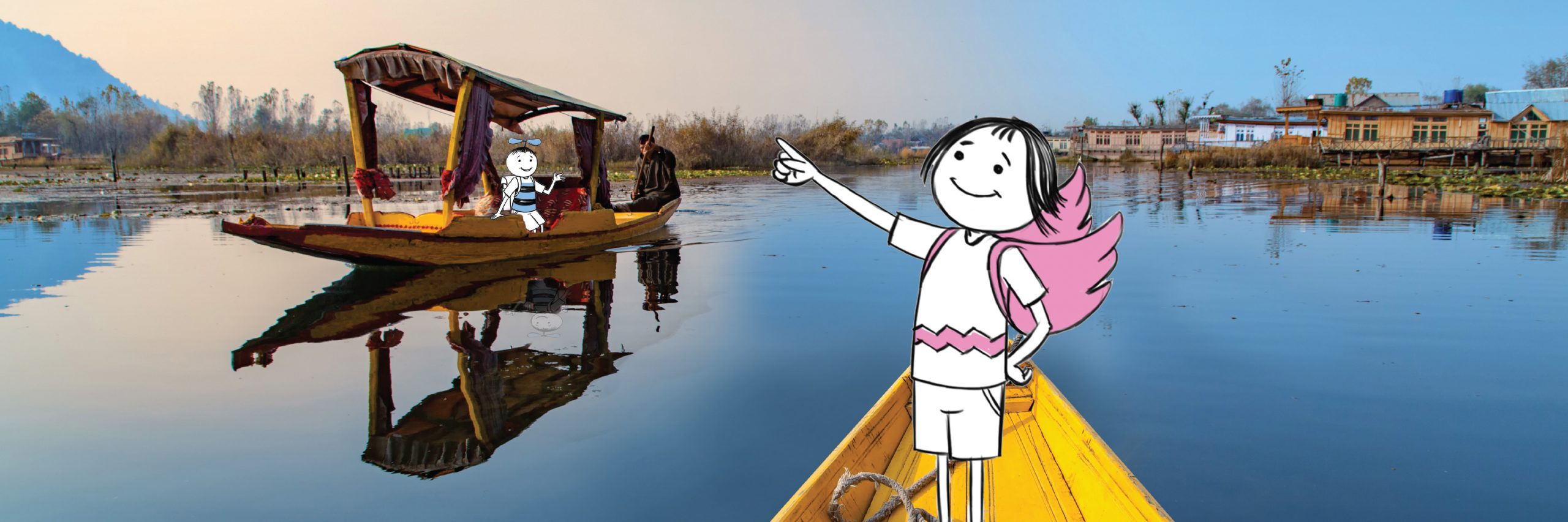
The Discover India series by Sonia Mehta brings to you and your young ones an opportunity to travel the land of Jammu and Kashmir in the book Discover India: off to Jammu and Kashmir. Hop on to this joyride with Pushka, Mishki and Daadu Dolma for an adventure filled trip! Through song and dance, clothing and architecture, they will take you to the beating heart of Jammu and Kashmir.
Here are 4 things to know about Jammu and Kashmir:


With puzzles, crosswords and dozens of other activities, the books will entertain, educate and enlighten young minds.
AVAILABLE NOW!