




Sangeetha Sreenivasan’s descriptive book Acid, set in the rapidly evolving city of Bangalore, deals with the convoluted lives of two fascinating women and marks the entry of a fierce and bold new voice in the Indian literary landscape.
Here are nine facts about her that you should know:


Shivaji and his Idea of Swaraj
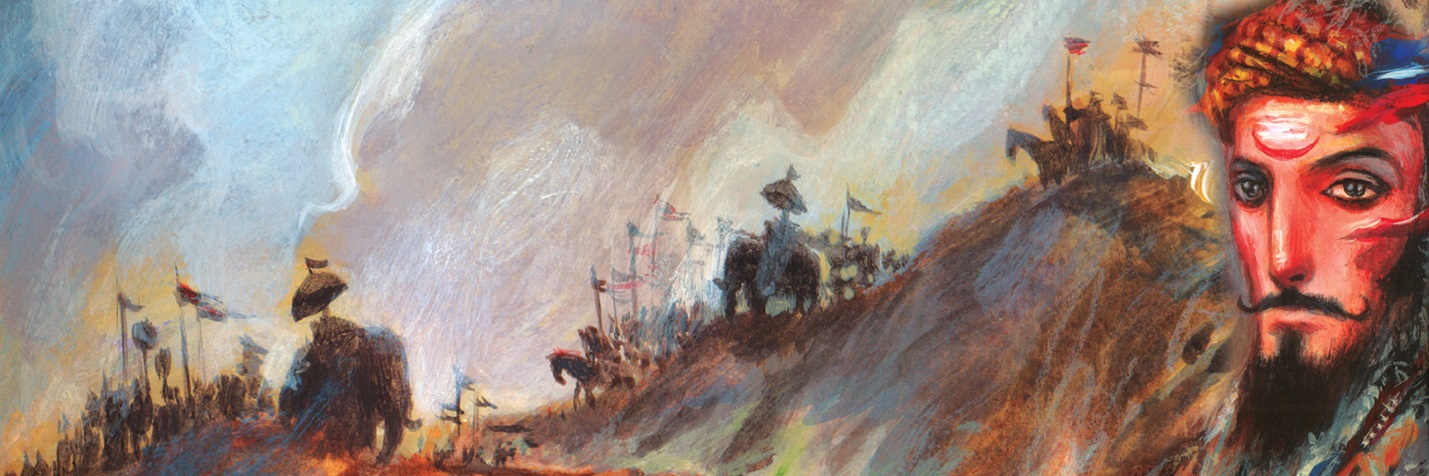
After Aurangzeb ascended the throne in the North, he moved ahead with the aim to conquer the Deccan kingdoms. He is ruthless in his quest and would leave no stones unturned.
Raja Shivaji, a jagirdar from the hills of western Deccan, wants Swaraj in its truest sense. He cherishes his freedom and has raised his sword against those who stand between him and his goal to gain Swaraj. With his unrivalled courage and a drive to liberate all the Deccan kingdoms from the oppressive rule of Aurangzeb, Shivaji and Aurangzeb’s power struggle makes for an epic saga.
Frontiers, a historical saga by Medha Deshmukh Bhaskaran, brings to life the complex and ever-shifting dynamics between these two arch nemeses.
Let’s take a look at few ideas of swaraj as understood by Shivaji:
Shivaji’s idea of Swaraj
According to Shivaji, Swaraj is the birthright of every human. He longed for a world which was no longer entangled in the clutches of biases, cruelty, religious conflicts and discrimination of any kind. Thus, he fought for the freedom of the Marathas from the oppressive rule of the Mughal emperor Aurangzeb. He wanted to establish a Hindavi Swaraj.
Take a look at few ideas of swaraj as understood by Shivaji:


A Timeline of the American Presence in India Through the Years

For two centuries, the United States has been involved India. Ranging from the Great Indian revolt in 1857 to solving the Indo Pak war of 1947.
Here are a few significant instances of the American involvement in India, from Srinath Raghavan’s book, The Most Dangerous Place which presents a gripping account of America’s political and strategic, economic and cultural presence in the region. By illuminating the patterns of the past, this sweeping history also throws light on the challenges of the future.
Let’s take a look!


Medha Deshmukh Bhaskaran on Writing Frontiers
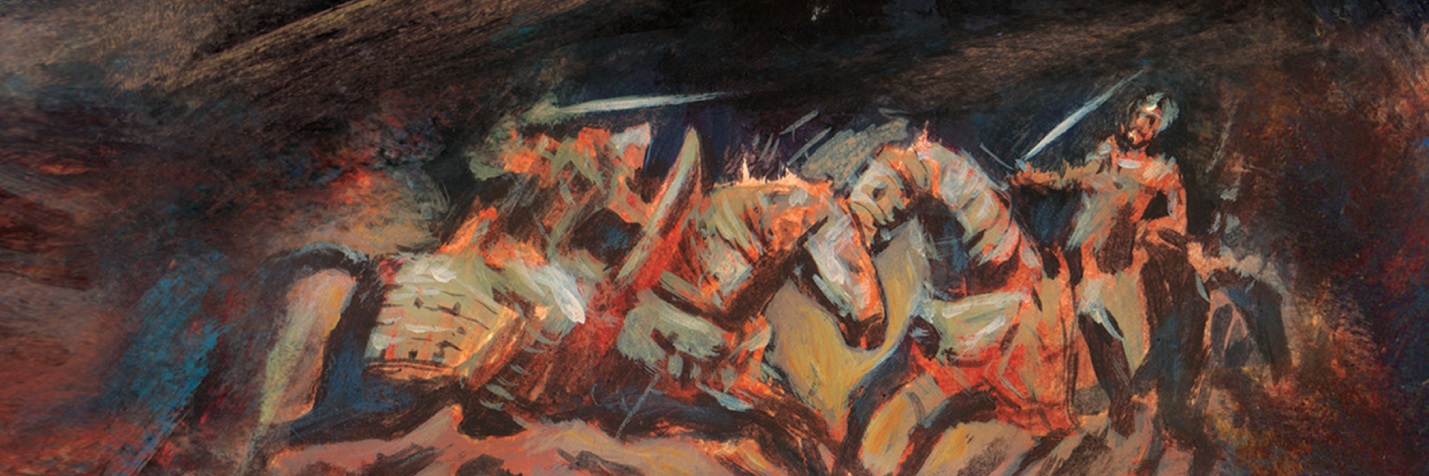
Frontiers by Medha Deshmukh Bhaskaran, is the story of Shivaji’s quest to establish freedom in the Maratha region. Born to a Jagirdar, Shivaji shunned his noble status to fight for Swaraj against the Mughal forces of Aurangzeb. The battle that ensues between the two enemy forces makes for a riveting read.
Here we have Medha Deshmukh Bhaskaran talking about how the book came to be and how she researched about Shivaji. Talking about her journey in the making of this book, she explains the challenges that she overcame in order to know about the man Raja Shivaji.
——————-
After publishing more than three hundred articles on ‘health and disease’ in the Weekend Magazine of the Khaleej Times – a very popular newspaper in the gulf, I realized that people appreciated what I wrote. In that small little and cosy world of United Arab Emirates, I got some recognition and it was followed by big dreams. Soon I wanted to write a book on something not related to medicine. It took me a while to find that ‘something’ which turned out to be an uphill task.
I realized that there are hardly any books written on Chhatrapati Shivaji in English. I am a Maharashtrian born in Ahmednagar. Love for Raja Shivaji is in our DNA, like the right to ancestral property; we are born with extreme loyalty to Raja Shivaji.
The first task was – that loyalty did not turn blind.
It was year 2000 and at that time I had a very demanding schedule. My boys were growing up and soon I would also have a high pressure marketing job in the healthcare industry in Dubai. Nonetheless I announced my desire on impulse and my parents bought about fifty reference as well as fiction books written on Maratha History (mostly in Marathi) and presented to me. The impulse soon became a passion and passion soon turned into madness! Those books became my time-machine to travel into the past. The most valuable reference book (about 1000 pages) was written in English by Mr G Mehendale, ‘Shivaji: His Life and Times’.
Since then every holiday in India meant visiting mountain forts.
Little did I know at that time that writing articles in a magazine is totally different from writing a book, especially a historical fiction.
Agreed that there were already hundreds of ‘fiction, nonfiction’ books in Marathi on the subject. When a Marathi reader starts reading a book on Raja Shivaji she/he is already in love with the protagonist. That love makes them pick up the book from the store in the first place. My book written on the subject would be for people who did not know Raja Shivaji, and they were not necessarily, already in love with him. I had a task to recreate history scene by scene, what would have happen, what could have taken place, what was said in conversations and by whom and what body-language of the people might have been. And I also wanted to remain very truthful to history. First it looked like a foolish waste of time. Many thought who would read a historical fiction written by a microbiologist who had failed in ‘English’ and ‘history’ in school with remarkable consistency? Only my closest family, my parents, brother and husband stood by a person like me who mostly lived in the 17th century!
Battle scenes were the most difficult part when it came to descriptions. Here I took help of non-fiction books written by Col. Palsokar and Sir Jadunath Sarkar written in English. Mr Girish Jadhav, a famous weapon (17th century) collector, too came to my rescue. I met him when he had held an exhibition in Ahmednagar. He demonstrated how sword fights were fought. Dr Ajit Joshi who has written a reference book on Shivaji’s escape from Agra, explained to me with logic and insight how Shivaji must have escaped and how old theories could possibly be not true at all. Late Mr Ravindra Godbole who has written Aurangzeb’s biography in Marathi discussed for hours about how men of power must have ruthlessly played politics.
In one of the books referred, I came across a foreword written by a famous history analyst (late) Mr Narhar Kurundkar. He strongly held that a portrayal of Shivaji could only be completed by showing not just who he was but what he was up against. Thus I took a detour from the Maratha history and started studying the Mughal history, especially about Aurangzeb, who turned out to be a very interesting protagonist. I decided to give him equal space as Raja Shivaji in ‘Frontiers’.
From then I started hitting the keyboard whenever I had the time. When I look at the initial manuscript I realize that I did need years (more than ten to be precise) just to get the story together. A single conversation would take months and then I would scrap it. I became possessed by Raja Shivaji and Emperor Aurangzeb – so much so that when I drove lovely cars at the speed of 120 kilometers per hour on the fantastic roads of the UAE, I missed being a cavalryman riding a horse through forests of western Maharashtra! When I visited the Fort in Shahjahanabad in old Delhi I felt the uncanny presence of Emperor Aurangzeb’s in now-bare-and-orphan-like-Khaas-Mahal.
Having lived in three places on the planet earth, India, Europe and the Middle East, life has taught me that there are good as well as bad people, irrespective of their religion. It helped me as an author to be totally and completely unbiased as far as religions and castes were concerned.
It was 2011, time to come back to India to take care of my aging parents. My boys were grown up and were independent. I had quit my job and was back in Mumbai with bag, baggage and my manuscript. But the real problem was getting a publisher or an agent. A hundred emails containing query letter, sample chapters, synopsis and blurb were sent. Since the story was vast (1656 to16 80), I thought it would best be told in a trilogy – with each book ending into a shocking event. One thing was clear – I would not self or vanity-publish my work. After many rejections and heartbreaks, one publisher in Kolkata offered to publish part 1 (1656 to 1659) of the trilogy. And as any new author I jumped. They did a fairly good job in editing and it was published – under the name ‘Frontiers of Karma – The Counterstroke’ There was a problem though; the distribution was extremely weak. It was then I had taken a copy to Crossword Bookstores head office requesting them if they could distribute ‘The Counterstroke’. They agreed and more. Anup Jerajani asked me to write a 300 page biography of Chhatrapati Shivaji –thus ‘Challenging Destiny’ was born in 2016. The biography turned out to be Crossword Bookstores bestseller and was nominated in two categories for Raymond Crossword book awards 2017. It is translated in Marathi (Zunz Niyatishi) and in Hindi (Niyati ko Chunauti). Its audible edition is available on Amazon’s audible.com.
My heart was still pining for my historical fiction.
Meanwhile the Kolkata publisher was closing down. Part 2 (1659 to 1666) was written and ready, languishing in the files of my desktop. It was early 2017 I got the most important call from Vaishali Mathur, Editor in Chief of Language Publishing at Penguin India saying that she had found my manuscript in her old mails and she wants to take up the project. She said Penguin will publish both the parts in one book – that would end showing Raja Shivaji’s escape from Agra. Then stared the editing on warpath. First Vaishali Mathur trimmed to story making it fast paced and racy, Mriga Maithel Negi did the English editing, scrutinizing each word of the monster manuscript. At the end, Penguin’s senior editor, Paloma Datta looked at it through fisheye lens. The name was decided – FRONTIERS’. A very attractive cover was designed by Ahlawat Gunjan and illustration showing protagonists in their warrior avatar with a backdrop of battle chaos was created by Sankha Banerjee.
I would say the last words while telling you the story of ‘Frontier’s birth in a verse penned by me
Footprints get buried
Even the tracks erode
But the past still pulsates
Like lava
With unbearable load
——————
Frontiers, a historical saga, bring to life the complex and ever-shifting dynamics between these two arch nemeses.
AVAILABLE NOW
Glow – An Excerpt

Vasudha Rai’s Glow brings back the charm of Indian recipes for beauty and nourishment of your skin. From fruits and vegetables that are readily available to the potent Ayurvedic herbs, this book tells you the ways in which you can get the radiance from within. These remedies help in building strength and immunity, as well as cleanse your skin, body and mind.
Here is an excerpt on vitality from the book:
Vitality
We operate out of two emotions—fear and love. Both sentiments make us truly human. However, they’re the opposite of each other. When we work out of fear, the result is usually weak and lacklustre. But when we do something from a place of love, the results are inspirational.
It’s no different with food.
In today’s world there’s so much misplaced knowledge that we eat out of fear. Will this make me fat? Am I allergic to this? Should I feel guilty after an indulgence? With each bite we become more afraid, and consequently, our bodies shut down, refusing to accept nourishment. even when we treat ourselves, we become overwhelmed with guilt, which prevents us from truly enjoying the moment. You see, it’s not just what you eat that is important but also how you eat it. The more you relish your food, the more it will energize you.
Over the last few decades many trends have come and gone. First, fat was the enemy and now it’s our best friend. Meat was also glorified for a brief moment, while carbs were pilloried for causing weight gain. After writing on health and beauty for many years, the only thing I’ve learnt is that today’s remedy could be tomorrow’s poison. Foods that nourish you greatly could be stigmatized because of new research. And ingredients that were considered poisonous may be celebrated again.
The problem begins when we focus just on the outward manifestation of beauty. When washboard abs become more important than an energized body, we fail in the quest for health. The perpetual obsession with superfoods takes away the pleasure of eating. It separates us from the time-tested knowledge of our ancestors. While traditions have always been relevant, you’ll find that they are more applicable today than ever before. In fact, at a time when we’re bombarded with a new trend every day, ancient, time-tested wisdom is worth our trust.
Vitality is the feeling of freshness, energy and strength. It helps us look forward to the day and handle each task with ease, including the chore of self-care. We need to be strong and energized first, before even thinking about the other aspects of beauty such as clarity and radiance. In this part we’ll focus on the basics that make us robust—oils, grains, unrefined sugars and herbs—ingredients from our kitchens that must be included in our everyday diet.
I’ve included carbs and sugars in this selection because I don’t believe in completely eliminating any food group. While I limit my consumption of wheat, milk and sugar because they cause inflammation, I haven’t removed them entirely from my diet. It’s essential to enjoy everything in moderation. Unless you’re intolerant or allergic to any ingredient, there’s really no reason to completely cut it out.
The need of the hour is to stop treating meals as a battlefield. We must eat with the aim of boosting health and longevity, instead of trying to create only the outward shell of a perfect body. After all, there can be outward beauty only when there’s inner health.
***
Coconut
It is the ultimate symbol of joy. Its scent is like a vacation for the mind, its water instantly energizes a tired body and a splash of its milk makes everything tastier. In India, the coconut is revered greatly. We break it open before auspicious occasions as an offering to the gods. It’s so purifying, healing and strengthening that it is essential to bless any celebration. The last decade or so has been especially good for the coconut. We have seen a huge surge in its popularity. We’re applying the oil to frayed cuticles, split ends, dry skin and even mixing spoonfuls in green tea and coffee. But, as with most natural ingredients that are celebrated, coconut is now being demonized too.
A 2017 research conducted by the American Heart Association found that coconut oil has as much (if not more) fat than butter and even beef fat. And, therefore, the study said that it increases cholesterol and causes weight gain. I don’t find it surprising. At the end of the day coconut oil is a saturated fat, and any fat (whether it’s saturated or unsaturated) must not be used in excess. The problem arises when we put food up on a pedestal so high that any shortcomings aren’t even considered a possibility.
In the last decade or so we have leapfrogged from one food to another, calling each the holy grail of health. There were goji berries, avocadoes, wheat bran, acai, cacao and even red meat, which was part of the Atkins diet. The problem is that the moment a food becomes a fad, we start overusing it without proper knowledge. However, there really is no one superfood that resolves all our problems. All plants and all foods have superpowers—each with its own unique property.
Coconut oil has some wonderful benefits, but too much will, of course, increase cholesterol. And if you consume it with ice cream or a cold drink, it will congeal inside your body because it is a saturated fat just like ghee. But to demonize it to an extent where it’s comparable to beef fat is an exaggeration. The one big difference between the two is that beef fat is inflammatory and coconut oil (being plantbased) is anti-inflammatory. Therefore, they’re the opposite ends of the spectrum: inflammation causes disease and foods that control it heal our bodies.
Science
What can be said about coconuts that isn’t already known? They’re rich in trace minerals such as manganese, iron, zinc, copper and selenium, which help in hormone regulation, cell regeneration and even digestion. They also contain small amounts of B vitamins and a ton of fibre, but the real USP is a certain medium-chain fatty acid called lauric acid. When consumed, it turns into monolaurin, which is strong antimicrobial agent that fights against viral and yeast infections. In addition, coconut oil also contains caprylic acid (a powerful fungus-fighter) and capric acid (a potent yeast killer). Because of these properties it is given to people with poor gut health, as one of the main reasons for that is candida (or yeast) overgrowth.
While a small amount of candida is essential for healthy digestion, in excess it can damage organs and release toxic by-products into the bloodstream. Signs of candida overgrowth include regular migraines, intense sugar cravings, bloating, anxiety, digestive issues and low energy. The three acids mentioned above form a powerful antidote that helps break down candida fungus in the body and restore healthy digestion. A safe amount of coconut oil that you can consume daily is 1 tablespoon. If, however, after a couple of months, you don’t see any improvement in your skin, mood or digestion, increase the dosage with the help of a certified nutritionist. Do keep in mind that some of the prime causes for this overgrowth are sugar, wine and antibiotics.
Coconut water is a highly isotonic fluid, meaning the electrolytes in it are very similar to our blood plasma. Therefore it revives us instantly. It’s like a hydrating injection, balancing the electrolytes immediately and fortifying the body with amino acids. Coconuts are alkaline in nature and cleansing for the body, which makes their water the perfect drink to kick-start your day.
Coconut meat is high in fibre and therefore helps promote gut health. The MCTs (medium chain triglycerides) in its oil break down as ketones, which serve as fuel for the brain. This is why they’re useful for memory problems and improving brainpower.
Coconut-and-Clay Toothpaste
- 2 teaspoons bentonite clay
- 1½ teaspoons baking soda
- ½ teaspoon clove powder
- ½ teaspoon cinnamon powder
- 2 teaspoons coconut oil
- ½ teaspoon activated charcoal
- A few drops of peppermint oil
- Mix the bentonite clay, baking soda, clove power and cinnamon power.
- Add the coconut oil, activated charcoal, a few drops of peppermint oil and a bit of distilled water and mix it all.
- Never use a metal spoon or container to make or store this toothpaste as the negative ions in the bentonite clay will bond with the positive charge in many toxins from metals.
- This amount is enough for two people for a month. Keep it stored in a glass jar and do not use a metal spoon to scoop it out.
- This toothpaste helps clean and whiten the teeth without the harmful toxins (such as fluoride) present in commercial toothpastes.
- Instead of using and throwing plastic tubes, you can also reduce waste by making your own toothpaste.
———-
While it is possible to fake great skin with make-up, you can only be truly radiant when you nourish your body from within. After all, outer beauty is only a symptom of inner health.
AVAILABLE NOW
John Green Quotes We Can't Seem to Get Enough Of

John Green is the award-winning, #1 bestselling author of Looking for Alaska, An Abundance of Katherines, Paper Towns, Will Grayson, Will Grayson (with David Levithan), Turtles All the Way Down and The Fault in Our Stars.
From these wonderful books have come some wonderful and ever-so-relevant quotes that we can’t seem to get enough of. Let’s take a look at some of them!


Exploring Waves of Migration in the Islamic Community

India Moving takes a close look at India’s (and the world’s largest) episodes of voluntary and involuntary migration. It delves into how India is unique in currently sustaining considerable immigration, internal migration and emigration – all three at the same time.
It provides a wealth of information and interesting perspective on the migration of different business communities within and outside India.
Here’s an insightful look at the origin and impact of successive waves of migration within the Muslim Merchant community, over the years:


The Origin of Kartikeya – An Excerpt
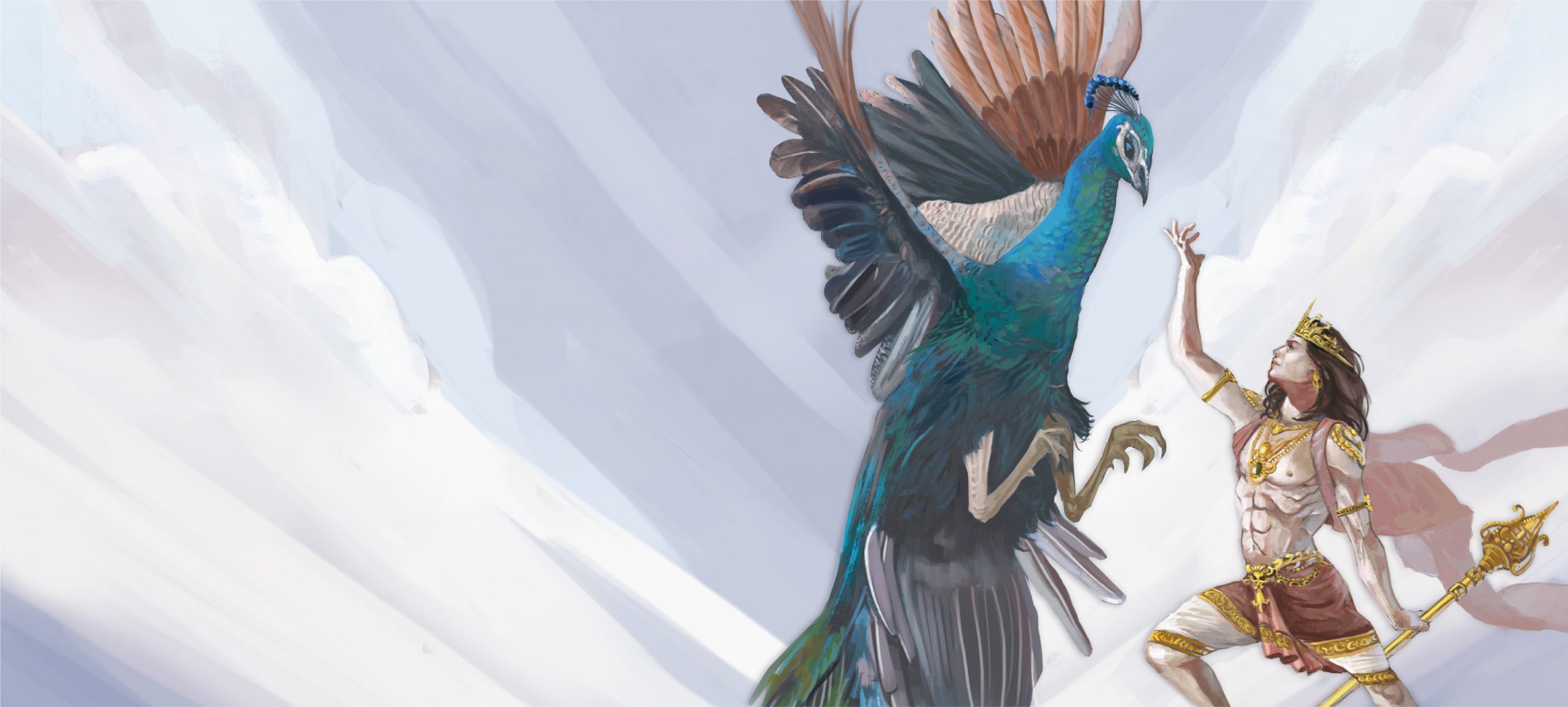
He was the son of fierce Durga and three-eyed Shiva. He had been born, he had lived, and he would die if need be, for a divine purpose-to kill the Soul Stealer
In Usha Narayanan’s book, Kartikeya and his Battle with the Soul Stealer Surapadma’s reign of terror flourishes and the fate of all creatures-mortal and immortal-hangs in the balance. Shiva’s son, Kartikeya, must destroy several formidable asuras before he can confront the Soul Stealer and salvage the dying, gasping universe.
Who is Kartikeya and what is his story? Let’s find out about his origin in this excerpt from the book!
The mountains were dark and dangerous. Dense woods covered their lower slopes while the peaks were snow-topped. Pishachas and bhootas flashed through the air with devilish hoots. Eerie, moss-covered trees glowed like goblins in the night. Swamps opened their putrid mouths to swallow the heedless traveller. Dense fog descended suddenly to obscure one’s vision, making it easy to plunge down steep cliffs. Venomous snakes raised their dark heads from their holes. Wild beasts hunted their unwary prey. And in their midst, all alone, stood a young child with a stormy face, setting up a loud clamour as he challenged the skies.
The mountain dwellers spoke in awed whispers about his sudden appearance. They had seen a fiery glow illumine the peak one night. Veins of gold, ores of silver and sparkling gems emerged as if by magic, shining with a blinding lustre that brought the ravens cawing, assuming that the day had dawned. The owls, terrified by the sudden light, flew hastily into the darkness of the caves. The hunters heard the cry of a baby the next day, though they could not find out where it came from. On the third day, they caught a glimpse of a glowing child amidst the reeds that fringed the mountain pool. And, the next morning, even as they watched and wondered, they saw him walking and talking. How had he come here, all alone? They had seen no strangers, so where were his parents? Had they abandoned him, fearful that he would bring disaster upon them?
For alas, the child’s face and form were bizarre. They kept their distance, afraid of this extraordinary being.
‘It is against nature’s laws that he should grow so swiftly,’ said one.
‘They say that asura children become full-grown in a matter of days,’ said another. ‘Or perhaps he is a monster who has come to torment us. That would explain his eerie appearance!’
Then one hunter raised his bow. ‘Instead of wondering about who he is, let us kill him before he grows too powerful!’ he said.
‘No!’ exclaimed his wife, forcing his arm down. ‘You cannot kill an innocent child who is forsaken and forlorn. I curse the mother who abandoned him in this manner! He must be hungry, poor little one. I want to take him some food. Look, how unsteady he is on his feet. How will he survive in the forest?’
Even as she spoke, she saw something move behind a rock on the path the child was following. She saw a dark scaly head emerge—that of a poisonous pit viper. It uncoiled its hideous body and flicked its forked tongue in the air as if to sniff its prey. The hunter’s wife gasped and picked up a handful of stones to hurl at the snake. Her husband gripped her arm and shook his head. She looked at him angrily and whispered, ‘We must warn him. What if it bites him? The poison will kill him that very instant.’ She turned quickly again to see if the snake had struck. It was upright and appeared to be waiting for the child to come within striking distance. She tore her arm free and lifted it, ready to throw the stones. Even if they did not reach the snake, at least the boy would be alerted. And the startled snake might retreat.
Suddenly, the snake dropped to the ground, as if prostrating itself before the child who walked past—unaware of the danger he was in. The spectators looked at one other, startled. What did this mean? ‘I told you! There is something unearthly about this child!’ the hunter said. ‘Let us run away before he spots us.’
‘No, I refuse to believe that a child so radiant could be evil,’ his wife protested, resisting his pull on her arm.
‘Let us at least stay away until we find out more about his nature,’ the hunter replied. They hid behind some trees and watched the stranger go past.
The child saw two moving shadows but when he turned, there was no one there. His nostrils flared in response to a delectable smell he had occasionally come across in the forest. He felt a deep pang of loneliness and pain. Hunger stirred in his stomach and he felt a raging thirst. He heard the trumpeting of a herd of elephants moving towards the river, with their young ones safely tucked in their midst. In the tree above his head, he could see a black bird in its nest, pushing food into the throats of its hungry chicks. A monkey clan was watching him warily, with the young ones clinging to the backs of the mothers. Alas, he could not see anyone of his own kind, no tender mother or vigilant father. He had seen footprints like his own on the ground. Was it his clan’s? Why were they avoiding him then? Perhaps he had been cast away as worthless. His foot slipped on some smooth pebbles. He grasped at a bush to steady himself and gasped as the thorns pierced his flesh. He stuck his hand in his mouth, trying to soothe the burning sensation. Quick tears sprang from his eyes. He raised his voice in anguish, breaking the quietness of the morning.
‘Who am I? Why was I born? What is my name?’ he cried out. But he heard no answer. ‘The beasts around me cradle their young. They bring them food and protect them from their foes. But my parents . . . my parents have abandoned me on this cruel mountainside. I am at the mercy of the sun, the wind and the wild creatures that stalk their prey at night!’
Would someone reply, explain the reason for everything that was happening? He waited, his eyes flaming red. But all he heard was Nature herself, speaking with the voices of the elements.
Suddenly, he heard the sound of someone or something crashing through the bushes. A wild boar emerged in his path, huge and menacing. It stood aggressively before him, pawing the ground in challenge, its eyes glinting angrily. Behind it he could see the sow emerging from the bushes, followed by its young ones. But as he stood stock-still, staring at the animals, the mother took a quick look at him and herded her young ones back into cover. The male grunted at him and he grunted back. It stared at him for a few moments, appearing to be in two minds about mounting an attack. Then it turned and followed its brood into cover.

8 Things you Didn’t Know about Bene Israel Jews

An epic tale of a gifted Jewish family that loses and finds itself on Indian soil, The Book of Esther shines fresh light on the Jewish experience in India and becomes an affecting tale about love, home and belonging. The book gives us some interesting facts that you may not have known about the Bene Israel Jew community in India.
- Bene Israel Jews don’t work on Saturdays. (They don’t even cook!)

- Restrictions were placed on women by the community

- Where do they come from? The community isn’t sure.

- According to the lore seven couples were shipwrecked off the Konkan coast, these were the first Bene Israel Jews.

- Prophet Elijah (Eliyahu Hannabi) is special to the Bene Israel Jews.

- Idolatry is forbidden in the community.

- Kaala Jaadoo- What’s that? Black magic and the supernatural is rejected by the community.

- Your boy becoming a man? Not before there’s a bar mitzvah to celebrate it.


Technology on a Leash

Venkat Iyer is the author of Moong Over Microchips and a certified project management professional. In this piece Iyer discusses how technology could be “a useful servant but a dangerous master”. Vivek Wadhwa and Alex Salkever talk about technology on similar lines in their book Your Happiness was Hacked.
The book Your Happiness was Hacked encounters various problems that are caused by engaging with technology to an extreme and how it could be kept under check. This book exposes how tech companies entice us to overdose on their products, thereby hindering our daily lives.
—————-
I worked in the Information Technology (IT) industry for 17 years and that is enough to be immersed in the addictive tech world. Starting from the humble desktop to mighty servers with the latest software and technology, there was not a moment I did not think of IT.
Steven Spielberg once said, “Technology can be our best friend, and technology can also be the biggest party pooper of our lives. It interrupts our own story, interrupts our ability to have a thought or a daydream, to imagine something wonderful, because we are too busy bridging the walk from the cafeteria back to the office on the cell phone.”
I was to understand what he meant only in 2003 when I quit my job in IBM and decided to start my own organic farm near Mumbai. Moving to the village, only over 100 km from Mumbai, I found that there was no telephone connectivity, let alone internet. I soon realised what an impact technology had on our lives. Right from the initial dotcom boom to the introduction of smartphones and social media, technology had touched almost everyone’s lives and changed it. While it brought the world closer and made access to information easier, it also transformed our social and cultural fabric.
Way back in the nineties, one could rattle off a long list of telephone numbers, while now even for their own number, people tend to search in their mobile phones. Simple addition and multiplication need a calculator. Many would say technology makes our lives easy, but what about using our brains to perform simple tasks which will keep it alive and ticking. To counter this, Sudoku or a crossword puzzle are recommended daily to keep the grey cells from disuse.
With the growing popularity of Facebook, I was tempted to open an account. I could access the internet only on the weekends when I went to Mumbai from the farm, and I could not relate to many posts. Most of them were of little interest to me. Once, when I checked my timeline I found a post by a niece in USA, describing a terrible stomach pain. I stared at the post for a while: it seemed strange that you would get up and log on to a social networking site to inform people across the world of an ailment while in so much pain. I also could not figure out why 21 people had liked the post. What exactly did they like? Her pain and trauma or the fact that they had read the post. It did not take me much time to delete my profile and I vowed never to be on Facebook again.
While the insane desire to share the humdrum realities of one’s life in public was growing thanks to Facebook, another application was gaining ground, Whatsapp. This free new app with calling facility made it possible to chat with others all over the world. Suddenly, I was added to groups of old school friends, ex-colleagues, cousins, farmers’ groups and other of like- minded people coming together to share information. The popular activity was to forward and share as many posts as possible. It was left to the imagination if the posts were true and verified. Lately, these indiscriminate posts, sometimes circulating falsehoods or old videos have been fuelling lynch mobs and claiming the lives of people in our country. But who cares. To forward and share is our motto.
It is reported that almost 200 million people use Whatsapp in India and sadly most people believe the often scurrilous posts, sometimes proved to be patently false. It is a common sight to see people staring at the phone all day either reading or forwarding what they have received. Besides, the addiction to online games, music and videos cuts across ages. It has become difficult to have a sane conversation with anyone.
Sometime back, I had a visitor from Mumbai who wanted to learn about organic farming and discuss the complex marketing of organic produce. In between a serious discussion, her phone beeped and soon she was lost staring at it for the next ten minutes, while I was holding forth on the topic. A while later, she returned to the physical world and said, “I am sorry, Where were we?” I just looked at her and said, “Maybe you should send me your questions on Whatsapp and I can reply to them at leisure.” The comment did the trick and she switched off the phone for the rest of the meeting. But, sadly everyone does not react the same way and some continue to smile and stare at their phones.
Technology is not bad; it is a useful servant but a dangerous master. It is the indiscriminate use and over dependence on it that is not good for us. It is faster to email than post a physical letter and there are many other advantages. But, is there a need to stare at the phone and jump at every sound notifying you of something, tweet every moment or Facebook your aches and pains to complete strangers? So that I am not addicted to my phone, I have fixed timings daily to read my mail and reply. Anyway if it is something urgent, I presume one would have got a call and not an email. Even when it comes to taking calls, I don’t take them all the time, especially during mealtimes or while driving.
I probably find it easier to have these restrictions since I live on the farm and not in a city with a fast- paced job. In the corporate world, there is no question of being delinked from technology. There could be a time when you need to step back and look at your life: is this incessant use of the phones, social media and technology having an impact on your health, life, peace and your mental state? Can we strike a balance between life and technology, so we enjoy the best of technology and reclaim a life that we can truly enjoy? It is not impossible.
Your Happiness was Hacked turns personal observation into a handy guide to adapting to our new reality of omnipresent technology.
AVAILABLE NOW!