




An epic film based on one of the most famous tragic romances of all time- Heer-Ranjha, serves as the surprising backdrop to this rollicking romantic comedy of heroes, heroines and happily-ever afters in Tinseltown.
Saranya Rai brings to you Love,Take Two. When Vicky Behl and Kritika Vadukut meet on the sets of Ranjha Ranjha they find it hard not to give in to their attraction to each other amidst all the romantic numbers and their undeniable onscreen and off-screen chemistry. But will the pressure and scrutiny of Bollywood allow them a happy ending or will there be a twist in the tale?
Kritika Vadukut
The gorgeous model/badminton player turned successful actress, who through sheer hard-work and perseverance is trying to prove that not every former Miss India is jinxed in Bollywood. Having once had her heart broken by the poster-boy for Bollywood nepotism -Raunak Rajput, can she trust her heart to another star with a player’s reputation again?

Vicky Behl
Charming, goofy and good-looking, Vicky is everybody’s favourite scandalous leading man and all-round Bollywood heartthrob, with a (partly) undeserved tharki reputation and a taste for outlandish clothes. When he is cast as Ranjha opposite Kritika’s Heer, he must navigate rumour-mongering reporters and well-intentioned family and friends to reach his stunning co-stars heart.

Jahan Malek-
Vicky’s long-suffering best friend and confidante. He is also a popular star and the critics’ darling for his stellar performances and his hard-earned abs.

Mrinalini Behl
21, chubby and shy, Mini would be the classic girl next door if your average girl next door had India’s scandalous sweetheart, Vicky Behl, for an overprotective older brother. Add to that her long-term crush on yet another famous star and her brother’s best friend-Jahan Malek who insists on seeing her as a little sister, and you have no shortage of growing pains!

Sudarshana Samarth
Incredibly smart and accomplished, as a veteran of eighteen films with a taste for plenty of opulent, baroque grandeur, Sudarshana has the dubious joy of directing the incorrigible Vicky Behl who sees this impossible taskmaster as the female version of his principal, and Kritika in the period drama Ranjha Ranjha. All this while also dealing with her annoyingly attractive DoP who has a way of getting under her skin with his radically different ideas on cinematography.

Arun Jadhav
Ranjha Ranjha’s Director of Photography who is as thoroughly intrigued by Sudarshana’s intelligence as by her gentle curves and quiet beauty, even if his minimalist and raw approach to cinematography is at odds with her more grandiose visions.

Meher Patel
Kritika’s best friend and stylist, a single mother and accomplished designer in her own right, she takes her job of saving her stunning but sartorially insecure friend from fashion purgatory very seriously.

Bhaskar Joshi
Sneaky entertainment reporter who is not above using dubious tactics and manipulating perfectly mundane statements for a fresh scoop of juicy scandal.


Staggering Forward – Excerpt

Is Modi’s foreign policy a failure? – An Excerpt from Staggering Forward
Narendra Modi has never really articulated his India First policy in extenso but spoken about it in dribs and drabs and broad-brush terms. In a town hall setting in New Delhi in August 2016, he elaborated on this concept as the “central point [of Indian foreign policy]. It is about protecting India’s strategic interest [and] ensur[ing] that India marches forward in achieving economic prosperity by leaps and bounds and reach[ing] the position which it is destined to reach.”
Here is an excerpt from Bharat Karnad’ book, Staggering Forward: Narendra Modi and India’s Global Ambition where the author talks about his views on Modi’s foreign policy. Argumentative and thought-provoking, Staggering Forward is a must-read to understand India’s foreign and national security policies since 2014.
——————————————————
In the end stage of his first term as prime minister, Modi, the sole fount of all policy ideas in the BJP government, has done nothing very meaningful in meeting the India First metrics. In early May 2017, he defined his foreign policy priorities to an assembly of the country’s ambassadors as follows: increasing India’s economic profile in the newer, untapped markets of the world, enhancing its security in a difficult neighbourhood and building it into a leading power and net security provider. These are unexceptionable goals, not the stuff to vault India into the heaving scrum of international power politics. The impression of Modi’s small-time objectives is backed by the fact that there is no mention anywhere in his many pronouncements of the inherent strengths and resources of the nation and how he means to harness them. More troublingly, there’s no hint, much less a detailed articulation, of a national vision, of the preferred global order and rising India’s place in it, the time-frame in which he expects the country to achieve it and with what effect on the Asian region and the world and, most significantly, utilizing what plan and strategy. Indeed, there has been nothing from
Modi by way of a national vision, game plan or strategy. Nor has there been a public mustering of the iron resolve and political will necessary to signal to the people his intentions, just a series of mostly alliterative slogans and, in practice, staying with the foreign and military policies charted by his predecessors, Vajpayee and Manmohan Singh. It doesn’t come close to fleshing out a genuinely ‘new India’, much less an India First attitude and policies.
Consider in this respect what Modi sees as constituting a ‘new India’: A more efficient apparatus of state (better coordination between government agencies, distribution of LED bulbs, etc.), speeded up governmental processes (less time to get passports, income tax refunds), streamlined delivery of social benefits (farmer insurance, free gas connections, rural electrification, bank accounts for the poor), more effective implementation of infrastructure programmes (rail projects, increased electricity generation), and accelerated creation of jobs (extending shop hours). The impression one has of these markers is that of a list of ingredients and tools a car designer may crave without an inkling of what he is supposed to create. The result could be a Rolls- Royce or a Tata Nano. If all Modi’s vision for the country is a bagful of relatively small achievements, meagre economic accomplishments and unspecified but timid objectives in the external realm dressed up in acronyms (such as SAGAR—Security and Growth for All in the Region), his ‘new India’ is much like the old India he inherited. It’s the ‘same old, same old’ with Modi’s ministrations, producing only marginal changes because he is relying on the existing rickety government system and the old way of doing things to deliver new, different and dazzling outcomes. So, India continues to lag way behind the South East Asian states to go no farther out than that and, where China is concerned, remains overmatched.
Compared and contrasted with the agendas of the other strongmen, Modi’s vision and schemes appear meagre, mostly of local import, and not designed for anything other than minimal international impact. If he has been restrained and convivial in his dealings with foreign countries, his government at home, like Trump’s in the US, Xi’s in China, Putin’s in Russia and Erdogan’s in Turkey, has been only about himself. Having first ruthlessly eliminated the residual resistance to his primacy within the ruling BJP with some deft political manoeuvring, Modi has, with the help of his confidant Amit Shah (installed by him as party chief), reduced the opposition to bumfuzzled irrelevance, sharing the fate of the Kemalists at the hands of Erdogan in Turkey, of the Communist Party and the Liberal Democratic Party by Putin in Russia, and the shrinking of the support base of the Democratic Party and Constitutional Democratic Party by Abe in Japan.
But it is hard not to attribute this outcome to Modi’s political skills and rhetoric, his keen social sense, insights into caste arithmetic in various regions and the gripes and grievances of the common man. Combined with his killer instinct, it has assured Modi and his party a longish stint in power. A domineering presence in national life has resulted in the Indian system and policy establishment—the deep state—adjusting to Modi’s likes and dislikes, becoming attentive to his every tick and ready to do his bidding. It has reinforced the prime minister’s autocratic style of functioning, rooting the top-down decision-making model that’s presently in vogue—very different from the more collegial model of the previous regimes that fitted the personalities of Manmohan Singh and Vajpayee. It mirrors developments in the US, China, Russia and Turkey, and a good part of the developing world, and in the states formerly comprising the Soviet bloc. It represents what John Lloyd, founder of the Reuters Institute for the Study of Journalism at Oxford University has called ‘semi-authoritarian nationalism’. Whatever their differing ideologies, autocratic regimes find other governments of the same ilk easier to do business with.

5 Signs of a Dead Relationship

Samah’s latest book, Familiar Strangers, tells the story of Priya and Chirag who like several other modern couples, are living life at breackneck speed and are unknowingly stuck in the rut of a marriage that is dying, if not already dead.
A marriage usually doesn’t go from “‘I am yours forever” to “drop dead, we’re getting divorced”. It does have a plethora of red flags in between. But would you recognize these warning signs if you saw them? Priyan and Chirag’s relationship starts to change when Chirag’s ex-girlfriend returns when they least expect it. Was that a sign of their dying relationship?
Here we have 5 warning signs most couples miss out on:
1. When you two no longer communicate
A sign of a healthy and loving relationship is an open and honest communication. If you and your partner are not talking or communicating with each other, then you should be worried. Failing marriages lose interest in solving problems or resolving arguments. There are fewer meaningful discussions or mutual goals and challenges to look forward to.

2. Intimacy is non-existent
Intimacy not only refers to sex but could also include gestures like holding hands, hugging, cuddling or holding each other. Lack of intimacy is the easiest way to know that a relationship is in trouble. If you and your partner feel more like roommates rather than a couple sharing a beautiful marriage, you seem to have lost a building block of your relationship.

3. You don’t fight at all
In a relationship, partners are bound to have expectations from each other. If those expectations aren’t met, couples tend to fight. But those fights take place because the relationship is worth fighting for. If couples start to avoid conflict and refuse to share their true feelings, they run the risk of repressing their feelings which ultimately leads to resentment, bitterness and anger.

4. When your partner stops making you feel special
Every couple has a tradition or an activity they love indulging in. Think watching movies, cooking for one another or travelling together. When you see a sharp decline in your partner’s efforts to make you feel special or a complete disinterest in doing things they once did for you, you should be wary.

5. The entry of the dreaded ex
Your marriage is most likely over if your partner is speaking to their ex. Marriage is serious business and requires full dedication and commitment. If you are truly into your partner, you wouldn’t feel the need to talk to your ex-lover. So when your partner is suddenly in touch with their ex, then that’s probably the tell-tale sign that they want out.


The Adventures of SP Lodha

Bihar Diaries is an exciting account of the arrest of the ill-famed criminal of Bihar, Vijay Samrat by Amit Lodha. Known for extortion, kidnapping and massacre of numerous people, Vijay Samrat is one of the most feared ganglords of Shekhpura, a sleepy mofussil town in Bihar.
Twinkle Khanna in her foreword to the book praises SP Amit Lodha and says, “When you read the story, you will find that it is vivid and atmospheric because the author has lived each moment, unlike the rest of us who have to often rely on second-hand research and our imaginations while writing from the safety of our armchairs.”
Here are five interesting cases that SP Amit Lodha has worked on:
1. The featured case of how SP Amit Lodha caught the ganglord Vijay Samrat tops this list. With his quick thinking and persistence to mete out justice, he was able to seize the most dangerous criminal of Bihar.

2. When a student from one of the well-known schools of Bihar was abducted, SP Amit Lodha with his flair of working with technology and new gadgets, was able to catch hold of the kidnapper and find the missing child.

3. While on a mission to capture the don of Munger, Kirtan Mishra, SP Amit Lodha bravely went to his hideout and arrested him. This was the first arrest of his career.

4. SP Amit Lodha managed to capture the infamous murderer Hari Sinha with the utmost ease. When he did not get the back-up that he needed, he decided to go without it to capture the criminal.

5. When on a mission to arrest Vijay Samrat, SP Amit Lodha found out about his most trusted accomplice Horlicks Samrat. A long and an interesting process of following the trail of the criminal ensued, resulting in the arrest and bringing him closer to his aim of arresting Vijay Samrat.

Bihar Diaries captures vividly the battle of nerves between a dreaded outlaw and a young urbane IPS officer.
AVAILABLE NOW!
Independence Day Bookshelf
August 15th, celebrated annually commemorating the nation’s Independence from the British forces is a day to celebrate one’s freedom. This Independence Day, we have a selection of hand-picked books that will surely lift your patriotic spirits!
Here we have books exploring the origins of India to the internal political workings of the nation. These are bound to hold your interest in the most engaging way. From the ancient history of India, to the importance of this history on a global level, these books span the growth of India and its journey of becoming one of the biggest economic powers in the world.
Take a look at our list!
- The Penguin History of Early India: From the Origins to ad 1300 (rejacketed edition)

Romila Thapar’s historical tribute to Indian history and the rich culture and heritage of ancient India, the book explores India’s past quite vividly, helping readers to visualize the formation of a nation and how it grew and flourished over generations. Beginning from the prehistoric era, it explores the good and bad of every era. Charting the emergence of all the great dynasties of India, the book also enumerates what it meant for India. This book offers a refreshing take on prehistoric India.
- India’s Legal System: Can it be Saved?

With the second-largest legal profession in the world, India gives little confidence to the common man. In this book, India’s renowned constitutional expert and Senior Supreme Court lawyer Fali S. Nairman looks for possible reasons for the delays and chronic impediments in the judicial system. He discusses some of the key issues such as inequality and affirmative action, providing real cases as illustrations of the on-ground situations.
- The Idea of India

This exciting book by Sunil Khilnani addresses the paradoxes and ironies that have surrounded the project of inventing India. India was a project which gave Indians a considerable amount of political freedom, carrying their huge democracy to the verge of being Asia’s greatest free state, but there were many Indians that were left in poverty. With the project of India being in jeopardy bevause of divisive religious nationalism, Sunil Khilnani provokes this question: Can the original idea of India survive its own success?
- Letters for a Nation: From Jawaharlal Nehru to his Chief Ministers 1947-1963

Chronicling the letters that Jawaharlal Nehru wrote to the heads of the country’s provincial governments in October 1947, this book constitutes the careful selection of among 400 letters. These letters span momentous world events and the many crises and conflicts the country faced during the first sixteen years after Independence.
- 10 Judgments that Changed India

Listing Supreme Court’s ten crucial judgments that have played a part in the turning the Indian democracy and redefined our daily lives, this book explores themes such as custodial deaths, reservations and environmental jurisprudence. Written by one of India’s most respected lawyers, Zia Mody, this book provides an understanding of India’s legal system and the foundations of our democracy.
- Non-stop India

In the book, Mark Tully captures voices of the nation. As India is likely to become one of the vital economies of this century, there are many unresolved questions about the sustainability of such growth and its effect on the stability of the nation. Spanning from the survival of India’s languages and protection of wildlife, to the nation’s thriving industries and colourful public affairs, this book draws an unforgettable image of this emerging superpower.
- Incarnations: A History of India in 50 Lives

Sunil Khilnani in this book fills the space that is between the Indian history and its myths, stories and moral epics, by recapturing the human dimension of how the world’s largest democracy came to be. Bringing to foray the emperors, warriors, philosophers, film stars and corporate titans – this book gives insight to dilemmas that extend from ancient times to our own.
- Indian Railways: The Weaving of a National Tapestry

Describing the growth of Indian railways from the 1830s to Independence, Bibek Debroy and his co-authors explore how the railway network was built, the challenges it went through, and how it finally became a lifeline that still connects and makes the nation.
- Bollywood Boom: India’s Rising Soft Power

National award-winner Roopa Swaminathan recounts the spectacular growth and success of Bollywood worldwide in the twenty-first century. From Amitabh Bachchan and Raj Kapoor enjoying their fame only in selected areas of Russia, East Europe and Africa, to the Oscar-nominated Lagaan, Bollywood has come a long way for us all to see. This book shows how Bollywood contributes to the country’s real income, tourism and also enhances the global standing.
- Left, Right and Centre: The Idea of India

This book brings together diverse views from people across a wide spectrum of life-politicians. Approaching its 70th year of Independence, India and its people continue to struggle with multitude of issues: a few from the Left, a considerable sum form the Right and yeat a lot from the Centre. Nidhi Razdan opens a window to understanding India that largely remained untold and unknown for a long time.
- India’s Most Fearless: True Stories of Modern Military Heroes

The accounts of the soldiers of Army, Air force and Navy in their extreme moments, Shiv Aroor and Rahul Singh cover fourteen true stories of extraordinary courage and fearlessness, Giving a glimpse into the kind of heroism our soldiers display in hostile conditions and under grave provocation
12. India and the World: Catalogue of the Exhibition

Creating a dialogue between the world and India through a fascinating array of artefacts, this books talks about the evidence of human history in India and how that compares with the other parts of the world. Questions like – the difference between Ashoka’s inscriptions when compared with the public inscriptions of other emperors, the imagination of the divine by different civilizations and many more.

The August Puffin Reading Challenge

We are back with our August Puffin reading challenge resonating with the theme of Independence Day! These books are informative and will help your little ones gain the knowledge about the country in an engaging way.
Encouraging interests in many aspects related to India and its working, this list is a great way to get your children to understand the culture, origin, the vast diversity and the great geography of India in the form of fun facts and reads.
4-7 Years

1. Goodnight India
This book is part of the bestselling Good Night Our World series, including hundreds of titles exploring popular locations and exciting, child-friendly themes. Many of India’s most beloved regions are artfully celebrated in these board books that are designed to soothe children before bedtime while instilling an early appreciation for India’s natural and cultural wonders.
 2. Goodnight Delhi
Goodnight Delhi highlights Janpath Market, Bangla Sahib Gurudwara, Lodi Gardens, Humayun’s Tomb, Deer Park, Red Fort, Jama Masjid, Qutub Minar, National Zoo, Old Fort, Bahá’í Temple, the National Rail Museum, and more. This educational board book explores all of the sites and iconic landmarks this dynamic city has to offer. Welcome to the capital of India!
 3. We the Children of India
We, the children of India— Former Chief Justice Leila Seth makes the words of the Preamble to the Constitution understandable to even the youngest reader. What is a democratic republic, why are we secular, what is sovereignty? Believing that it is never too early for young people to learn about the Constitution, she tackles these concepts and explains them in a manner everyone can grasp and enjoy.
 4. India A to Z
Why are the Himalayas considered geologically alive? When did the First train huff and puff its way between two stations in India? What was India’s very own desi dino called? How did India’s currency come to be Named the rupee? Which Indian glacier is the highest battleground in the world? Who wrote the world’s first grammar book? If questions like these make you curious about incredible India, here is a bumper info-pedia packed with fascinating facts, terrific trivia and colourful Cartoons on just about everything in India, this book encourages interest in a wide range of subjects.
8-10 Years
 5. A Bagful of History
As you travel back in time in this book, you can dine with Mughal princess Jahanara Begum, have a Jugalbandi with Miyan Tansen, compete with the nawabs od Chandni Chowk in a kite-flying duel, be a part of Raja Ram Mohan Roy’s fight for the education of the girl child and witness many more exciting events !
10-13 Years
6. A Brush with Indian Art
Embark on a vivid journey on which youll learn about the origin and evolution of art in the country. Look at the first pictures made by humans; reflect upon the serenity of Buddhist cave paintings at Ajanta; marvel at the splendor of Mughal miniature art; delight in the religious depictions of Tanjore; study the hybrid Company and revivalist Bengal styles; and discover the best of modern and contemporary artists.
 7. The Night Diary
It’s 1947, and India, newly independent of British rule, has been separated into two countries: Pakistan and India. The divide has created much tension between Hindus and Muslims, and hundreds of thousands are killed crossing borders. Half-Muslim, half-Hindu twelve-year-old Nisha doesn’t know where she belongs, or what her country is anymore.
 7. Essential India Box Set
This box set comprises of:
My India: This book contains excerpts from Dr. A.P.J. Abdul Kalaam’s speeches during his post-Presidency years. Drawn from his addresses to parliaments, universities, schools and oter institutions in India and abroad, they include his ideas on science, nation building, poverty, compassion and self-confidence.
The Incredible History of India’s Geography: Maps and mountains, lions and tigers, rivers and oceans-all sorts of things you didn’t know about India’s geography you’ll find here. Discover various things you never expected, like the fact that we still greet each other like the Harappans did or that people used to think India was full of one-eyed giants. Full of quirky pictures and crazy trivia, this book takes you on a fantastic journey through the incredible history of India’s geography.
The Puffin History of India, Volume 1: Trace the origin of human beings and the different aspects of their development and growth, right from the Big Bang and the origin of the universe, up to 1500 CE. Well-researched and comprehensive, this book speaks of great civilizations and empires, epics, myths and legends, religions old and new, wars and conquests, clothes, food and lifestyle, trade, travel and adventure, and much more.
 9. India At 70
This book traces the country’s whirlwind journey, giving us a look at the last seventy years. Against a political backdrop, it provides glimpses of India’s vast and rich culture, its many languages and remarkable diversity, its eminent personalities and notable achievements in all spheres. Featuring bite-sized information, fun facts, charming illustrations and detailed maps, this special book sums up the logs of India’s Independence in a fitting way.

5 Things You Should Know About the Daughters with a Legacy
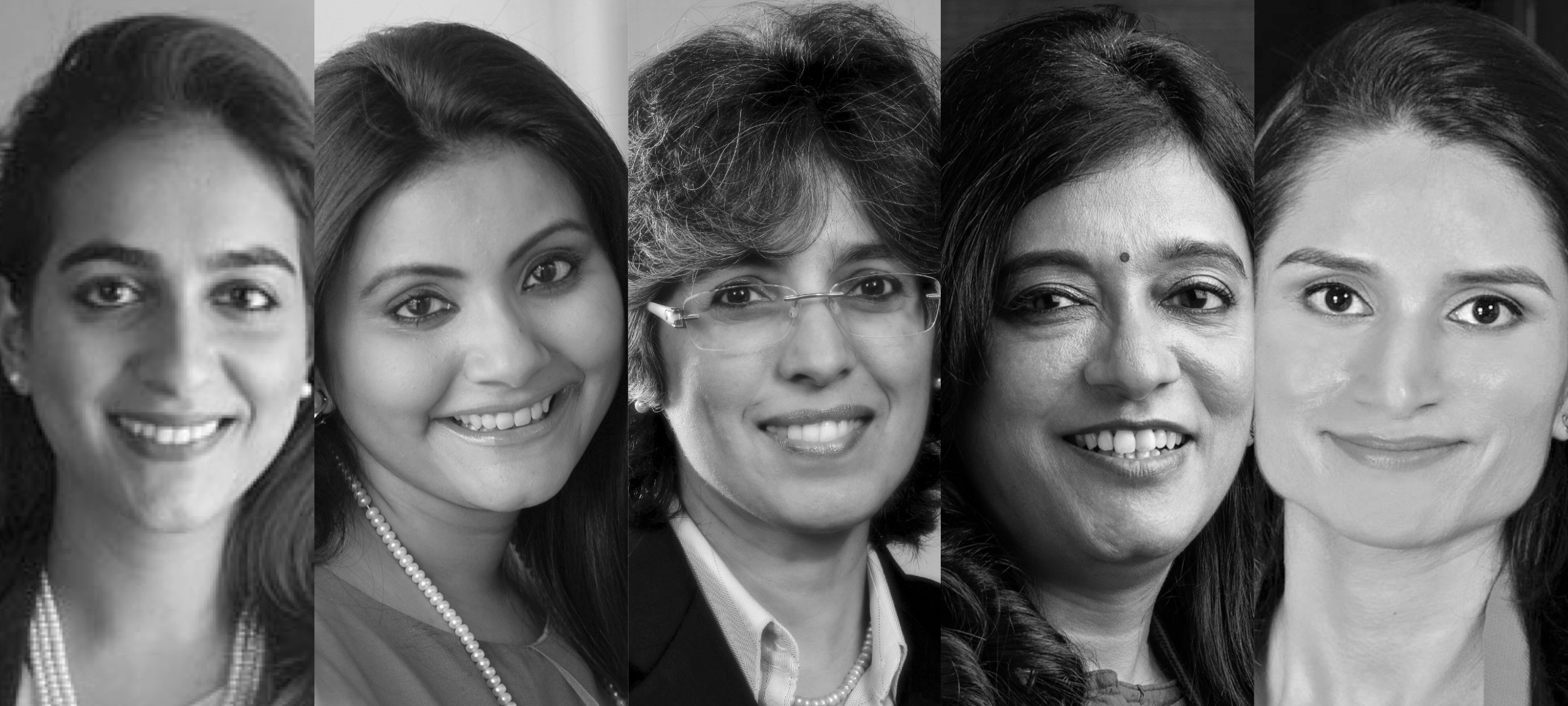
Daughters of Legacy by Rinku Paul and Puja Singhal tells the stories of twelve successful women who grew up with strong business lineages.
Chosen from a wide cross section in terms of scale of business, roles and hierarchy, these women have not only kept the legacies alive but also gone on to carve a niche for themselves as individuals beyond their famous last names. Clearly for all of them legacy is far more than mere inheritance.
Let’s meet 5 of these Daughters with a Legacy and take a look at some of the key moments in their business life.
1. Meher Pudumjee
Non-executive Chairperson, Th ermax Global, a leading energy and environment engineering company.

2. Priti Sureka
Whole-time Director, Emami Limited

3. Tara Singh Vachani
Managing Director, Antara Senior Living; Nonexecutive Director, Max India Limited

4. Bhairavi Jani
Executive Director, SCA Group with business interests in warehousing, supply chain technology, cargo handling and freight forwarding and shipping.

5. Divya Modi Tongya
Co-founder, Smart Global Group (previously Spice Global), that has interests in telecommunications, healthcare, finance and real estate.


5 Things All High School Sweethearts Will Relate To

In Durjoy Datta’s book, The World’s Best Boyfriend, Dhurv and Aranya spend a good part of their lives trying to figure out why they want to destroy each other, why they hurt each other so deeply and, why they can’t stay away from each other.
Here are a few things you will relate to if you fell in love during school. Get ready to take a trip down the memory lane!
1. When love games determined your love for each-other:

2. Lunch breaks = spending quality time together!

3. The belief that your first love would be your last love:

4. Dreaming about the future together:

5. The first time you held hands and said ‘I love you’:

The answer to Dhruv and Aranya’s problem is just as difficult each time because all they’ve wanted is to do the worst, most miserable things to one another.
AVAILABLE NOW!
Know About the Cyber Security of India in Five Points

A large part of the Indian economy today rides on digital networks. Broadband connectivity is provided by the optical fibre network called BharatNet which has already reached 100,000 panchayats in rural areas and is growing. India is also getting ready to launch 5G which will unleash a boom in connectivity. With the coming of the Internet of things, it is expected that tens of billions of devices will be connected to the Internet by 2020. E-commerce is expanding rapidly with foreign companies occupying the top slots in the sensitive market.
With this feverish pace of digitization comes the security risk to networks, devices and individuals. Cyber security is an ever-growing national security challenge for India. With the pace of digitization accelerating, India needs to pay urgent attention to cyber security challenges.
So how does cyber security work in India? Here are 5 points to understand it from Arvind Gupta’s new book, How India Manages Its National Security. The book explains with great clarity and thoroughness the concept and operation of India’s national security apparatus.
1. India is dependent on imported products and software apps which may have inbuilt vulnerabilities. Indian infrastructure for testing software and equipment is virtually non-existent.

2. India was among the first countries to enact a law for regulating the use of ICT for e-commerce purposes.

3. In 2004, the government created the CERT-In, a technical body under the Ministry of Electronics and Information Technology (MEITY).

4. In the evolution of cyber security institutions in India, 2013 was an important year as MEITY announced a comprehensive, forward-looking National Cyber Security Policy (NCSP) for five years.

5. Also in 2013, a post of National Cyber Security Coordinator (NCSC) was created with the aim of improving coordination and providing strategic guidance to other departments, by the National Security Council Secretariat (NSCS)


7 Tips to Overcome Your Tech Addiction

Incessantly browsing through our grams, checking our Slack notifications and Whatsapps, has become the new social norm. It has taken over the different tables we occupy in our day-to-day. The dining table, the meeting room table and the restaurant table, these tables were once a place exclusively for fun conversations and communal bonding. But now they’re merely another touchpoint where our phone rules our lives.
It’s high time we take back the table.
In Your Happiness Was Hacked, authors Vivek Wadhwa and Alex Salkever explain how tech companies entice us to overdose on tech interaction by taking advantage of vulnerabilities in the human brain function. The book discusses how to define and control the roles that tech is playing and could play in our lives.
Here are 7 tips and tricks from the book to avoid getting hooked on tech:


Your Happiness Was Hacked is a timely book that can act as a handy guide to help us adapt to our new reality of omnipresent technology.
AVAILABLE NOW!