




Madiha Afzal, author of Pakistan Under Siege: Extremism, Society and the State is a Non-Resident Fellow at the Brookings Institution. She is also an adjunct assistant professor of Global Policy at Johns Hopkins SAIS. She was previously an assistant professor at the University of Maryland’s School of Public Policy.
Her work examines the links between development, politics, and extremism, mainly in Pakistan – especially focusing on the role of the education system and state policy.
Here are seven things you didn’t know about her.


"Six Fundas that Make Me Happier in my Relationships" by Samah

Samah Visaria is the author of Familiar Strangers and Encounters of a Fat Bride. Though a marketing professional by qualification, she is storyteller by passion and is a keen enthusiast of fashion, food, and films, and wants to trot around the world!
In her new book, Familiar Strangers, the fundamental question she asks is: what if your husband’s ex-girlfriend makes a sudden comeback into your lives? The story revolves around Priya and Chirag, who are like several other modern couples, living life at breakneck speed, unknowingly stuck in the rut of a marriage that is obviously dying, if not already dead. Things start to change when Priya’s position in Chirag’s life is threatened by his past when they least expect it.
In this special piece written by Samah, she talks about the six fundas that make her happier in her relationship.
—-
No one can tell you the secret to a perfect relationship. It’s something you have to devise on your own. Just as our fingerprints are unique, so are our relationships. As we grow, our relationships grow too, and whether people come closer or fall apart depends on which direction they steer the relationship to. While, I don’t believe in a one-fits-all formula for relationships, here are some fundas that help me feel happier and more secure in my relationship, and maybe they could work for you too.
1). Sharing a laugh – My most favourite emotion to share with my partner on a daily basis is laughter. Something about sharing a laugh with my partner makes me feel closer to him. Humour helps me deal with difficulties, grief and monotony in real-life situations, even if it is brought on by something fictional. So go ahead, tell your partner the stupid joke that your colleague cracked at lunch. Tell him how your boss repeatedly referred to Muscat as a country in the board meeting and nobody had the guts to correct him. That book full of potential jokes you have… which you developed when you wanted to make it as a stand-up comedian. Make your girlfriend read it. Enact the jokes, do the accents, be stupid. When you count your blessings, count your laughs twice.
2). Travelling – I love wandering about in a new place with my partner. To know just one person in an unknown place brings about a unique dependency, an unspoken intimacy between two people. The thrill of discovering new cultures and cuisines is best experienced with someone you love. It is the perfect blend of the familiar with the unfamiliar. When my husband and I are not taking a trip, we’re planning one.
3). Developing a hobby – While maintaining an individual hobby is mandatory for a balanced and complete lifestyle, nurturing a joint hobby could work wonders for two people who want to communicate better and spend more time together. It may not be easy to arrive at something of common interest but you could try out each other’s interests turn by turn. I personally love taking dance classes with my husband. He used to be a non-dancer before we met and now he’s the centre of attention at every party. Keep in mind that a hobby must be something in which you both have active participation, not passive. It must involve the body and the mind, like playing a sport or learning to play an instrument or cooking. So unfortunately, watching Netflix together doesn’t count.
4). Raising a pet – I can barely imagine not being mommy to my year-old kitten (is she a cat now?), Billy, who has swiftly converted us into a family. Having a pet definitely adds to expenditure and responsibility but if you can afford both it is a beautiful experience that can bring you closer to your partner and teach you to take decisions together. It could also be a step towards parenthood if that’s what you have in mind for the near future.
5). Talking – Do one thing. Log out of the app you’re using on your phone. It’s okay, your sister’s ex-boyfriend’s current girlfriend’s Facebook post will still be there tomorrow morning. You don’t need to read it right this minute. Now put your phones on you bedside tables, both of you. In fact, put them in your bedside drawers. Switch the TV off. Lie down if that’s more comfortable. Shut the lights maybe. Talk.
6). Knowing your worth – If you give your relationship your best, not the ‘best’ of ‘I’ll try my best to be there’. If you give it your real best where you think you couldn’t do any better, if you are honest, happy and hard-working then you have nothing to worry about. Don’t doubt without reason. Trust the choice your partner made by choosing you. If you suspect something not right refer to point number five.
Tell us how many do you relate to?

On translating Shekhar: A Life
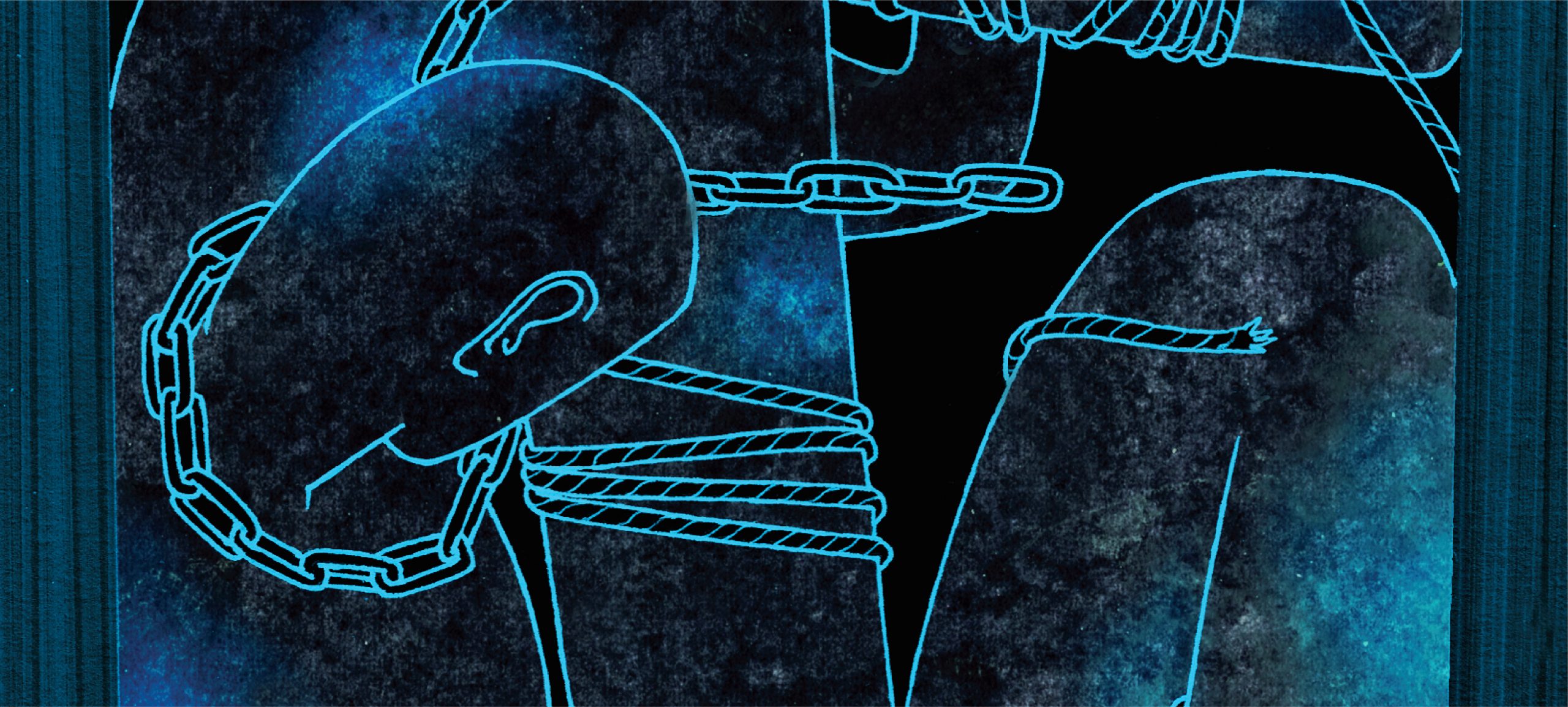
Snehal Shingavi is associate professor of English at the University of Texas, Austin, where he specializes in teaching South Asian literatures in English, Hindi and Urdu. He is the author of The Mahatma Misunderstood, and has translated to wide acclaim the iconic short-story collection Angaaray as well as Bhisham Sahni’s memoir Today’s Pasts. Most recently, he has co-translated Agyeya’s Shekhar: A Life with Vasudha Dalmia.
In this special piece written by him, he talks to us about translating Shekhar: A Life. Let’s take a look!
————————————————————————
‘Agyeya’ (‘the unfathomable‘) is the pen name of Sacchidanand Hiranand Vatsyayan, perhaps one of the most important figures in Hindi literature in the 20th century. He wrote widely—novels, short stories, poetry, journalism, literary criticism—and left a distinct stamp on the character and quality of literary Hindi. As the story goes, he received his moniker from Premchand; Premchand received copies of Agyeya’s short stories from Jainendra Kumar. S.H. Vatsyayan was in prison at the time, and the stories had been smuggled out, so Premchand gave him the title ‘Agyeya.’ In a letter to Jainendra, Premchand wrote: ‘Agyeya’s story was superb . . . People say his stories and prose-poems are better than his poetry’ (as quoted in Nikhil Govind’s Between Love and Freedom).
This exchange between the greatest Hindi novelist of the 20th century and perhaps the greatest Hindi poet in the 20th century is important, as it marks a very clear passing of the torch from a generation about to be eclipsed to a generation that would have to contend with the new challenges of independent India. If Premchand is considered the pre-eminent realist writer of the 20th century, then Agyeya is clearly the most important modernist writer, not only because of his editorship of the various poetry collections called Saptaks that launched the prayogvadi (experimentalist) movement in Hindi poetry, but also because his most important novel, Shekhar: Ek Jeevani, announced the shift in Hindi prose in completely new directions. Incidentally, Premchand’s most important novel, Godan, is written around the same time as Shekhar; Premchand published his novel in 1936, while Agyeya composed his between 1930 and 1932, and then published it in two parts, the first in 1940 and the second in 1942.
While I was a graduate student at the University of California, Berkeley, I worked on and eventually published a translation of Premchand’s first Hindi novel, Sevasadan. The novel was originally written in Urdu and titled Bazaar-e-Husn and then translated into Hindi, in part because Premchand thought the novel would have a better chance of a wider readership in Hindi than in Urdu. The Urdu version of the novel came out soon afterwards. Once I was done with Sevasadan, I began work on translating Shekhar.
There are two things that I think are interesting about this relationship between Premchand and Agyeya. The first thing, at least anecdotally, is that when I talk about translating Premchand, Hindi speakers remember having read something by him at least in school. When I talk about having translated Agyeya, very few people outside of either the literary world of Hindi or the academic world seems to know of whom I am speaking. This has always seemed to me to be a shame, since the quality of Agyeya’s prose is really quite stunning. There is a reason for this difference, and I will come back to it shortly.
The second thing is that even though they are considered to be very different novelists with very different styles, Premchand begins a process of considering the interior life of his characters that is only completed once Agyeya writes a novel almost entirely in the first person. Premchand was always interested in characters that had been deemed unfit for novels (courtesans, peasants, Dalits), but there was a limit to how far he could enter into their imaginations. It takes the changing circumstances of the movement for independence, and even Agyeya’s more radical politics, before the novel can be established on a different footing. When it was published, Shekhar was considered to be an iconoclastic, even scandalous, novel. It took up a number of questions—sexuality, atheism, and perhaps most famously, incest—that novels up to that point had shied away from. The novel’s frank discussion of these questions spoke to a generation of people that were trying to deal with the limitations of social conservatism and religious restrictions as well as the possibilities contained in revolutionary politics.
The thing that has been less considered, however, is the relationship between this new interest in character psychology and development and the transformation of the novel more generally. This is all the more surprising since Agyeya’s novel explicitly talks about the relationship between the narrative of the development of the self (what in German is called the Bildungsroman) and the transformation of the novel in general. What does it feel like to document or to account for the transformation that an individual undergoes? Agyeya’s main character seems to ask the question: how do we account for ourselves? This is even more poignant since the novel is told as a sort of flashback while the main character is awaiting execution by the British for his involvement in revolutionary activism. In the opening pages of the novel, Shekhar wonders: ‘What kind of realization—to what end? What will my death realize—and what realization did my life produce?’ The question is not simply existential—it is the crux of the experience of modernity, when individuals no longer have recourse to religion as explanations for their choices.
In the middle of the second chapter of Agyeya’s Shekhar: A Life, the narrator (Shekhar) wonders about whether his life contains enough adequate material to form a novel. He ruminates about the issue:
But it seems to me that all the challenges that I could remember in my life were mine, were original, were complete stories in themselves, and my life was a brilliant novel. I may have been the only one who felt this way; fascination with one’s own life turns it into something unique. But at the same time I realize that it wasn’t so unique, so idiosyncratic that others couldn’t derive pleasure from it; my private experience contained enough of a germ of collective experience that the collectivity would be able to understand it and see a glimpse of itself in it. My life is a solution in which individuality and ‘type’ are mixed together, without which art is impossible, and without which the novel is impossible.
This description of the relationship between private experience and public understanding is in many ways the core of the novel’s interest: how do we reconcile our almost complete alienation from society, its almost total unwillingness to accept our tiny rebellions, and our deep desire to merge completely into it, to find in it some solace, some understanding of our own angst.
In Shekhar, Agyeya tries to merge the genres of autobiography and novel. He was constantly annoyed, as he describes in his introduction to the novel, that people confused him with the main character, even as he repeatedly drew on his own memories for material for the novel. But he wanted to maintain a separation between himself and Shekhar; the character, Agyeya maintained, had a life and a consciousness that developed according to literary plans rather than the ones he had followed. The novel was written under brutal conditions, while Agyeya was awaiting trial for his involvement in the revolutionary movement against British colonial rule (he had been a part of Bhagat Singh’s Hindustan Socialist Republican Association). Agyeya had been responsible (though the courts eventually dropped the charges) for helping the HSRA build the bombs that they used to try and blow up the train carrying Viceroy Lord Irwin.
Agyeya’s collaborator, Yashpal, described his time in the HSRA this way:
The story I tell is a personal one. It cannot be called history—no individual’s recollections can. But the relationship between the experiences of individuals and the history of society is the same as that of beads to a necklace but without them the necklace cannot be made. While these reminiscences cannot be called history, they do offer profound insights into the events of the revolutionary movement and the thinking which led to the events. (As translated by Corinne Friend in ‘Yashpal: Fighter for Freedom—Writer for Justice’)
Shekhar describes something similar:
The order of my memories has come undone, like when a necklace of pearls falls apart and the spilt pearls are rethreaded haphazardly. I see another scene at the same time that I see this one. It has the same characters, the setting is the same, but its essential theme is completely different. This scene has the same point of view as the other, but in the course of my life it seems as if this scene bears no relation to the other, and if there is a connection then it is that the two scenes are symbols of the simultaneous development of very different feelings . . .
It is this focus on memory—as incomplete, haphazard, chaotic, but still meaningful—as the foundation of narrative that makes Shekhar such a marvelous novel. These were questions that were being asked more generally as India sought to make itself into an independent nation. The novel is remarkable in that it takes independence to be a foregone conclusion. But it is the radical bent of the novel that draws us in. It makes the novel philosophical and introspective, and it also forces us to ask certain questions of ourselves: how authentic are we; what do we intend our lives to mean; when we tell stories about ourselves, how much of these are true; and can we find beauty in even the most insignificant of moments?

Liberating Reads for this August

August is here and along with the new month comes some fun liberating reads! Our list of new books includes memoirs, biographies, research and case studies. Whether you prefer fiction, non-fiction you’re sure to find something to suit your taste here.
So take a look at our bookshelf for August, and tell us which book you’d like to pick up first!
- The Beauty of all My Days

Each chapter of this memoir is a remembrance of times past, an attempt to resurrect a person or a period or an episode, a reflection on the unpredictability of life. Some paths lead nowhere; others lead to a spring of pure water. Take any path and hope for the best. At least it will lead you out of the shadows.
- The RSS: A View to the Inside

The RSS is the most influential cultural organization in India today, with affiliates in fields as varied as politics, education and trade. Backed by deep research and case studies, this book explores the evolution of the Sangh into its present form, its relationship with the ruling party, the BJP, their overseas affiliates and so much more.
- Kama: The Riddle of Desire

Here, in his magnificent prose, Gurcharan Das examines how to cherish desire in order to live a rich, flourishing life, arguing that if dharma is a duty to another, kama is a duty to oneself. It sheds new light on love, marriage, family, adultery and jealousy as it wrestles with questions such as these: How to nurture desire without harming others or oneself? Are the erotic and the ascetic two aspects of our same human nature? What is the relationship between romantic love and bhakti, the love of god?
- The Kipling File

Narrated by Kay Robinson, The Kipling File is a moving story of doomed friendship and difficult love recounted against the powerful backdrop of Anglo-Indian life in a Punjab that has begun to stir with anti-colonial sentiment. Through his eyes unfold the turmoils that shaped the author of beloved classics like The Jungle Book and Kim.
- Polite Society

Keenly observed, sharply plotted and full of wit and brio, Polite Society reimagines Jane Austen’s Emma in contemporary Delhi to portray a society whose polished surface often reveals far more than is intended.
- Staggering Forward: Narendra Modi and India’s Global Ambition

Analysing Prime Minister Modi’s foreign and military policies in the context of India’s evolving socio-political and economic milieu, this book offers a critical perspective that helps explain why India has not progressed much towards becoming a consequential power.
- The Last Englishmen: Love, War, and the End of Empire

Dense with romance and intrigue, and of startling relevance to the cross-cultural debates and great power games of our own day, The Last Englishmen is an engrossing and masterful story that traces the end of empire and the stirring of a new world order.
- Notes of a Dream: The Authorized Biography of A.R. Rahman

Featuring intimate interviews with the soft-spoken virtuoso, as well as insights and anecdotes from key people in his life, this balanced, uplifting and affectionate book is the definitive biography of A.R. Rahman–the man behind the music and the music that made the man.
- Not Quite Not White

At the age of twelve, Sharmila Sen emigrated from India to the US. The year was 1982, and everywhere she turned, she was asked to self-report her race. Part memoir, part manifesto, Not Quite Not White is a witty and poignant story of self-discovery.
- Imagining Lahore

An anecdotal travelogue about Lahore – which begins in the present and travels through time to the mythological origins of the city attributed to Ram’s son, Lav. Through the city’s present – its people, communities, monuments, parks and institutions – the author paints a vivid picture of the city’s past.
- Kartikeya and his Battle with the Soul-Stealer

Surapadma’s reign of terror flourishes and the fate of all creatures-mortal and immortal-hangs in the balance. Shiva’s son, Kartikeya, must destroy several formidable asuras before he can confront the Soul Stealer and salvage the dying, gasping universe…
- The Man Who Saved India

Sardar Vallabhai Patel saved India. The very shape of India that we recognize today was stitched together by Patel, the Iron Man of India. The Man Who Saved India unravels the personality of one of the greatest men in Indian contemporary history.
- Love, Take Two

When Vicky Behl and Kritika Vadukut meet on the sets of the period drama Ranjha Ranjha, everyone agrees they have serious chemistry–and not just on screen. But will the pressure and scrutiny of Bollywood allow them a happy ending or will there be a twist in the tale?
- Feminist Rani

Feminist Rani is a collection of interviews with path-breaking and fascinating opinion leaders. These compelling conversations provide a perspective on the evolving concept of feminism in an age when women are taking charge and leading the way.
- Glow

Build strength and immunity, brighten and clarify your skin and obtain peace of mind with these potent Indian remedies. These combinations, recipes, home-made face masks, oils and morning infusions will transform not just your skin but also your body and mind. After all, outer beauty is only a symptom of inner health.
- When Coal Turned Gold

In When Coal Turned Gold, former chairman and managing director of CIL, Partha Sarathi Bhattacharyya, tells the story, warts and all, of how he dealt with the Dhanbad coal mafia, how he changed the way the industry was perceived, how he dealt with the trade unions and the government and, most importantly, how he was able to script one of the greatest success stories the country had ever seen.
- A Game Changer’s Memoir: Ex-SEBI chief recalls defining moments of his tenure

A masterful strategist, Bajpai, in this book, recounts his truly inspiring journey as he weaved through complex rules and frameworks in his efforts to turn SEBI into an effective financial regulator for the country.
- Ways of Being Desi

Ways of Being Desi is a brilliant, provocative and deeply honest exploration of the ingredients that make us who we are. It is not a simple listing of food, films or even the universal importance of ‘Aunties’ in South Asian culture; it is a meditation on the subcontinent’s recent past and all that happens when we decide to forget our shared histories.
- The Perfect Us

They’ve been together for ten years, surviving everything… Now Avantika wants to take the next step. But will Deb be able to catch up? Or will it rip them apart? No matter how hard he tries, Deb can’t convince Avantika that he’s the one for her. The Perfect Us is love’s struggle to find the happily ever after. . .
- Ninety-Seven Poems

This is a book of pictures—of a park bench and a prescription. And a toothbrush in a mug. It’s got half-lit cigarettes and broken geysers. And a cute apartment in Prague. There’s a fortune cookie, some pigeons in cages and stars tumbling from the sky. There’s the usual traffic, a digital wristwatch and a violin from Uncle James—we can go on, but you’d rather see for yourself.
For we think this book has pictures. But some say it’s full of poems.
- The Sage’s Secret

What if the legend of Kalki, the tenth avatar of Vishnu, is an elaborate hoax created by Lord Krishna? In the year 2025, twenty-year-old Anirudh starts dreaming of Krishna. But these visions that keep flashing through his mind are far from an ordinary fantasy-they are vivid episodes from the god’s life. Through these scenes, as Krishna’s mystifying schemes are revealed, Anirudh slowly comes to terms with his real identity . . .
- Not Just Grades

Not Just Grades is about schools that have proved that it is possible to weave positive personal development together with academic excellence. Innovative and full of creative ideas, these schools have a made in difference in imparting education in the absence of extensive resources or capital.

8 Things Every Maggi-Lover Should Know About Maggi's Journey to India

Maggi’s Journey to India: It Wasn’t so Easy!
The introduction of Maggi Noodles in India arose with the presentation of a simple argument: If Nestle Malaysia could sell tons of a product, what was holding back the Indians?
But to introduce such a product into Indian markets came with its own challenges. Maggi marked the beginning of snack foods in our country. It shifted the orbit. Noodles went from being alien to becoming an essential food to be stocked at home, taken on a trek, cooked by kids. They became almost a default option for satisfying the hunger pangs of both young and old.
Here are eight things you must know about your favorite Noodle’s journey to India:
1. The license raj was in operation, making India a relatively closed economy

2. Introducing Maggi in India meant creating a new food category that did not exist in India

3. One product; one country; multiple food habits and patterns

4. Where would Maggi fit in among the ‘serious’ and ‘traditional’ meals?

5. Target audience was children-but who would ‘buy’ the product? Children can’t cook!

6. The Answer? Maggi =a quick fix for a child’s hunger

7. Making the new concept appealing to children

8. Image on the packaging of the product: that showed vegetables in the Maggi


7 Things You Should Know About Nassim Nicholas Taleb
Nassim Nicholas Taleb spent twenty-one years as a risk taker before becoming a researcher in philosophical, mathematical, and (mostly) practical problems with probability. His books, part of a multi-volume collection called Incerto, have been published in thirty-six languages. Taleb has authored more than fifty scholarly papers as backup to Incerto, ranging from international affairs and risk management to statistical physics. Having been described as “a rare mix of courage and erudition,” he is widely recognised as the foremost thinker on probability and uncertainty.
In his most provocative and practical book yet, Skin in the Game, Taleb redefines what it means to understand the world, succeed in a profession, contribute to a fair and just society, detect nonsense, and influence others.


Know the Emergency in 10 Points
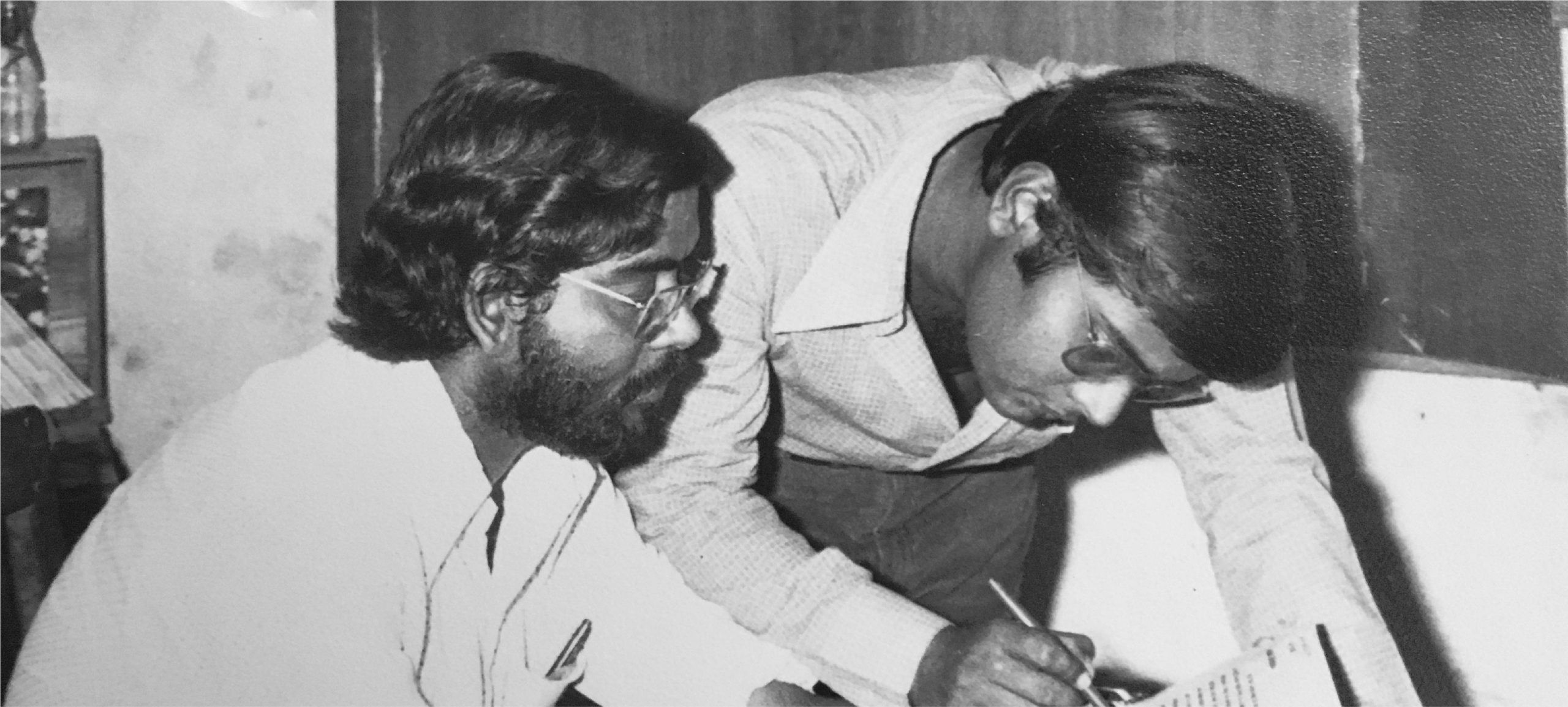
In 1977, two staff reporters – John Dayal and Ajoy Bose – at the Patriot, occupied highly advantageous positions during the nineteen months of the Emergency to observe the turmoil wrought in the capital city of Delhi. In their book, For Reasons of State, they have supplied first-hand evidence of the ruthlessness with which people’s homes were torn down and the impossible resettlement schemes introduced.
From For Reasons of State come ten of some the starkest scenes of the Emergency:
The ‘Young Prince’

An aphorism for injustice

The ruins of a civilization

Dog Days are Over

Family Planning

La Femme Fatale

The creation of an ‘Indian Scarlet Pimpernel

Rallying Rebellion

Trouble at Court

Is history repeating itself?


Quotes to Live By if you’re on your way to Success

How do you establish your brand to become one of the most beloved and enduring in the country?
In her book, The Two-Minute Revolution, Sangeeta Talwar tells you just that. She was the first woman executive in the FMCG industry, which established one of our favorite brands: Maggi Noodles!
From her book, we extracted some quotes that you must take a look at, especially if you’re on your way to building an extraordinary brand!


Get a Glimpse into the World of 5 Judges from Supreme Whispers

Abhinav Chandrachud’s latest book, Supreme Whispers, sheds light on a decade of politics, decision-making and legal culture in the Supreme Court of India. This book yields a fascinating glimpse into the secluded world of the judges of the Supreme Court in the 1980s and earlier.
Get to know some of them here:


A Murder Mystery Writer’s Favorite Murder Mystery Books
Bulbul Sharma is an artist and author. She has written a number of books, including Book of Devi, Shaya Tales, Ramayana and My Sainted Aunts.
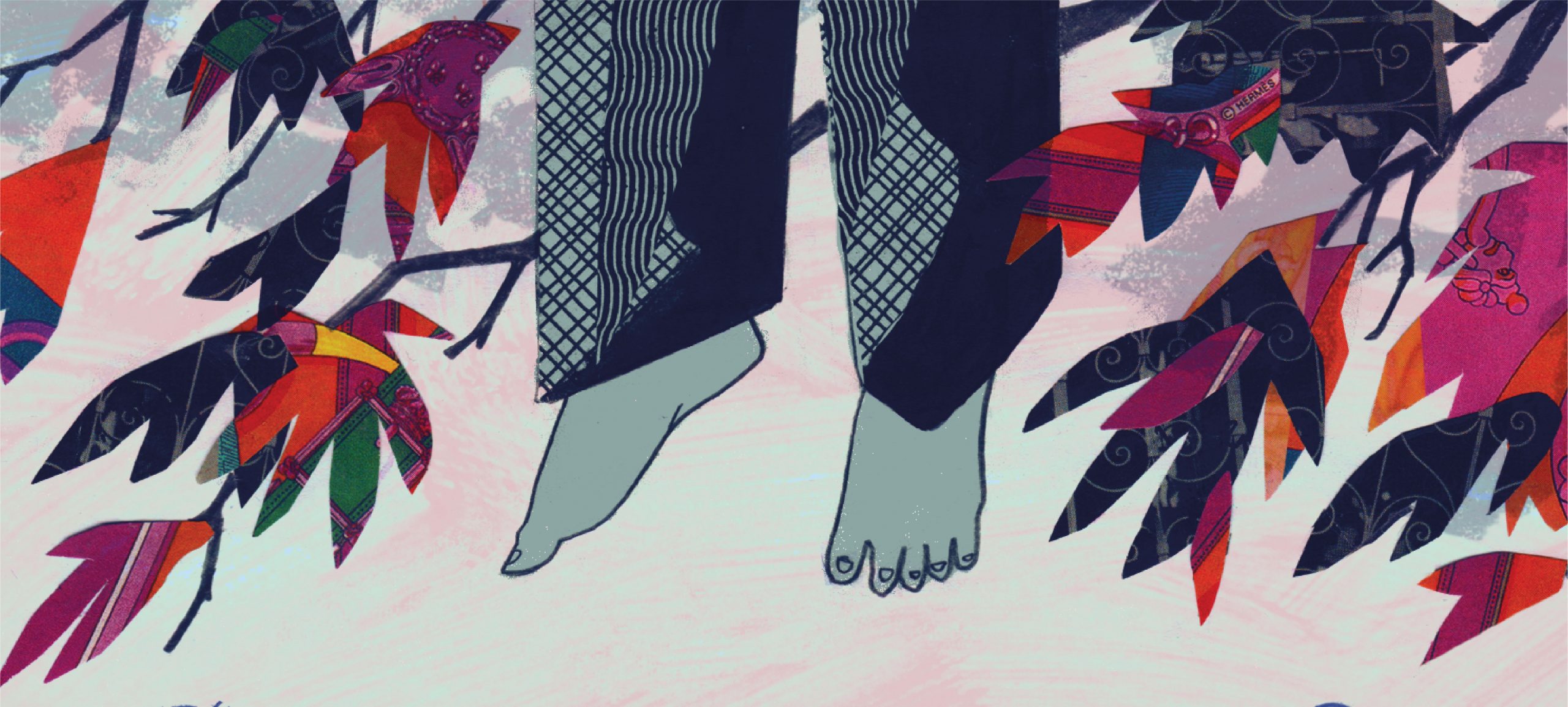
Her most recent book, titled, Murder at the Happy Home for the Aged is set in the lush landscapes of Goa. The tranquility of the Happy Home for Aged is shattered when a body is found hanging in the garden. The inhabitants come together to solve the mystery, patiently and with flashes of inspiration.
Bulbul Sharma shares with us, a list of her favorite murder mystery books, and tells us why she loves them.
‘And Then There Were None’ by Agatha Christie

One Good Turn’ by Kate Atkinson

‘Death comes to Pemberley’ by P.D James

‘London Calling’ by Sara Sheridan

‘In the Company of Cheerful Ladies’ by Alexander McCall Smith

