



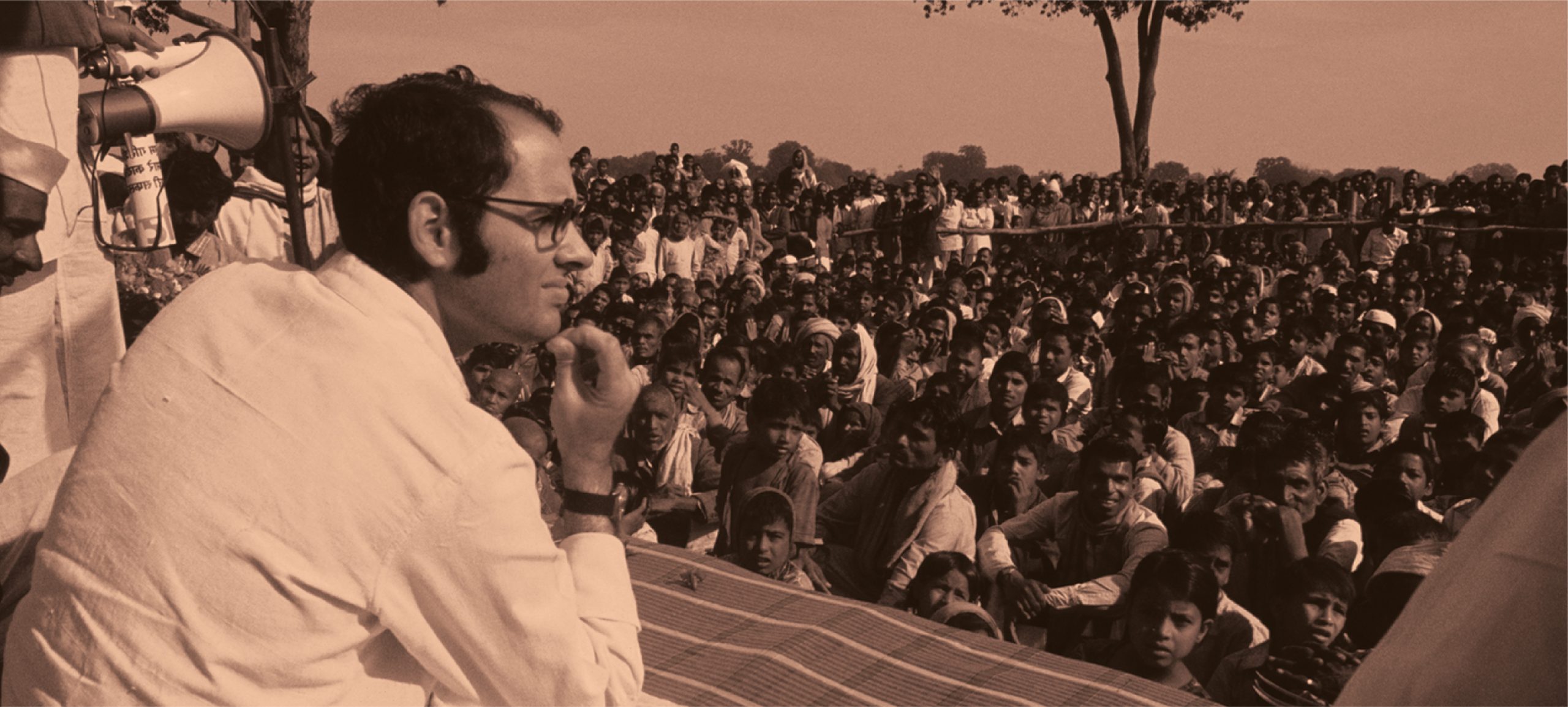
In 1977, two staff reporters at the Patriot – John Dayal and Ajoy Bose – both in their twenties, occupied highly advantageous positions during the nineteen months of the Emergency to observe the turmoil wrought in the capital city of Delhi. In their book, For Reasons of State, they have supplied first-hand evidence of the ruthlessness with which people’s homes were torn down and the impossible resettlement schemes introduced.
The nation found itself in a whirlwind of fear, confusion, violence and destabilization, stemming from forced sterilizations, heartless evictions in the thousands, and the cruel imprisonment of many.
Here is an excerpt from the introduction of their book.
——————————————————————————————————————————————————–
The trouble with the post-election situation in India in 1977 is that the tiny bushes in the foreground have hidden the forest behind. Also hidden, from the less probing eyes, are the myriad beasts that had prowled the jungle so menacingly for twenty months and may well be there still, albeit in an enforced hibernation, hoping for more suitable climes before they flex their muscles again. After the Emergency was relaxed just before the elections to the Lok Sabha, information had trickled down about cases of police brutality in Delhi and the states.
After the new Janata Party government was formed at the Centre, a large volume of reports has appeared on corruption, specially favours shown with or without political duress to companies associated with Sanjay Gandhi and his friends. The Maruti scandal has been hogging newspaper headlines and public discussions and, for the time being, till perhaps the various commissions start their proceedings, even the reports of excesses during the Emergency have tended to take a back seat.
Formidable as it is, Maruti is not the final personification, nor even the most characteristic symbol, of despotic rule under the Emergency. At best it betrays only the logical extension of the happenings that had taken place and in which the principals had acted by the rule of the bazaar to make cash capital out of the political and administrative situation they had so successfully managed to create. This has been brought about by the total depoliticization of society and by the perversion of the administrative system which had indeed for quite some time before the Emergency become ripe for being taken over by upstarts.
Officials and politicians of even the petty variety are explaining their activities during the Emergency as being born out of fear. But it is worth remembering that fear was only one, and in fact for the senior officers and politicians, almost the least important, of the factors responsible for the situation. Those who have closely watched the administrative process of the Union Territory of Delhi just before, during, and after the months of Emergency would know that the diabolical plan was not just a case of Sanjay Gandhi or his friends creating people who would do their bidding. It was a case of such people existing within the administration, simultaneously finding an extra-constitutional centre of authority and recognizing in it the powerhead that would help them in their own respective ambitions. The ambitions of the politician, the official and the bosses of the youth wing of the ruling party had become coterminous, so identical as to be indistinguishable from one another.
At a general level, it now is easy to see the strategy that had been adopted to utilize the situation. In the political institution of the Delhi Pradesh Congress Committee (DPCC), the Congress-run Delhi Administration controlled eventually by a nominated lieutenant governor, the superseded municipal corporation run by an official of the DDA, the Delhi State Industrial Development Corporation (DSIDC) for industries, the New Delhi Municipal Council (NDMC), the subordinate electricity producer and distributor Delhi Electricity Supply Undertaking (DESU), Delhi University (DU) and in Delhi Police which is controlled simultaneously by the lieutenant governor and the central government, there had existed a situation just before the Emergency which had created a coterie of officials bent on consolidating individual power. Internal rivalries and power grouping had reduced most of these institutions which ostensibly had a democratic functioning but in reality were administered on factors more personal to a state where they lacked the internal strength to resist any attempt at their perversion by outside forces.
The ‘extra-constitutional source of power’ recognized this factor and played on it skilfully. These forces in turn had recognized in the concept of Sanjay Gandhi just the additional impetus they needed for themselves. The implementation of the five-point programme became the yardstick of the competition between the various power groups. The number of trees planted, houses demolished and sterilizations done became the measure of closeness of these various groups to Sanjay Gandhi.

Requiem in Raga Janki – An Excerpt
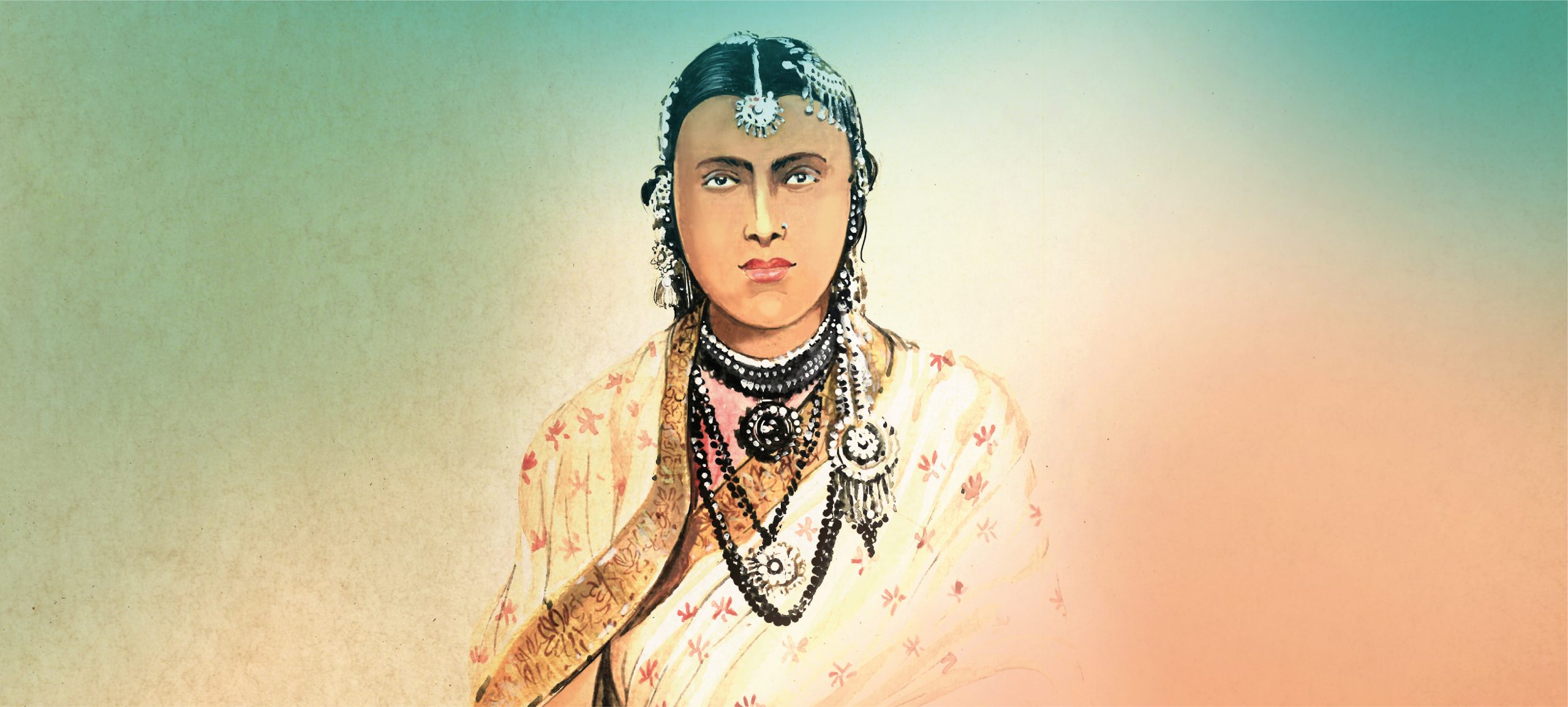
Based on the real-life story of Hindustani singer Janki Bai Ilahabadi (1880-1934), Requiem in Raga Janki by Neelum Saran Gaur is the beautifully rendered tale of one of India’s unknown gems.
Janki Bai Ilahabadi enthralled listeners wherever she performed, and counted as her fans maharajas and maharanis, poets and judges, nawabs and government officials-everyone. She was Janki ‘Chhappan Chhuri’, Janki of the fifty-six knives-attacked in her youth, she surviveed miraculously. Brought up in a nautch house, she rose to become the queen of Allahabad, her voice taking her from penury to palaces and royal durbars.
Here is an excerpt for her incredible story.
Her name lingers in certain locations still—Bai ka Bagh, Liddle Road, Rasoolabad. There is a godown on the Jawaharlal Nehru Road that is used to store Magh Mela tents and other equipment. There is a large field at the Police Lines. And a crumbling monument in the Kaladanda cemetery called Chhappan Chhuri ki Mazaar. I will tell you what I know of her and also what I guess and imagine.
Chhappan Chhuri was Janki’s nickname—she of the fifty-six knife gashes. I don’t think that that figure, fifty-six, is to be taken literally. She herself wrote somewhere that the number of stabs far exceeded the proverbial fifty-six which was a mere metaphor, an attractive alliteration endorsed by confusion and inaccurate reportage. With time it assumed other cloaks of innuendo so that ‘Chhappan Chhuri’ suggests someone armed with many weapons of assault, a woman of lethal witchery, of potentially heart-piercing beauty—such the devilry of words. But really she was none of these. She was just a woman who’d survived a murderous attack and who carried on her body dozens of scars which would become her signature of identity, conjoined to her name, Janki Bai.
There are three different accounts of the stabbings and no one knows which the authentic one was, and Janki’s own account is versions. In one account a crazed fan, spurned, worked his rage on her. But that does seem unlikely. She was barely eight, according to this account, when it is supposed to have happened and her protective mother could not have turned away a besotted lover from her mehfil simply because she hadn’t started entertaining audiences that way. That’s just one of those romantic stories that attach themselves to people as image enhancers for posterity. It seems that Janki herself initiated this account in the introduction to her diwan of verses, little realizing the transparent inconsistency of it. I can understand her reasons, though. She was a marked woman, quite literally, her skin torn in crumpled gullies of stitched together flesh, lines which the decades had failed to erase. That was the very first thing people saw, the disfigurement. It followed her everywhere. I can’t say if she ever really accepted it. It’s possible that it had sunk into the grain but it did not surface in her voice as any obvious ache. Nothing so trite. Rather, there was the powerful swell and soar of overcoming. But for purposes of history some subterfuge was in order, especially in times of circumspect and censored telling. And especially in situations of family shame. What is stated as an authentic truth is not so much a deliberate lie but a carefully composed face-saving fiction to answer the disquieting personal questions that are bound to crop up. Like all the plasters of lentil paste, soaked and buried in earthen pots, the unguents of sandalwood and turmeric and flour, the masks of clayof-Multan and honey and lime, the story doesn’t quite camouflage or convince.
But desperate efforts to conceal what has clearly remained unhealed must be respected. There was a second version in circulation, that she was attacked by a rival singer whom she had outsung at a durbar soirée organized by the maharani of Benaras.
There is even a name to this shadowy assailant—Raghunandan Dubey. She was eight years old, a singing prodigy, and she defeated a much older and far more established singer, and consequently she was the victim of a jealous attack. She did not die but underwent treatment generously paid for by the maharani, who took an interest in her. And when she recovered, her mother, afraid to stay on in Benaras with all its vicious intrigues and rivalries, brought her to Allahabad and they made a life for themselves quite different from the earlier one.
Let me first recount the concocted history, the version invented by Janki as preferable to what did happen. Let us place it all as Janki would want us to, the music chamber, the crowd of connoisseurs, the shy loveliness of the little songstress, who’d trained under Koidal Maharaj of Benaras himself, rendering ‘Jamuna tat Shyam khelein Hori’, and the man who came as just another one in the crowd, accepted the paan, acknowledged the itr and the proffered wine and lolled back on the bolster and listened intently. He wasn’t old and he wasn’t young. They noticed him the very first time when he produced two banknotes from his achkan pocket and beckoned to Janki. She had only just finished a song. Obligingly she slipped up to him, smiled and sank to her knees in a graceful swirl of silk and tinsel and a cascade of tinkling anklet chimes. He circled the notes around her head and tossed them into the ornate silver dish that lay alongside his bolster. They were all taken aback at the amount though they did not show it. Janki raised her jewelled fingertips to her brow in a salaam, a shy flush playing on her young face.

Snippets from the New Murder Mystery in Town
In Bulbul Sharma’s new book, Murder at the Happy Home for the Aged, the tranquillity at the Happy Home is shattered when a body is found hanging in the garden. The inhabitants of the home are first perplexed, then decide to come together to solve the murder that has suddenly brought the violence of the world into their Goan arcadia.
Set in the lush landscape of Goa, where tourists flock from all over the world, where the rich set come to play, bringing in their wake fortune-hunters and other predators, the cast of possible murderers is infinite. But patiently, and with flashes of inspiration, the unlikely detectives follow the clues and in doing so emerge from the isolated and separate worlds they had inhabited for so long.
Here are some snippets from the book that you’re bound to enjoy!


Fuzzies vs Techies in the World of Innovation

Scott Hartley first heard the terms ‘fuzzy’ and ‘techie’ while studying political science at Stanford University. If you had majored in the humanities or social sciences, you were a fuzzy. If you had majored in the computer sciences, you were a techie. This informal division quietly found its way into a default assumption that has misled the business world for decades-that it’s the techies who drive innovation.
In his book, The Fuzzy and the Techie, Hartley looks inside some of the world’s most dynamic new companies, reveals breakthrough fuzzy-techie collaborations, and explores how such associations are at the centre of innovation in business, education and government, and why liberal arts are still relevant in our techie world.
Here is an excerpt.
————————————————————————————————————————————————
The terms ‘fuzzy’ and ‘techie’ are used to respectively describe those students of the humanities and social sciences, and those students of the engineering or hard sciences at Stanford University. Stanford is what’s known as a ‘liberal arts’ university not because it focuses on subjects that are necessarily liberal, or artistic, but because each student is required to study a broad set of subjects prior to specialization. The term liberal arts comes from the Latin, artes liberales, and denotes disciplines such as music, geometry, and philosophy that can together stretch the mind in different directions and, in that process, make it free. Each of these subjects is meant to broaden the student, force them to think critically, to debate, and to grapple with ambiguities inherent in subjects like philosophy. They are also meant to help the student cultivate empathy for others in subjects such as literature, which forces one to view the world through the eyes of another human being. In short, they are less focused on specific job preparation than they are about the cultivation of a well-rounded human being. But at Stanford, beneath these light-hearted appellations of ‘fuzzies’ and ‘techies’ also rest some charged opinions on degree equality, vocational application, and the role of education. Not surprisingly, these are opinions that have bubbled well beyond the vast acreage of Stanford’s palm-fringed quads and golden hillsides, into Silicon Valley. In fact, these questions of degree equality, automation and relevant skill sets in tomorrow’s technologyled economy are ones we face in India and across the world.
This decades-old debate to separate liberal arts majors from the students who write code and develop software has come to represent a modern incarnation of physicist and novelist Charles Perry Snow’s Two Cultures a false dichotomy between those who are versed in the classical liberal arts, and those with the requisite vocational skills to succeed in tomorrow’s technology-led economy. In India, from the earliest entrance exam standards that determine whether or not students move toward or away from engineering, we have created policy and education pathways that separate rather than foster an understanding between these ‘two cultures.’ Whether a student sits for the Joint Entrance Exam (JEE) for admission to an Indian Institute of Technology (IIT), for the Birla Institute of Technology and Science Admission Test (BITSAT), the VIT Engineering Entrance Exam for a coveted engineering seat at Vellore Institute of Technology or for a regional common entrance exam in Maharashtra, Karnataka, or West Bengal, students are quickly funneled down very specific predetermined paths, and are perhaps less able to explore their own passions or values. And this is not specific or unique to India, but endemic across many cultures and societies.
This book not only seeks to reframe this ongoing debate, by taking into account the very real need for science, technology, engineering and math, so-called ‘STEM’ majors, but also acknowledges their faux opposition to the liberal arts. Indeed, as we evolve our technology to make it ever more accessible and democratic, and as it becomes ever more ubiquitous, the timeless questions of the liberal arts have become essential requirements of our new technological instruments. While those fabled graduates of the Indian Institutes of Technology, or of the great engineering academies such as Manipal, develop critical skills and retain steadfast importance in laying the technological infrastructure, most successful start-ups require great industry context, psychology in understanding user needs and wants, intuitive design, and adept communication and collaboration skills. These are the very skill sets our graduates in literature, philosophy, and the social sciences provide. These are not separate or add-on skills, but the imperative components alongside any technological literacy.
As a fuzzy having grown up in a techie world, this false dichotomy has been something I observed in Palo Alto, California, where Steve Jobs donated the Apple computers we used in high school. This was something I observed furthermore as a Stanford student; as an employee of Google, where I spent over a year launching two teams in Hyderabad and Gurugram, India, as an employee of Facebook, and then as a venture capitalist at a $2-billion fund on Sand Hill Road, California. Peering behind the veil of our greatest technology, it is often our greatest humanity that makes it whole. Having met with thousands of companies, the story I want to share with India is that no matter what you’ve studied, there is a very real, and a very relevant, role for you to play in tomorrow’s tech economy. Our technology ought to provide us with great hope rather than fear, and we require policymakers, educators, parents and students to recognize this false divide between becoming technically literate, and building on our most important skills as humans.
Our greatest human problems require that we blend an appreciation for technology with a continued respect for those who study the human conditions, for they are the ones who teach us how to apply our technology, and to what ends it must actually be purposed. We ought to consider the true value of the liberal arts as we continue to embrace and pioneer our new technological tools. As we move forward, we require the timeless and the timely, the great poets and literature of Bengal and the glass-towers of Bengaluru.

Who took to Yoga in the Shakespearean world? Find Out!
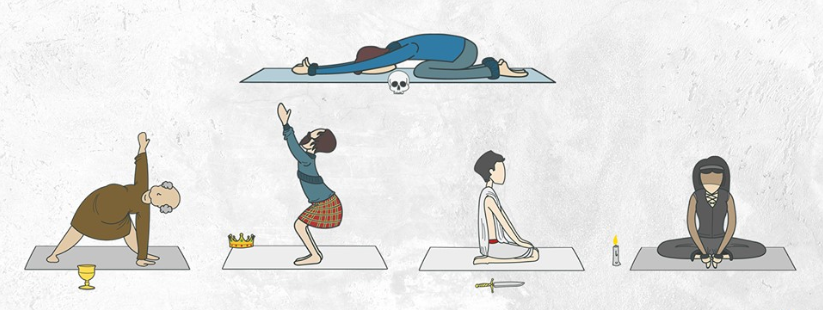
If our friends from the Shakespearean world were to celebrate International Yoga Day with us, this is a little of what it would look like. Here are some of the famous characters, who took to yoga. Let’s take a look!


Discover India: Four things your little ones should know about Odisha
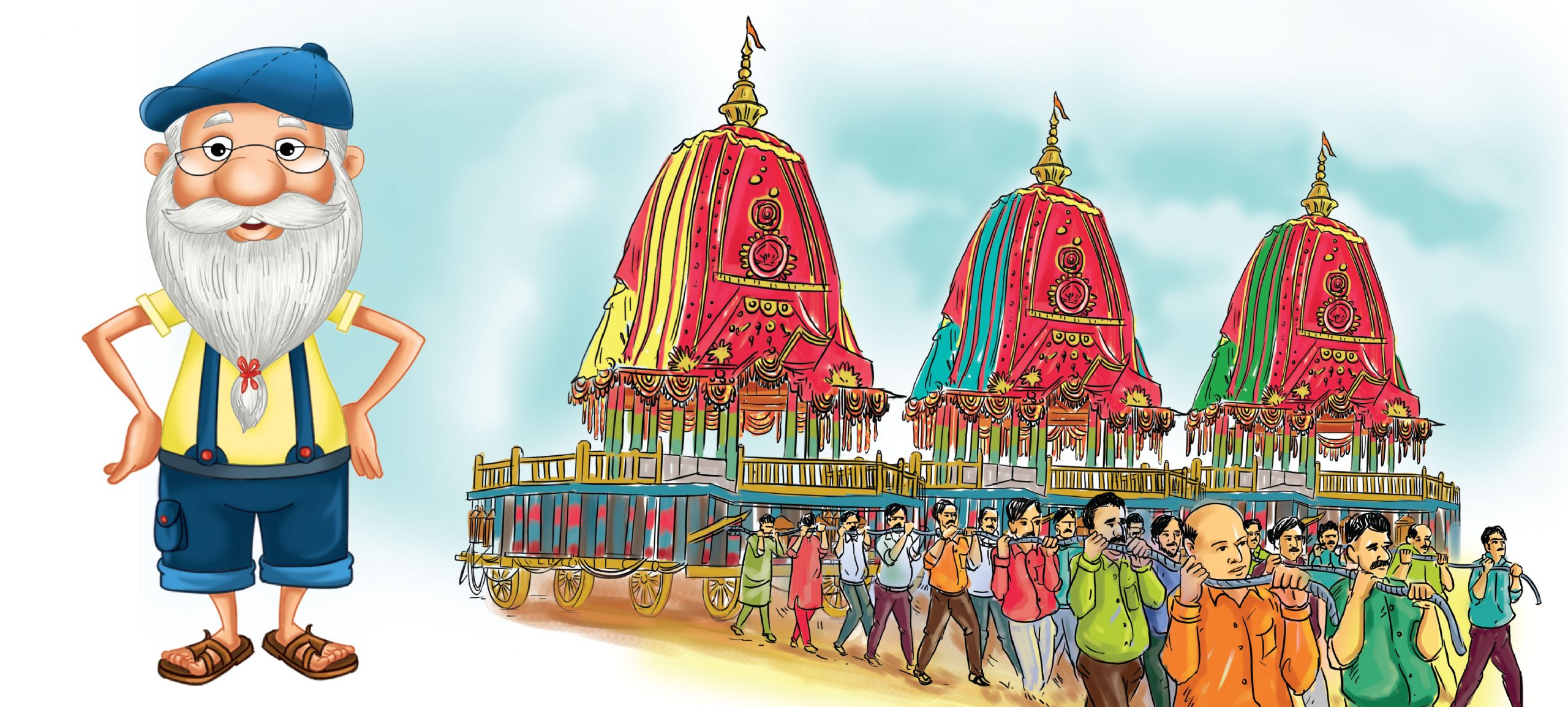
Mishki and Pushka have never seen a place as amazing as Earth. They are here from their home planet, Zoomba! Join them as they travel across India with Daadu Dolma, the sweet old man they meet.
Mishi is in a hurry to visit the next state. “Where are we going this time?” she asks Daadu Dolma, jumping up and down. Daadu tells her that the three of them are off to visit a beautiful state that is historical and very interesting and also has yummy food. They’re on their way to Odisha!
Here are four things they learn there.

That must mean there were dinosaurs and other pre-historic beasts roaming this region at one time. But rocks are not all it has. There are ridges and plateaus that have been created by soil from rivers and sand blown in by the wind.

It even supports many fishermen, who make their living through this lake.

A tribe called the Juangs have the most organized system. In the centre of this community’s village is the largest hut. It has walls on three sides and is open in the front. The walls are decorated with patterns.

There are Pattachitra artists and pipli art. Weaving is popular here and they have names like khandua, saktapda, bomkai and tarabali. Kansaris are the artists who create wonderful brass pieces.

This Yoga Day, Change Your Body The Healthy Way!

Here’s a question that has been bugging the best of us for quite some time now: Can you change the shape of your body and can it be done naturally? Well, the answer is yes, you can undertake this transforming journey with the help of Payal Gidwani Tiwari’s book, From XL to XS: A Fitness Guru’s Guide To Changing Your Body.
The book carries simple and easy to follow principles and exercise routines that will teach you how to lose (or gain) weight, stay fit, and transform your body structure.
Here are 5 reasons why you should take up yoga starting this yoga day:
Yoga works on your internal organs:
Yoga exercises massage the internal organs. For instance, when you do Paschimottanasana and bend forward, your hamstring is stretched, your hip area opens up completely, and your internal organs like the spleen, stomach, and intestines are kneaded, due to which there is an extra flow of blood to the nerves and muscles.

Yoga teaches you the right way to breathe and to control your breathing:
Proper breathing allows you to connect with basic and fundamental aspects of daily life. A well rounded yoga breathing practice that includes calming, balancing, and simulating practices, can promote the health of your respiratory system by improving the strength and flexibility or your chest muscles and fascia as well as improving the alignment of your ribs and spine.
 Yoga propels you on the path of self-realization:
At its foundation- yoga is the science of knowing yourself. With regular practice, you can understand your emotions, repressed feelings, your likes and dislikes better.
 Yoga can help you lose weight:
Yoga is one of the safest ways to lose weight and regular yoga is guaranteed to make you look and feel younger and more beautiful.
 Yoga can change the shape of your body:
With regular practice of yoga you can get the body you dream of and look at yourself in the mirror with confidence and pride. By working on your specific problem areas, you can change the structure of your body.


Reader to Yogi: 14 Books That Will Help You Welcome Yoga In Your Life

Self-care is the new mantra of 2018 because you can’t feel healthy and happy without some quality time with yourself. While everyone’s self care differs, we recommend adding yoga into your self care routine because of a plethora of benefits and enriching qualities. For instance, Yoga is an ideal workout for anyone because it’s quiet, meditative and requires very little interaction with other humans. And if practised sincerely and regularly, yoga can cure anything from anxiety to back pain.
So if you are a beginner or an expert, commit yourself to regular yoga this yoga day and let these informative books about yoga and natural healing be your guide.
Patanjali’s Yoga Sutra by Shyam Ranganathan

Patañjali’s Yoga Sutra (second century CE) is the basic text of one of the nine canonical schools of Indian philosophy. In it the legendary author lays down the blueprint for success in yoga; now practised the world over. Patañjali draws upon many ideas of his time; and the result is a unique work of Indian moral philosophy that has been the foundational text for the practice of yoga since. The Yoga Sutra sets out a sophisticated theory of moral psychology and perhaps the oldest theory of psychoanalysis.
Laughter Yoga by Madan Kataria

Laughter yoga is a revolutionary idea: simple and profound. A practice involving prolonged voluntary laughter, it is based on scientific studies that have concluded that such laughter offers the same physiological and psychological benefits as spontaneous laughter. This comprehensive book by the founder of the laughter yoga club movement, Dr Madan Kataria, tells you what laughter yoga is, how it works, what its benefits are and how you can apply it to everyday life.
Hair Yoga : Caring for your hair the right way by Jawed Habib

There are two things that are common to most people: we all want gorgeous hair and we all have at least one hair issue. From styling celebrities to running one of the most popular salon chains in India, Jawed Habib is undoubtedly someone you can trust with your hair. In Hair Yoga, Jawed takes you back to the basics of hair care and tackles all of your hair troubles. Packed with tips and remedies, this is the ultimate book to take hair health into your hands so that you have a good hair day, everyday.
The Essence of Yoga by Osho

In this book Osho explains how, through yoga, one can attain the grace of the body and of God. He talks about crucial concerns of love, marriage, faith and contentment. It is a perfect blend of ancient wisdom and contemporary knowledge.
Textbook of Yoga by Yogeswar

In the past few years, the popularity of yoga as the ultimate key to fitness, both physical and mental, has resulted in a plethora of books, videos and audio tapes designed to guide a learner through the various asanas prescribed by the Yogasutra. The Textbook of Yoga goes one step further: it is the one book that tells you not merely how to practise an asana the right way, to maximum effect, but also explains how best to share your knowledge and teach others the theory and practice of yoga. It is like a textbook in its approach: lesson by lesson, you are introduced first to the basics and then to the more advanced levels of practice. Alongside the text, the illustrations allow you to understand exactly how the body should be moved and positioned without fear of error or injury.
Own the Bump by Payal Gidwani Tiwari

Motherhood is a life-changing event in a woman’s life. Keeping in mind the fast-paced lives of nuclear families and sometimes unhealthy lifestyles, Bollywood’s most celebrated yoga expert, Payal Gidwani Tiwari, brings to fore the importance of preparing the body and soul for such a change. From pre-pregnancy to post-natal, Gidwani utilizes her age-old knowledge of yoga and provides essential advice to take care of oneself before, during and after the birth.
Body Goddess: The Complete Guide on Yoga for Women by Payal Gidwani Tiwari

Bollywood’s most celebrated yoga expert, Payal Gidwani Tiwari comes to your rescue. From the basics of yoga to their practical application in our day to day life–Payal’s essential mantras guarantee not just weight loss but also promise a healthier lifestyle. Designed for all age groups, this book comes enriched with easy to follow exercise regimes and invaluable tips. Body Goddess is indispensable for every woman who wants to look and feel like a diva.
Book of Woman by Osho

Osho talks about various issues like motherhood, relationships, family and birth control. Questioning the concept of marriage, he says it is the ‘ugliest institution invented by man’ as its aim is to monopolize a woman. He is equally critical of the institution of family which ‘corrupts the human mind’. A woman, he says, should not imitate man.
Book of Man by Osho

Osho perceives man as becoming increasingly alienated from his inner self, gradually losing his natural innocence and creativity in the mindless quest for worldly power and success. For Osho, the ideal man is Zorba, the Buddha—a perfect blend of matter and soul. This seamless collection of discourses takes the reader through the various stages of man’s evolution: from Adam to Slave, Son, Homosexual, Priest and Politician, until he attains the pinnacle of his consciousness as the Rebel or Zorba.

Developed from the Vedas, India’s ancient books of wisdom, Ayurveda combines physical, psychological and spiritual therapies in an approach to health that is as relevant to the modern world as it was to the ancient world. Utilizing herbs and minerals, proper nutrition and purification and, above all, affirmative ways of living, Ayurveda treats not just the ailment but the whole person and emphasises prevention of disease to avoid the need for cure.
Everyday Ayurveda by Bhaswati Bhattacharya

Time is scarce and precious in today’s world and we seek solutions that are quick. While allopathic medicine tends to focus on the management of disease, the ancient study of Ayurveda provides us with holistic knowledge for preventing disease and eliminating its root cause. Dr Bhaswati Bhattacharya takes you through a day in the life of Ayurvedic living.
From XL to XS: A fitness guru’s guide to changing your body by Payal Gidwani Tiwari

Yoga : The Supreme Science by Osho

Drawing on the teachings of Patanjali, Osho gives an entirely new perspective on the fundamental questions of life, the nature of heaven, religion and God. For Osho it is not a question of being ‘good’ or ‘bad’, or of a God in the sky, but of each individual becoming aware of his being and attaining kaivalya— the ultimate state of enlightenment when the meditator goes beyond all desire. This process draws on the inner science of yoga.
Autobiography of a Yogi by Paramahansa Yogananda

The story of a personal and spiritual awakening, Autobiography of a Yogi is a seminal work that continues to aspire and change millions of lives. In his wise, accessible and gentle manner, Paramahansa Yogananda has demystified ancient traditions like yoga and meditation; he imparts truths that are instructive and enriching; and he offers comfort and counsel. From Steve Jobs to the Beatles and Ravi Shankar, Autobiography of a Yogi has been a companion to all those who seek to lead a more spiritual, content life.

The President is Missing! – An Excerpt
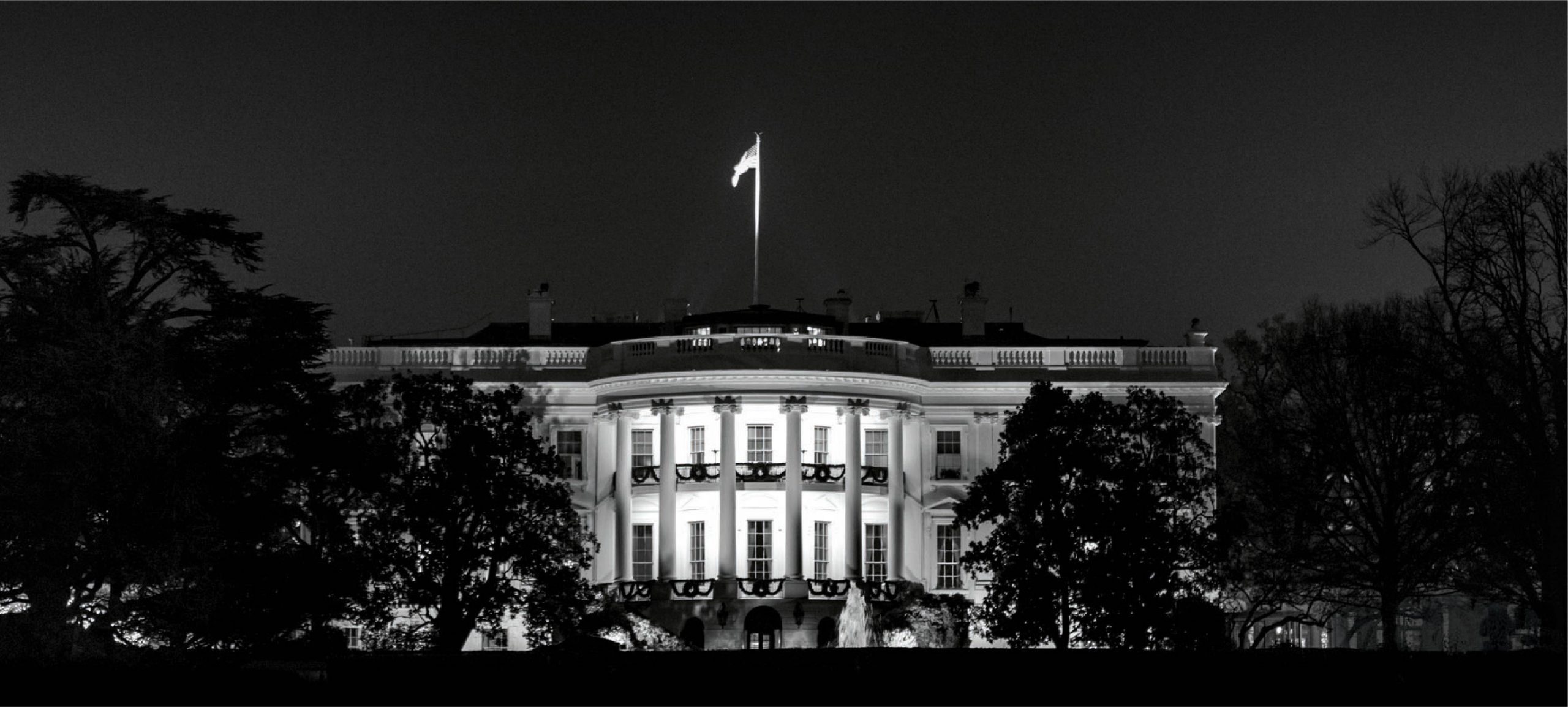
“The President is missing. The world is in shock.”
James Patterson and former-president Bill Clinton’s new book, The President is Missing confronts a threat so huge that it jeopardizes not just Pennsylvania Avenue and Wall Street, but all of America. Uncertainty and fear grip the nation.
Set over the course of three days, The President Is Missing sheds a stunning light upon the inner workings and vulnerabilities of the United States. It is filled with information that only a former Commander-in-Chief could know.
Here is an excerpt from the book.
———————————————————————————————————————————————————
Everything I did was to protect my country. I’d do it again. The problem is, I can’t say any of that.
“All I can tell you is that I have always acted with the security of my country in mind. And I always will.”
I see Carolyn in the corner, reading something on her phone, responding. I maintain eye contact in case I need to drop everything and act on it. Something from General Burke at CENTCOM? From the under secretary of defense? From the Imminent Threat Response Team? We have a lot of balls in the air right now, trying to monitor and defend against this threat. The other shoe could drop at any minute. We think—we hope—that we have another day, at least. But the only thing that is certain is that nothing is certain. We have to be ready any minute, right now, in case—
“Is calling the leaders of ISIS protecting our country?”
“What? I say, returning my focus to this hearing. “What are you talking about? I’ve never called the leaders of ISIS. What does ISIS have to do with this?”
Before I’ve completed my answer, I realize what I’ve done. I wish I could reach out and grab the words and stuff them back in my mouth. But it’s too late. He caught me when I was looking the other way.
“Oh,” he says, “so when I ask you whether you’ve called the leaders of ISIS, you say no, unequivocally. But when the Speaker asks you whether you’ve called Suliman Cindoruk, your answer is ‘executive privilege.’ I think the American people can understand the difference.”
I blow out air and look over at Carolyn Brock, who maintains that implacable expression, though I can imagine a hint of I-told-ya-so in her narrowed eyes.
“Congressman Kearns, this is a matter of national security. It’s not a game of gotcha. This is serious business. Whenever you’re ready to ask a serious question, I’ll be happy to answer.”
“An American died in that fight in Algeria, Mr. President. An American, A CIA operative named Nathan Cromartie, died stopping that anti-Russia militia group from killing Suliman Cindoruk. I think the American people consider that to be serious.”
“Nathan Cromartie was a hero,” I say. “We mourn his loss. I mourn his loss.”
“You’ve heard his mother speak out on this,” he says.
I have. We all have. After what happened in Algeria, we disclosed nothing publicly. We couldn’t. But then the militia group published video of a dead American online, and it didn’t take long before Clara Cromartie identified him as her son, Nathan. She outed him as a CIA operative, too. It was one gigantic shitstorm. The media rushed to her, and within hours she was demanding to know why her son had to die to protect a terrorist responsible for the deaths of hundreds of innocent people, including many Americans. In her grief and pain, she practically wrote the script for the select committee hearing.
“Don’t you think you owe the Cromartie family answers, Mr. President?”
“Nathan Cromartie was a hero,” I say again. “He was a patriot. And he understood as well as anyone that much of what we do in the interest of national security cannot be discussed publicly. I’ve spoken privately to Mrs. Cromartie, and I’m deeply sorry for what happened to her son. Beyond that, I won’t comment. I can’t, and I won’t.”
“Well, in hindsight, Mr. President,” he says, “do you think maybe your policy of negotiating with terrorists hasn’t worked out so well?”
“I don’t negotiate with terrorists.”
“Whatever you want to call it,” he says. “Calling them. Hashing things out with them. Coddling them—“
“I don’t coddle—“
The lights flicker overhead, two quick blinks of interruption. Some groans in response, and Carolyn Brock perks up, writing herself a mental note.
He uses the pause to jump in for another question.
“You’ve made no secret, Mr. President, that you prefer dialogue over shows of force, that you’d rather talk things out with terrorists.”
“No,” I say, drawing out the word, my pulse throbbing in my temple, because that kind of oversimplification epitomizes everything that’s wrong with our politics, “what I have said repeatedly is that if there is a way to peacefully resolve a situation, the peaceful way is the better way. Engaging is not surrendering. Are we here to have a foreign police debate, Congressman? I’d hate to interrupt this witch hunt with a substantive conversation.”
I glance over to the corner of the room, where Carolyn Brock winces, a rare break in her implacable expression.
“Engaging the enemy is one way to put it, Mr. President. Coddling is another way.”
“I do not coddle our enemies,” I say. “Nor do I renounce the use of force in dealing with them. Force is always an option, but I will not use it unless I deem it necessary. That might be hard to understand for some country club, trust-fund baby, who spent his life chugging beer bongs and paddling pledges in some secret-skull college fraternity and calling everybody by their initials, but I have met the enemy head-on in a battlefield. I will pause before I send our sons and daughters into battle, because I was one of those sons, and I know the risks.”
Jenny is leaning forward, wanting more, always wanting me to expound on the details of my military service. Tell them about your tour of duty. Tell them about your time as a POW. Tell them about your injuries, the torture. It was an endless struggle during the campaign, one of the things about me that tested the most favorably. If my advisers had their way, it would have been just about the only thing I ever discussed. But I never gave in. Some things you just don’t talk about.
“Are you finished, Mr. Pres—“
“No, I’m not finished. I already explained all of this to House leadership, to the Speaker and others. I told you I couldn’t have this hearing. You could have said, ‘Okay, Mr. President, we are patriots, too, and we will respect what you’re doing, even if you can’t tell us everything that’s going on.’ But you didn’t do that, did you? You couldn’t resist the chance to haul me in and score points. So let me say to you publicly what I said to you privately. I will not answer your specific questions about conversations I’ve had or actions I’ve taken, because they are dangerous. They are a threat to our national security. If I have to lose this office to protect this country, I will do it. But make no mistake. I have never taken a single action, or uttered a single word, without the safety and security of the United States foremost in my mind. And I never will.”
My questioner is not the least bit deterred by the insults I’ve hurled. He is undoubtedly encouraged by the fact that his questions have now firmly found their place under my skin. He is looking at his notes again, at his flow chart of questions and follow-ups, while I try to calm myself.
“What’s the toughest decision you’ve make this week, Mr. Kearns? Which bow tie to wear to the hearing? Which side to part your hair for that ridiculous combover that isn’t fooling anybody?
“Lately, I spend almost all my time trying to keep this country safe. That requires tough decisions. Sometimes those decisions have to be made when there are many unknowns. Sometimes all the options are flat-out shitty, and I have to choose the least flat-out shitty one. Of course, I wonder if I’ve made the right call, and whether it will work out in the end. So I just do the best I can. And live with it.
“That means I also have to live with the criticism, even when it comes form an opportunistic political hack picking out one move on the chess board without knowing what the rest of the game looks like, then turning that move inside-out without having a single clue how much he might be endangering our nation.
“Mr. Kearns, I’d like to discuss all my actions with you, but there are national security considerations that just don’t permit it. I know you know that, of course. But I also know it’s hard to pass up an easy cheap shot.”
In the corner, Danny Ackers has his hands up, signaling for a time-out.
“Yeah, you know what? You’re right, Danny. It’s time. I’m done with this. This is over. We’re done.”
I lash out and whack the microphone off the table. I knock over my chair as I get to my feet.
Extracted from The President is Missing by President Bill Clinton and James Patterson, to be published by Century on 4th June.

Discover India: Four Things your little ones should know about Andhra Pradesh
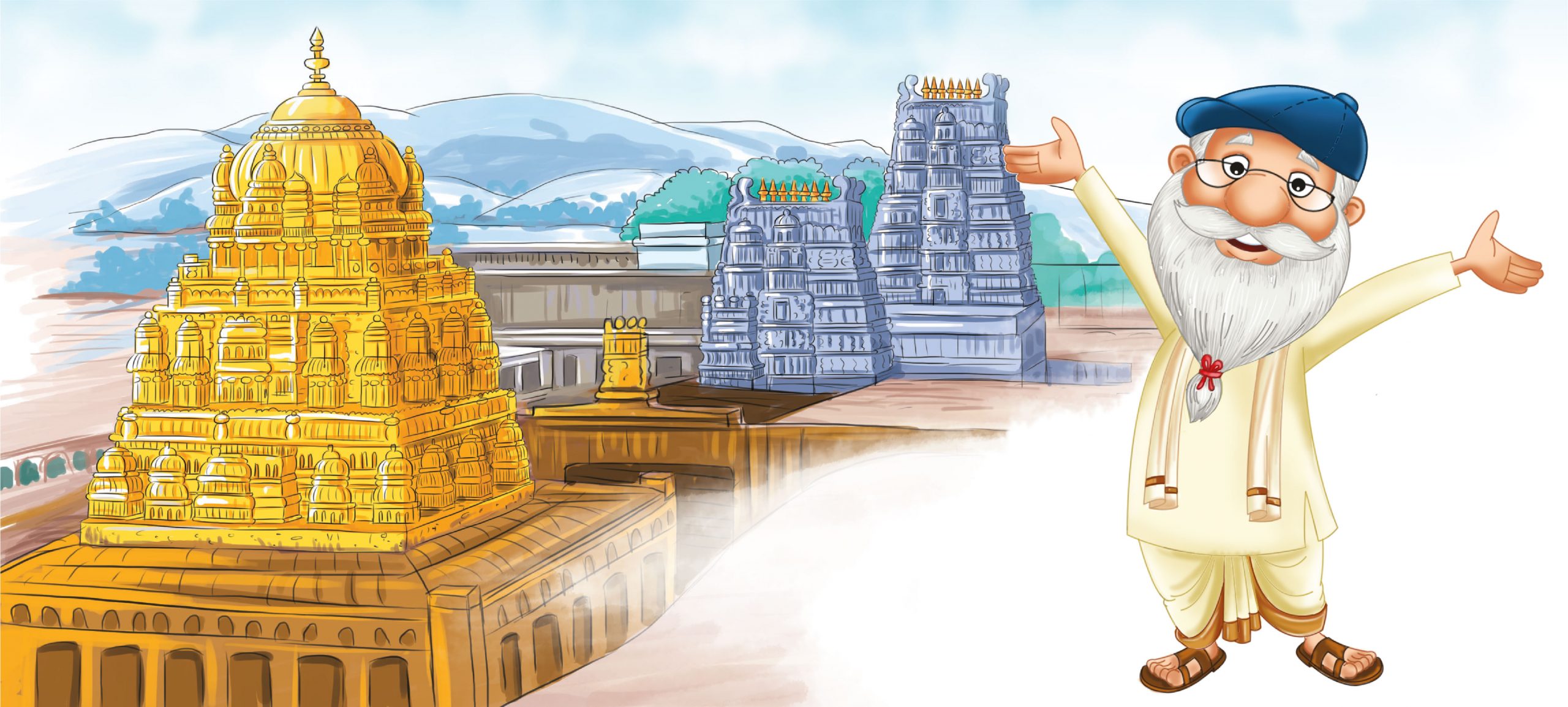
Mishki and Pushka’s home planet, Zoomba is nothing like Earth, except that the people look the same! As they travel across India with their new friend, Daadu Dolma, they are awestruck by the magnificence of India.
Upon spending the entire night reading about Andhra Pradesh, Pushka says, ‘Daadu, I am really curious about this state. It seems to have a rich history—but is very modern too.’
The siblings are keen to visit and so, much to their delight, Daadu Dolma takes them to the beautiful state. Here are four things they learn about Andhra Pradesh.

This made the state a little smaller, but it still has a lot of lovely neighbours. It is surrounded by Karnataka, Tamil Nadu, Odisha and, of course, Telangana. On its eastern side, it has a long coastline, where the waters of the Bay of Bengal lap its shores.

There are many rivers that rush down the mountains and into the Bay of Bengal, watering the plains along the way. These rivers create deltas and make this area simply perfect for farmers.

Thanks to this, even the otherwise dry plateau is able to sustain agriculture.

Historically, because the Nizams ruled here for so long, Urdu is very much a part of the local language.
