




Kannur, a sleepy coastal district in the scenic south Indian state of Kerala, has metamorphosed into a hotbed of political bloodshed in the past few decades. Even as India heaves into the age of technology and economic growth, the town has been making it to the national news for horrific crimes and brutal murders with sickening regularity. Ullekh N.P.’s latest book, Kannur: Inside India’s Bloodiest Revenge Politics draws a modern-day graph that charts out the reasons, motivations and the local lore behind the turmoil.
As Sumantra Bose, Professor of international and comparative politics, London School of Economics and Political Science, mentions in his foreword for the book, “Ullekh N.P. is uniquely placed to write this chronicle of Kannur, both as a native of the place and as the son of the late Marxist leader Pattiam Gopalan. Being an ‘insider’— and a politically connected insider…Ullekh tells the story of unending horror with deadpan factuality, tinged with compassion in his latest book, Kannur: Inside India’s Bloodiest Revenge Politics.”
Let’s read an excerpt from the book-
———–
The news that hits headlines from Kannur these days is mostly about its law-and-order situation. TV scrolls announce items such as these with great frequency: ‘One killed in Muslim League–CPI(M) clashes’; ‘Two hurt in RSS–CPI(M) fracas’; ‘CPI(M) man killed, RSS men nabbed’; ‘RSS youth hacked, 7 CPI(M) men held’; ‘PFI [Popular Front of India] activists attacked’; ‘District Collector calls all-party peace meeting’, and so on.
The crime bureau statistics, as of November 2016, show that forty-five CPI(M) activists, forty-four BJP–RSS workers, fifteen Congressmen and four Muslim League followers have been killed since 1991 in Kannur, besides a few other murders of the cadres of parties such as the PFI. Between November 2000 and 2016, the number of party workers killed in Kannur was thirty-one from the RSS and BJP, and thirty from the CPI(M), according to data obtained from the police by the independent news website 101reporters.com through a right-to-information request. While the RSS leaders claim that the CPI(M) are now doing to them what the Congress had done to the communists in the past, the CPI(M) leaders contest it, reeling off stats, and claiming that they have been forced to resist because the Hindu nationalists are hoping to effect a religious polarization through the politics of violence in order to reap electoral gains that have eluded them for long.
The latest numbers do not endorse the RSS’s claims of being a victim in this Left stronghold. Regardless, the Sangh has actively pursued a campaign, spiffily titled Redtrocity(short for Red Atrocity, referring to the reported high-handedness by the Marxists), as a counterweight to the series of accusations hurled against it for allegedly sowing religious hatred, perpetuating violence against non-conformists, triggering riots and deliberately aiding a mission to heighten communal hostilities.
Police records show that the RSS and the BJP have been at loggerheads not with the CPI(M)alone, but also with other parties, including the PFI and the Congress. Yet, equally laughable is the contention by the CPI(M) that it is portrayed as a villain without reason because it has only been engaging in acts of resistance and seldom in violent aggression.
Recent data show that from 1972 to December 2017, of the 200 who died in political violence in Kannur district—which accounted for the highest number of political crimes
in the state during the period, far ahead of other districts—seventy-eight were from the CPI(M), sixty-eight from the RSS–BJP, thirty-six from the Congress, eight from the Indian
Union Muslim League (IUML), two each from the CPI and the National Development Front (now called the PFI), while the rest were from other parties. Notably, of the total 193 political murder cases that took place in Kannur during the period, 112 of the accused were from the Sangh Parivar and 110 from the CPI(M).
The RSS–BJP argue that the escalation of hostilities started with the killing of an RSS worker on 28 April 1969, but the Marxists aver that the death was a denouement to a series of clashes stemming from the RSS’s support to a beedi baron who refused his workers a justified hike in salary and shut his business before floating two new companies. Media reports often show that more communist workers have died in Kannur than those belonging to any other party. The greatest irony in the RSS–CPI(M) fights is that the pro-Hindu Sangh Parivar has had no qualms about targeting CPI(M)-dependent Hindus, while the Marxists, the much-touted saviours of the proletariat, vehemently, so the story goes, go after the working classes who happen to be aligned with the Hindu nationalists.
Along Payyambalam beach, not far from the grave of K.G. Marar, one of the RSS’s topmost leaders in the state, is a grave of a twenty-one-year old man. Too young to die, that’s what visitors to the place would say. Sachin Gopalan died from sword injuries in July 2012. Allegedly, he was hacked by members of the radical Islamist Campus Front, a feeder organization of the PFI against which the National Investigation Agency (NIA) has now sought a ban for its anti-India activities. Gopal died at a hospital in Mangalore where he had arrived after shifting from one hospital to another in Kannur for want of better facilities. A student of a technical institute in the district, he was attacked when he had gone to a school for political work.
In the darkness of a late windswept evening, standing alone in the forbidding graveyard at Payyambalam, one is filled with evocative visions from the region’s chequered past and a violent present caught in the vortex of vendetta politics.
When I studied in a boarding school in Thiruvananthapuram, my classmates looked down on my hometown as Kerala’s Naples, a thuggish backwater; but then the district had
contributed two chief ministers (and one more later) as well as several luminaries to the state’s cultural, social, professional and political spheres.
I also came to be known as someone from the ‘Bihar of Kerala’. Later, I invented a rather self-deprecating phrase of my own: ‘the Sicily of Kerala’, factoring in the local omertà-
like code the Italian region was once known for. Poking fun at oneself does make sense, as it’s an effort to tide over the mental fatigue that sets in on being judged as a violent people, who are puritanical and foolish. Deep within, however, it hurts like a migraine.
The waves keep breaking hard on the shore like smooth knives on raw flesh.
———–

Catch them young: 6 Important Values Every Child Must Know!
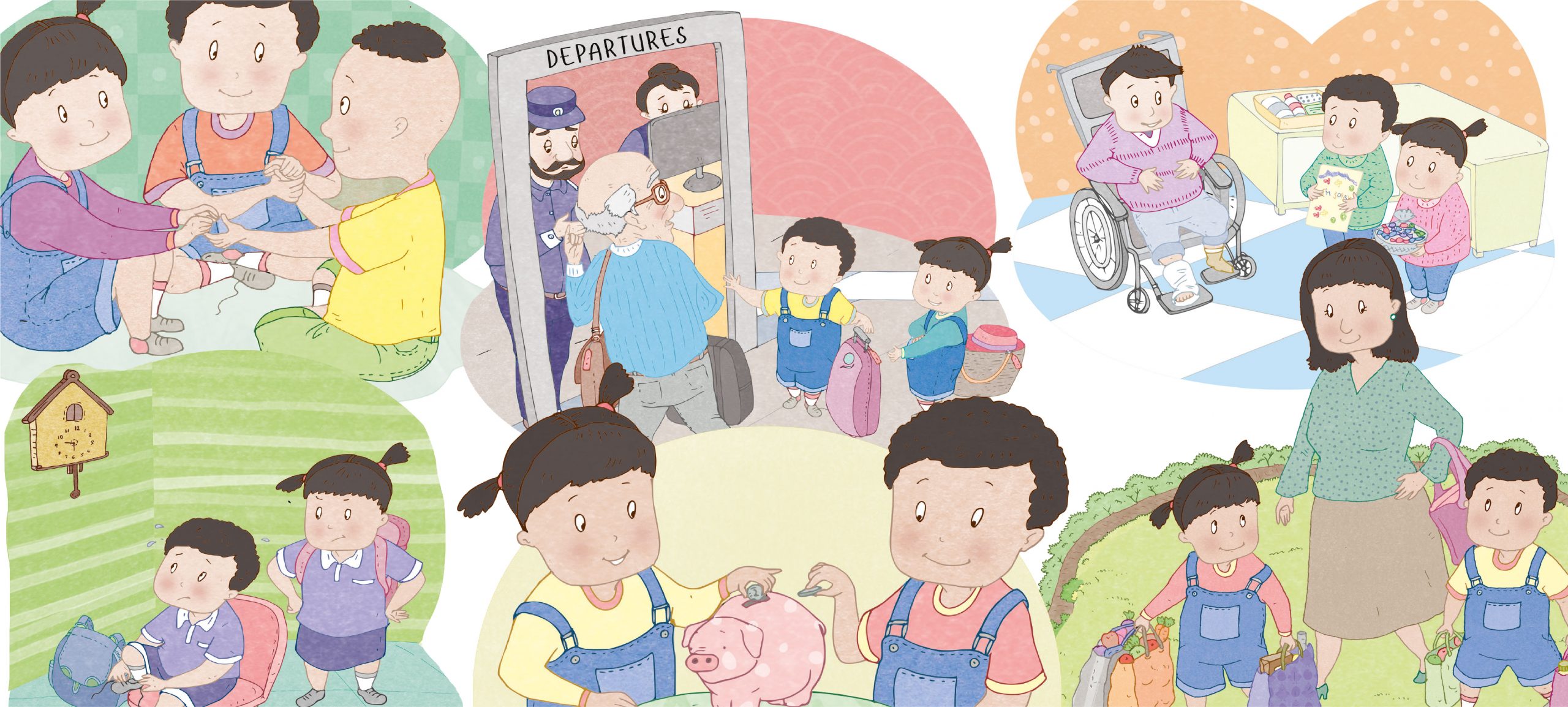
Dear Moms and Dads,
Would you believe that your little one is already old enough to take small decisions by herself or himself? There will be a hundred tiny things that happen to them during the day, where they have to act in a certain way, take small calls and make their own judgement. This is the right time to prepare and give them lessons of right and wrong.
But this needs to be done subtly. Today’s child isn’t up to lectures and threats. This is the purpose of My Book of Values– to enable your child to differentiate right from wrong and good from bad, building a strong value system, learning to accept consequences—all through relatable stories and fun activities.
Nicky and noni are typical twenty-first-century kids. Smart, communicative and alert, they know how to get their way. But as they go about their lives, they encounter situations and challenges during which their value system is tested.
Here are a few lessons your children will learn from My Book of Value series as they follow the adventures and experiences of characters Nicky and Noni:


Discover India: Four Things your little ones should know about Haryana
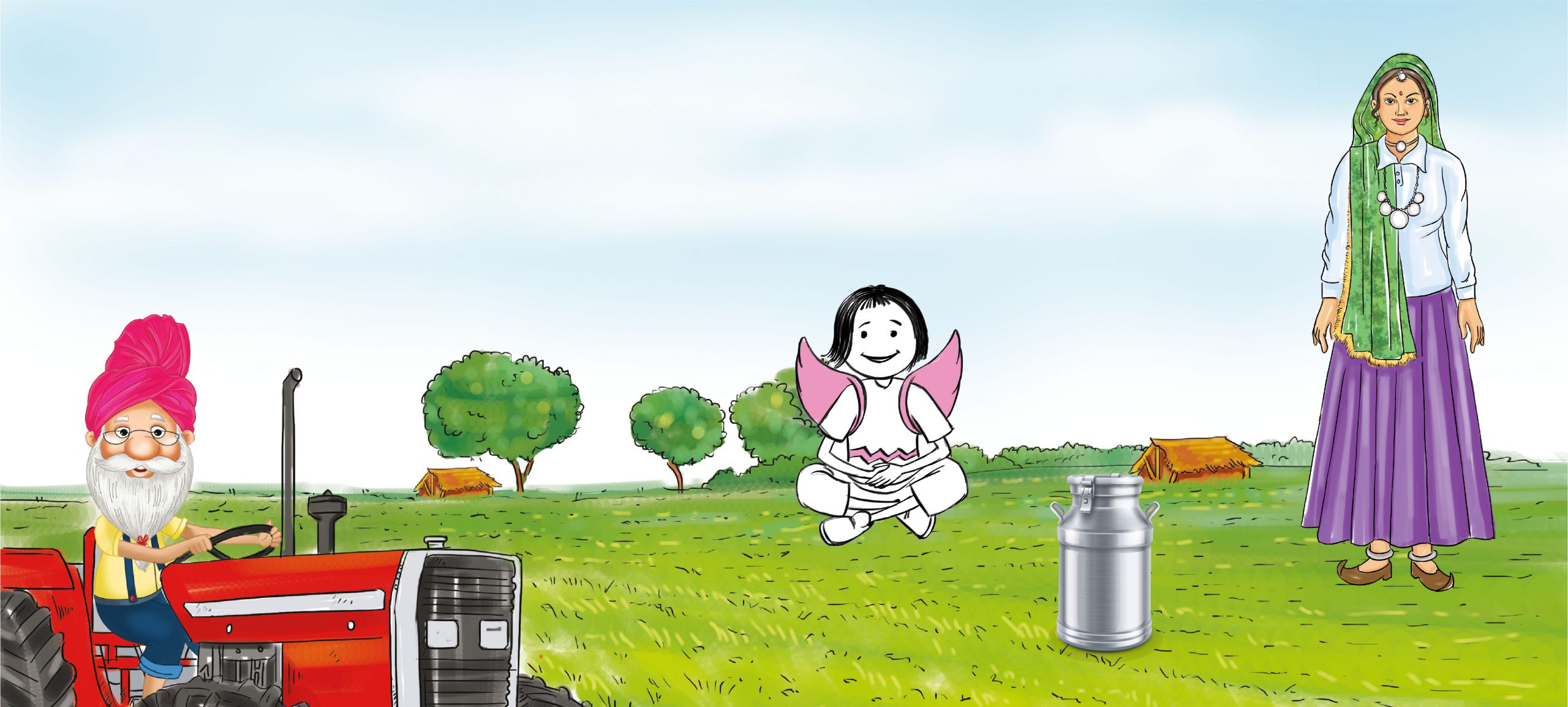
Daadu Dolma, the sweet old man that Mishki and Pushka meet on their visit to Earth from their home planet Zoomba is keen to show them the wonderful places in India.
Mishki and Pushka are very curious because they don’t know much about the state they are about to visit. “Well, you could say that Haryana is where a lot of India’s history was born. Some of the greatest events in Indian history occurred here,” explains Daadu.
Here are four things they learn about Haryana.


Meet the Unlikely Detectives of the Happy Home for the Aged
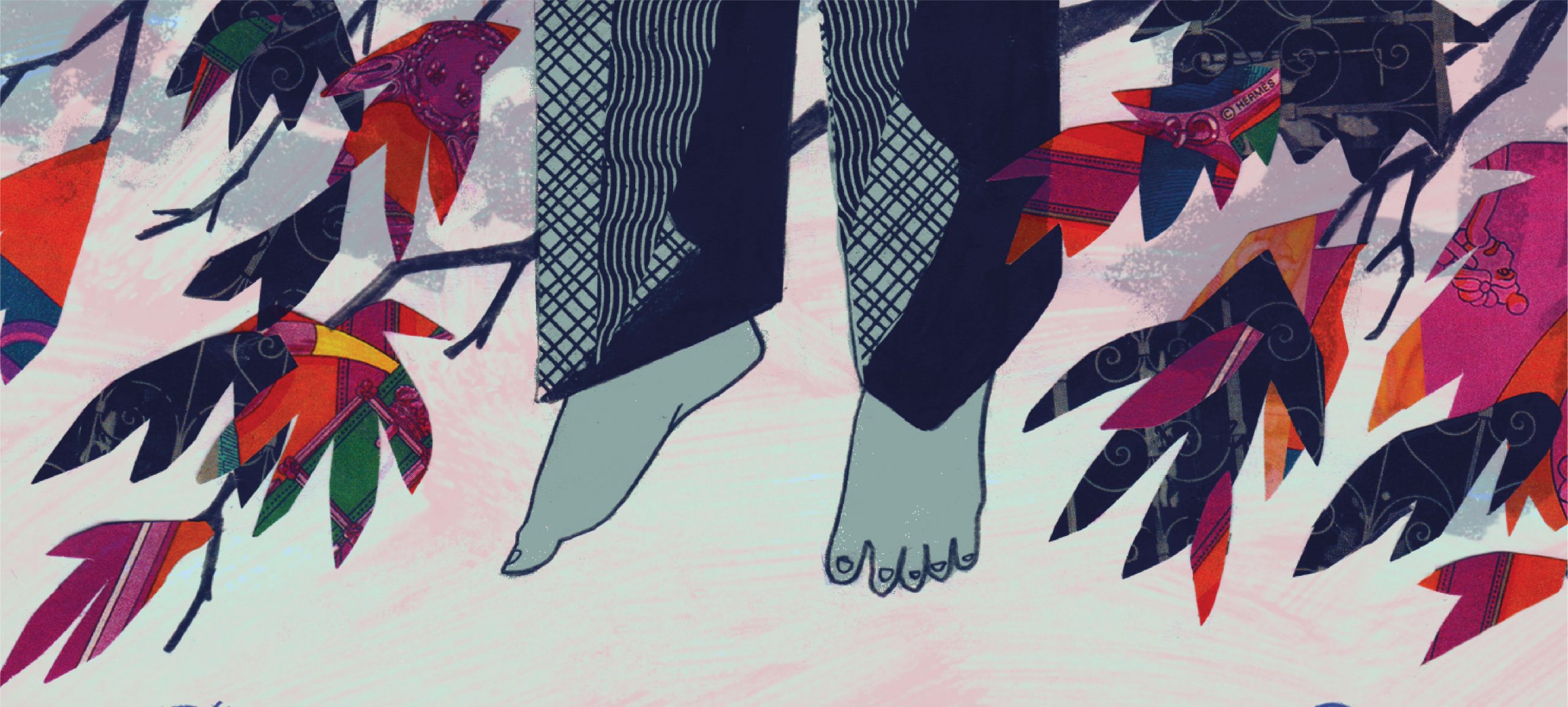
The tranquility of the Happy Home for the Aged is shattered when a body is found hanging in the garden. The inhabitants of the home are at first perplexed, and then decide to come together to solve the murder that has suddenly brought the violence of the world into their Goan arcadia. Each of them bring different skills to the task of unravelling the crime.
Patiently, and with flashes of inspiration, the unlikely detectives follow the clues and emerge from the isolated and separate worlds they had inhabited for so long.
Let us meet these characters from Bulbul Sharma’s mystery book, Murder at the Happy Home for the Aged.


Our Impossible Love by Durjoy Datta – An Excerpt

Aisha, a late bloomer, has to figure out what it means to be a woman and to be desired. Danish feels time is running out for him and he’s going to end up as a nobody, as opposed to his overachieving, determined younger brother. Life takes a strange turn when Danish, the confused idiot, is appointed as the student counsellor to Aisha. Between the two of them they have to figure out love, life, friendship-most of all, themselves.
Our Impossible Love written by the bestselling author, Durjoy Datta presents, a story that showcases Life the way it is and Love the way it should be.
Let’s read an excerpt from this book.
———–
Danish Roy
They keep telling you, you’re unique, you’re different, you have a calling, a talent, a miracle inside of you. I had bought into this theory for a really long time. But no more. I was ordinary and there was no point waiting for that hidden genius in me to bubble to the surface. I would not discover my yet unexplored talent for painting, or interpreting ancient languages, or being a horse whisperer, or interpreting foreign policy at thirty.
And I think I would have been okay with it, or at least as okay as everyone else is with their ordinariness, had it not been for my overachieving little brother, my parents’ favourite, who was wrecking corporate hierarchies like he was born to do so. Only last year, he got into the top 30 under 30 (at 21) in Forbes magazine for being a start-up prodigy. Fresh out of IIT Delhi, his crazy idea of sending high packets of data over Bluetooth in a matter of seconds sent potential investors in a tizzy. He was always in a tie-suit now, carrying leather folders and taking late night flights to meetings where capital flow, structural accounting and other terrifying things are discussed.
I’m two years older than him and I hadn’t even won a spoon race in my life.
Quite understandably, I was a bit of an embarrassment to my parents—my father was a high-ranking official in the education ministry, and my mother, a tenured physics lecturer at Delhi University. It’s not that they didn’t love me, of course they did, but it was only because I was their son and they were programmed to love me more than themselves. But yeah, they loved Ankit more, and I didn’t blame them.
Even I loved him more.
I was still struggling to complete my graduation in psychology (a subject my parents had chosen for me) from a college no one knew about, including the government, I presume. I was twenty-three and I had never been employed, a situation that didn’t look like would change in the near future. It was more likely I would flunk my final exams too. Flunking exams by ridiculous margins was my superpower!
I was the most self-aware dumb person I had ever met.
Throw me a Suduko and you could study human behaviour in hostage situations. Medieval torture had nothing on me but keep a mathematics exam paper in front of me and I would start shitting bricks.
————

4 Things You Should Know About Abhinav Chandrachud

Abhinav Chandrachud is an advocate at the Bombay High court. He has written extensively on subjects like the freedom of speech, the judiciary, the constitution of India and legal history.
Chandrachud’s latest book, Supreme Whispers: Conversations with Judges of the Supreme Court of India 1980-1989, sheds light on a decade of politics, decision-making and legal culture in the Supreme Court of India. This book yields a fascinating glimpse into the secluded world of the judges of the Supreme Court in the 1980s and earlier.
Here are 4 things you didn’t know about the author:


Are you Maya or Renu?


5 Reasons Why Bhutan Should be your Next Travel Destination

A country of pristine forests and flower, dotted with imposing fortresses and serene monasteries, Bhutan has captured the world’s imagination not only with its beauty but also with its unique philosophy of governance, which measures the country’s progress and development through gross national happiness rather than gross domestic product. Ashi Dorji Wangmo Wangchuck’s portrait Treasures of the Thunder Dragon is a captivating blend of personal memoir, history, folklore and travelogue. It provides intimate insights into Bhutanese culture and society and vivid glimpses of life in its villages, monasteries and palaces.
The author also reveals Bhutan’s ‘hidden treasures’, discovered during her arduous journeys on foot to the remotest corners of her country, from obscure highland hamlets in the shadow of great Himalayan peaks to rainforests that are among the world’s richest biodiversity hotspots.
Here are 5 reasons why you should visit Bhutan this summer:


5 Beautiful Malayalam Words with Profound Meanings

Most linguists believe that every language has a few untranslatable words that make language in question, unique. Untranslatable words don’t mean that these words can’t be translated from one language to another but that part of the essence of the word is lost as it crosses from one language to another.This often is due to different social and cultural contexts that have shaped how the word is used.
K.R. Meera is one of the bestselling authors in Malayalam Literature and her latest book, The Unseeing Idol of Light, initially written in Malayalam has been translated into English.
Here are 5 Malayalam words that don’t directly translate to English but have profound meanings.


Quotes from Anne Frank that You Must Know
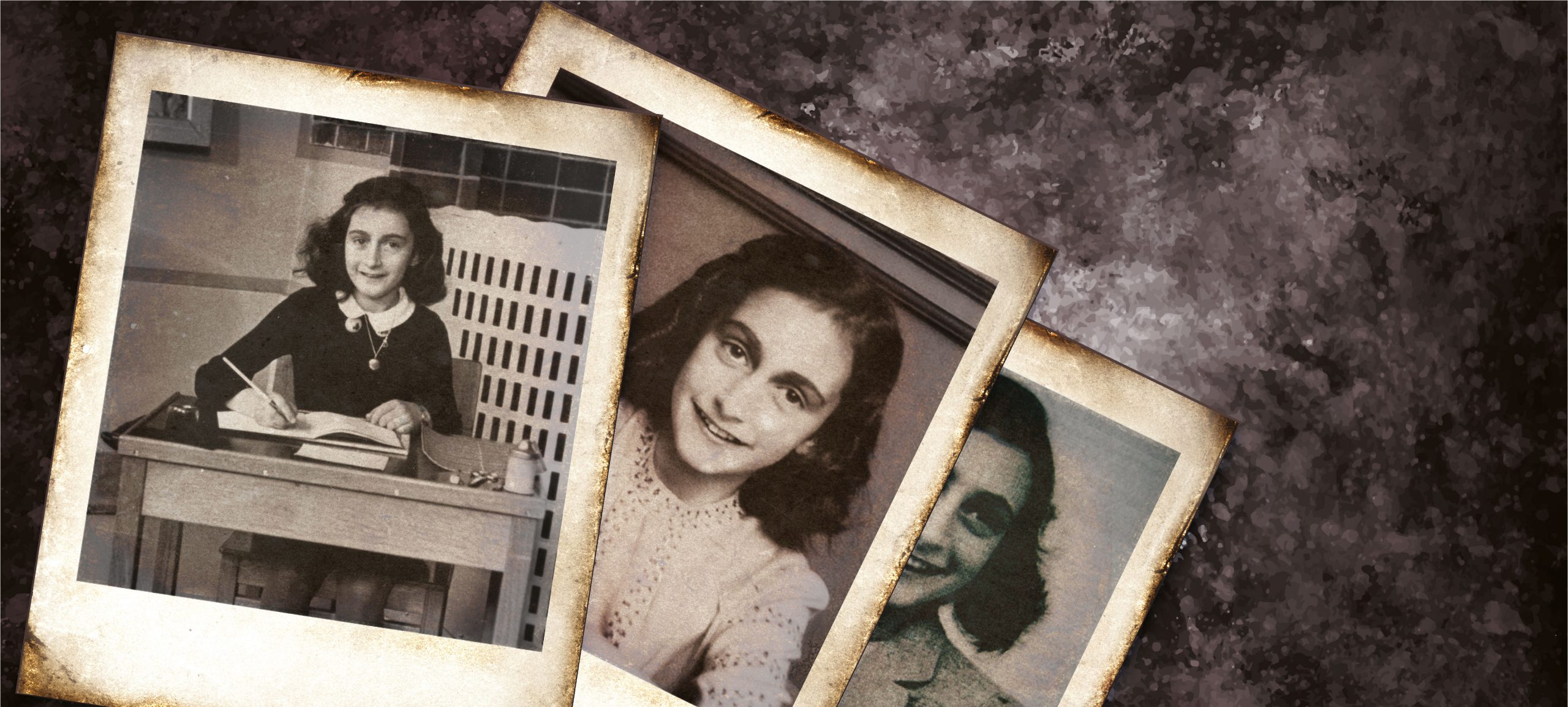
In Amsterdam, in the summer of 1942, the Nazis forced teenager Anne Frank and her family into hiding. For over two years, they, another family and a German dentist lived in a ‘secret annexe’, fearing discovery. All that time, Anne kept a diary. Here she writes about her curiosity of her emerging sexuality, the conflicts with her mother, her passion for Peter, a boy whose family hid with hers, and her acute portraits of her fellow prisoners.
Since its publication in 1947, Anne Frank’s diary has been read by tens of millions of people. In it, we find some inspiring quotes.


