




Did you know that India makes 15 million pressure cookers each year, and TTK Prestige accounts for a staggering 5 million of them? But achieving this feat for the TTK group wasn’t easy. The success of prestige pressure cooker follows an extraordinary journey where Prestige fought off bankruptcy and rose to become a highly profitable entity. The book Disrupt and Conquer: How TTK Prestige Became A Billion Dollar Company reveals how TTK Prestige set about turning its fortunes around in stunning comebacks, time and again.
Here are 7 things that you should know about the all-time staple of the Indian kitchen – The Prestige Cooker.


5 Things you didn't know about the Laughter Yoga Club movement

It was 4 a.m. on 13 March 1995 when the idea of laughter yoga came to Dr. Madan Kataria. He was excited and, three hours later, hurried to the public park where he went for a morning walk everyday. He tried to convince a few regular walkers about the importance of laughter and the idea to start a laughter club. Four out of four hundred people agreed.
Laughter yoga is a revolutionary idea: simple and profound. A practice involving prolonged voluntary laughter, it is based on scientific studies that have concluded that such laughter offers the same physiological and psychological benefits as spontaneous laughter.
Here are 5 things you didn’t know about the Laughter Yoga Club Movement.


A Walk through Hasan’s World in A Day in the Life

Anjum Hasan is the author of three novels-The Cosmopolitans (shortlisted for the Crossword Book Award), Neti Neti (shortlisted for the Hindu Best Fiction Award) and Lunatic in My Head (shortlisted for the Crossword Book Award)-as well as a book of short stories. Her latest, A Day in the Life, has quixotic nonconformists in small towns and young newly-weds trying to keep up with the times; a forlorn retiree helpless in the face of contemporary anger and a middle-class woman’s bond with her maid. With fourteen well-crafted stories, Hasan gives us a sense of the daily life of a wide cast of characters.
Let’s walk through some of her stories.


Still Me by Jojo Moyes – An Excerpt

Jojo Moyes, the author of bestsellers Me Before You and After You brings the third Lou Clark novel, Still Me. The third book sees Lou arrive in New York to start a new life. What Lou doesn’t know is she’s about to meet someone who’s going to turn her whole life upside down. Because Josh will remind her so much of a man she used to know that it’ll hurt. Lou won’t know what to do next, but she knows that whatever she chooses is going to change everything.
Let’s read an excerpt from the book, Still Me.
———–
‘Reasons for travel, ma’am?’ The moustache twitched with irritation. He added, slowly: ‘What are you doing here in the United States?’
‘I have a new job.’
‘Which is?’
‘I’m going to work for a family in New York. Central Park.’
Just briefly, the man’s eyebrows might have raised a millimetre. He checked the address on my form, confirming it.
‘What kind of job?’
‘It’s a bit complicated. But I’m sort of a paid companion.’
‘A paid companion.’
‘It’s like this. I used to work for this man. I was his companion, but I would also give him his meds and take him out and feed him. That’s not as weird as it sounds, by the way – he had no use of his hands. It wasn’t like something pervy. Actually in my last job it ended up as more than that, because it’s hard not to get close to people you look after and Will – the man – was amazing and we . . . Well, we fell in love.’ Too late, I felt the familiar welling of tears. I wiped my eyes briskly. ‘So I think it’ll be sort of like that. Except for the love bit. And the feeding.’
The immigration officer was staring at me. I tried to smile. ‘Actually, I don’t normally cry talking about jobs. I’m not like an actual lunatic, despite my name. Hah! But I loved him. And he loved me. And then he . . . Well, he chose to end his life. So this is sort of my attempt to start over.’ The tears were now leaking relentlessly, embarrassingly, from the corners of my eyes. I couldn’t seem to stop them. I couldn’t seem to stop anything. ‘Sorry. Must be the jetlag. It’s something like two o’clock in the morning in normal time, right? Plus I don’t really talk about him anymore. I mean, I have a new boyfriend. And he’s great! He’s a paramedic! And hot! That’s like winning the boyfriend lottery, right? A hot paramedic?’
I scrabbled around in my handbag for a tissue. When I looked up the man was holding out a box. I took one. ‘Thank you. So, anyway, my friend Nathan – he’s from New Zealand – works here and he helped me get this job and I don’t really know what it involves yet, apart from looking after this rich man’s wife who gets depressed. But I’ve decided this time I’m going to live up to what Will wanted for me, because I didn’t get it right, before. I just ended up working in an airport.’
I froze. ‘Not – uh – that there’s anything wrong with working at an airport! I’m sure immigration is a very important job. Really important. But I have a plan. I’m going to do something new every week that I’m here and I’m going to say yes.’
‘Say yes?’
‘To new things. Will always said I shut myself off from new experiences. So this is my plan.’
The officer studied my paperwork. ‘You didn’t fill the address section out properly. I need a zip code.’
He pushed the form towards me. I checked the number on the sheet that I had printed out and filled it in with trembling fingers. I glanced to my left, where the queue at my section was growing restive. At the front of the next queue a Chinese family was being questioned by two officials. As the woman protested, they were led into a side room. I felt suddenly very alone.
The immigration officer peered at the people waiting. And then, abruptly, he stamped my passport. ‘Good luck, Louisa Clark,’ he said.
I stared at him. ‘That’s it?’
‘That’s it.’
I smiled. ‘Oh, thank you! That’s really kind. I mean, it’s quite weird being on the other side of the world by yourself for the first time, and now I feel a bit like I just met my first nice new person and –’
‘You need to move along now, ma’am.’
‘Of course. Sorry.’
I gathered up my belongings and pushed a sweaty frond of hair from my face.
‘And, ma’am . . .’
‘Yes?’ I wondered what I had got wrong now.
He didn’t look up from his screen. ‘Be careful what you say yes to.’
————-

Guru Trouble: 5 Controversial Godmen India Has Witnessed

In August 2017, Gurmeet Ram Rahim the leader of Dera Sacha Sauda, was convicted to life imprisonment for raping two of his disciples. Just as Ram Rahim took over our timelines and imaginations- the pertinent question was: how did this man get millions of seemingly normal people to believe that spreading peace and equality involves rape, castration and violence?
Just like Ram Rahim, there are several self-styled godmen who are wrapped in controversies and have allegedly committed heinous crimes. These are a few infamous godmen who thought they were invincible until the law caught up with them.
Asaram Bapu
Asaram Bapu preached the existence of ‘One supreme conscious’ and had rape allegations levelled against him.

Swami Nithyananda
Swami Nithyananda is regarded as a spiritual leader and believed by his disciples to be a reincarnated deity.

He claimed that the video was morphed and denied being the man in the video. In 2012, he was accused of rape by an Indian born American citizen.
Sant Rampal
This so-called godman claims to be a successor of Sant Kabir. He came into the spotlight after being charged with sedition, murder, attempt to murder and forgery.

Chandraswami
Chandraswami is best known for being the spiritual adviser of a former Prime Minister. He claimed to be able to read minds and cast spells on any individual.

Gurmeet Ram Rahim
This self-proclaimed godman headed the Dera Sacha Sauda sect since September 23, 1990. He fancies himself as the ‘rockstar guru’ as he is also a singer and actor. Anurag Tripathi’s book, Dera Sacha Sauda and Gurmeet Ram Rahim: A Decade-long Investigation, reveals the atrocities perpetrated by him.


Ranji the Music Maker, a story every child must read!

India’s favourite storyteller, the man endowed with endless imagination, Ruskin Bond is known for writing tales about the simple pleasures of life and everlasting friendship. Here is a list of gorgeous chapter books by him including his latest offering, Ranji the Music Maker. These stories promise to leave your child delighted and happy.
The Cherry Tree

Rakesh plants a cherry seedling in his garden and watches it grow. As seasons go by, the small tree survives heavy monsoon showers, a hungry goat that eats most of the leaves and a grass cutter who splits it into two with one sweep. At last, on his ninth birthday, Rakesh is rewarded with a miraculous sight-the first pink blossoms of his precious cherry tree!
Getting Granny’s Glasses

Mani’s Granny is seventy and can barely see through her old, scratched glasses. With only a hundred and fifty rupees in their pockets and a thirst for adventure, Mani and Granny set off to buy a new pair. On the way, they get drenched in the rain, run into mules and encounter a terrible landslide. Will Granny ever be able to reach the town and get herself a new pair of glasses?
Earthquake

What do you do when there’s an earthquake?’ asks Rakesh. Everyone in the Burman household has their own ideas, but when the tremors begin and things start to quake and crumble, they are all taken by surprise. Amidst the destruction, Rakesh’s family stays strong. But will they survive the onslaught of yet another earthquake?
The Tree Lover

Rusty tells the story of his grandfather’s relationship with the trees around him, who’s convinced that they love him back with as much tenderness as he loves them.
The Day Grandfather Tickled a Tiger

Grandfather had brought home Timothy, the little tiger cub, from the forests of the Shiwaliks. Timothy grew up to be a friendly tiger, with a monkey and a mongrel for company. But some strange circumstances lead Grandfather to take Timothy away to a zoo. Will they ever meet again? This is a heart-warming story about love and friendship.
Dust on the Mountain

Bisnu finds how dangerous and lonely life can be for a boy who has to leave his home to earn money for his family. As he sets to work on the limestone quarries with the choking dust enveloping the beautiful mountain air, he longs for home more than ever.
Cricket for a Crocodile

Ranji’s team finds an unexpected opponent a nosy crocodile when they play a cricket match against the village boys. Annoyed at the swarms of boys crowding the riverbank and the alarming cricket balls plopping around his place of rest, Nakoo the crocodile decides to take his revenge.
White Mice

Ruskin is keen to teach his scatterbrained uncle a lesson. After all, he put him on the wrong train! Armed with gifts from his new friend, the stationmaster-yummy rasgullas and a pair of beautiful white mice-Ruskin devises the perfect payback.
Ranji the Music Maker

In the middle of his languid holiday, idle young Ranji stumbles upon assorted musical instruments in the storeroom-first a shrill flute, then a blaring little trumpet and, finally, a too-big drum that may have once sounded a battle march. He stages impromptu concerts down the road, not sparing his neighbours, nor the cats around his porch, nor the peace-loving inhabitants of the zoo! But all Ranji’s really seeking is a friend who’ll hear the magic in his din.

Supreme Whispers by Abhinav Chandrachud – An Excerpt

In Abhinav Chandrachud’s latest book, Supreme Whispers: Conversations with Judges of the Supreme Court of India 1980-1989, Chandrachud relying on the typewritten interviews of a brilliant young American scholar, George H. Gadbois, Jr. who conducted over 116 interviews with more than sixty-six judges of the Supreme Court of India provides a fascinating glimpse into the secluded world of the judges of the Supreme Court in the 1980s and earlier.
Let’s read an excerpt from this book.
———–
The broad sense one gets is that dissent is generally frowned upon at the Supreme Court, and dissents get written only in the rarest of cases involving irreconcilable conflict. Chief Justice M. Hidayatullah admitted to ‘ragging’ two of his colleagues who dissented from his view in the very first case they heard together, because he was responsible for bringing them to the court. However, he did feel reassured by their independence. Justice P.B. Gajendragadkar, known for his pro-labour leanings, once wrote a draft judgment with which his colleague, Justice N.H. Bhagwati, disagreed. Bhagwati suggested that Gajendragadkar make some changes to the judgment in order to secure Bhagwati’s agreement to sign off on it. Gajendragadkar refused to change a word of his draft. Bhagwati signed the judgment anyway, since another judge on the bench, Justice S.K. Das, had also agreed to sign it, and Bhagwati did not want to dissent. In February 1983, a bench of two judges had said that in a death penalty case if the person convicted is not executed within two years, then the sentence automatically stands commuted to life imprisonment. Shortly after this judgment was delivered, it was overruled by a bench of three judges of the court. Justice A. Varadarajan believed that if the two judges who had delivered the judgment in the earlier case had sat with the three judges who decided the later case, even they would have been convinced to be a part of the majority in the later case.
Justice H.R. Khanna, arguably one of the greatest dissenters of all time at the Supreme Court, who disagreed with the majority view in the Habeas Corpus case, admitted that he did not dissent in one of the early cases he heard in the court even though he disagreed with the view of the majority. The Supreme Court’s judgment in that case had the effect of raising car prices. Although he ‘did not feel happy with the view they took’, Khanna agreed with the judgment of the majority because he ‘did not think it proper to strike a discordant note at the very beginning’ of his judgeship at the Supreme Court. ‘The atmosphere in court’ at the time, noted Khanna, ‘was of general cordiality.’ This, of course, did not stop Justice Khanna from dissenting in the Habeas Corpus case, where a majority of the judges of the bench held that the right to seek the writ of habeas corpus and to challenge arbitrary arrest and detention could be suspended during an Emergency. Dissent at the Supreme Court, then, seems to be reserved for the most egregious and exceptional circumstances.
‘I did not believe in writing separate or dissenting judgments for nothing,’ wrote Justice P.N. Shinghal in a letter to Gadbois. ‘So if I have written dissents,’ he continued, ‘they were necessary to place my irreconcilable views on record.’ Justice A.C. Gupta was critical of his colleagues who were eager, in big cases, to write separate judgments. He pointed out that Justice E.S. Venkataramiah wrote a judgment of over 300 pages in the Judges case. Justice Krishna Iyer felt that writing a dissent gained little, and did not serve much purpose. He stressed that the whole court was very congenial, ‘delightfully united’, and there was a ‘happy sense of cooperation’ prevalent at the time. He believed that divided decisions were not as good as unanimous ones. In fact, who is writing the majority judgment for the court also matters. Justice P. Jaganmohan Reddy believed that the majority judgment of the Supreme Court in the Bank Nationalization case should not have been written by Justice J.C. Shah because Shah had delivered the judgment in an earlier case in which the court had taken a seemingly contrary view. He felt that somebody else should have written the majority judgment or even a concurring judgment. The majority judgment of Shah was extensively discussed by the judges prior to being delivered, and several passages were removed and added by other judges. The court wrote one judgment in order to achieve clarity and avoid contradictions.
______________________________________________________________________________

5 Quotes every Friend-Zoned lover will relate to

Sudeep Nagarkar is the author of nine bestselling novels. She Friend-Zoned My Love, his latest and tenth book is about Apurv, an ordinary boy who charms everyone in his company and Amyra- a beautiful and popular girl who leads a flawless life. A chance encounter with Amyra in the college canteen makes Apurv fall head over heels for her but it isn’t long before he realizes that she is not interested in him, at least not in the way he wants her to be. Can Apurv get Amyra to change her mind before it’s too late, or will he be friend-zoned forever?
Have you ever fallen in love with someone who never loved you back and just wanted to stay friends? If you just said yes to this question then here are 5 quotes from the book, She Friend-Zoned My Love, that are a must read for you!


Discover India: Four Things your little ones should know about Sikkim

Join Mishki and Pushka on their visit to Sikkim. They are here from their planet Zoomba and quite keen to explore India. With a sweet old man whom they fondly call Daadu Dolma, they traverse the length and breadth of India.
In Off to Sikkim, Mishki and Pushka have been instructed to carry all their warm clothes. Sikkim, the state they’re going to is right next to the great Himalayas and can be very cold. But they’re excited when Daadu Dolma tells them that they will see nature at its best, learn about the state’s interesting history and meet some great people. They can hardly wait!
Here are four things they learn about Sikkim when they visit the state:


Life for the Under-privileged During Pre-partition India; Quotes from Mulk Raj Anand
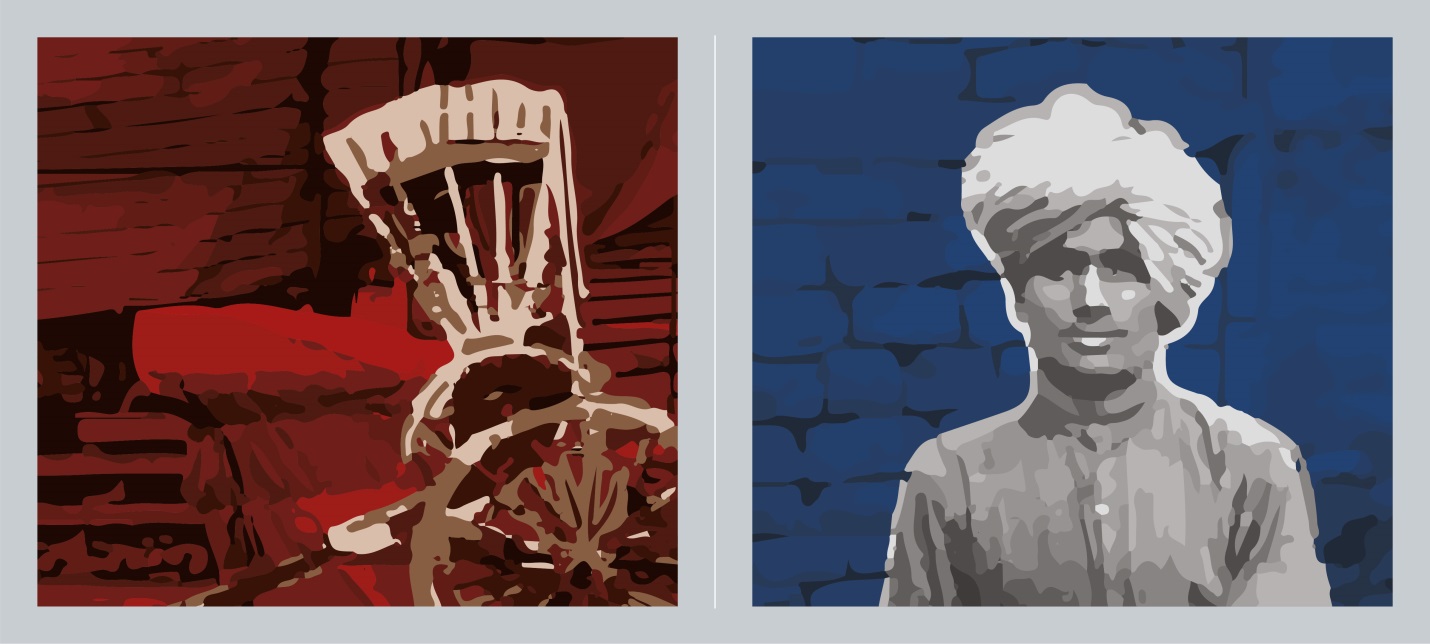
Mulk Raj Anand, one of the most highly regarded Indian novelists writing in English is best known for the impassioned social critique contained in his writings. His main concern has always been for “the creatures in the lower depths of Indian society who once were men and women: the rejected, who had no way to articulate their anguish against the oppressors.” His novels of humanism have been translated into several world languages.
Here we find 7 quotes from two of his popular works, Coolie and Untouchable that show the life for the underprivileged during pre-partition India.


