




Miniya Chatterji is the author of Indian Instincts, a collection of fifteen powerful essays that argue for greater equality and opportunity in contemporary India and holds up a mirror to what we Indians have become.
She is a prominent intellectual and speaker, writer and businesswoman. The CEO of Sustain Labs Paris, she has also worked at the World Economic Forum in Geneva, Goldman Sachs in London and in the office of the President of France in Paris.
In her book, she goes from tracing the possible first arrival of man in India to writing about love, sex, money, parenting and values in Indian society and discussing nationalism, religion and democracy, presenting an accessible yet brilliant intellectual treatise about issues that affect Indians the most in her book.
So what makes an Indian? Here are her views.
————————————————————————————————————————————–
“It is odd, vain, irreverent, or naive to be reflecting upon the personal, when the subject of analysis is as weighty as the national economy or its politics.”
This perception is based on the belief that political economy and individual development are separate disciplines such that an enquiry in to the state of democracy, nationalism, or economic growth of a country must neither refer to it’s citizen’s personal experience as a child, adolescent, or parent, nor to his individual values, emotional health, romantic love, taste, and so forth. Must the study of economic growth exclude – as economist Amartya Sen points out – an assessment of the personal capabilities it endows us with?
If one believes that a person’s character is inherited – a favourite argument made by every enthusiastic xenophobic – then this perception would hold true. However, if an individual’s development is believed to be an active and reciprocal process influenced by the environment he lives in, then eliminating a citizen’s personal development from the analysis of a country’s political economy would be a gross oversight.
In this context, central to sociologist Pierre Bourdieu’s project was the notion of habitus that referred to the individual mental structures or lens through which people deal with the social world.[1] Bourdieu suggested that habitus is the physical embodiment of one’s cultural capital – the deeply ingrained tastes, habits, skills, mannerisms, and dispositions that one possess due to one’s life experiences. In this way Bourdieu emphasised that an individual’s development internalises his environment over the course of life. Habitus is one of Bourdieu’s most influential yet ambiguous concepts, and essentially establishes the link between social, political, and economic change in the environment to an individual’s personal development. For example, growing up in a rough, crime ridden neighborhood one could likely be influenced by skills to steer clear of violent confrontations and hustle to make a living despite the extremely low employment. Another individual living in that same environment could be affected adversely and be bullied easily. According to Bourdieu, the habitus is different for each individual living in the same environment.
In Glenn Elder’s brilliant study Children of the Great Depression[2], children of different ages experienced the great depression in Europe in very different ways, some gaining and some losing from the economic hardship. According to Elder, the differing outcomes were due to the ways in which the previously established context as well as the social, and personal resources of each child varyingly matched the changing social, political, and economic context of the great depression, and its related options and constraints.
Another example is Hofer, Kracke et al’s research[3] that found that after unification, families in West Germany were more stressed by the economic depression and suffered more in the quality of family interaction compared with families in the East. The families from both the German regions were subject to similar social, political, and economic consequences of the unification, but each family experienced the new situation in different socioeconomic contexts and on the basis of dissimilar life histories prior to the unification.
Indeed different individuals perceive, experience, and act upon stimuli in the environment in a unique manner. In my book Indian Instincts[4], I point out that instincts are a ‘spontaneous rationality’ (or irrationality) developed by our cognitive faculty, in response to the environment. I write that, there is in fact no pre-determined ‘Indian instinct’. I reveal how in India, our spontaneous behaviour is a rational (or irrational) choice under the overwhelming influence of politics, ambition, religious fervour, in the environment we live in.
Social contexts – as distal historical, cultural conditions, and as proximal conditions – affects an individual’s development. Also specific aspects of the environment has an impact on different individuals in different ways. And there are infinite different ways in which the individual and his environment can relate to each other and interact. An individual centric analysis of the political economy of any territory takes in to consideration these constraints and is, no doubt, difficult to execute.
Taking an individual centric approach to India’s political economy would consider both the historical and proximal environment surrounding an individual and how it influences and shapes him constantly. It will also take in to account how reciprocally, the socio-economic status of that individual would determine the nature of his experience of India. This means that every individual’s India is different. How then do we find India? This task at hand is all the more challenging given India’s supremely diverse population, its checkered history, and unequal socio-economic development across regions. To overcome this challenge in my book, I have presented India from several individual perspectives. These include tribals, sex workers, Devdasis, Muslims, Dalits, corporate honchos, entrepreneurs, and many more. Each of these people have been part of my life, which gave me the chance to see India through their eyes. I have written about how they negotiate with the context they live within in India, and how that affects them personally, and vice versa. Indian Instincts is about them – their India. By taking on this approach in my book, I arrived at conclusions on the state of equality and freedoms they enjoy (or not). I found that “freedom in India is subjective, dependent on where you live, which family and caste you were born into, your gender, religion, sexuality, source of livelihood. The guarantee of freedom for our marginalized communities—be it on the basis of religion, gender, sexual orientation or economic status—has always been the most fragile.”
Placing the individual in the centre of an analysis of India’s political economy is as yet unconventional. It has earned me the allegation of being “self-obsessed” by a certain befuddled book reviewer. This is because we are instead more comfortable to make the discussion on governance (politics) and livelihood (economy) specialised, highbrow, and impersonal.
However, the only reason why politics and the economy should matter to us is via an explanation of how they are affecting our individual and community life. In many societies such as in India, while political and economic institutions and the community have a clear linkage – heightened during times of policy interventions, elections, people’s uprisings etc – the linkage between these institutions and the individual is ignored. In his seminal work Mistaken Modernity[5] sociologist Dipankar Gupta has pointed out that the latter is sidelined in India as it is considered an inefficient approach towards attracting voter clout in our society that has a strong community identity such that group values and decisions over ride individual ones.
Ironically, we thus continue to revel in the complexity and the complex ways of explaining the complexity of the social, political, and economic institutions we had once created to make life easier for us, considering it naive to simply reflect upon how these serve our personal life.
————————————————————————————————————————————–
[1] Bourdieu, Pierre (1990). The Logic of Practice. Polity Press.
[2] Elder, G. H. (1974). Children of the Great Depression: Social change and life experience. Chicago: University of Chicago Press.
[3] Hofer, M.. Kracke. B., Noack, P., Klcin-Allermann, E, Kessel, W., Iahn, U., & Ettrich, U. (1995). Der Soziale Wandel aus Sicht ost- und westdeutscher Familien, psychisches Wohlbefinden und autoritiire Yorstellungen [Social change from the point of view of East- and West German families, psychological well-being and authoritarian beliefs]. In B. Nauck, N. Schneider, & A. TOlke (Eds.), Familie und Lebenslauf im gesellschaftlichen Umbruch (pp. 154-171). Stuttgart, Germany: Enke.
[4] Chatterji, Miniya (2018). Indian Instincts: Essays on Freedom and Equality in India. New Delhi: Penguin Random House.
[5] Gupta, Dipankar (2000). Mistaken Modernity: India Between Worlds. Noida: HarperCollins India.

Bill Clinton: my favourite James Patterson books

Ahead of the release of their eagerly anticipated thriller, The President is Missing, President Bill Clinton shared his favourite James Patterson novels with us.
Along Came a Spider – an Alex Cross book
Two children have been kidnapped from an elite private school in Washington DC, and Alex Cross is charged with finding them. The kidnapper is their maths teacher, a man named Gary Soneji. As Cross gets pulled deeper into the strange world of the kidnapper, it becomes clear he is not what he seems…
Kiss the Girls – an Alex Cross book
Alex Cross’s niece, Naomi, is missing. Cross fears the disappearance could be linked to a string of recent abductions and murders. Two brilliant and twisted killers, operating on opposite sides of the country, are collaborating and competing, encouraging each other to perpetrate increasingly horrific crimes. Cross must hunt down these two brutal masterminds – not only to rescue his niece, but also to save the lives of the many others still in danger…
Both Along Came a Spider and Kiss the Girls were made into Hollywood blockbusters starring Morgan Freeman as Alex Cross.
The Black Book
Being a cop runs in Billy Harney’s family. The son of Chicago’s Chief of Detectives whose twin sister, Patti, also followed in their father’s footsteps, Billy would give up everything for the job – including his life. After a brutal shooting, Billy is left for dead alongside his tempestuous former partner and an ambitious assistant district attorney. But somehow Billy survives – and is charged with double murder.
Billy remembers nothing about the shooting. Retracing his steps to find proof of his innocence, he discovers the existence of a little black book that he suspects contains the truth that will either set him free, or confirm his worst fears…
Haunted – a Michael Bennett book
Detective Michael Bennett is ready for a vacation after a series of crises push him, and his family, to the brink. He settles on an idyllic small town in the beautiful Maine woods. But just when Bennett thinks he can relax, he gets pulled into a case that has shocked the tight-knit community. Kids are disappearing with no explanation – until several bodies turn up in the woods.
Far from the city streets he knows so well, Bennett is fighting to protect a town, the law, and the family that he loves above all else.
Little Things – An Exclusive Excerpt
“You don’t need big things to happen. A little love, a little togetherness and a little happiness are all you need!”
Whether it is in dealing with a bad day at work, trying out a new restaurant of experiencing FOMO (Fear of Missing Out) on a weekend, Dhruv and Kavya are there for each other. Their lives are a series of simple yet charming incidents that makes for a heart-warming read.
Adapted from Dice Media’s immensely popular web series, Little Things is both delightful and entertaining book that offers a peek into the life of a young couple who knows how to find meaning in the ‘little things’.
Here is an exclusive excerpt from the book which is available across all bookstores next week.
———————-
‘You know, you shouldn’t wear kajal on Sundays,’ Dhruv told Kavya as they made their way to the gaming arcade at the mall.
‘The way you don’t shower on Sundays?’ Kavya pinched her nose. She had bathed, changed and even put on some make-up. Dhruv, on the other hand, looked as if he had just got out of bed.
‘Exactly! At least once a week we should know what we really look like without makeup and fancy clothes. I think it’s quite intense. It’s very naked, no? Being exactly who you are?’
Kavya refused to take the bait. She had lost interest already. Dhruv would keep getting into these long-winded, intense discussions about things that seemed inconsequential to her. Fortunately, she didn’t have to keep listening any more. They had reached the mall.
Dhruv stepped inside while Kavya got her bag checked at the security counter. Almost immediately, Dhruv was approached by a middle-aged man dressed formally, the mall’s security ID around his neck. As Kavya caught up, the man began to question Dhruv.
‘Excuse me, Sir. If you don’t mind me asking, where are you going?’
‘To play games.’
Kavya corrected him. ‘The arcade, Dhruv, it’s called an arcade.’ Dhruv wanted to tease Kavya about how sophisticated she pretended to be whenever she went out when he was interrupted.
‘You can’t go in, Sir,’ the man declared.
Annoyed, Dhruv asked, ‘Why? What’s the scene? Who the hell are you?’
‘Sir, I’m the manager of this mall. I’m sorry but I can’t let you go upstairs. You see, there’s a child’s birthday party going on in the arcade. And you have “In Cock We Trust” written on
your T-shirt.’
Dhruv glanced at his clothes. He was wearing his favourite Sriracha sauce T-shirt—a hot sauce and a piece of clothing he held very dear. The logo of this sauce was a rooster, which is why the caption ‘In Cock We Trust’.
‘Yeah, so?’ Dhruv didn’t get the point.
‘Sir, someone might file a complaint. It could become an issue. Please try and understand.’ Worry was evident on the manager’s face and in his voice.
‘This is my favourite chilli sauce brand’s T-shirt.’
‘Sriracha is the name of a sauce, Sir,’ Kavya said.
But their explanations and arguments were to no avail.
‘Ma’am, that doesn’t matter. If even one person complains, it can become an issue. Please try and understand. Plus, today is my first day at work. Please don’t put my job at risk. Please.’
‘Don’t talk rubbish, man! We want to play a few games. Just let us in.’ Dhruv was losing patience.
However, the manager remained adamant. ‘Sir, please try and understand. Someone could file a complaint. This could put my job at risk.’ He was almost blocking their way by now.
Seeing the man’s earnestness, Kavya gave in. She caught Dhruv’s eye and nudged him along, signalling that it was best they left. As a final act of defiance, Dhruv shouted, ‘How can you do this, yaar? This is unacceptable!’ He then turned to follow Kavya, who was already on her way out.
As Kavya and Dhruv left, they heard the manager calling out, ‘Thank you so much, Sir! Please come again tomorrow! I’m sorry!’
Dhruv was furious about what had just happened. ‘How can he throw us out like that?’
‘Come on, it’s not entirely his fault. You should have at least taken a shower, or changed your T-shirt.’
‘But today is a Sunday! And I don’t bathe on Sundays, you know that!’ Dhruv threw up his hands in exasperation.
It wasn’t that Dhruv looked shabby, but Kavya understood the manager’s point too. She asked, ‘So, what do you want to do now?’
‘I don’t know.’
Then, with a straight, serious face, he asked, ‘Do you just want to go home and have sex?’
Kavya burst out laughing. ‘At least don’t look this bored when you ask something like
this!’
Dhruv smirked. Then feeling disheartened again he asked, ‘Then what do you want to do?’
Kavya pondered for a bit before turning to him with an impish smile. ‘Do you want to go to a salon with me?’
She knew the answer would be no, but she took her shot anyway.
‘What? Why would I want to do that?’
‘Because then I can get a hair spa. And then when you play with my hair, it’ll be more fun!’
‘Yeah, right! When was the last time I did that? Have you seen your hair? If I get my hand anywhere near those wild curls, it’ll get lost.’
‘But you used to do that, and I miss it!’
Dhruv seemed surprised.
‘But then what about my match?’
‘Can’t you watch it on your mobile phone? Please!’
Seeing Dhruv hesitate, Kavya declared, ‘Okay, I’ve decided. We’re going to the salon. You can watch the match on your phone.’
‘No, yaar, it’s not the same thing! It isn’t fun watching it on the mobile phone. See, Kavvu, there are fifty-two Sundays in a year. The chances of Liverpool playing—’
‘—I know, I know. The chances of Liverpool playing on a Sunday are a mere 8.8 per cent.’
‘Yeah . . .’
‘But it’s a Sunday and I really want to do something!
By now, Dhruv wore an expression that Kavya knew very well. It was the face he made when he was almost convinced but was hanging on to the last straw of resistance. With puppydog eyes, Kavya squealed, ‘Please!’
She knew Dhruv couldn’t say no to that. As his shoulders slumped in a gesture of surrender, Kavya smiled triumphantly. She took his hand and they started walking towards the salon.
This girl takes too much advantage of her cuteness, thought Dhruv as he dragged his feet towards the salon.

Get to know em: Meg & Charles from A Wrinkle in Time
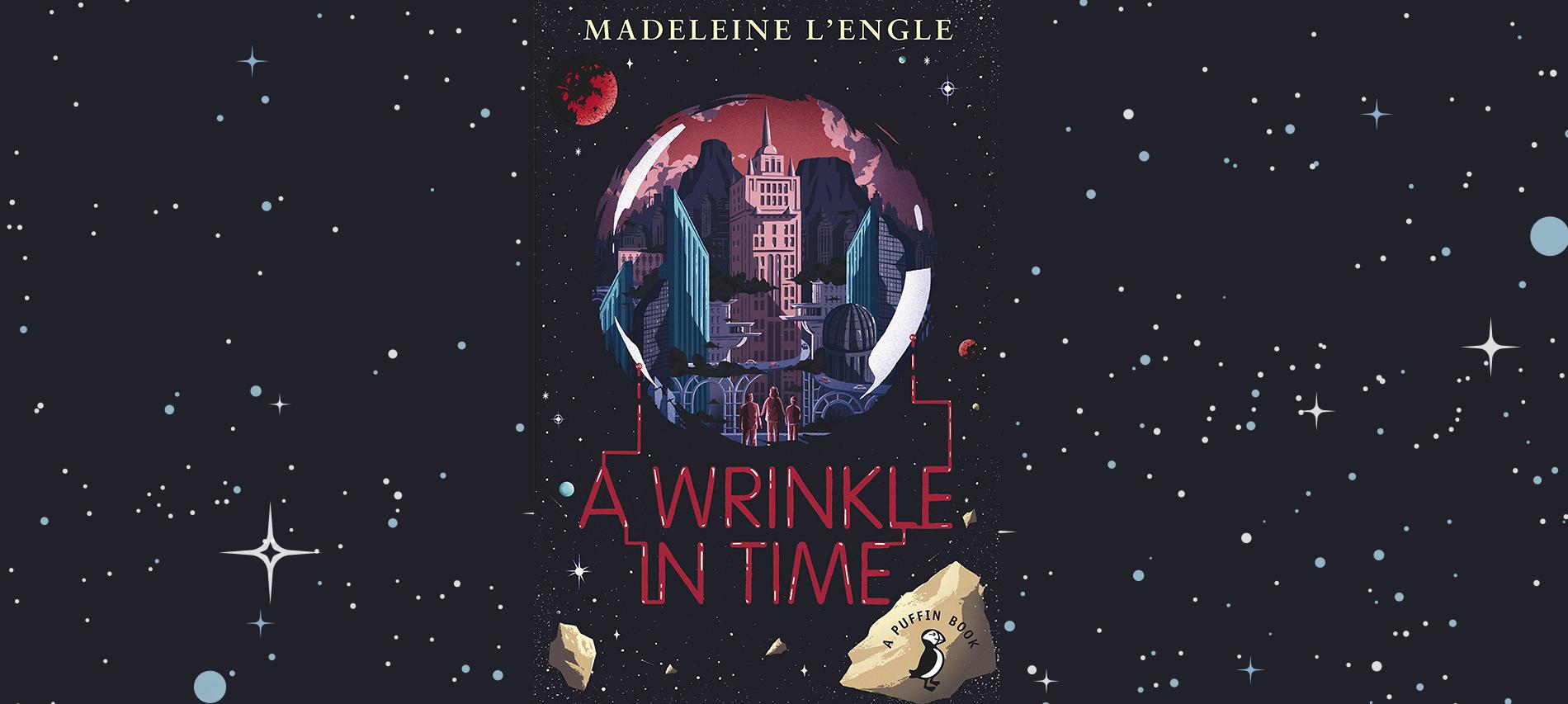
Madeleine L’Engle (1918–2007) was born in New York City and attended Smith College. She wrote more than 60 books, the most famous of which is A Wrinkle In Time(1962), winner of the Newbery Award in 1963. A Wrinkle in Time, is the story of the adventures in space and time of Meg, Charles Wallace, and Calvin O’Keefe (athlete, student, and one of the most popular boys in high school). They are in search of Meg’s father, a scientist who disappeared while engaged in secret work for the government on the tesseract problem. This book is soon to be a movie from Disney, directed by Ava DuVernay, starring Storm Reid, Oprah Winfrey, Reese Witherspoon and Mindy Kaling.
In this blog, we get to know the chief protagonists: Meg and Charles.


Defining Love 'When Only Love Remains'

From one of the most famous writers of India comes another novel that will make the young adults of India fall in love all over again. The novel, ‘When Only Love Remains’ by Durjoy Datta is bound to make many readers reach out for tissues. The main characters of the novel are Avanti, who is a flight attendant and Devvrat who is a rising music sensation and when they do meet, they are pulled passionately towards each other. What follows is a ride of love and fate.
Here are 7 quotes from Datta’s book, When Only Love Remains, that shed a new light on how we define love.


Try Something Different; June Reads for you

With the new month comes a number of new books across various genres. How about you leave the comfort of your favorite subject and try something new? From politics to mythology, business, love and fun fiction, we have a range of options for you!
Here is the list of books to look out for this June.
Goodbye Freddie Mercury

Nadia Akbar’s audacious debut has all the makings of a cult novel-parties, drugs, mysteries, love triangles, political intrigue and power struggles-but its lush, sexy writing has the assuredness and precision of the most acute style of our time. Told in alternating voices and brimming with sharp observation, Goodbye Freddie Mercury hits the rocks and trails atwist.
For Reasons of State: Delhi Under Emergency

In For Reasons of State, two staff reporters at the Patriot have supplied first-hand evidence of the ruthlessness with which people’s homes were torn down and the impossible resettlement schemes introduced. Part reportage and part human stories, this definitive volume evokes the life and times of the Emergency and how it unfolded, and remains perennially relevant.
Kannur: Inside India’s Bloodiest Revenge Politics

Kannur, a sleepy coastal district in the scenic south Indian state of Kerala, has metamorphosed into a hotbed of political bloodshed in the past few decades. Even as India heaves into the age of technology and economic growth, the town has been making it to the national news for horrific crimes and brutal murders with sickening regularity. Ullekh’s investigations and interviews reveal a bigger game at work involving players who will stop at nothing to win.
Shekhar: A Life

On the night before he is to be hanged as a political prisoner, Shekhar finds himself drawn into a vortex of scattered memories–flashes of childhood angst and youthful love amidst days of high idealism and constant struggle against the British Raj. Enveloped by his past and wracked by a tumult of emotions, he muses on the philosophical questions that have consumed him and the ideological fervour that has led him to his inevitable fate. And as the appointed hour approaches, he must reconcile himself with who he has become and what he truly stands for.
Prison Days and Other Poems

Agyeya was jailed as a revolutionary by the British authorities in the early 1930s-an experience that indelibly shaped his literary output. The verses in this collection vividly conjure the horror and tedium of imprisonment: the sound of iron gates clanging shut and the shadows cast by the bars of a cell. But Agyeya’s vision never descends into bleakness.
Requiem in Raga Janki

Based on the real-life story of Hindustani singer Janki Bai Ilahabadi (1880-1934), Requiem in Raga Janki is the beautifully rendered tale of one of India’s unknown gems. Moving from Hindustani classical music’s earliest times to the age of the gramophone, from Tansen’s mysticism to Hassu Khan’s stringent opposition of recordings, this is a novel that brings to life a golden era of music through the eyes of a gifted performer.
Familiar Strangers

Priya and Chirag are like several other modern couples, living life at breakneck speed, unknowingly stuck in the rut of a marriage that is obviously dying, if not already dead. But things start to change when Priya’s position in Chirag’s life is threatened by his past-his ex-girlfriend, who returns when they least expect it. A third person’s entry into their marriage awakens emotions that have been dormant for too long. But is it too late? Is the damage beyond repair?
Little Things

You don’t need big things to happen. A little love, a little togetherness and a little happiness are all you need! Unpretentious and honest, this book offers a peek into the life of a young couple who knows how to find meaning in the ‘little things’. Adapted from Dice Media’s immensely popular web series by the same name, Little Things is both delightful and entertaining.
Games Customers Play – What they don’t tell you about buyer-seller relationships

Business has been an endless series of games played by buyers and sellers-with one difference. Both sides could win at the same time. In Games Customers Play, Ramesh Dorairaj shows you how to spot such games and change the rules to your advantage. So that it doesn’t matter what the deal is, you will always win!
The Two Minute Revolution: The Art of Constantly Creating Value in Business

Unlike usual business books, The Two-Minute Revolution provokes you to think big-about innovation as well as excellence in on-the-ground execution. Insightful and packed with fascinating examples-from creating and launching Maggi Noodles to spearheading the highly effective Jaago Re campaign for Tata Tea-this book suggests tried and trusted strategies for building extraordinary brands.
Storywallah

In 2011, the screenwriter, lyricist and journalist Neelesh Misra started mentoring a handpicked group of writers called the Mandali. These were men and women of all ages, backgrounds and dispositions. Translated for the first time in English, this collection represents the Mandali at the height of its powers. These are fresh, untamed voices aided and abetted by a master storyteller.
The Most Dangerous Place: A History of the United States in South Asia

The definitive history of US involvement in South Asia, The Most Dangerous Place presents a gripping account of America’s political and strategic, economic and cultural presence in the region. By illuminating the patterns of the past, this sweeping history also throws light on the challenges of the future.
Me Against the Mumbai Underworld

Me against the Mumbai Underworld is the story of Isaque Bagwan, three-time recipient of the President’s Police Medal for Gallantry and a small-town boy who pursued his big-city dreams and ambitions as an upright police officer. His life, which has captured the imagination of many writers and filmmakers, is presented here with all its gut-wrenching details.

Lessons for your children this World Environment Day from the world of books

It’s never too early to start teaching your children about protecting the environment! All habits start young and it’s a good idea to teach children healthy habits from an early age. And what better way than through books?
This world environment day, we have put together a list of books to help your child become more aware of the environment, the various threats to it and different ways to protect it.
Take a look!
Ambushed

Gadget geek Tara (aka the Wii Wonder at school) braces herself for the dullest summer ever when her banker-turned-photographer father whisks her off to a sleepy tiger reserve in the Himalayan foothills, where Nothing Ever Happens. She couldn’t have been more wrong. A stroll through the woods sends Tara on an adventure of a lifetime, as she stumbles upon an international gang of poachers. In her debut novel, Nayanika Mahtani tackles the glaring issue of tiger poaching, while spinning a compelling story about man versus nature.
Wild in the Backyard

Wilderness and wildlife aren’t just confined to the forests; there is a whole lot of wild in our own backyards! Some of these critters are awake with you in the day. Others wake up when you go to bed…
Discover the hunters and the hunted, the diggers and the tunnellers, the raptors and the roaches, roaming around under our very noses.
The Wild Pack

Hamlet, a spirited young wolf, escapes the zoo to search for the Wild Pack—a band of animals living in abandoned rail tunnels and caves under the city. They have only one goal: to be free once again. But instead of the bold animals that he was expecting to encounter, Hamlet finds a scraggy, ragtag bunch. Will he be able to motivate the animals to help him rescue his friend, the gorilla, from the zoo?
Paradise Flycatcher

The Rose Garden’s beloved squirrel, Shikar-Snowdrop to young Mitalee-has vanished without a trace. No one can find him! Last seen in the company of a paradise flycatcher-a stunning bird with a long white tail-he has left no other trail. So, to save their friend, the loyal bird gang must fly to distant forests to track down the glamorous creature, who might just be able to help.
Lori’s Magical Mystery

When Lori, a curious and wide-eyed slender loris, spies a bewildering cat-like figure in the fading light of the evening, she instantly becomes obsessed with finding out what it is. So she teams up with her friend Don Wrongo, the crafty racket-tailed drongo, to look for the elusive animal. Packed with eccentric creatures and heart-stopping turns, Lori’s great big romp is a little look at friendship and self-discovery—and the rush of adventure.

Things You Didn’t Know About K.M. Munshi

K.M. Munshi, the author of The Lord and Master of Gujarat, was a freedom fighter, politician, lawyer and the founder of Bharatiya Vidya Bhavan. He wrote numerous novels, dramas and non-fiction works in Gujarati and several works in English.
He joined the Swaraj party briefly but returned to Indian National Congress at the time of the launch of Salt Satyagraha at Gandhi’s behest.
Here are seven more things you didn’t know about him.


The adventures of Arjun Arora by Ankush Saikia

For all of us who are fans of Ankush Saikia’s work are familiar with the famed private detective, Arjun Arora. Arjun Arora, appearing again in Saika’s new book More Bodies Will Fall has had an interesting journey to where he is today. The author and creator of Arjun Arora gives us a glimpse into his own life and the inspiration that gave birth and character to our very own; Arjun Arora. Let’s take a look!
———————————
I lived in Delhi for 14 years, from 1997 till 2011. I first reached Delhi by train—a two-day journey in sleeper class on the North East Express—and 14 years later departed by plane—by then air travel had been affordable for many years. 1997 was the year the first PVR cinema opened in Delhi (in Saket), and I still remember travelling by Blue line buses and waiting at the AIIMS crossing (long since replaced by a cloverleaf flyover, with strange steel installations at the bottom). Some of these details I was to later give Arjun Arora in his reminiscences.
I went from student to working professional in that time, from living with roommates to living on my own, and published a slim novel about a decade after landing in the capital. As I got to know the city better, roaming around it on my motorcycle (a second-hand Yamaha RX100 at first), I had this idea of writing something dark set in the city, something that captured the violence inherent in the city, that looked at its various layers of inhabitants: the businessmen, the fixers, the politicians, the bureaucrats, the call-centre employees, the migrant workers, the middle-class colonies. It was just recently, while reading Capital by Rana Dasgupta, that I saw the non-fictional equivalent, so to speak, of what I was trying to do.
But I couldn’t do anything while in Delhi. My desk job which tired me out, my lack of experience in writing my own books—I was blocked. I do remember an idea for a detective I had, an ex-army officer who loses a foot (or was it a hand?) in a grenade explosion in Kashmir, and who turns to investigating as a career after quitting the army. But that was all it remained as, an idea. It was only after returning to the North East, to Shillong, and having written a noir thriller set in this hill town (The Girl From Nongrim Hills, Penguin India 2013) that I felt ready to write that Delhi book.
I would have liked to do a book with a policeman in it. I had a little experience of police stations and policemen during my 14 years in the city, but not so much that I could start writing a book on them. I would have had to do research, but I was stuck in Shillong, where my wife had just had a baby boy. So, I made the protagonist a detective, with only the knowledge that there were detectives in Delhi, people who operated in their own ways, as there was no legislation covering them. The detective might have initially been Bunty Chawla, Arora’s college friend, and someone totally opposite to the brooding detective. But I soon realised I needed someone with a haunted past to make the darkness of Delhi work in the book.
As for that bit of Arora’s past as a mercenary in Iraq where he narrowly escapes being beheaded—I had before leaving Delhi written a somewhat fantastical thriller involving an American mercenary and two beautiful Indian–Pakistani twin sisters, a sort of a cross between James Hadley Chase and An Evening in Paris. The book was never published, but I took the American’s experiences in the opening chapter in Iraq and reworked them a bit for Arora. He also had, typically, a divorced wife, besides a teenage daughter, and a flat in Delhi’s Chittaranjan Park—where I had myself lived in a barsati room for about 5 years. The plotting didn’t come easily at first, but I soon got the hang of it.
As for the topics, in Dead Meat I made use of the real-life tandoor murder case, a corruption case involving a railways minister, and match-fixing in T20 cricket, along with the character of a psychopathic butcher. In the next, Remember Death, I visited the Mumbai film industry of the 1960s, especially the interesting back-stories of some of the actresses of that era, and threw a psychopathic god man into the mix. Arjun Arora narrowly escapes with his life in both books, and in the third book, More Bodies Will Fall, follows the trail of a girl’s murder to North East India.
I knew from the beginning that I wanted Arora to get back to the North East—where he had grown up, and later served in the army—to solve a crime: the murder of a girl from the North East in Delhi was in my mind right from the start. It took time to do the research. I visited Delhi twice after I had left the city, and the first time I was there I looked up a couple of girls from the North East working in the clothing stores in Hauz Khas Village (besides meeting a couple of actual detectives), and the second time talked to a SHO and an inspector in a Delhi police station. But there was more to be done—several trips to Nagaland and Manipur, where I did a couple of feature stories to help with my research.
And it was on a trip to the Mizoram–Myanmar border in Champhai district that the last remaining link of the story, the burgeoning drug trade across the open border, fell into place. More Bodies Will Fall took a while to write, and then edit with my publishers, but it’s been well received so far by readers and critics, and for me is hugely satisfying in that all the research paid off in the end. Where does Arora go from here? We’ll have to see.
I personally feel I need to take a break from the character. There were elements of me in the character of the detective, and as I wrote the three books over a period of 5 years, I sometimes felt that other elements from the character were being absorbed into me, altering my personality almost, somewhat like an actor living with a role for too long. So we’ll let Arora be for now: tomorrow is another day.

Ha Ha Hu Hu: Reasons to Make This Your Next Read
Viswanadha Satyanarayana (1895–1976) is regarded as one of the most important writers and poets of the Telugu canon. He was the first Telugu writer to win the Jnanpith Award in 1971 and was also awarded the Padma Bhushan.
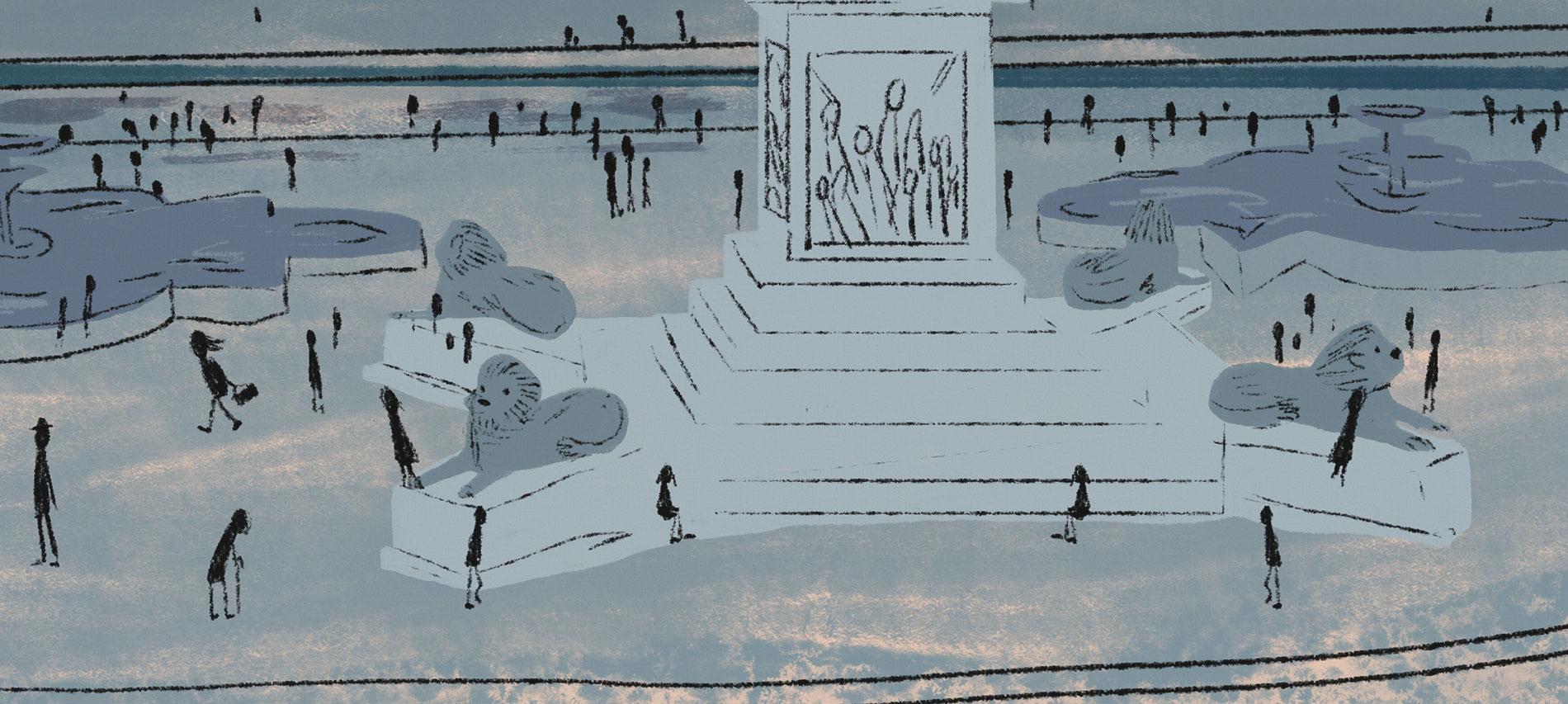
Ha Ha Hu Hu; A Horse-Headed God in Trafalgar Square contains two novellas by him, Ha Ha Hu Hu: A Horse-Headed God in Trafalgar Square and Vishnu Sharma Learns English and is translated by Velcheru Narayana Rao.
Ha Ha Hu Hu tells the delightful tale of an extraordinary creature that mysteriously appears in London one fine morning, causing considerable excitement and consternation among the city’s denizens.
In the hilarious satire Vishnu Sharma Learns English, a Telugu lecturer is visited in a dream by the medieval poet Tikanna and the ancient scholar Vishnu Sharma with an unusual request: they want him to teach them English!
Here are a few reasons to make this your next read.


