



When a drug bust turns into a bloodbath, it’s up to inspector Macbeth and his team to clean up the mess. He’s rewarded for his success. Power. Money. Respect. They’re all within reach. Plagued by hallucinations and paranoia, Macbeth starts to unravel. He’s convinced he won’t get what is rightfully his.
Here is an excerpt from Jo Nesbo’s new thriller, Macbeth
—————————————————————————————————————————————————–
The man hadn’t shown himself for months, but only one person owned that helmet and the red Indian Chief motorbike. Rumour had it the bike was one of fifty the New York Police Department had manufactured in total secrecy in 1955. The steel of the curved scabbard attached to its side shone.
Sweno.
Some claimed he was dead, others that he had fled the country, that he had changed his identity, cut off his blond plaits and was sitting on a terrazza in Argentina enjoying his old age and pencil-thin cigarillos.
But here he was. The leader of the gang and the cop-killer who, along with his sergeant, had started up the Norse Riders some time after the Second World War. They had picked rootless young men, most of them from dilapidated factory-worker houses along the sewage-fouled river, and trained them, disciplined them, brainwashed them until they were an army of fearless soldiers Sweno could use for his own purposes. To gain control of the town, to monopolise the growing dope market. And for a while it had looked as if Sweno would succeed, certainly Kenneth and police HQ hadn’t stopped him; rather the opposite, Sweno had bought in all the help he needed. It was the competition. Hecate’s home-made dope, brew, was much better, cheaper and always readily available on the market. But if the anonymous tip-off Duff had received was right, this consignment was big enough to solve the Norse Riders’ supply problems for some time. Duff had hoped, but not quite believed, what he read in the brief typewritten lines addressed to him was true. It was simply too much of a gift horse. The sort of gift that – if handled correctly – could send the head of the Narco Unit further up the ladder. Chief Commissioner Duncan still hadn’t filled all the important positions at police HQ with his own people. There was, for example, the Gang Unit, where Kenneth’s old rogue Inspector Cawdor had managed to hang on to his seat as they still had no concrete evidence of corruption, but that could only be a question of time. And Duff was one of Duncan’s men. When there were signs that Duncan might be appointed chief commissioner Duff had rung him in Capitol and clearly, if somewhat pompously, stated that if the council didn’t make Duncan the new commissioner, and chose one of Kenneth’s henchmen instead, Duff would resign. It was not beyond the bounds of possibility that Duncan had suspected a personal motive behind this unconditional declaration of loyalty, but so what? Duff had a genuine desire to support Duncan’s plan for an honest police force that primarily served the people, he really did. But he also wanted an office at HQ as close to heaven as possible. Who wouldn’t? And he wanted to cut off the head of the man out there.
Sweno.
He was the means and the end.
Duff looked at his watch. The time tallied with what was in the letter, to the minute. He rested the tips of his fingers on the inside of his wrist. To feel his pulse. He was no longer hoping, he was about to become a believer.
‘Are there many of them, Duff?’ a voice whispered.
‘More than enough for great honour, Seyton. And one of them’s so big, when he falls, it’ll be heard all over the country.’
Duff cleaned the condensation off the window. Ten nervous, sweaty police officers in a small room. Men who didn’t usually get this type of assignment. As head of the Narco Unit it was Duff alone who had taken the decision not to show the letter to other officers; he was using only men from his unit for this raid. The tradition of corruption and leaks was too long for him to risk it. At least that is what he would tell Duncan if asked. But there wouldn’t be much cavilling. Not if they could seize the drugs and catch thirteen Norse Riders red-handed.
Thirteen, yes. Not fourteen. One of them would be left lying on the battlefield. If the chance came along.
—————————————————————————————————————————————————-

Meet Judy Moody, The Queen of Moods!

Judy Moody is a third grader with plenty of attitude and a mood for every occasion. This delightful series, created by Megan McDonald, is loaded with laughs and moments of wisdom as readers follow Judy through her hilarious adventures.
The fabulous Judy Moody will delight any child who’s known a bad mood or a bad day—and managed to laugh and learn along the way!
————————————


Rajesh Khanna: Enter into the Life of India’s First Superstar
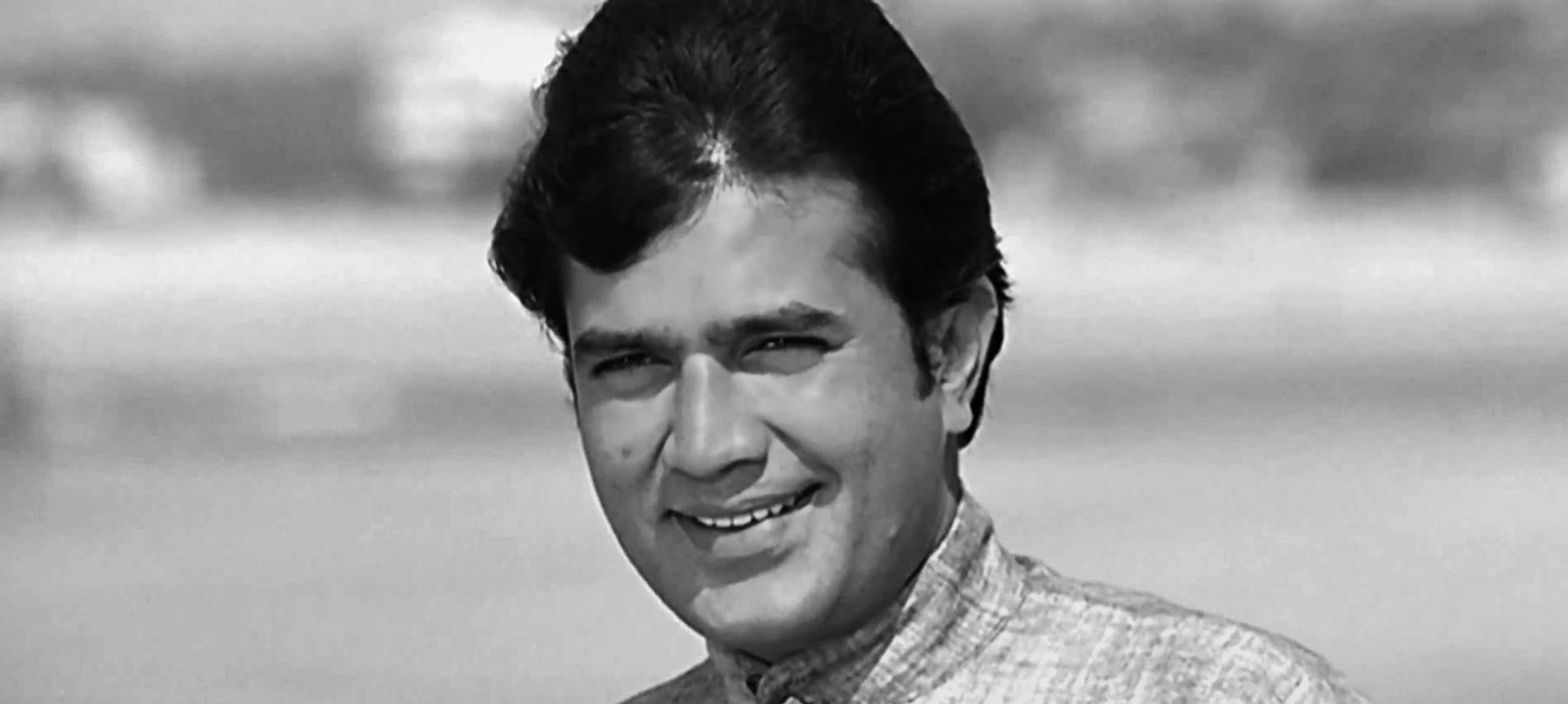
In the 1970s, Rajesh Khanna achieved the kind of fame that no film star had ever experienced before-or has since. The actor is hailed as India’s first superstar after 15 consecutive solo superhits between 1969 and 1972.
Rajesh Khanna: The Untold Story of India’s First Superstar is a riveting biography by award winning journalist Yasser Usman in which he examines Rajesh Khanna’s dramatic, colourful life in its entirety. What emerges is a tantalizingly written, meticulously researched chronicle of a fascinating and mercurial man-one who was both loved and feared by those closest to him. It is a story that encapsulates the glittering, seductive, cut-throat world of Bollywood at its best and its worst.
In it he includes little-known facts about his childhood – back when he was Jatin Khanna and years before he became the superstar Rajesh Khanna. Here are five things you should know about little Jatin Khanna.


—————————————————————————————————————————————————

7 Quotes That Show Different Constraints Shashi Deshpande’s Protagonists Had To Overcome
Shashi Deshpande is the author of eleven novels, two novellas, and four books for children. Her short stories have gone into a number of collections and various anthologies, and her essays have been collected in a book, Writing from the Margin. Deshpande received the Sahitya Akademi Award for her novel That Long Silence.
Here are 7 quotes from Deshpande’s books- That Long Silence and The Dark Holds No Terrors that highlight the different struggles her protagonists experience:


Know the Creator of the Tintin series, Hergé

Hergé, most popularly known as the creator of the Tintin series is regarded as one of the most important and influential comic creators in history. Tintin’s 23 album titles have been translated into every language, and is one of the most successful European comic magazines of all time. Other series by him are Quick et Flupke and Jo, Zette et Jocko‘.
The Tintin series first appeared in French on 10 January 1929 in Le Petit Vingtième (The Little Twentieth), a youth supplement to the Belgian newspaper Le Vingtième Siècle (The Twentieth Century). Soon the series saw themselves as serialized strips published in Belgium’s leading newspaper and eventually spun into a successful Tintin magazine.
Here are six facts about the illustrator of this comic, Hergé.
__________________________________________________________________________


__________________________________________________________________________

5 Things Every Bengali Intellectual Can Be Heard Saying
Sanjeev Sanyal, bestselling author of Land of the Seven Rivers, is currently the principal economic adviser to the Indian government. A Rhodes Scholar and an Eisenhower fellow, Sanjeev was named Young Global Leader for 2010 by the World Economic Forum.
Sanjeev’s latest book, Life Over Two Beers and other stories, promises to take readers on an entertaining and surprising ride through an India you thought you knew, with a collection of unusual stories.
We discovered 5 things every Bengali intellectual can be heard saying from the short story titled, “The Intellectuals”.
The spot everyone knows in the city:

Intellectuals in Calcutta are:

The Cultural and Intellectual Capital of India:

Intellectually always one step ahead:

Cricket is just a spectacle:


Why the Liberal Arts Will Rule the Digital World

The terms ‘fuzzy’ and ‘techie’ are used to respectively describe those students of the humanities and social sciences, and those students of the engineering or hard sciences at Stanford University.
Having met with thousands of companies, Scott Hartley through his book, The Fuzzy and the Techie wants to share with India that no matter what you’ve studied, there is a very real, and a very relevant, role for you to play in tomorrow’s tech economy. Our technology ought to provide us with great hope rather than fear, and we require policymakers, educators, parents and students to recognize this false divide between becoming technically literate, and building on our most important skills as humans.
Here are some points he shares, to stress on the importance of the fuzzies.


Techies are evolving into becoming Fuzzies’ vital partners, and they too can and must drive the process of bridge-building between the fuzzy and the techie. Not only are techies crucial to this process, they will also surely continue to push forward with exciting technological innovations that haven’t yet been conceived.

Writing Memories of Fire – Author Speaks!
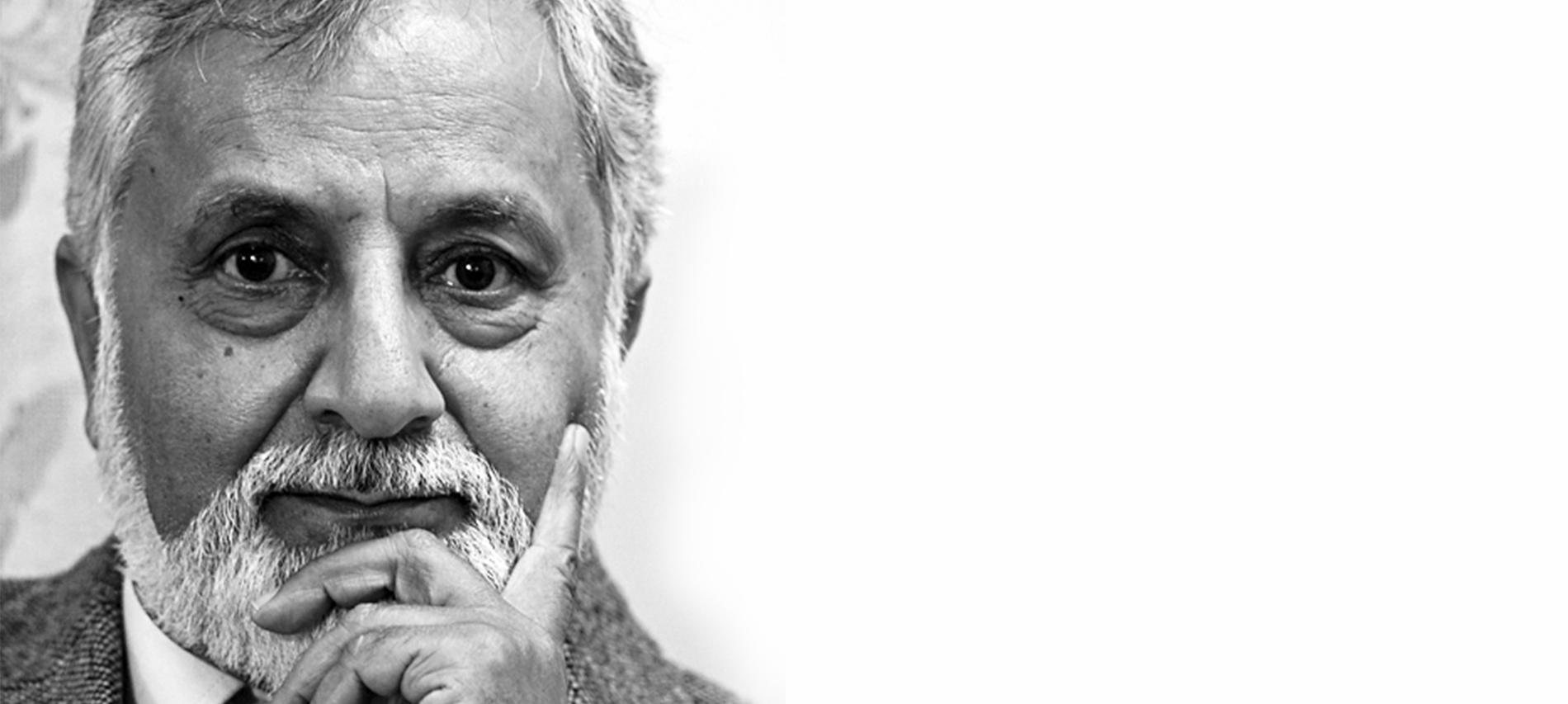
Memories of Fire by Ashok Chopra is the story of five school friends who meet after 54 years and look back at their very different lives. The book chronicles post Partition Punjab and the all-pervasive sense of neighbourliness that seems to have vanished—or has it?
Let’s read a few words from the author as he reminisces about the ways of the past.
______________________________________________________________________
A few days back, I got an unexpected phone call in the middle of a relaxed Sunday afternoon. “Hi, Ashok. Are you home? We were just around the corner from your house. Wanted to drop off our son’s wedding card. See you in 20 minutes!”
Oh gosh. Nooo!
Firstly, it is Sunday—God’s day. Even He rests today. Secondly, who gives only a 20-minute warning these days? I need, at least, a day’s notice to prepare myself for company. Thirdly, didn’t their son already get married some years ago? Oh yes, I did hear something through the grapevine. The wife had turned out to be… opinionated. How dare she, right?
Anyway, who am I to pry? (But if you ask me, good for her.)
I reluctantly put my book down and got up from my comfortable chair. One swift look around the house and I determined that not much could be achieved in 20 minutes, so, meh. I then made my way to the kitchen to check if I had the basic afternoon tea paraphernalia.
Biscuits – check
Tea – check
Ginger – check
Cardamom – check
Milk – check
Sugar – oops
Uh-oh. I did remember to write it down in my to-buy list. But I didn’t remember to actually buy some. Oh, well. But what can be done now? I live in Gurgaon, where there are no kirana shops close by that one can walk to. There are only high-end grocery stores in malls where one must drive to. Even if one needs to buy a ten-rupee Maggi packet. And although I had heard of websites that do 60-minute grocery deliveries, I hadn’t yet heard of technology that made things appear out of thin air at will. How unfortunate.
Maybe they won’t even drink anything. Usually, these card-giving drop-ins are too short a visit anyway. But damn it, now I felt like having tea. Why don’t I just borrow a cup from my neighbour? I remember, as a child, my mother would send us countless times to our neighbour’s to borrow sometimes this and
on other days that. And the neighbour too would be doing the same regularly.
‘Uff, ghee khatam hai. Chal fatafat saath wali aunty se katori le aa.’
‘Yeh saare biscuit kaun kha gaya? Aunty se ek packet pakad la.’
‘Achha sun, woh aunty ka na gas cylinder khatam ho gaya hai. Humara extra wala de aa.’
If I was being paid a million dollars, I still wouldn’t be able to recount the million times this give-and-take took place. In fact, not just in terms of giving and taking, the entire neighbourhood lived as one big close-knit happy family! We knew exactly who lived where; how many people lived in each house;
all their names; their hobbies; their secrets. Sometimes, we even knew how many times Khan Uncle had burped during the day (only because he loved telling this thrilling piece of information to anyone who would listen). Aunties and neighbourhood uncles would leave their children in our homes for a few nights if they had to go out of town in an emergency.
But today, I don’t even know my neighbour’s name. Now, you know as well as me that it isn’t just my ignorant self; this is true for most people. Everyone is so busy trying to be self-sufficient, they’ve forgotten how to build relationships. They are so curious to know what’s happening in the life of a friend living 10,000 miles away that they simply ignore the people sitting right beside them. There are
many instances that youngsters don’t even know their own cousins. They have more ‘friends’ on Facebook than the ones they could actually have a real conversation with.
Wait a minute, didn’t this neighbour in question also send me a friendly request last month? I remember being somewhere else at the time I received it. There was loud music, too many people … ah, yes, of course. My school reunion! Oh, how I’d been looking forward to that evening. I had spent the entire train journey to Shimla in hopeful anticipation. Though I knew what my friends were up to through their pictures on social media, I wanted to hear the real stories of their lives and everything in them. But it sure turned out to be disappointing. A BIG waste of my time. It was obvious phones had replaced actual dialogue: ‘So, my grandkids got a sweet puppy recently. Let me show you a video of him.’
‘Ashok, I know you’re into organic farming and I thought of calling you just last month to know your tips and tricks. But, guess what, I simply googled it and voila. Now, I have a garden full of basil, cherry tomatoes, green chillies…’
I am not against progress. But people are simply losing the art of making a connect. Not the WiFikind, but a personal one. WhatsApp may be ‘instant conversation in a few words’ but the art of letter-writing has disappeared. Maybe they will find a way to reinvent it. Or maybe they will…
DING DONG.
And before I could finish my thoughts on the ever-changing world, or find the courage to ask my neighbour for some sugar, I was inviting my friends in and asking them if they’d like some tea.
‘Yes, of course. But please no sugar for us. We’ve been off it since a while. It is so bad for your health, you see. There have been reports all over …’
It all always does work out in the end–in the past as well as now.
Ashok Chopra
______________________________________________________________________

The Fuzzy and the Techie: Why the Liberal Arts Will Rule the Digital World, An Excerpt

Scott Hartley is a venture capitalist and startup advisor who has served as a Presidential Innovation Fellow at the White House, a partner at Mohr Davidow Ventures, and a venture partner at Metamorphic Ventures. In his book, The Fuzzy and the Techie reveals the counterintuitive reality of business today: it’s actually the fuzzies – not the techies – who are playing the key roles in developing the most creative and successful new business ideas. They are often the ones who understand the life issues that need solving and offer the best approaches for doing so. It is they who are bringing context to code, and ethics to algorithms. They also bring the management and communication skills, the soft skills that are so vital to spurring growth.
Here’s the introduction by the author.
The terms ‘fuzzy’ and ‘techie’ are used to respectively describe those students of the humanities and social sciences, and those students of the engineering or hard sciences at Stanford University. Stanford is what’s known as a ‘liberal arts’ university not because it focuses on subjects that are necessarily liberal, or artistic, but because each student is required to study a broad set of subjects prior to specialization. The term liberal arts comes from the Latin, artes liberales, and denotes disciplines such as music, geometry, and philosophy that can together stretch the mind in different directions and, in that process, make it free. Each of these subjects is meant to broaden the student, force them to think critically, to debate, and to grapple with ambiguities inherent in subjects like philosophy. They are also meant to help the student cultivate empathy for others in subjects such as literature, which forces one to view the world through the eyes of another human being. In short, they are less focused on specific job preparation than they are about the cultivation of a well-rounded human being. But at Stanford, beneath these light-hearted appellations of ‘fuzzies’ and ‘techies’ also rest some charged opinions on degree equality, vocational application, and the role of education. Not surprisingly, these are opinions that have bubbled well beyond the vast acreage of Stanford’s palm-fringed quads and golden hillsides, into Silicon Valley. In fact, these questions of degree equality, automation and relevant skill sets in tomorrow’s technologyled economy are ones we face in India and across the world.
This decades-old debate to separate liberal arts majors from the students who write code and develop software has come to represent a modern incarnation of physicist and novelist Charles Perry Snow’s Two Culturesa false dichotomy between those who are versed in the classical liberal arts, and those with the requisite vocational skills to succeed in tomorrow’s technology-led economy. In India, from the earliest entrance exam standards that determine whether or not students move toward or away from engineering, we have created policy and education pathways that separate rather than foster an understanding between these ‘two cultures.’ Whether a student sits for the Joint Entrance Exam (JEE) for admission to an Indian Institute of Technology (IIT), for the Birla Institute of Technology and Science Admission Test (BITSAT), the VIT Engineering Entrance Exam for a coveted engineering seat at Vellore Institute of Technology or for a regional common entrance exam in Maharashtra, Karnataka, or West Bengal, students are quickly funneled down very specific predetermined paths, and are perhaps less able to explore their own passions or values. And this is not specific or unique to India, but endemic across many cultures and societies.
This book not only seeks to reframe this ongoing debate, by taking into account the very real need for science, technology, engineering and math, so-called ‘STEM’ majors, but also acknowledges their faux opposition to the liberal arts. Indeed, as we evolve our technology to make it ever more accessible and democratic, and as it becomes ever more ubiquitous, the timeless questions of the liberal arts have become essential requirements of our new technological instruments. While those fabled graduates of the Indian Institutes of Technology, or of the great engineering academies such as Manipal, develop critical skills and retain steadfast importance in laying the technological infrastructure, most successful start-ups require great industry context, psychology in understanding user needs and wants, intuitive design, and adept communication and collaboration skills. These are the very skill sets our graduates in literature, philosophy, and the social sciences provide. These are not separate or add-on skills, but the imperative components alongside any technological literacy.
As a fuzzy having grown up in a techie world, this false dichotomy has been something I observed in Palo Alto, California, where Steve Jobs donated the Apple computers we used in high school. This was something I observed furthermore as a Stanford student; as an employee of Google, where I spent over a year launching two teams in Hyderabad and Gurugram, India, as an employee of Facebook, and then as a venture capitalist at a $2-billion fund on Sand Hill Road, California. Peering behind the veil of our greatest technology, it is often our greatest humanity that makes it whole. Having met with thousands of companies, the story I want to share with India is that no matter what you’ve studied, there is a very real, and a very relevant, role for you to play in tomorrow’s tech economy. Our technology ought to provide us with great hope rather than fear, and we require policymakers, educators, parents and students to recognize this false divide between becoming technically literate, and building on our most important skills as humans.
Our greatest human problems require that we blend an appreciation for technology with a continued respect for those who study the human conditions, for they are the ones who teach us how to apply our technology, and to what ends it must actually be purposed. We ought to consider the true value of the liberal arts as we continue to embrace and pioneer our new technological tools. As we move forward, we require the timeless and the timely, the great poets and literature of Bengal and the glass-towers of Bengaluru.
Scott Hartley
Spring, 201
The Lord and Master of Gujarat – An Excerpt
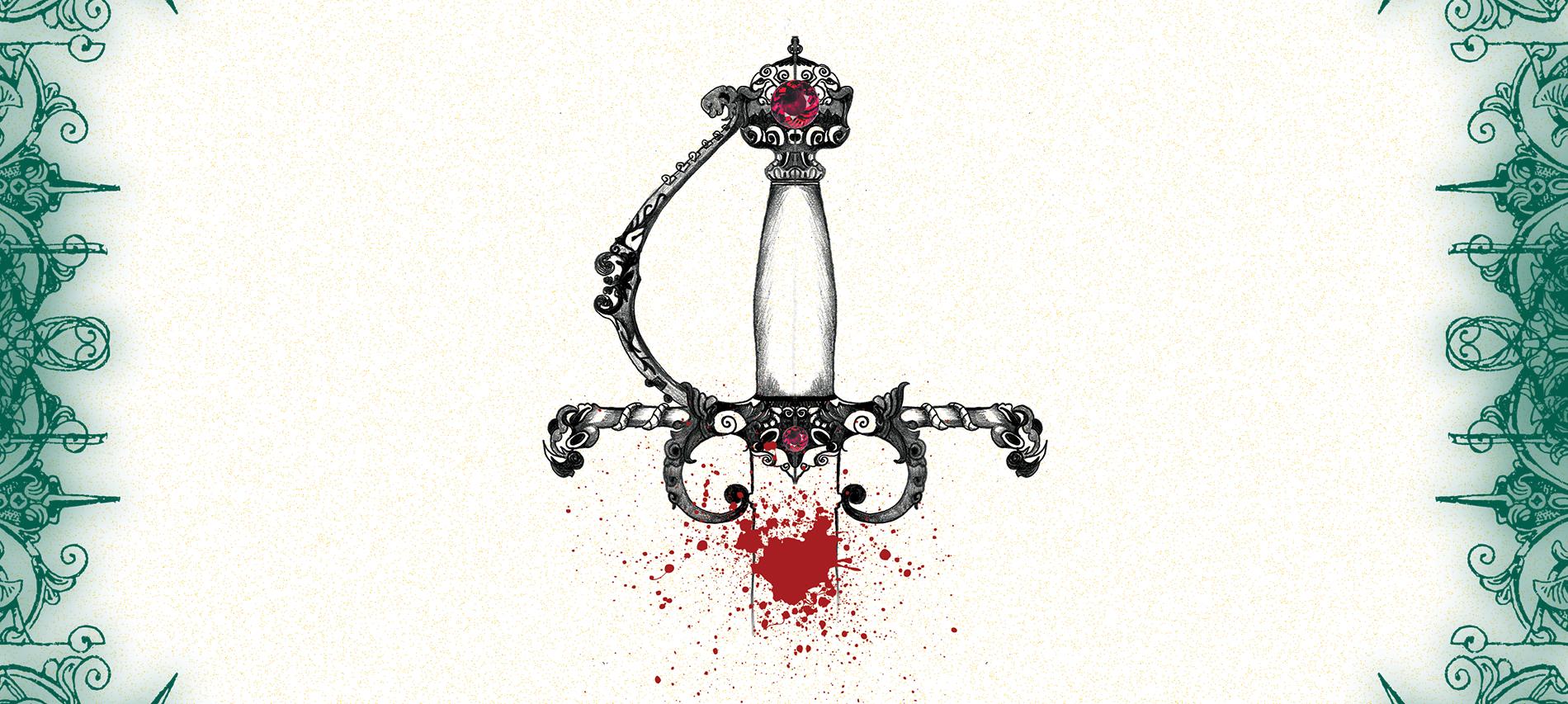
The Lord and Master of Gujarat is set four years after The Glory of Patan, and unfolds at dizzying speed, abounding in conspiracies, heroism and romance. In the book, the kingdom of Patan is under attack from the army of Avanti. People have fled their villages to seek refuge in the city. Amidst the mounting panic, the arrival of Kaak, a young warrior from Laat, sets in motion a frantic chain of events.
Arguably K.M. Munshi’s best-known work, The Lord and Master of Gujarat deftly weaves state politics and battles with personal trials and tribulations into one glorious tapestry.
Here is an excerpt from the book:
_______________________________________________________________________
It was a freezing night in the winter of Samvat, 1154. The solemnly flowing waters of the Saraswati resounded fearfully in the stillness of the night. The moist breeze rising from the river made the atmosphere closer to the monsoon than to winter. It was a night when one would prefer to curl up at home next to one’s beloved. Yet, the bank across the city of Patan was occupied by about 400 to 500 people. Some tried to ward off the cold with bonfires; others slept or tried to sleep around the scattered fires. A few, not planning to sleep, sat curled up anxiously. In the darkness, the flickering of the flames cast eerie shadows and filled the night with dread. The whole scene appeared to evoke a gathering of ghouls.
Beside one of the bonfires, a young man sat half-reclined. His head rested on his shield, which lay on the ground. The style of his turban indicated that he belonged to Sorath. His sword lay near his face, covered with his sash. There was no sleep in his eyes. He sat staring at the fire, aiming an occasional woodchip and feeding the fire. He was alone. At a distance sat two men huddled against the tree. They were not talking to each other.
The young man appeared to be about twenty-five years old. His face was dark yet attractive. His eyes were large and forbidding. They sparkled with mischief every now and then.
His physique was strong and shapely. His attire, the ornaments on his wrists and arms, his earrings and the gold chain around his neck suggested that he was a man of means. He had the nonchalant air of an aristocratic warrior.
In a little while, the sound of a fast-approaching camel was heard, followed by the thud of a camel sitting down. Silence fell once again. The young man by the fire sat unperturbed. It appeared that there was nothing more important to him than throwing woodchips into the fire.
A man appeared from the direction of the sound. He was in a hurry and, seeing the young man, turned to him.
The new arrival appeared to be in his early twenties. He was well-armed—sword and dagger at his waist, a shield on his back and a large staff in his hand. He turned towards the young man and for a moment both looked at each other. With the exception of their turbans, their attires were similar, although the newcomer had hardly any ornaments. Both were tall, wellbuilt and attractive. Their eyes shone with a similar sparkle; their broad foreheads were adorned with similar sandalwood marks. Both appeared to be Gujarati warriors who had fought under the glorious Solankis in their conquest of Gujarat. Yet there was a lot that distinguished the two. Their personalities were clearly different. The newcomer was slightly taller, his eyes smaller and sharper, his body firm and lithe. On the other hand, the man who sat there had a rounder face. The flare of his nostrils and large eyes gave him a leonine appearance. He exuded courage and power. The newcomer’s sharp eyes, chiselled jawline and aquiline nose lent him the countenance of a bird of prey. He exuded concentration and caution. If the former looked fearless and calm, the latter looked farsighted and composed. Both were exemplars of characteristics associated only with men of character—one leonine, the other aquiline—one the king of the jungle, and the other the king of the sky.
______________________________________________________________________
