




Almost all men and women with access to newspapers would have heard of triple talaq. Not many, though, would have heard of khula, the woman’s inalienable right to divorce. Worse, even Muslim women seem unaware of this right.
Under khula, a woman has a right similar to that of a man to dissolve the marriage. What’s more, she has to specify no grounds for effecting the divorce. She has to furnish no proof of harassment or ill treatment. Something as simple as a dislike for her husband’s looks can be reason enough for khula to take place, as proven in Islamic history.
In Till Talaq Do Us Part, Ziya Us Salam explains that the women’s right to dissolve a marriage is well protected by the Muslim Personal Law (Shariat) Application Act, 1937, and the Dissolution of Muslim Marriage Act, 1938. They, in addition, enjoy at least five other ways of getting rid of incompatible, violent or slanderous husbands. The conditions for this cover everything from dowry demands to casting aspersions on the character of the wife, or simply the inability to fulfil marital obligations.
They are as follows:
___________________________________________________________________


 ___________________________________________________________________

Undercover Princess by Connie Glynn – An Excerpt

Connie Glynn has always loved writing and wrote her first story when she was 6 with her mum at a typewriter acting as the scribe. It was at university that Connie started her hugely successful YouTube channel Noodlerella (named after her favourite food and favourite Disney princess). Her book, Undercover Princess is about a fairy tale obsessed Lottie Pumpkin who starting at the infamous Rosewood Hall, where she was not expecting to share a room with the Crown Princess of Maradova, Ellie Wolf. Lottie is thrust into the real world of royalty – a world filled with secrets, intrigue and betrayal.
Let’s read an excerpt from the book:
————————————————
Princess Eleanor Prudence Wolfson, sole heir of King Alexander Wolfson and next in line for the throne of Maradova, did not live in one of these spaces, nor was she one of these people, but she was in desperate need of both.
‘I am going to this school!’ Eleanor slammed the brochure on the table with a loud thwack, causing the cups of breakfast tea to wobble on top of their saucers.
Alexander Wolfson didn’t even look up from his newspaper to reply.
‘No,’ he said blankly.
‘I am next in line for the Maravish throne. I think the teeny-tiny decision of which school I attend is something I am capable of managing myself.’
Alexander looked up at his wife, Queen Matilde, who was sitting across the table from him.
She shrugged. ‘She does have a point, Alex,’ she said amiably, delicately dropping a lump of sugar into her teacup and stirring it slowly while stifling a smile.
This was not the parental solidarity King Alexander had been hoping for.
‘See?’ said Eleanor. ‘Even Mum agrees with me.’
Alexander remained firmly fixated on his newspaper, feigning an image of complete composure. He took a sip of tea.
‘ Edwina –’ he gestured to their maid – ‘would you kindly take the empty plates to the kitchen, please?’
‘Of course, Your Majesty.’ Edwina expertly stacked the crumb-covered trays and exited the dining hall with a skilled smoothness, her feet barely making a sound on the oak flooring. The large double doors closed behind her, creaking softly as she eased them shut.
Once Alexander was sure she was a reasonable distance down the hall, and safely away from any domestic outbursts, he looked back down at his newspaper and said, ‘My answer is no.’
Eleanor let out an exasperated screech and stamped her foot. ‘You could at least look at the brochure!’ she snapped, snatching the newspaper from her father’s fingertips.
Alexander was forced to look up at his daughter.
Eleanor had always been a challenging child. She was anything but a typical princess; she would take fiery political arguments and sneaking out to loud, rowdy concerts over mild polite conversation any day, and more than anything she despised elaborate formal functions – or at least she assumed she did, having refused to ever attend one. But she was smart, she was confident and she was passionate – and for Alexander that was all far more important than any of the traditional values expected of her. Although occasionally he did wish she’d watch her language around her grandparents.
As much as he wanted Eleanor to be happy and live a life free of the commitments of royalty, the fact remained that she would be queen one day and would eventually need to accept that responsibility. He was determined to find a way to make his daughter realize she could enjoy her royal obligations; something he’d had to learn himself when he was younger.
——–
‘What on earth are you wearing?’ Ollie’s sarcastic tone drifted into Lottie’s bedroom. He stood leaning against the door frame, his arms crossed as he watched Lottie pack up the last items in her room.
‘Ollie!’ Lottie’s hand rushed to her chest in shock at the sudden appearance of her best friend. ‘How did you get up here? And how many times do I have to tell you to knock?’ Lottie was huffing slightly from trying to squish down her suitcases. Ollie was fourteen, the same age as Lottie, yet even though he was taller than her he’d retained his baby face, which reminded her of soft-serve ice cream on the beach and other happy memories.
‘I had to sneak past the wicked witch. Did you know her skin’s turned green finally?’ Ollie said with a devilish smile.
Lottie giggled, but she couldn’t ignore his comment. She looked down at her outfit, brushing down her dress self- consciously. ‘And what exactly is wrong with my outfit?’ she said indignantly.
Ollie laughed, grinning at her with his signature cheeky smile. Clumps of dog hair dotted his jeans, a permanent feature that he never seemed to care about.
‘Isn’t it a little too fancy for the first day of school?’
‘Too fancy?!’ Lottie couldn’t believe he’d suggest something so ridiculous. ‘Nothing is too fancy for Rosewood Hall. I need to fit in. I can’t have my clothes making me an outcast on the first day.’
Lottie began picking at a non-existent spot on the collar of her dress. ‘Most of the students probably have their clothes tailor-made out of gold or something.’
Ollie casually strolled into the room, taking a seat on Lottie’s bed. He pursed his lips as he glanced around the bedroom. Usually so alive with Lottie’s special brand of handmade quirkiness, it was now stripped bare, everything she owned crammed into two pink suitcases.
‘Well,’ Ollie began, reaching into his pocket, ‘if you can take a moment off from worrying about what other people think of you . . .’ He pulled out a crumpled envelope and a worn-out Polaroid that Lottie recognized from his bedroom wall. ‘These are for you.’
Lottie reached out for them, but Ollie whipped his hand back.
‘You can’t open the letter until you’re on the train.’
Lottie nodded with an exasperated smile and he slowly placed both gifts in her hand. It was a photograph she’d seen thousands of times: the two of them at the beach, their noses covered in ice cream and beaming grins on both their greedy faces. Even though the colours had begun to fade to sepia, you could still see the tiara on Lottie’s head and the horns on Ollie’s. As children, the two had demanded to wear these fancy-dress items every day and everywhere. Ollie had declared he was the fairy Puck from Shakespeare’s A Midsummer Night’s Dream after they’d watched an open-air performance at the beach one evening. He’d been completely infatuated with all the mischief the character got away with and assumed he too could get away with being naughty so long as he was wearing his horns. Lottie’s tiara, on the other hand, had a less happy – go – lucky origin. Her thumb lingered over the accessory in the photo, a little pang striking her heart as she remembered the day she’d received it.
‘I’ll give you some time to say goodbye,’ he said, before effortlessly picking up both her suitcases and carrying them down the stairs to the car. When he was gone she thoughtfully placed Ollie’s gifts with the rest of her most important belongings, which she’d laid out on the now-bare bed so as not to forget them. She put each item into her handbag: first the weathered Polaroid and letter from Ollie, followed by her favourite sketchbook, her most loyal stuffed companion, Mr Truffles, a framed photo of her mother, Marguerite, in her graduation gown, and, finally – looking very out of place among the other objects – a crescent- moon tiara, her most valued possession. It had taken Lottie all of sixty minutes to pack her entire life into two pink suitcases, one denim backpack and a small over- shoulder handbag with a sturdy white strap. She looked over the now- empty room.
I did it, Mum, she thought. I got into Rosewood just like I promised.
Copyright © Connie Glynn, 2017

A Brush with Indian Art – Infographic Timeline of Indian Art

Indian art has evolved over centuries. Down the years, it has undergone tremendous change because of various factors, such as geography, culture, tradition, religion and politics. And, therefore, it is a patchwork of different forms, styles and themes.
Embark on a vivid journey on which you’ll learn about the origins and evolution of art in the country with Mamta Nainy in her book A Brush with Indian Art. With intricate black-and-white sketches by Aniruddha Mukerjee and stunning photographs of the most celebrated visuals across time, the book presents a rich primer on the different schools of art and the most significant movements in Indian art history.
Here is an infographic timeline of Indian art, as seen in the book.
—————–
Our Artsy Ancestors; Cave Paintings

The ‘A’ of Indian Art; Ajanta and Ellora

No Mini Feat; Mughal Miniatures

The Gilded Treasures; Tanjore Paintings

A Matter of Opinion; The Company School of Paintings and European Realism

Simple? Not Quite So!; The Bengal School of Art

Unfurling a Tradition; Kalighat Paintings

Art from Our Own Backyard

The New World; Meet the Moderns

What’s Next?; Meet the Contemporaries


7 Brilliant Facts from Tamal Bandhopadhyay’s Polemic Works

Tamal Bandyopadhyay, consulting editor at Mint, and adviser, strategy, at Bandhan Bank Ltd, is one of the most respected business journalists in India. He has kept a close watch on the financial sector for over two decades and has had a ringside view of the enormous changes in Indian finance and banking sectors.
With the opening of Bandhan Bank’s IPO in March where it has already raised Rs 1,342 crore, we shall be looking at 7 astounding facts from Tamal’s two polemic works: Bandhan: The Making of a Bank as well as From Lehman to Demonetization.
———————————————————-


Infographic Timeline on Premchand’s Work
Regarded as one of the greatest writers in Urdu and Hindi, Premchand’s writing career spans nearly three decades from 1903 till his death in 1936. He has written what are now reckoned to be close to 300 short stories and published thirteen novels.
After experimenting early in his career with a few short stories set in the historical past he wrote as a rule on contemporary themes of immediate social and political relevance. He marched with the times, responding to successive waves of public events and movements with a creative openness that wasn’t bound by blind allegiance to any ideology.
The atmosphere of dastaan and historical romances hangs heavy on Premchand’s early stories. But he soon grew out of that phase and made his work more socially relevant by giving it the hard, gritty texture of realism. His art of storytelling became a vehicle for his socially engaged agenda of social reform and ameliorating the condition of the deprived and oppressed sections of society.
Here is an infographic timeline of some of Premchand’s more popular work.
______________________________________________________________________

Premchand was summoned to appear before the district magistrate and told to burn all the copies and never to write anything like that again. The stories included were:
- Ishq Duniya aur Hubb-e Watan (Love for the World and Patriotism)
- Duniya ka Sab Se Anmol Ratan (The Rarest Pearl in the World)
- Sheikh Makhmoor
- Sila-e Maatam (Sorrow’s Reward)
- Yehi Mera Watan Hai (This is my Homeland)

Premchand depicts the hypocrisy of the so-called ‘pillars of society’, who can sacrifice their orthodox principles behind closed doors, yet do not shirk from mouthing moral platitudes in public. He portrays the reality of the interest groups which cut across the newly emerging Hindu-Muslim divide, but also conceives of an ideal community that gives new direction to the life of a fallen woman and allows her to lead a meaningful existence. The stream of idealism that runs through Premchand’s works has often been criticized by scholars, but it is the counterpart of a relentless psychological and social realism, which remains unmatched to this day.

They have had enough wealth, so they do not need to earn. Since early age they have developed the hobby of playing chess. They challenge each other to a game of chess while neglecting their duties towards their families and society and even summons from the Nawab himself. They both remain mute spectators of the fall of their kingdom.

Weaving together themes such as industrialization, atrocities committed by princely states, the role of women in India’s independence movement, and caste and class hierarchies, Rangbhumi’s concerns remain shockingly relevant. Capturing Premchand’s masterful handling of a variety of linguistic registers, Manju Jain’s evocative translation shows us the deep humanism of one of India’s greatest writers.

‘Poos Ki Raat’ tells us the story of how Halku managed to survive through the chilling winds, with just an old tattered blanket and his loyal dog by his side.


He adopts a village of untouchables and teaches their children and proves to be of great help to the villagers in getting rebate against the land tax.

The story begins on Eid morning, as Hamid sets out for the Idgah with other boys from the village. Hamid is notably impoverished next to his friends, poorly dressed and famished-looking, and has only three paise as Idi for the festival. While his friends are enjoying themselves playing on rides and eating sweets, he overcomes his temptation and goes to a hardware shop to buy a pair of tongs, remembering how his grandmother burns her fingers while cooking rotis.

The son’s wife is pregnant and in pain but there is no money to buy medicine for her. The father and son sit complaining while the wife cries out in agony and eventually dies. The two go around the village begging for money to buy a shroud for the poor woman, so that they can perform the last rites. The father-son duo end up spending that money on alcohol, instead.

This was Premchand’s last novel before his death in 1936. In it, the characters represent different sections of an Indian community. The book is themed around the exploit and financial hardship of the village poor.

Meet the Characters of Andaleeb Wajid’s latest, Twenty-nine Going on Thirty!

Andaleeb Wajid has published fifteen novels of which three are e-books. Andaleeb’s young adult novel When She Went Away was shortlisted for The Hindu Young World-GoodBooks Award 2017.
In her latest offering, Twenty-nine Going on Thirty, Priya is turning thirty and feeling overwhelmed by it. Living in Bengaluru with her best friend, Farida, and working as the social media head of a software firm, she’s feeling the weight of becoming a responsible thirty-year-old. Thankfully, Priya finds moral support in the fact that her friends Farida, Mini and Namrata are approaching the three-O milestone too.
Come, let’s meet these enigmatic characters.


8 Quotes From 'Will You Still Love Me' That Will Break Your Heart

Ravinder Singh is the bestselling author of several books such as I Too Had A Love Story, Can Love Happen Twice, Your Dreams Are Mine Now and This Love That Feels Right.
Singh’s latest novel, Will You Still Love Me is about Lavanya Gogoi, from the scenic hills of Shillong and Rajveer Saini who belongs to the shahi city of Patiala. Worlds apart from one another, the two land up next to each other on a flight from Mumbai to Chandigarh. It’s love at first flight, at least for one of them. It is a deeply moving story showcasing love at its worst and its best.
Here are eight quotes from the book- Will You Still Love Me that will break your heart:


Writing We That Are Young by Preti Taneja

Preti Taneja was born and grew up in the UK. She teaches writing in prisons and universities, and has worked with youth charities and in conflict and post conflict zones on minority and cultural rights. She is the co-founder of ERA Films, and of Visual Verse, the anthology of art and words. We That Are Young is her debut novel. It has been longlisted for the Desmond Elliot Prize and the Jhalak Prize, and shortlisted for the Republic of Consciousness Prize.
————————————
I arrived in New Delhi in January 2012, carrying my battered copy of Shakespeare’s King Lear and 300 A4 pages of double spaced text: the first drafts of Jivan and Gargi, and half of the Radha sections of something called We That Are Young. The writing wasn’t wonderful, I remember feeling that. It was hard to capture the different voices of my characters from London. I worked a lot in my local library. I felt like a ‘writer’ there, or at least, one in training. But I wasn’t really convincing myself on the page. Shakespeare’s language and plot were a magnetic puzzle – I wanted to work with them but not give in to them. The book had to stand on its own terms.
We That Are Young was never going to be a realist novel if it was to cleave to an epic play that is set in a no-place, a no-time. I wanted the book to be a dark carnival, hyper-real, with a polyphonic structure and modernist sensibility in the lines. India as a setting can handle elements of the real and the mythological, the psychoanalytical tradition of the West and a circular sense of time in ways other settings can’t. Yes, I had high hopes – but working from books and memory in England, it read like the first draft it clearly was.
The stakes were high: I had lost my mother to cancer when I was 28. I cared for her, for almost eight years with my family, till she died. What should I do with the inheritance she left me? It included courage, an example of sacrifice and risk-taking, as well as the security she had worked all her life to leave me. Two years after, I had got a job I loved, reporting on minority rights abuses for an NGO. I had the chance to travel and met people who trusted me with their stories. All of us sharply aware of the gulf between those who have freedom of movement, freedom of speech and those who do not, and the responsibilities that brings. I had a regular sandwich and coffee order in a nearby café. I commuted against the tide of city bankers streaming out of Liverpool Street station. Then I turned 30, and I still wasn’t doing the thing I had said I wanted to do all my life. Write fiction. I knew something had to change.
I enrolled on a night-class on the far side of the city, reached via the stopping Circle Line, East to West. I got a portfolio of stories together, and applied for a part-time Master’s in Creative Writing, which I could study for around my job. Two years later, I got my degree. I knew I wanted to carry on teaching and writing. I handed in my notice at work. The next day the email came: I had won full funding for a PhD. To work on We That Are Young.
Four months in, and that same instinct to jump made me pack up my life. I found a place to rent in Delhi via endless online searches, and paid the deposit without actually seeing it first. Then I told my Delhi family and friends that I was coming to write a book based on Shakespeare, set in India and was going to live in a rental for as long as I could afford it. ‘Whatever,’ they said. ‘Just come.’
I rediscovered my second city, the place I’ve been coming to since I was a child, on new terms. There was a fermenting energy; there was creativity; there was so much rage. There were important books I could not get in the UK about Indian politics, men’s fashion, women’s rights. I kept notebooks – there ended up being 15 in total – and made daily cuttings from national newspapers and magazines. Journalistic training learned crossing borders and working in different parts of the world and (in an early, misguided incarnation) as a very junior financial reporter now got me into the back kitchens of hotels, expensive parties, the outskirts of the city. Everyone wanted to tell me about what was wrong with India. Corruption, inequality, misogyny, ‘tradition,’ pollution, caste, expansion, city planning, waste, child abuse, the building of the metro, politics, safety. There was also a forward momentum among certain classes and in the media: long held injustices were being highlighted; new possibilities for equality were being claimed. So many people I met were working, had been working for years for this.
I would write every day. The rest of Radha, all of Jeet and most of Sita was drafted as the heat became brighter. Against family advice I travelled to Goa in April. I got sick from the humidity and had to come back early. And then, finally I went to Srinagar. A person I will never be able to thank enough, took me, silent and wrapped in shawls, into parts of the city he said that even most Srinagar people don’t go to. He introduced me to artisans, traders, chefs who talked to me about their work, and their daily routines, their hopes for their children. I stopped writing and just listened. I celebrated my 35th birthday with my partner on a houseboat overlooking the Dal: the stay was a gift from my godmother, my mother’s dearest friend.
I don’t believe writers think about their own process – how, when, what with – until they are asked to. For me, there were some simple imperatives. I was 35. I had taken a pay cut and tried to make a career change. I had to finish the book, get it published, and from that, apply for teaching jobs, perhaps write the next thing – that was the plan. Finishing became a kind of obsession, driven by the PhD submission deadline, funding running out, the need to sell the novel and seek paid work. With the 15 notebooks, press cuttings and a stack of other people’s novels and non-fiction from across India and the diaspora, I returned to my childhood home in June 2012. One more house move, and I finished the first full draft of my manuscript by December. Then my agent sent it out and I submitted my PhD.
I got the PhD. But, We That Are Young found no favour with London or Delhi publishing. The editors said, ‘ambitious,’ ‘clever,’ ‘brilliant idea’ and ‘powerful.’ There was, ‘too close to the bone’ and variations on, ‘Shakespeare? Really?’ Everyone, I mean, everyone said, ‘no.’
I could still research and teach, I thought. I could try for an academic career, if fiction was not to be. I began to focus on that. But writing We That Are Young was like being possessed by five crazy characters: they would not leave me alone. I had to keep working on the book. I believed that the India I had seen, and the way people told me it was changing, the way the world was changing, had to be expressed in fiction, now, and I still wanted to try to do it. When I started the novel, there was no Trump, no Brexit. It was the dog days of Congress in India. It was before a brutal rape on a Delhi bus became world news. But anyone really looking could see what was coming. The rise of the right-wing in different parts of the world. Wave after wave of protests against corruption, war, and for social justice were taking place. There was Rhodes Must Fall, and calls for the decolonisation of public spaces and curricula. People were documenting it via film and non-fiction. Some fiction writers were also getting through.
When I finally sold the fourth complete draft of my manuscript to the UK independent publisher Galley Beggar Press, it was January 2016.
There’s a lot more to this story, including the people close to me, who wouldn’t let me give up on my endless editing. One round of which was done on a rainy holiday in Wales, where I sat in my Tshirt, with my laptop in the hotel bath, pulling an all-nighter while my long-suffering partner slept next door. That was the version before Galley Beggar said yes. Then there was even more editing, intricate line stuff – it was thrilling but exhausting for all of us, and it went to the wire – it was finished just 10 days before the book actually became a real object in a warehouse, waiting to go out.
Writing is hard, editing is hard. It all feels less like creation, more like excavation. I often read as I write – returning to find segments of non-fiction that feed my stories, or fragments of poetry and other peoples’ writing – the kind that makes me work even harder at my own. We That Are Young is now in the bookshops and online, on people’s shelves and TBR piles, maybe in their bathrooms or beach bags. In India, its beautiful Penguin Random House hand-painted cover suggests water, hair, mehndi, bloodlines. My five crazy characters are partying without me – I saw them in the airport bookshop in Kolkata, in Delhi, Jaipur, in Bangalore; people send me pictures of them in Glasgow, Oxford, Norwich and Mumbai. They are talked about on YouTube and in blogs, just as they are in the world of the book. It’s meta. As Radha might say.
We That Are Young ends with a beginning, placing whatever might come next in the reader’s hands. Since I finished it, real world events, some positive – the #metoo and #TimesUp campaigns, the steps towards decriminalising gay sex (again), ongoing protests against child rape; some horrific – including those headline cases of sexual violence, water running out in cities, toxic smog, the rise of the religious right and its fascist ideology, go on: ‘machinations, hollowness, treachery, and all ruinous disorders…’ as Gloucester puts it, in King Lear.
Meanwhile, I am meant to be working on the next thing. I don’t know much about that, but I know the process won’t change. It will start with reading. It always has.
—————-
Author Portrait: Rory O’Bryen
—————–

How To Go About Dealing with Feelings? Here are Lessons You Shouldn’t Miss!

A unique series focusing on the well-being of young readers, Dealing with Feelings by Sonia Mehta feature Foggy Forest, a tiny forest inhabited by many fun little animals. These quirky creatures are always there for one another – helping each other overcome fear, anxiety, shyness and anger, together dealing with all the different feelings one goes through every day.
Here are some lessons we learnt from the books.
———————————-


In Conversation with Kim Wagner – The Author of The Skull of Alum Bheg
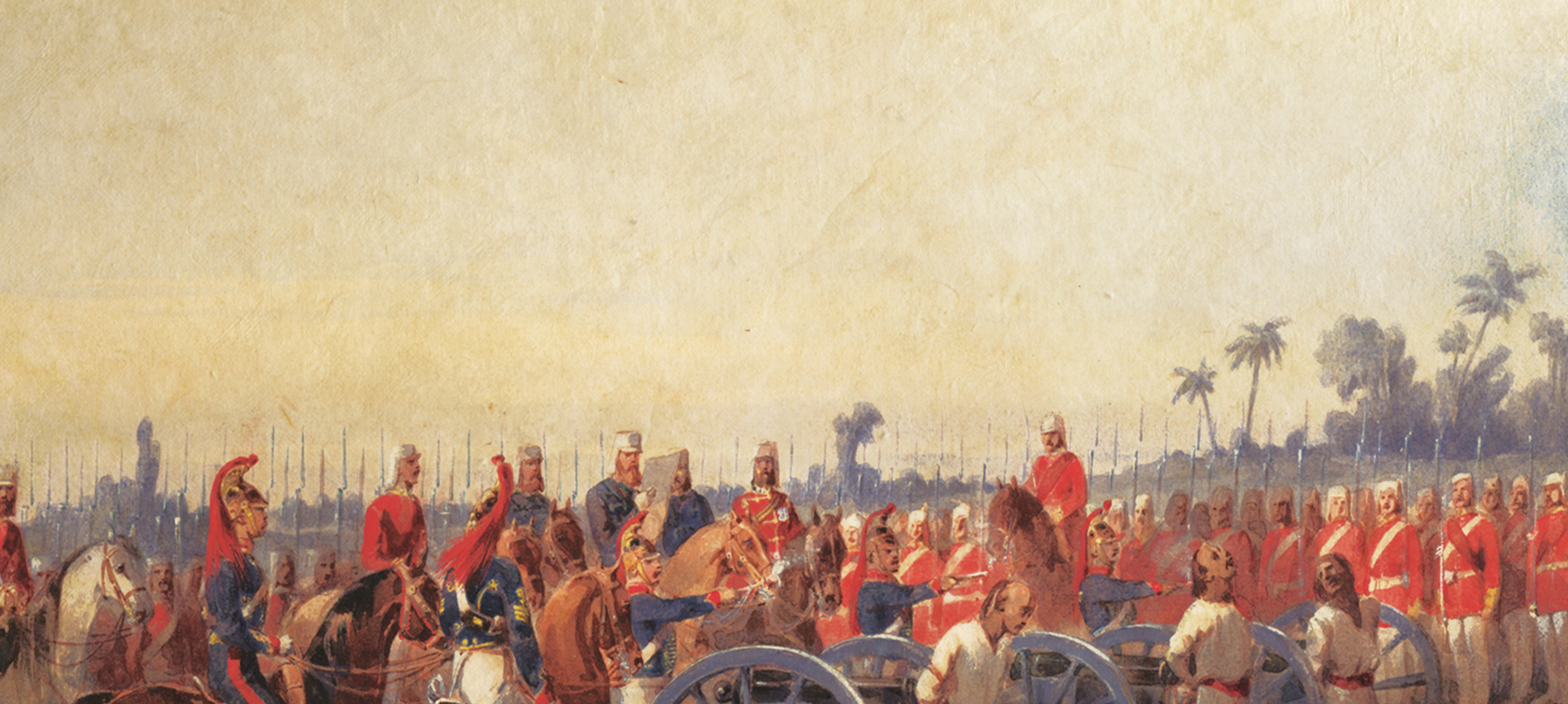
In his latest book, The Skull of Alum Bheg, author Kim Wagner explores the mutiny of 1857 and the shadows of colonial rule in India. Spurred by an intriguing find, Wagner’s elegant narrative uses the story of one man’s death and skull to excavate the underbelly of Britain’s nineteenth century empire.
Here’s an exclusive interview with Kim A. Wagner, where the author shares his opinion on British Imperialism and what inspired him to write the book – The Skull of Alum Bheg.
_______________________________________________________________________
1. What was your inspiration behind writing The Skull of Alum Bheg?
My starting point was obviously the story of the skull itself, as outlined in the brief note that had been found inside of it back in 1963. But in trying to write about the events of the Indian Uprising from the perspective of a single – and in many ways an insignificant – individual, I was very much inspired by the classics of micro-history and especially the work of the likes of Carlo Ginzburg and Natalie Zemon Davis. The challenge I was facing was the fact that while I had the remains of Alum Bheg, I never ‘found’ him in the historical records, and so I had to write the book by tracing an outline of this individual, trying to reconstruct the world he inhabited and the people who surrounded him. The subtitle is obviously a nod to Gautam Bhadra’s classic essay, ‘Four Rebels of 1857’, first published in Subaltern Studies IV in 1985.
2. Tell us something about your writing process.
For this book, I wrote what I thought of as different ‘layers’ or different ‘voices’, in sequence, and only at the end did I put them together into one complete text. So I wrote the narrative of the Scottish and American missionaries first, then that of Alum Bheg and the sepoys, and finally the background and analysis. It was a very different way of writing from what I am used to, and you only know whether the plan you have in your head actually works once you put it all together right at the end. I am also not very economic with words – for every 10.000 words that I write, I will have produced three times that in the form of notes and drafts of paragraphs in varying stages. It is a time-consuming and cumbersome process, which leaves my computer littered with orphan files, but it works for me.
3. What was the most intriguing facet of colonial India you came across while researching for your book?
When you take a micro-historical approach, the grand narratives come apart at the seams and you begin seeing new and intriguing details. It was interesting to look at the Indian Uprising in a place like Punjab, where the sepoys of the Bengal Army were invaders as much as the British were. When the outbreak eventually did happen at Sialkot, where Alum Bheg’s regiment was stationed, it was accordingly a very different type of mutiny, compared to, for instance, Meerut or Delhi, where most of the local population joined the sepoys. It was also fascinating to see how local dynamics shaped the violence, and personal grievances and relationships played a large role during the chaos of the outbreak. I’ve never been able to adequately explain why some Indian servants would lay down their lives for the sahibs and memsahibs, while others readily stabbed them in the back. Sometimes new insights also mean new questions to be answered.
4. Victorians’ had a fetish for collecting and exhibiting body parts. Are there some other such instances you can share with us?
I have previously worked on the collecting of skulls of so-called ‘Thugs’ by phrenologists in the 1830s, but that was just the beginning of a veritable obsession with skulls. In the final chapter of the book, I describe some of the later examples from the British Empire: Following the Battle of Omdurman in 1898, for instance, General Kitchener had the body of the Mahdi disinterred and the skull was kept, which later caused a scandal. The same happened in South Africa where the heads of tribal leaders, such as Luka Jantje or Bambhata, were cut off and either used for identification or kept as private souvenirs. It is often assumed that there was a clear-cut distinction between the ‘rational’ collection of scientific specimens and the ‘irrational’ taking of war-trophies – in practice, however, such distinctions are often unsustainable
5. Finally, if in a line you had to summarize British imperialism in India, how would you do that?
Despite the conventional narrative of cultural expertise and liberal governance, British rule in India was defined by a lack of comprehension concerning local grievances and anti-colonial sentiments, and as a result prone to panic and the use of exemplary violence.
