




Tanaz Bhathena was born in India and raised in Saudi Arabia and Canada. She is the author of A Girl Like That and The Beauty of the Moment (forthcoming in 2019). Her short stories have appeared in various journals including Blackbird, Witness and Room. Tanaz’s debut novel, A Girl Like That, reveals a rich and wonderful new world to readers. It tackles complicated issues of race, identity, class and religion and paints a portrait of teenage ambition, rebellion and alienation that feels both inventive and universal.
Let’s read an excerpt from the book, A Girl Like That.
———–
By the time I was sixteen, however, it was boys like Abdullah who would help me skip school, who offered me their own cigarettes and smoked with me in their cars, parked in a deserted lot by the Corniche on Thursday afternoons.
Only Abdullah became a lot more than a guy I simply went out with for cigarettes or food— and that became evident when he kissed me on our third date— a light, pleasing dance of lips and tongues that made me forget for a few moments that we were in a public place.
“What’s the matter?” he asked when I pushed him away.
“I thought you liked me.”
I laughed, gently tracing his frown away with a finger.
“I do like you. But maybe we should not keep doing this here.”
I gestured toward the railing in the distance, where a lone man stood, staring at the sunlight glittering on the waves.
Abdullah rolled his eyes. “He’s so far, Zarin. He’s not even turned this way.”
“And when he does turn, we’re going to be the ones in trouble. I’m not taking any chances.”
“Come on.” Abdullah was grinning. “You’re telling me you’ve never done this before?”
“It may surprise you to know that I haven’t,” I said truthfully.
As reckless as I was under most circumstances, I did not want to kiss every guy I went out with on these dates. Half the guys I’d gone out with had been far too worried about the religious police showing up to catch us red- handed, while the other half had been far too intimidated by me and never attempted more than a timid kiss on the hand or the cheek.
Abdullah was an exception in many ways. For one: I genuinely enjoyed his company. He was intelligent. He made me laugh. And he smelled nice too. Which was why, when he leaned in to kiss me, I let him.
There were times when we talked when Abdullah would mention Farhan’s name. “Rizvi and I did this,” or “Rizvi and I did that,” or “Rizvi’s such a loser sometimes, I don’t even know why I’m friends with him.” I listened closely to these little stories— bits and pieces of information about a boy I had only, as of yet, seen in pictures or from a distance during school functions. Those were the nights I would imagine Rizvi’s lips on mine instead of Abdullah’s— a wisp of curiosity that fluttered through my brain when I was falling asleep— a thought I managed to squash before it bloomed into heat. I instantly felt guilty afterward, sometimes even refusing to go out with Abdullah when he texted me a week later, making an excuse of a doctor’s appointment or a test.
The beauty about Abdullah was that he never followed up on my lies or asked additional questions. Cool. Next week then, he always wrote back in reply. It was almost as if he expected me to have a part of myself that I kept private the way he kept parts of his own life a mystery, evading any questions that might have anything to do with his family or childhood.
“Some things are too messed up to explain,” he said, and I agreed.
It made perfect sense for us to be together; to meet up each Thursday to talk, smoke, and sometimes kiss; to lose ourselves in random conversations about school or movies or music for an hour and forget who we really were.
————
Mother Earth, Sister Seed: 5 Facts De-mystifying the Old Ways
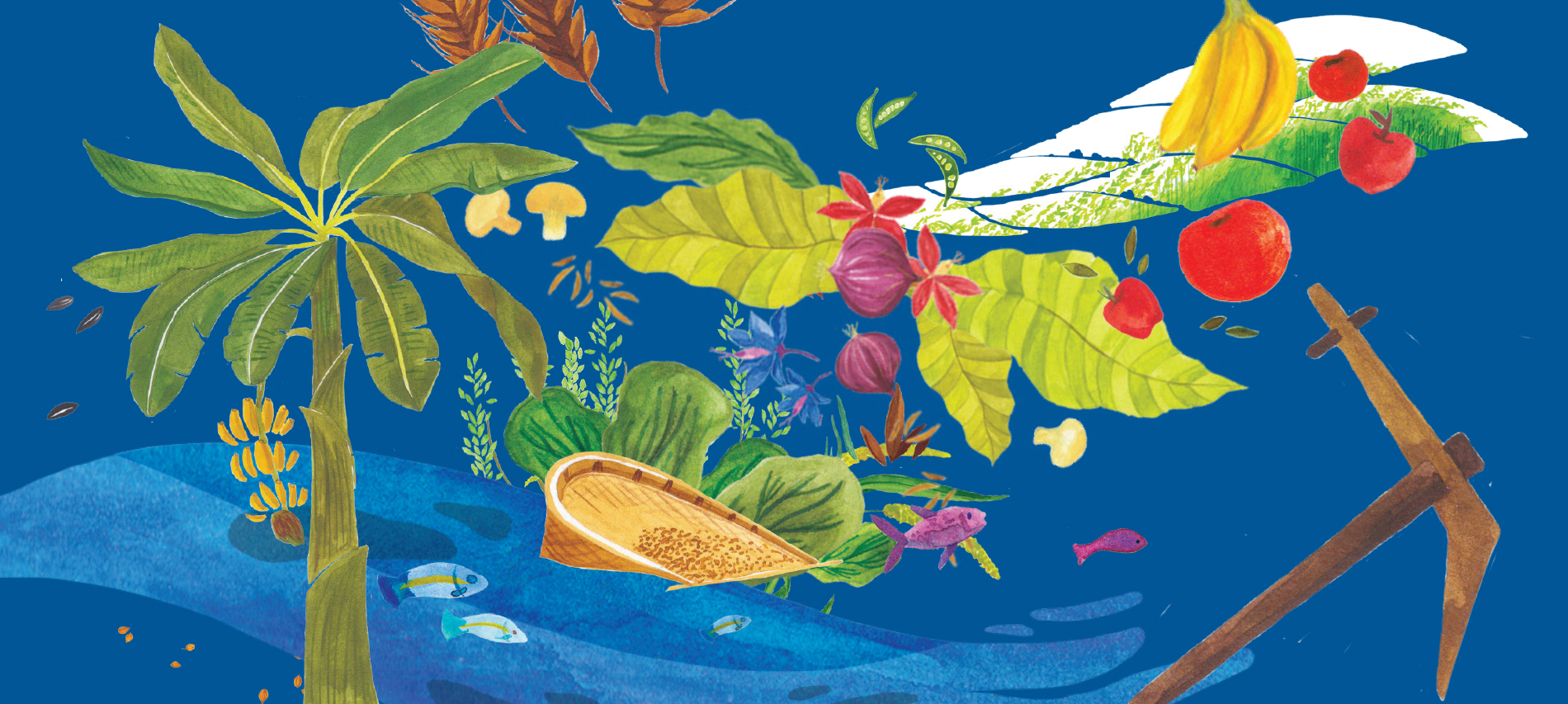
Lathika George is a writer, landscape designer, environmentalist and organic gardener. She has published articles on food, design, travel, gardening and the environment in InsideOutside, Architectural Digest, Food 52, Condé Nast Traveler, The Hindu’s BLink. In Mother Earth, Sister Seed, she looks at India’s traditional agricultural communities and the changes-some good, some not-that good, modernization and urbanization have wrought.
Here are a few facts from the book de-mystifying the old ways.
————————–


Ten Things You Didn’t Know about Taslima Nasrin

Taslima Nasrin is an award-winning novelist, poet, celebrated memoirist, columnist, physician, secular humanist and human rights defender. She has written 44 books out of which some have been translated into thirty different languages. Taslima Nasrin’s works have won her the prestigious Ananda Puraskar in 1992 and 2000. Her new, bold and evocative book, Split: A Life, opens a window to the experiences and works of one of the bravest writers of our times.
Here are ten facts you didn’t know about her.
—————–


Author Nanditha Krishna on the close relationship between Hinduism and Nature

There is a close symbiotic relationship between Hinduism and Nature. The basis of Hindu culture is dharma or righteousness, incorporating duty, cosmic law and justice. Every person must act for the general welfare of the earth, humanity, all creation and all aspects of life. Dharma is meant for the well-being of all living creatures. The verses of the Vedas express a deep sense of communion of man with god. Nature is a friend, revered as a mother, obeyed as a father and nurtured as a beloved child. In Vedic literature, all of nature was, in some way, divine, part of an indivisible life force uniting the world of humans, animals and plants.
Five thousand years ago, the Vedic sages showed a clear appreciation of the natural world and its ecology. There is a hymn to the rivers (Nadistuti Sukta) in the Rig Veda and a hymn to the earth (Prithvi Sukta) in the Atharva Veda. Throughout the Vedas there is a deep respect for life which is an important manifestation and expression of the gods. The need to protect and conserve biological diversity is exemplified in the representation of Shiva, Parvati, their two sons Karttikeya and Ganesha and their vahanas or vehicles – bull, lion, peacock and mouse respectively – who live in close harmony.
There is a very strong and intimate relationship between the biophysical ecosystem and economic institutions which are held together by cultural relations. Hinduism has a definite code of environmental ethics and humans may not consider themselves above nature, nor can they claim to rule over other forms of life. Every aspect of nature is sacred for the Indic religions: forests and groves, gardens, rivers and other waterbodies, plants and seeds, animals, mountains and pilgrimage centres. The sacred is still visible in modern India. All creation is a manifestation of the divine with no dichotomy between humanity and divinity. Religious practices are influenced by local environmental and festivals coincide with a natural phenomenon.
I fell in love with sacred groves attached to Hindu temples, where not a twig may be broken and which are the remnants of ancient forests where sages lived in harmony with nature; with rivers that gush from the hills and meander through the land; with the sacred tanks attached to each temple, the sacred plants and the animals respected by my religion; with the awe-inspiring mountains which reach up to the skies and where the Gods live. Every festival reminds us of the importance of nature in our lives. As the author of Sacred Plants of India and Sacred Animals of India I explored the divine relationship between human beings, plants and animals, which are an essential part of every Hindu prayer.
“The Earth is my mother and I am her child,” says the hymn to the Earth in the Atharva Veda. The human ability to merge with nature was the measure of cultural evolution. Hinduism believes that the earth and all life forms – human, animal and plant – are a part of Divinity, each dependant on the other for sustenance and survival. All of nature must be treated with reverence and respect. If the forests, clean water and fresh air disappear, so will all life as we know it on earth.
——————————————————
A historian, environmentalist and writer based in Chennai, Nanditha Krishna has a PhD in Ancient Indian Culture from Bombay University. She has been a professor and research guide for the PhD programme of C.P.R. Institute of Indological Research, affiliated to the University of Madras. Her latest book, Hinduism and Nature delves into the religion’s deep respect for all life forms, the forests and trees, rivers and lakes, animals and mountains, which are all manifestations of divinity. 
Will You Still Love Me, An Excerpt
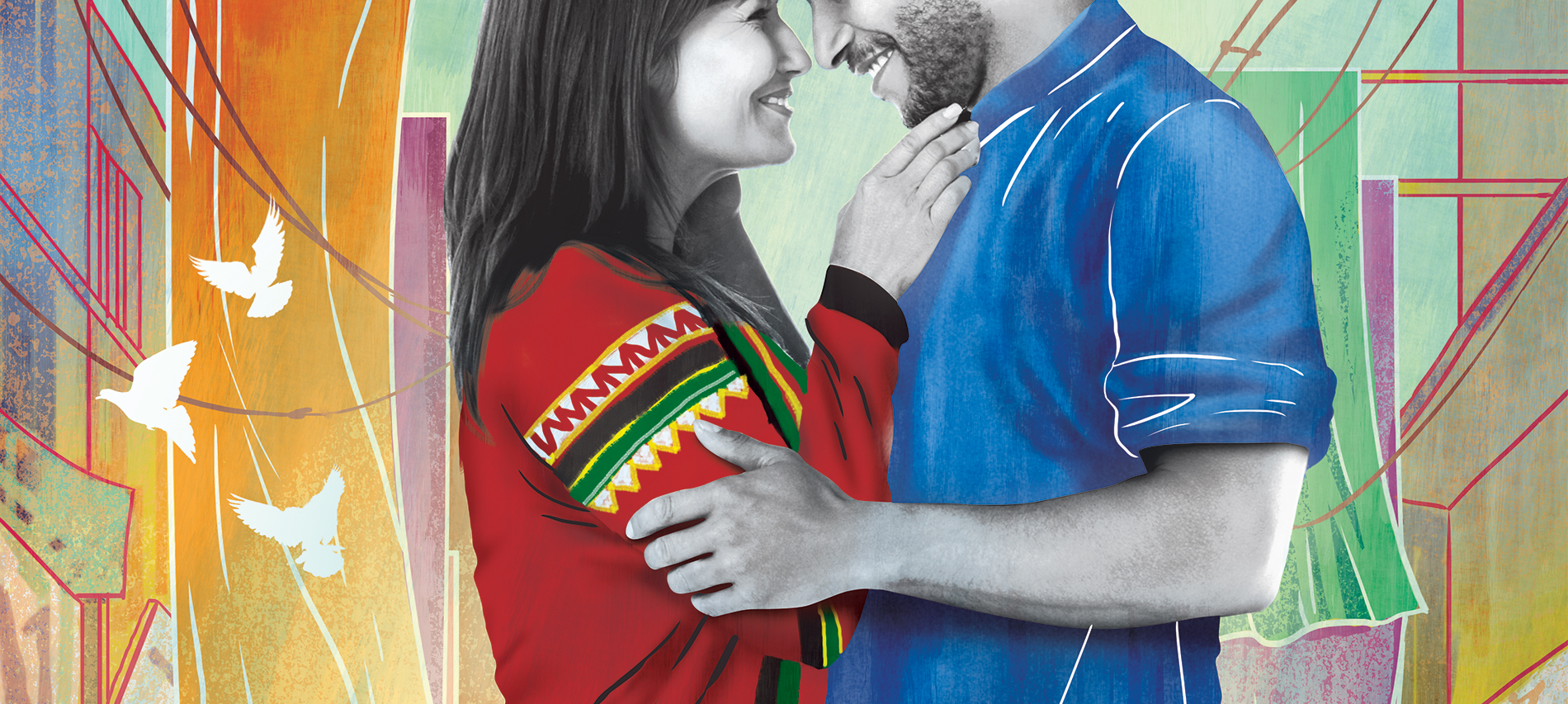
Ravinder Singh is the bestselling author of I Too Had a Love Story, Can Love Happen Twice?, Like It Happened Yesterday, Your Dreams Are Mine Now and This Love That Feels Right . His new book, Will You Still Love Me is deeply moving, disturbingly close to reality, and love at its worst and its best.
Here’s an excerpt.
_______________________
Rajveer sat down on his seat and looked at her with newfound feelings. The spectacle of a sleeping beauty kindled a variety of emotions in his heart. Now that he could look at her without feeling self-conscious, Rajveer realized how attractive a woman Lavanya was! His eyes rested on the glowing skin of her face and her neck before they slid down to her waist, to the skin visible between the blouse and the long skirt she wore. He watched the rhythmic rise and fall of her chest as she slept. The tiny sleeves of her blouse clung to her elegantly shaped arms.
Rajveer took in the details of her beauty—her jet-black silky hair that lay softly on her shoulders, her not so long fingers that ended in shapely nails. She possessed a well-toned body many women only craved for. Lavanya wasn’t tall, yet her average frame possessed more than enough charm to be considered quite striking.
Then suddenly she turned her head in her sleep. It made Rajveer immediately retract his gaze. He thanked god that she hadn’t abruptly opened her eyes and caught him staring at her. He then looked around self-consciously to check if anybody else had noticed him doing so. He was safe, he realized.
To distract himself, Rajveer pulled out the Hello 6E from the seat pocket in front of him and began flipping through it. He occasionally checked on Lavanya too, who remained deep in sleep.
More than half an hour passed this way. By then, Rajveer had also pulled out his laptop from his luggage and had begun working on it. Just then he heard the captain’s voice letting passengers know that he had initiated the descent of the plane. This woke up Lavanya from her sleep.
‘Slept well?’ Rajveer asked. There was a sense of familiarity as he spoke and a certain softness.
She rubbed her palms over her face and then looked at him, ‘Yes. I feel so fresh now!’ She smiled.
Then reacting to the announcement that the use of lavatories was not allowed as they had begun descent, Lavanya quickly unbuckled her seat belt. She wanted to use the loo as soon as possible.
Caught by surprise, Rajveer had to quickly close his laptop, place the in-flight magazine on the middle seat, close the tray table, and then unbuckle himself, all in a rush. Lavanya didn’t have much time. She tried to manoeuvre through the narrow space between Rajveer’s legs and the seat in front. In the process, Rajveer’s knees rubbed against her skirt. Her touch and proximity felt like a jolt of electricity to him. Briefly he found himself staring straight at her bare, slender waist. Gosh! How much he wanted to feel that dewy skin on the tips of his fingers. He got a whiff of her perfume and he inadvertently took in a deep breath.
‘Sorry,’ Lavanya apologized for the discomfort to Rajveer. You are welcome, he said in his mind.

Sujata Massey Like You Never Knew Her
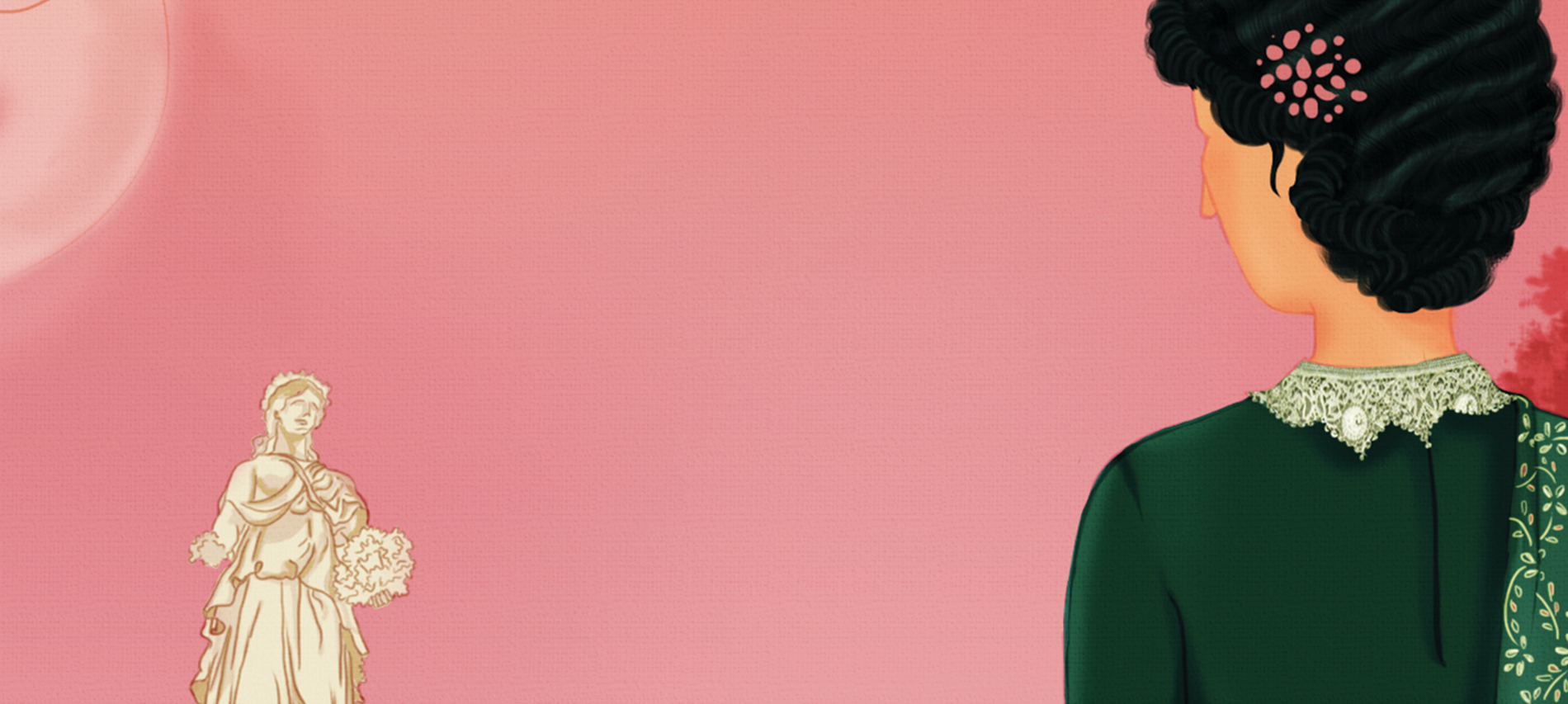
Mystery author Sujata Massey’s new book, A Murder on Malabar Hill, is based in 1921 Bombay. It is about a young, intrepid and intelligent girl with a tumultuous past, who joins her father’s prestigious law firm to become one of India’s first female lawyers.
The author holds a BA in Writing Seminars from John Hopkins University and started her working life as a features reporter for the Baltimore Evening Sun.
Here are six things you didn’t know about the author.


____

Quiz: Can You Be A CEO?

The Making of a CEO is the result of interviews and analysis of top-level CEOs across various sectors. The book has it genesis in a popular course Krishnan taught at IIMB, where the students interviewed and analysed twenty CEOs to learn how they charted a clear path to the top.
Do you have the potential to be a CEO? Here’s how you can check it out:

7 Quotes about 'The Tatas' that will make you pick a copy of 'Creation of Wealth'

Russi M. Lal started his career in journalism in 1948 at the age of nineteen. He was the director of Tata’s premier trust, the Sir Dorabji Tata Trust, for eighteen years as well as the co-founder and chairman of the Centre for Advancement of Philanthropy. The Creation of Wealth is R.M. Lala’s best-selling account of how the Tatas have been at the forefront in the making of the Indian nation.
Here are 10 phenomenal quotes about the Tatas from some of the most notable personalities of this country.
———————————–


 To know how modern India came into existence, you must pick a copy of Creation of Wealth!

6 Times Jonahwhale Touched our Hearts
Ranjit Hoskote is the author of five major books of poems, including, most recently, Central Time, Vanishing Acts and eighteen works of cultural criticism. He is the editor of Dom Moraes: Selected Poems. His translations include I, Lalla: The Poems of Lal Ded. His latest, Jonahwhale, is a sophisticated project in anamnesia, that retrieves fragments and episodes from the multiple pasts that we inherit; it makes an inquiry into the unregarded legacies of the colonial encounter at sea rather than on land.
Let’s have a look at 6 most heart touching vignettes from the book.
—————————
1. Dunhuang

2. Kushan Dawn Song

3. Planetarium

4. Passage

5. The Refugee Pauses in Flight

6. The Swimming Pool


A Murder on Malabar Hill by Sujata Massey – An Excerpt
Sujata Massey is an award-winning and highly acclaimed mystery writer. She holds a BA in Writing Seminars from John Hopkins University, and started her working life as a features reporter for the Baltimore Evening Sun. Her new book, A Murder on Malabar Hill, is set against the backdrop of colonial Bombay and follows the gripping tale of an incomparable sleuth, a female lawyer, Perveen Mistry.
Let’s read an excerpt from this gripping narrative.
_______________________________________________________________________________
Sakina’s bedroom suite door was open. Inside, everything was as orderly as before; even the silver tray was gone. Perveen looked under the bed and in drawers and then lifted aside the picture to look at the locked safe door. The safe was certainly wide enough to accommodate the briefcase—but perhaps not deep enough.
Being in Sakina’s room alone made Perveen feel almost like a thief. She put her head out of the door, checking in the hallway for new sounds. Perhaps five minutes had passed since she had entered the room. It was too bad she didn’t know which room was Mumtaz’s.
Perveen glanced towards the brass jali that Sakina had said was the conversation place between the zenana and main house. If Mr Mukri chose to eavesdrop, he could only do so from there; that was the likely reason the wives were speaking in Razia’s faraway bedchamber rather than Sakina’s closer quarters. As Perveen studied the patterned brass border, a smear of red caught her eyes.
A dash of red, reminding her of the kumkum Hindu and Parsi women used to make a decorative marking between the eyes. But this red marking was slashed across the brass metalwork, and there were droplets and smudges on the floor. It could not be vermilion powder. With a growing sense of worry, Perveen stepped out of the doorway, taking care not to touch any of the red droplets as she approached the screen. Squatting, she could make out a shadowy mass just below the document slot.
Although she knew it was improper, Perveen lifted the long, wide brass lid that covered the slot. Her last calm thought was that this lid was about the same weight and size as the one on the mail slot in the door of Alice’s ancestral London townhouse.
Then she wanted to be sick.
On the other side, Mr Mukri lay collapsed, arms and legs skewed wildly, as if he’d tried to escape but failed. Half under him was the edge of her Swaine Adeney bridle-leather document case. Blood covered the back of his head and collar and ran in thick rivulets down his black suit jacket. Something long and silver protruded from his neck. Was it a knife? She didn’t care.
She couldn’t bear to look any longer.
Perveen put her hand to her mouth and stepped back. If she hadn’t looked through the slot, she wouldn’t have known he was dead. Now it was too late…
