




Humans have suffered from mosquito-borne diseases for more than 500,000 years. Not only do they still plague us, but they have also become more lethal. In The Fever, journalist Sonia Shah sets out to address this concern, delivering a timely, inquisitive chronicle of malaria and its influence on human lives. In her book, she mentions the delayed study of a drop of blood that lead to the discovery of the microbe responsible for malaria.
Here is an excerpt from her book about the accidental discovery of the microbe.
—————–
One day in the late 1870s, two pathologists, Corrado Tommasi-Crudeli and Edwin Klebs, collected air and mud samples from the Roman Campagna. From the samples, they isolated ten-micro millimeter-long rods, which from the vantage point of their crude microscopes, seemed to develop into long threads. When injected into lab rabbits, the long threads soon had the bunnies heaving with chills and fever. Inside their slaughtered bodies, the pathologists found the ten-micro millimeter-long rods, once again.
The two scientists decided that they’d found the microbe responsible for malaria. It was a germ, it lived in the soil and the air, and they called it Bacillus malariae. They announced their findings in 1879.
The scientific method is not infallible, of course, and such mistakes are made, even when the entire economy of a newly formed nation depends on the results.
Counterevidence soon emerged.
In November 1880, Alphonse Laveran, a French surgeon stationed in Constantine, Algeria, peered at a crimson blob on a glass slide. How he found what he did is a bit of a mystery. Most nineteenth century microscopists soaked their slides in chemicals, their cutting-edge techniques thus unknowingly kill ing the malaria parasites in their samples and rendering them all but invisible amid the scattered debris of the magnified blood. Those who did examine blood from malaria victims while still fresh, as Laveran did, presumably did so more promptly than he did on this particular day. The blood was still warm when Laveran excused himself from its notice. What precisely he did upon abandoning his slide nobody knows, but whatever it was, it took about fifteen minutes. Maybe it was a cup of coffee.
In any case, during the lull, the drop of malarial blood on the glass cooled. The change in temperature roused the parasites in the sample, which now considered that they had left the warm-blooded human for the cool environs of a mosquito body. Male forms of the parasite would soon be called upon to fertilize female ones, and each started to sprout long flagella and wave them about, in lascivious preparation. Laveran returned to his microscope expecting yet another static scene. Instead, the shocked surgeon caught sight of tiny spheres propelling themselves with fine, transparent filaments, wrigglingly alive.
——————

7 Astounding facts about Gandhi from this critical-edition of An Autobiography
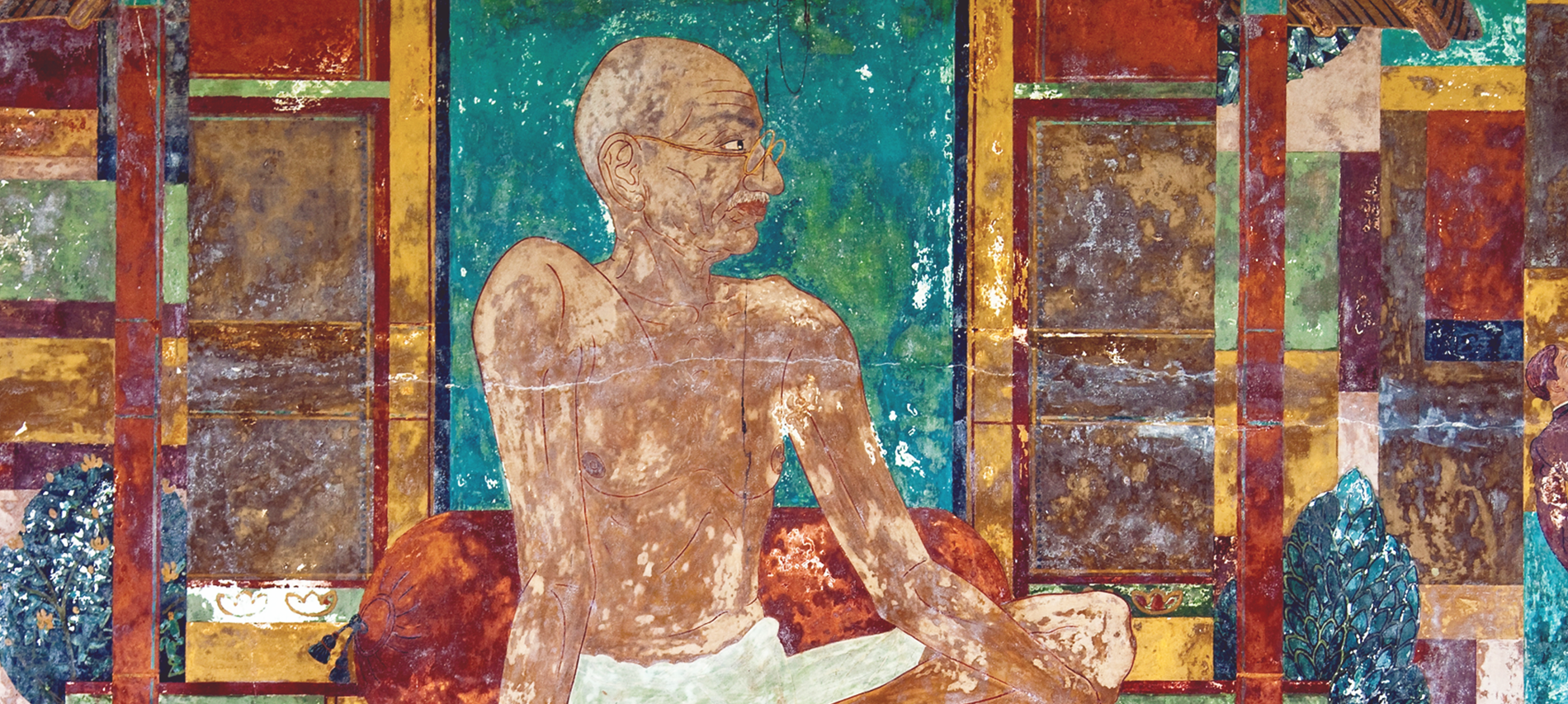
Mohandas Karamchand Gandhi is among the most enigmatic, charismatic, deeply revered and equally reviled figures of the twentieth century. His Autobiography, one of the most widely read and translated Indian books of all time, is a classic that allows us to glimpse the transformation of a well-meaning lawyer into a Satyagrahi and an ashramite. In this first-ever Critical Edition, written by the eminent scholar, Tridip Suhrud shines new light on Gandhi’s life and thought. The deeply researched notes elucidate the contexts and characters of the Autobiography, while the alternative translations capture the flavour, cadence and quirkiness of the Gujarati.
Let’s have a look at some of the facts from this critical version that you may not have known:
————-


————————-

De-mystifying Auroville in 7 Facts

Auroville has a reputation as a cosmopolitan, spiritual township, but it remains an enigma to outside observers. This anthology of writing from the community, edited by a long-time resident, Akash Kapur, and representing forty-odd authors from around the world, seeks to shed light not only on Auroville’s ideals but also on its lived reality.
Here are seven facts about Auroville that you should know about:


———-

6 Times Ramnath Goenka Championed the Cause of Journalism

B.G. Verghese (1927-2014) served with the Times of India for many years before becoming the information adviser to Prime Minister Indira Gandhi. His book, Warrior of the Fourth Estate: Ramnath Goenka of the Express, is a roller-coaster ride through the twists and turns of Ramnath Goenka’s fortunes, including scandals and scoops, fiery public campaigns, dramatic court battles and the making and unmaking of political leaders and governments. Along the way, it tells the story, too, of a newspaper.
Let’s get to know about those 6 times when Ramnath Goenka championed the cause of journalism.
———-


 ————
————

12 Rules For Life by Jordan B. Peterson – An Excerpt

Jordan B. Peterson is a professor of psychology at the University of Toronto. Formerly a professor at Harvard University, he was nominated for its prestigious Levenson Teaching Prize. In this book, 12 Rules For Life: An Antidote to Chaos, he combines ancient wisdom with decades of experience to provide twelve profound and challenging principles for how to live a meaningful life, from setting your house in order before criticising others to comparing yourself to who you were yesterday, not someone else today.
Let’s read an excerpt from this fascinating book.
———–
RULES? MORE RULES? REALLY? Isn’t life complicated enough, restricting enough, without abstract rules that don’t take our unique, individual situations into account? And given that our brains are plastic, and all develop differently based on our life experiences, why even expect that a few rules might be helpful to us all?
People don’t clamour for rules, even in the Bible . . . as when Moses comes down the mountain, after a long absence, bearing the tablets inscribed with ten commandments, and finds the Children of Israel in revelry. They’d been Pharaoh’s slaves and subject to his tyrannical regulations for four hundred years, and after that Moses subjected them to the harsh desert wilderness for another forty years, to purify them of their slavishness. Now, free at last, they are unbridled, and have lost all control as they dance wildly around an idol, a golden calf, displaying all manner of corporeal corruption.
“I’ve got some good news . . . and I’ve got some bad news,” the lawgiver yells to them. “Which do you want first?”
“The good news!” the hedonists reply.
“I got Him from fifteen commandments down to ten!”
“Hallelujah!” cries the unruly crowd. “And the bad?”
“Adultery is still in.”
So rules there will be—but, please, not too many. We are ambivalent about rules, even when we know they are good for us. If we are spirited souls, if we have character, rules seem restrictive, an affront to our sense of agency and our pride in working out our own lives. Why should we be judged according to another’s rule?
And judged we are. After all, God didn’t give Moses “The Ten Suggestions,” he gave Commandments; and if I’m a free agent, my first reaction to a command might just be that nobody, not even God, tells me what to do, even if it’s good for me. But the story of the golden calf also reminds us that without rules we quickly become slaves to our passions—and there’s nothing freeing about that.
And the story suggests something more: unchaperoned, and left to our own untutored judgment, we are quick to aim low and worship qualities that are beneath us—in this case, an artificial animal that brings out our own animal instincts in a completely unregulated way. The old Hebrew story makes it clear how the ancients felt about our prospects for civilized behaviour in the absence of rules that seek to elevate our gaze and raise our standards.
One neat thing about the Bible story is that it doesn’t simply list its rules, as lawyers or legislators or administrators might; it embeds them in a dramatic tale that illustrates why we need them, thereby making them easier to understand. Similarly, in this book Professor Peterson doesn’t just propose his twelve rules, he tells stories, too, bringing to bear his knowledge of many fields as he illustrates and explains why the best rules do not ultimately restrict us but instead facilitate our goals and make for fuller, freer lives…
Order is where the people around you act according to well understood social norms, and remain predictable and cooperative. It’s the world of social structure, explored territory, and familiarity. The state of Order is typically portrayed, symbolically—imaginatively—as masculine. It’s the Wise King and the Tyrant, forever bound together, as society is simultaneously structure and oppression.
Chaos, by contrast, is where—or when—something unexpected happens. Chaos emerges, in trivial form, when you tell a joke at a party with people you think you know and a silent and embarrassing chill falls over the gathering. Chaos is what emerges more catastrophically when you suddenly find yourself without employment, or are betrayed by a lover. As the antithesis of symbolically masculine order, it’s presented imaginatively as feminine. It’s the new and unpredictable suddenly emerging in the midst of the commonplace familiar. It’s Creation and Destruction, the source of new things and the destination of the dead (as nature, as opposed to culture, is simultaneously birth and demise).
Order and chaos are the yang and yin of the famous Taoist symbol: two serpents, head to tail.* Order is the white, masculine serpent; Chaos, its black, feminine counterpart. The black dot in the white— and the white in the black—indicate the possibility of transformation: just when things seem secure, the unknown can loom, unexpectedly and large. Conversely, just when everything seems lost, new order can emerge from catastrophe and chaos.
For the Taoists, meaning is to be found on the border between the ever-entwined pair. To walk that border is to stay on the path of life, the divine Way.
And that’s much better than happiness.
————-

The Diary of a Domestic Diva by Shilpa Shetty Kundra – An Excerpt

Shilpa Shetty Kundra is a renowned film and TV actor, businesswoman, author of The Great Indian Diet, entrepreneur and health enthusiast. She has always been a trendsetter, whether it be fashion or ideas. In her latest book, The Diary of a Domestic Diva, the actor and entrepreneur brings you fifty of her most special recipes-some of which feature in her popular Sunday Binge videos on Instagram.
Here’s an excerpt from the introduction to this book by Sanjeev Kapoor.
————-
What I like most about Shilpa’s approach to food is that it’s very honest. She belies the notion many of us have about stars: that they live by strict diets and don’t eat as they please. Shilpa, as you will discover through this book, is a dedicated foodie and loves to eat. I have known her for a long time now and I can tell you that she certainly knows when to stop eating too, one of the key factors in maintaining a healthy body weight.
The Diary of a Domestic Diva is straight from her kitchen and offers a mix of healthy recipes, favourite recipes, famous recipes with a twist and guilt-free desserts. The idea behind the book is very heartening. It features recipes that do not take much of your time and leave you free to do other things. Through this book, she touches upon a beautiful point: Women need not be tied to the kitchen stove all day. Give a woman nutritious and fast-to-cook recipes and she will have the time to step out to do what she pleases. It’s a cookbook with a message: Women ought to have some ‘me’ time. In my conversations with her, she has often mentioned the way, back in the day, her mother (a brilliant cook) would cook with the paucity of time as she was a working woman. I know it is all this that has led her to put together this book for the working woman. Being a family person, every aspect of her life draws from her experiences with people close to her. Her father’s love for food and yet his fitness is another inspiration that has worked so well for her. The recipes mentioned here have been tried out by her and I can vouch for their deliciousness. The fact that I drop everything when there’s an invite to her lovely ome for a meal is proof! The twists she adds to traditional recipes are delightful to say the least. The Diary of a Domestic Diva is about indulging your love for good food. And when such a message comes from one of the fittest people in town, you do sit up and take notice. Shilpa maintains that good food makes us happy and we shouldn’t feel guilty about something that makes us happy, and over the years this is something I have come to believe too.
With this sure-to-be-a-bestseller cookbook, Shilpa also enters the space of celebrity cooks and it delights the chef in me to see the world get so interested in food. It is indeed one more brownie point for the food industry.
—————

10 Things You Didn’t Know About the Author, Akash Kapur

Akash Kapur is the author of two books and has written for various publications. His first book, India Becoming: A Portrait of Life in Modern India, was published in 2012 by Penguin USA and India. A French edition came out in 2014 from Albin Michel. Auroville: Dream & Reality, his recent book, is an anthology of writings by residents and visitors of Auroville, the cosmopolitan and spiritual community near Pondicherry.
Here are ten facts you should know about the author:


Puffin’s 10 most Iconic and Popular Reads

To celebrate 30 glorious years of Penguin in India, Puffin presents a selection of 10 of its most iconic and popular books. This will be a beautifully packaged special edition series of the best of children’s literature. It will include the bestselling works of literary doyens spanning both fiction and non-fiction that are a must-have on every shelf.
Let’s have a look at these 10 hand-picked gems.
————
- Letters From a Father to his Daughter by Jawaharlal Nehru

- How I Taught My Grandmother How To Read and Other Stories by Sudha Murty
- Malgudi Schooldays by R. K. Narayan
- My India by A.P.J. Abdul Kalam
- Pashu by Devdutt Pattanaik
- The Adventures of Rusty by Ruskin Bond
- The Incredible History of India’s Geography by Sanjeev Sanyal
8. The Puffin Book of World Myths and Legends by Anita Nair
9. The Puffin History of India: Volume 1 by Roshen Dalal
10. The Village by the Sea by Anita Desai


5 Vignettes that will make you Reminiscent of your Teen Years

Swati Kaushal is the bestselling author of five highly acclaimed novels, including Piece of Cake, Drop Dead, Lethal Spice, and her most recent work, A Few Good Friends. An alumna of Lady Shri Ram College, New Delhi, and an MBA from IIM Calcutta, Swati has worked with Nestlé India and Nokia, India. Her book, A Girl Like Me, is the story of sixteen-year-old Anisha Rai, packed with the breathless exuberance of teenage life.
Let’s read through 5 poignant instances from the book that will immediately strike a chord!
————-


—–

Catalyst by Chandramouli Venkatesan – An Excerpt

Chandramouli Venkatesan is a corporate veteran with over twenty-six years of experience in the industry. He has worked with Asian Paints, Cadbury/Mondelez, Mirc Electronics/Onida and Pidilite. He has served in various senior capacities, including as CEO and managing director. He has conducted numerous speaking sessions, which have benefited over 1000 people, and mentored and guided many others to be successful in their careers. His book, Catalyst, will arm you with the right tools to succeed at your workplace and get the most out of every moment, every day.
Let’s read an excerpt from this life-transforming book.
————
In all my experiences and travels across the world, the one thing that stands out is the hunger for success that most people have and, in particular, Indians have. Often that hunger for success can be simplified by most people as success and growth in careers. That success in life is equal to success in careers is often the operating assumption of most people. In the latter portion of the book I do try to give a more holistic dimension to success in life to include values, character and other related aspects. However, in the first half of the book I focus primarily on giving what people want—the keys to success in careers.
I have a simple equation for career growth
Career growth = Real Individual growth +_ Environmental aspects
What this equation tries to say is that career growth is driven by two factors—real individual growth and environmental aspects. Real Individual growth is the growth we experience in the duration of our careers; how much each one of us grow our knowledge, our skills, our judgement, our influence, our communication etc. The second factor is Environmental aspects, which covers things like buoyancy of the job market, industry related factors, relative availability of talent in your skill areas etc.
Let me first cover the impact of environmental aspects on career growth. Our careers are typically 40 years long, we start in our 20s and wind up in our 60s. During these 40 years we will have both environmental tailwinds and headwinds to our careers. An example of a tailwind would be the times in your careers where the job market is hyper hot for the skills you have, there is a shortage of the skills you bring and people tend to get jobs and salaries bigger than what they deserve, sometimes going all the way to bubbles. Another example of a tailwind is when your boss quits the company, you are not yet fully ready to take that role, but the company decides it would rather go with an insider and hence gives the job to you even when you are not yet fully ready. Such tailwinds are bound to support most of us at times in our careers.
Similarly, we have all experienced headwinds in our careers. There are times when the economy is dragging, the job market is weak and there are very few opportunities for people to grow. Another example of a headwind is when you have been steadily getting ready for a big job, equipping yourself with the right experiences, apprenticing under the right leaders and preparing yourself for the opportunity and when the opportunity comes the company in its wisdom decides it wants to drive change, wants new thinking and a change in strategy and hence prefers to hire an outsider into the role as opposed to promoting an insider. Nothing you did wrong, but the dice did not roll your way.
My experience is that in a 40-year career, the headwinds and the tailwinds balance each other out. You will have some headwinds in your career as well as some tailwinds. You have to be a very lucky person for the tailwinds over 40 years to be greater than the headwinds and similarly you have to be very unlucky for the headwinds over 40 years to be greater than the tailwinds. For most people the two does balance out. Hence going back to our career growth equation, it means that the environmental aspects will not be deciding factor in driving career growth.
The catalyst of career growth tends to be real Individual growth. Simply said, in your career you will experience as much career growth as you are able to grow yourself as an individual and as a professional, what I call real individual growth. If you manage to grow your skills, your knowledge, your decision making, your judgement, your influence on others, your communication etc. then you will experience career growth. Career growth is directly proportional to and is a function of the real individual growth. You experience career growth if you manage to grow yourself during your career, if you stop pushing yourself at any stage the career growth also comes to a screeching halt.
Hence the equation of career growth can be simplified to
Career growth = Real Individual growth
One way I like to state this is the expression, “you get what you deserve”. Far too often in our careers we focus on the getting part of it, we focus on getting the promotion, getting the new job and getting career growth. We do not focus on deserving more, increasing our capabilities, our skills etc. In a career, you get what you deserve. It is useful to remember what is in our hands—focusing on deserving more and driving our real individual growth.
