




James Patterson is one of the best-known and biggest-selling writers of all time. His books have sold in excess of 365 million copies worldwide. In one of his most famous detective series (Alex Cross), we have the dark, brooding and handsome Alex Cross as the chief protagonist.
Let’s have a look at what makes Alex Cross such an expert sleuth.
1. A Troubled Past
2. Not the run-of-the-mill hero

3. Know the Enemy’s Mind

4. FBI’s favourite

5. Love=Loss

6. A Man of Sparse Taste

7. Keep your Friends close, Enemies closer

A born hawkshaw with the sharpest grey cells, Alex Cross can and will solve the murkiest crimes!
5 reasons why Undercover Princess by Connie Glynn should be the next read for you.

Connie Glynn has always loved writing and her new book, Undercover Princes (The first in The Rosewood Chronicles) is about two fourteen-year-olds, one who never wanted to be a princess in the first place and the other who is obsessed with them.
Here are 5 reasons why Undercover Princess should be the next read for you.
————
- If you enjoy magical fairy tales

- Riveting mysteries
- Heart warming friendships
- Love stories
- Politics and parties


A Mélange of Colorful Stories and Book Jackets through five Penguin Titles

This Holi we bring to you a list of 5 highly recommended books. With covers as colorful as their stories, the following books will only add to joy of the festivities.
So what are we waiting for? Let’s get started!
1. Waves by Sundara Ramasamy
 One of the most versatile and innovative among contemporary Tamil writers, Sundara Ramaswamy’s early stories, written between 1951 and 1966, focus on ordinary people leading ordinary lives and are full of gems by way of characterization. In Waves, the plot turns darker and more complex. Surprising us with their twists and turns, raising uncomfortable questions and yet touched by a fine sense of humour and humanity, the stories in this collection belong with the best in the genre.
2. Someone Like You by Durjoy Datta and Nikita Singh

A contemporary novel that revolves around the lives of five people who are looking for the right path in their lives, the book begins with the story of a girl named Niharika Singh. Thanks to the makeover by her sister’s friends, the nerdy Niharika entered college more confident, more attractive. She meets the sweet, shy Tanmay, and the spoilt but lovely Pia and they become best friends. And when Akshat and she began dating, life finally seemed to be falling in place. Except that it wasn’t… Someone Like You is a powerful and touching story of friendship, love and betrayal.
3. A Life of Adventure and Delight by Akhil Sharma

Elegantly written and emotionally immediate, the stories in A Life of Adventure and Delight provide an intimate, honest assessment of human relationships between mothers and sons, sons and lovers and husband and wives from a dazzlingly original, critically acclaimed writer.
4. Eleven Ways to Love: Essays

Pieced together with a dash of poetry and a whole lot of love, featuring a multiplicity of voices and a cast of unlikely heroes and heroines, Eleven Ways to Love is a book of essays that show us, with empathy, humour and wisdom, that there is no such thing as the love that dare not speak its name.
5. After All This Time by Nikita Singh

Lavanya, the lead character of After All this Time gets the shock of her life when she discovers that she’s HIV positive. The revelation shakes her out of the monotony that her life has become. It’s time for a change. She resigns from her job, dumps her boyfriend and goes home. At home she finds a bucket list and she knows it’s a sign of what she needs to do. With her is an old neighbour and a friend who’s just broken off with his girlfriend. Sparks begin to fly! However, what she learns is that you need to really live before you begin to love!
————-

‘Taslima and Bhimsen steal the show’: Scenes from an award night

Taslima Nasrin is an eminent writer and secular humanist who has been subjected to forced banishment and multiple fatwas. She has been living in exile since 1994. For her powerful writing on women’s rights and uncompromising criticism of religious fundamentalism, the Bengali original of this book, Split: A Life, was banned by the Left Front in West Bengal as well as the Government of Bangladesh. Bold and evocative, Split: A Life opens a window to the experiences and works of one of the bravest writers of our times.
Here’s an excerpt from this powerful book.
————
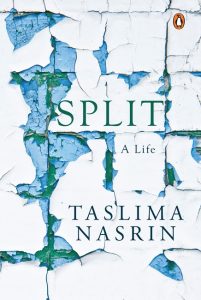
I asked for forgiveness because I had dared to accept such an exalted award despite being such an insignificant entity, for having shown the audacity even though I was utterly undeserving. Who knew if anyone forgave me in the end! After the event many writers and artists came up to congratulate me and I spoke to people I had never imagined I would have the opportunity to speak to. The day after, the news of the award ceremony was published on the front page of Anandabazar Patrika along with the headline ‘Taslima and Bhimsen steal the show’. Celebrations were being held all around me. Soumitra Mitra was very happy with how things had turned out and he was taking me to various places to meet various people. He surprised me with a visit to Rabindrasangeet exponent Kanika Bandyopadhyay. I was an ardent admirer of Kanika and standing in front of her was like a wave of euphoria had swept over my entire world. Ashesh and Mona, my companions during the Basanta Utsab trip, came to see me and took a bunch of photographs. I was suddenly an important person who no longer had to walk hunched along the corridors of Anandabazar and everyone knew who I was. Sagarmoy Ghosh offered me a chance to write a serialized novel for Desh. Floored by the offer I confessed I did not know how to write a novel. He smiled but did not rescind his offer. Nikhil Sarkar invited me to his Salt Lake residence and gave me a bunch of letters with which to go and meet a number of well-known people. Dutifully, the small writer with the big award took the letters with her and hesitantly went to pay a visit to the big guns. Mahasweta Devi, Meera Mukhopadhyay and many others—stars one was meant to show respect to when reaching for the sky. Whether I was even near the sky or I was where I had always been, I could scarcely tell for sure; I stood in front of the celebrities with all my insecurities and remonstrations intact. There was a trend in Calcutta to touch the feet of senior writers and artists to pay them one’s respects. Unused to the custom, I could not help but stand stiffly in front of most people I met. I had never managed to grasp the Bengali Muslim version of the same ritual either, the kadambushi. Though my heart was full of respect, I refrained from touching people’s feet and this must have irked many a senior, made them think of me as an upstart. But there was hardly anything I could do about it. If I was suddenly asked to till the field was I not supposed to stand there dumbstruck? It was impossible for me to abruptly start doing something I had never done before.
Despite not being one for formalities, I loved giving the small gifts I had brought from Bangladesh to my friends and well-wishers in Calcutta. Aveek Sarkar had handed the Ananda Puraskar to me and it was only right that I gift him a small token in return. So I took the multi-coloured jamdani sari I had worn for the award function, got its ornate border cut and had it framed in the best golden frame from a renowned framing shop on Park Street. When I reached the Anandabazar offices with my gift, Nikhil Sarkar was astounded by my daring. What I had failed to grasp was that for an art connoisseur and a man of such refined tastes as Aveek Sarkar, the limits of what he preferred among Indian art objects was probably defined by the Maqbool Fida Husain I saw adorning the walls. Otherwise, everything else was surely works by famous Western artists and painters. A jamdani sari border, no matter how beautiful, was not something that could possibly hope to be displayed in his room. I could not help but think to myself that the women behind such exquisite work were no less great artists, but the tasteful and the rich hardly considered them worthy of their attention. It was fortuitous that I had not turned up at Aveek Sarkar’s office directly with the framed piece of jamdani. Nikhil Sarkar advised that if I was bent on giving the gift to someone I should give it to Aveek Sarkar’s wife. Swallowing my discomfiture I did exactly that and managed to save Sarkar, the giant of Anandabazar, from any further embarrassment. A leading bureaucrat of the Bangladeshi consulate invited me and some authors to his place, primarily in my honour. As soon as I arrived the poets and writers of Calcutta surrounded me and inundated me with questions. So many questions of so many kinds— renaissance, revolution, feminism, backlash, modernism, postmodernism, my literary ideology, political beliefs, class struggle and so on. They waited for me to reply with startling answers while all I could do was stare at them in wide-eyed wonder. The questions appeared incomprehensible to me and seeing my bafflement they too began glancing at each other in surprise. Embarrassed, I wanted to curl up like a snail and disappear from the star-studded gathering, simply vanish without a trace. I did not want to answer any questions because I had no answers to give.
—————–
5 Mantras To Keep Ideas Relevant

Gopalakrishnan has been a professional manager for forty-two years. He serves as an executive director of Tata Sons Ltd and as a director on the board of Tata Power, Tata Technologies, AkzoNobel India, Castrol India and ABP Pvt. Ltd. In this book, A Biography of Innovations: From Birth to Maturity, he explores how concepts turn into ideas, which then become prototypes, models and products.
Let’s look at 5 ways in which one can keep their ideas relevant.
———————-


 ——–
——–

Coffee Can Investing The Low Risk Road to Stupendous Wealth – An Excerpt

Most people invest in the usual assets: real estate, gold, mutual funds, fixed deposits and stock markets. It’s always the same four or five instruments. All they end up making is a measly 8 to 12 per cent per annum. What if there was another way? In Coffee Can Investing, Saurabh will show you how to go about low-risk investments that generate great returns.
Here’s an excerpt from this book.
———–
“The ancient Romans were used to being defeated. Like the rulers of history’s great empires, they could lose battle after battle but still win the war. An empire that cannot sustain a blow and remain standing is not really an empire.” – Yuval Noah Harari, Sapiens: A Brief History of Humankind 18 (2011)
Many historians take the view that the “greatness” of a kingdom or an empire should be measured by its longevity. How long did the empire sustain? How durable was the empire? By this measure the first great empire was arguably the Persian Empire. Founded around 550 BC, it lasted for around 200 years until Alexander the Great brought it to an end in 330 BC by defeating King Darius III. However, if longevity is the measure of a great empire, then the Roman Empire is by some distance the greatest empire that the world has ever seen. Whilst the first Roman republic, headquartered in Rome, lasted from 100 BC to 400 AD, the imperial successor to the Republic lasted for a staggering 1400 years before falling to the Ottoman Turks in 1453. So ubiquitous is the influence of this empire, the language in which we are writing this book, the legal system which underpins the contract between the publisher and the authors of this book, the mathematical concept of compounding which underpins much of this book, all of them come more or less directly from the Roman Empire!
When it comes to investing in stock markets, greatness is defined as ‘the ability of a company to grow whilst sustaining its moats over long periods of time’. This then enables such great companies to sustain superior financial performance over several decades. The Coffee Can philosophy of investing is built using the twin filters to identify great companies that have the DNA to sustain their competitive advantages over 10-20 years (or longer). This is because ‘greatness’, which the coffee can portfolio seeks, is not temporary and it is surely not a short-term phenomenon. Greatness does not change from one quarterly result to another. In fact, great companies can endure difficult economic conditions.
Their growth is not beholden to domestic or global growth – they thrive in economic down cycles as well. Great companies do not get disrupted by evolution in their customers’ preferences or competitors or operational aspects of their business. Their management teams have strategies that deliver results better than their competition can. These great companies effectively separate themselves from competition using these strategies. Over time, they learn from their mistakes and increase the distance between themselves and their competition. Often, such companies appear conservative. However, they do not confuse conservatism with complacency – these companies simply bide their time for making the right moves. These traits are common among great companies and rarely found outside great companies.
——————-

How to Plot a Psychological Thriller; Juggi Bhasin spills the beans

Before one plots a novel, a story or in a macabre sense even a heist or a murder, one must think of the idea leading to the plot. The plot in a sense is the body but the idea is the life breath, the very soul of the thriller.
In a psychological thriller, the psychology or the innermost workings of the mind creates the idea and the ecosystem of the novel. The idea in a psychological novel is in that sense very different from horror, action or the romantic genre where a certain degree of physicality of action is required to flesh out the story.
I would even go to the extent and say that the psychological thriller is a kind of elite art form because the challenge here is to hold the reader’s attention by action that to a large extent takes place in the mind rather than the physical world. This is no easy task because we live in a day and age where there are hundreds of short and crisp distractions offered by television, cinema, the net and various other channels of entertainment and information.
The psychological thriller can only compete with these art forms if the writer is both a skilled practitioner of plot as well an astute observer of human behaviour. A psychological thriller in the hands of a skilled writer is like mining a vein full of inexhaustible precious material. The same novel in the hands of a writer who pretends to understand human behaviour is like jumping in the sea with lead weights.
So, the idea of the novel and a sharp analysis of human behaviour are good enough to get one started with the psychological thriller. The next step is to create a narrative that is sure but unusual, simple but impregnated with complex ideas and the love for thrill, probably at the end or the beginning of each chapter.
The trick in the narrative is to constantly intrigue the reader and force him to guess or speculate what will happen next.
This method is relatively simple in an action or adventure novel. But we are dealing with mind games in the psychological thriller and an abundance of action or violence or blood and gore takes the impact out of the psychological genre.
So then how to meet this challenge? There are three ways we can rise to the challenge.
We deploy in a chapter the right mix of conversation, description and imagery to build an atmosphere of intrigue, uncertainty and dread. We polish our craft to such a degree that we hold back more than what we reveal. This is the key to a great psychological thriller. We must resist excess. We have to be frugal with our analysis and hold back unnecessary display of emotion. We need to leave the reader asking for more after each chapter.
One way we achieve all this is by the usage of economy of words. Sometimes to depict complex emotion and thought processes of the mind we need not give lengthy explanations. We can simply describe mundane action. The trick is that this mundane action should be written in a way that it sets the reader on an edge.
To give an example a woman highly stressed by her husband’s behaviour goes to the kitchen and sets the kettle to boil to make some tea for herself. To convey her state of mind I would write about how she selects the tea leaves and immerses them in the boiling water. I would show a single lock of her hair carelessly clouding her face. I would depict her pinched and determined face as she moves in the kitchen soundlessly making the tea. And finally, I would show her fill a cup with tea, stir it a bit longer than necessary and then with great deliberation throw the tea in the sink and quietly walk out of the kitchen. I would not comment on the situation or speak of her state of mind. Her mundane actions in the kitchen would do the talking for me. They would convey her state of mind.
The craft of writing a psychological thriller in a sense mirrors many aspects of fine cinema. The chapter should be broken down into many scenes. Each scene should make the reader walk a tightrope. This can be achieved when the scene is shot with tension, mundane but sharp description and cutting-edge, crisp, short and pithy dialogues relevant to the scene.
Many people erroneously believe that psychological thriller writing should be in a sense arid, lifeless to convey the workings of the human mind. I disagree. I am a great believer in using imagery in narrative. Use of imagery need not be florid or over the top. It needs evoke a multiplicity of emotions. Again, to give an example we can show in a conventional image a dead body floating in the water which evokes a feeling of sadness or revulsion. But the better way would be to show a tattered shirt or a saree minus the body, floating across the water. Such an image creates doubt, horror, fear and so many different emotions.
The plotting of the psychological novel therefore incorporates myriad elements of dialogue, description and imagery but constantly our endeavour must be to hold back and keep the reader guessing.
A reviewer for my new book, Fear is the Key, commented (views available on Amazon) that long after she had read my book she kept thinking of various ‘scenes’ from the book which were almost like troubling images that refused to go away.
Without sounding immodest, I think that should be the endgame and end goal of the writer who attempts a psychological thriller. In a single word if we can get the reader somewhat disturbed and contemplative after reading the book then in a certain psychological sense we have touched some deep chords in the reader and we might have just succeeded in our endeavour of writing a book of the mind.
——————-
Juggi Bhasin was one of the first television journalists in India. He has worked with Doordarshan News and Lok Sabha Television as a reporter and anchor. Bhasin is the creator of the popular graphic novel Agent Rana, which appears in a major national daily.
His new book, Fear is the Key will continue to give you chills long after you have read it.

The Diary of a Domestic Diva by Shilpa Shetty Kundra – Recipe Excerpt

Shilpa Shetty Kundra is a renowned film and TV actor, businesswoman, author of The Great Indian Diet, entrepreneur and health enthusiast. With Shilpa Shetty’s quick and hassle-free methods, The Diary of a Domestic Diva makes cooking good food easy. These favourites of the Shetty-Kundra household have been created to give you variety, taste and the occasional food coma.
Let’s read this recipe which will give us a peek into the world of the Domestic Diva!
————
Shilpa’s Treasure Pulao
This is a simple pulao recipe that I whip up when I am struggling to decide what to cook. It pairs well with cucumber raita, dal, chicken or any other curry. It’s a permanent fixture at all occasions, arties or pujas at my house and is always appreciated by guests.
Serves: 3
Nutritional value:
768 kcal (Carbs: 53 g,
Protein: 4 g, Fats: 60 g )
3 tbsp vegetable oil
1 big onion, julienned
1 bay leaf
3 star anise
2 black cardamoms
5 cloves
1 tsp coriander powder
1 tsp cumin powder
1 tbsp garam masala
Juice of ½ lemon
1 tsp salt
½ tsp cayenne pepper
½ tsp black pepper powder
½ cup fresh corn
1 tbsp ghee
1 cup basmati rice, washed and soaked for 15minutes
2 cups water
1 veg or chicken stock cube, soaked in 4 tbsp warm water
- Heat the vegetable oil in a wok on medium heat and fry the onions till they are golden brown. Next, add the bay leaf, star anise, black cardamoms and cloves. Mix well.
- Add the powdered spices and mix for a couple of minutes till they are fragrant.
- Add the corn, making sure it is partly cooked before you add the rice. You can also steam it separately if you want to save time.
- Mix in the ghee and the rice, along with water, vegetable stock and lemon juice. Cook for 15 minutes in a pressure cooker. If you want to cook it without pressure, then add 1¾ cup water. Season well and serve hot after removing the whole spices.
Variation: Check if the vegetable cubes are low in salt. Normally, stock cubes are pre-salted, so I hunt for the low-sodium ones. You can substitute corn with green peas or chicken. Nonvegetarians can substitute the vegetable stock cubes with chicken stock cubes.
——

India in Slow Motion by Mark Tully – An Excerpt
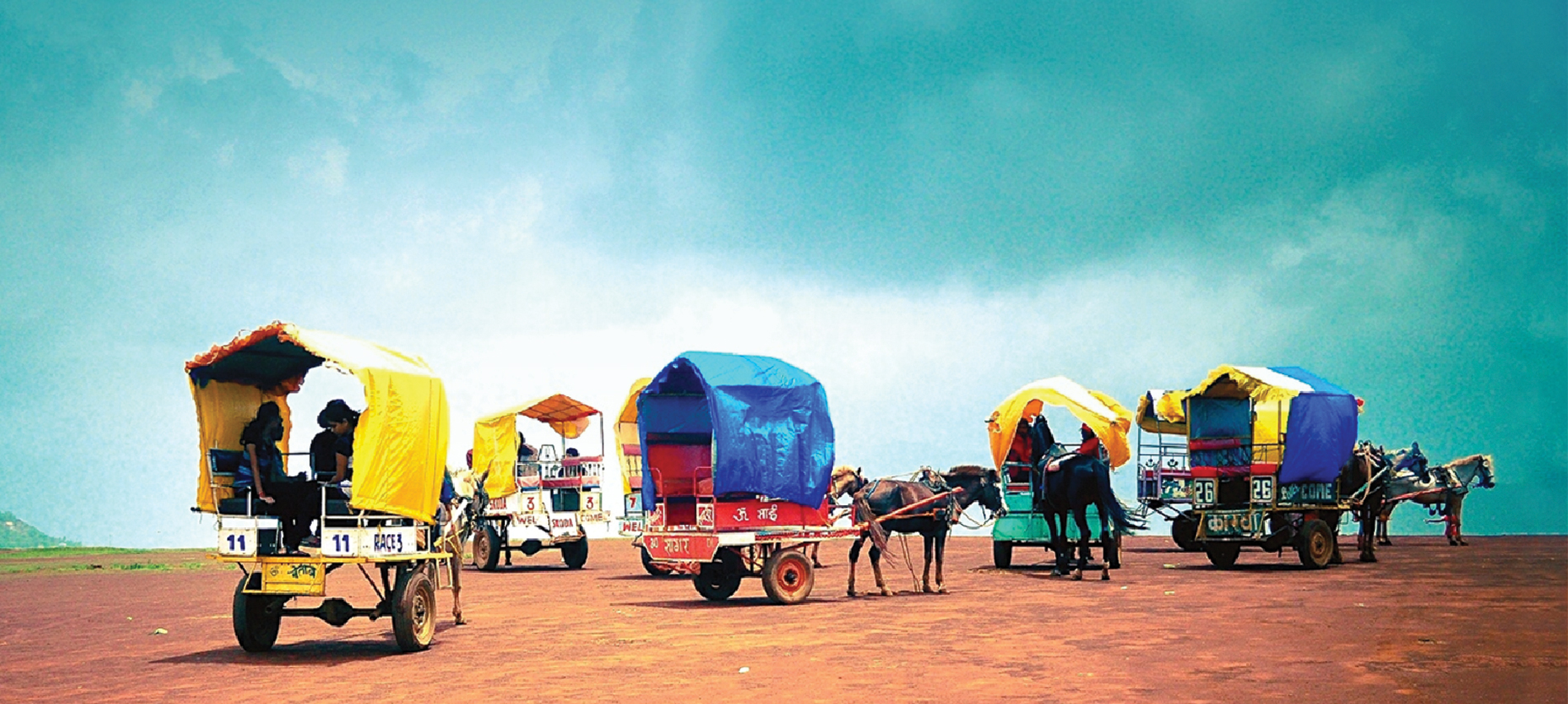
Mark Tully worked for the BBC in South Asia for 25 years and now works as a journalist in New Delhi. His books include No Full Stops In India, The Heart of India and Lives of Jesus. In India in Slow Motion, Mark Tully covers subjects as diverse as Hindu extremism, bonded child labour, Sufi mysticism, the crisis in agriculture, the persistence of political corruption and the problem of Kashmir.
Let’s read an excerpt from this book.
———
On the last Sunday we met another priest who had not found change easy. When we were sitting in a pew waiting for mass to start in Old Goa’s Se Cathedral, a small, elderly but remarkably spry priest came up to us wearing not the usual white cassock but an old fashioned, tight-fitting black one with a traditional high dog-collar. He asked whether I was a Portuguese speaker and when I told him I didn’t know a word of the language he said, ‘I usually ask foreigners that because I love speaking Portuguese but I don’t get much chance nowadays.’
I asked why the exterior of his cathedral was now yellow instead of the traditional Goan white and this provoked a diatribe against the Archaeological Survey of India which had taken over responsibility from the church for the monuments of Old Goa. ‘We can’t do anything to our own cathedral now,’ he fumed, hopping from one foot to the other in his anger. ‘We even have to get permission to put up a new collection box, and what do they do to preserve the church? Nothing.’ As evidence he took me to the west end and showed me piles of rubble where the plaster was peeling from the pillars.
I had noticed that his cassock had purple piping and purple buttons so I asked, ‘Does the purple mean you are a monsignor?’
‘No. But I am Father Adolpho Joviano Castro Viegas, a canon of the cathedral and the parish priest and that is just as senior.’
Having been put straight about that, I went on to ask, ‘In the cathedral, do you keep up the old traditions of worship?’
‘Of course I try to, but what can we do? We don’t have money to pay for the choirs and all that you need for proper ritual, and the bishop doesn’t care either. The Portuguese bishop used to come here regularly with full pomp and devotion. The present one only comes about four times a year. I love the full ritual and singing, it lifts your heart.’
The peppery priest then left me to robe for the chapter mass. The vast cathedral was far from full when Father Adolpho and six other equally elderly canons entered through the south aisle. Robed in splendid green copes they walked in a solemn procession, accompanied by just one server, to the altar at the top of the chancel steps. Six of the canons including Adolpho took their seats in high backed chairs behind the altar and one stood at the altar to celebrate the mass with dignity and solemnity. He was accompanied by a small choir in the organ loft.
Looking at the magnificent gilded reredos crowned by the figure of Christ on the cross just below the white-barrelled ceiling of the sanctuary, I couldn’t help but think of the Portuguese who had built this monument to impress Goans with the majesty of a God who lived on high. I knew that the church had to change, to bring God down to earth, if it was to survive in independent India, but I also acknowledged that I came from the old tradition, the tradition Father Adolpho was preserving. I found it easier to worship God in majesty, rather than God the social worker who battles for the poor, or God the personal pal of the charismatics.
——

Six things you didn’t know about author Sara Naveed

Packed with romance, drama and tragedy, Sara Naveed’s most recent book, Undying Affinity is the story of a twenty-two year old girl who falls in love with the new finance professor in her university. Her previous book is titled Our Story Ends Here. She has finished writing her third book and is currently working on a fourth.
The author, who spent most of her adolescent years in Sharjah, UAE moved back to Pakistan where she now lives with her parents and two siblings. Here are some facts you didn’t know about the author:


——–
