




Today roughly 500 million Muslims inhabit South Asia, although the process of Islamization began in the eighth century, the region developed a distinct Indo-Islamic civilization that culminated in the Mughal Empire. In the Gulf, while paying lip service to the power centres, including Mecca and Medina, this civilization cultivated its own variety of Islam, which was based on Sufism.
‘The Islamic Connection’ gathers together some of the best specialists on the pan-Islamic ties and explores ideological, educational and spiritual networks, which have gained momentum due to political strategies, migration flows and increased communications.
Revisiting the old notion of ‘acculturation’ from the point of view of the ‘connected history’ school of thought,5 Sanjay Subrahmanyam argues that when civilizations meet, ‘Time and again, then, we are forced to come to terms with a situation that is not one of mutual indifference, or of a turning of backs, or of a deep-rooted incomprehension, but of shifting vocabularies, and changes that are wrought over time by improvisations that eventually come to be part of a received tradition.’ In South Asia, Muslims have invented their own ‘brand’ of Islam soon after their arrival in the region, following their encounter with the dominant civilization, Hinduism.
Certainly, the Caliphate played a role in the initial conquest of South Asian territories by Arabs in the eighth century. It was the Khalifah al-Walid b. ‘Abdul Malik who, hearing that Arab traders had been captured by the ruler of Sind, asked the governor of Baghdad to send an army to liberate them in 711. The soldiers of Muhammad b. Qasim did more than that and conquered the whole of Sind. The social structure of the Muslims of South Asia, who became dominant in spite of their remaining a minority, reflects their attachment to the Arabian peninsula: the upper strata was made of those (the Syed) who claimed that they descended from the Prophet. Another source of prestige came from the accomplishment of the Mecca pilgrimage (the Hajj), the title ‘Hajji’ being affixed to the name of those who had done it.
However, the Muslims who brought Islam to South Asia in a sustainable manner were not those who used the sword to conquer the region and/or who looked back, but the Sufis who made India a sacred land for Muslims, as mentioned in the introduction of this volume, after the establishment of khanqahs (buildings designed for the gathering of Sufis saints’ disciples) and dargahs (tombs of saints) which became major pilgrimage centres.
Not only did Muslims of medieval India distance themselves from the holy cities of Arabia and develop sacred sites across ‘their’ land, they also initiated spiritual relations with the Hindus. While orthodox scholars developed forms of Islamic proselytization in order to convert these ‘infidels’ (kafirs), some Sufis and several Muslim rulers promoted a very substantial spiritual dialogue with Hindus. The encounter of Sufis and Yogis resulted in rich spiritual exchanges.For making possible this dialogue, which reached its culminating point during the Mughal Empire under Akbar, spiritual treaties were translated from Sanskrit to Persian and Arabic. Besides, after 1579, Akbar appeared as a competitor for the Caliph himself as suggested by Sanjay Subrahmanyam:
In early September 1579, a group of theologians, including the Shaikh ul-Islam, were pressurized into signing a text claiming for Akbar a special status of Padshah-i Islam, beyond that even of a Sultan-i Adil. […] one of the epithets used for him was now Mujtahid, as also Imam-i Adil, the latter startlingly close to the usages favoured at one time by Süleyman. Indeed, the challenges was directed in good measures at the Ottomans, who had claimed superior status as the Khalifas of the east, with their conquest of Egypt.
These words and the spiritual innovations of Akbar reflected the great autonomy of the Indo-Islamic civilization vis-à-vis West Asia, including the holy cities of the Arabian peninsula and Istanbul, the seat of the Caliphate. But the fact that Akbar claimed that he was a kind of Caliph also shows that the Indian Muslims were deeply attached to the idea of the Caliphate, that they somewhat tried to replicate. And when the Mughal Empire started to wane, the attitude of the Muslim Indians towards the Ottomans changed.
Local Muslim rulers threatened by the Europeans turned to the Ottoman Sultan for help and recognition in the eighteenth century, including those of the Malabar coast and Tipu Sultan, the warlord of southern India who put up the most successful resistance to the British. Tipu Sultan sent an ambassador to Constantinople in 1785 requesting that he bring back a letter of investiture from the Ottoman Sultan and military support. He got the former, but not the latter. The declining Mughal dynasty also turned towards the Ottoman Sultan. In fact, the less power the dynasty retained, the more Indian Muslims turned to the Caliph as their protector. In the first half of the nineteenth century, ‘the name of the Ottoman sultan definitely came to be mentioned in the Friday khutba in some Indian mosques.’ Gradually, Indian ulama recognized the Ottoman sultans as the holder of the universal caliphate. This trend reached its logical conclusion after the last Mughal Emperor, Bahadur Shah II (1775–1862) was deposed and exiled to Rangoon in the wake of the 1857 Mutiny which marked the final phase of the Mughal decline.
Find this book: The Islamic Connection: South Asia and the Gulf

5 Quotes From Harlan Coben’s New Book That Make it a Must-Read

Harlan Coben is one of the most famous names in the world of thrillers. He is the bestselling author of novels like The Stranger, Home, Fool me once, etc. With over 70 million books in print worldwide, his novels have been published in 43 languages worldwide.
He is back with another spine-chilling gem, Don’t Let Go which revolves around mistaken identities, dark family secrets, and mysterious conspiracies.
Here are five quotes from the book which make it unputdownable.


Don’t wait anymore and pick up this gem now!

5 Things You Didn’t Know About Harlan Coben

Harlan Coben is one of the most well-known names in the thriller genre. With over 70 million books in print worldwide, his books have been number one bestsellers in over a dozen countries. Here are 5 things you should know about the bestselling author.
Here are 5 things you should know about the bestselling author.


How many of these facts did you know?
Meet the characters from ‘Turtles All the Way Down’

Renowned author John Green is back with his latest YA novel Turtles All the Way Down. In this novel, Green shares Aza Holmes, a young woman navigating daily existence within the ever-tightening spiral of her own thoughts. The novel is also about lifelong friendship, the intimacy of an unexpected reunion, Star Wars fan fiction and tuatara.
Here are the characters from this long-awaited novel:
Aza Holmes

Daisy Ramirez

Mychal Turner

Davis Pickett

Noah Pickett

Russell Pickett

Which character did you find interesting?
Get John Green’s Turtles All The Way Down here.
The Four, An Excerpt

In his book, ‘The Four’, Scott Galloway deconstructs the strategies of the Four that lurk beneath their shiny veneers. He shows how they manipulate the fundamental emotional needs that have driven us since our ancestors lived in caves, at a speed and scope others can’t match.
Here’s an excerpt from the book.
Over the last twenty years, four technology giants have inspired more joy, connections, prosperity, and discovery than any entity in history. Along the way, Apple, Amazon, Facebook, and Google have created hundreds of thousands of high-paying jobs. The Four are responsible for an array of products and services that are entwined into the daily lives of billions of people. They’ve put a supercomputer in your pocket, are bringing the internet into developing countries, and are mapping the Earth’s land mass and oceans. The Four have generated unprecedented wealth ($2.3 trillion) that, via stock ownership, has helped millions of families across the planet build economic security. In sum, they make the world a better place. The above is true, and this narrative is espoused, repeatedly, across thousands of media outlets and gatherings of the innovation class (universities, conferences, congressional hearings, boardrooms). However, consider another view.
Show Me the Trillions
While billions of people derive significant value from these firms and their products, disturbingly few reap the economic benefits. General Motors created economic value of approximately $231,000 per employee (market cap/workforce).20 This sounds impressive until you realize that Facebook has created an enterprise worth $20.5 million per employee… or almost a hundred times the value per employee of the organizational icon of the last century.21,22 Imagine the economic output of a G-10 economy, generated by the population of Manhattan’s Lower East Side.
The economic value accretion seems to be defying the law of big numbers and accelerating. In the last four years, April 1, 2013–April 1, 2017, the Four increased in value by approximately $1.3 trillion (GDP of Russia). Other tech companies, old and new, big and bigger, are losing relevance. Aging behemoths, including HP and IBM, barely warrant the attention of the Four. Thousands of start-ups fly by like gnats hardly worth swatting at. Any firm that begins to show the potential to bother the Four is acquired—at prices lesser companies can’t imagine. (Facebook paid nearly $20 billion for five-year-old, fifty employee instant messaging company WhatsApp.) Ultimately, the only competitors the Four face are . . . each other. Safety in Hatred Governments, laws, and smaller firms appear helpless to stop the march, regardless of the Four’s impact on business, society, or the planet. However, there’s safety in hatred. Specifically, the Four hate each other. They are now competing directly, as their respective sectors are running out of easy prey.
Google signaled the end of the brand era as consumers, armed with search, no longer need to defer to the brand, hurting Apple, who also finds itself competing with Amazon in music and film. Amazon is Google’s largest customer, but it’s also threatening Google in search—55 percent of people searching for a product start on Amazon (vs. 28 percent on search engines such as Google).25 Apple and Amazon are running, full speed, into each other in front of us, on our TV screens and phones, as Google fights Apple to be the operating system of the product that defines our age, the smartphone. Meanwhile, both Siri (Apple) and Alexa (Amazon) have entered the thunderdome, where two voices enter, and only one will leave. Among online advertisers, Facebook is now taking share from Google as it completes the great pivot from desktop to mobile. And the technology likely creating more wealth over the next decade, the cloud—a delivery of hosted services over the internet—features the Ali vs. Frazier battle of the tech age as Amazon and Google go head-to-head with their respective cloud offerings. The Four are engaged in an epic race to become the operating system for our lives. The prize? A trillion-dollar-plus valuation, and power and influence greater than any entity in history.
So What?
To grasp the choices that ushered in the Four is to understand business and value creation in the digital age. In the first half of this book we’ll examine each horseman and deconstruct their strategies and the lessons business leaders can draw from them. In the second part of the book, we’ll identify and set aside the mythology the Four allowed to flourish around the origins of their competitive advantage. Then we’ll explore a new model for understanding how these companies exploit our basest instincts for growth and profitability, and show how the Four defend their markets with analog moats: real-world infrastructure designed to blunt attacks from potential competitors. What are the horsemen’s sins? How do they manipulate governments and competitors to steal IP? That’s in chapter 8. Could there ever be a Fifth Horseman? In chapter 9, we’ll evaluate the possible candidates, from Netflix to China’s retail giant Alibaba, which dwarfs Amazon on many metrics. Do any of them have what it takes to develop a more dominant platform?

Things You Should Know About Pankaj Dubey

Pankaj Dubey is the bestselling author of three novels. He is also a film-maker. His recent novel Love Curry is about three flatmates in London who fall in love with the same girl. They become arch rivals, but when their worlds turn topsy-turvy, they have no one but each other to turn to, learning that love is as much about letting go as it is about possessing.
Here are six things you should know about the author:


Catch Pankaj Dubey’s quirky and intense novel Love Curry.

9 lines that Show the Anguish Behind Mental Illness

Shreevatsa Nevatia’s How to Travel Light is a candid take at his life after he was diagnosed as bipolar at twenty-three, and how he struggled for a decade, fighting a cycle of depression and euphoria.
Here are a few lines from the book which display this struggle:


Combat your inner anguish with this book.

5 Facts About the Founder of YourStory You Should Know About

Shradha Sharma is a storyteller who engages with India’s digital space. Other than writing, she manages the media technology platform for entrepreneurs, YourStory. In Cut The Crap and Jargon, Shradha Sharma, along with T.N.Hari explores the skills needed to establish a start up and addresses the curiosity raised by young entrepreneurs.
T.N. Hari is an IIT-IIM alumnus and has worked at an executive level with multiple start-ups and scale-ups and has been through four successful exits in different industries.
Here are a few facts about Shradha Sharma.


How many of these facts did you know?

The Middle East and the Making of the Modern World, An Excerpt
Cyrus Schayegh in ‘The Middle East and the Making of the Modern World’ traces how a Eurocentric world economy and European imperialism molded the Middle East from the mid-nineteenth to mid-twentieth century.
Here is an excerpt from the book.
“I dreamed I was in Jerusalem.” Thus start dozens of entries in the diary of Khalil Sakakini, a Palestinian educator and intellectual born 1878 in Jerusalem, during his stay from the fall of 1907 to the summer of 1908 in New York City and Maine. By day he works in America; he barely makes ends meet, translating Arabic texts for a Columbia University professor, proofreading for a local Arabic journal, sweating in a paper mill. By night he crosses the ocean; he visits his extended family, including his best friend, Dawud Saidawi, other friends and neighbors. Particularly after Dawud’s death in January 1908 his longing is dark; his dreams often plummet into anxiety, horror even. And almost without fail the place that gives his dreams their shape is his hometown.
The family house is center stage. In April 1908 Sakakini dreams that “I entered the house and asked about my mother and was told she had died, then I asked about my brother Ya‘cub and was told he had died, then I asked about Shafiq and was told he had died and about Na’ifa and was told she had died, and I started to slap my face in despair, shouting oh mother, oh brother, oh Shafiq, oh Na’ifa.” Around the house twist and turn the alleyways of Jerusalem’s Old City. Soon after hearing of Dawud’s death Sakakini writes that “I was in Jerusalem, walking in the Christian Quarter, opposite our shop, . . . When I got to the steps of Dayr al-Rum, women descended in a procession ordered in rows, in the first row girls wrapped in a white shawl, but their cloths and headscarves black and their forearms bare, behind them four rows of elderly women, all of them drowning in black.” Beyond the Old City stretch new neighborhoods and buildings. Shortly before Dawud’ death, Sakakini dreams that
I was walking from place to place looking for Dawud, on my way I met the teacher Ya‘qub Andria, then I suddenly met [Dawud] and anxiously greeted him and he greeted back. He carried a bolero on his shoulder and wore glasses. We walked together, I asked how he was and he answered me: like shit. We walked a bit further until we reached the train station and he said: hurry before the train leaves, and started to dance as fast as lightning and jumped onto one of the roofless wagons and before I got to [it] the train moved, tearing through the land with tremendous speed and I almost succeeded in jumping on the wagon but could not and I waved at him and bode him farewell and told him wait for me at the next train.
There is no way to ascertain one true interpretation of these dreams, a fact compounded by our inability to tell Sakakini’s dreams from his accounts thereof. Take the last dream. At its start, is Sakakini walking through a vague dream-world- Jerusalem or is he in particular places but does not care telling? And why does he meet the teacher just before seeing Dawud? We cannot know. Besides, are not these Dreams unexceptional, timeless even, and hence useless to the historian?
Not quite. Sakakini’s dream accounts are part of diary entries; in return, these form part of a larger range of texts like letters; hence they have contexts and in this sense are open to interpretation. Many letters are for Sultana—a neighbor’s daughter, beautiful, and an educator and Greek Orthodox like him—with whom Sakakini fell madly in love the summer of his departure. They are always emotive and often come with more than one tear. (Sultana is more down-to- earth: “What’s this, Khalil?! Do not make crying all-consuming business!”) And in these letters as in Sakakini’s dreams, Jerusalem is the arena. At its center is, again, the family’s house. In the last letter that Sakakini gives Sultana before leaving, he implores her “remember me when you visit the house, stand in your window that overlooks our house and say ‘peace be upon you, oh Khalil.’” And beyond the house extend, again, the city and its environs. Sakakini asks Sultana “to visit as often as you can our beloved rock” in the Shaikh Jarrah neighborhood, and recalls the day “we . . . with my sister Milia walked on the road of the Mount of Olives and I felt like gaily striding on the peak of my happiness.”
Was the geography of Jerusalem that of Sakakini’s longing, then? Put awkwardly, was “the local” all that mattered to the emotions of somebody who crossed an ocean and “went global,” as it were?
Yes and no. “The local” was key to Sakakini’s emotions; it grounded them. But just like the “real” Jerusalem of bricks and stones started spilling beyond its old walls by the mid-nineteenth century, the Jerusalem of Sakakini’s dreams and love was not walled in. It was not simply local.
And the way it was not simply local was neither indistinguishably commonplace nor sakakinesquely idiosyncratic, but specific enough to tell us a thing or two about the time and place the writer lived in.
By the mid-nineteenth century Ottoman Jerusalem started interacting with the world in ways both new and transformative. (Outside worlds had of course been present in this city holy to Jews, Christians, and Muslims for millennia.) While the center of the Ottoman Empire—Istanbul— was not very present in its provinces from the late 1600s, from the mid-nineteenth century a new era of state formation bound center and provinces closer together. European powers, too, became more active. Interacting with these changes, Jerusalem’s ties with its rural surroundings grew stronger. All these changes found reflection in Sakakini’s Jerusalem, including that of his dreams. He may have dreamed of Dawud racing away on a train not simply because he was afraid to lose him but because Dawud—his very best friend—had moved from Jerusalem to Jaffa. From here, a French company had built a railway to Jerusalem in 1892. And it was here that Sakakini met Dawud for the last time, as it was in this port city that he commenced his maritime journey to America.

Marvellous Thieves, An Excerpt
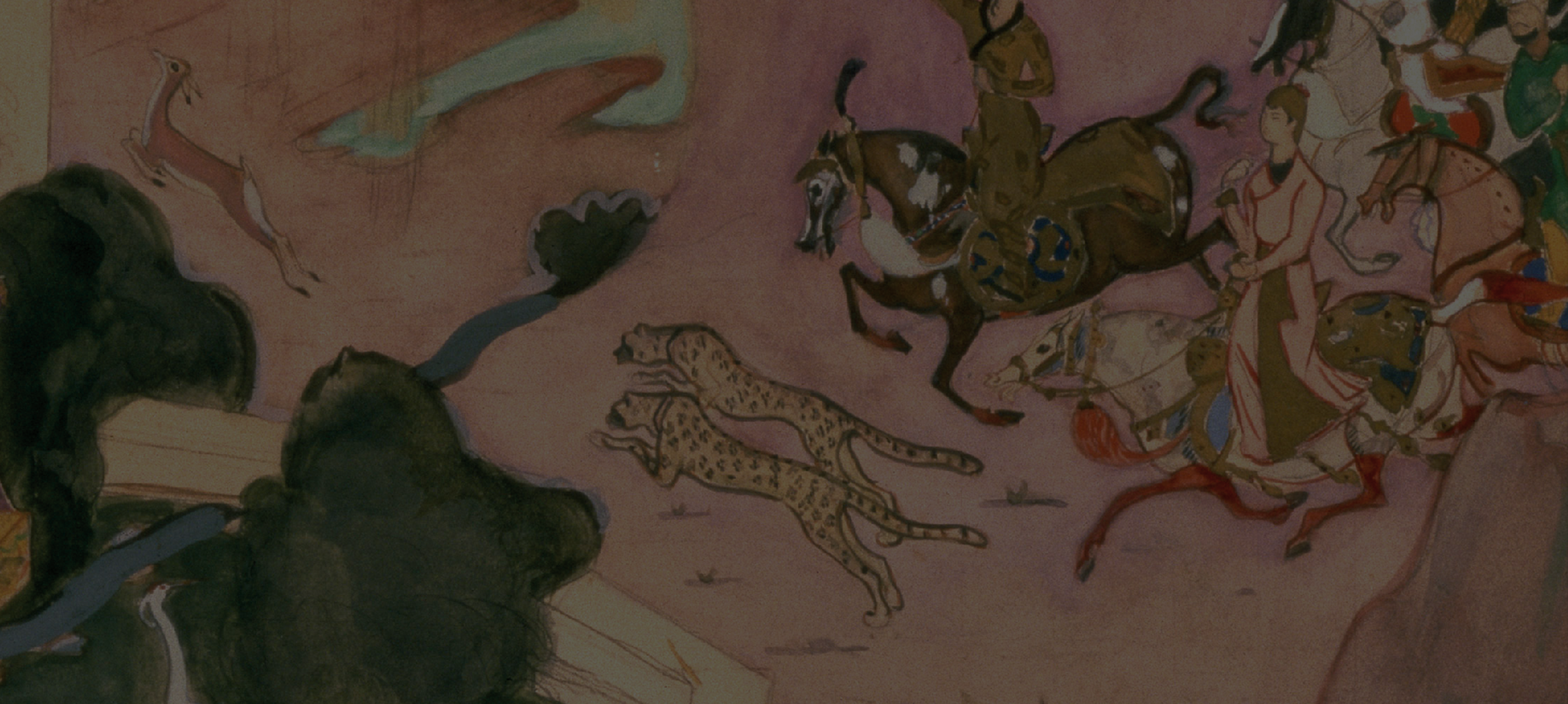
Paulo Lomas Horta in ‘Marvellous Thieves’ introduces the poets, scholars, pilgrims and charlatans who made unacknowledged contributions to Arabian Nights.
Here’s an excerpt from the book.
On March 25, 1709, a visit by Antoine Galland to the Paris apartment of his friend Paul Lucas yielded a discovery that would shape the literary legacy of the first French translator of the Thousand and One
Nights. Lucas, a collector of treasures for the court of Louis XIV, was well known for his travels in the Middle East, and his apartment was recognized as one of the marvels of the French capital. Listed in early eighteenth- century guidebooks as a place to view antiquities and other rare objects from Greece, Egypt, and Asia Minor, it drew scholars, collectors, and curiosity seekers of all kinds. Over the course of his journeys in the Mediterranean and the Ottoman Empire, Lucas had amassed enough medallions, coins, engraved stones, and gems to fill six rooms.
The herbier in his apartment contained some 3,000 varieties of plants taken from foreign locations, and the droguier was equally impressive. One visitor to the apartment in the 1730s described a remarkable sculpture of the goddess Ceres that Lucas had acquired in Athens forty years earlier. Ten feet tall, the figure was made of Oriental jasper and plated with bronze, and in Paris she enjoyed the company of many other bronzes from Greece, Macedonia, and the Levant, as well as two Persian sculptures of nude sages at prayer. Among such historically valuable pieces, stranger artifacts were scattered: petrified mushrooms, seahorses, and mummified birds encased in bronze.
Arriving at this cabinet of curiosities in 1709, Galland found an even greater treasure awaiting him: a young Maronite traveller from Aleppo by the name of Hanna Diyab who, he reported, “[knew] some very beautiful Arabic tales.” While Lucas may have viewed Diyab as just another Oriental curiosity to be displayed at the French court, Galland saw in him a solution to a frustrating predicament. After translating all the stories in his incomplete Arabic manuscript of the Thousand and One Nights, Galland was in need of more, and he had now found a storyteller who could fill the gap. In a sequence of twelve meetings between May 5 and June 2, 1709, Diyab related sixteen fantastic stories to Galland, who chose to add ten of these to the final three volumes of his French version of the Arabian Nights. Th ese storytelling sessions were the origin of some of the most famous of the Arabian Nights tales— including “Ali Baba and the Forty Thieves” and “Prince Ahmad and the Fairy Peri- Banu”— and represent a lasting contribution to a story collection that has taken its place in the canons of world literature.
It was not the first time that Galland had benefitted from the curiosities collected by Lucas. Despite his lack of respect for Lucas’s abilities as a scholar, Galland found his collection of coins very useful in his own numismatic research, and he tried to gain access to lists or drawings of these from common acquaintances when his younger colleague was unwilling to share. Just as Galland borrowed coins to add entries to his numismatic dictionary, he would borrow Diyab to add stories to his version of the Arabian Nights. Considering his impact on the first French edition of the Arabic story collection, the Syrian storyteller could be judged the most valuable curiosity Lucas ever brought back from the Levant.
Since the publication of Les mille et une nuits, Galland’s French version of the Arabian Nights, in twelve volumes from 1704 to 1717, Galland has been credited as the first “author” of the collection in European letters, and as a crucial contributor to the emergence of the “Oriental tale” in French. Not only did he translate the 282 nights of stories in his Arabic manuscript in elegant Parisian prose, but he is credited with making a more substantial contribution to the story collection by lovingly adopting and adapting the tales that he heard from Diyab in 1709.
These stories, called the “orphan tales” because (with one exception) they have no known Arabic manuscript source, are seen as central to Galland’s achievement as a translator of the Arabian Nights. In this portion of his story collection, Galland’s work was no longer simply translation or adaptation; it represented “creation.”
Jean- Paul Sermain, one of the editors of the most recent edition of Galland’s Les mille et une nuits (2004), states the case most persuasively. He argues that Galland, working from his sparse notes on Diyab’s oral per for mances, created tales of ordinary characters caught up in extraordinary predicaments. Drawing on French literary conventions, he invented dialogues and descriptions and gave narrative coherence to the tales. Characters were developed with more sympathy, and moral lessons were highlighted. In the hands of Galland, the orphan tales of Diyab spoke of the superiority of the hero of humble origins and the need to behave decently in difficult circumstances. To fill out his meager notes, the French translator drew on his scholarly knowledge and his own travels of the Orient to imagine the fabulous details of voyages, palaces, and magical objects. Sermain argues that these orphan
tales teach the reader how to read the Arabian Nights as a whole. In the space between the French fairy tale and the Arabic story cycle, Galland seemed to fashion a new genre— that of the “Oriental tale.”
