




Who isn’t enchanted by the glitz and glamour of the world’s largest cinema industry AKA Bollywood?
With Bollywood: The Films! The Songs! The Stars!, be mesmerized by the glamour and colour of Bollywood. Known for their glittering costumes and epic song-and-dance routines, the charming movies produced in Mumbai have captured the hearts not just of Indians but of people the world over.
Here’s what Amitabh Bachchan has to say in the foreword of this lavishly illustrated book.
I abhor the title of this book. The Indian Film Industry is what I shall always refer to as Cinema in India. We are an independent creative industry and not a derivative; any attempt to imply otherwise, shall not find favour with me.
But the absence of any kind of film documentation is another malaise that has been of great concern to me; one that I lament greatly. To find a global publishing house now wanting to tap into “the increasing interest in the Hindi film industry from national and international quarters” is indeed most laudable.
Hindi cinema, indeed the entire cinema in India, is the largest film-producing unit in the world. To me it has always played the role of a unifier, an integrator. When we sit inside that darkened hall we never ask who the person sitting next to us is – his or her caste, creed, colour, or religion. Yet we enjoy the same story, laugh at the same jokes, cry at the same emotions, and sing the same songs. In a world that is disintegrating around us faster every day, where can one find a better example of national integration than within those hallowed portals of a cinema hall? There are not many institutions left that can boast or propagate such unity.
I once asked a Russian gentleman in Moscow what it was that attracted him to Hindi cinema. He replied: “When I come out of the theatre after watching a Hindi film, I have a smile on my face and a dry tear on my cheek!” There can be no better assessment of our films than this – and that too from an individual who was not an Indian. But my father, the great poet and litterateur, Harivansh Rai Bachchan, summed it all up most succinctly. On asking him one day what Hindi cinema meant to him, he said: “I get to see poetic justice in three hours! You and me shall not see this in a lifetime… perhaps several lifetimes!”
SMM Ausaja, a friend and a passionate film admirer, curator, and journalist, contributes to a section of this book. My wishes to him and to the publication.

5 Things You Probably Didn’t Know About Orhan Pamuk

A critically acclaimed author, and winner of Nobel Prize in Literature in 2006, Orhan Pamuk is one of the most iconic authors of our times. Pamuk is a multi-dimensional writer whose novels have witnessed major success over the years. His style of writing is described as ‘unsettling but intriguing’ as he often explores the East and West dichotomy.
Here are some interesting facts about the wordsmith


How many of these facts did you already know?
Penguin Fever Schedule

It’s that time of the year again but this time it’s under the autumn sky. Six days of literature extravaganza is going to start from October 26, with numerous literary icons as panelists.
Here are the dates you should mark on your calendar.
October 26, 7PM: The Ministry of Utmost Happiness – Arundhati Roy in conversation with Shohini Ghosh
October 27, 7PM: Zara sa jhoom loo main – Shobhaa De on turning seventy – and having a blast! In conversation with Vidya Balan. Sonia Singh to moderate
October 28, 5PM: Inconvenient Truths: Are we heading for an environmental disaster – Sunita Narain, Prerna Bindra, and Pradip Krishen
October 28, 7PM: The Heart of the Matter – Ravinder Singh, Durjoy Datta, and Sudeep Nagarkar in conversation with RJ Ginnie
October 29, 5PM: The Man from the Hills – Ruskin Bond on life, writing, and his love for lemon cheesecake!
October 29, 7PM: Criminal Minds – Brijesh Singh, Ravi Subramanian, Novoneel Chakraborty. Poonam Saxena will moderate the session
October 30, 7PM: The Line of Beauty – Perumal Murugan, Kannan Sundaram, Bibek Debroy, Rana Safvi, Namita Gokhale as moderator
October 31, 7PM: The Rise of the Elephant – Shashi Tharoor, Gurcharan Das, Sonu Bhasin, Shireen Bhan as moderator
Open Air Library: October 26–31, 11AM onwards
If you haven’t already, register for the Penguin Fever here: http://bit.ly/penguinfever
See you there!
Prince Amritsena Saves the Day!: ‘The Bird With Golden Wings’ — An Excerpt

Master storyteller, Sudha Murty, weaves magical tales of princesses and little girls, talking animals and an enchanting world of the good and the evil for children in her book, ‘The Bird With Golden Wings: Stories of Wit and Magic’.
In the short story, ‘Skills for a Prince’, Amritsena, a young and intelligent prince finds a unique way to test the honesty and integrity of a few of his subjects. How? Let’s find out!
Skills for a Prince
Amritsena, a young prince, was very popular with his subjects. Everyone praised his sense of fairness. He also loved to play pranks and made the courtiers laugh. He often disguised himself and roamed the streets of the capital city, listening to what the people were saying and learnt about the problems of the common man in this way.
During one such tour, he came across three young men in the outskirts of the city. From their attire they appeared to be strangers. They were huddled together, talking to each other.
Amritsena walked up to them and said, ‘You look new to this city. Can I help you?’
One of the men replied, ‘We are students of the sage Kashyapa and have recently finished our studies. We are looking for work, where we can put our special skills to use.’
At once, Amritsena’s ears pricked up. ‘And what are these special skills? I work in the king’s court and I may be able to help you find a job there.’
One young man said, ‘Just by tapping my feet, I can make out what is below the ground.’
The second one said, ‘I can always tell in which direction one may find hidden treasure.’
The third said, ‘Once I have seen a person, I can recognize him anywhere, even if he is in disguise.’
Amritsena heard them out, thought for a minute and said, ‘I am also a man with a special quality.’
‘What is that?’ they asked.
‘If anyone is in difficulty, I can always find a solution and rescue the person.’
‘From where did you get this gift? Who taught you?’
‘I have always had this gift, since I was a child,’ replied Amritsena with a smile. Then he said, ‘Why don’t you show me a sample of your special skills as we walk to the city? I can then tell the king about you.’
The four men began walking. After some time, one stopped and said, ‘Below us lies a tunnel.’
They started digging and, sure enough, they found a tunnel. They began to walk through the tunnel, which led them into the palace.
Now the second man stopped suddenly and said, ‘Just around the corner there is a secret treasury.’
Amritsena, who knew this to be true, was amazed. He smiled secretly to himself and said,
‘You three wait here. If the guards see you they will mistake you for thieves. Let me go and check.’ Then he walked quickly ahead, turned a corner where he stripped off his disguise, and presented himself before the guards.
‘There are three men in the tunnel plotting to loot the treasury,’ he told them. ‘Go and arrest them immediately. They should be produced in court first thing tomorrow morning.’ Saying this he walked away to his room and went to bed.
‘There are three men in the tunnel plotting to loot the treasury,’ he told them. ‘Go and arrest them immediately. They should be produced in court first thing tomorrow morning.’ Saying this he walked away to his room and went to bed.
The next morning, the three men were presented in the king’s court. Seeing Amritsena on the throne, the third man realized he was the same man who had got them arrested. He whispered this to his friends. Now they were scared that the prince would punish them for having entered the royal treasury just to show off.
‘How did you find the way into the secret tunnel?’ thundered the king, Amritsena’s father.
‘We…we j-just…’ stammered the men, shaking in fear.
Amritsena watched them, trying not to laugh. Then he stepped in and whispered in his father’s ear, ‘They are not thieves. I met them last night just outside the city. They are learned men with wonderful gifts. I only wanted to test them to see if they were telling the truth or not. We should keep them in our kingdom as their talents will help us in many ways.’
The king nodded, and said, ‘On the request of the prince I release you. You will work for me from now on, and use your gifts for the betterment of this kingdom.’
The three men sighed in relief. Amritsena had rescued them—just as he had said he could!
Dive into the world of fascinating tales in Sudha Murty’s ‘The Bird With Golden Wings: Stories of Wit and Magic’ and get to know some amazing stories of wit, humour and love!

‘Shoot. Dive. Fly’, Foreword by M.S. Dhoni

Rachna Bisht Rawat’s ‘Shoot. Dive. Fly’ aims to introduce teenagers to the armed forces and what it is like to have a career in the forces. The book is a collection of twenty-one nail-biting stories of adventure and thrill of a career in uniform. The book also has army personnel talk about what the armed forces have taught them.
Here’s the foreword by Mahendra Singh Dhoni, ex-Indian cricket team captain.
My dear friends,
It gives me great pleasure to write the foreword for Shoot. Dive. Fly. The Indian Army is one of the most respectable and exciting careers our country offers young people and it surprises me that the Army faces a shortage of officers year after year. This is probably because most of us do not know what an amazing variety of jobs it offers. Perhaps this is also because Army officers are not permitted to talk to the media and so we never get to hear about the amazing things they do.
I compliment the Army on giving Rachna Bisht Rawat access to young serving officers to share with us the experiences of the fascinating jobs they do.
This book will help bust the false belief that an Army officer is a man with a gun who lives on the borders of the country, cut off from the rest of civilization, waiting for a war to begin, which might sound like a boring job to a lot of teenagers. They do that, of course, and we are very proud of them for it, but that’s not the whole truth. Army officers do a lot of other things too that most teens want from a career. The Army has engineers, doctors, helicopter pilots, drone fliers, cyber warriors, Olympians, Everest summiteers, skydivers, sailors, marathon runners, shooters—and yes, even cricketers—and a host of other professionals that we often don’t get to hear about. These are men and women who are all trained for combat but they work in their particular fields with all the support of the Indian Army to reach the top. You, too, can choose one of these opportunities and get paid to be trained and excel in your dream job. Not many, if any, industries or institutions give you this freedom. And how do I know all this? Because I happen to be an officer in the Indian Territorial Army too.
I am sure you will enjoy reading the real-life stories of young officers who went beyond the ordinary to reach great heights. This book includes the story of Colonel Ivan J. Crasto, SC, who climbed down a rope from a hovering helicopter to rescue all ten tourists trapped on board a trolley hanging from a snapped wire. It also tells of Colonel Rajesh Unnikrishnan who climbed down forty feet into a dark, gaping borewell to rescue a small child who had fallen in. In these pages, you will meet Colonel Sameer Singh Bisht, SM, whose gun jammed in an encounter with Kashmiri terrorists but he managed to keep his nerve and emerge victorious. You will read of young mountaineer Major Deepika Rathore, who has climbed the mighty Mount Everest twice and of my fellow paratrooper Major Sandesh Kadam, who jumped out of a plane at 8,500 feet to find that both his main and emergency parachutes would not open. How did he land alive and undamaged in spirit to the extent that he is raring to recover completely and go back to his duty, you might ask? To know that, you will need to read this book, and/or join the Army.
I shall sign off by wishing you the best in whatever career you choose. When I am old and sitting in front of the TV watching some of you play cricket for India, or some of you do amazing things that the news channels report, I shall smile and applaud for you—just like you do for me, when I hit a six or take a catch. I shall be proud of all of you. Go on and do your best in life. But do consider wearing the uniform once before you make a final choice. I did!
Jai Hind! Jai Hind ki Sena!
Lieutenant Colonel Mahendra Singh Dhoni

"Where are the words I wrote yesterday?"

Do you remember the last time you took a moment from your busy life to celebrate its little joys?
Ruskin Bond gives us a solution with ‘Words From the Hills’ — a journal that urges you to stop, take a breath, and appreciate the gift of life.
Here’s a short snippet from the book and a prompt for you to pick it up, if you haven’t already!
When I opened my window, the wind came in and snatched my words away. And perhaps that’s where all words go in the end—over the hills and far away, to be lost forever.
A few stray words found their way to the desks of Penguin’s editor Premanka Goswami and design head
Ahlawat Gunjan, and these good souls decided to preserve them for no special reason other than that they were words of love and joy (if not wisdom), and had emanated from my abode in the hills and lent themselves to lyrical watercolours from Ahlawat’s favourite paintbox.
Among other favourite things, he has depicted the rubber plant that flourishes on my bedroom wall. I am not
sure if it wants to make love to me, or simply strangle me. When I returned from a trip to Delhi (or rather Gurgaon,
where everything seems to happen now), I found the rubber plant had spread its tentacles across my pillow, almost as though it was lying in wait for me.
As this is a book of a few words and many colours, I must make this introduction a brief one. The book is really intended for your words, dear reader, and you will find that we have given you the freedom of every page, with space for you to put down your thoughts, feelings and observations before they are carried away by the wind.
This is your book, and the words and decorations are simply there to persuade you to use it.
Ruskin Bond
Ivy Cottage, Landour
August 2017


Inspiring, isn’t it? So grab a pen and get started, because every memory is worth remembering.

Why the Judiciary is Important and How the Legislative Can Take Advantage

Lawyer and activist Prashant Bhushan’s The Case that Shook India is a blow-by-blow account of the watershed case that led to India’s Emergency in 1975.
The book also depicts how the judiciary can be misused by powerful members of the legislative body to their advantage, thereby emphasising on the increasing need of a stronger, robust judiciary.
Here are 5 instances from the book that the author highlights.


Grab your copy of India’s most thrilling courtroom drama today!

9 Things That Will Make You Pick John Green’s ‘Turtles All The Way Down’
John Green is the bestselling author of several literary marvels. He is no stranger to the Young Adult genre and his works have been immortalized on the big screen as well. For his works, he has won laurels such as the Printz Medal and the Edgar Award. He has also been also selected by TIME magazine as one of the 100 Most Influential People in the World.
He is back with his fifth solo novel, Turtles All The Way Down’.
Here are ten things about the book you should know.


Don’t wait any more and pick up the book right now!

The Story of Mahatma Gandhi And Where It All Began: ‘Junior Lives: Mahatma Gandhi’ — An Excerpt

Mahatma Gandhi, lovingly called Gandhiji and the Father of the Nation, has been remembered by the entire world for his honest, non-violent methods of leading a nation to independence.
In Sonia Mehta’s ‘Junior Lives: Mahatma Gandhi’, the author explores the life of Gandhiji from his childhood and shows us how he became the leader that he is today.
Here’s a short excerpt from the book.
The thirteen-year-old lad was impatient. He wanted to get back to his friends, who were having a great time playing outdoors. But here he was—stuck indoors, made to dress up in clothes that were icky and uncomfortable.
‘Can I go now?’ he asked his mother, trying to shrug off the elaborate outfit she was trying to get him to wear.
‘No, Mohan,’ she replied. ‘You can’t go play with your friends today. It’s your wedding day.’
That young boy was Mohandas Karamchand Gandhi. At thirteen years of age, he was about to get married to a girl who was just a little older than he was. His family would never have believed it then, but this boy was to grow up to become one of the world’s greatest leaders, who would lead India to freedom. He showed people a nonviolent way of life. Millions of people adored him and gave him titles like Father of the Nation, Bapu (meaning father) and Mahatma (meaning great soul). What an incredible achievement for such an ordinary boy, born to such ordinary parents!
A Happy Family
Young Mohan (for that was what his family called him) was born to Karamchand and Putlibai on 2 October 1869. Theirs was a large, happy family. Mohan had a sister and two brothers—all older than him, so you can imagine how much he was loved and petted. The family was quite wealthy and lived in a big, three-storeyed house in the Indian port-city of Porbandar, in what is now Gujarat. Karamchand was an educated man. The ruler of Rajkot admired him and made him the diwan of Porbandar. As diwan, he managed the business of the state. People respected Karamchand a lot and came to him for advice.
When Mohan was a young boy, he was very shy. He would spend all his time with his books. This made him very thoughtful. However, he didn’t love studies; in fact, he found maths rather hard. But he was a good student overall, and his teachers thought well of him. One day, Mohan got his father’s permission to see a play about a king named Raja Harishchandra. The special thing about this king was that he never lied, no matter what happened to him. Mohan was so impressed by this play that he swore to never tell a lie in his life.
Always, Always Truthful
One morning, Mohan’s class was given a spelling test. Mohan knew all the spellings, except that of ‘kettle’. The English teacher, keen to prove that he was a good teacher, wanted all his students to know every spelling so that he could impress his superiors. When he saw that Mohan was unsure, he prodded him to peep at his neighbour’s slate and see the spelling.
‘But that would be cheating,’ an aghast Mohan thought. He refused to look at his neighbour’s slate, and eventually was the only boy in class who did not get all his spellings right. But that didn’t bother him. He was more bothered that his teacher had told him to cheat.
One of the only times Mohan lied was when he was in his early teens. He stole some gold from his brother and sold it. But it wasn’t for himself. He gave the money to his other brother to help him get out of debt. He couldn’t sleep that night. He tossed and turned, feeling awful. Finally, he confessed to his father. He was ready for any punishment. But instead of getting upset, Mohan’s father wept. He was hurt that his son had lied, but happy he had confessed.
Mahatma Gandhi’s fascinating life goes way beyond the years documented in the pages of history. Get to know Mohandas Karamchand Gandhi before he became GandhiJi with Sonia Mehta’s ‘Junior Lives: Mahatma Gandhi’!

5 Books That Will Brighten Up Your Diwali

Diwali is a celebration of lights, homecoming, and the victory of good over evil. This Diwali, come home to stories of hope and triumph of humanity over darkness, fear and hopelessness.
Here are 5 books you should read this Diwali
Yaarana
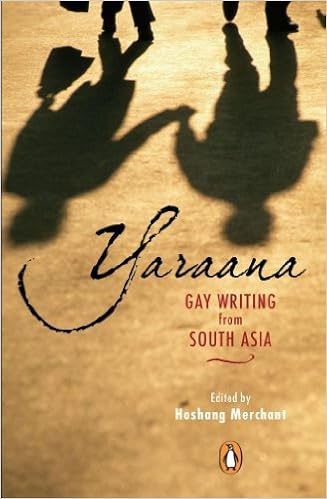

Hoshang Merchant in this collection captures the true meaning of yaraana or male friendship and bonding, an often ignored facet of South Asian life and sexuality. The collection features some enigmatic stories like Ashok Row Kavi’s autobiographical piece on growing up gay in Bombay and Vikram Seth’s brilliantly etched account of a homosexual relationship in The Golden Gate. The book shows how love and companionship can brighten up any dark day.
Kanshiram
![Kanshiram: Leader of the Dalits by [Narayan, Badri]](https://images-eu.ssl-images-amazon.com/images/I/51Un-Nm2YWL.jpg)
Fetching from various oral and written sources, Badri Narayan shows how Kanshiram mobilized dalits with his homespun idiom, cycle rallies and, uniquely, the use of local folk heroes and myths, rousing their self-respect, and how he struck opportunistic alliances with higher-caste parties to seize power for dalits. Authoritative and insightful, this is a rare portrait of the man who changed the face of dalit society and, indeed, of Indian politics. The book inspires one to fight for their rights, and combat the force of darkness.
Bombay Stories
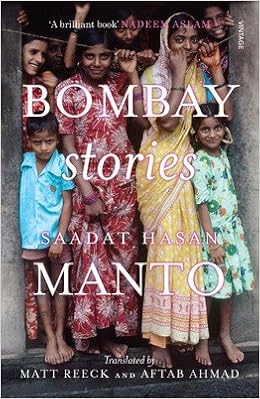
Bombay Stories is a collection of short stories about actors, prostitutes, intellectuals, conmen and more. Originally written in Urdu by Saadat Hasan Manto, it is set in the 1930s and 1940s, when the author had just arrived in the city. Anyone who is interested in the history and culture of Bombay or is a fan of translated Urdu literature, can enjoy reading this book. It will guide one to seek what is good, and annihilate the evil in this world.
Unheard Voices
In this book, civil servant and social activist Harsh Mander draws on his own and his colleagues’ experiences to explore the lives of twenty people who have survived and coped despite being pushed to the hopeless margins of society. The stories act like beacons of hope that will make Diwali seem a little brighter. The book will enlighten one to seek light in this weary world.
Children, Women, Men
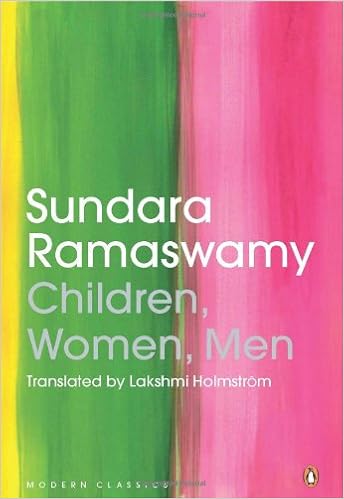
Set in the late 1930s and reflecting the political and social turmoil of the pre-war years, it chronicles the psychological conflict between Srinivasa Aiyar and his nine-year-old son, Balu. The ambitious novel also tells the story of Anandam, a young widow, as she considers remarriage, and Sridaran, who chooses to break off his studies in England in order to join nationalist activities at home. The book in its true essence display how happiness is found in the darkest days.
So, which book are you reading this Diwali?