



Have you ever felt someone was watching you, even though you are all alone? Shinie Antony’s ‘Boo’ is a collection of thirteen well-crafted paranormal tales, each uniquely haunting in its own way. The stories penned by Shashi Deshpande, K.R. Meera, Jerry Pinto, Durjoy Datta, and many other illustrious names are sure to send a chill down your spine.
Here’s an excerpt of the introduction of the book.
The unknown has always beckoned. Infinite, cobwebby, black as the night, silent as the grave, what we cannot see hear touch. What, furthermore, is perhaps not alive.
My own experiences of the uncanny stay mine; fear takes me where it will. There were whispers without words and things I almost saw. And unlike what I always thought, squeamish as I am and lily-livered, these semi-happenings did not creep me out. Sometimes I saw them as other-worldly warnings, sometimes they were not meant to be seen and my eye had somehow breached a divide, sometimes my mouth formed words I did not mean to say . . .
The paranormal has many subgenres, but of these it was not the occult, poltergeists or screams of the possessed that brought me to these stories, but the psychological thrill. The mind is where it all begins. The mind is where it lives. This feeling that there’s something out there—and it is on to us. It knows that we know. And we must forever pretend we don’t know, not catch its eye—even when it is looking straight at us.
The gothic charm of K.R. Meera’s story, the sweet smell of onions in Kanishk Tharoor’s tale, the burden of hindsight in Shashi Deshpande’s mythofiction, the menacing narrator in Jerry Pinto’s story—they all bring in the supernatural slyly, stylishly. Durjoy Datta, Jahnavi Barua, Manabendra Bandyopadhyay, Kiran Manral and Jaishree Misra give us the old-fashioned traditional ghost story, the one where the banshee sighs or screams. While Ipsita Roy Chakraverti decodes a message from the beyond, Madhavi S. Mahadevan and Usha K.R. take us to places where the backstory is everything.
We wouldn’t be here—you reading this, me writing this—if we didn’t know. Despite science, reason and a raised eyebrow. Deep in our bones, when all falls silent, there is a knowing that precedes births and lingers after deaths. It lifts the hair at the nape of our neck; it stares at us, infatuated, from behind stairs; prescient, it invades our very rocking chair, replacing peace and calm with a restless zigzag; it rotates its head 360 degrees when we aren’t looking.
It doesn’t dispel though we move on, go our ways, live lives, love and let go. What is it that shifts just beyond our vision? Who listens when we talk in our heads? When does dark get just that little bit darker? Why that word on the billboard—the same word we just finished thinking about? And then bumping into the very person we thought of after a hundred years only that morning . . .
What do we know about ourselves besides incidents and milestones and birthdays and heartbreaks, what do we know of that which cannot be known? It is there in a photograph or painting you see—the feeling that you’ve been there before, seen that face somewhere. We are here but we are elsewhere too.
A haunting. Begins as a catch in the side, a stiff neck, a hunch, a bad feeling, pins and needles, an eye twitch, sleep talk, a leg gone numb, vertigo, spasms, heart that trebles its beat, a smell, a chill, a spell, a tingle, dreaming the same dream, a sudden vision of what’s to come, waking at 3.33 a.m., a song no one else can hear, the sound of breathing when we hold our breath . . .
We are never alone, are we?

Retaking A Tour Down Memory Lane With ‘The Guide’ — An Excerpt

The Guide, written by R K Narayan in 1958, celebrates the myriad mysteries and bizarre charms of India, as seen through the experiences of a small-town tour guide, Raju from Malgudi. The novel went on to be adapted on the silver screen and has been immortalised by Dev Anand and Waheeda Rehman, playing the protagonists Raju and Rosie respectively.
On R K Narayan’s 111th birth anniversary, here’s revisiting this timeless story that captures the crazy and magical spirit of India through its themes of love, loss, betrayal and the search for God.
Here’s an exclusive excerpt from the book.
RAJU WELCOMED THE intrusion—something to relieve the loneliness of the place. The man stood gazing reverentially on his face. Raju felt amused and embarrassed. ‘Sit down if you like,’ Raju said, to break the spell. The other accepted the suggestion with a grateful nod and went down the river steps to wash his feet and face, came up wiping himself dry with the end of a chequered yellow towel on his shoulder, and took his seat two steps below the granite slab on which Raju was sitting cross-legged as if it were a throne, beside an ancient shrine. The branches of the trees canopying the river course rustled and trembled with the agitation of birds and monkeys settling down for the night. Upstream beyond the hills the sun was setting. Raju waited for the other to say something. But he was too polite to open a conversation.
Raju asked, ‘Where are you from?’ dreading lest the other should turn round and ask the same question. The man replied, ‘I’m from Mangal.’
‘Where is Mangal?’
The other waved his arm, indicating a direction across the river, beyond the high steep bank. ‘Not far from here,’ he added. The man volunteered further information about himself. ‘My daughter lives nearby. I had gone to visit her; I am now on my way home. I left her after food. She insisted that I should stay on to dinner, but I refused. It’d have meant walking home at nearly midnight. I’m not afraid of anything, but why should we walk when we ought to be sleeping in bed?’
‘You are very sensible,’ Raju said.
They listened for a while to the chatter of monkeys, and the man added as an afterthought, ‘My daughter’s married to my own sister’s son, and so there is no problem. I often visit my sister and also my daughter; and so no one minds it.’
‘Why should anyone mind in any case if you visit a daughter?’ ‘It’s not considered proper form to pay too many visits to a son in-law,’ explained the villager.
Raju liked this rambling talk. He had been all alone in this place for over a day. It was good to hear the human voice again. After this the villager resumed the study of his face with intense respect. And Raju stroked his chin thoughtfully to make sure that an apostolic beard had not suddenly grown there. It was still smooth. He had had his last shave only two days before and paid for it with the hard-earned coins of his jail life.
Loquacious as usual and with the sharp blade scraping the soap, the barber had asked, ‘Coming out, I suppose?’ Raju rolled his eyes and remained silent. He felt irritated at the question, but did not like to show it with the fellow holding the knife. ‘Just coming out?’ repeated the barber obstinately.
Raju felt it would be no use being angry with such a man. Here he was in the presence of experience. He asked, ‘How do you know?’ ‘I have spent twenty years shaving people here. Didn’t you observe that this was the first shop as you left the jail gate? Half the trick is to have your business in the right place. But that raises other people’s jealousies!’ he said, waving off an army of jealous barbers. ‘Don’t you attend to the inmates?’ ‘Not until they come out. It is my brother’s son who is on duty there. I don’t want to compete with him and I don’t want to enter the jail gates every day.’

How To Foster And Resolve Productive Conflict

Productive conflict resolution
Conflict is an unavoidable, even necessary, part of collaboration, and all teams experience it, not just cross-cultural or virtual ones. “There will, even should be, conflict in a group with a task that has even a minimum of complexity,” according to Jeanne Brett, a professor at Northwestern’s Kellogg Graduate School of Management and director of its Dispute Resolution Research Center. Teams that don’t disagree also don’t challenge assumptions, investigate ideas, point out mistakes, and motivate each other to their highest performance. Indeed, the whole point of fostering diversity on your team is to bring different viewpoints to the table. To some extent, you want these viewpoints to come into conflict; that’s how creativity and learning happen.
But, of course, not all conflict is useful. Personality clashes and task-related disagreements can bring a destructive toxicity.
Many managers believe that their role is to minimize all conflict on the team. Not so. The trick is to encourage healthy conflict. That means facilitating constructive conflicts and resolving harmful ones. Here’s the difference: healthy disagreements result in a better work product and/or stronger intrateam relationships. Unhealthy disagreements undermine your shared accomplishments and damage the team’s working relationships.
It can be a tough call to make in the moment—“Should I let my employees pursue this disagreement, or is it time to intervene with a conflict resolution?” You’ll have to go with your instinct a lot of the time, but when you’re really torn, ask yourself: Is this productive? Is this moving us closer to or further from a positive outcome?
If your answer to the first questions is yes, your best bet is probably to encourage debate and discussion so that each side can confront the other’s point of view. This isn’t a free-for-all: you still need to be actively involved as a moderator, so that the conversation stays respectful and on track. But if your answer is no, your people may need the structure of a conflict- resolution process to reach closure. Here’s how to handle both situations:
How to facilitate constructive conflict
It’s not easy to fight well, but shared processes help. Clarify your expectations with the team before a major conflict arises, either by posting your own rules somewhere (in a meeting room, on the team site) or by leading the group in a shared discussion of norms. Address these key topics:
Set ground rules.
Naming the behaviors that are and aren’t OK during a conflict will keep disagreements from spiraling out of control. Every team is different, and the specific personalities and organizational culture at play will dictate what makes sense in your particular environment. One rule, though, applies universally: conflict should be handled openly. Disagreeing with someone isn’t inherently disrespectful, and if team members choose not to voice their opinion, they should be prepared to let it go. For other potential guidelines, see the earlier box “Rules inventory.”
Establish a shared process for resolving conflict.
If team members know what to do when friction arises, they won’t shy away from necessary disagreements, and more often than not, they’ll be able to solve their own problems. Clear, step-by-step protocols for handling con- fl ict should be a central part of your team’s normal processes. One such protocol should deal with formal conflict resolution, addressed later. But spell out the lower-stakes alternatives, too. For example, team members should:
- Respectfully confront the colleague they disagree with before they bring in anyone else, including you.
- Talk about complicated issues face-to-face or over video chat, not over email.
- Prepare on their own before they open a discussion with each other, so they come ready to explain their concerns and discuss alternatives.
- Take turns summarizing each other’s ideas or concerns—in good faith. By forcing themselves to articulate each other’s point of view, they might find new ground for compromise.
- Put the discussion on pause when they feel themselves losing track of the argument or their own self-control.
- Escalate the argument without becoming vindictive or angry. When disagreements prove intractable, frame it as “We need help sorting this out,” not “The team leader will decide who’s right and who’s wrong.”
Provide criteria for contentious trade-offs.
When zero-sum decisions arise for a team, it’s helpful to have some well-defined criteria for making trade-offs. Fortunately, your team has these at hand, in the form of your organization’s overall strategy and the purpose and objectives this strategy has already defined for your group’s work. Clarify these points with your people and be specific about your goals and highest priorities. For example, “Meeting the deadline for this assignment is more important than fulfilling its scope” or vice versa.
How to resolve destructive conflict
With practice, your team members may learn to manage constructive conflict mostly on their own, with little intervention from you. By contrast, a formal conflict-resolution process always involves you. Sometimes your employees will bring an issue to your attention and ask for your help. But if they’re not self-aware enough to do this, you may need to take the initiative and ask them to participate. However, you start off, the process should have three phases:
Step 1: Find the root cause.
This step may require some research on your part. If the conflict is complicated or long-standing, you’ll want to know what’s going on before you invite two tense people to a meeting to hash it out. If you do decide to involve other people in your inquiry, try to talk to all parties involved in the conflict separately. And follow up with anyone else on the team whose perspective could clarify the problem, if you can do it sensitively. The questions you want to clarify for yourself through these interviews are:
- Why are team members arguing with each other?
- Is there a deeper personality conflict here?
- Are there organizational causes of this conflict?
- Is this a recurring pattern?
- Why does one member always insist on getting his or her way?
- Is the cause of this conflict a behavior? A clash of opinions? An external situation?
When you have some answers to these questions, you’ll be able to start generating ideas for negotiating a resolution. For example, if the conflict is caused by a personality clash, you’ll probably need to help the team members learn to communicate better with one another and be more respectful when they disagree. If the conflict is caused by project circumstances, you and your team can brainstorm fixes like hiring additional resources, redefining roles, or modifying the scope of the work.
Step 2: Facilitate a resolution.
You may have a few ideas for how this situation should evolve, but it’s best to avoid dictating a solution. Solutions don’t work simply because they make sense or because you said so; they work when they have buy-in from the people who have to execute them. For this reason, compromises that are imposed from above tend not to be as thorough or as resilient as the ones a team arrives at by itself.
Frustrating as it may be, play no more than a facilitating role. Your listening-to-telling ratio should be 4:1, and the “telling” part should mostly be active listening tactics to help team members understand underlying assumptions. That means asking open-ended questions, restating and reframing team members’ perspectives, and encouraging the other people in the room to do the same. Set the tone for this discussion by reminding people to stick to the facts, to talk about behaviors instead of traits, and to follow the team’s ground rules for conflict.
If the team members resist coming to a resolution despite your best efforts, you may need to steer the conversation a little more decisively. Leadership coach Lisa Lai recommends using these five questions to facilitate the conversation:
- What does each person really want?
- What matters to them, personally and professionally?
- What motivates them? What fears do they have?
- Where is there common ground?
- What’s the difference between their stories?
If the conversation really seems stuck, try these tactics:
- Ask each team member to share their BATNA. In negotiation parlance, a BATNA is your “best alternative to a negotiated agreement”—basically, what your team members think will happen if they can’t resolve their dispute. Then ask them how their BATNAs will affect the rest of the team. Articulating consequence to the group may help them recommit to finding a solution.
- Refocus the discussion on the team’s strategic objectives. Sometimes, the team members’ shared interests are strong enough to compel a resolution on their own (see the box “Case study: Focusing team members on a shared goal”). Other times, you may need to push a little harder. Ask the team members to identify together the key priorities that their agreement should address and then limit the scope of the discussion to these issues alone: “This is a very complicated situation, and I can see it’s wearing on everyone involved. But if we can’t resolve all of it right now, that doesn’t mean we can’t resolve any of it. For now, let’s focus on coming up with a solution for X issue.”
This is an excerpt from Harvard Business Review’s Manager’s Handbook – the 17 Skills Leaders Need to Stand Out. Get your copy here.
Credit: Abhishek Singh
What attracted Usha Narayanan to Mythological Stories?
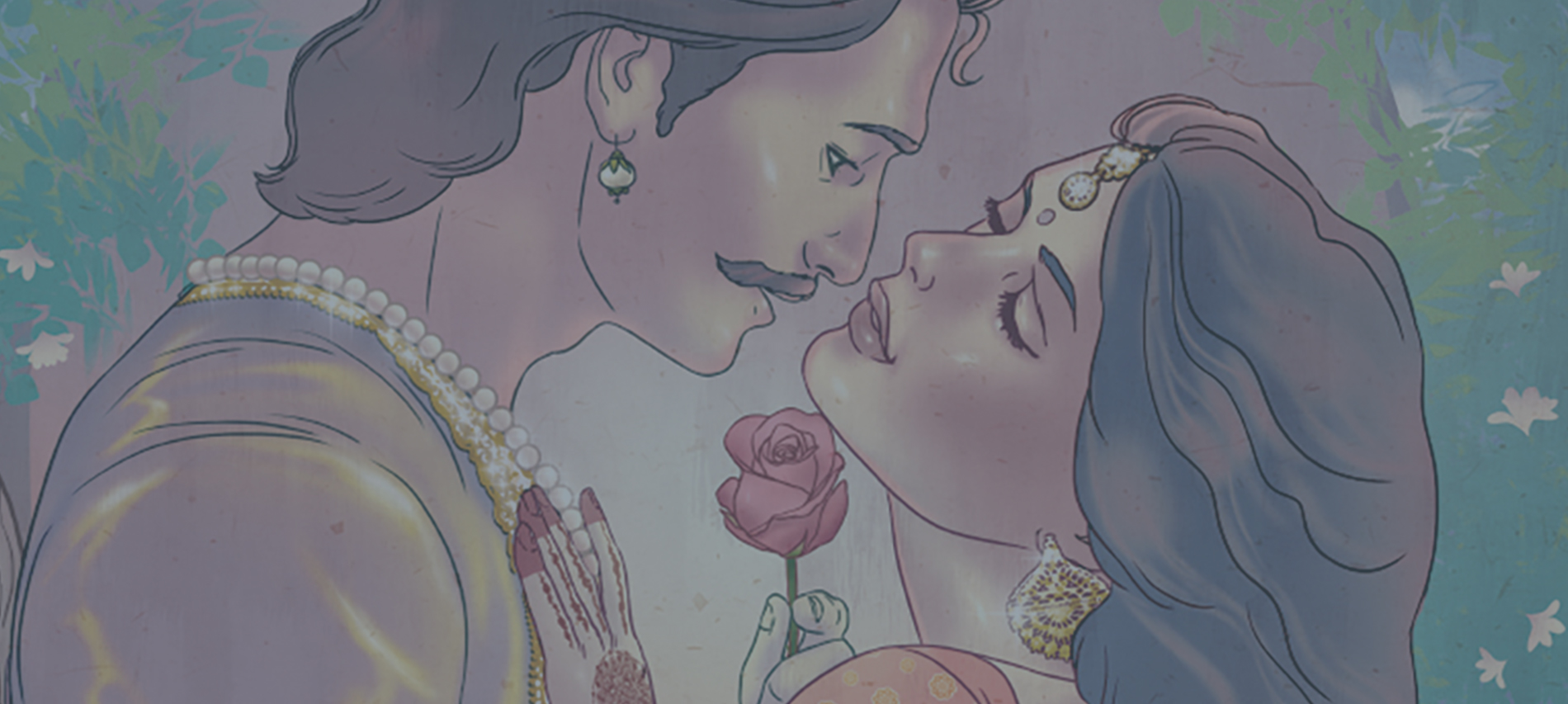
Usha Narayanan, author of Prem Purana, has donned many hats, before becoming a successful full-time author. In her glorious career, she has dabbled with genres like thriller and romance, before turning to mythology. Her works Pradyumna: Son of Krishna and The Secret of God’s Son have been praised as ‘Indian mythology at its fiercest and finest’.
Her latest book, Prem Purana is about stories of love and extraordinary devotion found in Hindu mythology. On the launch of the book we asked her what about the mythological stories attracted her to write about them.
Here’s what she had to say.
The idea of writing mythological love stories was born during a conversation with my editor Vaishali Mathur at the Jaipur Literature Festival when she suggested that I should combine my strengths in writing mythology and romance. At that point, I was busy with The Secret of God’s Son and it was only after it was completed that I could think seriously think about this. I knew that our epics and Puranas focused more on the battle between good and evil, with heroic gods and fearsome demons confronting one another. Only a few love stories were widely known, such as the one of Kama shooting his arrow of love at ascetic Shiva, or of Arjuna winning Draupadi’s hand at her swayamvara.
I began my quest by re-reading all the ancient lore with an eye to discovering tales of the heart. As always, when writing mythological fiction, I wished to focus on untold stories, using my imagination to bring alive minor characters or lesser-known aspects of major ones. The first character who caught my eye was Ganesha. We think of him as the lovable elephant-headed god with a fondness for modakas. But who did he marry? People in the south of India swear that he is single, but others state vociferously that he is married. The images in temples show him either alone or with a wife or two. What are their names? Some say Siddhi and Riddhi, while others think their names are Siddhi and Buddhi. That was enough intrigue to stimulate my mind!
Another interesting layer to the story is the idea that Buddhi, Siddhi and Riddhi represent intellect, spiritual power and prosperity. As their names are merely mentioned in passing in most Puranas, I could give full rein to my imagination in portraying them. I endowed the three with distinct characteristics and showed Ganesha wooing them in different ways, according to their particular likes and dislikes. My Riddhi is sprightly, Buddhi is silent and deep, and Siddhi is fierce and opposed to the very idea of marriage! Their stories span three realms and four yugas, shedding light on many engaging aspects of Ganesha, the first among the gods. To add to the appeal, I discovered that in Bengal, during Durga Puja, Ganesha even has a banana bride!
I think readers will enjoy seeing Gajamukha in a refreshing new light in Ganesha’s Brides, the first of the three stories in Prem Purana.
“Siddhi watched as more and more arrows struck Ganesha, causing blood to flow like a flood. Was he ready to meet death rather than forsake his promise to her? Would he sacrifice everything for the sake of his love?”
**
For the second story, Mandodari, my inspiration came from the Ramayana. Ravana was Brahma’s great grandson on his father’s side and an asura prince on his mother’s. Choosing to follow the asura path, he pillaged heaven and earth, ravished women and abducted Rama’s wife Sita. What I found of interest was not his war with Rama, but his relationship with his wife Mandodari. How did she react to all this? Did she protest or did she submit silently to his actions? What was her background? Did the rakshasa love her? And the most exciting question of all―did Mandodari come face to face with Sita, the woman she regarded as the instrument of doom that would bring down Lanka?
I found no answers in the commonly available texts where Mandodari features in a mere two or three scenes. Fortunately, however, there are many Ramayana versions available. I followed the uncommon trails, used my imagination and fleshed out the queen’s character, placing her emotions at the centre of the narrative. The story also reveals startling new facets of Ravana’s character and motivations. I think Mandodari, with all its twists and turns, will be riveting and revelatory to readers.
“‘Snatching a woman by force or stealth is not an act of valour, Ravana. She is not an object of lust or a means to settle scores with your enemy,’ said Mandodari, her voice loud and clear. She would speak the truth regardless of consequences. It was a risk she had to take for Ravana and her people.”
**
After delving into the lives of a merry god and a dire rakshasa, it was time to move to the human plane, with the story of King Nala and Princess Damayanti. She turned down the gods who courted her at her swayamvara and chose Nala as her husband. Though she chose love over immortality, Nala was driven by his own demons and abandoned her in a dangerous forest. Damayanti struggled to survive the perils that confronted her at every turn, but forged forward regardless. She did not give up hope and devised various stratagems to reclaim her happiness.
I was fascinated by her strength and also by the magical swan that plays a key role as the messenger of love. I named the swan Gagana, meaning sky or heaven, and created a charming and audacious companion to Damayanti. The Kali demon, who plays a major role in my previous books, Pradyumna: Son of Krishna and The Secret of God’s Son, is the enemy that Nala and his queen must confront. How can a mortal pair combat the power of the demon who reigns over a dark yuga that signals the end of the world? Love, loss, hope and despair form the chequered background of this poetic tale.
“‘Majestic Ashoka, whose name signifies one who destroys grief . . . Free me from pain and unite me once more with my Nala!’ cried Damayanti, sinking to her knees under a soaring Ashoka tree. Alas, the tree made no answer and all she could hear was the wind rustling among the leaves.”
**
A major part of my excitement in writing these stories came from the opportunity to focus attention on the women in our epics who are often sidelined. We often find that a woman is regarded as a prize to be won, someone who is forced to watch quietly while her husband makes disastrous decisions. However, the heroines in Prem Purana are central to the action. They are strong, independent thinkers who inspire the males in their lives―god, asura or king―to do the right thing and live up to their responsibilities.
I hope readers enjoy reading these tales which provide a good mix of fervour and fury, heroism and heartbreak, set against a spectacular backdrop spanning heaven and earth.
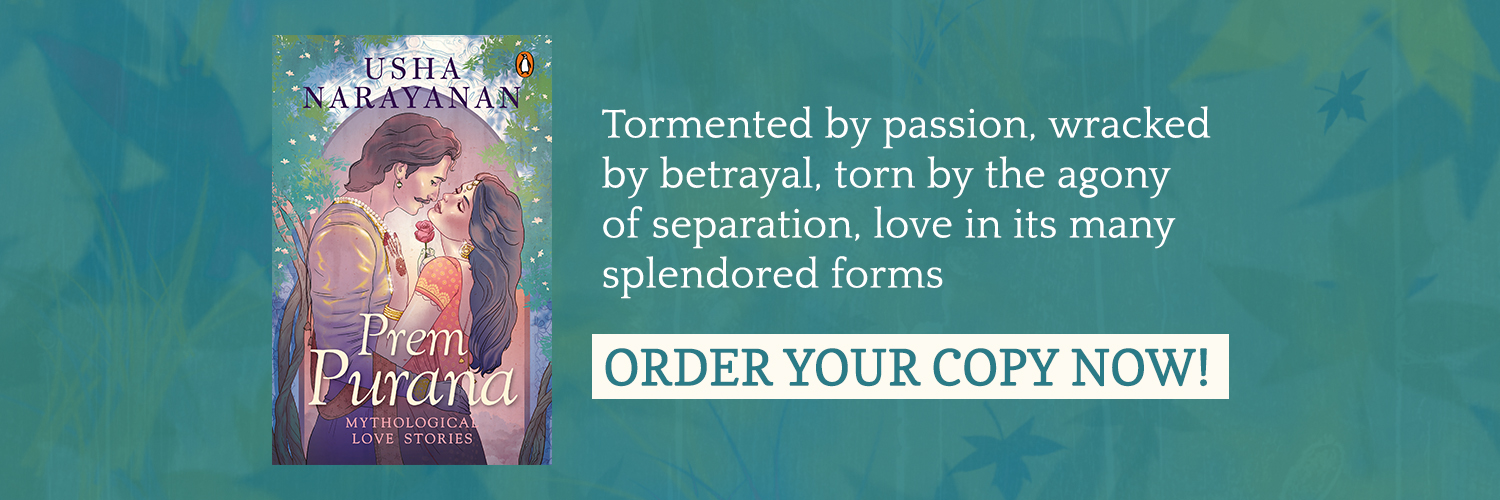
What Do Nicky and Noni Do When They Visit Their Grandparents?: ‘It’s Cool to Respect Others’ — An Excerpt
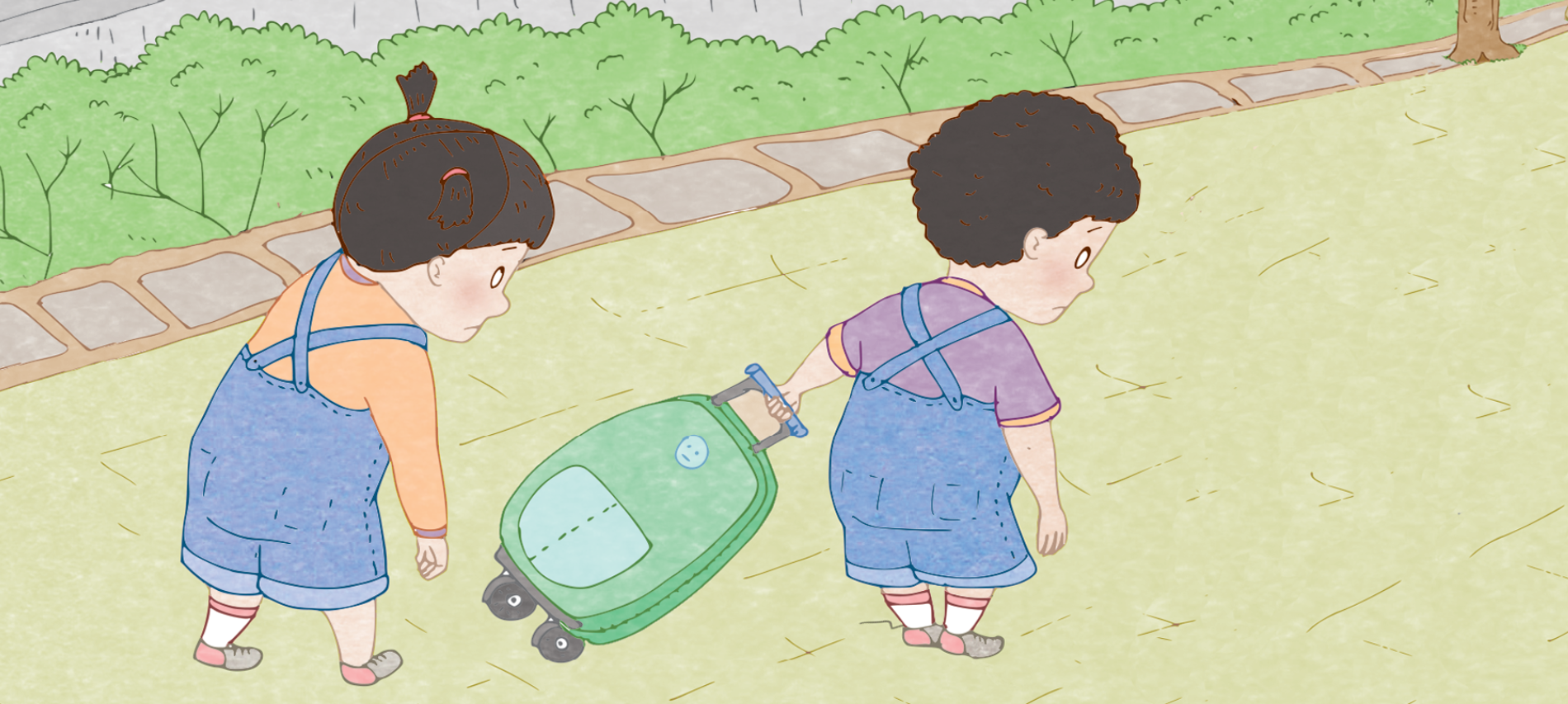
In Sonia Mehta’s It’s Cool to Respect Others from her new series of books — My Book of Values, the author reminds us as to why having some values in life is totally cool!
Nicky and Noni do not seem to be too enthusiastic about visiting their grandparents. Why? What uncool things do they do which no one approves of? Let’s find out!


Do Nicky and Noni realise their mistake? Find out with It’s Cool to Respect Others!

An Unresolved History: A Legacy Of Partition

By Urvashi Butalia
It is close on two decades now that I have been researching and writing on the human histories of Partition. As story upon story unfolds, and terrible, painful histories begin to emerge, it does not, contrary to popular wisdom, become any easier to deal with them.
One of the many grave consequences of Partition—and one which remains all the more prevalent today—has been the ease with which so many Indians and Pakistanis fall into a pattern of mutual demonisation, so that virtually everything, whether it relates to bombs, or to violence or to foreign relations or to territorial claims, can be laid at the door of the ‘other’. If it was not so serious, it would be laughable: imagine two mature, intelligent (if one can use those terms for nation states) countries in the twenty first century placing virtually every failure at the door of the ‘other’. Indeed so powerful is the jingoism, and so deep the suspicion, that attempts to move out of that are seldom successful.
The story below provides an illustration of this.
I once received a letter from Pakistan, sent by a young man called Tanveer Ahmed, who had made it his mission in life to bring his grandmother, originally from Kashmir, to Indian Kashmir to meet her siblings, and he wrote to ask if I could help in getting her a visa.
His letter started by recounting the facts of his story. They are as follows:
- I have been trying to re-unite my maternal grandmother with her siblings since 1989, having met them that year (They live about 90kms apart, divided by the LOC since October 1947)
- After objecting for many years, my maternal grandfather finally agreed to allow me to seek an Indian visa for my maternal grandmother after learning of the death of her younger brother. He even expressed interest himself in visiting her remaining family members.
- Being a British citizen (I have lived in the UK since the age of 4) it was obvious that I would seek my Indian visa from London (I have been to India twice before—1989 and 1993). After meeting the concerned Visa Officer and outlining my reason for travel, he stipulated that I should request a fax from my relations in India to verify our relationship. After confirming that to be the only stipulation, I duly received a fax from my Indian uncle in Rajauri and presented it to the visa officer. He, in turn, expressed that he found it impossible to believe that Hindus and Muslims could be related and insisted that I re-apply for my Indian visa from the IHC in Islamabad. He was at pains to insist that IHC (Islamabad) would merely request an NOC from IHC (London) and that I would promptly receive my visa within a matter of days. He even gave me his personal phone number in case of any problem with IHC (Islamabad). On his persistence, I felt I had no option but to trust him on his word despite my scepticism.
- When I applied in Islamabad, I was initially told to check after a few days, then a couple of months, then I was told that my case was in the Indian Home Ministry pending approval. After a few months, I was informed that the issue could take up to two or two and a half years.
- I also applied for the LOC crossing in November 2005 only to learn a few months ago that people applying after me have been and come back.
Tanveer wrote in desperation, anxious to find a way of getting his grandmother to Indian Kashmir to meet with her relatives. Concerned that both her age and her heart condition would make it increasingly difficult for her to travel, he gave up his job in London to come to Pakistan and devote all his energy to achieving the goal he had set himself. To him, getting his grandmother to Indian Kashmir was not only a personal mission—she was the one who had brought him up as a child—but also a way of contributing to the lessening of tension between India and Pakistan. He saw visits to and reunions with relatives across borders as one way of doing so. As he said:
My personal and professional experience of life equips me well to make a positive and constructive input into Indo-Pak Relations. It’s a real pity that neither country has been able to read that about me thus far. I completed a cycle ride from Torkhem (Pak-Afghan border NWFP) to Wagah (PAk-Indian border Punjab) in the sweltering heat recently to display my seriousness for peace between the two countries. I aim to continue this cycle ride from Attari to Kolkatta as soon as my grandmother has been re-united with her family.
Despite his best efforts Tanveer Ahmed’s labours continued in vain, with little hope of a visa being granted for his grandmother to travel to India. With some help from him, I was able to explore this story further and to meet with his grandfather in England, and as the story unfolded, other aspects became clear.
His grandfather was among the many Pathans, men who came to Kashmir in October of 1947 as part of what has come to be known as the raiders’ attack. A little over sixteen at the time, Tanveer’s grandfather said he knew very little about why they went to Kashmir, but that as a group of young boys, they found the whole enterprise to be something of an adventure. At some point they came across a group of young girls who were running away from the violence, in search of safety. The boys divided up the girls between them, and Tanveer’s grandfather married the girl who came to ‘his share’.
At the time, the assumption was that her family had all been killed. She converted to Islam and stayed on with her husband in Pakistan-administered Kashmir, believing all the while that everyone else in her family was dead. After some years, her husband moved to England, and she stayed behind, and it was a chance encounter with a relative of hers in England—a distant cousin—that led her husband to the discovery that some members of her immediate family had survived and were still living in India-administered Kashmir. And among them was her brother.
Keen to go back to what she still thought of as her home, Tanveer’s grandmother began to focus all her energy—as so many Partition survivors do—on meeting her family again. But her husband, fearful of this new element in their lives, was not at first willing to let her go. Eventually he agreed, but at that stage, it was bureaucracy and the political standoffs between the two countries that continued to work against this family.
As with so many Partition stories, this one too remains unfinished in its telling. Many years later I heard from Tanveer that a visa had finally been granted and his grandmother did finally manage to go to her family home across the border. What we do not know is what that visit meant to her – did it finally resolve something for her? Put a closure on a history that had so far remained unfinished, perhaps incomplete? And what did this search mean for Tanveer, born after Partition, with no direct memory of it, but with its constant presence in his life? These are questions to which we’re not likely to find satisfactory answers. These are questions that still do not easily enter the histories of our countries for the tension between history and memory prevents us from seeing how they can so fruitfully overlap and enrich each other.
This story is in no way adequate to even begin to understand the complex and multiple legacies of Partition that stretch their long arm into the present of India and Pakistan and that still influence the ways in which both nations and indeed their peoples relate to each other. There are not many countries in the world where, after seventy years, the divide is still so deep politically, that any contact is difficult, sometimes, as in Tanveer’s family’s case, virtually impossible, and looked upon with suspicion. No matter that travel restrictions have eased in the last several years but there is still the very real fear that the moment things go wrong in the India-Pakistan equation, the first thing to be affected will be the issuing of visas. Traumatic histories leave many scars that take several generations to heal, and India and Pakistan are no stranger to these, but the opening up of contact, the easing of travel barriers, the issuing of visas—these things signal a return to the ‘normal’ behaviour that is so necessary for nation-states to own, regardless of how terrible their pasts have been.
AUTHOR BIO:
Urvashi Butalia is a publisher and writer based in Delhi. She is co founder of Kali for Women, India’s first feminist publishing house and now runs Zubaan, an imprint of Kali. She has written and published widely on a range of issues. Among her published works are a co-edited volume, Women and the Hindu Right: A Collection of Essays, Speaking Peace: Women’s Voices from Kashmir and the award winning history of Partition: The Other Side of Silence: Voices from the Partition of India which has been translated into eleven languages. (Urdu, Hindi, Malayalam, Tamil, Assamese, Marathi and French, German, Bahasa, Japanese, Korean)
10 Things You Should Know About Akash Verma

Akash Verma is a man of many talents. Not only is he a bestselling author but also an established entrepreneur. His profile lists him as the co-founder of two start-up companies before which he had also dabbled various roles in major corporations like Coca-Cola, Big FM and Red FM.
Akash is back with his fourth novel, You Never Know: Sometimes Love Can Drag You Through Hell…, a romance thriller which will keep you at the edge of your seat till the last page.
Here are a few things facts about the bestselling author.
Early beginnings!

Master of many talents

Woah!

It’s all in the genes.

Relate!

Quite a quirk that is…

The next time you want some gossip about the tinsel town, you know whom to turn to.

Wow!

Aww!

How many of these facts did you already know about the author?

Just Before We Set Off For Earth — 'Earthward Bound'
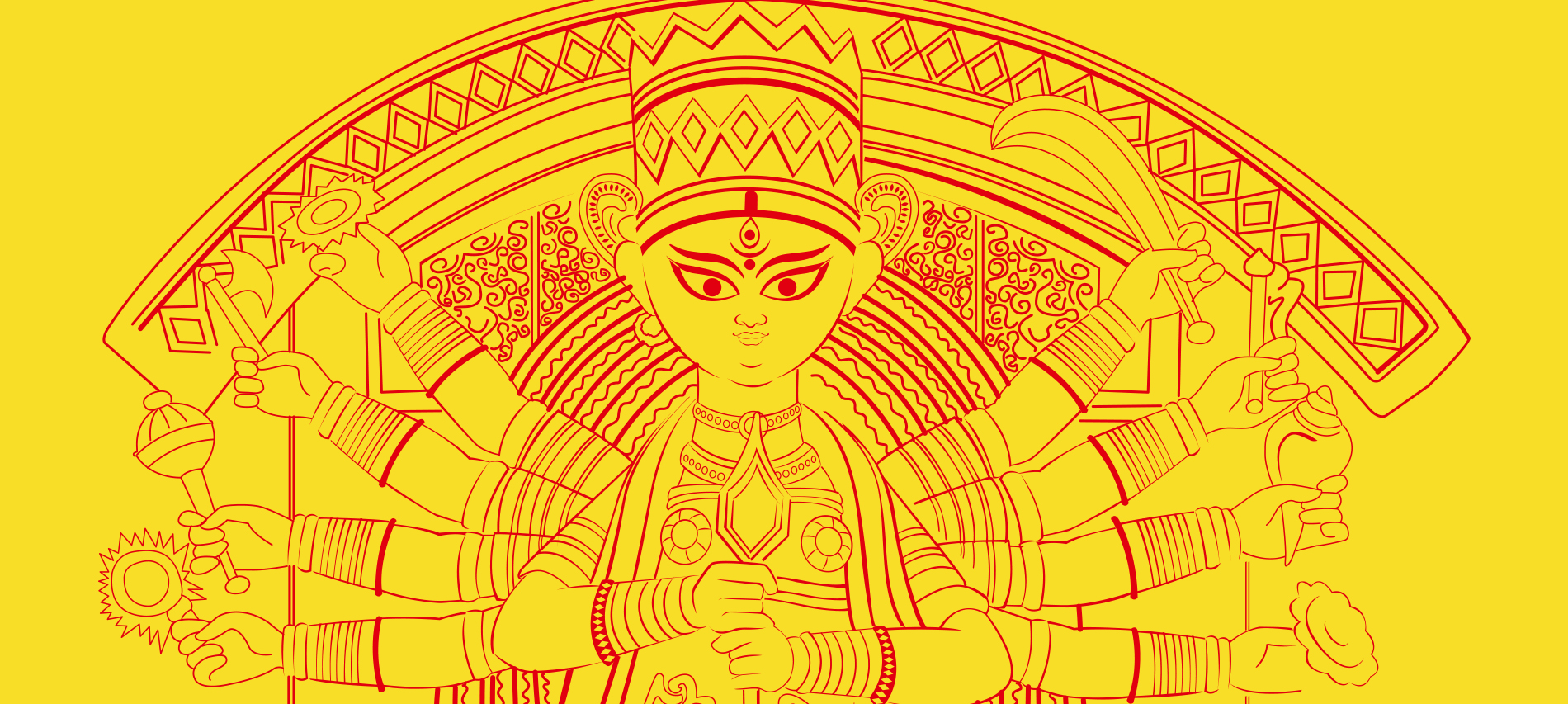
As one recovers from the heavy hearts left behind after a brilliant week of Durga Puja fun and festivities, here’s a little throwback with a short story, ‘Earthward Bound’, by writer Nayanika Mahtani, on what happens in Goddess Durga’s household just before she descends on earth with her children, ushering in a joyful autumn!
‘Come on kids, get ready – we’re off on a little journey,’ said Goddess Durga. Her four children Lakshmi, Saraswati, Kartikeya and Ganesha were busy having a snowball fight in the mountains of Kailash.
‘Where are we headed, Ma?’ asked Ganesha.
‘To Earth of course, silly!’ said Saraswati.
‘Have you forgotten – we go every year when Ma is invited by her devotees?’ said Lakshmi.
‘I knew that – obvio!’ mumbled Ganesha.
‘Yup, he would never forget the sweets at Puja,’ piped in Kartikeya.
‘Could you four please stop squabbling – we need to get there in time!’ said Ma Durga. ‘Oh, quick check – have I taken everything?’
‘Hmm, let’s see Ma,’ said Saraswati. ‘Have you got Vishnu’s discus, Shiva’s trident, Varuna’s conch and noose, Agni’s flaming dart, Vayu’s bow, Surya’s quiver full of arrows, Yama’s sword and shield, Vishwakarma’s axe and armour and Indra’s thunderbolt?’
‘Whoa! That’s quite a handful – good thing you have so many hands, Ma!’ said Ganesha. ‘How come you get to keep all the weapons that the Gods gave you to fight Mahishasur – even though he is now long dead?’
‘Well, Mahishasur may be dead but evil lives on, Ganesha – and I always need to be ready to fight evil,’ replied Ma Durga.
‘Will we be riding on the lion given to you by Himavat?’ asked Lakshmi.
‘Of course!’ said Ma Durga. ‘Now as you know the Devi Paksha rituals start from Mahalaya, when we begin our journey to Earth. Who remembers what Mahalaya means?’
‘Ahem, I do!’ said Kartikeya, casting a sideways glance at Ganesha. ‘“Maha” means ‘big’, and “laya”, means ‘destruction’. It refers to the colossal war between the Devtas, Rishis and Asuras – where many Devtas and Rishis died at the hands of the Asuras. People on Earth consider Devtas and Rishis to be their forefathers. That’s why the ritual of Tarpan or Shraddh happens on Mahalaya, when prayers are offered in remembrance.’
‘Bah! Such a show-off!’ muttered Ganesha, whose mind was now feasting on the soon-to-be-had sandesh and laddoos.
‘Though the actual Puja starts from the sixth day, the Shashthi, when we five arrive on Earth,’ added Saraswati.
‘That’s right,’ said Ma Durga. ‘It begins with Bodhan, which marks the moment when I was given all the divine arms to rid the Earth of Mahishasur’s tyranny. On Shashti, my face is uncovered – to show that I have arrived on Earth. The next day is Saptami and it starts with a ritual called “Kola Bou”.’
“Ha ha! Kola Bou’s your wife, Ganesha!’ teased Lakshmi. ‘Such a pretty banana tree stalk, bathed and draped in a white sari with a red border and placed by your side!’
‘Tsk, don’t make him blush, Lakshmi!’ chided Ma Durga. ‘Actually it is not just a banana stalk that is bathed; nine plants are placed by my Ganesha after the bathing rituals. It’s called “Nabapatrika” puja – and these nine plants represent the nine forms of Shakti, of which you are one too, my Lakshmi.’
‘I feel a bit sidelined, to be honest,’ said Saraswati.
‘Come on! You get a day all to yourself to be worshipped,’ said Kartikeya.
‘Well, you get a day like that too, Kartikeya’ said Ma Durga. ‘Anyway, let’s not get sidetracked, kids! So then follows Ashtami which is considered the most auspicious day of Durga Puja – with its most significant ritual being the Sandhi Puja.’
‘Let me elaborate,’ said Kartikeya with a flourish. ‘Sandhikshan, when Sandhi Puja is done, falls between the last 24 minutes of Ashtami and the first 24 minutes of Navami. This is the exact time when the Asuras Chanda and Munda were slain by Ma.’
‘It for this reason I am also called Chamunda,’ said Ma Durga.
‘Aarrgh! Why doesn’t our family keep just one name for each of us?’ asked Ganesha. ‘I have such a hard time keeping track of all my names. It’s so tricky figuring out when I’m being called!’
Ma Durga smiled and carried on. ‘Then comes Dashami or Vijaya Dashami which is the day I killed Mahishasura – and freed the Earth of his torments. Vijaya Dashami is the last day of the puja.’
‘And it’s also when Ma’s idol is taken to a water body and immersed, denoting her journey back to Kailash,’ said Saraswati.
‘That’s right! Well done, all of you!’ said Ma Durga. ‘Now hold on tight – we’re about to take off!’
‘Have a safe journey, family,’ boomed a deep voice in the background. He watched Ma Durga and the children fly earthwards. Lord Shiva closed his eyes. ‘Ah! Now for some peace and quiet, finally.’
Would you like to look up what each of the weapons of Goddess Durga signifies? Hindu mythology is such a treasure trove – there’s always more than what meets the eye. Look for these treasures – you won’t be disappointed!
Note: Ganesha was of course just pretending to not know all the answers in this story, to rile his Mum and siblings. He in fact is quite the know-it-all. Though he can get distracted when sweets are involved. ☺
Nayanika Mahtani is a copywriter by day and a storyteller by night. She lives in London with her husband, two daughters and their two goldfish named Sushi and Fishfinger. Nayanika has published two books with Puffin, ‘Ambushed’ and ‘The Gory Story of Genghis Khan’.
Can Emotional Intelligence Be Learned?

FOR AGES, PEOPLE HAVE DEBATED if leaders are born or made. So too goes the debate about emotional intelligence. Are people born with certain levels of empathy, for example, or do they acquire empathy as a result of life’s experiences? The answer is both. Scientific inquiry strongly suggests that there is a genetic component to emotional intelligence. Psychological and developmental research indicates that nurture plays a role as well. How much of each perhaps will never be known, but research and practice clearly demonstrate that emotional intelligence can be learned.
One thing is certain: Emotional intelligence increases with age. There is an old-fashioned word for the phenomenon: maturity. Yet even with maturity, some people still need training to enhance their emotional intelligence. Unfortunately, far too many training programs that intend to build leadership skills—including emotional intelligence—are a waste of time and money. The problem is simple: They focus on the wrong part of the brain.
Emotional intelligence is born largely in the neurotransmitters of the brain’s limbic system, which governs feelings, impulses, and drives. Research indicates that the limbic system learns best through motivation, extended practice, and feedback. Compare this with the kind of learning that goes on in the neocortex, which governs analytical and technical ability. The neocortex grasps concepts and logic. It is the part of the brain that figures out how to use a computer or make a sales call by reading a book. Not surprisingly—but mistakenly—it is also the part of the brain targeted by most training programs aimed at enhancing emotional intelligence. When such programs take, in effect, a neocortical approach, my research with the Consortium for Research on Emotional Intelligence in Organizations has shown they can even have a negative impact on people’s job performance.
To enhance emotional intelligence, organizations must refocus their training to include the limbic system. They must help people break old behavioral habits and establish new ones. That not only takes much more time than conventional training programs, it also requires an individualized approach.
Imagine an executive who is thought to be low on empathy by her colleagues. Part of that deficit shows itself as an inability to listen; she interrupts people and doesn’t pay close attention to what they’re saying. To fix the problem, the executive needs to be motivated to change, and then she needs practice and feedback from others in the company. A colleague or coach could be tapped to let the executive know when she has been observed failing to listen. She would then have to replay the incident and give a better response; that is, demonstrate her ability to absorb what others are saying. And the executive could be directed to observe certain executives who listen well and to mimic their behavior.
With persistence and practice, such a process can lead to lasting results. I know one Wall Street executive who sought to improve his empathy—specifically his ability to read people’s reactions and see their perspectives. Before beginning his quest, the executive’s subordinates were terrified of working with him. People even went so far as to hide bad news from him. Naturally, he was shocked when finally confronted with these facts. He went home and told his family—but they only confirmed what he had heard at work. When their opinions on any given subject did not mesh with his, they, too, were frightened of him.
Enlisting the help of a coach, the executive went to work to heighten his empathy through practice and feedback. His first step was to take a vacation to a foreign country where he did not speak the language. While there, he monitored his reactions to the unfamiliar and his openness to people who were different from him. When he returned home, humbled by his week abroad, the executive asked his coach to shadow him for parts of the day, several times a week, to critique how he treated people with new or different perspectives. At the same time, he consciously used on-the-job interactions as opportunities to practice “hearing” ideas that differed from his. Finally, the executive had himself videotaped in meetings and asked those who worked for and with him to critique his ability to acknowledge and understand the feelings of others. It took several months, but the executive’s emotional intelligence did ultimately rise, and the improvement was reflected in his overall performance on the job.
It’s important to emphasize that building one’s emotional intelligence cannot—will not—happen without sincere desire and concerted effort. A brief seminar won’t help; nor can one buy a how-to manual. It is much harder to learn to empathize—to internalize empathy as a natural response to people— than it is to become adept at regression analysis. But it can be done. “Nothing great was ever achieved without enthusiasm,” wrote Ralph Waldo Emerson. If your goal is to become a real leader, these words can serve as a guidepost in your efforts to develop high emotional intelligence.
This is an excerpt from HBR’s 10 Must Reads (The Essentials). Get your copy here.
Credit: Abhishek Singh
When India defeated the English in 1911, An Excerpt from ‘Barefoot to Boots’
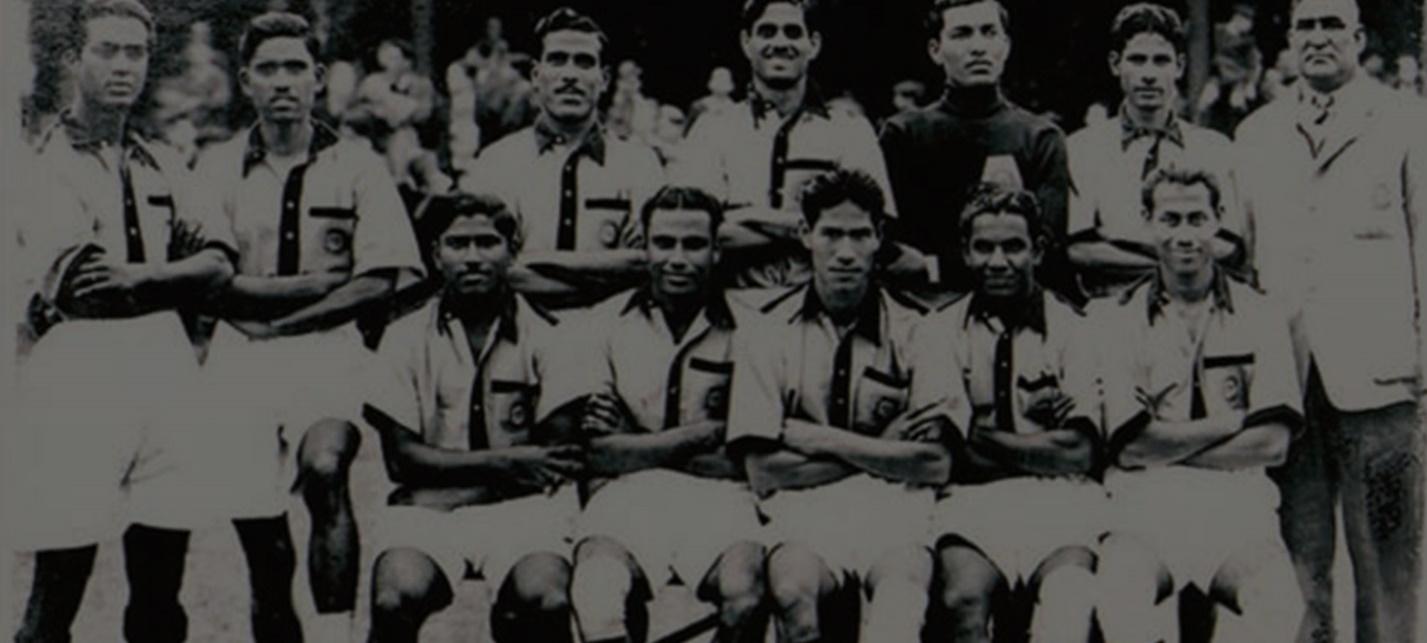
India’s association with football goes way back to the colonial times. Only a few may know that India was once called the ‘Brazil of Asia’ or that the rivalry between East Bengal and Mohun Bagan is included among the top fifty rivalries in club football around the world.
Renowned journalist, Novy Kapadia’s Barefoot to Boots reveals the glorious legacy of football in India. The book also offers valuable insight into the future of the sport in the country.
Here’s an exclusive excerpt from the book.
In 1910, the legendary Indian pehalwan, or wrestler, known as the ‘Great Gama’ was declared world champion (Rustom-e-Zamana) in freestyle wrestling. In front of a capacity crowd at the Shepherd’s Bush Stadium in London on 10 September, Gama dominated the bout of over two hours against reigning champion Stanislaus Zbyszko of Poland. The gigantic Zbyszko was on his feet only thrice in the entire bout. A return bout was scheduled a week later, and it was a walkover for Gama, who who were declared champions. The British celebrated Gama’s victory as the triumph of a British subject over an uppity European wrestler. Little did they know that their own supremacy would soon be challenged.
In 1911, Kolkata’s oldest Indian football club, Mohun Bagan, were invited to play in the prestigious IFA Shield. Coached by the disciplinarian Sailen Basu, the barefooted players had a great run in the tournament. They triumphed over St Xavier’s Institute 3-0 and Rangers FC 2-1 in the first and second rounds, defeated Rifle Brigade 1-0 in the quarter-final, and Middlesex Regiment 4-1 in the semi-final. They reached the final in top form.
The craze for the final was such that Mohun Bagan fans travelled to Kolkata from the outlying districts and from neighbouring Assam and Bihar. The East Indian Railway ran a special train for the purpose. Additional steamer services were also introduced to ferry spectators from rural areas to the ground. Tickets originally priced at Rs 1 and 2 were sold in the black market for Rs 15. Refreshment vendors too made good use of the opportunity. The total number of spectators in the final was estimated at 80,000–1,00,000. This was truly remarkable, as the population of Kolkata and its suburbs was then a little over 10 lakh.
The crowds were at fever pitch. Two sides of the ground were kept open for assembled spectators. Touts provided wooden boxes to help them get a view of the match and charged money per box, depending on its proximity to the playing area. There was no space even on treetops. The members’ seats were fully occupied and the enclosed side of the ground had been booked by B.H. Smith & Company for British fans. As many Bagan supporters did not have a good view of the match, volunteers devised an ingenious method to keep them informed of the progress of the game—they flew kites with the club’s colours and the score written on them. The final was goalless at half-time. Sergeant Jackson scored with about fifteen minutes left in the match. Mohun Bagan equalized immediately afterwards through skipper Shibdas
Bhaduri. The equalizer led to an explosion of kites in the sky, all coloured maroon and green. The burly centre-forward Abhilash Ghosh scored the winning goal. On 29 July 1911, Mohun Bagan made history by defeating a British regimental team East Yorkshire Regiment of Faizabad 2-1, and becoming the first Indian team to lift the coveted IFA Shield.
The victory established Kolkata as the nerve centre of football in India and heralded the city’s long-lasting love affair with football. It also had massive political and social implications. Coupled with Gama’s victory, Bagan’s win had exploded the myth that the British or Europeans were a superior race, something that the Congress Party and proponents of Swadeshi had been unable to do. The victory was seen as a symbol of hope for a subjugated nation.
It challenged the notion of Bengalis as an effeminate race and reconstructed a more masculine and sprightly image of them. Bagan’s historic win was chronicled in newspapers outside Kolkata (the Times of India, Mumbai, and the Pioneer, Lucknow) and internationally as well. It found mention in British newspapers—the Times, Daily Mail and the Manchester Guardian. The news agency Reuters reported it too.
The entire Mohun Bagan team played barefooted, which has led to the myth that boots cramped their style of play and playing barefoot improved ball control and dribbling skills. However, economic conditions are a more plausible reason for this. At the turn of the twentieth century, hand-sewn football boots cost Rs 7 and 4 annas, a lot of money in those days.
