




Paro Anand was awarded the ‘Sahitya Akademi Bal Puraskar’ 2017 for her book ‘Wild Child and Other Stories’ now published as ‘Like Smoke: 20 Teens 20 Stories’.
Stories of young teenagers, standing at the precipice of some of the toughest years of their lives, ‘Like Smoke’ found tremendous resonance among its readers.
Here is what some of the award-winning writer’s readers had to say about her book.
Tara Chawla
What did the story make you aware of?
Never judge a book by its cover. This is what Like Smoke has made me aware of. There is always so much more to a person than meets the eye. One can have an ugly appearance but be good at heart. Deep down in all our hearts that beauty lurks waiting to be discovered by someone who understands us. As they say, looks can be deceptive.
Likewise human beings tend to have pre-conceived notions about places as well- often formed by the views of others. Every place has its own and the same not being noticed via the superficial glance till it is explored properly and extensively without any preconceived notions.
Another thing that Paro Anand has taught me through this uniquely written book of hers is that labels are just words. The word Hindu or Sikh just creates boundaries. Why should we assume all Muslims are terrorists? Why should a person not be liked because they are ‘fat’? Why should labels define us? We judge others and ourselves with these labels. Doesn’t every one of these people with the labels have two eyes, a nose and a beating heart? Isn’t that what should define us?
What does this awareness inspire you to do?
After reading this book I have been inspired to create a change in my own behavior. I am going to put aside any assumptions that come to my mind due to the name and other’s opinions of the place. As Gandhi Ji rightly said ‘Be the change you wish to see in the world’. Instead of telling others to change themselves I am going to change myself so that others change. I am going to forget all the labels, the opinions and the assumptions. I am going to look at the world with my own eyes; I am going to decide for myself. I am the one who is going to make the change.
Nohreen Madha
What did the story make you aware of?
The story which I liked the most is ‘THOSE YELLOW FLOWERS OF AUGUST’. The first three words ‘I HATE MUSLIMS’ divert my mind towords this story. In this story, there is a girl named Nitya whose father was killed in a bomb blast. This bomb blast took place near a temple. As Hindus and Muslims are considered as enemies ( which they are not) Nitya felt that this bomb blast was done by Muslims. After her father died, they went to stay with their grandparents as her mother was depressed. Nitya joined new school. On the first day of school, Nitya like a boy named Khalid. Nitya came to known that khalid was a muslim boy and she started ignoring him. Nitya and khalid were sitting behind a big bunch of yellow flowers where they had to think about a topic for role play. Khalid came to known that Nitya was avoiding him, then too he kept on talking. Nitya told Khalid about her father and about her feeling she had for Muslims. Khalid got hurt. He explained to Nitya that bomb blast was done by Terrorist , and there is a vast difference between Muslims and Terrorist. Nitya understood and hence, forward they both became friends. That is what I too realized not to judge people because of their religion.
Shifa Azmi
What did the story make you aware of?
“Like smoke” includes 20 different stories of 20 different teenagers. Every story touches upon the emotion which every teenager may have felt during a point of their life. Stories includes factors like friendship, religion, love, hate, death…we all sometime feel depressed, stressed and feel like we just can’t take it anymore. The book is a collection of young adults fiction short stories. I think anyone who reads this book can imagine the stories. Each story will help you look inside the mind of teenagers. Each of the stories deals with some or other conflicts in a teenager’s life there are many types of conflicts- There is story related with terrorist conflicts, which led to loss of lives, people lose their parents, siblings, etc.
Experiences of teenagers, their prejudices and resolutions are predominant themes in their stories.
For example- The first story called, ‘Those Yellow Flowers of August’ deals with a teenager girl’s hatred for Muslims because she loses her Father in a bomb blast. She believes all Muslim are violent and she just used to hate them a lot, unless she met a boy names Khalid.
What does this awareness inspire you to do?
A story called, ‘They called Her fats’ is a story of Fatima Whitebread who went to win an Olympic bronze and silver medals and later in 1987, the World Championship in the field of Javelin throw. The struggle and Hard work she goes through was very inspiring.
Through this book I learnt many values, lessons, morals.
This book is a book which can change people’s perspective on many things. This book gives us message that — “No matter how many thing that matters is, we should always have positive mind, no matter what happen we should be determined and strong.
Soorya Balasubramanian
What did the story make you aware of?
The book made me aware of society’s deplorable condition. We are willing to single out an entire religion to blame for the terrorist actions of madmen. This stems a new fear- Muslimophobia. A word, I believe was never to be conceived. The author’s fury at this ideology led her to write a line that rouses anger and fury, yet makes you aware of the plight of muslims in this world. It says: “Bombs don’t have a religion. Terrorists don’t have a religion. So don’t put my belief into the same bracket as bombs.” These stories need to be placed in the hands of every world leader, commoner and terrorist.
I have learnt of Courage, not as we perceive it, but on a different level altogether. I once heard a line that bests illustrates the kind of courage I’m inspired to take up. The line is, “Courage is not the absence of fear, but the belief that something is more important than fear.” The manner with which Gaurav, a boy in one story, guides his enemy out of the vicious cycle of vices and addictions, The way Zeenat, a girl rebelling against the harsh laws in PoK, develops the amazing singing talent in her and promotes other talented people from her region, as illustrated in the book; these examples are examples of true courage. Chilling ironies accompany many stories, making me aware of the consequences of our seemingly inconsequential statements. The stories allow us to be a spectator to loss, yet, experiencing in the same measure, the emotions experienced by the characters. After all, I realized that, love and courage are 2 things prevailing over all the hardships that accompany this worldly life, while keeping us together as a society.
The 20 stories made me realize the different ways of life we live, and how this molds our character. Divorced children, Children in the heart of terrorism, abandoned, led astray, abused, sold; I am thankful I’m born into a good home. It made me realize the insignificant appearance of petty fights at home in front of the circumstances of these children.
What does this awareness inspire you to do?
It has made me look at terrorist acts differently. I now know it’s conducted by a rogue faction of a peaceful people, and that has caused me to completely change my mindset. Simple monetary aid to children in any of the above conditions wouldn’t help. It would be snatched away by greedier, idiotic minds. It has made me realize my helplessness as a child. But, as a team, I’m sure we can help make a difference. Therefore, when I’m a little older, I would like to start a group, to help evacuate those trapped in PoK, with help from the Indian Army. I would like to make an Impact with at least a few children, by rescuing them from the deplorable conditions of state run orphanages, and console them. Truly, the world needs love now, and not money. Love is the currency that keeps this world turning
Simran Zaveri
What did the story make you aware of?
Like all great books that induce powerful emotions to the readers, Like Smoke tells the tale of 20 different teenagers who are struggling with their lives. It read to me 20 different riveting and heart wrenching stories about the teenage struggles. It spoke of the different things that teenagers undergo during adolescence in today’s day and age. From reading this book, I understood the fact that teenagers feel pressured into ‘fitting in’. They are constantly being bullied into meeting the harsh standards that society makes for them. If you’re short, it’s a problem. If you’re fat it’s problem. If you’re too manly it’s a problem. I learned that a teenage life is that of loneliness, but I also learned that teenagers have fought back. Like when Anita defied her coach and with the help of her best friend made it onto the basketball team despite being very short. Or when the overweight girl who loved to cook found a friend who loved her for her and she was happy. Or even when Fatima didn’t care what any had to say about her muscles because she loved herself and loved why she had those muscles. The teens describes in this book were dangerously strong as they challenged everything that they were taught to believe. They didn’t follow society’s standards which is truly a beautiful thing. From this book I learned teenagers are scared, vulnerable and just try to fit in. But I also learned that they’re smart, powerful and they can fight back
What does this awareness inspire you to do?
I already know about a teenager’s life being hard. After all, I am one. But what I didn’t know is that it’s every teen that faces the same problems and choices that I do. I realized that every teenager goes trough a lot of difficult things and when I realized this, I made a promise to myself that I would never judge anyone based on their appearances. I promised myself I wouldn’t degrade anyone. I wouldn’t call anyone names. I would try to be kinder, try to make people feel better about themselves. I would try to help people be more accepting of themselves, teach them to love themselves and not be ashamed of who they are, or something they can’t change. If I could, I would dive into the book and tell Anita that she’s an excellent basketball player, or I would tell the Fatima to not listen to anyone and to follow her dreams, like she was already doing. Reading this book has taught me that even smiling at someone could make their day infinity better. The book inspired me to be a better person, and that is what I am going to do. Become someone better and kinder than who I am now.
Yashasvi Mehta
What did the story make you aware of?
I had never before read a book written for teenagers, featuring their true stories of courage, hope, emotions, fear and love.
These 20 stories opened my eyes to the real world, a world very different from my protected, secure, happy cocoon. I realized that many children my age were going through so many problems in different corners of the country. Some had to fight religion- based issues, others had to face violence, heartbreak and abuse, still others were bullied for being fat, ugly or uncool. Some had seen death so closely that it brought tears to my eyes and made me realise the value of our loved ones.
Stories like ‘See You Shortly’ and ‘In the Shadow of Greatness’ taught me that nothing is impossible if you believe in yourself. ‘Santa’s not so Little Helper’ was a hilarious story that showed that essays need not be boring, serious or mundane. ‘Like Father, Like Son’ sent shivers down my spine and gave me a taste of the paranormal. Reading ‘I am Old and Tired Now’ put me in a lion’s shoes and I felt the emotions of an animal which longed for peace as much as man did. ‘Susu’ was great fun to read and still brings a naughty smile on my face and has now become a hit word in my friend circle! ‘Teenagers are Pack Animals’ made me see us teenagers from a teacher’s viewpoint and forced me to ask myself, ‘Are we really pack animals?’
In all, this book was an insight into how the world looks at us and how we look at the world and how we could contribute greatly to make it a better place to live.
We congratulate Paro Anand on achieving this great milestone!
Order your copy of ‘Like Smoke’ here now!
Ten Priorities India Should Focus On
Bimal Jalan had a close view of financial governance while he served as Union Finance Secretary and Governor of the Reserve Bank of India. Drawing on his vast experience he compares two distinct periods: 1980–2000 and 2000–15, and examines the transition India has made in the last four decades from a strictly regulated, slow-growth state enterprise to one of the fastest-growing economies in the world.
In his latest book, India: Priorities for the future he lists out few areas India needs to pay attention to.
Here is a list of ten of those priorities:
One of the foremost priorities regarding financial governance

Priority for the banking sector

Another reform in the financial sector that the India has to bring about

The RBI has to keep working with financial experts to develop procedure for the debt markets to grow

The outcomes of the present schemes in terms of actual benefits is pretty low

Performance reviews of a ministry will lead to better execution of policies

Red tapism needs to be done away with

Outsourcing to different agencies reduces petty corruption and delays

An urgent political reform is to speed up investigations of persons who are in political parties

An utmost priority lies in making the states accountable for policy execution than the Centre

Which priority according to you should be the India’s topmost priority? Tell us.

In Conversation with Osama Siddique

Osama Siddique has been a Rhodes scholar at Oxford, a lawyer in New York and Lahore, a policy instructor in various countries. He is also a legal scholar, university teacher and reform consultant in Pakistan, and a successful doctoral candidate and visiting professor at Harvard Law School. His most recent book is an acclaimed and multiple award-winning critical legal history of postcolonial justice systems. We spoke to him about his debut novel Snuffing Out the Moon.
Below are the questions we asked him.
You are and have been a very successful lawyer and legal scholar. Why did you decide to write a novel?
There are many kinds of legal discourses of course that allow much room for critical expression. Quite apart from more conventional work, as a lawyer and an academic I have always been particularly intrigued by how law can be and is manipulated by the powerful against the disempowered. Regardless of which era we speak about what goes by the name of law has always been a strong weapon for those who can use it – for better or for worse. Indeed I have explored this theme in my legal scholarship. There are, however, certain limits on expression imposed by extant conventions of style, structure and methodology. Fiction on the other hand is a very vast, rich and multifarious terrain that provides tremendous flexibility and license to explore this and various additional themes that I dwell on in my novel – themes that I had always wanted to write about. Themes ranging, for instance, from ancient political landscapes to omens of impending evil to lives of petty criminality to literature as a weapon of protest to social media as a medium for hate mongering to environmental apartheids of the near future. Only fiction allows engagement with all this in one book. Such is its largesse. Hence the novel.
Why did you situate the book in these particular six epochs of time?
In large part because having blessed access to their archaeological sites and cultural artifacts I have been greatly fascinated by them since childhood. I continue to fondly visit them, read about them, live amidst them. Mohenjodaro also because it continues to be such an enticing enigma and unsolved mystery. The Gandharan civilization because it has left such an exquisite artistic and architectural imprint on the Pakistani landscape. Lahore – my beloved city – appears in three contiguous eras, which are all reflected in its hybrid culture and built heritage. And the near future is of course the source of tremendous curiosity and indeed concern to all of us – given the highly troubling times and the various political, environmental and civilizational crises that we currently face as humankind.
Somewhere in the book you say something like: “all eras are driven by the same hopes and fears and passions and we continue to make the same mistakes.” — Could you elaborate on this and also your concept of “time.”?
While one can surely detect evolution in various spheres of human endeavor – political structures, organized religion, modes of technology – it does occur to me that across the ages our fundamental aspirations and imperatives remain very closely aligned, if not identical. It is fascinating to think, for instance, how hope, fear, love, hate, dissent and the resulting conflicts drive people to act in such similar ways, regardless of whether we speak of today’s milieu or one of four thousand years ago, from whatever we know of that distant era. Naturally, it causes one to wonder whether we are caught up in a constant cycle of repetition. Civilizations come, flourish, decline and ultimately vanish. Whether time is linear or cyclical. Whether we are headed somewhere or will the wheel of time continue to turn and turn till one day our kind will simply be no more. That we will simply vanish. Without even a whimper, let alone a bang. Without any explanation, let alone an apology.
What are your thoughts on the concept of “evil”?
Evil is such a vital and fascinating concept in every religious and cultural tradition as well as manifest, however you define it, in so many human catastrophes through the ages. One of the most compelling questions remains whether evil is just another name for our baser instincts, distinct external influences that corrupt and corrode us and compel us to do abhorrable things, or an actual physical embodiment – a virtual devil. What causes us to indulge in devilry and why has humankind failed in putting a stop to murders, pogroms, genocides, travesties and wars. These questions provide a vital undercurrent to my overall narrative and evil manifests itself mysteriously and multifariously in the lives of the different characters. Quite apart from the more analytical dimensions there is also something very emotive, something very sinister and forbidding about the concept that impacts our senses in a remarkable manner. The fear and foreboding evoked by the concept of evil has been depicted so powerfully in many great pieces of literature and it has always been something that I also wanted to write about.
Your protagonists are non-conformists who dissent and then pay a price for it. Can you tell us more about choosing protagonists who are dissenters and the importance of dissent in human history?
Arguably, as critically as ever before in out history we face the challenges of curtailment and censorship of free thought and speech. What is also obvious is a globe-wide shift to harder governments, to despots, officially sanctioned histories, blind dogma and also now, alternative facts. The present epoch is as Orwellian as it can get. Meaningful dissent, therefore, is a precious but also much maligned virtue and hence all the more worthy of preservation. Mine is just one modest endeavor to underline how vital dissent is for societal sustenance and integrity. Even otherwise, dissenters make much more compelling and effective protagonists than conformists. Dissent has contributed tremendously to history and brought about significant turning points and breakthroughs in human thought and achievement. And yet the dissenters have often paid a tremendous personal price, which makes their entire endeavor all the more heroic. There is thus no way that I would have been tempted to choose protagonists who are not dissenters. Having said that those who habitually conform and capitulate are also curious in their own way. Perhaps in my next book if there is one.

5 Priceless Things We Learn from Ruskin Bond’s Books
Ruskin Bond’s stories have never failed to thrill us and leave us feeling warm inside every time we read one. Our growing up years would not have remained the same had it not been for Bond’s beautiful characters and anecdotes that immediately take us back to the best years of our lives.
But through his enchanting stories of childhood, friendship, family, love and nature, we unknowingly learn a few precious things which, perhaps, none of our school books could have ever taught us.
Here are 5 times Ruskin Bond quietly told us something invaluable about life and the world that will stay with us forever.
When he told us why we should aim for excellence and not settle for being a mediocre “anybody”.

When he told us that nature is our best home.

When he showed us that the will to do something is greater than any obstacle.

When he pointed out the perils of disturbing nature.

When he showed us that the beauty of life lies in its changes, like the changing seasons.

Share with us what you have learned from Ruskin Bond’s delightful stories on the occasion of Teachers’ Day!
Managing Your Boss, The New Angle to Boss-Subordinate Relationship

TO MANY PEOPLE, THE PHRASE “managing your boss” may sound unusual or suspicious. Because of the traditional top-down emphasis in most organizations, it is not obvious why you need to manage relationships upward—unless, of course, you would do so for personal or political reasons. But we are not referring to political maneuvering or to apple polishing. We are using the term to mean the process of consciously working with your superior to obtain the best possible results for you, your boss, and the company.
Recent studies suggest that effective managers take time and effort to manage not only relationships with their subordinates but also those with their bosses. These studies also show that this essential aspect of management is sometimes ignored by otherwise talented and aggressive managers. Indeed, some managers who actively and effectively supervise subordinates, products, markets, and technologies assume an almost passively reactive stance vis-à- vis their bosses. Such a stance almost always hurts them and their companies.
If you doubt the importance of managing your relationship with your boss or how difficult it is to do so effectively, consider for a moment the following sad but telling story:
Frank Gibbons was an acknowledged manufacturing genius in his industry and, by any profitability standard, a very effective executive. In 1973, his strengths propelled him into the position of vice president of manufacturing for the second largest and most profitable company in its industry. Gibbons was not, however, a good manager of people. He knew this, as did others in his company and his industry. Recognizing this weakness, the president made sure that those who reported to Gibbons were good at working with people and could compensate for his limitations. The arrangement worked well.
In 1975, Philip Bonnevie was promoted into a position reporting to Gibbons. In keeping with the previous pattern, the president selected Bonnevie because he had an excellent track record and a reputation for being good with people. In making that selection, however, the president neglected to notice that, in his rapid rise through the organization, Bonnevie had always had good-to excellent bosses. He had never been forced to manage a relationship with a difficult boss. In retrospect, Bonnevie admits he had never thought that managing his boss was a part of his job.
Fourteen months after he started working for Gibbons, Bonnevie was fired. During that same quarter, the company reported a net loss for the first time in seven years. Many of those who were close to these events say that they don’t really understand what happened. This much is known, however: While the company was bringing out a major new product—a process that required sales, engineering, and manufacturing groups to coordinate decisions very carefully—a whole series of misunderstandings and bad feelings developed between Gibbons and Bonnevie.
For example, Bonnevie claims Gibbons was aware of and had accepted Bonnevie’s decision to use a new type of machinery to make the new product; Gibbons swears he did not. Furthermore, Gibbons claims he made it clear to Bonnevie that the introduction of the product was too important to the company in the short run to take any major risks.
As a result of such misunderstandings, planning went awry: A new manufacturing plant was built that could not produce the new product designed by engineering, in the volume desired by sales, at a cost agreed on by the executive committee. Gibbons blamed Bonnevie for the mistake. Bonnevie blamed Gibbons.
Of course, one could argue that the problem here was caused by Gibbons’s inability to manage his subordinates. But one can make just as strong a case that the problem was related to Bonnevie’s inability to manage his boss. Remember, Gibbons was not having difficulty with any other subordinates. Moreover, given the personal price paid by Bonnevie (being fired and having his reputation within the industry severely tarnished), there was little consolation in saying the problem was that Gibbons was poor at managing subordinates. Everyone already knew that.
We believe that the situation could have turned out differently had Bonnevie been more adept at understanding Gibbons and at managing his relationship with him. In this case, an inability to manage upward was unusually costly. The company lost $2 million to $5 million, and Bonnevie’s career was, at least temporarily, disrupted. Many less costly cases similar to this probably occur regularly in all major corporations, and the cumulative effect can be very destructive.
This is an excerpt from HBR’s 10 Must Reads (On Managing People). Get your copy here.
Credit: Abhishek Singh
5 Quotes from Akhil Sharma’s ‘A Life of Adventure and Delight’ Which Make His Book a Must-Read

Stories are, after all, nothing more than accounts of the workings of the human heart and mind in relation to the world. And the mark of a successful storyteller, as we all know, is nothing more than the ability to get under the reader’s skin and tug at their heartstrings. Akhil Sharma’s new collection of short stories — A Life of Adventure and Delight, consolidates his reputation of a master storyteller with eight stories of the fragile human heart, told in a way that’s “as hypnotic as those found in the pages of Dostoyevsky”.
Here are 5 instances from Sharma’s new anthology to convince you to pick up a copy right now.
A retired divorcé, in search of love and companionship, decides to relearn how to impress a woman by reading women’s magazines. But how does his search end?

A young boy explores his relationship with the divine and negotiates with God to get what he wants.

A young boy observes his older cousin grow up to break norms and lead a life that often leaves him in a state of shock.

What happens when you wake up and fall in love with your husband, only for a day?

An ordinary man’s life takes some exceptional turns during a few extraordinary moments. Does his life change forever?

Grab your copy of Akhil Sharma’s fascinating new collection of stories here now!

Rusty’s New Room: ‘The Room on the Roof’ — An Excerpt
‘The Room on the Roof’, by Ruskin Bond, is the celebrated writer’s first venture into literature. The heart-warming story of Rusty, a seventeen-year-old orphaned Anglo-Indian boy, looking for a ‘home’ in the charming hills of Dehradun has lived on through decades.
Here is an excerpt from the book on Rusty’s search for a corner he can call his own.
Rusty had never slept well in his guardian’s house, because he had never been tired enough; also his imagination would disturb him. And, since running away, he had slept badly, because he had been cold and hungry. But in Somi’s house he felt safe and a little happy, and slept; he slept the remainder of the day and through the night.
In the morning Somi tipped Rusty out of bed and dragged him to the water tank. Rusty watched Somi strip and stand under the jet of tap water, and shuddered at the prospect of having to the same.
Before removing his shirt, Rusty looked around in embarrassment; no one paid much attention to him, though one of the ayahs, the girl with the bangles, gave him a sly smile; he looked away from the women, threw his shirt on a bush and advanced cautiously to the bathing place.
Somi pulled him under the tap. The water was icy-cold and Rusty gasped with the shock. As soon as he was wet, he sprang off the platform, much to the amusement of Somi and the ayahs.
There was no towel with which to dry himself; he stood on the grass, shivering with cold, wondering whether he should dash back to the house or shiver in the open until the sun dried him. But the girl with the bangles was beside him holding a towel; her eyes were full of mockery, but her smile was friendly.
At the midday meal, which consisted of curry and curd and chapattis, Rusty met Somi’s mother, and liked her.
She was a woman of about thirty-five; she had a few grey hairs at the temples, and her skin—unlike Somi’s—was rough and dry. She dressed simply, in a plain white sari. Her life had been difficult. After the partition of the country, when hate made religion its own, Somi’s family had to leave their home in the Punjab and trek southwards; they had walked hundreds of miles and the mother had carried Somi, who was then six, on her back. Life in India had to be started again, right from the beginning, for they had lost most of their property: the father found work in Delhi, the sisters were married off, and Somi and his mother settled down in Dehra, where the boy attended school.
The mother said: ‘Mister Rusty, you must give Somi a few lessons in spelling and arithmetic. Always, he comes last in class.’
‘Oh, that’s good!’ exclaimed Somi. ‘We’ll have fun, Rusty!’ Then he thumped the table. ‘I have an idea! I know, I think I have a job for you! Remember Kishen, the boy we passed yesterday? Well, his father wants someone to give him private lessons in English.’
‘Teach Kishen?’
‘Yes, it will be easy. I’ll go and see Mr Kapoor and tell him I’ve found a professor of English or something like that, and then you can come and see him. Brother, it is a first-class idea, you are going to be a teacher!’
Rusty felt very dubious about the proposal; he was not sure he could teach English or anything else to the wilful son of a rich man; but he was not in a position to pick and choose. Somi mounted his bicycle and rode off to see Mr Kapoor to secure for Rusty the post of Professor of English. When he returned he seemed pleased with himself, and Rusty’s heart sank with the knowledge that he had got a job.
‘You are to come and see him this evening,’ announced Somi, ‘he will tell you all about it. They want a teacher for Kishen, especially if they don’t have to pay.’ ‘What kind of a job without pay?’ complained Rusty.
‘No pay,’ said Somi, ‘but everything else. Food—and no cooking is better than Punjabi cooking; water—’
‘I should hope so,’ said Rusty.
‘And a room, sir!’ ‘Oh, even a room,’ said Rusty ungratefully, ‘that will be nice.’
‘Anyway,’ said Somi, ‘come and see him, you don’t have to accept.’.
Find out more about Rusty and his delightful adventures today!

Love Will Find A Way — Prologue

Anurag Garg is the bestselling author of A Half-Baked Love Story and Love Not for Sale.
Here is an excerpt from his latest novel Love Will Find A Way.
10 July 2016
New Delhi Railway Station
As soon as the delayed train reached the platform, passengers rushed to board. We quickened our pace as clouds began to gather in the sky. Looking up, I saw insidious grey encroaching on the blue expanse. The city was ready to welcome its first rain.
As the first few drops fell, we entered the carriage along with the other disgruntled passengers. When we found our berth, Gitanjali grabbed the window seat, as always, and asked me to buy a bottle of water from one of the stalls in the platform after placing our luggage in the overhead bin. I gave her an exasperated look. She looked outside as raindrops began to trickle down the window pane. She was wearing a pair of skinny black jeans and a turquoise T-shirt. Her warm chestnut hair rested on her neck and her long eyelashes swept alluringly against her rouged cheeks, from time to time.
‘Get me a packet of chips, too.’ She thoroughly enjoyed it when I catered to her every need, especially when we were on vacation. Three years into our relationship and we still bickered like teenagers! I handed her the requested goods while she plugged in her headphones.
I rummaged through my bag to find my neck pillow and settled down with my Saadat Hasan Manto book as the train pulled out of the station.
There was a couple with two children in the seats next to us. We exchanged smiles as a man selling tea came our way. They attempted to engage me in small talk even though I tried to keep to myself and buried my head in my book. Gitanjali, however, adores making conversation. With her legs folded under her and her hands gesturing wildly, her face glows when she narrates one of her tales. She began talking to the couple and playing with the kids. It made me immeasurably happy seeing her bright eyes and animated smile.
The TTE came to check our tickets.
‘They’re on your phone,’ I said to her, as she continued playing with the little boy.
‘No, they’re not with me, Anurag,’ she said, her attention focused on playfully tickling the boy, oblivious to the TTE who was breathing down our necks. She turned to me when the little boy suddenly started crying.
‘Were you asking for the tickets?’ she asked as she showed the TTE the IRCTC message on her phone. I heaved a sigh and said, ‘Thank you, madam!’ Gitanjali just smiled and began consoling the wailing kid. She had this uncanny ability to comfort those around her.
Just as the train left the Anand Vihar station, I went to the toilet to change into comfortable clothes for the long journey ahead since mine were slightly wet from the rain.
On returning to our compartment, I saw a beautiful middle-aged woman sitting there, dressed in a floral knee-length kurta and smart trousers. I presumed she had boarded at Anand Vihar. The woman wore spectacles and had green eyes, just like Gitanjali. As she smiled at me, I was struck by an eerie feeling, as though I somehow knew her.
Most of the passengers were going to their hometowns for the summer vacations, whereas some of them, like us, were going to Nainital on holiday. We had to get off the train at Haldwani, which was the closest town to Nainital, from where we had to take a taxi or bus to reach the hill station. I gazed at the scenic vistas as the train trundled through the countryside.
In Amroha, we saw farmers harvesting crops and cows grazing in the paddy fields. Little huts made of bamboo and mud dotted the scenes that rushed by. Gitanjali nudged me as I wrote down the plot points for my next book.
‘Have you decided on the theme of the story?’ she inquired loudly.
‘Yes, I’ve been thinking about something . . . but I’m not sure. I want my character’s motives and emotions to be driven by some sort of psychological disorder.’ My words drew the attention of the beautiful woman and she looked up curiously from her book.

5 Things You may not have Known about the Landmark Case that Led to the 1975 Emergency in India
The history of independent India changed forever on the night of June 25, 1975, as then Prime Minister, Indira Gandhi, declared a state of Emergency to be imposed on the nation for a period of 21 months.
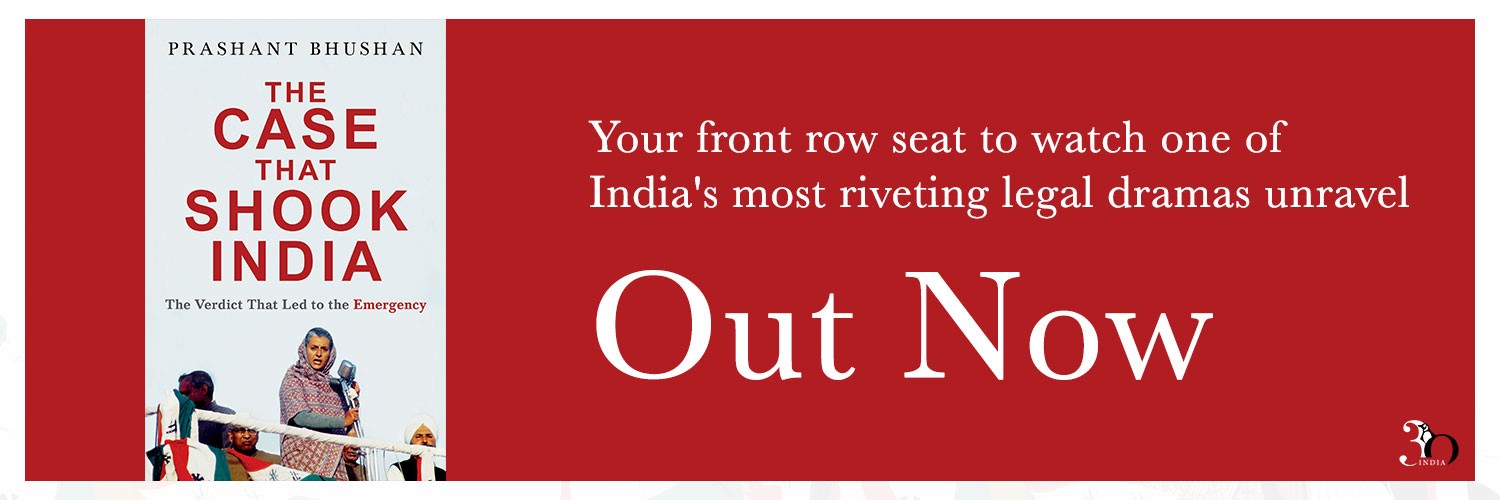
What acted as the catalyst to this infamous moment in Indian history was the watershed case of Indira Gandhi vs Raj Narain, which has been documented in detail by advocate Prashant Bhushan in his book The Case that Shook India.
Taking a peek into the book, here are five facts from The Case that Shook India that take us back in time to witness the most riveting courtroom drama in Indian history from front row seats.
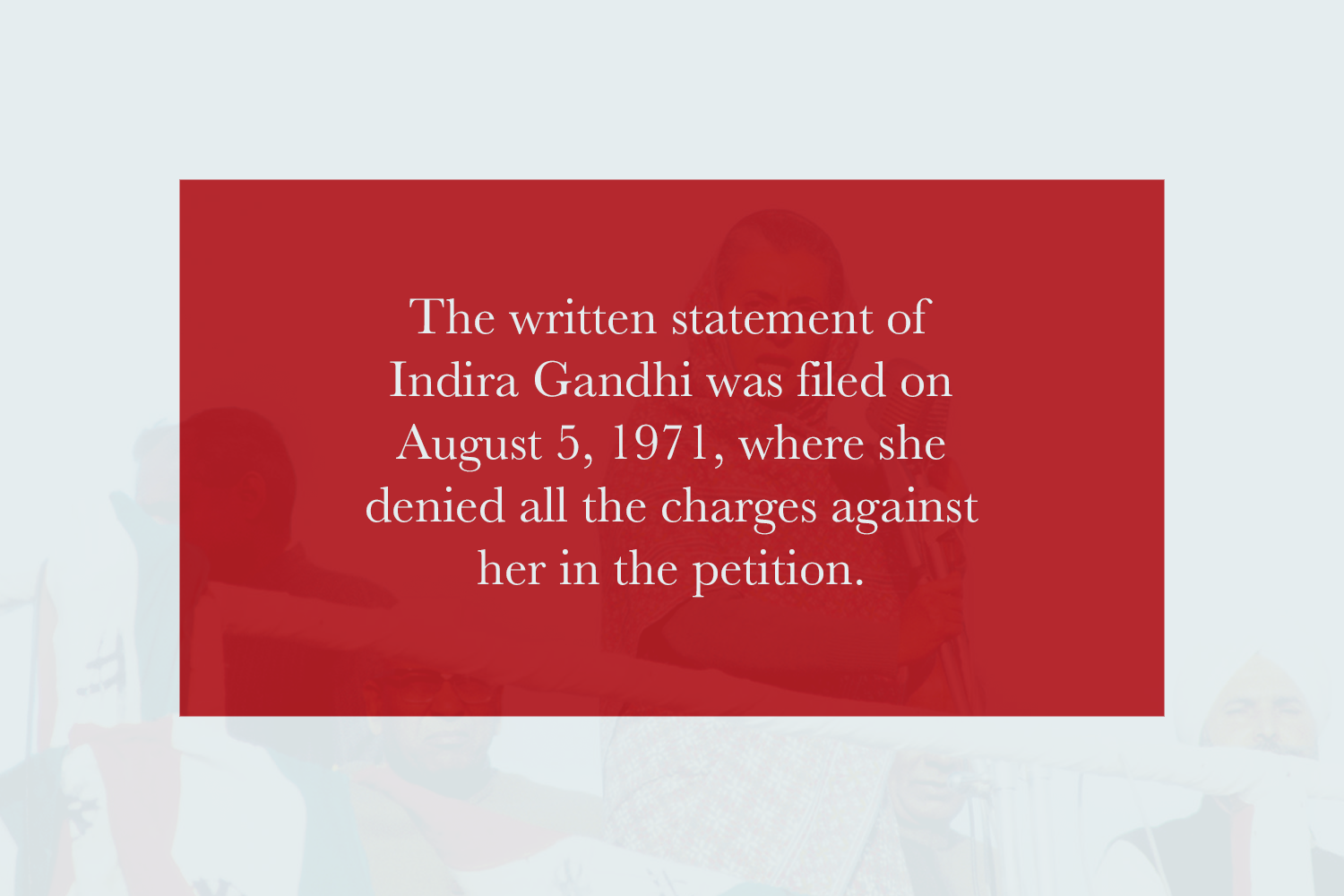
The Emergency finally concluded on March 21, 1977, thereby ending a period of not just political controversies, but heavy censorship, suspension of civil liberties and personal freedoms. Read more about it in Prashant Bhushan’s The Case that Shook India.
Forever Is A Lie: An Excerpt

Novoneel Chakraborty is the bestselling author of nine romance thrillers and he is back with another beguiling dark romance thriller. The first of a two-part series, Forever Is a Lie is about an eighteen year old girl who falls in love with a man, almost double her age. But what she doesn’t know is that whoever the man loves, dies.
Here is an excerpt from the book.
This was her profile information on Facebook. Ditto on Tinder, a dating app. With moist eyes, she checked the about me section on the app, which she had just filled up:
I’m here to hook up for a night. Anyone who wants anything that goes beyond a night, please swipe left.
Prisha forced herself not to think as she started browsing through men’s profiles on the app. Tinder was recommended to her by Zinnia, her roommate. Two years her senior in college, Zinnia was from the same neighbourhood as Prisha in Faridabad. She had shifted to Bengaluru to pursue media management from Cross University.
Prisha had followed in her footsteps and shifted to Bengaluru a month ago and had taken admission at the same university. She had enrolled herself as a BA student, with a major in mass communication. Zinnia and Prisha stayed together in a rented apartment on BTM Layout.
It was Zinnia who had first described Tinder as a saviour of singles in the city. But Prisha hadn’t made an account on the dating site because she was single, but because she had been feeling emotionally violated for a few months now.
Anyone remotely good-looking and Prisha would swipe right. In fact, looks didn’t matter at all for what she had in mind. She had heard about Tinder earlier from a number of friends but had never imagined using it one day. Why would she? She had been in a committed relationship since she had turned thirteen—until two months ago when she had stepped into her penultimate teenage year. In all these years there had been only one boy she was doggedly, single-mindedly and with utmost sincerity committed to.
Utkarsh Arora had wooed her for an entire summer vacation before she had finally said yes. She was in Class VII and he was in Class X. (Love, then, was an alien feeling. It slowly turned real as they gave it time). And just when Prisha had started believing that there could be no one better than Utkarsh, he let her down.
She had invited him to a family function. It was a dream to see her boyfriend enjoy with her family and cousins; everyone had approved of him. Three weeks later, she had noticed that Utkarsh’s Facebook relationship status had changed from: in a relationship with Prisha Srivastav to in a relationship with Shelly Srivastav. Shelly was her cousin and two years older than her. Prisha demanded an explanation but all Utkarsh said was that he was now in love with Shelly. Now? Is love a prisoner of time? Not only did Utkarsh not give her any plausible explanation, but he repeatedly dodged her calls and then blocked her on social media and on his phone. When she turned to Shelly for an answer, she simply said, ‘He loves me, not you.’
At eighteen, when one’s world collapses, it also brings down with it the beliefs one has grown up on. You stop trusting in truths altogether. You start believing that a truth is nothing but an illusion. Some call it the loss of innocence. It is then that people start giving in to the collective lies that makes everyone sorted adults. Prisha’s attempt at creating a Tinder profile was proof enough that she had given in to it as well.
Love, Prisha concluded within a month of her break-up, was a fallacy. Lust was real; the body was real. And henceforth, she would get real too. Even if it meant living a life she didn’t believe in.
Seven hours after she had made her Tinder profile, there were thirteen matches. When Zinnia came back from college, Prisha gave the phone to her.
‘I think this dude looks cute. What do you think?’ Zinnia said, looking at the fifth match. Prisha couldn’t care less. Zinnia chatted with the guy on Prisha’s behalf and in no time fixed a date later in the night at Harry’s in Koramangala. Zinnia knew Prisha’s story, but she wasn’t the one who had given her the idea of a one-night stand. It was something Prisha had inquired herself when Zinnia kept ranting about some guy who went by the name the ‘Mean Monster’ in the Bangalore party circuit. Mean because he was infamous for his edging technique—a method by which orgasm could be delayed, pushing the body to feel pleasure like never before. And monster because what he carried between his legs was two inches more than that of an average Indian’s. Zinnia was more than excited when she was finally able to trace the elusive guy and pin him down for a date, coincidentally on the same night that Prisha was supposed to meet her Tinder date.
‘You’ll have to come with me, Zin,’ Prisha said as soon as Zinnia had fixed the place for her to meet the Tinder guy.
‘Of course! But I too have a date, sweets,’ she said. Prisha noticed that Zinnia was blushing slightly, which was very unlike her.
‘What?’ Prisha asked, surprised.
‘Finally I’m going to meet him tonight.’
‘Who?’
‘The Mean Monster.’
