



After the phenomenal success of the Netflix-original series ‘13 Reasons Why’, it’s more of a reason now that you read the best-selling book 13 Reasons Why by Jay Asher. One could state 50 reasons as to why it’s important to read 13 reasons Why, however, here are 13 reasons why you shouldn’t give this book a miss.
13 Reasons Why talks about the relevant issue of high-school bullying. It opens an important, yet often neglected conversation on this subject.

The book’s central theme of suicide and mental health are explored and dealt with sensitivity. It starts a dialogue about how to identify signs of suicidal tendencies in a person and the importance of reaching out to sufferers during such situations.

The book lays emphasis on being more empathetic towards someone feeling troubled. It speaks about how one’s actions might have desolate effects on someone else even if they seem harmless.

13 Reasons Why talks about sexual harassment of all sorts – it gives an insight into how sexual abuse is not only of the physical kind but can be perpetrated through words and other ostensibly benign actions.

It starts a dialogue about important subjects such as body shaming and objectification – actions that are known to have debilitating impacts on individuals.

The story states the absolute non-negotiable nature of sexual consent of any kind.

It talks about voyeurism – the implications of how intruding into someone’s private space gives rise to paranoia and anxiety that have the potential to snowball into something bigger in future.

The novel seeks to de-stigmatise mental health issues. Through its pages, it explores the idea of opening friendlier, safer and newer spaces to discuss such issues without the fear of being judged.

How silent spectatorship or ‘fence-sitting’ in a situation might lead to unpleasant consequences – characters in 13 Reasons Why establish in more ways than one as to how important it is to speak up when required.

13 Reasons Why sheds light on the struggle of sexual abuse survivors trying to confide in someone and coming out in the open about their trauma.

It alerts parents, guardians, teachers, counsellors and the entire social ecosystem of mental health issues and the role they play in an individual’s life.

The book, through its characters, speaks of the significance of seeking help in case one feels like they are stuck in a helpless situation.

And finally, the book opens the much-needed doors to the possibility that ending one’s life during such dark phases is not the ultimate solution.

Do you feel there are the more reasons to read 13 Reasons Why? Tell us!

Give People Permission to Fail
When Felicia Ramsey, a marketing manager at SAS, started her career in media and advertising, she said that the only way anyone could measure the potential effectiveness of a campaign was to conduct a focus group, especially since it was so hard to assess the impact of a print or TV campaign. Making adjustments on the fly became difficult; you had to wait until the completion of the campaign to see the results.
With digital advertising, that’s all changed. “We don’t waste our time on anything we can’t measure our ROI anymore,” Ramsey explained. “That allows us to do more of things that work while doing less of things that don’t work.” With digital tools, we as marketers can also experiment and try new things without making the kinds of investments we once needed to. “We have built a culture that encourages and rewards us for taking risks and trying something different,” Ramsey said. “I’ve worked in other places where doing that might be held against you. Here you can be creative and comfortable about experimenting.”
A key lesson we’ve learned is to give marketers the freedom to test and learn so they can make intelligent decisions that will drive change. Since we began applying marketing optimization techniques, our conversion rates on outbound marketing campaigns have tripled, while associated communication costs are dropping. There has been a reduction in list size of 14 percent, a reduction in e-mail opt-outs of 20 percent, and an increase in click-through rates of 25 percent— all of which translates into higher-quality leads, reduced costs, and an improved customer or prospect experience. Achieving that kind of optimization has a direct impact on results, and it indirectly increases marketers’ confidence level. There is far less guesswork and much more time and energy invested in strategies to connect with customers.
A great example of how, by using data and analytics, we are able to be more agile and experiment with new techniques is the evolution of our website, www.sas.com. With millions of visitors to our site, most of whom initially find us through an organic web search, analytics is critical for determining how we leverage a person’s time on the site. With scoring and nurturing efforts, we have experienced conversion rates at 20 percent to 30 percent. Just as importantly, we have enhanced the overall experience for our customers when they do visit our website by making ourselves available to talk with them if they have questions. That’s something we’ve added with our relatively new, integrated, online chat capabilities that allow members of our customer contact center to respond in real time to visitors’ questions.
Adding the chat technology actually began as a skunk-works test program under Aaron Hill, Senior Director of Digital Strategy
Marketing Analytics at Work
Using Data to Justify Additional Resources
In the last decade, live chat has gone from a website curiosity to a mainstay on corporate sites. For companies selling business-to-business solutions, the use of chat is an immediate way to answer questions and establish dialogues with customers, even on their first visit.
SAS began investing significantly in chat resources in 2008, and each passing month brought new levels of engagement. Initially, the contact center operated from 8:30 a.m. to 5 p.m. eastern (US), Monday through Friday. The staff answered questions, provided links to resources, and often initiated a valuable early sales contact with prospective customers.
By 2013, the team realized that web traffic supported the need for coverage later in the day to help meet the requirements of customers in the western United States and Canada. As a temporary measure, the team started to work an altered shift from 12 p.m. to 8 p.m. as a pilot, but that left the group understaffed earlier in the day.
At the same time, the scope of the group supporting live chat expanded to include social media engagement on Twitter, LinkedIn, and other channels. Soon, the contact center was at a crossroads. With a longer workday, more engagement options, and the same staff, marketing leadership had to make changes to meet the increased demand.
The Challenge
The contact center team faced a dilemma found in many marketing groups. The team supported a high-volume activity, but there weren’t enough resources to cover additional efforts such as more channels (social media plus live chat) and a longer workday.
Because the contact center worked closely with inside sales to pass on leads, the marketing leaders proposed a partnership with their sales counterparts. Marketing would increase the operating hours for the contact center to include more coverage for West Coast customers and others on our website later in the day. It would also expand its reach to include more complete coverage of social media channels, as well as discussion forums, as part of a global social media monitoring and response program.
To justify the increased resources, the contact center turned to historical data on chat traffic to determine:
- Web visitors whose behavior indicated a likely lead
- Chat acceptance rate
- Rate of chats to leads
- Number of leads passed to sales • Rate of chats to sales conversions
- Close rate of deals originated by chat
The Approach
The marketing leadership team used the data from contact center interactions to justify hiring additional resources.
The team applied SAS algorithms to historical live-chat results, creating a virtual view of the results the sales team could expect with additional resources. The team applied the same approach to lead conversions and close rates and also added resources to the analysis. Based on these extrapolations, the marketing team could predict the workload and sales leads from each additional staff member and what that would mean to the bottom line. The analysis also showed how the team could interact more effectively across social channels and, as an additional benefit, help SAS recruit attendees to events.
With better data about the historical performance of live-chat sessions, the team members accurately predicted the outcomes of adding additional resources. Rather than simply asking for resources based on gut feel, they made a strong, data-driven presentation to executive leadership. They got the approval, and the contact center hired new staff.
The Results
Soon after adding the new resources, the team began to see that the expanded contact center was living up to expectations. Extended coverage hours and additional contact center resources helped generate more leads for sales from inbound channels. The data showed that these leads had the highest likelihood of converting to sales opportunities and revenue. The additions contributed directly to the bottom line and validated the analysis conducted to justify the new positions.
The team has also become more active in social channels, expanding the company’s presence and allowing the marketing organization to be more proactive. For example, a new Twitter handle—@SAS_Cares—gives customers an additional service channel for quick responses to their questions as well as timely notifications and helpful tips.
Technology, who recognized that all the content on our website might actually be confusing to a visitor, especially someone who simply wanted a price quote. Hill told me he equated the situation with entering a home improvement store and wandering the aisles looking for the right product. How happy we become, therefore, when someone steps out from behind the cash register to help us. In the end, we as customers appreciate help and buy more as a result. Hill thought chat could bring similar benefits to our customers and business. He was right; we’ve seen a much higher conversion rate among visitors to our website who engage with us via chat.
This is an excerpt from Adele Sweetwood’s The Analytical Marketer. Get your copy here.
Credit: Abhishek Singh
Forever Is A Lie: Prologue
On the Eve of His Twenty-Eighth Birthday
9 November 2010
He looks at the arrangement on the terrace of a forty-floor high-rise in Mumbai. A cosy mattress, a transparent tent and five love candles around it. He heaves a sigh of satisfaction. He recently bought the terrace and the floor below it without telling her about it. Tonight he will turn one of her fantasies into reality. They will make love under the stars. Tonight he will also realize his five-year-old dream. He will ask her to marry him the moment the clock strikes twelve—on the eve of his twenty-eighth birthday. He has never been happier.
She is attending a corporate training programme, which is due to end in an hour, at a resort in Lonavla. She has checked her watch at least ten times in the last five minutes. Time seems not to be at its usual pace today. She does a quick mental math for the umpteenth time. Five more minutes for the training session to get over, two minutes to greet everyone, say goodbye, another two minutes to hit the highway and then a couple of hours to reach Mumbai if there’s no untoward traffic. She has already asked her friend, an expert at baking, to make his favourite: blueberry cheesecake. She will make a detour after she reaches Mumbai to collect the cake, which will not take more than half an hour. She will reach his place by 10 p.m. Good, she tells herself and checks her watch yet another time.
The tent is right in the middle of the terrace. He places the smooth white mattress inside and puts a soft blanket over it. The air has just the right amount of chill, which makes him crave for her. For a moment, he can almost see the two of them becoming one inside the tent. He snaps out of the tempting reverie and readjusts the position of the candles. Tonight should be the perfect night, the kind lovers fantasize about, or so he has in mind. He places a sixth candle, a fake one, right above the mattress, where they will place their heads. It is actually a candle-shaped box and has a diamond ring inside.
She feels elated to hear the final ‘thank you for being such a nice batch’ from the trainer. The session is officially over for the day. She rushes out, greeting whomever she meets on her way. Almost everyone asks her if she wants to accompany them to Lion’s Point, a famous mountaintop, but she politely says no and calls her driver.
Satisfied with the preparation on the terrace, he makes his way to the flat and heads straight into the kitchen. He had googled and written down the recipe of sun-dried tomato risotto, her favourite, on a
Post-it note. He has also arranged for Montoya Cabernet Sauvignon—one of the best red wines in the world—as the perfect accompaniment. Suddenly he wants to hear her voice and decides to call her.
She is in the car now. She picks up her phone to call him and finds him calling her. This is how synchronized they are in their relationship. Be it matters of the heart or the mind, they are always on the same page. And it’s this very perfect timing that has gently pushed them into seeking a forever together every day. She says a soft hello into the phone.
He talks to her for some time and then lies that he has some important official work to complete. He has never been the kind who would surprise anybody, but this time he wants everything to be special, a memory that would last forever. She believes his lie. He cuts the call and wears an apron.
She hums her favourite romantic song while checking the photo gallery of her phone. Her car climbs the treacherous roads of Lonavla, with hills on one side and a gorge on the other. A boulder is displaced a few feet above the road that her car is on. Tearing the safety net around the boulders, placed to stop them from sliding down abruptly, it falls exactly on top of her car. It crushes the vehicle out of shape and the driver and her out of recognition. Her heartbeat stops almost immediately.
He keeps waiting to surprise her.

‘A Life of Adventure and Delight’: An Excerpt
Akhil Sharma’s works have been hailed as being “as hypnotic as those found in the pages of Dostoevsky” and a “glowing work of art” by leading publications in the world. In his new collection of short stories, ‘A Life of Adventure and Delight’, Sharma weaves eight unpredictable tales of the volatile human heart.
Here’s an excerpt from the book.
Late one June afternoon, seven months after my wedding, I woke from a short, deep sleep, in love with my husband. I did not know then, lying in bed and looking out the window at the line of gray clouds, that my love would last only a few hours and that I would never again care for Rajinder with the same urgency—never again in the five homes we would share and through the two daughters and one son we would also share, though unevenly and with great bitterness. I did not know this then, suddenly awake and only twenty-six, with a husband not much older, nor did I know that the memory of the coming hours would periodically overwhelm me throughout my life.
We were living in a small flat on the roof of a three-story house in Defense Colony, in New Delhi. Rajinder had signed the lease a week before our wedding. Two days after we married, he took me to the flat. I had thought I would be frightened entering my new home for the first time, but I was not. I felt very still that morning, watching Rajinder in his gray sweater bend over and open the padlock. Although it was cold, I wore only a pink silk sari and blouse, because I knew that my thick eyebrows, broad nose, and thin lips made me homely, and to win his love I must try especially hard to be appealing, even though I did not want to be.
The sun filled the living room through a window that took up half a wall and looked out onto the concrete roof. Rajinder went in first, holding the heavy brass padlock in his right hand. In the center of the room was a low plywood table with a thistle broom on top, and in a corner three plastic folding chairs lay collapsed on the floor. I followed a few steps behind Rajinder. The room was a white rectangle. Looking at it, I felt nothing. I saw the table and broom, the window grille with its drooping iron flowers, the dust in which we left our footprints, and I thought I should be feeling something, some anxiety, or fear, or curiosity. Perhaps even joy.
“We can put the TV there,” Rajinder said softly, standing before the window and pointing to the right corner of the living room. He was slightly overweight and wore sweaters that were a bit large for him. They made him appear humble, a small man aware of his smallness. The thick black frames of his glasses, his old-fashioned mustache, as thin as a scratch, and the fading hairline created an impression of thoughtfulness. “The sofa before the window.” At that moment, and often that day, I would think of myself with his smallness forever, bearing his children, going where he went, having to open always to his touch, and whatever I was looking at would begin to waver, and I would want to run. Run down the curving dark stairs, fast, fast, through the colony’s narrow streets, with my sandals loud and alone, until I got to the bus stand and the 52 came, and then at the ice factory I would change to the 10, and finally I would climb the wooden steps to my parents’ flat and the door would be open and no one would have noticed that I had gone with some small man.
I followed Rajinder into the bedroom, and the terror was gone, an open door now shut, and again I felt nothing, as if I were marble inside. The two rooms were exactly alike, except the bedroom was empty. “And there, the bed,” Rajinder said, placing it with a slight wave of his hand against the wall across from the window. He spoke slowly and firmly, as if he were describing what was already there. “The fridge we can put right there,” at the foot of the bed. Both were part of my dowry. Whenever he looked at me, I either said yes or nodded my head in agreement. We went outside and he showed me the kitchen and the bathroom, which were connected to the flat but could be entered only through doors opening onto the roof.
From the roof, a little after eleven, I watched Rajinder drive away on his scooter. He was going to my parents’ flat in the Old Vegetable Market, where my dowry and our wedding gifts were stored. I had nothing to do while he was gone, so I wandered in and out of the flat and around the roof. Defense Colony was Raj composed of rows of pale two- or three-story buildings. A small park, edged with eucalyptus trees, was behind our house.
Rajinder returned two hours later with his elder brother, Ashok, and a yellow van. It took three trips to bring the TV, the sofa, the fridge, the mixer, the steel plates, and my clothes. Each time they left, I wanted them never to return. Whenever they pulled up outside, Ashok pressed the horn, which played “Jingle Bells.” I was frightened by Ashok, because, with his handlebar mustache and muscular forearms, he reminded me of my father’s brothers, who, my mother claimed, beat their wives. Listening to his curses drift out of the stairwell each time he bumped against a wall while maneuvering the sofa, TV, and fridge up the stairs, I felt ashamed, as if he were cursing the dowry and, through it, me.
On the first trip they brought back two suitcases that my mother had packed with my clothes. I was cold, and when they left, I changed in the bedroom. My hands were trembling by then, and each time I swallowed, I felt a sharp pain in my throat that made my eyes water. Standing there in the room gray with dust, the light like cold, clear water, I felt sad and lonely and excited at being naked in an empty room in a place where no one knew me. I put on a salwar kameez, but even completely covered by the big shirt and pants, I was cold. I added a sweater and socks, but the cold had slipped under my skin and lingered beneath my fingernails.
Rajinder did not appear to notice I had changed. I swept the rooms while the men were gone, and stacked the kitchen shelves with the steel plates, saucers, and spoons that had come as gifts.
Get your copy of Akhil Sharma’s delightful new book here!

In Conversation with Pankaj Bhadouria
We recently spoke to Pankaj Bhadouria, the winner of MasterChef India Season 1. Pankaj has written two more cookery books, Barbie: I am a Chef and Chicken from My Kitchen.
Below are a few questions we asked her:
What was the very first dish that you cooked and for whom?
From what I remember, the first was probably breakfast for my Dad. The dish was nothing but toast, butter and tea with a rose on the tray. I must have been eight or nine years old at that time so the memory is very precious to me.
What is the best cooking related memory you have?
I think my best cooking related memory is when I was cooking for the finale at MasterChef. I was very calm and not under any pressure at all! I think that not only prevented me from making any mistakes but also reflected in the food that I created that day and helped me win.
Tell us the go-to spice mix in your kitchen.
That would be the Kadhai Masala! Be it with potatoes, chicken, paneer, cauliflower, stuffed paranthas – I use it almost everywhere!
Share with us a secret that you think helped you become the first MasterChef of India.
It is difficult to say…maybe a lot of homework that I’d done over the years aided by the fact that I could work well within limited time or perseverance and not giving up under pressure. Also I would pay a lot of attention to what comments my competitors would get from the judges and made it a point to not repeat those mistakes myself.
Are there more books coming from your kitchen?
Of course, there are! Just wait for what is next to come!

5 Reasons You Should Read Vikrant Khanna’s Latest Book
The Girl Who Knew Too Much is about a thirteen-year-old girl who hears about the miraculous reunion of a young woman and her dead boyfriend.
Here are 5 reasons The Girl Who Knew Too Much is your next read.
Vikrant Khanna is also the best-selling author of When Life Tricked Me and Love Lasts Forever.

It is a story about love and loss.

It is the story of hope.

Life goes on even after death.

Vikrant Khanna’s imagination of Yamaraj is pretty cool. He even calls the protagonist ‘bro’.

Ready to get your hands on the book? Tell us which part did you like the most.

The Making of Pressler Amendment— An Excerpt
As chairman of the US Senate’s Arms Control Subcommittee, Larry Pressler advocated the now-famous Pressler Amendment, enforced in 1990 when President George H.W. Bush could not certify that Pakistan was not developing a nuclear weapon. Larry Pressler was adjudged a hero in India and a ‘devil’ in Pakistan due to his stance on giving military aid to Pakistan. In his book ‘Neighbours in Arms’ Pressler provides a comprehensive account of how US foreign policy in the subcontinent was formed from 1974 till today and ends with recommendations of a new US-India alliance that could be a model for American allies in future.
Here’s an exclusive excerpt from the book.
In December 1981, a new section was added to the 1961 Foreign Assistance Act. It allowed the President to exempt Pakistan from the original Symington Amendment ‘if he determines that to do so is in the national interest of the United States’. (It is important to note that Pakistan was the only nation specifically exempted by name from these restrictions.) Almost immediately, Congress also authorized a six-year $3.2-billion package of military and economic assistance to Pakistan. I was opposed to this move, as I knew it would further encourage Pakistan to continue the development of their nuclear weapons programme.
Many of us in Congress knew that we could not trust President Zia to be honest with us about his nuclear ambitions. Everyone knew that Pakistan was continuing to acquire material and technology
to develop a bomb. Despite this fact, the Reagan administration wanted a new law that would give him a permanent waiver from the Glenn–Symington Amendment. At the time, guaranteeing Pakistan’s assistance in the fight against the Soviets in Afghanistan was more important than stopping Pakistan’s acquisition of nuclear weapons technology. The only way the administration could get Congress to go along with this permanent waiver was to include language in a new law that would punish Pakistan if it was determined that Pakistan actually possessed a nuclear weapon. This made the Glenn–Symington waiver more politically feasible to those of us in Congress who were working hard on non-proliferation issues. I was tapped to carry the ball and the Pressler Amendment was born.
My goal was to give this new amendment as much ‘teeth’ as possible. On 24 March 1984, the Senate Committee on Foreign Relations introduced an amendment offered up by California Democratic senator Alan Cranston and Senator Glenn. This first amendment stipulated that ‘no military equipment or technology shall be sold or transferred to Pakistan’ unless the President could
first certify that Pakistan did not possess nor was developing a nuclear explosive device, and that it was not acquiring products to make a nuclear explosive device. On 18 April 1984, the committee instead introduced a substitute offered by me, Maryland Republican senator Charles Mathias and Senator Charles Percy.
My former staff member, the late Dr Doug Miller, recalled that Senator Cranston’s face appeared ‘crestfallen’ when his amendment did not pass. In retrospect, while Cranston’s amendment and my
subsequent amendment were very similar, I feel his amendment would have cut off aid to Pakistan sooner. But the Republican Party was in control at the time. They wanted a Republican name on the
amendment.
The revised amendment offered by Senators Mathias, Percy and me instead tightly tied the continuation of aid and military sales to two presidential certification conditions: (1) that Pakistan did not possess a nuclear explosive device; and (2) that new aid ‘will reduce significantly the risk’ that Pakistan would possess such a device. This text was further revised with a provision offered by me, Senator Mathias and Minnesota Republican senator Rudy Boschwitz that the ‘proposed U.S. assistance [to Pakistan] will reduce significantly the risk of Pakistan possessing such a [nuclear] device’. It forced the President to affirm that increased aid was reducing the risk of Pakistan
getting nuclear weapons. I thought at the time that this was going to be impossible for any President to certify—based on Pakistan’s past behaviour and what President Reagan had assured me he would do.
The final text of Section 620E of the Foreign Assistance Act of 1961 read:
No assistance shall be furnished to Pakistan and no military equipment or technology shall be sold or transferred to Pakistan, pursuant to the authorities contained in this Act or any other Act,
unless the President shall have certified in writing to the Speaker of the House of Representatives and the chairman of the Committee on Foreign Relations of the Senate, during the fiscal year in which assistance is to be furnished or military equipment or technology is to be sold or transferred, that Pakistan does not possess a nuclear explosive device and that the proposed United States assistance program will reduce significantly the risk that Pakistan will possess a nuclear explosive device.
This text, which was signed into law by President Reagan on 8 August 1985, soon became known as the ‘Pressler Amendment’, even though I was not the only sponsor. I never referred to it as the Pressler Amendment. But when President George H.W. Bush later enforced it, the Pentagon wrote a series of worldwide memos and briefings explaining that Bush had to act in such a way towards Pakistan because of ‘Senator Pressler’s amendment’, mentioning me by name and making the amendment eponymous. It is important to understand that this legislation was passed at the request of and with the support of the Reagan administration. That is why I was so astounded when later Reagan never enforced it.
In summary, it made a law out of what had already been an official policy: our conventional arms assistance and financial aid to Pakistan would reduce the risk of nuclear proliferation. It used the power of the purse. It allowed us to pursue our communism-containment goals in the region, but it was also intended to force our leaders to proactively assert—on the record—that Pakistan was not making progress on its nuclear goals. Again, this policy seems counter-intuitive and, unfortunately, it had the opposite effect on Pakistan. And, with the help of the Octopus, Pakistan took our aid and flagrantly ignored the Pressler Amendment restrictions.

5 Things You Didn’t Know About Sister Nivedita
Margaret Noble, called Margot by her family and friends, came to India in 1898 inspired by Swami Vivekananda. She took the vows of celibacy and devoted the rest of her life to the cause of India. During her stay in India, she impressed many famous national figures and even influenced the ending of Rabindranath Tagore’s novel Gora.
Reba Som in her compelling biography of Sister Nivedita traces the development of Margaret from an Irishwoman into Sister Nivedita and finally into ‘Lok Mata’ or ‘People’s Mother’—a title bestowed on her by Tagore.
Here are five things you probably didn’t know about Sister Nivedita.
She lived up to her given name and devoted herself fully to the cause of India.

She wrote over 800 letters to her friends.

After her death, Josephine MacLeod decided to share Nivedita’s personal papers and letters with Lizelle Reymond for a definitive biography of Sister Nivedita in French, which was translated into English as The Dedicated: A Biography of Nivedita (1953).

She took him under her wing, reassured him in moments of despair, invited financial assistance for his work and constantly edited and helped in the writing of his manuscripts.

She wished to learn the culture of faraway India so she could contribute towards the education of women in the light of their own civilizational values.

Do you know more such facts about Sister Nivedita? Share with us.

7 Things You Did Not Know About MGR
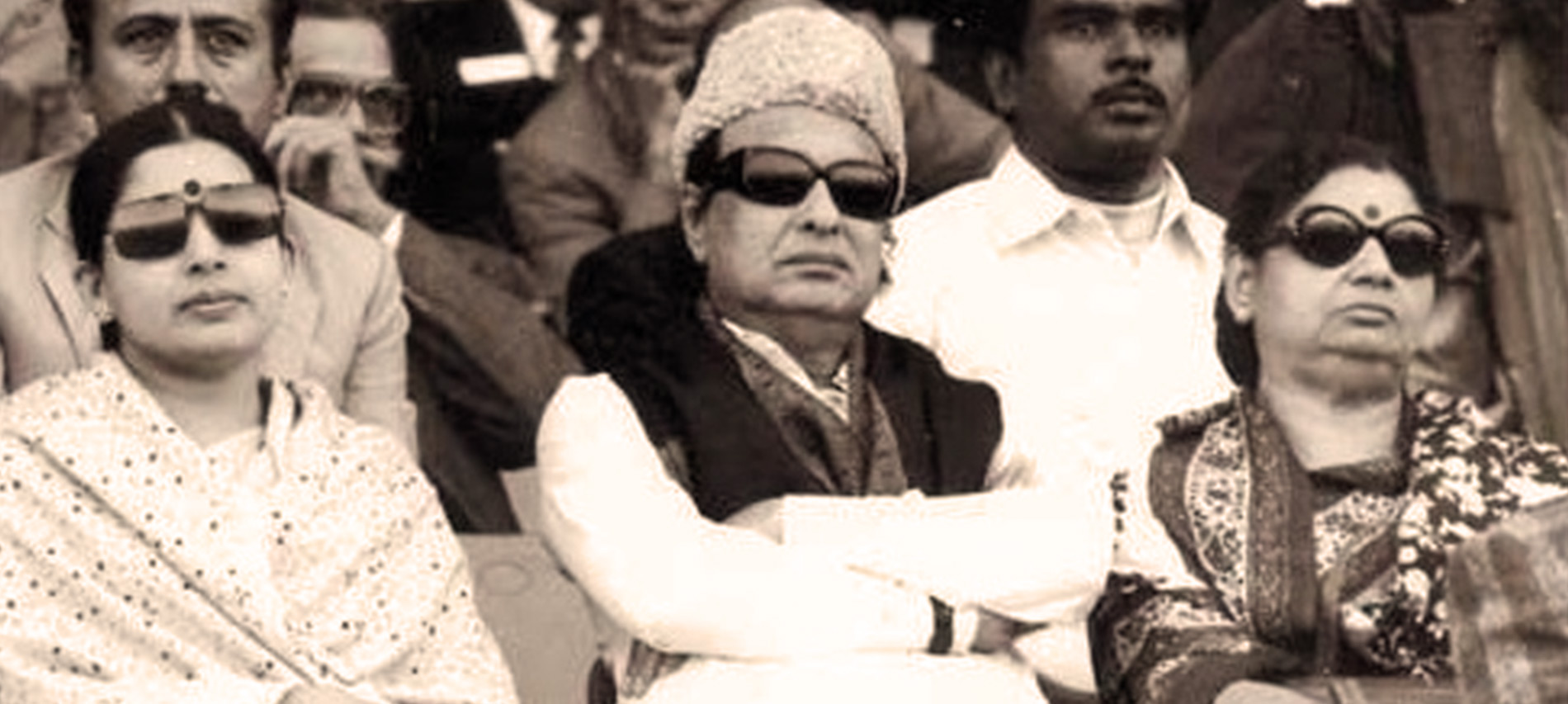
Marudur Gopalan Ramachandran, or MGR was the founder of the AIADMK and three-time chief minister of Tamil Nadu. A Bharat Ratna recipient, he dominated the state’s stratosphere for four decades.
A brilliant new book by R. Kannan dissects MGR’s years in power: his early administration, the legendary midday meal scheme launched in 1982 that fed 92 lakh schoolchildren, his well-intentioned farm subsidies and freebies that strained the exchequer, his largesse to the Liberation Tigers of Tamil Eelam, as well as his unabashed sponsorship of liquor barons and private medical and engineering colleges that aided the transformation of the state, but also fueled corruption.
Here are seven things you did not know about the legendary actor-politician!
A Larger-than-life Figure

Innate Sense of Giving and Hospitality

Being His Own Man

He Was Considered an ‘Avatar’ of God

Watchful While Sitting Tall

The Spirit of Meting Out Judgement

Eye for detail

Looking for more? Get the story of India’s very first actor-politician here!

6 Times Our Prime Minister Surprised Us
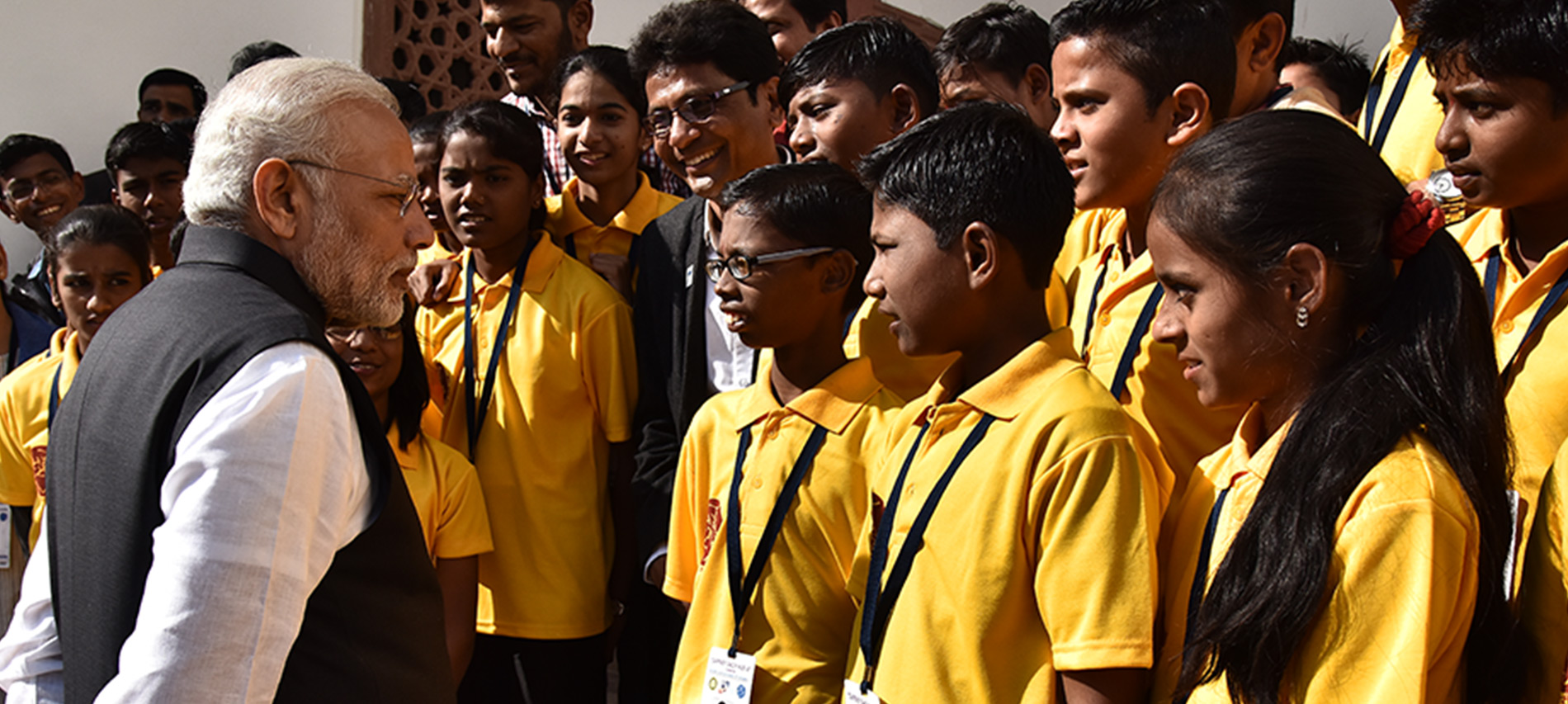
Prime Ministers don’t always have to be serious, do they? India’s current Prime Minister Narendra Modi has often shown a side that reaches outside of his bureaucratic, stoic demeanour.
Here our 6 instances when Prime Minister Modi pleasantly surprised us:
Moshe, the 26/11 survivor met Narendra Modi with affection, on his recent visit to Israel.

When the Canadian and Indian PM talked about a sporty partnership.


When our PM broke protocol to hug a little girl.

When Ravi Shastri was bowled over by our PM.

When PM Modi became nostalgic.

PM Modi has a unique way of reaching out to his fans.


Tell us which instance surprised you the most.
