




As director of analytics and A/B testing at Visa, Ravichandran supports executives, leaders, and decision makers in product, marketing, sales, and relationships. He explained to me that “we are the custodians of the data, so our responsibility is to enable our users to have confidence in the decisions they make using that data.”
One of the biggest changes the analytical era of marketing has brought about is that things need to happen much faster than before. “We used to have a very linear approach,” Ravichandran told me. “Now when something is going live, there’s already an immediate need to respond. We need to be able to take action on the fly.” Because of those changes, marketers can no longer think about analytics as something that supports them or a function that just one person, like a chief digital officer, would perform. Rather, analytics is now an integral part of marketing’s value chain.
Ravichandran said that numbers by themselves are historical. That’s why, while data is needed to inform campaigns, at the end of the day, it still comes down to marketers using their gut feelings to make the best decision possible. “And we can use data and analysis to inform and guide us in the right direction,” he added.
Because data and analytics are now so intertwined with marketing strategy, expectations for leadership on the marketing side have changed. “It’s no longer acceptable to say you’re a marketer, but you’re not a numbers person,” Ravichandran said. “Executives are demanding more data literacy as a precursor for being a good marketer.” And it’s not just in the marketing space. He added, “All of our chief executives are comfortable with numbers and data-driven approaches.”
Ravichandran was quick to clarify, however, that a focus on data, numbers, and quantified measures should not replace the value of vision: “I have an enormous respect for data, but I also believe all of it has to be driven by strategy, the business case, benchmarking against the industry, all those things that provide a broader perspective. You have to understand what specific metrics you’re trying to impact with your actions.” He advocates the importance of understanding your company’s business model, applying and measuring the right metrics, and truly understanding your competitive position and your customers’ needs.
The big mind-set shift we need to make, therefore, is recognizing how our intuition is now informed by data and analytics. When someone comes to a marketing manager or leader with a proposal to spend, say, $250,000 on a campaign, she had better come armed with data, analysis, testing plans, and expected outcomes, as well as what her gut is telling her.
This is an excerpt from Adele Sweetwood’s The Analytical Marketer. Get your copy here.
Credit: Abhishek Singh
6 Confessions by Ruskin Bond that Every Book Lover Can Relate With
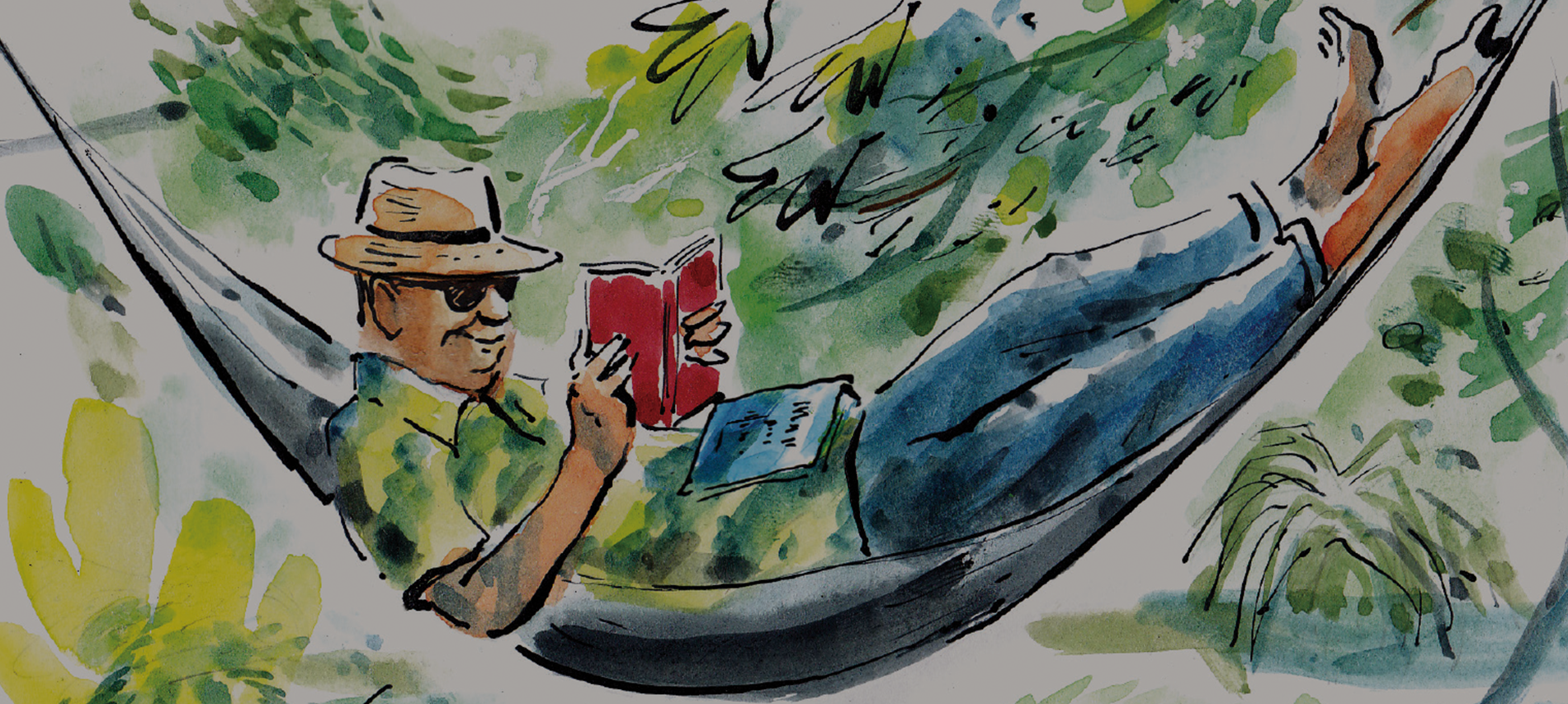
“I just hate having so many books to read and yet never having enough time to read them.”
“I used to pack a book for sleep overs!”
A love of books (to the point of addiction) might lead to misadventures, but it’ll surely lead to anecdotes and confessions!
In Confessions of a Book Lover, Ruskin Bond opens a window to his earliest encounters with incredible writers and their wonderful writings to introduce readers to the stories that played a significant role in molding his imagination as a full-time writer.
Every book lover has a confession. These are Ruskin Bond’s.
Literature is not bound to a type, is it?

Books > Common Sort of Entertainment

There can never be enough books

You never know which precious gem you might discover in a new genre

The ideal way to spend vacations

Reading can accelerate healing
Do you have similar confessions to make?
Get Ruskin Bond’s Confessions of a Book Lover here!

6 Essential Spices from Masterchef Pankaj Bhadouria’s Kitchen

Straight from the kitchen of India’s first Masterchef, Pankaj Bhadouria, here is a glimpse of her book — The Secret’s in the Spice Mix. Now you’re just a teaspoon away from stirring magic in your pan with these 6 spice mixes you must have in your kitchen:
Greek Seasoning

Za’atar

Pizza Seasoning

Barbecue Sauce

Tawa Subzi Masala

Panch Phoron

So, what is the best kept secret in your kitchen? Tell us as we make our way to gastronomic heaven.

Celebrating Cinema: 5 Reasons You Should Know About this Pioneer of New Wave

Adoor Gopalakrishnan, a name synonymous with revolutionising not just Malayalam cinema, but Indian cinema, was born in Kerala’s Travancore on July 3, 1941. Gopalakrishnan is a Padma Shri, Padma Vibhushan awardee, a Dadasaheb Phalke recipient, 16 times winner of the National Award, 17 times winner of the Kerala State Film Awards, a recipient of Legion of Honour by the French government, and many more.
Here are five more things to learn about the contributions made by this pioneer of New Wave to cinema:
Adoor Gopalakrishnan is an alumnus of the Pune Film Institute (now known as the Film and Television Institute of India). He applied for the ‘screenplay writing and direction’ course in the year 1962.

The filmmaker’s growing passion for cinema urged him to start a film society. In the year 1966, the fifth ‘All India Writers’ Conference’ held in Kerala’s Alwaye gave him the perfect opportunity to establish a film society.

Koodiyattam is the oldest living theatre in the world (2000 years old). Gopalakrishnan fought hard to gain access to the inner sanctums of the koothambalam or the premises of Koodiyattam’s performance to ultimately make a three-hour long documentary on this art form.

Adoor Gopalakrishnan has experimented with sound and silence in his films in ways that were unthinkable. Gopalakrishnan writes a separate script for sound, he would record natural sounds from different sources, like the train tracks, chatter of young college goers, the pouring rain to be used in his films.

Adoor Gopalakrishnan is known to include animals and birds as characters in his films. Our friends from the wild are not the ones to be directed and this, Gopalakrishnan treats, as a creative challenge. In his film Elippathayam, rats play an important and parallel role to the protagonist and his family.

Fascinated by the facts? Read more about the legend of cinema in Gautaman Bhaskaran’s Adoor Gopalakrishnan: A Life in Cinema.
Why Care About Superconsumers?

Superconsumers Beget Superconsumers
The true value of superconsumers lies in their contagious nature. Those you meet are likely to have a crowd of other current superconsumers and potential superconsumers with them. For additional superconsumers, look to their family and friends. Capture and share the superconsumers’ stories, and watch as their knowledge inspires and creates new superconsumers.
Superconsumers Travel in Packs, Creating Super Geos
As the epicenter of demand creation, super geos can be tapped into to drive superior growth in your business. But you must locate and leverage them. The words national average are some of the most misleading in business. Many leaders have an inherent, subconscious belief that demand is spread like peanut butter, evenly and thinly. But the very presence of super geos means that passion for your offering will be patchy, with one set of consumers wild about your product while another group is neither hot nor cold. If you believe that demand is like the flat Midwest, then you’ll be ill prepared to climb the hilly terrain it really is.
Superconsumers Are Superconsumers of Multiple Products
A superconsumer of one category is often a superconsumer of other categories. Cleverly combining two or more important, yet seemingly different categories not only taps into a quest, but can also create a new category—just as American Girl crashed dolls, education, and experiential retail into one category.
Generac, the leading manufacturer of standby generators, found that people who buy three to four times more life insurance and lots of vitamins tend to be great prospects for proactively buying a generator for an extreme event that may never happen. These consumers are superconsumers of proactive protection.
Sometimes the connection between categories is not as clear, as some categories counterbalance one another. For example, superconsumers of milk tend to be superconsumers not of other healthy foods and beverages, but of more indulgent ones like cereal, cookies, and candy. Milk was the perfect accompaniment to sweets—and was probably considered something like an old-school indulgence you could buy from the Catholic Church in advance of a sin you were planning to commit. Counterintuitively, Harvard Business Review reported that shoppers who recycle their grocery bags tended to indulge more in junk food as well.
What Pleasant Rowland created and Mattel helped foster is amazing. American Girl’s remarkable growth may also feel intimidating. But it is more feasible than you might think, especially considering how low the success rates are for innovation in your core business.
The key is to take stock of the state of your business now. Are you hitting your growth goals? How good is your ROI now? What are the odds that your business will still be successful for the next five to ten years?
Of all new consumer packaged goods, 85 percent or more fail. Why? Often, the problem is that they aim too low by trying to solve the same job with a slightly modified product. Companies would do far better aspiring to solve a quest, but falling short slightly and finding that they created a product that consumers wanted to hire for a wholly more important job than its originally intended one.
The most successful businesses today have multiple business models, not just one. How well does a unidimensional business model do against a multidimensional one? Poorly, much like a boxer who runs up against a mixed martial artist who can box, kick, and wrestle. It is an unfair fight. This is both the beauty and the imperative of leveraging superconsumers to create new categories.
Are you looking at transforming your business through an adept use of your consumers? Get Eddie Yoon’s Superconsumers here!
Credit: Abhishek Singh
How to Get Unscared of Maths
By Aditi Singhal and Sudhir Singhal
During one of my recent 10-day summer workshop on maths, I asked the mother of a child studying in 5th standard to practice the times tables with her son at home. She replied,‘No, I don’t want to give stress to him in holidays too’. Herein lies the actual reason why both children and adults are so scared of mathematics. From the very beginning, we associate studies with stress, especially when we talk about maths.
On the first day of the workshop, that child was not very interested in doing maths sums and strongly believed he was not good at the subject. Over the course of the workshop, we did lots of activities, number games and worksheets, in which he actively participated. With each day, he showed increased interest, understanding and comfort in the subject. By the end, he was able to answer questions quickly and accurately, and most importantly, he started enjoying them. He said maths had never interested him earlier. And he wasn’t the only one. We had similar responses from other students and their parents. I requested parents to not associate studies with stress, and continue asking the kind of questions we had been asking to boost their confidence over the holidays and help them improve performance in school too.
Many parents wonder what magic we do on their kids when they come to us. But the fact is it all depends on what you think about your subject and how you present it to students, both children and adults. If a teacher introduces a concept by saying ‘today we are going to start a new topic and it is very difficult. You need to pay attention, otherwise they won’t understand’, those students who find maths difficult automatically switch off, thinking they won’t be able to understand today’s topic.And the students who like the subject also tend to get a little stressed,which is not an ideal mindset for establishing a solid foundation. Instead, if a topic is introduced by saying, ‘Today we are going to learn something very interesting, which I feel you all will enjoy doing,’ and some activity or storytelling accompanies it, then everyone can get involved.
During interaction with students and teachers over the years, we have realized that whether one fears maths or loves it depends on how well a person understands it. If someone scores well in maths, they start liking it. But if they give wrong answers, they develop a fear of the subject, believing that maths is difficult.
The main factors that contribute to this fear are:
- Clarity of concepts –When a concept is not clear, the child or adult makes mistakes repeatedly, losing confidence and eventually giving up.
- Lack of practice – If someone understands the concept but doesn’t practice it enough, then he/she is not going to retain it for a longer time. Through practice, one is able to understand the patterns involved in the procedure and develops strong pathways in brain which are required to accomplish a particular task.
- Wrong beliefs and messages – Every time a child hears a parent, older sibling, grandparent saying ‘Maths is very difficult’, it makes them think if their elders feared the subject, then it must indeed be very difficult to master, feeding their fear of the subject.
- Not able to relate it with daily life situations – Most students are unclear about the significance of the topics covered during their maths class. Often, they do not see a connection between the topics taught and real-world problems.
To remove the fear of maths, we need to shift our focus from remembering procedures or formulae to understanding them with proper reasoning. First of all, maths should not be treated as just a subject you need to study to get marks in exams. Rather, the emphasis should be on knowing the beauty and importance of maths in daily life. In the present education system, upto eight standard, maths curriculum is focused on calculation skills involving mainly long procedures and formulae. That’s why, with time, students start losing interest in it as they think calculations can easily be done using calculators and mobiles. The remedy for this is for school-level maths to be more related to day-to-day situations. The emphasis should be more on developing mathematical thinking and problem solving skills of a child rather than just working on calculations. Apart from teaching the procedures to solve a particular problem, understanding of why we are using that procedure should also be taught. In short, we need to add the why along with the how to solve a given task or problem.
Teachers and parents can achieve this by using the following strategies:
- Planning activities to relate the concepts with real-life situations –The most effective way to counter the fear of math is to relate it with everyday’s incidents. Shopping and planning for any event at home, such as a birthday party can be a good opportunity to learn maths concepts in a simple manner. During festivals, markets are flooded with lots of offers and discounts. Motivate the child to analyze the best deal for items you plan to buy.
- Asking open-ended questions – Generally maths questions have fixed answers, which restrict creativity. If we make use of open-ended questions then it gives children more freedom to think and helps enhance their thinking skills. For example, instead of asking ‘what is the perimeter of a rectangular room having length of 7m and breadth 5m’, the question could be ‘what can be the dimensions of the room if the perimeter of a room is 24m.’ Such questions will really change the way of thinking and thus learning.
- Using magic tricks based on maths concepts– Magic fascinates everyone, so including magic tricks directly and indirectly in teaching can make children understand concepts and also develop a sense of numbers. Our book How to Be a Mathemagician contains many such tips and magic tricks.
- Including recreational activities to make learning fun – Normally,students are asked to solve questions at the end of a chapter. As a result, children know which concept or procedure to apply as they know it must be related to the topic covered in the chapter. Repeatedly practicing this way not only makes learning boring but also doesn’t allow students to identify which concept should be applied to which problem when they are asked questions in exams. Hence, teachers and parents can plan fun-oriented activities that indirectly cover concepts. We got wonderful responses from teachers and students when we suggested a treasure hunt wherein participants needed to solve a series maths questions that would lead them to the treasure.
- Using visual maths – Mostly maths is taught in an abstract manner, with formulae using various symbols. Children whose learning styles match the teaching style of teacher are able to understand concepts better and faster, but students whose learning styles do not match can fail to understand clearly. But that doesn’t mean that they are not good at maths. If they are taught using various props or kits, they can achieve equivalent or better results.
- Seeing mistakes as opportunities to learn – When a child makes a mistake and is told ‘You are wrong’, he/she looses self-esteem, and with time, develops a fear of giving answers. Instead of telling them, ‘No, this is not the right answer’, ask them some different, encouraging questions, like:
- How did you arrive at this answer?
- Can you draw a representation?
- What do you see in your head?
- Can you explain?
- You and your neighbor have different answers, who is correct?
- Can you solve it in another way?
Such questions will motivate children to determine the right answer and understand their mistake. We should appreciate their efforts.
- Developing self-belief – One can overcome fear of the subject by believing maths is very easy and can be learnt in a fun way. If a child is told he/she has great potential, they will have the confidence to keep trying and learning.
- Making summer vacations fun with Maths games – Summer vacations are a good time to practice mental math strategies and times tables. When given a choice, rarely will a child choose to practice in a workbook over playing a game.You may play some math-oriented games to enjoy and indirectly practice maths concepts. One such game can be ‘MathsTambola’.It is similar to Tambola, but the important difference is that instead of calling a number directly, say 44, the caller may say‘11×4’,‘11×2×2’,‘88÷2’ or ‘35+9’.Playing such games will not only improve concentration and mental calculations, but is a lot of fun too for kids and adults alike.
At the same time, students can improve their maths skills by practicing the following strategies:
- Solve challenging puzzles, playing Sudoku, or playing chess. This will help exercise the brain and develop thinking skills.
- Practice maths regularly, doing at least 3 questions daily.
- Instead of using calculators, try to do calculations mentally.
- Don’t hesitate to ask questions.
- Use Vedic math to make your calculations fast and easy.
- Try to relate maths problem with day-to-day situations.
Maths is the only subject that can fascinate children and adults alike, and provide a lot of satisfaction and positive reinforcement when they solve that tough question or master a concept. So discard your fear of mathematics today and be prepared to be wowed.
Aditi Singhal is an international memory trainer, author, motivational speaker, counsellor and Vedic Math expert. Sudhir Singhal is a dynamic trainer, author, motivational speaker and counsellor. Both of them hold the Guinness World Record for conducting the largest mathematics class. Their latest book How to be a Mathemagician is meant for all age-groups students, teachers, and parents.

6 Themes of George Orwell’s ‘1984’ that We Need to be Mindful of

George Orwell’s dystopian masterpiece, Nineteen Eighty-Four, is perhaps the most pervasively influential book of the twentieth century, and here are a few important themes of the book that we need to be mindful of.
Totalitarianism: Total Control, Pure Power
The Party – the controller of the superstate – “seeks power entirely for its own sake.” As an official admits: “We are not interested in the good of others; we are interested solely in power, pure power.”

Propaganda Machines
A well-organized and effective propaganda machine goes a long way in ensuring total control of the Party over the superstate and its residents. The regulation and dissemination of information involves “tearing human minds to pieces and putting them together again in new shapes of your choosing.”

The Thing Called Love
The totalitarian knows that to rule people he needs to quell all ways of achieving happiness and fulfilment. Therefore, love and sex, two of the most enriching human experiences, are killed and depersonalized.

Liberty and Censorship
The Ministry of Truth works tirelessly and meticulously to modify public archives and rewrite history. As a result, “the past was erased, the erasure was forgotten, the lie became the truth.”

Language: Doublethink and Newspeak
The residents of the superstate are forced to communicate in Newspeak – the government’s invented language. It plays a pertinent role in the Party’s control over the masses.

Technology: All-seeing Telescreens and a Watchful Eye
The Party needs and develops top-notch technology to exercise ruthless control over the residents. Without telescreens, the Thought Police would fail in its objective of surveillance. And, of course, overseeing all of this is Big Brother.

Gripped by the themes above? Are you going to read or reread Nineteen Eighty-Four? Do tell us about other ominous themes of the book that all of us should be mindful of!
5 Must Read George Orwell Books

George Orwell, a man of strong opinions, is known for commenting on some of the major political movements of his time. Addressing issues like imperialism, fascism, and communism, Orwell’s books are popular for raising important issues like no one else.
Here are five must read books by the brilliant author:
Animal Farm

One of Orwell’s most popular books, Animal Farm combines Animal fable with political satire targeting Stalinist Russia. Although going beyond only one particular time, Animal Farm makes a statement about human society everywhere. Chosen by Time magazine as one of the 100 best English- language novels (1923 to 2005), the allegorical novel exemplifies the democratic socialism that Orwell’s novels are set to advocate.
Burmese Days

Burmese Days was published in the UK in 1934. A tale of the old days when Burma was ruled from Delhi as a part of British India, Burmese Days describes the corruption and bigotry of imperialism. Set in 1920s in the fictional district of Kyauktada, the book is often known for its harsh portrayal of the time. In a letter from 1946, Orwell said “I dare say it’s unfair in some ways and inaccurate in some details, but much of it is simply reporting what I have seen”
Coming Up for Air

One day a salesman wins some extra money and goes back to his village. Coming Up For Air is a different coming of age novel where the protagonist has to come to terms with the changes that have taken place in his village, has to let go of his childhood memories and accept the new times.
Homage to Catalonia

Published in 1938, Homage to Catalonia is a must read because it is George Orwell’s personal account of his experiences in the Spanish Civil War. It is a gripping read describing up close and personal the horrors of war, the lack of food, poor guns and what it is like to be wounded. The book brings alive the complications of the Spanish Civil war and proves to be a vivid and engrossing read.
Down and Out in Paris and London

Orwell’s vivid descriptions on the theme of poverty include an account of life in near destitution in Paris, experience of casual labour, a tramp’s life in and around London. The brilliance of tragic-comic expressions is what makes the book a unique and interesting experience.
Pick any book and you’re in for a wonderful read!
Art in the Time of Orthodoxy

By Faiqa Mansab
There is a saying in Punjabi: When you make friends with elephants, you should build bigger doors. I’ve always felt that’s an apt way of describing what being an artist means. Art is the elephant; and an artist must make space for the subsequent battles that their art lets into their life. Such battles are small at first: about time spent doing ‘better, more useful things’; then the battles are angrier, ‘you want to end up dead?’ Rubbing the orthodox demagogues, the wrong way isn’t safe in my country and I chose to write stories that are taboo, dangerous even, in the current scenario.
For orthodoxy and extremism to succeed—and they are conjoined twins—a single identity is imperative. Plurality weakens the declaration of ‘us’ versus ‘them’ necessary to the narrative of dogma and so plurality is being systematically shunned. When religion is constructed as the defining feature of a society, then any difference in opinion is perceived as a threat. The bid for a religious identity must be singular, and it must be patriarchal—much like the concept of nationalism. Such an ideology is based on binaries: one must hate in order to love. Extremism is a necessary tool to the fulfillment of nationalistic jargon and jingoism, even though both are in response to global power dynamics and socio-economic oppression.
The battle between organized religion and spiritualism is as old as religion itself. Art for me is a kind of spiritual expression. Doctrine commands that life must be lived with rules. An artist, by nature, flouts rules. Spiritualism suits me better than orthodox tenets, even if spiritualism is currently out of favor within the society and State I call home. This is precisely because conventional religious dogma suits the State. Orthodoxy means rules, rules mean control and control means power.
It isn’t a West versus Islam condition at all. Even a largely Muslim majority country like Pakistan is facing ethnic and sectarian issues because difference is not tolerated in any form at any level. Look at what is happening at Sufi shrines, the very cradle of love and tolerance is being targeted to reinforce orthodoxy.
Extremism around the world is fed by the ‘us’ versus ‘them’ psyche, spreading like a contagion; and it is not just xenophobic, Islamophobic, anti-Semitic. Shia versus Sunni; liberal versus conservative, orthodox Muslim versus Sufi Muslim, neighbor versus neighbor—as if 1984’s Orwellian universe has become the new reality. These days one must have a single identity to be considered ‘true’ to one’s country, one’s race, one’s people. Not having a single identity makes one suspect. Plurality and hybridity are threats to be eliminated. Hence the witch hunt against seekers of truth—journalists and artists ongoing in Pakistan.
When society is divided between self-proclaimed self-righteous soldiers of God and ‘others’, then any deviation is open to interpretations of madness, of rebellion and sin. When ‘justice’ is meted out by mobs, and social media becomes a platform for shaming and blaming rather than a platform of freedom of speech, then extremism has already infected the socio-political fabric of society. It is already an unstable environment where conformist thinking has taken strong root and flowered into radicalism. These conditions bother me and in my stories, I’ve tried to depict this volatile and insecure place where law is open to interpretation by the highest bidder.
There is a lovely poem in Urdu by Dr. Khalid Javed Jan “Main Baghi Hoon”. It’s a beautiful poem about an artist, a person of principles, who is aware that he dares to do the right thing by speaking out against oppression. It’s one of my most favorite poems.
Man is a political animal. So is woman.
The worst off in this tussle, as in many other power struggles over the past centuries, are women. Their bodies are the site of struggle between conformist and liberal thinkers, and patriarchal wars are waged on their bodies. Should women be ‘allowed’ to wear the hijab? Should they be ‘allowed’ to wear burkinis? Should they be ‘allowed’ to wear bikinis? If perchance, it’s the body of an immigrant woman, then the right to speak about it, to dictate to it, to pass laws and judgment on it, increases manifold.
It began with Eve, who was not only an exile but also an immigrant. She came to a new world, leaving the familiar, her home—the Garden of Eden (‘Home’ is always the garden of Eden in memory and nostalgia) looking to build a new life with Adam on Earth. Immigration is ingrained in human psyche. It is a natural progression for some, a necessary act of survival for others.
There is another kind of immigration that the world finds problematic: the one between genders. Where do people of indeterminate gender, people who choose to change their sexual identity go? There is no country for queer people.
We can all agree that gender is a political declaration. My novel, This House of Clay and Water tells the stories of Bhanggi, Nida and Zoya, a hermaphrodite, a woman, and a child who are victims of their place, their society and culture, because of their genders and because they do not conform. Gender is still at the heart of power struggles in a lot of places in the world. And place, space, position is important in negotiating with power. Where one is from, and where one can go, are equally dynamic parameters of negotiation.
I often wonder, what art means. It is a roar against patriarchy for me, and it is a declaration of independence against conformity. Art reflects its times and the response of people to those times.

Samah Visaria on Millennials, Marriage and More

Samah Visaria is a marketing professional by qualification, but a storyteller by passion. She is a keen enthusiast of fashion, food, and films, and wants to trot around the world. She lives in Mumbai with her best friend who also happens to be her husband.
I grew up on a heavy diet of Hindi films – Bollywood of the 90’s and after. Love, romance and marriage were concepts I got well-acquainted with at a young age. On idle afternoons I would ransack my grandmother’s cupboard, rummage through her makeup, decorate myself like actresses and admire my dressing up skills. Playing bride (remember ghar ghar?) was my favourite game and I conducted my fictitious wedding every third day. There was no need for a boy in these enactments; he seemed to have a supporting role anyway. For the parts that he was needed I would do a double role or better still imagine him. So I alone was enough to conduct, participate in and be audience to my wedding. If only it was that simple in reality!
As a teenager I found the idea of marriage highly exciting. I was the quintessential Geet from Jab We Met – with an undying shauk for shaadi. I could spend days imagining my wedding, the jewellery, the makeup, THE CLOTHES! I could hardly wait to have a wedding. But did I want a marriage? Did I even know what marriage really meant beyond the shyness of a bride and machismo of a groom? Maybe not.
As the years went by my obsession with weddings only grew, but the idea of marriage made me wonder. It seemed a bit extreme, idealistic. If it worked it could be amazing, but what if it didn’t? Could I know the outcome before trying? After how many years would it become divorce-proof? There were no answers to my questions. There was only the hope of a crazy romance that would culminate into marriage and children and a happily ever after – the usual fare.
People would ask ‘Do you want to have an arranged marriage or love marriage?’ I found it a weird question. Movies had taught me that all the romance was in the former, but reality was proof that either is a gamble. Rationally speaking love marriage was a safer bet (a known enemy is better than an unknown friend). But was the choice really in my hands? Can anyone decide in advance what type of a marriage they will have? I don’t think so. If you fall in love you have a love marriage, if you don’t your marriage is arranged. The only constant factor is marriage.
India today is a phenomenally changed place from it used to be. The Millennials are constantly innovating. They are reinventing traditions if not omitting them completely. And this has landed us in being an absolutely confused generation. We want the virtuousness that surrounds tradition but we want to break stereotypes and bask in the glory of our bounded freedom. While a section of society is fighting for the dark skinned another is hiding behind filters. Everybody wants to support the imperfect but nobody can handle being imperfect.
Live-ins, same sex marriages, lifelong singlehood, unconventional marriages (I heard someone married a railway platform. What?????) are making the ‘love marriage v/s arranged marriage’ debacle redundant. Yes, it still holds a place, no doubt but there is major overlapping in territories landing either concept in the grey shade, the intersection between ‘love’ and ‘arranged’. I call this Arranged Love wherein parents support their child’s choice for a partner at the onset of a relationship so long as their criteria is met, and men and women are ready to marry someone of their parents’ choice so long as they feel they can fall in love with them first.
So while we are making efforts to move out of Blind Arranged Marriages (where you meet your partner for the second time on your wedding day), another phenomenon has made a grand entry into the market – The Wedding itself.
The Big Fat Indian Wedding is at its Fattest. While India at large was against love affairs at one point it is having a roaring affair with weddings today. With social media on its way to take over our world completely weddings are trending like never before. The marriage market is gutted with all sorts of vendors. A new career is born every wedding season. An article by Business Insider in 2016 stated that the wedding industry in India is valued at over Rs. 1,00,000 crore and is growing at almost 30% annually. On an average, a person spends one fifth of the wealth accumulated in a lifetime on a wedding ceremony.
The trend of Destination Weddings has a big hand in the evolution of weddings. Even before deciding who they will marry people now decide where they will marry. Having the perfect wedding has become more important than having the perfect marriage. Arranging a wedding is no less than a business deal. While dowry may be illegal there’s no stopping the recently modernized orthodox from calling middlemen with their wedding budget to find a party with a similar package to pay for the ceremonies. I know someone who knows someone whose parents talk in numbers when approaching parties for their daughter’s wedding (marriage).The rest is secondary information. The preliminary scanning is the wedding budget.
Wedding planners have flooded the market. Halls and venues need to be blocked 9 months to 1 year in advance because of the rush in peak season (November to February). Makeup artists give their dates like movie stars. Gone are the days when the photo lab around the corner was hired to shoot the people eating at your wedding. Professionals have given up full time jobs (and the financial security that comes with it) to become wedding photographers. They come with their own set of conditions and contracts and give you the footage in a Trailer + Movie format.
Personalisation is everything. The modern Indian has taken every tradition and given it a twist, made it personal. From wedding T-shirts to portrait mehendi, from extravagant cakes to intricate lehengas that tell the couple’s story, the flamboyant Indian is ready to pay obscene amounts to creative heads to get more creative. The wedding is not just an event anymore. For the period it is being planned it is treated as a separate entity, having its own name, app and website! At this rate it won’t be long before potential marriages don’t work out because the bride’s and groom’s names don’t form a witty enough hashtag!
It’s this rapid shift in society that I witnessed over the years that prompted me to write a story about a fat girl’s experience in a crazy, perfectly imperfect world. Ours has become a world in which finding love could take just one click. And despite the ease with which we can reach one another today and the constant existence of others in our lives (thanks to the internet) people constantly complain of loneliness. Finding true love and happiness could be as difficult as it seems easy.
I wanted to write a simple story, relevant to the generation of today; in sync with the way everything is around us. The idea of a fat girl’s brush with arranged marriage was something that resonated with my idea of a contemporary story. What must finding love be like for a person who does not conform to the Photoshop-savvy generation of society? How would a person who is sandwiched between the Shaadi.com and the Tinder varieties adapt to manage with both? In a time of acrylic nails and eyelash extensions how would stretch marks and pimples survive? These thoughts sowed the seed of a plot in my mind and eventually gave birth to Encounters of a Fat Bride.
Although the story is a light and breezy, comical read it has a strong message that tackles various underlying issues like dowry, arranged marriages, inequality, body shaming, social media pressure, social anxiety, social physique anxiety (the pressures placed on young men and women to portray an ideal physique).
A good-humoured and light-hearted tale based on a heavy subject, the book tries to capture what it’s like to be flawed in this day and age. It shows that our perception of flaws is flawed within itself. It exemplifies that we are unhappy with what we find because we are looking for the wrong things in the first place. It simplifies life.
Madhurima Pandey is twenty-five, single, and gradually coming to terms with the annoying ‘you’re next’ nudges from family and friends. But soon they realise that chances of finding a groom for her are slim, mainly because she’s not. At 93 kilos she knows she isn’t the ideal weight for marriage, even if her family believes she’s the ideal age.
Despite her reservations, a hunt begins, and so does a spree of rejections – until Harsh comes along. Madhu cannot believe that a boy with no obvious flaws has agreed to marry her. Low self-esteem makes her suspect he’s either impotent or homosexual, but she doesn’t turn down the proposal immediately. A negligible period of courtship and a hurried engagement follow. But does Madhu really find her happily ever after? Or are there more surprises in store?
Jovial, witty and unapologetically honest, Madhurima Pandey’s story of struggle and survival in the run-up to her D-day gives you a refreshingly new take on the big fat Indian wedding.
