



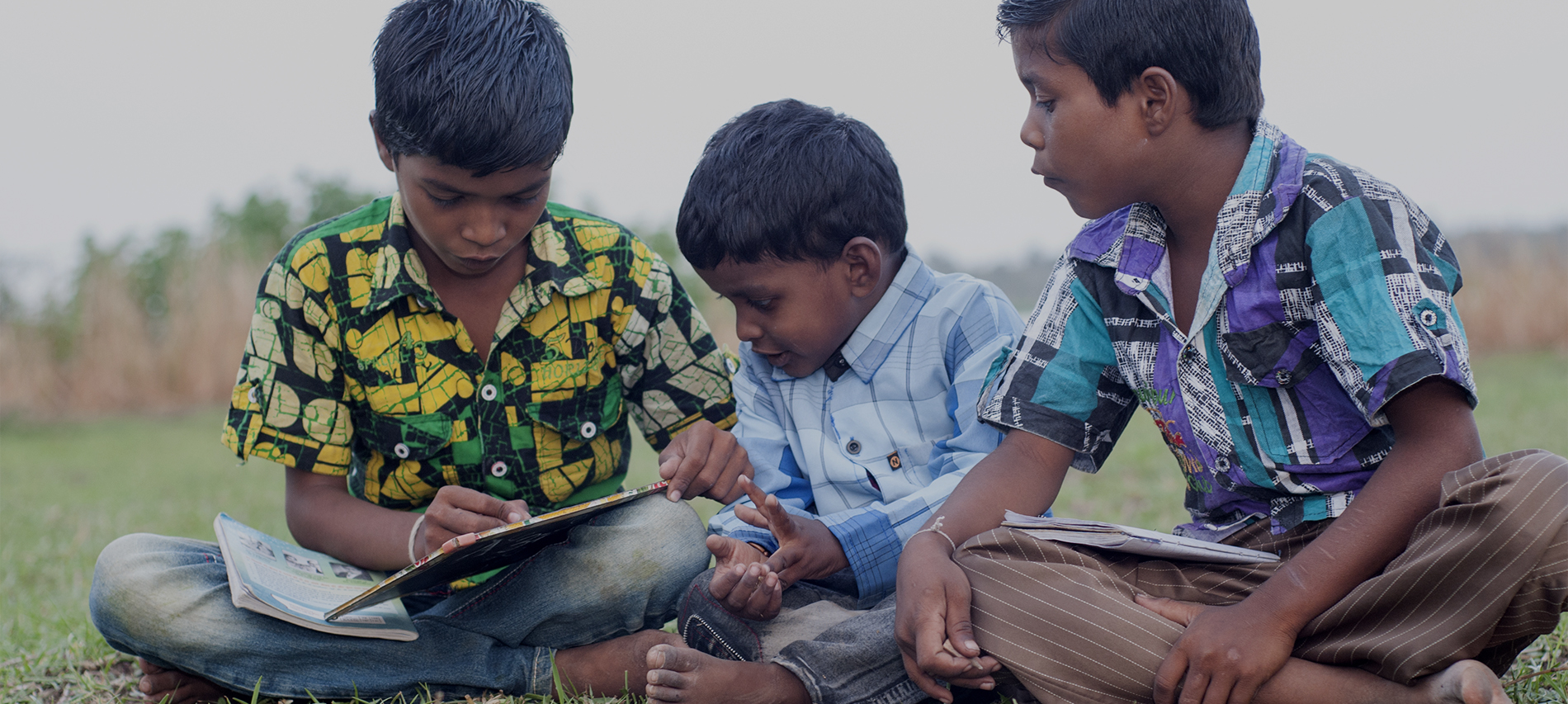
Anirudh Krishna in ‘The Broken Ladder’ presents a ground-up view of India’s development strategies by delving into common people’s lives. He also ponders on questions like despite being an economic force why are so many Indians living under the poverty line. Through stories of individuals, Krishna reveals the heartbreaking and eye-opening details of missed opportunities and untapped talent that India houses.
Here are a few stories that show the inequality of opportunities in the country:
Children who grow up in poor neighbourhoods suffer from an acute lack of knowledge about the range of career pathways.

With a rare few exceptions, people growing up in villages have not made it big in terms of professional achievements.

In India, for many people like Keshu, the ladders leading upward are broken.

Jaitram and Gopal lead a harsher lifestyle in comparison to their family members who live in the city.

Due to lack of good institutions many students feel that their aim in unassailable.

Growth in the country has not been directly and proportionately experienced by every individual. Tell us how can India better improve the prospects for people like Keshu while simultaneously growing its globally-influential economy?
5 Reasons Why You Must Read Sheryl Sandberg’s New Book

After the sudden death of her husband, Sheryl Sandberg felt certain that she and her children would never feel pure joy again. “I was in ‘the void,’” she writes, “a vast emptiness that fills your heart and lungs and restricts your ability to think or even breathe.”
In her new book, Option B, Sheryl opens up her heart – and her journal – to describe the acute grief and isolation she felt in the wake of her husband’s death.
Here are five reasons you must read Option B!
A powerful, inspiring, and practical book about building resilience and moving forward after setbacks.

From Facebook’s COO and Wharton’s top-rated professor.

Stories that reveal the capacity of the human spirit to persevere and to rediscover joy.

Resilience comes from deep within us and from support outside us.

We all live some form of Option B. This book will help us all make the most of it.

Do you know of someone who is facing adversity? Are you aiming to build resilience and find joy? Get Sheryl Sandberg’s illuminating new book here!

5 Things You Didn’t Know About Vikrant Khanna

Vikrant Khanna is the best-selling author of When Life Tricked Me, Love Lasts Forever, Secretly Yours, and The Girl Who Knew Too Much.
His latest novel, The Girl Who Knew Too Much is an edge-of-the-seat paranormal romance. It tells the story of a 14-year-old girl Akshara who hears about the miraculous reunion of a young woman and her dead boyfriend, and believes she will see her dead mother again.
Here are the 5 little known things about the best-selling author:


How many of these facts did you know about Vikrant Khanna?

Taking the Hating Out of Dating

Some take to fishing. Some don’t. It’s as simple as that.
Likewise, with arranged-dating (modern dating expressly for the purpose of finding a spouse). Some thrive on the anticipation of a good catch, while for some (my personal guess is for many) the uncertainty, the awkwardness of a ‘catch and release’ and of course returning empty-handed (again), can be nothing short of a mild coronary.
While my friends and acquaintances invariably fell in the latter anxiety-stricken category they often spoke with wistful resentment of a creature I dubbed as the Overly Enthusiastic Dater [OED].
An effervescent giant ball of sunshine and an energy drink, OEDs apparently don’t exhibit the slightest tremor. In fact they are enthused at the prospect of sharing their hobbies, family composition, occupation, job history and of course the much contentious dietary habits (Veg? Non-veg? Egg? Fish? Wine? Whisky? Smoke?!?) with strangers… again and again and again.
Nerves of steel? Adrenalin junkies? Extreme Extroverts? How do OEDs survive this minefield, not only unscathed but also brimming with enthusiasm?
A few leisurely cuppas and they were spilling the beans. I’m not sure if these ‘skills’ were innate or evolved to protect their tickers, but they do explain the OED’s joie de vivre.
- Date Martyr
Competition is fierce when it comes to far-out dating stories and every girl wants her slice of sympathy as she narrates the cuckoo-capades to a bunch of wide-eyed happily-married couples. Which is why this OED no longer cringes and prays for Potter’s invisibility cloak but rubs her hands in glee (mentally of course) when she encounters a delusional dude.
Delusional Dude 1: “Hi there, Prepare to be amazed and astounded by me”
OED: Beams like a cat that got the cream
Delusional Dude 2: “I’m into crystal gazing which is why I know there are limited fate portals in the next few years. Yes, yes, we just met but we must marry before the portal shuts”
OED: Beams like a cat that got more cream
- Truffle Hunter
This OED won’t waste time researching her date. Instead she scours through a dozen food guides and reviews before she selects the date venue. Tried the Burmese café last time, what next? Isn’t there a new Caramelised Melon Cappuccino in town? How about an experiment in non-judgement at the new ‘dine-in–the-dark’ cafe? Don’t see chappie, don’t judge chappie. He’s not roasted and her taste buds are singing. It’s a win-win.
Dating in the dark doesn’t scare this OED, running out of new eateries does.
- Errand-dater
This OED is an efficiency machine. She lives by the phrase ‘Location, location, location’. She first browses through her pantry, then through her closet, then her medicine cabinet and finally through the now yellowed piece of paper that was once her to-do list. Flour will run out by Monday? Lycra tops have inexplicably shrunk? Great. Now she plans a weekend date at a café in the mall where she can shop for these.
Some say bumping into your date in the hosiery check-out line right before the date is embarrassing, but she says it’s a chance to practise your poker face and strengthen your peripheral vision (as you surreptitiously glance into his shopping basket).
- Date Mate:
The last and final OED (that I know of) is nothing but a social butterfly and a chatterbox at heart. Despite the obvious incompatibility she can’t resist buddying up with her fellow date.
“Maybe the problem is you are address women as ‘yo! hot mamma’. If you don’t mind my asking what’s your relationship with your mum like?”
“I must fix you up with Vina. She too adoooores Justin Bieber.”
“….and that’s why I decided to walk away. What’s your perspective as a guy?”
“Where did you buy this black lace shirt? Stitched? Really? What was the cost per metre?”
Having met OEDs in person was quite revealing. They weren’t super women or the other extreme – oddballs. They were simply women who saw beyond ‘Mission Groom’.
Every coffee date wasn’t a do or die situation, a sword hanging over their heads; in fact there was always an upside – be it a good meal, scratching errands off a list or finding a new buddy.


Worried About the Environment? Five Reads to Enlighten and Educate!

“What is the use of a house if you haven’t got a tolerable planet to put it on?” Henry David Thoreau remarked once.
This World Environment Day, here are five of the best reads on environment.
The Great Derangement by Amitav Ghosh

One of India’s greatest writers, Amitav Ghosh, argues that future generations may well think that we are deranged. How else can we explain our imaginative failure in the face of global warming? In this groundbreaking return to non-fiction, Ghosh examines our inability at the level of literature, history and politics to grasp the scale and impact of climate change.
Environmentalism: A Global History by Ramachandra Guha

An acclaimed historian of the environment, Ramachandra Guha in this book draws on many years of research in three continents. He details the major trends, ideas, campaigns and thinkers within the environmental movement worldwide. Among the thinkers he profiles are John Muir, Mahatma Gandhi, Rachel Carson and Octavia Hill; among the movements, the Chipko Andolan and the German Greens.
The Vanishing: India’s Wildlife Crisis by Prerna Singh Bindra

With the high-decibel development versus environment debate dominating headlines, this book reveals how the ‘development at all costs’ model threatens our ecological and economic security. The author travels to far-flung forests to give an eyewitness account, and an insider’s view of India’s vanishing natural heritage. The Vanishing is a sharp and stirring read about today’s desperate scenarios, and the quest for hope for a wild India.
Rage of the River by Hridayesh Joshi

Rage of the River is a riveting commentary on the socio-environmental landscape of Uttarakhand and is filled with vivid imagery of the calamity. Woven into this haunting narrative is also the remarkable history of the ordinary people’s struggle to save the state’s ecology.
Green Poems by Gulzar

One of the country’s best-loved poets and lyricists, Gulzar is renowned for his inimitable way of seeing things, his witty expressions, his quirky turns of phrase. All these creative talents come into play in delightful, unexpected ways in his bilingual collection Green Poems, which celebrates his innate connection with nature.
Fascinated by the list? What is your observation of nature around you? Do you have environmental issues to bring to the fore? Tell us, we are all ears!
*
Winning with Superconsumers

Daniel Zein (disguised), the CFO of Great Snacks, thought that Nacho Cheese could be one of the company’s most valuable brands, so he encouraged the team to dig further into the product. The team did some robust analysis, and to their surprise, they discovered that Nacho Cheese’s consumers spanned the entire income spectrum.
From the data, it was obvious that Nacho Cheese could be a much bigger brand. Of all the full meals that consumers eat at home, about 37 percent are consumed hot and include cheese. But Nacho Cheese was used in only a fraction of those meals. To grow its product, the Great Snacks team decided to focus on the twenty-four million or so other consumers who share the same three loves that Laura had—people, cooking, and cheese—but who may not understand the magic of Nacho Cheese and the dozens of life solutions that it could deliver.
Simply put, the team gathered data from their superconsumers, ensured that the resultant insights and inspiration also appealed to the other twenty-four million consumers, and then geared its marketing, innovation, and retail execution to their tastes and behaviors. The immediate challenge was to convince the company leadership that Nacho Cheese could grow through better marketing and innovation—from packaging to product.
Line extensions into other forms of cheese were also a logical action step. Great Snacks drove growth by megabranding Nacho Cheese into other categories. The core business grew steadily faster than inflation, but the extensions in cheese (e.g., slices, shredded cheese) grew by double digits. All told, the brand extensions drove more than $50 million in growth, and the megabrand grew $100 million in three years.
For years, innovation for Nacho Cheese was a challenge. Since the brand was not well understood, innovation concepts yielded mixed results, which made the team hesitant to pursue breakthrough innovation. But with new data, the team revamped its innovation testing process to include both superconsumers (like Laura) and potential superconsumers (folks who could become like Laura).
The group was pleasantly surprised to find that among all the new product concepts it tested, some were off-the-charts positive for superconsumers. The team made a few tweaks, the new concepts tested positive for potential superconsumers as well, and the team finally had the results it needed to proceed.
The team saw that retail activation was inconsistent across retailers. In some stores, Nacho Cheese was placed in the center of the store. In others, it was refrigerated in the cheese and dairy section. So the team did some analysis and found that Nacho Cheese sold faster in the refrigerated section, which consequently produced better results for Great Snacks and the retailer. The team learned that superconsumers strongly preferred the product when it was sold in the refrigerated section. What’s more, potential superconsumers had a much easier time finding it in the refrigerated section.
Finally, the Great Snacks team used big data to uncover meaningful ways of improving marketing ROI. It used big data from Nielsen Catalina Solutions—a joint venture that creates a single-source panel of consumers from the sixty million loyalty-card holders from grocery stores and the Nielsen TV panel of two to three million households. The single-source data gave the team interesting insights on the actual TV shows that Nacho Cheese aficionados were watching. In one test using this data, the team found that superconsumers were fifteen times more responsive to Nacho Cheese advertising than other consumers! The vice president of marketing noted that the brand’s marketing objective was to have a conversation with superconsumers about their love for Nacho Cheese, but to do so in a way that potential superconsumers could listen in.
The beauty of all this was that the data the team used to improve innovation, retail activation, and marketing was already there. Superconsumers gave the marketers a way to synthesize the data into a coherent and coordinated set of actions and metrics. Looking at superconsumers like Laura, the team gained confidence that the strategy had even more upside. And the team saw the potential and ran with it.
Want to know a simple, speedy, and sustainable path to superior growth? Order Eddie Yoon’s Superconsumers here!
This is an excerpt from Eddie Yoon’s Superconsumers.
Credit: Abhishek Singh
6 Hindu Concepts Made Easy by India’s Bestselling Mythologist
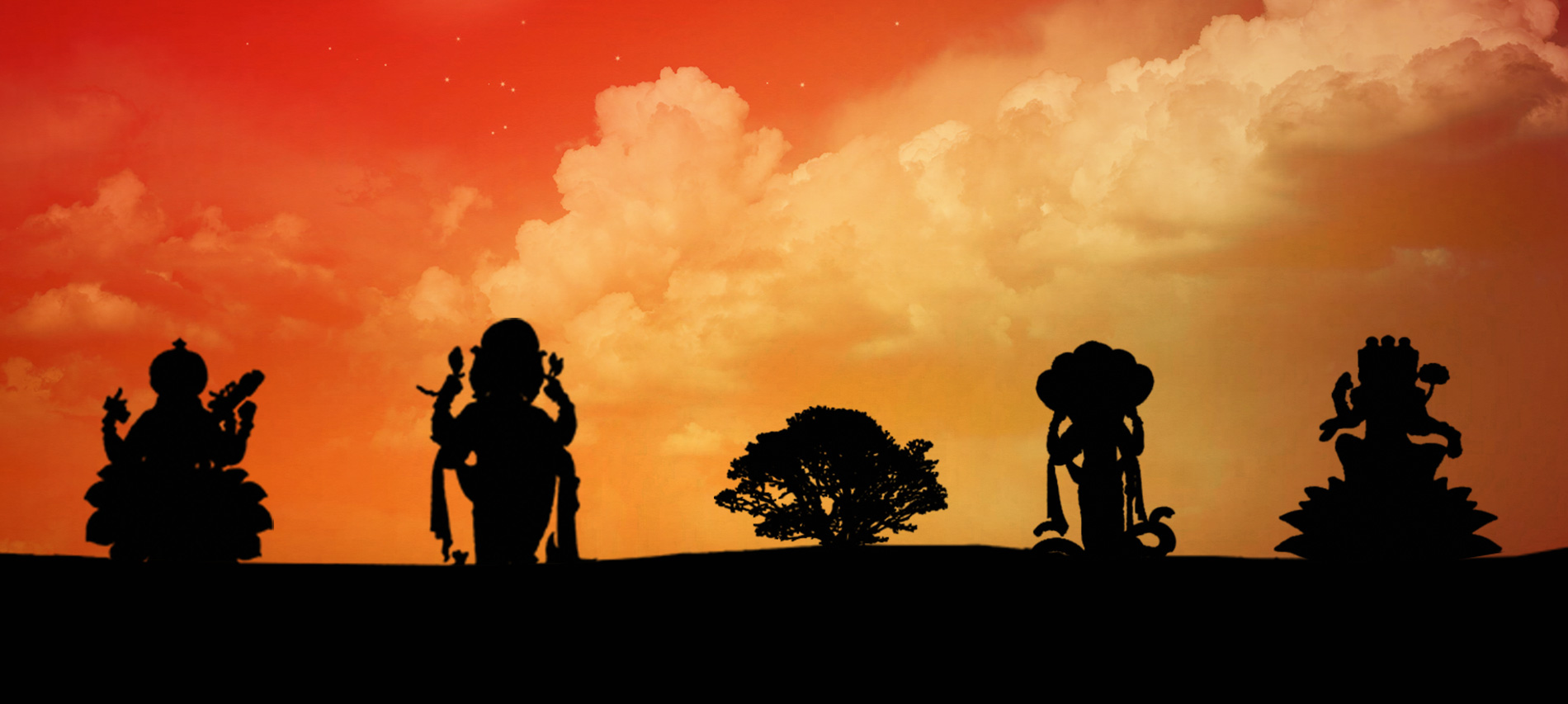
Mythology is layered with legends within legends, full of perplexing and astonishing anecdotes, and buzzing with a cast of larger-than-life figures.
India’s bestselling mythologist – Devdutt Pattanaik simplifies the complex concepts of Hindu mythology.
Here are six Hindu concepts that Devdutt Pattanaik makes easy in his compilation – Devlok with Devdutt Pattanaik 2!
Have you ever wondered what Aatma or Soul really means

A lot of us would have seen the ritual of Aarti

Dhyan and Darshan be like Introspection and Extrospection

Amrit – the nectar of immortality!

Prakriti – the Nature, and Sanskriti – the Human World

Fasting has deep meanings through Hindu mythology

After the sensational response to Devlok with Devdutt Pattanaik part 1, prepare to be educated, entertained and moved as the author delves into the exhilarating variety of Hindu mythology in Devlok with Devdutt Pattanaik 2.

In Conversation with Faiqa Mansab

We recently spoke to the author of This House of Clay and Water, Faiqa Mansab. Her debut novel is set in Lahore and explores the themes of love, friendship and orthodoxy.
Below is our conversation with Faiqa, who is currently in Lahore:
Share your writing process behind The House of Clay & Water, how did you think of writing about the insidious power of orthodoxy in Pakistan?
I’ve come to believe that we write the stories that we are meant to; stories which only we can write. I come from a pluralistic and hybrid literary family tree. Punjabi Sufi poetry was always playing in the background at home. I grew up reading English literature, then graduated to American and European literatures, and all the while I was also reading Ghalib, Faiz, Mir, short story writers, novelists, women who wrote about the devastating Pakistan I lived in, yet I was so far removed away from it. Despite such a diverse education, I was never confused about my identity or my languages. I loved all three that were at my disposal and yearned for Persian and French.
I read whatever I could, except for comics. I’m afraid I’ve never appreciated comics. I read literary novels and also cross-genre novels like Du Maurier, Mary Stewart, Pat Conroy, Colleen McCollough and others who wrote beautifully but were still not considered ‘highbrow’. I wanted to write like all of them. I don’t think a writer makes a conscious decision to write about a topic or social issue.
This House of Clay and Water grew out of the first draft of another book that I had been writing prior to the MFA. It employed Magical Realism, sported a jinn, and a great deal of philosophy. After 60k words the story was still emerging and wasn’t very clear. It was called lyrical, beautiful and all that by my first readers, my class fellows, but I knew I had to let it go. I started the novel again, rooted in what is called ‘realism’ in literary terms. The female protagonist of the previous novel had stayed with me and moved premises into the new novel. She became stronger, her voice was so clear.
I’m very proud of my legacy, very rooted in this land, and my heritage. My writing stems from a place of deep love for this land, its customs and privileges, its tragedy and its sorrows. My memory goes back a long way; long before I was born, or my parents were born and this novel isn’t about orthodoxy waging wars on Pakistani turf, but orthodoxy waging war on spiritualism, on Sufism, on tolerance. It is hurtful. It is wrong. It isn’t us.
How did you come up with the different characters in your book, have you met such people in real life?
I never really know how to answer that question. If you mean, are they based on real people? Then no, they are not. If you mean that you will never see them in real life, then I’ve failed as a writer. They aren’t real but they had better be realistic. They are I think, or the biggest publishing house in the world wouldn’t have backed this book. (I love reminding everyone that Penguin has published my book).
Difference fascinates me. Peripheries and centers fascinate me. Power dynamics between genders and how social constructs mold people and their behaviors is frighteningly like living in a prison, like being conditioned and brain washed. When you really come down to it, we are all conditioned to behave in certain ways under given circumstances…like Pavlov’s dogs. There is very little agency in an average human life until and unless we actively go against the grain, at the risk of being ostracized, called mad or just hated.
I wanted to write about such people. Women who go against the grain are worse off than men even. They are intolerable. They are monsters that have to be killed to re-establish social order like in Sophoclean tragedy or Shakespearean tragedy, where the social sickness had to be rooted out, killed to purge the city state and bring peace. These aberrations are not tolerated.
Which brought me to those human beings the world considers aberrations, and ridicules, and humiliates: eunuchs, hermaphrodites, castrati’s. They were not treated this badly in the sub-continent until the British came along. The attitude of hate and humiliation towards hermaphrodites is a legacy of the British. In the traditional and historical culture of the sub-continent, hermaphrodites were treated with courtesy, even if they were not considered equal. But now we must do better for women and for transgenders.
Do you have any writing rituals?
Coffee. Nothing fancy, but hot, and at least two large mugs to start me off. I have a lovely little study, with a lilac ceiling, and a thick carpet of the same color and a small white mantle with my books on it. A writing table facing the wall which has my vision board from end to end, full of Van Gogh and Monet postcards, inspirational quotes and rules of writing from famous authors. I sit and I stare, drink my coffee and feel small and miserable. Then I drink another cup, and I feel better, less small, less insignificant, more ambitious. A few more sips, and I open my laptop. Its sleek and new, and has only my manuscripts. I begin by reading what I had written yesterday or day before. Sometimes I don’t see any mistakes and I’ll start typing happily. If I find mistakes, well, I start fixing them until I am tired. Then I get a new cup of coffee and start writing something new.
This happens only on good days. Sometimes coffee doesn’t work on feelings of smallness and insignificance. Those days I sit on my lilac armchair and read Proust. You know, one might as well go down in style.
How does the place affect your writing, in terms of setting as well as inspiration?
Place is important. Location is political. Location is the heart of the story. Sometimes it is the only story. For me that place is often Lahore. I will never understand this city. I’ve accepted that and that’s’ why I can write about it. It so complex and so Protean. I love writing about this city.
Any advice for aspiring writers?
Learn to edit your own work. Read it again and again till you’re sick of it and can see beyond your love for it and into the mechanics of sentences and paragraphs. Then get rid of everything extraneous.

Let Chhota Bheem Turn Your Child into a Reader
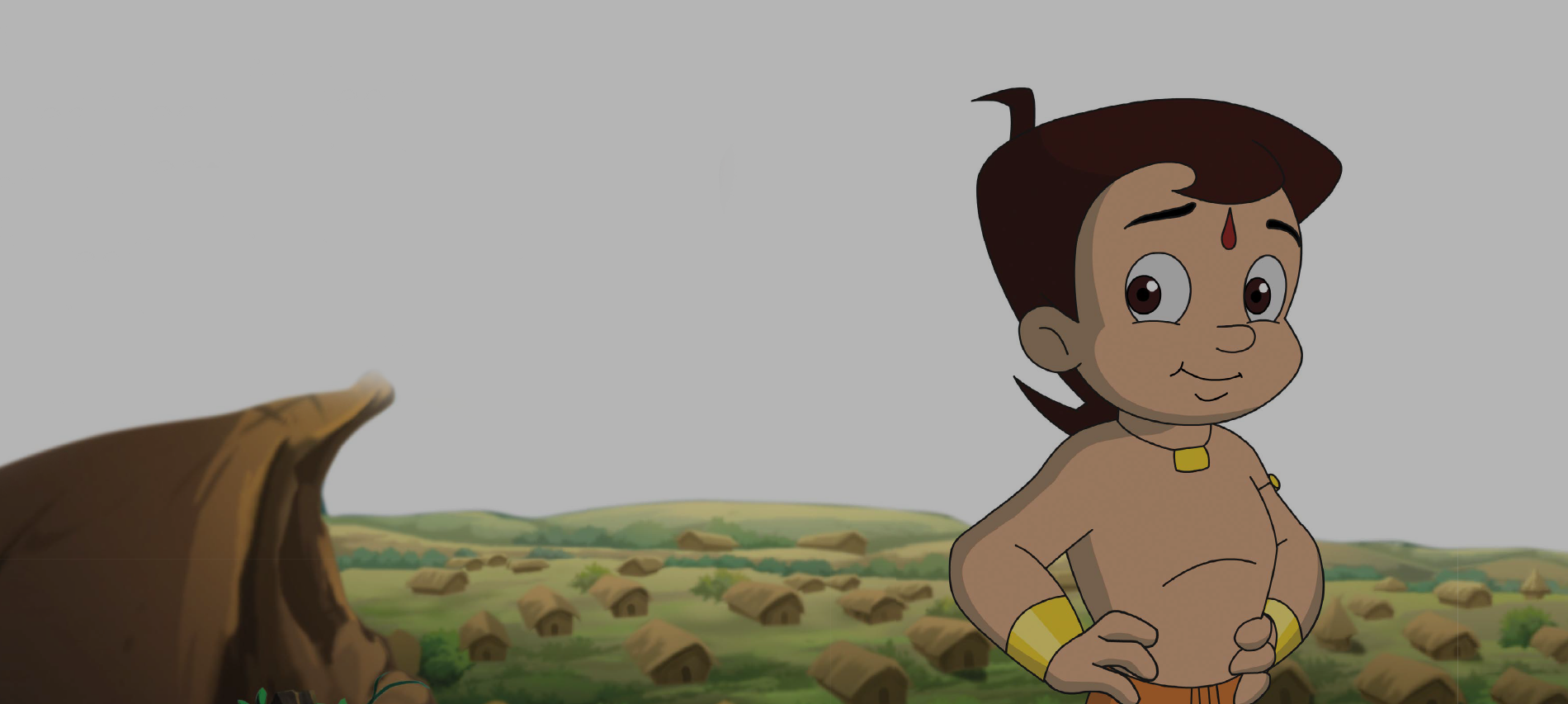
Is your little bundle of joy going to start school soon? Have you been looking for books that will ease them into this new phase of life? The Chhota Bheem series by DK Books, is where your search ends. The series is a set of four books, ideal for kids between 4-6 years. It aims to enrich your kid’s general knowledge and also inculcate a fondness for reading.
Here are 5 ways in which your child can enjoy the series:
Easy-To-Read Text
The book series aims to educate and entertain your little one through illustrations and easy-to-read-text. Combining familiarity of the much loved characters with educational content adds to your tot’s understanding.

Increase General Awareness
The series covers topics such as types of transport, animals, seasons, and the concept of party. Like the TV series, the books will make your little one aware of things which they see around them every day. The storytelling format in the books will let them have as much fun as they have while watching an episode.

Engage in Fun Activities
Learning becomes easier when you’re having fun! The books also contain activities like crafting a paper boat or making lemonade which incorporate fun learning for your child, thereby increasing their attention span and enabling them to fare better at school.

Improve Cognitive Skills
Apart from helping children develop the habit of reading, the books focus on improving their thinking and analytical skills, achieving this through word search, spot the difference, solve the maze, etc. The analytical skills come into play when your kid is learning subjects like mathematics and science.

Respect for the Environment
In the light of the on-going climate change, the series aims to make the children aware of their surroundings. The books cover topics such as climate change and endangerment of animals. These topics will help you instill in your child, respect for the environment and its gifts.

Are you ready to see your kid set off on an exciting journey of learning? Tell us what they think of the books.

8 Books by Jo Nesbo You Should Definitely Read

Jo Nesbo is a Norwegian crime novelist with awards such as Riverkey Prize and Glass Key Award to his name. Nesbo is primarily known for his Harry Hole series and the Doctor Proctor series of children’s books. He is also the author of several stand-alone novels, including Headhunters which was adapted into a film in 2011.
Here are 8 books by Jo Nesbo that will keep any reader on the edge of their seats:
Knife

The latest installment in the Harry Hole series. In his new book , Knife, Harry Hole is about to face his darkest case yet. The first killer he put behind bars is out to get him. Harry is responsible for the many years Finne spent in prison but now he’s free and ready to pick up where he left off.
When Harry wakes up with blood on his hands, and no memory of what he did the night before, he knows everything is only going to get worse . . .
The Bat

This is the first installment of the Harry Hole series. Inspector Harry Hole of the Oslo Crime Squad is dispatched to Sydney to observe a murder case. The victim is a twenty-three-year-old Norwegian woman who is a minor celebrity back home. Never one to sit on the sidelines, Harry befriends one of the lead detectives and one of the witnesses, as he is drawn deeper into the case. As they circle closer and closer to the killer, Harry begins to fear that no one is safe, least of all those investigating the case.
The Bat won the Riverkey Prize and Glass Key Award.
Blood On Snow

Written under the pseudonym of Tom Johansen, Blood on Snow revolves around Olav Johansen, a cold-blooded killer with a heart of gold. Olav is a fixer for a high-profile crime kingpin in 1970s Oslo. He easily takes care of anyone who causes trouble for his boss. But he is more complicated than he seems. Olav’s latest job puts him at the pinnacle of his trade, but it may become his greatest mistake.
The Son

The Son is about Sonny Lofthus who has been in prison for almost half his life: serving time for crimes he didn’t commit. Years earlier Sonny’s father, a corrupt cop, took his own life rather than face exposure. When Sonny discovers a shocking truth about his father’s suicide, he makes a brilliant escape and begins hunting down the people responsible for his and his father’s demise. But he’s also being hunted, and by enemies too many to count. Who will get to him first, and what will he do when he’s cornered?
Headhunters

Roger Brown is a corporate headhunter, and he’s a master of his profession. At an art opening one night he meets Clas Greve, who is not only the perfect candidate for a major CEO job, but also, perhaps, the answer to his financial woes. But when he breaks into Greve’s apartment to steal a painting that has been missing since World War II, Brown realizes that Clas Greve may turn out to be the worst thing that’s ever happened to him.
The Snowman

In the seventh installment of the Harry Hole series, the detective traces a killer who makes his own rules and he’ll break his pattern just to keep the game interesting. With brilliantly realized characters and hair-raising suspense, international bestselling author Jo Nesbo presents his most chilling case yet—one that will test Harry Hole to the very limits of his sanity.
Police

Harry Hole, with his brilliant insights and dedication to his job, saved numerous lives in Oslo. But what happens when Harry is in no position to protect his loved ones in the face of a terrible danger. In this tenth installment of the Harry Hole series, the detective fights against a killer who lures and kills anyone who is or has been a part of the force.
The Redbreast

The third entry to the Harry Hole series, The Redbreast has Harry investigating neo-Nazi in Norway. Having caused an embarrassment in the line of duty, Harry Hole is tasked with surveillance duties. When a rare and unusual gun fires off, followed by the discovery of a former soldier’s dead body, Harry tries to see the connection between the two cases. The Redbreast touches upon Norway’s involvement in Second World War. It won the Norwegian Booksellers’ Prize in 2000 for best novel of the year.
Intrigued yet? Tell us what you think of Jo Nesbo’s works in the comments below.