




Faiz Ahmed Faiz is widely regarded as one of the great Urdu poets of the twentieth century, and the iconic voice of a generation. Although he is best remembered for his revolutionary verses that decried tyranny and called for justice, his oeuvre also extended to scintillating, soulful poems of love.
In The Colours of My Heart – a translation of Faiz’s selected, most memorable poems and ghazals by Baran Farooqi – readers will be able to experience a new dimension of the great poet’s genius. Here are five gems that display Faiz’s extraordinary flair for tender hope and quiet longing.
Beloved, Don’t Ask Me For the Love that Was – “Mujhse Pehli Si Muhabbat Mehboob Na Maang”

Don’t ask me to love you the way I did before, my love
I’d imagined life to be bright and glowing because you were in it
What cared I for sorrows other than the joys of pining in your love?
It’s your beauty that keeps springtime intact upon the world
What else remains to be sought in the universe but your eyes?
Speak – “Bol”

Speak, for your lips are free
Speak, for your tongue is still yours
Your upright body belongs to you
Speak, for your soul still is yours
Highway – “Shahraah”

A long, desolate highway
Its gaze fixed on the far horizon
Spreading out its grey beauty
On the breast of the cold earth—
Like a grief-stricken woman
In her desolate home
Dreaming of her absent lover
Lost in thought, each part of her body immersed
in the idea of union.
The Day of Death – “Jis Roz Qaza Aayegi”

Kis tarah aayegi jis roz qaza aayegi
Shaayad iss tarah ki jis taur kabhi awwal-e shab
Be-talab pehle pahal marhamat-e bosa-e lab
Tyranny Giving Lessons in the Fidelity of Love – “Sitam Sikhlaayega Rasm-e Wafa Aise Nahin Hota”

Sitam sikhlaayega rasm-e wafa aise nahin hota
Sanam dikhlaaenge raah-e khuda aise nahin hota
Enthralled by the verses of one of the greatest Urdu poets? Get The Colours of My Heart here!

Demystifying the Revolt that Ignited India’s Freedom Struggle: 6 Important Points from the 1857 Petition
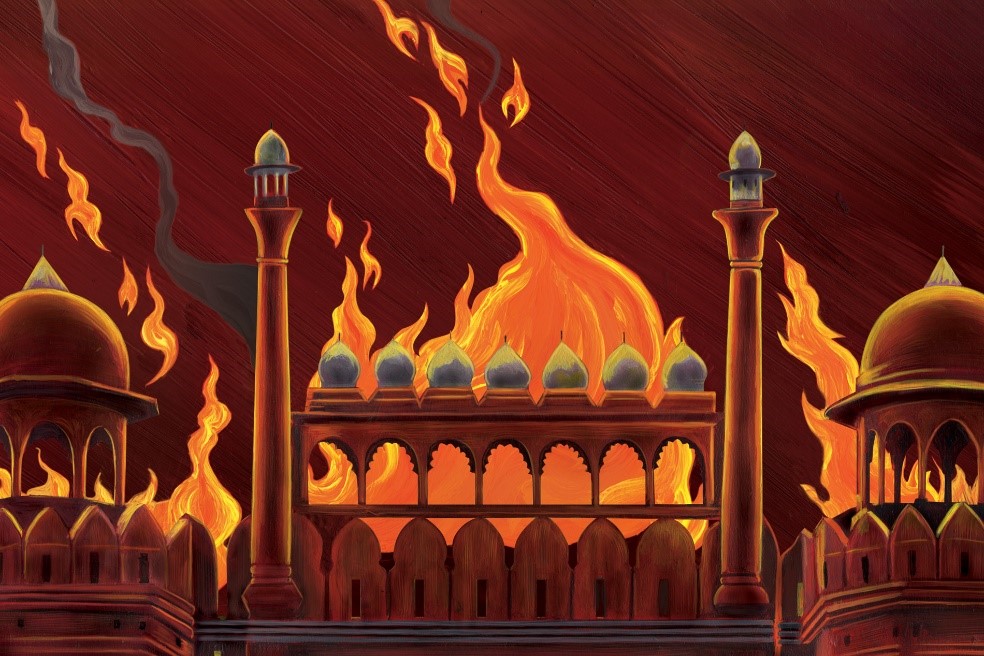
Zahir Dehlvi, an accomplished poet and young official in the court of Bahadur Shah Zafar, lived through the cataclysmic 1857 revolt that changed the course of history, marking the end of Mughal dominion and the instatement of the British Raj. Dehlvi’s memoir, written on his deathbed, chronicles the fading glory of the Mughal court and most importantly, pivots on the violent siege of Shahjahanabad.
Translated into English for the first time, Dehlvi’s memoir is intensely vivid and moving. Here are six defining moments from the petition made to the then Mughal Emperor by rebellious soldiers that demystify the great revolt.
Rebellious soldiers arrive in Delhi to petition Bahadur Shah Zafar

When cartridges misfired

The ‘meat’ of the matter

Shooting religious sensibilities

When an army was treated like outlaws

Meerut, the epicentre of the revolt

Get Zahir Dehlvi’s riveting account of the Revolt of 1857 here!

5 Things Which Give you a Glimpse of Ecological Reality of India
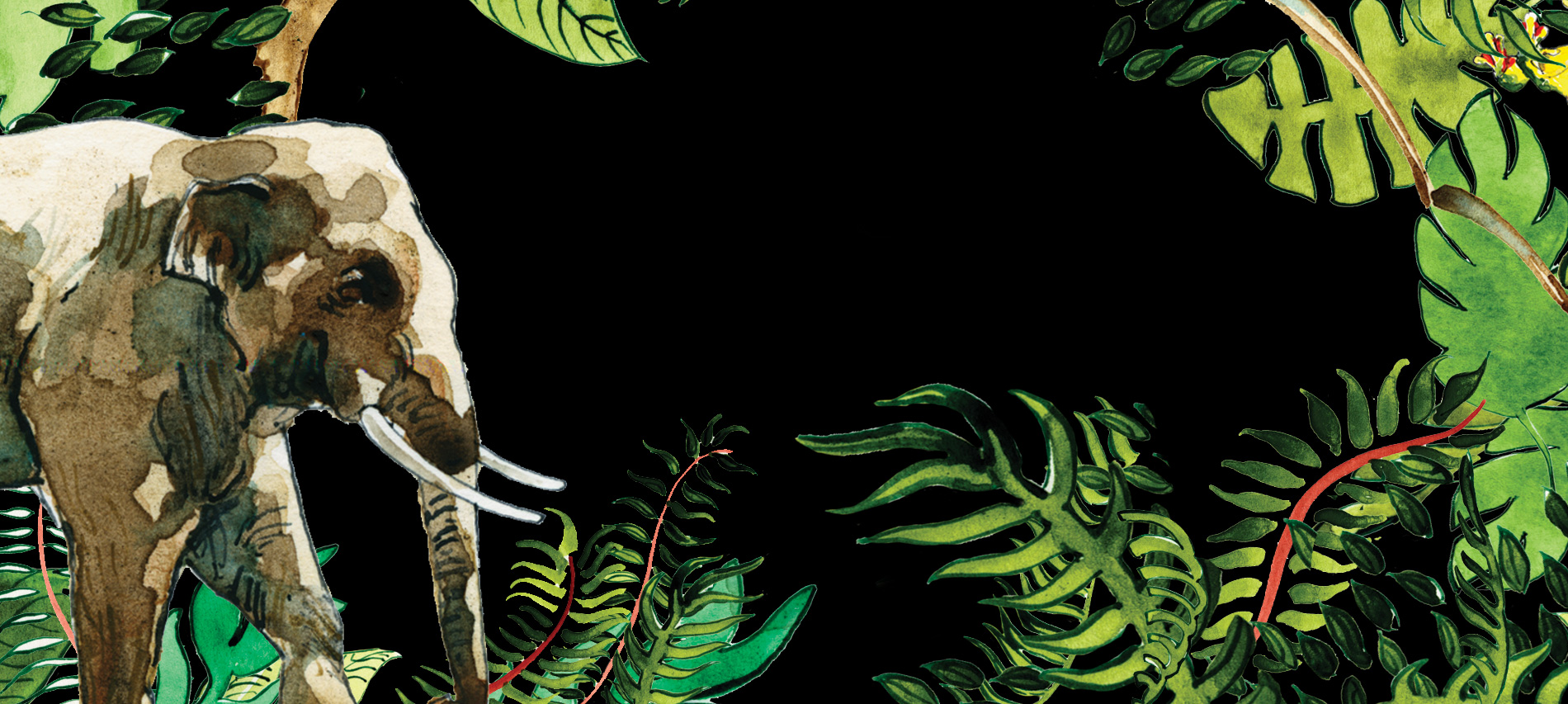
Prerna Singh Bindra is one of India’s leading wildlife conservationist and writer. In her latest book, The Vanishing, she ponders on the crisis that the flora and fauna of India are facing today. She also asks some pertinent questions such as “Is development inimical to ecological security?” Furthermore, she talks about the steps India has taken towards safeguarding its forests and wildlife.
Here are 5 realities which give an insight into the current status of ecology in India.
Many times, environment sacrifices its elements to make way for development.

India despite a 1.3 billion population, harbours over 60 per cent of the world’s remaining wild tigers.

All contained in just over two per cent of the global land mass.

India’s increasingly battered forests still harbour secrets—and species we thought had vanished, or did not even know existed.

India’s people are remarkably accepting of predators in their midst.

Did the facts leave you appalled? Tell us what are you doing to save the environment.

Foreword from Anna Chandy’s Battles in The Mind by Deepika Padukone

I feel privileged to write this foreword for Anna Chandy’s book.
This book is about Anna Aunty’s life. A life that has been strife with trauma, pain and difficulties. And yet what emerges from all of this is a person with immense grit, courage and acceptance.
Anna Aunty has been a family friend for years. I’ve literally grown up in front of her. She has more recently been my therapist when I went through clinical depression two years ago.
In all the years I’ve known her, I have experienced her to be authentic, effective, focused yet empathic. There is a sensitivity and acceptance towards life that is very rare to come by.
Anna Chandy is now the chairperson of The Live Love Laugh Foundation that we set up to create awareness about and destigmatize mental health in India.
Many of us are on our own journeys of self-discovery, or aspire to be. This book has something for all of us to connect with. More importantly, this book communicates energy, resilience and hope for people struggling with various kinds of mental health issues.
This is an excerpt from Anna Chandy’s Battles in the Mind.

‘Only Idiots Aren’t Afraid of Flying’: Scaachi Koul and Her Fear of Flying

Only idiots aren’t afraid of flying. Planes are inherently unnatural; your body isn’t supposed to be launched into the sky, and few people comprehend the science that keeps them from tumbling into the ocean. Do you know how many planes crash every year? Neither do I, but I know the answer is more than one, WHICH IS ENOUGH.
My boyfriend finds my fear of flying hilarious at best and deeply frustrating at worst. For my twenty-fourth birthday, he booked us a trip to Southeast Asia for two weeks, the farthest I’ve been from home in more than a decade. Plenty of people take a gap year between high school and university to travel, or spend a summer back- packing through Europe to “find” themselves. (A bullshit statement if ever there was one. Where do you think you’ll be? No one finds anything in France except bread and pretension, and frankly, both of those are in my lap right now.) I never did this. I talked about wanting to, sure, listing all the places I would go one day, hoping to have my photo taken next to a crumbling edifice in Brazil or with a charming street merchant in Laos. When I was thirteen, my mom asked me where I’d get the money to travel and I said, “From you, of course.” She laughed me straight out of her kitchen nook. Travelling tells the world that you’re educated, that you’re willing to take risks, that you have earned your condescension. But do you know what my apartment has that no other place does? All my stuff. All the things that let me dull out the reminders of my human existence, that let me forget that the world is full of dark, impenetrable crags. I have, I think, a healthy fear of dying, and marching forward into the uncharted is almost asking for it. But it was my birthday, and my beautiful idiot boyfriend was offering to take me some – place exciting. He suggested Thailand and Vietnam, because he likes the sun and I like peanut sauces. I agreed, my haunches already breaking out in a very familiar rash.
As we made our way from Toronto to Chicago, then Chicago to Tokyo, then Tokyo to Bangkok, he was a paragon of serenity. (He’s older than me by more than a decade, and acts it whenever we do something new, largely because, comparatively, almost everything is new to me and nothing is new to him.) He was a latchkey kid, permitted to wander his small town in the ’80s and ’90s in a way that feels nostalgic to him and like the beginning of a documentary about child abduction to me. He smoked and drank and cried and laughed and was freer at twelve than I have ever been. While our plane started to taxi, I squeezed his meaty forearm as if I was tenderizing a ham hock—rubbing his white skin red and twisting his blond arm hair into little knots— and he just gazed dreamily out the window. When we took off, my throat started to close and I wanted to be home, stay home, never leave home.
I wasn’t raised with a fear of flying. My parents were afraid of plenty of things that would likely never affect us—murderers lurking in our backyard, listeria in our sandwich meat, vegans—but dying on a plane was all too mundane for them. We used to take plenty of trips together and separately, and lengthy air travel played an unavoidable role in their origin story. They emigrated from India in the late 1970s and flew back for visits every few years. For vacations or my dad’s business trips, they flew to St. Thomas and Greece and Montreal and New York. Mom didn’t like bugs and Papa didn’t like small dogs, but I don’t remember either of them being particularly fearful.
I wasn’t always afraid of flying either. When I travelled with my parents as a kid, air travel was exciting. I got to buy new notebooks and travel games, and flight attend- ants packed cookies and chips and mini cans of ginger ale in airsickness bags and handed them out to the kids mid-flight. 9/11 hadn’t happened, so our family wasn’t yet deemed suspicious at Calgary’s airport. I once loudly asked my brother while standing in a security queue how, exactly, people made bombs out of batteries while waving around a pack of thirty AAs intended for a video game. My parents let me eat a whole Toblerone bar and then I threw up in a translucent gift bag while we waited in line to board. I was alive!
Flying became a necessity by the time I was seventeen, the only way to stay connected with my family rather than a conduit for mile-high vomiting. When I graduated from high school, instead of doing what so many of my classmates did—a month in Italy here, three months in Austria there—I moved across the country almost immediately to start university. If I wanted to see my parents (and I did, as my homesickness burst wide open the second my parents dropped me off at my residence), I would have to fly. Three, sometimes four times a year, I’d take a four-hour flight to see people who I knew were at least legally obligated to love me.
But by my early twenties, years into this routine, something shifted and made room for fear to set in. Turbulence wasn’t fun anymore; it didn’t feel like a ride, it felt like the beginning of my early death. I’d start crying during take-off, sure that the plane would plummet. Flight attendants assumed I was travelling for a funeral and would offer extra orange juice or cranberry cookies to keep me from opening the emergency exit. Before I take off now, I text or email or call anyone I think would be sad about my death and tell them I love them and that the code for my debit card is 3264 and please help yourself to the $6.75 that may or may not still be in there, depending on if I purchased a pre-flight chewy pizza-pretzel, the World’s Saddest Final Meal. My stomach churns and my palms sweat and I think about all the things I should have said and done before his plane nosedives and the army finds parts of my body scattered across the Prairies. My legs in Fort McMurray, my arms in Regina, my anus somewhere in Edmonton.
This is an excerpt from Scaachi Koul’s ‘One Day We’ll All Be Dead and None of This Will Matter’

Kafka on Screen: 5 Must-Watch Films Inspired by the Stories of Franz Kafka

Literary legend, Franz Kafka, has left generations of readers astounded with his fantastical stories, a style that has received its own special name – ‘Kafkaesque’. Alienation, existentialism, absurdity, all of it comes together in Kafka’s works to form a heady, surreal cocktail of words and imageries.
Several filmmakers have been inspired by Kafka’s stories, thereby creating some of the most visually stunning and eccentric works of cinema known to the world. Here are five outstanding adaptations of Kafka’s works one must watch:
The Trial (1962)

Based on Franz Kafka’s novel of the same name, this 1962 film by director Orson Welles follows the story of a bureaucrat who is arrested and persecuted for a crime that is neither mentioned to the protagonist nor to the viewer. Not only is the film the filmmaker’s personal favourite, but over the years has also been touted as a cinematic masterpiece by critics.
Franz Kafka’s It’s a Wonderful Life (1993)

Peter Capaldi’s Academy award winning short-film, Franz Kafka’s It’s a Wonderful Life, begins where writer Kafka started his deliciously dark tale of a man’s metamorphosis into an insect — on a piece of paper. The film explores the frustration of a writer confronting a creative block, as interruptions from the world around keep pouring in, only to make him wonder what it is that his protagonist transforms into when he wakes up. A banana? A kangaroo?
Franz Kafka’s A Country Doctor (2007)

Multiple award-winning anime short-film, Koji Yamamura’s Franz Kafka’s A Country Doctor, is an interpretation of Kafka’s short story by the same name. A bizarre chain of events unfolds when a country doctor visits a young patient in the middle of the night. Strange, unearthly horses, distorted houses and people, a young boy who oscillates between death and the will to die, Yamamura’s beautifully dark visuals married to Kafka’s haunting story leaves the audience questioning and wanting more.
The Metamorphosis of Mr. Samsa (1978)

What can be better than to watch your favourite story come alive in animation? The Metamorphosis of Mr. Samsa by Caroline Leaf is an animated short-film, using beach sand on a piece of glass. Fluid, shadowy images capturing the nightmarish nature of the original story, Leaf’s film is a stunning visual rendition of the most renowned work of Franz Kafka.
Watermelon Man (1970)

Melvin Van-Peeble’s classic, Watermelon Man, is based on the premise of Franz Kafka’s Metamorphosis. When ‘white insurance salesman’, Jeff Berger, wakes up to find himself in a black man’s body, (much like Kafka’s Gregor Samsa finds himself in a beetle’s body when he wakes up) all hell breaks loose as he initially tries to scrub off his dark skin in many creative ways. After finally accepting his reality of having transformed into a black man, Berger ironically finds himself in situations which he looked down upon as a man of white descent.
Tell us which ‘Kafkaeqsue’ film is your favourite.
Narrating Stories with Data

As director of analytics and A/B testing at Visa, Ravichandran supports executives, leaders, and decision makers in product, marketing, sales, and relationships. He explained to me that “we are the custodians of the data, so our responsibility is to enable our users to have confidence in the decisions they make using that data.”
One of the biggest changes the analytical era of marketing has brought about is that things need to happen much faster than before. “We used to have a very linear approach,” Ravichandran told me. “Now when something is going live, there’s already an immediate need to respond. We need to be able to take action on the fly.” Because of those changes, marketers can no longer think about analytics as something that supports them or a function that just one person, like a chief digital officer, would perform. Rather, analytics is now an integral part of marketing’s value chain.
Ravichandran said that numbers by themselves are historical. That’s why, while data is needed to inform campaigns, at the end of the day, it still comes down to marketers using their gut feelings to make the best decision possible. “And we can use data and analysis to inform and guide us in the right direction,” he added.
Because data and analytics are now so intertwined with marketing strategy, expectations for leadership on the marketing side have changed. “It’s no longer acceptable to say you’re a marketer, but you’re not a numbers person,” Ravichandran said. “Executives are demanding more data literacy as a precursor for being a good marketer.” And it’s not just in the marketing space. He added, “All of our chief executives are comfortable with numbers and data-driven approaches.”
Ravichandran was quick to clarify, however, that a focus on data, numbers, and quantified measures should not replace the value of vision: “I have an enormous respect for data, but I also believe all of it has to be driven by strategy, the business case, benchmarking against the industry, all those things that provide a broader perspective. You have to understand what specific metrics you’re trying to impact with your actions.” He advocates the importance of understanding your company’s business model, applying and measuring the right metrics, and truly understanding your competitive position and your customers’ needs.
The big mind-set shift we need to make, therefore, is recognizing how our intuition is now informed by data and analytics. When someone comes to a marketing manager or leader with a proposal to spend, say, $250,000 on a campaign, she had better come armed with data, analysis, testing plans, and expected outcomes, as well as what her gut is telling her.
This is an excerpt from Adele Sweetwood’s The Analytical Marketer. Get your copy here.
Credit: Abhishek Singh
6 Confessions by Ruskin Bond that Every Book Lover Can Relate With
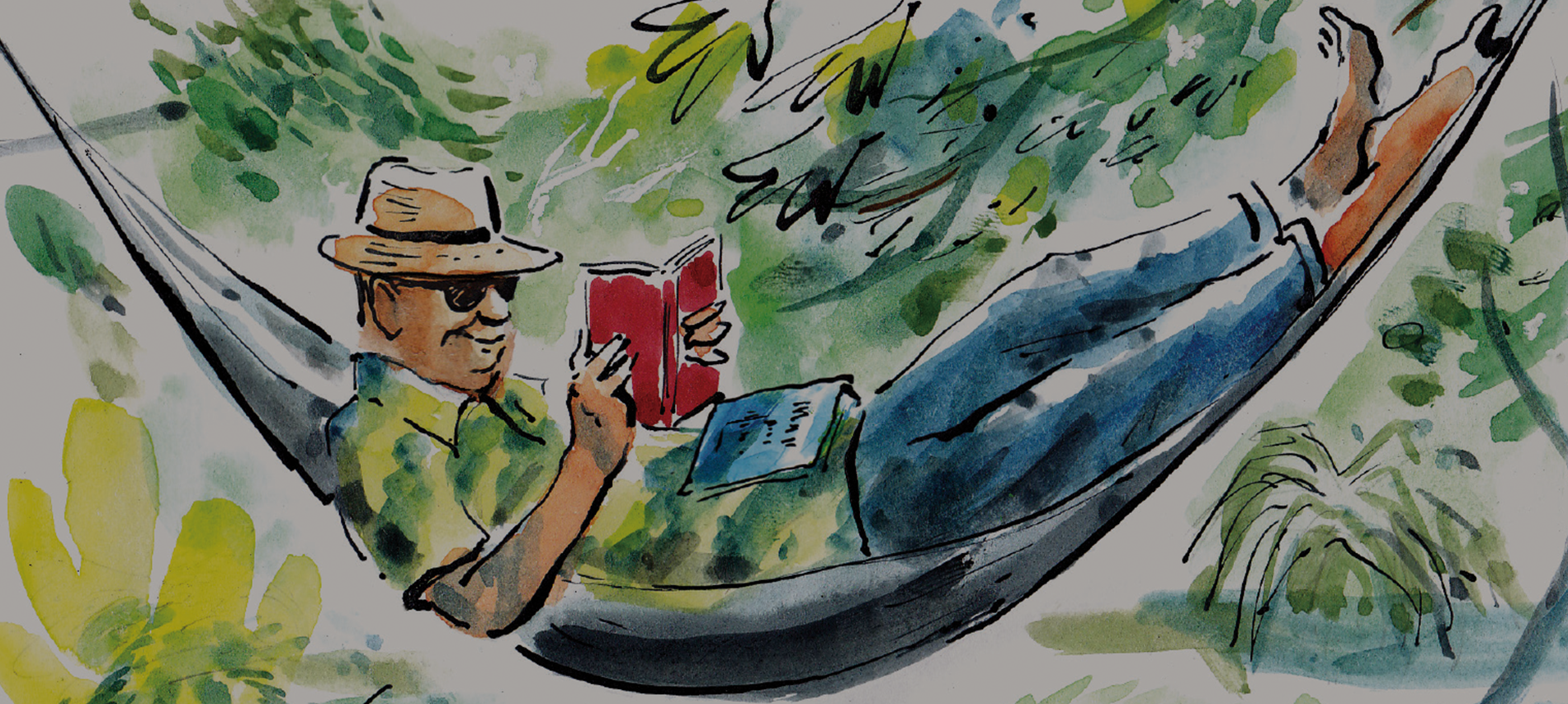
“I just hate having so many books to read and yet never having enough time to read them.”
“I used to pack a book for sleep overs!”
A love of books (to the point of addiction) might lead to misadventures, but it’ll surely lead to anecdotes and confessions!
In Confessions of a Book Lover, Ruskin Bond opens a window to his earliest encounters with incredible writers and their wonderful writings to introduce readers to the stories that played a significant role in molding his imagination as a full-time writer.
Every book lover has a confession. These are Ruskin Bond’s.
Literature is not bound to a type, is it?

Books > Common Sort of Entertainment

There can never be enough books

You never know which precious gem you might discover in a new genre

The ideal way to spend vacations

Reading can accelerate healing
Do you have similar confessions to make?
Get Ruskin Bond’s Confessions of a Book Lover here!

6 Essential Spices from Masterchef Pankaj Bhadouria’s Kitchen

Straight from the kitchen of India’s first Masterchef, Pankaj Bhadouria, here is a glimpse of her book — The Secret’s in the Spice Mix. Now you’re just a teaspoon away from stirring magic in your pan with these 6 spice mixes you must have in your kitchen:
Greek Seasoning

Za’atar

Pizza Seasoning

Barbecue Sauce

Tawa Subzi Masala

Panch Phoron

So, what is the best kept secret in your kitchen? Tell us as we make our way to gastronomic heaven.

Celebrating Cinema: 5 Reasons You Should Know About this Pioneer of New Wave

Adoor Gopalakrishnan, a name synonymous with revolutionising not just Malayalam cinema, but Indian cinema, was born in Kerala’s Travancore on July 3, 1941. Gopalakrishnan is a Padma Shri, Padma Vibhushan awardee, a Dadasaheb Phalke recipient, 16 times winner of the National Award, 17 times winner of the Kerala State Film Awards, a recipient of Legion of Honour by the French government, and many more.
Here are five more things to learn about the contributions made by this pioneer of New Wave to cinema:
Adoor Gopalakrishnan is an alumnus of the Pune Film Institute (now known as the Film and Television Institute of India). He applied for the ‘screenplay writing and direction’ course in the year 1962.

The filmmaker’s growing passion for cinema urged him to start a film society. In the year 1966, the fifth ‘All India Writers’ Conference’ held in Kerala’s Alwaye gave him the perfect opportunity to establish a film society.

Koodiyattam is the oldest living theatre in the world (2000 years old). Gopalakrishnan fought hard to gain access to the inner sanctums of the koothambalam or the premises of Koodiyattam’s performance to ultimately make a three-hour long documentary on this art form.

Adoor Gopalakrishnan has experimented with sound and silence in his films in ways that were unthinkable. Gopalakrishnan writes a separate script for sound, he would record natural sounds from different sources, like the train tracks, chatter of young college goers, the pouring rain to be used in his films.

Adoor Gopalakrishnan is known to include animals and birds as characters in his films. Our friends from the wild are not the ones to be directed and this, Gopalakrishnan treats, as a creative challenge. In his film Elippathayam, rats play an important and parallel role to the protagonist and his family.

Fascinated by the facts? Read more about the legend of cinema in Gautaman Bhaskaran’s Adoor Gopalakrishnan: A Life in Cinema.