Steve Jobs created Apple, one of the most successful brands on this planet. Apple is remarkable because it has married design and technology marvelously, time and again, generating sensuous products that millions of human beings across the world lust for. Jobs himself attributes a good part of this Apple magic to his curiosity.
In his famous commencement speech delivered at Stanford University in 2005, he gave an example of how, during his student days, he decided to take a calligraphy class at Reed College out of sheer curiosity. He said he learnt about serif and sans serif typefaces in this class, about varying the space between different letter combinations, about what makes great typography truly great. He called this learning experience beautiful, historical and artistically subtle in a way that science cannot quite capture.
He went on to say, ‘None of this had even a hope of any practical application in my life. But ten years later, when we were designing the first Apple Macintosh computer, it all came back to me. And we designed it all into the Mac. It was the first computer with beautiful typography. If I had never dropped in on that single course in college, the Mac would have never had multiple typefaces or proportionally spaced fonts. And since Windows just copied the Mac, it’s likely that no personal computer would have them.’ He added, ‘Much of what I stumbled into by following my curiosity and intuition turned out to be priceless later on.’ The sheer beauty of Apple products, which is a huge contributor to the brand’s success, owes something to its creator’s curiosity.
Just like Apple, so many great brands have their roots in the curiosity of marketers. Consider Tata Tea, the leading brand of tea in India today. This brand was born out of the curiosity of Darbari Seth, who was chairman of several Tata companies in the mid-1980s. He wondered why tea could not be packaged in an airtight polythene pillow pack (polypack), rather than in the cardboard cartons that were the norm at that time. His visits to various Indian towns had shown that consumers were very happy with these flat pillow packs for another commonly used kitchen product: salt. Seth had, a few years earlier, already launched the popular Tata Salt brand.
In addition, his own explorations into two very different spaces gave rise to some thoughts that he could toss around. From his numerous informal conversations with traders during the early days of Tata Salt, he had learnt that the strong smell of spices permeates all Indian kirana stores, which, in turn, taints various products stocked in these stores, including tea. Seth’s explorations into the world of science—he spent many decades working as a chemical engineer—had left in his mind the clear impression that polypacks made from a laminate of polythene and polyester would be significantly better than cardboard cartons, ensuring tea leaves were safe from these strong spice smells. So, driven by these curiosity inspired reflections, he went ahead and launched Tata Tea in laminate polypacks in 1987. This kept the plantation-packed tea fresh and untainted, and the brand went on to become a huge success.
I had the good fortune of working as a junior member of Seth’s team in Tata Tea during those years, and have seen at close quarters how curious he was by nature. I would accompany him on his visits to London, and I was often dumbfounded by the sheer number of questions he would ask me on just about everything. He inspired the creation of two of India’s strongest consumer brands—Tata Salt and Tata Tea. Interestingly, quite similar to how Microsoft copied the amazing typography of the Apple Macintosh, hundreds of other Indian tea brands have copied Tata Tea’s winning polypack. You will find them available across the country today.

5 Books You Should Read This Spring

Spring is the best season of all. With the flora at full bloom, you just want to stop and admire the beautiful scenes. Not only does spring signify beauty but it also signifies transition. So, what better way to enjoy the season than reading outdoors while basking in the sunlight.
Here’s a list of 5 books you should read this spring:
Anne of Green Gables
Mathew and Mariila Cuthbert were expecting a boy to show up from the orphanage. Little did they know, they will have the dreamy, talkative Anne to take care of their Green Gables. The descriptions of sights of Avonlea and Green Gables are so vivid that it makes you fall in love with nature even more.

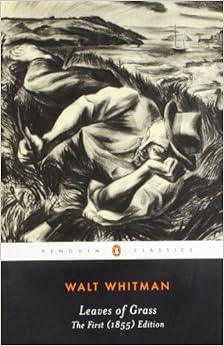
Leaves of Grass
Strewn with vivid description of nature, Walt Whitman in this poetry collection professes his love for the universal elements, flora and the fauna. After reading the poems, we also cannot help but awe at the marvels of nature.
Heidi
This little girl was sent to live with her grandfather in the mountains. With each passing day, she grew to be fonder of the scenic beauty. But when she was sent to live in the city, even Clara’s friendship couldn’t make her miss the mountains any less. Honestly, even we wouldn’t have coped to live in the city after living amidst such beauty.

Catcher in the Rye
The protagonist of this story is standing at the brink of adulthood and is yet apprehensive to make the transition. He wants to own a rye field at the edge of a cliff where thousands of children play. He would then catch them if they come close to falling from the cliff. He just wants to be a savior of innocence when he is in the process of losing his.

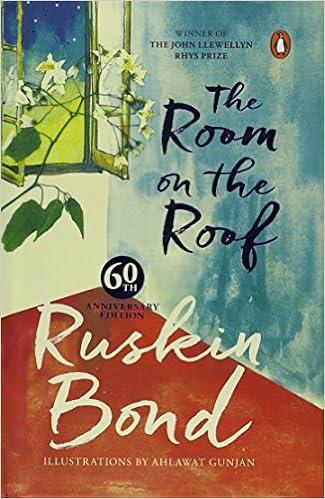
The Room on the Roof
In a sleepy town of Dehradun, our boy Rusty flees from his house to live with his friends. Enamored by the beauty of his town, Indian customs, festivals and foods. He understands that his life will not be as hunky dory as he thought but he still does not give up on his pursuit of a happier life.
Can you think of any more books that depict change and nature’s beauty with equal panache? Tell us.
5 Things You Didn’t Know About Mohammad Ali Jinnah

Mohammad Ali Jinnah is well known as a world leader who rose during the freedom struggle against British colonization. Personally, he was often described as stern or cold and singularly obsessed with his political ambitions, however , there are many unknown facets to him.
Sheela Reddy uncovers some of these in her new book, Mr and Mrs Jinnah:


Sheela Reddy in her exhaustive account, chronicles the unknown facets of the man known as Mohammad Ali Jinnah. Get your copy here.
Bill Gates: A Senior Executive Who Goes Where the Action is

There are three important questions I think every person, and certainly every manager, should ask himself or herself about how well they listen: The first: Do you get out from behind your desk and walk the corridors and floors?
To know what is going on, you have to be where the action is. You have to go to your customers. You have to go to the factory, or to the sales floor, or to where the problems are.
To me, Bill and Melinda Gates offer one of the best examples of senior executives going where the action is. Many nonprofit organizations with budgetary concerns do not deliver a high percentage of their income directly to the cause they serve. Thirty percent or more of the money they raise goes to operating costs. In other words, for every dollar you donate to such organizations, the intended audience gets at best 70 cents. The Gates Foundation, on the other hand, does devote a high percentage of its income to helping those in need. One reason is that both Bill and his wife, Melinda, are frequent visitors to the countries in which their foundation is active.
Here is how Bill Gates described their first trip to Africa:
“It was a phenomenal trip. Not long after we returned from this trip, Melinda and I read that millions of poor children in Africa were dying every year from diseases that nobody dies from in the United States: measles, hepatitis B, yellow fever. Rotavirus, a disease I had never even heard of, was killing half a million kids each year. We thought if millions of children were dying, there would be a massive worldwide effort to save them. But we were wrong.”
The Gates Foundation then set up a system to guarantee purchases from drug companies to combat the diseases. Bill Gates concluded, “There’s actually no substitute for going and seeing what is happening.”
The second question to ask yourself about how well you listen: Am I doing most or all of the talking in my interactions with others? Listening is an educational process. When you don’t listen, you don’t learn. Marshall Goldsmith, a well- known executive coach and a good friend, advises people who have a hard time listening to do the following: stop, take a deep breath— and let the other person speak up.
The third question to ask yourself about your ability to listen: Do I try to empathize with other people?
Being empathetic is the second step in being thoughtful. Empathy requires that you attempt to identify with the feelings, thoughts, or attitudes of another person. There are four aspects to empathy. The first is understanding that one person cannot do everything. When you empathize with someone it doesn’t matter who the other person is or what he or she does. I know that every person I interact with is valuable and is deserving of empathy.
The second aspect of empathy that I see around us too much is me, me, and me. We must transform me, me, and me to you, you, and you. We must make sure that everything in our lives is not about me; it must be about someone else.
The third aspect of empathy that deserves attention is our acceptance that each of us is but a very tiny speck in the universe. I am very fortunate that the back of my house overlooks the Pacific Ocean. When I do nothing but look out at the ocean, I sense how small I am. I am known in my field and to my friends and associates as an energetic person. But when I stare out at the Pacific, I am humbled. However, I am also inspired. That sense of my smallness in the world is what gives me energy. It causes me to question myself, and accept that I am not good enough, that I am not contributing enough. I am not making enough impact. I’m not adding enough value to the world around me. My sense of humility does not come from thinking about how important I am, but from how small and insignificant I am compared to the endless expanse of the universe. And ultimately, I believe, our humility is what defines us and makes us selfless.
I find that I often learn some of my most important lessons from children. So I asked a schoolchild what empathy meant to him. I knew that he had just completed a school project about it. Here is what he said. “If somebody fell at our school while we are playing together, even if we are all enjoying the game, if someone goes to try to help out, to take care of the kid, or maybe go get the nurse, I think that is empathy.” To me, that is a perfect description of a caring mindset. He thought of empathy as “kindness.” And that is the fourth aspect of empathy that I want to focus on. Kindness is an action. It is the doing part of empathy. I try to practice it in my work every day.
This is an excerpt taken from ‘The Difference: When Good isn’t Enough’ by Subir Chowdhury.

6 Wonderful Books You Should Gift the Women in Your Life

“Books make great gifts because they have whole worlds inside of them,” Neil Gaiman once remarked. This Women’s Day, do you want to gift her an inspirational world of stories? Worry no more as we have got you covered.
Here are six contemporary books that the women in your life will absolutely love to have!
This Wide Night
If you want to honour the women in your life who rose above unfavourable circumstances and came out on top, then this book is for you!
In this evocative and gripping novel, Sarvat Hasin depicts four beautiful sisters and their unconventional mother, living alone and together in a deeply patriarchal world. The Maliks, as they are called, live a life of relative freedom in 1970s Karachi. It is hard to break into their circle as they have forged the rules of their own universe. In a quietly seething world of This Wide Night, the unconventionality of these women collides with the dogmatism of the society around them.

Me and Ma
A moving memoir from one of the most talented artists of our time, Divya Dutta celebrates her mother’s struggles to turn her into the woman she is today. Capturing the beauty of a mother-child relationship, Divya Dutta walks us through the most intimate memories of her life. The incredible bond she forged with her mother helped her through tragedies and difficulties, and led her to become an award-winning actor of stature.
Me and Ma is one of the most beautiful tributes that you can give your mother!

The Spy
Is there a woman in your life who defied conventions? An epitome of fierce independence? If yes, then this enthralling tale of Mata Hari by Paulo Coehlo is one of the most perfect gifts for her!
Arriving penniless in Paris, Mata Hari swiftly became the most celebrated woman in the city at the back of her delightful dancing and showmanship. She led a liberated life and courted some of the most powerful men of her time. Not before paranoia consumed a country at war and the powers-that-be clanked down upon her, suspicious of her lifestyle that led them to believe she was a spy.

Devi, Diva or She-Devil
Do you know a woman who combines her personal and professional responsibilities with masterful ease? Then Sudha Menon’s take on smart career women would prove to be an enchanting tribute!
The book explores a myriad of complex issues faced by Indian women at the workplace, such as dealing with family pressures, gender perceptions, the glass ceiling, leadership challenges and bringing up children while also excelling in their careers.

Mr and Mrs Jinnah
Sheela Reddy’s fascinating account of a marriage that shook India, that of Mohammad Ali Jinnah and Ruttie Petit’s, brings to the fore an unlikely and unforgettable love story.
It was her intelligence and the fact that Ruttie was so widely read that attracted Jinnah. Apart from her beauty, Ruttie’s fierce commitment to the nationalist struggle struck a chord with him. She came across as a young independent woman who saw above the trivialities of the day.
This lucid account of an unlikely union that took the society of the day by storm is a must-give to the women in your life who share Ruttie’s exuberance and intelligence.
 The Girl Who Chose
Over the centuries, hundreds have retold the Ramayana, one of the two great epics from ancient India. They added new twists and turns but few have noticed that the tale always depends on the five choices made by Sita. In this charmingly illustrated retelling of the epic, Devdutt Pattanaik brings to the fore the often overlooked story of Sita.
As an epitome of freedom, Sita, the girl who chose, stands tall as a woman who decided not be bound by rules. Gift this book to one of the women in your life and let her know your admiration for her independence!

We hope that the list above solved your worries and provided you with wonderful options for that perfect gift – ones that the women in your life truly deserve!
Feminism Defined Right

What is Feminism? Feminism is often misinterpreted to state that it propagates female chauvinism. But the original thought behind feminism is equality for women in the domains of economic, personal, social, and political rights.
Here are five iconic quotes about feminism by women authors to set the record straight on feminism.


Know more quotes which define feminism the right away? Tell us in the comments.
7 Quotes that Sum up the Brilliance of Chanakya’s Wisdom

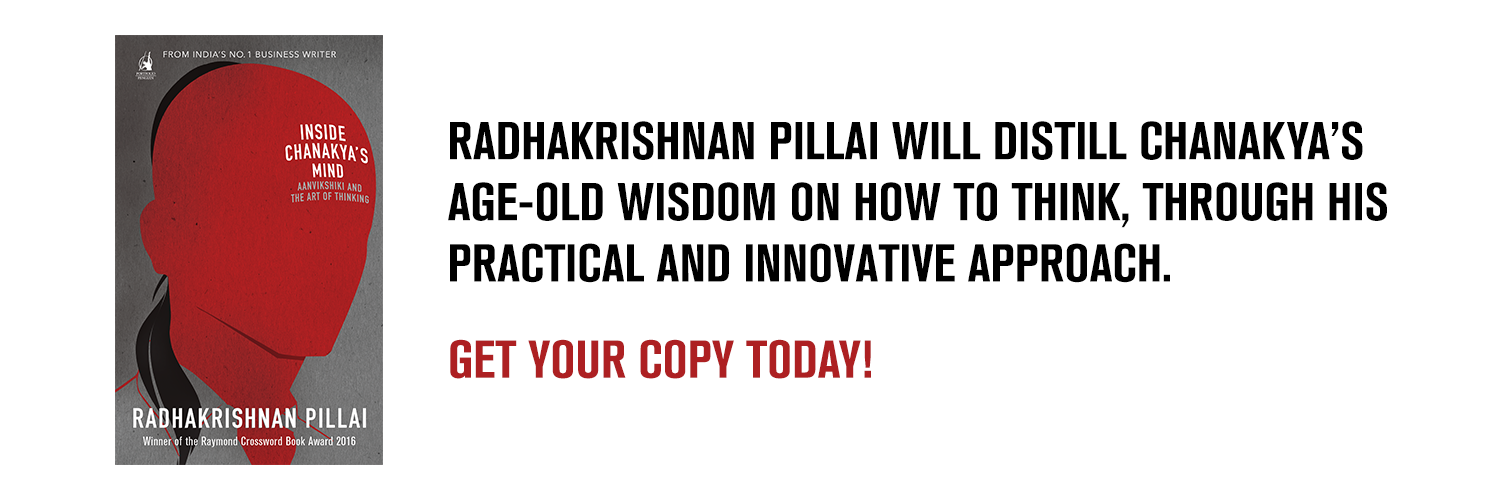
Chanakya was one of the best strategic thinkers the world has ever seen. In the fourth century BC, he wrote the Arthashastra, an unrivalled political treatise that has since been used by leaders across the globe.
In Inside Chanakya’s Mind, Radhakrishnan Pillai, the best-selling author of Corporate Chanakya, takes us deep into the teachings and philosophy of Chanakya. He will guide readers through Kautilya’s art of thinking through his very practical and innovative approach.
Here are a couple of quotes from the book that highlights the brilliance of Chanakya’s mind.


—-
Subir Chowdhury – A Bio

Subir Chowdhury is one of the world’s leading management thinkers and consultants, who works with Fortune 500 companies to improve their processes, operations, quality and performance. His clients have saved billions of dollars by deploying his process of improvement methodologies. His client list includes industry leaders such as Bosch, General Motors, Hyundai Motor Company, KIA Motors, and many more. He established ASI Consulting Group, LLC in 2003 and became its Chairman and CEO. In 2011, along with his wife Malini, Subir began a foundation that has been instrumental in starting educational programmes at major universities of India, U.K. and the U.S.
In the course of his career, he has written 15 books and is noted for his knowledge about strategic initiatives, quality consulting, and training. He is the bestselling author of The Power of Six Sigma and The Ice Cream Maker. In The Ice Cream Maker, Chowdhury used storytelling to make complex topics like quality management. His books have sold more than a million copies and have been translated into over twenty languages.
 Subir is included in the illustrious list of 50 Most Influential Management Thinkers in the World by Thinkers 50 of London. He is also revered by the New York Times as a “leading quality expert”. He is an eminent member of the World Innovation Foundation. He has also been conferred with the Outstanding American by Choice Award by The United States Department of Homeland Security.
Subir’s 15th book, The Difference: When Good Enough Isn’t Enough, guides individuals to develop a caring mindset. In this inspiring book, he says that a caring mindset is one that includes the qualities of being straightforward, thoughtful, accountable and having resolve (or STAR). The book has already garnered advance praise from stalwarts such as Narayana N.R. Murthy, and R.C. Bhargava.
The book has also received appreciation from professors of eminent institutions such as Scripps Research Institute and Columbia Business School. About the book, professor at Columbia Business School, Rita Gunther McGrath said, “Myths about how we should live our lives abound. But they are just that, myths. And too often they lead us to lesser and poorer lives.”
In this straightforward and inspiring book, Subir Chowdhury distills a lifetime of experience, rising from impoverished beginnings in Bangladesh, to his decades of consulting work with CEOs of many of the top Fortune 500 companies, to becoming one of our leading thinkers on workplace culture and organizational values. His STAR model for making a difference at work and in our personal lives is seemingly simple but surprisingly nuanced and profound. This short but powerful book could change your life.”
Subir says that the insights given in the book can be instrumental in bringing change in any industry or person. He further adds, “All four elements of STAR are critical. I find poorest of poor may have STAR qualities and richest of the richest may not have these qualities. Financial Success does NOT define a person has a quality mindset or not. You know, how many ‘so called financially successful people’ did crooked stuff? That’s why in the final chapter I talked about my grandfather who is a simple man (elementary school teacher) and a deeply caring person had a huge impact on my life. And now, 40 years later I am teaching world’s top CEOs and business leaders about my grandfather’s teaching which is STAR. In social media generation and money hungry youths in India are losing values and a caring mindset is missing in most of their lives. They should spend more face to face time with their grandparents, parents, families and friends who deeply care for them.”
——-
5 Characters from Dr. Seuss’ Books That You Will Have Definitely Met in Your Life


Spring is here and so is the full blast of colours. The blue of clear skies, the green of swaying trees, the many shades of the sun – from orange to yellow to pink! It is, therefore, only fitting that Dr Seuss’ birthday – a writer who is credited with creating some of the most vibrant stories and characters – befalls in this lovely season.
The author has created many fascinating characters. They carry within them a refreshing slice of life and traits that all of us can identify with.
Here are five of Dr Seuss’ most brilliant characters that you MUST have come across in your life!
Lorax
You can’t chop down trees on his watch. And if you need a lesson in environmental issues, he’s the one you call!

Horton
Ever so kind and compassionate, he’s a soul with a big heart!

The Cat in the Hat
His is a take-it-easy policy. So what if there’s chaos, you can’t stop him from having a grand time!

The Grinch
He hates Christmas, but that’s only because he thinks the festival is a corporate-manufactured event aimed at securing profits. He likes to think beyond presents.

Sam I Am
As persuasive as one can get, he can even sell you green eggs!

Did you find similarities between any of the above and someone you know? Go ahead and share it with that soul!
And here’s wishing Dr. Seuss a wonderful birthday!
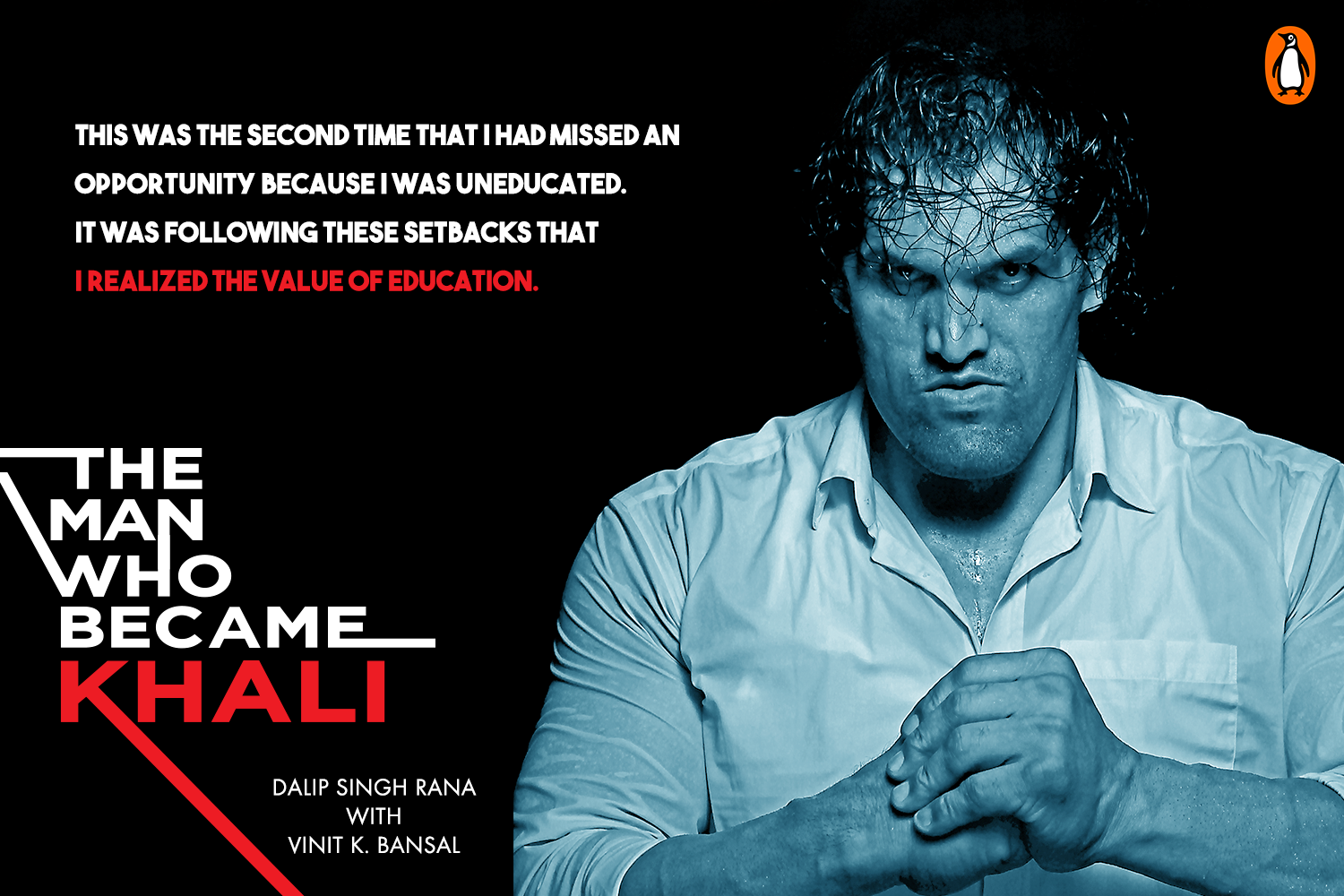
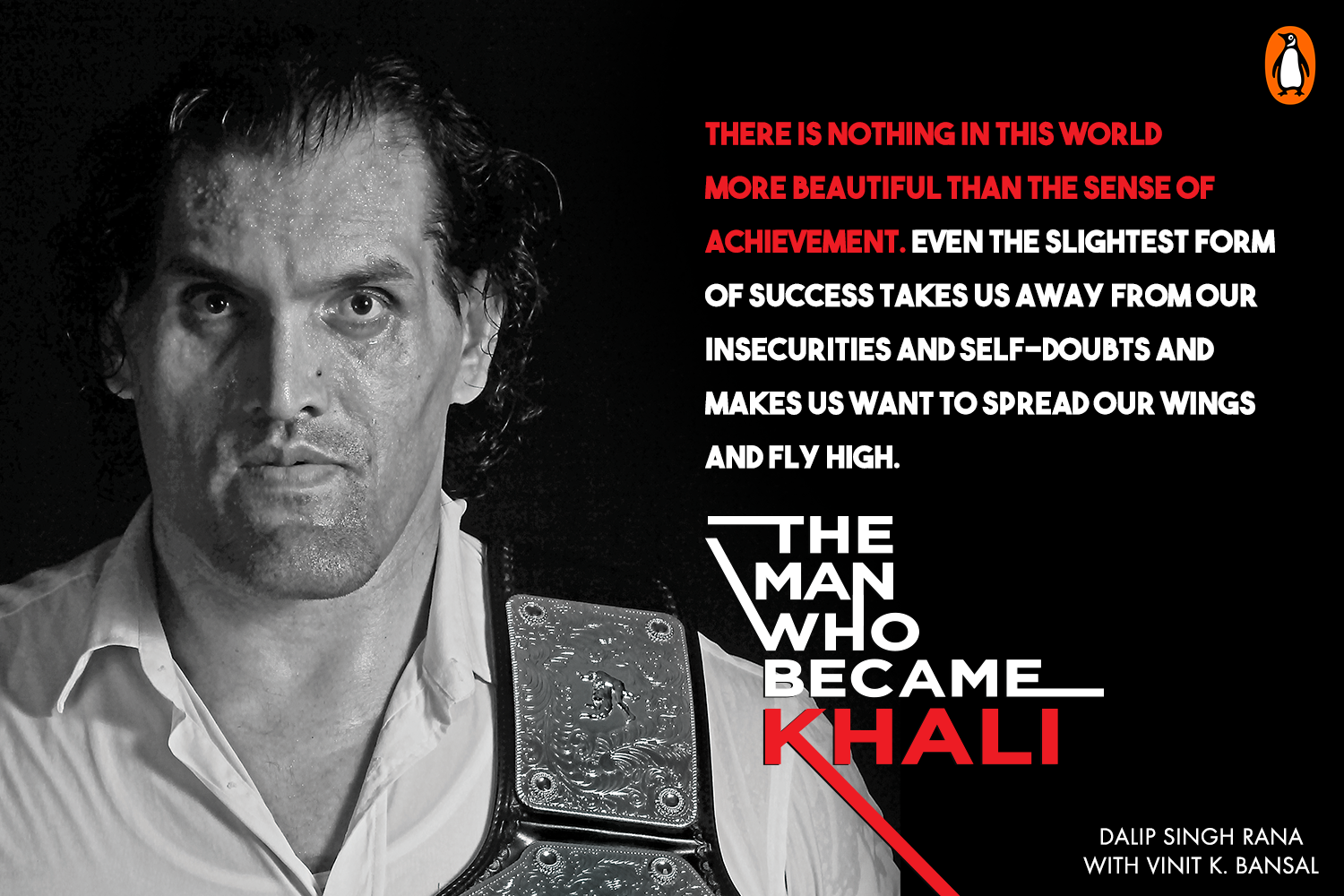
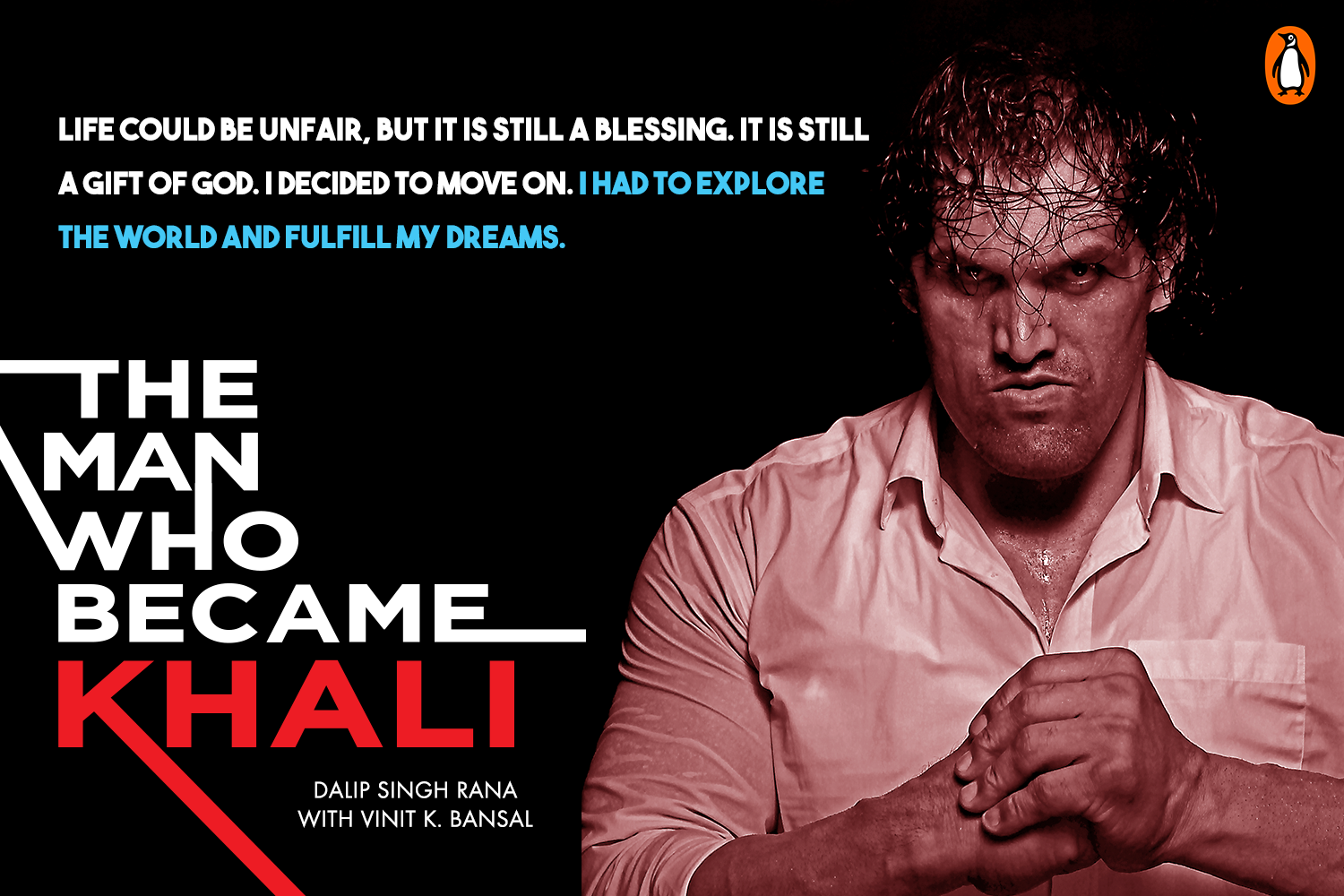
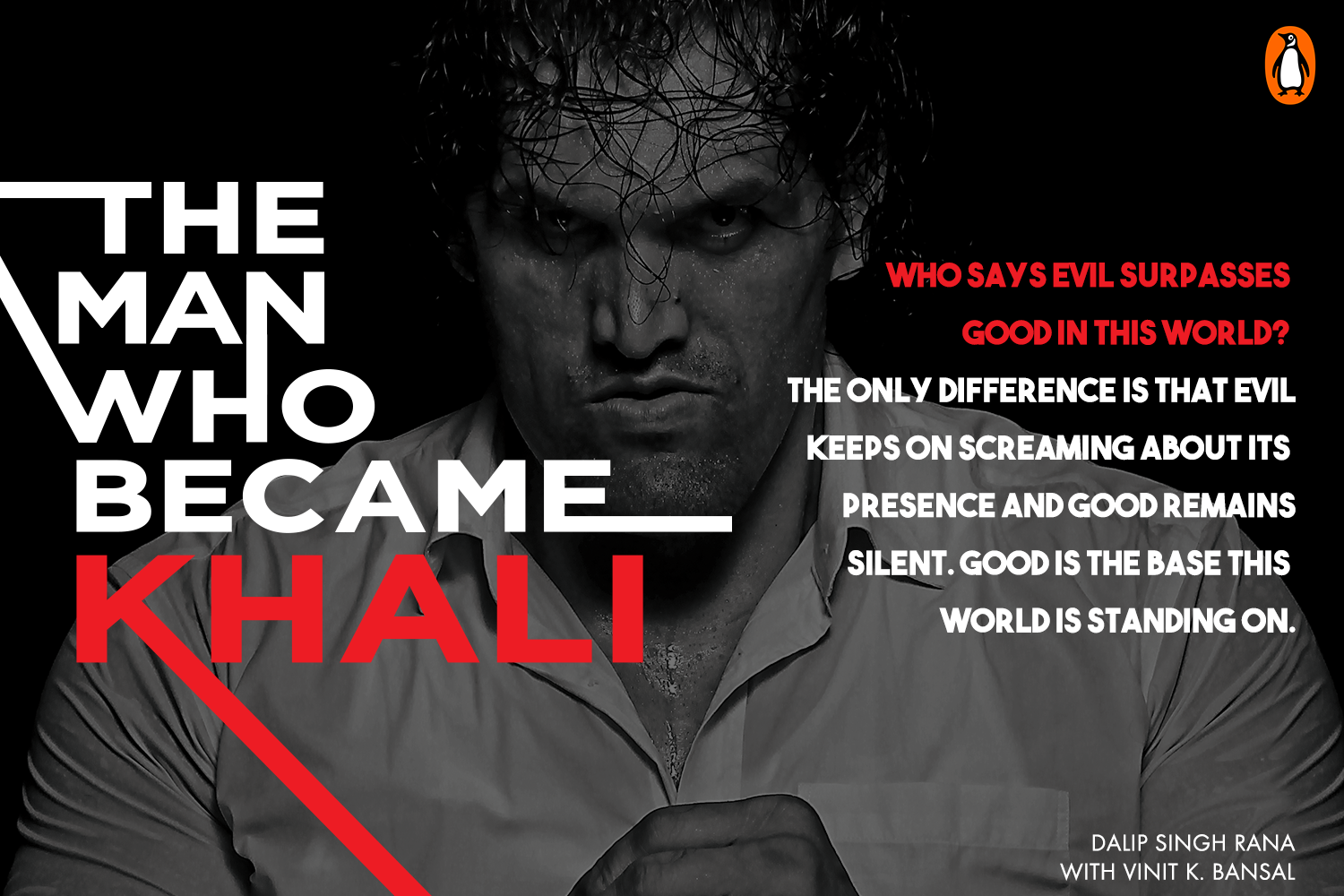
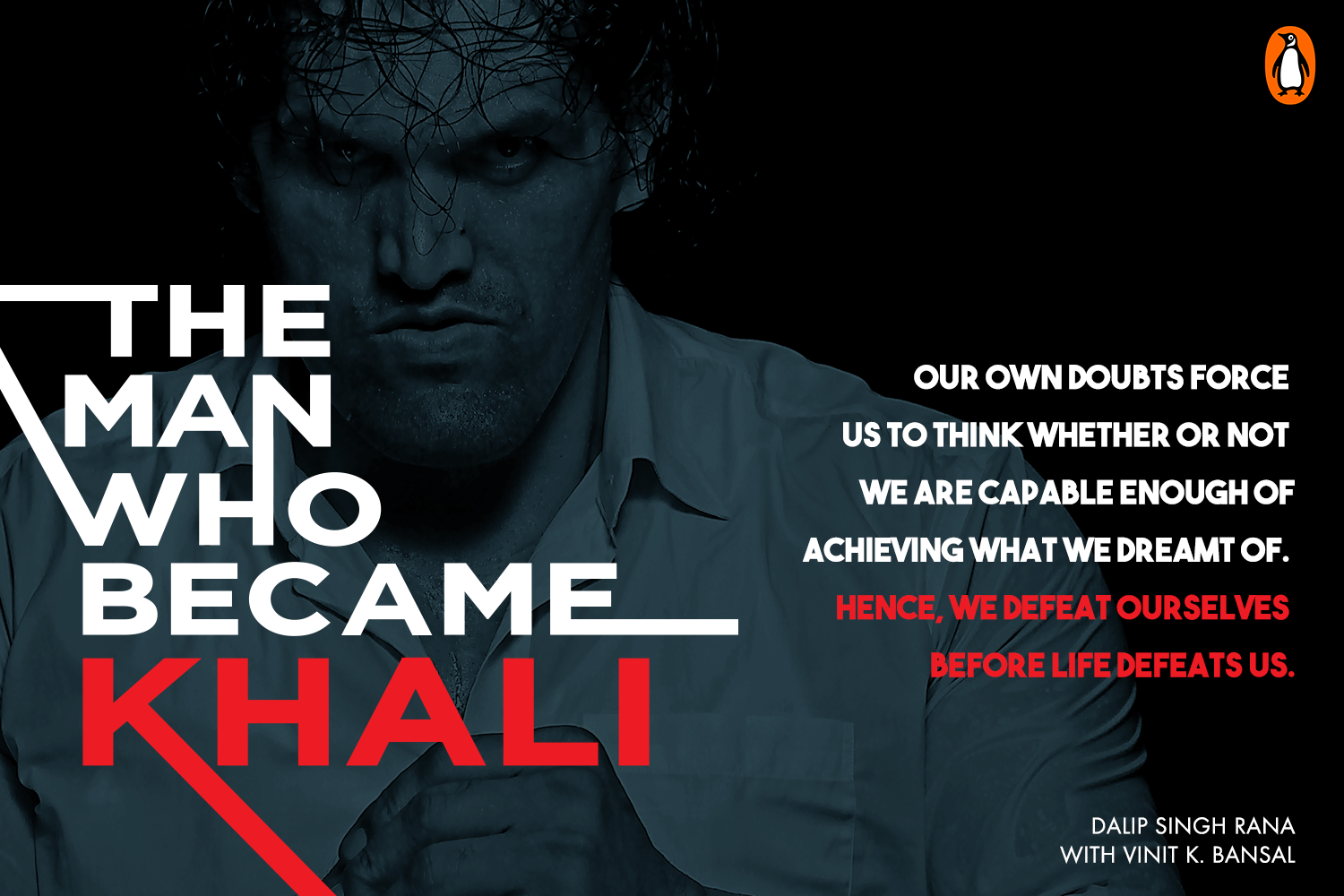
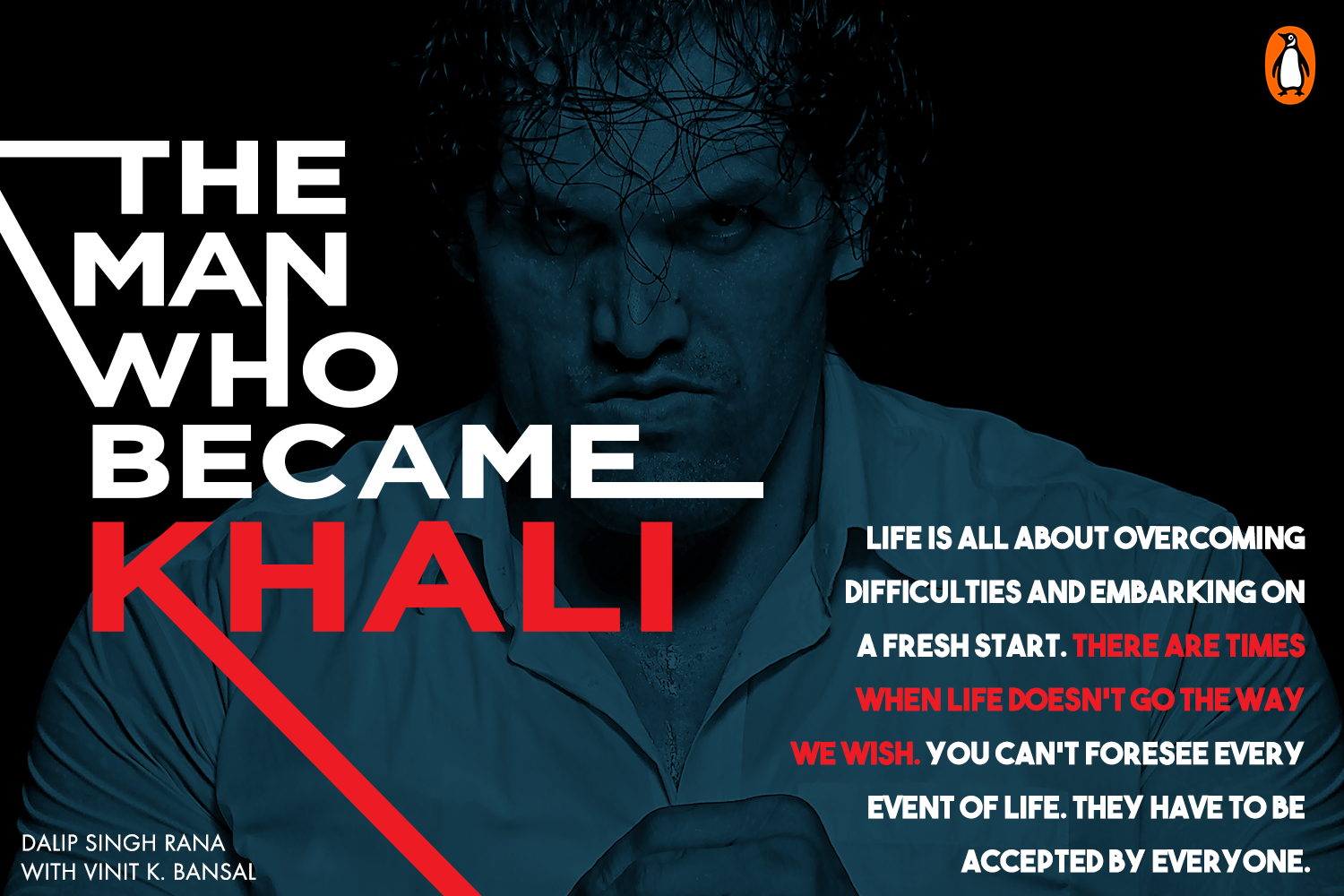
7 Quotes by The Great Khali that’re Bound to Motivate You

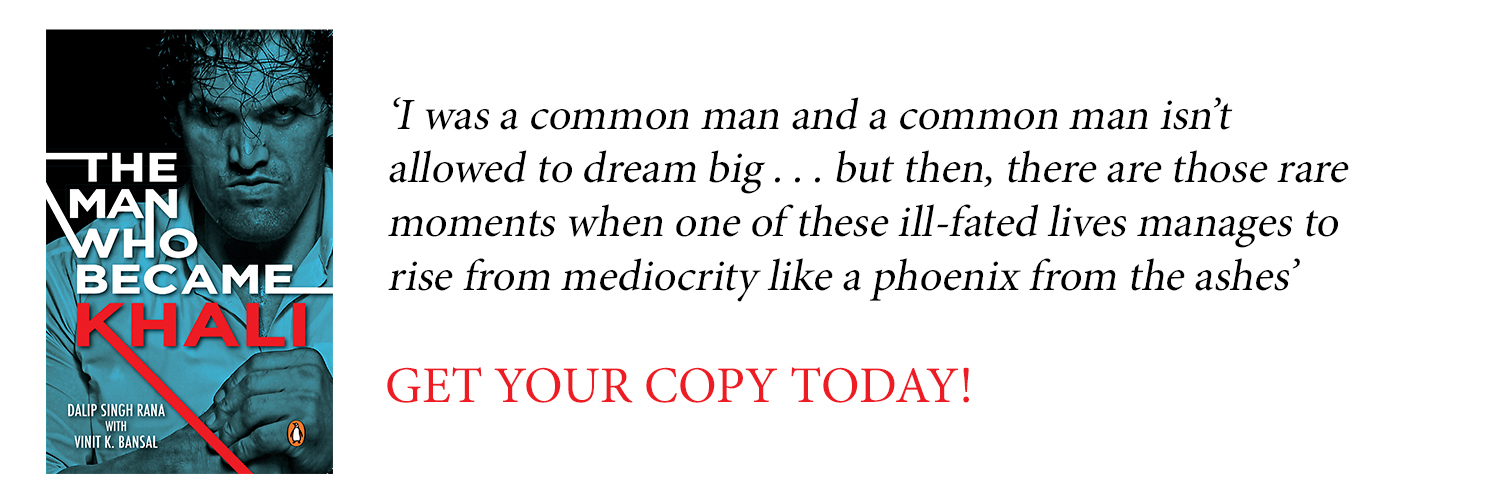
The world knows him as the WWE superstar, but most do not know the entire story of Dalip Rana. Born in a small village, his formative years were nothing if not full of turbulence. From leaving his school to working as a daily-wage labourer to bodybuilding, he had done it all at a very young age. Often the subject of ridicule, he was poked fun at due to his extraordinary size. However, a determined Dalip relentlessly pursued his goal of wrestling and such was his passion that he did what no Indian had done so far enter the internationally acclaimed WWE arena!
The Man Who Became Khali is an inspirational, emotional and a no-holds-barred account of a man who not only went on to win the World Heavyweight Championship but also conquered his inner demons and physical anomalies.
This is the story of how Dalip Singh Rana became the international icon – The Great Khali!
He’s lived a hard life and fought hard to become a winner. And that is why there is no one better to motivate us. Enjoy some of the most inspirational quotes from The Man Who Became Khali, written by Dalip Singh Rana and Vinit K Bansal.

——–