




The world of literature is full of some enigmatic works that transcend the boundaries of language.
If you are looking to immerse yourself in some beautifully translated works (with stunning covers), look no further.
Here’s a list of five gorgeous looking classic translations that will leave you enthralled!
Kalidasa’s Classics
Kalidasa, perhaps the most extraordinary of India’s classical poets, composed seven major works: three plays, two epic poems and two lyric poems. Originally written in Sanskrit, the legacy of the writings have passed on to generations through various translated media. Kalidasa’s classics are also filled with lush imagery—from the magnificence of the bountiful earth to the glory of the celestial gods, from the hypnotic lilt of birdsong to the passionate love stories between couples. This vibrant verbal imagery translates beautifully into the covers of these books. Whether it be the green hue of the glorious forests in Meghdutam or the myriad of colours in the love story between Shakuntala and Dushyanta in Abhijananashakuntalam or the colour blue depicting the travails of Dashratha in Raghuvamsam, the covers of the translations reflect the beauty of his works.

My Name is Radha by Sadat Hasan Manto
My Name Is Radha is a path-breaking translation of stories that delve deep into Manto’s creative world. In this singular collection, the focus rests on Manto the writer. The vibrant pink hue of the cover reflects the boldness of Manto’s writings and the retro-graphic and font on the cover reflect Muhammad Umar Memon’s attempt to keep true to the artfulness in the translation.

The Broken Mirror, None Other, and Steps in Darkness
Written and translated by the eminent iconoclast Krishna Baldev Vaid, his writings echo an aspect of the turmoil the people and the Indian subcontinent went through during the time of partition. The perpetuating, almost uncontrollable patterns on the covers of these translations perhaps reflect the myriad moods that people suffered through during those times.

Have you seen a cover of a translation which has left you awestruck? Share with us!

6 Quotes from Nadeem Aslam’s Searing New Book that will Leave You in Awe

Against a background of violence and fear, two outsiders in Pakistan try to find an island of calm in which their love can grow. In his characteristically enchanting prose, Nadeem Aslam reflects Pakistan’s past and present in a single mirror—a story of corruption, resilience, and the hope that only love and the human spirit can offer.
Here are six quotes from his new novel – The Golden Legend.


Struck by the searing instances above?

Politics and the Art of Branding

Political parties and consumer brands have more in common than you think, both have a set of target consumers and specific marketing strategies.
Here are a few things that political parties can learn from consumer brands
Leveraging Technology

Brand Proposition

Brand Ambassador

Youthful Brand Offering

Brand Slogan

Authenticity of Brands

Can you think of any more tips that political parties must bear in mind while planning their marketing campaign? Tell us in the comments.

Decoding the Panchatantra: 6 Little-Known Facts About the Evergreen Animal Fables
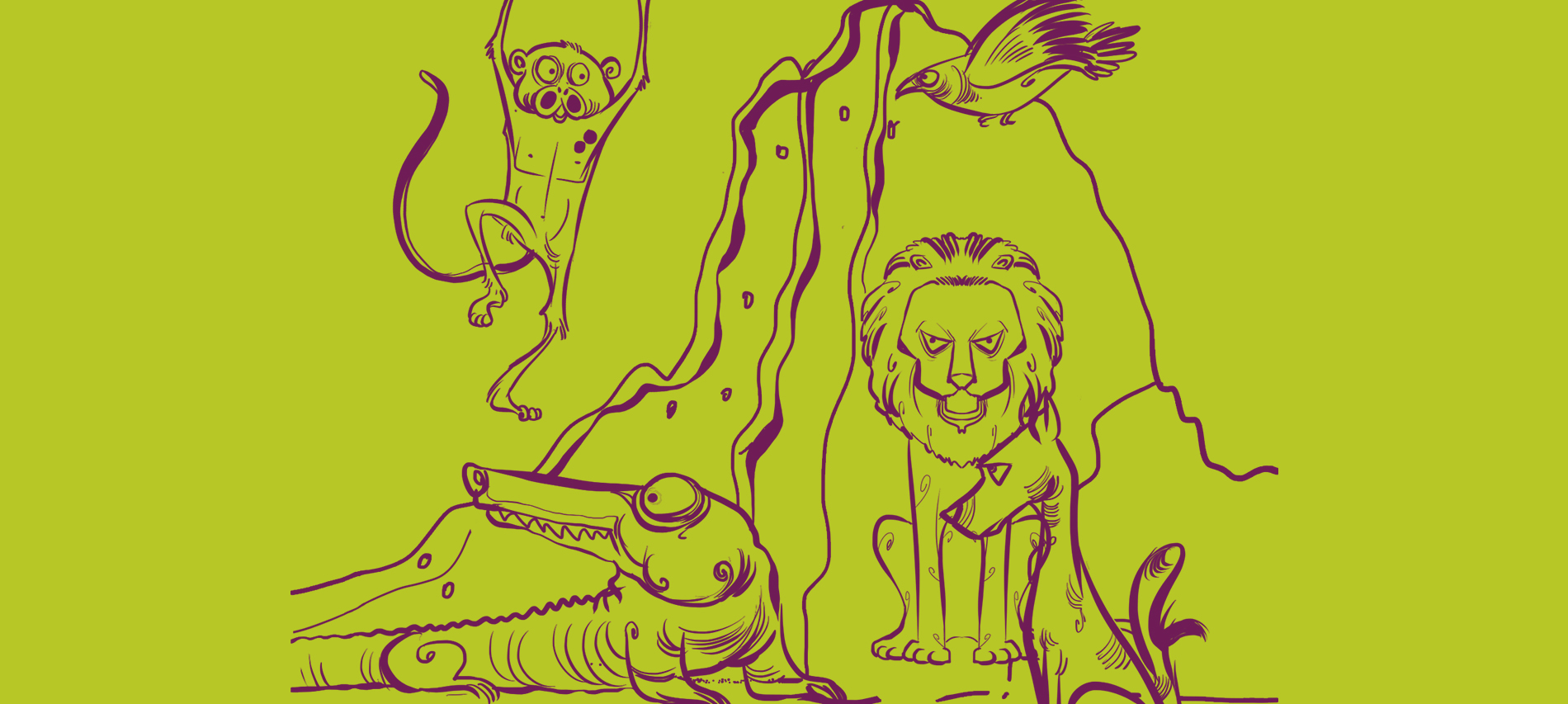
Originally composed in Sanskrit, the Panchatantra is one of the oldest collections of fables in the world. Devised for the purposes of teaching three dull-witted sons of a king, it strives to convey the principles of kingship and some valuable life lessons.
Nilanjana Roy, author and journalist, notes in her introduction to the refreshing new translation of the Panchatantra: “Stories are alive and they like to travel.” In fact, the more brilliant the stories the wider their reach. And therein lies the magic of the Panchatantra – it has hopped down and affected numerous centuries and generations!
Here are six little-known yet brilliant facts about the Panchatantra!
Who wrote the Panchatantra? Vishnusharma was renowned far and wide for his learning and his skill as a teacher, and was therefore given the task of educating the sons of the king and making them fit to rule. He was eighty years old at the time yet accepted the challenge, and devised the stories of the Panchatantra to teach the princes the rules of kingship and the principles of government.
When was the Panchatantra composed? The exact date of its composition is uncertain. We do know, however, that it was translated into Pahlavi in 550 CE. Thus, we know with certainty that the Panchatantra must have been composed before this date.
Where was the Panchatantra composed? We do not know the exact location of this city, or even if it was a real place. The Panchatantra only states, rather vaguely, that Mahilaropya was the capital city of ‘a kingdom in the south’.
The Structure of the Panchatantra The original Panchatantra is a mixture of verse and prose. The stories are narrated mainly in prose, but the lessons derived from the tales are usually given in verse form. Panchatantra takes its audience into a series of stories, deeper and deeper, from one level to the next.
Characters in the Panchatantra The author has used a device to make it easy for his audience to understand the nature of his characters, and that is their names. He has given his characters, whether human or animal, names that highlight certain aspects of their appearance or behaviour. Thus, we have Pingalaka the lion, whose name means ‘one who is red–gold’, named for his fiery coat!
Translations and Retellings The subject matter of the Panchatantra and its delightful tales made it a very popular text. Its stories, carried far and wide by travellers and merchants, spread rapidly across the world.
Want to soak in the magic of the Panchatantra? Relive the joy of this enduring classic, translated brilliantly from the original by Rohini Chowdhury and now in a classic keepsake edition – here!
Seven Derek Walcott Quotes that will Etch Him in Your Memory Forever!

Born in Castries, the St Lucia capital, Sir Derek Walcott’s first poems, which were self-published, emerged in 1948. His work celebrated his Caribbean culture, enhanced by an encyclopedic knowledge and insight in world history, global cultures and triumphs of humanity.
As a youngster, he struggled with questions of race and his passion for British poetry, describing it as a “wrestling contradiction of being white in mind and black in body, as if the flesh were coal from which the spirit like tormented smoke writhed to escape.”
Sir Walcott won the Nobel Prize in 1992, two years after his epic book-length poem Omeros, which brought him worldwide acclaim, was published. His dazzling, painterly work earned him a reputation as one of the greatest writers of the second half of the 20th century.
Today, as we remember him, let us have a look at some of his quotes.


RIP Sir Derek Walcott.
A Lesser-Known Poem by Robert Frost that You Must Know Of
‘Out, Out—’
The buzz saw snarled and rattled in the yard
And made dust and dropped stove-length sticks of wood,
Sweet-scented stuff when the breeze drew across it.
And from there those that lifted eyes could count
Five mountain ranges one behind the other
Under the sunset far into Vermont.
And the saw snarled and rattled, snarled and rattled,
As it ran light, or had to bear a load.
And nothing happened: day was all but done.
Call it a day, I wish they might have said
To please the boy by giving him the half hour
That a boy counts so much when saved from work.
His sister stood beside him in her apron
To tell them ‘Supper.’ At the word, the saw,
As if to prove saws knew what supper meant,
Leaped out at the boy’s hand, or seemed to leap—
He must have given the hand. However it was,
Neither refused the meeting. But the hand!
The boy’s first outcry was a rueful laugh,
As he swung toward them holding up the hand
Half in appeal, but half as if to keep
The life from spilling. Then the boy saw all—
Since he was old enough to know, big boy
Doing a man’s work, though a child at heart—
He saw all spoiled. ‘Don’t let him cut my hand off—
The doctor, when he comes. Don’t let him, sister!’
So. But the hand was gone already.
The doctor put him in the dark of ether.
He lay and puffed his lips out with his breath.
And then—the watcher at his pulse took fright.
No one believed. They listened at his heart.
Little—less—nothing!—and that ended it.
No more to build on there. And they, since they
Were not the one dead, turned to their affairs.
— Robert Frost
Master on Masters – An Excerpt

India is the only country in the world which has two traditions of classical music—those of the South or the ‘Carnatic’ and the North or ‘Hindustani’. However, I prefer to call it just music. The basis of all music in the world is the same—seven notes. Sa Re Ga Ma Pa Dha Ni in Indian classical music and Do Re Me Fa So La Ti in Western classical. If we include the half-tones that are the sharps and flats, we get a total of twelve notes. Music connects the whole world; it does not belong to any one race or religion.
The future of Indian classical music will always be bright. We are fortunate to have had such strong pillars of music like Swami Haridas, Swami Purandar Dasa, Swami Muthuswami Dikshitar, Syama Sastri, Swami Thyagaraja, Swathi Thirunal, Miyan Tansen and Baiju Bawra in our country. With their blessings, there are a large number of talented young musicians in India today. Indian classical music has always been, and will continue to be, an integral part of our identity. It does not belong only to the world of entertainment; it is a way of life based on dedication, surrender, faith, trust, spirituality, religion, and rigorous practice and discipline. No matter which gharana or guru a student of Indian classical music belongs to, they must surrender completely to their guru and to the Almighty. It is almost like entering a dark tunnel with the hope of seeing the sun someday. It might sound impractical, but this is how it is. There is no formula here. Many times, people ask me if their son or daughter will ‘make it’ as a classical musician. I have no answer to this question because there never was and never will be a magic mantra.
Over the years, I have seen a change in the attitude of disciples. While some are epitomes of dedication and grace, others want to become superstars overnight and, in the process, shift their focus away from their path to the extent of disagreeing and questioning what the guru has to say. Classical music is not for someone who is in search of glamour and overnight fame. Years and hours of practice and dedication go into the making of a classical musician.
Today, electronic and social media are largely encouraging the kind of music which is not classical. But true classical musicians are not created by the media. The listeners of our country are fairly selective. Nobody can impose an artist on them. The only way for a young musician to succeed is to work hard, practise rigorously and maintain strict discipline. This is not restricted to music alone, but extends to Indian rules of etiquette (tehzeeb and tameez) as well.

I disagree with those who say that Indian classical music is a dying art form. We must understand a few things here. It was never for the masses to begin with. It was originally performed only in private mehfils, with concert hall performances being a recent phenomenon. Today, classical musicians perform at venues like Carnegie Hall, Royal Albert Hall and Sydney Opera House to packed auditoriums. You are talking about an audience fighting against the ninety to hundred odd television channels at home! Likewise, in India, when I see huge venues filling up, I don’t think we can really complain. It is the responsibility of the artist to make the youth relate to their music. The kind of attention that Bollywood and the fashion industry are receiving today from mainstream media, Indian classical music got three decades ago! In the sixties and seventies, musicians would play ragas for two to three hours. Frankly, after maybe an hour, it was all repetition. However, due to this attitude of artists who perhaps wanted to prove a point, a section of listeners drifted away to easy listening. One must keep in mind that no books or shastras ever mentioned how classical music should be presented. By bringing it in sync with times, one cannot be faulted for diluting it at all.
I believe in being traditional, not conventional. In the early eighties, I had recorded an album of short pieces around ragas. At the time, I was criticized for not going into too much detail of the ragas, but I am happy that today this has become a trend. I see the great journey of Indian classical music being carried forward by brilliant young musicians who have a readymade repository—painstakingly put together by my contemporaries and me through years of hard work and research—to build on. Thanks to the Internet, websites like YouTube, gadgets like iPods, DVDs and CDs, we can be in every home in the world. It makes me happy to see dedicated young musicians who are also committed performers. I wish them a bright and successful future and I am sure that our classical music and legacy will flourish not only in India but all over the world. I am also heartened by the response of the rest of the world to our country and its musical tradition.
One area that touches me deeply is culture. Reared on a diet of tradition and continuity, it is challenging to live in a modern world with classical values. Yet, I chose to belong to a system where oral knowledge is passed from guru to student during actual music lessons. I often feel I am standing at a crossroads. Where do we go from here? How will classical music evolve? There is a deluge of pop and so-called fusion, remixed ragas and experimental music—great work is being done. The instant success of any of these, as opposed to the long hours of dedication required in the traditional set-up, sometimes stands in the way of progress. I think it is wonderful to imbibe from different cultures all over the world, but let’s not forget who we are or what we have to offer. We need to be, first and foremost, proud of ourselves, of our own accomplishments. Exposure to the arts is mandatory to ensure true appreciation of any medium. At the same time, while modernizing, we must not lose our traditional infrastructures. It will indeed be a sad day for all of us if our musical traditions, that date back more than 5000 years, were to be sacrificed at the altar of modernity. It is crucial that historic and contemporary cultures merge with one another to preserve a uniquely Indian way of life. We must ensure that modernization in our country occurs, as far as possible, in keeping with historical trends. We should be proud of these trends as they have brought us to where we stand today. We must never forget our roots.

6 U.P. Kahawats To Enrich Your Hindi

Uttar Pradesh or U.P. has some really colourful vibe to it. Not only is this vibrant state famous for its amazing food and culture, the Hindi spoken in the state is also rife with some amazing kahawats. These kahawats not only add spice to the Hindi people speak in the state, but also pass on some precious wisdom in the wittiest way.
Here are some kahawats to enrich your life:


Know some more of such amazing kahawats? Tell us in the comments.

6 Ways in Which You Can Master the Art of Thinking

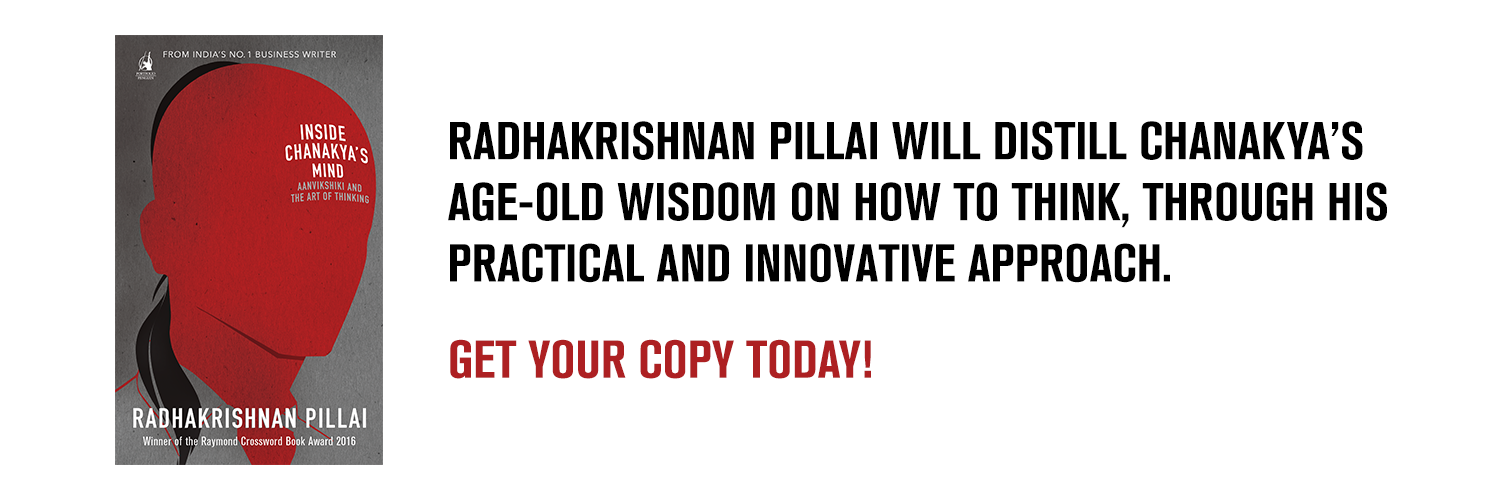
Our thoughts frame our approach towards the various situations we come across in our lives, whether it be at home or at work. But the right approach for any problem is born out of the right kind of thinking, also known as aanvikshiki.
Chanakya in his book Arthashastra, gave us an indication of the various types of thinking he practiced and preached.
Here’s a list of six types of thinking Chanakya elucidated:
Both-Side Thinking
One of the reasons why Chanakya was considered brilliant was because he used to look at both sides of a situation. Looking at only one dimension cannot give us the full picture. When you look at both sides of an issue, your thinking evolves. Knowledge of the other viewpoint only enriches your thinking.

Alternative Thinking
There can be one solution to many problems. There can be many solutions to one problem. This is called alternative thinking. The problem and the solution are both in our minds. Train the mind in the right kind of thinking, and you will succeed, no matter what the problem is.

Leadership Thinking
Chanakya trained kings on how to think. An important aspect of the thought processes of a leader is selflessness. Leaders work for the benefit of others. Kautilya’s Arthashastra says the king has to take care of not only human beings but also animals, birds, plants, minerals, water bodies and all else that is part of his kingdom. Thus, according to Chanakya, leadership thinking is an all-inclusive thinking.

Creative Thinking
In his way of thinking, Chanakya stressed on the importance of being innovative and creative. He knew that creativity works only if we are at the right place at the right time. If we miss the right time, we may not get it again. Furthermore, he adds that creativity does not mean destruction. So, while creativity should be our focus, let us not be inhuman.

Lateral Thinking
Good leaders need to have good strategy. Through careful, well-planned strategies, we develop lateral thinking. Have you ever wondered in a game of chess, despite having the same number of soldiers, elephants, horses, and other pawns, why does only one emerge as the winner? The moves and the strategy used by an individual make all the difference. This is where lateral thinking comes in. To develop lateral thinking, first we need to understand our own thinking and next we need to understand the thinking of others. When we combine both, success in anything we take up is guaranteed.

Spiritual Thinking
Another type of thinking Chanakya wanted leaders to develop was spiritual thinking. Spiritual people are always active and dynamic. They are action-oriented. The spiritual energy in them gives them the strength to do better than the ordinary. With a foundation of spirituality, even the ordinary becomes extraordinary. Thus, among all the types of thinking brought out by Chanakya, the highest form is spiritual thinking.

These timeless teachings by Chanakya continue to serve us in our lives. Tell us if how you have benefitted from them.
10 Delightful Quotes that will Dazzle Your Day

“I’d rather people read my book twice than only half-way through,” Mohsin Hamid replied once when asked about his compelling and minimalist prose. It’s this splendid literary ambition that seals the position of Mohsin Hamid among the most brilliant writers of our time.
Here are ten exemplary quotes from his books that will leave you awe-struck!


Dazzled for the day? Grab your copy of Mohsin Hamid’s latest novel – Exit West – here and soak in the magic of his storytelling.