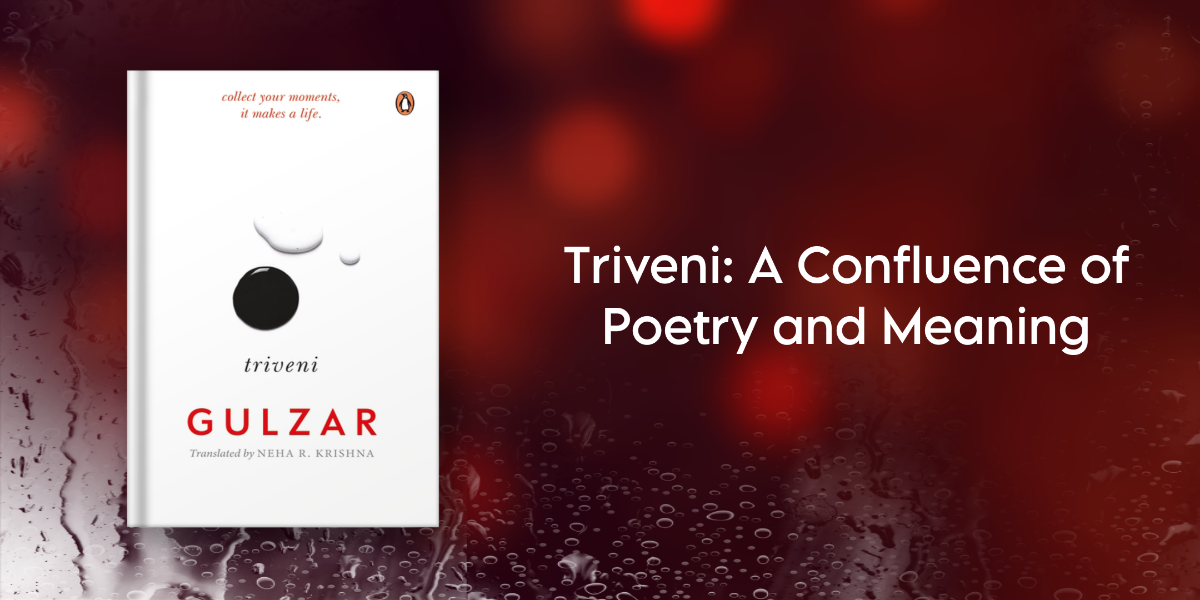
Explore the world of poetic creation with Gulzar as he brings forth his latest masterpiece, Triveni. Just like the meeting point of three rivers reveals hidden secrets, his Triveni poems bring a twist to each couplet, making it a captivating journey. But that’s not all – discover Neha R. Krishna‘s unique attempt to transform Triveni into Japanese Tanka poetry.
Get ready to be spellbound!
Triveni || Gulzar, Neha R. Krishna
***
Triveni
I was rowing in words and meters of poetry when I happened to invent the form of Triveni. It’s a short poem of three lines. The first two lines make a complete thought, like a couplet of a ghazal. But the third line adds an extra dimension, which is hidden or out of sight in the first two lines.
Triveni ends revealing the hidden thought, which changes the perspective or extends the thought of the couplet. The name Triveni refers to the confluence of three distinct streams or rivers at Prayag. The deep green water of Jamuna, meet the golden Ganga, and hidden from view is the mythical Sarswati, flowing quietly beneath.
‘Triveni’ is to reveal ‘Saraswati’, poetically.
देर तक आस्माँ पे उड़ते रहे
इक परिन्दे के बाल-व-पर सारे
बाज़ अपना शिकार ले के गया !
All the fur and feathers of a bird
Kept flying in the sky for a long time
The falcon swooped away with its prey!
Neha, a young competent poet, was rowing in Triveni. She wished to translate Triveni in a Japanese form of poetry called Tanka. I felt inquisitive. She has explained it in her translator’s note. I hope you too feel as inquisitive while reading it. I found it very interesting.
-Gulzar
***
Translator’s Note
Tanka is a short lyric poem. Various poetic elements like mood, theme, nature, characters, etc., are posed in a particular structure that give Tanka its body and soul. With this concept note, I am addressing the fundamental techniques of writing a Tanka, this will also assist the readers to comprehend and appreciate the structure.
What Is Tanka?
Tanka is a lyrical poem, a short verse, a short song. It is one of the oldest forms, originating in Japan, in the seventh century. A traditional Japanese Tanka has thirty-one morae or sounds that follow a 5-7-5-7-7 sound structure.
The Difference between Traditional Tanka and Contemporary Tanka Tanka in contemporary English is more flexible and does not adhere to the traditional 5-7-5-7-7 syllabic structure or the pattern of short/long/short/long/long line format.
Why Transcreating Triveni into Tanka?
The aesthetic sense, the grace of cadence and the rich imagery of Tanka appear inclined to Triveni. Even in Triveni, images are juxtaposed with the technique of link and shift. Just like any lyrical Tanka poem, Triveni can also be composed and sung. The length of images of Triveni fits well in Tanka as it gives more space to retain the multi-layered essence. Triveni’s L3 strongly adds to or changes the narration of L1 and L2. In the same way, Tanka has a very strong and unexpected L5.
There is musicality in these short poems even though they never rhyme, which allows them to be enriched with a rustic edge, conjuring up a magical and musical image.
***
उड़ के जाते हुए पंछी ने बस इतना देखा
देर तक हाथ हिलाती रही वह शाख़ फ़िज़ा में
अलविदा कहती थी या पास बुलाती थी उसे?
bird leaves
while the branch sways
in the wind—
urging it to come back
or bidding a goodbye?
***
साँवले साहिल पे गुलमोहर का पेड़
जैसे लैला की माँग में सिन्दूर
धरम बदल गया बेचारी का
a gulmohar tree
at dusk—
as Laila wears vermilion
her religion
allegedly changes
***
सब पे आती है, सब की बारी है
मौत मुनसिफ़ है, कम-ओ-बेश नहीं
ज़िन्दगी सब पे क्यों नही क्यों आती?
to all it comes
everyone has their turn,
death is just
neither less nor more—
why doesn’t life happen to all?
***
काश आये कोई शायर की सुने
शे’र के दर्द से मर जायेगा यह
चाँदनी फाँक रहा था शब भर!
wishing . . . someone
to come listen to the poet
he will die
from the pain of a couplet—
all night was grazing moonlight
***
रात, परेशां सड़को पर इक डोलत साया
खम् से टकर बे ा के गिरा और फ़ौत हुआ
अंधेरे की नाजायज़ औलाद थी कोई!
a wiggly shadow
upset on the street at night
hits a pole, falls and dies—
must be an illicit
offspring of the darkness
***
Get your copy of Triveni by Gulzar wherever books are sold
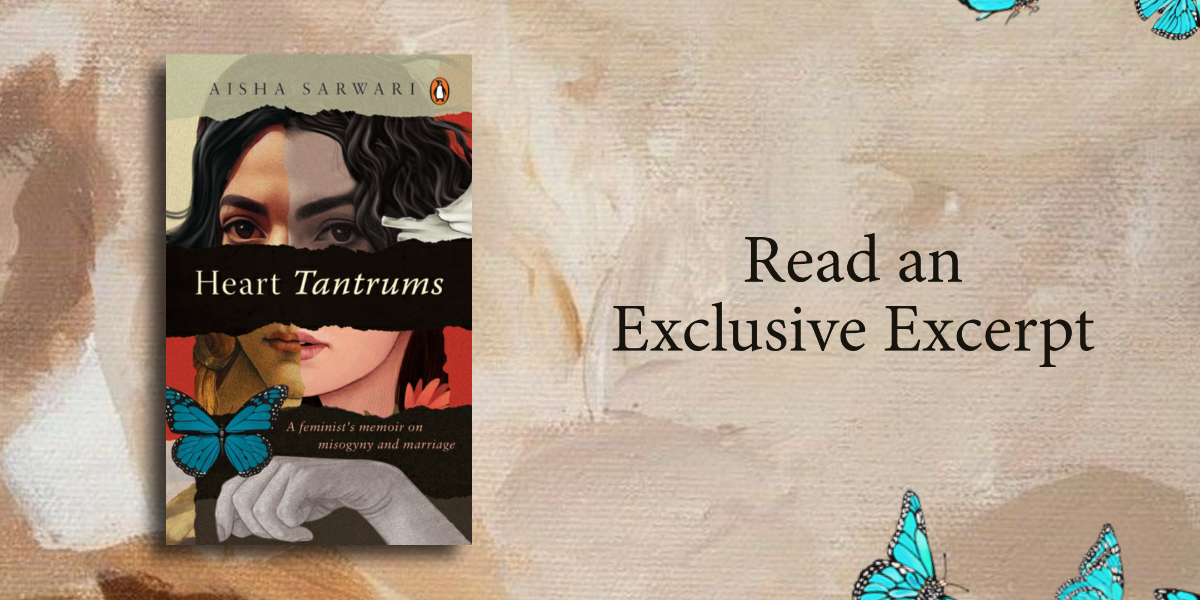
Come along on a deeply personal journey as we delve into the pages of Aisha Sarwari‘s Heart Tantrums. In this touching story, explore the complexities of forgiveness and love all in the shadow of a cancer diagnosis. Aisha’s words will prompt you to reflect on the profound depths of our own relationships and the strength of the human spirit.
Don’t miss this emotional excerpt – scroll to read and be moved by the power of love and forgiveness.
Heart Tantrums || Aisha Sarwari
***
Is it possible to forgive someone who has cancer? To permit yourself anger against a brain tumour cancer patient in the first place.
It is ghastly the way ugly and messy parts of life happened to us when we should have still been in the rainbows-and-butterflies phase of our youth.
Then again, why should we be exempt from the games nature and fate play by interchanging wrath and gifts?
It was a winter’s day and we were on our way home from a dinner at a journalist friend’s place where an ex-PM and three former ministers were also present. We had been sitting around the fire, talking about how messed up their political party is.
It was almost midnight and the moon was missing. This was Yasser’s chemo week and his anti-seizure meds were three hours late. I noticed he started behaving oddly. On our car window, the flower sellers’ roses and jasmine bracelets were wilted. They were imploring us to buy the last of their stock for the night, in exchange for a prayer, of course. They said, May your marriage last a million years. We didn’t buy anything from them, but they stood there pressing their faces against our car window, beseechingly.
Distracted, I stopped the car a bit too close to the one ahead of me at the traffic light.
Yasser looked like he was trying to not say something. Then he said it: ‘There should be a distance of one car between us and the car ahead of ours,’ said Yasser, looking apprehensive and also half-ready for my mood. I hate that he still doesn’t trust me behind the wheel. Just the other day, we had had another fight about teaching Zoe to drive an old car rather than a new car. He obviously wanted her to learn in an older car and I felt she should have an automatic gear car with power steering.
‘I’ve been driving for twenty-five years, I think I’m okay,’ I rolled my eyes.
‘But look, it’s dangerously close to that car’s bumper,’ Yasser replied.
‘That’s because neither car is moving,’ I countered. ‘Can you please just drive carefully?’
‘Is the car all you care about?’ I snapped, my heart already heavy with dread and anger.
‘The car is at risk this way,’ he said.
‘The car is at risk. You are such an amazing husband, to the car!’ I half-accused, half-vindicated.
‘You can do whatever you want to the car when I’m gone,’ he said flatly.
‘Can you not?’ I pleaded. (Pause)
I wanted to kick myself for always fighting about the car.
Things got real very fast. I wanted to retract my anger.
The lights turned green and I drove on, slower than usual, a wide berth between our vehicle and the car ahead.
‘You have to be prepared, Aishi,’ he said quietly.
I wanted to say so much, but instead I held his hand. There was cold sweat on it. Yasser has cold sweat on his hands when he’s unwell or when he has an emotional seizure.
His hand got colder and he refused to open it for mine.
‘Can you please drive with both hands, thank you?’ he said finally.
I felt a cocktail of anger and fear shooting up inside me again—almost grief. Yet I held my peace.
He moved his hand away from mine—clammy fingers peeling away from my soft, warm ones, trying to convey a meaning.
My hand lay unreciprocated on his lap, like a damp squib—a letter in a bottle smashed against the cliffs. I put my hand where it belonged, gripping the steering wheel with both hands.
‘I forgive you, Yasser, and I hope you forgive me too. I really thought love would be enough,’ I said to the road ahead of me.
***
Get your copy of Heart Tantrums by Aisha Sarwari wherever books are sold.
November is here, and it’s time to unwrap the gift of enchanting stories for kids! Dive into a world of whimsy, wonder, and daring quests with these new children’s releases. #GiftAPenguin book to your little one and let the storytelling magic begin!
The Misadventures of a Diamond Thief || Lubaina Bandukwala
Sahabzada Hawa Singh Rafu Chakkar (Rafu), a descendant of the legendary Time-Travelling, Thieving Djinns, wants to abandon the family tradition of stealing jewels to pursue his true passion—cooking. However, when the king of djinns tasks him with a mission to steal the Shah-i-Noor diamond in the newly built city of Haiderabad, Rafu reluctantly accepts. His secret agenda? The diamond is his ticket to his dream.
With only two weeks to get the coveted gem, Rafu finds himself entangled in a web of cunning courtiers, mysterious thieves and a most annoying horse, all while the tantalizing aroma of pulavs and kebabs constantly distracts him. Racing against the clock, Rafu’s adventure unfurls as he strives to turn his dream into reality. How far will he go?
How the Bamboo Got its Bounty || Sudha Murty
In a lush, green forest, a shy, unassuming tree is presented with a reward by the forest queen. This makes
all the forest inhabitants curious . . .
India’s favourite storyteller brings to us the story of the humble bamboo that endures and selflessly gives.
A charming ode to our bountiful forests and trees, their resilience and the abundant gifts they bestow upon us, this gorgeous chapter book is the ideal introduction to the world of Sudha Murty.
Starry Starry Night || Nandita Basu
After Kunal’s mother dies, he is sent off to a boarding school in the hills. Till he has a hostel room, he stays with Tara, his father’s cousin, who teaches a special music programme in the school.
Teaching music helped Tara after her best friend died—that, and perhaps the company of the enigmatic figure known as Death, whom she sees everywhere.
Tara and Kunal must try to live together, their lives entwined by their separate losses—which neither is comfortable talking about.
This is a tale of love and loss, of the healing and illuminating power of friendship, art and music.
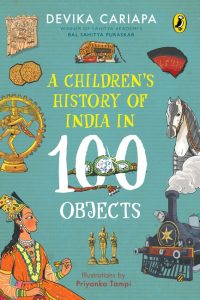
A Children’s History of India in 100 Objects || Devika Cariapa
A stone-age hand axe, an enchantingly sculpted yakshi, the Koh-i-Noor diamond, and even an HMT watch—can these things have anything in common?
Yes, they can!
Each of these has been conceived by the human mind and shaped by the human hand. Each object has a voice, not just of rulers and conquerors, but also of the common people. Most significant of all, each carries stories of how communities and identities were built on the Indian subcontinent.
Spanning the entirety of Indian history, from prehistoric to contemporary times, the 100 objects and artefacts chronicled in this book have shaped our present. Learn about the people who created these amazing objects, their way of life and culture, and how these objects influenced our world.
Embellished with vibrant illustrations, this engaging book will fire the imagination of readers and make them look at our incredible material remains in a new light while helping them understand our diverse pasts.
This November, dive into a treasure trove of stories, from leadership sagas to thrilling investigations. Unearth the secrets of self-discovery and delve into exciting adventures. The perfect gift for any bookworm? #GiftAPenguin book from these November releases that are bound to delight!
Fake News || Gaurav Sood
Fake News analyses the impact of fake news both on products and personalities. Foregrounded in rigorous research, it examines how fake news is used by companies, political parties, and leaders to create, amplify, and even tarnish a brand’s image and equity. It emphasizes how the customers’ perception of a brand impacts and influences its reputation, and acts as a decisive force in them gaining or losing competitive advantages. Elucidating how brands can interact both directly and indirectly with fake news, it brings to the readers’ notice how sometimes brands are the victims of fake news and other times, the purveyors.
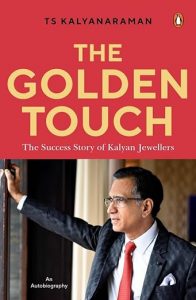
The Golden Touch || TS Kalnyanaraman
The Golden Touch lays out the extraordinary story of Kalyan Jewellers and the life of its founder, T.S. Kalyanaraman. It is the very personal account of a visionary with humble beginnings from Thrissur who set up one of the largest jewellery stores in the country—a Rs 17,000 crore behemoth employing over 8000 people.
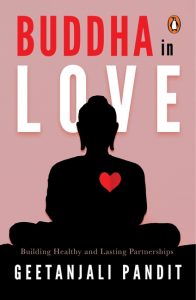
Buddha in Love || Geetanjali Pandit
An abusive marriage, a divorce and the subsequent emotional, mental and social fallout forced Geetanjali Pandit to question all her assumptions about romance and relationships. Buddha in Love distils all she learnt. We are not born relationship-ready; they take work—and contrary to what you might expect, on yourself. What does it take to be in a loving relationship? Do all relationships look the same? Does a relationship equate to happiness? Why and when should you marry?
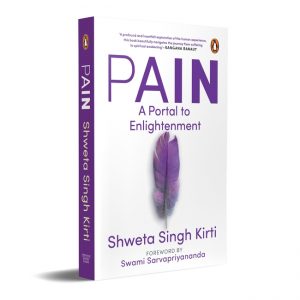
Pain || Shweta Singh Kirti
No human is unacquainted with the concept of pain. It is an inescapable universal experience. Shweta Kirti’s pain has been, unfortunately, very public because of the death of her thirty-four-year-old brother, the Bollywood actor Sushant Singh Rajput.
What she learnt, however, is that while pain is inevitable, suffering is optional. It is pain that can teach us how to rise above suffering and the limits we create for ourselves with our attachment to material goals like money, fame, success and relationships. In Pain A Portal to Enlightenment, Shweta shares her learnings so that no one is alone on this hard but necessary odyssey.
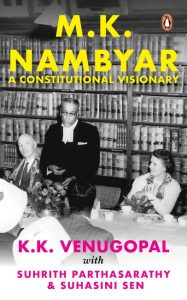
M.K.Nambyar A Constitutional Visionary || K.K. Venugopal
M.K Nambyar A Constitutional Visionary is an attempt to preserve in perpetuity the life of one of India’s greatest constitutional lawyers, M.K. Nambiar. Written by his son and a legal luminary himself, K.K. Venugopal, this biography provides a fascinating account of Mr Nambiar’s life. It not only describes the man but also recapitulates Indian legal history dating to before Independence. The book includes some of the landmark cases Mr Nambiar fought in his legal career. Some of these cases have significantly contributed to the development of constitutional law in India. For example, A.K. Gopalan v. State of Madras resulted in the basic structure doctrine, which continues to guide and inspire lawyers and judges.
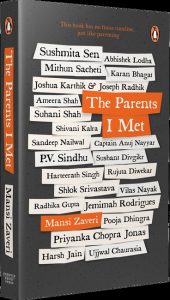
The Parents I Met || Mansi Zaveri
Featuring interviews conducted by Mansi Zaveri, the founder of the award-winning parenting platform Kidsstoppress.com, The Parents I Met is an anthology of her authentic conversations with parents of successful individuals who made it big against all odds. What was it that they did right while raising their kids to create the person their child is today? This is what she set out to find.
The challenges faced by each new generation may be unique, but the fundamental principles to overcome them remain the same. We hope that in these stories, you will find answers, advice or simply validation.
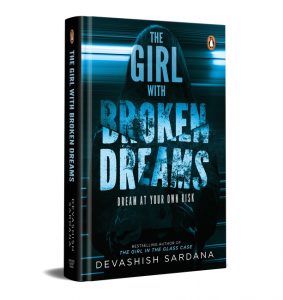
The Girl with Broken Dreams || Devashish Sardana
Simone Singh, a feisty CBI investigator struggling with her own mental health, is charged with solving the crimes. But time is running out as more teens start committing ‘suicide’ all over India. As Simone inches closer to the web of deception woven by the cunning killer, little does she know that the hunter is becoming the hunted. Can Simone take down the crafty puppeteer before her own mental demons bring her crashing down?
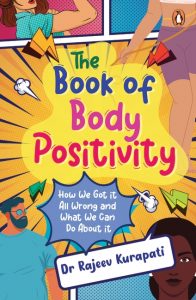
The Book of Body Positivity || Rajeev Kurapati
We assume doctors and medical professionals know it all, and that policymakers in public health have the best interests of society in mind—unfortunately, many of these assumptions are incorrect. The Book of Body Positivity explains why the measures to control the so-called obesity epidemic have failed and offers solutions towards a healthier planetary future. With a penetrating critique of the current practice of medicine, this book is an astute guide to contemporary fragmented science centred around weight and health.
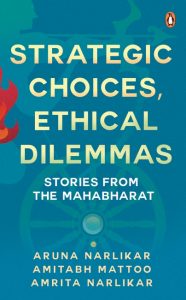
Drawing on the timeless stories of the Mahabharat, Strategic Choices, Ethical Dilemmas applies its practical wisdom to questions of our personal lives. It explores winning strategies that are suited to the modern day and work together with ethical choices.
Written for a broader audience of scholars, practitioners and other avid readers, Strategic Choices, Ethical Dilemmas will be useful for all those seeking to put the world to rights and provide some tasty food for thought for those who enjoy paradoxes and squared circles.
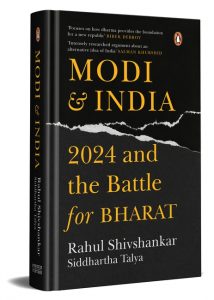
Modi and India || Rahul Shivshankar, Siddhartha Talya
In 2014, the BJP, under the leadership of Modi, won a clear majority in the Lok Sabha elections. The National Democratic Alliance’s triumph ended a nearly two-and-a-half-decade run of mostly messy coalition governments. In 2019, the BJP further improved its tally, cementing its parliamentary majority and its ability to ring in transformational laws and policies. Most of the initiatives taken by the Modi-led NDA have been aimed at positioning Bharat as a ‘Vishwa Guru’—an exemplar of moral righteousness, a pluralistic democracy led by dharma and drawing sustenance from the wellspring of an eternal Hindu universalism.
But this shift towards India’s Hindu ethos has prompted the Opposition and many allied commentators to fear the rise of a second republic—a ‘Hindu Rashtra’—moored to an implacable ultra-nationalist and majoritarian dogma. The INDIA bloc has declared the 2024 election as the last opportunity to stop the rise of Modi and his idea of India.
Evocative, anecdotal, argumentative and deeply researched, Modi and India: 2024 and the Battle for Bharat chronicles the emergence of, and the battle for, a new republic in the making.
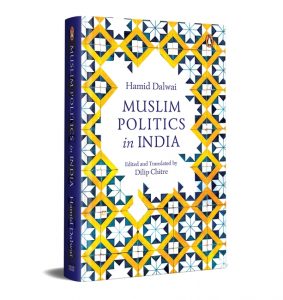
Muslim Politics in India || Hamid Dalwai, Dilip Chitre
Dalwai’s Muslim Politics in India is arguably the most perceptive analysis of Muslim politics to appear in post-Independence India. It retains the same freshness-and relevance-which it had when it was first published some three decades back. First published in 1968, an enlarged edition was later published under the title Muslim Politics in Secular India by Hind Pocket Books, Delhi, in 1972.
His Majesty’s Headhunters || Mmhonlümo Kikon
Surprisingly little is known about the siege of Kohima, considered a game-changing event that altered the course of world history during the Second World War. His Majesty’s Headhunters adds to our understanding of this battle and shows how it redefined a whole era.
Providing a unique perspective of Nagaland and its warriors, His Majesty’s Headhunters uncovers the untold story of the siege, regarded as one of the more celebrated battles of D-Day and often referred to as the ‘Stalingrad of the East’ by Western scholars. Historians even believe that this was the last battle of the British Empire
and the first battle of the ‘New India’.
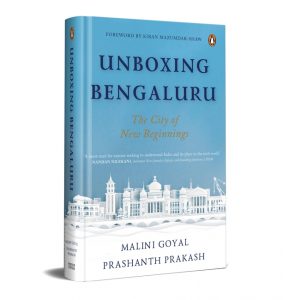
In Unboxing Bengaluru—the first ever deep-dive into the city—Malini Goyal and Prashanth Prakash ably unravel the city’s journey and the ensuing social, behavioural, technological and consumptive changes. They look at why people are drawn to the city; how the cosmopolitan culture and multi-linguistic society gives it a distinct flavour; the parallel economies that have cropped up; how the influx of young workers have changed the city; and the fault-lines of unplanned and poorly managed growth over the decades.
Richly researched and vividly written, Unboxing Bengaluru is filled with absorbing vignettes, extensive reportage and solid data. A fascinating book and a must-read for anyone interested in understanding the city, and indeed, India.
Fighting Retreat || Walter Reid
Churchill strove to sabotage any moves towards Independence, crippling the Government of India Act over five years of dogged opposition to its passage in the 1930s. As prime minister during the Second World War, Churchill frustrated the freedom struggle from behind the scenes, delaying Independence by a decade. To this day for Indians, he is the imperialist villain, held personally responsible for the Bengal Famine of 1943.
Fighting Retreat reveals Churchill at his worst: cruel, obstructive and selfish. However, the same man was outstandingly liberal at the Colonial Office, risking his career with his generosity to the Boers, the Irish and the Middle East. Why was he so strangely hostile towards India?
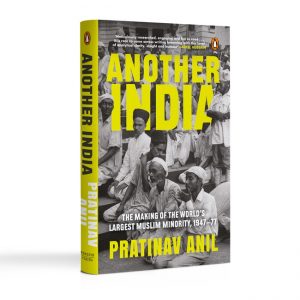
Another India || Pratinav Anil
Another India tells the story of the world’s biggest religious minority through vivid biographical portraits that weave together the stories of both elite and subaltern Muslims.
By challenging traditional histories and highlighting the neglect of minority rights since Independence, Pratinav Anil argues that Muslims, since 1947, have had to contend with discrimination, disadvantage, deindustrialization, dispossession and disenfranchisement, as well as an unresponsive leadership. He explores the rise and fall of the Indian Muslim elite and the birth of the nationalist Muslim, and emphasizes the importance of class in understanding the dynamics of Indian politics.
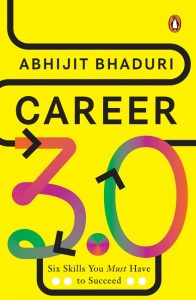
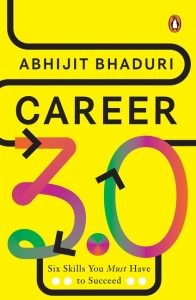
Career 3.0 || Abhijit Bhaduri
We need to master the rules of Career 3.0.
In Career 3.0, Abhijit Bhaduri, a renowned expert on talent and leadership, shows you how to develop the six key skills that will make you future-ready and successful in Career 3.0. Whether you work for an organization, run your own business or do both, you will discover how to adapt to change, learn new skills, and lead with impact.
Career 3.0 is a guide that will help you stay relevant. The book is filled with inspiring stories that will challenge you to rethink your career vision, strategy and action. It will give you the tools and techniques to thrive in the new world of work.
You may be surprised to find out that you already have a Career 3.0 mindset. Now you know what it is called.
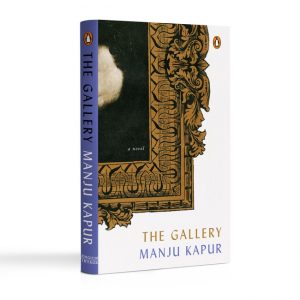
The Gallery || Manju Kapur
THE GALLERY pursues the question of what it takes for a woman to stand up for herself, through the intertwined lives of Minal and Ellora Sahni, wife and daughter of a successful New Delhi lawyer, and Maitrye and Tashi, wife
and daughter of the office peon at the Sahni law practice. In her new novel, Manju Kapur brings together themes of independence, identity and womanhood by focusing on a set of principal characters who are connected through work and physical proximity, yet separated by class and power.
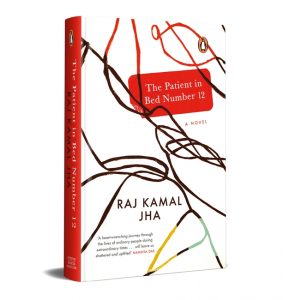
The Patient in Bed Number 12 || Raj Kamal Jha
The Patient in Bed Number 12 is a remarkable novel framed as a confession from parent to child, from child to parent. In this profoundly moving exchange, secrets long buried tumble out, mysterious and dreamlike: a grieving mother finds solace in a newspaper photograph; a ghost comes to life in an abandoned fridge; children fill empty jars with the night’s darkness; a young couple plan how to seek permission for their love; and three men with a phone camera turn a family’s world upside down.
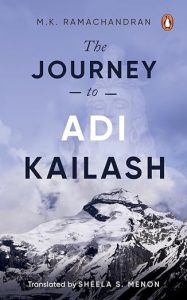
The Journey to Adi Kailash || M.K. Ramachandran
The Journey to Adi Kailash is no different. While detailing his trek to one of the most revered mountains of India, Ramachandran includes interpretations of our history, culture, traditions, the Puranas and the Upanishads, as well as contributions by great sadhus, sages and rishis. He weaves in interesting stories—of how the Asuras came to India, the ancient technology of turning metal to gold, the ninety-five-year-old woman who is well-versed in the 144 courses of Kriya Yoga, the yogi who acquires the power to fly into the sky . .
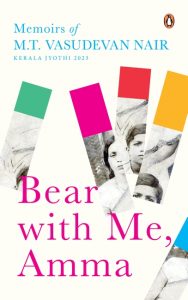
Bear with Me, Amma || Gita Krishnankutty, M.T. Vasudevan Nair
MT, as he is popularly known, is one of the most illustrious writers and film-makers from modern Kerala. His life’s work has won him the Jnanpith Award, the Sahitya Akademi Award, the National Film Award and the Padma Bhushan, among others.
MT grew up in the village of Kudallur in Kerala and his writings constantly evoke the landscape of the years he spent there. Many of the characters in his stories are based on people who lived in this region and the stories themselves often retell incidents that happened there.
The memoirs as well as the stories in this volume were chosen by MT himself. They pay homage to his childhood, his craft and most importantly, his Amma, whose restful presence they beautifully and poignantly capture.
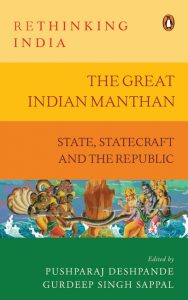
The Great Indian Manthan || Ed by Pushparaj Deshpande, Gurdeep Singh Sappal
India is rapidly becoming the world’s largest flailing democracy. India’s institutional framework has been systematically undermined, from within and without. In the tenth volume of the Rethinking India series, some of India’s most eminent persons write of how we can think of re-engineering India’s hardware (redressing structural flaws in India’s existing institutions, creating new institutions equipped to address fresh challenges and re-engaging all of India’s systems), as well as ensuring progressive forces radically re-invent their political strategies and operational methodologies to socialize Indians to constitutional values.
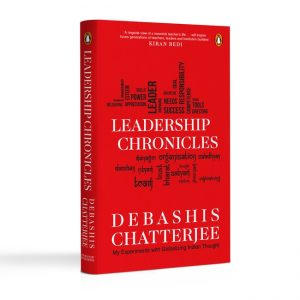
Leadership Chronicles || Debashis Chatterjee
Leadership Chronicles decodes some of the deep secrets of leadership. It tells the story of a lifetime of teaching, learning and institution-building like never before. This book is a voyage of discovery of those unseen facets and mysteries of a maverick teacher’s life.
Debashis Chatterjee shares authentic insights from his personal and professional journey of nearly three decades. The perspectives, stories and anecdotes reframe and shed light on the global application of classical Indian thought. This work presents transformative wisdom in a way that would stimulate your mind.
Told with candour, sensitivity and humour, the chronicles present a rich harvest of insights and ideas on the making of a leader.
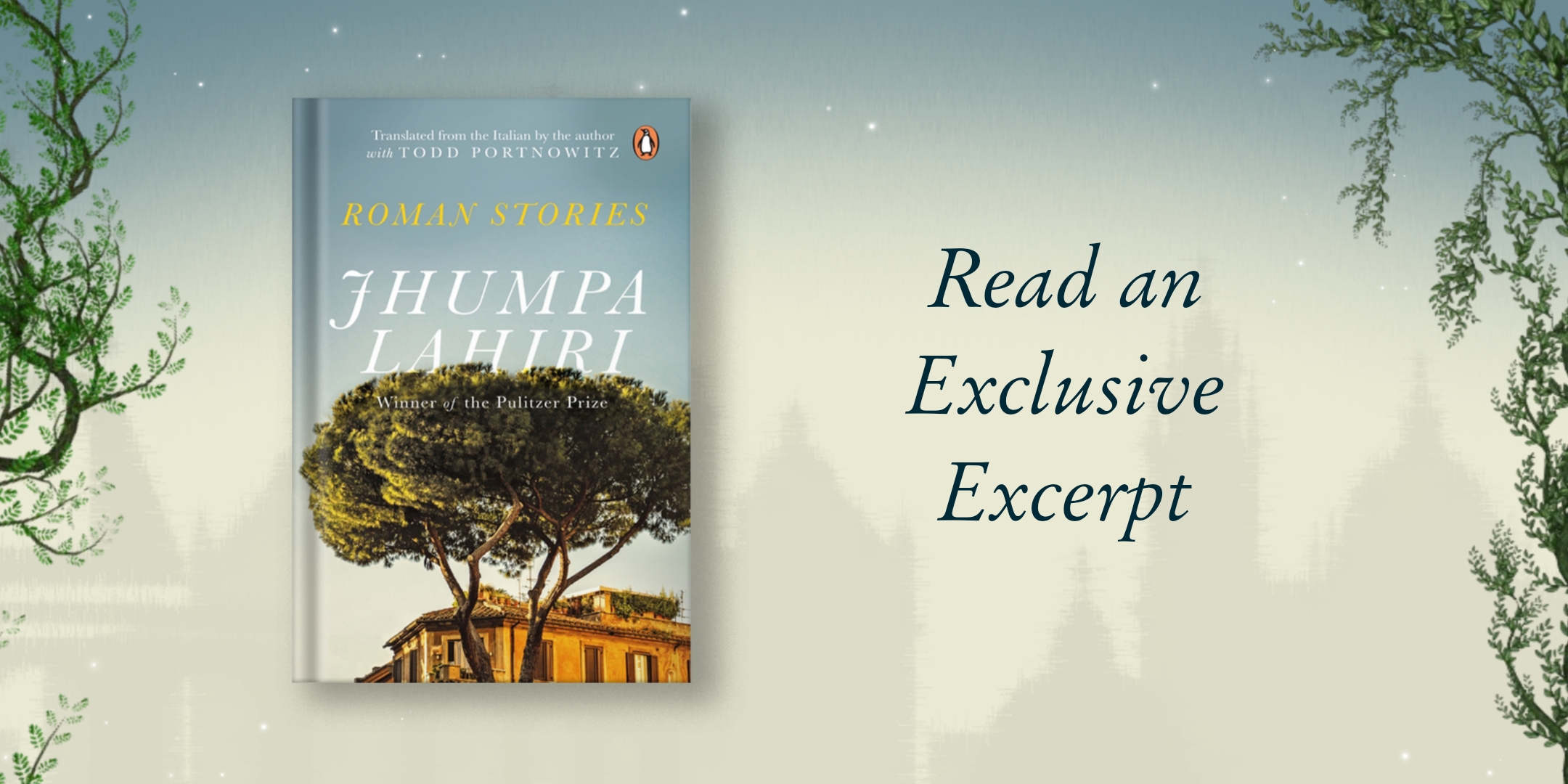
Jhumpa Lahiri is back, and this time she’s taking you to Rome to savor some delicious Roman Stories. Lahiri beautifully captures the dynamics of various gatherings, bringing together people from different backgrounds and countries. Immerse yourself in the allure of these Roman Stories – grab your copy now!
Roman Stories || Jhumpa Lahiri
***
I should note straightaway that P’s parties took place every year at her house, on a Saturday or Sunday afternoon, during the mild winters we typically enjoy in this city. Unlike the slog of other winter holidays spent with family, always arduous, P’s birthday, at the beginning of the new year, was an unpredictable gathering, languorous and light. I looked forward to the commotion of the crowded house, the pots of water on the verge of boiling, the smartly dressed wives always ready to lend a hand in the kitchen. I waited for the first few glasses of prosecco before lunch to go to my head, sampled the various appetizers. Then I liked to join the other adults out on the patio for a little fresh air, to smoke a cigarette and comment on the soccer game the kids played without interruption in the yard.
The atmosphere at P’s party was warm but impersonal, owing to the number of people invited, who knew one another either too well or not at all. You’d encounter two distinct groups, like two opposing currents that crisscross in the ocean, forming a perfectly symmetrical shape, only to cancel each other out a moment later. On one side there were those like me and my wife, old friends of P and her husband who came every year, and on the other our counterparts: foreigners who’d show up for a few years, or sometimes just once.
They came from different countries, for work or for love, for a change of scenery, or for some other mysterious reason. They were a nomadic population that piqued my interest— prototypes, perhaps, for one of my future stories, the kind of people I’d have the chance to meet and casually observe only at P’s house. In no time at all they’d manage to visit nearly all parts of our country, tackling the smaller towns on the weekends, skiing our mountains in February, and swimming in our crystalline seas in July. They’d pick up a decent smattering of our language, adapt to the food, forgive the daily chaos. Overnight they’d become minor experts in the historical events
we’d memorized as kids and had all but forgotten—which emperor succeeded which, what they accomplished. They had a strategic relationship with this city without ever fully being a part of it, knowing that sooner or later their trip would end and one day they’d be gone.
They were so different from the group I belonged to: those of us born and raised in Rome, who bemoaned the city’s alarming decline but could never leave it behind. The type of people for whom just moving to a new neighborhood in their thirties—going to a new pharmacy, buying the newspaper from a different newsstand, finding a table at a different coffee bar—was the equivalent of departure, displacement, complete rupture.
P was an old friend of my wife’s. They’d known each other for many years, before we started dating, having grown up on the same block lined with grand palazzi. As kids they played together until dark; they went to the same elementary school and then the same challenging high school; they wandered off to buy contraband cigarettes from a shady guy behind a piazza that was quiet in those days. They went to the same university and, after graduating, rented a fifth-floor apartment in the thick of the city center. In the summers they traveled together to other countries—experiences they still loved to talk about. Then matters of the heart intervened: my wife met me at a New Year’s Eve party, while P married a staid but friendly lawyer, a man of average height, good looking but slightly cross-eyed, and became a mother of four—three boys in quick succession, and then, like a simple but welcome dessert after a three-course meal, a girl.
Not long before the girl was born, P had a brush with death. A renowned doctor, always among those invited to the party, ended up saving her life with a tricky surgery. From then on, this yearly gathering became a constant: this sunny afternoon around her birthday, this merry, lavish lunch that brought together a wide range of people. P liked to fill the house and churn her friends together—relatives, neighbors, parents of her children’s classmates. She liked to throw open the door at least fifty times, offering something to eat, playing host, exchanging a few words with everyone.
It was thanks to my wife, then, that I went to that house once a year, a somewhat secluded house on the city’s outskirts. To get there, you took a curved, picturesque road, lined with cypresses and tumbling ivy. A road that swept you away, an urban road that ferried you toward the sea and put the frenzied city far behind. At a certain point there was a sharp right turn; you had to keep an eye out, it was easy to miss. After that it became a sort of residential labyrinth, with narrow, shaded, unpaved streets. You couldn’t see the houses, just tall gates and the house numbers etched in stone.
***
Get your copy of Roman Stories by Jhumpa Lahiri wherever books are sold.
Immerse yourself in a captivating blend of animals, poetry, and unique literary journeys in this collection. Explore intimate experiences of millennial marriage, thrilling tiger conservation adventures, and timeless poetic verses that celebrate the beauty of nature, human emotions, and artistic expression.
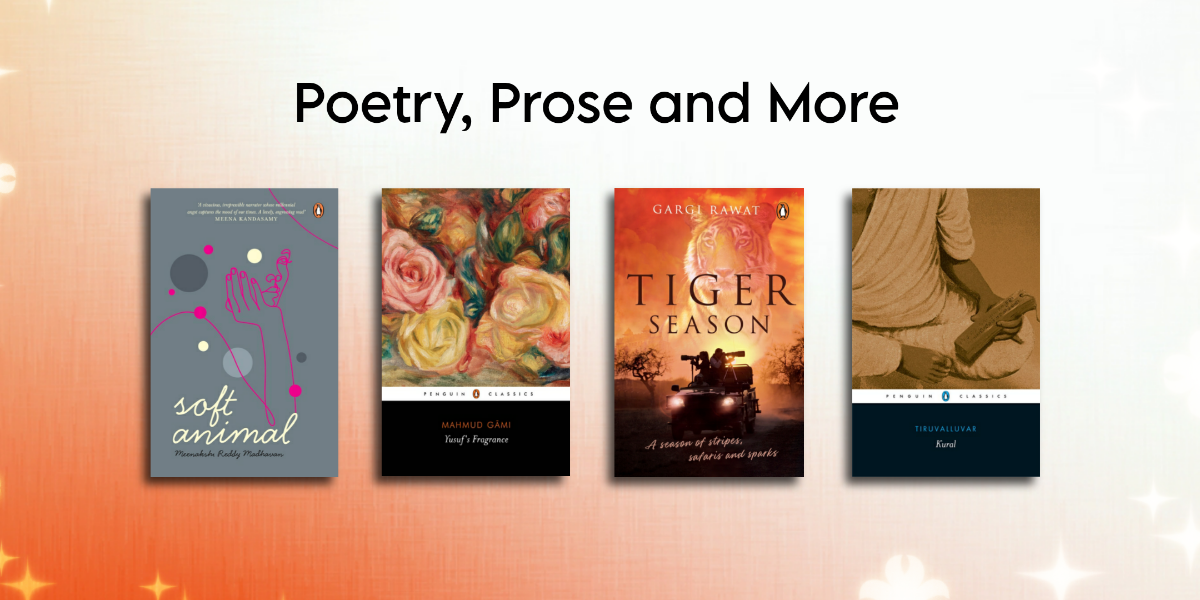
Soft Animal || Meenakshi Reddy Madhavan
March 2020: Thirty-six-year-old Mallika Rao is largely insulated from the struggles of the millions fighting for their existence all over India. Instead, her Delhi flat and her husband threaten to imprison her as she searches for the confidence that has always eluded her. A rescue dog in her care provides more fulfilment than her husband, who is consumed by work and self-obsession, and she must also confront the universal challenges of having a woman’s body.
Soft Animal unfolds in urgent present tense with illuminating flashbacks, whip-smart dialogue and conspiratorial footnotes. Bringing the deftness of deadpan humour and the precision of meticulous social observation to the self-delusions of India’s privileged urban middle class, Meenakshi Reddy Madhavan’s latest channels an uncomfortably-and sometimes heartbreakingly-intimate experience of millennial marriage that is seldom portrayed but all too real.
Tiger Season || Gargi Rawat
Sunaina Joshi is a reporter with a leading news channel.
Her day-to-day work involves reporting on urban-centric, health-related issues; myriad subjects that bore her, leaving her jaded. Her real passion is a life in the great outdoors, and reporting on wildlife and the environment, something she is unable to do as often as she would like. Unexpectedly, a fabulous opportunity falls into her lap when her channel is commissioned to run a campaign on tiger conservation, featuring a Bollywood star who is trying to resurrect his image and career following a drug scandal.
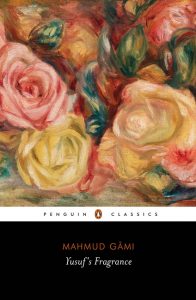
Yusuf’s Fragrance || Mufti Mudasir, Mahmud Gami
It can be said of the 19th century Kashmiri poet, Mahmud Ga¯mi that he was a pioneer in introducing the Persian genres of the ghazal, nazm, masnavi and na¯t into Kashmiri. Mahmud Gami’s contribution to Kashmiri poetry is unique in both scope and depth. Not only is he the first truly prolific poet who has written entirely in the Kashmiri language, but much of his poetry also stands out for its beauty of expression and depth of thought, such as in the lyrical romance of Shireen Khusrau, Yusuf Zulaikha, and Layla Majnun. Yusuf’s Fragrance is both a celebration as well as an homage to Gami’s oeuvre. Through these beautiful verses, we explore themes of love, both physical and metaphysical, philosophy, folklore, and tradition through different narrative devices, such as nazms, masnavis, and vatsuns.
Kural || Tiruvalluvar
A celebrated work by the greatest poet of classical Tamil literature Tiruvalluvar probably lived and wrote between the second century BC and the eighth century AD though his dates have not been conclusively established. The work by which he is known, the Kural, comprises 1,330 couplets and is divided into three sections-Virtue, Wealth and Love-and is based on the first three of the four supreme aims prescribed by Hindu tradition: dharma (virtue), artha (wealth), kama (love) and moksha (salvation). Taken together, the three books of the Kural inform, criticize and teach the reader, in brilliantly styled and pithy verse, about life, love and the ways of the world. Translated and edited with an introduction by P.S. Sundaram
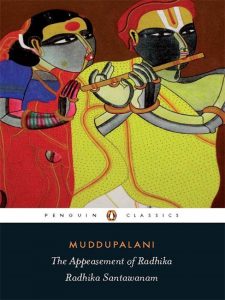
Appeasement of Radhika || Muddupalani, Muddupalani (Tr Sandhya Mulchandani)
An erotic narrative poem that explores desire and jealousy, love experienced and love lost, Radhika Santawanam is the most recognized work of nineteenth-century poet and courtesan Muddupalani.
Celebrated as a literary masterpiece in Muddupalani’s lifetime, Radhika Santawanam was banned by the British in 1910 when it was published again, a century and a half later, with critics panning its graphic descriptions of lovemaking. And, after another hundred years, this epic is now available in its entirety for the first time in English translation
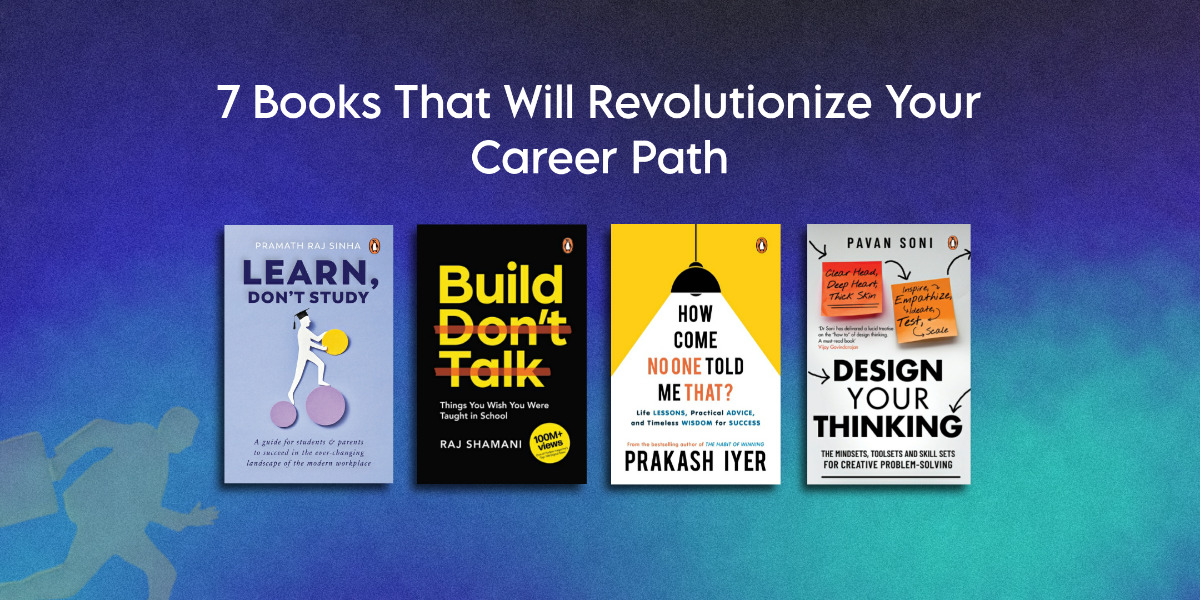
Dive into a treasure trove of career and entrepreneurship wisdom! From the guy who became a millionaire in his twenties to the dude who’ll teach you how to win the adulting race, these books have you covered. Whether you’re looking to become a high-flying entrepreneur or simply want to know why no one told you that… you’ve got it all right here!
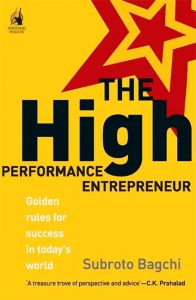
The High Performance Entrepreneur || Subroto Bagchi
In The High Performance Entrepreneur, Subroto Bagchi draws from his own experiences to offer guidance from the idea stage to the initial public offering level. This includes deciding when one is ready to launch an enterprise, selecting a team, defining the values and objectives of the company, writing the business plan, choosing the right investors, managing adversity and building the brand. Additionally, in an especially illuminating chapter, Bagchi recounts the systems and values which have brought Indian IT companies on a par with the best in the world. High-performance entrepreneurs create great wealth, for themselves as well as for others. They provide jobs, which are crucial for an expanding workforce, and drive innovation. More than a guide, this book will tap the entrepreneurial energy within you.
Design Your Thinking || Pavan Soni
Pioneered by IDEO and Stanford d.school, design thinking is one such approach that draws inspiration from the realm of product design. However, it shouldn’t be narrowly associated with the world of start-ups and technology or thought of as something limited to product development. The method is increasingly being used in a wider context and can help us address a vast array of problems.
Design Your Thinking attempts to offer a practitioner’s perspective on how the tenets, methods and discipline of design thinking can be applied across a range of domains, including to everyday problems, and help us become expert problem-solvers through the use of the appropriate toolsets, skill sets and mindsets.
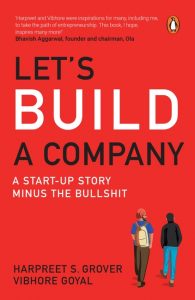
Let’s Build A Company || Harpreet Grover, Vibhore Goyal
It started with a phone call from Harpreet’s mother introducing him to an uncle who wanted some help. Or maybe it started when Vibhore and Harpreet met as roommates in Room 143 at IIT Bombay. What remains true is that soon both had quit their jobs and launched CoCubes. From no money in their bank accounts for eight years after graduating to becoming dollar millionaires two years later in 2016, this is a tale of grit-of a company built in India by two Indian-middle-class-twenty-somethings-turned-entrepreneurs-written in the hope that you can avoid the mistakes they made and learn from what they did right.
This is that story-the story that you don’t always hear. But if you want to be an entrepreneur, and you prefer straight talk to sugar-coating, it’s one you should read.
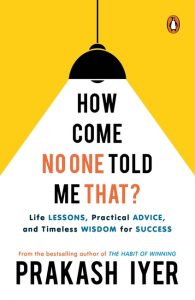
How Come No One Told Me That || Prakash Iyer
How Come No One Told Me That? divided into ten sections, exploring life lessons, ways of improving oneself, leadership and the importance of doing small things right, among other subjects. Through powerful anecdotes and charming essays, followed by practical, actionable advice, this book will help you make those minor adjustments to your professional and personal lives that can truly make you unstoppable.
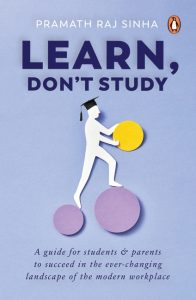
Learn, Don’t Study || Pramath Raj Sinha
‘What should I study to best prepare me for success in today’s working world?’
This is the most common question one gets from young people (and their parents) who are transitioning from school to college education. They want to know which fields they should choose, which universities or programmes to attend, and which career track will give them the best chance to succeed.
In Learn, Don’t Study, drawing on his experiences of over twenty-five years in the field of education, Pramath Raj Sinha has put together the best and most practical advice available for youngsters who are facing some of the most important and challenging choices of their professional lives.
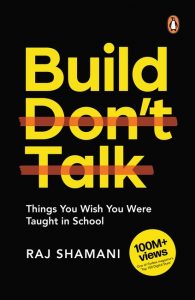
Build Don’t Talk || Raj Shamani
School taught us specific subjects, like maths and history.
But we weren’t taught:
How to sell
Or how to build relationships
Or how to negotiate
Or how to take care of our mental health
Or how to network
Or how to deal with personal finance
These most important situations we face as adults were never discussed with us when we were students. We weren’t taught these skills in school, and this makes all the success stories we hear about seem out of reach; it makes us feel dumb. We aren’t dumb, we just don’t know how to work the system.
Your school taught you how to run in the race; it didn’t teach you how to win. And that’s what this book is for. To help you win the race. Packed with useful advice gleaned from his own journey as an entrepreneur and content creator, this book by Raj Shamani is a must-read.
COMING SOON
Career 3.0 || Abhijit Bhaduri
Abhijit Bhaduri, a renowned expert on talent and leadership, shows you how to develop the six key skills that will make you future-ready and successful in Career 3.0. Whether you work for an organization, run your own business or do both, you will discover how to adapt to change, learn new skills, and lead with impact.
Career 3.0 is a guide that will help you stay relevant. The book is filled with inspiring stories that will challenge you to rethink your career vision, strategy and action. It will give you the tools and techniques to thrive in the new world of work.
You may be surprised to find out that you already have a Career 3.0 mindset. Now you know what it is called.
Prepare to uncover the extraordinary abilities hidden within your gut in this exclusive sneak peek from ‘Heal Your Gut, Mind, and Emotions’ by Dimple Jangda. Learn how your gut holds the key to your intuition, emotions, and overall health, all explained in a way that’s easy to understand. Discover the incredible relationship between your gut and mind, and pick up practical tips to boost your well-being.
Read this exclusive excerpt to know more!
Heal your Gut, Mind and Emotions || Dimple Jangda
***
I have a heart-feeling or a brain-feeling, said no one ever. It is a gut-feeling, gut intuition, or gut instinct that we all crave to experience and follow. Have you ever had a gut feeling about something, and when you followed what it was telling you, it was the best decision you made? But how is it possible for us to feel through the gut? Shouldn’t our feelings come from a purer place, like the heart centre, or from a more superior organ, like the brain?
We always follow our gut, because deep down even our body knows that, Intuition comes from the gut!
Many scientists call the gut ‘a second brain’. Some scientists have gone one step forward to say that the gut could be the biggest brain in the body, because there are more neurons lining the gut walls than there are neurons in the brain. Neurons are your information messengers that transmit information between different areas within the brain, and also between the brain and the nervous system connected to all other organs.
The gut is directly connected to the brain.
The gut has a direct hotline access to the brain. It sends messages to the brain every micromillion second. The vagus nerve, or the vagal nerve, plays a critical role here, controlling the gut–brain axis, carrying messages from the digestive system and organs to the brain and vice versa. It originates from the brainstem, passes through the neck and the thorax, down to the abdomen, and controls bodily functions such as digestion, heart rate, and the immune system. In fact, scientists have discovered that treating the vagus nerve allows us to treat even psychiatric disorders like depression, PTSD, and gastrointestinal disorders like indigestion and irritable bowel syndrome.
Sing, hum and chant your way to good gut health! The vagus nerve is the most sensitive and also the weakest nerve. It governs the respiratory system, digestive and neuron health, and sends messages to the gut on when to churn the food, what kind of enzyme production to keep, how much stomach acid levels to maintain, when to contract which muscle in order to push the food into the intestines. When these signals are strong or at a high vagal tone, it signifies healthy digestion and your ability to adapt to stress. But when these signals are weak, it signifies a low vagal tone and poor digestive health.
How can we strengthen the vagal nerve at home? The vagus nerve is also directly connected to your vocal cord and the muscles at the back of your throat. You can sing, hum, chant, gargle with a mixture of warm water, turmeric and salt, and do the Brahmi pranayama to strengthen the vagus nerve. You see, the morning prayer and songs our mothers made us sing were not just to please God, but to improve our gut health too. Chanting not only strengthens the vagal nerve and digestion, it also improves mental health by replacing any negative sounds in our brain with positive sounds. It improves focus, mental clarity, concentration and coordination.
The gut and brain have a 1:1 relationship.
It is almost like a marriage between two equals and, for a healthy relationship, both must have equal opportunities to express themselves. While you are busy relishing a piece of dessert, your brain sends messages to the gut on what kind of food is about to arrive, and what kind of digestive juices to prepare for the new guest. Meanwhile, your gut continuously sends feedback to the brain on how its feeling, when it is full, when to stop eating. However, when we sit with poor posture, the gut–brain axis gets impacted, causing delayed signals from the gut to the brain, leading to overeating. This is why, in many Asian cultures, elders emphasize the importance of sitting on the floor to eat. When you sit cross legged, it corrects the posture of your spine, allows your gut and brain to smoothly communicate, which prevents you from overeating.
Emotions are experienced in the gut
When you feel anxious, scared, excited, happy, nervous, where do you feel it? You first feel it in the gut. You experience butterflies fluttering in the stomach, and if you entered a place that holds a negative vibe, you would also have this gut-wrenching feeling that something is not right. And your gut is never wrong. It is like a compass installed inside of you to navigate smoothly through this world. Listen to it. Memories are also stored in the gut. When we eat a delicacy that is similar to our grandmother’s recipe, nostalgia hits.
Suddenly our mind gets flooded with all our childhood memories! In fact, advertisers will use that emotion to sell you packaged food products. That is because emotions are experienced through touch, taste, sound, and smell; and the sum of those emotions are stored in the form of memories. Your gut responds to those memories by reminding you exactly how you felt before. The neurons in your brain and your gut make memories by firing together, which allows you to recall multiple memories at the same time. So, emotions and memories are also stored in the gut, and you have an added reason to protect it.
Over 75 per cent of serotonin is released in the gut
Serotonin is the ‘feel-good hormone’ which plays a key role in fighting off anxiety and depression. When the gut is healthy and happy, it sends positive signals to the brain. But when the gut is unhealthy, it sends distress signals to the brain. When we eat a simple home-cooked meal that is made with fresh ingredients, lovingly prepared by our grandparent, parent, partner or even by us, we naturally feel satiated and happy due to the serotonin released in the gut. But when we eat reheated, packaged foods that have preservatives and a short shelf life, the feeling isn’t the same. The gut responds to the quality of the ingredients, the cooking methods and releases serotonin accordingly.
The way to everybody’s heart is through the gut!
***
Get your copy of Heal Your Gut, Mind & Emotions by Dimple Jangda wherever books are sold.
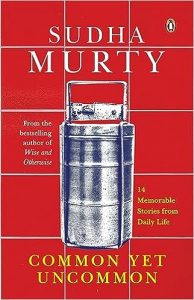
In the heartwarming world of Common yet Uncommon by Sudha Murty, we encounter the extraordinary story of Nalini Kulkarni, affectionately known as ‘Lunchbox Nalini.’ Meet the lady whose love for food and friendship created extraordinary connections through her cherished lunchbox. Get ready for a heartwarming journey where the ordinary becomes extraordinary!
Common Yet Uncommon | Sudha Murty
I am Nalini Kulkarni. As a child, elders called me Nali – a typical shortening of the name in North Karnataka, where Anand becomes Andya. And Mandakini becomes Mandi. No wonder Nalini to Nali was so easy.
Until now, I have peeped in at everyone’s life and written about their characters. Now let me talk about myself–the best way to joke is not on someone else’s expense but on your own.
As I go about observing everyone’s habits and characteristics, I don’t get time to cook. That doesn’t mean I don’t like to eat. I am very fond of eating. If someone calls me for lunch, I not only attend but also carry my lunch box to carry some food back for my dinner. Whenever I go to any function, all my relatives, without greeting me, say, ‘Nalini, fill up your lunchbox first. Then you will be at peace and we can talk at leisure.’ That’s why I am known as Lunchbox Nalini.
A few days ago, my cousin, Venkat, had his child’s naming ceremony. Venkat’s wife Veena formally invited me, saying, ‘We will be very happy if you come for the naming ceremony. If you don’t have time for lunch, at least visit us for half an hour.’
I laughed and said, ‘Don’t you remember what they call me? I always come for the meal more than the event. I’ll be honest with you. If you tell me to come for the event without a lunch, then I’m sure that only three people will be there for the naming ceremony – you, your husband, and your little bundle of joy.’
Everyone laughed at my comment. Bundle Bindu, who was sitting there commented about hospitality about different regions.
“I know.. Some people’s hospitality is bare minimum unlike north Karnatka. Because, historically…’
I told Bindu, stop it.
He ignored me and continued.
“Recently I had been to someone’s house. He said, “Wait a minute. I wWill have tea and come..I said I will also come and join you for tea.”
“Bindu, you are shameless”, I said.
But by and large, when you invite people, you should do it whole heartedly. The person should feel welcomed.
I turned to Venkat and said, ‘I will come for the function in the morning as I have recently joined as a college lecturer. I will leave my lunchbox there and pick it up on the way back after my classes are over. I won’t be able to make it for lunch but I can eat it at home, at least.’
‘There can be no one like you,’ said Jayant.
I take my lunchbox along with me to a function if I know the family hosting the event very well. I have many varieties of lunch boxes—unbreakable, Tupperware, hot cases, transparent ones. Because they are useful for various dishes—and depending on the circumstance, I change the boxes. For gravies. Tupperware is better. For roti and poli, hot case is better. For pickles, unbreakable is better and transparent because it is easier to identify what is inside.
I am very fond of lunchboxes. In fact, I am an expert. My refrigerator is filled with different kinds of boxes with food given to me from different homes. I can recognize different boxes from different places even when am asleep. Mulla’s wife Peerambi’s box is yellow in color, though it is green inside. Virurupaksha’s Gowda’s wife Basavaa’s dabba is made of german steel. It is round and is currently sitting in my fridge with some brinjal. Bhagirati’s plastic green box has yellow laddoos inside. Jayant’s transparent box has golgappas.
The other day, I was eating dinner. I told my daughter, ‘There is a gulab jamoon from Janaki’s home. Though her tongue is bitter, her gulab jamuns are excellent.’
My daughter was confused. ‘How do I know which is her box of gulab jamun? There are so many lunch boxes in the refrigerator.’
‘Oh, bring the one with the dome-like structure,’ I responded easily. ‘I didn’t have a box with me that day, so she had given in hers.’
While having the gulab jamun, , I remembered the dry vegetable. ‘Will you open the fridge and get the plastic box with flat red cover? That is from Ganga’s home. Some marriage proposal had come and the boy had visited Ganga’s home so she had specially made a vegetable for the boy that she also sent to me.’
The other day, Bundle Bindu came with a huge box. His wife saraswati was out of station. I opened it and to my surprise, there was a steamed sweet dish inside. It is complicated to make, though grandmother was particularly good at it. I asked, ‘Bindu, when Saraswati is not there, how could you cook this special dish?’
Bindu laughed and said, ‘Who said that I have made this? There is a famous saying – When two people are fighting, it is the third one that enjoys.’
‘What do you mean?’
Bindu said, ‘Suman has sent rice kheer and her mother-in-law has sent bottle guard kheer. They felt that you are the best judge to decide who is the better cook because you are known for tasting dishes They called me separately and gave me these two boxes. You eat and enjoy. Both want you to take their side.’
‘Bindu, in that case, I will taste neither of them’ I said immediately.
‘Nali, please be diplomatic. You can say both are very good, but separately. Then you will have an advantage,’ said Jayant who always thinks of profit and loss.
‘No, Jayant. I don’t want to do that. Profit and loss are okay in business but not in human interaction. All these people are dear to me. Whenever they make something special, they send some to my home even if I don’t visit their house. I carry my lunchbox only to places where I have liberty and affection If I really want to eat, there are many restaurants in this townFor me, a lunch box is not a mere lunchbox. It is a bridge between two people. I go to their home, or they send me some food. I go to return the box. Thus, we share feelings and give company to each other. In case any of us are in difficulty, we reduce our tensions. The lunchboxes are nothing but a sign of affection, and it is through them that I have been able to meet people and form a close bond with them over the years. It has been my educational journey into the nature of humanity.
I don’t want to get into the competition between a daughter-in-law and mother-in-law or create more distance between them. If somebody wants to start a fight, I don’t want to be a party to that.’
Bindu laughed and said, ‘And I know how you love food too!
I smiled back.
‘O Nali, you are a typical north Karnataka girl’ said Bindu.
‘What do you mean by that?’ I was surprised by his comment.
‘Straightforward, transparent, loving, sharing, impractical, talkative, – that is the essence that the land blesses us with.’
***
Intrigued to know more about Nali and her lunchbox?
Get your copy of Common Yet Uncommon by Sudha Murty wherever books are sold.
Get ready to embark on a passionate journey with our handpicked collection of romance and poetry books. From chance encounters to forbidden desires, love’s complexity to timeless verses, these stories have it all. Ready to fall in love with words? Keep scrolling!
World’s Best Girlfriend || Durjoy Datta
Daksh and Aanchal meet under improbable circumstances in the most unlikely of places-a posh resort in the Andamans. While Aanchal is fighting hard to escape the shackles of a lower middle-class existence, Daksh is aimless and unsure of what his future holds. Strangely, they are drawn to each other.
Four years later, when they meet again, Daksh’s world has crumbled around him. The burden of caring for his sick father and six-year-old sister has left him with little time for anything else. Yet, despite their diverging paths, Daksh and Aanchal find themselves reconnecting in unexpected ways. Their mutual attraction deepens.
Till now, fate has been pushing them together, but what will happen when they decide to take matters into their own hands? Will life be as they’ve imagined, or will destiny take even that away from them?
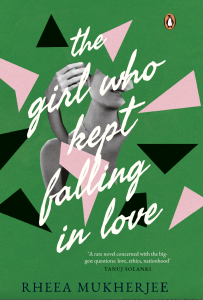
The Girl Who Kept Falling in Love || Rheea Mukherjee
When Kaya meets and falls deeply in love with a fellow activist from the very religious community the country is actively trying to erase, her twin purposes are miraculously aligned in an intoxicating combination that she becomes immediately fearful of losing. In the midst of spirited protests and rising violence, Kaya bears witness to vast human suffering while experiencing profound joy. It is time to make a choice. Kaya knows if she chooses love this time, she will betray everything she has claimed to believe in. If she is willing to do that, can Kaya truly be loved by the person she most desires?
Told through the lens of urban myths, accounts of past lovers, bared confessions and half-truths that make up Kaya’s world, The Girl Who Kept Falling in Love dives deep into the futilities of being attached to global aspiration and fighting institutionalized hate while chasing a universal need for love and acceptance.
A Touch of Eternity || Durjoy Datta
Born on the same day and at the same time, Druvan and Anvesha know they are soulmates in every sense of the word. Their parents, however, refuse to accept their ‘togetherness’ at first and try to tear them apart. Druvan and Anvesha hold on to each other against all odds.
In the same timeline, the world is on the brink of a major scientific breakthrough that could make reincarnation possible.
This is an opportunity for the two to prove their love and to tell the world that it is love that can make the impossible, possible.
Druvan and Anvesha participate in the experiment as if their life depends on it, because it does. Will the dream of a man to control love and life come true? And when the time comes, can one stay true to their soulmate?
If It’s Not Forever It’s Not Love || Durjoy Datta, Nikita Singh
To the everlasting power of love . . . When Deb, an author and publisher, survives the bomb blasts at Chandni Chowk, he knows his life is nothing short of a miracle. And though he escapes with minor injuries, he is haunted by the images and voices that he heard on that unfortunate day. Even as he recovers, his feet take him to where the blasts took place. From the burnt remains he discovers a diary. It seems to belong to a dead man who was deeply in love with a girl. As he reads the heartbreaking narrative, he knows that this story must never be left incomplete. Thus begins Deb’s journey with his girlfriend, Avantika, and his best friend, Shrey, to hand over the diary to the man’s beloved. Highly engrossing and powerfully told, If It’s Not Forever . . . tells an unforgettable tale of love and life.
Till the Last Breath || Durjoy Datta
When death is that close, will your heart skip a beat? Two patients are admitted to room no. 509. One is a brilliant nineteen-year-old medical student, suffering from an incurable, fatal disease. She counts every extra breath as a blessing. The other is a twenty-five-year-old drug addict whose organs are slowly giving up. He can’t wait to get rid of his body. To him, the sooner the better. Two reputed doctors, fighting their own demons from the past, are trying everything to keep these two patients alive, even putting their medical licences at risk. These last days in the hospital change the two patients, their doctors and all the other people around them in ways they had never imagined. Till the Last Breath is a deeply sensitive story that reminds us what it means to be alive.
Wish I Could Tell You || Durjoy Datta
A disillusioned and heartbroken Anusha finds herself in the small world of WeDonate.com. Struggling to cope with her feelings and the job of raising money for charity, she reluctantly searches for a worthwhile cause to support.
For Ananth, who has been on the opposite side, no life is less worthy, no cause too small to support.
Behind them are teams for whom going to extraordinary lengths to save lives is more than a full-time occupation. In front of them is the virtual world of social media-watching, interacting, judging, making choices, and sometimes, saving lives.
From the virtual to the real, their lives and that of their families, entangle in a way that moving together is the only solution. They can’t escape each other.
In this world of complicated relationships, should love be such a difficult ride?
Your Dreams are Mine Now || Ravinder Singh
‘It can’t be love . . .’ he thinks and immediately his heart protests
They are complete opposites! She’s a small-town girl who takes admission in Delhi University (DU). An idealist, studies are her first priority.He’s a Delhi guy, seriously into youth politics in DU. He fights to make his way. Student union elections are his first priority.
But then opposites attract as well!
A scandal on campus brings them together, they begin to walk the same path and somewhere along,
fall in love . . . But their fight against evil comes at a heavy price, which becomes the ultimate test of their lives. Against the backdrop of dominant campus politics, Your Dreams Are Mine Now is an innocent love story that will tug at your heartstrings.
It was Always You ||
Karan and Shruti are a happily married couple. Until Karan’s ex resurfaces into his life one day. Soon Karan finds himself getting nostalgic over matters of the heart and thinking fondly of his first romance. Will he put his steady and seemingly perfect marriage at stake for his ex-girlfriend?
Meanwhile his best friend Aditya finds his own relationship with his wife Jasmine going through an emotional turmoil. Will both friends work towards keeping their marriage afloat, or make a decision they would later regret?
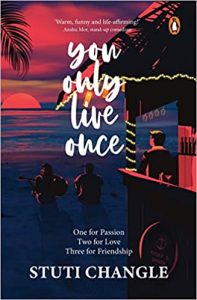
You only live once || Stuti Changle
What if you ran away from your life today?
Twenty years later, three people are looking for you.
One is dying to meet you again.
The other wishes you had never met them.
The third wishes they could have met you at least once.
You are one person. Aren’t you? But you are not the same person to each of them.
Find the answers about your own life in this story about searching for love and discovering yourself. Join a broken but rising YouTube star Alara, a struggling but hopeful stand-up comedian Aarav, and a zany but zen beach shack owner Ricky. Together, take the journey to seek the truth behind the famous singer Elisha’s disappearance somewhere by the deep sea in Goa.
Will you be able to find Elisha? Or will you end up finding yourself?
Soft Animal || Meenakshi Reddy Madhavan
March 2020: Thirty-six-year-old Mallika Rao is largely insulated from the struggles of the millions fighting for their existence all over India. Instead, her Delhi flat and her husband threaten to imprison her as she searches for the confidence that has always eluded her. A rescue dog in her care provides more fulfilment than her husband, who is consumed by work and self-obsession, and she must also confront the universal challenges of having a woman’s body.
Soft Animal unfolds in urgent present tense with illuminating flashbacks, whip-smart dialogue and conspiratorial footnotes. Bringing the deftness of deadpan humour and the precision of meticulous social observation to the self-delusions of India’s privileged urban middle class, Meenakshi Reddy Madhavan’s latest channels an uncomfortably-and sometimes heartbreakingly-intimate experience of millennial marriage that is seldom portrayed but all too real.
Tiger Season || Gargi Rawat
Sunaina Joshi is a reporter with a leading news channel.
Her day-to-day work involves reporting on urban-centric, health-related issues; myriad subjects that bore her, leaving her jaded. Her real passion is a life in the great outdoors, and reporting on wildlife and the environment, something she is unable to do as often as she would like. Unexpectedly, a fabulous opportunity falls into her lap when her channel is commissioned to run a campaign on tiger conservation, featuring a Bollywood star who is trying to resurrect his image and career following a drug scandal.
Yusuf’s Fragrance || Mufti Mudasir, Mahmud Gami
It can be said of the 19th century Kashmiri poet, Mahmud Ga¯mi that he was a pioneer in introducing the Persian genres of the ghazal, nazm, masnavi and na¯t into Kashmiri. Mahmud Gami’s contribution to Kashmiri poetry is unique in both scope and depth. Not only is he the first truly prolific poet who has written entirely in the Kashmiri language, but much of his poetry also stands out for its beauty of expression and depth of thought, such as in the lyrical romance of Shireen Khusrau, Yusuf Zulaikha, and Layla Majnun. Yusuf’s Fragrance is both a celebration as well as an homage to Gami’s oeuvre. Through these beautiful verses, we explore themes of love, both physical and metaphysical, philosophy, folklore, and tradition through different narrative devices, such as nazms, masnavis, and vatsuns.
Kural || Tiruvalluvar
A celebrated work by the greatest poet of classical Tamil literature Tiruvalluvar probably lived and wrote between the second century BC and the eighth century AD though his dates have not been conclusively established. The work by which he is known, the Kural, comprises 1,330 couplets and is divided into three sections-Virtue, Wealth and Love-and is based on the first three of the four supreme aims prescribed by Hindu tradition: dharma (virtue), artha (wealth), kama (love) and moksha (salvation). Taken together, the three books of the Kural inform, criticize and teach the reader, in brilliantly styled and pithy verse, about life, love and the ways of the world. Translated and edited with an introduction by P.S. Sundaram
Appeasement of Radhika || Muddupalani, Muddupalani (Tr Sandhya Mulchandani)
An erotic narrative poem that explores desire and jealousy, love experienced and love lost, Radhika Santawanam is the most recognized work of nineteenth-century poet and courtesan Muddupalani.
Celebrated as a literary masterpiece in Muddupalani’s lifetime, Radhika Santawanam was banned by the British in 1910 when it was published again, a century and a half later, with critics panning its graphic descriptions of lovemaking. And, after another hundred years, this epic is now available in its entirety for the first time in English translation