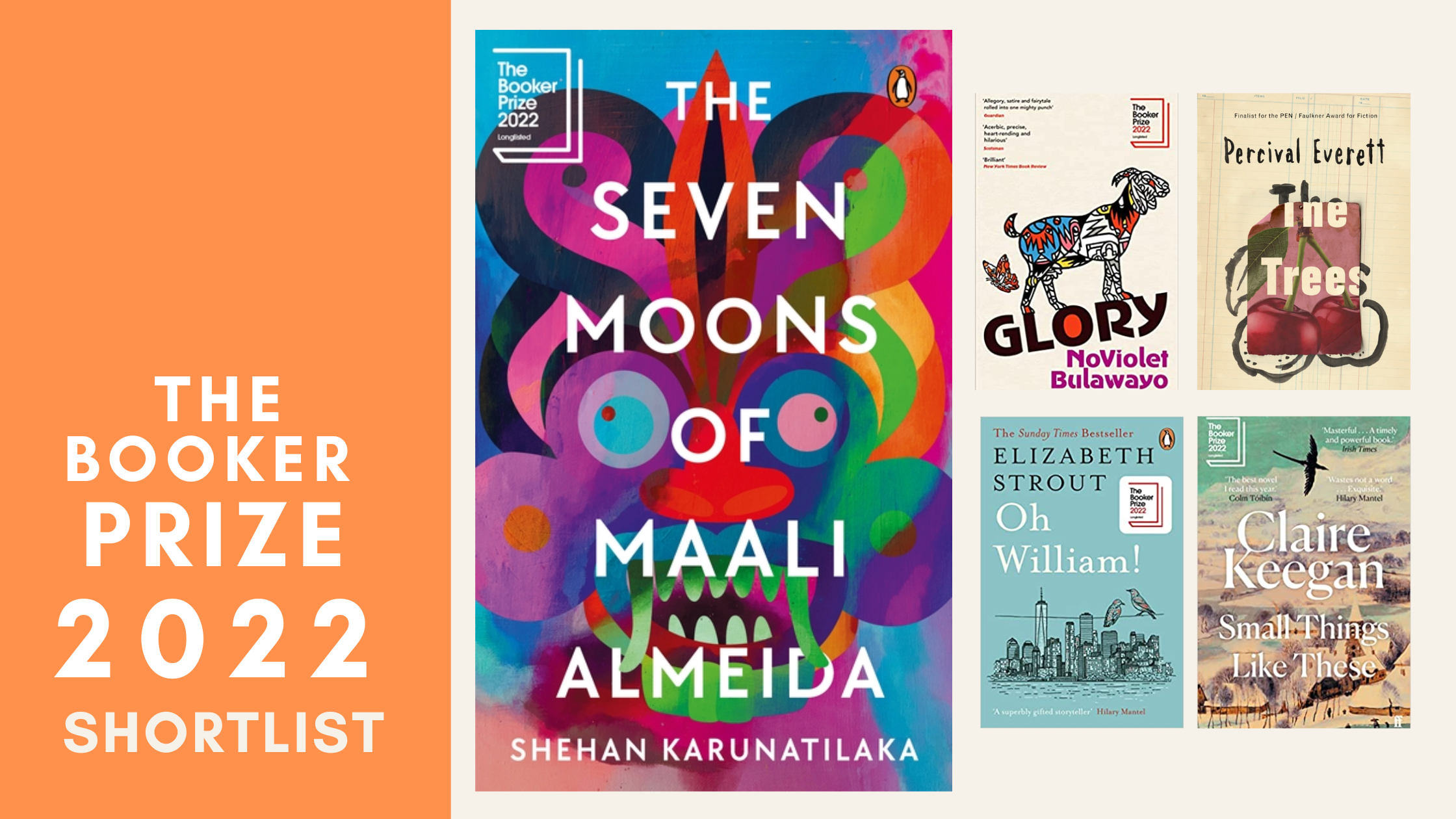
We have just been updated that we have 5 out of 6 books from Penguin have been shortlisted for The Booker Prize 2022! The winner will be announced at the Roundhouse in London on October 17, 2022. Stay tuned!
The Seven Moons of Maali Almeida by Shehan Karunatilaka
Colombo, 1990. Maali Almeida, war photographer, gambler and closet gay, has woken up dead in what seems like a celestial visa office. His dismembered body is sinking in the Beira Lake and he has no idea who killed him. At a time when scores are settled by death squads, suicide bombers and hired goons, the list of suspects is depressingly long, as the ghouls and ghosts who cluster around him can attest. But even in the afterlife, time is running out for Maali. He has seven moons to try and contact the man and woman he loves most and lead them to a hidden cache of photos that will rock Sri Lanka. Ten years after his prizewinning novel Chinaman established him as one of Sri Lanka’s foremost authors, Karunatilaka is back with a rip-roaring epic, full of mordant wit and disturbing truths.
It is 1985, in an Irish town. During the weeks leading up to Christmas, Bill Furlong, a coal and timber merchant, faces into his busiest season. As he does the rounds, he feels the past rising up to meet him – and encounters the complicit silences of a people controlled by the Church.
The long-awaited new work from the author of Foster, Small Things Like These is an unforgettable story of hope, quiet heroism and tenderness.
Glory is an energy burst, an exhilarating joyride. It is the story of an uprising, told by a bold, vivid chorus of animal voices that helps us see our human world more clearly. It tells the story of a country seemingly trapped in a cycle as old as time. And yet, as it unveils the myriad tricks required to uphold the illusion of absolute power, it reminds us that the glory of tyranny only lasts as long as its victims are willing to let it. History can be stopped in a moment. With the return of a long-lost daughter, a #freefairncredibleelection, a turning tide — even a single bullet.
Oh William! captures the joy and sorrow of watching children grow up and start families of their own; of discovering family secrets, late in life, that alter everything we think we know about those closest to us; and the way people live and love, against all odds. At the heart of this story is the unforgettable, indomitable voice of Lucy Barton, who once again offers a profound, lasting reflection on the mystery of existence. ‘This is the way of life,’ Lucy says. ‘The many things we do not know until it is too late.’
An uncanny literary thriller addressing the painful legacy of lynching in the US, by the author of TelephonePercival Everett’s The Trees is a page-turner that opens with a series of brutal murders in the rural town of Money, Mississippi. The murders present a puzzle, for at each crime scene there is a second dead body: that of a man who resembles Emmett Till. As the bodies pile up, the MBI detectives seek answers from a local root doctor who has been documenting every lynching in the country for years, uncovering a history that refuses to be buried. In this bold, provocative book, Everett takes direct aim at racism and police violence, and does so in a fast-paced style that ensures the reader can’t look away. The Trees is an enormously powerful novel of lasting importance from an author with his finger on America’s pulse.
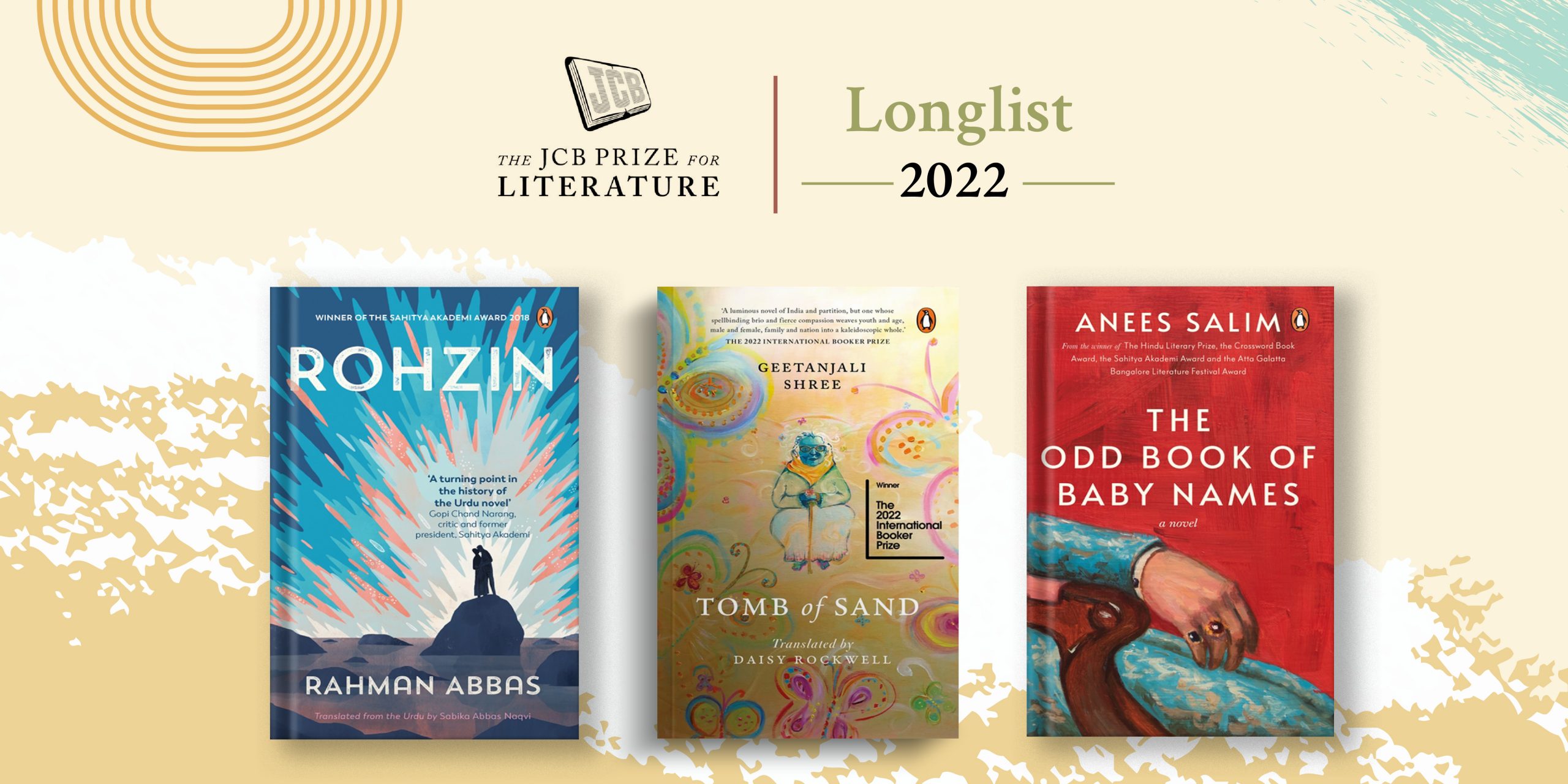
The JCB Prize for Literature has just unveiled its 2022 Longlist and we have three books in the run. Shortlist to be announced on 7th October 2022. Stay Tuned!
In northern India, an eighty-year-old woman slips into a deep depression after the death of her husband, and then resurfaces to gain a new lease on life. Her determination to fly in the face of convention – including striking up a friendship with a transgender person – confuses her bohemian daughter, who is used to thinking of herself as the more ‘modern’ of the two.
To her family’s consternation, Ma insists on travelling to Pakistan, simultaneously confronting the unresolved trauma of her teenage experiences of Partition, and re-evaluating what it means to be a mother, a daughter, a woman, a feminist.
Rather than respond to tragedy with seriousness, Geetanjali Shree’s playful tone and exuberant wordplay results in a book that is engaging, funny, and utterly original, at the same time as being an urgent and timely protest against the destructive impact of borders and boundaries, whether between religions, countries, or genders.
Can a life be like a jigsaw puzzle, pieces waiting to be conjoined? Like a game of hide-and-seek? Like playing statues? Can memories have colour? Can the sins of the father survive his descendants?
In a family – is it a family if they don’t know it? – that does not rely on the weakness of memory runs a strange register of names. The odd book of baby names has been custom-made on palace stationery for the patriarch, an eccentric king, one of the last kings of India, who dutifully records in it the name of his every offspring. As he bitterly draws his final breaths, eight of his one hundred rumoured children trace the savage lies of their father and reckon with the burdens of their lineage.
Layered with multiple perspectives and cadences, each tale recounted in sharp, tantalizing vignettes, this is a rich tapestry of narratives and a kaleidoscopic journey into the dysfunctional heart of the Indian family. Written with the lightness of comedy and the seriousness of tragedy, the playfulness of an inventive riddle and the intellectual heft of a philosophical undertaking, The Odd Book of Baby Names is Salim’s most ambitious novel yet.
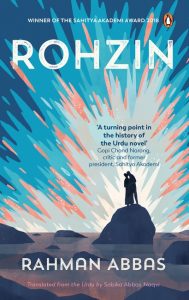
Mumbai was almost submerged on the fatal noon of 26 July 2005, when the merciless downpour and cloudburst had spread utter darkness and horror in the heart of the city. River Mithi was inundated, and the sea was furious. At this hour of torturous gloom, Rohzin begins declaring in the first line that it was the last day in the life of two lovers, Asrar and Hina.
The arc of the novel studies various aspects of human emotions, especially love, longing and sexuality as sublime expressions. The emotions are examined, so is love as well as the absence of it, through a gamut of characters and their interrelated lives: Asrar’s relationship with his teacher, Ms Jamila, a prostitute named Shanti and, later, with Hina; Hina’s classmate Vidhi’s relations with her lover and others; Hina’s father Yusuf’s love for Aymal; Vanu’s indulgence in prostitutes.
Rohzin dwells on the plane of an imagination that takes readers on a unique journey across the city of Mumbai, a highly intriguing character in its own right.
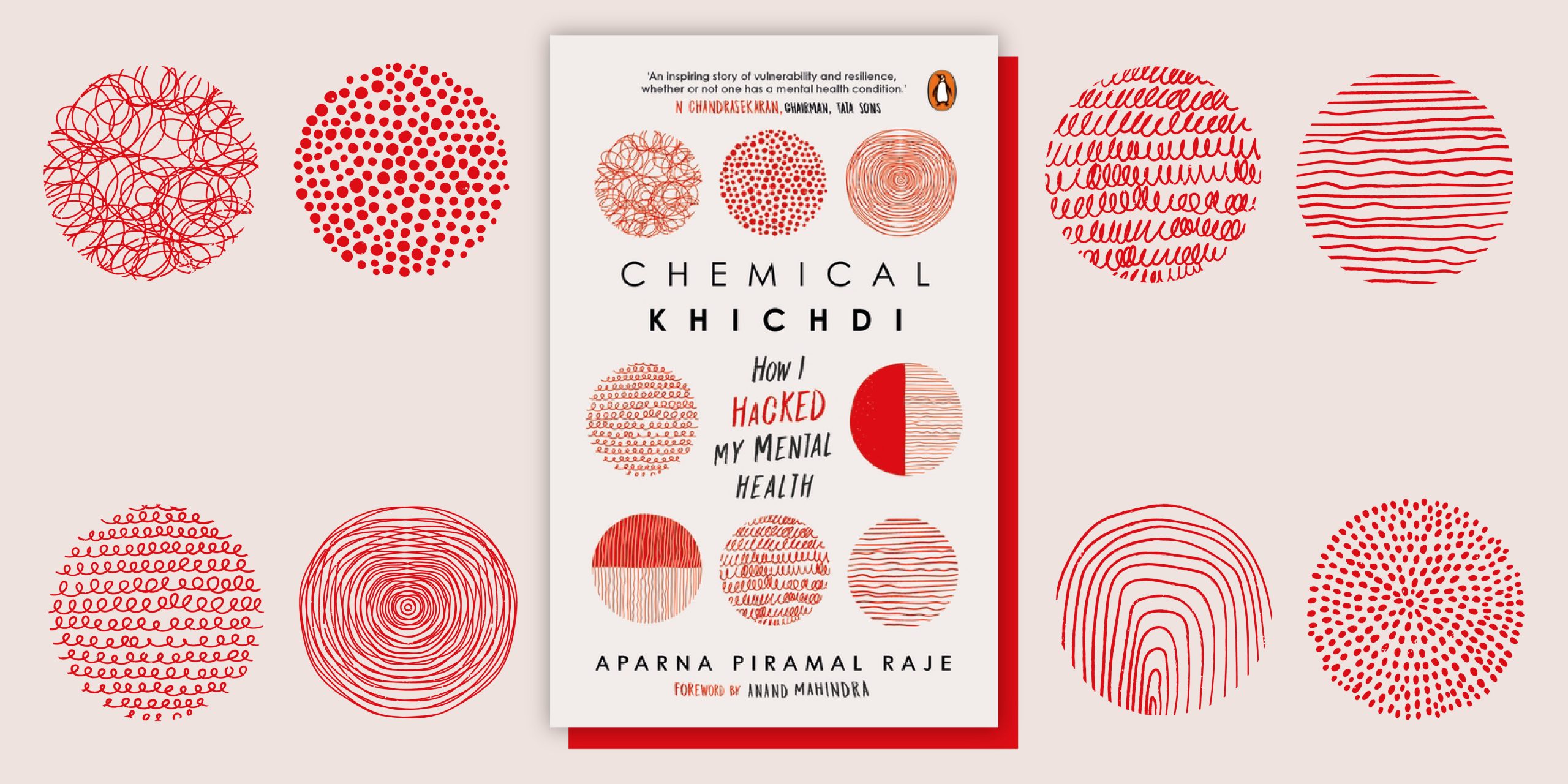
Perhaps the most stigmatized aspect of mental illness is talking about suicide. This is why spreading awareness about mental health is even more important today than ever. Even with a large amount of information and resources like counseling constantly at our disposal, there are small steps we can all take towards unlearning myths about mental illness. This is where stories like that of Aparna Piramal Raje step in.
On this World Suicide Prevention Day, we’re sharing an excerpt from her memoir Chemical Khichdi where she candidly talks about suicidal ideation.
*
Chemical Khichdi||Aparna Piramal Raje
Turning Point
There are no headlines today
No cocktail launch parties, or awards ceremonies
No business-class seats and frequent-flier miles
There is the private knowledge,
That today was a day
Where nothing was written
Which would later be regretted.
That today was a day
Where it didn’t occur to me
How easy it would be to jump off a building.
Today, I didn’t have to dismiss the thought.
Today, there’s a London bus made out of a cardboard box.
There is camping under a blanket
Strung between two wooden dining chairs, in the living room.
Today, there are
No moments of despair
No delusions of grandeur
Instead, an attitude of gratitude
Moments of simplicity and spontaneity
And the promise of purpose.
One of my favourite poems, I wrote Turning Point to mark a personal milestone: after several weeks of struggling with depression, and waking up every day to a sense of hopelessness, I finally managed to rid myself of suicidal thoughts. Of course, I sat at the edge of my bed and cried, but I also felt much better after writing it. It felt like a private milestone.
I have never actually harmed myself or made any attempt to do so, but there was a distinct period of my life, for a large part of 2013, in which I was confronted by a large, bleak void, every morning. Life seemed just – empty.
Given that my manic episode at the ashram was one of my most lethal, it was little surprise that I had to contend with depression for as long as I did. I knew I could get onto additional medication to elevate my spirits – and there were several sleepless nights when I nearly called Dr. Sharma and asked him to do so – but Amit and I were committed to finding a solution without additional medication, and we did.
I didn’t lie around on the sofa, or in my bedroom – my days were fairly busy with work and family commitments. There were interviews to be conducted and copy to be filed. My colleagues were friendly and stimulating.
Home life was also a pillar. Our apartment in Mahim had a rare view of the Arabian sea and of one of Mumbai’s nicest public parks, a hidden gem called Dhote Udyan. The rhythm of the waves and the canopy of greenery outside my windows were enough to lift any melancholy spirits. But I felt unhappy and vacant. I couldn’t find joy or happiness in anything around me.
And in a city full of skyscrapers, jumping off one of them seemed more preferable than wrestling with this inner black hole every day. I remember, at one point, mentally comparing the available building options to see which one seemed the most viable, my parents’ home or mine. I even once made it to my building’s terrace before turning back, scowling at myself for even having come this far. I rejected the option every time it crossed my mind, because I knew I didn’t want to be defeated by my illness.
Any well-intentioned onlooker would have urged to me to consider my obligations to my family, and to desist from this line of thought. It is not that I was ready to abandon my family. It was just that my self-esteem was so low, during those months, that I honestly didn’t think it would make a big difference to anyone in the long run, if I wasn’t around anymore. I really felt they wouldn’t notice my absence, or it wouldn’t matter – when the truth is, of course, that they would be devastated. Depressed and despairing, my duties to my family were not motivating factors at all. Perhaps I am not alone in making this admission.
In fact, it was the other way around – it was my family who helped me to overcome my black hole, even though they may not have gauged its true depths. I think I was quite good at concealing it. As I will explain in more detail a little bit later, they helped to see the daily joys of simple family life.
But it took several months before I could rid myself fully of semi-suicidal notions, as can be seen from the timing of the poem. Luckily, they haven’t returned; a fact I know my family and friends will be most relieved to hear.
Slowly, over the course of a few months, I left the black hole behind. And then one day in November, I found myself writing this poem, to celebrate the fact that I had, actually, much to celebrate in life, and even more to look forward to. As the first paragraph suggests, I was also finally ready to shed my preoccupation with all the markers of a successful business life – the seemingly glittery lifestyle, the award ceremonies and the hoopla. Something just as meaningful, if not more, was waiting to be discovered.
*
Get your copy of Chemical Khichdi from your nearest bookstore or visit Amazon to order.
September is here, summer is ending and hopefully, any day now, you’ll wake up to a pleasant breeze. Days would no longer seem like they’re melting away, they would whistle through your hair instead. All plants and flowers and trees would nod in unison when you look at them and there’ll be something in the air that will make you constantly smile.
And days like these mean one thing and one thing only – it’s time to read!
So, here we are, bringing to you the freshest set of books releasing in September and waiting for you to sit with them and your coffees on your lovely balconies!
Here they are!
Between You, Me and the Four Walls
Between You, Me and the Four Walls || Moni Mohsin
The Social Butterfly is back with her signature wingbeat. The world may have moved at a rattling pace since her last outing but the lifestyles of Lahore’s literati, Dubai’s glitterati and London’s desi flutterati have more than kept pace. Earth-shattering events like wars, climate change, and the pandemic have nothing on the treachery of the maalish waali, Meghan Markle’s tiara and the mechanics of ‘sad make-up’. Spanning eight rollicking years from 2014 to 2021, Butterfly’s frank, funny diaries tell us how it is in the private lives of the haves and the have-mores.
Scandalously colourful and uniquely desi, the latest installment of the Butterfly series is delish.
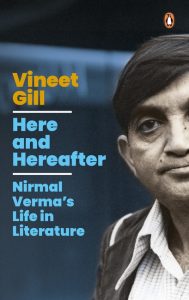
Here and Hereafter
Here and Hereafter || Vineet Gill
How is a writer formed? Yes, through labour, commitment, perseverance, grit and various other things that we keep hearing about. But equally, a writer is formed through the workings of a particular kind of sensibility. As Vineet Gill attempts to understand this writerly sensibility in Nirmal Verma’s life and work, he finds that the personal and the literary are, on some level, inseparable.
In this masterly deep dive into the world of one of Hindi literature’s pioneers, Gill looks at the scattered elements of Verma’s life as ingredients that went into the making of the writer. The places he lived in, the people he knew, the books he read are all reflected, in Gill’s view, in Verma’s stories and novels. This is a work of intense readerly analysis and considered excavation-a contemplation on Verma’s oeuvre and its place in world literature.
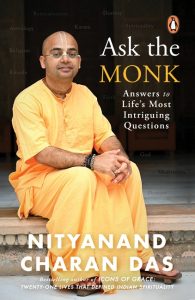
Ask the Monk
Ask the Monk || Nityanand Charan Das
Asking questions is an important part of learning as it provides a unique framework for thinking and opens doors to unexpected revelations for us. Digging into how or why things are the way they are, paves the way for enlightenment.
On the contrary, keeping the doubts to ourselves can keep us from truth, thus depriving us from valuable opportunities life has to offer. As human beings, we must enquire and keep doing so. But what kind of enquiries are we supposed to make?
In Ask the Monk, celebrated monk Nityanand Charan Das lucidly answers over seventy frequently asked questions-by young and the old alike-on topics such as karma, religion versus spirituality, mind, God, destiny, purpose of life, suffering, rituals, religion, wars and so on. These answers are extremely crucial to help you, the reader, embark on the journey of self-discovery and self-realization.
Unparenting
Unparenting || Reema Ahmad
Through her own awkward journey as a confused single parent, Reema Ahmad explores what it means to explore newer ways of bringing up children-ways that nurture their sense of innocence and curiosity while giving them the freedom to choose their own truths. Reema invites you to hop along as she and her son, Imaad, learn to laugh and make up stories about why penises shape-shift, the mysteries of pubic hair, the magic of adolescent crushes and the confounding maze of dating and sex. Join them as they explore these mysteries and other serious topics like abuse, adult relationships, divorce and dying-issues that adults often forget to wonder at and seldom question.
More than anything else, Unparenting is a vibrant, whacky testimony to a parent-child relationship where the child leads and the parent follows. Written in the form of deeply personal, engaging and often humorous essays, the book is a powerful reminder of what it feels like to be lost and misunderstood as a child, and how important it is to challenge what we think we know as parents.
On the Pickle Trail
On the Pickle Trail ||Monish Gujral
Pickling is one of the oldest and healthiest methods of preserving and consuming vegetables and fruits. Pickles are usually fermented in a way that they aid digestion and improve gut bacteria. They enhance food flavours and are available throughout the year. However, most of us do not pickle things ourselves; instead, we buy them off the shelf. Packaged pickles do not have the same health benefits as the ones made at home and can do more harm than good.
In this book, Monish Gujral brings together a collection of 100 pickles to start you on your journey of pickling. These recipes are not only simple and easy to make, each also has health benefits. From the Italian Giardiniera (pickled vegetables) to the Israeli Torshi Left (white turnip pickle), from the Gari(Japanese ginger pickle) to the Cebollas Encurtidas (pickled onions from Ecuador), this book is a treasure trove of some of the best pickles from around the world.
Engineered in India
Engineered in India || BVR Mohan Reddy
A young man steps out of the precincts of IIT Kanpur in 1974 with a dream in his heart-to become an entrepreneur and contribute to nation-building. Undaunted by the dearth of experience and means to capital in pre-Liberalization India, B.V.R. Mohan Reddy’s enterprising spirit takes the long and winding road, never losing sight of his ambition. He gains overseas education on a scholarship and dons multiple hats for eighteen long years before embarking on his life’s mission at forty. A mission that propels the company he incorporated, Cyient, to pioneer and excel in outsourced engineering services and introduce the brand ‘Engineered in India’.
Engineered in India takes readers on an entrepreneurial rollercoaster ride, allowing them to see human truths with tools that let them breathe life into their business aspirations and experiments.
Sojourn
Sojourn || Amit Chaudhuri
An unnamed man arrives in Berlin as a visiting professor. It is a place fused with Western history and cultural fracture lines. He moves along its streets and pavements; through its department stores, museums and restaurants. He befriends Faqrul, an enigmatic exiled poet, and Birgit, a woman with whom he shares the vagaries of attraction. He tries to understand his white-haired cleaner. Berlin is a riddle-he becomes lost not only in the city but in its legacy.
Sealed off in his own solitude, and as his visiting professorship passes, the narrator awaits transformation and meaning. Ultimately, he starts to understand that the less sure he becomes of his place in the moment, the more he knows his way.
The Bellboy
The Bellboy || Anees Salim
Latif’s life changes when he is appointed bellboy at the Paradise Lodge – a hotel where people come to die.
After his father’s death, drowned in the waters surrounding their small Island, it is 17-year-old Latif’s turn to become the man of the house and provide for his ailing mother and sisters. Despite discovering a dead body on his first day of duty, Latif finds entertainment spying on guests and regaling the hotel’s janitor, Stella, with made-up stories. However, when Latif finds the corpse of a small-time actor in Room 555 and becomes a mute-witness to a crime that happens there, the course of Latif’s life is irretrievably altered.
The Bellboy is as much a commentary on how society treats and victimizes the intellectually vulnerable as it is about the quiet resentment brewing against religious minorities in India today. With a mix of wry humour and heart-wrenching poignancy, the book narrates a young boy’s coming-of-age on a small island, and his innocence that persists even in the face of adversity and inevitable tragedy.
The Hidden Hindu 2
The Hidden Hindu 2 || Akshat Gupta
The first battle is lost. The book of Mritsanjeevani is in the wrong hands but Nagendra’s plans are not limited only to immortality. What seemed to be the end of all wars was just the beginning of an incredible journey in search of a hidden verse. Om is still incomplete without the knowledge of his past, but he is not alone anymore. Two of the mightiest warriors of all time stand by his side. Two mysterious warriors stand unconditionally with Nagendra too or is there a hidden agendas behind all the allies? Who are LSD and Parimal in real and who is Om? Tighten your seat belts for an adventure in search of words that hold a bigger purpose than even immortality for Divinities and Demons.
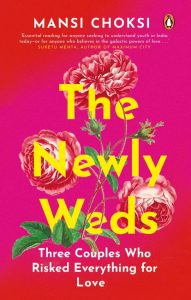
The Newlyweds
The Newlyweds | Mansi Choksi
India is teeming with a young population that was born post-liberalisation, grew up with the internet, witnessed the advent of smartphones and social media, and is well-versed in the many dialects of a globalised pop culture. But when it comes to love and marriage, they’re often disconcertingly expected to adhere to the orthodoxy of a bygone era. It’s this conflict between the parallel paths of alleged tradition and mutinous modernity that drives journalist Mansi Choksi’s The Newlyweds.
Through vivid, lyrical prose, Choksi shines a light on three young couples who buck against patriarchy-approved arranged marriages in the pursuit of love, illustrating the challenges, triumphs and losses that await them.
Zigzagging through India and its smorgasbord of cultures, each chock-full of its own unwritten commandments and sanctions, Choksi introduces our brave newlyweds. First, there’s the lesbian couple forced to flee for a chance at a life together. Then there’s the Hindu woman and Muslim man who escaped their families under the cover of night after being harassed by a violent militia group. Finally, there’s the inter-caste couple doing everything to avoid the horrifying fate of a similar duo murdered for choosing to love.
Engaging and moving, The Newlyweds raises universal questions such as what are we really willing to risk for love? If we’re lucky enough to find it, does it change us? For the better? Or for the worse?
Leaders in the Making
Leaders in the Making || Arvind Agrawal, T.V. Rao
Leaders in the Making includes in-depth interviews of thirty HR leaders, drawn from public as well as private sectors. These life stories provide highlights of their early childhood, education and career over the years, and touch upon the inflexion points in these leaders’ lives, their major influences and the lessons they learnt to become who they are. The authors provide an analysis of these thirty stories to establish a pattern of the life journeys, competencies and values these leaders displayed.
The book has excellent lessons for parents, heads of schools and colleges, teachers, managers, HR leaders, CXOs and CEOs. It also includes self-help tools to assess competencies, values and the careers of readers so that they can plan for self-development.
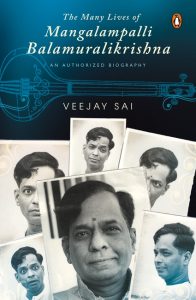
The Many Lives of Mangalampalli Balamuralikrishna
The Many Lives of Mangalampalli Balamuralikrishna || Veejay Sai
Mangalampalli Balamuralikrishna, an internationally renowned Carnatic musician from the illustrious musical lineage of composer Saint Tyagaraja, wore many hats in his lifetime. Having made a stage debut at the age of seven, he was hailed as a child prodigy. From then till the time he passed away, at age eighty-six in 2016, he continued to be in the spotlight, not just for his extraordinary talent and versatility as a vocalist and multi-instrumentalist, but as a composer, playback singer and even, briefly, as a character actor.
He was a primary school dropout, a teenage poet and composer, a restless mind, a polyglot, a legacy upholder, a wordsmith, an ice cream lover and a pathbreaker. This is a story of the many lives of Dr Mangalampalli Balamuralikrishna.
Veejay Sai’s in-depth research into his life and work led him deep into unseen archival material and across the Carnatic musical landscape of erstwhile Andhra Pradesh, Karnataka and Tamil Nadu. Fortified by interviews with his family members, disciples and peers, The Many Lives of Mangalampalli Balamuralikrishna, a definitive biography of the musical genius, is not only a revealing account of the personal traits and facets of an unparallelled genius, but is also a portrait of India’s classical music world, a place as much of beauty as of untrammelled egos.
Afterness
Afterness | Ashok Ganguly
In his memoir, former Hindustan Unilever chairman Ashok Ganguly invites readers to journey with him as he looks back fondly on his extraordinary life – from his childhood to his upbringing in the metropolitan Bombay of the 1930s, to his PhD in Illinois and his eventual return to India. After joining Hindustan Unilever’s R&D department, Ganguly quickly rose up the ranks as a talented young professional, eager to discover and learn new things. The story spans across eighty years of his life, its edges tinged by the tumultuous events in India in the twentieth century, and interspersed with fascinating people, from the mysterious Kishen Khanna to encounters and friendships with well-known historical figures such as Mother Teresa and Rajiv Gandhi.
Ashok Ganguly’s journey was interspersed with failures, but he doesn’t shy away from talking about these and the sacrifices that went on to define his life. Honest, reflective, personal and revelatory, Afterness provides valuable insight into his thinking process and decision-making skills that enabled Ganguly’s meteoric rise and sustained his legendary career.
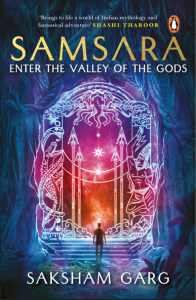
Samsara
Samsara || Saksham Garg
Phones stop working. Smartwatches die. And arms start glowing with blue scars. This is what happens to Aman Chandra and ten other Souls of Samsara when they are kidnapped from modern-day India and transported to a hidden valley in the Himalayas. In this realm of magic, home to Hindu gods, immortal yogis and mythical beasts, the mission is clear for the Souls of Samsara: to learn the ancient art of yogic sorcery and prepare for a treacherous journey not many can survive.
But why must they go on this journey? And how are the gods connected to it all?
Before they get any answers, the Souls of Samsara realize that there is a larger scheme at play. The king of the gods has passed a controversial order. And Aman must make a tough decision that will change not just his life but the fate of an entire nation…
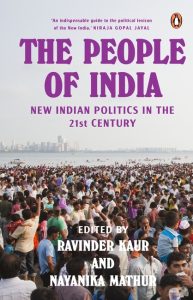
The People of India
The People of India || Ravinder Kaur, Nayanika Mathur
‘The People’ and ‘New India’ are terms that are being invoked freely to both understand and govern India as she enters her 75th year of post-colonial nationhood. Yet, there is little clarity on who these people of India really are, what they do, their desires, histories and attachments to India. Similarly, the phrase ‘New India’ is used far
too loosely to explain away a dangerously confounding politics.
In this book, some of the most respected scholars of South Asia come together to write about a person or a concept that holds particular sway in the politics of contemporary India. In doing so, they collectively open up an original understanding of what the politics at the heart of New India are-and how best we might come to analyse them.
This brilliant collection put together by Ravinder Kaur and Nayanika Mathur includes original and accessible essays by leading social science and humanities scholars of South Asia.
September is here and the summer heat is slowly coming to a halt and the pleasant breeze is soon going to make your kids’ days even more cheerful! After the little ones have studied at school and played in the park, let them spend time reading amazing stories.
Check out our September releases and introduce your kids to diverse topics that they’d thoroughly enjoy reading.
Roshan’s Road to Music
Roshan’s Road to Music || Mamta Nainy
For ages: 5+ years
A unique biography that explores and celebrates the life of a musician as a passionate little girl. Right from her childhood, Annapurna Devi, also known as Roshan, had an ear for music. She found rhythm and melody in the most mundane sounds. She listened with wonder to the koel cooing and her grandmother snoring. But when her father gave sarod lessons to her brother, Roshan was moved to make music of her own. How did Roshan embark on her musical journey?
A Chera Adventure
A Chera Adventure || Preetha Leela Chockalingam
For ages: 9+ years
Curious and spirited, Sharadha loves living life in her ancestral tharavadu. The grand ol’ house, Vishwasam, is right in the heart of her beloved Marayur, in the Chera kingdom. The house is also the centre of activities as Devaki Amma, her grandmother, is a healer for the King no less! Life is good in the sleepy village!
But her inquisitiveness takes Sharadha on an unintended adventure. Trying to investigate a secret, she chances upon a mysterious trader and ends up in the bustling city of Mahodayapuram. And it’s not just any city but the busy multicultural melting pot of the Cheraman Perumal Empire!
As she traverses the metropolis, Sharadha gets pulled into the magical colours, languages, religions, and the vibrancy of the city. She now realizes how complex the Capital is from her small village life-full of intrigue and political scandals. But as a sudden war with the ambitious and powerful Chola Dynasty looms on the horizon, Sharadha pines to get back to her old quiet life in Marayur.
Peek into an account of what life was like during the final years of the Chera Dynasty of the eleventh century Kerala!
Dhiren is completely absorbed by how animatedly she is laying out her theory. Not just with her words, but also her eyes, her hands, her body, like she’s doing a puppet show with characters, voices, songs. She becomes a sabre-toothed tiger by flashing her canines and a giant sloth by lumbering on the table menacingly. When she mentions wars, she swings her hand around and grunts as if she’s a medieval warrior, and looks around scared when she’s on the Silk Route.
She can go on the entire night and he will be right here, listening, bewitched by this gorgeous storytelling gypsy who knows everything.
‘You’re suggesting genocide. But if that’s so obvious, why didn’t it happen till now?’
‘Men are clever. They realised their need would be limited in the future. So, the ancient ones—kings, nobles, religious men, traders—all the powerful men came together, worried, scared, and in a moment of brilliance, they invented the rules of monogamy. One man, one woman. Suddenly, all men were needed. Every single man was important. Legends of love were told, romantic books were written, movies were made, Hallmark cards were printed, weddings were celebrated, pregnancies were made important, and women were told that they should want these things—love, wedding, romance, families. But it’s the men who need these. If you’re genetically ungifted, the only way to survive is romance. Without romance, only the strong, the disease-resistant, the tall will survive.’
Her storytelling is wizardry. She can move her large pupils around and put a man into a hypnotic trance. Dhiren hangs on to every word of hers. He feels he has to agree with what she’s saying. How can her eyes lie? Dhiren wonders if this is how a religion comes into being—a ravishing person with a great story.
‘Romance is a conspiracy?’ asks Dhiren.
‘Romance, once strictly optional, was now mandatory. Romantic love didn’t make women whole, it saved men from oblivion and extinction. Children were now meant to be god’s gift, brought into the world after the blissful union of a man and a woman. But it’s all a lie concocted by ancient rishis, priests and prophets—all men! Think about it, why not get children off the assembly line? Why not make sure they get the best of genes from a man and mix them up with a little bit of the woman who carries them and raises them as truly their own?’
‘I mean . . .’ Dhiren can’t finish the sentence.
She continues. ‘Think climate-wise too. We waste precious food in sustaining bigger bodies of men, with higher metabolism rates for the same contribution to society. How much can we save by not having so many men? We already do that with cattle, thirty cows to one bull. We only keep the best bull.’ The three whistles and two minutes on low flame are up.
‘Wow,’ mumbles Dhiren.
She breaks out of her own train of thought. ‘Sorry, I’m talking too much, no?’
‘I mean . . . you did call me a bull and most men useless cattle, worthy of slaughter, and keeping the good ones in a cage.’
Aishwarya giggles. Dhiren unlocks the pressure cooker. He serves them on two plates with raita and pickle. They move to the sofa.
‘When did you make the raita?’ asks Aishwarya.
‘You were talking at length. I had time.’
Aishwarya lifts the plate to her nose, takes in a deep breath like a coke addict and asks, ‘Do you want a review?’
‘I’m sure it’s great, MasterChef Aishwarya.’
Aishwarya takes a bite and closes her eyes. ‘Your overconfidence is not misplaced. It’s like my tongue’s wrapped in flavours. It’s amazing. Let’s be quiet and eat this.
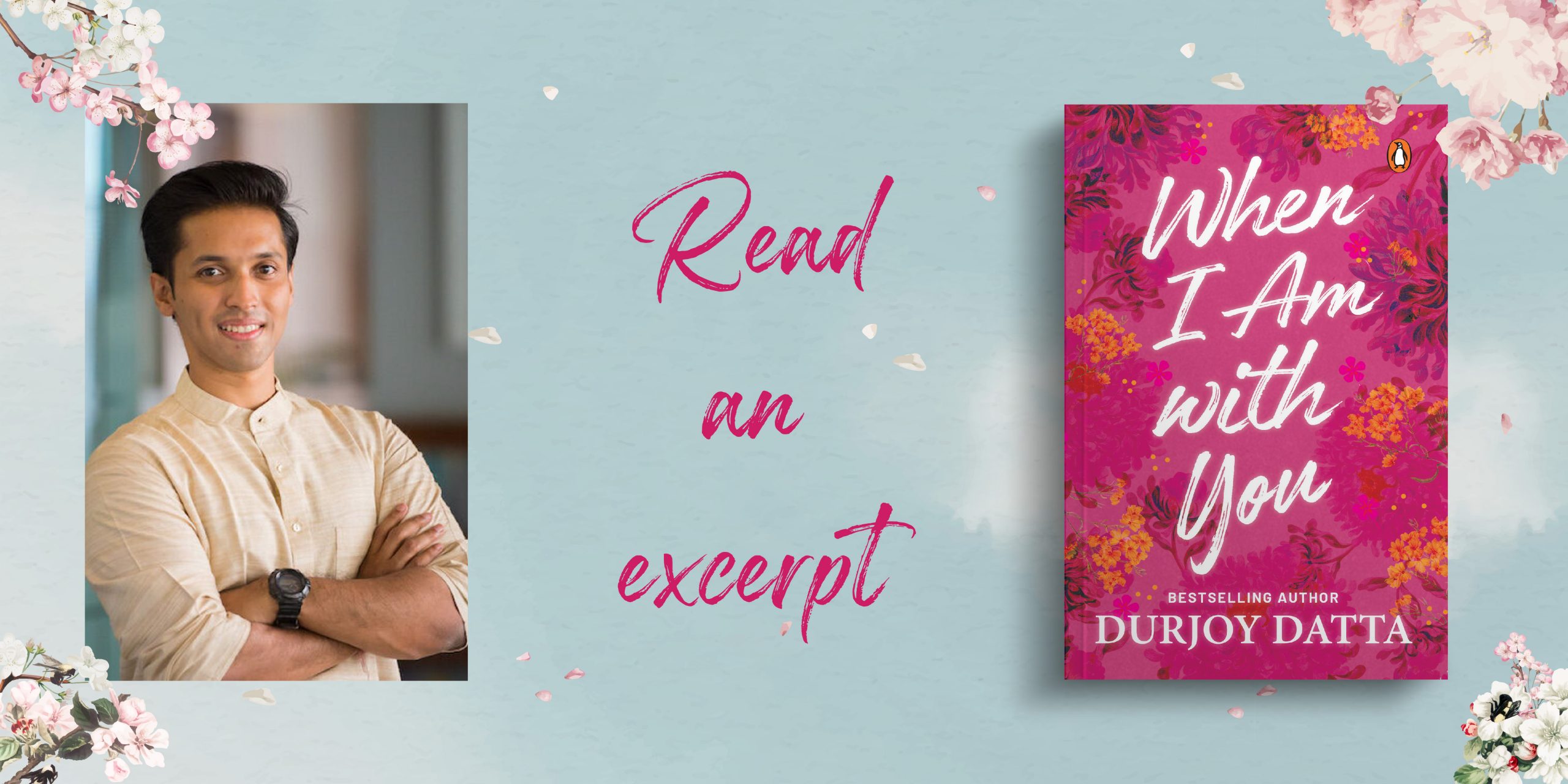
Will Dhiren and Aishwarya, recognise the love for each other. Get your copy of When I Am With You by Durjoy Datta today!
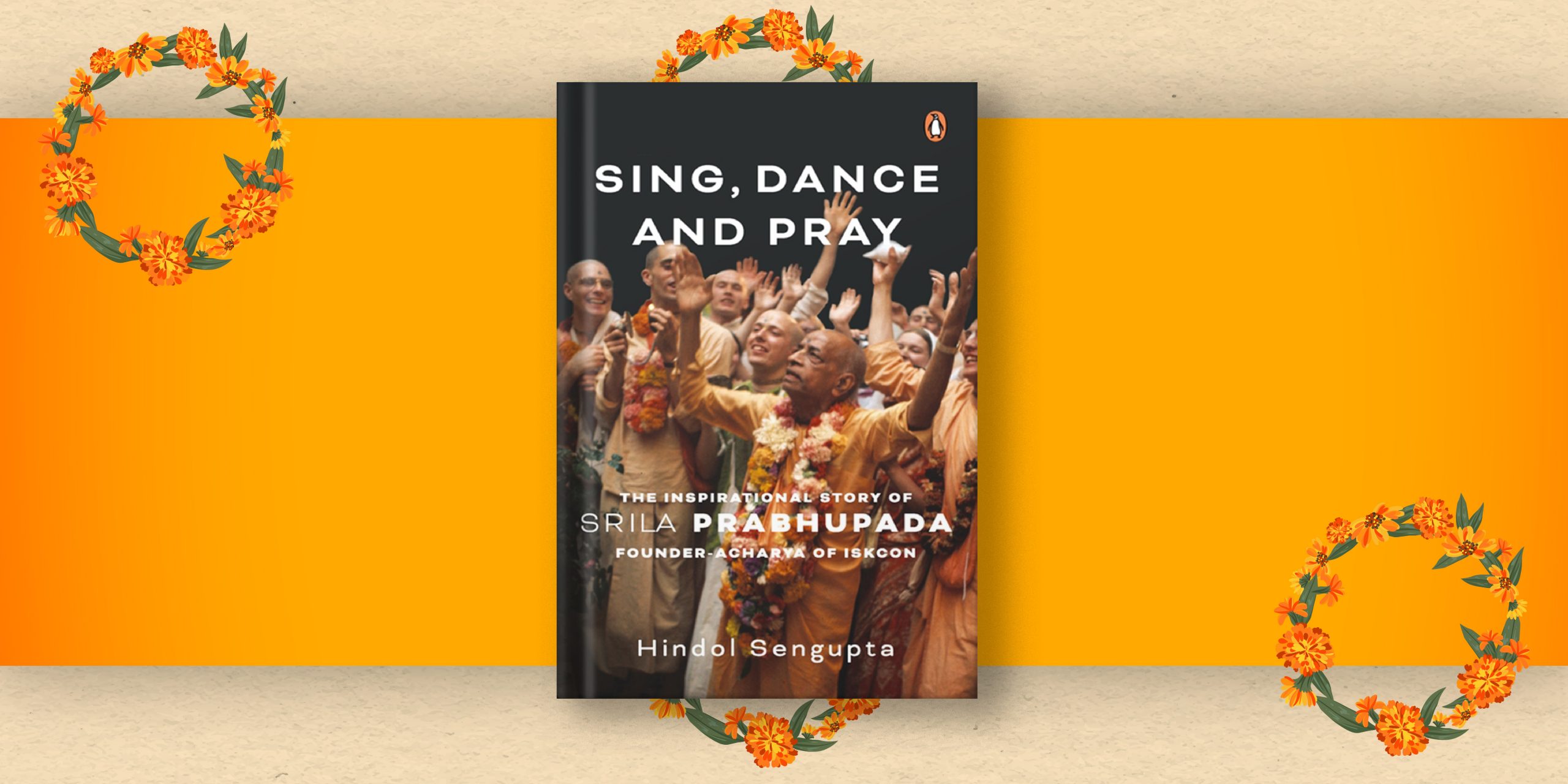
The widespread popularity of Krishna Consciousness can be traced back to the very man himself. While a memoir about an Indian guru is commonplace today, Hindol Sengupta’s Sing, Dance and Pray creates a narrative framework that is at once meta-cultural and biographical. This is in part made up of the diverse lives that Srila Prabhupada encountered—and embraced—during his unique lifetime.
The following is an excerpt from the chapter titled ‘Downtown Monk’, marking the American chapter of Srila Prabhupada and the Hare Krishna Movement.
Sing Dance and Pray||Hindol Sengupta
*
The conflict in Vietnam had already dragged on for about a decade since the mid-1950s by the time Bhaktivedanta arrived at Boston Harbour. In the early 1960s, American President John F. Kennedy pushed more resources into battle in Vietnam, and the failure of a breakthrough victory only meant greater angst and protest at home. With the failure of the Bay of Pigs invasion in 1961 and the Cuban Missile Crisis, chances of a third world war or at least conflict using nuclear weapons between the United States and the Soviet Union had become a real possibility. ‘The risks to world peace seemed so significant at this time, that an extensive peace movement developed throughout the 1960s, particularly through the intervention of young people and students. Young people wanted autonomy and self-determination. They did not want to live in a world involved in major armed conflict.’
Within America, the response to this war-addicted climate was the rise of subcultures which would experiment with everything from Eastern mysticism to psychedelic drugs, poetry, music and—importantly—massive protest rallies for peace, and against war.
If you distil the messages of the movement that came to be known through many varying names over the years from ‘Beat’ to ‘hippie’, a few are immediately apparent. There is the desire for a different way of life, a different way of thinking, of freedom from the oppression of society and government and even the economic system. There is the determined refusal to authorize state-sanctioned violence (though ironically some of the protesters clashed with the police and became quite violent), there is the attempt to create building blocks of a ‘non-commercial world’ in everything from the focus on handmade things, like tie-and-dye clothing (another element borrowed from India), vegetarianism and natural birth, the focus on meditation and non-Abrahamic forms of spirituality, and importantly, music.
When you look at all these elements carefully, you understand something that is rarely ever said about A.C. Bhaktivedanta, that like Vivekananda, he was in many ways the right person, at the right place, at the right time. Vivekananda gained from the flowering of interest in Eastern philosophies led by scholars like Max Mueller and others in the late nineteenth century, and therefore his message found a certain influential, academically elite, audience that helped it spread across the English-speaking world. His key early benefactors were the educated wealthy, including a Harvard professor who introduced him to the Parliament of Religions. In A.C. Bhaktivedanta’s case, his earliest followers were unemployed hippies attracted to the sonorous sannyasi to find a refuge from the tumult all around them, and in their head.
Bhaktivedanta’s early life in the United States is usually described in terms of the difficulties he had in finding appropriate shelter, often having to share space with people who did not quite understand his calling or his message. But the way to really think about the story is that he appeared to give the right message to the right people at the right time.
His first days were spent with Gopal Aggarwal and his wife Sally, an American, at Butler County, Pennsylvania, where the famous four-wheel drive, the Jeep, had been invented in 1940 as a vehicle for tough-haul jobs of the US Army. It was a time when A.C. Bhaktivedanta was under the impression that he would remain in America maybe, at most, for about a month. Even though he was clear about his mission in the West—propagating the good word of Krishna—several of his early hosts imagined that he had merely come to raise funds for his publishing and would soon return.
But it is here, at Butler, Pennsylvania, that A.C. Bhaktivedanta found his first audience. It is here that one of the most written-about spiritual figures in modern times, first appeared in the American local press. The Indian ‘swami’ who had come to America to preach ‘bhakti yoga’, said the Butler Eagle. Even in that very first article, there were clear signs of why A.C. Bhaktivedanta would start to attract followers in America.
*
Sing, Dance and Pray is available at your nearest bookstore. You can also order a copy from Amazon.
Here is our list of 16 must-read books in translation, from the length and breadth of the country.
As a reader, you are bound to be a little more inquisitive than the general population. So, your incredible brain must not be limited to the understanding of the diverse nation that we know India to be with the variety of languages, food, clothes and spices grown its separate regions. You must delve deeper! And nothing can tell you more about a land and its people than their stories. Let this specially-curated list act as your binoculars for taking a good look at India!
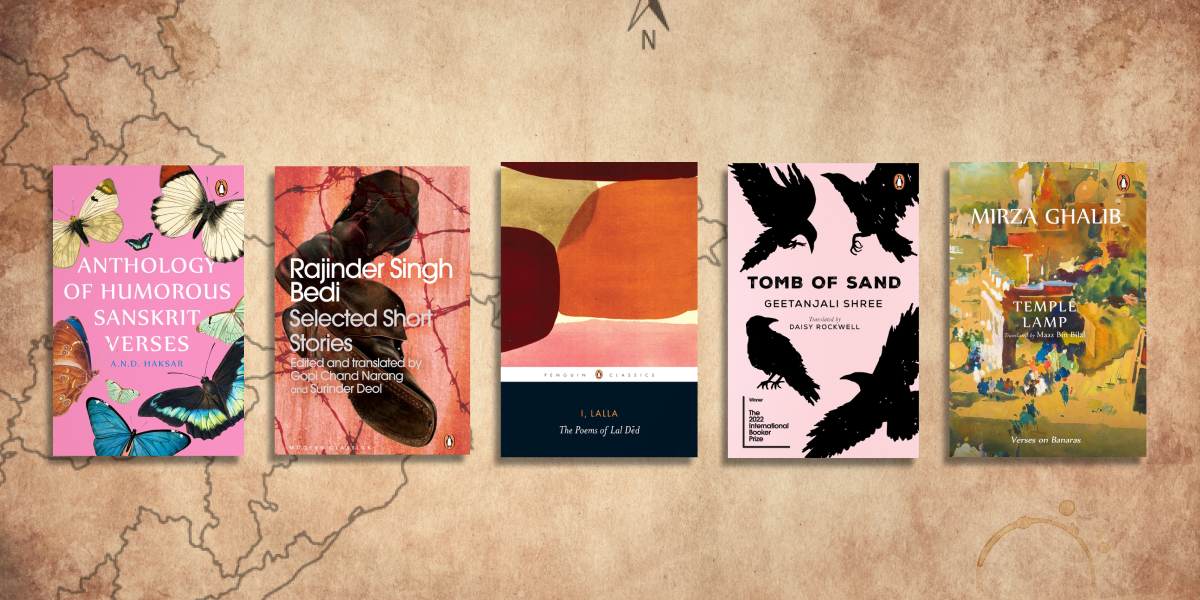
Tomb of Sand by Geetanjali Shree, translated by Daisy Rockwell
Tomb of Sand
WINNER OF THE INTERNATIONAL BOOKER PRIZE 2022
In northern India, an eighty-year-old woman slips into a deep depression after the death of her husband, and then resurfaces to gain a new lease on life. Her determination to fly in the face of convention – including striking up a friendship with a transgender person – confuses her bohemian daughter, who is used to thinking of herself as the more ‘modern’ of the two.
To her family’s consternation, Ma insists on travelling to Pakistan, simultaneously confronting the unresolved trauma of her teenage experiences of Partition, and re-evaluating what it means to be a mother, a daughter, a woman, a feminist.
The poems of the fourteenth-century Kashmiri mystic Lal Ded, popularly known as Lalla, strike us like brief and blinding bursts of light. Emotionally rich yet philosophically precise, sumptuously enigmatic yet crisply structured, these poems are as sensuously evocative as they are charged with an ecstatic devotion. Stripping away a century of Victorian-inflected translations and paraphrases, and restoring the jagged, colloquial power of Lalla’s voice, in Ranjit Hoskote’s new translation these poems are glorious manifestos of illumination.
Anthology of Humorous Sanskrit Verses by A.N.D. Haksar
Anthology of Humorous Sanskrit Verses
In recent times, whenever ancient Sanskrit works are discussed or translated into English, the focus is usually on the lofty, religious and dramatic works. Due to the interest created by Western audiences, the Kama Sutra and love poetry has also been in the limelight. But, even though the Hasya Rasa or the humorous sentiment has always been an integral part of our ancient Sanskrit literature, it is little known today. Anthology of Humorous Sanskrit Verses is a collection of about 200 verse translations drawn from various Sanskrit works or anthologies compiled more than 500 years ago. Several such anthologies are well-known although none of them focus exclusively on humor. A.N.D. Haksar’s translation of these verses is full of wit, earthy humor and cynical satire, and an excellent addition of the canon of Sanskrit literature.
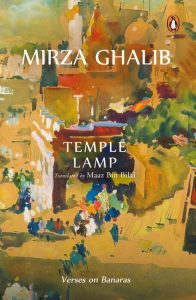
Temple Lamp: Verses on Banaras by Mirza Asadullah Beg Khan
The poem ‘Chirag-e-Dair’ or Temple Lamp is an eloquent and vibrant Persian masnavi by Mirza Ghalib. While we quote liberally from his Urdu poetry, we know little of his writings in Persian, and while we read of his love for the city of Delhi, we discover in temple Lamp, his rapture over the spiritual and sensual city of Banaras.
Chiragh-e-dair is being translated directly from Persian into English in its entirety for the first time, with a critical Introduction by Maaz Bin Bilal. It is Mirza Ghalib’s pean to Kashi, which he calls Kaaba-e-Hindostan or the Mecca of India.
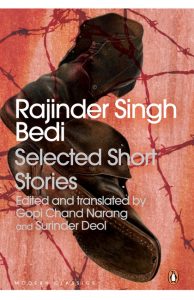
Rajinder Singh Bedi by Rajinder Singh Bedi, Gopi Chand Narang and Surinder Deol
Selected Stories: Rajinder Singh Bedi
Rajinder Singh Bedi: Selected Short Stories curates some of the best work by the Urdu writer, whose contribution to Urdu fiction makes him a pivotal force within modern Indian literature. Born in Sialkot, Punjab, Rajinder Singh Bedi (1915-1984) lived many lives-as a student and postmaster in Lahore, a venerated screenwriter for popular Hindi films and a winner of both the Sahitya Akademi as well as the Filmfare awards. Considered one of the prominent progressive writers of modern Urdu fiction, Bedi was an architect of contemporary Urdu writing along with leading lights such as Munshi Premchand and Saadat Hasan Manto.
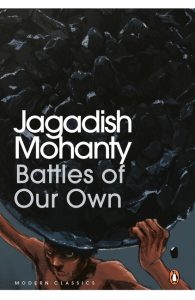
Jagadish Mohanty’s Battles of Our Own is a rare work of modern Odia and Indian fiction. It seeks to delineate a world that is off the grid. Its action unfolds in the remote and non-descript Tarbahar Colliery-a fictional name for the over hundred-year-old open-cast Himgiri Rampur coal mine in the hinterland of western Odisha. A work of gritty realism in its portrayal of a dark and dangerous underworld where coal is extracted, the novel poignantly reveals the primeval struggle between man and brute nature.
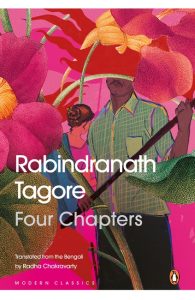
Four Chapters by Rabindranath Tagore, translated by Radha Chakravarty
Four Chapters
Char Adhyay (1934) was Rabindranath Tagore’s last novel, and perhaps the most controversial. Passion and politics intertwine in this narrative, set in the context of nationalist politics in pre-Independent India.
This new translation, intended for twenty-first-century readers, will bring Tagore’s text to life in a contemporary idiom, while evoking the flavour of the story’s historical setting.
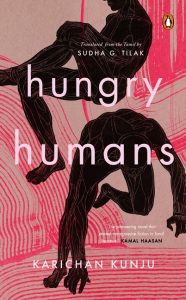
Hungry Humans || Karichan Kunju and Sudha G. Tilak
Hungry Humans
Ganesan returns, after four decades, to the town of his childhood, filled with memories of love and loneliness, of youthful beauty and the ravages of age and misfortune, of the promise of talent and its slow destruction. Seeking treatment for leprosy, he must also come to terms with his past: his exploitation at the hands of older men, his growing consciousness of desire and his own sexual identity, his steady disavowal of Brahminical morality and his slowly degenerating body. He longs for liberation-sexual, social and spiritual-but finally finds peace only in self-acceptance.
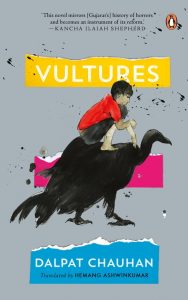
Based on the blood-curdling murder of a Dalit boy by Rajput landlords in Kodaram village in 1964, Vultures portrays a feudal society structured around caste-based relations and social segregation, in which Dalit lives and livelihoods are torn to pieces by upper-caste vultures. The deft use of dialect, graphic descriptions and translator Hemang Ashwinkumar’s lucid telling throw sharp focus on the fragmented world of a mofussil village in Gujarat, much of which remains unchanged even today.
A paying guest seems like a win-win proposition to the Joshi family. He’s ready with the rent, he’s willing to lend a hand when he can and he’s happy to listen to Mrs Joshi on the imminent collapse of our culture.
But he’s also a man of mystery. He has no last name. He has no family, no friends, no history and no plans for the future.
The siblings Tanay and Anuja are smitten by him. He overturns their lives. And when he vanishes, he breaks their hearts.
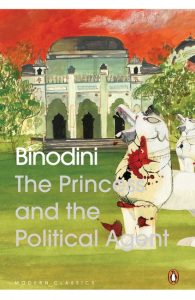
The Prince and the Political Agent byb Binodini Devi, L. Somi Roy
The Prince and the Political Agent
The Manipuri writer Binodini’s Sahitya Akademi Award-winning historical novel The Princess and the Political Agent tells the love story of her aunt Princess Sanatombi and Lt. Col. Henry P. Maxwell, the British representative in the subjugated Tibeto-Burman kingdom of Manipur. A poignant story of love and fealty, treachery and valour, it is set in the midst of the imperialist intrigues of the British Raj, the glory of kings, warring princes, clever queens and loyal retainers.
The Grddha Mullick family takes pride in the ancient lineage they trace from four hundred years before Christ. They burst with marvelous tales of hangmen and hangings in which the Grddha Mullicks figure as eyewitnesses to the momentous events that have shaped the history of the subcontinent.
In the present day, the youngest member of the family, twenty-two-year-old Chetna, is appointed the first woman executioner in India, assistant and successor to her father Phanibhushan. Thrust suddenly into the public eye, even starring in her own reality show, Chetna’s life explodes under the harsh lights of television cameras. As the day of her first execution approaches, she breaks out of the shadow of a domineering father and the thrall of a brutally manipulative lover, and transforms into a charismatic performer in her own right.
Ha Ha Hu Hu by Velcheru Narayana Rao, V. Satyanarayana
Ha Ha Hu Hu: A Horse-Headed God in Trafalgar Square
Ha Ha Hu Hu tells the delightful tale of an extraordinary horse-headed creature that mysteriously appears in London one fine morning, causing considerable excitement and consternation among the city’s denizens. Dressed in silks and jewels, it has the head of a horse but the body of a human and speaks in an unknown tongue. What is it? And more importantly, why is it here?
In the hilarious satire Vishnu Sharma Learns English, a Telugu lecturer is visited in a dream by the medieval poet Tikanna and the ancient scholar Vishnu Sharma with an unusual request: they want him to teach them English!
Tejo Tungabhadra by Vasudhendra, Maithreyi Karnoor
Tejo Tungabhadra: Tributaries of Time
Tejo Tungabhadra tells the story of two rivers on different continents whose souls are bound together by history. The two stories converge in Goa with all the thunder and gush of meeting rivers. Set in the late 15th and early 16th century, this is a grand saga of love, ambition, greed, and a deep zest for life through the tossing waves of history.
The first ever translation of a Bhojpuri novel into English, Phoolsunghi transports readers to a forgotten world filled with mujras and mehfils, court cases and counterfeit currency, and the crashing waves of the River Saryu.
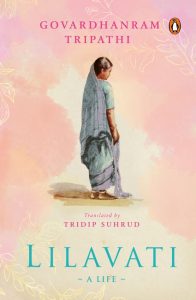
Lilavati by Govardhanram Tripathi, translated by Tridip Suhrud
Lilavati: A Life
In a moment of rare passion Govardhanram Madhavram Tripathi, author of Sarasvatichandra, exclaimed ‘I only want their souls’. He was referring to the souls of his countrymen and women, which he sought to cultivate through his literary writings. Lilavati was his and Lalitagauri’s eldest daughter. Her education and the writing of Sarasvaticandra were intertwined. She was raised to be the perfect embodiment of virtue, and died at the age of twenty-one, consumed by tuberculosis. In moments of ‘lucidity’ , she spoke of her suffering and that challenged the very foundations of Govardhanram’s life. In 1905 he wrote her biography, Lilavati Jivankala. This is a rare work in biographical literature, a father writing about the life of a deceased daughter. Despite Govardhanram’s attempts to contain Lilavati as a unidimensional figure of his imagination, she goes beyond that, sometimes by questioning the fundamental tenets of Brahminical beliefs, and at others by being so utterly selfless as to be unreal even to him.
The long weekend for the 75th Independence Day is here and there’s nothing better than plugging your earphones in and tuning in to the audiobooks that take you on a memorable and remarkable journey of India’s freedom. Check out our exclusive audiobooks curated for the occasion of India@75 and get immersed in the stories that will leave you with a sea of emotions.
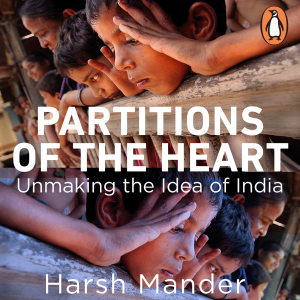
Partitions of the Heart
Partitions of the Heart | Harsh Mander
There was one partition of the land in 1947. Harsh Mander believes that another partition is underway in our hearts and minds.
How much of this culpability lies with ordinary people? What are the responsibilities of a secular government, of a civil society, and of a progressive majority? In Partitions of the Heart: Unmaking the Idea of India, human rights and peace worker Harsh Mander takes stock of whether the republic has upheld the values it set out to achieve and offers painful, unsparing insight into the contours of hate violence. Through vivid stories from his own work, Mander shows that hate speech, communal propaganda and vigilante violence are mounting a fearsome climate of dread, that targeted crime is systematically fracturing our community, and that the damage to the country’s social fabric may be irreparable. At the same time, he argues that hate can indeed be fought, but only with solidarity, reconciliation and love, and when all of these are founded on fairness.
Ultimately, this meticulously researched social critique is a rallying cry for public compassion, conscience and justice, and a paean to the resilience of humanity.
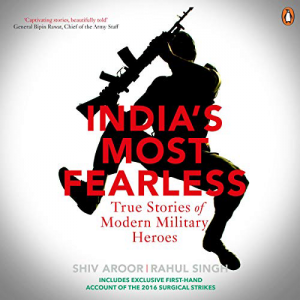
India’s Most Fearless
India’s Most Fearless | Shiv Aroor and Rahul Singh
The Army major who led the legendary September 2016 surgical strikes on terror launch pads across the LoC; a soldier who killed 11 terrorists in 10 days; a Navy officer who sailed into a treacherous port to rescue hundreds from an exploding war; a bleeding Air Force pilot who found himself flying a jet that had become a screaming fireball . . .
Their own accounts, or of those who were with them in their final moments. India’s Most Fearless covers fourteen true stories of extraordinary courage and fearlessness, providing a glimpse into the kind of heroism our soldiers display in unthinkably hostile conditions and under grave provocation.
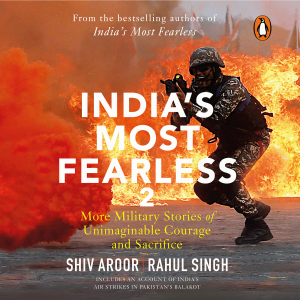
India’s Most Fearless 2
India’s Most Fearless 2 | Shiv Aroor and Rahul Singh
Untold accounts of the biggest recent anti-terror operations
First-hand reports of the most riveting anti-terror encounters in the wake of the 2016 surgical strikes, the men who hunted terrorists in a magical Kashmir forest where day turns to night, a pair of young Navy men who gave their all to save their entire submarine crew, the Air Force commando who wouldn’t sleep until he had avenged his buddies, the tax babu who found his soul in a terrifying Special Forces assault on Pakistani terrorists, and many more.
Their own stories, in their own words. Or of those who were with them in their final moments.
The highly anticipated sequel to India’s Most Fearless brings you fourteen more stories of astonishing fearlessness and gets you closer than ever before to the personal bravery that Indian military men display in the line of duty.
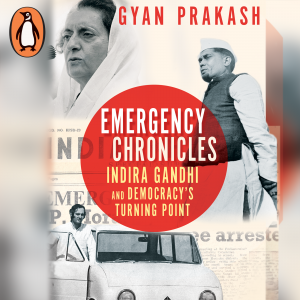
Emergency Chronicles
Emergency Chronicles | Gyan Prakash
As the world once again confronts an eruption of authoritarianism, Gyan Prakash’s Emergency Chronicles takes us back to the moment of India’s independence to offer a comprehensive historical account of Indira Gandhi’s Emergency of 1975-77. Stripping away the myth that this was a sudden event brought on solely by the Prime Minister’s desire to cling to power, it argues that the Emergency was as much Indira’s doing as it was the product of Indian democracy’s troubled relationship with popular politics, and a turning point in its history.
Prakash delves into the chronicles of the preceding years to reveal how the fine balance between state power and civil rights was upset by the unfulfilled promise of democratic transformation. He explains how growing popular unrest disturbed Indira’s regime, prompting her to take recourse to the law to suspend lawful rights, wounding the political system further and opening the door for caste politics and Hindu nationalism.
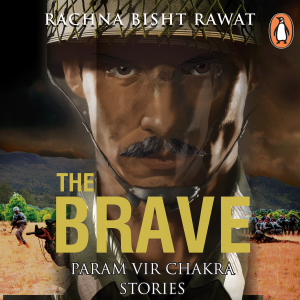
The Brave
The Brave | Rachna Bisht Rawat
21 riveting stories from the battlefield about how India’s highest military honour was won
The Brave takes you to the hearts and minds of India’s bravest soldiers, all of whom won the Param Vir Chakra, India’s greatest military honour. With access to the Army, families and comrades-in-arms of the soldiers, Rachna Bisht Rawat paints the most vivid portrait of these men and their extraordinary deeds.
How hard is it to fight at 20,000 feet in sub-zero temperatures? Why did Captain Vikram Batra say ‘Yeh dil maange more’? How do wives and girlfriends of soldiers who don’t return cope? What happens when the enemy is someone that you have trained? How did the Charlie Company push back the marauding Chinese? How did a villager from Uttar Pradesh become a specialist in destroying tanks?
Both gripping and inspiring, The Brave is the ultimate book on the Param Vir Chakra.
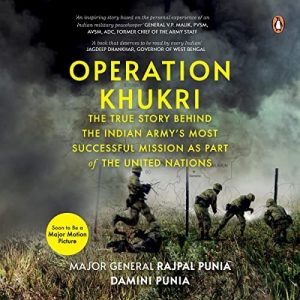
Operation Khukri
Operation Khukri | Major General Rajpal Punia, Damini Punia
The year was 2000. Sierra Leone, in West Africa, had been ravaged by years of civil strife. With the intervention of the United Nations, two companies of the Indian Army were deployed in Kailahun as part of a United Nations peacekeeping mission.
Soon, the peaceful mission turned into a war-like standoff between Major Punia’s company and the Revolutionary United Front (RUF) rebels in Kailahun, with the Indian peacekeepers cordoned off for seventy-five days without supplies. The only way home was by laying down their weapons.
Operation Khukri was one of Indian Army’s most successful international missions, and this book is a first-hand account by Major Rajpal Punia, who, after three months of impasse and failed diplomacy, orchestrated the operation, surviving the ambush of the RUF in prolonged jungle warfare twice, and returning with all 233 soldiers standing tall.
We have published amazing books in August for you and our young readers. So, spend the holidays and long weekends with your little ones reading them stories of courageous people and helping them understand India’s history.
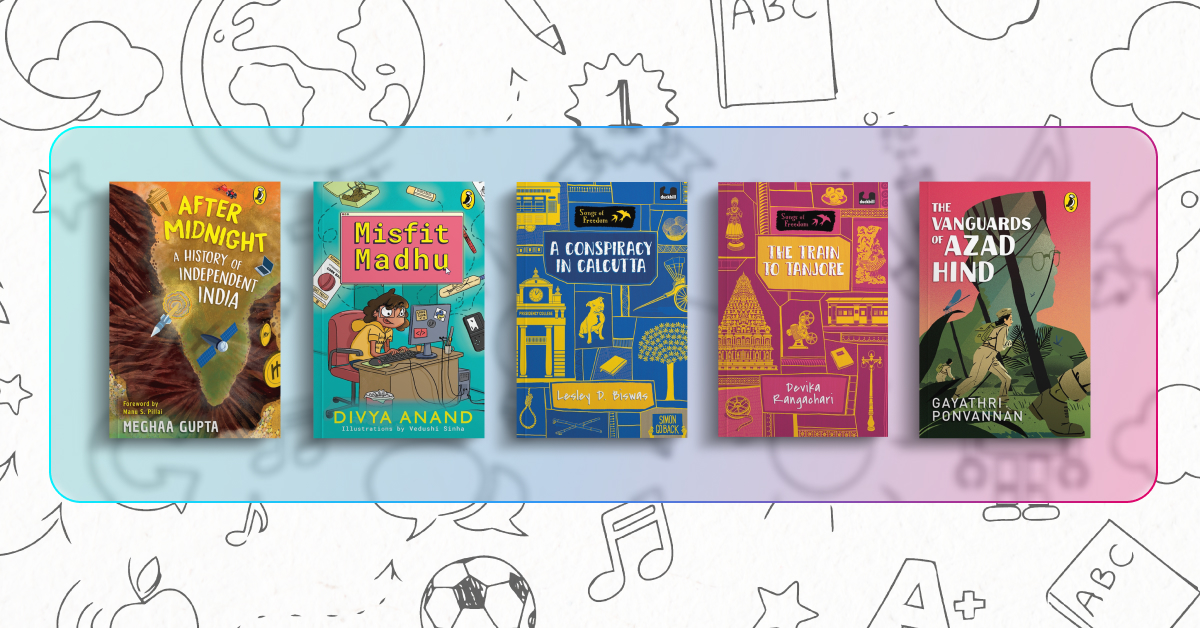
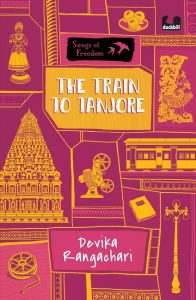
The Train to Tanjore
The Train to Tanjore || Devika Rangachari
Tanjore, 1942
There are few excitements in Thambi’s quiet life. There is the new hotel, disapproved of by elders, which lures him with the aroma of sambar with onions. There are visits to the library to read the newspaper, and once in a while, a new movie at the Rajaram Electric Theatre. More disagreeably, there are fortnightly visits from his uncle to lay down the law.
When Gandhiji announces the Quit India movement, Tanjore is torn apart by protests. The train station-the lifeline of the town-is vandalized. Mysterious leaflets are circulated, containing news that newspapers do not publish. And inspired by the idea of a free India and his own dreams of being an engineer, Thambi must find the courage to do what he believes is right, even when it endangers all he holds dear.
The Songs of Freedom series explores the lives of children across India during the struggle for independence.
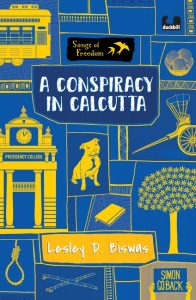
A Conspiracy in Calcutta
A Conspiracy in Calcutta || Lesley D. Biswas
Calcutta, 1928
As the student protests gather momentum all across Calcutta, and police atrocities grow, ten-year-old Bithi wants to join in the struggle for freedom.
But living in a society where her best friend is to be married and just the fact that she is going to school is regarded with disapproval, how can Bithi play a substantial part? How can she fight those who are dearest to her? Discouraged but not daunted, Bithi schemes and plots and lies and is drawn into unexpected danger-all for the sake of fighting injustice in all its forms.
The Songs of Freedom series explores the lives of children across India during the struggle for independence.
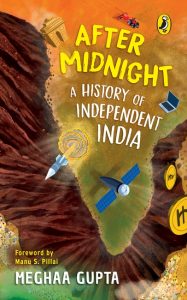
After Midnight
After Midnight || Meghaa Gupta
At the time of independence, few believed that a country made up of over 500 princely states and British provinces could survive as a nation, even for a few years. That a land stripped of its riches, wracked by disease and famine and divided along tense communal lines, could thrive in its ambition and aspirations. Yet, in 75 years since independence, India has grown beyond anyone’s expectation. Today it’s an Asian powerhouse, poised to become the third largest economy in the world. In many ways, this is one of the greatest underdog-beating-the-odds stories in world history.
How did India get this far? What were the sweeping social, cultural, scientific, political, military, environmental and economic developments it witnessed along the way? Interspersed with personal anecdotes, illustrations, infographics, informative timelines and pull quotes, After Midnight gives a powerful context to the present and revels in the diverse and remarkable ideas that have come to shape this great nation. It attempts to provide young readers with perspective, meaning, and food for thought as they try to comprehend the many facets of this fascinating country. This well-researched, accessible and definitive handbook tells the story of India like never before.
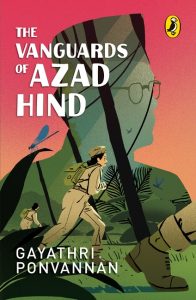
The Vanguards of Azad Hind
The Vanguards of Azad Hind || Gayathri Ponvannan
The year is 1943 in British India . . .
Kayal is a 16-year-old freedom fighter who takes part in marches, burns British goods and sabotages trains-all without the knowledge of her law-abiding family. So, it comes as quite a surprise when Kayal discovers that her aunt Uma is a soldier in the Azad Hind Fauj, the all-volunteer Indian National Army from Southeast Asia led by Subhash Chandra Bose, which aims to free India!
By what Kayal considers a huge stroke of luck, Uma agrees to take her along to a recruitment camp in Burma. Suddenly, the war, which had once seemed a distant thrill, now becomes a horrific reality.
Packed with adventures of teenagers as they join military boot camps, and set off on the most exciting journey of their lives, The Vanguards of Azad Hind is an ode to the Azad Hind Fauj and its women’s unit, the Rani of Jhansi regiment, whose soldiers proved to be trailblazers with their feisty passion to fight for India’s freedom.
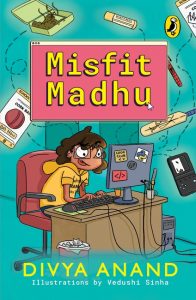
Misfit Madhu
Misfit Madhu || Divya Anand
Madhu is a shy middle-grade developer who spends her holidays creating her dream app, ‘School Santhe’. Soon, the app goes viral…and so does she! And why not? After all, an app where everyone at school can trade stuff is the app they’ve all been waiting for! Madhu now sets her sights on winning the GoTek young developers contest.
But when School Santhe is used to selling leaked test papers, she’s faced with the hardest decision of her life:
a) Shut down the app that made her popular?
b) Or stay silent and become part of something…criminal?
As her dreams begin to crumble – with the entire school now blaming her for the mess her app has caused – Madhu realizes that sometimes, it’s far easier to debug an app than it is to debug your life!
Get your copies of these books from your nearest bookstore or via Amazon.