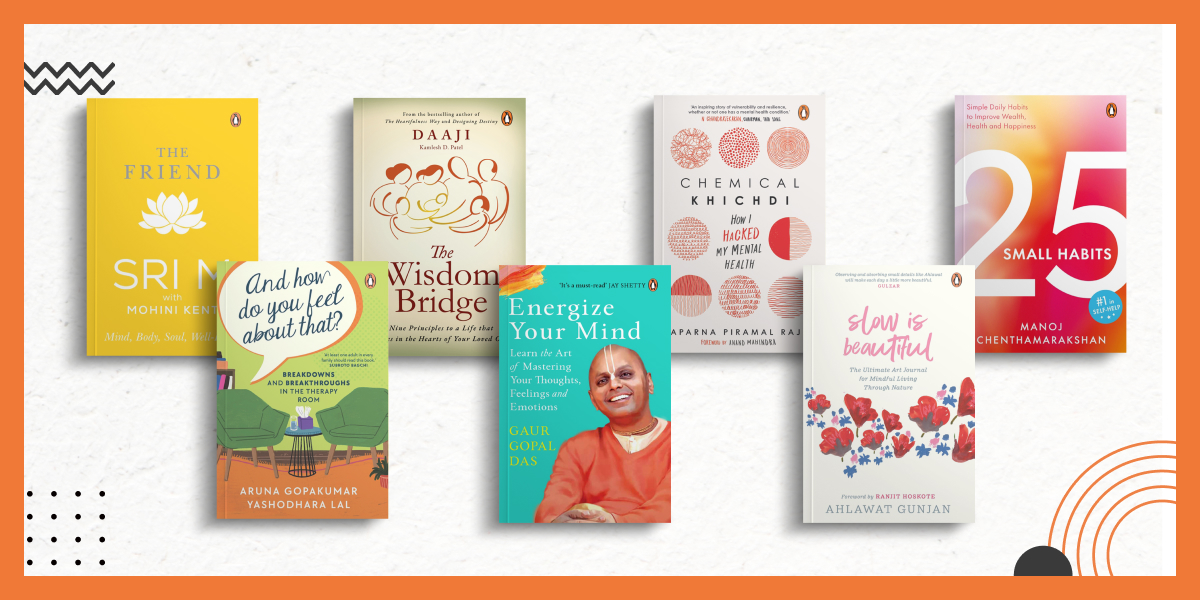
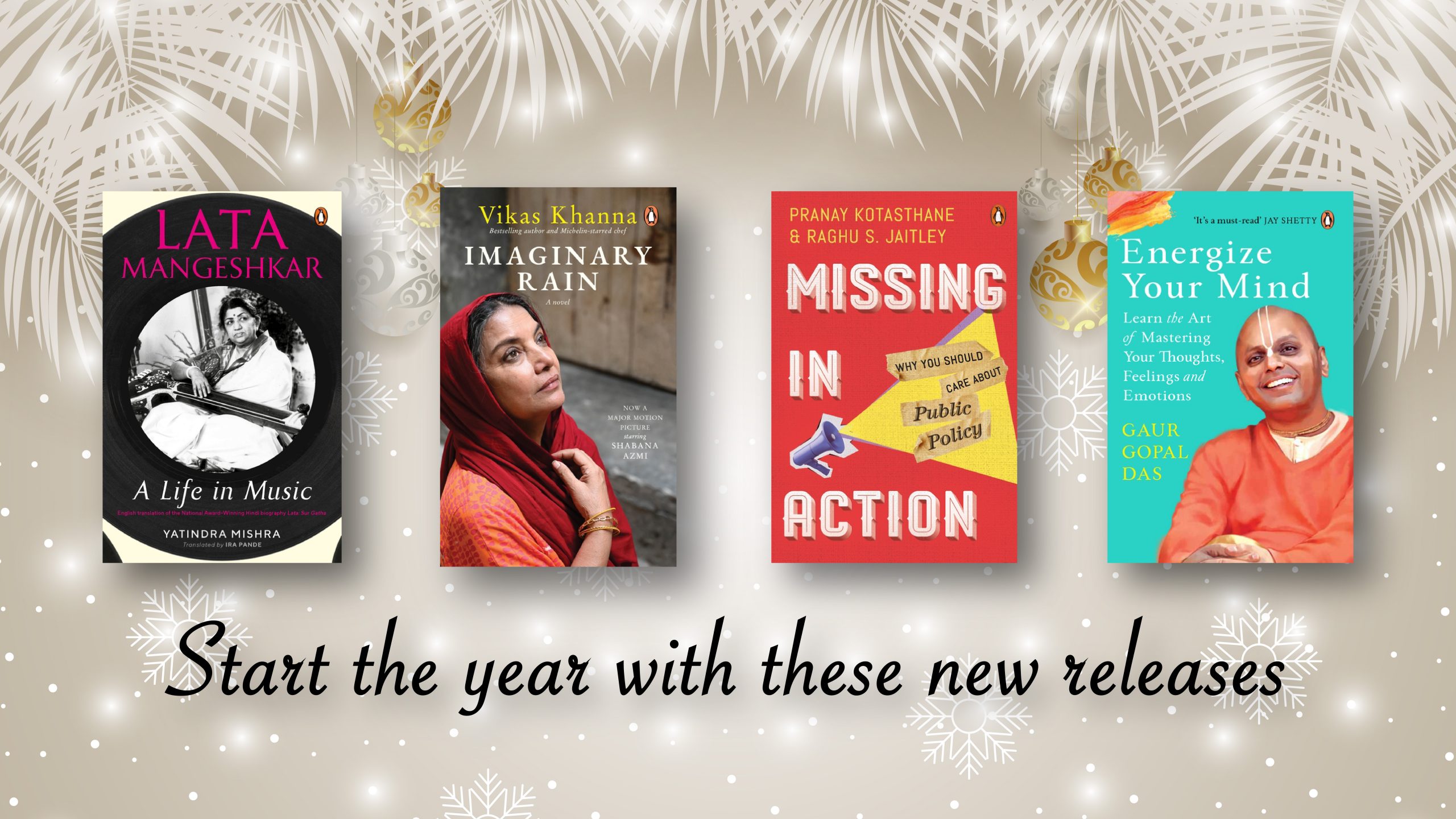
Hey, you! We are here to remind you that mental health is as important as physical health. So, prioritize your mental health in 2023!
Some of you might have missed adding ‘self-care’ to your long list of resolutions this year. However, each one of us should take an extra step in taking care of our bodies, mind, and soul right from the beginning of the year. To help you in the journey of refreshing your mind and relieving your worries, we bring to you five books that can be a good starting point. Scroll through this list and choose the books that will become your companions in your self-care journey and help you understand your mind better.
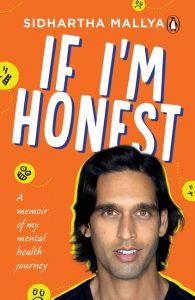
If I’m Honest||Sidhartha Mallya
Sidhartha Mallya has had a unique life to say the least. Born into one of India’s most prominent business families, he has had-from an outside perspective-what many would consider a blessed life. Appearances can often be deceiving, though, and at times what was going on inside was a very different story. In 2016, he went through depression. Something that came as a bit of a surprise to him, given that he seemingly had the world at his feet: he was young, had just graduated from a prestigious drama school and had upcoming film projects. However, despite all the wonderful opportunities that awaited him, he felt desperately unhappy, constantly low and like his insides were being crushed by a vice. That was when Sidhartha realized that something was not right and he sought professional help. Thus began the journey to understanding his current mental state as well as an exploration of the other mental issues he has suffered throughout his life and where they might have stemmed from. Sidhartha also writes about what helped him face and overcome his challenges.
Energize Your Mind
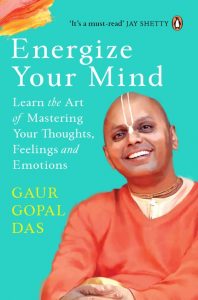
Energize Your Mind || Gaur Gopal Das
In this book, bestselling author and life coach Gaur Gopal Das decodes how the mind works. He combines his anecdotal style with analytical research to teach us how to discipline our mind for our greater well-being. Throughout this book, he provides interactive exercises, meditation techniques and worksheets to help us take charge of our minds.
This book is an essential read for anyone who wants to work towards a better, more fulfilling future for themselves.
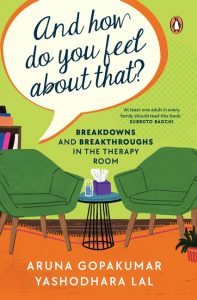
And How Do You Feel About That?
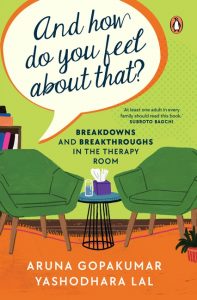
And How Do You Feel About That? || Aruna Gopakumar, Yashodhara Lal
Ever wondered what REALLY happens in the therapy room?
For too long, therapy has been seen as taboo in our society and is shrouded in myth–it’s only for the weak or ‘crazies’, it’s just blaming your parents, a therapist ‘only listens’ and so on. In this book, Aruna Gopakumar and Yashodhara Lal bust those myths and show you how therapy actually works.
With decades of combined experience in the field, these two therapists share fascinating stories based on their practice. You’ll meet the woman who sends secret messages to her husband during arguments; the towering tattooed man who realizes he can’t save his sister; the teenager whose life is revealed in the tale of a lonely bear; the divorced man angry with his ex-wife for starting to date again; the fiery gay young man impatient to change the world; the lady who won’t relax until her daughter is perfect; and many more.
Written with authenticity, warmth, simplicity, and lightness, And How Do You Feel About That brings you an understanding of the world of possibilities that opens up when we embark on an inner exploration – in dialogue with another.
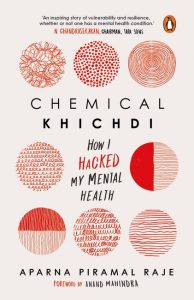
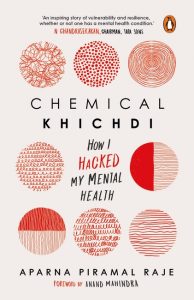
Chemical Khichdi
Chemical Khichdi || Aparna Piramal Raje
Part memoir and part self-help guide, Chemical Khichdi provides a pathway for anyone with a mental health condition and the family, friends, colleagues, and medical professionals that love and care for them.
Empathetic, candid and accessible, it outlines ‘seven therapies’ that have enabled Aparna to ‘hack’ her mental health and find equilibrium over the years, and shows how you or someone you know can also do the same.
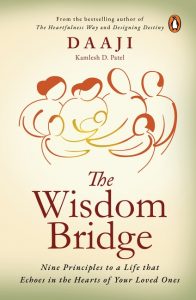
The Wisdom Bridge
The Wisdom Bridge || Kamlesh D. Patel
The intentions, thoughts and actions of the elders are caught by the hearts of the children. The children observe, learn and imbibe the teachings quickly and faithfully, and the elders have the responsibility to not only raise the children well, but nurture and guide them in a way that they can lead fulfilling lives.
Daaji in The Wisdom Bridge offers nine principles to guide you, the reader, to live a life that inspires your children and your loved ones. These principles are important references for parents, parents-to-be, grandparents and caregivers to create fulfilling and happy lives. They will not only help you enrich the lives of your children and raise responsible teenagers, but pave the way for an inspired life and resilient bonds in your family.
The Friend
The Friend || Sri M, Mohini Kent Noon
Sri M is widely known as a spiritual leader and teacher. However, he believes, for him to truly connect with someone and guide them, they must be friends.
In this book, Mohini Kent asks him about love, life, religion, marriage, death and everything in between making it a one-stop shop complete collection of Sri M’s teachings and philosophy. Following the ancient form of a conversation between a guru and a disciple, this book is easy to read and relatable for people of all ages.
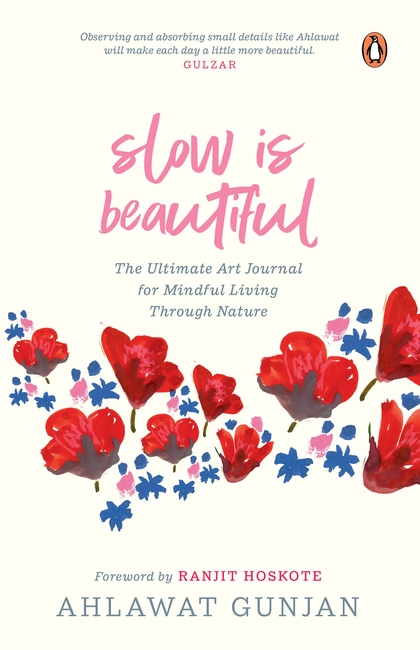
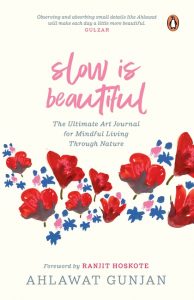
Slow is Beautiful by Ahlawat Gunjan
Slow is Beautiful || Ahlawat Gunjan
Slow is Beautiful serves as an invitation to engage in a voyage of mindfulness and to tune out the clutter and noise in your environment. You’ll learn to see, watch, reflect, and practise using artistic methods developed through years of training under the direction of artist and visual designer Ahlawat Gunjan in order to rekindle a lost instinct. By developing a relationship with form, colour, and composition in a particularly approachable manner, this lovely collector’s edition equips you to accept a fresh artistic perspective into your lives. In order to encourage readers to draw, erase, paint, experiment, create, and, most importantly, embrace their errors, each of the book’s sixty simple prompts is highlighted by vibrant ink and watercolour paintings created and curated by the artist himself.
25 Small Habits by Manoj Chenthamarakshan
25 Small Habits || Manoj Chenthamarakshan
We all recognize that our habits influence how we live, but when we also know how challenging it can be to adopt a new habit. Most individuals struggle after the first week to keep up with a new habit. This book doesn’t teach you how to create habits; instead, it provides you with a list of 25 quick, easy routines that you can adopt right away.
The practises in this book are meant to help you develop holistically in terms of your personal growth, as well as your community, job, relationships, physical health, and mental health. You can decide which habits you can incorporate into your daily plan.
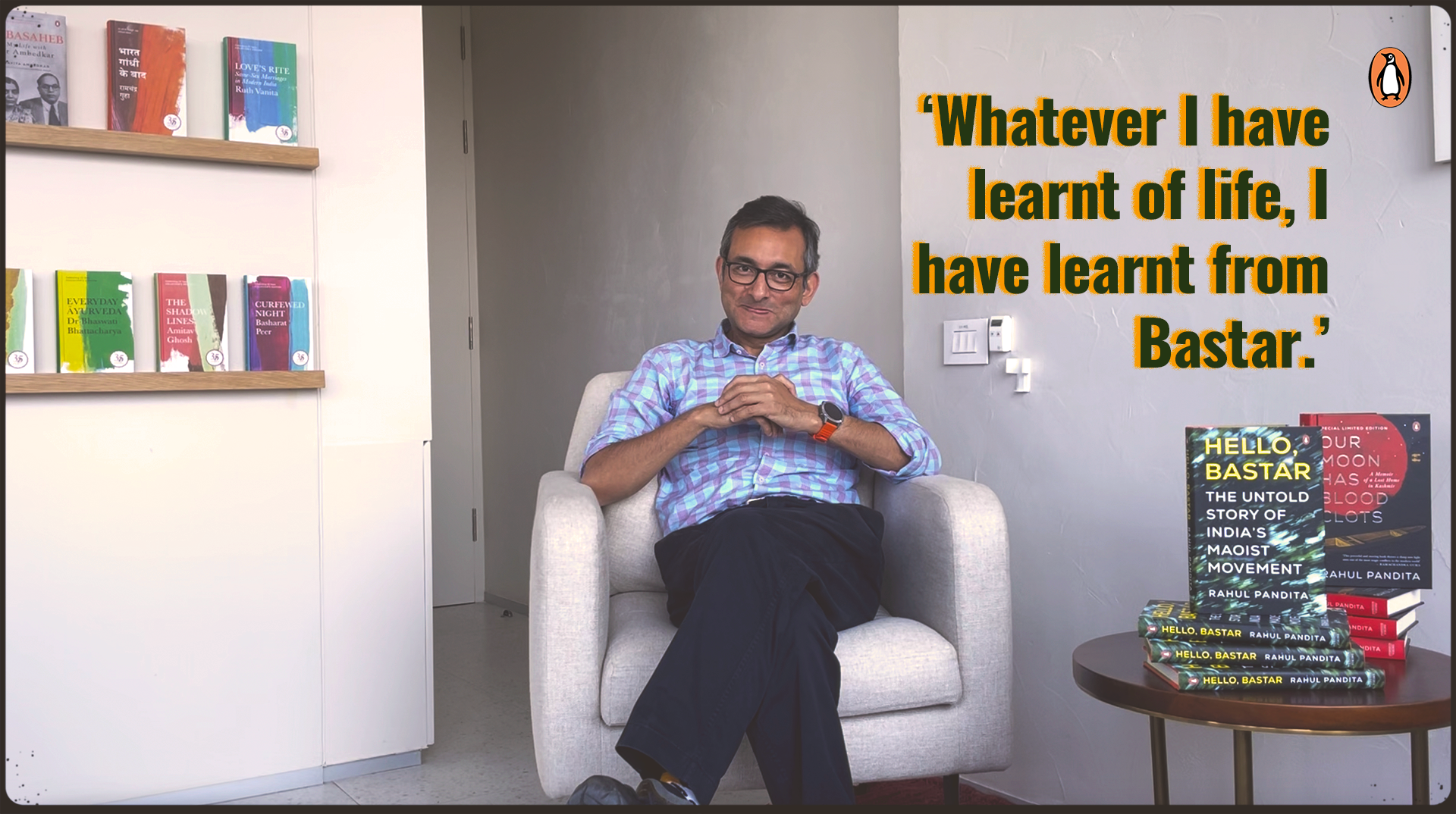
To write books that have political blood and bones, in a country like ours, is a brave job that requires hard work. And here’s someone who’s trying to do it right by talking about important issues through deep rooted investigative journalism. We sat down with the incredible Rahul Pandita and discussed both his books, Our Moon Has Blood Clots and Hello, Bastar; the different processes that went behind writing a memoir and an investigative book, and what inspires him to write.
What prompted you to write Hello, Bastar and what are you trying to say through it?
Hello, Bastar is a labour of many, many years of travel through central and eastern India, in what are widely known as left-wing, extremist-affected districts of India. Most of these travels happened at a time when the editors and intellectuals in Delhi and other bigger cities had very little idea about the movement and how large its future could be. Nobody anticipated how it would consume us in many ways in the following years until our former Prime Minister, Mr. Manmohan Singh called it the country’s biggest internal security threat.
This book is basically about how a handful of young men and women believed in a certain idea of revolution and how they created the modern Naxal movement from the jungles of Bastar in the 1980s. Hello, Bastar is mostly meant for a non-academic reader, for someone who is a student of India and really wants to know what is happening in this part of the country.
While your previous book, Our Moon Has Blood Clots was a memoir that rose out of personal and community experience, Hello, Bastar is more investigative in nature, made out of reportage and interviews. How different were both the processes? And was the latter more comfortable considering your journalistic background?
I think Hello, Bastar was a relatively easier book to write because it was largely a part of what I do as a journalist. So, writing this did not feel as hard as the previous book which is part memoir-part reportage of the exodus and torture that happened to a minority community in the Kashmir Valley. That book was more difficult to write because of the personal history involved. And as my editor, Meru might recall that there were times when I had to wait through patches of darkness because of which the book became extremely difficult to write. But during those patches, Meru did handhold me quite a few times during the writing process for which I remain grateful to her.
Both the books talk about conflicts. Is that something that particularly intrigues you?
Well, I am a conflict writer. Early on in my career, when I came to Delhi, I made a pact with myself. I vowed that I will not report on things based out of New Delhi because most times when you care about an incident or event, you have a preconceived notion about it. And most times when you actually investigate on the ground level, you are surprised to realize that your preconceived notions about most things were absolutely false. So, the reportage part of Our Moon Has Blood Clots or the entirety of Hello, Bastar has been built out of investigative journeys made through the length and breadth of the country.
Talking about preconceived notions, there must be a lot of things you would’ve learnt during Hello, Bastar. Was there one thing that particularly shocked you or was a wild revelation?
Whenever I get a chance to interact with young people, I tell them, ‘I’ve learnt nothing in school or college. Whatever I have learnt of life, I have learnt from Bastar, really.’ I spent weeks and weeks embedded with the Maoist guerillas and Adivasis in the back of beyond and learnt years in days. So, every journey, every day has been replete with some learning. And many of those learnings have left me shocked, surprised and sometimes also thankful that I could travel to these parts and learn so much not only about these people but about life in general.
And was it difficult reaching out to a community you don’t belong to? Were you apprehensive? Were they apprehensive in sharing their life and story with you?
So again, I think this is a part of a larger problem which Indian journalism suffers from. Where journalists are just paradropped at some place because of a particular incident and they spend a couple of days there, piggybacking on the previous work of stringers or local resource persons and later on claim to understand everything about that area. In the past, I have typically called it ‘clean-bedsheet journalism’ where you leave for a small town in the morning and make sure that you come back to the small hotel by the evening. But that’s not how things work, at least in Bastar.
You have to spend a lot of time in Bastar to understand its reality. When you’re travelling in the village during the day, you might come across an ordinary Adivasi at the roadside tea shop. Later, you find out that he is a Naxal Guerilla. But that is not something you will know if you just have tea there and proceed back to your station. Conflict zones are like snake pits, you don’t know who is who until you familiarize yourself to the place.
Also, it takes a lot of time for people to open up about their story. There were times when we were embedded with Maoist groups of men and women, where young women especially would really shy away and not talk at all. But after spending some days with them and talking to them, telling them you mean well, that you’re there to know their story and make them comfortable – they open up. And that again, is unfortunately not possible when you’re there for a day or two.
Once an author wrote that he spent a lot of time in Bastar but didn’t meet a single Naxal there. I remember joking about it and commenting that Naxals are not like Coca-Cola or Haldiram Bhujia. If you go inside villages, the penetration of Haldiram Bhujia is immense. But that’s not how Naxals are to be found. You have to spend a lot of time there before they let you in.
Does the fear of backlash or controversy of writing about sensitive subjects govern your writing in some way?
I think both my books with Penguin India prove the fact that I really don’t care about labels. In the past, I have been called a specialist of this and that and I refute those claims completely. I am just a student of India. Even my twitter bio says that. I came to journalism because I had jigyaasa, the intellectual curiosity about the things I saw around me and I wanted to explore their reality. So, my modus operandi is simple. If I’m intrigued about something and want to seek answers, I seek them for myself first before seeking them on behalf of anyone else. And that has pretty much guided my reporting from anywhere in India. So, I’m not really into what is fashionable to say and what isn’t. I say what I see and I try to write passionately about it.
Do you have a particular target audience in mind when you write a book? Do you think Our Moon Has Blood Clots reached the right audience, considering the current political climate of the country?
I think I am glad that Our Moon Has Blood Clots came out when our country’s politics was slightly simpler than this. My understanding of writing is very simple. I am a firm believer of the fact that your writing should be accessible to the last man down. So, there are many people who write to me saying that we have very scant understanding of English but they were able to read my book and I consider that my strength. I also think Indian journalists often miss out on the element of storytelling. So, when I write my books, I consider them an extension of my journalism. What I really want to do is to give the feel, colour and sound of the place and people I am talking about and that comes only when you have a basic understanding of storytelling. So I think these two parameters are personally very important to me.
Politics shape every individual, especially a writer. And you, quite directly, write about overtly political issues. Considering that pen is mightier than the sword and books have the power to shape individuals, do you feel a heavy responsibility while writing?
Yes, there’s a responsibility about what you’re writing.
But again, like I said, you should not worry about labels. What you see, you see to the best of your ability. We’ve just come to this terrible and ugly situation where everything is reduced to the binary of left and right. Everyone has this pressing need to put everyone in a basket. I would not like to be in any basket. I hate this basket system. Personally, I give a lot of leeway to people. Most things around our universe are not black and white. They are shades of grey. There is a subtle nuance about everything. Who are we at the end of the day? We are the sum total of our experiences. Our politics is also shaped by what we have gone through as individuals. So, you should always keep that in mind before you accuse someone of being an urban Naxal or a closet Sanghi or any other such labels.
Lastly, do you think there is a possibility of an endeavor where Kashmiri Pandits and Kashmiri Muslims could come together to share their respective points of view regarding the 1990s in the shape of a book or an art piece together?
That’s an ideal situation. But for that to happen, the Kashmiri society from both sides has to meet somewhere. Unfortunately, we are not there right now. To begin with, the idea of reconciliation has to come from the majority in many ways. There has to be an acknowledgement about what happened in the 1990s. To the best of my knowledge, there is very little collective acknowledgement. In a private space, what a Kashmiri Pandit says to a Kashmiri Muslim doesn’t matter in the larger scheme of things. What you say collectively as a debate matters, which will then find expression in writing, art and theatre. I think some work here and there gets done. My friend, M.K. Raina is an eminent theatre personality and he tries to perform initiatives like these. There are plays in which both Kashmiri Pandits and Muslims have participated. And you will find a microcosm of this in things such as weddings sometimes. There’ll be a Kashmiri Pandit wedding and a Kashmiri Muslim singer will be performing there and everyone will be nostalgic about olden times. But these events are far and few and come from a personal space. But in terms of society at a larger level, these efforts are largely missing.
If you’re intrigued to read Rahul Pandita’s works, you can get your copy of Our Moon Has Blood Clots and Hello, Bastarat your nearest bookstore or through Amazon.
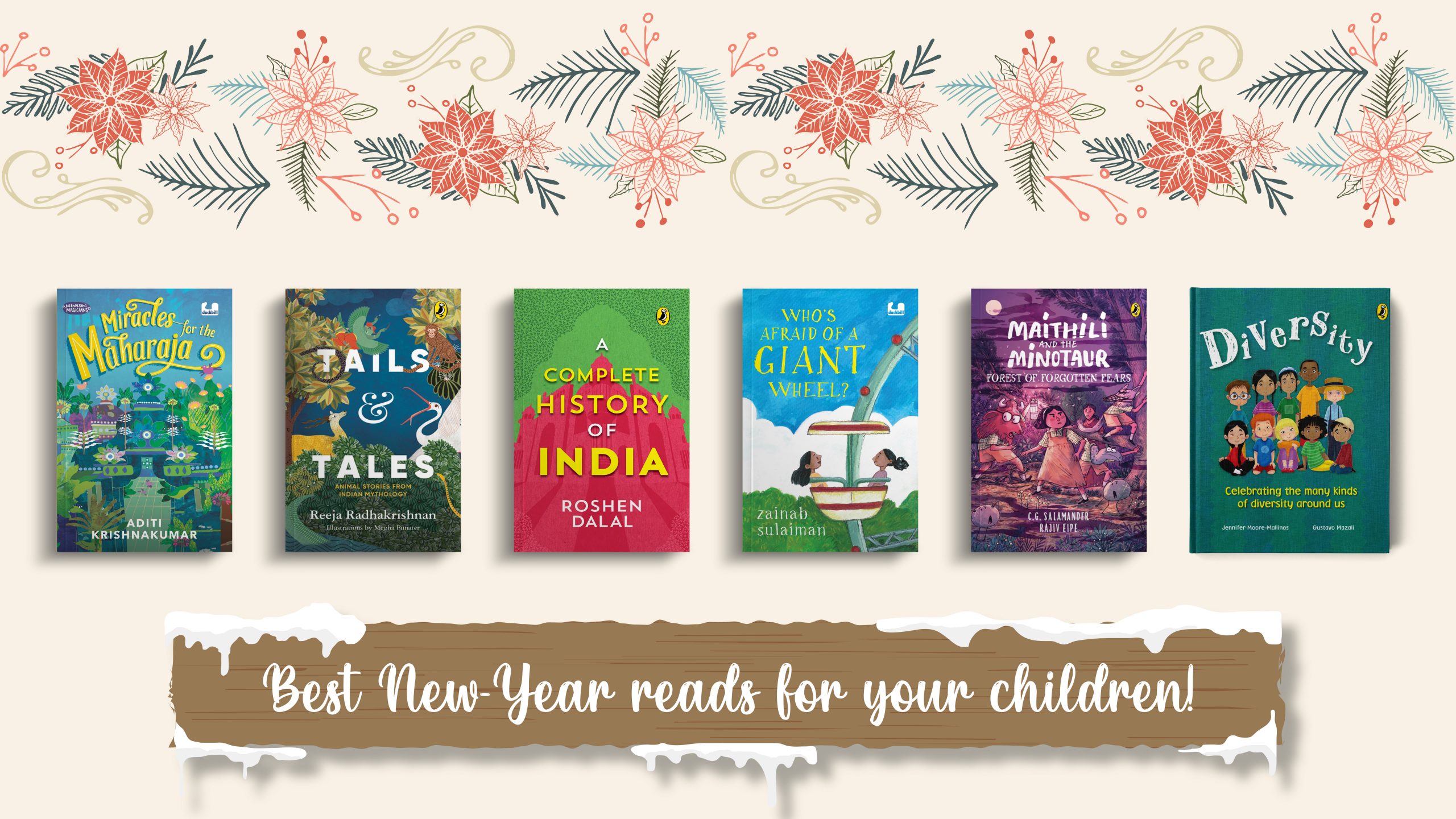
To a child, the concept of time is very simple. It flows by extremely fast when you’re playing and extremely slow when you’re bored. But New Year is always a great time to celebrate, introspect and makes kids aware of times changing. And the best way to do this is bring them books! Books – the chronicles of time, the doors to imagination and the gifts that stand the test of time itself!
So, here they are, the very first new children’s books releasing in 2023:
Diversity || Jennifer Moore-Mallinos
Diversity
Jennifer Moore-Mallinos
While there are many things that make us the same, there are also many things that make us different. Where we live, what we eat, how we dress and even how we speak-these are just a few things that make us who we are.
Let’s explore all of the wonderful things that make us special in our own way!
Miracles for the Maharaja || Aditi Krishnakumar
Miracles for the Maharaja (Meandering Magicians Series Book III)
Aditi Krishnakumar
Something strange is afoot in the kingdom of Pür.
The most favoured suitor at Princess Vasundhara’s swayamvara has disappeared …
A reclusive sorceress has emerged from the Eastern Isles …
The Inter-Realm Ambassador is furious …
A long-lost stone with dark powers must be found …
The Sprites are preparing for rebellion …
When dignitaries from all the Mortal Realms-and a few from the Inter-Realm-gather in Rajgir for a stressful swayamvara, only mayhem can ensue! Can Meenakshi and Kalban uncover Tara the Starchaser’s dark legacy and prevent a war between the Realms?
Book III in the Meandering Magicians series
Maithili and the Minotaur-Forest of Forgotten Fears || C.G. Salamander, Rajiv Eipe
Maithili and the Minotaur-Forest of Forgotten Fears (Book 2 in an Outlandish Graphic Novel Series)
C.G. Salamander, Rajiv Eipe
What starts out as a field trip into the forest, soon turns into something nefarious for Maithili, Minotaur, and their friends. Overjoyed, underprepared and blissfully unaware, one wrong turn is about to send them spiraling into the depths of their worst fears.
Sink into the second installment of Maithili and the Minotaur, set in an outlandish world where nothing is as it seems.
Tails and Tales || Reeja Radhakrishnan
Tails and Tales
Reeja Radhakrishnan
Meet the troublesome mouse who carries the gigantic Ganesha; a humble fish who saves
the world from a devastating flood; the vulture-king Jatayu who dies while attempting to rescue Sita, and many more.
There are animals and birds who lead a quest, forge a friendship, avenge a wrong or save the world
like a superhero. Let’s delve into their adventurous world and celebrate their heroism and valour!
The stories in this sumptuously illustrated gift edition showcase the diversity and wealth of our rich folklore while sharing the timeless wisdom imbued in them.
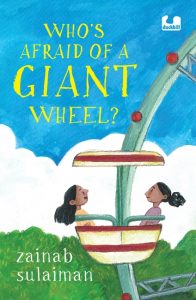
Who’s Afraid of a Giant Wheel? || Zainab Sulaiman
Who’s Afraid of a Giant Wheel?
Zainab Sulaiman
At school, Noorie is sassy. She does not listen to her teachers and bosses over her schoolmates. At home, Noorie is a slave to her neighbour and friend, Tina. Whatever Tina wants, Noorie does.
Tina’s friendship helps Noorie ignore the fact that her marks are bad, her teachers don’t seem to like her and that her father and mother are not getting along any more. Yet when everything falls apart, and even Tina rejects her, who will Noorie turn to?
My First Ruskin Bond Collection: A Set of 10 Chapter Books || Ruskin Bond
My First Ruskin Bond Collection: A Set of 10 Chapter Books
Ruskin Bond
Puffin Chapter Books is a series of short, illustrated books for young readers.
From India’s favourite storyteller comes a curated collection of ten short, charmingly illustrated stories. Each book offers a splendid introduction to Ruskin Bond’s world through endearing characters and deliciously written tales in his unique style.
Heart-warming, funny and spirited, this boxset is a perfect gift for beginners and independent readers.
So, which of these are going to decorate your little one’s bookshelf next?
As one year melts into a new one, we remember the things we are grateful for. All the people we met and held close, all the things we got to experience and most of all, the stories we call our own. Celebrate this New Year with these new books releasing this month – fresh, exciting and intriguing stories from different personalities from different fields to refresh your palette and make it ready for all the incredible things 2023 has to offer! This New Year, don’t build a sky-high TBR. Instead, take things slow, one book at a time.
And to help you with selecting you first few, here are some new books replete with self-help, historical fiction, intriguing biographies and more!
Presenting to you, the very first new releases from 2023:
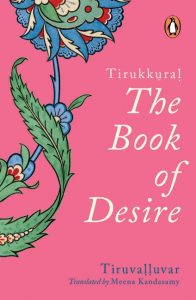
Tirukkural || Meena Kandasamy, Tiruvalluvar
Tirukkural
The Book of Desire
Meena Kandasamy, Tiruvalluvar
Written by the poet Thiruvalluvar, the Kamattu-p-pal is the third part of the Tirukkural – one of the most important texts in Tamil literature. The most intimate section of this great work – it is also, historically, the part that has been most heavily censored. Although hundreds of male translations of the text have been published, it has also only ever been translated by a woman once before. Tirukkural is award-winning writer Meena Kandasamy’s luminous translation of the Kamattu-p-pal.
Meena Kandasamy delves into this classic, and provides the first feminist interventionist translation into English-remaining true to the desire throbbing through the lifeblood of the text, while retaining the drama that pervades the quintessential Tamil world of exaggerated hurt, lover’s quarrels and evenings lost to longing.
Energize Your Mind || Gaur Gopal Das
Energize Your Mind
Learn the Art of Mastering Your Thoughts, Feelings and Emotions
Gaur Gopal Das
In this book, bestselling author and life coach Gaur Gopal Das decodes how the mind works. He combines his anecdotal style with analytical research to teach us how to discipline our mind for our greater well-being. Throughout this book, he provides interactive exercises, meditation techniques and worksheets to help us take charge of our mind.
This book is an essential read for anyone who wants to work towards a better, more fulfilling future for themselves.
Missing In Action || Pranay Kotasthane, Raghu S Jaitley
Missing In Action
Why You Should Care About Public Policy
Pranay Kotasthane, Raghu S Jaitley
In Search of an Adarsh Indian State
In India, public policies are all around us. Despite this pervasiveness, yeh public sab nahin jaanti hai (the public doesn’t know it all).
Questions are rarely asked of the Indian State-the institution that makes rules, bends them and punishes others for breaking the laws it creates. The privileged can afford not to think about the State because we have given up on it. The not-so-privileged have resigned themselves to a State that provides short-term benefits. Either way, we seldom pause to reflect on why the Indian State works the way it does.
Missing in Action aims to change such perceptions through sketches from everyday experiences to illustrate India’s tryst with public policymaking. It acquaints the reader with some fundamental concepts of the public policy discipline. It explains the logic (or the lack of it!) of the Indian State’s actions, shortcomings, constraints, and workings.
Jargon-free and accessibly written, the book achieves the difficult task of both entertaining and educating.
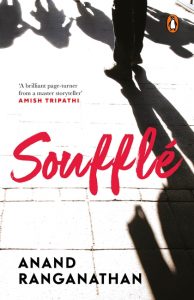
Souffle || Anand Ranganathan
Souffle
Anand Ranganathan
One sultry Mumbai night, business tycoon Mihir Kothari takes a bite of a soufflé and drops dead. According to the CCTV footage, celebrity chef Rajiv Mehra is the killer. It seems like an open-and-shut case.
Or is it?
A catastrophic accident on the day the chef is to be hanged allows him to escape and, driven by an inner calling, pursue a new life. Chased by shadows he thought he had left behind, torn by spurned love, the chef
returns in search of the real killer so that he can prove his innocence. But there is a problem. Unknown to him, the killer has chosen his next target: the chef himself!
Soufflé is a rich, layered thriller that explores life, love and the passions that motivate people to do unexpected and impossible things.
The Company We Keep || Divya Khanna
The Company We Keep
Insights Into Indian Corporate Culture
Divya Khanna
There are many challenges facing business corporations today-the pandemic we have barely moved on from, economic recession, rapid changes in consumer behaviour and technological and competitive disruptions. These challenges stick out like the visible tip of an iceberg, while culture, the biggest challenge, is like the slow-moving, gigantic mass that lurks deep under the surface. We cannot deal sufficiently with superficial problems if we do not understand the depths that drive them.
‘Culture eats strategy for breakfast’ is a widely accepted saying in the business world, often attributed to Peter Drucker. This is as true for corporate India as it is for its consumers. Yet, we spend more time and money studying our consumers and their cultures than we do ourselves. The Company We Keep is a market research-based exploration of Indian corporate culture. It looks beyond the glamour and jargon of the business world to individual stories that share real personal insights into the aspirations, vulnerabilities, pressures and possibilities of corporate careers and lives. These are urgent conversations we need to keep having as we reflect, review and decide where we can go from here.
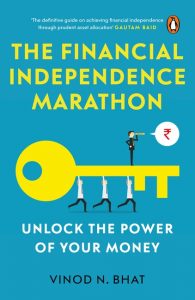
The Financial Independence Marathon || Vinod N. Bhat
The Financial Independence Marathon
Unlock the Power of Your Money
Vinod N. Bhat
‘Time is money’. But the opposite is also true, i.e., ‘money is time’. Money, if used wisely, gives us the free time to do what makes us happy. It is crucial to understand the concept that money creates time because time is a non-renewable resource. And becoming financially independent is akin to finding a hidden treasure of time. It’s similar to discovering a gold mine, because it gives us the ability to live life on our own terms.
The key is not to think of financial independence as a goal but as a marathon, which we need to enjoy. This book is an easy, entertaining and actionable guide to becoming financially independent and avoiding any pitfalls on the journey.
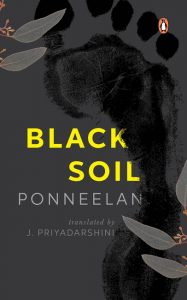
Black Soil || Ponneelan, J. Priyadarshini
Black Soil
Ponneelan, J. Priyadarshini
Kannappan is posted to Perumalpuram as the new schoolteacher. The village lies in the black soil region of Tamil Nadu where the river Tamirabarani flows. He’s an outsider in this village with Veerayyan, a local farmer, as his only guide and friend.
Once settled in his role, Kannappan observes the everyday brutality faced by the farmers at the hands of the sadistic, all-powerful landlord-the Master. Child marriage is common in the village and so is the appalling practice of marrying young lads to older women who then serve as their father-in-law’s consort. Through his gentle yet probing conversations with the villagers, Kannappan tries his best to show the villagers a better way of life. The farmers who had begun protesting the excesses meted out to them by the upper-caste landlord soon find an ally in Kannappan. The schoolteacher’s sympathies for their cause bolster their waning spirits and replenishes their resolve to fight back.
Ponneelan’s first novel is a tour de force. Now translated for the first time, Black Soil lays bare the atrocities faced by the farmers and the human cost of building a better tomorrow.
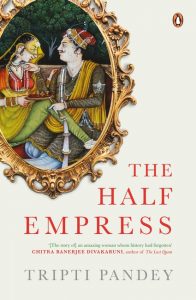
The Half Empress || Tripti Pandey
The Half Empress
Tripti Pandey
Among the rulers of Jaipur, Maharaja Sawai Jagat’s name is taken with contempt, because of his affair with a tawaif, or courtesan, Raskapoor, the daughter of a Muslim mother and a Brahmin father. The Maharaja defied all norms and bestowed upon her the title of ‘Half Empress’. With little experience, Raskapoor resiliently navigated her way through the cobwebs of the royal life. But, pitched against a fleet of plotters in an atmosphere filled with deceit, she finally fell into their trap and was imprisoned. There are many stories about how her life ended-the compassionate prison chief allowed her to flee or she flung herself on to the pyre of Jagat Singh. But today, she is best remembered by the guides who routinely mention her as a celebrity prisoner at the famous Nahargarh Fort.
In her historical novel The Half Empress, Tripti Pandey transports the reader to the royal corridors of nineteenth-century Jaipur and brings to life the story of a formidable woman who has been deliberately omitted from history.
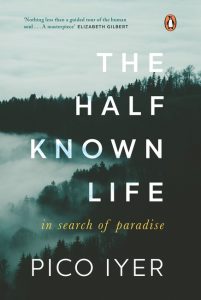
The Half Known Life by Iyer Pico
The Half Known Life
In Search of Paradise
Iyer Pico
Paradise: that elusive place where the anxieties, struggles, and burdens of life fall away. Most of us dream of it, but each of us has very different ideas about where it is to be found. For some it can be enjoyed only after death; for others, it’s in our midst-or just across the ocean-if only we can find eyes to see it.
Traveling from Iran to North Korea, from the Dalai Lama’s Himalayas to the ghostly temples of Japan, Pico Iyer brings together a lifetime of explorations to upend our ideas of utopia and ask how we might find peace in the midst of difficulty and suffering. Does religion lead us back to Eden or only into constant contention? Why do so many seeming paradises turn into warzones? And does paradise exist only in the afterworld – or can it be found in the here and now?
For almost fifty years Iyer has been roaming the world, mixing a global soul’s delight in observing cultures with a pilgrim’s readiness to be transformed. In this culminating work, he brings together the outer world and the inner to offer us a surprising, original, often beautiful exploration of how we might come upon paradise in the midst of our very real lives.
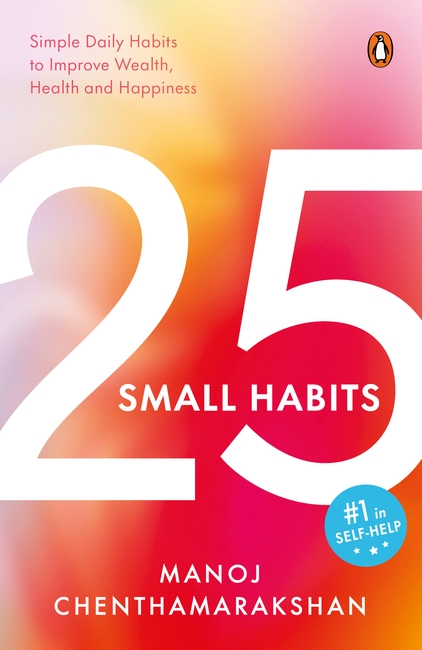
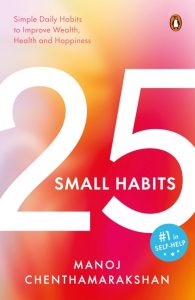
25 Small Habits || Manoj Chenthamarakshan
25 Small Habits
Simple Daily Habits to Improve Wealth, Health and Happiness
Manoj Chenthamarakshan
We all know that our habits shape our lives, but when we try to incorporate a new habit into our lifestyle, we understand how difficult it can get. Most people fail to retain a new habit past the first week. This book doesn’t teach you how to develop habits; instead, it offers you a set of twenty-five small habits that take very little time and can be held on to without much effort.
The habits in this book are designed to give you holistic growth in terms of self-development, community, career, relationship, and physical and mental health. You can choose the habits that you are able to fit into your daily schedule.
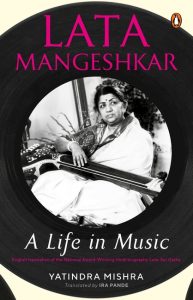
Lata || Yatindra Mishra
Lata
A Life in Music
Yatindra Mishra
An ode to the majestic life of the late Lata Mangeshkar, Lata: A Life in Music celebrates art in its totality and tells the life story of India’s most loved vocal artists. The result of Yatindra Mishra’s decade-long dialogue with the great singer, it also explores the lesser-known aspects of the great artist, introducing the readers to Lata Mangeshkar as an intellectual and cultural exponent and providing a rare glimpse into the person behind the revered enigma.
At the confluence of cinema, music and literature, this is the most definitive biography of the voice of the nation that also documents sociocultural changes from the late British era through post-Independent India right up to the twenty-first century. This is the story of the various myths, mysteries, truths and contradictions which make a human an icon and also make an icon incredibly humane.
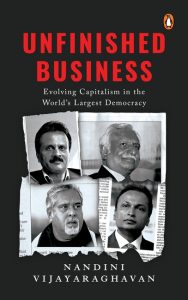
Unfinished Business || Nandini Vijayaraghavan
Unfinished Business
Evolving Capitalism in the World’s Largest Democracy
Nandini Vijayaraghavan
Unfinished Business is a chronicle of contemporary Indian corporate history, narrated through the professional trajectories of four high-profile businessmen: Anil Ambani, Naresh Goyal, V.G. Siddhartha and Vijay Mallya.
By no means unique in their proclivity for debt and penchant for politics, these four men belonged to a rarefied club of entrepreneurs, who could raise a sizeable quantum of financing with ease despite their businesses not generating adequate cash flows and/or possessing sufficient collateral.
So, what competitive advantage(s) did this guild of Indian entrepreneurs have? What caused their enterprises to struggle, while other similar organizations whose CEOs shared these attributes survived and even flourished? How did the Indian business ecosystem, regulatory norms, lenders’ underwriting practices and investor due diligence influence the organizations helmed by this quartet?
Following these four entrepreneurs’ careers and professional decisions, Unfinished Business throws light on the evolution of Indian capitalism during the first two decades of the twenty-first century, set against the backdrop of a dynamic political, regulatory and business climate in India. And, with great insight, clarity and analysis, Nandini Vijayaraghavan explores the takeaways for entrepreneurs, regulators, lenders and investors in this compelling, illuminating read.
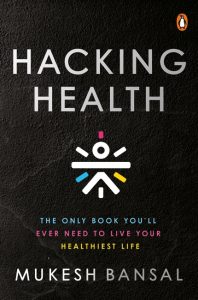
Hacking Health || Mukesh Bansal
Hacking Health
The Only Book You’ll Ever Need to Live Your Healthiest Life
Mukesh Bansal
We live in a world where there is a new fad diet, superfood, supplement or nutrition theory every month. There are so many tricks to optimizing workouts, peak performance, burning fat, living longer, sleeping better and biohacking your immune system. Wellness has become a part of mainstream discourse like never before, and the result is an overwhelming barrage of seemingly contradictory information.
But here’s one simple truth: good health impacts every aspect of life, be it productivity at work, interpersonal relationships or a balanced family life. In Hacking Health, Mukesh Bansal takes on the mammoth task of demystifying the science, simplifying the research and tracing the story of our relationship with our body. Through a combination of personal experience and cutting-edge science, this is a book that draws from ancient wisdom and also debunks unscientific myths to help you make smart choices in pursuit of good health. From nutrition and fitness to sleep and immunity, weight management and mental health to ageing and longevity, this book delves into the breadth and depth of holistic health and helps you navigate the lines between science and pseudoscience.
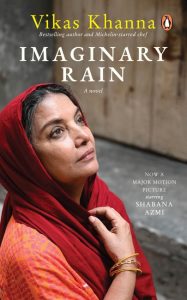
Imaginary Rain || Vikas Khanna
Imaginary Rain
Vikas Khanna
Prerna, a woman now in her fifties, has been running an Indian restaurant in downtown Manhattan for two decades. She is on the cusp of a midlife crisis, and her life indeed unravels when she suddenly loses her son, her lease, and with these, her passion for cooking as well. Caught in the grip of newly awakened emotions, Prerna finds herself confronted by many haunting questions from her past, which take her back to her motherland, India. And so begins an intensely personal struggle that will lead Prerna to forgive herself, escape her past and rediscover her true passion for cooking.
This novel is a celebration of life as well as an immigrant’s story of survival, forgiveness and moving on.
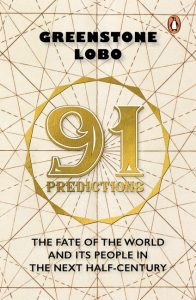
91 Predictions || Greenstone Lobo
91 Predictions
The Fate of the World and Its People in the Next Half Century
Greenstone Lobo
Is Pluto a planet? Or a dwarf planet? The controversy rages. But this planet, on the fringes of our solar system, has immense astrological significance, unexplored by the Vedic and Western astrologers. Author and scientific astrologer Greenstone Lobo believes Pluto symbolises destruction and regeneration-as the mythological Rudra Shiva.
In a scary and uncertain world-on the edge because of a pandemic, economic crises, ecological disasters and pandemonium in politics, Lobo looks towards Pluto to make sense of the past, present and the future.
He describes the planet’s journey over the last 250 and the next fifty years, as well as the grand scale on which it can operate. Exploring its character and impact, Lobo discusses his techniques for predictions, the cyclical nature of Pluto, how it changed the world order and its relationship with astrological signs.
From his unique insider’s perspective-as someone familiar with the ways of Pluto through his research-Lobo predicts what to expect and how to prepare for it through 91 predictions. What will the next fifty years bring? When will the world see the last of the pandemic? Who will lead India next? Can India win the next Cricket World Cup? What does the future hold for Ranbir Kapoor and Alia Bhatt? What lies in store for star kids Suhana Khan, Hrehaan Roshan, Aarav Akshay Kumar and Aaradhya Bachchan? What about Messi, Angelina Jolie, Rihanna, Beyoncé and others who hold our imagination today?
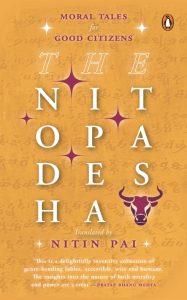
The Nitopadesha || Nitin Pai
The Nitopadesha
Nitin Pai
In the distant land of Gandhara, there once was a janapada called Chakrapuri. Its elders were a worried lot. Their children were uninterested in the welfare and upkeep of the janapada. Most of them were consumed by self-interest and avarice, seeking personal gains, even at the cost of their fellow citizens. Realizing that the young must learn the arts and crafts of citizenship, the Sabha of Chakrapuri decided to employ Nitina of Takshashila, whose wisdom was said to be unparalleled, to teach their children. So it came to pass that the unconventional scholar was entrusted with the charge of these boys and girls for the next ninety days.
Thus begins the Nitopadesha. A labyrinth of stories in the style of the Panchatantra and the Jataka tales, this is a book about good citizenship and citizen-craft that will speak to the modern reader. Covering aspects such as what citizenship means, the ethical dilemmas one faces as a citizen and how one can deal with social issues, Nitin Pai’s absorbing translation is an essential read for conscientious citizens of all ages.
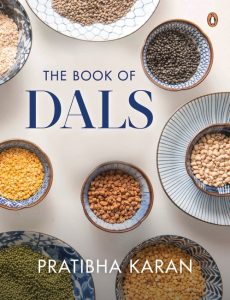
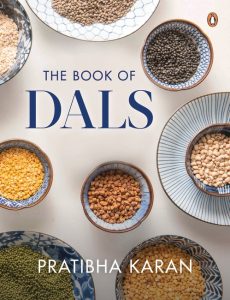
The Book of Dals || Pratibha Karan
The Book of Dals
Pratibha Karan
Dals have been an essential part of the human diet for centuries and they are an integral part of Indian cuisine. There are many enticing varieties of dals to choose from.
Pratibha Karan, in The Book of Dals, takes you on an incredible journey to different regions of the country and shows how locally available spices and herbs, vegetables and fruit impact the food of that region. The variety of dals and dal-based dishes that you can make with these are phenomenal and mind-boggling.
This book offers many varieties of beautiful, fragrant and beguiling dals that will have anyone savouring them in raptures. From the southern India, you will find Telangana Sambar, Khatti Dal and Dalcha with Vegetables and Meat. They are made using delicious combinations of chillies, tamarind, cloves, cardamom, pepper, coconut, curry leaves and drumsticks. It also has recipes such as Kootu from Tamil Nadu and the famous Bisi Bele Huliyana from Karnataka. This book is not limited by borders. It includes exotic dal recipes from the neighbouring countries like Nepal and Sri Lanka, and some delicious and wholesome dal-based soups too.
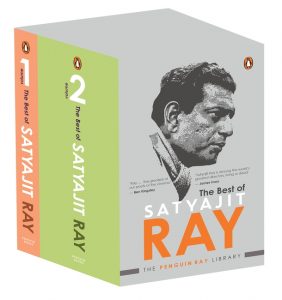
The Best of Satyajit Ray || Satyajit Ray
The Best of Satyajit Ray (Boxset, Volume 1 & Volume 2)
Ray Satyajit
While Ray’s films are fairly well-known, his writings-fiction and non-fiction-written in Bengali and English continue to attract attention. His illustrations, design works, comic strips, science fictions, detective stories are gems of Indian literature. Ray’s non-fictions are gems, which bring to lights his thoughts on film-making, film appreciation, composition of music, art, design and screenplay, among others. ‘The Penguin Ray Library’ is an endeavour to open a window to the master’s writings to a wide spectrum of readers.
From the ever-popular adventures of Ray’s enduring creation, the professional sleuth Feluda to the chronicles of Professor Shonku; short stories; writings on filmmaking; and thoughts on world as well as Indian cinema, among others, this anthology, a two-volume boxset, The Best of Satyajit Ray is not only a treat for the Ray enthusiasts but also a collector’s edition.
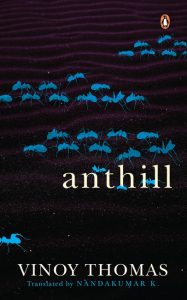
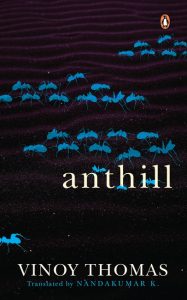
Anthill || Vinoy Thomas, Nandakumar K.
Anthill
Vinoy Thomas, Nandakumar K.
Bounded by dense Kodagu forests on the south and west, and rivers on the north and east, Perumbadi, at the border between Kerala and Karnataka, has hidden itself from the world. Its very isolation has attracted varied settlers from south Kerala over the years. The first settler on this land, Kunji Varkey, was fleeing the opprobrium of getting his own daughter pregnant. Those who followed had similar shameful secrets.
Anthill, the exquisite translation from the Malayalam of the Kerala Sahitya Akademi-winning novel Puttu, is the story of common people who tried to wriggle out of the shackles of family, religion and other restraining institutions, but eventually also struggle to civilize themselves-from their beginnings of a hillbilly existence and life as a promiscuous community.
As Perumbadi moves into modernity and feels the need for refined justice, Jeremias comes to be known by the moniker President and becomes the unchallenged adjudicator of Perumbadi, thanks to his equanimity and sense of fairness. However, even as he resolves local disputes, he is troubled by developments in his own home and by his own moral failure.
Which is going to be your new pick this New Year 2023?
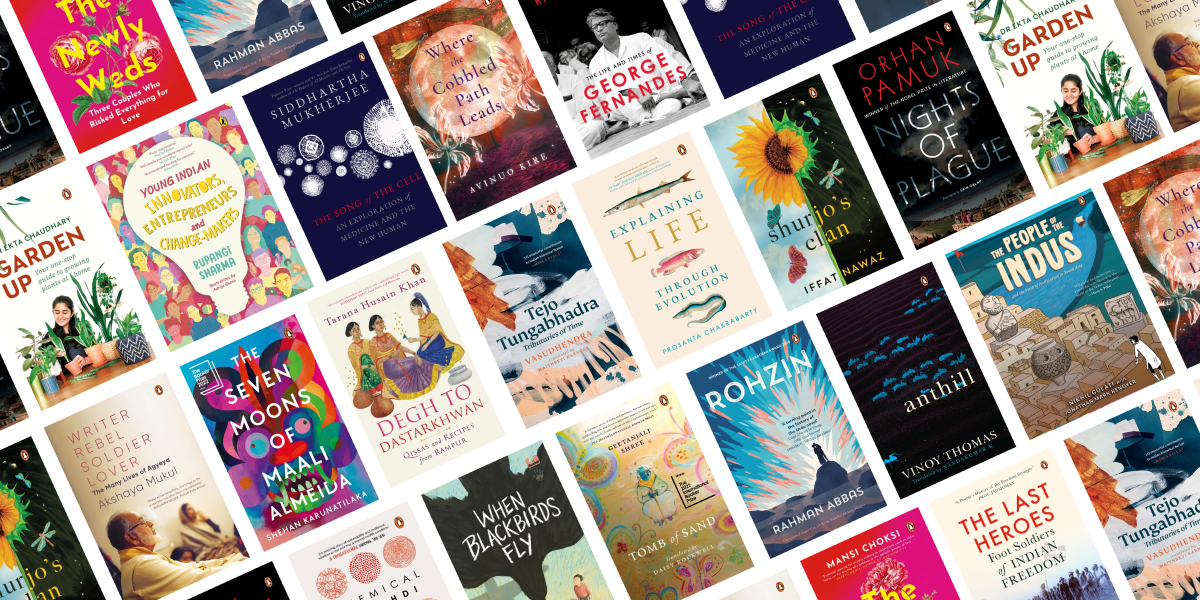
Tis’ the season to read and revel. Winter is here, and it is the best time to snuggle in a blanket with a cup of coffee and a book. If you are new to the reading realm or still wondering what you should read, then you are at the right place. Before you welcome the new year, bookmark your favourite reads from this curated list of 22 books to read before 2022 ends.
1. Degh To Dastarkhwan, Tarana Husain Khan
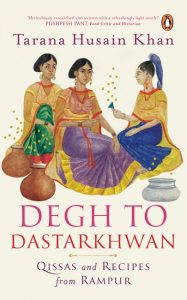
Degh To Dastarkhwan || Tarana Husain Khan
Tarana was an indifferent eater and an unenthusiastic cook until a chance encounter with a nineteenth-century Persian cookbook in Rampur’s fabled Raza Library started her off on a journey into the history of Rampur cuisine and the stories around it. Part food memoir and part celebration of a cuisine, Degh to Dastarkhwan answers the question- ‘what constitutes and distinguishes Rampur cuisine?’ Each chapter represents an emotion, an observance or a celebration. The spread of Rampuri food from the grand royal cuisine to the simple daily fare becomes the arena to express love, loss, forgiveness and spirituality. Peopled with compelling characters from all walks of life, the book is a tour de force that includes recollections of a princess to the spiritual ambiance of a Sufi shrine, with stories of khansamas, weddings and funerals.
2. Chemical Khichdi: How I Hack My Mental Health, Aparna Piramal Raje
Chemical Khichdi || Aparna Piramal Raje
Some said children were out of the question, but she is a mother of two boys. Some said she couldn’t handle business life, but she has interviewed over a hundred CEOs, and counting. Some said she wouldn’t be able to write a book on mental health, but here it is. Aparna Piramal Raje is happy, thriving and bipolar. And this is her story.
Part memoir and part self-help guide, Chemical Khichdi provides a pathway for anyone with a mental health condition and the family, friends, colleagues, and medical professionals that love and care for them. Empathetic, candid and accessible, it outlines ‘seven therapies’ that have enabled Aparna to ‘hack’ her mental health and find equilibrium over the years, and shows how you or someone you know can also do the same. Empathetic, candid and accessible, it outlines ‘seven therapies’ that have enabled Aparna to ‘hack’ her mental health and find equilibrium over the years, and shows how you or someone you know can also do the same.
3. Garden Up, Dr Ekta Chaudhary
Garden Up || Dr Ekta Chaudhary
Have you been trying to grow plants at home?
Do you want to be able to eat fresh, organic produce and herbs grown in your balcony?
Do you want beautiful plants around your home to add that extra love and warmth to your space?
YouTube sensation Ekta Chaudhary has been teaching gardening to her millions of followers, and for the first time, she is putting it all down in an easy-to-use, fun and simple beginner’s guide to growing plants at home. Rich in information on the amount of light plants need, the kind of soil to use and plants that can thrive indoors and outdoors, with answers to all ‘silly’ questions, Garden Up will gift anyone a green thumb.
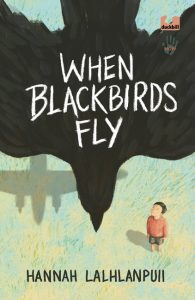
4. When Blackbirds Fly, Hannah Lallanpuji
When Blackbirds Fly || Hannah Lalhlanpuii
Life is sweet growing up in Aizawl, with his family and friends, and all the narrator wants is a peaceful life. But the independence movement in Mizoram means that regardless of what he wants, he is drawn inexorably into a world where everyone has to choose where they stand …
Set in the initial stages of the two-decade-long struggle for Mizoram’s independence and against the backdrop of the 1966 bombing of Aizawl, this stunning debut novel is a universal story of how individual dreams and lives are shattered when larger conflicts arise.
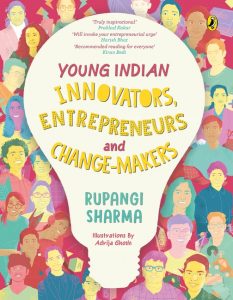
5. Young Indian Innovators and Change-maker, Rupangi Sharma
Young Indian Innovators, Entrepreneurs and Change-makers || Rupangi Sharma
Let’s meet:
the teen whose tech company got a $75 million funding
the boy who created the world’s smallest satellite
the nine-year-old who set up her own software firm
the girl who started a social initiative to impart life skills through sports and many more!
These are the inspiring stories of India’s future generations-innovative thinkers, dreamers and tinkerers-who have created amazing solutions to real-life problems. Aged seven to twenty-one, these youngsters are effecting change from far-flung rural villages, small towns and urban cities. There’s no stopping these kids!
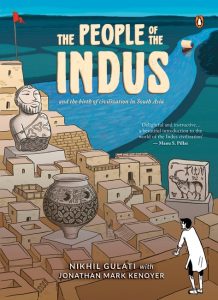
6. The People of the Indus, Nikhil Gulati with Jonathan Mark Kenoyer
The People of The Indus || Nikhil Gulati with Jonathan Mark Kenover
Who were the people of the Indus?
Why didn’t they build pyramids like the Egyptians?
And ultimately what happened to them?
Supported by extensive research from a leading Indus archaeologist, this graphic novel seeks answers to precisely these questions. It is not history in the form of a dull record of dates and events but a beautifully illustrated glimpse into the lives of the people of the Indus civilization, dating all the way back to 3200 BCE. The People of the Indus is a rare account of how one of the most unique and enigmatic civilizations of the ancient world changed the course of human history. It is sure to enthrall young adults and older readers alike.
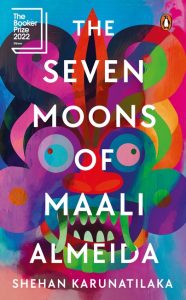
7. The Seven Moons of Maali Almeida, Shehan Karunatilaka
The Seven Moons of Maali Almeida || Shehan Karunatilaka
Colombo, 1990. Maali Almeida, war photographer, gambler and closet gay, has woken up dead in what seems like a celestial visa office. His dismembered body is sinking in the Beira Lake and he has no idea who killed him. At a time when scores are settled by death squads, suicide bombers and hired goons, the list of suspects is depressingly long, as the ghouls and ghosts who cluster around him can attest. But even in the afterlife, time is running out for Maali. He has seven moons to try and contact the man and woman he loves most and lead them to a hidden cache of photos that will rock Sri Lanka. Ten years after his prizewinning novel Chinaman established him as one of Sri Lanka’s foremost authors, Karunatilaka is back with a rip-roaring epic, full of mordant wit and disturbing truths.
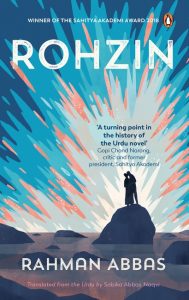
8. Rohzin, Rahman Abbas
Rohzin || Rahman Abbas
The love story of Asar and Hina begins abruptly and ends tragically. It is love at first sight which takes place in the premises of Haji Ali Dargah. The arc of the novel studies various aspects of human emotions, especially love, longing and sexuality as sublime expressions. The emotions are examined, so is love as well as the absence of it, through a gamut of characters and their interrelated lives: Asrar’s relationship with his teacher, Ms Jamila, a prostitute named Shanti and, later, with Hina; Hina’s classmate Vidhi’s relations with her lover and others; Hina’s father Yusuf’s love for Aymal; Vanu’s indulgence in prostitutes. Rohzin dwells on the plane of an imagination that takes readers on a unique journey across the city of Mumbai, a highly intriguing character in its own right.
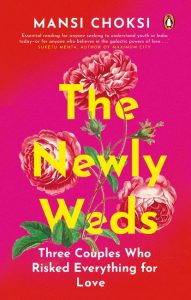
9. The Newlyweds, Mansi Choksi
The Newly Weds || Mansi Choksi
Zigzagging through India and its smorgasbord of cultures, each chock-full of its own unwritten commandments and sanctions, Choksi introduces our brave newlyweds. First, there’s the lesbian couple forced to flee for a chance at a life together. Then there’s the Hindu woman and Muslim man who escaped their families under the cover of night after being harassed by a violent militia group. Finally, there’s the inter-caste couple doing everything to avoid the horrifying fate of a similar duo murdered for choosing to love. Engaging and moving, The Newlyweds raises universal questions such as what are we really willing to risk for love? If we’re lucky enough to find it, does it change us? For the better? Or for the worse?
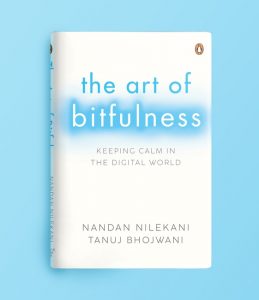
10. The Art of Bitfulness, Nandan Nilekani and Tanuj Bhojwani
The Art of Bitfulness || Nandan Nilekani and Tanuj Bhojwani
Bitfulness is being effortlessly mindful of your technology. In this short, practical book, Nandan Nilekani and Tanuj Bhojwani describe a framework to tune out the overwhelming noise of the internet. They empower you with tools to take back your time, attention and privacy from those who want to capture and sell it. They reveal their own personal systems, and how they stay on top of a constant flow of information. This book doesn’t believe our excessive screen time usage is a personal failing. The internet creates winner-take-all market conditions, which in turn create an attentional race to the bottom. It doesn’t have to be this way. The book covers how we, as a collective, can take back control of our future. The authors even analyse the promise of web3 & cryptocurrencies to see where that alternative will take us. The reason to read this book is simple: If you don’t design your technology around your life, someone else will design your life around their technology.
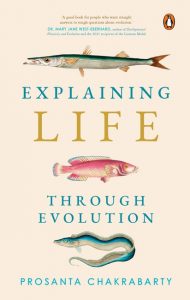
11. Explaining Life Through Evolution, Prosanta Chakrabarty
Explaining Life Through Evolution || Prosanta Chakrabarty
Looking forward to a book that explains life? Well, here it is! Explaining Life Through Evolution opens a window to the four billion year history of the millions of species we see on this planet. This book does not simply narrate the story of evolution: It brings to light who we are and where we came from. As humans we often focus on identifying our differences, no matter how small; Prosanta Chakrabarty demystifies our perceived differences and emphasizes our similarities. As more and more people take ancestry tests, sending their DNA samples and money to genealogy testing centres, we need to be educated on what the results actually mean scientifically; and we all have to decide together what it means socially. He thinks we should be celebrating the fact that our diversity comes from the same little drops of water and sunlight, each of us just shining a little differently as seen through the prism of evolution. Evocative, comprehensive and thought-provoking, this is a book which will compel you to reimagine life.
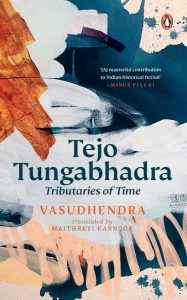
12. Tejo Tungabhadra, Vasudhendra and Maithreyi Karnoor
Tejo Tungabhadra || Vasudhendra
Tejo Tungabhadra tells the story of two rivers on different continents whose souls are bound together by history. On the banks of the river Tejo in Lisbon, Bella, a young Jewish refugee, and her family face daily threats to their lives and dignity from the deeply antisemitic society around them. Gabriel, her lover, sails to India with General Albuquerque’s fleet seeking wealth and a secure future for themselves. Meanwhile, on the banks of the Tungabhadra in the Vijayanagara Empire, the young couple Hampamma and Keshava find themselves caught in the storm of religious violence and the cruel rigmarole of tradition. The two stories converge in Goa with all the thunder and gush of meeting rivers. Set in the late 15th and early 16th century, Tejo Tungabhadra is a grand saga of love, ambition, greed, and a deep zest for life through the tossing waves of history.
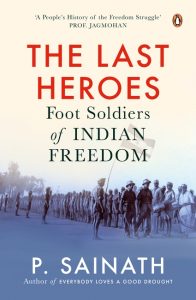
13. The Last Heroes, P. Sainath
The Last Heroes || P. Sainath
So who really spearheaded India’s Freedom Struggle? Millions of ordinary people-farmers, labourers, homemakers, forest produce gatherers, artisans and others-stood up to the British. People who never went on to be ministers, governors, presidents, or hold other high public office. They had this in common: their opposition to Empire was uncompromising. In The Last Heroes, these footsoldiers of Indian freedom tell us their stories. The men, women and children featured in this book are Adivasis, Dalits, OBCs, Brahmins, Muslims, Sikhs and Hindus. They hail from different regions, speak different languages and include atheists and believers, Leftists, Gandhians and Ambedkarites. The people featured pose the intriguing question: What is freedom? They saw that as going beyond Independence. And almost all of them continued their fight for freedoms long after 1947. The post-1947 generations need their stories. To learn what they understood. That freedom and independence are not the same thing. And to learn to make those come together.
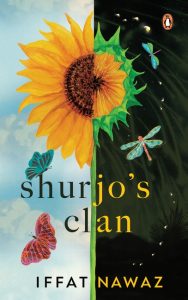
14. Shurjo’s Clan, Iffat Nawaz
Shurjo’s Clan || Iffat Nawaz
During the hours of daylight, young Shurjomukhi’s family is like any other in Dhaka, going through the motions of school, work, and domesticity in a nation still in the flush of youth. But every night, once darkness falls over their asymmetrical house, they switch over to the Unknown world. Death does not exist in the Unknown side and the family is joined for dinner by Shurjo’s freedom fighter uncles, who were martyred in the tea gardens of Sylhet at the start of the 1971 Bangladesh liberation war, and her grandmother who killed herself by jumping into a well in the aftermath of 1947. These dinners are festive affairs, replete with the joy of reunion, music and stories, but underneath the celebration, Shurjo’s family is riddled with the traumas of their past: death, war, migration, separation, the inability to belong to a land, dwelling in an in-between space, an eternal limbo. And when the miasmic shadow of the past inevitably falls on young Shurjo, the pitfalls of their dual reality is laid bare.
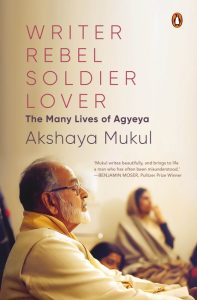
15. Writer Rebel Soldier Lover, Akshaya Mukul
Writer Rebel Soldier Lover || Akshaya Mukul
Sachchidanand Hirananda Vatsyayan ‘Agyeya’ is unarguably one of the most remarkable figures of Indian literature. From his revolutionary youth to acquiring the mantle of a (highly controversial) patron saint of Hindi literature, Agyeya’s turbulent life also tells a history of the Hindi literary world and of a new nation-spanning as it does two world wars, Independence and Partition, and the building and fraying of the Nehruvian state. Writer, Rebel, Soldier, Lover features a formidable cast of characters: from writers like Premchand, Phanishwarnath Renu, Raja Rao, Mulk Raj Anand and Josephine Miles to Prime Minister Jawaharlal Nehru, revolutionary Chandra Shekhar Azad and actor Balraj Sahni. And its landscapes stretch from British jails, an intellectually robust Allahabad and modern-day Delhi to monasteries in Europe, the homes of Agyeya’s friends in the Himalayas and universities in
the US. This book is a magnificent examination of Agyeya’s civilizational enterprise.
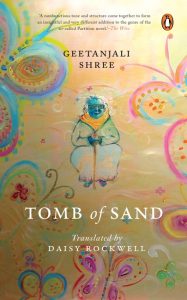
16. Tomb of Sand, Geetanjali Shree and Daisy Rockwell
Tomb of Sand || Geetanjali Shree and Daisy Rockwell
In northern India, an eighty-year-old woman slips into a deep depression after the death of her husband, and then resurfaces to gain a new lease on life. Her determination to fly in the face of convention – including striking up a friendship with a transgender person – confuses her bohemian daughter, who is used to thinking of herself as the more ‘modern’ of the two. To her family’s consternation, Ma insists on travelling to Pakistan, simultaneously confronting the unresolved trauma of her teenage experiences of Partition, and re-evaluating what it means to be a mother, a daughter, a woman, a feminist. Rather than respond to tragedy with seriousness, Geetanjali Shree’s playful tone and exuberant wordplay results in a book that is engaging, funny, and utterly original, at the same time as being an urgent and timely protest against the destructive impact of borders and boundaries, whether between religions, countries, or genders.
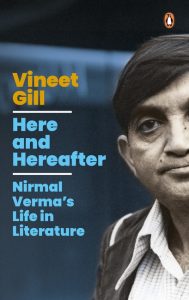
17. Here and Hereafter, Vineet Gill
Here and Hereafter || Vineet Gill
How is a writer formed? Yes, through labour, commitment, perseverance, grit and various other things that we keep hearing about. But equally, a writer is formed through the workings of a particular kind of sensibility. As Vineet Gill attempts to understand this writerly sensibility in Nirmal Verma’s life and work, he finds that the personal and the literary are, on some level, inseparable. In this masterly deep dive into the world of one of Hindi literature’s pioneers, Gill looks at the scattered elements of Verma’s life as ingredients that went into the making of the writer. The places he lived in, the people he knew, the books he read are all reflected, in Gill’s view, in Verma’s stories and novels. This is a work of intense readerly analysis and considered excavation-a contemplation on Verma’s oeuvre and its place in world literature.
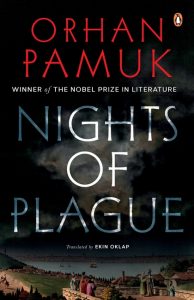
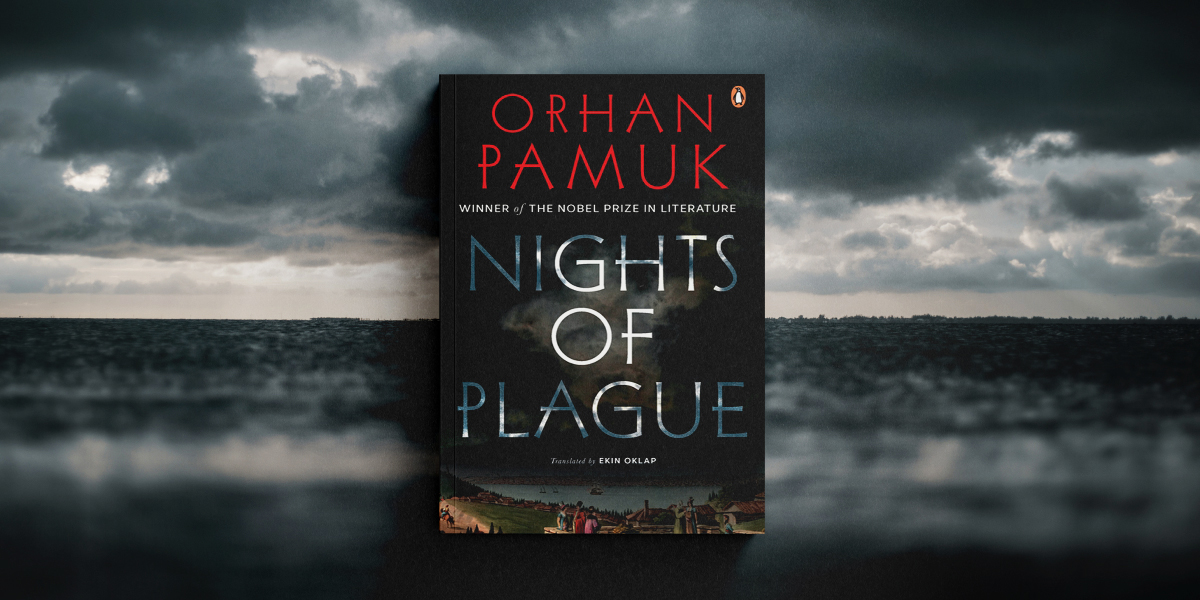
18. Nights of Plague, Orhan Pamuk
Nights of Plague || Orhan Pamuk
It is April 1900, in the Levant, on the imaginary island of Mingheria-the twenty-ninth state of the Ottoman Empire-located in the eastern Mediterranean between Crete and Cyprus. Half the population is Muslim, the other half are Orthodox Greeks, and tension is high between the two. When a plague arrives-brought either by Muslim pilgrims returning from the Mecca or by merchant vessels coming from Alexandria-the island revolts. As the plague continues its rapid spread, the Sultan sends a second doctor to the island, this time a Muslim, and strict quarantine measures are declared. But the incompetence of the island’s governor and local administration and the people’s refusal to respect the bans doom the quarantine to failure, and the death count continues to rise. Faced with the danger that the plague might spread to the West and to Istanbul, the Sultan bows to international pressure and allows foreign and Ottoman warships to blockade the island. Now the people of Mingheria are on their own, and they must find a way to defeat the plague themselves.
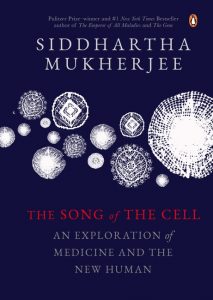
19. The Song of The Cell, Siddhartha Mukherjee
The Song of The Cell || Siddhartha Mukherjee
From Pulitzer Prize-winning and #1 New York Times bestselling author of The Emperor of All Maladies and The Gene, The Song of The Cell is the third book in this extraordinary writer’s exploration of what it means to be human-rich with Siddhartha Mukherjee’s revelatory and exhilarating stories of scientists, doctors, and all the patients whose lives may be saved by their work. The discovery of cells-and the reframing of the human body as a cellular ecosystem-announced the birth of a new kind of medicine based on the therapeutic manipulations of cells. A hip fracture, a cardiac arrest, Alzheimer’s, dementia, AIDS, pneumonia, lung cancer, kidney failure, arthritis, COVID-all could be viewed as the results of cells, or systems of cells, functioning abnormally. And all could be perceived as loci of cellular therapies. In The Song of the Cell, Mukherjee tells the story of how scientists discovered cells, began to understand them, and are now using that knowledge to create new humans. He seduces readers with writing so vivid, lucid, and suspenseful that complex science becomes thrilling.
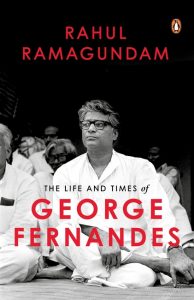
20. The Life and Times of George Fernandes, Rahul Ramagundam
The Life and Times of George Fernandes || George Fernandes
George Fernandes(1930-2019)-a firebrand trade union leader, socialist politician and incredibly powerful orator-is popularly known for leading the All India Railwaymen’s Federation (AIRF) in May 1974 and calling upon its approximately 1.7 million employees to strike, which brought India to a halt for twenty days. The Life and Times of George Fernandes chronicles the story of George, who rose from the streets of Bombay to stride the corridors of power. In this extraordinary biography, Rahul Ramagundam opens a window to George’s political evolution and traces the course of the Socialist Party in India from its inception in 1930s to its dissolution into the Janata Party in the late 1970s. In the process, this book explores the trail of India’s opposition parties that worked to displace the long-ruling Congress Party from its preeminent position. Comprehensive, evocative and fascinating, this first definitive biography of George Fernandes is an unputdownable tour de force.
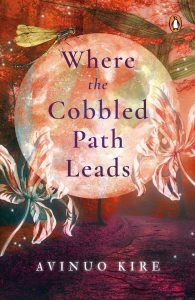
21. Where The Cobbled Paths Lead, Avinuo Kire
Where The Cobbled Path Leads || Avinuo Kire
Where the Cobbled Path Leads is a folk fantasy novel, interweaving fantasy fiction with Naga spirit stories and folklore. Eleven-year-old Vime is struggling to come to terms with the demise of her beloved mother. She has a special place she frequents-a cobbled footpath near her house which leads to a forest. On the day of her mother’s death anniversary, not wanting to return home, Vime follows the cobbled footpath all the way to the deep end of the woods and discovers that the trail leads to a magnificent tree. She falls asleep under it only to wake up and find that the footpath has disappeared. Tei, a forest spirit, helps her relocate the missing pathway. Vime is soon to discover that this tree is no ordinary tree. It is a portal between the human and spirit world, and Vime keeps finding her way back to it. Distressed that her father might remarry, she decides to leave her earthly life and join her mother in the spiritual world. As she travels to, from and through these realms, she understands what it is to embrace and survive grief, and what it means to surrender herself to these old spirits, not all of whom are good.
So, which of these 22 books are you planning to read?
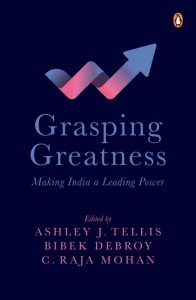
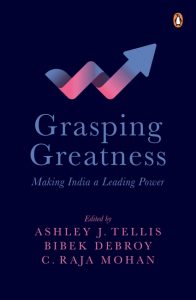
22. Grasping Greatness
Grasping Greatness explores the various tasks pertaining to this push for eminence in world affairs. It elaborates the economic, state-building, and international dimensions of this ambition. Eminent thinkers like Rakesh Mohan, Ila Patnaik, Surjit Bhalla, Arjun Subramanian, and others reflect upon the tasks at hand and the desirable routes to achieve them.
Edited by Ashley J. Tellis, Bibek Debroy and C. Raja Mohan, Grasping Greatness is an important contribution to the intellectual debates as India enters into a new era on the world stage.
From the winner of the Nobel Prize in Literature: Part detective story, part historical epic—a bold and brilliant novel that imagines a plague ravaging a fictional island in the Ottoman Empire. Here’s an excerpt from Orhan’s Pamuk’s Nights of Plague.
*
Nights of Plague || Orhan Pamuk
In the year 1901, if a steamer with black coal-smoke pouring from its chimney were to sail south from Istanbul for four days until it passed the island of Rhodes, then continue south through dangerous, stormy waters toward Alexandria for another half day, its passengers would eventually come to see in the distance the delicate towers of Arkaz Castle upon the island of Mingheria. Due to Mingheria’s location on the route between Istanbul and Alexandria, the Castle’s enigmatic shadow and silhouette were gazed upon in awe and fascination by many a passing traveler. As soon as this magnificent image—which Homer described in the Iliad as “an emerald built of pink stone”—appeared on the horizon, ship captains of a finer spiritual disposition would invite their passengers on deck so that they could savor the views, and artists on their way to the East would avidly paint the romantic vista, adding black storm clouds for effect.
But few of these ships would stop at Mingheria, for in those days there were only three ferries that made regular weekly trips to the island: the Messageries Maritimes Saghalien (whose high-pitched whistle everyone in Arkaz recognized) and Equateur (with its deeper horn), and the Cretian company Pantaleon’s dainty vessel the Zeus (which only rarely sounded its horn, and always in brief bursts). So the fact that an unscheduled ferry was approaching the island of Mingheria two hours before midnight on the twenty-second of April 1901—the day our story begins—signaled that something unusual was afoot.
The ship with pointed bow and slender white chimneys closing in on the island from the north, stealthy as a spy vessel, and bearing the Ottoman flag, was the Aziziye. It had been tasked by Sultan Abdul Hamid II with transporting a distinguished Ottoman delegation from Istanbul on a special mission to China. To this delegation of seventeen fez-,turban-, and hat-clad religious scholars, army officers, translators, and bureaucrats, Abdul Hamid had added at the last moment his niece Princess Pakize, whose marriage he had recently arranged, and her husband, Prince Consort Doctor Nuri Bey. The joyous, eager, and slightly dazed newlyweds had not been able to fathom the reason for their inclusion in the delegation to China and had puzzled over the matter at great length.
Princess Pakize—who, like her older sisters, was not fond of her uncle the Sultan—was sure that Abdul Hamid had meant her and her husband some kind of harm by putting them in the delegation, but she had not yet been able to work out what the reason might be. Some palace gossips had suggested that the Sultan’s intention must be to drive the newlyweds out of Istanbul and send them to die in yellow fever–infested Asian lands and cholera-ridden African deserts, while others pointed out that Abdul Hamid’s games tended to be revealed only once he had finished playing them. But Prince Consort Doctor Nuri Bey was more optimistic.
An eminently successful and hardworking thirty-eight-year-old quarantine doctor, he had represented the Ottoman Empire at international public health conferences. His achievements had caught the Sultan’s attention, and when they had been introduced, Doctor Nuri had discovered what many quarantine doctors already knew: that the Sultan’s fascination with murder mysteries was matched by his interest in European medical advances. The Sultan wanted to keep up with developments concerning microbes, laboratories, and vaccinations and introduce the latest medical findings to Istanbul and across Ottoman lands. He was also concerned about the new infectious diseases that were making their way toward the West from Asia and China.
There was no wind in the Levant that night, so the Sultan’s Aziziye cruise ship was making swifter progress than expected. Earlier it had made a stop at the port of Smyrna, though no such stop had been declared in the official itinerary. As the ship had neared the misty Smyrna docks, one by one the committee’s delegates had climbed up the narrow stairwell that led to the captain’s quarters to request an explanation and had learned that a mysterious new passenger was to come on board. Even the captain (who was Russian) had claimed not to know who this passenger was.
The Aziziye’s mysterious passenger was the Ottoman Empire’s Chief Inspector of Public Health and Sanitation, the renowned chemist and pharmacist Bonkowski Pasha. Tired but still sprightly at the age of sixty, Bonkowski Pasha was the Sultan’s Royal Chemist and the founder of modern Ottoman pharmacology. He was also a semisuccessful businessman who had once owned a number of different companies producing rosewater and perfumes, bottled mineral water, and pharmaceuticals. But for the past ten years, he had worked exclusively as the Ottoman Empire’s Chief Inspector of Public Health, sending the Sultan reports on cholera and plague outbreaks, as well as rushing from one outbreak to the next, from port to port and city to city, to oversee quarantine and public health provisions on behalf of the Sultan.
Inspector of Public Health and Sanitation, the renowned chemist and pharmacist Bonkowski Pasha. Tired but still sprightly at the age of sixty, Bonkowski Pasha was the Sultan’s Royal Chemist and the founder of modern Ottoman pharmacology. He was also a semisuccessful businessman who had once owned a number of different companies producing rosewater and perfumes, bottled mineral water, and pharmaceuticals. But for the past ten years he had worked exclusively as the Ottoman Empire’s Chief Inspector of Public Health, sending the Sultan reports on cholera and plague outbreaks, as well as rushing from one outbreak to the next, from port to port and city to city, to oversee quarantine and public health provisions on behalf of the Sultan.
Chemist and pharmacist Bonkowski Pasha had often represented the Ottoman Empire at international quarantine conventions, and had written Sultan Abdul Hamid a treatise four years ago on the precautions that the Ottoman Empire should take against the plague pandemic that had begun in the East. He had also been specially appointed to combat the outbreak of plague in the Greek neighborhoods of Smyrna. After several cholera epidemics over the years, the new plague microbe from the East—whose infectivity (what medical experts termed “virulence”) had waxed and waned in time—had, alas, finally entered the Ottoman Empire too.
**
Get your copy of Nights of Plague from the nearest bookstores on Amazon.
THE PERFECT PITCH AIMS TO DISCOVER AND SUPPORT EMERGING WRITERS
New Delhi, 8 December 2022: The leading publishing house in India, Penguin Random House India, marks its 35th year in India with the launch of a one-of-a-kind platform to discover and mentor emerging writers from the country, in association with the world’s largest literary festival, the Jaipur Literature Festival. Titled The Perfect Pitch, it is a mentorship initiative to scout for the best pitch for unpublished, submission-ready work by aspiring writers and storytellers, where the candidates can win an opportunity to be guided by experts in publishing and the literary world and polish their pitch. The Editor Recommends, a fast-growing, popular literary social media influencer, comes on board as a knowledge partner for this programme.
Aspiring writers from all over the country are invited to present the pitch of their finished manuscripts to a jury panel made up of editors, literary experts, and notable authors. Call for entries opens today, 7 December, and closes on 25 December. Criteria and guidelines are listed in the annexure. The finalists will be invited to Jaipur Literature Festival 2023 to present their pitches to the esteemed jury and in front of an audience in an exclusive session. Jaipur Literature Festival is scheduled from 19 January to 23 January.
The writer with the best pitch will be awarded an opportunity to be mentored in one-on-one sessions with experienced editors from Penguin who have commissioned best-selling and award-winning works, an acclaimed author who has published with Penguin and Shreya Punj, also known as The Editor Recommends. The winner’s work will also be considered for a book deal with Penguin, should it meet the publishing house’s requirements.
Speaking about this partnership, Natasha Kapur, Senior Vice-President, Marketing, Penguin Random House India says, “Penguin and Jaipur Literature Festival have a longstanding association with common aspirations to make reading, books and authors accessible. On the occasion of Penguin’s 35th anniversary in India, we join hands with Jaipur Literature Festival to present a once-in-a-lifetime opportunity to India’s budding writers with a chance to pitch their book to an eminent jury of editors and authors in front of an audience of potential readers. As a publisher, we aim to discover and promote the best of Indian writing and with Jaipur Literature Festival we get the chance to bring together all elements of the literary community under one
roof- the writers, the readers, and the editors, and celebrate India’s vibrant and burgeoning literary culture.”
Sanjoy K. Roy, Managing Director of Teamwork Arts, producer of the Jaipur Literature Festival, said, “It’s a delight for the Jaipur Literature Festival to partner with Penguin in creating a space for writers, thinkers, speakers and humanitarians. Through this initiative, we aim to bridge the gap between the unpublished authors and renowned figures in the field of publishing.”
The Perfect Pitch: A mentorship initiative by Penguin and Jaipur Literature Festival
To discover and support new literary talent, The Perfect Pitch is an opportunity of a lifetime for India’s budding authors. It is a programme where writers get a chance to pitch their book to a jury of eminent people from the world of publishing.
Criteria: Who can apply
The competition is open to entrants over 18 years of age residing in India.
The contenders should have an unpublished, complete manuscript.
You can only submit one pitch per registration and only one book idea per document.
The deadline to complete your entry is 11:59 PM IST, 25 December. Entries will not be accepted after this
Key Dates:
7 December 2022
Open for entries
25 December 2022
Closed for entries
13 January 2023
Announcing the finalists
23 January 2023
The Perfect Pitch session at Jaipur Literature Festival
Prize:
Winner will get 5 one on one sessions, one each with the two editors of Penguin, two sessions with Shreya Punj, also known as The Editor Recommends, and one with the author from the jury.
A chance to win a book deal with Penguin, should the written work fulfil Penguin’s publishing requirements and criteria.
Terms & Conditions
“Perfect Pitch Contest”
These terms, conditions and guidelines (‘Terms’) are applicable to and govern the “Perfect Pitch Contest” (“Contest”) organized and conducted by Penguin Random House India Private Limited (‘PRHI’/We) along with its knowledge partner, The Editor Recommends (“TER”), as part of the events connected with the Jaipur Literature Festival, 2023 to be held in Jaipur, India in January 2023 (“JLF”).
By participating in the Contest you agree to have read, understood and accepted the following terms:
PRHI reserves the right to modify these Terms without any prior notification. You are advised to regularly review these Terms. If you do not agree with any of the Terms and any amendments thereto, you must not participate in this Contest. Participation is voluntary and optional.
This is a call for entries, asking individuals to submit their pitch for a book idea by registering on RazorPay at https://rzp.io/l/theperfectpitch. The registration fee is Rs 500. Once registered, the individual will be redirected to a Google Form. The individual will need to fill out the form and add a link to the reel posted on Instagram as indicated on the Google Form.
Five (5) Shortlisted entries will be selected from all the valid entries received during the Contest Period and the corresponding shortlisted participants (“Shortlisted Writers”) will be eligible to pitch their book to a distinguished jury (“Jury”) at JLF. The Shortlisted Writers will also get a chance to attend JLF and their travel and stay for the concerned dates of the pitch will be paid for. The Jury will choose a winning participant (“Winner”) from amongst Shortlisted Writers. The Winner will get the opportunity to receive one-on-one mentorship sessions with The Editor Recommends, a senior editor from PRHI and an author published by PRHI (“Prize”).
You are invited to submit your entry between 7 December 2022 and 25 December 2022 (both days inclusive) (“Contest Period”). Shortlisted Writers will receive an email with further instructions. PRHI will announce the Shortlisted Writers on 13 January 2023 via email and their social media handles.
Please note multiple submissions are not allowed. Further, you are permitted only one pitch per registration and one book idea per pitch. Entries once submitted cannot be withdrawn.
The Contest is open only to Indian Citizens residing in India, who are at least 18 years of age or older on the date of participating in the contest. If the entry is received from a person below 18 years of age, the same will be disqualified.
Before being announced and eligible to pitch their book idea before the Jury at JLF, each of the Shortlisted Writers must further submit full details of their name, permanent address, copy of Aadhar Card phone number, age, photo, video and any other details, documents/ materials as may be prescribed by PRHI. It is to be understood that Shortlists Writers will be eligible to pitch their book idea before the Jury at JLF only upon the furnishing of the prescribed details and documents/ materials. Any information found to be incomplete, false or misleading shall result in automatic disqualification of the participant. The personal information provided by the participant/s will be saved/ stored with PRHI for the purpose of completion of the Contest.
You hereby expressly consent to share personal data including your name, age, email address, postal address, Aadhar details, photograph, and video with PRHI and TER for the purposes of this Contest. Further, you consent to PRHI storing and using details regarding your name, age, and email address for purposes other than the Contest, such as for marketing and promotional purposes. You understand and agree that personal data shared with PRHI and TER may be required to be processed on computer systems hosted outside the territorial jurisdiction of India and that the same is necessary as per PRHI’s and TER’s respective protocols required for maintaining transparency and security and are further necessary for PRHI and TER to fulfill its obligations under this Contest. “Processing of personal data”, means an operation or set of operations performed on personal data, and may include operations such as collection, recording, organisation, structuring, storage, adaptation, alteration, retrieval, use, alignment or combination, indexing, disclosure by transmission, dissemination or otherwise making available, restriction, erasure or destruction.
By participating in this Contest, you grant PRHI permission to use your name, photographs, videos and likeness for advertising and promotional purposes in connection with the Contest, without additional compensations across all means, media and technology known now or invented hereinafter. The Winner agrees that the footage of any nature with regard to the Winner(s) shall vest with PRHI including but not limited to all intellectual property rights and any other rights worldwide and in perpetuity.
We take no responsibility for entries that are lost, delayed, misdirected or incomplete or cannot be delivered or entered for any technical or other reason. Sending an email/ direct message on a social media handle is not proof that we have received your entry. Also, entries sent in any mode except for the modes specifically provided for shall be deemed to be invalid/ not received.
Any dispute that may be existing/ arise in respect of an entry (selected or not selected) or invoice relating to pre-order of the book shall be the responsibility of the participant. PRHI shall in no manner be responsible for any legal/other disputes that may existing/may exist in future in respect of the entries, events at JLF or mentoring sessions.
Employees, directors, and/or officers (including immediate family members or members of the household) of PRHI, its subsidiaries, film partners, affiliated companies, distributors, advertising, fulfilment and promotion agencies and all other companies or entities associated with the Contest are not eligible to participate in the same.
Shortlisted Writers and Winner and Jury are to be selected by a procedure set up by PRHI at its sole discretion. All the entries will be stored in a backend system operated by PRHI and/or any person/agency appointed by PRHI.
The decision on the selection and eligibility of the Shortlisted Writers and Winner of the Contest shall be final and binding on all the participants. PRHI shall not entertain any questions, or enquiries on the manner of conduct of the Contest, the selection and declaration of Shortlisted Writers and Winner, the mentorship sessions and on any aspect of the Contest from any party whatsoever.
The entries, the opportunity to pitch a book idea before the Jury and the Prize are non-transferable, non-assignable, non-changeable, non-extendable and shall be provided strictly as set out in these Terms.
The Shortlisted Writers and Winner(s) of the Contest agree(s) that he/she shall hold harmless and indemnify PRHI, its directors, employees, officers or representatives in connection with the Invitation won or any loss, claim, demands, costs, damages, judgments, expenses or liability (including reasonable legal costs) by him/her in the Contest and shall also not file in person/through any family member and/or any third party any applications, criminal and/or civil proceedings in any courts or forum to claim any damages or reliefs.
All participation is at the risk of the participants and PRHI shall not be responsible for any loss of life, health, injury or damage to any person or participant on account of participation in the Contest.
PRHI reserves the right to alter/change/modify the dates, venues, procedure and schedules of the Contest without prior notice and PRHI shall not be liable or responsible in any manner for any inconvenience/loss/hardship suffered by any participant/ Winner(s) as a result of such change/alteration/modification.
In the event, any participant is found to be violating the said Terms as set out herein, then PRHI reserves the right to disqualify the participant from further participation and /or take appropriate legal action against the participant including but not limited claims for compensation / damages for loss of reputation and/or breach of contract.
Decision of PRHI with respect to this Contest and the Terms thereto shall be final, binding and non-contestable and no communication shall be entertained in this regard.
PRHI assumes no responsibility for any error, omission, interruption, defect, delay in operation or transmission, communications line failure, theft or destruction or unauthorized access to, or alteration of, entries. PRHI also does not accept the responsibility for any delayed email or message or any entry that cannot be delivered or received due to connection issues (failed or partial transmission), malfunctions inaccessibility, unavailability, out of coverage area, traffic congestion, acts PRHI shall not be responsible for any problems or technical malfunction of any telephone network or lines, computer on-line systems, servers, or providers, computer equipment, software, failure of any e-mail or entry to be received by PRHI on account of technical problems or traffic congestion on the Internet or at any web site, or any combination of the above (as applicable), including any injury or damage to any participant’s or any other person’s computer related to or resulting from participation or downloading any materials in or in connection with this or failure of any entry to be received by PRHI. CAUTION: any attempt to deliberately damage any website or the information on a website, or to otherwise undermine the legitimate operation of this may be a violation of criminal and civil laws and should such an attempt be made, whether successful or not, PRHI reserves the right to seek damages to the fullest extent permitted by law.
All disputes shall be subject to the laws of India and the Courts in Delhi shall have exclusive jurisdiction with respect to any dispute relating to the Contest.
Lights! Camera! Action! … And back to Ghalib’s era!
We know the shayar in you would love a theatrical reading of this amazing book sliding seamlessly into different worlds—history, fantasy, and poetry. So, plug in your earphones and tune into Penguin India’s first-ever audio play ‘The Muslim Vanishes’ and unwind.
The Muslim Vanishes || Saeed Naqvi
The great poet Ghalib, part of a long tradition of eclectic liberalism, found Benaras so compelling that he wrote his longest poem on the holy city. If we take Ghalib and his myriads of followers out of the equation, will Hindustan be left with a gaping hole or become something quite new? The Muslim Vanishes, a play by Saeed Naqvi, attempts to answer that question.
A Muslim-free India, as a character speculates naively in the play, would be good for socialism, since what the 200 million Muslims leave behind would be equitably shared by the general population. Meanwhile, another character, a political leader, is traumatized by the sudden disappearance of the Muslim voter base and the prospect of a direct electoral confrontation with the numerically stronger Dalits and other backward classes. Caste, the Hindu-Muslim divide, Pakistan and Kashmir—the decibel levels on these subjects are too high for a conversation to take place, with each side fiercely defending their own narrative. What is the way out of this trap?
How to douse the social and political flames? In this razor-sharp, gentle and funny play, Saeed Naqvi draws on a mix of influences—from grandma’s bedtime stories to Aesop’s fables and Mullah Nasruddin’s satirical tales—to spring an inspired surprise on us, taking us on a journey into the realms of both history and fantasy.
You know it’s going to get too cold to step out anyway and what’s the point of making plans you’d cancel later?
Instead, grab some oranges, a cozy mat and head to your balcony in the sun. And we don’t think we need to tell you about the companion without which your day would be horribly incomplete… A nice book, of course!
Doesn’t this seem like the perfect December day? Well, you ought to make these days happen for yourself instead of watching other people enjoy them on Instagram. Feel some of that December beauty by getting one of these beautiful and brilliant books releasing this month!
December will be cold but these books will make it warmer. So, check out these new releases, curated just for you!
Dr. Cuterus || Dr. Tanaya Narendra
Dr. Cuterus
Tanaya Narendra
No matter what kind of bits you have, the ‘private’ bits between our legs often leave us with … many feelings and many questions.
Is it big enough? Is it too big? Why is it so dark? And hairy? How are babies made? Why do periods hurt? As John Mayer so beautifully sang, your body is a wonderland, but in the land of the Kama Sutra, we often forget this. Words like vagina, clitoris, penis, scrotum tend to confound and embarrass people. Maybe even you, dear reader?
Even though everyone has a body, nobody wants to talk about it. Especially those ‘private’ bits. With so much shame and stigma, we have nowhere to go to learn and understand our bodies. This is where this book comes in-a one-stop scientific, funny, and easy to understand guide to everything you’ve always wondered about what’s ‘down there’. Or even up there! Whatever your concern, Dr Cuterus has got you covered.
Doglapan || Ashneer Grover
Doglapan
Ashneer Grover
This is the unfettered story of Ashneer Grover-the favourite and misunderstood poster boy of Start-up India.
Raw, gut-wrenching in its honesty and completely from the heart, this is storytelling at its finest. A young boy with a ‘refugee’ tag growing up in Delhi’s Malviya Nagar outpaces his circumstances by becoming a rank-holder at the pinnacle of academic excellence in India-IIT Delhi. He goes on to do an MBA from the hallowed halls of IIM Ahmedabad, builds a career as an investment banker at Kotak Investment Banking and AmEx, and is pivotal in the making of two unicorns-Grofers, as CFO, and BharatPe, as co-founder.
As a judge on the popular TV show Shark Tank India, Ashneer becomes a household name even as his life turns upside down. Controversy, media spotlight, garrulous social media chatter descend, making it difficult to distinguish fact from fiction.
Panjab || Amandeep Sandhu
Panjab
Amandeep Sandhu
In 2015, Amandeep Sandhu began an investigation that was meant to resolve the ‘hole in his heart’, his ’emptiness about matters Panjab’. For three years, he crisscrossed the state and discovered a land that was nothing like the one he had imagined and not like the stories he had heard.
Present-day Panjab prides itself on legends of its military and valorous past even as it struggles with daily horrors. The Green Revolution has wreaked ecological havoc in the state, and a decade and a half of militancy has destabilised its economy and governance. Sikhism-the state’s eclectic and syncretic religion- is in crisis, its gatekeepers brooking no dissent and giving little spiritual guidance. And Panjab has yet to recover from the loss of its other half, now in Pakistan.
This revised edition includes a chapter on the 2020-21 farmers’ struggle which proved beyond doubt that the old spirit of the land with its undercurrent of resistance to power and hegemony still beats away. The hope that Panjab’s unyielding knots can be untied continues to linger.
India in Search of Glory || Ashok
India in Search of Glory
Ashok
India and the Indians have made some progress in 75 years after Independence. The number of literates has gone up. The Indians have become healthier and their life expectancy at birth has gone up. The proportion of people below the poverty line has also halved. But the shine from the story fades when India is compared with that of the East Asian Tigers and China. It looks good but not good enough. India looks far away from the glory it seeks. This issue forms the core subject matter of this book. It tries to argue why India could not achieve more and what all it could have achieved. It paints a picture of its possible future and highlights the areas that need immediate attention.
An Island’s Eleven || Nicholas Brookes
An Island’s Eleven
Nicholas Brookes
From Sathasivam to Sangakkara, Murali to Malinga, Sri Lanka can lay claim to some of the world’s most remarkable cricketers – larger-than-life characters who thumbed convention and played the game their own way. More so than anywhere else in the world, Sri Lankan cricket has an identity. This is the land of pint-sized swashbuckling batsman, on-the-fly innovators and contorted, cryptic spinners.
An Island’s Eleven tells this story for the first time, focusing on the characters and moments that have shaped the game forever.
The Book of Dals || Pratibha Karan
The Book of Dals
Pratibha Karan
Dals have been an essential part of the human diet for centuries and they are an integral part of Indian cuisine. There are many enticing varieties of dals to choose from. Pratibha Karan, in The Book of Dals, takes you on an incredible journey to different regions of the country and shows how locally available spices and herbs, vegetables and fruit impact the food of that region. The variety of dals and dal-based dishes that you can make with these are phenomenal and mind-boggling.
This book is not limited by borders. It includes exotic dal recipes from the neighbouring countries like Nepal and Sri Lanka, and some delicious and wholesome dal-based soups too.
Grasping Greatness
Grasping Greatness
Making India a Leading Power
Since its independence in 1947, India’s leaders have sought to grasp the greatness that the country seemed destined for. India’s first prime minister, Jawaharlal Nehru, articulated these aspirations early on but, overwhelmed by development challenges, his successors focused largely on domestic concerns rather than on global leadership. The post-1991 era saw India positioned for the first time in many decades as an economic success, suggesting that it was on the cusp of breaking out as a global player. The twenty-odd years following the 1991 reforms were heady for India. Based on the expectation that India was now poised to ascend as a major power, Prime Minister Narendra Modi-less than a year after he first took office in May 2014-expressed his desire that India assume a leading role: completing the transformation from being merely an influential entity into one whose weight and preferences are defining for international politics.
Grasping Greatness explores the various tasks pertaining to this push for eminence in world affairs. Edited by Ashley J. Tellis, Bibek Debroy and C. Raja Mohan, Grasping Greatness is an important contribution to the intellectual debates as India enters into a new era on the world stage.
4G Code to Good Health || Ishi Khosla
4G Code to Good Health
Ishi Khosla
Do you know that if you just eat the right foods, you can control your appetite and weight, remove cravings, control moods, manage sleep and much more?
Each of us today wants to be healthy and lead a balanced life. The pandemic has also taught us how important it is to have strong immunity. Yet we struggle with what to eat and what not to. Noted dietician and nutritionist Ishi Khosla says that our gut is the control panel of our health. Our forefathers knew it. That is why it is said, ‘Jaise ann vaisa mann‘ or you are what you eat. Ishi takes it a step further when she says, ‘We are not only what we eat, but what we digest-and what we DON’T eat!’ In this book, she distils decades of experience and knowledge and combines it with the wisdom of the past to provide an insight into the science of the 4 Gs-Gut, Girth, Gluten and Glucose-and their connection with each other, so we can modify our eating habits and lifestyle in a permanent manner. Remember, our bodies are forgiving and capable of healing. It’s NEVER too late!
And How Do You Feel About That? || Aruna Gopakumar, Yashodhara Lal
And How Do You Feel About That?
Aruna Gopakumar, Yashodhara Lal
Ever wondered what REALLY happens in the therapy room?
For too long, therapy has been seen as taboo in our society and is shrouded in myth–it’s only for the weak or ‘crazies’, it’s just blaming your parents, a therapist ‘only listens’ and so on. In this book, Aruna Gopakumar and Yashodhara Lal bust those myths and show you how therapy actually works.
With decades of combined experience in the field, these two therapists share fascinating stories based on their practice. You’ll meet the woman who sends secret messages to her husband during arguments; the towering tattooed man who realizes he can’t save his sister; the teenager whose life is revealed in the tale of a lonely bear; the divorced man angry with his ex-wife for starting to date again; the fiery gay young man impatient to change the world; the lady who won’t relax until her daughter is perfect; and many more.
Written with authenticity, warmth, simplicity, and lightness, And How Do You Feel About That brings you an understanding of the world of possibilities that opens up when we embark on an inner exploration – in dialogue with another.
Heart on the Edge || Novoneel Chakraborty
Heart on the Edge
Novoneel Chakraborty
Naishee Kamaraj has a special bond with her younger brother, Shravan. One day when he suddenly goes missing, everyone tells her perhaps he left of his own volition, but Naishee knew her brother better than anyone else. She fears there has been foul play. And her fears come true when she receives a second-hand phone with a video of her brother being held captive. She needs to perform some horrific activities to save her brother. As time ticks by, Naishee knows she will come out a totally different being by the end of it all . . .
Anthill || Vinoy Thomas, Nandakumar K.
Anthill
Vinoy Thomas, Nandakumar K.
Bounded by dense Kodagu forests on the south and west, and rivers on the north and east, Perumbadi, at the border between Kerala and Karnataka, has hidden itself from the world. Its very isolation has attracted varied settlers from south Kerala over the years. The first settler on this land, Kunji Varkey, was fleeing the opprobrium of getting his own daughter pregnant. Those who followed had similar shameful secrets.
Anthill, the exquisite translation from the Malayalam of the Kerala Sahitya Akademi-winning novel Puttu, is the story of common people who tried to wriggle out of the shackles of family, religion and other restraining institutions, but eventually also struggle to civilize themselves-from their beginnings of a hillbilly existence and life as a promiscuous community.
Stop Weighting || Ramya Subramanian
Stop Weighting
Ramya Subramanian
Ramya, the confident superstar and influencer of today, was once a naive and self-conscious teenager, who suffered bullying and body shaming. Just as any other insecure adolescent would, she began a long and tortuous journey to become ‘thin’. Ludicrous crash diets, intense workouts at the gym and an all-pervading sense of inferiority afflicted her for nearly a decade.
In the midst of this, Ramya was catapulted into fame at an early age when she got her first break as a television anchor. But with the media attention came all the toxic side-effects of being a celebrity. Until she decided to take back control over her life. Today, Ramya is healthier and happier than she has ever been. In Stop Weighting we find out how she achieved this.
Digging into stories, mistakes and life lessons, the book draws from the highs and lows of Ramya’s personal fitness journey with the hope that it will help others to lay the groundwork for their own. She busts the myths around fitness and helps readers establish safe and sustainable methods to become healthier without false promises or crazy diets.
The Sthory of Two Wimmin Named Kalyani and Dakshayani || R. Rajasree, Devika J.
The Sthory of Two Wimmin Named Kalyani and Dakshayani
R. Rajasree, Devika J.
The Sthory of Two Wimmin Kalyani and Dakshayani traces luminous paths of female friendship in the rural worlds of north Malabar, through the lives of two rural women, Kalyani and Dakshayani. Rebelling against the patriarchy in school at the age of six (‘Rot in ‘ell, yuh sonofabitch’, yells Dakshayani at the school master who lifted her skirt to pinch her thigh, and walks out of school, with Kalyani following
in solidarity), the two friends take on life and love. Women have no native place, they learn-but they have each other. Rajashree’s cleverly
crafted narrator pauses and plays the scenes of their struggles, pains and laughter, drawing strength from them for her own battle against
the mind-police. The bittersweet longing for one’s place of birth, the dialects of Malayalam, animals, spirits-all come alive in Rajashree’s
beautifully crafted tale, enabled by Devika’s magnificent and careful translation.
The Ultimate Sales Accelerator || Amit Agarwal
The Ultimate Sales Accelerator
Amit Agarwal
There are 7.7 billion sales owners in the world. Everyone is selling either a product, a service or an idea. The fact that everyone is selling brings its own unique challenges and possibilities.
How can high-growth companies and start-ups win clients amid unprecedented competition?
How can one close large deals virtually?
What is the higher purpose of sales?
Sharing forty-two practical business, consumer and real-life experiences, this book reveals one simple and powerful sales strategy that is the perfect answer to all the above questions. In an engaging manner, Amit provides you with a clear and easy-to-implement blueprint for this strategy.
Slow is Beautiful || Ahlawat Gunjan
Slow is Beautiful
The Ultimate Art Journal for Mindful Living Through Nature
Ahlawat Gunjan
Slow is Beautiful is an invitation to embark on a journey through mindfulness and cut through the clutter and noise of the world around you. Under the guidance of artist and visual designer Ahlawat Gunjan, you’ll learn to see, observe, reflect, and practise using artistic techniques developed through years of training to re-kindle a lost instinct. This beautiful collector’s edition prepares you to welcome a new artistic vision into your lives by building a relationship with form, colour, and composition in a uniquely accessible way. Each of the sixty easy-to-use prompts in this book is an essential step highlighted by vibrant ink and watercolour paintings inspired from nature, created and curated by the artist himself to motivate reader to draw, erase, paint, experiment, create and, most importantly, embrace their mistakes.
Such a beautiful bounty of books, which one are you adding to your TBR?
December is here and so is our new set of books to keep your little ones tucked in. We know that you would want to spend time with them at home reading stories that they’ll thoroughly enjoy. So, we have got just the perfect reads for this winter season that are sure to keep them cozy and comfy!
Scroll and check out these new December books!
Sleepytime Tales with Curious Curie
Sleepytime Tales with Curious Curie || Sonia Mehta
It’s bedtime! Time to settle down, get cosy and read stories-with a touch of knowledge and oodles of fun. Meet some quirky characters who love to know about . . . well everything! Join them as they explore the world, and discover fun things along the way, as you drift off into the Sleepytime world.
Curious Curie is very curious with a scientific bent of mind. She loves to know how things work. Along with her dog Hubble, she has some fantastic adventures. Curie is special because she can talk to plants and animals too. Come along on exciting adventures with the funny duo and discover something fascinating and new about the world around you.
Puffin Classics: Taniya
Taniya || Arupa Patangia Kalita, Meenaxi Barkotoki
. . . it would be hard to find another that could match Taniya.
Did you know that although Taniya was a very good dog, she was also quite cowardly? It was her antics and adorable nature that made everyone around her love her so much. Why! She was even fed hilsa fish with rice almost every day. Did you also know that she would also sing while Arunabh would play the harmonica or that she could detect an original Marie biscuit from the fake? She was quite the bundle of talent, the little Taniya.
Kalita’s only children’s novel to date, Taniya is a timeless classic in Assam. Masterfully translated in English by veteran Assamese translator Meenaxi Borkotoki, the book also celebrates the verdant landscape and the social and cultural milieu of the beautiful region.
Nisha Small: The Knot of Gold
Nisha Small: The Knot of Gold || C.G. Salamander
Nisha Small is the youngest detective in all of Madurai.
So when her friend’s sister’s thaali gets stolen shortly before the wedding, Small is called in to solve the mystery. Can she beat the older moustached detectives to catch the thief?