How does a Parsi lawyer, deeply influenced by the principles of Roman Catholicism, fall in love with a Bahá’í and go on to become the Attorney General of India for a Hindu nationalist BJP government? How does a boy with a broken leg, who studied in a Gujarati-medium school, and lost his father at the age of nineteen, go on to mount a heroic defense of the Janata government’s decision to dissolve Congress state legislatures (in 1977) in the Supreme Court? How does a lawyer with a humdrum customs and excise law practice, whose grandfather sold horsedrawn carriages in Bombay, become a U.N. human rights rapporteur, and repeatedly defend the fundamental right to free speech and expression in the Supreme Court of India?
Let’s read an excerpt from Abhinav Chandrachud’s latest book Soli Sorabjee, Life and Times: An Authorized Biography.
*
Soli Sorabjee || Abhinav Chandrachud
A lawyer’s first brief is always considered to be very memorable. Sorabjee’s first brief was given to him by a Parsi attorney, Naval Vakil, a partner at Little & Company, a firm which used to heavily brief his senior, Kharshedji Bhabha. It was not a very serious brief. Sorabjee just had to ask Justice S.T. Desai for an adjournment in the case. Vakil sent Sorabjee the brief along with a thoughtful note. It said: ‘I hope it leads to more success.’ However, in this, his very first case at the Bombay High Court, Sorabjee failed. The judge refused Sorabjee his adjournment.
Even so, Sorabjee marked a fee of two ‘gold mohurs’ for his appearance in the case, equivalent to thirty rupees. Since the colonial period, Bombay advocates marked their fees in gold mohurs, where one gold mohur was worth fifteen rupees. Even today, it is common to see fees being marked in gold mohurs or ‘gms’ on the Original Side of the Bombay High Court.
Sorabjee’s practice started slowly. Between 1953 and 1955, in the first ten important cases that he appeared in (i.e., cases that were either reported in the law reports or written about in the Times of India), Sorabjee was led by a senior and did not offer any independent arguments in court. Naturally, the senior advocate he was ‘led by’ most often in his cases in the early days was his own senior, Kharshedji. By 1957, however, around 4 years into his practice, Sorabjee started arguing cases on his own in the Bombay High Court. Between 1953 and 1970, before Sorabjee became a senior, he argued 63 per cent of the important cases that he appeared in himself. In other words, even as a junior, the majority of the briefs that Sorabjee received were those in which he had to stand up in a packed courtroom, face the judge, make his arguments, and try to obtain a favourable outcome for his client. This number rose substantially after he became a senior advocate. Between 1971 and 1975, after Sorabjee became a senior and up to the eve of Indira Gandhi’s Emergency, Sorabjee argued 81 per cent of the important cases that he appeared in himself. Like Kharshedji, Sorabjee appeared mostly on the Original Side of the Bombay High Court. Like him, Sorabjee appeared both before a single judge and division bench in equal proportions.
There is no doubt that Parsi connections helped Sorabjee. He grew up in a wealthy, well-connected Parsi family. He was privileged. He did not have to worry about earning money in the early days of his law practice, to pay rent or to support a family. He studied in schools that had a high proportion of Parsi pupils. He got into the chamber of a prominent Parsi advocate, Kharshedji, his cousin’s husband. He got his first brief from a Parsi attorney. However, that is as far as Parsi connections could take him. In order to succeed at the Bombay Bar Association, Sorabjee had to perform well as a lawyer, in the absence of which his benefactors would soon have abandoned him. Most of the judges and clients were non-Parsis. Between 1953 and 1975, for instance, in the 132 reported cases in which Sorabjee appeared, only 22 (16 per cent) had a Parsi judge on the bench.
Sorabjee started getting noticed by the judges of the Bombay High Court a few years into his practice. In 1957, Chief Justice M.C. Chagla, a non-Parsi judge, appointed Sorabjee as an ‘amicus curiae’ or ‘friend of the court’ to assist the court in a divorce case under the Hindu Marriage Act, 1955. Chagla must have seen a spark in Sorabjee and tried to encourage him by appointing him as an amicus. Chagla concluded his short judgment in the case with the following line: ‘We are thankful to Mr Sorabjee who assisted this Court as amicus curiae.’ In many cases, Sorabjee did things that might have helped him gain the trust of the court. He cited judgments against himself—informing the court about cases that were decided against the point that he was making. Judges therefore knew that Sorabjee was not the kind of lawyer who would obtain favourable orders by hiding things from them. He made concessions in court, giving up legal points that he felt were not worth arguing. In a case in 1969, for instance, the additional judicial commissioner in Goa noted in his judgment: ‘Shri Sorabjee, appearing for the petitioner, candidly conceded, and I think very appropriately, that the petitioner had not been able to substantiate the allegation of mala fides.’ In important cases, he went to the court prepared to argue a series of well-articulated propositions. All this earned him praise from the bench. In one case in 1965, which he argued against the rising star of the Kharshedji chamber, Fali Nariman, Justice V.D. Tulzapurkar remarked: ‘[B]oth Mr Nariman and Mr Sorabjee submitted arguments with great ability’. Nariman and Sorabjee appeared against each other often, each one getting the better of the other in nearly equal proportions.
Between 1953 and 1975 Sorabjee had a large customs and excise practice (an ‘excise’ tax was a tax on goods produced or manufactured in India—it was replaced by the ‘goods and services tax’ or GST in 2017). About 26 per cent of his work at this time was in that branch of law. However, his other large practice areas included labour cases, company cases, landlord-tenant disputes, tax cases, commercial suits, cases involving evacuee property or land requisition and cases concerning foreigners or passports.
**
Read this first authorized biography of Soli Sorabjee by getting your copy from your nearest bookstore or online.
June always feels like a vacation, doesn’t it? Maybe it’s all those years spent in school, but even as we grow older June always feels like a month for changing the routine and exploring different landscapes. From revisiting the seminal to being guided towards something new, this month’s releases lend a reflective gaze appropriate for the halfway point of the year. Keep scrolling, you may just find the book that will turn your life around.
*
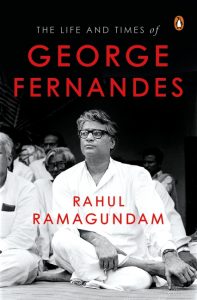
The Life And Times of George Fernandes by Rahul Ramagundam
The Life and Times of George Fernandes||Rahul Ramagundam
Chronicling the story of George, who rose from the streets of Bombay to straddle the power corridor, The Life and Times of George Fernandes: Many Peaks of a Political Life opens a window to the life of George Fernandes and traces the course of the Socialist Party in India from its inception in the 1930s to its dissolution into the Janata Party in the late 1970s. With 1980 as the dividing line, the book explores India’s post-independence politics.
Thought-provoking, comprehensive and absolutely unputdownable, this first definitive biography of George Fernandes is a tour de force.
Jezebel by K.R. Meera (tr. by Abhirami Girija Sriram and K.S. Bijukumar)
Jezebel||K.R. Meera
Jezebel, a young doctor in Kerala, struggles against the cruel realities of a patriarchal world-realities that not even her education, resolve or professional brilliance can shield her from. Her already contentious divorce proceedings go suddenly awry, and her unhappy marriage holds complex secrets. In K.R. Meera’s blistering new novel, which takes the form of a courtroom drama to show us the rich inner worlds of its characters, we see Jezebel reflect on her life and its pivotal points as she takes the stand. Through her memories, we see her grow from a reticent, serious young woman to a rebel who refuses to bend to the conventions of society.
In this elegant translation from Malayalam by Abhirami Girija Sriram and K.S. Bijukumar, K.R. Meera’s hypnotic prose makes resonant allusions to the Bible in powerful ways that elucidate the correlations between legend and the protagonist’s life while also exploring how sexuality and gender roles are manipulated by the dictates of society.
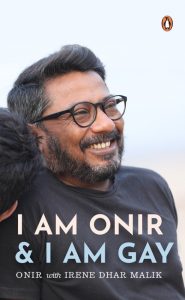
I Am Onir And I Am Gay by Onir with Irene Dhar Malik
I Am Onir & I Am Gay||Onir with Irene Dhar Malik
The award-winning filmmaker Onir, whose directorial debut, My Brother Nikhil (2005), broke new ground in LGBT representation on the Indian silver screen, and opens up fully for the first time. From his childhood days in Bhutan to when he was a young man with no connections in the Hindi film industry who dreamt big and fought to carve a niche for himself, Onir takes the reader through his struggles and triumphs to offer an intimate glimpse of his fascinating journey to success.
I Am Onir and I Am Gay is a raw, eloquent and inspiring memoir about confronting and transcending frontiers. Written with his sister Irene Dhar Malik, this emotionally gritty and unabashedly honest personal story is a pathbreaking narrative of hope, love and the pursuit of dreams.
A Thousand Kisses Deep by Novoneel Chakraborty
A Thousand Kisses Deep||Novoneel Chakraborty
Humiliatingly rejected by Haasil, even after she thought she had him, Pallavi sets forth on a self-destructive path, seeking one life thrill after the other. All she desires is to heal the wounds that haunt her every move, not allowing her to be herself. Neither can she forget Haasil nor can she reach him anymore. That is until she meets Palki, Haasil’s ex-wife who is presumed dead by the world.
A Thousand Kisses Deep is an emotional whirlwind depicting modern layered relationships, lost love and how, sometimes, destiny’s plans are quite contrary to what we have been coveting all our life.
Stop Weighting: A Guidebook to a Fitter, Healthier You by Ramya Subramanian
Stop Weighting||Ramya Subramanian
A film actor from the South and a household name as a television anchor, Ramya’s career spans over a decade. In recent years, she’s carved an increasingly popular presence in the health and fitness space and is a certified fitness and nutrition life coach. Her YouTube channel called ‘StayFitWithRamya’ has a wonderfully active audience.
During the 2020 lockdown, she began writing a fitness memoir in which she shares her roller coaster of a fitness journey and her encounters working in the media over many years-good, bad and ugly. The book digs deep into those stories, mistakes and life lessons; in short, an authentic story of how her mess became her message. Ramya also discusses the effects of mental health on one’s fitness journey, plus her book is extremely approachable and not at all intimidating.
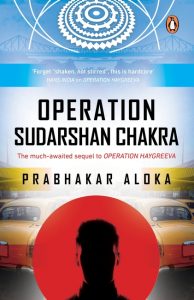
Operation Sudarshan Chakra by Prabhakar Aloka
Operation Sudarshan Chakra||Prabhakar Aloka
The much-awaited sequel to Operation Haygreeva is here!
Haunted by Operation Haygreeva, Ravi Kumar and his team of young recruits come together to pick up from where they left off. Tabrez, the leader of Lashkar-e-Hind (LeH) has escaped to Pakistan and is expanding the scale of his operations against India for revenge. Despite having faced severe personal trauma, Ravi and his team come together to launch deft counterterror and counterintelligence manoeuvres, codenamed Operation Sudarshan Chakra, putting everything, including their individual safety, at risk.
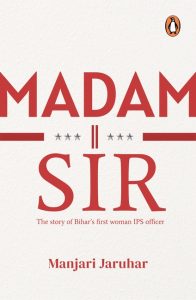
Madam Sir: The Story of Bihar’s First Lady IPS Officer by Manjari Jaruhar
Madam Sir||Manjari Jaruhar
After an unexpected turn of events upended the homemaker role her parents had planned for her, Manjari Jaruhar overcame extraordinary odds to become the first woman from Bihar to join the country’s elite police cadre.
Set against the backdrop of significant events such as the Bhagalpur blindings, the 1984 anti-Sikh riots and Lalu Prasad’s reign in Bihar, Madam Sir looks at the IPS from the inside, through a woman’s eyes. This is a story that will inspire you to pursue your dreams and infuse you with the spirit to reach impossible heights.
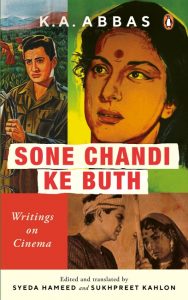
Sone Chandi Ke Buth: Writings on Cinema by K.A. Abbas
Sone Chandi Ke Buth||K.A. Abbas
Sone Chandi Ke Buth is a collection of writings on cinema that includes the observations, thoughts and reflections of one of the pioneering film directors and journalists in the country, K.A. Abbas. This book includes incisive profiles of personalities such as Prithviraj Kapoor, Amitabh Bachchan, Dilip Kumar, V. Shantaram and others; film reviews and essays that interrogate the line between art and stardom in the Hindi film industry; and short stories that lift the veneer of Bollywood’s glamorous world.
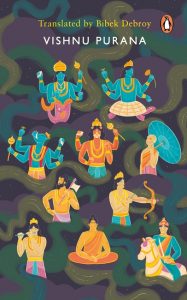
Vishnu Purana by Bibek Debroy (tr.)
Vishnu Purana||Bibek Debroy
The Vishnu Purana is part of a series of eighteen sacred Hindu texts known collectively as the Puranas. It occupies a prominent position among the ancient Vaishnava Puranas which recount tales of creation and the many incarnations of Lord Vishnu. It describes the four classes of society, the four stages of life, and key astronomical concepts related to Hinduism.
Having previously translated the Bhagavata Purana, the Markandeya Purana, and the Brahma Purana, this translation from Bibek Debroy presents readers with an opportunity to truly understand the classical Indian mythic texts.
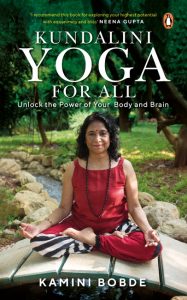
Kundalini Yoga For All: Unlock the Power of Your Body and Brain by Kamini Bobde
Kundalini Yoga For All||Kamini Bobde
Kundalini, the primordial energy resides in all of us, lying dormant at the base of our spines. Very few know the secret of how to arouse it from its slumber.
Kundalini Yoga for All will take you through this journey with explanations of the various stations you will encounter. Starting with cleansing and tuning your body to the step-by-step guide of your daily Kundalini yoga practice, this book will empower you to experience your highest potential in brain, body and awareness to meet all challenges of life with equanimity and experience bliss which is every human’s birthright.
Take this exciting journey within to discover the divine energy, so you can enhance every sphere of your life-professional, personal and spiritual.
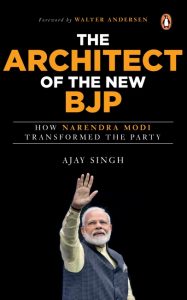
The Architect Of The New BJP: How Narendra Modi Transformed the Party by Ajay Singh
The Architect of the New BJP||Ajay Singh
In less than forty years of its existence, the Bharatiya Janata Party has become the world’s largest political party and continues to go from strength to strength in Indian politics. Although its historic rise may seem organic to some, there is much internal deliberation and planning that has aided the growth of this 180-million-member organization.
Using in-depth research and concrete examples, The Architect of the New BJP examines the past of the party, including the vision of its founders, as well as its future. Based on extensive interviews with many party workers, leaders and observers, this is the story of how the veterans of this cadre-based party, appreciating its limitations, developed a unique Indian model that eventually transformed the BJP into the election-winning machine it is today.
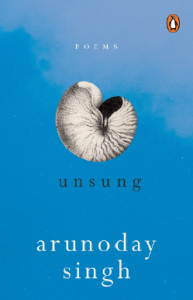
Unsung: Poems by Arunoday Singh
Unsung||Arunoday Singh
Arunoday Singh’s first volume of poetry presents a collection of his most popular work alongside new material, where he delves inwards and probes questions of love, loss, longing everything that ails the human heart. He has amassed a large, involved following on Instagram, where he shares his poetry in handwritten calligraphy under the handle @sufisoul. The poems are deceptively simple and intensely piercing. They are divided into four sections that explore the themes of the self, the elements, breaking and healing, the search for divinity, and the light and darkness of the spirit.
Live Your Best Life: Understanding Menopause for a Wiser, Happier and Healthier You by Dr Amrinder Bajaj
Live Your Best Life||Dr. Amrinder Bajaj
One thing that bonded Mona, Meera and Sheila were their evening walks. This was the time they talked about their families and work, responsibilities and challenges. Then slowly things began to change, and it was not long before they began talking hot flashes, heavy bleeding, sudden weight gain and other scary symptoms. They thought these were issues that they need to live with as they aged.
Enter Doctor Dua, an experienced gynaecologist who takes all of them under her wing and helps them understand and deal with their individual symptoms and more. From physically taking care of oneself to mental adjustments, she changes their perception from the fear of Menopause to treating it as another phase in their lives.
Live Your Best Life is a gentle, friendly guide to negotiating Menopause and living a fulfilling life both in body and in mind.
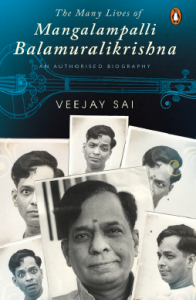
The Many Lives of Mangalampalli Balamuralikrishna by Veejay Sai
Mangalampalli Balamuralikrishna, the internationally renowned Carnatic vocalist, was a child prodigy and proficient at a number of musical instruments. He was a school dropout, a teenage poet and composer, a restless mind, a versatile musician, a polyglot, wordsmith, a pioneer and an unparalleled musical genius, and this is the story of the many lives of the iconic maestro. With in-depth research into archival material, fortified by interviews with his family, disciples and peers, Veejay Sai’s definitive biography of Balamuralikrishna traces his journey in the world of music, a place of beauty as well as egos.
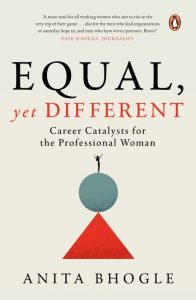
Equal, Yet Different: Career Catalysts for the Professional Woman by Anita Bhogle
Equal, Yet Different||Anita Bhogle
Equal, Yet Different is exactly how women want to be treated and need to be treated. We now have a large and growing pool of highly talented and professionally qualified women. This book talks about the catalysts that are required for women to reach peak potential conditions, people, or even mindsets at home, at work, and in the ecosystem. Anita Bhogle draws from the professional experiences and wisdom of a large number of women leaders and experts, and this book will benefit all those interested in women’s careers-women themselves, their spouses, bosses, and even HR folk.
Selling Anything Anywhere: Sindhis and Global Trade by M.A. Falzon
Examining the social and cultural infrastructure that sustains Sindhi business networks, Selling Anything Anywhere provides a rich historical context. By tracing the origin of Sindhi Trade to the annexation of Sindh in 1843, when it was incorporated into an expanding global economy, Falzon locates Sindhi business within the dynamics of the contemporary Indian diaspora and features several success stories both from India and outside.
Untangling Conflict: An Introspective Guide for Families in Business by Janmejaya Sinha, Carol Liao, Ryoji Kimura & Brittany Montgomery
Untangling Conflict||Janmejaya Sinha, Carol Liao, Ryoji Kimura & Brittany Montgomery
Drawing on decades of lessons learned from supporting families and the businesses they own, Untangling Conflicts untangles messy threads of conflict within family businesses by examining issues laden with emotion, those related to the rights, benefits, and restrictions of ownership, and issues of business strategy. By exploring these three threads of conflict, the authors help families understand, prevent, and respond to disagreements, without disrupting the family business. Lastly, the book offers tools to align expectations and reduce friction between families, non-family employees, and the partners of the family-owned businesses.
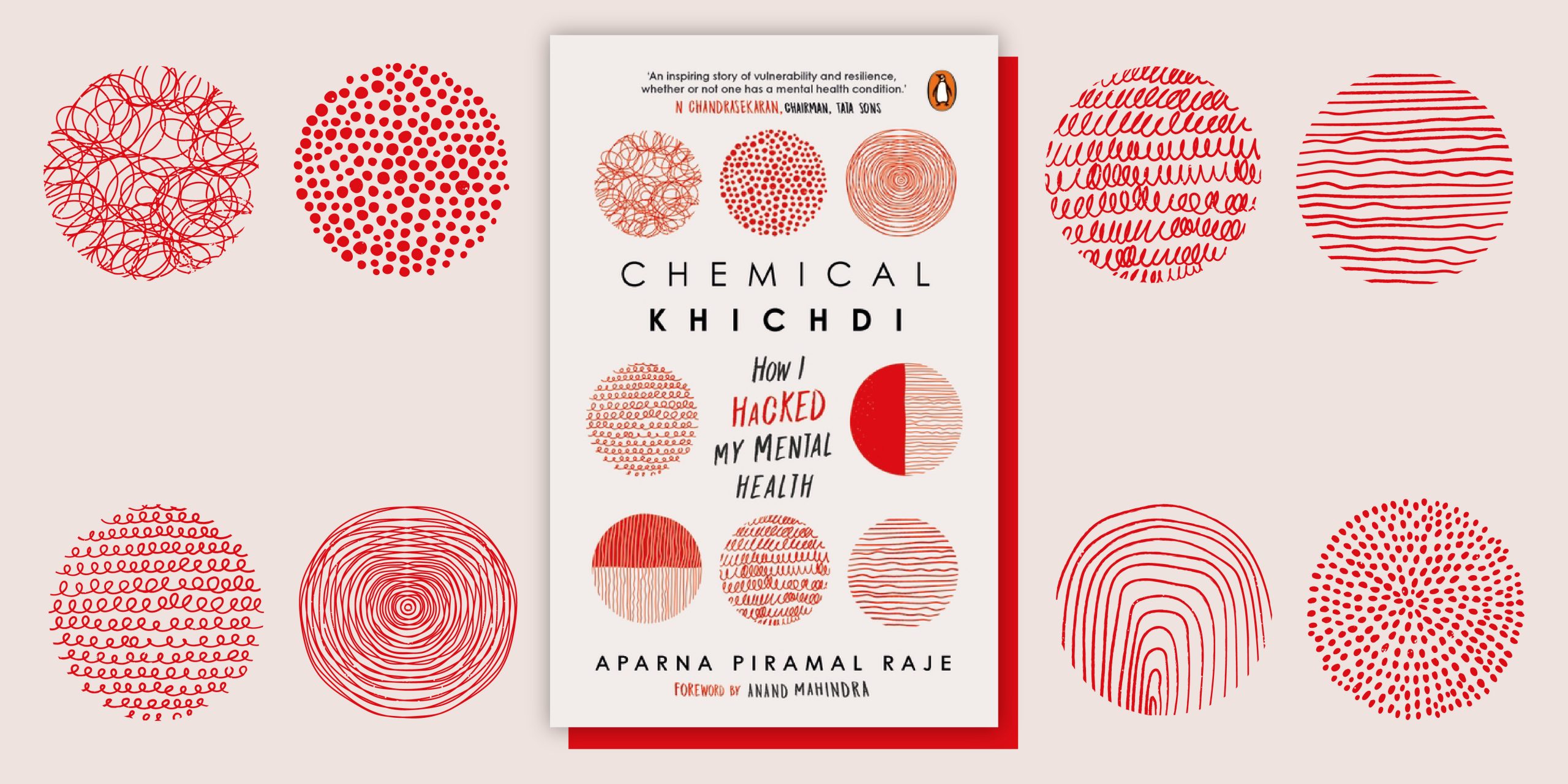
With a strong faith in the anecdotal as well as the scientific, Aparna Piramal Raje’s Chemical Khichdi is a unique entry to the Indian self-help canon. Mental health awareness still has a long way to go, but a greater scholarly understanding of bipolarity creates a stable foundation of destigmatization and support.
Below is an excerpt from the memoir.
Chemical Khichdi||Aparna Piramal Raje
*
Summer 1997, Brasenose College, University of Oxford
‘Who would like to volunteer?’ asks the knife-thrower.
It is the annual end-of-year college ball, a night-long party that is as much part of university tradition as its historic libraries. This year the ball is circus-themed and Brasenose students are ready to celebrate. I have just finished a three-year undergraduate course in politics, philosophy and economics, and am looking forward to the ball. After all, the strenuous final examinations are over.
Now, in the middle of the night, I am taking a break from dancing and am seated in the college dining hall with friends when a professional knife-thrower asks for a volunteer to face his daggers. The daggers would put a set of kitchen knives to shame.
One of my friends raises my arm. ‘Aparna would like to do it!’
I turn to him and say, ‘Are you crazy?’
He says, ‘Go on, I know you can.’
The knife-thrower is a professional. All I need to do is stay still, I think to myself as I walk up to the target and position myself in the allotted spot. I am wearing a lime-green kurta, last worn at my cousin’s wedding six months ago. I wrap it tightly around me, making sure that none of the fabric is sticking out. I thank God for the UK’s National Health Service, hold my breath and wait. The spacious, wood-panelled dining hall, normally lined with dozens of chattering students, is equally silent.
A few seconds later, there is loud applause. The daggers were accurate and I was unflinching. My friends are very proud of me.
Crazy? Impulsive? Risky? I think this incident illustrates something more nuanced—my ability to stay calm and collected when needed, while pursuing ‘safe thrills’.
Oxford is known for its weekly ‘essay crises’, where students often stay up all night trying to complete their assignments. Final examinations at Oxford are known for their rigour. Despite these stressors, I was able to maintain my composure during the three-year undergraduate programme. A close circle of friends, a serious college relationship, lack of interpersonal conflict and a genuine interest in my chosen subjects were cornerstones of my emotional and mental equilibrium. The college relationship in particular was transformational on all counts; a wonderful way to grow and flourish as a young adult.
When it ended, a year after we left college, I could not sleep properly for days and I could not stop talking. It was obvious that I was not fully myself, with many racing and conflicting thoughts and emotions running through my head. Break-ups are significant life events for any young person. So perhaps it made sense to view my reaction, while out of character, as part of growing up and not a mental health issue. In other words, there was little to suggest then of the highs and lows to come—until the summer of 2000, before going to the Harvard Business School (HBS).
I was twenty-four then and had been working in sales and marketing with VIP luggage for three years. Midway through the year, I was accepted into HBS. The programme started in September. In the interim, I planned to take time off from the business to pursue a different sort of adventure: to intern with Randeep Sudan, a senior bureaucrat in the Andhra Pradesh government at the time. Mr Sudan worked closely with N. Chandrababu Naidu, then the chief minister of one of India’s most technologically progressive states. The internship was facilitated by a family friend and I was keen on learning about state-level governance, a completely unfamiliar subject.
Come July 2000, I found myself in Hyderabad, then the capital of Andhra Pradesh, staying as a paying guest in the home of Lakshmi Devi Raj. Over the next four weeks, I acquired two role models—my innovative and approachable boss, Mr Sudan, and my host, the sixty-eight-year-old joyful and independent Lakshmi Aunty. During the day, Mr Sudan ensured I worked on stimulating projects, such as how the state could attract more external investment.
At night, Lakshmi Aunty took me on a cultural and gastronomic tour of Hyderabad’s unique attraction: its larger-than-life parties. Musical evenings went on all night—I could not keep up with Lakshmi Aunty and her friends.
So it was a successful internship on all counts. My work was appreciated, so much so that Mr Sudan arranged for me to make a presentation to the chief minister and a large team at the end of my four-week internship. And two decades later, Lakshmi Aunty continues to remain a sprightly role model and a friend.
Yet inside, there was turmoil. I was consumed with anxiety and insecurity about my parents’ deteriorating marriage. By then it was clear there was a major estrangement, something that I had trouble accepting. I was also deeply unhappy about another relationship break-up; someone I had been seeing for nearly two years. And I was riveted by excitement about the success of my internship.
These emotions triggered the perfect storm.
My mounting excitement—the internship, Harvard—and my raw insecurities made me impetuous, restless and hypomanic. With all the idealism of a twenty-four-year-old, I was convinced I could change the world. Blurry as the past can be, I can still remember some of the half-baked thoughts and ideas that overtook my mind in the weeks before I was due to leave for Boston. I knew I could catalyse an omnipotent coalition of Indian companies and the government to rule global markets in the prevailing dot-com era, and started drawing up grandiose plans, scribbling away on bits of paper. Sleep disappeared as I felt invincible, restless and impetuous, going to bed late and rising early.
Kay Redfield Jamison, a renowned psychotherapist, bipolar patient and author of the classic An Unquiet Mind, says it best in her memoir. ‘My mind was beginning to have to scramble a bit to keep up with itself, as ideas were coming so fast that they intersected one another at every inconceivable angle. There was a neuronal pileup on the highways of my brain, and the more I tried to slow down my thinking the more I became aware that I couldn’t.’
My family was shocked at my behavioural change. ‘I know you so well. I’ve grown up with you. We shared a room for years. So to watch your face change, your eyes change, your mind change, in front of my eyes, was a terrifying experience. You behaved your whole life one way and then suddenly you started behaving another way, and you maintained that the new way is the real you, but Mom and I were saying, “No, something’s wrong, something’s different”. But you were holding on to your mood as the authentic truth. It created a friction like no other. Because we were saying something’s wrong. And you were saying nothing is wrong. That was the biggest clash. We didn’t know what it was, we were totally in the dark,’ recalls my sister Radhika.
Welcome to bipolarity.
*
Chemical Khichdi is available at your nearest bookstore and Amazon. Get your copy here!
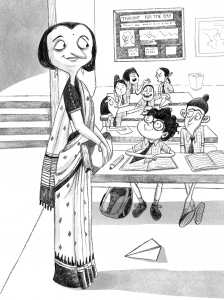
Children are imaginative and curious, which is what makes them so different from adults who almost always lead a mundane life. But what happens when a child’s brain is over-imaginative and borderline paranoid?Meet Avi, the protagonist of Help! My Aai Wants to Eat Me, who is convinced that is Aai is keen on gobbling him up, after watching a documentary that fills his mind with wild ideas. Read an excerpt from the book to find out what happened, below!
“All in all, not Avi’s favourite day.
Until it was time for environmental science a.k.a. EVS—a subject Avi LOVED.
Avi’s favourite subject, EVS
He loved it as much as figs love wasps (so much so that they let the wasp pollinate the fruit and die inside them—‘till death do us part’, just like in the movies that Baba and the Maushis watched and loved).
He loved it more than birdwatchers loved the forest owlet, which had been believed to be extinct for 113 years until it was rediscovered right here in Maharashtra—the same state that Avi lived in!
Avi loved it more than . . . well, it was his favourite subject. Unlike HJ who loved maths and art and always got 24 out of 25 marks in them. And today was EVS Film Day! Which meant they all got to watch a wildlife film instead of studying. Avi settled down next to HJ, his knees aching from having stood for thirty-four minutes outside the classroom. ‘Arre, how will I play cricket today?’
‘Yeah?’ asked HJ. ‘That bad?’ ‘Shhh . . .’ Kshama hissed like a snake and glared at the two boys. ‘Do you want to spend another class outside?’
Avi bit back a retort—Kshama was the class monitor and could easily report him and then he would have to miss EVS Film Day. He had already seen films about climate change, about a tigress called Machli, and one about ghost crabs!
Miss Mankad
Miss Mankad, who taught EVS, walked into class. Every time Avi looked at his favourite teacher, he was reminded of a meerkat—an upright spine, broad head and large, bright eyes. Except, unlike meerkats, she was six feet and one inch tall. Clearly, she did a great job of teaching, given that Avi knew more facts about the natural world than his herd of classmates put together.
Miss Mankad shut off all the lights and Avi and Kshama closed all the curtains, turning the room into a dark den, perfect for watching a film. Even more perfect, it was about bears! Avi watched open-mouthed as jamun-like bear cubs wrestled on the screen, a mama sloth bear battled with a tiger (and won) while defending her cubs, and then . . .
SOMETHING HORRIBLE HAPPENED.
SOMETHING TERRIBLE. HORRIBLE.
DISGUSTING. EEUCHY.
Even worse than the day Avi was having. Another mama bear ate up her second-born cub.
A terrified Avi
At first, Avi thought she was licking the bear cub. But no. She just gobbled the cub up. Slurp. The baby was gone. Back into her tummy. Where he had lived for so long. Avi’s eyes widened. He gripped his pencil box tightly. What just happened? Did she . . . Really? No, that could NOT have happened. He squinted in the dark to see his classmates’ expressions. He couldn’t make out much, but did Kshama also look horrified? Or was that just her usual expression?”
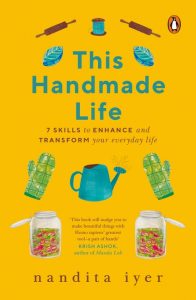
If you’re curious about how fermentation works, or what it is, read an excerpt from This Handmade Life by Nandita Iyer!
“Where there is life, there is fermentation.
This Handmade Life||Nandita Iyer
Microorganisms are intimately related to human life. Unlike the womb, the birth canal is teeming with bacteria. The journey of a baby from the womb to the outside world through the birth canal gives it the first dose of microbes. The baby’s microbiome continues to be nurtured by the mother’s milk, which was earlier thought to be sterile. Breast milk also feeds the existing gut bacteria in the baby, kickstarting the baby’s fledgling immune and digestive systems. Our first brush with bacteria continues into the rest of our life, until death and beyond. A study was published in the Proceedings of the National Academy of Sciences on a fascinating census sorting all the life on earth by weight. The weight of bacteria on the planet is 1200 times more than the weight of all the humans on the planet. They are omnipresent, on our skin, inside our bodies and on the surface of all vegetables and fruits. When humans channelize the power of bacteria and fungi to benefit us, to add flavor to food and to modify food in a way we seek, it is called fermentation.
It is fairly simple, and you don’t need a degree in biochemistry to figure out how to ferment foods. By fermentation, we are harnessing the bacteria and yeast to do the cooking for us, pre-digesting food, creating flavors in a way we cannot do ourselves in the kitchen and providing more bioavailable nutrients.
Fermented foods are less prone to spoilage because harmful pathogens cannot survive in the acidic environment. It was used as a method to preserve food for longer when there was no access to refrigeration and other food preserving technology.
Using fermentation, we can make a variety of fermented beverages like whey sodas and ginger ales at home, reducing our dependence on artificially flavored and highly sugary drinks. These are not only low in sugar but have no artificial colors, preservatives or additives. Seasonal fruits, herbs, spices and pretty much any other natural produce can be used in these beverages. Homemade fermented beverages are also low in alcohol content, making a good replacement for alcoholic drinks for those who are keen to cut down on alcohol.
Eating fermented food regularly helps maintain a good gut microbiome. Gut bacteria play an important role in immunity, mental health, digestion, regulating blood sugar and cholesterol levels, and more. The majority of commercial ‘probiotic’ supplements don’t survive stomach acid. A thriving gut microbiome requires a regular intake of fermented foods and foods containing resistant starch (for example, raw papaya, plantain, beans and legumes, cooked and cooled rice or potatoes) that feed the good bacteria in the large intestine. Regular consumption of fermented foods also helps ease gut-related problems like acidity, bloating and poor digestion.
Homemade ferments have a microbial diversity that commercially made bottled fermented drinks lack, as they are inoculated with a set quantity of known strains. This is understandable as a fixed quantity of known microbes will give a predictable result and the standardization that commercial brands need. Fermentation makes vegetables fun. Raw carrots that are tooth-breakingly hard do very well with three days of lacto-fermentation. It is a great way to snack on carrots with hummus, or you can simply dice these and add them to salads for a beautiful flavor profile.
The brine can also be drunk diluted in water as a digestive beverage as it is full of beneficial bacteria. Fermentation is a step towards zero waste where excess produce can be preserved for longer or kitchen waste such as peels, pith and seeds of fruits like pineapple, mango, apples, etc. can be used to make sodas and vinegar.”
This Handmade Life is all about finding a passion and becoming really good at it. Divided into seven sections-baking, fermenting, self-care, kitchen gardening, soap-making, spices, and stitching-this book tells us it is all right to slow down and take up simple projects that bring us unadulterated joy. Get your copy of This Handmade Life today!
Amidst the giant business empires that run the globe today and the ceaseless power struggle that flows through them, sometimes, when the human race is particularly lucky, we’re able to witness the rise of a business family which works like a family, which rises to incredible successes and finds unique ways of tackling entrepreneurial complications.
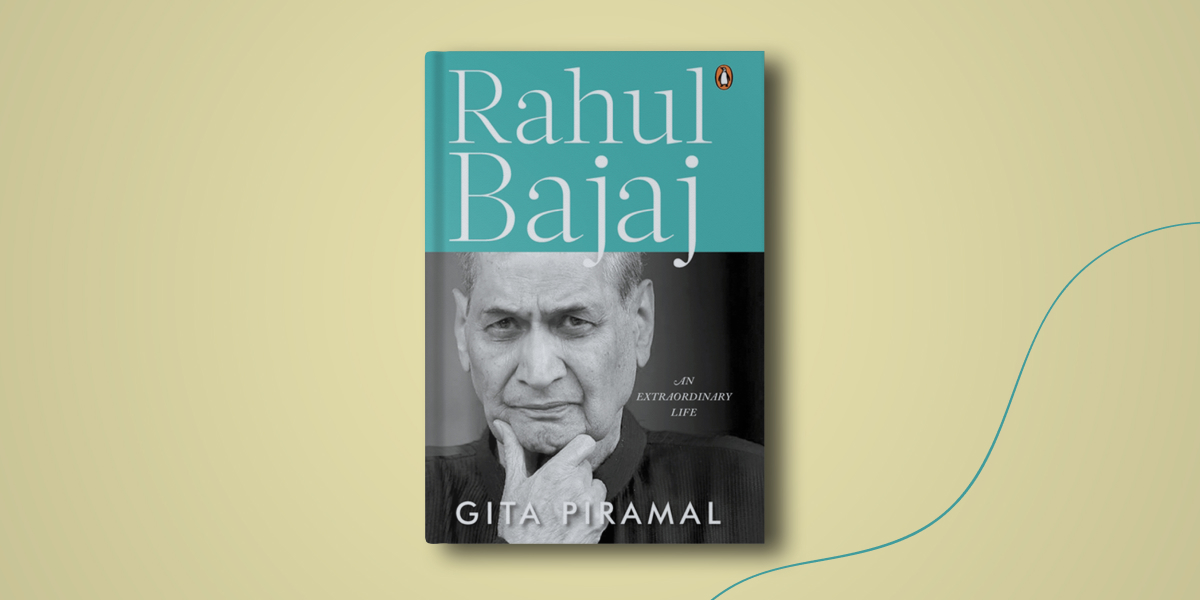
One such story is that of the Bajaj family business, which rose to enormous success, where fathers taught their sons valuable lessons of business and sons chose to apply those creatively. Rahul Bajaj, the icon who was not only an entrepreneur, but a change-maker, shares in this excerpt from his biography written by Gita Parimal, the unmatched personality that his own father was.
Read on!
Rahul Bajaj || Gita Parimal
‘‘My father did not only act by his instincts,’ Bajaj (Rahul) recalls those moments stoically. ‘He would apply his intelligence rationally and objectivity to every issue, and yet with a touch of humanism. He had great faith in his analytical skills. He did believe in God, but his logical way of thinking ensured that he never sought the refuge of fate. He used to say that those who rely on fate achieve little; whatever one acquires is possible only through a scientific and objective approach.’
‘Kakaji founded and built upon the edifice of our business almost from ground up,’ Bajaj recounts. ‘He never involved himself or spent time in the minutiae of day-to-day activities, but he had a great grasp of business matters. If the need arose, he could give such insightful ideas and solutions that none of us could have ever thought of. It is because of such inputs that the Bajaj Group could rise to such heights within such a short span of time.’
‘True to his nature, he was never bothered about success or failure,’ continues Bajaj. ‘He believed only in action. He believed that a person ought to try his best to complete a task that has been taken up, irrespective of how difficult it might be. He felt that the line dividing success and failure is a very thin one.’ Bajaj adopted his father’s credo.’
If you’re intrigued to know more about Rahul Bajaj and the legend who transformed the face of the Indian automobile industry and more, get your copy now!
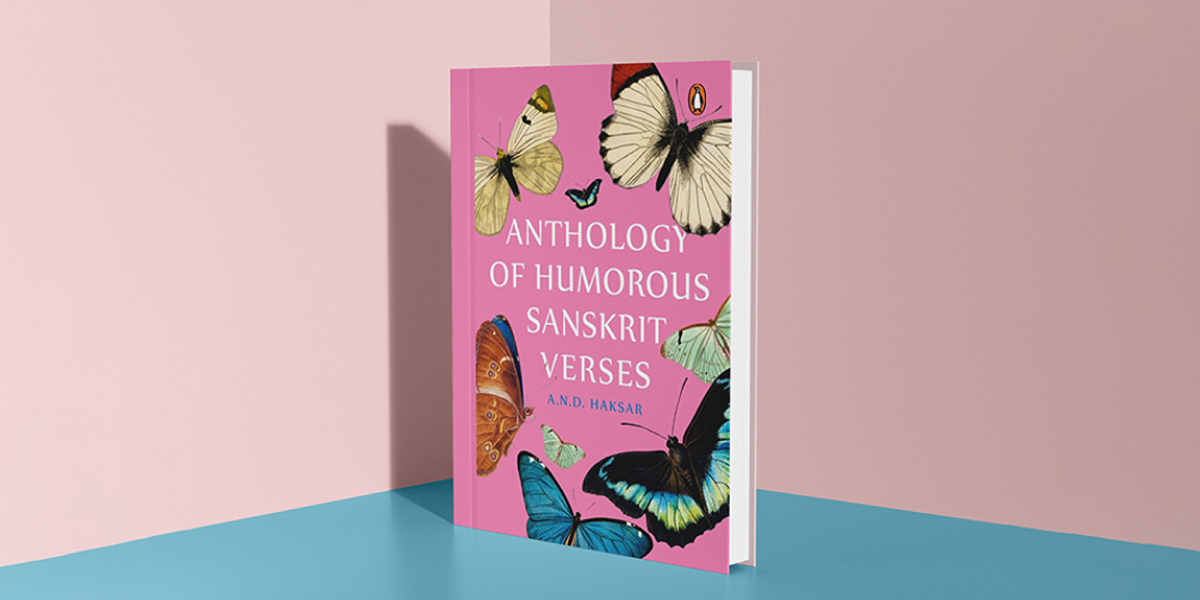
In recent times, whenever ancient Sanskrit works are discussed or translated into English, the focus is usually on the lofty, religious and dramatic works. Due to the interest created by Western audiences, the Kama Sutra and love poetry have also been in the limelight. But, even though the Hasya Rasa, or the humorous sentiment has always been an integral part of our ancient Sanskrit literature, it is little known today.
Anthology of Humorous Sanskrit Verses is a collection of about 200 verse translations drawn from various Sanskrit works or anthologies compiled more than 500 years ago. Several such anthologies are well-known although none of them focus exclusively on humor. A.N.D. Haksar’s translation of these verses is full of wit, earthy humor and cynical satire, and an excellent addition of the canon of Sanskrit literature.
Let’s read these excerpts from the book.
*
Anthology of Humorous Sanskrit Verses || A.N.D. Haksar
When his garb is simple space,
why does he need garments?
If he is covered in ashes,
what for any woman?
And if he does have a woman,
why hate Kama, God of Love?
Seeing all these contradictions
in the ways of his master Shiva,
the body of his servant Bhringi
is just a skeletal bag of bones.
1/2 v. 2399
He cannot read what others write,
his own script no one can read:
the curious thing about him is
that he himself cannot decipher
that of which he is the writer.
1/4 v. 2334
Cleverness in weighing goods
in purchase or sale
and tricks for confiscating deposits:
thus do they, these day-time robbers,
the traders steal from people.
2/14 SP v. 4035
Lakshmi sleeps on a lotus blossom,
Shiva on a hill of snow,
and Vishnu sleeps on a sea of milk.
I think this is because they are all worried
about the bed bugs where they lie.
4/1 SRB Hasya
Make love, lover, while you may,
for your youth is passing away.
When you are dead, who will give you,
with the funeral, a sweet cunt too?
4/8 v. 2366
With no meat or liquor,
nor robbery from others,
or causing them injury,
that official weeps all day.
4/10 SRB Hasya
The goddess of the state’s prosperity
sadly weeps, tears darkened by
ink drops trickling from the pen
of that clerk who plundered her.
4/14 SRB Hasya
No learning or eloquence,
not even any craftiness;
how can you then have, minister
the feeling of not being rewarded?
5/3 SM (HP v. 13)
‘What is it, mother, on top of his head?’
‘Son, it is the crescent moon.’
‘And what is that upon his forehead?’
‘That is his flaming eye.’
‘What’s in his throat?’
‘It’s a poison.’
‘And that thing below his navel?’
Hearing from her son this last,
Parvati covers his eyes
and puts her hand upon his mouth.
May she protect us always.
6/1 SMHP v. 1
**
Get a copy of this book of humourses verses from your nearest bookstore or online.
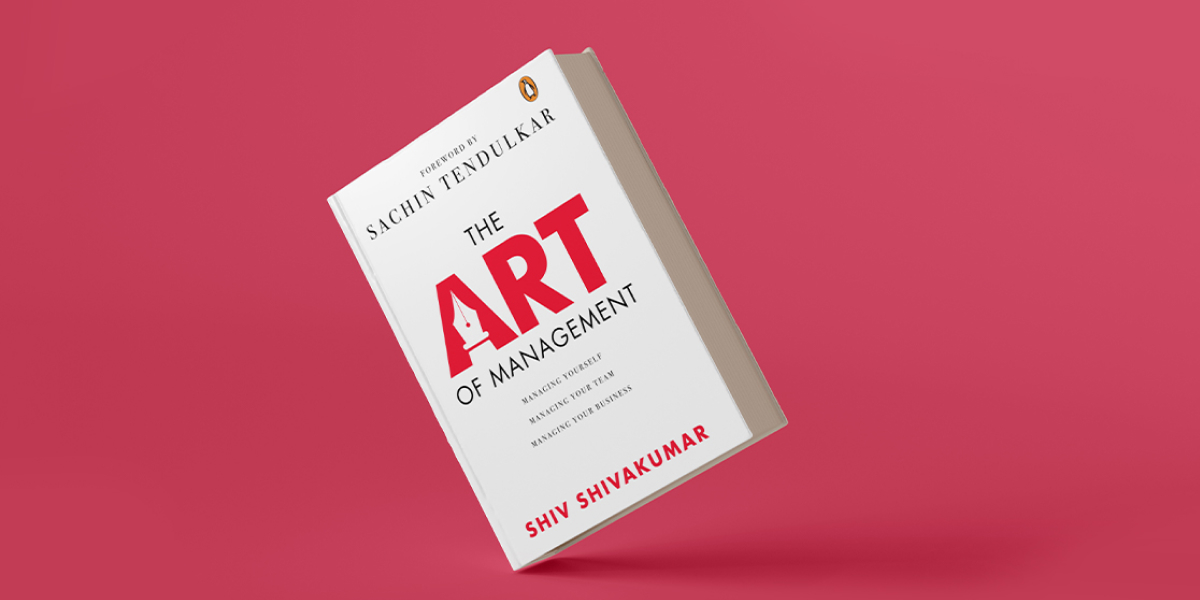
When it comes to business and management, a book written by one of India’s longest-running CEOs is as good as learning from the best. In The Art of Management, Shiv Shivakumar—formerly CEO of PepsiCo and current executive president of AdityaBirla—interviews 21 leaders from different Indian industries. By keeping an open mind and never saying no to learning, Shivakumar leans towards a more philosophical stroke of management. His sage advice on the transforming landscape borrows symbols and icons from popular culture for better comprehension.
The following excerpt talks about his view on management from the lens of the T20 model of cricket.
*
The Art of Management||Shiv Shivakumar
T20 has revolutionized cricket, and a number of innovations/practices from T20 cricket have now crept into Test cricket as well. Examples include the reverse sweep, slower bouncer, boundary relay catch, high fielding standards, running between the wickets, fitness of the players and, most important of all, the data and the insights from the data.
T20 is a brutal game. Yesterday’s captain is tomorrow’s twelfth man. Things are never so severe in the corporate world. You need a thick skin when you are a cricketer of the stature of Paul Stirling or Hashim Amla or Joe Root or Steve Smith or Adil Rashid, and you are not picked by any team. Even when picked, you are playing second fiddle. Life can turn out like that when you are on top of it on one day and down in the dumps the next day. Actors go through that in Bollywood and Hollywood.
The captain of a national team could be in the reserves in the Indian Premier League (IPL) team. M.S. Dhoni was dropped from the captaincy of the Pune team. No fans protested. I am sure people would have protested if Dhoni were dropped as captain of India. Captains are changed midway through the IPL. A captain has to make way and become a substitute player if the combination doesn’t work, as happened with a great like Ricky Ponting at Mumbai Indians.
This simple lesson in multiple capabilities is something we can apply in life and the corporate world. A single-skill cricketer does not have a role in the IPL team, however good he is at the international level. The best Test batsmen who cannot adapt to T20 don’t get picked, but the best bowler still has a chance. Teams tend to pick players with multiple skills—batting, bowling, fielding, wicket-keeping, captaincy. So these days, we need to have more capabilities in life and at the workplace as compared to the past.
Equally, one needs to adapt to a new world. One cannot play Test cricket and expect to succeed in a fast-changing world. This is a challenge for many managers past their prime. They are all digital immigrants and just don’t have a sense of how to work in a digital world. Rahane and Pujara in cricket are examples.
One has to constantly re-evaluate the capability set and be future-ready in life.
*
The Art of Management is now available at all major bookstores near you. Get your copy now!
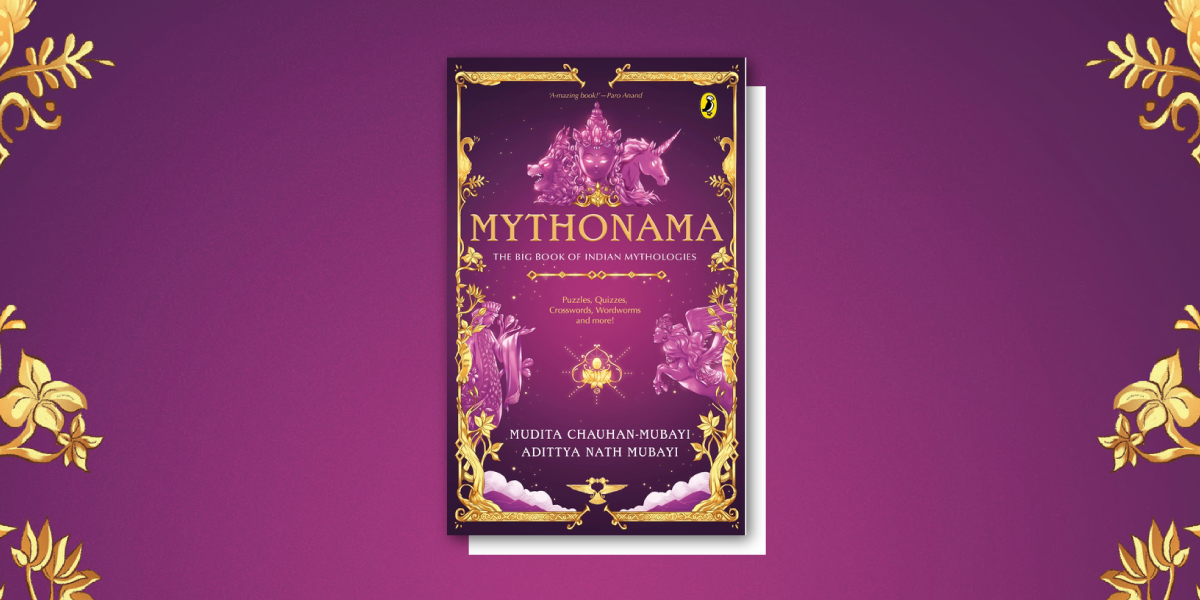
Winged horses, tusked fish, shape-shifting snakes . . . Bovines that provide endlessly, raptors that devour senselessly. Some so colossal they block the sun, others so infinitesimal they defy vision. No myth is complete without its fabulous creatures, divine or demonic.
While exploring India’s many mythologies, Mudita and Adittya’s Mythonama introduces us to an array of animals, somewhat familiar in appearance yet incredible in ability.
Here are some excerpts from the book.
*
Krishna displays the fabulous Navagunjara (‘nine beings’) avatar to Arjuna, in an episode from the fifteenth century Sarala Mahabharata, composed in Odia by Sarala Dasa.
This cannot be an earthly creature, thought Arjuna, instinctively reaching for his bow. What stood before him was unseen, unheard of. A rooster’s head on a peacock’s neck; a bull’s hump on a lion’s torso; legs of a deer, tiger, elephant; a serpent’s tail; and a human hand holding a lotus—nine beings in one fantabulous form . . . Could it be divine? It is believed to be Krishna manifesting spectacularly to either reward Arjuna for completing his penance on Manibhadra Hill or, an eco-sensitive interpretation, to prevent him from razing Khandavaprastha to the ground. Realizing that a creature may not exist in human imagination but surely in god’s creation, Arjuna bows to the infinite wisdom of the universe.
BURAQ
BURAQ was the noble white steed of lightning speed, who effortlessly carried the Prophet ﷺ from Mecca to Jerusalem to heaven. A creature of lore, she appears in various artworks with a woman’s head, radiant mane, gem-laden crown, eagle’s wings, peacock’s tail and bejewelled throat. Some believe that the Prophet ﷺ climbed to heaven on a glittering ladder, having fastened Buraq to a wall. Today, we know it as the Buraq Wall or Wailing Wall.
MARDYKHOR
MARDYKHOR (manticore) was a man-eating monster with a scarlet lion-like body, a human face with blue-grey eyes, triple rows of razor-sharp teeth, a scorpion’s tail with spikes it shot (and promptly regrew) and impenetrable hide. It hid in tall grasses, lured men (even three at a time) with its flute- or trumpet-like crooning, paralysed them with toxic stings and devoured them whole, bones, clothes and all. It moved faster than anything and could kill anything except elephants. Creepy!
RE’EM
RE’EM was a Biblical unicorn, or perhaps an aurochs or rhinoceros because—horn. It was strong, swift, agile, untameable and possibly untrustworthy because—pride. One touch of its horn could detox and sweeten any water. Jews believe it dwarfed mountains and dammed the Jordan with its, erm, dung. It couldn’t fit in Noah’s Ark, so it was tied by its horn, allowing it to swim along and poke its mouth in to breathe and feed.
SIMURGH
SIMURGH was a benevolent bird deity with a canine head, lion’s claws, often a human face, peacock plumage, healing feathers and copper wings so strong it could carry a whale. It lived atop Saena, the Tree of All Seeds. When it took flight, the branches shuddered and sent millions of seeds across the world, creating life. It lived for 1700 years—witnessing the world’s destruction thrice and gaining endless wisdom—before diving, Phoenix-like, into flames.
**
Read in detail by getting your copy of Mythonama from a bookstore near you or by ordering online.
“A jack of all and master of none” is a quote that all of us are familiar with, but a majority of people do not know that the original quote is longer.
“A jack of all and master of none is still better than a master of one.”
Interesting isn’t it? When we pursue our academic dreams and try to land that dream job, extra-curricular activities often take a backseat. Here’s why you need to think out of the box to Get Job Ready!
Extracurricular activities help you go the extra mile
Your participation in extracurricular activities can help build your resume and land an internship or job in the future. While in college, extracurricular activities are amazing avenues to build core employability skills. Extracurricular activities are activities that fall outside of your regular academic work. In addition to helping you build necessary skills, extracurricular activities offer additional benefits. They can expand your thinking and perspective, increase your self-confidence, and build a network of friends. There is no one best extracurricular activity. What is best for you may be different from what is best for your classmate.
How to pick an extracurricular activity
Find an activity that you can enjoy and that helps you grow. A number of research studies have shown that students who participate in extracurricular activities perform better academically. Here are a few examples of extracurricular activities to help showcase and develop your employability skills:
Leadership in student government
Visual and performing arts participation
Community service volunteering or leadership
Academic clubs
Clubs representing professions and associations
Participation, awards, or outstanding achievements in hobbies and special interests
Tutoring experience
Sports-Team member, captain, or coach
Research projects
Leadership or other participation in on-campus media
Get Job Ready||Vasu Eda
Don’t hesitate to use your extracurricular activities to highlight your accomplishments and to illustrate your successes. Have you started an on-campus club, or had a significant role in one? Do your extracurriculars involve skills such as leadership as head of a club, managing events, marketing, writing, website design and development, creating policies, such as in student government, or research projects? Are you on a cricket, racquetball, badminton, or soccer team? Are you the captain of a team? Do you coach younger students? Do you have significant responsibility for taking care of a family member? All these skills can be important in a professional environment and can impress an employer.
If there’s an area that you want to be involved in or a leadership role that you want to take on, and the opportunity doesn’t exist on-campus, then create it. This will show future employers that you can take initiative, are a creative thinker, and a leader, and are not afraid to take on a challenge.
Grab your copy of Get Job Ready and get expert guidance on how to land your dream job straight out of college!