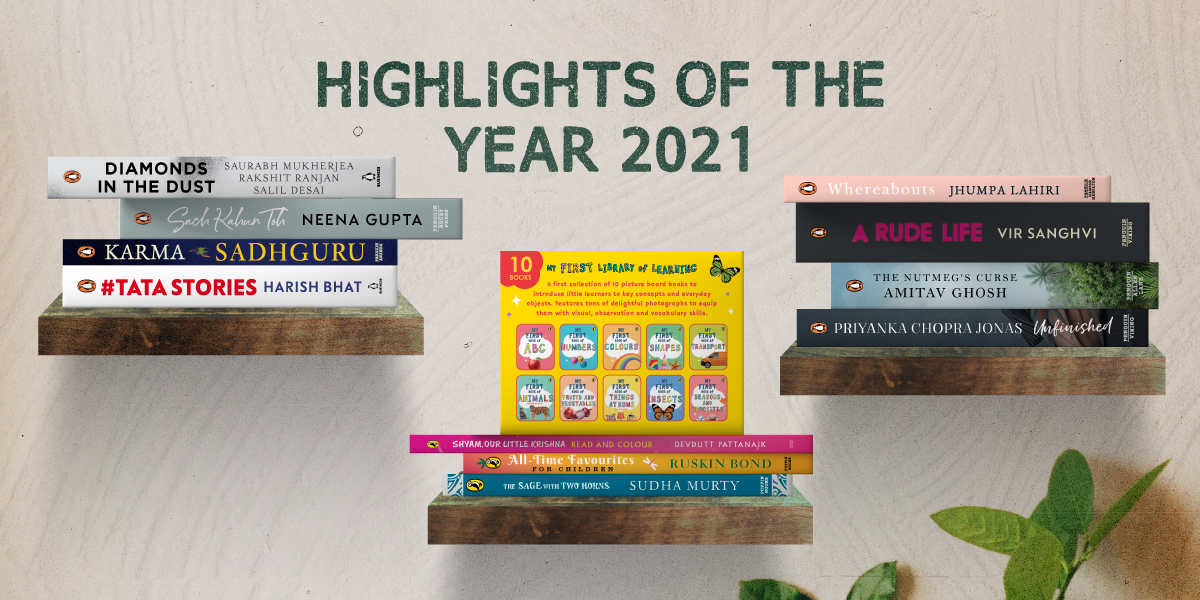
Exploring the lives of two remarkable women who chose to enter a field of activity which, in the middle of the nineteenth century, was seen a male domain, Rundrangshu Mukherjee’a A Begum and a Ranibrings to light how unusual circumstances catapulted Begum Hazrat Mahal of Awadh and Rani Lakshmibai of Jhansi into the rebellion of 1857. Both of them sacrificed their lives trying to overthrow British rule, which they considered to be alien and oppressive. The afterlives of both, however, took on very different hues. The rani was made a nationalist icon: a woman on horseback with a raised sword, who died in battle. The begum was a relatively forgotten figure who did not get her due place in the roll-call of honour. Revisiting the revolt of 1857 from a unique perspective and looking at their afterlives, the myths, this book attempts to set the record straight, while tracing their fascinating trajectories.
A Begum & A Rani || Rudrangshu Mukherjee
Read on for a glimpse into the convoluted process of historiography that deifies one heroine while appearing to disregard the other.
The way Lakshmibai is revered and remembered is in sharp contrast to the remembrance of Hazrat Mahal. It is not that the latter is effaced from history. Rather, she is not given the kind of attention and importance that was and is still accorded to Lakshmibai. To an extent, this neglect is derived from the nineteenth-century British historians who described Lakshmibai as a heroic adversary but did not use such accolades for Hazrat Mahal. Indian academic historians in the centenary year followed this trend. R.C. Majumdar in his book has a section called ‘Heroes’. Hazrat Mahal does not feature there; Lakshmibai, of course, does, as does Maulavi Ahmadullah Shah. Unwittingly or otherwise, writers on 1857 seem to have set up a hierarchy of heroes in which Hazrat Mahal was many rungs lower than Lakshmibai. A hierarchy of heroes is suggested by Savarkar, who in his influential book devoted one chapter to ‘Oudh’ and another to ‘Lucknow’. In the latter, he wrote, ‘This Begum of Oudh [Hazrat Mahal], though not quite another Lakshmi Bai, was undoubtedly a great organizer, full of love of liberty and the spirit of daring [italics mine].’ This statement is appreciative of Hazrat Mahal’s courage, her qualities as an organizer and as an upholder of freedom (Savarkar, as we shall see in the next paragraph, detailed her organizational and administrative skills) but is unwilling to place her at the same level as Lakshmibai. Savarkar did not say where Hazrat Mahal—who was also brave, a fighter for liberty and an able administrator—fell short in comparison to Lakshmibai. The italicized phrase in the above quotation thus hangs as an enigma. It would be utterly erroneous to say that Savarkar was making this comparative statement on the basis of his religious predilections. In 1909, when the book was published, Savarkar had not yet emerged as the principal ideologue of Hindutva that he was later to become. His book on 1857 argued that Hindus and Muslims had fought together in the war of independence. In fact, in his introduction to the Savarkar noted very pointedly, ‘The feeling of hatred against the Mahomedans was just and necessary in the times of Shivaji—but such a feeling would be unjust and foolish if nursed now, simply because it was the dominant feeling of the Hindus then.’ According to Savarkar, hatred of the Muslims was an emotion arising out of a particular historical conjuncture. In the early twentieth century, as in 1857, such sectarian emotions were unfair and irrelevant. Savarkar thus had no hesitation in devoting a full chapter to Maulavi Ahmadullah Shah (he called him ‘Moulvie Ahmad Shah’). This only makes his non-inclusion of Hazrat Mahal in his gallery of heroes more complex, if not incomprehensible. This almost complete erasure of Hazrat Mahal is particularly bewildering given the fact that she became a rebel long before Lakshmibai and remained one even after Lakshmibai had met her death on the battlefield. Describing the actions of Hazrat Mahal, Savarkar wrote how she went about appointing various officers to the judicial, revenue, police and military departments. He added, ‘These officers selected were such as were loved and honoured by the representatives of the Sepoys, by Mahbub Khan [Savarkar noted that Hazrat Mahal had ‘perfect confidence’ in him] and other leading Sirdars, and also by the large numbers of the people who hurried from all parts of Oudh to Lucknow to join the great War of Independence.’ Savarkar went on to say that every day Hazrat Mahal held a durbar to discuss political affairs and ‘there the Begum Sahiba exercised authority in the name of the Nabob. The news that Oudh was free and that not a trace of English rule remained there was sent to the Emperor of Delhi, under the Begum’s seal, along with valuable presents.’ Hazrat Mahal, Savarkar wrote, sent letters to all the neighbouring zamindars and vassal rajas to come to Lucknow with armed followers. According to Savarkar, ‘From the appointment of the various civil officers, from the good order in all the departments of Government, from the daily Durbars, and other signs, it was apparent that the revolt had ended and constructive government had begun.’In his appreciation of the role of Hazrat Mahal, Savarkar did not include the fact that she had actually drawn up battle plans and deployment of troops. Hazrat Mahal was a military leader, not just an administrator.
If you’re looking for a real glimpse into the history of Tata, here is an exclusive excerpt from the first and only authorised biography on the Tata Group. This book includes the Tata-Mistry legal battle, exclusive interviews with Ratan Tata, and never-before-seen photographs of the Tata family.
Happy reading!
~
The Story of Tata||Peter Casey
Ratan was not anxious to give up the freedom he found in America, but he did want to get out of the cold, which he ‘never did get used to’, complaining that he ‘couldn’t ever feel warm enough’. Vowing that he ‘would never live in a cold climate again’, he left Ithaca as soon as his coursework was completed, but instead of returning to India, he headed out to Los Angeles, where he moved to an apartment complex, complete with swimming pool. He intended to use his architecture degree to get a job in the area and, eventually, to set up as an American architect. He had no intention of returning to India. However, his grandmother, Lady Navajbai, fell critically ill and called for him. He could not resist flying back to India to be with her. He had an American girlfriend at that time who was to follow him to India but never did. Lady Navajbai survived the crisis, but her health continued to deteriorate, and Ratan found himself extending his stay in India.
In later life, Ratan spoke of having four serious girlfriends in his life and ‘once even got engaged, but broke it off before the cards could be printed’. But he never married, and the absence of a spouse and children has, over the years, caused some to speculate about what motivates this incredibly motivated man. The bond he felt with Lady Navajbai was strong enough to pull him out of Los Angeles and back to India, and after a short period of time, he got drawn into working in the Tata organization. It was one of those emotionally-driven decisions. As for avoiding marriage, it could well be that the example of his parents’ unhappy union made him gun-shy. What had moved Ratan to leave America and return to India to begin a career in the Tata organization? It was certainly not what he had trained for at Cornell. Nor, he once said, was it the money. ‘Perhaps,’ he offered, ‘the challenge’ was sufficient to have motivated his career. Yet, he mused, ‘If I had an ideological choice, I would probably want to do something more for the uplift of the people of India. I have a strong desire not to make money but to see happiness created in a place where there isn’t.’
When Jamsetji Tata’s nephew and Tata chairman Nowroji Saklatwala died in 1938, the chairmanship passed to Jehangir Ratanji Dadabhoy Tata-JRD-the son of Jamsetji’s cousin. Born in Paris to Ratanji Dadabhoy Tata and his French wife, Suzanne Briere Tata, JRD received a cosmopolitan education in India, London, Japan and France. A French citizen, he served a year in the French Army and became passionate about flying-as Ratan was. In 1929, he earned the first pilot’s license issued in India and just three years later founded India’s first commercial airline, Tata Airlines. (It would become Air India after World War II, and from 1986 to 1989, Ratan would serve as its chairman.)
Lady Navajbai’s summoning of Ratan to return to India was soon followed by JRD’s formal invitation to join the firm. In accepting, Ratan wrote that he would ‘attempt to express my thanks by serving the firm as best as I can, and…do all I can to make sure that you will not regret your decision’.
Ironically, more than sixty years later, this was likely one of the reasons he realized that allowing Cyrus to remain chairman of Tata Sons would be the wrong decision.
Ratan did not begin his Tata career in a corner office. In 1962, he was sent to work in Jamshedpur, in the factory of Tata Engineering and Locomotive Company-TELCO-and, after six months, was transferred to what was then called Tata Iron and Steel Company Limited (TISCO). Here he spent two years on the shop floor, shovelling limestone and tending the blast furnace, before moving up to the engineering division and, finally, to the position of technical assistant to TISCO’S CEO (at the time called the director-in-charge). Clearly, Ratan’s bosses sent favourable reports to JRD, who called him to Bombay (today Mumbai), briefly sent him to Australia, and then recalled him once again to Bombay. In 1971, JRD gave him command (as director-incharge) of what Ratan later characterized as ‘two sick companies’. The assignments, he said, were made ‘supposedly to train me’. One of the ‘ailing’ firms was NELCO, radio and television manufacturer, and the other was Central India Textiles.
Being assigned to lead the Central India Spinning Weaving and Manufacturing Company made sense, since Ratan’s father, Naval, had long been involved with the firm’s mills. Indeed, Ratan later commented, with justifiable pride, that under his leadership, ‘Central India was turned around, its accumulated losses were wiped out and it paid dividends for some years. A recession in the textile industry, however, later drove it into voluntary liquidation. No one blamed Ratan for the recession that laid Central India low, but NELCO was another story. Its history was troubled, and that ‘has forever been held against me’, Ratan later reflected.
When, in 1973, he was named director of Tata Industries, some outsiders, citing NELCO, complained that the promotion was undeserved and conferred only on account of his surname. In his own defence, Ratan has pointed out that NELCO actually became profitable and ‘went from a 2 percent market share to a 25 percent share’. In fact, the company remained profitable under his leadership from 1972 to 1975, when the general recession crippled demand for consumer goods.
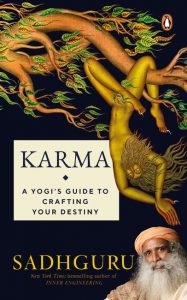
Sadhguru, the yogi, mystic and visionary, is a spiritual master with a difference. He has smitten the world not only in spiritual matters but with his business, environmental and international affairs along with his ability to open a new door on all that he touches. After having founded the Isha Foundation and penning down various books on spirituality and wellness, he has now brought out a poetry book called Eternal Echoes.
Eternal Echoes is a compilation of poems by Sadhguru written between the time period of 1994 and 2021. These poems cover every aspect of his life and travels ranging from nature, environment, human nature and the resonances he has felt during three decades and more. Seemingly simple at first, one begins to understand the hidden layers within these poems slowly and the meanings linger on.
Here is an exclusive excerpt, the introductory note to the poems in his book, where Sadhguru explains what made him turn to poetry:
*
Poetry is an in-between land between logic and magic. A terrain which allows you to explore and make meaning of the magical, but still have some kind of footing in the logic.
When people experience something beautiful within themselves, the first urge is to burst forth into poetry. If you fall in love with someone, you start writing poetry because if you wrote in prose, it would feel stupid. You can only say logical things in prose, but you can say illogical things in poetry. To express all those dimensions of life which are beyong the logical, poetry is the only succor, as it is the language which allows you to go beyond the limitations of logic.
Eternal Echoes || Sadhguru
As a child and youth, my mind was so unstructured and untrained that I could never find a proper, logical, prose expression. Naturally, poetry became so much a part of my life.
My poetry first found a big spurt when I decided to start a farm. My farm was a very remote place, far from the city. I lived there alone for days, and sometimes weeks, on end without any contact with other human beings. At this time, I started writing poetry about pebbles, grasshoppers, blades of grass- just about anything. I found each one of them was a substantial subject to write about.
There was no power in the farm and around six o’clock in the evening it would get dark. I would stay awake till midnight, in almost six hours of total darkness. Somehow, I always found when your visual faculties are closed off, you naturally turn poetic. Maybe that is why we have heard of so many blind poets in the world. I am not saying that having sight should not evoke poetry- it has. But the nature of the human perception is such that is sees much more when the eyes do not see.
In about four months, during this dark period of the night in my farm, I wrote over 1600 poems. Unfortunately, none of these poems are with us today. I had written them on small sheets of paper that I found all over the place. I had kept a whole bunch in my car. Then there was a small fire accident where my car burned down and those poems got burnt.
The poems in this book are only what I have written in the last thirty years, since we moved to the Isha Yoga Center. I hope they find some resonance with you.
A poem is a piece of one’s Heart, hope your heart beats with it and knows the rhythm of mine.
Much Love & Blessings,
Sadhguru
*
This note by Sadhguru would surely entice you to pick Eternal Echoes and join him on his soulful journey, also serving as a keepsake which has a short poem for every day and every feeling you’re feeling.
Since the past few decades, India has seen a rise in the number of young Indian novelists and while most of them write stories about youth, love and family, there has been one author who has managed to change the face of the genre of Indian thrillers. Indian book stalls’ thriller section has often been graced by the famous Sidney Sheldons and Agatha Christies through years now but Novoneel Chakraborty is the one who seemed to transform everything.
He has managed to write over 20 novels, many of which have gone on to become bestsellers, some have been translated into 6 languages and a few have even been converted to web series productions online! With his latest novel Whisper to me your lies hitting the shelves, we bring you some of his past novels and a guide to step into Novoneel’s world before picking up his latest book.
The Stranger Trilogy is one of his initial major successes traces the story of Rivanah Bannerjee, a regular, young Bengali woman working and living in Mumbai and her life’s intersection with a stalker she refers to as Stranger. Marry me, Stranger, All yours, Stranger and Forget me not, Stranger– all unveil several mysteries and their relationship unfolds in front of the reader’s eyes where the annoying stranger becomes a romantic interest for Rivanah, while constantly bringing mystery, thrill and drama to her life. If you’re into mysteries, this one will surely keep on you edge.
Forever is a lie and Forever is true are part of the popular thriller Forever series by Chakraborty and traces the life of an 18-year-old girl studying mass communication in Bangalore and the story of a dark romance that ensues between her and a man she falls in love with. The second part of the book narrates the twisted past of the man and what deadly limits one can go to because of a ruined childhood.
His book Roses are Blood Red, (2019) and Cross Your Heart, Take My Name (2020) are the first two books in the Obsession Trilogy whose third book Whisper to me your lies is finally being released on the 18th October, 2021. After Vanav and Nihira’s encounters with obsessive crime, it’s now time to listen to Ekantika’s story of facing a murderer, who could perhaps be the Cellotape Killer of the 90s!
Finding the right job at the start of your career can be a hard row to hoe. Several factors such as the company’s reputation, job description, your designation, remuneration, skill set, attitude are to be considered before you embark on a career in a company.
Here are some general questions for you to think about and look answers for while planning your career. These questions may help you streamline your choices and develop your career.
What roles interest you?
Have you shortlisted the companies you’d want to work with?
Have you made a priority list of the shortlisted companies?
Have you found the right people to network with?
What are the most appropriate platforms for the job you are looking for?
What qualities do you have that will help you excel in the role you’d be applying for?
What value will your organization add in your career?
What value can you add to the organization you join?
10 Steps to the Boardroom || G.S. Rattan
If you’re on the first step of your professional journey and have found answers to the above questions, then jot down the information on the template given below. It may prove to be your guiding light in achieving your dream of reaching the boardroom.
Your Plan
The Company You Want to Work in:
Key Stakeholders:
What I Admire About the Company:
Vision of the Company:
Mission of the Company:
Why I Belong Here:
Job Description and Responsibilities
JD:
Responsibilities that I can take on:
Responsibilities that will require learning on the job:
Area of Jurisdiction
Performing areas:
What I can take a shot at:
Defining Results
Tangible:
Intangible:
Network and Follow
Possible Mentor 1:
Network to Follow on
Possible Mentor 2:
Where to Start:
Department I Would like to Start With
Option 1:
Option 2:
Option 3:
Attitude Matters
My key strengths:
What I need to work on:
What is valued by this organization?
Remember the words of the author of 10 Steps to the Boardroom: ‘The most important factor will always be the intensity of the fire in your belly. Everything else is either a catalyst or a deterrent.’
India’s mathematicians have made significant contributions over the last 5000 years. From the ever-popular Aryabhata, widely recognised for revolutionising the number system and Shakuntala Devi, universally admired for her fast mental calculations to pioneers forgotten by time, like Baudhayana, who explained the Pythagoras’ theorem nearly 3000 years ago, India has produced many trailblazers in the field of mathematics.
The Great Indian Mathematicians||Gaurav Tekriwal
Here are the stories of three such inspirational figures whose passion for knowledge and love for maths not only earned them world-wide acclaim but also brought prestige to the country.
1. Madhava – He is considered the greatest mathematician-astronomer to emerge from medieval India whose works laid the foundation for the Kerala School of Mathematics, which flourished between the late 14th century and the 18th century.
Madhava was a genius. He went a step ahead and linked the idea of an infinite series with geometry and trigonometry. He even obtained a way to calculate the value of pi correct to 13 decimal places, and this was two centuries before Gottfried Wilhelm Leibniz, a polymath from Germany.
It is perceived that Newton and Leibniz independently found the methods of calculus by building on and borrowing from the works of mathematicians like Fermat, Taylor, Gregory, Pascal and Bernoulli. But what is not known is that the elements of calculus were already known in Kerala, India, for over 250 years. The West has now recognized this and accordingly renamed some results regarding the trigonometric series, previously known as the Newton, Gregory and Leibniz series, as the Madhava-Newton, Madhava- Gregory and the Madhava-Leibniz series, respectively.
2. Srinivasa Ramanujan – During his short life, Ramanujan independently compiled over 3900 identities and equations, which have all been proved by later mathematicians. This contributed to breakthrough research in mathematics and remarkable discoveries in crystallography and string theory.
It was in January 1913 that Ramanujan wrote the famous letter to a English mathematician Prof. G.H. Hardy of Cambridge University with numerous theorems he had researched and worked upon himself. Hardy was initially skeptical of Ramanujan’s work assuming that he was a fraud, but soon had to change his mind as he went through the theorems given in the letter. He finally concluded that Ramanujan was ‘a mathematician of the highest quality, a man of altogether exceptional originality and power’. Hardy then immediately made arrangements to invite Ramanujan to Cambridge University from India.
Ramanujan was elected as a member of the London Mathematical Society in 1917 and the next year, in 1918, Ramanujan was elected as a Fellow of the Royal Society—the youngest ever at thirty-one years of age.
3. Shakuntala Devi – was India’s iconic ambassador in the field of mathematics and travelled the world enthralling audiences with her number- crunching prowess.
She was found displaying exceptional memorization skills by her father while he was showing her card tricks. She was only three at the time. At six, the young wonder, Shakuntala Devi started travelling with her father, doing roadshows, where she displayed her unique calculation abilities of large multiplications, cube roots of huge numbers and even questions related to dates! In 1980, at the Imperial College of London, she rose to meteoric success and global fame by multiplying two 13-digit numbers in 28 seconds flat.
In her bookIn the Wonderland of Numbers, she wrote ‘As for numbers, they hate nobody, and nobody can afford to hate them!’ She continues to give us hope that mathematics can also be fun and exciting and that it is essential to approach it with a spirit of curiosity!
*
To know more about India’s finest mathematicians, read The Greatest Indian Mathematicians. It is an ideal introduction for the next generation of tenacious and curious maths wizards.
Radhavallabha Das, author of Yogiplate, serves on a plate the science of Ayurveda through sāttvic cooking. Yogiplate is a guide which promises to inculcate pure Vedic traditions in us so we can eat well and also avoid the side effects of a modern lifestyle.
Here’s an excerpt from the book in which the author explores how from tasting ingredients, one can understand the impact on digestion, tridosa and health.
*
Yogiplate || Radhavallabha Das
Rasa is an experience or something that inspires a particular mood, thus contributing to our feelings and manifests various sentiments, such as happiness, anger and frustration. When rasa flows into us, it quickly influences us by expanding into our body, senses, mind and heart. In the Bhagavad Gitā, Krishna says, ‘Of all the rasas, I am water.’ Water is neither sweet nor salty or sour. Water is just water, yet it carries a taste, and that is rasa. No drink can quench our thirst like water.
Pure, clean water is not only nourishing to the body but also touches and purifies our mind. Many Ayurvedic preceptors believe that all the rasas originate in water, as much as all colours are present in white colour. Rasa is roughly translated as taste in English, although it means much more. The word that corresponds to taste in Sanskrit is svādu and only partially represents rasa. Rasa is more sublime in its influence than taste. Without rasas, you would not be able to determine the essence of food.
What are the Six Rasas?
The six tastes are sweet, sour, salty, pungent, bitter and astringent. These tastes are detected by the taste buds on the tongue and transported by the water content in each ingredient. Different types of taste buds are spread throughout the tongue: the tip hosts both the sweet and salty taste buds, the sides of the front portion host the sour ones, the sides of the rear portion host the pungent ones, and the centre rear part (closer to the throat) hosts the astringent taste buds. The arrangements are illustrated in the figure.
Food with sweet or madhura taste is always welcome and forms the major portion of our diet. When I say sweet taste, it refers to all food with natural sugar, and need not be predominantly sweet to taste. For example, rice, corn and wheat have a natural mild sweetness. So do vegetables, such as pumpkin and potatoes. If we look at a typical meal, we will find these food ingredients form the predominant portion of the meal. As the nutrients from such food are essential to build tissues, sweet taste buds are at the front tip of the tongue to help easily detect such food.
Salt regulates the water content of the body and needs to be consumed in lesser quantities than food with a sweet taste. Salt is added to sweet-tasting food like fried potato chips. Too much salt leads to too much water in the body as salt attracts water through osmosis. Excess water causes obesity and blood pressure to rise. However, sodium from salt plays an important role in muscle contraction and nervous movement. An average adult needs around 6 gm of salt a day. So, we cannot remove it altogether from our diet.
While discussing the tridoṣa nature of food ingredients, we will talk about various other benefits of different types of salt. Foods with a sour taste, which mostly aid in digestion, need to be consumed in smaller doses than those with sweet taste. Even a slight increase in salty and sour taste can be unhealthy. Lemon juice, tamarind, raw mangoes, pomegranate, kokam and Indian gooseberries are some examples.
Pungent ingredients should be consumed in moderation. A few examples of pungent ingredients are chilli peppers, black pepper and ginger. These four tastes are loved universally. Although pungency may not be welcomed by all, many people love it. Some of the Thai, Indian and Mexican cuisines are loaded with chilli peppers.
Foods with bitter and astringent taste are not so welcome. But they act as essential cleansing agents. Cleansing agents are required in small doses, and the buds that recognize these tastes are situated at the back of the tongue (near the throat). By the time one can register these tastes, which may be a bit unpleasant to some, it is too late to reject it, and we gulp it down like medicine. Medicines are essential but cannot be part of our main diet. The buds for the sour and salty taste, which is less prevalent in our diet than sweet taste, but more than bitter or astringent, are on the sides of our tongue. All these taste buds get activated when all tastes are present in our diet and thus promote digestion to the fullest. Therefore, Ayurveda recommends that all the tastes should be part of our meal. The ingredients with a sweet taste should form the biggest portion, followed by salty, sour, pungent, bitter and astringent. The order of eating should also follow from sweet to astringent taste. Because sweet taste comprises earth and water elements, it is heavy to digest and thus should be consumed in the beginning when hunger is the most extreme. Sweet taste generally comes with salty and sour taste and forms the first part of our meals. Pungent, bitter and astringent are easier to digest and should be eaten towards the later part of the meal.
October is the month of adventure. Introduce your young ones to Rachita and Aarti, who have a nemesis out to get them, and the Naturalist Ruddy Mongoose, who combines natural history with detective fiction. Ruskin Bond’s famous character, Ranji, is back in a heart-warming story and so is Rumi, who encounters a ghost–Rain! Muhammad bin Tughlaq, the Sultan of Dihli, is outraged; but why? Maithili and the Minotaur are on their very first adventure in an outlandish world where nothing is as it seems…
We’ve also included something for the youngest readers – those learning to read!
My First Words
My First Words
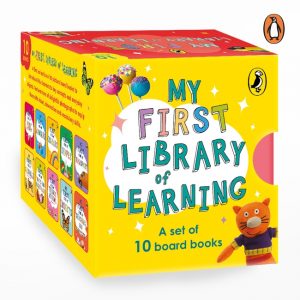
This collection of 15 mini board books is more than just a set of adorable books for a child’s first library–they are also engaging learning tools! The format includes activities like stacking, sorting, counting, matching and identifying colours that encourage interactive learning of basic concepts and facilitate developmental skills in kids.
The box set comprises mini books with sturdy board pages and rounded corners that are perfect for tiny hands. With adorable illustrations and a modern design, this box set includes a variety of relevant topics like first words, animals, numbers, shapes, colours and more.
The Tunnel
The Tunnel || Ruskin Bond
Fascinated by the midday train, Ranji would find himself waiting near the tunnel to catch a glimpse of the engine come roaring out of it. But the tunnel has more surprises for him. From a jungle full of lush green trees comes a timeless tale of unexpected friendship, curiosity, duty and wildlife.
Peppered with delightful illustrations, Ruskin Bond brings to his readers another heart-warming story packaged as a charming chapter book-a perfect introduction for beginners to the world of India’s favourite writer!
Tughlaq and the Stolen Sweets
Tughlaq and the Stolen Sweets || Natasha Sharma
For Ages: 8+ years
Muhammad bin Tughlaq, the Sultan of Dihli, is outraged. Someone has stolen his favourite dessert, the sugared melons from Khurasim. What’s worse, people are questioning his plans of torture and punishment. Who can help the Sultan solve this mystery?
The Case of the Nosy
The Case of the Nosy || Archit Taneja
For Ages: 11+ years
Rachita and Aarti have a nemesis who is out to destroy them …
Garbage vandals are defacing walls of residential societies. Aarti’s birthday presents include miniature coasters. Rachita starts having egg-themed nightmares …
Are these happenings related to the mysterious time-travelling detective gang that is challenging the Superlative Supersleuths? And will they be able to foil their rivals or will they end up getting owned?
Case notes:
1. Why do the eggs have banana heads?
2. The Harappans cared about home furnishings.
3. The Nemesis might be a time traveller!
Rain Must Fall
Rain Must Fall || Nandita Basu
For Ages: 12+ years
Rumi is not too enthusiastic about accompanying Baba to the sleepy village of Shankerpur, where he is planning to convert their ancestral home into a bed and breakfast. But Rumi is happy to be away from school and friends who have problems understanding Rumi’s identity.
In the middle of one night, Rumi encounters a ghost–Rain, who does not remember his own story or why he is compelled to be a ghost. And it is in trying to help Rain find his peace, that sets Rumi on a journey of love, friendship and acceptance.
This is a tale of love and loss, of rejection and affirmation, and above all, the healing and illuminating power of friendship.
Maithili and the Minotaur
Maithili and the Minotaur || C.G. Salamander
For Ages: 10+ years
An outcast to the world of humans, Maithili lives in the outskirts of a magical wilderness. But as she makes new friends in the realm of monsters, she must learn to be careful because some monsters are just like humans: mean, nasty and out for blood.
Perfect for fans of Hilda and Arthur and the Golden Rope, join Maithili and the Minotaur on their very first adventure in an outlandish world where nothing is as it seems.
Naturalist Ruddy
Naturalist Ruddy || Rohan Chakravarty
Are you ‘Ruddy’ for adventure?
In the forests of central India, where teak meets sal and plateaus meet hills, natural history meets detective fiction in an inquisitive Ruddy Mongoose’s investigations. Join Naturalist Ruddy as he unearths some of nature’s most fascinating mysteries in this one-of-a-kind comic book set across India’s various natural habitats.
We are back with some new recommendations to add to your already overflowing TBR piles. This month, we have a list that we are super-excited to share with you because of how diverse and varied it is. No matter what kind of books you love, there’s something here for you, we promise.
This is going to be slightly long (but so worth it). We’d suggest keeping your hot chocolate ready. And now get cracking!
Passionate About Baking || Deeba Rajpal
Passionate About Baking
Deeba Rajpal
A home baker for over 20 years, food stylist and photographer Deeba Rajpal put her passion to the test when she decided to blog about her adventures in the kitchen.
Inspired by her blog, this book is a collection of some of her most loved chocolate dessert recipes for every kind of indulgence. With healthy, tasty yet easy-to-make chocolate delights — from tarts, tea cakes and cupcakes to cookies, traybakes and cakes for special occasions — and simple tips and tricks, Deeba shows you how working with chocolate can be oh so fun!
The Nutmeg’s Curse || Amitav Ghosh
The Nutmeg’s Curse
Amitav Ghosh
Before the 18th century, every single nutmeg in the world originated around a group of small volcanic islands east of Java, known as the Banda Islands. As the nutmeg made its way across the known world, they became immensely valuable – in 16th century Europe, just a handful could buy a house. It was not long before European traders became conquerors, and the indigenous Bandanese communities – and the islands themselves – would pay a high price for access to this precious commodity.
Amitav Ghosh argues that the nutmeg’s violent trajectory from its native islands is revealing of a wider colonial mindset which justifies the exploitation of human life and the natural environment. Written against the backdrop of the pandemic and the Black Lives Matter protests, The Nutmeg’s Curse offers a sharp critique of Western society, and reveals the profoundly remarkable ways in which human history is shaped by non-human forces.
Sunrise over Ayodhya || Salman Khurshid
Sunrise Over Ayodhya
Salman Khurshid
On 9 November 2019, the Supreme Court, in a unanimous verdict, cleared the way for the construction of a Ram temple at the disputed site in Ayodhya.
As we look back, we will be able to see how much we have lost over Ayodhya through the years of conflict. If the loss of a mosque is preservation of faith, if the establishment of a temple is emancipation of faith, we can all join together in celebrating faith in the Constitution. Through this book, Salman Khurshid explores how the greatest opportunity that the judgment offers is a reaffirmation of India as a secular society.
Actually… I Met Them || Gulzar
Actually … I Met Them
Gulzar
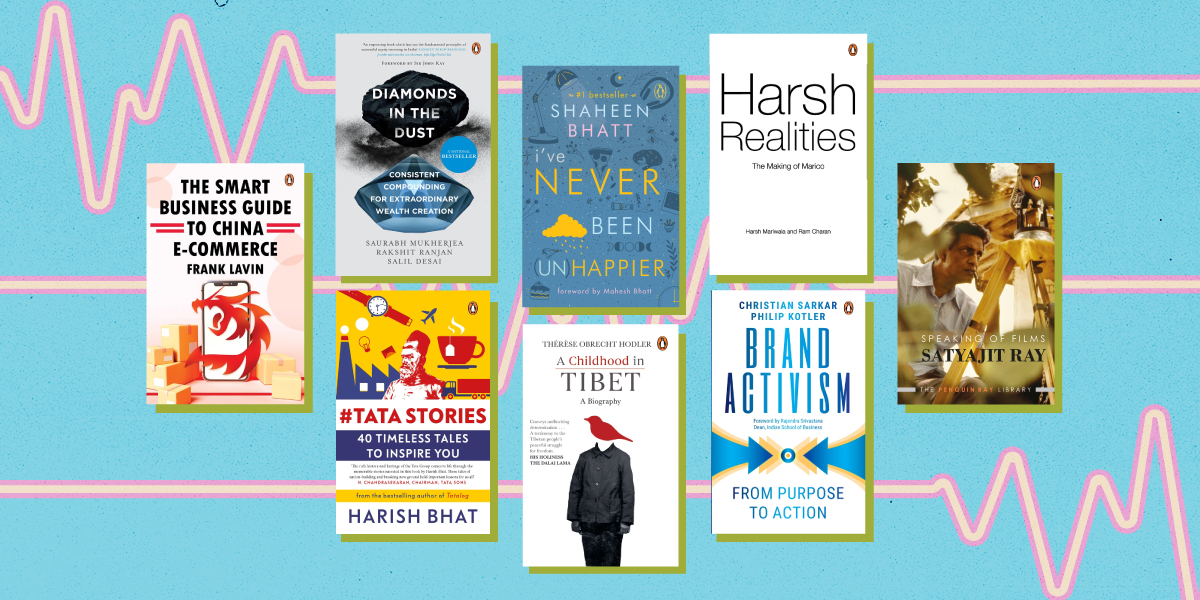
From Bimal Roy to Satyajit Ray, R.D. Burman, Kishore Kumar, Ritwik Ghatak, Hrishikesh Mukherjee, Pandit Ravi Shankar, Pandit Bhimsen Joshi, Mahasweta Devi and Samaresh Basu, among others, in this fascinating book, Gulzar Saab goes down memory lane to bring to light his relationship with the doyens of cinema, music and literature, who he had known and worked with over a long period of time.
Chatty, anecdotal and deeply personal, this book of memories will chronicle Gulzar Saab’s life and career through different eras of Indian cinema as he successfully transcended commercial and critical arts.
Stars in My Sky || Divya Dutta
Stars in My Sky
Divya Dutta
In her second book, award-winning actor Divya Dutta recounts her experiences with some of the stalwarts of Bollywood who played a significant role in her film journey. She talks about the inspirations they have proved to be in her life through what they did for her and what she learnt from them. From winning an acting scholarship with Sonali Bendre to sharing a vanity van with Juhi Chawla and her bond with Shabana Azmi, she tells it all with rare candour and humility.
The Book of Hope || The Better India
The Book of Hope
The Better India
The Book of Hope is perfect for a nation that refuses to give up. Curated by The Better India, these are stories of resolve, love, faith, entrepreneurship, and compassion that will uplift your spirit.
This book is an archive of a nation’s collective goodness. Stories are what connect us and remind us that hope is always possible, and the lives of these ordinary Indians will surely inspire you. These are the experiences of real people who found love, overcame loss, worked towards achieving their dreams, or those who bravely fought against societal norms. This book is a testament to the fact that anyone can do it - even you.
Operation Haygreeva || Prabhakar Aloka
Operation Haygreeva
Prabhakar Aloka
The C3 unit in the Intelligence Bureau is the node of the country’s counter-terrorism operations. When Mumbai becomes the victim of a series of horrific bomb blasts, Ravi Kumar, the chief of C3 known for his unorthodox but brilliant methods, is entrusted with the responsibility to neutralize the threat posed by a new terrorist organization called Lashkar-e-Hind.
Together with his three young recruits, Mihir, Jose and Cyrus, Ravi uncovers a plot that is much larger and threatens the very fabric of the country’s peace and stability. Through their network of agents, covert missions, tabs on the Hawala market and cultivation of contacts, they must tread carefully to protect the citizens of India. And they must do it all from the shadows, navigating the murky corridors of espionage and intelligence services.
Pitch Perfect || Sriymoyi Bhattacharya
Pitch Perfect
Srimoyi Bhattacharya
A decade ago brands relied on mainstream media and celebrities to endorse them, but now each brand needs a sound strategy that involves traditional media, social media, influencers, micro-influencers, celebrities across all strata, and offline and online communities. So, for everyone that’s in this game – whatever side they’re on – the playing field has become complex and competitive, and this is where Srimoyi Bhattacharya comes in to help you get your Pitch Perfect.
With inputs from Srimoyi’s top clients, her network of editors, industry experts, and business heads, Pitch Perfect is a must-have bible on brand building and communication for anyone interested in winning the Indian consumer.
An Actor’s Actor || Hanif Zaveri and Sumant Batra
An Actor’s Actor
Hanif Zaveri and Sumant Batra
More than forty years after his death, Sanjeev Kumar remains a role model for all aspiring actors. Entirely unselfconscious of his image as a star, he would often be cast as the father figure to a number of his contemporaries, most famously Sharmila Tagore in Mausam (1975) and Amitabh Bachchan in Trishul (1978), or as the elderly Thakur in Sholay (1975) and yet leave an indelible mark with his presence and his acting prowess.
Hanif Zaveri and Sumant Batra’s biography provides a glimpse of the star’s personal and professional lives, taking off from the traditional business of the Zariwalas, his romantic involvement with some of Hindi cinema’s biggest names, his lifelong battle with loneliness and his glittering achievements on screen.
The Home Stretch || Sanjay Dattatri
The Home Stretch
Sanjay Dattatri
In their twilight years, people increasingly rely on friends and family to get through the day. In Indian homes, it is not unusual to see adult children sandwiched between parenting and caregiving obligations, with both young children and elderly parents in the house.
The Home Stretch is an empathetic, handy guide that seeks to simplify caregiving and equip readers with the tools and guidance required to build a safer, happier and more comfortable life for the elders around them. From tips on maintaining their health and independence to taking care of the bedridden, the book covers a wide range of topics
to meet the progressively complicated needs associated with caring for ageing loved ones.
On the Open Road || Stuti Changle
On the Open Road
Stuti Changle
Discover yourself within the restless twenty-somethings, Myra, Kabir and Sandy as they stand on the cusp of making life-changing decisions. Battling their inner demons and societal taboos, they wish to live life on their own terms. Their passion brings them together and with nothing but Ramy’s travel blog as their guiding star, they set out on the open road to follow what they desire.
But their journey entails a devastating personal loss, an undying fear and a host of obstacles. Will they be able to realize their shared dream? Or will they succumb to the hardships on their road to freedom?
On the Open Road is an inspirational story of three ordinary individuals who refuse to give up on themselves.
Writing for My Life || Ruskin Bond
Writing for My Life
Ruskin Bond
From his most loved stories to poems, memoirs and essays, Writing for My Life opens a window to the myriad worlds of Ruskin Bond, India’s most loved author. Capturing dreams of childhood, anecdotes of Rusty and his friends, the Ripley-Bean mysteries, accounts of his life with his father and his adventures in Jersey and London among others, this book is full of beauty and joy-two things Ruskin’s writing is mostly known for.
With a comprehensive introduction, this is the perfect gift to all the ardent readers and lovers of Ruskin’s effervescent writing.
Sita || Bhanumathi Narasimhan
Sita
Bhanumathi Narasimhan
Sita, the beloved princess of Mithila, is one of the most revered women in Indian history; so well known, yet probably the least understood. At every crossroad of her life, she chose acceptance and grace over self-pity. Her life was filled with sacrifice yet wherever she was, there was abundance. It was as if she was carved out of an intense longing for Rama, yet she had infinite patience. In every situation she reflected his light and he reflected her love.
In this poignant narration, Bhanumathi shows us the world through the eyes of Sita. We think what Sita thinks, we feel what she feels, and for these few special moments, we become a part of her.
The Custodian of Trust || Rajnish Kumar
The Custodian of Trust
Rajnish Kumar
It began from a modest house in one of the narrow lanes of the old city of Meerut. From being a probationary officer in the State Bank of India (SBI) in 1980 to its Chairman in 2017, Rajnish Kumar had an amazingly interesting journey in which he saw the many changes in India’s banking sector that greatly impacted the country and its economy.
In the aftermath of demonetization, the YES Bank fiasco, the crisis in Jet Airways and NPLs, among others, The Custodian of Trust is a candid memoir by the former Chairman of India’s largest commercial bank. Anecdotal, engaging and evocative, this book is an unputdownable memoir of a former banker.
The Origin Story of Indian States || Venkataraghavan Subha Srinivasan
The Origin Story of India’s States
Venkataraghavan Subha Srinivasan
The story of the birth of India’s states is the story of the birth and continuing rebirth of India, the nation. It is a story that everyone in India must know, from young to old.
This rigorously researched book lays out the fascinating political and historical circumstances of the birth of India’s states and union territories.
Making a Difference || Alok Ranjan
Making a Difference
Alok Ranjan
Making a Difference comes as a handy guidebook for IAS aspirants in the country. It includes everything from the motives to join the IAS to the written exam to the personality test to the training required. The book also talks about the myths and realities about the IAS – interesting sections include questions about integrity, how citizens perceive the IAS, and what is the IAS’ relationship with the political executive of the government.
Whisper to Me Your Lies || Novoneel Chakraborty
Whisper to Me Your Lies
Novoneel Chakraborty
Ekantika Pakrashi has just lost the love of her life. Preliminary reports suggest it was no accident. Her boyfriend was murdered in cold blood and the modus operandi resembles that of India’s most notorious serial killer of the 1990s: the Cellotape Killer. He was never caught, and if this indeed was him, then he had resurfaced after twenty-one years. Ekantika swears to find the killer and get an emotional closure, but what she doesn’t know is that in the process she may end up wounding herself irreversibly.
Whisper To Me Your Lies is a fast-paced, chilling crime thriller and a poignant tale of a girl’s single-minded obsession to find out who altered her life. And why.
Whose Samosa is it Anyway? || Sonal Ved
Whose Samosa is it Anyway?
Sonal Ved
In this book, accompany Sonal Ved on a journey of taste through the various timelines across the Indian subcontinent. We go from the banks of the Indus in 1900 bc to the great kingdoms of the north many centuries later; from the time of the Mauryans to when the Mughal Sultanate reigned supreme.
On this trip discover answers to such questions as What are the origins of chutney or of the fruit punch, and how are they connected to India? The author takes us through the food history and traditions from the mountains in Kashmir to the backwaters of Kanyakumari; from the ports of the Bay of Bengal to the shores of the Arabian Sea, where traders and travellers arrived from the world over. And, finally, we find out whose samosa it truly is . . .
Job Search Secrets || Subir Verma and Sagarika Verma
Job Search Secrets
Sagarika Verma, Subir Verma
When it comes to finding a job, qualification, experience and talent are important attributes. However, all these come to a naught if one is not able to locate the right job, find the people who can help, figure out the right time to pitch and identify the most effective approach. This book provides the much needed guidance on how to get your dream job quickly and easily. It is a step-by-step guide and practical manual with exercises and free tools which anybody can use to find their dream job faster.
The Fractured Himalaya || Nirupama Rao
The Fractured Himalaya
Nirupama Rao
Why did India and China go to war in 1962? What propelled Jawaharlal Nehru’s ‘vision’ of China? Why is it necessary to understand the trans-Himalayan power play of India and China in the formative period
of their nationhoods? The past shadows the present in this relationship and shapes current policy options, strongly influencing public debate in India to this day.
Nirupama Rao, a former Foreign Secretary of India, unknots this intensely complex saga of the early years of the India-China relationship. The Fractured Himalaya looks at the inflection points when the trajectory of diplomacy between these two nations could have course-corrected but did not. It also turns the searchlight on the key personalities involved-Jawaharlal Nehru, Mao Zedong, Zhou Enlai and the 14th Dalai Lama-and their interactions as the tournament of those years was played out, moving step by closer step to the conflict of 1962.
Competing Nationalisms || Rajshree Chandra
Competing Nationalisms
Rajshree Chandra
As a member of the Congress and of the Hindu Mahasabha; as a Hindu nationalist who wanted to combine religion with civic virtues; as a Gandhian and an ‘ascetic nationalist’ seeking freedom in a political world, Jagat Narain Lal’s life becomes a mirror for the times in which a mix of religiosity, spirituality and ritual could not be separated from either the social or the political field. His life and times give us a glimpse into the intersecting, contesting and mutating idioms of nationalism. In his anxieties, vulnerability, negotiations and truth-telling, we glimpse Indian nationalism’s own fraught relationship with questions of identity, faith and nationhood.
In leafing through her grandfather’s life, page by yellowed page, Chandra presents not just his political biography but, in a sense, a personal biography of Indian nationalism as well.
Namita Gokhale excels at her craft as she narrates the story of a family under siege during the pandemic. ‘The Blind Matriarch’, Matangi Ma, lives on the topmost floor of an old house with many stories. From her eyrie, she hovers unseeingly over the lives of her children and grandchildren. Life unfolds slowly until the world comes to a standstill, and everyone is forced to look inward.
This assured novel records the complex inner life of an extended joint family. It can also be seen as an allegory of our existence as a nation, with its hierarchies, its vulnerabilities, and its essential resilience.
~
The Blind Matriarch||Namita Gokhale
Satish walked up with him to the floor above. ‘You have a visitor, Matangi-Ma,’ he said cheerfully. ‘Your grandson is bored of the lockdown. He wants to spend time with you.’
‘Switch off the television,’ Matangi instructed Lali. ‘I want to tell Rahul a story today.’
But Lali was glued to the television. Rishi Kapoor had died. The news channel had begun on a clip from his first film, Bobby, followed by a tearful shraddhanjali and celebrity condolences. Matangi had been in her thirties when she saw the film, in a cinema hall with her friends. She used to wear spectacles those days. She had fallen in love with him, and with his girlfriend Bobby too. She had hated his rich parents, and rather despised Dimple Kapadia’s fisherman father as well.
Rishi Kapoor, son of Raj Kapoor, grandson of Prithviraj Kapoor. He was, had been, Bollywood royalty, and she paid obeisance in her heart. First Irrfan, now Rishi. Why were they dying so young, these boys? Why had Yamdoot, the lord of death, decided to abduct the chocolate boy of Bollywood?
She felt an enormous guilt descend upon her, the weight of being alive. Here she was, at eighty, blind as a bat, of no particular use to anyone. A burden upon her loving children. And it was the young who were dying.
‘Did Rishi Kapoor die of the coronavirus, Matangi-Ma?’ Rahul asked her.
‘No, beta, he did not die of the virus. He died of . . .’ She bit her tongue. Why frighten a little boy with the spectre of cancer? ‘Rishi Kapoor didn’t die of Covid. He died because God wanted him in heaven, to make a Bollywood film there.’
Of course, the child wouldn’t believe her, but her answer would divert him, she thought.
But the idea appealed to Rahul. He nodded enthusiastically. ‘That’s why Irrfan Khan was called up. I wonder who God will cast next, for the female lead?’
Rahul had brought the precious bag of squashed semal pods with him. He shared the cotton wisps with Matangi excitedly flinging them around her bed and watching them flurry down. She told him he was the cleverest boy in the world. She would make herself a tiny pillow from the semal cotton, she said, a special pillow that would give her beautiful dreams.
Matangi uttered a silent prayer, a plea without words that rose from the depth of her heart. It was addressed to anybody who might be listening—to the gods, the goddesses, to Yamdoot, to Rishi Kapoor if he was hovering around.
‘Let me die now,’ she prayed. ‘Let me gift my remaining years to this beloved boy. May he live to be a hundred years, or more. But take me away. I have lived enough.’
They spent a delightful day together—Lali and Pappoo and Rahul and Matangi and the bird. They played absurd games, games which made no sense, but which made them laugh. Lali made mango milkshake for all of them, for Matangi too.
Does the bird have a name, Rahul had asked, and they discovered to their surprise that nobody had named it yet.
‘Mithoo,’ Lali had suggested. Pappoo had amended that to ‘Mithoo Mian’. Matangi suggested ‘Mirchi’. Rahul had to think hard before he came up with ‘Captain Covid’.
They agreed on ‘Mirchi’ as Matangi was the oldest among them, and had discovered the bird, saved it from being eaten by the black cat that had been waiting in the shadows.
Besides, as Matangi explained, ‘Mirchi’ would work equally well for a boy bird or a girl bird, and the barbet’s gender was still of course a mystery.
Rahul didn’t think about his mother or about all that had happened earlier in the day. He read out the poem he had written, the one about the lockdown, to his grandmother, and she was suitably impressed. He changed into his night suit later and slept on a mattress on the floor, which was fun. Lali and Pappoo and the bird slept in the veranda, as usual.
The next morning, Ritika went upstairs to Matangi’s floor to talk to Rahul, to apologize to him for her behaviour. She was still shaken up by all that had passed the previous night. She had slept alone, as Satish had taken his pillow from their bedroom and camped on the living-room couch.
Matangi was dozing in her bed, her face to the wall. Rahul was sitting by the small table by the window, reading a book. There was large brass cage on the table, with an odd-looking bird in it.
Rahul smiled when he saw her. ‘Hullo, Mummy!’ he said. ‘Meet Mirchi, my new friend. Matangi-Ma has magical powers and saved Mirchi’s life.’
Ritika was cut off from the gossip circuit in the building. She had not heard of the mysterious discovery of the bird and dismissed Rahul’s words as childish prattle. She was in any case too absorbed in rehearsing the formal apology she intended to make to her son.
But there was no need. Rahul put his book away, marking the page he was on, and rushed forward to hug her. ‘Don’t bother about yesterday, Mummy,’ he said. ‘Grown-ups can have problems too, just like children. I’m old enough to understand that.’
She broke down. He hugged her, consoled her, stroked her hair with his little hands.