In the second volume of his landmark book, Discordant Notes, Rohinton Nariman brings to light ground-breaking cases and judgements which made remarkable additions to our Constitution, improved and improvised some laws and most importantly, gave the space to the citizens of this country to be able to think, re-think and re-learn freely.
Charting out the history of the dissenting judgements in the history of the Supreme Court of India, Nariman begins by quoting Professor Allan Hutchinson’s Laughing at the Gods: Great Judges and How They Made the Common Law, where he speaks of ‘judicial greatness’ as:
‘Great judges seek to make a critical accommodation with the legal tradition by combining heresy and heritage in a playful judicial style; they refuse to be hampered by customary habits of judicial mind. For them, law is not something to be mastered. It is a sprawling tableau of transformation in which experimentation and improvisation are valued as much as predictability and faithfulness to existing rules and ideas. They see possibilities and make moves that others overlook. Great judges flaunt conventional standards in the process of remaking them; their judgements are the exceptions that prove the rule. And, once they have done what they do, others are less able to view the world in the same way again.’
Discordant Notes || Rohinton Nariman
He then mentions that it is in this sense that he chose the four great dissenters for this book. Overlooking other prominent judges who wrote numerous dissents in their lifetime, he chose to write about the ones who might have given only six dissents, for example, but had brilliant oversight packed in them, insights that changed the course of future judgements in India.
Nariman named these four dissenters, the ‘Four Horsemen of the Apocalypse’ because just like in Book Six, ‘Revelation’ of the New Testament in the Bible, these are the people who give the world a chance to repent before they are consigned to the ashes. He states how each one of these four dissenters fulfills this role, some of them prophesying doom if their dissents do not become the law, and others offering a chance of redemption, if in the future, their view is accepted in preference to that of majority.
One of the first cases discussed in the second volume of Discordant Notes is the Keshava Madhava Menon v. State of Bombay (1951) case dissented by judge Sir Saiyid Fazl Ali. What came up for consideration before the Supreme Court was the interpretation of the expression ‘void’ contained in Article 13 (1) of the Constitution of India. The majority judgement, delivered by S.R. Das, J., on behalf of the three learned judges of the court, held that Article 13 (1) does not make existing laws which are inconsistent with fundamental rights void ab initio, but only renders such laws ineffectual with respect to the exercise of fundamental rights on and after the date of commencement of the Constitution, Article 13 (1) having no retrospective effect. Therefore, if prosecution for a criminal act was commenced before the Constitution came into force, it can be proceeded with according to that law, even after the commencement of the Constitution.
Fazl Ali, J., joined Mukherjea, J., dissented. For reference, Article 13 (1) reads as follows:
‘All laws in force in the territory of India immediately before the commencement of this Constitution, in so far as they are inconsistent with the provisions of this Part, shall, to the extent of such inconsistency, be void.’
Fazl Ali, J referred to the original draft of the Constitution, in which the words ‘shall stand abrogated’ were used instead of ‘shall be void’ in Article 13 (1). He then observed that the Constitution makers used various expressions to convey precisely and thoroughly what they meant. While some articles used ‘invalid’, ‘ceased to have effect’ and ‘shall be inoperative’, ‘void’ is used only in two articles 13 (1) and 154 – and both of them deal with cases where laws are repugnant to other laws. Hence, the learned judge concluded that there is a precision and thoroughness of the framers of the Constitution with the strong sense in which the word ‘void’ has been used and cannot be completely ignored.
Nariman noted that this case is an important judgment, which was later followed in Behram Khurshid Pesikaka v. State of Bombay (1955) and Bhikaji Narain Dhakras v. State of M.P. (1955), as forming the foundation for what became known as the ‘Doctrine of Eclipse’, i.e. that pre-constitutional law cannot be said to be void from inception, but only ineffective if it violates a fundamental right, the fundamental right casting a shadow over such law.
Rohinton Nariman discusses and analyses many more such interesting cases and judgements and enlightens us with the kind of roads they fractured, mended and laid the foundation of, in this remarkable book. It speaks to anyone who decides to speak for themselves or for others, who decides to obtain knowledge in multi-dimensional spheres and most notably, for someone who decides to learn and re-learn.
December is already here and it feels like it’s getting colder day by day. As daylight wanes faster and our breath spews fog like dragon breath, there’s nothing that distracts us from the winter quite like the perfect read.
Wrap your hands around a cup of your favourite hot drink, tuck yourself into your favourite blanket, and scroll through to find your next favourite book!
*
Swami Vivekananda || Sankar
What did Swami Vivekananda recommend about the eating of vegetarian and non-vegetarian food? Which of these did Swamiji enjoy the most: his mother’s chorchori, his father’s pulao or his own khichuri? Was he fond of spicy food, sweets, or ice cream?
While many thinkers wonder at Swamiji’s immense enthusiasm for teaching Indian cooking, yet it is not quite clear why no complete book about our culinary-enthusiast monk Vivekananda has ever been published in any language. Swami Vivekananda: The Feasting, Fasting Monk is the humble, illumination of a thousand faceted diamond by Sankar.
Madam Prime Minister || Seema Goswami
You probably know Seema Goswami from her weekly columns for the Brunch and Hindustan Times. In Madam Prime Minister she imports her witty style into a novel centring on Asha Devi, a 29-year-old woman who becomes the leader of the country. Her predecessor’s (who is also her father) assassination, a volatile coalition and inevitable sexism are only some of the shadows hanging over her legacy as India’s youngest Prime Minister. Madam Prime Minister is a must-read for those who enjoy political drama with high stakes.
A Venetian at the Mughal Court || Marco Moneta
Originally written in Italian, Marco Moneta’s book is a unique work of non-fiction about an intriguing figure from Indian history. Venetian Nicolò Manucci’s life in the subcontinent is a chronology of seminal events. From being a chief artilleryman in Dara Shukoh’s battle against Aurangzeb to joining Rajput general Jai Singh against Shivaji, Manucci shifted gears when he became court physician for Aurangzeb’s son, future Mughal Emperor Shah Alam. Later in his life, Manucci’s in-depth knowledge regarding the Mughal Court would serve him as playing a crucial role in diplomacy between the Mughals and European authorities. A Venetian at the Mughal Court offers a fascinating perspective into a famous historical period, with its focus on an unlikely protagonist.
Yuktahaar, the Belly-Brain Diet || Munmun Ganeriwal
Is it even the holiday season if we don’t feel guilty about eating Christmas plum cakes? Award-winning nutritionist Munmun Ganeriwal would say otherwise. In Yuktahaar: The Belly and Brain Diet, Ganeriwal argues that the reason why none of the diets in the past have seemed to work is that they focused on the wrong cause—you, the reader. While we may continue to have a fling with low carb diets, vegan diets, low-fat diets, and everything in between, a long-lasting solution will be far from our reach until we shift our focus from ‘you’ to ‘them’ I.e., the human-gut microbiome connection. Munmun gives an actionable 10-week holistic program that encourages a gut balancing lifestyle, mainly consisting of food, exercise, sleep hygiene, and neural retraining. It is a three-phased program that focuses on improving the balance and diversity of our microbial community. This book will make sure you have your cake and eat it too!
More Than Just Surgery || Dr Tehemton Erach Udwadia
Awarded the Padma Shri, the Padma Bhushan and the OBE, Dr Tehemton Erach Udwadia is widely regarded as the father of laparoscopy in India. From 1951, during his years as a medical student, to the present day, he has not only witnessed first-hand the avalanche of surgical progress but has also seen lives saved as a result of these advances, be it a disposable plastic syringe or a liver transplant. More Than Just Surgery is a warm personal account of people, incidents, mentors, failures and absurdities against the backdrop of surgery.
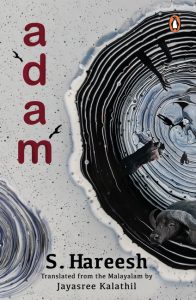
Adam || S. Hareesh
Four Belgian Malinois puppies raised by an ex-serviceman, N. K. Kuruppu, who end up in four different life situations; an old man and a younger man who play a game of death notices cut out from newspapers; two men who argue about the inexplicable change of character of an old-time rowdy with fatal consequences; a nurse and her boyfriend who travel to Kerala with the body of her father who died in Bangalore. Hareesh’s Adam presents nine unusual stories that explore the more difficult of human emotions—lust, anger, jealousy, vengeance, greed—in a non-judgemental yet detached manner. With an irreverent and sarcastic tone, Hareesh makes these stories invigorating and pushes the craft of the short story to new and refreshing realms.
A Place In My Heart || Anupama Chopra
A Place in My Heart is a blend of recommendations and remembrances, nostalgia and narratives. National Award-winning author, journalist and film critic Anupama Chopra writes about fifty films, artistes and events that have left an indelible impression on her and shaped her twenty-five-year-long career. Including stories about, Super Deluxe and the Cannes Film Festival, this memoir is a testament to Chopra’s enduring love for all things cinema.
Forgiveness Is a Choice || Kia Scherr
A month or so before Christmas 2008, Kia Scherr lost her husband and teenage daughter to the horrific Mumbai terrorist attack at the Oberoi. In a second, her life was clouded with grief, and since then, it has been a convoluted journey of resilience and recovery. In Forgiveness is a Choice, Scherr peels back the many layers of personal bereavement. She moves beyond the incident, focusing on the reality of dealing with sorrow that rears its ugly heads in myriad forms. A tender and understanding guide on getting a grip and taking life one day at a time.
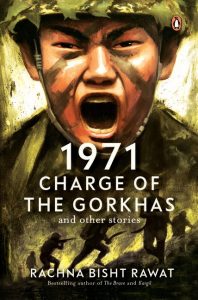
1971: Charge of the Gorkhas and other stories || Rachna Bisht Rawat
Why do the Gorkha soldiers of 4/5 GR attack a heavily defended enemy post with just naked khukris in their hands? Does Pakistan find out the real identity of the young pilot who, after having ejected from a burning plane, introduces himself as Flt Lt Mansoor Ali Khan? What awaits the naval diver who cuts made-in-India labels off his clothes and crosses into East Pakistan with a machine gun slung across his back?
1971 is a deeply researched collection of true stories of extraordinary human grit and courage that shows you a side to war that few military histories do.
The Burning Chaffees || Brig. B S Mehta
The C Squadron 45 Cavalry waged an attack on the Pakistani army that brought the latter to its knees. On 21 November 1971, the two warring armies clashed in a tank versus tank battle at Garibpur. In one fell swoop, the 3 (Independent) Armoured Squadron, consisting of fourteen American M-24 Chaffee tanks, was destroyed and two infantry battalions badly mauled, followed by the shooting down of three Sabre F-86 jets for the loss of two PT-76 tanks. The biggest attack planned by General AAK Niazi to teach the Indians and the Mukti Bahini a lesson had gone up in smoke. The Burning Chaffees is a thrilling war account of the victorious battle by Brigadier BS Mehta.
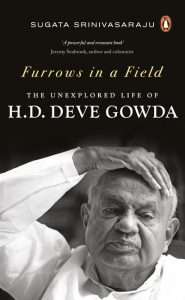
Furrows in a Field || Sugata Srinivasaraju
Even twenty-five years after he stepped down as prime minister, H.D. Deve Gowda has remained relevant in Indian politics. Despite this long, arduous yet fascinating journey that began in a poor peasant household in the plains of Hassan, there has been no comprehensive assessment of his life and work. This biography endeavours to professionally fill the gap. The book’s narrative is instructed by Gowda’s rich parliamentary record, archival material and interviews conducted with people associated with him at various stages of his life. The layered narrative is further nuanced by Gowda’s own voice and gargantuan memory. When Gowda became prime minister, many people intuitively registered that Indian democracy had not been rigged or captured by elites and dynasts, and there was indeed space in the system for a self-made person, with no godfathers, to rise. Gowda’s story generated hope then and continues to do so today.
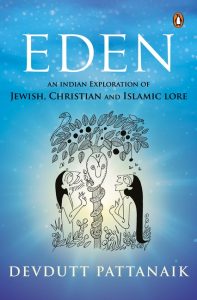
EDEN || Devdutt Pattanaik
Eden is the garden of happiness that humanity was cast out of when Adam and Eve, the first human couple, disobeyed the one true God and ate the fruit of the forbidden tree. This is the essence of Abrahamic lore that emerged over 3000 years ago in the Near East, blossomed in the Middle East, and has since spread to every corner of the world in three forms: Judaism, Islam, and Christianity. In his uniquely Indian style of storytelling, intimate but not irreverent, Devdutt Pattanaik introduces the readers to the many tales of angels, demons, prophets, patriarchs, judges and kings. It also retells stories from Mesopotamian, Egyptian and Zoroastrian mythologies that influenced Abrahamic monotheism in its long 5000-year-old history.
The Girl in the Glass Case || Devashish Sardana
Simone Singh, assistant superintendent of police, would rather spend her days locking up criminals than apologizing for her lack of social skills. And she refuses to let anyone stand in the way of her pursuit of the Doll Maker, a ruthless serial killer who dresses up little kids as Barbie dolls and displays their bodies in glass cases. Another serial killer, the Clipper, who enjoyed nine years of infamy as India’s most notorious butcher, erupts into an all-consuming rage when he is cast aside by the media in favour of the sick new slayer-the Doll Maker. The Clipper turns his fury into blood-soaked revenge to capture the top spot. As corpses start to pile up, Simone fights to manoeuvre the Doll Maker into a clever trap. But the Clipper is hell-bent on striking first and regaining the crown with his most grisly murder yet. Can Simone take down the two serial killers and stop the psychotic competition before it gets out of hand? The Girl in the Glass Case is a jaw-dropping psychological crime thriller. If you like determined heroines, nail-biting twists and chilling serial murderers, then you’ll love this rollercoaster ride.
Karnali Blues || Buddhisagar
Karnali Blues, the first novel by the Nepali writer Buddhisagar (b. 1981), was published in Nepali by Fine Print in 2007. The story draws us into young Brisha Bahadur’s world, a backwater district of a country that is about to undergo radical social, political and cultural change. We share his dreams, his games and his mischief, his loves, his hopes and his fears. We meet the wealth of characters who surround him: the schoolmates, shopkeepers, tea sellers, teachers, policemen, porters, drunkards and rogues of his childhood and youth, and the staff and patients of the hospital where his father lies dying. With some of the most authentic characters captured by prose, Karnali Blues is a father-son narrative that transcends time and language.
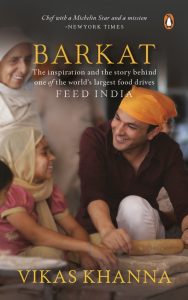
Barkat || Vikas Khanna
‘Barkat’ means abundance. An abundance of blessings and auspiciousness. Where there is no dearth and there is no scarcity, a much bigger word that cannot be done justice in translation. Born in the small town of Amritsar, Vikas Khanna grew up to be an international chef and fulfilled his dream of getting a Michelin Star. He narrates how his grandmother infused in him the values of sharing food, while the langars of the Golden Temple showed him that community kitchens are perhaps the only way to ensure no one goes hungry. From these values developed around food, he got the goal and the grit to build one of the world’s largest food drives called ‘Feed India’ during the COVID-19 lockdown. This deeply personal and heart-touching narrative is a testimony of one man’s vision to showcase Indian culture and the intrinsic value of sharing food to the world.
*
We hope you found something to keep you busy this holiday season!
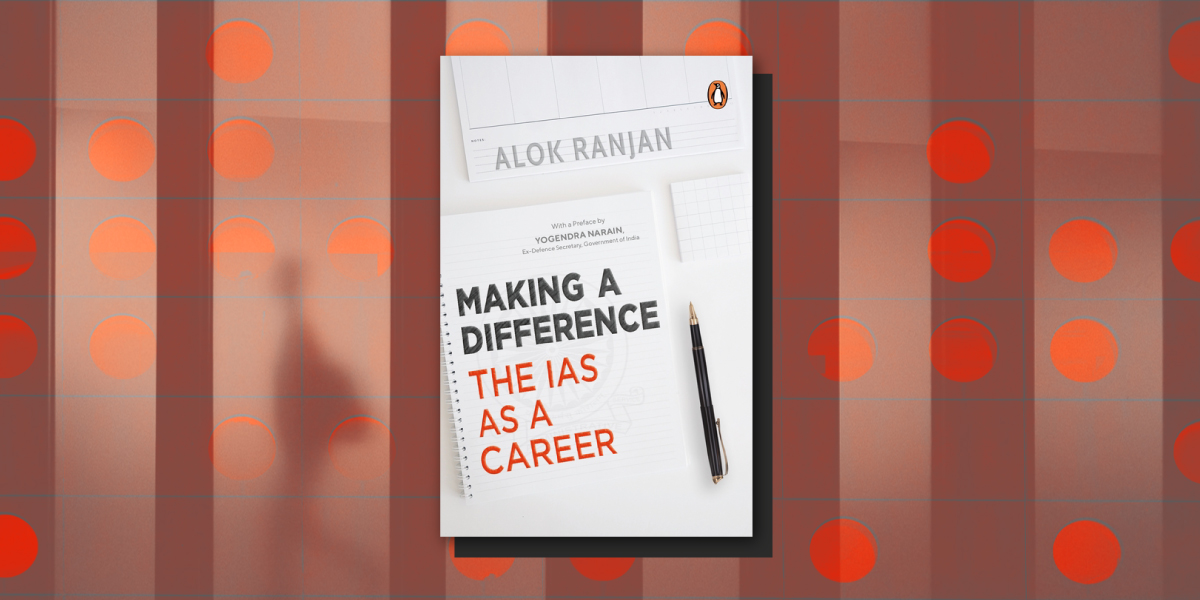
Alok Ranjan, the former Chief Secretary of the Government of Uttar Pradesh, has had the career that most people dream of. So, he has put together the information that every aspiring officer should know. While sharing his own experiences, he has provided a deep understanding of the IAS as an institution, valuable tips and insight for cracking the daunting UPSC exam, and how to build a successful career in the services.
*
Making a Difference || Alok Ranjan
Dear Readers,
It was a difficult decision after having done my MBA from IIM Ahmadabad to resign from my job and write the IAS examination. I was fortunate to succeed in the exam in my first attempt and secured 4th position in India in the IAS and was allotted to the Uttar Pradesh cadre. I retired in 2016 after 38 years of a very fulfilling and satisfying career. I can say with complete confidence that no other service or job can provide the diversity and richness of experience that a career in the IAS provides.
I often meet young boys and girls embarking upon a career and find that most of them have dreams of joining the IAS or the civil services. Despite the numerous alternative career opportunities that are available, civil service is still the preferred choice of many. Students prepare for years to get through the hallowed portals of the civil service. For those who succeed it is a realization of their cherished aspirations while others keep making honest efforts year after year hoping that one day they shall succeed.
This book is for those young boys and girls who nurture the desire to join the IAS. I want to communicate through this book that it is possible to get selected in the IAS provided you have the right kind of motivation and are prepared to put in the requisite amount of dedicated hard work. This book is also about the challenges and opportunities that an IAS officer faces during his service period. it is not an autobiography but I have used interesting anecdotes from my career to illustrate the situations that an IAS officer faces and the leadership principles which are essential for him to ensure quality public service delivery and good governance. It is for this reason that this book would be of interest to the serving IAS officers as well as all those who are concerned in any way with issues related to public policy. A student must think of joining the IAS if she wants to bring about a positive change in society and contribute to the development of the country. Issues of power, position, and status cannot be ignored but they should not be the prime motivation for joining the IAS. This service gives you the opportunity of touching numerous human lives. You can bring about a transformation in the quality of life of the citizens. This book is all about making a difference to society which should be the main goal of an IAS officer.
A person interested in joining the IAS should prepare herself mentally for at least three to five year before the IAS exam. He should take a keen interest in current affairs and also read widely on all possible subjects. This is an extremely tough exam where you have to compete against thousands for a hundred seats and therefore your preparation has to be that much more solid and deeper. It is best to devote at least one year of single-minded focus and effort to this exam. You need to develop your personality as well as your communication skills as well as a logical and analytical way of thinking. This book will give those preparing for IAS some very useful tips for both the written exam and the personality test. I have talked about the experiences of an IAS officer as a District Magistrate which is, perhaps, the most rewarding and exciting posting in the service. A young IAS officer gets the opportunity of leading the entire team at the district and he is the voice of the government at the District level. Any scheme gets implemented if the District Magistrate takes it up. There is tremendous authority attached to this post but along with this comes a great sense of responsibility and accountability. It is, indeed, a thrilling assignment and most IAS officers never tire of talking about what they achieved in the Districts.
State Government provides a tremendous opportunity to make policies that could influence the life of the ordinary citizen. You could be looking after education and make a mark by improving the quality of education or you could be looking after the health and can make a difference by reducing infant and maternal mortality. Every post in the IAS has the potential of giving you an opportunity to bring about a positive change in the lives of people. A great experience at the State level is the post of the Chief Secretary who leads all the government officers and employees in fulfilling the ideal of good governance. IAS gives an opportunity of working with the Government of India where you get National and International experience and the policies you make impact the entire nation.
I have also discussed some of the common myths and beliefs about the IAS like the need for domain specialization, promotion on the basis of seniority, political interference, corruption, professional integrity, and lack of promptness in decision making. I have tried to show how some of these could be individual attributes but the system also plays a great role in molding the personality and administrative style of an IAS officer.
It is my fervent belief that a career in the IAS can be hugely satisfying but the relevance of the IAS for the future requires the service to introspect and reinvent itself and for this, it has to look within and make itself responsive to the changing needs of the 21 st century. The IAS is not merely a job but is a service to society and the Nation. The greatest reward that an IAS officer can get is when the common man on the street feels that a positive difference has been made in his life.
All the best!
**
Read Making A Difference to know more about IAS from an insider.
The term ‘widow’ is said to have its roots in the Sanskrit word vidhuh meaning lonely, bereft and solitary. Widowhood marks a drastic shift, characterised by an air of despondency and melancholia. The weight this word carries pulls down the spirits and hopes of a living body until it burns down into ashes, literally and figuratively. The ripples of widowhood reverberate through the rest of the women’s life.
However, many women find their way back to life. They don’t give up, even when they’re shattered.
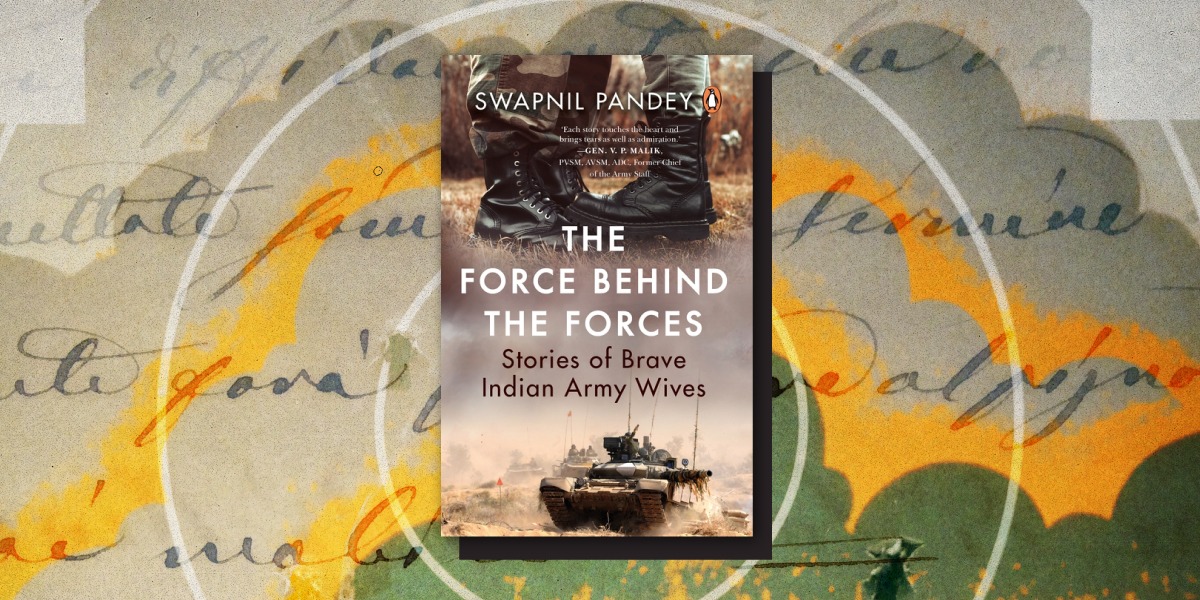
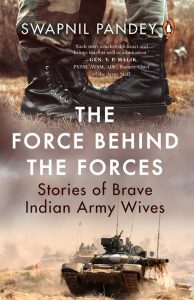
Here’s an excerpt from Swapnil Pandey’s The Force Behind the Forces about Priya, whose world, as she had known, had collapsed.
*
The Force Behind the Forces || Swapnil Pandey
A crushed and grieving Priya sat at an awkward angle, jammed into a small corner of the room. She was forcing herself to face the people around. There was an ocean of them. It was the funeral of a soldier killed in action after all. And many of his companions regarded him with feeling, almost religious devotion. Naik Amit Sharma, the lad who had been killed in action, was the pride of the family. A few children ran around, but Priya could not see her five-year-old daughter—Khwaish. She did not bother to locate her either. Her world, as she had known it, had just collapsed. The atmosphere was mournful. Female relatives were howling and tearing their hair. There was also deep silence during mealtime in the house of mourning. Nothing mattered now, not even her existence. It was confusing.
She wanted to lie down and mourn in silence, away from all the people, but it was not possible. She had to sit there and be tagged as a ‘bechari’. Her mother reached out to embrace her. She didn’t know whether to console her or to cry on her shoulder herself. Priya looked at her wrinkled face. Her mother had begun to look several years older within a span of a few days.
The voices grew in intensity; the incessant whispers swung between viciousness and apathy:
‘Ma-beti dono widhwa hai. Kya naseeb leke aayi hai bechari. [Mother and daughter both are widows. What horrible destiny.]’
‘Paise kisko milne hain? Biwi ko ya ladke ki ma ko? [Who will get the money? The wife or the boy’s mother?]’
‘Widhwa ho gayi bechari, ab kya karegi paison ka?
[The poor woman is a widow now. What will she do with the money?]’
‘Bhari jawani me widhwa, baap bhi nahi hai. Beti bhi hai. Bhagwan na dikhaye aise din kisi jo. Bechari. [She’s been widowed so young. She has no father to turn to either. An she has a little daughter besides. Nobody should have such a fate. Poor woman.]’
‘Iski ma ko dekh, kya karegi aab? Natini bhi itni choti hai. [Look at her mother. What will she do now? Her granddaughter too is so young.]’
She swallowed every remark and rubbed her hands in her lap—desperately. Her eyes were bloodshot; she looked as tired as she felt—dishevelled hair and dark circles beneath her blazing black eyes. She had not just lost her husband—the one she loved with all her heart—but her existence as well. It was a brutal realization that left her devastated, and pushed her from hope to despair within thirteen days.
The ‘Terahvin’ marks the end of the mourning period which lasts thirteen days from the day of the cremation of the deceased. Those thirteen days are meant for the rituals performed for the sake of salvation of the departed soul. These thirteen days provided a lot of time to Priya to mourn. She felt alone and depressed, and even howled at nights remembering Amit—who had promised to walk beside her for the next seven lives.
Priya knew this was not salvation. Shattered, she would lie down on the bed and stare at the flame in the lantern. Sometimes she looked in the mirror, scrubbed her face vigorously, panicked, and wondered in utter dismay—why her? Sometimes she would wake up panting in her damp sari, from the nightmares of her dead husband. But what troubled her the most was the consistent taunts from the people that shrunk her dignity. People forgot she was not just a widow, but a flesh-and-blood person. Suddenly, not only her own identity but the identities of her mother and her daughter were also forgotten. They were not persons any more, but rather a bunch of weak, meaningless women, not eligible for a respectable social status.
The women did not see a grieving young woman, rather a widow, a ‘bechari’ who had almost lost the right to live as a free citizen. Priya lived in a society surrounded by endless myths and stigmas. She certainly did not belong to the progressive class, but came from a conservative background where women lived in shackles and under limitations. Her resources were also limited, and so was her financial condition.
Cruel remarks thrown casually at her made her life miserable, and the mourning almost intolerable. There was also a point when she felt she was losing the will to live, but her beautiful five-year-old daughter, Khwaish, whom the couple had named with hope and happiness when she was born three years after their marriage, on 16 July 2007, helped her cope. It was as if all their wishes had been fulfilled with her arrival, and their life was complete.
**
Read The Force Behind the Forces to find out if Priya succumbed to her destiny and grief or she decided not to give up.
Fantastic Creatures is a spellbinding anthology of Indian mythology retellings. With a focus on the chimeric beings that populate our folklore, author Bulbul Sharma has found an evocative way to reintroduce the beloved stories from our childhood. Here she writes about why children often learn storytelling and writing from mythologies, and why these ancient tales will never grow old.
*
Fantastic Creatures in Mythology || Bulbul Sharma
Indian mythology, with its treasure trove of tales, is one of the richest and most colourful mythologies in the world. The wonderful and unique aspect of our myths is that we are still totally familiar with these age-old stories. They are ever-present in our art and dance traditions, in classical music and theatre. Most Indian children in city schools or in remote village schools know these tales really well. When they are younger, they beg their grandparents to tell them these stories, and later when they are older, they love reading them. Whatever age they are, they love listening to or reading these familiar stories over and over again.
It is important for them to revisit these tales often to absorb all the subtle messages and gems of ancient wisdom that each story contains.As they read these stories, children admire the courage of the various great heroes and feel good when they defeat the demons. The tale is familiar, yet it makes them think about the battle between good and evil. These ancient tales teach children the value of good conduct but in an exciting, action-packed manner. There is always a curious twist to the tale. How did Tataka become such a terrible demoness? Who saved the inhabitants of the forest from her evil ways? Why did Khabanda have only one eye and a huge stomach? Why did Marich change himself into a magical, golden deer? How did Hanuman recall his superpowers?
Each story in mythology has stories hidden within itself, and only by reading them over and over again, are children able to discover the various layers. It is important for children to see for themselves how good always prevails over evil. However difficult the lives of the heroes might be, however many battles they might have to fight; the young reader always knows that his hero will always win in the end. The demons we meet are not always bad. Some were good creatures once upon a time but were turned into demons because they did some mischief. This is a subtle way of teaching our children that wickedness is always punished. Despite being tales about good conduct, the stories from mythology never preach morality in a stern and boring way. There is always drama and colour, and there are many fantastic creatures dancing through the story to hold a child’s interest.
In ancient days, when a storyteller sat under a banyan tree and recounted tales of valour and courage from our ancient epics, people absorbed every word with enthusiasm. Though they knew these tales of earth-shattering battles, amazing valour and courage, from beginning to end, they still found them interesting since each storyteller added a different nuance to the familiar, much-loved tale. Each time I retell a story from mythology I try to add a slightly different layer of colour, but I am careful to stay very much true to the ancient story as the children know each and every word. Stories from our mythology are timeless, and children have always known this, and this is why they love reading these wonderful stories, over and over again.
Sita, the beloved princess of Mithila, is one of the most revered women in Indian history; so well known, yet probably the least understood. At every crossroad of her life, she chose acceptance and grace over self-pity. Her life was filled with sacrifice yet wherever she was, there was abundance. It was as if she was carved out of an intense longing for Rama, yet she had infinite patience.
Sita||Bhanumathi Narasimhan
Sita’s story has something to offer to everyone. In her, we find someone who is so divine yet so human. Today, we are looking at some of the lessons from her life that can help us become better individuals.
Devotion
Sita’s devotion for Lord Rama was unparalleled. She stood by him like a pillar when he was banished from the kingdom of Ayodhya and followed him like his shadow to the forest, happily abandoning all comforts and luxuries of the palace.
‘Sita’s eyes closed and she dived deep within as the gentle touch of the petals enveloped her being in waves of beauty. And in that inner silence, the soundless vibration of the sacred word ‘Ram’ rose in soft ripples of bliss. A single tear flowed from Sita’s eyes, sweetened by her devotion and longing for her beloved.’
‘Sita’s eyes captured every detail but nothing left an impression on her mind, just as the lotus leaves, though they were in the water, remained untouched by it. There was only one impression in her consciousness, her beloved Rama, and he filled her completely.’
‘She wondered if Rama was looking at the night sky too. The very thought that they might both be gazing together at the same stars sent a rush of joy into her heart. There were many barriers that separated them physically, but these little twinkling relatives of hers connected her instantly to her beloved. She closed her eyes with a smile on her face. She mentally dwelt upon every detail of her beloved and found deep solace in the image.’
Courage
Sita was the beloved princess of Mithila who had been brought up with all the luxuries that a kingdom can afford. Yet, when Lord Rama was banished to the forest she followed suit, with no qualms or complains. It was not merely her love for Rama, but a sense of indomitable courage that allowed her to take such a valiant step.
‘She patiently waited for Rama to complete what he had to say. As soon as he was done, she fell at Kaushalya’s feet. ‘Mother, what use is the lotus without the sun, a flower without nectar, a river without banks or a body without the soul? I have heard in detail the descriptions of all the hardships that you foresee but I assure you that even a moment of separation from my lord is far worse than any of these difficulties. The birds and animals will be my family. The flowers of the wild will add colour and fragrance wherever we are. Sleeping on the earth, I will feel that I am resting on my mother’s lap. A hut of leaves in the company of my lord will be far more comfortable than the heavenly abode of gods. The majestic mountains all around will be akin to the palaces of Ayodhya.’
Grace
Be it the way Sita perceived Ravana after he abducted her or the way she treated Kaikeyi when the Queen visited her in Chitrakuta, Sita’s graciousness remained untarnished no matter what the circumstance.
‘For Sita, everything beautiful in creation was Rama. She felt the presence of her lord even in the music of the enemy. Ravana was not an opponent or adversary to Rama anymore. He had loomed large in Trijata’s mind when she placed him opposite Rama. But now Ravana seemed very small because she saw him from Sita’s point of view. Rama was bigger than any individual. There was nothing that could come between Sita and Rama because they were not two.’
‘Kaikeyi burst out when Rama came to her, ‘I thought I would never be able to speak to you again! Even if you forgave me, I would never be able to forgive myself. I was wondering what I would even say to you. But that darling wife of yours—she is just like you! She has patiently consoled me ever since our arrival and made me feel so honoured. She has no spite, not even a trace of doubt in her mind. She still treats me like her very own mother! I am sure Kaushalya and Sumitra must be wondering why Sita is spending all her time with me after all that I have done to you and to her!’’
Loyalty
The songs of Sita’s loyalty to Lord Rama are sung till date. When the mighty Ravana tried to win her over, her refusal of him remained as stern and unyielding as ever. Even in captivity, her heart and mind were solely devoted to the thought of Rama.
‘Though Sita was being held captive in Ravana’s garden now, they would bring her food in a golden plate every day. And every day, the plate would remain untouched. Sita never took even a sip of water from the palace kitchens. The Rakshasis who guarded her did not care. They would enjoy the food themselves and return the plates as if Sita had eaten everything.’
‘At first, Sita had thought of her new-found love as a beautiful feeling, a powerful emotion. But years later, as she sat watching the flowing waters of the stream in Ashoka Vatika, she was very clear that this love was her very existence.’
‘Trijata, wait!’ said Ravana. Trijata was his niece. He could speak to her a little more freely than he could to anyone else at the moment. He knew that Sita had softened towards Trijata. ‘Yes, my lord,’ said Trijata and retraced her steps into her uncle’s chamber. ‘Trijata, does she still yearn for that mortal husband of hers? Does she believe that he is actually going to find her?’ ‘Yes, my lord. Though separated physically, her heart knows no other. Whoever Rama may be, he is fortunate to have such a wife. I cannot imagine an ordinary man inspiring this kind of resilience and love.’
Living in harmony with nature
Sita’s love for all of nature’s beings was boundless. The various birds and animals in Ashoka Vatika became her companions in solitude. In turn, these creatures would bring her food and try to uplift her mood, considering themselves lucky to be in the presence of divinity.
‘When the Rakshasis were asleep, little squirrels would run down the trunk of the simsupa tree and drop nuts into her lap. They would wait to see if Sita accepted their offering or not. The sparrows and sunbirds would carry tiny berries in their beaks and place them on the ground near Sita, just as if they were bringing food for their young ones. Sita could not refuse their offerings. She would wash those berries and nuts in the water from the nearby stream and eat them. This was all the food that she consumed throughout her confinement in Ashoka Vatika.’
*
Rediscover the immortal story of Sita from her perspective in Bhanumathi Narasimhan’s Sita: A Tale of Ancient Love.
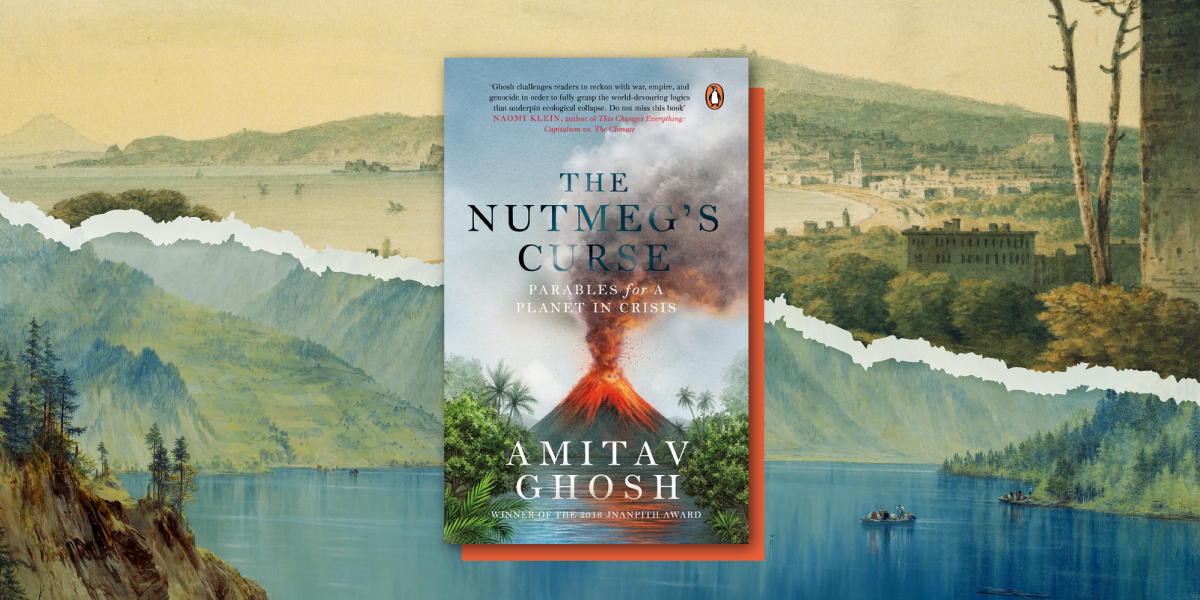
The Nutmeg’s Curse is a compelling read that talks about the now ubiquitous spice, and how it was once so rare that wars were fought over its possession. In his latest masterpiece, Amitav Ghosh explores and explains the connection between nutmeg and climate change, and how its tragic history can be traced back to the Middle Ages. As we follow the tumultuous tale of nutmeg, we are introduced to colonial genocide, eco-fascism, philosophy of science, and military emissions.
The Nutmeg’s Curse||Amitav Ghosh
This intriguing novel kicks off with a bewildering story set in Selamon, a village in Banda islands in present-day Indonesia. The Dutch invasion, led by Martijn Sonck, a ruthless tyrant, is in full swing, while the natives of the island are still comprehending what is happening to their homeland and why. Nutmeg’s history is a tainted one, and its association brings up tragedies and horrible crimes committed during different colonizations across the globe, especially in Asia. Let’s dive into the gruesome legacy of Nutmeg: how it once was one of the most valued spices in Eurasia and how it’s connected to climate change, an irreversible problem we face today.
In the Middle Age, the spice race was the space race of its time, and so the involvement of Dutchmen such as Sonck was hardly surprising. The Europeans, however, were not the first ones to discover nutmeg. Known as the gift of Gunung Api, a part of the volcano mountains in Maluku, nutmeg had traveled the world long before the first Dutch colonizers set their ravenous eyes on it. Unlike the tree it originates from, nutmeg has been described as a tireless traveler. Interestingly, since every single nutmeg originated in and around the Bandas before the 1700s, any mention of the former in texts around the world automatically forms a link with the latter.
In India, a carbonized nutmeg was found in an archaeological site that dates back to 400-200 BCE. In Chinese texts, mentions of this infamous spice date back to the first century before the Common Era, and in Latin texts, nutmeg appears a century later. Hence, it is obvious that nutmeg has traveled thousands of miles before Europeans reached Maluku. However, one of the most peculiar aspects of these spice voyages across Asia and Europe was the astounding consistency through which nutmeg rose steadily in both volume and value.
But why nutmeg in particular? Why did this simple, yet difficult to procure spice rise above the others in the spice race? One of the reasons could be its medicinal properties, especially in the 16th century. The value of this spice rose when doctors in Elizabeth England declared that nutmeg could be used to cure the infamous plague that was sweeping rapidly through Eurasia. In fact, in the late Middle Ages, it became so expensive and exclusive in Europe that a handful of this household spice could buy a house or even a ship! The frenzy for spices like nutmeg in this era surpassed their terms of value in utility alone. Nutmegs manifested into something much bigger: fetishes and envy-inducing symbols of luxury and wealth. As Ghosh rightly states, they conformed impeccably to Adam Smith’s insight that wealth is something that is “desired, not for the material satisfactions that it brings but because it is desired by others.”
Be it to establish a monopoly by European voyagers such as Christopher Columbus himself, or to harness this chic spice’s actual potential, nutmeg was in the center of the storm of crusades and colonizations that became a norm for the centuries that followed. The Nutmeg’s Curse is a riveting account of how some of our modern problems, mainly climate change, are a consequence of these events, and how nutmeg’s story draws parallels with our current reality.
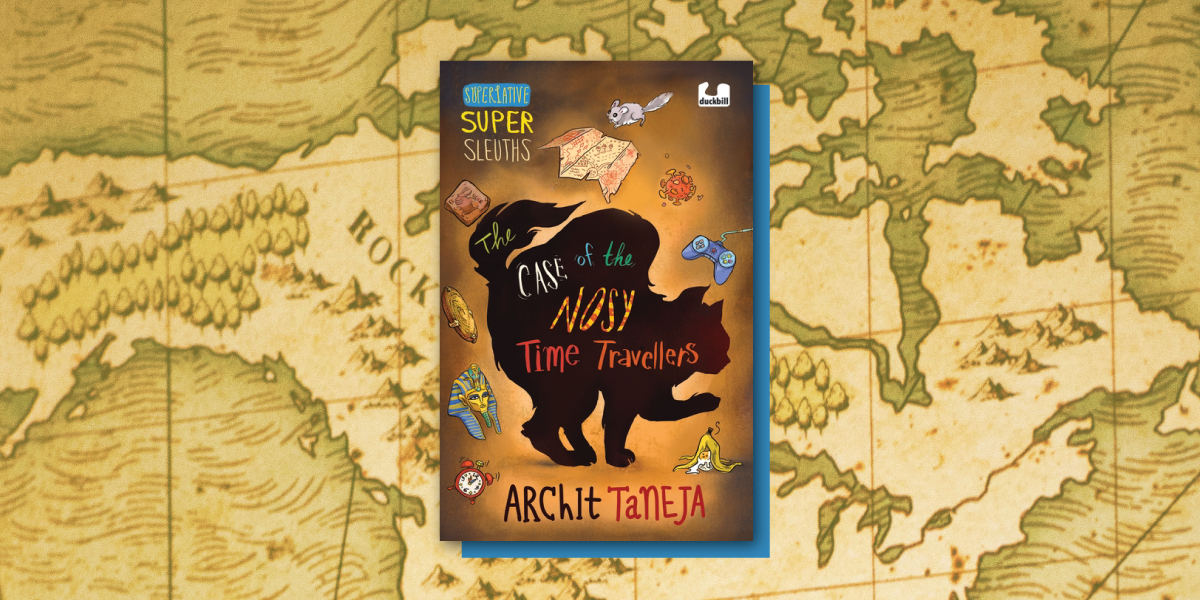
Rachita and Aarti have a nemesis who is out to destroy them. Garbage vandals are defacing walls of residential societies. Aarti’s birthday presents include miniature coasters. Rachita starts having egg-themed nightmares. Are these happenings related to the mysterious time-travelling detective gang that is challenging the Superlative Supersleuths? We’re all eager to find out!
Here’s an intriguing excerpt from the third book in the Superlative Super Sleuths series titled The Case of the Nosy Time Travellers.
*
The Case of the Nosy || Archit Taneja
Our sleuthing services had been in high demand since we got semi-famous last winter. I’d thought that having Vipul and Ashwin as official Supersleuths would help us manage the load, but the number of cases just kept growing. Aarti had come up with the idea of creating a website during the summer vacations. It’s been a great success: anyone can anonymously request us to solve a mystery. We encourage others to solve them too. It reduces our workload, and we feel good about keeping the spirit of sleuthing alive. Jyoti and Shilpa from our class formed a team and claimed that they’ll solve one before us one of these days. They’ve been failing miserably so far.
We had got a request two days earlier. Someone was vandalizing walls in Aarti’s apartment complex, the Shobhana Hillside View. One of the boundary walls had been smeared with garbage from the dustbins. This had been happening for just under a week. The adults didn’t seem to care much since the wall wasn’t visible during their evening walks or early morning yoga classes, but it stank up the area where the kids played football. Aarti hadn’t noticed it either—she had been busy pet-proofing her home for the last five days.
We had scouted the boundary wall before the party began. It was already dark by then, but my phone’s flashlight was enough to make some initial observations. The garbage patterns on the wall looked random. If the vandals were human, I’d expect them to leave some sort of message behind. Vandals leave messages because it made them look cool. They’d have made some art out of the garbage or arranged it to form curse words or something like that.
Interestingly, smearing trash on the walls seemed a nice way to segregate it. The wet waste remained stuck on the walls, while the dry waste slowly fell down. Could it be that the vandals understood the importance of recycling and wanted the people in the society to segregate their waste better? I noticed a glum-looking eggshell and a banana peel on the ground. I picked them up and smeared them on the wall again so that they could be back with their wet-waste brothers and sisters.
I tried to convince the security guards to show me the CCTV footage. They didn’t take me seriously, even when I tried to bribe them. I put them on the suspect list. My hunch was that the criminal was an animal, one that was really fond of playing with garbage. I’ve heard of pet owners complain about that. We couldn’t spot any strays in the society, so it was likely to be someone’s pet.
‘How many pets are left?’ I whispered into the mic. ‘Around a dozen, I guess. Over,’ Ashwin responded. ‘Make it quick, people will start to leave soon,’ I said. I’ve explained to Ashwin several times that he doesn’t need to use ‘Over’ when he finishes a message. We’re not in the 1950s any more, when only one person could speak on the radio channel at a time. But he insists on doing it because that’s how he’s seen it being done in movies.
I’d asked Aarti to invite everyone in the society who had pets, even if she didn’t know them well. She didn’t have a problem with that. For her, it just meant more gifts and more pets to cuddle with. Uncle and Aunty weren’t pleased, but they couldn’t say no. Our school counsellor must have recommended to our parents that they be extra nice to us after what we had been through.
**
To find out more about the spying adventures of Rachita and Aarti, read The Case of the Nosy Time Travellers.
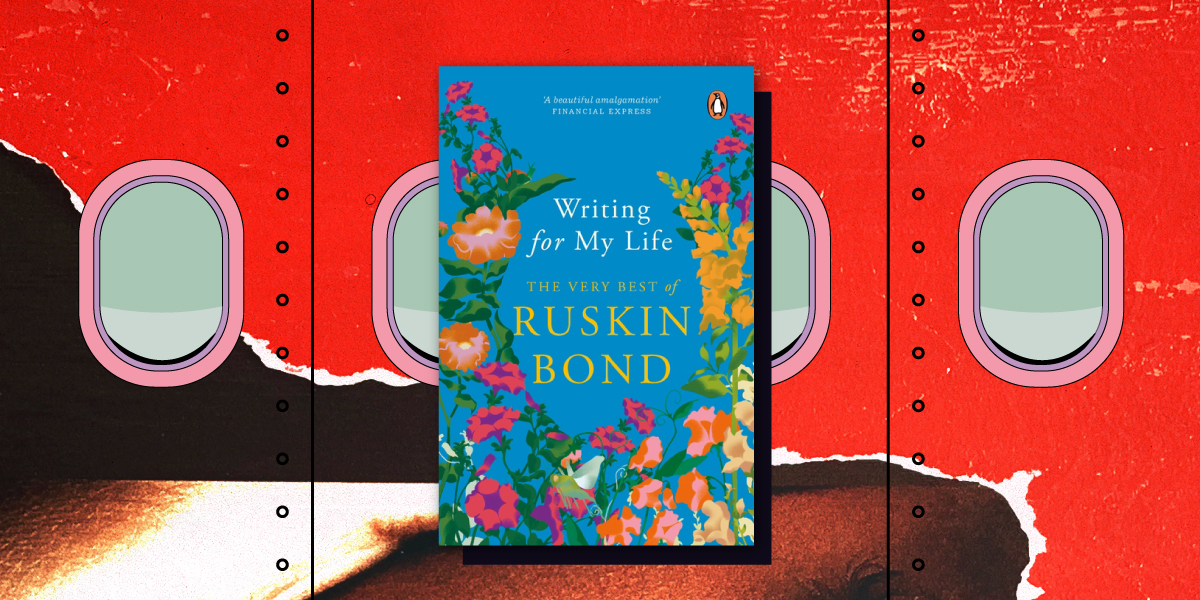
If only the world had no boundaries and we could move about without having to produce passports and documents everywhere, it really would be a great wide beautiful, wonderful world’, says Ruskin Bond.
From his most loved stories to poems, memoirs, and essays, Writing for My Life opens a window to the myriad worlds of Ruskin Bond, India’s most loved author. This book is full of beauty and joy – two things Ruskin’s writing is mostly known for.
Writing for My Life||Ruskin Bond
Ruskin’s writing is greatly inspired by the places he lived at. His first book The Room on the Roof was published when he went away to London but was inspired by Dehradun. Here are some excerpts from stories based out of Dehradun, Jersey, and London
Dehradun: The Window
I came in the spring and took the room on the roof. It was a long, low building that housed several families; the roof was flat, except for my room and a chimney. I don’t know whose room owned the chimney, but my room owned the roof. And from the window of my room, I owned the world.
But only from the window.
The banyan tree, just opposite, was mine, and its inhabitants my subjects. They were two squirrels, a few mina, a crow, and at night, a pair of flying foxes. The squirrels were busy in the afternoons, the birds in the mornings and evenings, the foxes at night. I wasn’t very busy that year; not as busy as the inhabitants of the banyan tree.
There was also a mango tree but that came later, in the summer, when I met Koki and the mangoes were ripe.
At first, I was lonely in my room. But then I discovered the power of my window. I looked out on the banyan tree, on the garden, on the broad path that ran beside the building, and out over the roofs of other houses, over roads and fields, as far as the horizon. The path was not a very busy one but it held variety: an ayah, with a baby in a pram; the postman, an event in himself; the fruit seller, the toy seller, calling their wares in high-pitched familiar cries; the rent collector; a posse of cyclists; a long chain of schoolgirls; a lame beggar…all passed my way, the way of my window…
*
Jersey – A Far Cry from India
It was while I was living in Jersey, in the Channel Islands, that I really missed India.
Jersey was a very pretty island, with wide sandy bays and rocky inlets, but it was worlds away from the land in which I had grown up. You did not see an Indian or eastern face
anywhere. It was not really an English place, either, except in parts of the capital, St Helier, where some of the business houses, hotels, and law firms were British-owned. The majority of the population – farmers, fishermen, councillors – spoke a French patois which even a Frenchman would have disowned. The island, originally French, and then for a century British, had been briefly occupied by the Germans. Now it was British again, although it had its own legislative council and made its own laws. It exported tomatoes, shrimp, and Jersey cows, and imported people looking for a tax haven.
During the summer months, the island was flooded with English holidaymakers. During the long, cold winter, gale-force winds swept across the Channel and the island’s waterfront had a forlorn look. I knew I did not belong there and I disliked the place intensely. Within days of my arrival, I was longing for the languid, easy-going, mango-scented air of small-town India: the gul mohur trees in their fiery summer splendor; barefoot boys riding buffaloes and chewing on sticks of sugarcane; a hoopoe on the grass, bluejays performing aerial acrobatics; a girl’s pink dupatta flying in the breeze; the scent of wet earth after the first rain; and most of all my Dehra friends.
So what on earth was I doing on an island, twelve by five miles in size, in the cold seas off Europe? Islands always sound as though they are romantic places, but take my advice, don’t live on one – you’ll feel deeply frustrated after a week.
I was in Jersey because my Aunt E (my mother’s eldest sister) had, along with her husband and three sons, settled there a couple of years previously. So had a few other financially stable Anglo-Indian families, former residents of Poona or Bangalore, but it not a place where young people could make a career, excerpt perhaps in local government.
I had finished school at the end of 1950, and then for almost a year I had been loafing around Dehra Dun, convinced that I was a writer on the strength of a couple of stories sold to The Hindu’s Sport and Pastime (now there was a sports’ magazine with a difference – it published my fiction!) and The Tribune of Ambala (Chandigarh did not exist then). My mother and stepfather finally decided to pack me off to the U.K., where, it was hoped, I would make my fortune or become Lord Mayor of London like Dick Whittington. There really wasn’t much else I could have done at the time, except take a teacher’s training and spend the rest of my life teaching As You Like It or Far from the Madding Crowd to schoolboys (in private schools) who would always have more money than I could earn.
Anyway, my aunt had written to say that I could stay with her in Jersey until I found my bearings, and so off I went, in my trunk a new tweet coat and two pairs of grey flannel trousers; also a packet of haldi powder, which my aunt had particularly requested. During the voyage, the packet burst, and most of my clothes were stained with haldi.
*
London – And Another in London
Although for my first six months in London I did live in a garret and an unhealthy one at that, I did not really see myself in the role of the starving poet. The first thing I did was to
look for a job, and I took the first that was offered – the office job at Photax, a small firm selling photographic components and accessories. A little way down the road was the Scala Theatre, and as soon as I had save enough for a theatre ticket (theatre-going wasn’t expensive in those days), I went to see the annual Christmas production of Peter Pan, which I’d read as a play when I was going through the works of Barrie in my school library. This production had Margaret Lockwood as Peter. She had been Britain’s most popular film star in the forties and she was still pretty and vivacious. I think Captain Hook was played by Donald Wolfit, better known for his portrayal of Svengali.
My colleagues in Photax, though not in the least literary, were a friendly lot. There was my fellow clerk, Ken, shared his marmite sandwiches with me. There was Maisie of the auburn hair, who was constantly being rung up by her boyfriends. And there was Clarence, who was slightly effeminate and known to frequent the gay bars in Soho. (Except that the term ‘gay’ hadn’t been invented yet.) And there was our head clerk, Mr. Smedly, who’d been in the Navy during the War, and was a musical-theatre buff. We would often discuss the latest musicals – Guys and Dolls, South Pacific, Paint Your Wagon, Pal Joey – big musicals which used to run for months, even years.
The window opposite my desk looked out on a huge cinema hoarding, and it was always an event when a new poster went up on it. Weeks before the film was released, there was a poster of Judy Garland in her comeback film, A Star is Born, and I can still remember the publicity headline: ‘Judy, the world is waiting for your sunshine!’ And, of course, there was Marilyn Monroe in Niagara, with Marilyn looking much bigger than the waterfall, and that fine actor, Joseph Cotton, nowhere in sight.
My heart, though, was not in the Photax office. I had no ambitions to become a head clerk or even to learn the intricacies of the business. It was a nine-to-five job, giving me just enough money to live on (six pounds a week, in fact), while I scribbled away of an evening, working on my second (or was it third?) draft of my novel. The title was the only thing about it that did not change. It was The Room on the Roof from the beginning.
How I worked at that book! I was always being asked to put things in or take things out. At first, the publishers suggested that it needed ‘filling out’. When I filled it out, I was told that it was now a little too descriptive and would I prune it a bit? And what started out as a journal and then became a first-person narrative finally ended up in the third person. But editors only made suggestions; they did not tamper with your language or style. And the ‘feel’ of the story – my love for India and my friends in particular – was ever-present, running through it like a vein of gold.
Much of the publishers’ uncertain and contradictory suggestions stemmed from the fact that they relied heavily on their readers’ recommendations. A ‘reader’ was a well-known writer or critic who was asked (and paid) to give his opinion on a book. The Room on the Roof was sent to the celebrated literary critic, Walter Allen, who said I was a ‘born writer’ and likened me to Sterne, but also said I should wait a little longer before attempting a novel. Another reader, Laurie Lee (the author of Cider with Rosie), said he had enjoyed the story but that it would be a gamble to publish it.
Fortunately, Andre Deutsch was the sort of publisher who was ready to take a risk with a new, young author; so instead of rejecting the book, he bought an option on it, which meant that he could sit on it for a couple of years until he had made up his mind!
Experience the very best of Ruskin Bond’s writing in one book, Writing for my Life!
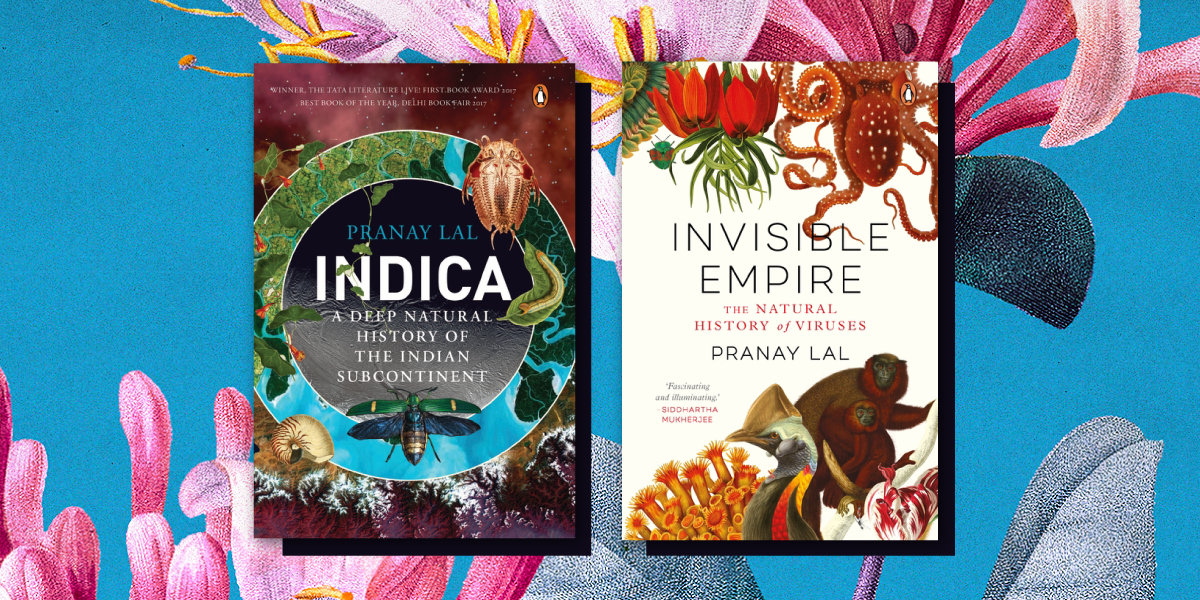
One of the recent discoveries readers have made is an author who is a biochemist working in the field of public health, the rather extraordinary, Pranay Lal.
His first book, Indica: A Deep Natural History of the Indian Subcontinent won the hearts of so many people along with bagging the 2017 Tata Lit Prize and the World Book Fair Award. Indica managed to document facts and history from the world of nature in the geographical boundaries of the Indian Subcontinent that the world wasn’t aware of. This exclusive document turned out to be a huge success because it managed to do something never done before with such extent and elegance.
Indica || Pranay Lal
It speaks about an Indian dinosaur more ferocious than T rex called Rajasaurus, about the Ganga and Brahmaputra sequestering nearly 20 per cent of global carbon, and their sediments over millions of years have etched submarine canyons in the Bay of Bengal that are larger than the Grand Canyon! From caves to crocodiles and gargantuan mammals, this book holds secrets to the tributaries of the natural world inside it!
And after years of waiting, Pranay Lal has returned with more facts and stories and secrets to be revealed in his latest release, Invisible Empire: The Natural History of Viruses.
Invisible Empire || Pranay Lal
Virus, the word our ears have been hearing without a pause for the past few years. A virus dominated our lives in a big way and now Pranay Lal takes a dive deep into the history of viruses and gives us the much-needed context, information and detailed accounts of the plethora of viruses that have occupied earth through the years.
The author shows us how everything about viruses is extreme, including the reactions they evoke and how for every truism about viruses, the opposite is also often true. The book takes us into the complex world of viruses, so diverse that it deserves to be called an empire.
Whether we see them as alive or dead, as life-threatening or life-affirming, Pranay Lal makes sure we see the ineluctable beauty, even a certain elegance about the way viruses go about their lives.