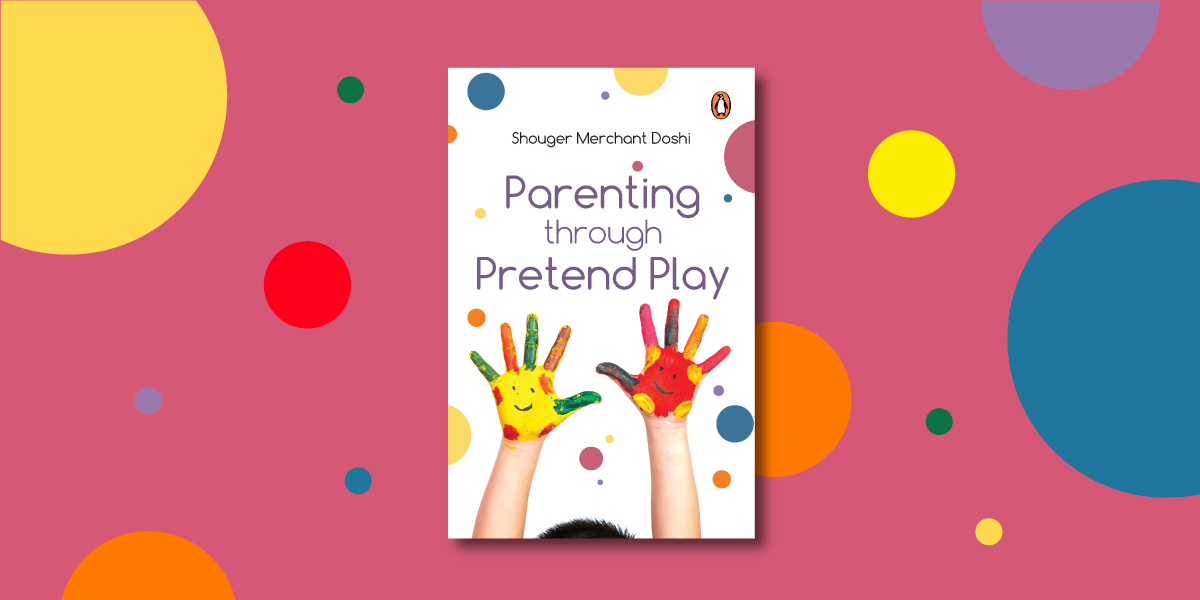
Understanding children in their early years of development is the most important thing. As it is known to every parent that parenting is a complex process where listening to their child, figuring things out by a process of trial and error, and putting in place the processes that work for them is the best approach. Their goal is to have fun with their children, inculcate key early learning skills in children, and make memories in the process.
Here’s an excerpt from Shouger Merchant Doshi’s book, The Power of Make-Believe: Parenting through Pretend Play, about pretend play and its importance for well-rounded development of children.
*
The Power of Make-Believe || Shouger Merchant Doshi
Play comes in many different forms. Researchers have segregated them into skill-based play forms such as fine motor or gross motor skill play or based them on the nature of the play, such as cooperative play, while others have classified them according to the number of people playing together. However, all forms of play, when coupled with a vivid imagination, storytelling or narration, constitute pretend play, which is an unparalleled form of early learning for children.
Some researchers call it dramatic play, role-play, exploratory play, fantasy play, symbolic play, creative play—I simply call it ‘pretend play’. It is multi-dimensional and incorporates all the elements of structured and unstructured play.
Children need to develop a variety of skill sets to optimize the process of their growth. Research and experts have always indicated that dramatic play with family members and peers is significant in igniting social, emotional, cognitive, language and visual processing skills that create decision-making and overall brain development. So, when your child wants to play Doctor-Doctor and operate on you, don’t consider it a waste of time. You will be surprised with what he is learning from that.
Children learn by imagining and doing. They learn by talking about concepts in their own words—when they are allowed to express themselves in the way that they have learnt, by observing people around them. In fact, it is not just about a sense of self-expression, but a deeper and more logical processing of sorts that occurs when children take on pretend play. So why is pretend play the foremost and most effective way to inculcate key early learning skills in children? The number of ways in which children develop and grow while engaged in rich creative play is countless and incorporates every early learning skill imaginable.
Here are some to help you understand its value in well-rounded child development:
1. Despite the name, pretend play is not frivolous. As per the American Academy of Pediatrics, it is proven to boost brain structure and function and promote self-regulatory functions, which allow children to focus on their goals and ignore distractions.
2. It helps children develop their imagination skills. They learn to be creative and think out of the box using the tools at hand, creating what they require and building fantastical items and stories using what they have.
3. It helps children expand their vocabulary. They engage in realistic language development—talking to each other, listening, asking questions, incorporating words and phrases they have heard—and practise having a ‘real’ adult conversation.
4. When pretend play involves more than one child, it can also encourage children to mimic and practise the important art of conferring with each other, sharing and taking turns, all of which teach them collaboration and healthy competition—important life lessons to learn.
5. When they are engaged in pretend play, children build important burgeoning skills and get practical experience in sorting, classifying and organizing items according to size, colour, utility, variety, etc. and in creating something larger with them.
**
Read The Power of Make-Believe: Parenting through Pretend Play to learn to initiate powerful discussions with children around you.
Bookworms can sometimes have too much on their plate, have sore eyes or just be in a situation where reading is impossible. But you know what? Don’t let that get you down because we’ve got the perfect answer to your prayers. Be it while doing chores or travelling or simply being too tired to read, audiobooks will have your back. Here are ten of the newest audiobooks we’ve just released. We’re certain you won’t want to hit pause on any of these!
~
Corporate Divas||Sonia Golani
Corporate Divas
Eighteen extremely talented and determined women have balanced the home and the boardroom with equal aplomb, setting standards in the corporate world for all to follow. Corporate Divas offers inspiring insights into what motivates and sustains India’s leading corporate women. Through a series of in-depth conversations, this book reveals the unconventional styles and the secret mantras they use to achieve phenomenal success in their professions. A riveting and an uplifting listen, it is an indispensable resource for anyone striving to build the right attitudes for success in today’s highly competitive global environment.
The Vijay Mallya Story||K. Giriprakash
The Vijay Mallya Story
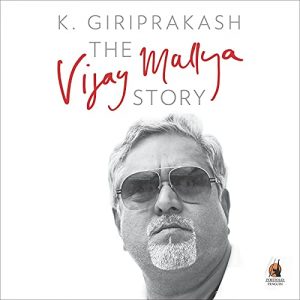
Giriprakash’s book, titled The Vijay Mallya Story, is an intriguing story of the life of Vijay Mallya, an Indian industrialist with a history of ground breaking success. He was given numerous titles, like the King of Good Times, The Liquor King of India, King of Good Thrones, and many more. The making of this industrial tycoon, his success story, the story of his decline with the downfall of Kingfisher, and a lot of important events from his life are presented in the book.
Vijay Mallya is a name that has been heard with relation to a lot of important and prime events, be it through his presence in Indian parliament, being an owner of IPL team Royal Challengers, Bangalore, or being an industrialist. Giriprakash has included lesser-known facts and stories from the professional events of Mallya’s life in this book. Mallya had three decades of success with numerous businesses. The book not merely includes the professional life of Mallya but also of his childhood events, the business acumen he was born with, and how he shared his relationship with his father. The book explains how his skills and the business-dealing abilities got him a long period of unmatched success, while the fall of Kingfisher has been a break in his reign.
The author has done in-depth research on Mallya’s life, and the major and minor events of his business life with some interesting details of his young days are all
Roses Are Blood Red||Novoneel Chakraborty
Roses Are Blood Red: Even True Love Has a Dangerous Side
“I’ll gift you a love story that every girl desires, but few get to live.”
He’d told me once. And boy, did he stick to his words! Vanav Thakur is the most perfect boyfriend that any girl can have. He ticks every box you can ever have for your Mr. Right. Trust me on this. He cares for me, respects me, never objectifies me, never says no to me for anything, understands me, is progressive, and has no shadow of any male chauvinism in him. Sometimes, I wonder if I really deserve him. My parents, like me, had no option but to accept him as my boyfriend. Everything was hunky-dory, and I thought I would be that one girl who would never have any relationship hiccup until I stumbled upon the reason behind his perfection.
I’m Aarisha Shergill, and my life is about to get ripped apart because I should have known some things should be left alone.
Is love capable of healing the deep wounds that love itself creates within you?
Mysteriously thrilling in its essence, Roses Are Blood Red is the haunting story of a passion and eternal love.
The Mind of a Consultant ||Sandeep K. Krishnan
The Mind of a Consultant
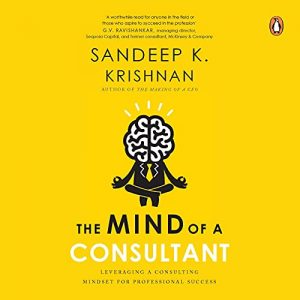
Management consulting is seen as a glamorous profession. Behind the mystique are the consultants who put in extraordinary effort, synthesize great problem-solving skills, and display fine personal attributes that enable them to capture the attention and respect of their clients. This book opens up to that world through the story of Samanta Thomas, a character based on countless excellent consultants, through whom we get inside the very mind of a consultant and their journey. As you traverse the journey of a management graduate growing to a partner in a top consulting firm, The Mind of a Consultant helps you understand various key skills that makes a successful consultant. The real-life experiences of consulting leaders bridge the gap between concepts and practical insights.
Problem-solving, management models, financial acumen, client management, leadership, networking, and work-life integration – this book hands you the tools to professional career success in a hands-on and easy-to-understand manner.
Life in the Uniform||Amit Lodha
Life in the Uniform: The Adventures of an IPS Officer in Bihar
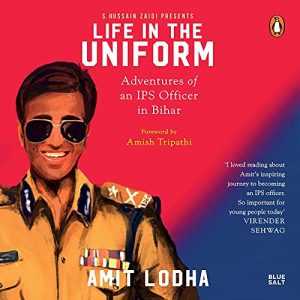
Amit Lodha is a decorated IPS officer holding the rank of inspector general. But before he rose the ranks in the service, he was an IIT graduate who was struggling to find his true purpose.
In this book, Lodha tells us how he turned his life around and studied for the UPSC exams. He also tells us how he trained to be an officer and had the most memorable beginning to his career, in Bihar. Punctuated with his signature humour and adventure-packed stories on everything from solving a kidnapping to handling a mob, Life in the Uniform gives us a chance to experience an IPS officer’s life through his own eyes.
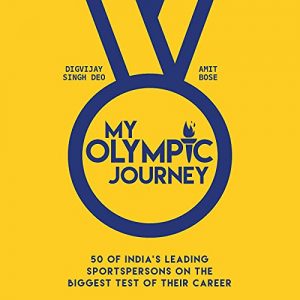
My Olympic Journey||Digvijay Singh Deo, Amit Bose
My Olympic Journey
Chronicling the stories of 50 of India’s leading Olympians for the first time ever in one comprehensive edition, Digvijay Singh Deo and Amit Bose bring you the games through the eyes of some of the best sportspersons in the country. These first-person accounts of Olympic medalists from 1948 till 2012, such as Balbir Singh, Leander Paes, Karnam Malleswari, Abhinav Bindra, and Sushil Kumar, and pioneers like Milkha Singh, P. T. Usha, and Anjali Bhagwat, reveal their hopes, superstitions, grit, and challenges. Their experiences and interactions are sure to make you laugh and shed a tear and, most importantly, open your eyes to the struggles they had to endure to reach the Olympics.
These personal stories give a close-up view of what it means to represent India at the most prestigious sporting event in the world, making you a part of the soaring glory and shattering disappointment that only an Olympic Games can deliver. With photos from the personal archives of each athlete, this is a front-row seat to the privileged Olympic experience.
Ground Scorching Tax||Arun Kumar
Ground Scorching Tax
On 1 July 2017, Goods and Services Tax (GST) became a reality. The government hailed it as the biggest tax reform of independent India which would herald a new freedom for the nation and unify it with ‘One Nation One Tax’. Some of the claims made by the government were that GST would bring about ease of doing business; increase tax collection; lower inflation; increase GDP growth by one to two percent; and check the black economy.
More than a year later, we have more questions than answers.
Why did the economy slow down?
Is the government likely to collect more taxes?
Why have prices continued to rise?
Why has Malaysia withdrawn GST?
Turns out that problems with GST are both transitional and structural. To correct for these, there have been a few hundred notifications and orders from the government which have added to the confusion.
In this book, well known economist Arun Kumar explains the reality behind GST. Known for not pulling any punches, the author explains why GST is a double-edged sword for the common man, why it will increase inequality across sectors and regions, why it will hurt small businesses – everything the government does not want you to know.
Shadow City||Taran N. Khan
Shadow City
When Taran N. Khan first arrived in Kabul in the spring of 2006 – five years after the Taliban government was overthrown – she found a city both familiar and unknown. Falling in with poets, archaeologists, and filmmakers, she begins to explore the city, and, over the course of several returns, discovers a Kabul quite different from the one she had expected.
Shadow City is an account of these expeditions, a personal and meditative portrait of a city we know primarily in terms of conflict. With Khan as our guide, we move from the glitter of wedding halls to the imperiled beauty of a Buddhist monastery, slip inside a beauty salon and wander through book markets. But as these walks take us deeper into the city, it becomes clear that to talk of Kabul’s various wars in the past tense is a mistake.
Part reportage and part reflection, Shadow City is an elegiac prose map of Kabul’s hidden spaces – and the cities that we carry within us.
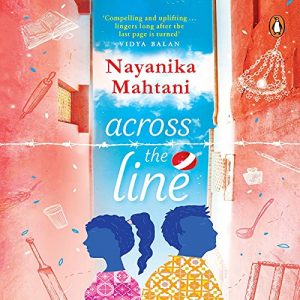
Across the Line||Nayanika Mahtani
Across The Line
A tale of borders and beliefs shaped by the games people play.
The year: 1947. New Delhi. Cyril Radcliffe’s hands are clammy, partly from the heat but mostly from the enormity of the task assigned. Mopping the sweat off his brow, he picks up his pen, draws a deep breath – and a dark line.
Rawalpindi. A barbaric frenzy of rioters fills the streets, disrupting a game of pithoo between Toshi and her brother, Tarlok, shattering their lives unimaginably.
The year: 2008. Rawalpindi. Cricket-crazy Inaya is sneaking out behind her father’s back for net practice when she discovers that she is not the only one in her family keeping a secret.
New Delhi. Jai accidentally stumbles upon an old, hidden away diary in his kitchen. The date of its last entry: August 17, 1947.
As Jai and Inaya’s unlikely worlds collide, another story unfolds. A story that started with the drawing of a line. A story that shifts the truth in their lives.
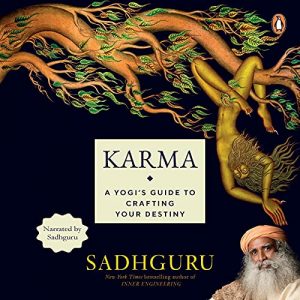
Karma||Sadhguru
Karma
A much-used word, karma is loosely understood as a system of checks and balances in our lives, of good actions and bad deeds, of good thoughts and bad intentions. A system that seemingly ensures that at the end of the day one gets what one deserves. This grossly oversimplified understanding has created many complexities in our lives and taken away from us the very fundamentals of the joy of living.
Through this book, not only does Sadhguru explain what karma is and how we can use its concepts to enhance our lives, he also tells us about the sutras, a step-by-step guide to navigating our way in this challenging world. In the process, we get a deeper, richer understanding of life and the power to craft our destinies.
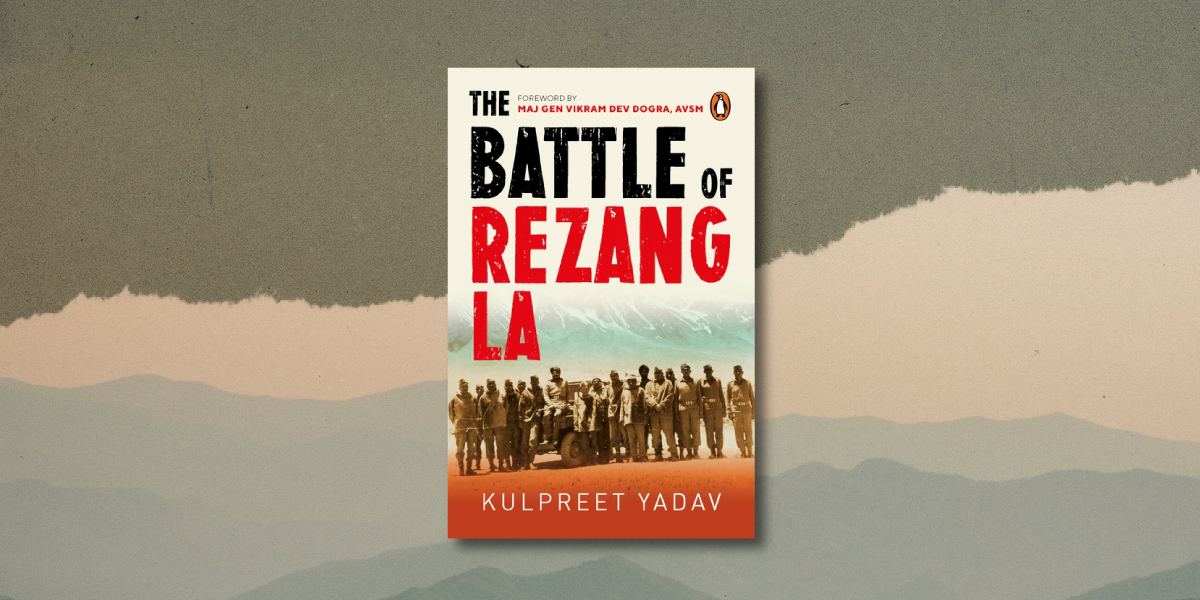
Kulpreet Yadav’s The Battle of Rezang La documents the bravery, gallantry, and patriotism of the soldiers who fought for India in 1962 war. The soldiers chose to hold their ground to the end, despite the fearful odds, defending their nation.
Here’s an excerpt from the book about the time when the speed of preparation of the bunkers and trenches in Rezang La gets a boost and the new recruits make up for the shortfall in manpower.
*
The Battle of Rezang La || Kulpreet Yadav
On 30 October 1962, the Charlie Company received a message that forty-seven new recruits had landed at Chushul airfield at ten in the morning on 29 October 1962 and that day, after they had been addressed by Lt Col H.S. Dhingra, they would be escorted to Rezang La…
The first person Maj. Shaitan Singh saw there was Naik Ram Kumar who was the section in-charge of the 3-inch mortar post located 140 yards behind the company headquarters on a downward slope. Ram Kumar was an exceptional soldier and the major trusted him completely even though Ram Kumar had been demoted from Havildar to Naik due to a recent incident related to convoy discipline.
Ram Kumar stopped working as he saw his commander approach, saluted him and cheerfully said, ‘Ram ram sahab.
Welcome back to the unit.’
‘Thank you, Ram Kumar. You must be missing kabaddi here.’
‘Yes, sir. Here, we are spending our energy only on building our defences. Kabaddi bahut khel liya.’
The major smiled and asked, ‘How’s Mishri devi? Got any letters from home?’
Mishri devi was the name of Ram Kumar’s wife who was back in his village Bahrampur in the Rewari district of Haryana.
‘Yes, sir. She is doing good.’
He patted Ram Kumar’s shoulder and said, ‘That’s good to know . . . ’
After a pause of a few seconds, in which the major looked around and acknowledged the Ram-Rams of others working in the vicinity, he continued, ‘Ram Kumar, let’s finish the laying exercise of the 3-inch mortar today.’
‘Yes, sir. Today, the visibility is good too.’
‘Yes, and that is why it is the right time for us to conduct the mortar survey. You come with me. The others in your section can go ahead with the fortification of the mortar post.’
Nk Ram Kumar laid down his tools and started to walk alongside the major. After a few steps, the major said, ‘So, how does it feel to become a naik once again from havildar? Anyone making fun of you?’
‘Sir, they still think I’m a havildar, because that’s what I think in my head.’
The major laughed, ‘You know what, among the officers too, we have a few who behave as if they are colonels even when they are actually majors. Such officers go very far, Ram Kumar.’
‘Are you one of them, sir?’
The major turned to look at Ram Kumar, a mysterious twinkle in his eyes, ‘What do you think?’
‘I’m not sure, but I’m sure of one thing, sir.’
‘And what is that?’
‘Since you are so calm and composed all the time, I’m sure you will become a general one day.’
Maj. Shaitan Singh laughed, ‘If I become a general, Ram Kumar, you will be a subedar major and I will get you to whichever place I’m posted.’
‘Thank you, sir.’
They walked in silence for a few minutes.
‘Ram Kumar, though you hold the rank of a naik now and the 3-inch commander should ideally be of havildar rank, I have still positioned you there. Do you know why?’
‘Because you trust me, sir.’
‘Exactly. I have seen you handling the 3-inch mortar . . . let’s do a proper survey today, find out the probable enemy approaches and range our mortar.’
‘Yes, sir.’
By now, they had crossed the platoon 9 position on the forward slope and stood looking east, in the direction the Ops had been reporting the enemy’s position. Both turned as they heard a sound right behind them. It was Naib Subedar Surja Ram.
‘Sahab, Ram Ram!’
‘Ram Ram, Surja sahab.’
‘Sahab, what’s the order?’
‘Surja sahab, Ram Kumar and I are here to identify enemy approaches and mark them. Where do you think they will come from?’
Surja scratched his chin and said, ‘Sahab, I think they will come in the night through the nullahs. Somewhere between three and four, early morning.’
Ram Kumar said, ‘Sahab, from what we have learned so far from the NEFA and Srijap attacks is that the Chinese use human waves.’
The major’s face was now taut with seriousness, ‘Yes, and one more thing, they use surprise as a strategy, like they had used in Korea.’
‘Sir, we will defeat every attack of the Chinese. They might have the numbers, but we have Dada Kishan ka ashirwad.’
‘Absolutely.’
They were quiet for a few seconds. Then the major asked, ‘Suggest a few names for the target positions, Ram Kumar.’
Ram Kumar replied, ‘Sir, let’s use the name of birds, like tota, maina, bulbul, kabutar, mor, chidiya wagarah.’
**
Read The Battle of Rezang La for a detailed account of the events of the 1962 war.
Acharya Prashant, a Vedanta philosopher, an Advaita teacher, and the author of Karma, talks about his transition from the corporate world to the spiritual world. He also answers questions about Karma, a word as common in the spiritual lexicon as in the popular parlance.
Karma || Acharya Prashant
After studying at IIM and working in the corporate sector, you took respite into the world of wisdom and spirituality. How did you overcome the difficult period of ‘sorrow, longing, and search’?
The basic inner challenge that life presents to us remains the same, no matter what the circumstances are. The one all pervasive and ubiquitous challenge is to keep doing the ‘right thing’ even in the most difficult situations. So whether one is an MBA student or a corporate employee or a spiritual leader, one has to act rightly – which simply means to not act from a personal centre of greed and/or fear.
There has never been any tectonic shift in my life as such. As an individual, I have always aimed at gradually trekking higher and higher. So, this movement from being a consultant in the corporate world to leading PrashantAdvait Foundation, is to be understood as a process of elevation and not of renunciation. The shift was only towards something higher, towards something more critical and of higher caliber. And the search . . . it has not ended; it is very much there. But yes, the destination has changed.
Your book, Karma, was first spoken and written later. What made you pen down hundreds of questions that you’ve verbally answered in a decade?
Every project that the Foundation undertakes is in tandem with the needs and requirements of those for whose sake it exists. As an organisation and as a socio-spiritual mission, PrashantAdvait Foundation exists to serve and transform contemporary society. And one of its prominent objectives is to liberate spirituality from superstition; which could not have been possible without a total repudiation of the false beliefs linked with the concept of Karma – and this, we know, has been quite successfully achieved with the book. Because the Foundation believes in harnessing each and every medium/platform for the Mission, the idea to write books (and make them reach the masses on a wide scale) occurred quite naturally to us.
Why do you think what people know about Karma is wrong?
Unfortunately, today there is hardly any concept in spirituality which has not been both misinterpreted and misrepresented. The same tradition to which we owe gems like Sri Bhagwad Gita, has sadly become a vehicle for misappropriation. Real meanings and implications of concepts linked with spirituality stand obfuscated and distorted by centuries of misplaced expositions and self-appeasing translations.
So, instead of asking what is wrong in the contemporary definition of Karma, we should be skeptical enough to ask: is there really anything at all that is right about it? Because had there been even a single grain of truth in it, we humans couldn’t have been the way they are – violent, chaotic, depressed, loveless, faithless, and what not!
In your book, you’ve mentioned that one must do what is right and forget about the result. Is there an ideal way to work without expecting results?
It is not the expectation that is to be dropped, but the one with the expectation that must transform. If the actor – the doer, the centre from where the action is happening – is itself the one with desires and expectations, then no attempt to work without expecting results would be successful.
So do not look at the expectations, look at the one who is expecting. And having looked at it attentively, you might find the key to ‘Nishkama Karma’.
In one of the chapters, you have said, ‘Just be wisely selfish and help others’. Can you elaborate on what you mean by being ‘wisely selfish’? Does being selfish not count as bad Karma?
Selfishness is bad when the self is petty; but when the self reaches spiritual heights and the relationship with the other is of Love, then being selfish gets redefined as being compassionate.
Do you plan on writing another book? If yes, what would you like to focus on?
All I can say right now is that I will keep addressing issues that require attention, and books on those issues/topics/concepts will continue to be circulated to the masses.
India is one of the youngest countries in the world and the generation of millennials make up for over 400 million people. This is the largest generation of people in the world.
That means that the choices and trajectory of this generation have pivotal consequences on local, regional, and global politics and economics. So the important question is: What do Indian millennials want? What are their economic aspirations and their social views? Most importantly, what makes them tick?
One thing that definitely gets in the way of millennials getting what they want, is the Indian education system. Read this exclusive excerpt from Vivan Marwaha’s What Millennials Want to find out how and why.
~
What Millennials Want||Vivan Marwaha
In 1961, the government of Prime Minister Jawaharlal Nehru established two Indian Institutes of Management (IIM), the first in Calcutta and the second in Ahmedabad. Calcutta was established in conjunction with the Massachusetts Institute of Technology’s Sloan School of Management, while the campus in Ahmedabad was to collaborate with the Harvard Business School.
The institutions, which have trained some of India’s and the world’s brightest business leaders, were the product of an inherently socialist idea. Almost ten years after independence from British colonial rule, there were simply not enough managers for India’s numerous public sector enterprises. These public undertakings, from mining corporations to ordnance factories, required well-trained executives to steer the young country’s industrial growth, and native talent was in short supply. The Planning Commission of India, the Soviet-inspired body which was tasked with developing five-year plans for the growth of the Indian economy, invited Professor George Robbins from the University of California, Los Angeles to fix this problem and help conceive an education institution to offer young Indians a practical business education.
Since then, investments were made in expanding university education, and the two institutions soon grew to twenty. The flagship institutions boast of a roster of hugely successful alumni, from RBI governor Raghuram Rajan and cricket commentator Harsha Bhogle to novelist Chetan Bhagat and former PepsiCo worldwide CEO Indira Nooyi, among numerous others in the Indian and global financial system. But they just weren’t enough. As Indians began to see these elite institutions as a ticket to a prosperous job at a multinational, and eventually, a career outside India, admission became extremely competitive. The private sector began to fill the gap between the demand and supply, and since then, thousands of private colleges opened across India to offer students a management education.
Most of India’s education system has a similar story. Today, the few good universities, colleges and schools, largely founded by the government or built during colonial rule, educate only a small number of individuals, while a vast private sector has mushroomed to fill the gaps in what the government failed to universalize.
What all of this has created is a deeply flawed system which tends to reward those with existing privileges or resources. Karthik Muralidharan, the Tata Chancellor’s Professor of economics at the University of California, San Diego, finds that the Indian education system is not built to educate students, but to filter them.1 In a 2005 paper, with co-authors Gretchen Cheney and Betsy Ruzzi, he argues that historically education in India served as a ‘gatekeeper, permitting an avenue of upward mobility only to those with resources’.2 Unfortunately, this remains true in 2021. Indian students spend years studying for board examinations, college entrance examinations, and public sector job tests to continuously filter them towards better opportunities. But in all the rote memorization and formulae required for success, the most significant purpose of learning— education, gets lost.
Although the privatization taking place in the sector was intended to make it more inclusive, it was, in fact, exclusionary and insufficient. Furthermore, India’s early prioritization of tertiary education came at the expense of primary-level schooling, creating vast inequities and poor standards of education that continue to this very day. These problems only exacerbated as India’s population continued to increase, as socialist India could not provide employment to the millions of young Indians who needed it. As the economy began to open up, the growth of Information Technology services in the country led to the creation of coaching industries dedicated to preparing students to either become software engineers or government servants. This is not because the education system had succeeded in preparing students for the future, but rather because it had failed.
In effect, India created an elaborate system which serves to filter its students towards IITs, IIMs and public service jobs instead of educating them to succeed in the modern economy Millennials have largely finished their education at the time of writing this book, and their time in school or college is not the first experience we may think about when understanding the generation. But if we’re looking at many of the challenges millennials face today, it’s because of the education system.
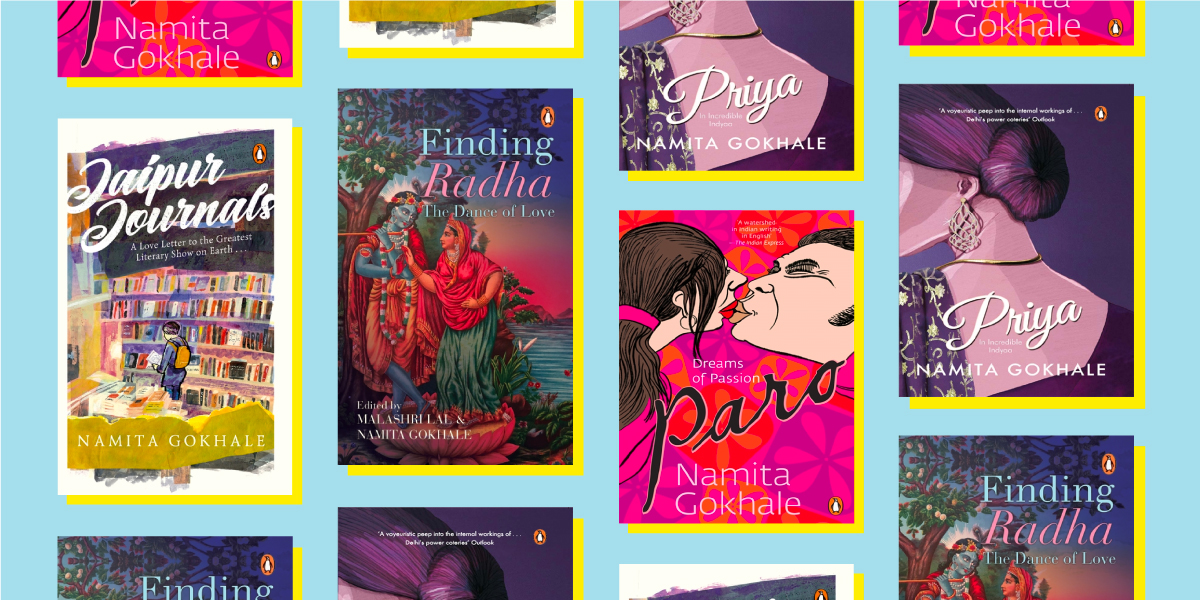
Few authors capture the oddities of a zeitgeist, not just the soaring spirit but the awkwardness, the tiny contradictions that make life both messy and loveable as charmingly as Namita Gokhale— social commentator extraordinaire. Her books are as diverse as her host of unforgettable characters—from incisively witty dissections of individuals against a range of social backdrops to retellings and examinations of Indian mythology.
The Blind Matriarch||Namita Gokhale
Adding to this behemoth of a bibliography is her latest novel, The Blind Matriarch, which sketches a vivid portrait of an Indian joint family against the backdrop of the first and second waves of the pandemic, of the world in flux that we have inhabited for the last two years.
Before you read The Blind Matriarch here’s a quick list to help you acquaint yourself with some of Namita Gokhale’s oeuvre. Go ahead and fill up your to-read list for the month!
Paro|| Namita Gokhale
Paro: Dreams of Passion
First published in 1984, to both notoriety and critical acclaim, Paro remains a social comedy without parallel in contemporary Indian writing. Paro, heroic temptress, glides like an exotic
bird of prey through the world of privilege and Scotch that the rich of Bombay and Delhi inhabit, amidst her motley court of admirers including Lenin, the Marxist son of a cabinet minister; the fat and sinister Shambhu Nath Mishra, Congress Party eminence grise; Bucky Bhandpur, test cricketer and scion of a princely family to name but a few!
Priya||Namita Gokhale
Priya
India is shining, and Suresh Kaushal, the stout lawyer -of sober habits’, has propelled himself up the political ladder to become Minister of State for Food Processing, Animal Husbandry, Fisheries and Canneries. His wife Priya can’t believe their luck and, determined to ensure it doesn’t run out, struggles valiantly with -social vertigo, infidelity and menopause. In this wickedly funny, occasionally tender, book, Namita Gokhale resurrects some unforgettable characters from her 1984 cult bestseller Paro, and plunges them neck-deep into Delhi’s toxic waste of power, money and greed.
Shakuntala: The Play of Memory|| Namita Gokhale
Shakuntala: The Play of Memory
On the ghats of Kashi, the most ancient of cities, a woman confronts memories that have pursued her through birth and rebirth. In the life she recalls, she is Shakuntala of the northern mountains-spirited, imaginative, but destined like her legendary namesake to suffer ‘the samskaras of abandonment’. Stifled by social custom, hungry for experience, she deserts home and family to travel far and wide with a Greek horse merchant she meets by the Ganga. But an old restlessness compels her to forsake this life as well-and court tragedy.
God, Graves and Grandmother|| Namita Gokhale
Gods, Graves and Grandmother
‘Before mother left, in a long-ago time, we had been very rich. My grandmother had been a great singer, a kothewali whose voice was more liquid and beautiful than Lata Mangeshkar’s. Eleven nawabs and two Englishmen were besotted with the love of her.’ From these great heights, Gudiya’s world plunges into the depths of almost complete penury when she arrives in Delhi with her ancient grandmother, Ammi, fleeing small-town scandal and disgrace. Just when all seems lost, Ammi works a miracle: a slab of green marble stolen from a building site, and five rounded pebbles from a sahib’s garden, are transformed by the power of her singing voice into an inviolable place of worship. As we follow the twists and turns of Gudiya’s story, we see unfold before us the peculiar dance of chance and will that is human existence.
A Himalayan Love Story|| Part 1 of the Himalayan Trilogy
A Himalayan Love Story- Book I of the Himalayan Trilogy
A study in unrequited love, with its terrible irony and tragic urgency, told through the tale of two exiles. Parvati is young, beautiful and seemingly doomed; blooming early yet unable to find lasting love. Orphaned in adolescence and adopted by her headmaster uncle, Parvati escapes the constraints of this temporary home but, like many young women before her, finds a new prison in marriage. So when Mukul Nainwal, the local boy who has always loved her, returns to Nainital, he finds Parvati changed—she is a new challenge to his ideals, despite all his worldly success
The Book of Shadows: Book 2 of The Himalayan Trilogy
The Book of Shadows—Book II of the Himalayan Trilogy
Part ghost story, part erotic romance, The Book of Shadows is an ambitious book that investigates the nature of reality, love and faith. Scarred by her lover’s suicide and an acid attack that has left her permanently disfigured, Rachita Tiwari has sought refuge in a remote house in the Himalayan foothills. In this rambling house, built by a foolhardy missionary over a hundred years ago, she lives alone with an ancient and mysterious manservant, Lohaniju. As she retreats into herself, battling for her sanity and fearful of a world she no longer trusts, a different dimension claims her and the tremendous history of the house is played out before her.
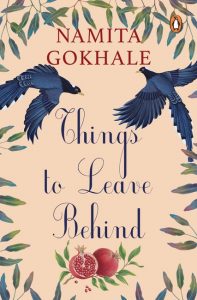
Things To Leave Behind|| Part 3 of the Himalayan trilogy
Things to Leave Behind— Book III of the Himalayan Trilogy
Kumaon, 1856. History has already begun its steady march. Six native women clad in black and scarlet pichauras huddle around Naineetal Lake, attempting to cleanse it of ominous influences. Amidst a theatre of British impunity, feisty young Tilottama Dutt, whose uncle is hung when he protests the reigning order, and her daughter, Deoki, confront change as Indians and as women. Here is a fascinating historical epic illuminating with painstaking detail the mixed legacy of the British-Indian past.
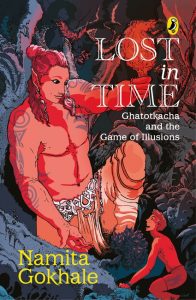
Lost in Time: Ghatotkacha and the Game of Illusions
Lost In Time: Ghatotkacha And The Game Of Illusions
Young Chintamani Dev Gupta, on holiday in a bird camp near Lake Sattal, is transported via a wormhole to the days of the Mahabharata. Trapped in time, he meets Ghatotkacha and his mother, the demoness Hidimba. But the gentle giant, a master of illusion and mind-boggling rakshasa technology, wields his strength just as well as he knows the age-old secrets of the forest and the elemental forces. And in his enlightening company, Chintamani finds himself in the thick of the events of the most enduring Indian epic. This unusual take on YA literature offers an intense yet tender look at a rare friendship as well as the abiding puzzles of the past.
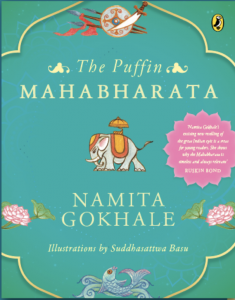
The Puffin Mahabharata|| Namita Gokhale
The Puffin Mahabharata
‘Told and retold a million times, the story of the Mahabharata is about defeat as much as victory, about humility as much as courage. It is the greatest story ever told.’
Like a modern-day suta or storyteller, Namita Gokhale brings alive India’s richest literary treasure with disarming ease and simplicity. She retells this timeless tale of mortals and immortals and stories within stories, of valour, deceit, glory, and despair, for today’s young reader in a clear, contemporary style.
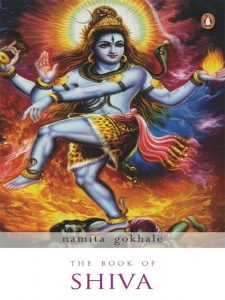
The Book of Shiva|| Namita Gokhale
The Book Of Shiva
Shiva: Destroyer and Protector, Supreme Ascetic and Lord of the Universe. He is Ardhanarishwara, half-man and half-woman; he is Neelakantha, who drank poison to save the three worlds-and yet, when crazed with grief at the death of Sati, set about destroying them. Shiva holds within him the answers to some of the greatest dilemmas that have perplexed mankind. Who is Shiva? Why does he roam the world as a naked ascetic covered with ash? What was the tandava? What is the story behind the worship of the linga and what vision of the world does it signify? Namita Gokhale examines these questions and many others that lie within the myriad of stories about Shiva. Even as she unravels his complexities, she finds a philosophy and worldview that is terrifying and yet life-affirming—an outlook that is to many the essence of Indian thought.
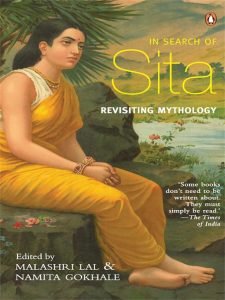
In Search of Sita: Revisiting Mythology|| Edited by Malashri Lal and Namita Gokhale
In Search Of Sita: Revisiting Mythology (Edited by Malashri Lal and Namita Gokhale)
Sita is one of the defining figures of Indian womanhood, yet there is no single version of her story. Different accounts coexist in myth, literature and folktale. Canonical texts deify Sita while regional variations humanize her. However, she is remembered, revered or written about, Sita continues to exert a powerful influence on the collective Indian psyche. In Search of Sita presents essays, conversations and commentaries that explore different aspects of her life-offering fresh interpretations of this enigmatic figure and her indelible impact on our everyday lives.
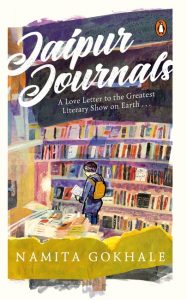
Jaipur Journals: A Love Letter to the Greatest Literary Show on Earth..|| Namita Gokhale
Jaipur Journals
Partly a love letter to the greatest literary show on earth, partly a satire about the glittery set that throngs this literary venue year on year, and partly an ode to the millions of aspiring writers who wander the earth with unsubmitted manuscripts in their bags, Jaipur Journals is a light-footed romp that showcases Gokhale’s unsparing eye for the pretensions and the pathos of that loneliest tribe of them all: the writers. Told from multiple perspectives, set against the backdrop of the vibrant multilingual Jaipur Literature Festival, Jaipur Journals features diverse stories of lost love and regret.
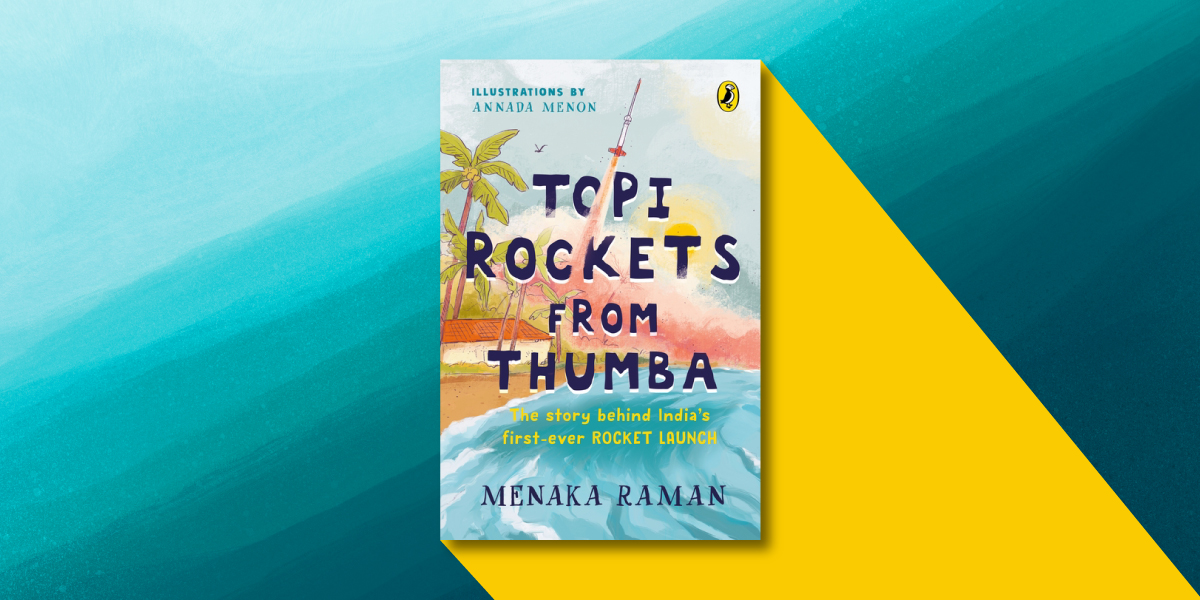
Menaka Raman’s fascinating book about the launch of India’s first ever rocket, Topi Rockets From Thumba, has charmingly beautiful illustrations made by Annada Menon.
In a delightful chat, the duo shared about their ideas, inspirations, and experiences of writing and illustrating the book.
Questions for Menaka Raman, Author
What inspired you choose this theme and instance from history?
The iconic photograph of the two scientists pushing the nose cone of the rocket on the back of a bicycle the starting point of this book for me. I just found something so moving about the image and when I started reading the story behind it I was hooked. I had to no more!
Topi Rockets from Thumba || Menaka Raman, Annada Menon, Illustrator
What research went into writing this book?
So much research! This was my first attempt at creative nonfiction and I was so nervous. I wanted to make sure I got all the facts straight and the timelines right. Plus, the more I read about Dr. Sarabhai and the amazing team of scientists behind this historic moment, the greater a sense of responsibility I felt I wanted to convey what Dr Sarabhai was like, why people were so drawn to him and of course his infectious enthusiasm. My starting point was Amrita Shah’s biography of Dr Sarabhai and then I went on to read Lavanya Karthik and Shamim Padamsee’s children’s biography of Dr APJ Kalam, ISRO A Personal History by R.Aravamudan and From Fishing Hamlet to Red Planet by Dr. UR Manoranjan Rao. Articles, papers and interviews with people who worked at ISRO were all key to my research. I also wanted to get things like the names of the characters right, so I reached out to friends for help and advice on that!
Of course at the end of it all I had so much research notes that I had to decide what to keep in the story! That was hard!
How did you decide to compare the ‘nose cone’ of rocket with ‘topi dosa’?
When I first saw the photograph of the nose cone on the cycle, it really struck me ‘Wow! This looks like a topi doas!’ I must have been hungry at the time!
Are you planning to write another book on similar theme?
I would absolutely love to! Now that I’ve had a taste of it, my antennae are up for other great stories like this!
Questions for Annada Menon, Illustrator
What intrigued you about the story of Topi Rockets from Thumba at first? What made you illustrate it?
When I was offered to illustrate for the book I already was in the zone of being intrigued by the topic of outer space. I follow and have also read a book by the astronaut Chris Hadfield. He increased my curiosity of space and to this day does. Though I was aware of Dr. Sarabhai , I didn’t know details of his endeavours. His story and drawing it from the perspective of Mary, the charatcer in the book, was a lovely way to celebrate his work. I guess apart from that the idea of drawing rockets excited me. It poked the child in me to have fun on the journey of illustrating the book.
How did you finalise the style of art for this book? What other styles were your options?
This was actually finalised with the help of my art director, Antra. We actually wanted to go for a very textured yet slightly detailed approach to the illustrations. I like that the book has 2 spreads that are based on Mary’s imagination. The pages consist of what a rocket would like according to Mary to how a rocket is fighting a storm. I had to make sure these pages stood out from the raw look of the other pages to show the simplistic environment of Thumba. I actually didn’t ponder over too many style options. From the author to the editor, they wanted some of my existing approaches if drawing to flow into it. Hence I just went with my gut to execute it.
How different or similar was the first draft to the final version?
Well, the ideas from 90% of the sketch / draft stage were carried forward to the final stage. I think anything that changed while illustrating are mostly the technical aspects of the book. Since it is a STEM book we had to make sure scientific elements were accurate . I also had to make sure that the people of Thumba and the place itself looked close to what it may have been during the 1960s . There aren’t too many image references to these from the mentioned time. The tricky part is most of these images are black and white so representing or reimagining them in color was a fun experience.
What do you think is special about the illustrations in this book?
I actually don’t know if this a ‘blow one’s own trumpet’ kind of question (chuckles). Well, I guess what I can say about the illustration that it has been drawn with a lot of innocence and curiosity. The book is meant to subtly introduce a child to the beauty of space and a brief introduction to Dr. Sarabhai’s contribution to India’s space program. Since it is a light read the illustrations are meant to compliment the same. Also, in a subtle way the illustrations are an ode to nature’s elements water, earth , wind and fire (3 elements depicting Thumba and 1 depicting a rocket). I guess for me these little things make it special.
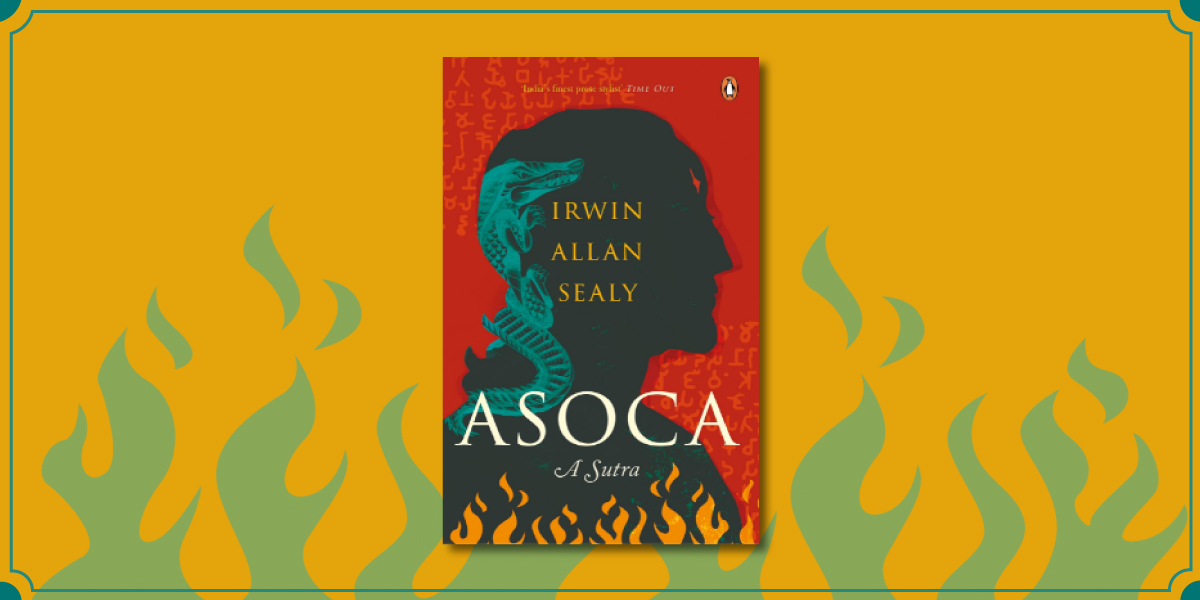
Asoca-often spelled Ashoka-was hailed as Ashoka the Great, the emperor who ruled most of the Indian Subcontinent and was pivotal in the spread of Buddhism from India to other parts of Asia in the third century BC. But his life as emperor was not always led by non-violence. History has it that he masterminded one of the biggest and deadliest wars ever fought, and it was the insurmountable grief he experienced at the sight of the people dying and dead on the battleground that made him turn to Buddhism and take a vow of ahimsa.
Who was the man, and who was the king? What were his demons, and what gave him strength? Asoca: A Sutra, drawn from research and portrayed with energy and complexity, transports the reader to the era of the Mauryan dynasty with atmospheric vividness and insight.
Here are 5 memorable characters from Irwin Allen Sealy’s historical novel
**
Asoca||Irwin Allen Sealy
Asoca – The nonconformist, mighty emperor of the Mauryan empire. A contrarian by nature, he is stubborn but thoughtful. He may not the most good-looking man, but for his mother he is her ‘little rhizome.’
‘From early childhood words were a game, and the pleasures of this game were those of reshaping the world… Rule your speech and you rule the world. My voice owed a little to every person and place I had known and admired, but the mix was mine alone.’
‘The hardest part, I found, was sitting there at all once all your factotums had left: alone with empire, imagining the extent of it off to one side and then the other way and then forward and backward on every side till you felt yourself positively abandoned.’
‘Every kingdom needs an honest, fearless man…to show up both the charlatan who seizes power and the incumbent who has lost his way.’
Uncle K – The shrewd strategist of Mauryan legacy, the creator of the immense Arthashastra, Asoca’s Uncle K is always by the King’s side. The King’s chief advisor, Uncle K talks like a book and his eyes, ears and mind are everywhere.
“Crooked as his name portends, bent in every part, twisted from hairpiece to toenails, this aged crow makes blackness look grey. Guile is younger—the hills are younger—than Kautilya, maker and keeper of kings.”
“The arch-monarchist for whom the kingdom was more important than his tenure as prime minister, than his own position as kingmaker, than life itself.”
Bindusara, the Dotted – He is the handsome Mauryan King, the man of virtues who prefers reconciliation to war. He grew up to rule—and to rue the day he was born.
‘My father Bindusara was a handsome man. Good looks were important to him, and they reappeared in his firstborn like vindication. Susima was a mirror in which he saw his chief virtue displayed, and father and son took it less as a gift of nature than as a divine right: it was a mark of approval, even, you would think, accomplishment.’
‘Father, whose sword leapt from its scabbard in the course of every rousing speech, whose lusty verses were applauded in the gardens at the annual festival, and whose concubines lived in terror of a visit on any given night, this man was crying.’
Madhumitta – Her name implies nectar of the gods. She is Asoca’s Queen Bee, his anchor, the woman he loved and desired.
‘The look in her eye said she would serve the truth. Such assurance burns in the elect; it is what creates disciples. Her determination awed me. Service was to me an abstract concept, a secular, almost departmental thing. For Madhumitta it was an article of faith.’
‘Madhumitta, dear wife, I cannot believe you have forgotten me in your nunnery. I have forgotten nothing, not the tender abstraction on your forehead, not the soft broom in your gentle hand of a morning, not the silent reproof to an erring child or errant husband, not the loving kindness you spread through that house you ruled.’
Susima – The eldest son of Bindusara, heir apparent of the empire. The apple of everyone’s eyes, he become Asoca’s arch-rival in his quest for the throne.
‘He [Susima] was, truth be told, the noblest of us all. He didn’t lie or cheat or push and shove and scramble. But then, he didn’t have to. He carried himself as if the crown were a settled thing.’
‘Susima, ultimate theoretician, wrapped in birchbark scroll for armour. He was still the master of the cool shot, born of meditation and intellect; I was the poor guerilla. A Susiman universe was the opposite of mine.’
**
Asoca: A Sutra leaves the reader breathless with the full-bodied richness of Sealy’s prose, his trademark whimsy and his imaginative modern reconstruction of that enigmatic and brilliant ruler of the Indian subcontinent.
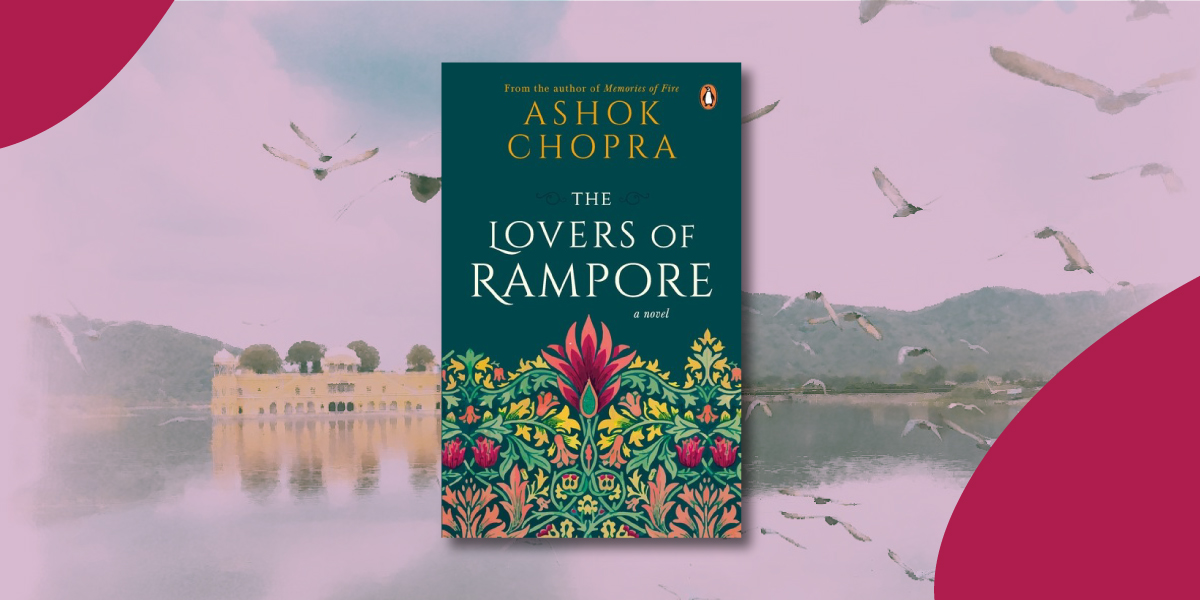
In The Lovers of Rampore, Ashok Chopra delves into the many mysterious forms of love thus introducing a mystic quality to the everyday lives of his characters. From the thrills of lust to the joys and fears of genuine commitment, to the exploration of desire and dispassion that exist in all relationships, this is the story of love in all its different manifestations.
Ashok Chopra weaves a contemporary Bayeux tapestry of richly detailed stories which are mature, slow-burning and strum with a quiet passion that cuts across class, gender, and age, fundamentally altering the way we perceive love. In doing so, he also challenges society’s archaic understanding of the bonding between people.
Here’s a peek into this book that boasts all the glory of a royal romance in a modern day setting that hits much closer to home.
~
The Lovers of Rampore||Ashok Chopra
From the day after her birthday, Tina waited for Vikram to contact her. To ring her up or at least message her, not that he had ever done that before. As each day went by, with no call from him, her desire to meet him, to be with him, increased. She toyed with the idea of calling him. Should she think of some excuse or the other and send him a text message? She couldn’t think of any. Should she land up at his home again? No, she dare not repeat that trick, as she had no excuse to do so this time. And even if she had one, he may realize that the first time, too, was a ploy.
Why did she want to be with him so much? Shouldn’t she, first of all, try and make up with Neeraj? She tried to honestly answer that question, but she couldn’t. Then one night she found it in her sleep. She dreamt that Vikram had come to her room. Quickly, without a preamble, he took off his clothes and came to where she sat. His body, in the nude, was exquisite. She felt the excitement throbbing in her temples and her face became flushed. He helped her undo her nightdress and then together, naked on the bed, they made love. It was pure rapture. Absolute bliss. She thought that she would die of ecstasy. But she wouldn’t mind dying in his arms. In bed, he was a fabulous lover, so much better than Neeraj had ever been.
In the morning, she reviewed the entire sequence of her lovemaking with Vikram, without any feeling of guilt or embarrassment. She finally admitted to herself that she found him very attractive—with a fine, sensitive, well-chiselled face, the dimple in the chin and the lithe and perfectly balanced body, which exuded strength and power. All this, and much more, had often filled her with the yearning to be close to him, to reach out and touch him, to hold him close. Her dream merely reaffirmed this feeling. She knew that she desired him, that she really enjoyed making love to him. But, though also important, there was more to her feelings for Vikram than a mere sexual attraction. What it was she could not put her finger on.
The last of the roses that he had brought for her birthday languished, but she did not want to throw them away. Finally, she had to because they were all dead and the water had become contaminated. As she poured the water from the vase into the sink, she knew she had to see him, come what may. Damn the reasons and analyses, she told herself. She was desperate to see him, to be with him, to see his face, hear his voice and to put her lips on his.
As luck would have it, she got a call from Mahtab amma.
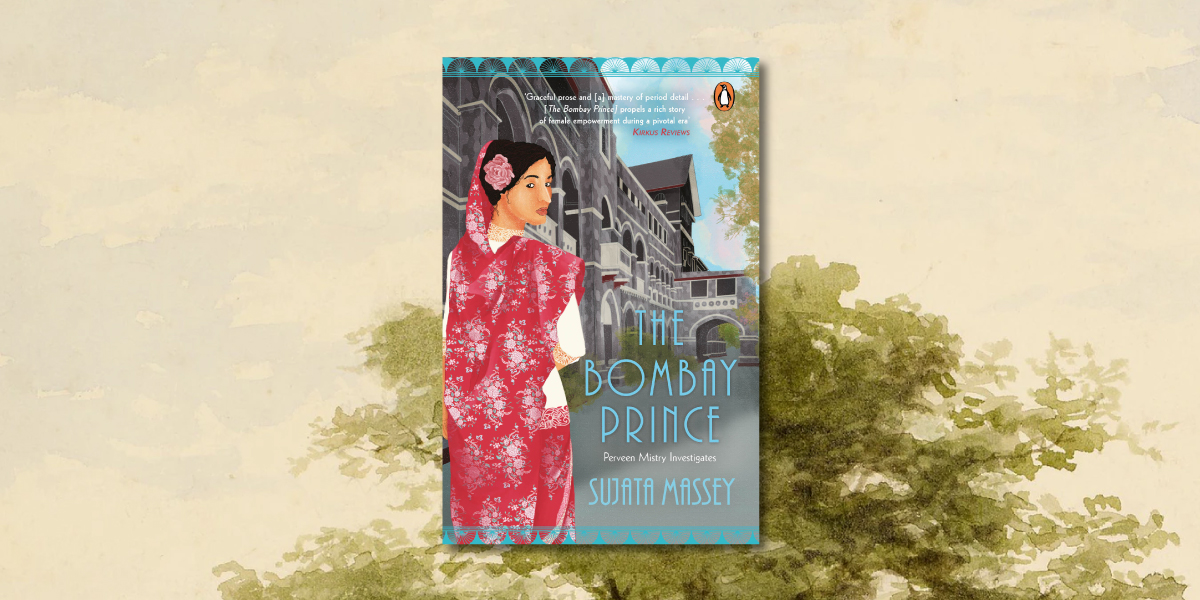
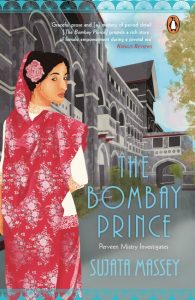
November 1921. Edward VIII, Prince of Wales and future ruler of India, is arriving in Bombay to begin a fourmonth tour. The Indian subcontinent is chafing under British rule, and Bombay solicitor Perveen Mistry isn’t surprised when local unrest over the royal arrival spirals into riots. But she’s horrified by the death of Freny Cuttingmaster, an eighteen-year-old female Parsi student, who falls from a second-floor gallery just as the prince’s grand procession is passing by her college.
When Freny’s death appears suspicious, Perveen knows she can’t rest until she sees justice done. But Bombay is erupting: as armed British secret service march the streets, rioters attack anyone with perceived British connections and desperate shopkeepers destroy their own wares so they will not be targets of racial violence. Can Perveen help a suffering family when her own is in danger?
Here is an excerpt from Sujata Massey’s new book, The Bombay Prince that talks about Freny’s death.
*
The Bombay Prince: Perveen Mistry Investigates || Sujata Massey
“Miss Mistry, come down here,” Miss Daboo beseeched. Perveen knelt down and, feeling queasy, reached out to touch Freny’s wrist. It was still warm, yet the veins on the inside of her wrist seemed deflated. She could not detect a pulse. Perveen’s mother, Camellia, and sister-in-law, Gulnaz, were the kind of women brave enough to volunteer in hospitals. They might know another spot to look for a pulse. All Perveen could think of was the heartbeat.
Freny had fallen on her right side, so it was possible for Perveen to slide her hand under the khadi cloth and over the left side of Freny’s white cotton blouse.
“Don’t be obscene!” Miss Daboo muttered in Gujarati, and Perveen belatedly realized there were men watching her. Having felt no sign of life, she pulled back her hand.
“We must pray. God can work miracles.” Another Englishman had appeared. He looked to be in his fifties, with a long face made even paler by its contrast with his black robe. Right behind him was a breathless Principal Atherton.
The principal and the college chaplain had taken long enough to arrive at a scene of crucial emergency. But perhaps the police had occupied Principal Atherton’s time getting details about Dinesh Apte. And why weren’t they with him now?
The answer came: The college’s leadership didn’t know Freny was dead. Only she and Miss Daboo knew the truth. Or maybe— Lalita also did. Surely she would have tried to help her friend sit up. Surely—
Mr. Atherton spoke between gasps. “I’ve just heard—about the accident—from the reverend.” Two more breaths. “Who is she?”
“Her name is Freny Cuttingmaster,” Alice said. “She’s a second-year student.”
“And what about you? Are you a nurse?” Mr. Atherton’s face was reddened, no doubt from agitation and heat.
“Sorry, I am not.” Perveen looked away from him and back at Freny. She thought of saying she was a lawyer, but it didn’t seem the right place.
“Miss Perveen Mistry, my old friend from Oxford, is here at my invitation,” Alice said quickly. “Miss Mistry, this is Mr. Ath- erton, our principal, and our chaplain, Reverend Sullivan.”
Principal Atherton pressed his lips together disapprovingly. “I am not—entertaining interviews for women faculty. This is an emergency—”
“I’m not a teacher; I’m a solicitor with a practice nearby.” Having honestly admitted her field, Perveen didn’t know how long the college administrator would allow her to linger.
“Miss Acharya, is it correct that you were first on the scene?” Atherton had turned his attention to the student, who was clutching Alice.
“Yes. I was a few yards ahead of the others,” Lalita said in a choked voice. “Miss Daboo was with me as well.”
Atherton’s eyebrows drew together. “And where was Miss Cuttingmaster during the procession?”
“Actually, we realized midway through the proceedings she wasn’t in the stands with us.” Lalita’s voice was hesitant, as if she didn’t want to admit she’d known all along the girl hadn’t showed up.
“Yes. She must have had her accident while we were turned watching the prince!” Miss Daboo said.
The excitement of the parade could have masked any cries, even though the college and its garden were just a few dozen yards behind the viewing stand.
“Maybe she fell down. I only hope . . .” Lalita’s voice trailed off.
“What is it you are hoping, my dear?” Reverend Sullivan prompted.
“I hope she’s going to wake up.” Lalita was clenching and unclenching her hands. “Why can’t the nurse come from the infirmary? Didn’t anyone call for her?”
“Leave the response to faculty,” said the reverend.
“I think someone should fetch the police.” As Perveen said it, she couldn’t believe the words had even come from her mouth. The police! The men who’d so recently challenged her were needed to secure the scene and take note of details.
“The police?” Mr. Atherton’s voice faltered. “But Miss Daboo says this is an accident.” He shook his head as he looked at the smooth path and neat green lawn. “I wonder what caused her to fall?”
“It could be that she jumped. This was going to be a day of protest for some.” Reverend Sullivan turned to grimace at the mass of students standing a respectful distance behind. “I know some of you are in the resistance club. If you were aware that she was planning self-destruction, you must tell us now.”
Did the chaplain understand Freny’s life was gone? Perveen looked at his stern, unmoving face until he glared at her.
One of the boys in a Gandhi cap raised a hand and spoke when the chaplain acknowledged him. “Reverend, nobody heard any such talk in the Student Union meetings.”
A blond man in his twenties, who had a shaken expression, put a hand on the shoulder of the student who’d spoken. “That is my impression as well. Arjun, thank you for coming forward.”
“I’ll go for the police,” a student voice said from within the crowd, and three boys took off through the gate.
*
What really happened? And what is going to happen next?
Get a copy of Sujata Massey’s The Bombay Prince to find out!