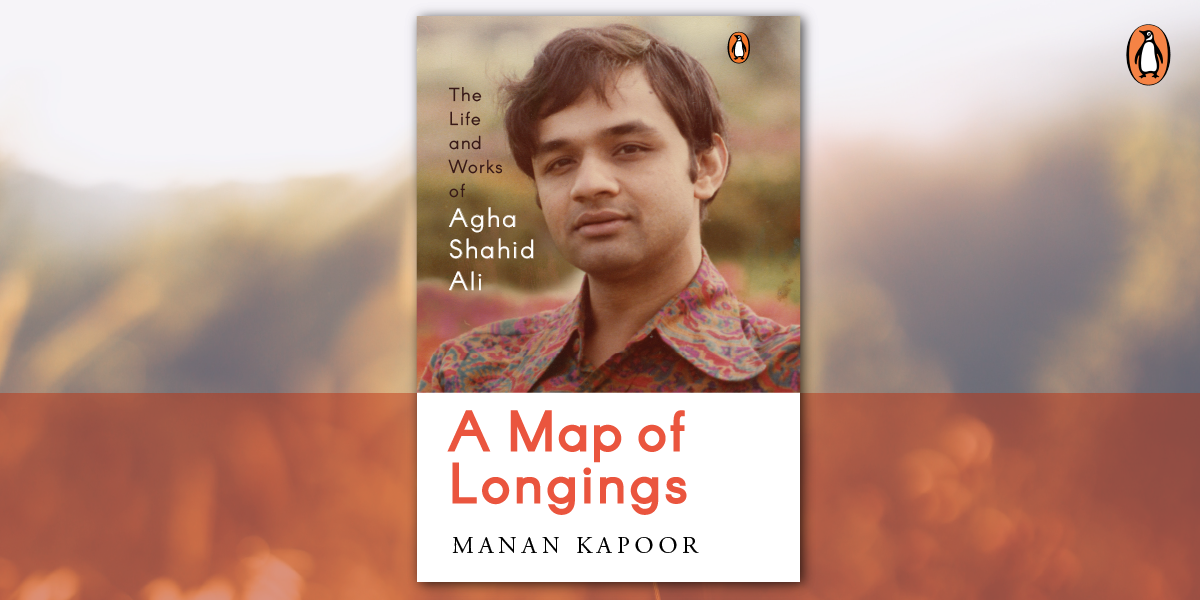
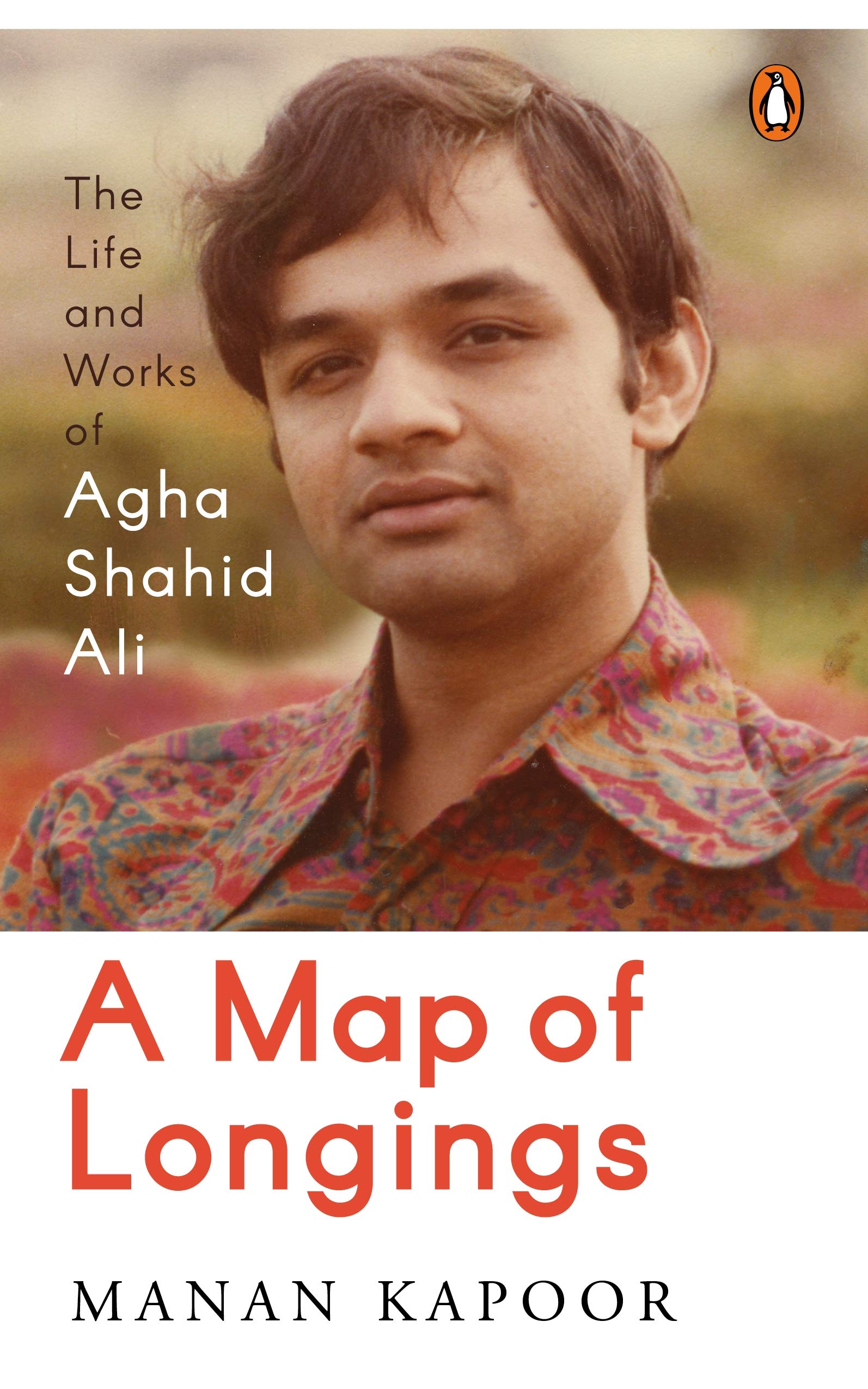
Agha Shahid Ali is widely regarded as one of the finest poets from the Indian subcontinent, and his works are read across the world, touching millions of lives.
In A Map of Longings, Manan Kapoor explores the concerns that shaped Shahid’s life and works, following in the footsteps of the ‘Beloved Witness’ from Kashmir to New Delhi and finally to the United States. Here is an excerpt from the introduction of the book.
A Map of Longings: Life and Works of Agha Shahid Ali|| Manan Kapoor
My first formal encounter with poetry happened through my mother, who, looking at the lilies that bloomed in our garden each spring, quoted from T.S. Eliot’s ‘The Waste Land’: ‘April is the cruellest month, breeding / Lilacs out of the dead land, mixing / memory and desire.’ But it could also very well have been through the renditions of the ghazals of Mirza Ghalib that my father played so often. I cannot recall which came first, but the magical presence of poetry during my formative years had caused a wound. This wound opened itself once again in my teenage years when I first read a poem by Agha Shahid Ali.
I vividly remember reading poems like ‘A Rehearsal for Loss’, ‘Stationery’ and his famous one-liners, ‘Suicide Note’ and ‘On Hearing a Lover Not Seen for Twenty Years Has Attempted Suicide’ (a poem whose title is longer than the body), and marvelling at the sheer simplicity and clarity—there was something ineffable about his language that instantly took a hold of me. Years later, I was informed by his brother, Agha Iqbal Ali, that Shahid had singled out some short poems like ‘Stationery’ as crowd-pleasers that he would open his readings with to charm the audience. The trick had worked on me, and over the next few years, the more I read, the more Shahid reeled me in.
I could also say, at the risk of romanticizing the past, that I became aware of Shahid at just the right moment, when I was ready for him. The years leading up to my first novel, The Lamentations of a Sombre Sky, were also the years of my political coming of age. Throughout my bachelor’s degree, I was working on a novel set in Srinagar in the early ’90s. Although I read numerous accounts of writers and journalists, I fell back, naturally, on Shahid’s collection The Country without a Post Office, only to realize that no one— absolutely no one—was a match for him. Eventually, I ended up using a couplet from Shahid’s ghazal ‘Of Light’ as the epigraph to a section of my novel. Although the political subject matter of the collection was important, it was the aesthetic sensibility, reflected in his language, that made it remarkable. Much later, I read in an interview that Shahid always placed the aesthetic value over the subject matter of his poems.2 For three years leading up to the publication of my novel, I had used Shahid’s works as a lens through which I saw and understood Kashmir. In time, however, the lens itself became the object, which I started looking at from a fresh set of eyes.
I suspect that one of the reasons I fell in love with Shahid was because his poems mapped all the languages, cultures and worlds that I believed I belonged to. Shahid was completely South Asian and completely cosmopolitan at the same time, and in his poems, I could sense the presence of both Ghalib and Eliot, of the West as well as the subcontinent. But as I delved into his work, I discovered that there were more layers than I could have ever imagined.
Shahid was a beneficiary of three cultures—Hindu, Muslim and Western—and at his home, poetry was recited in four languages—English, Urdu, Persian and Kashmiri. Although he wrote in English, his poems, in essence, captured the sensibilities of all these languages and traditions. His father, Agha Ashraf Ali, was an educationist with socialist inclinations and introduced him to the ideas of Mahatma Gandhi, Jawaharlal Nehru and Martin Buber, while his mother, Sufia Agha, a Sunni Muslim from Uttar Pradesh, sang bhajans to him and dressed him as Krishna for Janmashtami. While on the one hand his paternal grandmother, Begum Zafar Ali, was a devout Shia Muslim who taught him about Islam, on the other hand he went to a Catholic school and, throughout his formative years, was fascinated by Christ. I soon realized that Shahid was the sum total of these different cultures and learnt from all of them, that he never viewed them as contradictions but simply as different world views that later coalesced in his poetry.
This first definitive biography of Agha Shahid Ali offers a rich portrait of the poet and the world he inhabited.
We’ve come a long way to celebrating June as Pride Month. But there’s still a long way to go.
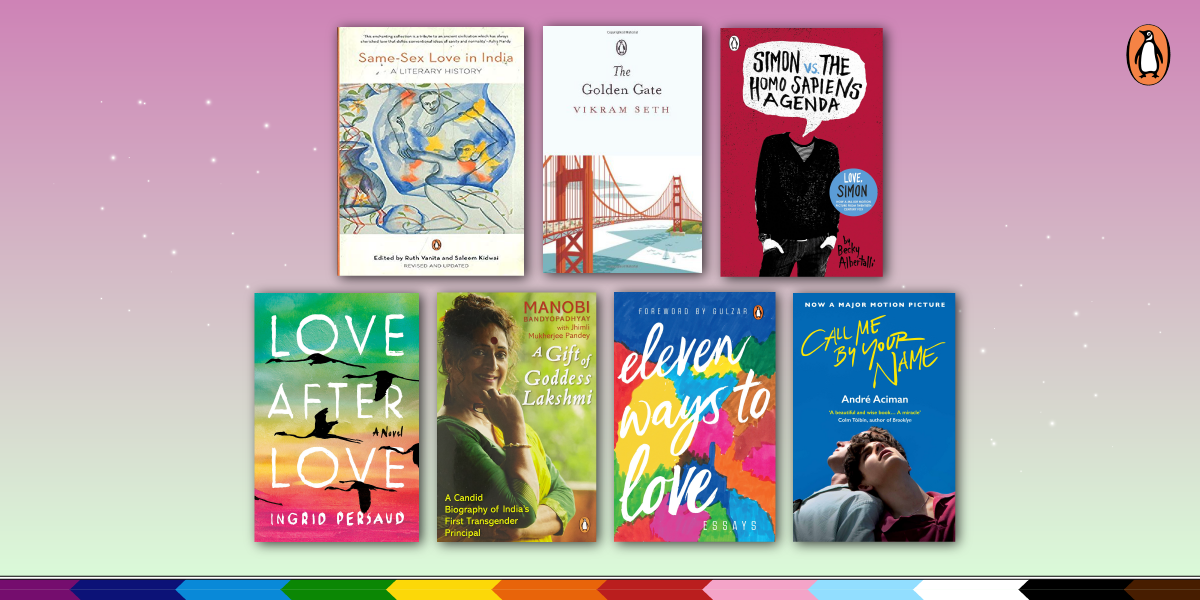
Penguin India shares a list of books that you can Read with Pride. The list includes personal experiences of defining identity, falling in love and dealing with being termed different – as well as the history of same-sex in India, and more. We must all help one another if we want to continue to move towards change.
A Gift of Goddess Lakshmi
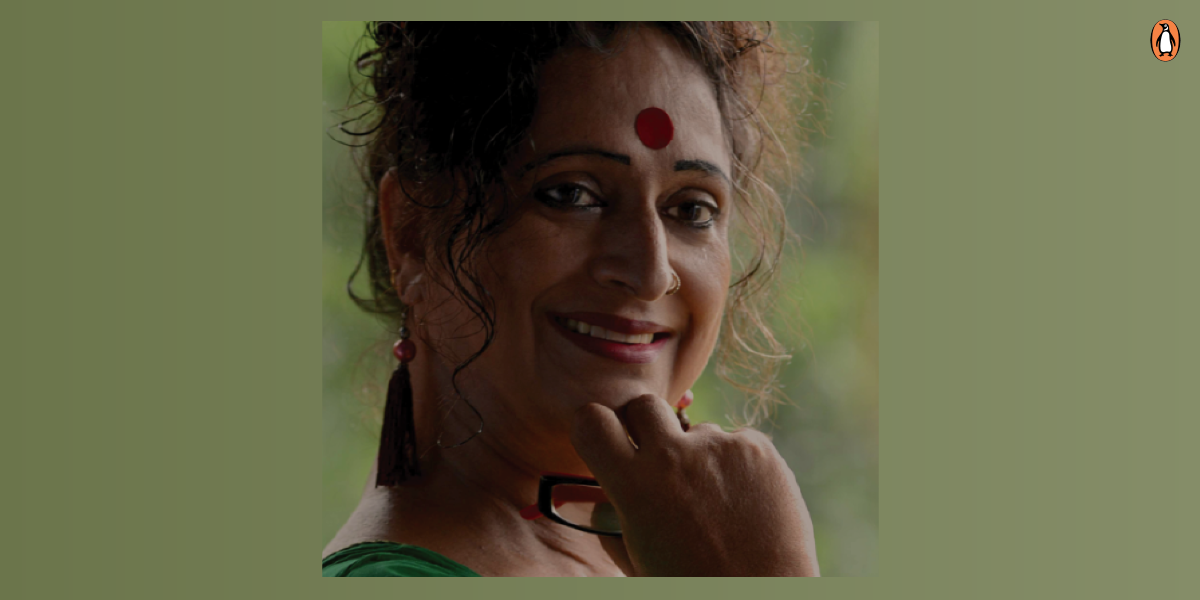
The extraordinary and courageous journey of a transgender to define her identity and set new standards of achievement. With unflinching honesty and deep understanding, Manobi tells the moving story of her transformation from a man to a woman; about how she continued to pursue her academics despite the severe upheavals and went on to become the first transgender principal of a girls’ college. And in doing so, she did not just define her own identity, but also inspired her entire community.
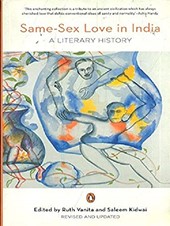
Same-Sex Love in India: A Literary History
In 2009, the Delhi High Court’s historic judgment overturning Section 377 as violative of the Indian Constitution referred to Same-Sex Love in India. So did the 2018 Supreme Court decision which upheld that judgment. All the petitions against this anti-sodomy law have cited this landmark book to prove that homosexuality is not a Western import.
Same-Sex Love in India is the book that brought to light the long, incontestable history of same-sex love and desire in the Indian subcontinent. Covering over 2000 years, from the Mahabharata to the late twentieth century, the book contains excerpts from stories, poems, letters, biographies and histories in fifteen languages.
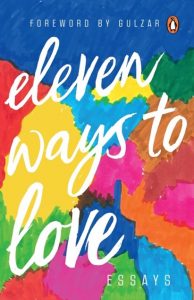
Eleven Ways to Love: Essays
People have been telling their love stories for thousands of years. It is the greatest common human experience. And yet, love stories coach us to believe that love is selective, somehow, that it can be boxed in and easily defined. This is a collection of eleven remarkable essays that widen the frame of reference: transgender romance; body image issues; race relations; disability; polyamory; class differences; queer love; long distance; caste; loneliness; the single life; the bad boy syndrome . . . and so much more.
The Golden Gate
John, a young and successful engineer, finds his life boring outside his work and calls his ex-girlfriend Janet and grieves his loveless life. Janet agrees to help out John by finding him a date and advertises for the same in a local newspaper. Liz, a lawyer by profession responds to the ad. John and Liz hit it off instantly and very soon find themselves living together.
Phil, a close friend of John, is a divorcee who lives with his son and raises his voice against nuclear weapons. When Phil attends the party at Liz’ family, he finds Ed, Liz’ brother and both fall in love. Set in the nostalgic era of 1980s, The Golden Gate trails the story of a group of youth living in San Francisco, who embark on a journey of interpreting life, in search of adventure, trying to understand the meaning of love.
Funny Boy
Arjie is a ‘funny boy’ who prefers dressing as a girl. This novel follows the life of his family through Arjie’s eyes as he struggles to come to terms both with his own homosexuality and with the racism of the society in which he lives. In the north of Sri Lanka there’s a war going on between the army and the Tamil Tigers, and gradually it begins to encroach on the family’s comfortable life. Sporadic acts of violence flare into full-scale riots and lead, ultimately, to tragedy.
Call Me By Your Name
Andre Aciman’s Call Me by Your Name is the story of a sudden and powerful romance that blossoms between an adolescent boy and a summer guest at his parents’ cliffside mansion on the Italian Riviera. Each is unprepared for the consequences of their attraction, when, during the restless summer weeks, unrelenting currents of obsession, fascination, and desire intensify their passion and test the charged ground between them. Recklessly, the two verge toward the one thing both fear they may never truly find again: total intimacy. It is an instant classic and one of the great love stories of our time.
Love After Love: A Novel
After Betty Ramdin’s husband dies, she invites a colleague, Mr. Chetan, to move in with her and her son, Solo. Over time, the three become a family, loving each other deeply and depending upon one another. Then, one fateful night, Solo overhears Betty confiding in Mr. Chetan and learns a secret that plunges him into torment. Solo flees Trinidad for New York to carve out a lonely existence as an undocumented immigrant, and Mr. Chetan remains the singular thread holding mother and son together. But soon, Mr. Chetan’s own burdensome secret is revealed, with heartbreaking consequences. Love After Love interrogates love and family in all its myriad meanings and forms, asking how we might exchange an illusory love for one that is truly fulfilling. Simon Vs. The Homo Sapiens Agenda
Straight people should have to come out too. And the more awkward it is, the better.
Simon Spier is sixteen and trying to work out who he is – and what he’s looking for.
But when one of his emails to the very distracting Blue falls into the wrong hands, things get all kinds of complicated.
Because, for Simon, falling for Blue is a big deal …It’s a holy freaking huge awesome deal.
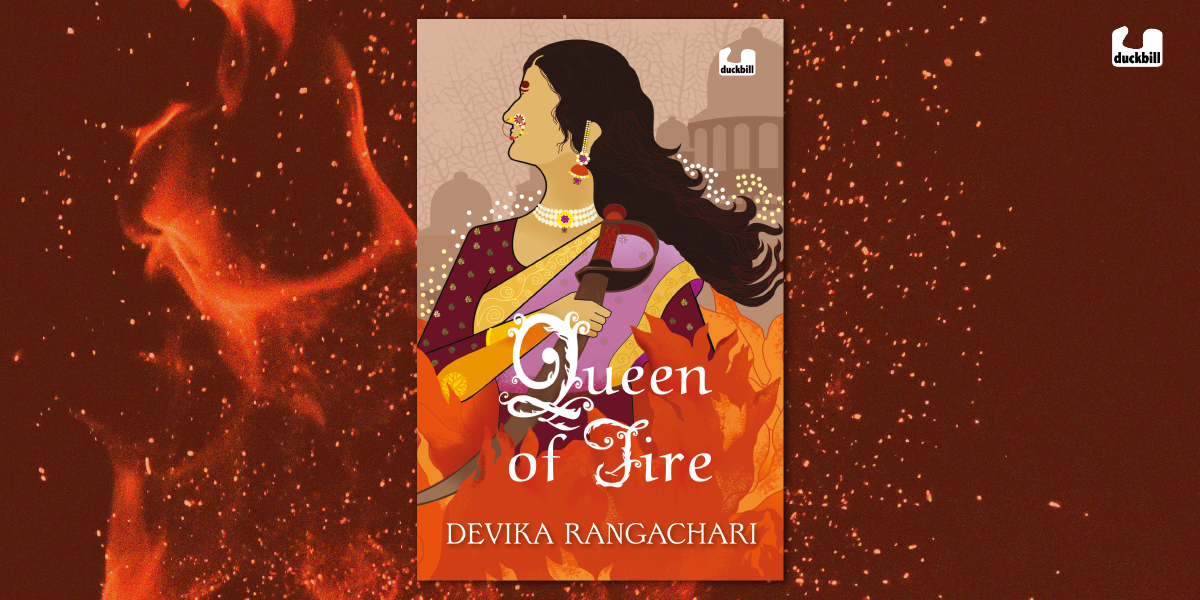
Devika Rangachari is an award-winning author of several historical fiction books for children. Her book Queen of Fire came out in April this year. It brings to vivid life the interior life of Lakshmibai, the nineteenth-century queen of Jhansi, thrust into a position she does not desire but must assume, and of her son, who is cowed by the challenges he has to face but determined to live up to his mother’s courage.
We recently got the chance to ask her some questions about her enthusiasm for writing for children and the challenges involved, how she decides on her protagonists and her favourite historians. Read on to find out her answers!
Queen of Ice, Queen of Earth, and now, Queen of Fire, we are sensing a pattern here. Is there a specific reason why we see you writing about queens in Indian history? How do you decide who’s going to be the protagonist of your next book?
A word about these three books, to begin with. Queen of Ice is the story of Didda who ruled Kashmir in the tenth century for around fifty years despite being physically lame. Her rule formed part of my doctoral research on gender in early medieval north India. Didda’s powerful and competent rule notwithstanding, she has been virtually removed from historical narratives of Kashmir due to the gender bias that exists in the writing of history. Alternatively, she has been vilified for daring to challenge patriarchal stereotypes and follow her ambition. Queen of Earth, on the other hand, deals with Prithvimahadevi who ruled the Bhaumakara dynasty of Odisha in the ninth century. Her reign formed part of my post-doctoral research on gender in early medieval Odisha. Prithvimahadevi
managed to hold her own over a rival populace and, additionally, employed clever tactics to justify her rule, indicating her political shrewdness and sagacity. In a similar vein to Didda, however, she has either been made invisible in historical accounts of Odisha or criticised for her rule. I wanted to enable my young readers to know about these important women from the past whom they are unlikely to get to know about through their textbooks or any other source.
Queen of Fire, which deals with Rani Lakshmibai of Jhansi, is slightly different because it aims to resurrect the real woman behind the name. In most accounts of this valorous queen, she is treated almost like a goddess and no weight is given to her emotions, thoughts or fears. Nor is her relationship with her adopted son, Damodar, given any importance. I have, however, examined both these aspects in my book.
While the stories of all these women are extremely inspiring, there is no specific reason for my current focus on queens. It is just something that happened organically. If I decide that the story of a particular woman from history, culled from my academic research, is interesting and engrossing, then she becomes the protagonist of my next book. At least, that is how it has been so far!
Writing historical fiction involves a lot of research, and the task gets more complex when the subject needs to be adapted for a younger audience. What has been your experience like writing historical narratives for children? Could you also shed some light on your research process?
The challenge in writing historical fiction for children is that history is a subject that most of them dread, in any case, and, therefore, I have to make my writing enjoyable and gripping while, at the same time, maintaining a balance between historical fact and fiction. The aim is to draw my readers into the world of history and enable them to discover for themselves how exciting it really is. In addition, I have to ensure that I do not drown the narrative in facts and what could be construed as dry details. Historical accuracy is essential but the writing should convey the elements of the past in a painless and palatable manner. I have, however, immensely enjoyed the process of writing historical narratives for young readers.
My research process involves studying the original sources pertaining to the historical period or personality I am writing on. These could range from texts and inscriptions to coins, buildings and other archaeological material. For instance, the Rajatarangini, a Sanskrit text written by a poet, Kalhana, in the twelfth century is pivotal as a source for Didda’s reign, along with some coins and inscriptions that she issued. In Prithvimahadevi’s case, the sources are even more meagre, principally featuring two inscriptions that she issued and some references to her in contemporary sources. In Rani Lakshmibai’s case, though, there is plentiful information, ranging from memoirs to letters to archival documents. Historical sources become more difficult to come by the further back in time one goes. There are significant gaps in our knowledge of the early medieval queens, for instance, and a lot of guesswork is involved in order to fill these.
Are there some women in Indian history whom you feel particularly moved by, but have not written about yet?
There are several—royal and non-royal—who played important roles in the polity and society of the early medieval period but have not received the acknowledgement that they deserve in the historical narrative. Apart from some powerful women in Kashmir, there are others in the south who have not really been the subject of much research or writing so far. I would like to write about many of these.
When you are not writing and researching, what would we find you occupied with?
I love reading, so I would be curled up with a book.
Who are your favourite historians on Indian history?
There are several but I will mention only two of them. Prof. Nayanjot Lahiri, my doctoral supervisor, is a well-known archaeologist who has, in addition, managed to encapsulate her research—such as on the Indus valley civilisation and on the discipline of history, as a whole—into extremely readable books for the general reader. Another historian that I greatly admire is Prof. Upinder Singh who has also successfully managed to write about the Indian past in a very accessible, engrossing manner for the layman reader, particularly on the ancient and early medieval time spans.
What are some of your favourite historical retellings?
I grew up reading Jean Plaidy who has written an enormous range of historical fiction. Her works made me develop a real love for history. I also enjoyed Hilary Mantel’s works of historical fiction, especially her trilogy on Thomas Cromwell and the Tudor court under Henry VIII of England, and Philippa Gregory’s writing.
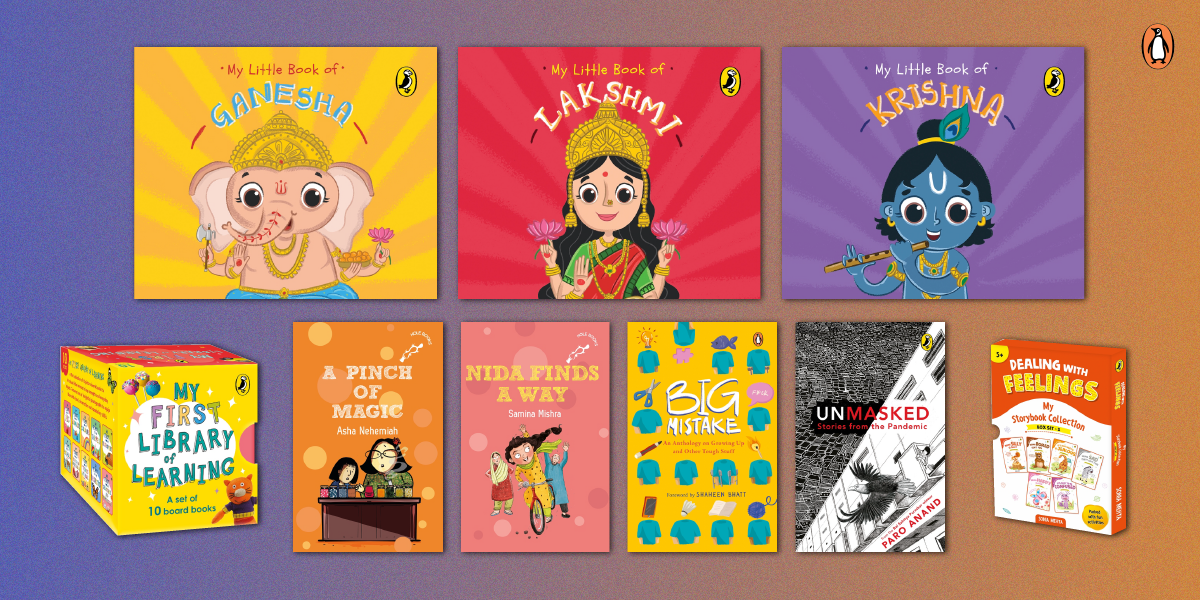
While we are still getting past the uncertain times and the young ones are spending the summer break indoors, we have come to their rescue with our interesting June book collection. With a tinge of laughter, a touch of magic, a series of adventures, and a sea full of learning, our books promise to offer entertainment, comfort, and knowledge.
Here’s a curated list for June readathon!
*
My First Library of Learning: Box set
My First Library Learning || .
Ages: 0 to 3 years
Foster a habit of reading in your little ones with this box set of 10 gorgeously designed and thoughtfully created board books. These books equip toddlers and preschoolers with essential reading, language, visual, motor and imagination skills. This bright, handy, easy-to-read and fun library contains books on English alphabet, numbers, colours, shapes, things at home, fruits and vegetables, seasons and opposites, transport, animals and insects.
Dealing with Feelings Box Set 2
Sonia Mehta
Dealing with Feelings || Sonia Mehta
Ages: 5+ years
Foggy Forest is inhabited by many fun little animals. These quirky creatures are always there for one another—helping each other overcome jealousy, boredom, sadness and confusion. Together, they deal with all the different feelings one might have every day. This special box set edition brings together six exciting titles to start a conversation with kids about their feelings and emotions.
Big Mistake
Big Mistake
Ages: 16+ years
Insecurities and assurances, conflict and solidarity, fearfulness and courage—the personal histories, stories and #ownvoices in this anthology cover a lot of ground in just a few pages. Let them spark conversations on love, identity, disability, family, body positivity, ambition and other tough stuff. After all, no matter how old we get, growing up can feel like one big mistake.
Nida Finds a Way
Samina Mishra
Nida Finds A Way || Samina Mishra
Ages: 7 to 9 years
Whenever Nida wants to do something new, Abba is scared for her and says NONONO. But Nida needs to learn and do new things—so the only way is for her to persuade Abba. Can Nida find a way?
A Pinch of Magic
Asha Nehemiah
A Pinch of Magic || Asha Nehemiah
Ages: 7 to 9 years
Veena’s aunt Malu is in trouble. Her pinching spoon is broken. She must get a new spoon or close down her herbal medicine business. But the only person who makes pinching spoons has disappeared. Can Veena help her aunt?
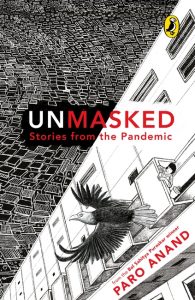
Unmasked
Paro Anand
Unmasked || Paro Anand
Ages: 11+ years
The year 2020 will forever be reported as the time when we all fell down. But it was also the year we all got back up and were forced to come together in a way we had never imagined before. In this timely masterpiece, Paro Anand writes of despair, courage and hope. Through eighteen short stories from the pandemic, Anand introduces us to characters who feel familiar and their stories intimate.
From a mother and son looking to make ends meet as the lockdown brutally affects their lives to a housewife who’s a victim of domestic abuse, from young keyboard wizards keen on making a difference to a home delivery executive who becomes an unlikely hero, this book unmasks the layers of the year that changed us all.
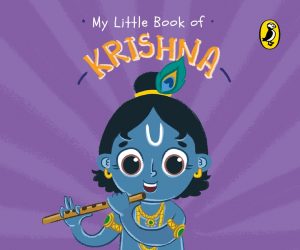
My Little Book of Krishna
My Little Book of Krishna || .
Ages: 3+ years
Naughty little Krishna’s search for butter leads to an unexpected adventure. With charming illustrations and simple language, this short tale about Krishna will entertain and delight. It is a perfect way to familiarize the little ones with India’s rich cultural fabric. It’s a must have to introduce a god from popular Hindu mythology and impart valuable life lessons.
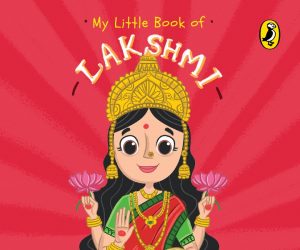
My Little Book of Lakshmi
My Little Book of Lakshmi || .
Ages: 3+ years
Lovely Lakshmi comes to Earth once a year. Will she have a good time here?
With the beautifully illustrated pages, this short tale about Lakshmi offers a fun and enjoyable read about timeless myths and festivals for modern kids.
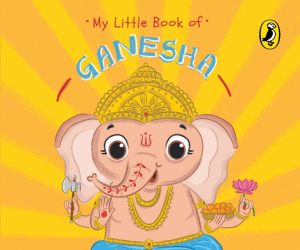
My Little Book of Ganesha
My Little Book of Ganesha || .
Ages: 3+ years
Clever Ganesha’s got something on his mind, but what that is you’ll have to read on to find.
This short tale about Ganesha has fascinating illustrations and lucid language, making it suitable for bedtime reading and parent-child association. It’s dotted with interesting facts as well as an interactive activities.
Yes, six months have passed since 2021 began. Under normal circumstances, a June mood-board would probably be filled with things like citrus fruit, travel plans, swimsuits, bright colours and pretty food. Much like Darwin theorised though, we evolve to take advantage of the resources we have. The one thing we’ve always got is our books. That is why our mood board for the month has taken a slightly more mellow and serene turn with iced coffee, a lounge chair, flowers, a beautifully organised bookshelf and most certainly enough time to sit and enjoy those things. Can you visualise it?
Enjoying the contents of a book is not the only experience we amass, but the whole adventure of reading, accompanied by associated sights, sounds, tactile feelings and memories of when and where we read, becomes something we can reminisce about. Be it old or new, books are forever… unless you have an overwhelming termite problem(they have an appetite for books just like we do), in which case, please do treat that as you stock up on these titles we’ve got for you through June.
~
Sach Kahun Toh||Neena Gupta
Sach Kahun Toh
In Sach Kahun Toh, actor Neena Gupta chronicles her extraordinary personal and professional journey-from her childhood days in Delhi’s Karol Bagh, through her time at the National School of Drama, to moving to Bombay in the 1980s and dealing with the struggles to find work. It details the big milestones in her life, her unconventional pregnancy and single parenthood, and a successful second innings in Bollywood. A candid, self-deprecating portrait of the person behind the persona, it talks about her life’s many choices, battling stereotypes, then and now, and how she may not be as unconventional as people think her to be.
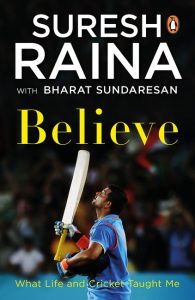
Believe||Suresh Raina, Bharat Sundaresan
Believe
Believe, Sachin Tendulkar told him – and he took it to heart, getting the word etched on his arm as a tattoo.
In this book, Suresh Raina takes us through the challenges he faced as a young cricketer. He was bullied as a child, but he overcame every adversity life threw at him and never gave up. This is the story of the lessons he learnt and the friendships he built.
Peppered with invaluable insights – about the game and about life – that Raina acquired from senior colleagues, this book will make you believe in the power of hard work, love, luck, hope and camaraderie. It is a journey through the highs and lows in the career of a man who saw his world fall apart and yet became one of the most influential white-ball cricketers India has ever seen.
The Heartbeat of Trees||Peter Wohlleben
The Heartbeat of Trees
This book marks a powerful return to the forest, where trees have heartbeats and roots are like brains that extend underground, where the colour green calms us and the forest sharpens our senses. In The Heartbeat of Trees, renowned forester Peter Wohlleben draws on new scientific discoveries to show how humans are deeply connected to the natural world. In an era of cell-phone addiction, climate change and urban life, many of us fear that we’ve lost our connection to nature. But Wohlleben is convinced that the age-old ties linking humans to the forest remain alive and intact. Drawing on science and cutting-edge research, The Heartbeat of Trees reveals the profound interactions humans can have with nature, exploring the language of the forest, the consciousness of plants and the eroding boundary between flora and fauna.
A perfect book to take with you into the woods, The Heartbeat of Trees will help you see, feel, smell, hear and even taste the forest. Peter Wohlleben, renowned for his ability to write about trees in an engaging way, reveals a wondrous cosmos where humans are a part of nature, and where conservation and environmental activism is not just about saving trees-it’s about saving ourselves, too.
#Tatastories||Harish Bhat
#Tatastories
The Tatas have a legacy of nation-building over 150 years. Dancing across this long arc of time are thousands of beautiful, astonishing stories, many of which can inspire and provoke us, even move us to meaningful action in our own lives.
A diamond twice as large as the famous Kohinoor pledged to survive a financial crisis; a meeting with a ‘relatively unknown young monk’ who later went on to be known as Swami Vivekananda; the fascinating story of the first-ever Indian team at the Olympics; the making of India’s first commercial airline and first indigenous car; how ‘OK TATA’ made its way to the backs of millions of trucks on Indian highways; a famous race that was both lost and won; and
many more.
#TataStories is a collection of little-known tales of individuals, events and places from the Tata Group that have shaped the India we live in today.
Anti-Clock||V.J. James
Anti-Clock
Hendri, the coffin maker, has one goal in life: to see the dead body of his nemesis Satan Loppo being lowered into the coffin he has painstakingly carved. For it was Loppo who defiled his beloved Beatrice, and let loose his hellhound Hitler upon Hendri, giving him a permanent limp.
From inside his coffin shop, Hendri watches the world go by even as he prepares to deliver justice upon Loppo. He is confronted by the son of his best friend becoming enamoured with Loppo’s wealth, Loppo’s evil designs towards the hills of Aadi Nadu, and his own Christian guilt that regularly comes to haunt him. Until he meets Pundit, a 112-year-old watchmaker who was part of Bose’s Indian National Army and is building an ‘Anti-Clock‘, which can turn back time. When Loppo too hears of the Anti-Clock and desires to possess it, the inevitable battle becomes a reality.
This philosophical novel translated from Malayalam is a winner of multiple awards.
The Startup Wife||Tahmima Anam
The Startup Wife
Meet Asha Ray. Brilliant coder and possessor of a Pi tattoo, Asha is poised to revolutionize artificial intelligence when she is reunited with her high school crush, Cyrus Jones.
Cyrus inspires Asha to write a new algorithm. Before she knows it, she’s abandoned her PhD program, they’ve exchanged vows, and gone to work at an exclusive tech incubator called Utopia.
The platform creates a sensation, with millions of users seeking personalized rituals every day. Will Cyrus and Asha’s marriage survive the pressures of sudden fame, or will she become overshadowed by the man everyone is calling the new messiah?
In this gripping, blistering novel, award-winning author Tahmima Anam takes on faith and the future with a gimlet eye and a deft touch. Come for the radical vision of human connection, stay for the wickedly funny feminist look at start-up culture and modern partnership. Can technology-with all its limits and possibilities-disrupt love?
Right Between the Ears||Sandeep Dayal
Right Between the Ears
Right Between the Ears reveals the secrets that allow brands to open up hidden domains in our minds through powerful psychological triggers. The power of cognitive brands is not accidental; it is architected by applying recent scientific advances in fields as disparate as psychology, behavioural economics, social anthropology and cognitive neuroscience. These consilient techniques now allow us to peer into the soul of a brand as never before.
Marketers have created truly phenomenal brands in the past. However, until now, our understanding of brain science was not quite enough to explain why some brand campaigns become so iconic while others fizzle. This book provides a new lens with which we can deconstruct those successes and failures. It takes the reader on a rollicking ride through examples and stories of brands as timeless as De Beers, Mastercard, Allstate and Guinness, as well as modern-day wonders like Madison Reed, Allbirds and Warby Parker.
The book is called Right between the Ears because that is where the brain is. Psychologists sometimes say that everything about sex happens not where you think but right between your ears. Everything about brands, too, happens there. This book reveals all you need to know to build your own epic brands.
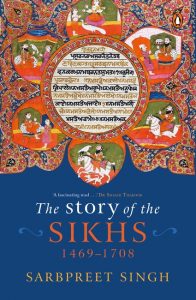
The Story of The Sikhs||Sarbpreet Singh
The Story of The Sikhs
The power of storytelling meets the colourful history of the Sikh faith in The Story of the Sikhs. In this book, author Sarbpreet Singh helps us reimagine the lives of the Sikh Gurus through a rich narrative that that intricately weaves in selections from the Guru Granth Sahib, the Dasam Granth and epic Braj poetry.
Starting from the birth of the first guru, Guru Nanak, the book charts the lives of the ten Gurus. Through carefully curated stories, the book does not just show the egalitarian ideals and compassionate worldview that have come to define the faith, but also sheds light on the historical context that defined the foundational principles which guided Sikhs during the era of each Guru.
Sarbpreet has deliberately approached this retelling as a storyteller rather than as a student of history in an attempt to make the work accessible and engaging. Immersive and expansive, The Story of the Sikhs is a tour de force that weaves a multi-dimensional tapestry of narrative and poetry.
Little America||Zain Said
Little America
Born in a Karachi slum, Sharif Barkati became obsessed with “American” ideas of love and freedom at a very young age. He began to dream of a public place in the city that did not follow the rules, where people would be free to say and do whatever they wanted under open skies, away from the conservative eyes of Pakistani society.
With the help of his friend Afzal – and TJ, an extremely wealthy Pakistani-American – Sharif was able to realize his dream in the form of a colossal compound on the Karachi coast, full of bars, cafes, clubs, and the people of Karachi strolling about, hand in hand.
They called it Little America.
Now in prison, Sharif tells the story of his life in a letter to his favourite novelist, hoping that he will turn it into a literary masterpiece. At once a rollicking journey around the mind of a man desperate to be free, an allegory of the neo-colonial endeavour, and an investigation of the desire to emulate the perceived superior while desperately trying to hold on to one’s own cultural identity, Little America asks the question: What, really, is freedom, and what can be sacrificed in its name?
A Map of Longings||Manan Kapoor
A Map of Longings
This first definitive biography of Agha Shahid Ali offers a rich portrait of the poet and the world he inhabited.
Shahid is widely regarded as one of the finest poets from the Indian subcontinent, and his works are read across the world, touching millions of lives. A pioneer of ghazal writing in English, he wrote extensively about loss, nostalgia and home. A witness to the conflict that ravaged his homeland Kashmir, a loss he lamented in his collection The Country without a Post Office, Shahid has today become a symbol of hope in a violent world.
In this biography, Manan Kapoor explores the concerns that shaped Shahid’s life and works, following in the footsteps of the ‘Beloved Witness’ from Kashmir to New Delhi and finally to the United States. He charts Shahid’s friendships with figures like Begum Akhtar and James Merrill and looks at the lives the poet touched with his compassion and love. He also traces the complex evolution of Shahid’s evocative verses, which mapped various cultures and geographies, and mourned injustice and loss, both personal and political. Drawing on various unpublished materials and in-depth interviews with Shahid’s family, friends, students and acquaintances, Kapoor narrates the riveting story of a major literary voice and presents Shahid’s poetic vision, revealing not just what he wrote but also how he taught the world to live.
Green Humour for a Greying Planet||Rohan Chakravarty
Green Humour for a Greying Planet
Green Humour for A Greying Planet is a curation of gag cartoons and comic strips based exclusively on wildlife and nature, perhaps the first of its kind. At a time when global warming, wildlife crimes and man-animal conflicts are at their worst, ‘Green Humour’ is sure to provide its readers some much needed comic relief. A comprehensive and satirical take on various aspects of the natural world and the threats to its conservation, this book will appeal to both the scientifically inclined readers as well as the general readers.
How to Get Glass Skin||Anupriya Goel
How to Get Glass Skin
Glass skin is not just limited to Koreans. Each one of us can get flawless, dewy skin. However, this dream skin cannot be achieved overnight. How to Get Glass Skin will take you through all the steps to be followed in your morning-to-night routine of double cleansing, toning, moisturizing, application of serum, SPF application, facial oils and masking, according to your skin type and skin condition.
Dr Anupriya Goel, renowned skin specialist and medical director of the Berkowits chain of clinics, gives you an insight into the right kind of nutrition and supplements you should be taking, along with an understanding of the active ingredients that you must know of before investing in a product. This, and the latest advancements in skincare.
So what are you waiting for? Let your skin become glass-like and get addicted to the glow.
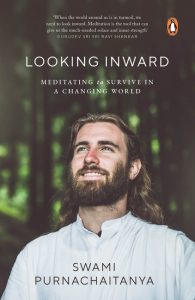
Looking Inward||Swami Purnachaitanya
Looking Inward
The world as we know it in 2021 is worse than anything we have seen so far. Global warming, a pandemic, misinformation spreading like wildfires, fake news, riots, changing social structures and lifestyles-the ramifications of these events affect our health, relationships, productivity and, most importantly, have a lasting impact on our inner peace. It is in times like these that we feel stressed, acutely anxious and even depressed. And it is now more than ever that we need to look inward for strength, focus, happiness and resilience.
In Looking Inward, Swami Purnachaitanya helps you on your journey towards identifying the source of your anxiety, stress and restlessness, and provides you with the tools required to address and transcend them, using meditation to soothe distracted thoughts and refocusing your energy to being fully present in the moment. Every chapter includes enlightening stories, precious insights, and a ten-minute exercise that will take you one step closer to mastering your mind and building your own meditation practice.
Today, meditation is not a luxury, it is a necessity. This book helps you acknowledge the changing world while strengthening your inner energy reserves to better cope with it.
Ayurveda||Dr G.G. Gangadharan
Ayurveda
This book is not a defence of Ayurveda. A sound, scientific framework of healthcare that has saved countless lives over 5000 years does not need defenders. It needs champions, and to be given wings. In a world that needs Ayurveda more than ever, Dr G.G. Gangadharan, who has been researching both the theory and the practice for the past thirty-five years, shows in his book the logic behind the science. He points out that our bodies are intelligent systems designed to keep most diseases at bay, but we must pay more attention to the signals they give us. Doing so comes with the implicit promise of true restoration. It is a promise to restore your bod and mind to its initial healthy state. Ayurveda has so much to offer; its simple application can transform daily life. In this book, you will find the secret to greater happiness through balance and long-lasting health-the idea that healthcare must address the individual as a whole and not just the disease.
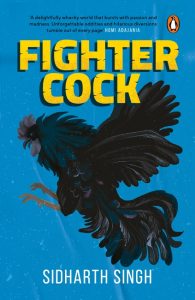
Fighter Cock||Sidharth Singh
Fighter Cock
Shikargarh, central India. An untamed wilderness ruled by a dissolute raja with a passion for sex, drugs and cockfighting. The raja’s Karianath fighter cocks are the undisputed champions of the area – but their reign is challenged by the new Aseel fighters imported by Teja, his bastard son, who also schemes to usurp his position.
Into this world arrives Sheru, a brooding stranger hired to work for the raja. As Sheru negotiates this wild land, he finds himself getting pulled into a deadly vortex of events that threaten to derail his destiny. But Sheru is a dangerous man with a dark past, and when he unleashes his fury, all hell breaks loose.
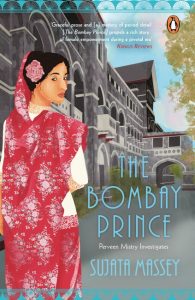
The Bombay Prince||Sujata Massey
The Bombay Prince
November 1921. Edward VIII, Prince of Wales and future ruler of India is arriving in Bombay to begin a four-month tour. The Indian subcontinent is chafing under British rule, and Bombay solicitor Perveen Mistry isn’t surprised when local unrest over the royal arrival spirals into riots. But she’s horrified by the death of Freny Cuttingmaster, an eighteen-year-old female Parsi student, who falls from a second-floor gallery just as the prince’s grand procession is passing by her college.
Freny had come for a legal consultation just days before her death, and what she confided makes Perveen suspicious that her death was not an accident. Feeling guilty for failing to have helped Freny in life, Perveen steps forward to assist Freny’s family in the fraught dealings of the coroner’s inquest. When Freny’s death appears suspicious, Perveen knows she can’t rest until she sees justice done. But Bombay is erupting: as armed British secret service marches the streets, rioters attack anyone with perceived British connections and desperate shopkeepers destroy their own wares so they will not be targets of racial violence. Can Perveen help a suffering family when her own is in danger?
Rising Like a Storm||Tanaz Bhathena
Rising Like a Storm
With King Lohar dead and a usurper queen in power, Gul and Cavas face a new tyrannical government that is bent on killing them both. Their roles in King Lohar’s death have not gone unnoticed, and the new queen is out for blood. What she doesn’t know is that Gul and Cavas have a connection that runs deeper than romance, and together, they just might have the strength and magic to end her for good.
Then a grave mistake ends with Cavas taken prisoner by the government. Gul must train an army of warriors alone. With alliances shifting and the thirst for vengeance growing, the fate of Ambar seems ever more uncertain. It will take every ounce of strength, love, and sacrifice for Gul and Cavas to reach their final goal and build a more just world than they’ve ever known.
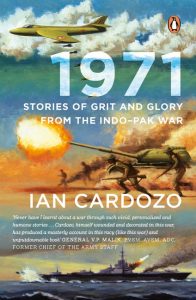
1971||Ian Cardozo
1971
An under-strength Gorkha battalion undertakes the Indian Army’s first heliborne operation deep behind enemy lines, defeating a Pakistani force twenty times its strength. Fighters of the Indian Air force target the Government House in Dhaka in a daring air raid, forcing the Pakistani government in Dhaka to capitulate and surrender. Four battle casualties become close friends at the Artificial Limb Centre in Pune in the war’s aftermath.
In this collection of true stories, decorated war veteran Major General Ian Cardozo recounts what really happened during the 1971 Indo-Pak war, piecing together every story in vivid detail through interviews with survivors and their families. The book also seeks to commemorate the lives of those who were killed and wounded in this war, which took place fifty years ago.
From the tragic tale of the INS Khukri and its courageous captain, who went down with his ship, to how a battalion of the Gorkhas launched what we accept as the last khukri attack in modern military history, these stories reveal what went on in the minds of those who led their men into battle-on land, at sea and in the air.
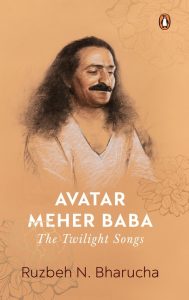
Avatar Meher Baba||Ruzbeh N. Bharucha
Avatar Meher Baba
Known as one of the Perfect Masters, Avatar Meher Baba touched millions of lives and passed away in 1969. Since then, his followers, who were blessed to have had been under his direct care, feel his presence strongly, even until date, and live their lives in complete devotion to him.
Now, after more than fifty years after his passing, one of the most read and loved spiritual writers, Ruzbeh N. Bharucha, pieces together what it was to have experienced Baba in person-to have been blessed by him. Through interviews with his followers, Bharucha recreates the life and times of Baba, his deep connection with his Mandali, his miracles, his methods and his teachings.
Such is the power of their words that Baba comes alive to readers like he had never been gone. It is a rare collection for those who would like to know more about what it was like to be with the Avatar himself.
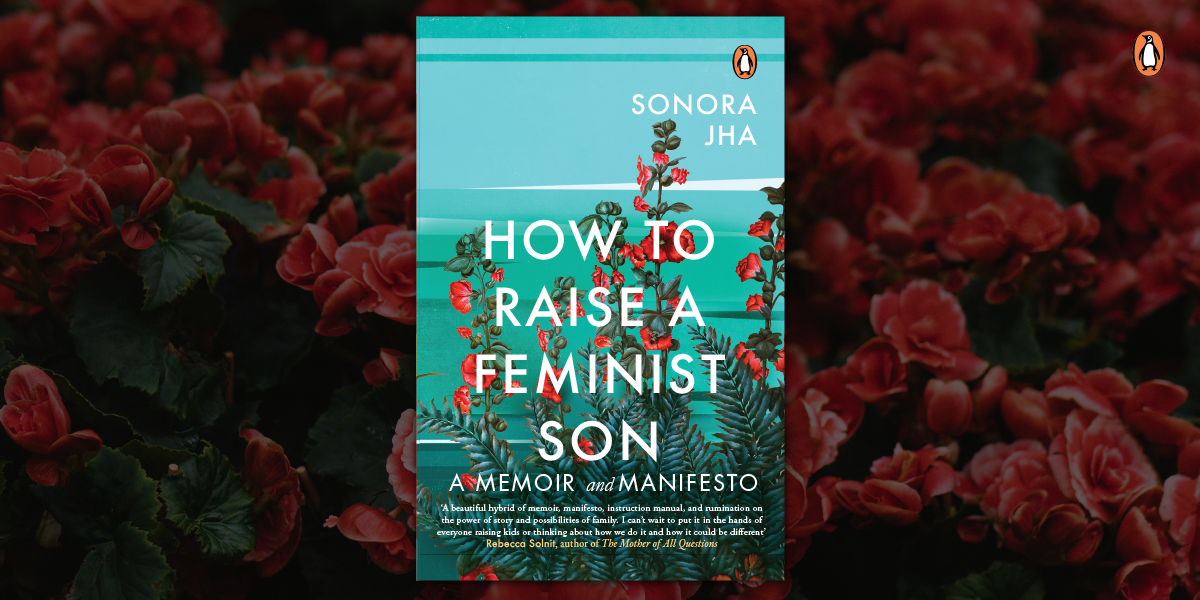
Informed by the author’s work as a professor of journalism specializing in social-justice movements, How to Raise a Feminist Son will resonate with every feminist hoping to change the world, one kind boy at a time. From teaching consent to counteracting problematic messages from the media, well-meaning family, and the culture at large, we have big work to do when it comes to our boys. A beautifully written and deeply personal story of struggling, failing, and eventually succeeding at raising a feminist son, the advice in this book all comes from first hand experience and learning from trial and error.
From taking on internet trolls to dealing with real life hurdles, Sonora Jha shows us all how to be better feminists and better teachers of the next generation of men. Here’s a look into this electrifying tour de force.
~
How to Raise a Feminist Son||Sonora Jha
In India, when a mother has a baby, she is given post-partum massage to soothe her from childbirth and help her regain her strength and shape. Then, when the baby is around a month old, the mother is encouraged to massage her baby. It is said to help bond the baby and mother while also removing toxins from the baby’s system. When done right after the baby’s bath, it eases the baby into a deep sleep—and we all know how badly we want that.
For my baby, I would use a mixture of olive oil, coconut oil, Ayurvedic oil, and Johnson’s Baby Oil. I would coo to him and he would gurgle. He would blink at me with his huge, longlashed black eyes as if wondering if this feeling rushing over him was love. Yes, it is, I would whisper as I folded his chubby left
leg over his right and gently pressed them into his tummy, the way the woman who had taught traditional Ayurvedic massage for generations had instructed me, to aid baby’s digestion and promote suppleness in his joints.
In those early months, I looked at my baby and knew he was the most beautiful thing in the world. I thought I would die from this love. This was in the days before Facebook and Instagram, so I couldn’t share it with the world. And so I could just quietly believe it and bask in our moments of gurgle and coo.
I also had time to wonder how to turn this beautiful, doughlimbed, ink-pool-eyed miracle of mine into a mighty warrior of feminist revolution.
I wanted nothing but the best for this boy (thus the combination of massage oils). A part of me then paused to wonder if my plan to raise him as a feminist would be good for the world, yes, but perhaps set him back? Why not let him stay in a deep sleep instead of using his tender heart and limbs and
brain for a cause that didn’t celebrate him?
Fortunately, I started to read everything I could find about feminism and its benefits for boys. I sought out both poetry and research that would help me stay the course. I talked with friends. Over the years, as Gibran grew and grew, I kept all of that close.
Twenty years later, when my friend Julie found out that she was pregnant with a boy, she went through somewhat similar emotions. This was going to be fun, she concluded. (And, of
course, the boy would grow up to be a feminist.)
Perhaps your friends are cheering and buying cute onesies for your baby shower that say, ‘This is what a feminist looks like.’ Or, after too many Trump years and in the reckoning of the #MeToo movement, perhaps they can barely manage a steely ‘Yes!’ and a grim nod. Either way, we know that more and
more of us are on board and aching to raise feminist boys.
This desire doesn’t span merely the twenty years between Julie’s boy and mine, of course. Feminists have been imploring men to be allies for centuries, actually. Let’s harken back to Britain’s ‘first feminist,’ Mary Wollstonecraft, when she wrote in her essay A Vindication of the Rights of Woman:
Would men but generously snap our chains, and be content with rational fellowship instead of slavish
obedience, they would find us more observant daughters, more affectionate sisters, more faithful wives, more reasonable mothers—in a word, better citizens.1
Centuries later, a little bit has shifted in that we are now trying to convince men—and some women—that we’d like to be characterized simply as human, rather than appeal to men as daughters, sisters, wives, and mothers; but yeah, Mary, I get you: feminism will help my son be in a rational fellowship. To this reasonable mother, that means that he will be given permission to be wrong sometimes—to fail, to fall, to cry, to be protected rather than always be protector, to be provided for rather than always be provider, to seek and receive wise counsel, to be chastised as much as he is cheered, to be led to wild fun, to be held and to be held responsible, to get schooled and to get laid.
I greedily, reasonably, wholeheartedly want all these things for my son.
Is this even possible? Can boys be feminists? Are they doing it for the greater common good, in selfless solidarity, or is there something in it for him?
A pertinent and eloquent response to this question came from a gentleman on Twitter, when I shared an essay about raising a feminist son. ‘Raise a feminist son? Why didn’t you just cut his dick off at birth?’ his tweet said, blinking at me in rage. I didn’t respond at the time. I imagined his question was rhetorical.
I realized soon that the man was addressing an important and rising question in the universal zeitgeist. Boyhood, especially in America, has become some sort of battleground. An odd battle, this, in which boys are both the soldiers and the spoils. Tweet- Man has his finger on America’s pulse, perhaps better than I. Tweet-Man demands a response.
So, dear Tweet-Man: I didn’t cut off my baby’s dick because that would be sexual violence. (Feminists are sort of opposed to sexual violence.) And, to be a feminist, my son would need his brain, his heart, his hands, his feet, his tears, his voice, his breath, and definitely his dick. Make no mistake—he would need his dick to ‘fuck like a feminist,’ a call put out to our men by political commentator Samantha Bee in the wake of the #MeToo movement.
I can see why Tweet-Man wouldn’t want to trust me on all this. To understand why the time has finally come for boys to be raised as feminists, I’d point him to the opinions of someone with a dick. To be precise, I’d like him to hear what Pope John Paul II said in a letter he sent to women back in September 1995 as they gathered for a United Nations conference in Beijing. It was a letter he wrote on 29 June, less than a month after my son was born:
There is an urgent need to achieve real equality in every area [of women’s personal rights]: equal pay for equal work, protection for working mothers, fairness in career advancements, equality of spouses with regard to family rights . . . The time has come to condemn vigorously the types of sexual violence which frequently have women for their object. [emphasis added]
This love letter from the Pope was more widely published than the words of any woman saying the same thing, whether in whispers or in clear-eyed articles or in screams. And it was certainly never said by any Catholic woman priest ever, because even the Pope couldn’t go so far as to heed his own call for fairness in career advancement and, gasp, ordain a woman priest.
Enough about dicks. In the same year the Pope wrote his letter, as my baby was fattening himself on the milk of my human kindness, I first heard of American journalist and activist Gloria Steinem’s suggestion that men should embrace feminism because it could add four years to their lives by reducing the stress associated with traditional masculine roles. All right, then. Breast milk would turn my baby strong and feminism would give him a long life. Jiyo, mere laal.
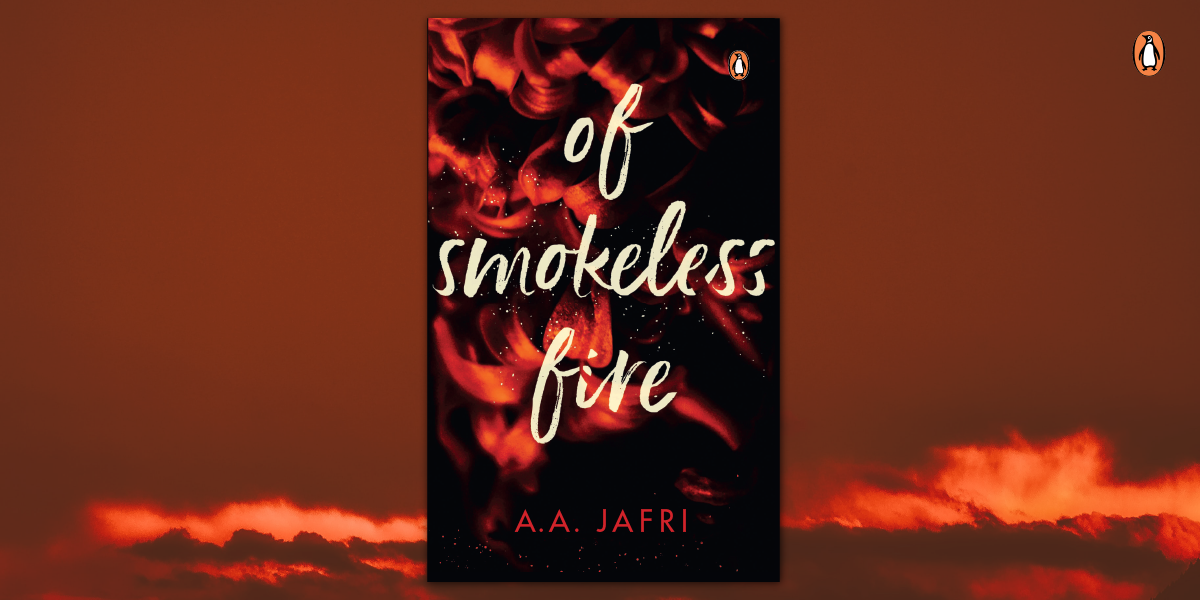
Of Smokeless Fire on the surface is the story of a lifelong friendship between three unlikely children, but at its very heart it’s a story about belonging and displacement. It is a reminder that belonging is not just about allegiance, and exile is not just physical. The novel asks the questions: Once you are ripped from your homeland, do you become homeless forever? What does it mean to live in a land that has forsaken you? Whether rooted or uprooted, is your relationship with your country conditioned by its politics?
Here’s a glimpse into how the troubled life of our rumoured djinn began.
~
Of Smokeless Fire||A.A. Jafri
Djinns, the invisible beings made of smokeless fire, are Allah’s creations. Human beings cannot create or beget them, but whether it was a djinn or not, a rumour took birth that day that a djinn had been born at the residence of Noor ul Haq, barristerat- law.
Farhat Haq, the wife of barrister Noor ul Haq, almost died in labour that day. It had nothing to do with the delivery, wretched as it was, but had everything to do with that horrible midwife, Kaneez, and her piercing screams: ‘Djinn, djinn! Oh Allah, he’s a djinn! Take him away from me. Take him away from me; he will get inside me!’
What a thing to say after such excruciating labour andcthe relief of finally giving birth successfully after eleven miscarriages! True, propriety had never been Kaneez’s strong suit, but a stupid outburst like that at such a critical hour was something that not even Farhat had expected from that ignorant one-eyed churail.
The well-established superstition is that churails are the most terrible creatures on this side of the Ganga. Born with inverted feet and an ingrained nail in their skulls, these one-eyed Medusas are believed to thrive on children’s livers. Women who die in childbirth are sometimes reincarnated as churails who come back to seek revenge on other pregnant women. Everyone in Pakistan knows this even though the Qur’an doesn’t mention churails.
Everyone in Pakistan also knows about djinns, the invisible beings made of smokeless fire; they exist because they are mentioned in the Qur’an. They are Allah’s creation. Women can’t carry them in their wombs for nine months, nor can they give birth to them. So how could Kaneez utter such nonsense with her loudspeaker-like mouth and broadcast that rubbish to the entire neighbourhood? How do you control a rumour once it leaves her blathering mouth? You can’t! It grows wings and flies into every ear.
*
The malicious gossip that a hideous djinn had been born at Kashana-e-Haq, the sprawling residence of Noor ul Haq, on that fateful day in October 1951 acquired such currency that many
people avoided going there for a long time. The day had begun as a scorcher, and no sooner had the sun come out from behind the eastern hills of Karachi than the city turned into a veritable tandoor, broiling everything in sight: buckling up roads, flaring tempers and wilting flowers. It was not even noon, and yet it felt like dozakh, or the sixth circle of Dante’s hell. The chowkidar
sat on a concrete bench under a neem tree just outside the front gate of the barrister’s house, dozing off, his head falling forward on to his chest, jerking up now and again. The discarded front page of the Morning Gazette got picked up by the hot wind and caught against his leg, the picture of the first prime minister of Pakistan, with his fist raised, and his title, Leader of the Nation, prominently displayed on it. Suddenly, an ear-splitting horn from a black Hudson Commodore startled the chowkidar. He jumped up and instinctively saluted the car, as the Gazette’s front page peeled away from his leg, carried off by the warm breeze. From inside the vehicle, Noor ul Haq’s driver, Sikander, craned his neck out and shouted at the chowkidar, ‘Oye! Son of Genghis Khan, you are supposed to guard the house, not sleep.’
‘Oye, Quaid-e-Azam, let a man sleep! How am I going to guard this Taj Mahal if I don’t sleep well?’ the chowkidar roared. The servants shared a spirited relationship, always joking and pulling each other’s leg. The guard’s name was Changez Gul, but Sikander teasingly called him Genghis Khan’s son. Changez returned the favour by calling Sikander Quaid-e-Azam, the Great Leader, the title given to the founder of Pakistan, Mohammad Ali Jinnah. It was not because Sikander was the founder’s biggest fan or admired his politics; it was because he bore an uncanny resemblance to him. Tall, gaunt, with a triangular face and a slight gap between his front teeth that was noticeable only when he smiled broadly, Sikander could have passed for the founder’s twin brother. However, that is where the similarities ended and the differences magnified. But to Changez, it was the similarities that mattered the most.
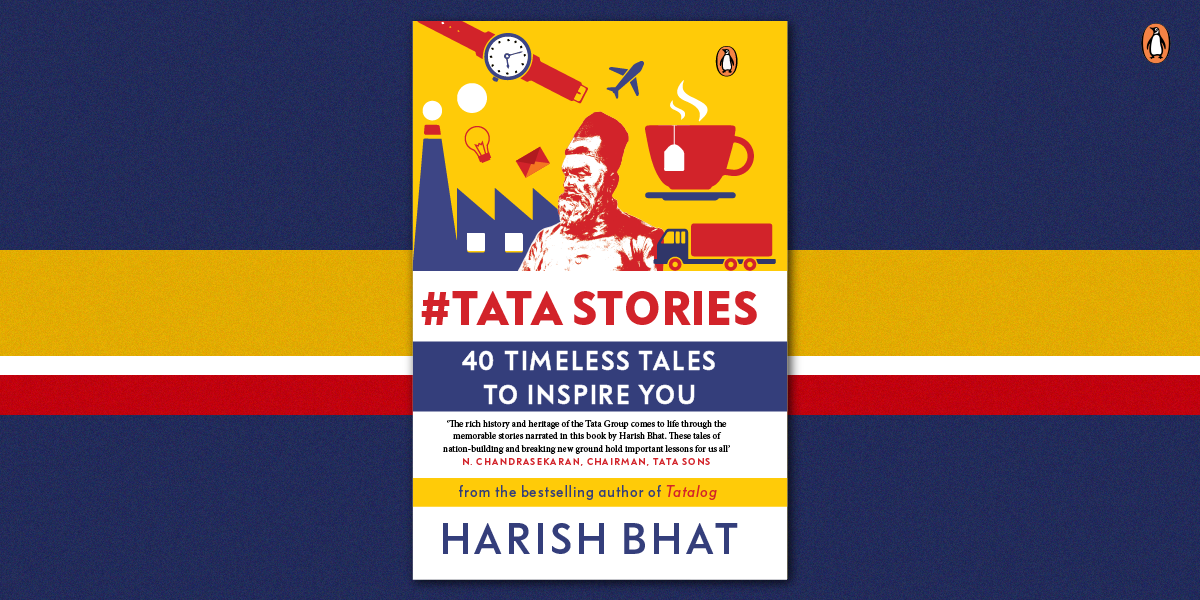
The Tata Group, in the Indian imagination is far more than a corporate group, it is institution whose inception and growth mirrors that of the modern India and whose value systems are as legendary as its success. Dancing across more than a century of greatness are beautiful, astonishing #TATASTORIES, many of which can inspire and provoke us, even move us to meaningful action in our own lives. Harish Bhat’s vivid glimpses into some of the distinctive cultural legacy of the Tata Group bring to life the extraordinary longevity, vibrancy and success of Tata. But at their essence, they are simple, moving stories of great teams, men and women, which hold deep lessons for all of us.
Read on for one such truly poignant moment, when the great man who would go onto become The Father of the Nation visited Jamshedpur, the beating heart of the institution that shaped, and continues to shape the growth of a nation.
#TATASTORIES: 40 Timeless Tales to Inspire You || Harish Bhat
The steel city of Jamshedpur was teeming with excitement in August 1925. Mahatma Gandhi was coming to visit the town where India’s first integrated steel plant had been established by Jamsetji Tata. This would be a unique event—the man who was leading the charge for Indian independence visiting an industrial city which had taken a step towards economic independence. Mahatma Gandhi knew of Jamsetji Tata’s enterprise. Indeed, in 1905, soon after Jamsetji’s passing, he had written in the Indian Opinion newspaper, ‘In whatever he did, Mr Tata never looked to self-interest. He never cared for any titles from the Government, nor did he ever take distinctions of caste or race into consideration…His simplicity was remarkable. May India produce many Tatas!’
The Mahatma had been keen to visit the steel city himself, and now he was responding to a special invitation from Dinabandhu C.F. Andrews, who was at that time a labour leader in Jamshedpur. He had sought Gandhiji’s guidance to resolve some labour issues. Interestingly, many years later, Subhash Chandra Bose would also head the Tata Steel Workers’ Union in Jamshedpur, but that is the subject of another story. Gandhiji arrived in Jamshedpur and was shown around the steel factory. I can imagine how eagerly workers in the factory would have milled around to see the great man walk briskly by their furnaces that had begun proudly producing steel for the nation. He also visited the township and wrote later in his journal: ‘This town owes a debt of gratitude to the courage of Jamsetji Tata.’ But he went on to say: ‘However, what can one see of such a large factory in two days?’ At the Director’s Bungalow, he completed talks with R.D. Tata (father of J.R.D. Tata), and three outstanding labour matters were resolved after some discussion. It is remarkable that Gandhi took the time and effort to travel all the way to Jamshedpur to help bring these matters to a successful conclusion. Then, in the evening, he addressed a mass meeting on the maidan behind the TISCO Institute, now called the United Club. This was a huge gathering, attended by over 20,000 people. A sea of humanity stood waiting for the Mahatma to arrive, and he did not disappoint them. In fact, Gandhiji delivered a fine and spirited speech, which was both moving and inspiring. Here are some excerpts.
It was my ambition to see one of the greatest—if not the greatest—Indian enterprises in India, and study the conditions of work there. But none of my activities is onesided, and as my religion begins and ends with truth and non-violence, my identification with labour does not conflict with my friendship with capital. And believe me, throughout my public service of thirty-five years, though I have been obliged to range myself seemingly against capital, capitalists have in the end regarded me as their true friend. I am told that though so many Europeans and Indians live here (together), their relations are of a happy character . . . It is the privilege of both of you to be associated in this great enterprise, and it is possible for you to give Indians an object lesson in amity and goodwill . . . you will carry your amity outside your workshops and both of you will realize that you have come to live and work here as brothers and sisters, never regarding another as inferior, or oneself as inferior. And if you succeed in doing that, you will have a miniature Swaraj.
Gandhiji also narrated to the audience an anecdote about how his connection with the Tatas began.
In South Africa, when I was struggling with the Indians there, in the attempt to retain our self-respect and to vindicate our status, it was the late Sir Ratan Tata who first came forward with assistance. He wrote me a great letter, and sent a princely donation—a cheque for Rs 25,000 and a promise in the letter to send more, if necessary.
This was a reference to the spontaneous donation that Sir Ratan Tata, younger son of Jamsetji Tata, had made in the year 1909.
How many times have you stopped at a traffic signal and turned your face away from the hijra who stood outside your car window asking for money? Wasn’t it pure loathing that you felt? Wasn’t it worse than what you normally feel when a beggar woman with a child does the same? Why? I’ll tell you why. You abhorred the eunuch because you couldn’t identify with her sex. You thought of her as a strange, detestable creature, perhaps a criminal and definitely sub-human.
I am one of them. All my life people have called me hijra, brihannala, napungshak, khoja, launda . . . and I have lived these years knowing that I am an outcast. Did it pain me? It maimed me. But time, to use a cliché, is the biggest healer. The adage worked a little differently in my case. The pain remains but the ache has dulled with time. It visits me in my loneliest hours, when I come face to face with the question of my existential reality. Who am I and why was I born a woman trapped in a man’s body? What is my destiny?
Beneath my colourful exterior lies a curled up, bruised individual that yearns for freedom—freedom to live life on her own terms and freedom to come across as the person she is. Acceptance is what I seek. My tough exterior and nonchalance is an armour that I have learnt to wear to protect my vulnerability. Today, through my good fate, I have achieved a rare success that is generally not destined to my lot. But what if my trajectory had been different? I keep telling myself that this is my time under the sun, my time to feel happy, but something deep inside warns me. My inner voice tells me that the fame and celebration that I see all around is maya (illusion) and I should accept all this adulation with the detachment of a sanyasi (hermit).
The first ever transgender to become a college principal is a rare feat, the media has proclaimed. My phones have not stopped ringing since, and invitations to felicitations have not ceased to pile up on my desk. I would love to believe that those who fete me also accept me as I am, but how can I ignore the sniggers, the sneers and the smirks that they try to hide but fail? For them I am just another excuse to watch a tamasha (spectacle), and who doesn’t want some free fun at someone else’s expense?
Hurt and anger are two emotions that I have learnt to suppress and let go. It is part of the immunity package that I am insured under. I have finally accepted the fact that my achievements have no bearing on the people around me. They still think I am sexless between my legs and that is my only identity. That I also have a right to have emotions is an idea that is still completely foreign to most. I don’t blame them. I blame myself for not being able to ignore such pain. I should have long stopped bothering about them.
It is not that I have not had my share of love in all my fifty-one years of life. They were good while they lasted. I have had major heartbreaks too, but each time I learnt a new lesson. I have loved well and deeply, and I hope my partners, wherever they are now, would silently remember that bit about me. It’s another matter that relationships don’t seem to work for me. Those who have loved me have always left me, and each time I have lost a piece of me to them.
Memories rush back as I sit down to write my story. I write with the belief that it would help society understand people like me better. We are slightly different outwardly, but we are humans just as you are and have the same needs—physical and emotional—just as you have.
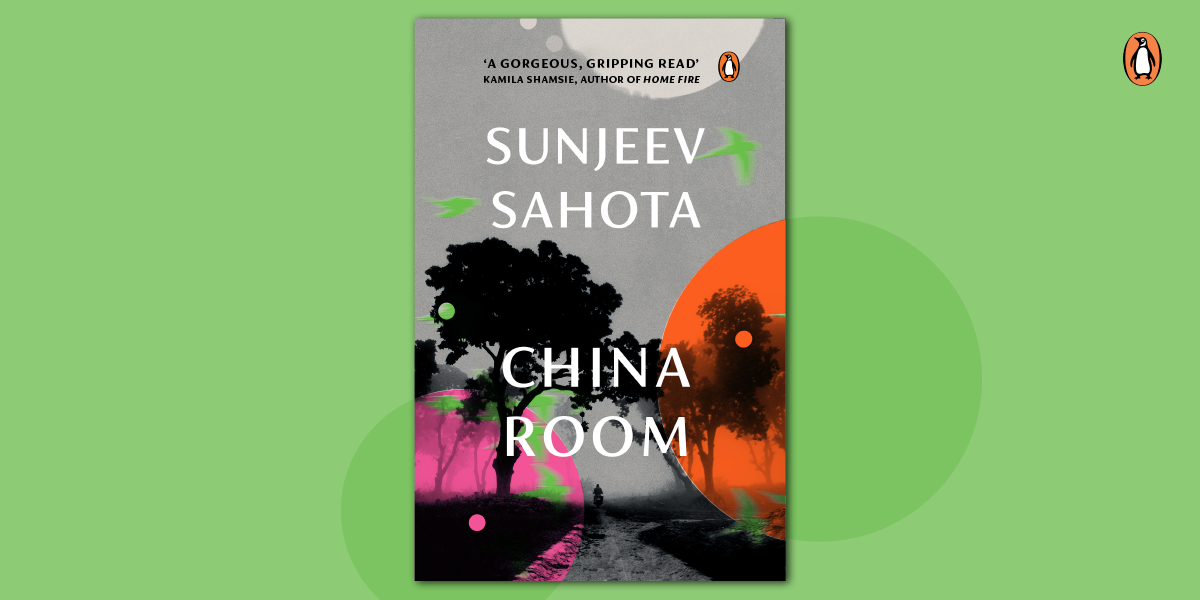
Inspired in part by the author’s family history and told with courage, compassion and deep humanity, Sunjeev Sahota’s China Room is an astonishing feat of storytelling from an exceptional novelist.
Mehar, a young bride in the rural Punjab of 1929, is trying to discover the identity of her new husband. She and her sisters-in-law, married to three brothers in a single ceremony, spend their days hard at work in the family’s ‘china room’, sequestered from contact with the men. Their new lives are those of servitude, much like all new brides of that time and place. When Mehar develops a theory as to which of them is hers, a passion is ignited that puts more than one life at risk.
Spiralling around Mehar’s story is that of a young man who, in 1999, travels from England to the now-deserted farm, its ‘china room’ locked and barred. In enforced flight from the traumas of his adolescence-his experiences of addiction, racism and estrangement from the culture of his birth-he spends a summer in painful contemplation and recovery, before finally finding the strength to return home.
We hope you enjoy this sneak preview of a chapter from this engrossing new read by a Booker Prize nominated novelist.
~
China Room||Sunjeev Sahota
It is their second Sunday married and an hour before the sun drops, Mehar, Gurleen and Harbans slip into some old cottons and heave the giant sloshing vat into the courtyard and on to the groundsheet. At this hour the air is lushly warm rather than oppressive and the courtyard
is free of the brothers. They think their men go to the bazaar on these nights, though that is another thing they have never been told. Perhaps they play cards, Mehar suggests, as if she knows what that is. All three hitch up their salwars and twine some old jute around their legs, so they’re naked from the knees down. ‘The leaves have come up,’ Gurleen says, feeling for a way out of the chore, a rare one she finds even more tedious than rubbing clean the spinach. But Harbans is having none of it and points out that there is still plenty of ink left in them. They hold hands, forming a triad, and one by one step inside the metal vat, the indigo plants sliding around the soles of their feet. The water, as if answering a question, rises up to their calves and their feet begin their work, up-down-up-down, a surging spilling tempest, the colour wrenched out and out. They do not speak, it is enough to try to keep their balance, and slowly the pool starts to
darken, their clothes and skin too, indigo staining legs and hips and face, but they stay in harmony, up-downup-down, minutes upon minutes, so that by the time the sun has disappeared and the moon is the whole light, they let go of one another’s hands and double over, gasping.
‘One more week,’ Harbans says, as they haul the vat back to its spot against the wall.
‘Oh, go crack an egg! Surely we’re done now!’ Gurleen complains.
Mehar says nothing, picks up the crumbling soap at the pump and starts on the blue bands striping her feet. It’s up to Mai, in any case. She will decide when the time is right to colour their blooded wedding sheets and hang them out to dry.