A riveting account of a clandestine station in 1942 that broadcast recorded messages from Gandhi and other prominent leaders to devoted followers of the freedom struggle while moving from location to location to dodge authorities, reporting on events from Chittagong to Jamshedpur fighting the propaganda and disinformation of the colonial government for nearly three months—until their arrest and imprisonment in November of the same years. Here’s a book that follows the extraordinary story of Usha Mehta and her intrepid co-conspirators who filled Indian airwaves with the heady zeal of rebellion.
**
In Ushaben’s words:
‘The die was cast. The patriotic urge moved the people to challenge the authority of the government in all conceivable ways. Sometime before the Quit India struggle started, some of my colleagues and I were thinking of what to do in case the movement was launched, because it was our hearts’ desire to contribute our humble might to the freedom movement. Demonstrations and public meetings did not appeal to us much from the very beginning. During the Dandi Satyagraha, some of my friends and I had done the work of distributing the illegal Congress bulletins by going from house to house. Now we began discussing how best we could contribute to the Quit India struggle. Babubhai Khakar, a businessman and a co-student in the rashtra bhasha (national language) class, joined us in the discussion. Based on my study of the history of revolutions in other countries of the world, I suggested that if we could establish a radio station of our own, it would help us very much in keeping the people informed about the latest developments in the movement. A perusal of the history of the campaigns had convinced us that a transmitter of our own was perhaps the need of the hour. When the press is gagged and news banned, a transmitter helps a good deal in acquainting the public with the events that occur. We had realized the tremendous propaganda value of a transmitter, and the idea that with a powerful transmitter we could reach foreign countries thrilled us. So, Babubhai, I and other colleagues decided to work for a Freedom Radio.
Congress Radio || Usha Thakkar
‘We began discussing ways and means for raising the necessary finances. Most of us were students and young individuals who had not yet settled in life. We discussed for many long hours but could not find a solution. Our only income then was the pocket money we used to receive from our parents and that was hardly adequate for financing our project. Just when we were on the point of dispersing in a dejected mood, my old aunt who was a widow and one who had participated in earlier freedom struggles and who was listening to our discussion from the adjoining room came out along with Manu, a close relative, with a box in her hands, and boosted up our morale by saying, “Children, do not worry. Here is my stree dhan, the box containing my jewellery gifted to me at the time of my marriage, which I have preserved all these years with great care. You sell it and use the money for your work.” When we hesitated, she said, “I am not sorry to part with my jewellery. What better use could I make of it than by putting it as an offering at the feet of Mother India?”
**
Usha Thakkar brings to life this high-voltage tale of derring-do, complete with stouthearted revolutionaries, thrilling escapes and a cruel betrayal in her new book Congress Radio: Usha Mehta and the Underground Radio Station of 1942.
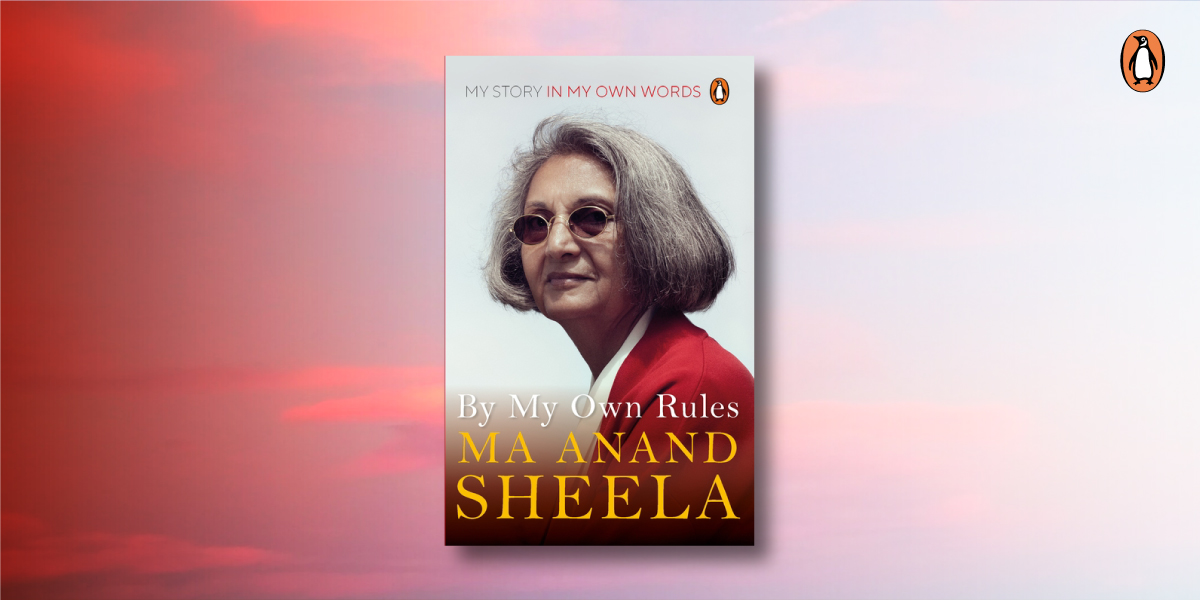
In her latest book, By My Own Rules, that she has dedicated to everyone who helped her get through the life, Ma Anand Sheela has given a glimpse of her past through the eighteen rules she follows in her life. Here’s an excerpt from the book where Ma Anand Sheela writes about how Bhagwan’s love made her confident and fearless in life. She shares an anecdote of the time in her life when she was torn within, and it had become difficult for her to choose between the inner truth or to forget everything—her values, the responsibility, and the people in the community—for Bhagwan.
*
By My Own Rules || Ma Anand Sheela
Faced with this distress, I remembered the advice of my parents. ‘Every person must follow the inner truth. No one needs to be afraid of their feelings.’ Their teaching became my guiding light. I knew that I could not compromise with the values they had ingrained in me. I did not want to sell my soul in the name of love. I could not be with my beloved Bhagwan any more. I could not breathe near him any more. It was time for me to leave Bhagwan. I trusted my instincts and followed my heart. I believed that everything would turn out to be fine. I returned all his expensive gifts, which had been an expression of his love, with a goodbye letter.
My parting caused a wave of disappointment and shock. Something no one expected had happened: Bhagwan and Sheela, who had been one heart and one soul, who had stuck together like the sun and the moon, had finally separated. Bhagwan was deeply disappointed in me. My leaving the commune hit him at the core. At the same time, he had to fortify his position in order to retain the trust of his people as many others were contemplating leaving too. Negative stories were spread about me and I was vilified. I had always been aware that many people were jealous of me and wished to be in my place, trusted and loved by Bhagwan. They had the opportunity now.
With my decision to leave the commune, crazy accusations began doing the rounds. Friends and followers of Bhagwan gave vent to their pent-up emotions over me. Bhagwan had always been a master storyteller. The crazy accusations against me were like fire in dry straw and I was ablaze. This fire became the touchstone of my life as well as of his teachings. I was accused of various crimes. I eventually ended up in prison.
After thirty-nine months in prison in the United States, I understood the essence of Bhagwan’s teachings. Bhagwan used every opportunity to train the consciousness and repeatedly created situations in which he tested the limits of our trust and love. He talked about meditation, of love, life, laughing and acceptance, all his life. These are beautiful words and very easy to live by once we are integrated in a harmonious community. Every person can meditate and be satisfied when life is going well. However, alone in a cell, in prison, isolated and rejected by the rest of the world, the true strengths of a human being become apparent. Only negative things were written about me. Hatred and contempt reflected in the faces of the people I met.
I did not know whether I would survive the next day or ever see the sun again. These were the darkest days of my life. The only thing that I could do was to find trust and clarity in myself and to accept life as it was. Despite all the hurtful accusations, my love for him proved indestructible. His teaching was like a precious diamond to me that reflected the beauty of life, without which everything would be empty and dry. Today I am aware that I went through fire out of my love for him.
**
Written in Ma Anand Sheela’s own words, read her story By My Own Rules to get a glimpse of how she negotiated with several situations in her life.
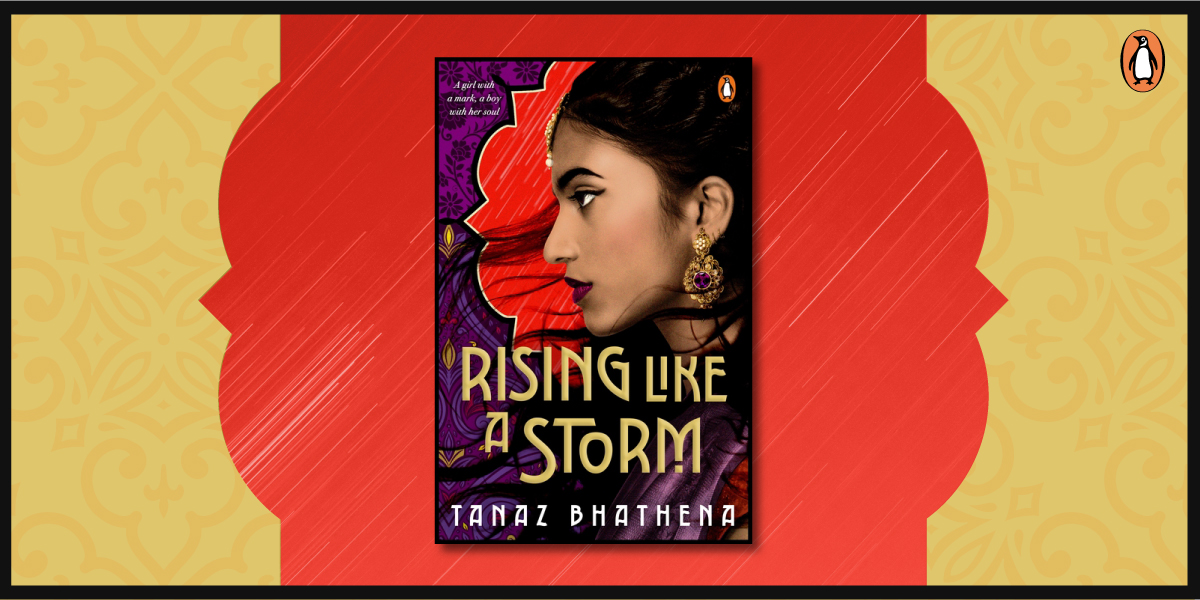
In this spectacular book, Tanaz Bhathena brings forth the journey of Gul and Cavas, who are much more than lovers. With a willingness to keep fighting, through pain and hardship, the two fight all odds and eventually achieve their goal. Through her strong characters, Bhathena attempts to reconstruct what India might have looked like without the British at its helm.
Here’s an extract from the book about the conversation between Cavas and Juhi, who endured a brutal marriage to King Lohar.
*
Rising Like a Storm || Tanaz Bhathena
I fall silent for a long moment. “Who else is in this prison?”
“Right now, it isn’t full—if the guards’ gossip is to be believed. Raja Amar had initially signed an order to free the cage victims being held here. After Shayla took the throne, she overrode the order, deciding she was better off reselling them at the flesh market. Didn’t make much off them, from what I hear. The mammoth turned out to be a liability, trampling half his handlers. He had to be put down. The peri she sold escaped his merchant owner by killing him in the first week. The merchant’s family demanded compensation from Shayla, which she, naturally, didn’t give. Now, apart from the shadowlynx, which even the guards are afraid to approach, this prison holds only me, Amira, and you.”
“Amira’s still alive, then.” Relief briefly flickers in my ribs. “Gul had nightmares about you both.”
I wonder if she’s still having them. I won der who’s taking care of her now.
“Amira’s alive,” Juhi says. “And she will prob ably remain so until Gul is captured.”
“If Gul is captured,” I correct. “She won’t make it easy. She’s stronger than she was before. I’ve felt her magic.”
“Which is why they got to you first, didn’t they? So that they could draw her here to Ambar Fort?”
“That was my fault— I went to attack Alizeh,” I say, my guilt like salt rubbed over an open wound. “Gul’s too smart. She won’t take their bait and pay the price for my stupidity!”
“Oh, Cavas, I wish I could believe you. But you don’t believe yourself.”
In the darkness, something prickly crawls across my foot, a bloodworm that I kick off in the sharp blue light of the shackle.
“I wish I could tell her not to come,” I say.
“Can’t you?” Shrewdness returns to Juhi’s voice, reminding me why I didn’t trust her the first time I met her— why I still don’t feel wholly comfortable confiding in her.
“What do you mean?”
“You said you felt her magic. That’s very specific.”
We’re complements. It would be easy to say aloud. But the prison’s walls likely have ears and I don’t want my words falling on the wrong ones.
Juhi seems to understand. “Try,” she whispers. “Try to tell her.”
I close my eyes, breathing deeply, my mind entering that eerie, meditative space that makes my skin glow, that takes me back to Tavan’s darkened temple. I make my way to the shadowy sanctum, where Sant Javer waits alone, watching me calmly. I hesitate, feeling shy. Gul, I know, has spoken to the sky goddess several times, but I’ve never done so with the saint I’ve worshipped since I was a boy.
My tongue eventually unties itself and I wish him an “Anandpranam.”
“She isn’t here, my boy,” Sant Javer says softly. “She hasn’t been here for a while.”
My already fraying nerves teeter on the edge of breaking. “Gul?” I call out. “Are you there? Gul!”
The pain makes it difficult to concentrate and so does the distance. Barely a moment goes by before I’m opening my eyes again, my head resting against the wall where I collapsed.
“Juhi?” I whisper.
“Still here,” she says. “You began glowing for a bit and then you collapsed.
What happened?”
“It didn’t work,” I say. “I couldn’t reach her.”
And I’m terrified that if I do reach Gul, all I’ll hear in return is silence.
In his book Karma, Acharya Prashant answers various questions posed to him by his diverse audience over decades. Offering an enriching kaleidoscopic perspective to readers, this books traverses alleys through interactions based around human conditions, confusions and questions related to one’s identity, one’s actions, and how to take the right actions. Read this excerpt from the book on when to think and when to act. It answers a question asked to Acharya Prashant: ‘I do not express my thoughts because I am socially restrained. I am afraid of being judged. Can I free myself only by deeds?’
*
Karma || Acharya Prashant
There is no more a final arbiter than action, deeds, life. What else is life but a continuous flow of actions? One finally has to give oneself the liberty to do it. Talking as a precursor to doing is all right, acceptable, but talking as a substitute to doing is evil.
If you want to use talking or thinking or discussing as a preparatory method before leaping into action, it is okay. Sometimes, the beginner needs that. Sometimes, everybody needs to think a little before taking a leap. Other times, one needs to talk to herself, sometimes to others. All that is understandable. But if one becomes a professional thinker specializing in nothing but thought and deliberation, and therefore vacillation and inaction, then it is merely self-deception. Also, I must warn you against the temptation to be fully sure at the level of thought. No absolute clarity is possible at the level of thought. Thought can bring you a certain level of clarity. It would be a relative level.
So, if you insist that unless you are totally clear with your thoughts you will not move, then you have ensured that you are never really going to move; then you will always have a reason to think a little more because thought by its very design can never be fully certain. An iota of doubt will always be residually present, and you can very well exploit that last iota to keep stretching the thought.
This is where faith is important. Faith is needed, so that you can act without being fully certain. At the level of thought, thought is still raising its habitual objections, but you say to thought, ‘You might not be clear. I am clear.’
Have you ever found thought coming to a final conclusion? That which appears like concluded tonight reopens for discussion tomorrow morning because a final conclusion would mean the death of thought. So, why would mind ever lend itself to conclusion? Thought would always leave a little scope for doubt to remain. And then, based on that doubt, that uncertainty, more thinking can be justified.
So, think if you must, but never expect thought to come to a solution. Thought is useful, but in matters of living, loving, and Truth, the utility of thought is limited. Do not try to overexploit thought. You will end up being exploited.
If you are saying that social restrictions, etc., are preventing you from enacting what you know, then you will have to weigh the security that you get from social conformity against the suffering that you get from this willing avoidance of your destiny.
What is bigger, your demand for security or your love for Truth?
This answer will determine your life.
*
To know in depth about Karma, what it means and how it functions, the ways of choosing the right action and the results that come from those actions, read Acharya Prashant’s Karma.
August is pretty much acknowledged as the last month of summer all along the northern hemisphere. It inherited its name from the Roman emperor Augustus Caesar and literally means ‘venerable, majestic, magnificent, noble’. When you think about it, august is rather grand, marked by the Olympics this year and all the books we’re releasing this month. Because what can be more grand than books right? Also, if you’re worried about missing out on all the sporting activities, a bookathon is a kind of sport too!
Here’s your chance at being revered as august individuals in your social circle after reading all our releases for the month.
Karma||Acharya Prashant
Karma
The meaning of Karma stands distorted by centuries of misplaced fictionalization. Karma remains a disquieting enigma to the few who refuse to accept compromised notions. This book is for them.
If to live rightly is to act rightly, what then is right action? This has tormented us since ages. The scriptures answer this, but without stooping from their cryptic heights. Nor do they advise how their ancient words apply to the present. Acharya Prashant’s work provides the missing link. He imparts clarity, leaving nothing to conjecture or belief.
The book demolishes the myths surrounding action and decision by bringing to focus the actor, rather than action. When we ask, ‘What to do?’, the book handholds us into ‘Who is the doer? What does he want from the deed?’ This shift provides the solutions, and finally the dissolution of the question.
Acharya Prashant demolishes ubiquitous beliefs and outdated notions to reveal some simple truths. If you can challenge the tyrannies of tradition and greet the naked truth, you will love this book.
Parenting through Pretend Play||Shouger Merchant Doshi
Parenting through Pretend Play
Parents today are too caught up in the rat race of ‘perfect’ parenting. In trying to ensure that their children are all-rounders and have an edge over their peers, parents forget to ask themselves an important question: What kind of life-skills can I inculcate during my child’s early development that will propel them towards a successful future? The Power of Make-Believe addresses this question. This well researched book outlines that pretend play and purposeful discussions with parents accords children the gift of vocabulary and creativity that leads to effective communication skills, something that will benefit them throughout their life and career.
With over sixty DIY pretend play activities, ten vocabulary enhancing ideas and several children’s book recommendations-based on topical concerns to spark a conversation and help understanding of worldly concepts in a constructive yet fun way-Merchant Doshi offers superb educational entertainment; a way to foster the overall development of children while they have heaps of fun with their parents!
Discordant Notes, Volume 1||Rohinton Fali NarimanDiscordant Notes, Volume 2||Rohinton Fali Nariman
Discordant Notes
A dissenting judgment, as ordinarily understood, is a judgment or an opinion of a judge, sitting as part of a larger bench, who ‘dissents’ (i.e. disagrees) with the opinion or judgment of the majority. Dissenting judgments or opinions appear in different ways.
Tracing, exploring and analysing all dissenting judgments in the history of the Supreme Court of India, from the beginning till date, Rohinton Fali Nariman brings to light the cases, which created a deep impact in India’s legal history. From the famous Bengal Immunity Co. Ltd. v. State of Bihar in 1955 to Bhagwandas Goverdhandas Kedia v. Girdharilal Pashottamdas and Co. in 1966, State of Bombay v. The United Motors (India) Ltd in 1953, Superintendent & Legal Remembrancer, State of West Bengal v. Corporation of Calcutta in 1967, Supreme Court Advocates-on-Record Association v. Union of India in 1993, Mafatlal Industries v. Union of India in 1997 and Pradeep Kumar Biswas v. Indian Institute of Chemical Biology in 2002, Keshava Madhava Menon v. State of Bombay in 1951, United Commercial Bank Ltd. v. Workmen and Ram Singh v. The State of Delhi in the same year and Union of India v. West Coast Paper Mills Ltd. in 2004 among others, this two-volume definitive work is a thorough examination of the important dissenting judgments of the Supreme Court of India, and of some of the Judges of the Supreme Court who have gone down as ‘Great Dissenters’, for having written dissents of legal and constitutional importance, some of which have gone on to be recognised as correct position of the law.
Comprehensive, definitive and authoritative, this is a must a must have for legal scholars and practitioners. Besides, the book will greatly interest policy makers as well as anyone, interested in India’s legal history.
My Family||Mahadevi Varma
My Family
For Mahadevi Varma, her animal companions were her chosen family. This family comes alive in Mahadevi’s lyrical prose, depicting the animals’ relationships with her, each other, and the human inhabitants of her home and her school. Rescued peacocks, squirrels, dogs, rabbits, and deer romp through these pages, each an unforgettable individual of many moods. Charming hand-drawn illustrations complement the delightful writing. Together, these portraits reveal an urban modernity permeated by nature.
In this first-ever translation of a little-known classic, Ruth Vanita brilliantly captures Mahadevi’s empathetic imagination, sparkling wit, and intense observation of detail. In her introduction, Vanita illuminates Mahadevi’s feminist and literary legacy, her powerful indictment of human cruelty, and how her prose sprang from the fount of her feelings for animals.
What Millennials Want||Vivan Marwaha
What Millennials Want
India is one of the youngest countries in the world and the generation of millennials make up for over 400 million people. This is the largest generation of people in the world. That means that the choices and trajectory of this generation have pivotal consequences on local, regional, and global politics and economics. So the important question is: What do Indian millennials want? What are their economic aspirations and their social views? Most importantly, what makes them tick?
It’s 2021 and more than 84% of them reported having an arranged marriage, and 65% listed a government job as their top priority. So are millennials really any different from previous generations?
In What Millennials Want, Vivan Marwaha documents the aspirations and anxieties of these young people scattered across more than 30,000 kilometers in 13 Indian states. Combining an expansive dataset along with personal anecdotes, he narrates an intimate biography of India’s millennials, investigating their attitudes towards sex, marriage, employment, religion, and politics.
The Solutions Factory||
Solutions Factory
In The Solutions Factory, Arun Maira digs deep into his experiences as a consultant and presents twenty human-led business stories that cover all kinds of problem-solving techniques told through carefully picked personal experiences and anecdotes. By distilling the essence of the work that consultants do, he offers a management handbook that is unique to Indian business practices. From cultural understanding to communication skills, this book illustrates the applicability of simple tips for a diverse range of business roles and levels.
Maira’s down-to-earth and insightful approach, keenly oriented towards respectful and ethical business practices, illustrates his signature mix of idealism and pragmatism-be it is about managing an unexpected crisis or about learning more about another company’s culture. In this age of financial uncertainty due to the pandemic, a book like this is as essential for small-business owners as it is for the heads of major corporations. Maira’s focus on excellence through ethics, success through learning, and valuation through value brings to the fore his people-centric and back-to-basics approach-an approach that every modern corporation will need in order to prepare for the future ahead of us.
Congress Radio||Usha Thakkar
Congress Radio
‘This is the Congress Radio calling on 42.34 metres from somewhere in India,’ Usha Mehta’s voice rang defiant and clear to the entire country on a ghost transmitter. These words would come to reverberate across the struggle for Indian independence.
It was August 1942. The Quit India Movement had just been launched at the Bombay session of the All-India Congress Committee by Mahatma Gandhi. Inspired by his rallying cry, the twenty-two-year-old student of Wilson College stumbled upon the idea to start an underground radio station to cut through the imperial din of the government’s mouthpiece, the All India Radio. Risking it all for country in the face of crackdown, Mehta and her intrepid co-conspirators filled Indian airwaves with the heady zeal of rebellion.
The clandestine station-Congress Radio-broadcast recorded messages from Gandhi and other prominent leaders to devoted followers of the freedom struggle. Moving from location to location to dodge authorities, reporting on events from Chittagong to Jamshedpur, the radio station fought the propaganda and disinformation of the colonial government for three months-until their arrest and imprisonment in November of the same year.
In this riveting account, Usha Thakkar brings to life this high-voltage tale of derring-do, complete with stouthearted revolutionaries, thrilling escapes and a cruel betrayal, through the extraordinary story of Usha Mehta, the woman who briefly became, quite literally, the voice of the resistance.
The Story of Tata||Peter Casey
The Tata Story
In 1868, Jamsetji Tata, a visionary of his time, lit the flame that went on to become Tata and its group of companies. This business grew into an extraordinary one. One that some may even call ‘the greatest company in the world’. Over the decades, the business expanded and prospered under the leadership of the various keepers of the flame, such as Sir Dorabji Tata, J.R.D. Tata and Ratan Tata, to name a few. But one day, the headlines boldly declared that the chairman of the board of Tata Sons, Cyrus Mistry, had been fired.
What went wrong?
In this exclusive and authorized book, insiders of the Tata businesses open up to Peter Casey for the first time to tell the story. From its humble beginnings as a mercantile company to its growth as a successful yet philanthropic organization to its recent brush with Mistry, this is a book that every business- minded individual must read.
Broke to Breakthrough||Harish Damodaran
Broke to Breakthrough
Broke to Breakthrough is a business biography of one of the largest dairy product companies in India-Hatsun Agro- and its founder R.G. Chandramogan. Hailing from Virudhunagar district, Chandramogan started his venture when as a twenty-one-year-old chasing his dreams
It was in 1970 that Chandramogan first started making ice candies with three people in a rented place measuring 250 sq.ft. in the. He initially sold in pushcarts and in the very first year, the company made an annual turnover of Rs 1,50,000. Gradually, Arun Ice Creams became one of the biggest players in the state. But Chandramogan didn’t stop at that – he branched into the dairy business, since they were constantly in touch with farmers across Tamil Nadu. Thus was born Hatsun Agro Product in 1986. Today, over four lakh farmers are associated with them and Hatsun has created a model such that there are no middle-men between themselves and the farmers.
Recipes for Life||Sudha Menon
Recipes For Life
Remember how our mothers and grandmothers would spend time in the kitchen, sharing their stories and exchanging recipes from each other’s homes without writing them down? Between chopping, sauteing, grinding and frying a varierty of ingredients, and the aroma of home-cooked food laid out on the dinner table, families forged bonds that withstood the test of time. Now the connections we made through oral storytelling have dissapeared because of rise of modern-day nuclear families where children see their parents once in a couple of months.
The truth, however, remains that no matter how many countries we travel to and live in, or how many expensive meals we eat at Michelin-star restaurants, the magic of our mothers’ cooking never fades away. In Recipes for Life, Sudha Menon attempts to recreate those memories and the magic of the food we grew up with and cherish. The book is replete with stories, anecdotes and recipes from the homes of some of India’s much admired and accomplished people.
The Dream of Revolution||Bimal Prasad, Sujata Prasad
Dream of Revolution
Few figures in modern India have enjoyed such acclaim and adoration as Jayaprakash Narayan. And yet, he has been equally vilified for all that went wrong in the unfinished post-colonial movement for freedom and democracy. Jayaprakash Narayan, or JP as he was universally known, epitomized the Marxian and Gandhian styles of political engagement, and famously brought a powerful government to its knees. Throughout his life, he channelled an emotional hunger for transformative politics, jettisoned easy options, shunned power and incubated revolutionary ideas.
A comprehensive study of JP’s life and ideas-from the radicalism of his thought process at American university campuses in the 1920s to his political coming of age in the 1930s and subsequent disenchantment with Gandhi’s leadership; from his infectious confidence about the future of socialism to his seemingly naive plans to outmanoeuvre powerful forces within the Congress; from his fractious friendship with Jawaharlal Nehru to his relentless crusade against the stifling of dissent-The Dream of Revolution, Bimal and Sujata Prasad’s rigorously researched biography of JP, dispenses with clichés, questions commonly held perceptions and pushes the limits of what a biographical portrait is capable of.
Rich in anecdotes and never-before-told stories, this book explores the ambiguities and ironies of a life lived at the barricades, and one man’s unremitting quest to usher in a society based on equality and freedom.
How Come No One Told Me That?||Prakash Iyer
How Come No One Told Me that
There are plenty of self-improvement books out there-books that claim they can change your life. Yet, what makes us better human beings are stories and real-life observations, which can help us get ahead in our careers and, in turn, enrich our lives.
In How Come No One Told Me That?, bestselling author Prakash Iyer shares the stories and observations that have made an immense impact on his life. The book is divided into ten sections, exploring life lessons, ways of improving oneself, leadership and the importance of doing small things right, among other subjects.
Through powerful anecdotes and charming essays, followed by practical, actionable advice, this book will help you make those minor adjustments to your professional and personal lives that can truly make you unstoppable.
Back to the Roots||Back to the Roots
Back to the Roots
What are the benefits of the Indian squat? Why do Indians touch the feet of their elders? These and many such ancient rituals and tradition are a part of our growing up, and in the absence of modern scientific certification, it is convenient to dub them as myths. But observation and deductive reasoning have proved to be the bedrock of these age-old and time-tested practices.
In Back to the Roots, Luke Coutinho and Tamannaah offer the rationale behind over 100 such practices that go a long way in promoting long-term wellness. Learn about traditional Indian recipes, superfoods and tips that provide solutions to a host of ailments like constipation, acidity and even fever. Join us on this valuable journey to resurrect our ancient knowledge and learn how inexpensive it is to invest in our lifestyles, improve our health, prevent diseases, improve longevity and the quality of our lives.
Diamonds in the Dust||Saurabh Mukherjea, Rakshit Ranjan, Salil Desai
Diamond in the Dust
Over the last few years, there has been a growing realization among Indians that their life’s savings, the bulk of which are parked in physical assets like real estate and gold, are unlikely to help them generate sufficient returns to fund their financial goals, including retirement. At the same time, many have lost their hard-earned money trying to invest in financial assets, including debt and equities. Such losses have occurred due to many reasons, such as corporate frauds, weak business models and misallocation of capital by the companies in whose shares unsuspecting investors parked their savings. What options do Indian savers then have to invest in, and build their wealth? Diamonds in the Dust offers Indian savers a simple, yet highly effective, investment technique to identify clean, well-managed Indian companies that have consistently generated outsized returns for investors. Based on in-depth research conducted by the award-winning team at Marcellus Investment Managers, it uses case studies and charts to help readers learn the art and science of investing in the US$3 trillion Indian stock market. The book also debunks many notions of investing that have emerged from the misguided application of Western investment theories in the Indian context. Vital and indispensable, this book will serve as the ultimate manual on investing and provide practical counsel to readers to achieve their financial goals.
What’s Your Story?||Adri Bruckner, Anjana Menon, Marybeth Sandell
What’s Your Story?
Are you trying to build your profile as a leader?
Are you using social media to your advantage?
Is your communication jargon-free?
When do you choose to produce a video or a podcast?
Does your message come through loud and clear?
What’s the future of storytelling, and are you prepared for it?
In a world where people send 500 million tweets a day and upload hundreds of hours of video every minute, how do you get your message across? The secret is to become a good storyteller. With easy-to-follow, effective tools and tips, this book will help you cut through the clutter and plan your communication goals, channels and delivery. Everyone loves a good story, but only a few can tell it well.
Be authentic, be authoritative and be heard!
5 Mantras Only Successful Students Know||Chandan Deshmukh
5 Mantras Only Successful Students Know
Who determines your success?
1. That nosy relative who pesters you with questions
2. Friends whose social media posts reflect their ‘perfect’ lives
3. You
Success holds different meanings for different people, but the feeling of wantingsuccess is universal. However, most students end up being their own greatest enemy when they start comparing their life story with others’ achievements.
In this well-researched self-help book, Chandan Deshmukh unpacks five simple and insightful mantras, which are easy to put into action from Day 1, for you to conquer the world!
– Written by the bestselling author of 7 Dreams Jobs and How to Find Them and6 Secrets Smart Students Don’t Tell You
– Includes step-by-step methods and tips for smart studying and achieving academic success
– Narrated through interactive graphs and fun artworks that are tailor-made for future school and college toppers
– Perfect for students who like learning beyond textbooks
We know that the little ones are busy adoring the blue sky these days turning into purple-pink and are wondering whether to mutter ‘Oh! August is finally here!’ or ‘Aww! It’s only August’. So, taking care of their visual palette, we intend to captivate their attention with our vibrant and colourful covers of our latest releases in August and promise to keep them entertained, engrossed, and ecstatic. The curated list ranges from care to courage, mantra to nostalgia, and struggle to success. It’s time for you to make some space in your bookshelves for these amazing titles.
Here is a list of our recommendations for August.
A Giant Leap
A Giant Leap || Thomas Scotto, Translated by Nakashi Chowdhry
This is one of the books in the One Day Elsewhere series. It’s 20 July 1969. At home, June is waiting for a big event, the biggest of her life: the birth of the baby that’s in her mother’s belly. But in the hospital, on the streets, everyone else is waiting for another big event: a man is about to walk on the Moon.
My Father’s Courage
My Father’s Courage || Anne Loyer, Translated by Nakashi Chowdhry
Aslam helplessly witnesses his father’s arrest: he disobeyed the British authorities by harvesting salt-a heavily taxed item. The boy is assailed with doubt. Why did his father break the law? Why doesn’t sea salt belong to everyone? When he learns that Gandhiji is going to be marching through his village of Jalalpore, Aslam feels hopeful. He is the only one who can oppose the authorities and, maybe, free his father.
The Black Tide
The Black Tide || Marie Lenne-Fouquet
Yann, the son of a fisherman in Portsall, loves selling fish at the port with his father. He lays out the ice, puts the fish on it and plays shop. But one day, the sea is very rough. The storm and the wind bring a terrible smell and devastating news: there has been a shipwreck and an oil spill!
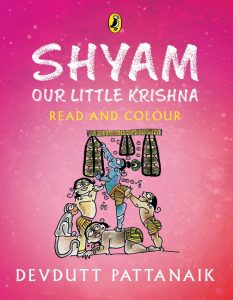
Shyam, Our Little Krishna
Shyam, Our Little Krishna || Devdutt Pattanaik
In this all-in-one storybook, picture book and colouring book, India’s most-loved mythologist Devdutt Pattanaik introduces the story of Krishna, fondly known as Shyam, to a new generation of readers. Told simply in his inimitable style, Shyam, Our Little Krishna is perfect as a read-aloud to acquaint young readers with the beauty, wisdom and love that Krishna embodied. The book is curated with fascinating bite-sized stories, myths and trivia about the young god, and it features over forty playful artworks accompanied by pages dedicated for colouring.
How the Earth Got Its Beauty
How the Earth Got Its Beauty || Sudha Murty
Have you ever stopped to marvel at the earth’s beauty: at snow-capped mountains and oceans so deep; at colourful flowers and extraordinary animals? The tale of how such beauty came into existence is a curious one indeed. India’s favourite storyteller brings alive this timeless tale with her inimitable wit and simplicity. Tricked out with enchanting illustrations, this gorgeous chapter book is the ideal introduction for beginners to the world of Sudha Murty.
10 Indian Heroes Who Help People Live With Dignity
10 Indian Heroes Who Help People Live With Dignity || Somak Ghoshal
This book tells the stories of ten Indian heroes who have been working in diverse fields to help society’s most vulnerable live a better life–from securing mobility rights for people with disability to abolishing the practice of manual scavenging. While their challenges are different, what they have in common is the desire to see all human beings live a life of dignity. Journalist Somak Ghoshal writes about the below-mentioned women and men who are trying to make the world a more just and equitable place for everyone.
Irom Sharmila Chanu
Aruna Roy
Bezwada Wilson
Medha Patkar
Dr Devi Shetty
Bhanwari Devi
Menaka Guruswamy
Anup Surendranath
Satinath Sarangi
Mahantesh GK
Bringing Back Grandpa
Bringing Back Grandpa || Madhuri Kamat
As his Grandpa gets ill and more confused, Xerxes’ life becomes correspondingly difficult. There are boys at school playing all kinds of mean tricks on him and his mother wants him to excel, as usual-but it is hard when his main ally Grandpa is not himself. How is Xerxes going to cope with the different things people expect of him? Will he make peace in school? And most importantly, can he help Grandpa become better?
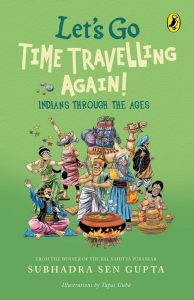
Let’s Go Time Travelling Again!
Let’s Go Time Travelling Again! || Subhadra Sen Gupta
How did Indian mulmuls make it into Cleopatra’s wardrobe? Who popularized the Mahabharata in households across the country? Did our ancestors really identify Jupiter and Saturn without even a telescope?
Find the answers to these and many other unusual questions about the India of yesterday. Go time travelling through the alleys of history and explore the many occupations that have existed through time-from dancers and playwrights to farmers and doctors. Sift through snapshots of the rich life led by ordinary Indians and discover unexpected titbits about language, food and culture.
Told through portraits of children growing up in the villages, towns and courts of our country, this sequel to the award-winning Let’s Go Time Travelling is a vivid glimpse into our past.
A Cello on the Wall
A Cello on the Wall || Adèle Tariel, Translated by Nakashi Chowdhry
On an ordinary afternoon in West Berlin, Charlie discovers a cello that once belonged to his grandmother. His parents had fled East Berlin with this cello many years ago, while Charlie,s grandparents still live on the other side of the wall. But the year is 1989 and revolt rumbles in the streets of Berlin to tear down the wall. This book is another one in the One Day Elsewhere series.
Postbox Kashmir
Postbox Kashmir || Divya Arya
Do only Muslims live in Kashmir?
Why do girls in Kashmir do stone pelting?
Whom do they want freedom from?
Can you imagine being confined to the four walls of your home with no internet, no social media?
Are Kashmiris really invisible to the rest of the country?
These are some of the questions two teenagers–Saumya in Delhi and Duaa in Kashmir–asked through letters they exchanged over almost three years.
Framing these letters is the detailed history and commentary provided by Divya Arya, a BBC journalist who asked them to be pen pals, which places their conversations against the backdrop of the political history and turbulent present of Kashmir and India. Postbox Kashmir takes on the challenging task of attempting to portray life in Kashmir from the perspective of the young minds growing inside it and providing a context of understanding for the young generation watching it from the outside.
Simi is a marketeer for a furniture company.
Ranvir is an analyst at a finance start-up.
At BizWorks, a swanky co-working space, their paths aren’t meant to cross. But as circumstances bring them together, again and again, they find it harder to deny the spark between them.
Scroll down for an excerpt from this story of a sweet and delicious romance set in a co-working space in Bangalore.
*
Champak, made his grand entry— the strap of his satchel bag taut across his chest, his round glasses slipping off his nose, his sharp, hawk eyes darting around to take in everything.
Champak, the all-knowing, overachieving, obsequious, boss’s chamcha, was taken aback by the sight of Simi at work.
‘You’re here already!’ he exclaimed. He made a dash to claim the seat opposite Simi, to her inward groan.
‘Why do you have to sit here?’ Simi frowned. ‘There are so many other seats.’
Strictly at Work || Sudha Nair
‘It’s motivating if we can see each other.’ His fake smile grated on her nerves. ‘Healthy competition, you know. . . ’
In their old office, Champak had sat a few cubicles away from Simi, but even then, he had constantly kept an eye on her and anyone who came into her cubicle. He knew everything—how late she came in, how long she took for lunch, how early she left.
He bragged about his skills, always trying to ingratiate himself with the boss and bag the best campaigns. Now, he was right in her face. There was practically no escape! Deepa waltzed in right after him. ‘Hey!’ Deepa twirled around and took in the new place, looking just as much in awe of it as Simi had been.
‘This is wonderful!’ ‘You’re late,’ Champak exclaimed. ‘You?’ She groaned. ‘Couldn’t you find another place to sit?’
If Simi called Champak a prick, Deepa called him a flirt. Deepa was the designer on the team, and Champak was always at her desk with some changes or the other. ‘What better place to see you all the time.’ He grinned at Deepa.
He thought he was flirting with her, but on the contrary, he was irritating the heck out of her. Deepa rolled her eyes.
‘More like see and hear us all the time,’ she muttered under her breath. He was such a pest! ‘Now we can’t even talk in peace,’ Deepa whispered to Simi. Deepa was right. But that didn’t stop their whispered raptures about their window seats and proximity to the break room and restrooms. ‘Girls, does either of you have a red gel pen?’ Champak asked, setting up his laptop, a notebook beside it, and three coloured markers neatly arranged on the side. Ugh! He was so irritating!
The git! Both of them ignored him and got to work. Simi continued to work on her presentation slides, thanking her stars for the charger or she wouldn’t have been able to do anything until now. At 10 a.m., they all got up and headed to one of the small conference rooms for the meeting. She gave her presentation on the new social media campaign for the Pumpkin chair. Champak interrupted her on almost every slide with questions and suggestions for improvement.
‘I think green will look better for that message,’ or ‘A stronger punchline would make a better impact!’
She tried to keep her cool and not get pulled into the black hole of his questions. Every time Champak opened his mouth, she felt a tightness in her belly, as if he was going to expose a mistake that she’d inadvertently made and make her look like a fool in front of everyone. Sometimes their boss, Nandan, picked up on Champak’s suggestions, but today, it looked like even he wasn’t in the mood for interruptions. ‘Let her complete her presentation, Champak!’
Nandan said finally. That made Champak shut up through the rest of the slides.
**
Sudha Nair won the Amazon KDP Pen to Publish 2017 contest for her debut novel, The Wedding Tamasha—a tale about love, family, values, and traditions.
Vir Sanghvi’s has been an interesting life – one that took him to Oxford, movie and political journalism, television and magazines – and he depicts it with the silky polish his readers expect of him. In A Rude Life, he turns his dispassionate observer’s gaze on himself, and in taut prose tells us about all that he’s experienced, and nothing more for he’s still a private man.
He unhurriedly recounts memories from his childhood and college years, moving on to give us an understanding of how he wrote his biggest stories, while giving us an insider’s view into the politics, glamour and journalism of that time
Here’s a glimpse into his book.
~
A Rude Life || Vir Sanghvi
As Advani had predicted, the BJP did well but not as well as Janata. It got 85 seats while Janata got 143. (The Congress got 197, far more than any other party but around a hundred seats short of a majority.)
The BJP said it would support Janata but even together, the two parties did not have a majority. They needed another fifty seats and they got them when the Left parties agreed to support them from outside.
This three-cornered alliance was full of contradictions. The 1977–79 Janata government had fallen, at least partly, because Janata members objected to the Jan Sangh’s communal roots. The BJP was even more of a Hindu party now than the Jan Sangh had been in 1977. Would this not be a problem? And what about the Left? Was it comfortable being part of a three-cornered arrangement with the BJP?
The only person for whom the alliance made sense was L.K. Advani. He would be remembered, he believed, as the man who had taken the BJP from a mere two seats in parliament to being the kingmaker at the next election.
There was yet another complication. Janata was not the old Janata Party any longer. It was now the Janata Dal, composed of some of the old Janata veterans but supplemented by a new party of Congress defectors led by V.P. Singh and Arun Nehru. The two sides did not get along. Chandra Shekhar, from the old Janata, for instance, had total contempt for V.P. Singh whom he viewed as a characterless opportunist.
How was this all going to work?
I was deeply skeptical about the prospects of any arrangement lasting. Till that point, India had mostly been run by governments with majorities in the Lok Sabha. Mrs Gandhi had briefly lost her majority after the Congress split in 1969 but even though she knew that she could count on the communists to back her, she had called a mid-term election (where she won a majority) as soon as she could.
Our sole experience with coalitions was the disastrous 1977 to 1979 period when politicians frittered away the goodwill that had got them elected and forced the electorate to recall Indira Gandhi, her transgressions during the Emergency forgiven.
I did not believe that this government would last even for a year. Apart from the contradictions between the BJP and the Left, there were too many differences within the Janata Dal itself.
I went to meet Chandra Shekhar at his ‘ashram’ (a large estate; ‘ashram’ sounded nicer than ‘pleasure palace’) in Bhondsi on the outskirts of Delhi. I had known Chandra Shekhar during my Imprint days because a friend of mine, Kamal Morarka, was a dedicated Chandra Shekhar supporter who boosted his prospects even when the Rajiv wave was at its height.
Chandra Shekhar believed he should be prime minister. He had opposed the Emergency and later had been the centre of all opposition to Indira Gandhi. He believed that with the Congress out of power his time had finally come.
I told him I didn’t think he had the votes. Besides, V.P. Singh had led the campaign against Rajiv (Chandra Shekhar had refrained from personal attacks) so the media expected Singh to be the next prime minister. Chandra Shekhar did not agree with me but looked grim.
I have no idea what happened next but TV footage showed Chandra Shekar, Devi Lal (a Haryana leader) and others laughing delightedly before they went into the meeting of the Janata Dal parliamentary party. After the meeting was called to order, Chandra Shekhar was called on to speak. He said he proposed Devi Lal for prime minister.
Devi Lal was then asked to accept the nomination. He said that he was honoured to be nominated but felt that the position belonged to V.P. Singh.
V.P. Singh then got up. He did not nominate anyone else. He grabbed the job and ran with it.
Obviously some deal that excluded Chandra Shekhar had been struck. Devi Lal had agreed not only to accept V.P. Singh as prime minister, he had agreed to deceive Chandra Shekhar as well. They had made a fool of Chandra Shekhar in front of the parliamentary party and the TV cameras.
Afterwards, Chandra Shekhar told the press that he had been betrayed which may have been the understatement of the year. But even he did not realize how completely he had lost out. When the ministry was sworn in, Chandra Shekhar’s supporters were sidelined or kept out. Yashwant Sinha, who was told he was only a minister of state, walked out of the swearing in and drove straight to Bhondsi to confer with Chandra Shekhar.
I met Chandra Shekhar a few days later at his MP’s bungalow in Delhi. He was livid with V.P. Singh and with Arun Nehru who, he said, had plotted the deception. Oddly enough, he felt no rancour towards Devi Lal without whom none of this could have happened. The way Chandra Shekhar told it, V.P. Singh had publicly declared that he wanted no position. But his followers had made it clear that they would not accept Chandra Shekhar. So Devi Lal had been chosen as a compromise candidate.
Either, Arun Nehru took Devi Lal aside after the consensus was arranged and told him to give the job to V.P. Singh or the whole exercise was a con job from the very beginning, intended only to make a fool out of Chandra Shekhar. He preferred the first explanation. I thought the second was more likely.
The problem with V.P. Singh was that he was a little like Arvind Kejriwal is today. Financially upright, soft-spoken, competent and capable of evoking strong emotions among his supporters. But he was also a man without any core beliefs, without any long-term loyalty (except to one or two political friends) and without any transparency. Even Advani who was vilified by the secular media was a relatively straight person.
If he said he was going to do something, he usually did it. V.P. Singh, on the other hand, was capable of such duplicity that if you asked him what day of the week it was and he said Tuesday, the chances were that it was really Friday. But he was charming, intelligent and entirely plausible at first. I had admired him in my Imprint days and I could see why he was now such a hero to the media. But how long, I wondered, before the media discovered how hollow he was? How long before the early popularity faded?
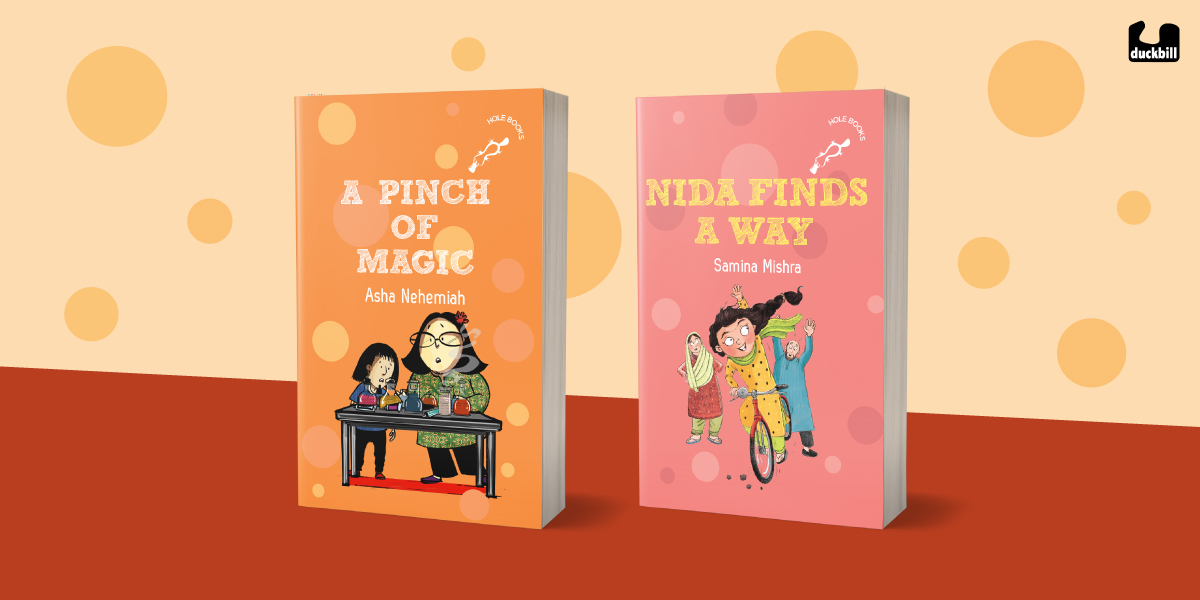
Hole books are early chapter books for children transitioning from picture books to longer books. The stories are contemporary, Indian and with protagonists who are the age of the potential readers, facing dilemmas and challenges which the readers would be familiar with.
The two new Hole Books added to the collection, A Pinch of Magic by Asha Nehemiah and Nida Finds a Way by Samina Mishra, carry this task out to perfection. Here is a sneak peek into both books. There is no way your child won’t want to read these after being thrown into the middle of some thrilling action from both the stories.
~
A Pinch of Magic
A Pinch of Magic||Asha Nehemiah
Appa should have known better than to ask Veena for help. Because whenever Veena was asked to help, many strange and unexpected things happened.
Take the time Veena’s mother had asked for help with oiling her bicycle.
‘Just one single drop of oil right here,’ Amma had pointed to the spot on the bicycle pedals. Shailaja Seshadri was getting ready for the Blue Mountain Bicycle Rally. ‘One. Single. Drop,’ she repeated firmly.
Veena, of course, wanted to be of as much help as possible. So she oiled every single point she could find. And to be safe, she used a few drops of oil each time. Then she tied a lucky charm on to the handlebars. She really wanted her mother to win the race.
The next day, a few minutes after starting the race, Amma found her fingers slipping off the handlebars and sliding off the brakes. Even worse, the lucky charm flew off when she started cycling fast, and got stuck in her nostril. Amma had to stop without even finishing the race.
So though he knew that he could be asking for big trouble, Veena’s appa didn’t know what else to do. Or who else to ask. His wife was out cycling with a group of friends. His sister, Malu, had left the house at dawn, muttering something about a spoon. Only he and Veena were at home, eating breakfast.
Nida Finds a Way
Nida Finds a Way||Samina Mishra
‘I want to ride a bicycle!’ Nida sang out. Her small hand—quite big for a seven-year-old, she thought—was folded into Abba’s large one as they walked together through the streets of Abul Fazal Enclave.
The large hand quivered and tried a strange move, as if it wanted to hold not just the small hand but also the wrist, maybe the entire arm.
‘NONONO!’
Abba stopped walking. Nida looked up. His eyes were round like pooris, his beard twitched nervously in all directions, like the traffic on the street.
‘Do you see this road?’
Nida looked down at the road. It was black, like most roads. Many kinds of wheels rolled past—scooter tyres, car tyres, rickshaw wheels, bicycle wheels.
‘Do you see this traffic?’
Nida looked up. A red Maruti was overtaking a faded white tempo. A motorcycle was swaying to the right, a rickshaw swerving to the left.
‘No cycling for you!’
Imran went past on a cycle much too big for him, riding scissor-style. He was in Nida’s class.
‘Nidaaaa! Look, no hands!’
Show-off, thought Nida and turned to Abba. ‘No, not like that,’ she began.
‘I don’t want to ride like that.’
But Abba’s eyes had become rounder, his face had become red.
Nida sighed. She knew that face. Abba the Worrier, they called him at home. When Nida climbed up the ladder that led to the water tank, Abba flapped his arms in panic.
When Nida came home from school with a scraped knee, Abba lurched about the house looking for Betadine.
It’s time to make new friends from different parts of our planet and go on adventures near and far with 30 stories bursting with intrigue, curiosity and wonder! Sift through the beautifully illustrated pages of The Book of Cultures and become a globetrotter as you travel from Japan to Peru and South Africa to Denmark, and learn about diverse cultures, customs, traditions and more.
Here’s an excerpt from this book about the Maldives Island in which Akilah, along with her sea creature friends, try to save the island.
*
The Book of Cultures || Evi Triantafyllides, Nefeli Malekou
Akilah loved water. So much, that everyone called her a sea creature. She had an entire life under water. She went for long swims with her best friends, Stingray, Parrotfish, Turtle and Barracuda. In the sandcastles she built, she hid treasures she collected on their adventures. Sometimes, she even prayed under the sea.
When she found out that her island was slowly sinking, she wasn’t that worried. “Breaking news: Global warming means that icebergs are melting and sea levels are rising. The Maldives Islands, only a few feet above the sea, are in danger of disappearing under water forever,” the news anchor warned. There’s so much splendor under water, life there would be a delight, Akilah thought. But only she felt this way. “Some islands have already gone under water!” her parents confirmed. Even the neighbor, Ms. Sing Song, whose laughter penetrated through their walls, had become awfully quiet lately.
Akilah came up with a spectacular idea. Stingray, Parrotfish, Turtle and Barracuda joined to help, too. Soon, Akilah and the fish had built a wonderful underwater island. “Everyone can move here. We can call it the Island of Hope,” she said. She even made two houses next to each other, so that they could hear Ms. Sing Song laugh again.
But the more time she spent at the Island of Hope, the more she realized it simply wasn’t home. When she tried to sketch, the paper melted, and her crayons lost their color. And eating was particularly hard—water made the food all soggy. “Yuck!”
“I don’t want to leave my house,” she admitted. “We need a new idea. And this time, we need all the fish force we can get.” Stingray, Parrotfish, Turtle and Barracuda called their friends from across the Indian ocean. Within hours, so many fish squeezed and squished next to each other, you could barely see the ocean’s blue. If only these many people could help, she thought. Wait a minute, I know. “I have a message. It needs to be delivered to all corners of the planet. Please pass it along,” she asked the fish. I really love my home. I don’t want to lose it. But rising seas might make it sink under water. If every single one of you made even the smallest changes, then my house, the Maldives and the environment could be saved! What do you say? Will you help?
That night, the fish swam and swam. They passed on her message to thousands of other fish, who passed it onto millions of other fish, hoping that soon, it would reach buddies all across the world, just like you.
**
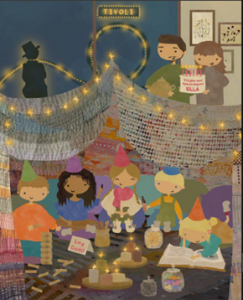
Now here’s a glimpse of Ella’s birthday in Denmark.
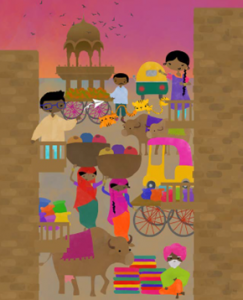
Before you go, peep into Suhail’s and Neha’s surroundings in India.