Publish with Us

Follow Penguin

Follow Penguinsters

Follow Penguin Swadesh

The stories that are emblematic of the conscious capitalism of the TATA group

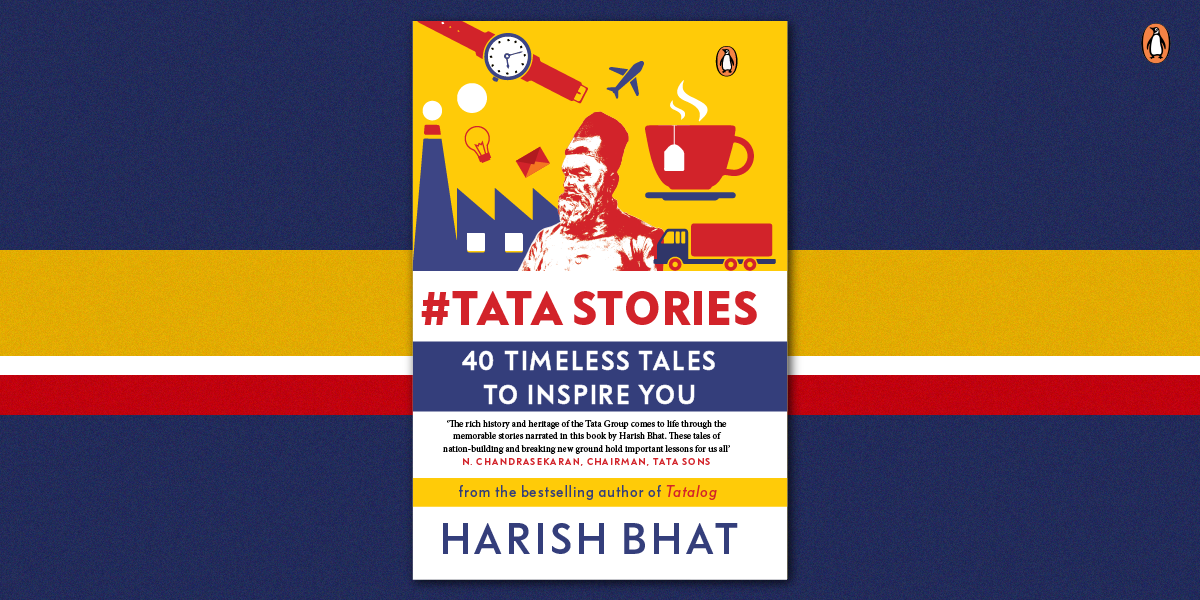
The Tata Group, in the Indian imagination is far more than a corporate group, it is institution whose inception and growth mirrors that of the modern India and whose value systems are as legendary as its success. Dancing across more than a century of greatness are beautiful, astonishing #TATASTORIES, many of which can inspire and provoke us, even move us to meaningful action in our own lives. Harish Bhat’s vivid glimpses into some of the distinctive cultural legacy of the Tata Group bring to life the extraordinary longevity, vibrancy and success of Tata. But at their essence, they are simple, moving stories of great teams, men and women, which hold deep lessons for all of us.

Read on for one such truly poignant moment, when the great man who would go onto become The Father of the Nation visited Jamshedpur, the beating heart of the institution that shaped, and continues to shape the growth of a nation.
#TATASTORIES
#TATASTORIES: 40 Timeless Tales to Inspire You || Harish Bhat

The steel city of Jamshedpur was teeming with excitement in August 1925. Mahatma Gandhi was coming to visit the town where India’s first integrated steel plant had been established by Jamsetji Tata. This would be a unique event—the man who was leading the charge for Indian independence visiting an industrial city which had taken a step towards economic independence. Mahatma Gandhi knew of Jamsetji Tata’s enterprise. Indeed, in 1905, soon after Jamsetji’s passing, he had written in the Indian Opinion newspaper, ‘In whatever he did, Mr Tata never looked to self-interest. He never cared for any titles from the Government, nor did he ever take distinctions of caste or race into consideration…His simplicity was remarkable. May India produce many Tatas!’

The Mahatma had been keen to visit the steel city himself, and now he was responding to a special invitation from Dinabandhu C.F. Andrews, who was at that time a labour leader in Jamshedpur. He had sought Gandhiji’s guidance to resolve some labour issues. Interestingly, many years later, Subhash Chandra Bose would also head the Tata Steel Workers’ Union in Jamshedpur, but that is the subject of another story. Gandhiji arrived in Jamshedpur and was shown around the steel factory. I can imagine how eagerly workers in the factory would have milled around to see the great man walk briskly by their furnaces that had begun proudly producing steel for the nation. He also visited the township and wrote later in his journal: ‘This town owes a debt of gratitude to the courage of Jamsetji Tata.’ But he went on to say: ‘However, what can one see of such a large factory in two days?’ At the Director’s Bungalow, he completed talks with R.D. Tata (father of J.R.D. Tata), and three outstanding labour matters were resolved after some discussion. It is remarkable that Gandhi took the time and effort to travel all the way to Jamshedpur to help bring these matters to a successful conclusion. Then, in the evening, he addressed a mass meeting on the maidan behind the TISCO Institute, now called the United Club. This was a huge gathering, attended by over 20,000 people. A sea of humanity stood waiting for the Mahatma to arrive, and he did not disappoint them. In fact, Gandhiji delivered a fine and spirited speech, which was both moving and inspiring. Here are some excerpts.

It was my ambition to see one of the greatest—if not the greatest—Indian enterprises in India, and study the conditions of work there. But none of my activities is onesided, and as my religion begins and ends with truth and non-violence, my identification with labour does not conflict with my friendship with capital. And believe me, throughout my public service of thirty-five years, though I have been obliged to range myself seemingly against capital, capitalists have in the end regarded me as their true friend. I am told that though so many Europeans and Indians live here (together), their relations are of a happy character . . . It is the privilege of both of you to be associated in this great enterprise, and it is possible for you to give Indians an object lesson in amity and goodwill . . . you will carry your amity outside your workshops and both of you will realize that you have come to live and work here as brothers and sisters, never regarding another as inferior, or oneself as inferior. And if you succeed in doing that, you will have a miniature Swaraj.

Gandhiji also narrated to the audience an anecdote about how his connection with the Tatas began.

In South Africa, when I was struggling with the Indians there, in the attempt to retain our self-respect and to vindicate our status, it was the late Sir Ratan Tata who first came forward with assistance. He wrote me a great letter, and sent a princely donation—a cheque for Rs 25,000 and a promise in the letter to send more, if necessary.

This was a reference to the spontaneous donation that Sir Ratan Tata, younger son of Jamsetji Tata, had made in the year 1909.
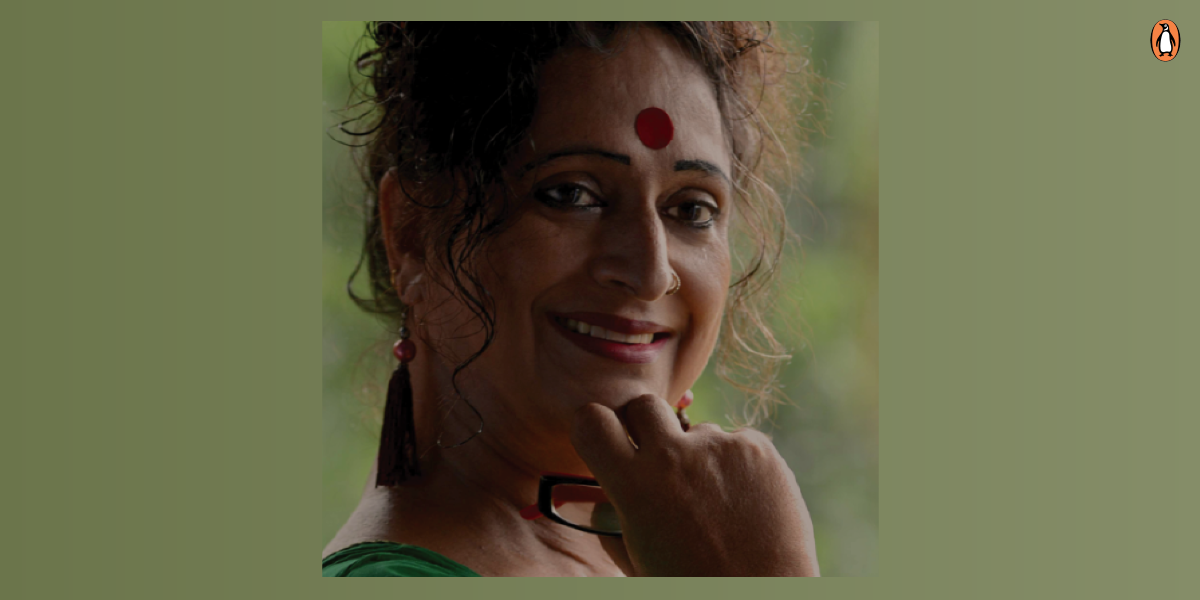
Freedom to live life on our own terms

How many times have you stopped at a traffic signal and turned your face away from the hijra who stood outside your car window asking for money? Wasn’t it pure loathing that you felt? Wasn’t it worse than what you normally feel when a beggar woman with a child does the same? Why? I’ll tell you why. You abhorred the eunuch because you couldn’t identify with her sex. You thought of her as a strange, detestable creature, perhaps a criminal and definitely sub-human.

I am one of them. All my life people have called me hijra, brihannala, napungshak, khoja, launda . . . and I have lived these years knowing that I am an outcast. Did it pain me? It maimed me. But time, to use a cliché, is the biggest healer. The adage worked a little differently in my case. The pain remains but the ache has dulled with time. It visits me in my loneliest hours, when I come face to face with the question of my existential reality. Who am I and why was I born a woman trapped in a man’s body? What is my destiny?

Beneath my colourful exterior lies a curled up, bruised individual that yearns for freedom—freedom to live life on her own terms and freedom to come across as the person she is. Acceptance is what I seek. My tough exterior and nonchalance is an armour that I have learnt to wear to protect my vulnerability. Today, through my good fate, I have achieved a rare success that is generally not destined to my lot. But what if my trajectory had been different? I keep telling myself that this is my time under the sun, my time to feel happy, but something deep inside warns me. My inner voice tells me that the fame and celebration that I see all around is maya (illusion) and I should accept all this adulation with the detachment of a sanyasi (hermit).

The first ever transgender to become a college principal is a rare feat, the media has proclaimed. My phones have not stopped ringing since, and invitations to felicitations have not ceased to pile up on my desk. I would love to believe that those who fete me also accept me as I am, but how can I ignore the sniggers, the sneers and the smirks that they try to hide but fail? For them I am just another excuse to watch a tamasha (spectacle), and who doesn’t want some free fun at someone else’s expense?
Hurt and anger are two emotions that I have learnt to suppress and let go. It is part of the immunity package that I am insured under. I have finally accepted the fact that my achievements have no bearing on the people around me. They still think I am sexless between my legs and that is my only identity. That I also have a right to have emotions is an idea that is still completely foreign to most. I don’t blame them. I blame myself for not being able to ignore such pain. I should have long stopped bothering about them.

It is not that I have not had my share of love in all my fifty-one years of life. They were good while they lasted. I have had major heartbreaks too, but each time I learnt a new lesson. I have loved well and deeply, and I hope my partners, wherever they are now, would silently remember that bit about me. It’s another matter that relationships don’t seem to work for me. Those who have loved me have always left me, and each time I have lost a piece of me to them.
Memories rush back as I sit down to write my story. I write with the belief that it would help society understand people like me better. We are slightly different outwardly, but we are humans just as you are and have the same needs—physical and emotional—just as you have.

———


Bridal blues

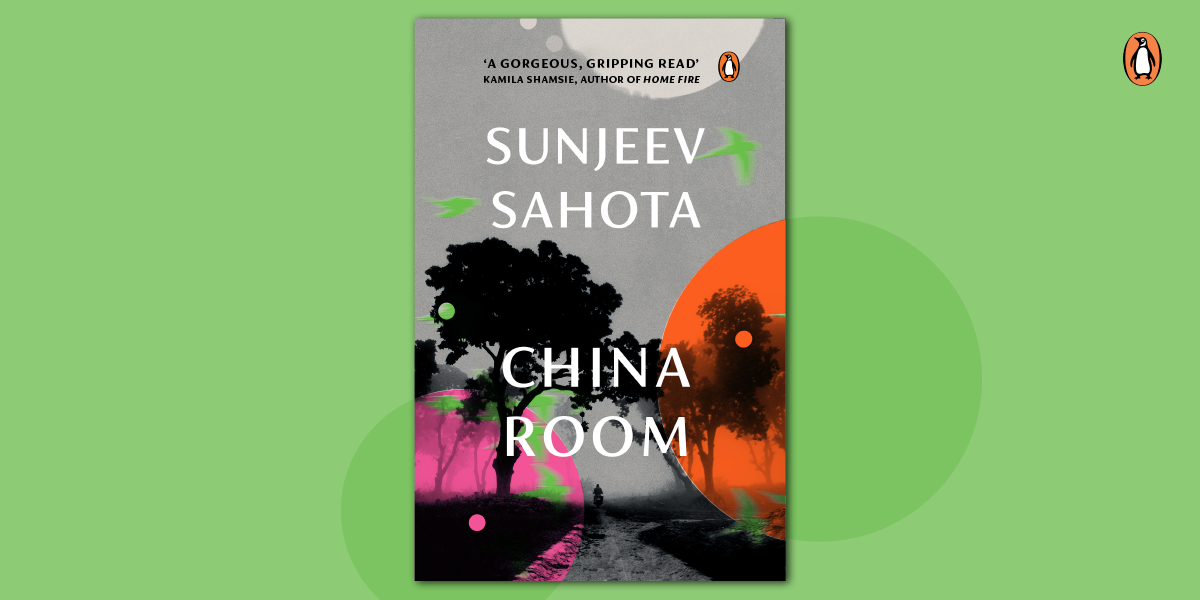
Inspired in part by the author’s family history and told with courage, compassion and deep humanity, Sunjeev Sahota’s China Room is an astonishing feat of storytelling from an exceptional novelist.

Mehar, a young bride in the rural Punjab of 1929, is trying to discover the identity of her new husband. She and her sisters-in-law, married to three brothers in a single ceremony, spend their days hard at work in the family’s ‘china room’, sequestered from contact with the men. Their new lives are those of servitude, much like all new brides of that time and place. When Mehar develops a theory as to which of them is hers, a passion is ignited that puts more than one life at risk.

Spiralling around Mehar’s story is that of a young man who, in 1999, travels from England to the now-deserted farm, its ‘china room’ locked and barred. In enforced flight from the traumas of his adolescence-his experiences of addiction, racism and estrangement from the culture of his birth-he spends a summer in painful contemplation and recovery, before finally finding the strength to return home.

We hope you enjoy this sneak preview of a chapter from this engrossing new read by a Booker Prize nominated novelist.

~


China Room FC
China Room||Sunjeev Sahota

It is their second Sunday married and an hour before the sun drops, Mehar, Gurleen and Harbans slip into some old cottons and heave the giant sloshing vat into the courtyard and on to the groundsheet. At this hour the air is lushly warm rather than oppressive and the courtyard

is free of the brothers. They think their men go to the bazaar on these nights, though that is another thing they have never been told. Perhaps they play cards, Mehar suggests, as if she knows what that is. All three hitch up their salwars and twine some old jute around their legs, so they’re naked from the knees down. ‘The leaves have come up,’ Gurleen says, feeling for a way out of the chore, a rare one she finds even more tedious than rubbing clean the spinach. But Harbans is having none of it and points out that there is still plenty of ink left in them. They hold hands, forming a triad, and one by one step inside the metal vat, the indigo plants sliding around the soles of their feet. The water, as if answering a question, rises up to their calves and their feet begin their work, up-down-up-down, a surging spilling tempest, the colour wrenched out and out. They do not speak, it is enough to try to keep their balance, and slowly the pool starts to

darken, their clothes and skin too, indigo staining legs and hips and face, but they stay in harmony, up-downup-down, minutes upon minutes, so that by the time the sun has disappeared and the moon is the whole light, they let go of one another’s hands and double over, gasping.

‘One more week,’ Harbans says, as they haul the vat back to its spot against the wall.

‘Oh, go crack an egg! Surely we’re done now!’ Gurleen complains.

Mehar says nothing, picks up the crumbling soap at the pump and starts on the blue bands striping her feet. It’s up to Mai, in any case. She will decide when the time is right to colour their blooded wedding sheets and hang them out to dry.


The first step to saving the environment

When we were young, we’d study about the environment and how we as humans are contributing to its degradation. But that was just something we were told…as adults, we seldom do all we can as individuals to help the environment.

 “Progress is impossible without change, and those who cannot change their minds cannot change anything.” -George Bernard Shaw

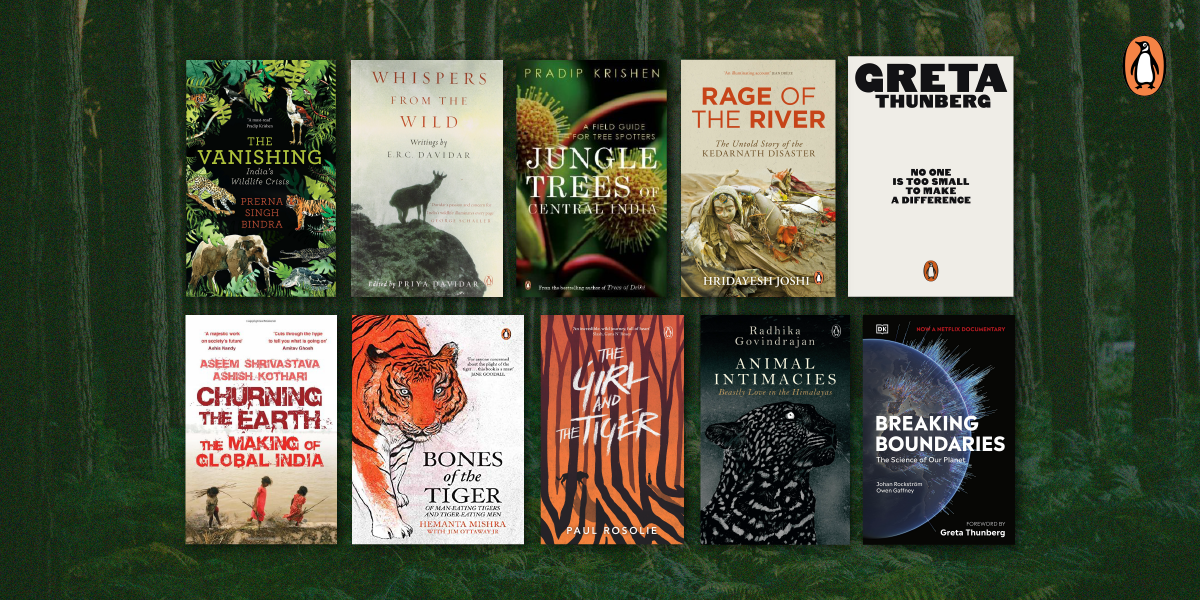
The first step in a healthy environment is to understand it better. And here is a list of books to help you with just that. We all can do our parts to help the environment, and we must begin immediately.


Jungle Trees of Central India

Covering an area larger than France, and including five of India’s most visited tiger reserves, the forests of Central India are one of the country’s most iconic wildscapes. Jungle Trees of Central India is a lavishly illustrated and user-friendly field guide to every wild tree you are will see in this entire region. A culmination of four years of research, the book has over 2000 photographs with thumbnail keys to all the bark, flowers, fruit and leaves. An ideal companion for your travels in the region, this book will turn you into an expert tree spotter and take your enjoyment of wild places to another level.


Rage of the River

On 17 June 2013, a normally calm Mandakini came crashing down from the hills in Uttarakhand and destroyed everything in its path: houses, bridges, dams and the town of Kedarnath. Thousands of people perished and lakhs lost their livelihood.
Three years after the disaster, stories from the valley-of pain and sorrow, the state government’s indifference and the corporate goof-ups, and the courage and heroism shown by the locals in the face of an absolute catastrophe-still remain largely unheard of.


Churning the Earth


The world stands so dazzled by India’s meteoric economic rise that we hesitate to acknowledge its consequences to the people and the environment. In Churning the Earth, Aseem Shrivastava and Ashish Kothari engage in a timely enquiry of this impressive growth story. They present incontrovertible evidence o nhow the nature of this recent growth has been predatory and question its sustainability. Unfettered development has damaged the ecological basis that makes life possible for hundreds of millions resulting in conflicts over water, land, and natural resources, and increasing the chasm between the rich and the poor, threatening the future of India as a civilization.


The Vanishing

Every year, our planet loses over 150 species of plants and animals, and India is very much in the midst of this mass ‘sixth extinction’. We are losing species in our backyard—where are the once ubiquitous sparrows, or the fireflies that lit up our nights? And in the forests, iconic species like the great Indian bustards are down to a hundred, while flamingoes are poised to be wiped off the map of India.


The Girl and the Tiger


Isha is a girl who loves animals but struggles in the confines of school. When she is sent away to live with her grandparents on the Indian countryside, she discovers a sacred grove where a young Bengal tiger has taken refuge. Isha knows that the ever-shrinking forests of India mean there are few places left for a tiger to hide. When the local villagers also discover the tiger, Isha finds herself embroiled in a life or death cultural controversy.


Bones of the Tiger

Majestic and beautiful, ferocious and lethal, the tiger has captivated the imaginations of people the world over for centuries. Inspiring myth and folklore as a graceful creature and terrifying predator, this big cat has long paced the jungles of Asia in a history strewn with conflict between man and beast – man-eating tigers have terrorized people for centuries. But in the twenty-first century, this conflict has turned on its head – tiger-eating men fund a very lucrative black market for tiger parts, and poachers and habitat destruction have brought the population down to less than 3200 individuals in the world today. A true adventure tale, Bones of the Tiger tells the fascinating story of one man’s quest to save the man-eating tigers of Nepal.


Whispers from the wild

Some people talk about nature, others listen to it. Listening can reveal wonders like how to befriend an elephant, how to talk to a tiger and how to live in the jungle. Many such amazing experiences crowd this volume containing the unpublished writings from the early and last years of the well-known naturalist, the late E.R.C. Davidar, besides his acclaimed book Cheetal Walk. A lawyer by profession and a shikari-turned-photographer, he established maybe the first ever private elephant corridor in India, near his jungle-cottage, and undertook the first census of the Nilgiri Tahr along the entire range. The book is enriched with photographs from the family album, and not only enlightens us about wildlife and conservation in the Nilgiris, but becomes a memoir of a jungle lover and his family.


Animal Intimacies

What do we really know of the intimate-and intense-moments of care, kinship, violence, politics, indifference and desire that occur between human and non-human animals?
Built on extensive ethnographic fieldwork in the mountain villages of India’s Central Himalayas, Radhika Govindrajan’s book explores the number of ways that human and animal interact to cultivate relationships as interconnected, related beings. Whether it is through the study of the affect and ethics of ritual animal sacrifice, analysis of the right-wing political project of cow protection, or examination of villagers’ talk about bears who abduct women and have sex with them, Govindrajan illustrates that multispecies relatedness relies on both difference and ineffable affinity between animals.


No One Is Too Small To Make A Difference

Everything needs to change. And it has to start today’ In August 2018 a fifteen-year-old Swedish girl, Greta thunberg, decided not to go to school one day. Her actions ended up sparking a global movement for action against the climate crisis, inspiring millions of pupils to go on strike for our planet, forcing governments to listen and earning her a Nobel Peace Prize nomination. This book brings you Greta in her own words. Collecting her speeches that have made history across Europe, from the un to mass street protests, no one is too small to make a difference is a rallying cry for why we must all wake up and fight to protect the living planet, no matter how powerless we feel. Our future depends upon it.


Breaking Boundaries: The Science of Our Planet

 In 2009, scientists identified nine planetary boundaries that keep Earth stable, ranging from biodiversity to ozone. Beyond these boundaries lurk tipping points. To stop short of these tipping points, the 2020s must see the fastest economic transition in history.
This book demonstrates how societies are reaching positive tipping points that make this transition possible: Activism groups such as Extinction Rebellion, or the schoolchildren inspired by Greta Thunberg demand political action; countries are committing to eliminating greenhouse gas emissions; and one tipping point has even already passed – the price of clean energy has dropped below that of fossil fuels.


Careful what you wish for

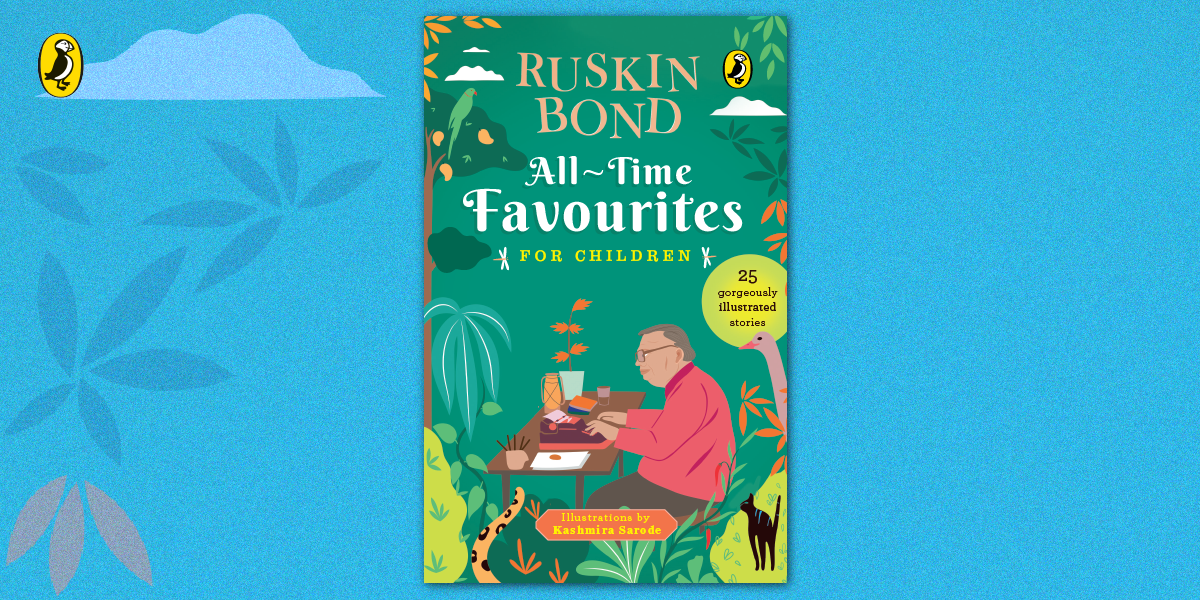
All Time Favourites for Children celebrates Ruskin Bond’s writing with stories that are perennially loved and can now be enjoyed in a single collectible volume. Curated and selected by India’s most loved writer, this collection brings some of the evocative episodes from Ruskin’s life. It brings together many known charming, endearing characters such as the iconic Rusty, the eccentric Uncle Ken and the ubiquitous grandmother, and a smattering of new ones that are sure to be firm favourites with young readers, especially middle schoolers. Heart-warming, funny and spirited, this is a must-have on every bookshelf!

All-Time Favourites FC
All-Time Favourites||Ruskin Bond

Here’s a taste of what’s in store in this exciting collection of stories. An extract from the story of a parrot who could, but ‘wouldn’t’ talk. ‘What goes around comes around’ is a complete mood in this one.

~

‘Kiss, kiss!’ Aunt Ruby would coo, putting her face close to the barge of the cage. But the parrot would back away, its beady little eyes getting even smaller with anger at the prospect of being kissed by Aunt Ruby. On one occasion, it lunged forward without warning and knocked my aunt’s spectacles off her nose.

After that, Aunt Ruby gave up her endearments and became quite hostile towards the poor bird, making faces at it and calling out, ‘Can’t talk, can’t sing, can’t dance!’ and other nasty comments.

It fell upon me, then ten years old, to feed the parrot, and it seemed quite happy to receive green chillies and ripe tomatoes from my hands, these delicacies being supplemented by slices of mango, for it was then the mango season. It also gave me an opportunity to consume a couple of mangoes while feeding the parrot.

One afternoon, while everyone was indoors enjoying a siesta, I gave the parrot his lunch and then deliberately left the cage door open. Seconds later, the bird was winging its way to the freedom of the mango orchard.

At the same time, Grandfather came to the veranda and remarked, ‘I see your aunt’s parrot has escaped!’

‘The door was quite loose,’ I said with a shrug.

‘Well, I don’t suppose we’ll see it again.’

Aunt Ruby was upset at first and threatened to buy another bird. We put her off by promising to buy her a bowl of goldfish.

‘But goldfish don’t talk!’ she protested.

‘Well, neither did your bird,’ said Grandfather. ‘So we’ll get you a gramophone. You can listen to Clara Cluck all day. They say she sings like a nightingale.’

I thought we’d never see the parrot again, but it probably missed its green chillies, because a few days later I found the bird sitting on the veranda railing, looking expectantly at me with its head cocked to one side. Unselfishly, I gave the parrot

half of my mango.

While the bird was enjoying the mango, Aunt Ruby emerged from her room and, with a cry of surprise, called out, ‘Look, my parrot’s come back! He must have missed me!’

With a loud squawk, the parrot flew out of her reach and, perching on the nearest rose bush, glared at Aunt Ruby and shrieked at her in my aunt’s familiar tones: ‘You’re no beauty! Can’t talk, can’t sing, can’t dance!’

Aunt Ruby went ruby-red and dashed indoors.

But that wasn’t the end of the affair. The parrot became a frequent visitor to the garden and veranda and whenever it saw Aunt Ruby it would call out, ‘You’re no beauty, you’re no beauty! Can’t sing, can’t dance!’

The parrot had learnt to talk, after all.

6 Quotes You Must Read on Gender and Sexuality

While many use religion to justify why they are being unfair to a person’s gender and sexuality, Devdutt Pattanaik in his books The Pregnant King and Shikhandi And Other Queer Tales They Don’t Tell You shows how mythologies across the world appreciate what we deem as queer.
Here are 6 quotes on what it means to be a man, a woman, or a queer.
What it feels to be a woman
Blog---Creative---4.jpg
Repercussion of Patriarchy
Blog---Creative---6.jpg
The meaning of queer in different mythologies
Blog---Creative---1.jpg
Should the queer hide or be heard like the thunderous clap of the hijra?
Blog---Creative---2.jpg
The functions of the forms
Blog---Creative---5.jpg
Traces of feminism in Hindu mythology
Blog---Creative---3.jpg
Read Devdutt Pattanaik’s The Pregnant King and Shikhandi And Other Queer Tales They Don’t Tell You and make sense of queerness and the diversity in society.

A glimpse into the unraveling of infidelity

Sometimes when you’re desperate to leave the past behind, the past is eager to catch up!

Anuradha leaves Gurgaon when Dhruv chooses his family over her. She thinks that chapter of her life has ended, and starts afresh in Mumbai. But strangely, it seems her past is trying to catch up. Dhruv suddenly comes back into her life. Even as they try to figure out their relationship, horrible things start happening to people they know. Together, Anuradha and Dhruv need to find out who it is that cannot bear to see them together. Who is carrying out these shocking crimes? Are they really soulmates cursed to stay apart, or is there some karmic debt they have to repay?

Read on for a look at the psychological aftermath of an extra-marital affair.

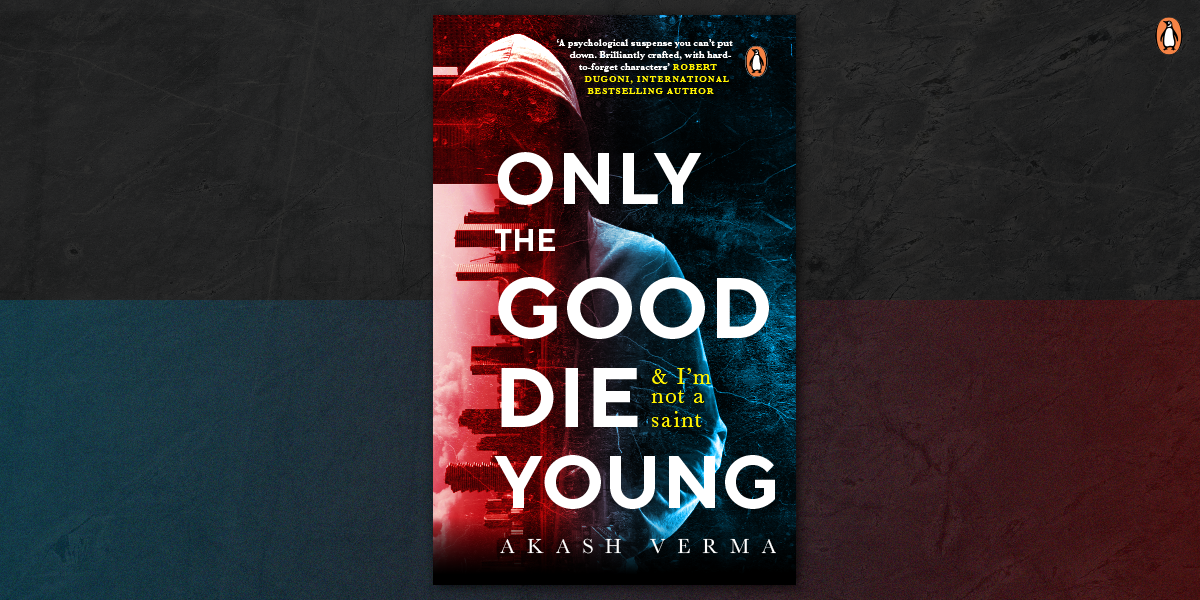
Only the Good Die Young
Only the Good Die Young || Akash Verma

Mumbai has unnerved me every single time I’ve set foot here in the last few months. It wasn’t like this before. It used to be like any other city. Just that I frequented it more as my advertising agency, C&M, is headquartered here. But now, since you have been here for about a year, coming to this city has never been the same. Work still brings me here—a couple of times a month at least—for a sales review or a client meeting. But every time I am here, I feel like running to you first, clasping you to my chest and not letting you go. Yes, that’s what I still feel, Anuradha, after pushing you so far away from my life. The first few months after you left were tough—to come to work each day with you not being in office; to live without you in Gurgaon; not hearing your voice; and not feeling your touch. Despite having Shalini and the kids back in my life, there was this one large gash in my heart. However hard I tried, it refused to heal. It stayed there, untended and bleeding. My head feels heavy with the weight of a sack inside it.. ‘“Don’t do it!” didn’t we warn you?’ the pebbles inside the sack which rests in my head scream in unison. ‘You can’t love two people at the same time.’ ‘I didn’t do it knowingly. It wasn’t in my control,’ I protest. ‘Oh, come on! Liar, liar, pants on fire!’ squeals one. ‘You had a rock-solid marriage, a lovely family. Didn’t you know what you were getting into?’ ‘I know. All my fault. I thought I could handle it. I loved them both, you know. I just couldn’t stop.’ One of the pebbles has a throaty voice. It’s smaller than the rest. ‘Look where this “love” has led you to. No one’s happy. Neither Shalini, nor you and I guess not even Anuradha.’ ‘Well, who knows?’ I say. ‘Maybe she has found someone. Why “maybe”? I am sure she has someone in her life by now. She is young, beautiful, successful . . . she can easily be happy. Don’t you think so?’ The pebble glances at me, scrutinizing me. ‘Yes . . . maybe. Will you be happy if she has found someone?’ I clear my throat, ‘Why not? Yes.’ ‘Sure?’ I nod. ‘Yes. I will be happy as long as she is.’ ‘Do you want to meet her?’ the pebbles chorus. ‘No. It’s over, isn’t it? Why would I want that?’ ‘Ah, come on,’ one of them says. ‘It’s what you want the most. To meet her. Isn’t it?’ I fumble for an appropriate answer. Unsuccessful. I go quiet, then. The plane has landed. I get out of the airport and spot the driver holding a placard with my name on it. I purse my lips and force a smile; a familiar weakness sweeps over me. He signals to me to wait and hurries off to get the car when I nod. I glance at the passengers leaving the airport, people gathered around the arrival gate, greeting incoming passengers: relatives and friends. I wish you too were here, waiting for me, Anuradha . . .Such feelings seem even more unreal after the way our relationship ended. But then how is one supposed to conceal one’s true feelings from oneself? How can I hide that I love you? Even after you lied to me. Even after I promised my wife, Shalini, that our affair happened in the heat of the moment and was well over. How can my feelings for you ever cease to exist? Maybe I really am the asshole that the people I love think me to be. Shalini and you. Maybe I don’t deserve love from either of you. My relationship with my wife will never go back to what it was. I have done enough to scar it and I don’t know if those scars will ever fully disappear. ‘We have struck a compromise for our children, Dhruv,’ was what Shalini told me at the dinner table one day when the kids were asleep. ‘It can never be the same again,’ she had said. Shalini is a headstrong, self-made woman who sticks to her word in her personal life as much as she does when treating her patients.

Cars through the ages

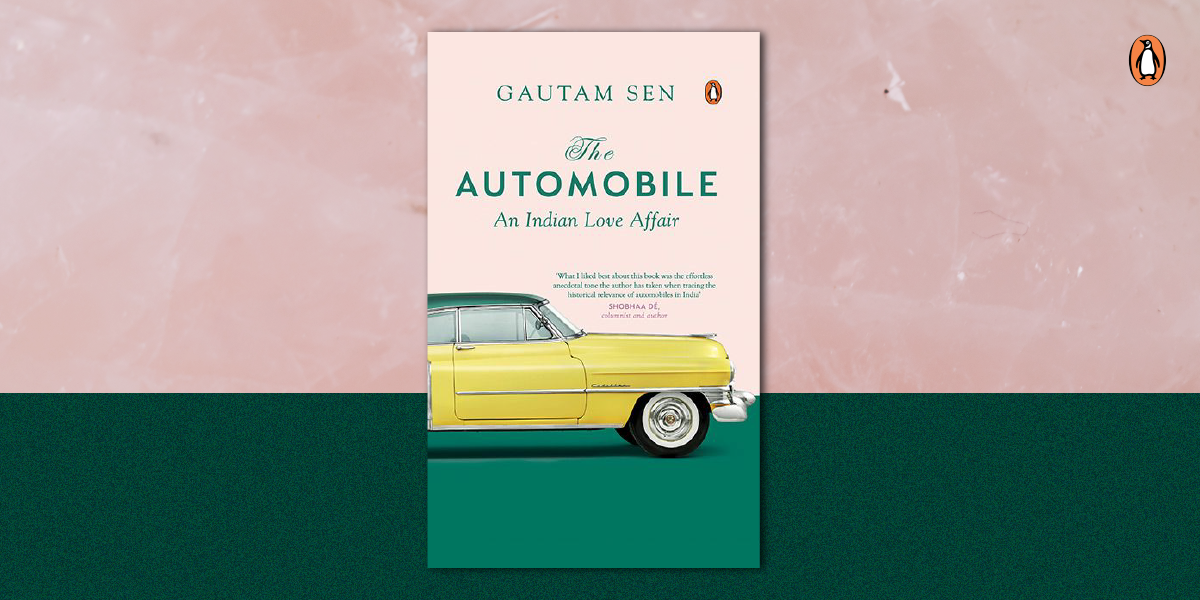
Cars are such an intrinsic part of our lives that it is difficult to visualise a world without them. Although they are the second biggest villain when it comes to air pollution, some villains come in attractive packages and arouse varied passions in the human heart. Gautam Sen’s articulate and extremely readable look at cars, ‘The Automobile: An Indian Love Affair’ gives us a peek into the past and how this industry has evolved. An insight that traverses down the memory lane giving us snippets of information that creates a clearer picture of a familiar and well-loved subject. Knowing about the evolution of the automobile is never a dull subject because all of us regardless of what generation we belong to, have witnessed this gradual unfolding of the multitudinous avatars of the four wheeler.

The Automobile||Gautam Sen

The biggest patrons of cars in the early 20th century were the several princely states during the British Raj. For the Maharajas owning cars was more of a quirk than actually a means for transportation. There are exceedingly entertaining anecdotes of how the Maharaja of Bharatpur converted his Rolls Royce into a hunting car equipped with a howdah (a seat for elephants usually) and how another Maharaja after being insulted by the sales person in London proceeded to buy a whole fleet of luxury cars that would only carry the garbage of the city! Let’s not forget that the Indian royalty were genuine connoisseurs and patrons of the growing automobile industry. The love affair with cars in India continued as industrialists joined the royalty in their predilection for cars. Bentleys, Rolls Royces, Jaguars, Cadillacs and Mercedes Benz were some of the names that became commonly known amongst the upper class in the country. There are interesting instances of art collectors from princely families tracing and acquiring rare vehicles. Owing to a desire to embrace modernity a lot of these erstwhile owners of fancy luxury cars abandoned them, but for some it became a passion of a lifetime to salvage them.  Protap Roy a prince from Bengal and Roni Khan from Mumbai were two such individuals. Like-minded people created the Vintage and Classic Car Club of India and a passion for maintaining old cars as the auto heritage of India manifested in the shape of the Auto World Vintage Car Museum.

Moving on from the romance of the classical styles to the more functional ones over the decades post independence, the evolution of cars and their influence on society and culture is not without its own drama. In Hindi films we saw a surfeit of Impalas, and the films generally ended with a car chase where breaks would fail over a precipice. Fiats and ambassadors were the most common cars seen on Indian roads during the 60s and 70s. With the advent of the 80s the tiny Maruti made its debut on the scene and there was a rush to book this car of the future. In Indian villages folk songs were composed in praise of this car and the owner of a Maruti car was judged as someone quite successful in his life. However, these were still times when families owned just one car, the family car regardless of its size. Cars weren’t air-conditioned and it was quite an agony to be driving in the hot Indian summer with the car packed with the entire family.

Slowly with liberalisation and globalisation the Indian economy took off, and since cars are truly the barometer of the economic health of a country, a variety of new cars could be seen on the Indian roads. New competition made Maruti bring out more luxurious and larger cars into the market. Korean, Japanese, American motor companies were some that found a willing market in India.   Recent history is something we are all aware of, there are cars available for every taste and to suit every pocket. Easy car loans make it possible for the young to buy a car fairly easily. In fact now our problem is a surfeit of cars and the horrific traffic situation in larger towns. One also sees more women drivers on the roads as the easy availability of cars is synonymous with the independence and safety of women in our country. Most families have several cars to facilitate all the members of the family and most people are constantly looking to upgrade their mode of transport depending on their financial situation. A love for travel and adventure sports has brought in a variety of SUVs, larger utility vans as well as jeeps into the market. Culturally we aren’t really very different from the western world when it comes to emotions aroused by a car. So these lyrics from the Tracy Chapman song Fast Car make a lot of sense when it comes to young dreams:

You got a fast car

I got a plan to get us outta here

I been working at the convenience store

Managed to save just a little bit of money

Wont have to drive too far

Just ‘cross the border and into the city

You and I can both get jobs

And finally see what it means to be living.

Growing up body shamed

Five years earlier, a friend’s nasty comment made Ananya start hating her body. She decided to change into a new person; one who effortlessly fits into all kinds of clothes, who shuns food unless it’s salad, and who can never be called ‘Miss Piggy’ – and to cut everything from her ‘old’ life, including her best friend, Raghu, for being witness to her humiliation.

Ananya was on her way to becoming who she wished to be, but she’s continued to see herself as a work in progress.

One day, her parents announced that they were expecting a baby, which worried her. To make matters worse, Raghu reappeared in her life …

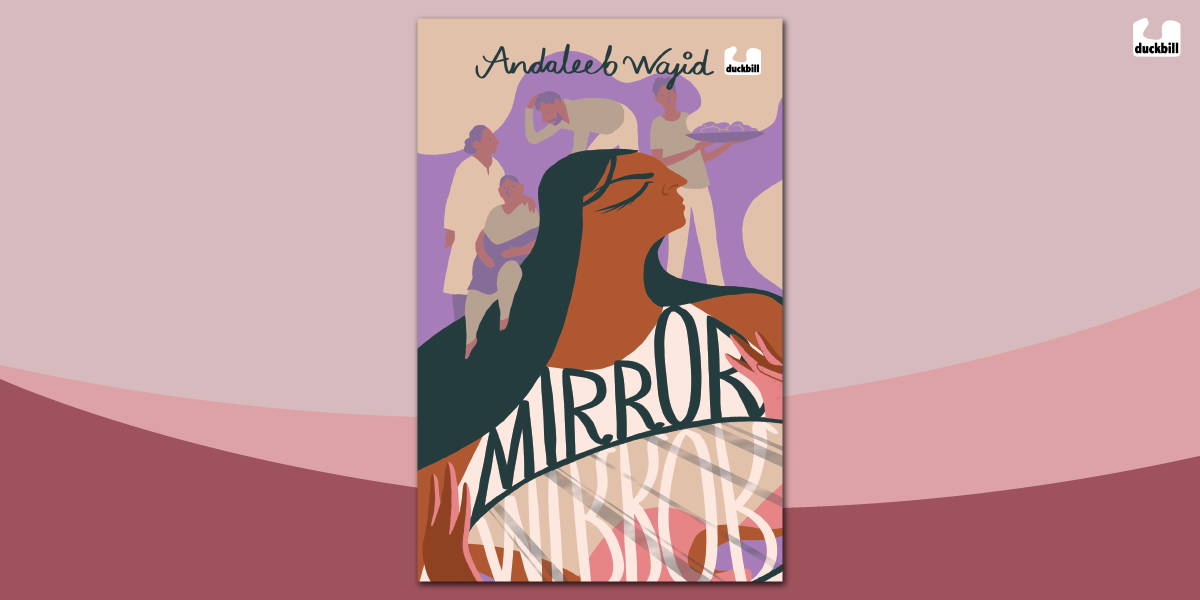
Andaleeb Wajid’s latest novel for young adults is a touching and funny story about a young girl’s journey to acceptance and self-love. Here’s a glimpse into her struggle as she finds her way.

~

Mirror mirror front cover
Mirror, Mirror||Andaleeb Wajid

I felt a little guilty about the way I had been treating Ma so I went looking for her. When I didn’t find her at home, I called her phone.

‘I’m back home. Where are you?’ I asked.

‘I left you messages. You didn’t see?’ Her voice was a little muffled. Where was she?

‘No. Why? Where are you?’

‘At the gynaecologist,’ she said. What? Already?

‘But you just found out yesterday!’

‘At my age, sweetie, you can’t be too careful,’ she said. ‘Okay, I have to go now.’ She hung up and I continued staring at my phone.

At her age?

Mom was just forty-three. But . . . having a baby at her age . . . I suddenly felt a spasm of fear. What if something went wrong and she died? All because of this stupid baby.

My throat closed with panic. I needed to talk to someone but didn’t want to call up Nisha. Obviously, I didn’t want to talk to Anirudh about it either. I called up Papa instead.

‘What is it?’ he asked, his voice coming muffled too.

‘Are you also at the gynaecologist’s?’ I asked, surprised.

‘Yes, of course,’ he said gruffly. ‘What is it, Ananya?’

‘I . . .’ I didn’t know how to tell him what I’d been thinking.

‘Nothing. I’ll see you at home,’ I said.

‘Okay,’ he said and he hung up too.

I sat on my bed, feeling out of sorts. I needed to do something. I needed to take my mind off this panic.

I rolled out my yoga mat and did a few stretches, and then sat down, trying to calm my mind. It wasn’t working. My mind was fixated on something else. Something with chocolate in it.

No, we’re not going there, I told my mind firmly.

Please?

One square of dark chocolate wouldn’t hurt anyone. I knew Ma kept a stash in the fridge but I had never ventured near it, as though afraid it would bite me.


Saliva pooled under my tongue and I felt an unbearable urge to just taste one little piece.

No. I knew exactly how to change that. I got up from the yoga mat and, bracing myself, walked over to the mirror.

That one piece of chocolate is going to show on your tummy, I told myself, making myself study my reflection. On your thighs. Do you want that?

I pinched my stomach and winced at the pain. Despite all the crunches, this was never going to go away, was it?

Fat bitch. Ugly cow. You’ll always be like this.

The thought of chocolate was no longer appealing. I sat in the hall, waiting for my parents to return home and when I heard the sound of the car, I got up to meet them at the door. I looked for an indication on Ma’s face that everything was all right. But she looked fatigued and anxious.

‘What is it? Are you going to die?’ the words tripped out of my mouth before I realized how silly I sounded.

Ma sidestepped me and walked towards the living room slowly. Papa followed her, looking grim, holding on to a file.

I held his thick wrist and he stopped. ‘What is it? You guys are scaring me,’ I whispered to him.

He looked confused. ‘Why are you scared? Everything is fine,’ he said. I didn’t believe him because his face looked drawn and worried.

error: Content is protected !!