Publish with Us

Follow Penguin

Follow Penguinsters

Follow Penguin Swadesh

Celebrate Satyajit Ray with some of his best literary works

Satyajit Ray hardly needs an introduction. Regarded as one of the greatest film-makers of our times, he received the Oscar for Lifetime Achievement by the Academy of Motion Picture Arts and Sciences in 1992 and was honoured with the Bharat Ratna in the same year.

He was also an ace designer, illustrator, music composer and to celebrate 100 years of the man, we share a list of books by him you’re bound to love, whether you’re new to his work, or are a long-term appreciator.


Childhood Days

Childhood Days The Penguin Ray Library
Childhood Days | | Satyajit Ray

 Childhood Days is a biography of Satyajit Ray, which he wrote on his own. Through this book, readers will come to know about the people who were around him during his childhood years, where he spent the early years of his life and who Satyajit Ray was, the man who we now know as an artist, music composer, director and writer. This book enables readers to take a look at a different side of Satyajit Ray, which is affectionate, tender and humorous, quite different from the person everyone knows, who is a serious man who keeps himself isolated from the world.


Classic Satyajit Ray

Ray’s short stories often explore the macabre and the supernatural, and Gopa Majumdar marked by the Translated from the Bengali by the author and are sharp characterization and trademark wit that characterizes his films. Cover illustration by Isa Esai This collection brings together Ray’s best short stories – including such read more timeless gems as ‘Khagam’, ‘Indigo’, ‘Fritz’, ‘Bhuto’, ‘The Pterodactyl’s Egg’, ‘Big Bill’, ‘Patol Babu, Film Star’ and ‘The Hungry Septopus’ – which readers of all ages will enjoy.


The Collected Short Stories (City Plans)

Best known for his immensely popular Feluda mysteries and the adventures of Professor Shonku, Satyajit Ray was also one of the most skilful short story writers of his generation. Ray’s short stories often explore the macabre and the supernatural, and are marked by the sharp characterization and trademark wit that distinguishes his films. This collection brings together Ray’s best short stories—including such timeless gems as ‘Khagam’, ‘Indigo’, ‘Fritz’, ‘Bhuto’, ‘The Pterodactyl’s Egg’, ‘Big Bill’, ‘Patol Babu, Film Star’ and ‘The Hungry Septopus’—which readers of all ages will enjoy.


My Years With Apu

The Indian film-maker Satyajit Ray tells the story behind the making of his three films, the “Apu” trilogy. Completed shortly before his death, the memoir covers the key aspects of his career: his decision to give up a lucrative job in advertising in order to make his first film, early setbacks, a chronic shortage of funds, the guidance and support of directors such as Jean Renoir, his solutions to problems, and the acclaim for his films at home and abroad.


Speaking of Films

Exactly fifty years ago, in 1955, the release of Pather Panchali heralded the arrival of a master in the world of cinema. Over the next forty years, Satyajit Ray came to be regarded as one of the world’s finest film-makers ever. Speaking of Films brings together some of Ray’s most memorable writings on film and film-making. With the masterly precision and clarity that characterize his films, Ray discusses a wide array of subjects: the structure and language of cinema with special reference to his adaptations of Tagore and Bibhuti Bhushan Bandopadhyay, the appropriate use of background music and dialogue in films, the relationship between a film-maker and a film critic, and important developments in cinema like the advent of sound and color. He also writes about his own experiences, the challenges of working with rank amateurs, and the innovations called for when making a film in the face of technological, financial and logistical constraints.


Indigo

Spine-tingling tales from the other side of midnight. Indigo is the mood in this new collection of stories about the supernatural, the peculiar and the inexplicable from Satyajit Ray, one of the best-loved writers of our times. There are tales here of dark horror, fantasy and adventure along with heartwarmingly funny stories about ordinary people in extraordinary situations. Indigo is a veritable treasure trove especially for those who like a taste of the unusual in a short story and an unexpected twist at the end. Translated from the Bengali by the author and Gopa Majumdar.


The Complete Adventures of Feluda Vol. 1

This omnibus edition features the ever-popular adventures of Satyajit Ray’s enduring creation, the professional sleuth Pradosh C. Mitter (Feluda). In his escapades, Feluda is accompanied by his cousin Topshe and the bumbling crime writer Lalmohan Ganguly (Jatayu). From Jaisalmer to Simla, from the Ellora Caves to Varanasi, the trio traverse fascinating locales to unravel one devious crime after another.


The Complete Adventures of Feluda Vol. 2

For readers who enjoyed The Adventures of Feluda in Volume 1, this second omnibus volume holds more delights. Accompanied by his cousin Topshe and the bumbling crime writer Lalmohan Ganguly (Jatayu), Feluda travels from Puri to Kedarnath, from Kathmandu to London in his pursuit of culprits; he tracks down Napoleon’s last letter, a forgotten painting by Tintoretto and a stolen manuscript.


Where to start reading Jhumpa Lahiri’s books

With authors as accomplished as Lahiri, it might be hard to decide where to start with her books, especially when her new novel Whereabouts has just released. Fret not, we’ve got you covered.

As an Indian-American born in England to Bengali parents, Jhumpa Lahiri is the quintessential immigrant. That is perhaps why her insight into the immigrant experience manifests so beautifully through her writing, even tugging at the heartstrings of those individuals who are far removed from such circumstances. Her writings range from fictional to autobiographical in nature, and she has even found success as a translator through her prowess in Italian.

Soon after she made her debut in the literary world with her collection of short stories, she was awarded the Pulitzer Prize for Fiction and the Hemingway Award. A gifted story weaver with an acute awareness of the ‘alien’, she won the Frank O’Connor International Short Story Award, the Man Booker Prize, the National Book Award for Fiction, and many more. Since her list of accomplishments is as long as her list of contributions to literature, we thought we’d ease things out for you by telling you which books to get your hands on first, to enjoy Jhumpa Lahiri’s genius to its full potential.


Whereabouts
Whereabouts | | Jhumpa Lahiri


Whereabouts(2021)

Jhumpa Lahiri’s skills as a sensitive author come to the fore in her newest novel, Whereabouts. What’s most distinctive about this novel is the fact that Lahiri has written it in Italian and then translated it into English herself. Her unnamed narrator talks about how solitude has become her “trade”, but shortly after she says it “plagues” her. This quest takes shape allegorically as she wanders through the city connecting with her widowed mother and her friends.

The novel comes together in forty-six short episodes named by their location such as ‘On the Sidewalk,’ ‘At the Ticket Counter,’ ‘By the Sea,’ In My Head,’ and so on. There is a vague sense that the protagonist never quite fits in and her wanderings seem to be a quest to find somewhere to belong. There is something very sad yet beautiful about the entire story. Whereabouts is a novel that beautifully captures the life of a solitary woman in suspension.

The New York Times’ review says ‘Whereabouts is like a photographer’s contact sheet. As our eyes move across the images, sensitive to each reframing, a loose narrative emerges of an Italian woman at a crossroads in her life.’


Unaccustomed Earth
Unaccustomed Earth | | Jhumpa Lahiri


Unaccustomed Earth(2013)

Unaccustomed Earth is Lahiri’s second collection of short stories. As with many of her other works, the stories delve into the lives of immigrant characters interacting with a mixed cultural environment. They focus on second-generation immigrants making and remaking lives, loves and identities in a nation not quite their own. We follow brothers, sisters, mothers, fathers, friends and lovers, in stories that take us from Boston and London to Thailand and India. Unaccustomed Earth is a perfect example of the author’s signature style, which includes beautiful prose, poignant wisdom and a taste of some of the innermost workings of the heart and mind of an immigrant.
Blending the individual and the generational, the exotic and the strikingly mundane, these eight haunting, exquisitely detailed and emotionally complex stories are intensely compelling elegies of life, death, love and fate. They represent the dazzling work of a masterful writer.

With regard to this book, The Independent remarks that ‘Lahiri has taken material that is familiar, melodramatic even, yet managed to touch the heights of literary achievement by telling the story on a broad canvas.’


In Other Words | | Jhumpa Lahiri


In Other Words(2015)

Most of Lahiri’s fiction carries autobiographical elements within it. She draws from her own experiences, enabling her to be more believable and relatable to her readers. However, In Other Words, takes this a step further as it in itself is an autobiographical work of writing. Its subject is that of the author’s love, devotion, commitment and desire to possess a language that was not hers.

A young Lahiri had visited Florence shortly after graduating from college, and this began an affair between her and the Italian language. She tried studying it for years but eventually comes to the conclusion that moving to Rome along with her family is the only way to master it. In Other Words is Lahiri’s meditation on the process of learning to express herself in another language and the stunning journey of a writer seeking a new voice.

This book will truly give you a glimpse into the workings of Jhumpa Lahiri’s mind if that is what you are looking for.


The Lowland | | Jhumpa Lahiri


The Lowland(2013)

This critically acclaimed book was #5 on the New York Times bestsellers list. The Lowland accounts for nearly half a century’s worth of American as well as Indian history through the lives of a single-family. It touches upon the Naxalite uprising in West Bengal in the year 1967, which leads to the two central characters drifting apart, and the older brother Udayan losing his life. Following this, the younger brother, Subhash marries his pregnant widow and takes her to Rhode Island where he maintains the fiction that he is the father. The action then shifts to how this lie corrodes their relationship and the confusion that American customs bring with them.

Lahiri gracefully conveys the shifts in constitution and temperament of her characters. She makes chaos, confusion and pain serene and spins entire lives around such emotions.

The Washington Post in a review for The Lowland says for Lahiri “Her prose, as always, is a miracle of delicate strength, like those threads of spider silk that, wound together, are somehow stronger than steel.”


The Penguin Book of Italian Short Stories | | Jhumpa Lahiri


The Penguin Book of Italian Short Stories (2020)

A Penguin Classic, this collection of short stories was hand-picked, compiled, translated and edited by Jhumpa Lahiri. More than half of these Italian stories have never appeared in the English language before. She has taken tales from forty different authors with varied backgrounds that have moulded her interest in the language and its literature. Dating back to over a hundred years, these stories bring to life the geography, private passions and dramatic political events that took place in twentieth-century Italy. Her choice of authors includes many revered names including Italo Calvino, Natalia Ginzburg, Primo Levi, Alberto Moravia, Elsa Morante, Cesare Pavese, Leonardo Sciascia, Italo Svevo and Giovanni Verga.

‘Lahiri’s selection of (mainly 20th-century) stories owes its existence to an appetite for Italian literature,’ says The Telegraph in its review of the book.


The Clothing of Books | | Jhumpa Lahiri


The Clothing of Books (2016)

Another autobiographical book, this work of writing concerns a topic very close to every reader and book collector’s heart. You can hear “never judge a book by its cover” a billion times, but that won’t stop you from wanting a book with an attractive cover or feeling dissatisfied with a cover that doesn’t meet your expectations. In this personal reflection, Lahiri explores the art of the book jacket and its importance. She presents both, the perspective of the author as well as that of book lovers and readers. She talks at length about the covers that she likes and those she doesn’t. She is particularly a fan of what she calls the “naked book”, which is a minimalistic book jacket.

She probes into the complex relationships shared between texts and images, authors and designers, and art and commerce. Lahiri reveals what book jackets and designs have come to mean to her. She is so enraptured by the art and the role of the book jacket, that she explains that sometimes, “the covers become a part of me.”

If covers are what attract you to a book, this book makes you realise that it’s okay to love pretty jackets!

Yet another unjust ritual


On the third day after the death of Bangaravva, a solemn procession that made its way towards the graveyard encountered a strange obstacle. A blast of wind rose up in revolt, the embers flared and the sacred ritual fire fell to the ground. The ceremony was ruined because custom demanded that the ritual fire never touch the ground.

What followed was chaos and confusion. The people sought a sacrifice to bear the blame for things going awry, and a solution to set it all right. The division between castes and communities came to the fore as the panchayat struggled to pronounce justice.

A poetic work calling for change in our casteist society, Karya unfurls a kaleidoscope of perspectives. Studded with symbols drawn from nature and myth, this small but significant novel explores the politics and power embedded within a Dalit community.

Here’s a peek into the main action of the book.

~

Front cover of Karya
Karya||Aravind Malagatti

The men on the way to the karya stopped suddenly at the boundary stone as they reached the limits of the village. The women in the third group were still some distance away.

A buffalo was swimming in a tank within the bounds of the village. Akkavva, from among the women going to the karya, stopped in her tracks to gawk at it, even as she handed over her pitcher of water to another. Her face, screwed tight with weeping, filled out suddenly like a pumpkin, beaming. It was three months since she had lost that buffalo while grazing it and she had been fretting. Now, she recognized it by the ornamental tipcovers on its horns. For a moment, she thought of the dead Bangaravva and turned back to get her buffalo. Who

knows if it would come home on its own or not? Some of the women who had seen her, turned up their noses at her and walked on.

The men had the, ‘ask them to hurry up’ expression, aimed at no one in particular but as if surely meant for the one particular group that was lingering. Just that no one said it aloud. The women stepped up their pace. The woman who had taken the pot from Akkavva walked briskly, ahead of them all. The men stood facing the village, with their back to the boundary stone. Once water was poured over the stone, they continued on their way facing the graveyard. All of men had the same solemn expressions. The women followed them, matching their strides.

That was when they removed the fresh white cloth covering the kavala mora. Their faces perked up to see the crows that had followed them, thanks to the aroma.

The wind picked up as soon as they crossed the village. Even before this, smoke from the smouldering kullaggi in Mallappa’s right hand had touched the dung cakes in his left; turning some of them too to ash. Once they crossed the boundary stone, the front wind caused the smoking kullaggi to catch fire. To keep his fingers from burning, Mallappa kept moving them to safer spots on the berani and screaming for fresh ones, ‘Ei, this is hot! Give me some more.’

Their feet swallowed the distance. All at once, the men opened their mouths; they murmured:

‘Ei, don’t let the kullaggi fall.’

‘It shouldn’t touch the ground.’

‘It’s bad luck if it does.’

‘Don’t let it fall. Come what may. Control the blaze; don’t let it burn so bright.’

Some even tried to put it down. But the flame would not be subdued. A boy picked up a fistful of mud to throw at it.

‘Ei, into whose mouth are you trying to throw mud?’ shouted Shivappa, Bangaravva’s husband. The fingers of the fist that held the mud loosened slowly, on their own. Mud dribbled through as flour from a flourmill, all along the way. They were getting closer to the graveyard. Mallayya tried his

best to press the dung cakes against one another to control the fire. But the headwind was too strong.

‘Chikkappa, kullu!’ he shouted for dry dung cakes to his uncle, Chandappa.

His uncle had fallen behind. All eyes turned towards him even as their strides quickened. Chandappa, feeling their eyes, darted towards Mallappa.

‘Why, didn’t you bring enough?’ he asked.

‘I did . . . but they’re over . . . You said you’d bring some, didn’t you?’

‘I? When did I say that?’

Mallappa went cold. He broke out in a sweat. His mouth went dry.

‘What do we do now?’

‘We’ll do whatever. But don’t drop it.’

‘Chikkappa?’

‘Chikkappa, he says, Chikkappa,’ Chandappa muttered to himself. And then to the men around, ‘Ei, go and gather some kullu drying in the fields.’

Even before he could finish, a few youngsters jumped the fence and entered the field with a standing crop. But none of them returned. Everyone scolded Mallappa. Everyone cautioned him from letting the ritual fire touch the ground. More than anyone else, Chandappa kept at it. Mallappa’s hands trembled as the heat touched them.

‘Chikkappa—at least fetch a flat stone to place under the burning cakes,’ Mallappa screamed but his uncle showed no concern. He was waiting for those who had gone to get some dry dung cakes from the field. When Shivappa brought a flat stone to help Mallappa, he shouted at him,

‘Why, do you want to snuff out your progeny by blocking the fire with stone?’

‘Not just his offspring,’ added another elder, ‘Looks as if he wants to burn down his whole house.’ Then Shivappa remembered his only son, Suryakantha, the fruit of many vows to many gods. He was already nearly chest-high. Not willing to lose him, Shivappa did not let the stone fall gently

to the ground; he dropped it with a thud. It fell on his big toe and . . . blood flowed.

Mallappa, caught amid the words of caution from everyone, tried his best to put out the fire with his hands but in vain. Already the hair on his hands was singed. The flame was trying to burn them. He gasped, helpless. Tears ran down his cheeks. And, finally, when the burning dung cake scorched his iron-like hands, he screamed and let go of the kullaggi! He looked at his hands, sobbing. They were covered with blisters. He looked around at the others.

Their looks were like knives. Those who had gone to fetch dry dung returned with some. They looked from Mallappa to the burning kullu on the ground. The ash was blown away by the wind and sparks of fire flew from them, happy to have won!

Everyone stood silent for a while. The wind had lost its gusto. All those who had come to attend the karya felt the whole world had come to a standstill. They had even forgotten they were alive.

All this happened in just a few moments.

~

Karya is a depiction of the unfairness of certain customs and how they discriminate harshly, even in dangerous, but easily remedied situations against one section of individuals, the Dalit community.

7 titles that will help businesses make a positive impact on Indian economy

India is one of the largest economies in the world yet when one goes to the grassroots to study the situation of the average Indian, one sees abject poverty and systemic inefficiency. Why is that, and what can we do?

Penguin Random House India has put together a list of titles by some of the most successful businessmen and economists in the country. With insights, experiences, tips, and the best way to move forward, there is sure to be something useful for you, and your business, and how your business can positively impact the country.


A Game Changer’s Memoir

A masterful strategist, Life Insurance Corporation of India (LIC) Chairman, G.N.Bajpai, in this book, recounts his truly inspiring journey as he weaved through complex rules and frameworks in his efforts to turn SEBI into an effective financial regulator for the country. Easy-flowing and readable with the writer’s anecdotal and educative style of writing and yet greatly comprehensive, this is a go-to book for a new generation of aspiring financial groundbreakers.


India: Still a Shackled Giant

India is one of the largest economies in the world today…but what about the India that the government does not want you to know about: the India where healthcare doesn’t work, corruption is rampant, criminals get elected to public office, the rich go scot-free, most people don’t pay income taxes and inequality is out of control.

Dev Kar, a former senior economist at the International Monetary Fund, points out the truth behind the noise of popular media and jingoism of leaders and tells us why India continues to be a shackled giant and how it can find the road to redemption.


Demonetization and the Black Economy

This move, it was claimed, was made to wipe out corruption, deter the generation of black money, weed out fake Indian currency notes and curb terrorism. Overnight, people in India realized that the cash in their pockets had no value. A year later, the RBI announced that 99 per cent of the old currency notes had been deposited with it. India continues to grapple with the effects of this move. The black economy has not been dented; counterfeiting and terrorism continue; the credibility of the RBI, banks and currency is damaged; the accountability of the Parliament and the prime minister has been eroded; and the social divide has widened. There have been many arguments and counter-arguments from both sides, but they have missed the complete picture.


Reviving Jobs: An Agenda for Growth

Every country in the world experiences the benefits of its demographic dividend, a period that comes but once in the life of a nation-when the share of the working-age population is larger than the non-working-age share. It has the potential to make a country progress towards higher incomes and development. But it can also become a nightmare if there aren’t enough jobs.

Reviving Jobs, the third volume in the Rethinking India series, offers suggestions on how India can make the best use of the remaining period of its demographic dividend-any failure to do so will cause millions to suffer in poverty for decades to come.


Do Better with Less: Frugal Innovation for Sustainable Growth

This groundbreaking book, by the bestselling authors of Jugaad Innovation, shows how India can harness the three megatrends — the sharing economy, the maker movement and the circular economy — and disruptive technologies such as AI and 3D printing to generate jobs and drive inclusive and sustainable growth in the decades to come.
Packed with over fifty case studies, Do Better with Less offers six proven principles that Indian entrepreneurs and businesses can use to co-create frugal solutions in education, energy, healthcare, food and finance that are highly relevant to India and the world.


Leap Grogging to Pole-Vaulting

An exhilarating manifesto for the future, this book convinces readers to make the shift from reactive leapfrogging to proactive pole-vaulting through radical transformation.

The unique ‘3-4-7 framework’ demonstrates how a paralysing mass of problems can be brought down to a formidable formula, thus making every problem solvable, no matter how big and complex. The book is dotted with inspiring case studies that can instil confidence in people from across the world to put this framework into practice for assured success.


Some Sizes Fit All

Some Sizes Fit All is an attempt to explain these fundamental pillars for any kind of business. An authentic and lucid presentation of management concepts and practices-which Akhil Gupta has tried and tested first hand through his illustrious career-this is a must-read for anyone trying to build a robust and financially sound business.

Five audiobooks to listen to when anxiety strikes

Books and stories have long been responsible for lulling us to sleep after the sun sets, pulling us out of the bog of anxiety we house in our minds. They transport us, not just from our real-life settings to exciting fictional worlds, but often from a state of mind that is in complete disarray to one that is composed, ordered and well informed.

Insomnia is often the result of stress, and even our body’s immunity suffers the consequences of our mind. Knowing how to be poised and in control of a situation, despite the circumstances, is a strength we all need with the global situation post-2020. Since we are in a time when we have the shadow of a lockdown constantly looming over us, audiobooks and eBooks have become a welcome alternative to the old bookstore or delivery services that may be unavailable sometimes. Here’s a list of some of our finest self-help books available as audiobooks that will pacify panic and have a profound impact on the mind.


Life's Amazing Secret Audiobook

Read by the Gaur Gopal Das himself in the form of a conversation between him and his affluent friend Harry, this book answers the fundamental questions about life’s purpose in the form of a light-hearted, thought-provoking easy read.

Whether you seek lasting happiness, strengthened relationships, your true potential, to do well at work, or even what you can give back to the world, Gaur Gopal Das’ Life’s Amazing Secrets will speak to you and guide you on your journey with its precious insights on these areas of life.


Venerable Tenzin Priyadarshi, born into a prominent Hindu Brahmin family, was only six years old when he began having visions of a mysterious mountain peak, and of men with shaved heads wearing robes the colour of sunset. At the age of ten, he ran away from boarding school and set out to find the place of his dreams. What was stranger than the visions was the fact that at the end of his journey, he mystically did find himself in that very place.

When his parents found him and brought him home, he continued to feel a strong pull towards spiritual life. This audiobook has been read by the Venerable Tenzin Priyadarshi himself and is a profound account of his lifelong journey as a seeker of enlightenment. Running Toward Mystery explores the vital importance of mentors in that search and the experience of meeting exceptional teachers like Dalai Lama, Archbishop Desmond Tutu, and Mother Teresa along the way.


The idea behind laughter yoga is simple yet profound. A practice involving prolonged voluntary laughter is based on scientific studies that have concluded that such laughter offers the same physiological and psychological benefits as spontaneous laughter. These benefits are delved in depth in Laughter Yoga, a book based on this new trend that has gained a lot of popularity worldwide.

This comprehensive book by the founder of the laughter yoga club movement, Dr Madan Kataria, tells you what laughter yoga is, how it works, what its benefits are and how you can apply it to everyday life.


In today’s challenging and busy world, don’t you wish you knew how to quieten your mind and focus on yourself? In On Meditation, renowned spiritual leader, Sri M, answers all your questions on the practice and benefits of meditation. With his knowledge of all the various schools of practice and the ancient texts, he breaks down the complicated practice into a simple and easy method that any working man or woman, young or old, can practise in their everyday lives.


Celebrating Life is an honest expedition into a realm that teaches you how you can be a master of your circumstances and make your life a celebration. If there is a guide to finding happiness, it is this!

The universe has bestowed limitless powers and infinite siddhis upon the human consciousness. Along with being effective and successful in the personal and professional spheres, the purpose of human life is also to ensure the complete blossoming of the individual consciousness. In Celebrating Life, Rishi Nityapragya shares the secrets that can help you explore your infinite potential. He offers an in-depth understanding of how to identify and be free from negative emotions and harmful tendencies, and how to learn to invoke life’s beautiful flavours-like enthusiasm, love, compassion and truth-whenever and wherever you want.

The Hindutva movement trying to convert Ambedkar into a relatable symbol

Ambedkar was seen as a strong critic of the Hindu caste system by the radical Ambedkarite movement in India. He had once said that he was born as a Hindu but will not die a

Hindu. He was of the view that there is no escape from one’s birth-based caste location within Hinduism. Thus, he chose to convert to Buddhism in 1956, just a few months before his death. Inspired by him, a large section of Dalits also converted to Buddhism. One can observe the trend of adopting Buddhism among a section of newly educated higher and middle-class north-Indian Dalits. But during our fieldwork in the villages of UP and Bihar, we also observed that their conversion in terms of religious memories from Hinduism to Buddhism is not yet fully complete. Some of them still live with the memories of their Hindu beliefs and lifestyle, while their identity is Buddhist. They are still not able to stop themselves from celebrating some Hindu festivals and worshipping some Hindu deities along with revering Buddha and Ambedkar. During the wedding ceremonies of some of the neo-Buddhist families in the Hindi speaking regions, the worship of Ganesha and Buddha takes place together, and the icons can be seen next to each other on several wedding invitation cards. The case of Maharashtra may be different, but in many Hindi-speaking regions this phenomenon is common.

Republic of Hindutva
Republic of Hindutva| | Badri Narayan

The Hindutva movement, as led by the Sangh, is trying to convert Ambedkar into a relatable symbol for everyone by downplaying his critique of the caste system. They want to detach his persona that critiqued the caste system from the version of him that they have invented. Their strategies are twofold. The first is if all Hindus across castes start respecting Ambedkar, his critique of the Hindu religion can be sidelined from the memories of Dalits and other oppressed communities. Secondly, they are constantly trying to rebuild Ambedkar’s image based on a selective forgetting of his critique. His image is used as a brand icon for the samrasta campaign, as a part of the drive to assimilate Dalits into the Hindu fold. In order to attach the elements of divinity, rituals and worship to the image of Ambedkar, it is expedient for Hindutva forces to associate themselves with the symbolic power that lies within it. There are calendars and portraits of Ambedkar in many RSS offices. In their public programmes too the portrait of Ambedkar occupies centre stage. The BJP government also took various steps to prove that they pay more respect to Ambedkar’s memories, symbols and memorials than done by the Congress government during its rule. For instance, it turned five places in Delhi, Mumbai, Nagpur, Mhow and London connected with Ambedkar into pilgrimage spots. The government of Maharashtra purchased Ambedkar’s house in 2015 in order to create a memorial museum to him. Modi inaugurated the memorial on 14 November 2015. He had earlier laid the foundation stone for the Dr Ambedkar International Centre in Delhi on 20 April 2015.


In addition, the Sangh is constantly responding to changes in the Indian socioeconomic landscape ushered in by economic liberalization and to the new technologically constructed public sphere. As it forges its relationship with modernity, democracy, the market and new technology, and evolves under their influence, it is using all the fruits of modernity in its functioning. With smartphones, social media sites and online media, the RSS is working creatively and channelling traditional resources of Indian society for its new mobilizational politics.

‘Please, don’t. I am scared’ – The painful world of IVF clinics

Detailing the difficulty of undergoing infertility treatments, What’s a Lemon Squeezer Doing In My Vagina is a nuanced, heart-breaking and heart-warming work on the indignities of medical procedures, the precariousness of motherhood, and what this means to women. In this excerpt, Rohini Rajagopal talks about one of her Intrauterine insemination sessions.

~

I heard of ‘artificial insemination’ for the first time in a Malayalam movie when I was eight or nine years old. It was Malayalam cinema’s cult classic Dasharatham (1989), which was so ahead of its time that even now I am not sure if its time has come. A leading mainstream actor, Mohanlal, plays a rich, spoilt man-child who decides to act on a whim and have a child through surrogacy. He finds a desperate woman who needs money for her ailing footballer husband’s medical treatment and agrees to rent her womb. They draw up a contract, turn up for the procedure, and fifteen days later she is pregnant! No failed attempts, cancelled cycles or any other complications. With this movie lodged in my brain for reference, I thought fertility treatments were an easy-peasy lemon-squeezy affair. To be fair to the movie, it is not about infertility. It’s about a healthy, fertile couple who use artificial insemination for conception. It may well have happened that quickly and effortlessly in real life too. But the movie glosses over the unseemliness and hardships of the treatment. For those who have seen the movie, I hate to burst your bubble. Welcome to the world of ART.

Front cover What's A Lemon Squeezer Doing In My Vagina
What’s A Lemon Squeezer Doing In My Vagina||Rohini S. Rajagopal

I began our first IUI in July 2011 with the earnestness of a debutant, expecting early and prompt success… The procedure itself was relatively simple with only a few key steps. The first step was pills to stimulate my ovaries to release multiple eggs. The second was follicular study. Follicles are tiny fluid-filled balloons in the ovaries that function as the home of the egg. They may expand from the size of a sesame seed (2 millimetres) to the size of a large kidney bean (18 mm to 25 mm) during the course of the menstrual cycle, eventually bursting to push the egg out. The follicles are measured at regular intervals during a cycle to ascertain if they have matured and are ready to release the egg. This is done through a transvaginal ultrasound (TVS).

I was not a big fan of TVS. It involved insertion of a long, slim plastic probe into my vagina and twisting it around to get a close look at the uterus. Magnified images of the uterus appeared on a computer screen. I was appalled the first time when the doctor covered the transducer with a condom and dipped it in lubricating gel, indicating that it had to enter an orifice in my body. I thought that scans, by definition, were non-invasive. It caused some discomfort, but it was not very painful. Eventually, I learnt to relax my muscles and spread my legs far apart to make things easier. I wished I didn’t have to get a TVS, but if I had to then I could tolerate it.

The cycle got off on the wrong foot from the very beginning. The first ultrasound showed only one big-enough follicular blob (at 13 mm). The other four or five follicles were too small, indicating they might not reach maturity. This meant I might have only one egg despite taking drugs to stimulate the release of many.

…It was a busy day at the hospital for Dr Leela, who was swamped with several emergency C-sections. I sat alone in the deserted waiting hall of the IVF clinic, biding my time. Other patients had left after their ultrasounds in the morning. No one else was lined up for a procedure.

…Finally, at around one, Dr Leela came and apologized for the delay. I was taken to the operating room, asked to remove my leggings and empty my bladder. I lay down on the bed and pulled a sheet over my naked legs. A tray of surgical instrument kits was placed on a stand next to the bed. I kept my fingers crossed, hoping there would be no speculum.

Dr Leela began briskly tearing the kits open one by one and getting ready for action. When she pulled out the speculum, I lost my nerve. The thin mask of composure I was wearing until then crumbled. I sprang up and held back her hand desperately.

‘Please, don’t. I am scared.’

As soon as I said it, I regretted it. What was I thinking? It was a meaningless request. And Dr Leela had no patience for such trembling and dithering. She was not known to offer empty, placatory words, ‘It’s okay. Just relax. It will not hurt you.’ My protest was an annoying interruption and she reacted sternly.

‘Take your hand off. I don’t need it here.’
The room became tense.

…The ninety seconds it must have taken to fix the speculum and inject the semen were excruciating, and not just because of the physical hostility of the act. Not just because it felt raw or sore or I was bleeding. But because it was a breach of my already fragile self. It tore through the membranes of my defences, leaving me exposed and helpless.

In a few minutes, it was over and the doctor left. The stainless-steel tools were taken out by the nurses. The housekeeping staff cleaned the floor. The room became empty again. The pounding in my heart ceased. I rested in the metallic stillness of the operating room for thirty minutes, drove home, ate my lunch and went to sleep.

That IUI was an eye-and-mind-opener of the path ahead. An IVF clinic is a cold place to walk into. It doesn’t matter which IVF clinic you go to. There might be a difference in degree, but the air is still chilly and biting. You must shed your inhibitions, modesty and fears quickly because the most crucial part of fertility treatment involves lying on your back, knees bent, legs wide open, while probes, catheters and lemon squeezers are thrust inside your vagina by professionals whose day job this is. What you need is the stance of a warrior, not the long-suffering bearing of a patient.

~

Years later, I am just a few weeks away from going into labour. Ranjith’s mother and I are alone at home. We are having a woman-to-woman conversation about the trials and tribulations of bringing a human into this world. We discuss pregnancy scans and the improvements in technology since her time. She speaks about her own repulsion and discomfort during an internal examination, which was necessary in her days when ultrasounds were not as prevalent.

She asks casually, only half-asking, but mostly reconfirming, ‘You’ve never had an internal examination, alle?’

I gasp and mumble something to the effect of, ‘Yes, I have.’ But the truth is, there was no short answer to that question.

~

What’s a Lemon Squeezer Doing In My Vagina opens up a discussion that we are hardly willing to have, sensitising us to the physical and emotional toll that medical procedures and social scrutiny take on women.


Restore the Earth – How you can contribute to the 41st Earth Day

Our planet isn’t doing that great. We know that. We hear it, read about it and even talk about it. But what really is the problem? Who is responsible, why is it happening and most importantly, what can we do?

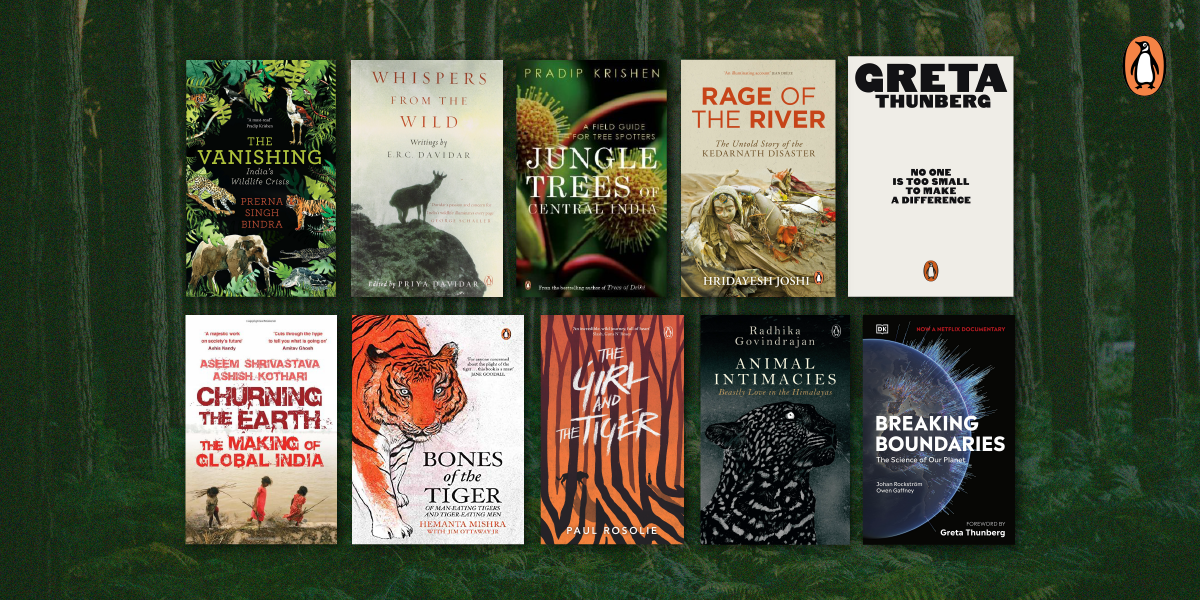
The first step in the direction of change is awareness – understanding the problem and what steps we can take as individuals. And so, Penguin Random House India would like to share a list of some of the books that will help you get started on this journey.


Conflicts of Interest

India’s foremost environmentalist, Sunita Narain, gives a personal account of her battles as part of the country’s green movement. While outlining the enormous environmental challenges that India faces today, Narain talks about how corporate lobbies and political interests often scuttle their effective resolution. Conflicts of Interest also includes an ‘environmental manifesto’, a blueprint for the direction India must take if it is to deal with the exigencies of climate change and environmental degradation.


Environmentalism

In this book Ramachandra Guha, an acclaimed historian of the environment, draws on many years of research in three continents. He details the major trends, ideas, campaigns and thinkers within the environmental movement worldwide.

Massive in scope but pointed in analysis, written with passion and verve, this book presents a comprehensive account of a significant social movement of our times and will be of wide interest both within and outside the academy.


Thirsty Nation

Presented in the book are innovative, cutting edge ways to combat the water crisis and ways of investing in the right projects. The roles of technology, finance, and a general view of domestic and foreign investment in water are explored by the authors and practical and lucrative financial advice is offered making it an important book in the present ecological and financial environment.


The Vanishing


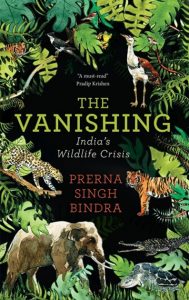
The Vanishing takes an unflinching look at the unacknowledged crisis that India’s wildlife faces, bringing to fore the ecocide that the country’s growth story is leaving in its wake—laying to waste its forests, endangering its wildlife, even tigers whose increasing numbers shield the real story of how development projects are tearing their habitat to shreds. It tells us why extinction matters, linking the fate of wildlife to ours.


How to Avoid a Climate Disaster

Bill Gates has spent a decade investigating the causes and effects of climate change. With the help of experts in the fields of physics, chemistry, biology, engineering, political science, and finance, he has focused on what must be done in order to stop the planet’s slide toward certain environmental disaster. In this book, he not only explains why we need to work toward net-zero emissions of greenhouse gases, but also details what we need to do to achieve this profoundly important goal.

10 tips to invest better the Coffee Can Investing way

Most people usually invest in the same four to five assets: real estate, gold, mutual funds, fixed deposits and stock markets. All they end up making is a measly 8 to 12 per cent per annum. Those who are exceptionally unfortunate get stuck in the middle of a crash and end up losing a lot of money. But what if there was another way?
In the book, Coffee Can Investing, Saurabh Mukherjea along with Pranab Uniyal and Rakshit Ranjan show us how to make low-risk investments that generate great returns.
Here are 10 tips from the book to help you invest better.
————–

A slip and a fall in search of the grey ghost of the Himalayas

In Deepak Dalal’s new book, The Snow Leopard Adventure, Vikram and Aditya are back in magnificent Ladakh. Having finally freed their young friend Tsering from the hands of dangerous men, they’ve set themselves up for an even greater challenge: to track down the grey ghost of the Himalayas, the snow leopard.

But things don’t always go according to the plan during their trek. Here is an excerpt from the book that highlights one of the more challenging events of the trek.

Front Cover The Snow Leopard Adventure
The Snow Leopard Adventure||Deepak Dalal

I didn’t see exactly what happened because I was looking down at the gravel-strewn track as I ran. I heard a scream, and when I looked up, I saw a pair of hands grabbing desperately at the edge of the outcrop. I wasn’t far behind Caroline and scarcely a few seconds must have elapsed between her falling and my flinging myself to the ground and locking my fingers around her wrists. I had barely grasped them when her scrabbling fingers slipped, and her entire weight was transferred on to me. I was dragged forward and my chest hit the rock at the edge of the cliff with a thud.

We were both stuck, Caroline dangling from my hands and I pressed against the cliff edge, pinned down by her weight. Caroline is three inches taller than my 5 feet 7 inches and also heavier than me (sixty-five kilos to my sixty, she told me later). I could feel myself being pulled towards the edge. Disaster appeared to be a certainty, but Tsering intervened, saving us by clinging to my thighs and adding his weight to mine.

Now, on reflection, I don’t think any of us would have died if we had gone over. The cliff we clung to was not a large one. The fall was only a few metres. But the area at the base of the cliff was not flat, it sloped downwards at an alarming angle. Our injuries could have been serious. We would have broken several bones, but we would have survived.

My breath came in rapid gulps and sweat must have flowed from my every pore. Yet, even though I was terrified, a part of my mind admired the vista that spread before me. I could see the river valley below and the mountain slopes opposite. I spotted flecks of colour in the distance—our camp mates. I wondered if they could see us.

I am ashamed to admit that I lost control of myself up there. My hands shook and my chest hurt terribly. My heart kicked and pummelled my chest, and my senses swam about me. I kept assuring myself that there was no reason to panic and that nobody would go over.

I had no idea then that I was speaking my thoughts aloud (Caroline and Tsering informed me later). I told myself that we only had to wait it out. Somebody would come . . . Tina and Kathy would return and untangle us.

Luckily, a heaven-sent determination infused Caroline as she dangled in the sparse Ladakh air. While I was rambling, she spotted fissures and cracks on the rock face she was suspended against. She willed her legs to grope beneath her and she found secure anchors in the stony crevices. Her fingers and palms gripped rock at the cliff edge. With me still holding on to her wrists, she pulled herself up a few inches.

I heard her breathing. She was gasping and panting far louder than I was. Soon her face was level with mine and our eyes met. Hers glittered with cold determination. There was a vacant expression in mine, she told me later. She was probably right, because she had to shout several times before I paid attention to what she was saying. She wanted me to release her wrists, which I did mechanically. Now sure of herself, Caroline dragged herself up and without further incident she flopped beside me. We lay inert on the rock, Tsering looking down on us.

After a long time we continued our walk to the crest. The rest of the morning was a blur. None of us were in any state to look for bharal or search for leopards. Kathy, Tina and Yuan turned up, exhausted, after an hour. They had found more sign of the leopard they were following but had not been able to locate it. We turned back for camp shortly thereafter. Caroline had extracted a promise from

Tsering and me not to speak about the morning’s drama to anybody. She smiled gratefully when it became clear that we were not going to say a word, and she turned distinctly friendly when we maintained our silence at camp too.

Aditya was aghast when he learnt that I had not pursued the leopard with the others. ‘How could you let such an opportunity go?’ he wanted to know. ‘You were so close to the leopard!’

Does Aditya eventually see the Snow Leopard? Grab your copy for Snow Leopard Adventure to find out!

error: Content is protected !!