Publish with Us

Follow Penguin

Follow Penguinsters

Follow Penguin Swadesh

7 pieces of advice from Robert T. Kiyosaki’s Rich Dad

Robert T. Kiyosaki grew up with two dads. His own, and his best friends’. Both men, he tells us, were successful in their careers, working hard all their lives. Both earned substantial incomes. Yet one always struggled financially. The other would become one of the richest men in Hawaii.
Both men were strong, charismatic, and influencial. Both men offered Robert advice, but they did not advice the same things.
Which dad’s advice would you like us to share with you today?
Rich Dad? Well, we thought so.
Here are seven pieces of advice that Robert got from Rich Dad:
“A job is only a short-term solution to a long-term problem. Most people have only one problem in mind, and it’s short-term. It’s the bills at the end of the month, the Tar Baby. Money controls their lives, or should I say the fear and ignorance about money controls it. So they do as their parents did. They get up every day and go to work for money, not taking the time to ask the question, ‘Is there another way?’ Their emotions now control their thinking, not their heads.”

~

“The Rich know that money is an illusion, truly like the carrot for the donkey. It’s only out of fear and greed that the illusion of money is held together by billions of people who believe that money is real. It’s not. Money is really made up. It is only because of the illusion of confidence and the ignorance of the masses that this house of cards stands.”

~

“Illiteracy, both in words and numbers, is the foundation of financial struggle. If people are having difficulties financially, there is something that they don’t understand, either in words or numbers. The rich are rich because they are more literate in different areas then people who struggle financially. So if you want to be rich and maintain your wealth, it’s important to be financially literate, in words as well as numbers.”

 ~

“Start minding your business. Keep your daytime job, but start buying really assets, not liabilities.”

~

“An important distinction is that rich people buy luxuries last, while the poor and middle class often buy luxuries first… The old-money people, the long-term rich, build their asset column first. Then the income generated from the asset column buys their luxuries.”

~

“Great opportunities are not seen with your eyes. They are seen with your mind. Most people will never get wealthy because they are not trained financially to recognize opportunities right in front of them.”

 ~

“Fear inspires winners. And failure defeats losers. It is the biggest secret of winners. It’s the secret losers don’t know. The greatest secret of winners is that failure inspires winning; thus, they’re not afraid of losing.”
Enriched by Kiyosaki’s personal experience and the teachings he received from his rich dad and poor dad, Rich Dad Poor Dad highlights different attitudes towards money, work and life.

Stay home, stay well and well-read

With April comes the spring! Unfortunately, with the current state of the world, it’s advised you spend more time indoors – for your own safety and that of others.

Make the most of this time spent at home, dear reader. Here is a list of new releases from Penguin Random House India coming your way. We’re sure you’ll find something to keep yourself busy, informed and entertained!


All Drama, No Queen

Front cover of All Drama No Queen
All Drama, No Queen || Andaleeb Wajid

Farida’s parents passed away in an accident when she was twelve. And for years, she’s had to fend off Reshma Phuppu, a distant relative plotting to gain control of her parents’ house in Bangalore. When all the drama gets too much, she runs away to stay with her best friend, Priya. Farida deeply feels the absence of a family, and only has memories of her distant cousin, Irshad. She’s had a crush on him since she was a twelve-year-old, but they lost contact when her parents died. Nearly two decades later, Priya’s boyfriend, Ajay, serendipitously finds Irshad….

*

That Night

Front cover of That Night
That Night || Nidhi Upadhyay

Natasha, Riya, Anjali and Katherine were best friends in college – each different from the other yet inseparable – until that night that began with a bottle of whisky and a game of Ouija but ended with the death of Sania, their unlikeable hostel mate. The friends vowed never to discuss that fateful night.

But now, someone has begun to mess with them, threatening to reveal the truth that only Sania knew. Is it a hacker playing on their guilt or has Sania’s ghost really returned to avenge her death?

That Night is a dark, twisted tale of friendship and betrayal that draws you in and confounds you at every turn.

*

The Terrible, Horrible, Very Bad Good News

Front cover of The Terrible, Horrible, Very Bad Good News
The Terrible, Horrible, Very Bad Good News || Meghna Pant

Thirty-four-year-old Ladoo, a simple middle-class divorcée from Rishikesh, wants only one thing from life–a baby. She eats gondh halwa, drinks badam milk, and takes folic acid, to stop her ticking biological clock and become the world’s most fertile woman.

Along the way, Ladoo must figure out whether motherhood means marriage, whether being a single mother means loneliness, whether ‘my body, my rules’ applies to women, and whether doing something scandalous is outrageous or courageous.

*

The Power Of Purity

Front cover of The Power Of Purity
The Power of Purity || Mohanji

Power of Purity is a compilation of Mohanji’s spontaneous answers to questions posed during various satsangs (spiritual discourses) and interactions across the world. With razor-sharp clarity and wit, Mohanji provides the reader with deep, subtle, yet easy-to-understand insights into the varied aspects of human existence, uniting the seemingly contrasting goals of spiritual mastery and worldly success. Many can use this book as a guide to finding solutions to life’s myriad problems by randomly turning to one of its pages.

*

Nagme, Kisse, Baatein, Yaadein

Front cover of Nagme, Kisse, Baatein, Yaadein
Nagme, Kisse, Baatein, Yaadein || Rakesh Anand Bakshi

An intimate peek into the life of the soldier-turned-lyricist Anand Bakshi, from his formative years in undivided Punjab to eventually moving to Bombay and landing his first film Bhala Aadmi in 1958. Along the way, he lost his mother, his place of birth, and his home and wealth, but his zeal to stand up and walk after every stumble and his desire to become a film artist never abated. He eventually rose to become one of the most revered and sought-after lyricists in Hindi cinema, writing nearly 3300 songs in about 630 films over the next five decades. Written by his son, this is an inspiring story of faith, dreams, success and, above all, human values.

*

Karma: A Yogi’s Guide to Crafting Your Destiny


Front cover of Karma
Karma || Sadhguru

Through this book, not only does Sadhguru explain what Karma is and how we can use its concepts to enhance our lives, he also tells us about the Sutras, a step-by-step guide to navigating our way in this challenging world. In the process, we get a deeper, richer understanding of life and the power to craft our destinies.

*

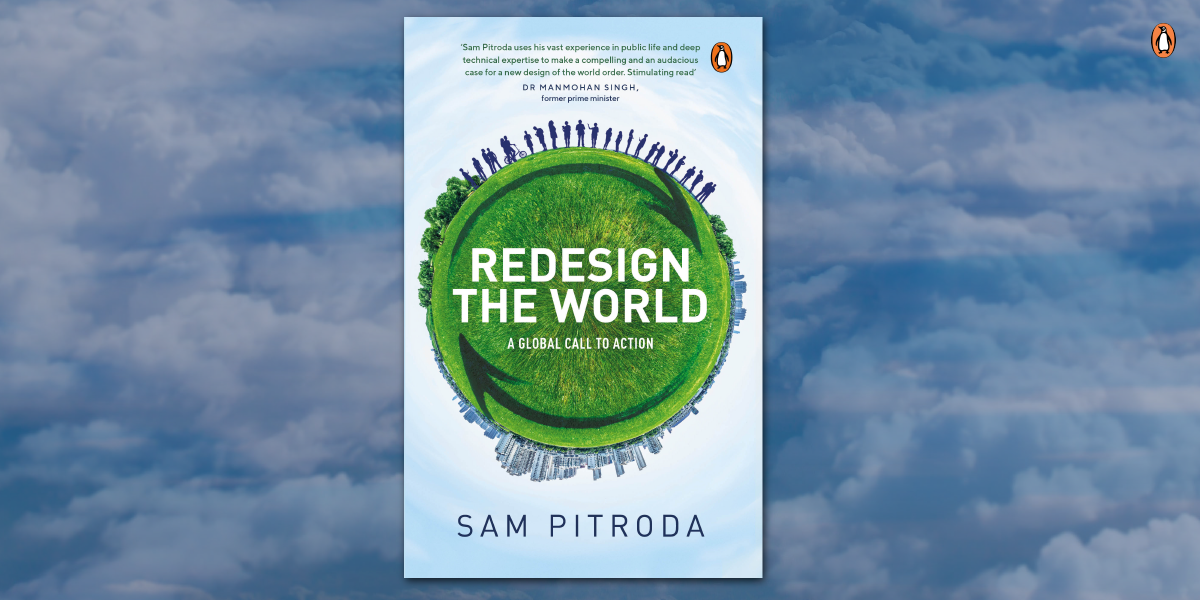
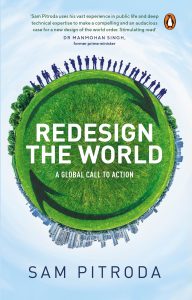
Redesign the World

Front cover of Redesign the World
Redesign the World || Sam Pitroda

Redesigning The World is not about looking at it from the point of view of liberal or conservative; left or right; capitalism or socialism; public or private; democracy, dictatorship or monarchy; open or closed systems; rich or poor; urban or rural; east or west; white, brown, black or yellow. This proposed redesign of the world has the planet and its people at the centre; it is built on the foundations of sustainability, inclusion, equality, equity and justice so that everyone on earth can enjoy peace and prosperity. It is not an idealist or utopian vision, but one with humanity at its core.

*

A Functioning Anarchy

Front cover of A Functioning Anarchy
A Functioning Anarchy || Ramachandra Guha


In a long and versatile career spanning thirty-five years, Ramachandra Guha has produced a vast body of work. In each of these, Guha has broken new ground: his pioneering environmental histories of India and his still relevant work (with Madhav Gadgil) on ecology and equity; his social histories of Indian cricket; his monumental history of the Indian republic; his biographies of Verrier Elwin and Gandhi; his anthologies of ecological, social and political thought in India; and his collection of biographical and political essays.

A Functioning Anarchy is a collection of essays by world-renowned historians, lawyers, scientists and journalists sparked by Guha’s work.

*

India’s Power Elite

Front cover of India's Power Elite
India’s Power Elite || Sanjaya Baru

How the post-Covid world will be reshaped by class conflicts and caste prejudices remains to be seen. India’s Power Elite, though, is about pre-Covid India. It is an examination of the nature of power and elitism in the economic and political context of India. The morphology of the Indian power elite presents a complex structure, which is what Baru aims to deconstruct—whether it is the civil services, landed gentry or the remnants of the feudal elite. Aimed at the socially engaged reader, this book will also interest students and those who wield power.

*

India and Asian Geopolitics

Front cover of India and Asian Geopolitics
India and Asian Geopolitics || Shivshankar Menon

Documenting the changes in India’s foreign policy: from Independence to the Modi era, Shivshankar Menon addresses the many questions, which perplex India as the nation seeks to find its way in the increasingly complex world of Asian geopolitics. From its leading role in the ‘nonaligned’ movement during the Cold War to its current status as a perceived counterweight to China, India often has been an after-thought for global leaders-until they realize how much they needed it.

*

Whereabouts

Front cover of Whereabouts
Whereabouts || Jhumpa Lahiri

Exuberance and dread, attachment and estrangement: in this novel, Jhumpa Lahiri stretches her themes to the limit. The woman at the center wavers between stasis and movement, between the need to belong and the refusal to form lasting ties. The city she calls home, an engaging backdrop to her days, acts as a confidant: the sidewalks around her house, parks, bridges, piazzas, streets, stores, coffee bars. We follow her to the pool she frequents and to the train station that sometimes leads her to her mother, mired in a desperate solitude after her father’s untimely death. In addition to colleagues at work, where she never quite feels at ease, she has girl friends, guy friends, and “him,” a shadow who both consoles and unsettles her.

*

The Art of Resilience

Front cover of The Art of Resilience
The Art of Resilience || Gauranga Das

In this first volume of Yoga Stories, Gauranga Das takes you on an inner journey to explore your inner self, beyond the hills of expectation, through the valleys of disapprovals and beneath the layers of self-deception. Thus, bringing you closer to the home of your heart, enabling you to open the door and introduce yourself, to finally meet, the real you.


*

Makers of Modern Dalit History

Front cover of Makers of Modern Dalit History
Makers of Modern Dalit History || Sudarshan Ramabadran, Guru Prakash Paswan

Featuring several inspiring accounts of individuals who tirelessly battled divisive forces all their lives, this book seeks to enhance present-day India’s imagination and shape its perception of the Dalit community. Makers of Modern Dalit History will be a significant addition to the Dalit discourse. This definitive volume on some of the foremost Dalit thinkers, both past and present, promises to initiate a much-needed conversation around Dalit identity, history and politics.

*

Now That We’re Here

Front cover of Now That We're Here
Now That We’re Here || Akshat Tyagi, Akshay Tyagi

The hyperconnected world that once seemed futuristic is now here. And now that we’re here, it’s time for us to educate ourselves for sweeping and endless possibilities. One way to do that is to blur the lines between technology, democracy, design, economics and data, and reconfigure our approach to learning altogether. This book is a giant leap in that direction. By harnessing the wisdom of thought leaders and intellectuals throughout history, by blending business and humanity, industry and society, and by covering cross-disciplinary themes, authors Akshay Tyagi and Akshat Tyagi give us a groundbreaking, genre-defying and utterly mind-bending collection of essays that will help us prepare for the here and now.

*

Five DIY recipes that will help you to take the first steps to a zero waste life

In this world full of plastic and chemical waste, how can you help save the planet?

Did you know that there will be more plastic than fish in our seas by 2050? Did you know that it takes 20,000 litres of water to make a pair of jeans? Did you know that we have a massive food wastage problem, and yet millions die of hunger each day?

Sahar Mansoor  founder and CEO of Bare Necessities, a zero-waste social enterprise and Tim de Ridder present  Bare Necessities-How to Live A Zero Waste Life is your one-stop guide on how to move towards a more sustainable lifestyle in India. Filled with activities, insights, recipes, tips and how-to guides, it is a must-read for anyone wanting to make a positive change in their life and to our environment.

Read on for five easy-to make recipes that will drastically improve both your own health and that of the environment, while also producing absolutely no waste!


  1. Sustainable behaviour begins with your very first activity of the day-brushing your teeth! This recipe ensures your pearly whites are treated to only clean ingredients, while making sure there are no squeezed out plastic tubes of toothpaste ending up in the landfill.

Peppermint Party Toothpaste

You will need:

  • 1 part baking soda,
  • 1 part coconut oil,
  • A few drops of peppermint essential oil.

All you need to do to get naturally clean teeth is to mix it all together in a bowl until it becomes a paste and then place it in a reusable container for the next time you brush your teeth. While this may taste and appear to be different from the toothpaste you’re used to, it is worth trying out.

  • To use the Peppermint Party Toothpaste:
    • Scoop a tiny dollop with a teaspoon on to your toothbrush (you could start using this and a bamboo toothbrush at the same time) before every use.


  1. Your muscles need to be thoroughly rejuvenated when you begin your day crusading for the environment, Ditch the pricey and plastic packaged bath salts for a simple recipe that is even more effective.

Lemongrass Bath Salt

You will need:

  • 1 part rock salt/Epsom salt/pink Himalayan salt (or a combination of all),
  • A small drizzle of coconut oil,
  • A few drops of lemongrass essential oil,
  • Rose petals.

For a naturally rejuvenating bath, follow this method:

  • Gradually mix each of these ingredients in a bowl in chronological order,
  • Place it into a reusable container for use when you bathe next.


  1. Busy days means sometimes your hair needs and extra kick without an extra hour of shampooing. But store-bought dry shampoos are often aerosol based, which contribute to air pollution and often have chemicals that can damage your hair in the long run. This dry shampoo recipe is safe for both cake and your hair!

Dessert Dry Shampoo

You will need:

  • 1 part cornflour,
  • 1 part cocoa powder,

All you need to do is put the cocoa powder into a bowl, followed  by the cornflour. This one is really easy to make, with no complications involved:

  • Stir the two ingredients with a spoon until there are no distinct ingredients, that is, you can no longer see any white from the cornflour. The mix should be light brown in colour.
  • Place this in a container for you to use when you need it.


  1. There’s nothing more infuriating or exhausting to handle than a clogged drain whether in the bath or in the kitchen! While you might be tempted to pour plastic sachets of commercial drain cleaner down the pipes, do the water bodies in your area a favour and stop pollution at its source with our much more environmentally friendly concoction.

Pipe Cleanse-Unclog Your Drain

You will need:

  • 1⁄2 cup baking soda,
  • 1⁄2 cup white vinegar,
  • A wet cloth,
  • Hot water.

Unclog your drain by:

  • Pouring the baking soda down the drain,
  • Follow with white vinegar,
  • Cover the opening with the wet cloth
  • Let it sit for 5–20 minutes (based on how clogged your drain is),
  • Pour some hot water down the drain.

This trick will work wonders for mild clogs!


  1. After a long day of saving the environment one small step at a time,  unwind and pamper yourself with this nourishing facemask.

FaceTime (as nature intended)  Facemask

You will need:

  • 1 tablespoon rice flour,
  • A pinch of turmeric,
  • 1 teaspoon honey,
  • 1 tablespoon of mashed banana, tomato, orange, papaya or pineapple.

All you have to do is:

  • Blend the dry ingredients together,
  • Drizzle some honey to form a paste-like consistency,
  • Finish off by adding your preferred fruit in.

Use it like any other face mask. It is a great natural alternative that will provide you with supple, hydrated skin. However, make sure you only use this mask once a week.


A loaf of bread, a glass of bubbly, and thou

By Ashok Ferrey 

So the stage is set, the curtain about to rise. Tomorrow, Sarasavi Bookshop at One Galle Face will be launching my first book in 5 years. I don’t know really know why, but there’s something of a feeding frenzy going on. Old aunties in kaftans and dangling earrings are jostling for pole position, rising from their covid-stricken beds, throwing caution and turmeric to the winds. I have explained to everyone that there’s a pandemic on, and please, they mustn’t feel the need to humour me by turning up.

‘How could we not?’ they say in incredulous tones. ‘We simply HAVE to be there for you!’

And who am I to spurn such loyalty? Though it’s something of a toss-up whether they’re there for me, or because they’re fed up having sat at home socially isolated all year. Or perhaps they’re coming for the bubbly that’s going to be served, in plastic cups. (Never spoil an Auntie, has always been my motto.)

In the middle of all this chaos, Colombo Fashion Week rings up.

‘Is it true you’re launching your book on the last night of fashion week?’ they ask sternly. Obviously I have committed some grave social faux pas, though I do not know quite what. (In the normal way of things, Ashok Ferrey knows as much about fashion as Mother Theresa does about disco dancing.)

‘Yes,’ I reply tremulously. ‘But it’s an early show, 4.30 – 6 pm.’

‘So that’s OK then,’ they reply. ‘Because we’ll be requiring you on stage to recite the opening poem. At 7.30 sharp.’

‘But I’ll be tired,’ I bleat.

front cover of The Unmarriageable Man
The Unmarriageable Man || Ashok Ferrey


You? Tired?’ They curl their upper lip. (Colombo Fashion Week does a very good curled upper lip.)

‘Don’t be late. Wardrobe will be in touch to let you know which designer you’re wearing.’

It seems that I have to recite the alternate lines of a song, with the amazing Julius Mitchell singing, and on keyboards.

I think to myself: It’s a good thing Ashok Ferrey isn’t going to be the one singing. Otherwise it really will be the last night of Colombo Fashion Week. Forever.

Hey, now that’s an idea . . .


The three critical rules of working as a consultant

Management consulting is seen as a glamorous profession. But behind the mystique are the consultants who put in extraordinary effort, cultivate great problem-solving skills and display fine personal attributes to capture the attention and respect of their clients.

The Mind of a Consultant opens up that world to the readers through the story of Samantha Thomas, a character modelled on many excellent consultants, who gives us a glimpse of what goes on inside the mind of a consultant.

Here is an excerpt from when Samanta is an intern and learns the three critical rules of working as a consultant.


‘Is the presentation ready?’ Hamid was unapologetic in his question.

It was 2 a.m. Samanta had been working for more than eighteen hours straight on the presentation for the client leadership team that was to be presented the next day. She was expected to be part of the presenting team alongside Hamid, the project manager and partner who owned the account. Hamid was six years her senior and from the same institute she was attending. He was highly respected by his colleagues and the project team members looked to him for guidance.

She thought back over the past few weeks, remembering the first day she had arrived at Pinnacle for her internship. It was like a dream come true. Her first official day as an intern at Pinnacle. She, along with thirty-five fellow interns from some of the best management institutes in the world, had been participating in the internship orientation. Two of the senior partners and a few engagement managers who could make it were part of the two-day programme.

While partners spoke about the culture and the attributes of great consultants, the engagement managers were more operational. They spoke about the tools and the support that were available to interns. They shared Pinnacle’s knowledge base, along with templates for ppts and Excel sheets, which were life-savers for the interns when they started out.

At the end of the second day, the interns were provided with laptops and their project assignments. Samanta was assigned to a large organization-transformation project in the retail industry. The organization was exploring strategies to enhance growth and increase efficiency amid changing industry dynamics. Her project manager for the assignment was Hamid. At the time, Hamid was participating in more than half a dozen similar assignments worldwide. He was always up to date on the latest happenings in the industry and often considered an expert in the field.

The first time Samanta and Raghav, a fellow intern, met Hamid to work on the project, he came across as passionate and knowledgeable. It was obvious that he was an accomplished consultant.

‘I want you guys to challenge me,’ he told them. ‘it’s important that you get a head start and not waste time doing things that don’t matter to this project.’

He gave them presentations and materials to read, a brief on the client requirements and the names of some resources in the firm that he thought could be helpful.

‘Get ready to fly out tomorrow to meet the client,’ he said. ‘We’re having meetings with some of the key management team members before doing a few store visits to understand their set-up. You need to be up to speed on everything that we know about the client by then.’

One thing Samanta learnt from Day One was that consulting constantly needed one to learn and travel. That was the best part about being at Pinnacle. It treated its team members as star talent, and believed that its people could figure out a way to deliver on even the toughest assignments.

Samanta and Raghav spent their time leading up to their trip reading more on the retail industry in general and the company in particular. Pinnacle had some wonderful case studies and industry knowledge available that they found helpful. There were different terminology and business metrics that Samanta and Raghav had never encountered before, but Hamid encouraged them to learn all of it, and learn it well.

‘You don’t want to be seen as novices. You should be able to ask and understand questions in areas that are relevant even to the CEO.’

The following day, Samanta, Raghav and Hamid started on their trip to see the client. Samanta had been told that she was lucky to be doing her first project with Hamid, so she took advantage of the uninterrupted cab drive to ask him questions. there was one in particular she couldn’t help asking.

‘How did you earn so much respect from your peers?’

Hamid raised his eyebrow at her, a smile on his face. Samanta shifted uncomfortably in her seat. She was probably the first intern to ever ask him that.

Hamid gave a short laugh at her discomfort before answering. ‘How do you think, Sammy? And you too, Raghav.’ Samanta thought for a moment. There were several possible reasons, or, more likely, a combination of several of them.

Raghav chimed in first. ‘Maybe hard work? or domain knowledge?’

Samanta nodded. She had been thinking along the same lines. She added her own thoughts. ‘I would think project-management expertise would have something to do with it. Is that part of the reason?’

Hamid nodded and smiled. ‘All of those are correct, but there are three main rules I live by in this firm.’ he held up his fingers as he counted them off.

‘Rule 1: strive for knowledge.

‘Rule 2: build your best coalition.

‘Rule 3: Always be ahead of the client.

‘Each of these is critical when working as a consultant.’

The Mind of a Consultant hands you all the tools necessary to build a successful professional career in an easy-to-understand manner.

Seven Fascinating Gastronomic Glimpses into Rana Culture and Cuisine

What happens when two distinct regal cultures come together in the hands of a lady who is both a wonderful conversationalist and a wonderful cook?

The Rana name has been synonymous with the history and culture of Nepal for centuries. The beautiful palaces of Nepal were known not only for their glamour and architecture but also for their royal feasts. The recipes of the food served were closely guarded by the cooks of the palaces and a lucky few who inherited them from earlier generations. Rohini Rana has collected and documented the recipes precious to each Rana prime minister’s family.

Showcasing magnificent food from the palaces, this luxurious and beautifully illustrated cookbook attempts to preserve these recipes for future generations, and posterity, while also giving quaint snippets of the history and unique cultural practices that shaped the creation and ingestion of this delightful cuisine.  Read on for some of these very  interesting gastronomic glimpses.


1-Fascinating and often contradictory customs existed side side by side especially  when it came to non-vegetarian food

Certain meats were totally taboo and never crossed the thresholds of the bhanchas (kitchens) of the Bajais’ dominated realms. Pork was considered unhealthy and not partaken of inside the palace kitchens or dining hall. However, the wild boar held a prestigious position in all joyous occasions.


  1. The interesting overlap of military and culinary history is evinced in the unlikely influence of Awadhi cuisine brought about by Nepalese help granted to the British during the 1857 War of Independence.

The local cuisine was influenced to a certain extent by the khansamas (cooks) brought in from Mughal India after the loot of Lucknow during Jung Bahadur’s time. Since then the Khansamas and the Nepalese Bajaes and ‘Bajais’ (Bhramin men and women worked in tandem, though in separate kitchens, perfecting a style of fusion cuisine that has become famous being unique in its Rana flavor.


  1. An oft-overlooked description from the Ramayana became the basis for the tradition of a truly grand feast of 84 dishes which is the mainstay of most Rana ceremonies even today

The main ceremony, which totally involves and rotates around food is the Chaurasi Byanjan. This ceremony is still a must during Pasni (rice feeding of a child), Bartamand (sacred thread Ritual) and Biyah (wedding). This tradition goes back to the epical story of the Ramayan and the wedding celebration of Sita’s marriage to Ram where King Janak is supposed to have served 84 Chaurasi (varieties of food) at the banquet.


  1. This strange (but strangely reasonable) taboo on what is probably one of the most commonly eaten poultry.

The only bird that did not reach their ornate platters was the common chicken, because it pecked at dirt and droppings so was not considered hygienic. With the waning of shikar trips and shikaris the chicken finally found its way to the cooking pot, although in a separate kitchen.


  1. Breakfast may be the most important meal of the day around the world, but the Ranas certainly bucked tradition in this regard.

Coming to the meal patterns of the Rana households, breakfast was not common if taken at all. Lunch was the main meal usually had at 10 am in the traditional ‘junar ko bhancha’ or room adjoining the kitchen.


  1. Despite the Ranas’ progressive social reforms in many ways, caste rigidity dominated the culinary department.

The Ranas were extremely orthodox in their eating habits and never partook of rice cooked by any other than a Brahmin or someone of the same caste as themselves. There are many interesting stories of Jung Bahadur creating quite a few faux pas at Queen Victoria’s dining table because of his fastidiousness.}


  1. Rice seemed to have a very special role even amidst the plethora of Rana dishes considering it had to be eaten in a specified room!

Dinner was usually at 6 or 7 pm served in the rooms upstairs with a variety of rotis, cheura meat and vegetables. If rice was being served, it had to be partaken of in the junar ko bhancha again

Did our universe… always exist??

It all started with a big cosmic blast. Or did it? Refresh your facts with this excerpt from Shruthi Rao’s How We Know What We Know  and immerse yourself in a world of fun facts about the world, its origins and all the awe-inspiring details of how everything works.

~

What is the Big Bang? The sound you hear when you burst a big balloon?

Umm, no. The Big Bang Theory is an attempt to explain what happened at the beginning of our universe.

Wait. Our universe had a beginning? Didn’t it always exist?

That’s what scientists thought too, till a few decades ago. But research and studies suggest that there was indeed a beginning. A point. Before that point, there was nothing. And after that point, the universe came into existence.

Scientists think that the universe came out of a singularity—an infinitely small, infinitely dense, infinitely hot point. What exactly is this, though? If the universe was born from this singularity, where did the singularity come from? Why did it appear?

We don’t know that. Yet.
But how do we know that this is what happened?
The story began about a 100 years ago, with Georges Lemaître of Belgium. Though he was an officer of the church, he was fascinated by physics and he studied Albert Einstein’s theories of space and time and gravitation. He concluded that if Einstein’s theories were right, it meant that the galaxies in the universe are moving away from each other. Lemaître said this proved that the universe is not just static and unmoving, as everybody previously thought. It was expanding.

cover How We Know What We Know
How We Know What We Know||Shruthi Rao

It was a theory, and though Lemaître had come up with it on the basis of an established theory, scientists needed other proof before they could accept it. But Lemaître didn’t have any data to support this idea.

Meanwhile, American astronomer Henrietta Leavitt came up with a way to calculate how far away stars are from Earth. Using her work, astronomer Edwin Hubble looked through his telescope and calculated the distances of various stars from Earth. He concluded that things in the universe were moving away from Earth. Not just that, things that were farther away from Earth were moving away faster than things close to Earth. This could only mean one thing. The universe is indeed expanding. Georges Lemaître was right.

Okay. The universe is expanding. But how does that prove there was a Big Bang?

If the universe is expanding, it must have expanded from some point. Think of the expanding universe as a movie. The galaxies are moving outwards, away from each other. Now run that movie backwards. You can imagine it as the galaxies rushing towards each other. So then, all the galaxies must meet at some point. At this point, all the matter of the universe must have been contained in a very small space, that is, the singularity.
The moment at which this singularity started expanding is the Big Bang.

But where was the proof?

Decades later, in 1965, two scientists, Arno Allan Penzias and Robert Woodrow Wilson, were trying to measure radio signals in the empty space between galaxies. They used a giant horn-shaped antenna, called the Holmdel Horn Antenna, in their observatory at Bell Labs in New Jersey, USA. But as they tried to take measurements, an annoying noise kept interfering, like static on a radio.

Where was this noise coming from?

They pointed the antenna towards New York City. No, it wasn’t city noise.

They took measurements of the noise all through the year. No, it didn’t change with the seasons.

Could the noise be from a nuclear test that had taken place a while ago? It couldn’t be. If it was, the noise should have decreased year by year.

Then what was it?

Perhaps it was just the pigeons roosting in the antenna? They chased away the pigeons, and scooped up and cleaned the droppings. But the noise still remained.

Then they learnt about the scientist Robert Dicke, a professor at Princeton University. Dicke had been thinking about the Big Bang. His opinion was that if the Big Bang was true, there should be some kind of matter remaining from the explosion. And most probably, he said, this would be a kind of low-level background radiation throughout the universe.

Dicke wanted to try and find it. But it turned out that it was exactly what Penzias and Wilson had already found! The hum they had encountered was this very radiation resulting from the Big Bang!

Penzias and Wilson got the Nobel Prize for this discovery, because it proved that the Big Bang Theory was true.

Researchers all over the world are still taking better measurements of this noise, and are finding more things to think about.

~

Exciting trivia awaits you in How We Know What We Know.


Making Excellence A Habit – A chat with the man who tells us how

 Dr Mohan is one of the few practicing doctors in India who have contributed to research, education and charity in such a large measure. His book, Making Excellence a Habit documents the fundamentals of what makes a person achieve meaningful success. While hard work, passion and focus emerge as winning lessons, delicate and tender learnings from Dr Mohan’s life, such as empathy or spirituality, are not forgotten.

Here is an interview with the man himself on his proudest moments, people that inspire him, and his writing a book!


  1. When you look back, what are some of your proudest moments?

            Establishing the largest chain of diabetes centers in the world, and the sustained growth and development of the Madras Diabetes Research Foundation as well as our Education Academy and the charitable clinics that we run are some of the proudest and most fulfilling moments of my life.

When I started working with my father in 1971, there was not a single private hospital or centre dedicated to diabetes in the country. Today, diabetes has become a much sought-after specialty and everybody wants to practice diabetes. This, I think, is largely a reflection of the 50 years of our work which went into building up the specialty of diabetes. Perhaps, my greatest satisfaction is that, without any formal Government or University backing or support we have been able to contribute a large chunk of the diabetes research done in India and our work has helped to place India on the world map of diabetes research. Looking back, these are very satisfying indeed.


  1. Who are some of the people that inspire you?

I have several people who have inspired me in different ways. Firstly, my spiritual Guru, Bhagawan Sri Sathya Sai Baba, for, it was He who demonstrated to the world that it is possible to offer world class health care for the poor, completely free of cost. My father Prof. M. Viswanathan was my mentor and it was he who brought me into this field of diabetology. My wife, Dr. Rema Mohan was a very strong-willed person, who battled cancer while contributing extensively to her field, diabetic retinopathy. In the medical field, Dr. Venkatswamy, the founder of Aravind Eye Hospital and Dr.S.S. Badrinath, the founder of Sankara Nethralaya inspired me a lot, as did Dr. Anji Reddy, Chairman of Dr. Reddy’s Laboratories and Dr.N.K.Ganguly, the Director General of the Indian Council of Medical Research.


  1. Will you write a second book? 

            I would definitely like to write a second book if I can find the time to do it.


  1. How did you manage to write a book alongside your busy schedule?

           I would say that it was my passion to write and to inspire youngsters which kept me going. Although it did take some time, I am happy I was able to eventually complete it.


  1. If you could give advice to an inspiring writer, what would it be?

           My advice to aspiring writers would be to tell their stories with as much human interest as possible as people love to hear stories that are told well. There should also be a message for the readers, particularly for youngsters who should get inspired to achieve excellence in whatever they do. Whichever the type of book that the writer is attempting to write, he or she should spend enough time thinking about it and to see how it will be useful to society.


Making Excellence a Habit is a behind-the-scenes account of a person honoured internationally for delivering path-breaking care to hundreds of thousands of people with diabetes.

Magnificent reads for young readers for the month of April

As days get longer and warmer, we find ourselves cooped up in our homes, avoiding the scorching heat and that deadly virus no one should name. But time indoors doesn’t have to feel like a chore necessarily, thanks to our age-old friends—books.

Here’s a list of refreshing reads to keep you engrossed and entertained through the long, sunny days of April.

**


Queen of Fire

Devika Rangachari

front cover of Queen of Fire
Queen of Fire || Devika Rangachari


Lakshmibai, the widowed queen of Jhansi, is determined to protect her son’s right to his father’s throne and safeguard the welfare of her kingdom. Faced with machinations to take over Jhansi, at a time when all of India is rising up against the British, she has to prove her valour and sagacity time and again. But will this be enough to save all that she values?

In this gripping novel, award-winning historical novelist Devika Rangachari brings to vivid life the interior life of this nineteenth-century queen, thrust into a position she does not desire but must assume, and of her son, who is cowed by the challenges he has to face but determined to live up to his mother’s courage.


Satyajit Ray in 100 Anecdotes

Arthy Muthanna Singh, Mamta Nainy

front cover of Satyajit Ray in 100 Anecdotes
Satyajit Ray in 100 Anecdotes || Arthy Muthanna Singh, Mamta Nainy


Tracing his magnificent life with 100 little-known and inspiring incidents as well as unusual trivia, this collectible edition pays homage to the maestro on his 100th birth anniversary.

A master filmmaker, a remarkable auteur, a writer par excellence and an artist of immense reach and range, Satyajit Ray was an indefinable genius. This book is a classic tribute that celebrates his many accomplishments across literature, music, art and more.


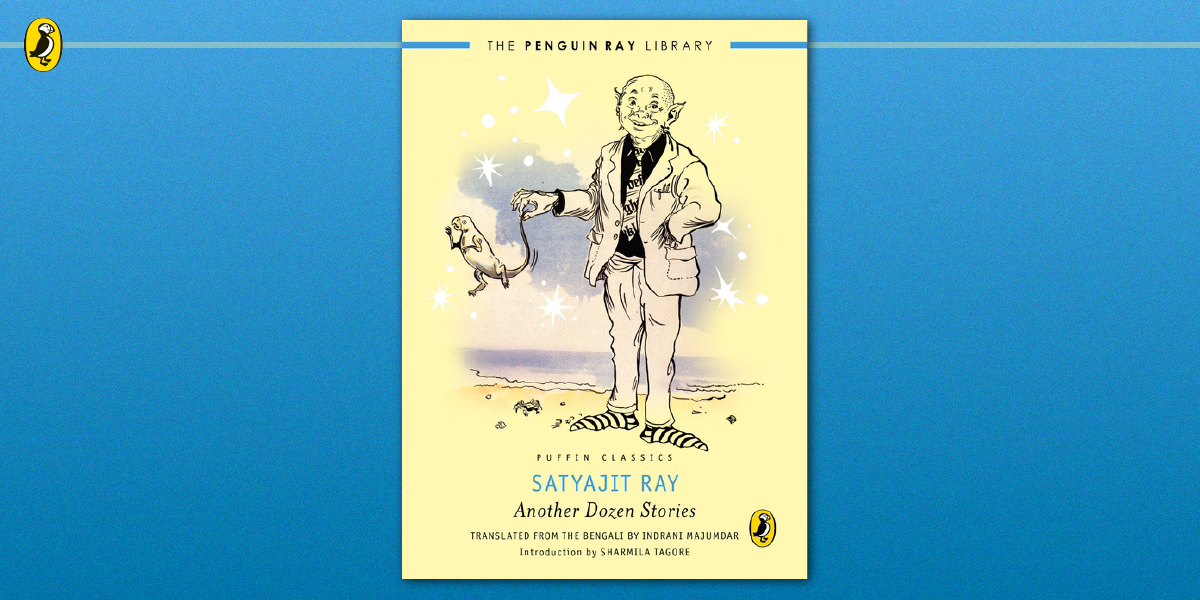
Satyajit Ray
front cover of Another Dozen Stories
Another Dozen Stories || Satyajit Ray


Another Dozen Stories brings to you the magical, bizarre, spooky and sometimes astonishing worlds created by Satyajit Ray, featuring an extraordinary bunch of characters!

While ‘The McKenzie Fruit’ trails a humble man trying to leave his mark in history, ‘Worthless’ is a moving story about a seemingly hapless character not quite able to win the confidence of his family. Meet Professor Hijibijbij, the eccentric scientist bent on creating living replicas of peculiar creatures and follow Master Angshuman into a nail-biting and unexpected adventure on the sets of his very first film. This collection includes twelve hair-raising stories that will leave you asking for more!


Jamlo Walks

Samina Mishra

front cover of Jamlo Walks
Jamlo Walks || Samina Mishra


It is day 7 of the lockdown and everyone says the skies are blue again.
Jamlo walks. She looks straight at the road ahead. It is long.

The world has stood still. The streets lie empty and schools are closed. All work has dried up and people keep whispering the word ‘corona’ all the time. Jamlo walks down a long and hot road, alongside hundreds of other men and women and children whom Tara sees on TV. Jamlo walks as Rahul watches the streets turn quiet.

Jamlo walks and walks in a world that needs to be kind and just and equal. A world where all lives are seen as important.


Sita’s Chitwan

Vaishali Shroff

front cover of Sita's Chitwan
Sita’s Chitwan || Vaishali Shroff


As big as 1,78,000 football fields, Nepal’s first protected national park is home to over 550 species of birds; awe-inspiring animals, such as greater one-horned rhinoceroses, Bengal tigers, clouded leopards; and a confident, brave girl called Sita.

Sita dreams of being a nature guide like her baba. With a spring in her step and a group of eager tourists, she unravels the secrets of the forest. But when she wanders astray and comes face to face with a mamma rhino, will this eight-year-old be able to listen to the stillness of the jungle?


The Astoundingly True Adventures of Daydreamer Dev

Ken Spillman

front cover of The Astoundingly True Adventures of Daydreamer Dev
The Astoundingly True Adventures of Daydreamer Dev || Ken Spillman


Forever daydreaming-that’s Dev. Sitting in class or watching the clouds from the roof of Kwality Carpets, he floats off to places all over the world and has wonderful, bizarre adventures.

Mild-mannered schoolboy Dev is no stranger to survival in extreme environments. Classroom trances and home-made flights of fancy take him all over the place-what other kid could have visited Amazon rainforests, summited Mount Everest and crossed the Sahara? Along with the challenges of all this, he also needs to avoid the wrath of teachers and make Amma and Baba proud . . . Not so easy when your brain lives elsewhere!


The Bournvita Quiz Contest Quiz Collector’s Edition, Vol. 1

Derek O’Brien

front cover of The Bournvita Quiz Contest Quiz Collector's Edition
The Bournvita Quiz Contest Quiz Collector’s Edition || Derek O’Brien


The award-winning Bournvita Quiz Contest started as a radio programme in 1972, then shifted to television in the 1990s. Since 1994, it has been hosted by Asia’s best-known quizmaster, Derek O’Brien, in his inimitable style, and it holds the record for being the longest-running knowledge game show on Indian television.
This definitive edition comprises a selection of the best Q & As from this iconic children’s show. Featuring 1000 questions, carefully curated from the exhaustive twenty-year-old archives, this book is dotted with heartening anecdotes, fun trivia and thoughtful essays by people who worked on this much-loved show.


The Bournvita Quiz Contest Quiz Collector’s Edition, Vol. 2

Derek O’Brien

front cover of The Bournvita Quiz Contest Quiz Collector's Edition
The Bournvita Quiz Contest Quiz Collector’s Edition || Derek O’Brien


Which Nobel laureate wrote articles under the name Gul Makai?
Hilsa is the national fish of which neighbouring country of India?
In which organ of the human body would you find the aqueous humour?

With fun Q&As carefully curated from the exhaustive twenty-year-old archives, this definitive book is a treat for all quiz aficionados who can choose from an array of fifty sections including:

Art and Culture
Science
Politics
Mythology
Books and Authors

**

How infidelity unravels

Sometimes when you’re desperate to leave the past behind, the past is eager to catch up!

Anuradha leaves Gurgaon when Dhruv chooses his family over her. She thinks that chapter of her life has ended, and starts afresh in Mumbai. But strangely, it seems her past is trying to catch up. Dhruv suddenly comes back into her life. Even as they try to figure out their relationship, horrible things start happening to people they know. Together, Anuradha and Dhruv need to find out who it is that cannot bear to see them together. Who is carrying out these shocking crimes? Are they really soulmates cursed to stay apart, or is there some karmic debt they have to repay?


Read on for a look at the psychological aftermath  of an extra-marital affair


Only The Good Die Young | Akash Verma

Mumbai has unnerved me every single time I’ve set foot here in the last few months. It wasn’t like this before. It used to be like any other city. Just that I frequented it more as my advertising agency, C&M, is headquartered here. But now, since you have been here for about a year, coming to this city has never been the same. Work still brings me here—a couple of times a month at least—for a sales review or a client meeting. But every time I am here, I feel like running to you first, clasping you to my chest and not letting you go. Yes, that’s what I still feel, Anuradha, after pushing you so far away from my life. The first few months after you left were tough—to come to work each day with you not being in office; to live without you in Gurgaon; not hearing your voice; and not feeling your touch. Despite having Shalini and the kids back in my life, there was this one large gash in my heart. However hard I tried, it refused to heal. It stayed there, untended and bleeding. My head feels heavy with the weight of a sack inside it.. ‘“Don’t do it!” didn’t we warn you?’ the pebbles inside the sack which rests in my head scream in unison. ‘You can’t love two people at the same time.’ ‘I didn’t do it knowingly. It wasn’t in my control,’ I protest. ‘Oh, come on! Liar, liar, pants on fire!’ squeals one. ‘You had a rock-solid marriage, a lovely family. Didn’t you know what you were getting into?’ ‘I know. All my fault. I thought I could handle it. I loved them both, you know. I just couldn’t stop.’ One of the pebbles has a throaty voice. It’s smaller than the rest. ‘Look where this “love” has led you to. No one’s happy. Neither Shalini, nor you and I guess not even Anuradha.’ ‘Well, who knows?’ I say. ‘Maybe she has found someone. Why “maybe”? I am sure she has someone in her life by now. She is young, beautiful, successful . . . she can easily be happy. Don’t you think so?’ The pebble glances at me, scrutinizing me. ‘Yes . . . maybe. Will you be happy if she has found someone?’ I clear my throat, ‘Why not? Yes.’ ‘Sure?’ I nod. ‘Yes. I will be happy as long as she is.’ ‘Do you want to meet her?’ the pebbles chorus. ‘No. It’s over, isn’t it? Why would I want that?’ ‘Ah, come on,’ one of them says. ‘It’s what you want the most. To meet her. Isn’t it?’ I fumble for an appropriate answer. Unsuccessful. I go quiet, then. The plane has landed. I get out of the airport and spot the driver holding a placard with my name on it. I purse my lips and force a smile; a familiar weakness sweeps over me. He signals to me to wait and hurries off to get the car when I nod. I glance at the passengers leaving the airport, people gathered around the arrival gate, greeting incoming passengers: relatives and friends. I wish you too were here, waiting for me, Anuradha . . .Such feelings seem even more unreal after the way our relationship ended. But then how is one supposed to conceal one’s true feelings from oneself? How can I hide that I love you? Even after you lied to me. Even after I promised my wife, Shalini, that our affair happened in the heat of the moment and was well over. How can my feelings for you ever cease to exist? Maybe I really am the asshole that the people I love think me to be. Shalini and you. Maybe I don’t deserve love from either of you. My relationship with my wife will never go back to what it was. I have done enough to scar it and I don’t know if those scars will ever fully disappear. ‘We have struck a compromise for our children, Dhruv,’ was what Shalini told me at the dinner table one day when the kids were asleep. ‘It can never be the same again,’ she had said. Shalini is a headstrong, self-made woman who sticks to her word in her personal life as much as she does when treating her patients.

error: Content is protected !!