Publish with Us

Follow Penguin

Follow Penguinsters

Follow Penguin Swadesh

Travel the world one book at a time

‘Travel far, pay no fare…A book can take you anywhere.’

– Anne Morrow Lindbergh

The portal to the rest of the world is closer to you than you think. While we advise you to physically stay at home, no one said anything about not travelling!

Penguin Random House India brings to you the #PenguinStayList – a list of books that will inform, educate and entertain you as best as they can during this pandemic. Travel around the Indian coast, up to the greatest city of the Himalayas or even to different corners of the world.

‘That’s the thing about books. They let you travel without moving your feet.’

– Jhumpa Lahiri

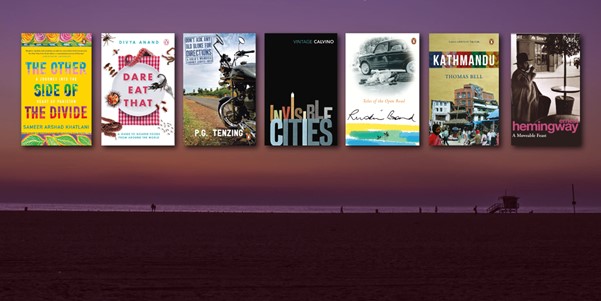
Following Fish : Travels around the Indian Coast


In a coastline as long and diverse as India’s, fish inhabit the heart of many worlds food of course, but also culture, commerce, sport, history and society. Journeying along the edge of the peninsula, Samanth Subramanian reports upon a kaleidoscope of extraordinary stories. Throughout his travels, Subramanian observes the cosmopolitanism and diverse influences absorbed by India’s coastal societies, the withdrawing of traditional fishermen from their craft, the corresponding growth of fishing as pure and voluminous commerce, and the degradation of waters and beaches from over-fishing.


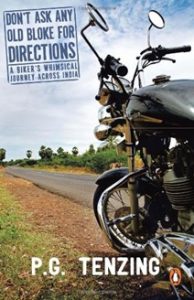
Don’t Ask Any Old Bloke For Directions – A Biker’s Whimsical Journey Across India


After twenty years in the Indian Administrative Service, P.G. Tenzing throws off the staid life of a bureaucrat to roar across India on an Enfield Thunderbird, travelling light with his possessions strapped on the back of his bike. On the nine-month motorcycle journey without a pre-planned route or direction, he encounters acquaintances who appear to be from his karmic past: from the roadside barber to numerous waiters and mechanics― fleeting human interactions and connections that seem pre-ordained.


If It’s Monday It Must Be Madurai: A Conducted Tour Of India


This book was first written when author Srinath Perur made the mistake of going on a conducted tour of ten of the most famous sites in India. However, despite being very annoyed at his bovine compatriots and his sonorous tour-guide, he found that there was some merit in traveling in groups, and wrote down his experiences in the form of this book. Witty, Humorous, and insightful, it combines his science-based knowledge and heartfelt experiences to create a tableau of interesting descriptions and adventures.


Shooting Star, The: A Girl, Her Backpack and the World


Shivya Nath quit her corporate job at age twenty-three to travel the world. She gave up her home and the need for a permanent address, sold most of her possessions and embarked on a nomadic journey that has taken her everywhere from remote Himalayan villages to the Amazon rainforests of Ecuador. Along the way, she lived with an indigenous Mayan community in Guatemala, hiked alone in the Ecuadorian Andes, got mugged in Costa Rica, swam across the border from Costa Rica to Panama, slept under a meteor shower in the cracked salt desert of Gujarat and learnt to conquer her deepest fears.


Travel Gods Must Be Crazy, The: Wacky Encounters in Exotic Lands


Dreaming of glorious sunrises and architectural marvels in exotic places, Sudha often landed up in situations that were uproariously bizarre or downright dangerous. Tongue firmly in cheek, she recounts her journeys through the raw wildernesses of Borneo and the African savannah, into the deserts of Iran and Uzbekistan, and up the Annapurna and the Pamirs, revealing the quirky side of solo travel to side-splitting effect. Punctuating her droll stories with breathtaking descriptions and stunning photographs, Sudha invites readers on an unexpected and altogether memorable tour around the world!


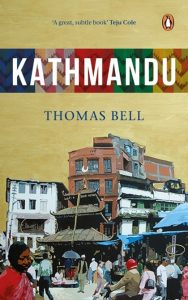
Kathmandu


Kathmandu is the greatest city of the Himalayas a unique survival of cultural practices that died out in India 1000 years ago. It is a carnival of sexual license and hypocrisy, a jewel of world art, a hotbed of communist revolution, a paradigm of failed democracy, a case study in bungled Western intervention and an environmental catastrophe.
Kathmandu follows the author’s story over a decade in the city and unravels the city’s history through successive reinventions of itself. Erudite, entertaining and accessible, this is the distinctive chronicle of a fascinating city.


From Heaven Lake


Hitch-hiking, walking, slogging through rivers and across leech-ridden hills, Vikram Seth travelled through Sinkiang and Tibet to Nepal: from Heaven Lake to the Himalayas, By breaking away from the reliable routes of organized travel, he transformed his journey into an unusual and intriguing exploration of one of the world’s least-known areas.


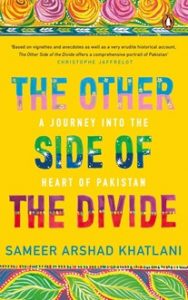
The Other Side of the Divide


Pegged on journalist Sameer Arshad Khatlani’s visit to Pakistan, this book provides insights into the country beyond what we already know about it. These include details on the impact of India’s soft power, thanks to Bollywood, and the remnants of Pakistan’s multireligious past, and how it frittered away advantages of impressive growth in the first three decades of its existence by embracing religious conservatism.
The book attempts to present a contemporary portrait of Pakistan-where prohibition remains only on paper and one of the biggest taxpayers is a Parsee-owned brewery-as a complicated and conflicted country suspended between tradition and modernity.

Well, that’s our list. Where will you travel to first?

Preparing for a pandemic

Author’s Note: We didn’t write a generalist guide for the future imagining a once in a lifetime pandemic. This is not the moment of celebration we would have chosen for the book. There’s so much else that needs your love and attention right now. Now that we’re here, we hope the book can offer some comfort and optimism about humanity making it through difficult times, and things getting better. 

Now That We’re Here by Akshat Tyagi and Akshay Tyagi is a generalist guide about navigating the future in times of a pandemic. A playful mix of social science and technology, the essays on Data, Design, AI, Behavioural Economics and other important themes provide a peep into what’s coming. The following excerpt is from the chapter Viral Economics, written as the pandemic was unfolding.

Even though the collapse of economic prosperity is terrifying, the mourning of its fall should not turn into an endorsement for its previous design. Our economic growth has been highly inequitable, especially so over the last few decades. When your income drops from INR 70,000 a month to INR 40,000, it pinches hard. But even before the crisis, the average monthly income in India was below INR 12,000. We are still an extremely poor country, and we keep forgetting that fact until the next flood, drought or recession arrives.

Our public education hasn’t prepared us to understand the urgency of a pandemic. What you read in this book on data, complexity, economy and technology should be considered basic education. We were so busy bickering over Tipu Sultan’s mention in our history textbooks that we forgot to learn about the history of the Spanish flu and why there wasn’t anything particularly Spanish about the 1918 influenza pandemic.

It is important to maintain civil order by converting a difficult fight against the virus into a temporary celebration of essential workers. But in a different world, our government would be able to explain to us a virus’s non-linear growth graph, and we would pay our workers far better than we do. Making people bang pots and pans is okay only if we understand what we’re dealing with and how long it’s going to last. Otherwise, we are all at the mercy of our beloved leader and his wisdom.

With his utterances about injecting disinfectants and recommending unproven medical cures, Donald Trump may have made daily briefings look like a bad exercise in democracy. But they at least showed us how competent he was as a leader in handling emergencies, helping Americans divert him to other interesting things in the next election. To not show oneself at all during a moment of national crisis or conflict is a signature feature of tyrants. Stalin and Hitler were absent from public appearances for much of the war.

A country of 1.3 billion people with very high linguistic diversity, no universal access to devices for listening to a live broadcast, an unstable electricity supply and a two-hour difference in mean solar times between its easternmost and westernmost points shouldn’t be reliant on a charismatic head of state’s address to the nation. No leader can appeal to the sensibilities and convenience of such a diverse population in an hour’s time.

Front cover of Now That We're Here
Now That We’re Here || Akshat Tyagi, Akshay Tyagi


Our Internet penetration is at the highest-ever point in our history, our data rates are the cheapest in the world and journalism is bleeding to death because of its open access—so why then were we still busy rioting as late as February 2020! Arundhati Roy called the madness of communal sickness our version of the coronavirus before we officially got sick with Covid-19.

A pandemic lays bare our structural injustices. Just like with any other disease, the poor are at a disadvantage here too. Pre-existing medical conditions and weak immune systems both increase vulnerability and are, not so surprisingly, correlated in part to one’s economic standing. Little access to nutrition, poor hygiene, few resources shared by more members in the family and safety hazards at repugnant jobs are all risks that Dalits and Muslims have faced for all of our developmental history.

When Ebola spread in a slum in Liberia, the area was sealed off with the help of armed forces. At the rioting of residents, indiscriminate fire helped restore the desired calm. You never heard about this because it didn’t happen in a gated community of rich citizens in a politically significant country.

There is no bright side to a pandemic. In fact, ignorant optimism hurts more when the threat is a respiratory virus. Leaders who tell false stories to trick people into staying calm destroy public trust in leadership and create greater chaos. A pandemic is also the time when more and more of us grow comfortable with the idea of compromising our liberty to let the government act. Naomi Klein, a strong advocate against neoliberalism’s worst, has been warning for a decade that emergencies should not be allowed to worsen inequalities and decrease political transparency.

We cannot buy our way out of this virus, but as we wait for medical solutions to arrive we should remain vigilant about the ad hoc measures offered by our governments.

A pandemic is the worst time to stop holding your government responsible.

**


The book explores how our friendships, jobs, health and democracies are changing, and why we must prepare for this new unpredictable world. There aren’t any easy answers, but Now That We’re Here let’s be vigilant and kind.

How to live a sustainable lifestyle the fun way-a chat with Sahar Mansoor and Tim De Ridder

  1. How do you think the Covid-19 pandemic has affected the way industries and individuals are looking at waste generation and sustainability?

-The pandemic created such a large amount of waste from the outset. However, it also rekindled intimacy with parts of our lives that we may have disconnected with. Examples include our kitchen, homes and nature. This reconnection found at an individual level is mirrored by many industries that have grown and/or launched during the pandemic. Specifically, food packaging and e-commerce businesses have developed new ways to operate in a changed world while reducing environmental footprints. In these ways, the pandemic has provided additional perspectives about the things that truly matter on an individual level and what can be innovated and developed at an industry level.


2. The zero-waste life is difficult but as your book has shown clearly doable especially for individuals?  Do you have some tips for larger families especially those with infants since infants do generate a lot of waste such as diapers etc.?

  • One thing that we have focused on in the book is to illustrate that choosing to make a change is the first big step and one that has been undertaken by individuals and organisations across the country. The examples we have used are there to highlight how doable these actions are and what resources are available. For families with infants for instance we have detailed some organisations that retail cloth diapers such as Bumpadum and Super Bottoms. Additionally, In the first two years of life, an average child needs 280 pieces of clothing, most of which are only worn for about two or three months. As a result, a vast amount of kids’ clothing ends up in landfills, losing value and creating adverse environmental impacts. Sharing/circulating clothes among friends and family or at clothes exchanges are ways to reduce waste while making your own gifts for your children and/or involving them in the creation is a unique and memorable way to reduce waste.


3. Capitalism is to a large extent dependent on obsolescence and therefore, on waste.  What message can you send to large business concerns that could inspire them to adopt more sustainable practices?

  • There is no doubt these days that sustainability and reducing waste is the way forward, there is so much research on this now. For businesses wanting to know how to do this make sure to keep it simple by designing out waste from your current system, this could include creating/using high quality products that have a longer life and can be reused in other fashions in the long term. A prime example is e-waste where the core elements of computers, phones and other devices needs to be reused because there is a finite supply of the raw materials. By incorporating models of reuse and refill into business operations each company can make a positive difference for their people, the planet and profit too.


4. Both of you have travelled extensively. Can you describe one incident or anecdote from your travels that really shaped your ideas on sustainability and its impact?

  • Tim: I’ve been fortunate to visit a number of remote and beautiful locations such as the Himalayas. Yet, when I visited there was always waste that polluted rivers and mountain tops. This impact changes the way that people live and needs to be addressed at a systemic level so that the livelihoods of communities and the environment can improve. I’ve witnessed community-based initiatives recently that promote the sale of sustainable and traditional products rather than imported plastic items that was one of the causes of waste in the area. This type of example illustrates a number of benefits of sustainability.


  • Sahar : Throughout my narrative, in our book I speak about my time working in northern Karnataka. This opportunity provided me with the opportunity to spend time in rural India and learn from communities that were choosing sustainable practices, including hand sewing traditional clothes designed to last a lifetime not just to be worn a few times and replaced. This type of practice fills my heart with so much love, it is a perfect picture of how sustainable practices value the environment, rural communities and experiences of travelers who are truly fortunate to visit these locations. There are many lessons to be learnt from people across our diverse country.


5. Bare Necessities has some wonderful recipes and DIYs using easily available ingredients that replace many less environmentally-friendly products. Let’s simplify these even further. Can you name 5 ingredients that you could survive with on a desert island?

  • This is a fascinating case study! I hope I never end up trapped on a desert island but if I did and wanted to create some of the DIY recipes I’d hope to find coconuts, bananas, yellow gram & green gam, along with honey and turmeric. Many of these ingredients form the backbone of the recipes we have shared and could provide sustenance too. For instance, coconut oil/water and the flesh of the coconut can be used for rehydration and if needed for personal care recipes for your skin, hair and teeth. Similarly, bananas, gram, honey and turmeric can be used for nutrition, cleaning and self-care. It’s pretty cool to think about but let’s hope we never get stuck on an island, I much prefer to make these products in Bangalore with my manufacturing team.


6. Have you noticed any positive impacts on your personal health since you switched to more sustainable personal care products?

  • There are many that I gained from the point where I made the shift to a zero-waste life. I would actually enjoy taking a deep dive into the benefits of the changes to my personal care routine through a longitudinal study now that I use organic face masks among other products. One area that doesn’t need a long-term evaluation is on the impacts in the kitchen. Many of the benefits I gained in my life combined both the decisions in my personal care routines for the things I placed on my body with the items I consumed. Overall my health improved markedly due to this combination of not using products with harmful chemicals while eating more raw and whole foods instead of packaged.


7. Which sector of the economy do you think will experience the most change as more buyers shift to sustainable consumerism in the future?

  • An area that we mentioned a little above with innovations from businesses aiming to reduce their environmental impact. Specifically, the creation of sustainable packaging is an area that is likely to experience significant growth. The use of hemp, mycelium and seaweed for example is seeing the development of alternatives to packaging made out of plastic and styrofoam among other harmful materials. This is an area of exciting change for the future and one that may well revolutionise business and increase the uptake of people involved in the circular economy, thus enabling a transition to a more sustainable/earth-friendly lifestyle.


The magic of Rabindranath Tagore explored

7th May commemorates the birth anniversary of Rabindranath Tagore. His eminence as India’s greatest modern poet remains unchallenged to this day. Tagore was a pioneering literary figure, renowned for his ceaseless innovations in poetry, prose, drama, music and painting, which he took up late in life. His works include novels; plays; essays on religious, social and literary topics; some sixty collections of verse; over a hundred short stories; and more than 2500 songs, including the national anthems of India and Bangladesh.

Born in 1861, Rabindranath Tagore was a key figure of the Bengal Renaissance. He started writing at an early age and by the turn of the century had become a household name in Bengal as a poet, a songwriter, a playwright, an essayist, a short story writer and a novelist.

In 1913 he was awarded the Nobel Prize for Literature and his verse collection Gitanjali came to be known internationally. At about the same time he founded Visva-Bharati, a university located in Santiniketan, near Kolkata. Called the ‘Great Sentinel’ of modern India by Mahatma Gandhi, Tagore steered clear of active politics but is famous for returning his knighthood as a gesture of protest against the Jallianwala Bagh massacre in 1919.

Here is a compilation of some of his work, to celebrate the man.

*

The Magic of Tagore

The Magic of Tagore ||.

A special limited-edition collection of the most beloved works of Nobel laureate Rabindranath Tagore, one of the greatest writers of the Indian subcontinent, featuring two classic novels of profound depth and beauty, and Tagore’s ground-breaking work of poetry. These classic works have been reissued by Penguin Random House India on the occasion of Tagore’s birth month.

*


Nationalism and Home and the World

Nationalism Home and the World || .

Combining two classic texts by Rabindranath Tagore, this special edition features a new Introduction by eminent scholar Sugata Bose. Nationalism is based on Tagore’s lectures, warning the world of the disasters of narrow sectarianism and xenophobia. Home and the World is a classic novel, exploring the ever-relevant themes of nationalism, violent revolution and women’s emancipation.


Tagore: The World Voyager

Tagore: The World Voyager || Sugata Bose (Translator)

For long considered untranslatable, Tagore’s songs express most profoundly his romantic and religious perceptions. Prof. Bose aims to convey the artistic value of Tagore’s songs beyond the limits of his province. The first part, ‘Oceanic Songs’, introduces the lyrics and tunes of the songs to a foreign audience through a narrative of Tagore’s travels during which he communicated with the wider world. Since Tagore wrote only forty of his nearly 2500 songs on his journeys abroad, the second part presents a selection of ‘songs in five genres’. This book endeavours to reach Tagore’s songs to people beyond the borders of India, transcending the barriers of language on the wings of music.


The Postmaster: Selected Stories

The Postmaster || .

Poet, novelist, painter and musician Rabindranath Tagore created the modern short story in India. Written in the 1890s, during a period of relative isolation, his best stories—included in this selection—recreate vivid images of life and landscapes. They depict the human condition in its many forms: innocence and childhood; love and loss; the city and the village; the natural and the supernatural. Tagore is India’s great Romantic. These stories reflect his profoundly modern, original vision. Translated and introduced by William Radice, this edition includes selected letters, bibliographical notes and a glossary.


Rabindranath Tagore: Selected Poems

Rabindranath Tagore: Selected Poems || .

The poems of Rabindranath Tagore are among the most haunting and tender in Indian and world literature, expressing a profound and passionate human yearning. His ceaselessly inventive works deal with such subjects as the interplay between God and mortals, the eternal and the transient, and the paradox of an endlessly changing universe that is in tune with unchanging harmonies. Poems such as “Earth” and “In the Eyes of a Peacock” present a picture of natural processes unaffected by human concerns, while others, as in “Recovery14,” convey the poet’s bewilderment about his place in the world. And exuberant works such as “New Rain” and “Grandfather’s Holiday” describe Tagore’s sheer joy at the glories of nature or simply in watching a grandchild play.


My Life in My Words

My Life in My Words || Uma Das Gupta (Editor)

A unique autobiography that provides an incomparable insight into the mind of a genius. The Renaissance man of modern India, Rabindranath Tagore put his country on the literary map of the world when he won the Nobel Prize for Literature in 1913. My Life in My Words is, quite literally, Tagore on Tagore. The result is a rare glimpse into the world of Tagore: his family of pioneering entrepreneurs who shaped his worldview; the personal tragedies that influenced some of his most eloquent verse; his ground-breaking work in education and social reform; his constant endeavour to bring about a synthesis of the East and the West and his humanitarian approach to politics; and his rise to the status of an international poet. Meticulously researched and sensitively edited, this unique autobiography provides an incomparable insight into the mind of a genius.


A Grain of Sand: Chokher Bali

A Grain of Sand || .

Chokher Bali is Nobel Prize-winning author Rabindranath Tagore’s classic exposition of an extramarital affair that takes place within the confines of a joint family. A compelling portrayal of the complexity of relationships and of human character, this landmark novel is just as powerful and thought-provoking today as it was a hundred years ago, when it was written.


Gora

Gora || .

When Gora had no name, caste, and religion, the circumstances gave him the name – goramohan, caste – Brahmin, and religion – Hindu. While he turned out to be a true advocate of Hinduism, the religion rejected him calling him an outcaste and an untouchable. In this classic masterpiece, Tagore represents the tragedy of Gora in the form of problems faced by all Indian religions.


He: (Shey)

He (Shey) || .

Tagore wrote Shey to satisfy his nine year old granddaughter’s demands for stories. Even as Tagore began to create his fantasy, he planned a story that had no end, and to keep the tales spinning he employed the help of ‘Shey’, a “man constituted entirely of words” and rather talented at concocting tall tales. So we enter the world of Shey’s extraordinary adventures, encountering a bizarre cast of characters, grotesque creatures and caricatures of contemporary figures and events as well as mythological heroes and deities – all brought to life through a sparkling play of words and illustrations in Tagore’s unique style.


Farewell Song

Farewell Song || .

Rabindranath Tagore reinvented the Bengali novel with Farewell Song, blurring the lines between prose and poetry and creating an effervescent blend of romance and satire. Through Amit and Labanya and a brilliantly etched social milieu, the novel addresses contemporary debates about ‘good’ and ‘bad’ writing, the nature of love and conjugality, and the influence of Western culture on Bengali society. Set against the idyllic backdrop of Shillong and the mannered world of elite Calcutta society, this sparkling novel expresses the complex vision and the mastery of style that characterized Tagore’s later works.


Gitanjali

Gitanjali || William Radice (Translator)

Gitanjali (Penguin Hardback Classics) is a collection of poems by Rabindranath Tagore. This is the English translation of the original Bengali poems. Gitanjali became immensely popular across the globe and was eventually translated into several languages. The book is known for its unmatched style of presentation, fresh poetic structure and spiritual musings.

**


Share this with someone who is fond of – or needs an introduction to – Rabindranath Tagore’s work!


The quest for an egalitarian society

It all began in the late-nineteenth-century Kerala, with a Dalit man flamboyantly riding a bullock cart along a road. What might sound mundane was actually a defiant form of protest, as riding animal-pulled vehicles was a privilege reserved for the upper castes.

Featuring several such inspiring accounts from the lives of individuals who tirelessly battled divisive forces all their lives, Makers of Modern Dalit History seeks to enhance the present-day Indian’s understanding of the Dalit community.

Backed with thorough research on historical and contemporary figures such as B.R. Ambedkar, Babu Jagjivan Ram, Gurram Jashuva, K.R. Narayanan, Ayyankali, Soyarabai and Rani Jhalkaribai, among many others, this book promises to be a significant addition to the Dalit discourse. It opens a path to initiating an overdue discussion centred around Dalit identity, history and politics.

~

Makers of Modern Dalit History cover
Makers of Modern Dalit History||Sudarshan Ramabadran, Guru Prakash

Bhagwan Das, author of In Pursuit of Ambedkar, says:


The newspaper used to publish a lot of things about Gandhi, Jawaharlal Nehru, Azad, Subhas Chandra Bose and Jinnah but hardly a thing about the untouchable communities. I used to wonder, ‘Who is our leader?’ I asked Abba this, and he replied,

‘Umeedkar, the one who brings hope,’

which is how Abba saw Babasaheb Ambedkar.1


Original thinker, scholar, jurist, legislator, economist, public policy leader, development practitioner and chief architect of the Indian Constitution, Bhimrao Ramji Ambedkar was all this and more.

His thoughts were crisp, his views precise and clear, and words unabashed and unapologetic on every platform he spoke from. The more one reads about Ambedkar, the more one admires his unique intellect and understands his significance, the circumstances under which he jolted the status quo and truly sought disruption in calling for complete annihilation of the caste system.

Ambedkar saw society like no one else from the prism of brute force and caste-based discrimination. Thus, he stood for the cause of all-round empowerment of the socially disadvantaged till his very last breath. Even when he was on his way to England for the first roundtable conference in 1930, it is recorded that he wrote in a letter to ‘Dadasaheb’ Bhaurao Gaikwad how the people there were sympathetic towards him and that he was happy to see them inclined to favour the demands of the untouchables.2

As a child, Ambedkar, a Mahar, was made to sit separately in primary school because of his caste.3 When someone served him water, it was from a height to avoid physical contact with him; he was even denied a haircut because he hailed from the Mahar community.4 All this is just a glimpse of the treacherous  discrimination that a six-year-old Dalit child had to go through.

Who would have thought then that this child, born on 14 April 1891 in the tiny military village of Mhow, would one day establish himself as one of the founding fathers of independent India? Ambedkar came from a financially stable family, which enabled him to have a primary school education. However, this access never could remove the ‘untouchable’ tag from his consciousness. The thought of being ‘untouchable’ plagued his mind, especially when he was denied the services of a barber or a

driver because of it.

During his primary-school days, he was treated differently and ridiculed solely because he was a Mahar. This left a huge impact on him. However, Babasaheb took the fight to the orthodoxy, and at no point did he give up. For it is these very incidents that made him realize that the fight for the dignity of Dalits had to begin and be a constant one, until his very last breath. He recorded the experiences of untouchability faced by him in the newspaper Janata, which he founded in 1929.5 Dhananjay Keer’s biography, Dr Babasaheb Ambedkar: Life and Mission, published in 1954, also recounted all of Babasaheb’s experiences.6

While his journey to educate himself was excruciating, he was determined to venture into the unknown. His secondary education was funded by the Maharaja Sayajirao Gaekwad III, the erstwhile ruler of Baroda (now Vadodara), and he studied at the Elphinstone High School in Bombay. Ambedkar’s quest to arm himself with education never ceased, be it when he was in Columbia University, the London School of Economics or Gray’s Inn, where he excelled in academics. The years spent in Europe and America made him feel the stark difference in the treatment he received there and the treatment meted out to him in India.

In 1942, when he founded the All India Scheduled Castes Federation (AISCF), which he later dissolved to found the Republican Party of India, he also initiated scholarships for Dalit

students to study abroad.7

Ambedkar was always a firm advocate of education. He believed that if this revolution for the marginalized was to be won, access to quality education was crucial. He was never violent in his methods. He knew that equipping oneself with education would ensure a battle of dignity for the Dalits that could be fought and won. It was only after education that he felt empowered, for he believed only power could defeat power. Ambedkar being elected to the Bombay Legislative Council in 1926 and him founding the Independent Labour Party in 1936 are testimony to how crucial political representation was for Dalits.8

This focus on education was inculcated in him by his teacher at Columbia University, Professor John Dewey. Ambedkar has often said that he owes his intellectual life to Dewey, who was an American philosopher and psychologist but, above all, a reformer of education. Dewey was also one of the central figures associated with functional psychology, philosophy and progressive education.9

Very few Indian leaders have been educated in America. Ambedkar studied with the best minds at Columbia University in the three years he spent there. When he enrolled, he took a number of courses, including railroad economics. He was keen to learn from the top-ranking professors at the university.

All his life, Ambedkar sought the complete eradication of caste, for only this, he believed, would lead to an honourable society. As Bhalchandra Mungekar writes in his introduction to The Essential Ambedkar, ‘Ambedkar’s basic arguments were against institutionalization of caste-based isolation and discrimination

prevalent in the Hindu mind.’10

~

Makers of Modern Dalit History is a essential read for anyone who wishes to understand the Indian experience in its totality.

The queen of Jhansi lashes out at the British

The rani embraced Damodar at the gates of the palace, with the British officers and soldiers looking on.

Then she turned to face Major Ellis. Her expression was grim, almost forbidding.

‘May I know the reason for your visit, Major Ellis?’ Her tone was casual, but her eyes were stormy.

Major Ellis bowed, feeling unusually nervous. ‘I bring a message from Lord Dalhousie, Your Majesty.’

‘Follow me, then.’ The rani strode into the palace and the soldiers hurried to keep pace with her.

In the main audience chamber, she seated herself on the throne and gestured to Major Ellis to speak.

The major cleared his throat several times before he felt able to utter a word. But speak he did because he had to. ‘Your adopted son, Damodar Rao’s right to rule has been rejected. So, by the Doctrine of Lapse, this kingdom now belongs to the British.’

‘Main apni Jhansi nahi doongi!’

The queen’s voice rang out, firm and true. It echoed all around the royal audience chamber and even along the corridors beyond. The Jhansi officers and guards who heard it sprang to attention and stiffened their backs with pride, almost without realizing it.

‘What did she say?’ the British officer behind Major Ellis muttered to his companion.

The other officer, who understood Hindustani well, translated quickly: ‘She said, I will not yield my Jhansi.’

Major Ellis was clearly uncomfortable, more so when Rani Lakshmibai turned her gaze on him. He had never seen the young queen look so angry. Her face was flushed, her eyes glittered with rage and her fists, partly hidden by her pearl bracelets, were clenched so tightly in her lap that her knuckles shone white.

She sat, proud and erect, on her throne, silently demanding a response from him. He turned his eyes away, unable to justify the decision made by the British.

Front cover of Queen of Fire
Queen of Fire || Devika Rangachari


She went on, her fury unabated. ‘Is this how the British repay loyalty? Generations of Jhansi rulers have supported them—have supported every step they have taken in this country, whatever our private feelings on the matter. So tell me, Major Ellis, what have we got for our pains?’

‘Your Majesty,’ he replied, his voice low so that those around had to strain to hear it. ‘I am a friend of Jhansi and a true supporter of your cause. But my hands are tied. I have no other option than to follow the orders of my superiors.’

‘You witnessed the adoption ceremony!’ she lashed out. ‘And you carried the news of it to your superiors. If they now doubt its validity, then it is clear that they don’t trust their own people. Don’t trust you. Yet you bend to their will and follow their unjust orders?’

Her words rankled but he had to answer. ‘I am sorry, Your Majesty,’ he said steadily, ‘but the British will now take over the governance of Jhansi. You will receive a monthly pension and may stay on here at the palace. I need to lock up the treasury and the military stores. Your money and weapons belong to the British from here on. All your soldiers will be dismissed, except a few that may remain for your personal safety.’

All eyes were on the queen; it was as if the very chamber was holding its breath. Sounds drifted in from the soldiers amassed outside the building—the murmur of voices, the clearing of throats, the shifting of feet—harmless in themselves, but indicative of the British military might mere steps away. It gave the rani no option but to obey.

To Major Ellis, the rani’s silence was more ominous than her words.

Her face was white and her hands trembled slightly as she signalled to her elderly prime minister, Dewan Rao Bande, to hand over the keys to Major Ellis.

This was a terrible blow, indeed. The British had been sniffing around various kingdoms, hoping to pounce at the first sign of weakness, which is why it had been so crucial to adopt Damodar and have it ratified. And all had seemed to be well for a while. Now her anger was directed equally at the British and herself. How could she have let her guard down and been so complacent! She should have known that the British would not give up so easily. Yet anger would not get her anywhere, she quickly realized. She would have to think fast and on her feet. She would not give up, she vowed to herself. Somehow, she would get her throne back and ensure Damodar’s succession.

Right now, Jhansi was like an ant before an elephant. But ants could bite and she would make sure this one bit hard . . .


Imprisoned and the choice to be set free

It is the searing month of June. The rebellion against the British has just begun and Awadh is up in flames. Hindus and Muslims have joined hands to overthrow the foreign rulers and set India free. Some Indian rulers have started to enter into alliances to fight the firangis, while others have thrown in their lot with the foreigners. Amid all this, Riyaz Khan, a young solider from the army of the Raja of Mahmudabad, saves a group of Britishers from fellow ‘mutineers’ and escorts them to the safety of Lucknow. In this group is Alice, who falls in love with Riyaz and eventually becomes an informer for the rebels.

Here is an excerpt from the The Break of Dawn by Khan Mahboob Tarzi translated from Urdu by Ali Khan Mahmudabad from Riyaz Khan’s imprisonment.

The room in which Riyaz was imprisoned had just one skylight. After a while, he started feeling very hot and lay down on the floor. He thought of his old parents. After an hour or so, he heard the sound of a door opening but kept lying where he was. Someone with a heavy step came inside. Riyaz crooked his neck to see who it was and, recognizing him, immediately stood up.

The man was one of the people he had saved from his comrades near the Sarayan. The old man smiled and came forward to shake his hand. Riyaz, too, greeted him with a smile and said, ‘You recognized me?’

‘Yes, I was just informed,’ said the old man. ‘And I cannot forget my saviour. We do not forget those who help us.’

Riyaz replied, ‘And in return for that help, I have been locked up in this dark, airless room.’

‘Mr Riyaz, the Indian armies are mutinying, and you too are a junior officer in one of these armies.’

‘Yes, but I never caused you any bodily discomfort or pain.’

‘This is why I have come, so that I can take you outside,’ the old firangi said. ‘I have just told the chief commissioner what a brave and merciful young man you are. You are different from those rebels who are slaughtering Englishmen.’

‘I am against killing and terror,’ replied Riyaz. ‘But I am not complaining to you that you have locked me up in this small room in the heat.’

‘Come. Come outside with me. My name is Joseph Filton.’

Riyaz left the little room with him. He was drenched in sweat. Mr Filton took him towards the gardens and motioned at a two-storey building. ‘I am staying in Maisher Mall, Mr Gomes’s house. Come and meet Sir Henry Lawrence. I am sure you will be happy to meet him, and you will know that we are not what the Indians think we are.’

Mr Filton entered the Residency gates. There were armed guards everywhere. Mr Filton took Riyaz to the chief commissioner’s room. Riyaz saluted the officer as they do in the army and stood before him.

Sir Henry Lawrence was sitting in a chair and staring at Riyaz, as if he was trying to read his thoughts from his facial expressions. Riyaz didn’t like the sunken cheeks and the whitish complexion. Sir Henry stared at him for two minutes and then, in a superior voice, said, ‘Please sit down, Mr Riyaz. I appreciate your services, but due to the circumstances I have no choice but to have you arrested.’

Riyaz sat down on a chair near Sir Henry’s desk. Mr Filton also found a chair and started speaking to Sir Henry in English. Riyaz had developed a rudimentary understanding of English since joining the army. Mr Filton was praising Riyaz, on whom Sir Henry had his eyes

fixed. As soon as Mr Filton fell silent, Sir Henry said to Riyaz, ‘You seem like a civilized young man. By saving my fellow Englishmen and women, you have done my people a favour. You are a good fellow. Living among the mutineers, you are merely supporting them on principle.’

‘I am grateful that you have acknowledged my deeds. But I have done no favour to you or to your people by saving those Englishmen and women. I have merely done my duty. The humanitarian code dictates that we are all bound to each other through basic rights and duties.’

‘You seem like a well-educated man, Mr Riyaz,’ said Sir Henry. ‘If you leave the mutineers, I see a very good future for you.’

‘We have a difference of opinion,’ Riyaz solemnly replied. ‘I can see what you are implying, but I have nothing to say about it.’

‘Listen, this mutiny is just a little blip. It will last for a few days at the most. The Indians are breaking the peace and spreading discord. Neither are they united, nor do they have any one leader. All they want to do is kill and loot, and that is exactly what they’re doing. We are fighting for a purpose, and however much you disagree with that purpose, you cannot refute the fact that if the mutineers are allowed to do whatever they wish, entire cities will be uprooted and human life will have no worth.’

‘I am here in front of you as a prisoner,’ Riyaz replied emphatically, ‘which is why this conversation serves no purpose. Even if we assume the impossible—that we will change each other’s views—this will not make any difference to the rest of the armies, as I am not their representative.’

‘Well, why don’t you just decide for yourself then? You seem like a promising young man, and if you help us, we will reward you in good measure. We will make you someone.’

Riyaz bowed his head, pausing to think about what to say. ‘In the current circumstances, I cannot help you in any way.’

‘Try to understand my position,’ Sir Henry said tersely. ‘You are a mutineer and will be hanged, but I am giving you a chance to think about my offer.

The Break of Dawn, originally published in Urdu under the title Aghaaz-e-Sahr, is a thrilling page-turner and a reminder of a time when Indians of all classes and creeds came together to fight for the honour and freedom of their homeland.

Celebrate Satyajit Ray with some of his best literary works

Satyajit Ray hardly needs an introduction. Regarded as one of the greatest film-makers of our times, he received the Oscar for Lifetime Achievement by the Academy of Motion Picture Arts and Sciences in 1992 and was honoured with the Bharat Ratna in the same year.

He was also an ace designer, illustrator, music composer and to celebrate 100 years of the man, we share a list of books by him you’re bound to love, whether you’re new to his work, or are a long-term appreciator.


Childhood Days

Childhood Days The Penguin Ray Library
Childhood Days | | Satyajit Ray

 Childhood Days is a biography of Satyajit Ray, which he wrote on his own. Through this book, readers will come to know about the people who were around him during his childhood years, where he spent the early years of his life and who Satyajit Ray was, the man who we now know as an artist, music composer, director and writer. This book enables readers to take a look at a different side of Satyajit Ray, which is affectionate, tender and humorous, quite different from the person everyone knows, who is a serious man who keeps himself isolated from the world.


Classic Satyajit Ray

Ray’s short stories often explore the macabre and the supernatural, and Gopa Majumdar marked by the Translated from the Bengali by the author and are sharp characterization and trademark wit that characterizes his films. Cover illustration by Isa Esai This collection brings together Ray’s best short stories – including such read more timeless gems as ‘Khagam’, ‘Indigo’, ‘Fritz’, ‘Bhuto’, ‘The Pterodactyl’s Egg’, ‘Big Bill’, ‘Patol Babu, Film Star’ and ‘The Hungry Septopus’ – which readers of all ages will enjoy.


The Collected Short Stories (City Plans)

Best known for his immensely popular Feluda mysteries and the adventures of Professor Shonku, Satyajit Ray was also one of the most skilful short story writers of his generation. Ray’s short stories often explore the macabre and the supernatural, and are marked by the sharp characterization and trademark wit that distinguishes his films. This collection brings together Ray’s best short stories—including such timeless gems as ‘Khagam’, ‘Indigo’, ‘Fritz’, ‘Bhuto’, ‘The Pterodactyl’s Egg’, ‘Big Bill’, ‘Patol Babu, Film Star’ and ‘The Hungry Septopus’—which readers of all ages will enjoy.


My Years With Apu

The Indian film-maker Satyajit Ray tells the story behind the making of his three films, the “Apu” trilogy. Completed shortly before his death, the memoir covers the key aspects of his career: his decision to give up a lucrative job in advertising in order to make his first film, early setbacks, a chronic shortage of funds, the guidance and support of directors such as Jean Renoir, his solutions to problems, and the acclaim for his films at home and abroad.


Speaking of Films

Exactly fifty years ago, in 1955, the release of Pather Panchali heralded the arrival of a master in the world of cinema. Over the next forty years, Satyajit Ray came to be regarded as one of the world’s finest film-makers ever. Speaking of Films brings together some of Ray’s most memorable writings on film and film-making. With the masterly precision and clarity that characterize his films, Ray discusses a wide array of subjects: the structure and language of cinema with special reference to his adaptations of Tagore and Bibhuti Bhushan Bandopadhyay, the appropriate use of background music and dialogue in films, the relationship between a film-maker and a film critic, and important developments in cinema like the advent of sound and color. He also writes about his own experiences, the challenges of working with rank amateurs, and the innovations called for when making a film in the face of technological, financial and logistical constraints.


Indigo

Spine-tingling tales from the other side of midnight. Indigo is the mood in this new collection of stories about the supernatural, the peculiar and the inexplicable from Satyajit Ray, one of the best-loved writers of our times. There are tales here of dark horror, fantasy and adventure along with heartwarmingly funny stories about ordinary people in extraordinary situations. Indigo is a veritable treasure trove especially for those who like a taste of the unusual in a short story and an unexpected twist at the end. Translated from the Bengali by the author and Gopa Majumdar.


The Complete Adventures of Feluda Vol. 1

This omnibus edition features the ever-popular adventures of Satyajit Ray’s enduring creation, the professional sleuth Pradosh C. Mitter (Feluda). In his escapades, Feluda is accompanied by his cousin Topshe and the bumbling crime writer Lalmohan Ganguly (Jatayu). From Jaisalmer to Simla, from the Ellora Caves to Varanasi, the trio traverse fascinating locales to unravel one devious crime after another.


The Complete Adventures of Feluda Vol. 2

For readers who enjoyed The Adventures of Feluda in Volume 1, this second omnibus volume holds more delights. Accompanied by his cousin Topshe and the bumbling crime writer Lalmohan Ganguly (Jatayu), Feluda travels from Puri to Kedarnath, from Kathmandu to London in his pursuit of culprits; he tracks down Napoleon’s last letter, a forgotten painting by Tintoretto and a stolen manuscript.


Where to start reading Jhumpa Lahiri’s books

With authors as accomplished as Lahiri, it might be hard to decide where to start with her books, especially when her new novel Whereabouts has just released. Fret not, we’ve got you covered.

As an Indian-American born in England to Bengali parents, Jhumpa Lahiri is the quintessential immigrant. That is perhaps why her insight into the immigrant experience manifests so beautifully through her writing, even tugging at the heartstrings of those individuals who are far removed from such circumstances. Her writings range from fictional to autobiographical in nature, and she has even found success as a translator through her prowess in Italian.

Soon after she made her debut in the literary world with her collection of short stories, she was awarded the Pulitzer Prize for Fiction and the Hemingway Award. A gifted story weaver with an acute awareness of the ‘alien’, she won the Frank O’Connor International Short Story Award, the Man Booker Prize, the National Book Award for Fiction, and many more. Since her list of accomplishments is as long as her list of contributions to literature, we thought we’d ease things out for you by telling you which books to get your hands on first, to enjoy Jhumpa Lahiri’s genius to its full potential.


Whereabouts
Whereabouts | | Jhumpa Lahiri


Whereabouts(2021)

Jhumpa Lahiri’s skills as a sensitive author come to the fore in her newest novel, Whereabouts. What’s most distinctive about this novel is the fact that Lahiri has written it in Italian and then translated it into English herself. Her unnamed narrator talks about how solitude has become her “trade”, but shortly after she says it “plagues” her. This quest takes shape allegorically as she wanders through the city connecting with her widowed mother and her friends.

The novel comes together in forty-six short episodes named by their location such as ‘On the Sidewalk,’ ‘At the Ticket Counter,’ ‘By the Sea,’ In My Head,’ and so on. There is a vague sense that the protagonist never quite fits in and her wanderings seem to be a quest to find somewhere to belong. There is something very sad yet beautiful about the entire story. Whereabouts is a novel that beautifully captures the life of a solitary woman in suspension.

The New York Times’ review says ‘Whereabouts is like a photographer’s contact sheet. As our eyes move across the images, sensitive to each reframing, a loose narrative emerges of an Italian woman at a crossroads in her life.’


Unaccustomed Earth
Unaccustomed Earth | | Jhumpa Lahiri


Unaccustomed Earth(2013)

Unaccustomed Earth is Lahiri’s second collection of short stories. As with many of her other works, the stories delve into the lives of immigrant characters interacting with a mixed cultural environment. They focus on second-generation immigrants making and remaking lives, loves and identities in a nation not quite their own. We follow brothers, sisters, mothers, fathers, friends and lovers, in stories that take us from Boston and London to Thailand and India. Unaccustomed Earth is a perfect example of the author’s signature style, which includes beautiful prose, poignant wisdom and a taste of some of the innermost workings of the heart and mind of an immigrant.
Blending the individual and the generational, the exotic and the strikingly mundane, these eight haunting, exquisitely detailed and emotionally complex stories are intensely compelling elegies of life, death, love and fate. They represent the dazzling work of a masterful writer.

With regard to this book, The Independent remarks that ‘Lahiri has taken material that is familiar, melodramatic even, yet managed to touch the heights of literary achievement by telling the story on a broad canvas.’


In Other Words | | Jhumpa Lahiri


In Other Words(2015)

Most of Lahiri’s fiction carries autobiographical elements within it. She draws from her own experiences, enabling her to be more believable and relatable to her readers. However, In Other Words, takes this a step further as it in itself is an autobiographical work of writing. Its subject is that of the author’s love, devotion, commitment and desire to possess a language that was not hers.

A young Lahiri had visited Florence shortly after graduating from college, and this began an affair between her and the Italian language. She tried studying it for years but eventually comes to the conclusion that moving to Rome along with her family is the only way to master it. In Other Words is Lahiri’s meditation on the process of learning to express herself in another language and the stunning journey of a writer seeking a new voice.

This book will truly give you a glimpse into the workings of Jhumpa Lahiri’s mind if that is what you are looking for.


The Lowland | | Jhumpa Lahiri


The Lowland(2013)

This critically acclaimed book was #5 on the New York Times bestsellers list. The Lowland accounts for nearly half a century’s worth of American as well as Indian history through the lives of a single-family. It touches upon the Naxalite uprising in West Bengal in the year 1967, which leads to the two central characters drifting apart, and the older brother Udayan losing his life. Following this, the younger brother, Subhash marries his pregnant widow and takes her to Rhode Island where he maintains the fiction that he is the father. The action then shifts to how this lie corrodes their relationship and the confusion that American customs bring with them.

Lahiri gracefully conveys the shifts in constitution and temperament of her characters. She makes chaos, confusion and pain serene and spins entire lives around such emotions.

The Washington Post in a review for The Lowland says for Lahiri “Her prose, as always, is a miracle of delicate strength, like those threads of spider silk that, wound together, are somehow stronger than steel.”


The Penguin Book of Italian Short Stories | | Jhumpa Lahiri


The Penguin Book of Italian Short Stories (2020)

A Penguin Classic, this collection of short stories was hand-picked, compiled, translated and edited by Jhumpa Lahiri. More than half of these Italian stories have never appeared in the English language before. She has taken tales from forty different authors with varied backgrounds that have moulded her interest in the language and its literature. Dating back to over a hundred years, these stories bring to life the geography, private passions and dramatic political events that took place in twentieth-century Italy. Her choice of authors includes many revered names including Italo Calvino, Natalia Ginzburg, Primo Levi, Alberto Moravia, Elsa Morante, Cesare Pavese, Leonardo Sciascia, Italo Svevo and Giovanni Verga.

‘Lahiri’s selection of (mainly 20th-century) stories owes its existence to an appetite for Italian literature,’ says The Telegraph in its review of the book.


The Clothing of Books | | Jhumpa Lahiri


The Clothing of Books (2016)

Another autobiographical book, this work of writing concerns a topic very close to every reader and book collector’s heart. You can hear “never judge a book by its cover” a billion times, but that won’t stop you from wanting a book with an attractive cover or feeling dissatisfied with a cover that doesn’t meet your expectations. In this personal reflection, Lahiri explores the art of the book jacket and its importance. She presents both, the perspective of the author as well as that of book lovers and readers. She talks at length about the covers that she likes and those she doesn’t. She is particularly a fan of what she calls the “naked book”, which is a minimalistic book jacket.

She probes into the complex relationships shared between texts and images, authors and designers, and art and commerce. Lahiri reveals what book jackets and designs have come to mean to her. She is so enraptured by the art and the role of the book jacket, that she explains that sometimes, “the covers become a part of me.”

If covers are what attract you to a book, this book makes you realise that it’s okay to love pretty jackets!

Yet another unjust ritual


On the third day after the death of Bangaravva, a solemn procession that made its way towards the graveyard encountered a strange obstacle. A blast of wind rose up in revolt, the embers flared and the sacred ritual fire fell to the ground. The ceremony was ruined because custom demanded that the ritual fire never touch the ground.

What followed was chaos and confusion. The people sought a sacrifice to bear the blame for things going awry, and a solution to set it all right. The division between castes and communities came to the fore as the panchayat struggled to pronounce justice.

A poetic work calling for change in our casteist society, Karya unfurls a kaleidoscope of perspectives. Studded with symbols drawn from nature and myth, this small but significant novel explores the politics and power embedded within a Dalit community.

Here’s a peek into the main action of the book.

~

Front cover of Karya
Karya||Aravind Malagatti

The men on the way to the karya stopped suddenly at the boundary stone as they reached the limits of the village. The women in the third group were still some distance away.

A buffalo was swimming in a tank within the bounds of the village. Akkavva, from among the women going to the karya, stopped in her tracks to gawk at it, even as she handed over her pitcher of water to another. Her face, screwed tight with weeping, filled out suddenly like a pumpkin, beaming. It was three months since she had lost that buffalo while grazing it and she had been fretting. Now, she recognized it by the ornamental tipcovers on its horns. For a moment, she thought of the dead Bangaravva and turned back to get her buffalo. Who

knows if it would come home on its own or not? Some of the women who had seen her, turned up their noses at her and walked on.

The men had the, ‘ask them to hurry up’ expression, aimed at no one in particular but as if surely meant for the one particular group that was lingering. Just that no one said it aloud. The women stepped up their pace. The woman who had taken the pot from Akkavva walked briskly, ahead of them all. The men stood facing the village, with their back to the boundary stone. Once water was poured over the stone, they continued on their way facing the graveyard. All of men had the same solemn expressions. The women followed them, matching their strides.

That was when they removed the fresh white cloth covering the kavala mora. Their faces perked up to see the crows that had followed them, thanks to the aroma.

The wind picked up as soon as they crossed the village. Even before this, smoke from the smouldering kullaggi in Mallappa’s right hand had touched the dung cakes in his left; turning some of them too to ash. Once they crossed the boundary stone, the front wind caused the smoking kullaggi to catch fire. To keep his fingers from burning, Mallappa kept moving them to safer spots on the berani and screaming for fresh ones, ‘Ei, this is hot! Give me some more.’

Their feet swallowed the distance. All at once, the men opened their mouths; they murmured:

‘Ei, don’t let the kullaggi fall.’

‘It shouldn’t touch the ground.’

‘It’s bad luck if it does.’

‘Don’t let it fall. Come what may. Control the blaze; don’t let it burn so bright.’

Some even tried to put it down. But the flame would not be subdued. A boy picked up a fistful of mud to throw at it.

‘Ei, into whose mouth are you trying to throw mud?’ shouted Shivappa, Bangaravva’s husband. The fingers of the fist that held the mud loosened slowly, on their own. Mud dribbled through as flour from a flourmill, all along the way. They were getting closer to the graveyard. Mallayya tried his

best to press the dung cakes against one another to control the fire. But the headwind was too strong.

‘Chikkappa, kullu!’ he shouted for dry dung cakes to his uncle, Chandappa.

His uncle had fallen behind. All eyes turned towards him even as their strides quickened. Chandappa, feeling their eyes, darted towards Mallappa.

‘Why, didn’t you bring enough?’ he asked.

‘I did . . . but they’re over . . . You said you’d bring some, didn’t you?’

‘I? When did I say that?’

Mallappa went cold. He broke out in a sweat. His mouth went dry.

‘What do we do now?’

‘We’ll do whatever. But don’t drop it.’

‘Chikkappa?’

‘Chikkappa, he says, Chikkappa,’ Chandappa muttered to himself. And then to the men around, ‘Ei, go and gather some kullu drying in the fields.’

Even before he could finish, a few youngsters jumped the fence and entered the field with a standing crop. But none of them returned. Everyone scolded Mallappa. Everyone cautioned him from letting the ritual fire touch the ground. More than anyone else, Chandappa kept at it. Mallappa’s hands trembled as the heat touched them.

‘Chikkappa—at least fetch a flat stone to place under the burning cakes,’ Mallappa screamed but his uncle showed no concern. He was waiting for those who had gone to get some dry dung cakes from the field. When Shivappa brought a flat stone to help Mallappa, he shouted at him,

‘Why, do you want to snuff out your progeny by blocking the fire with stone?’

‘Not just his offspring,’ added another elder, ‘Looks as if he wants to burn down his whole house.’ Then Shivappa remembered his only son, Suryakantha, the fruit of many vows to many gods. He was already nearly chest-high. Not willing to lose him, Shivappa did not let the stone fall gently

to the ground; he dropped it with a thud. It fell on his big toe and . . . blood flowed.

Mallappa, caught amid the words of caution from everyone, tried his best to put out the fire with his hands but in vain. Already the hair on his hands was singed. The flame was trying to burn them. He gasped, helpless. Tears ran down his cheeks. And, finally, when the burning dung cake scorched his iron-like hands, he screamed and let go of the kullaggi! He looked at his hands, sobbing. They were covered with blisters. He looked around at the others.

Their looks were like knives. Those who had gone to fetch dry dung returned with some. They looked from Mallappa to the burning kullu on the ground. The ash was blown away by the wind and sparks of fire flew from them, happy to have won!

Everyone stood silent for a while. The wind had lost its gusto. All those who had come to attend the karya felt the whole world had come to a standstill. They had even forgotten they were alive.

All this happened in just a few moments.

~

Karya is a depiction of the unfairness of certain customs and how they discriminate harshly, even in dangerous, but easily remedied situations against one section of individuals, the Dalit community.

error: Content is protected !!