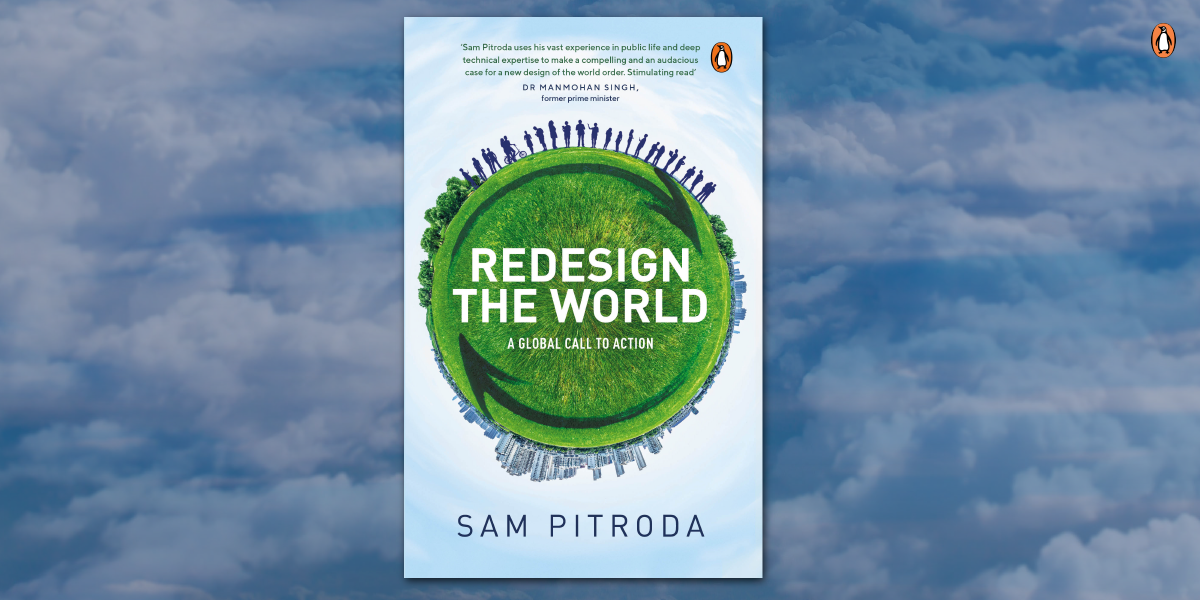
We essentially need a ‘third vision’ of the world that transcends national interests and takes into account global issues, from trade to environmental impacts. We need a vision that values human capital more than financial capital. A vision that works for everyone to attain a multipolar world, where people at the bottom of the economic pyramid benefit the most. We need to ask the world’s people: Do they want to live forever with poverty and hunger, with inequality and unemployment, under the shadow of discrimination and fear, with the police at every corner and the military at all borders? Or do they want to live in peace with friendly neighbours, in a clean environment, and with respect, dignity, equality, opportunities and hope for all? The present reality is scary. Don’t we want to change it?
Redesign the World: A Global Call to Action || Sam Pitroda
We do not want just the ‘open’ vision of America or the ‘closed’ vision of China. We want a third vision of the world where America is open to engagement, and China is engaged in openness. We want a reset of the world so that we can redesign it. We want to reset international interests over national interests, human diversity over human differences, globalism over nationalism, inclusion over exclusion, non-violence over violence, rationality over religion, and respect over race. We want international cooperation on climate change, global health, poverty, hunger, violence, security, amity with neighbours and much more.
I firmly believe that it is possible to redesign the world with this third vision because multiple, intricate and timely technologies with incredible innovations in information, genetics, bio, nano and material sciences are now all coming together. They are taking deep roots across the social, political and economic landscape, which will profoundly impact our livelihood and longevity. This will give new meaning to life, work, values, wisdom and progress. It will lead to a new development model based on cooperation, collaboration and communication, which can finally deliver peace, justice and prosperity to all by the middle of this century.
We are so used to thinking and behaving traditionally with our narrow compartmentalization of people and their ideas, values and experiences. We always tend to look at past experiences and our history to find solutions. We find pleasure in the past, comfort in the present, and fear for the future. The future is prosperous with new bold ideas and different toolkits, such as hyperconnectivity, which did not exist earlier. The future demands a new mindset with creativity, innovation and courage. I firmly believe that we are at a crossroads because of hyperconnectivity. We must think very differently to redesign the global organizational architecture. Only with this can we achieve new goals and growth for humanity’s sake. Connectivity is the key to break our past, transcend our present, and build bridges to network for the future.
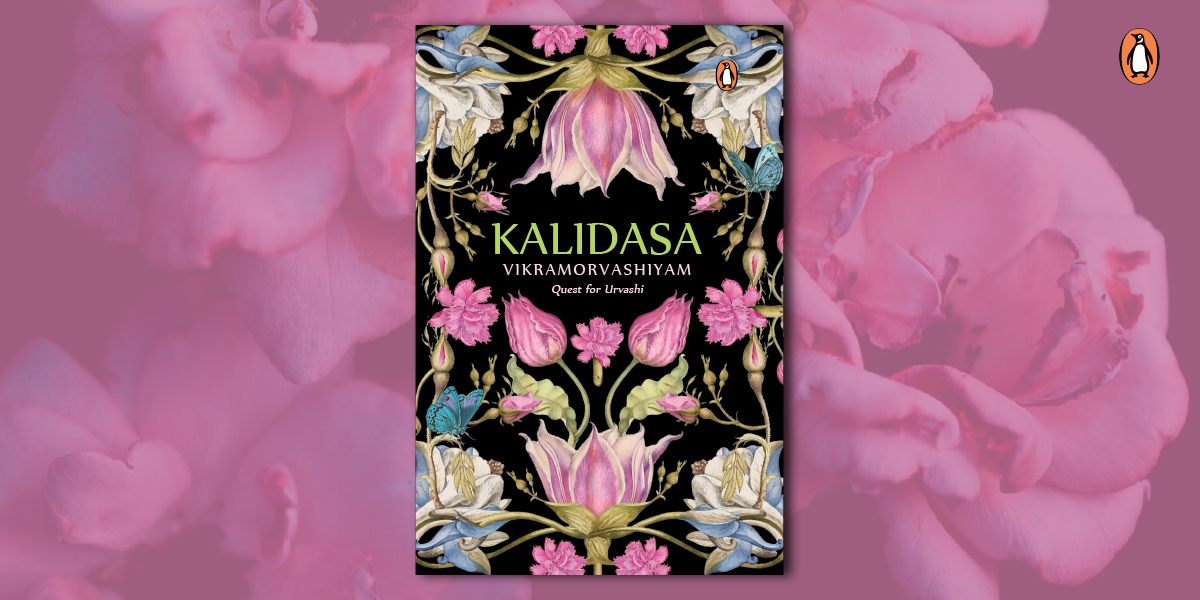
A magnificent drama based on an episode from the Rig Veda, Vikramorvashiyam is filled with dramatic turns of event, music and dance. The scenes, characters and dialogues are at once lively and theatrical as well as sensitive and speculative. Believed to be the second of Kalidasa’s three plays, Vikramorvashiyam is an undisputed classic from ancient Indian literature. A.N.D. Haksar’s brilliant new translation gives contemporary readers an opportunity to savour this delightful tale about star crossed lovers, King Pururavas and the celestial nymph Urvashi.
To enable you to feel the full extent of the intensity of the drama and emotions in this play, we find ourselves compelled to give you a glimpse into this magnificent story.
~
Vikramorvashiyam||Kalidasa
Chitraratha: Great Indra heard from Narada that Urvashi
had been kidnapped by the demon Keshin. He then ordered
the army of celestial singers to get her back. On the way, we
heard from the bards about your victory, and have come here
to you. She must salute Indra, together with you and me. For
you have indeed done what he wanted, sir. Look,
Long ago did the sage Narayana
present her to the king of heaven,
and now she has been rescued
by you from the demon’s hands. (14)
King: No! It is not so!
It is indeed by the power of
the wielder of the thunderbolt,
that his allies defeat the foe:
from his mountain cave, even the echo
of a lion’s roar can terrify elephants. (15)
Chitraratha: This is quite well said. Modesty does indeed
ornament valour.
King: This is no time for me to visit Indra, the lord of a hundred
sacrifices. You should yourself take this lady to meet him.
Chitraratha: As you wish, sir. Ladies, this way.
(The nymphs mime to leave.)
Urvashi: Friend Chitralekha, though this saintly king did save
me, I cannot say good-bye to him. So, please be my mouthpiece.
Chitralekha (approaching the king): Great king, Urvashi says
she wants to express her gratitude to you and, as for a dear
friend, to carry your fame to great Indra’s realm.
King: Do go, till we meet each other again.
(The nymphs mime mounting to the sky, together with the
celestial singers.)
Uravashi (miming great reluctance): Alas! My string of pearls
has been caught in the vine of a creeper plant. Chitralekha,
please set it free.
Chitralekha (with a smile): It is stuck hard, and is difficult to
disentangle. But I will try to do it.
Urvashi: Remember your words!
King (to himself ):
Creeper, to me your deed is dear,
it delays for a while her going,
and her side-long glance at me
as she turns away her face, I see. (16)
Charioteer: Noble lord,
Having hurled into the sea
the demon who had great Indra wronged,
your wind-like arrow has again
come back to its quiver now,
like a serpent to its burrow. (17)
King: Then, bring back the chariot so that I may mount it.
(The charioteer does so and the king mounts the chariot. Urvashi
gazes at him and sighs as she exits with her friend Chitralekha.)
King (looking towards where Urvashi has gone): Alas! My
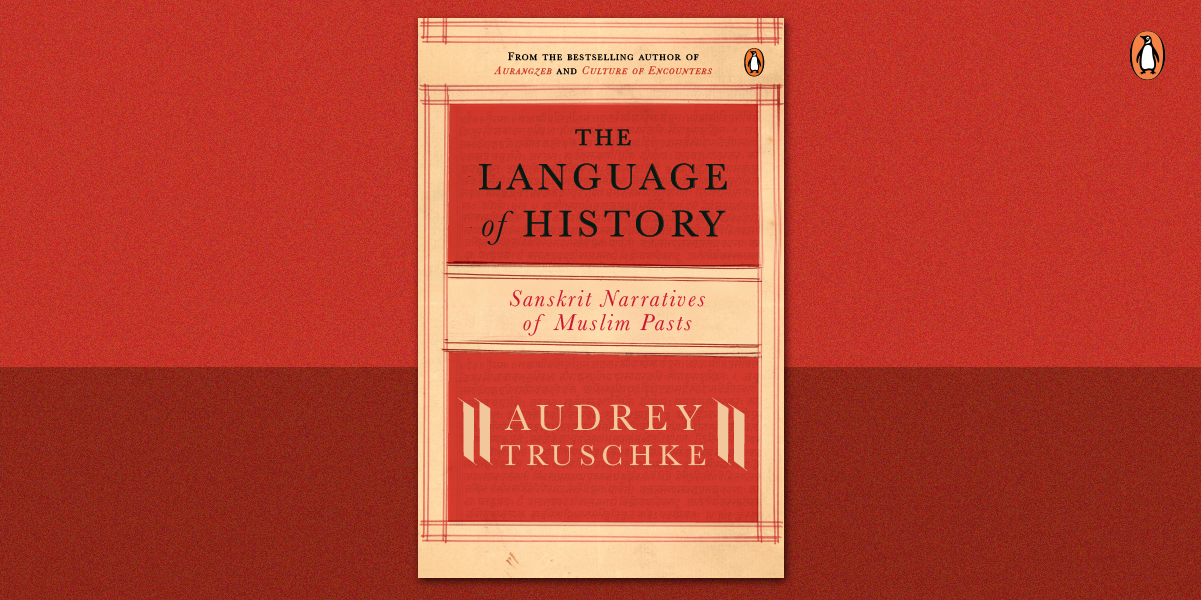
The Language of History by Audrey Trushchke analyses a hitherto overlooked group of histories on Indo-Muslim or Indo-Persian political events, namely a few dozen Sanskrit texts that date from the 1190s until 1721. This book seeks, for the first time, to collect, examine and theorize Sanskrit histories on Muslim-led and, later, as Muslims became an integral part of Indian cultural and political worlds, Indo-Muslim rule as a body of historical materials. This archive lends insight and perspectives into formulations and expressions of premodern political, social, cultural and religious identities.
Here is an excerpt from the chapter titled Local Stories in Fourteenth-Century Gujarat andFifteenth-Century Kashmir.
*
Different perspectives, different storytellers, always complicate the narrative; that’s good because what we are trying to make sense of is complex.
—Githa Hariharan, 2016 interview
As Indo-Muslim rulers made further inroads into parts of the Indian subcontinent from the fourteenth century onwards, authors developed locally based traditions of Sanskrit historical writing that detailed this political trend. In this chapter, I investigate and compare two regional traditions that took off in the fourteenth century and fifteenth century, respectively: Gujarati prabandhas and Kashmiri rajataranginis. Gujarat and Kashmir had both witnessed Muslim-led military activities and, at least in parts, Muslim- led rule for centuries prior to the inauguration of these respective bodies of Sanskrit texts. Both sets of materials narrate some of that history as relevant to their region. Additionally, because they are plural rather than single texts, these materials allow me to compare authorial choices and see trends and exceptions within a deepening interest in Indo-Muslim history among premodern Sanskrit intellectuals.
The Language of History || Audrey Trushke
The Gujarati and Kashmiri materials that I discuss here differ from each other in numerous ways. Four Gujarati texts were composed within a tight time-frame, dating between 1301 and 1349. A trio of Kashmiri works stretch across more than three centuries, with Kalhana penning his Rājataraṅgiṇī (River of Kings) in 1149 and two successors writing in 1459 and 1486, respectively. The two series of texts were authored by men belonging to different religious communities: Shvetambara Jains (prabandhas) and Kashmiri Brahmins (rajataranginis). They exhibit distinct styles and foci. Nonetheless, both constitute regionally based Sanskrit traditions of history writing in areas shaped, relatively early on, by Muslim-led political activities. I consider Gujarati prabandhas and Kashmiri rajataranginis together here, not as two sides of the same coin but rather as two distinct local traditions. When read against each other, these series of texts enable us to sketch out the increasingly complex contours of Sanskrit historical writing on Muslim-led incursions and rule in the fourteenth and fifteenth centuries.
Pairing Difference in Gujarati and Kashmiri Materials
The Gujarati and Kashmiri works both addressed local audiences, although delineated in rather different ways. Jain monks envisioned the four prabandhas I discuss below as being inspirational to the Jain faithful. Two authors, Merutunga and Rajashekhara, penned collections of stories about Jain ascetics and laymen. The other authors—Kakka, Jinaprabha and Vidyatilaka (Jinaprabha’s continuer)—structured their narratives around Jain pilgrimage destinations. Extant manuscript evidence indicates that the four prabandhas were often read in and around Gujarat. In contrast, Kashmiri Brahmins penned the first three rajataranginis for a more politically defined audience. Kalhana, who completed the inaugural Rājataraṅgiṇī in 1149, claimed to write for others who lived through the vicissitudes of sovereignty. For Kalhana, this was a personal subject since his father had been ousted from the court of King Harsha (r. 1089–1101), leaving Kalhana unemployed. Kalhana’s chronicle found a reception, a bit ironically, among those who enjoyed royal patronage, and Jonaraja and Shrivara, the authors of the next two rajataranginis—who imitated Kalhana in style and focus—were court poets of the Shah Miri dynasty. The Rājataraṅgiṇīs of Jonaraja and Shrivara doubled as extensions of Kalhana’s text and as official court chronicles for an Indo-Persian polity.
Despite the distinct origins of these two bodies of historical materials, the founding authors of both local traditions envisioned the same key antecedent: the Sanskrit epic Mahabharata. Kalhana alludes to the Mahabharata throughout his work and also assigns his chronicle the same unusual aesthetic goal attributed to the epic in the Kashmiri thought of his time, namely, inducing quiescence (śāntarasa) in the reader who would shun the world after perusing the monstrous cycle of politics. Merutunga, who penned the earliest prabandha work I discuss here, was more direct. In an opening verse, he billed his Prabandhacintāmaṇi (Wishing-Stone of Narratives, 1305) as ‘pleasing like the Mahabharata’. Neither Kalhana nor Merutunga refer to any of the historical materials that I have dealt with earlier in this book, which accords with the generally fractious nature of Sanskrit historical writing on Indo-Muslim political events. But neither did these authors posit their works as clean breaks with the Sanskrit literary tradition. Rather, the authors imagined themselves as updating established ways of writing about past events in Sanskrit, modernizing (or early modernizing?) them for new times and in response to new occurrences. Analysing the prabandhas and rajataranginis together here underscores the self-proclaimed continuity of both sets of authors as well as their differences in interpreting what it meant to write political history in Sanskrit.
Kalhana and Merutunga headline focusing on the present as a crux of their innovation. Again, Merutunga is more forthcoming. In an opening verse, he claims that his work narrates recent history (vṛttaistadāsannasatāṃ), which sets it apart from old stories (kathāḥ purāṇāḥ). Kalhana indicates his emphasis on recent history by becoming more precise and verbose as he comes closer to his present day, such that his later chapters, on events increasingly close to his own time, are far longer and denser than his earlier ones.9 More than half of Kalhana’s Rājataraṅgiṇī concerns the sixty years prior to the text’s composition. In this emphasis on recent history, Kalhana’s Rājataraṅgiṇī is a far cry from the Mahabharata epic that was always, even in its own internal frameworks, about times and people that were long gone. More generally, the prabandhas and rajataranginis I discuss here concentrate on the lives of real, historical people and sometimes include specific dates and citations of sources. Their authors coupled these historiographical innovations with an incorporation of stories about how Indo-Muslim political actors were shaping the contemporary political and social realities of Gujarat and Kashmir, respectively. By reading these two bodies of works side by side, we can see both their shared similarities and substantial divergences that added texture and depth to the growing tradition of Sanskrit historical writing.
‘May’ is a word filled with promises and possibilities. It is also a word that conveys blessings and best wishes. These are emotions the entire human race has been expressing and feeling toward one another constantly through this difficult period that has spanned over a year. A homograph to this word that is so laden with potential and compassion, is the month we have now stepped into. May ‘may’ have a lot to offer you in terms of comfort and relief, but what we certainly have to offer you this month is an array of our latest releases. May they bring a little light, love, laughter, knowledge and hope into your lives.
Hisila||Hisila Yami
Hisila
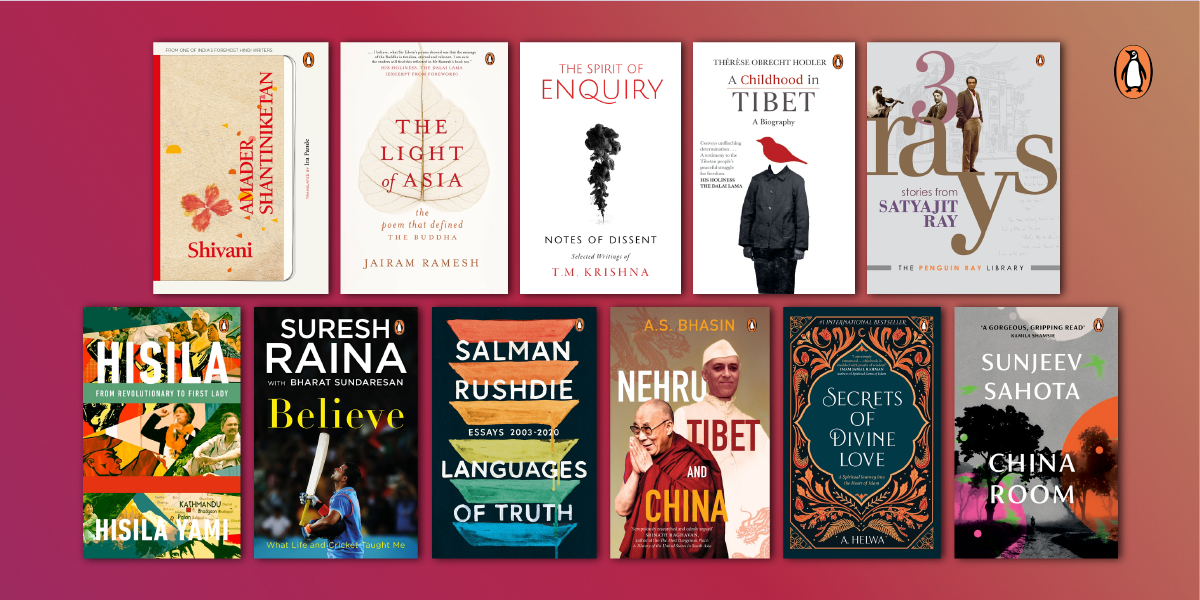
In this fascinating book, Hisila Yami traces her journey from being a young Nepali student of architecture in Delhi in the early eighties to becoming a Maoist revolutionary engaging in guerrilla warfare in Nepal. Yami was one of two women leaders who were a part of the politburo of the Communist Party of Nepal, which led the revolutionary People’s War.
This lucidly written political memoir may talk about gaining political awareness, joining protests, being imprisoned, participating in the People’s War, and later her experiences as the first lady and a minister. But, at the same time, it’s also a narrative that offers glimpses of her personal life. She candidly writes about falling in love and marrying a fellow politician, Baburam Bhattarai, who went on to become the prime minister of Nepal. From how she balanced her political life with motherhood to what it meant to be a woman in the communist party that launched a civil war, Yami narrates an unforgettable account of a remarkable life.
Three Rays||Satyajit Ray
Three Rays
Satyajit Ray (1921-1992), through his life, philosophy and works offered a unique aesthetic sensibility, which took our cinema, art and literature to a new height. Ray, an ace designer, music composer, illustrator and a gifted writer, gave us the iconic Feluda and Professor Shonku, loved and revered by millions of readers.
Celebrating his centenary birth anniversary, Three Rays: Stories from Satyajit Ray, the first book in ‘The Penguin Ray Library’ series, opens a window to his brilliance. With more than forty previously unpublished stories, autobiographical writings and illustrations by Ray, this volume opens a window to the Master’s creative genius.
Secrets of Devine Love||A.Helwa
Secrets of Divine Love
Secrets of Divine Love draws upon the spiritual secrets of the Qu’ran, mystical poetry and stories from the world’s greatest prophets and spiritual masters to help you reignite your faith, overcome your doubts and deepen your connection with God. Practical exercises and guided meditations will help you develop the tools and awareness to overcome the inner critic that prevents you from experiencing God’s all-encompassing love.
Through the principles and practices of Islam, you will learn how to unlock your spiritual potential and your divine purpose. This insightful book uses a rational yet heart-based approach towards the Qu’ran that enlightens and inspires towards a deeper intimacy with God.
Believe||Suresh Raina, Bharat Sundaresan
Believe
Believe, Sachin Tendulkar told him – and he took it to heart, getting the word etched on his arm as a tattoo.
In this book, Suresh Raina takes us through the challenges he faced as a young cricketer. He was bullied as a child, but he overcame every adversity life threw at him and never gave up. This is the story of the lessons he learnt and the friendships he built.
Peppered with invaluable insights – about the game and about life – that Raina acquired from senior colleagues, this book will make you believe in the power of hard work, love, luck, hope and camaraderie. It is a journey through the highs and lows in the career of a man who saw his world fall apart and yet became one of the most influential white-ball cricketers India has ever seen.
Languages of Truth||Salman Rushdie
Languages of Truth
Salman Rushdie is celebrated as a storyteller of the highest order, illuminating truths about our society and culture through his gorgeous prose. In his latest collection of nonfiction, he brings together insightful essays and speeches that focus on his relationship with the written word and reinforce him as one of the most original thinkers of our time.
Gathering pieces written from 2003 to 2020, Languages of Truth chronicles Rushdie’s intellectual engagement with a period of momentous cultural shifts. He delves into the nature of storytelling as a human need in what emerges as a love letter to literature. Rushdie explores what the work of authors from Shakespeare and Cervantes to Samuel Beckett, Eudora Welty, and Toni Morrison mean to him. He delves deep into the nature of ‘truth’, revels in the vibrant malleability of language, the creative lines that join art and life, and looks anew at migration, multiculturalism and censorship.
Enlivened by Rushdie’s signature wit,Languages of Truth offers his piercingly analytical views on the evolution of literature and culture as he takes us on a tour of his own exuberant imagination.
Nehru, Tibet and China||Avtar Singh Bhasin
Nehru, Tibet and China
On 1 October 1949, the People’s Republic of China came into being. Power moved from the hands of the nationalist Kuomintang government to the Communist Party of China headed by Mao Tse Tung. All of a sudden, it was not only a new China that India had to deal with but also a Tibet which was under increasing pressure.
Clearly, newly independent India, with Prime Minister Jawaharlal Nehru at its helm, was navigating choppy waters. Its relations with China deteriorated, eventually leading to the Indo-China war in 1962. Today, more than six decades after the war, we are still face border disputes with China that seem to routinely grab headlines. It leads one to question what exactly went on during the emergence of a new China and why have we repeatedly failed to arrive at a solution?
Based on meticulous archival research, this book analyses the events from 1949 to the Indo-China war in 1962 and its aftermath to uncover answers to these burning questions.
A Childhood in Tibet||Thérèse Obrecht Hodler
A Childhood in Tibet
Tendöl Namling turned 60 in 2019. She was born at the time the Dalai Lama fled from Lhasa and the uprising of his people by the Chinese People’s Army was brutally suppressed. She lived 22 years under Chinese rule. As daughter of a high government official, she underwent the ordeal of ‘re-education’ with full force. All she had from these years are painful memories and crumpled photographs of her with friends and cousins in Lhasa, smiling as if nothing happened. When Tendöl turned 10 her brother was arrested and her mother sentenced to ten years in prison. Tendöl was sent to work in road construction for several years, following which she was allowed to start an apprenticeship as motor mechanic. Thanks to the efforts of her family in exile, Tendöl was able to leave Tibet in 1982. After twenty years of hardship she landed in prosperous Switzerland. She struggled to start her life all over again, but never gave up.
In Tendöl’s words, ‘this little book is dedicated to all the Tibetans who continue to rebel against the Chinese occupation’.
The Light of Asia||Jairam Ramesh
The Light of Asia
‘The Light of Asia’is an epic poem by Sir Edwin Arnold that was first published in 1879. It quickly became a huge sensation and has continued to resonate powerfully across the world over the last century and a half. Weaving together literary, cultural, political and social history, Jairam Ramesh uncovers and narrates the fascinating story of this deeply consequential and compelling poem that has shaped our thinking of an ancient sage and his teachings. He brings into this unusual narrative the life of the multi-faceted poet himself who, among other things, was steeped in Sanskrit literature.
Sir Edwin Arnold’s English rendering of the Bhagavad Gita was one of Mahatma Gandhi’s favourites. He was also in many ways the man who may have shaped Bodh Gaya as we know it today.
China Room||Sunjeev Sahota
China Room
A multigenerational novel of love, oppression, trauma and the pursuit of freedom, inspired in part by the author’s own family history, China Room twines together the stories of a woman and a man separated by more than half a century but united by blood.
Mehar, a young bride in the rural Punjab of 1929, is trying to discover the identity of her new husband. She and her sisters-in-law, married to three brothers in a single ceremony, spend their days working in the family’s ‘china room’, separated from the men. When Mehar develops a theory as to which of them is hers, a passion is ignited that puts more than one life at risk.
Spiralling around Mehar’s story is that of a young man who, in 1999, travels from England to a deserted farm, its ‘china room’ locked and barred. In enforced flight from the traumas of his adolescence-his experiences of addiction, racism and estrangement from the culture of his birth-he spends a summer in painful contemplation and recovery, before finally finding the strength to return home.
Amader Shantiniketan||Shivani, Ira Pande
Amader Shantiniketan
Padma Shri and late Hindi author Shivani’s memoirs of studying at the experimental school set up by Rabindranath Tagore, the Ashram, this charming memoir is a loving homage to a grand institution and its legendary gurus. Written from the perspective of a child, it retains the freshness and innocence of an age when experimental education was not merely a trendy movement. Shivani’s vivid pictures of the Ashram and portraits of her teachers and fellow students remain as alive as they seemed when she first wrote this memoir nearly fifty years ago.
Along with the moving tributes she wrote when some of her beloved contemporaries passed away, this slim memoir is a sort of diptych that captures the spirit of the Ashram and the liveliness of its inmates, many of whom went on to become iconic. Shivani’s recall of her time there takes the reader into an enchanted garden that remains as inspirational to her as it was when she went there a lifetime ago.
The Spirit of Enquiry||T.M. Krishna
The Spirit of Enquiry
As a vocalist in the Karnatik tradition, T.M. Krishna eludes standard analyses. Uncommon in his rendition of music and his interpretation of it, Krishna is at once strong and subtle, manifestly traditional and stunningly innovative. His work is spread across the whole spectrum of music and culture, politics and the social sphere; he is at once philosophical, aesthetic and sociopolitical. He asks important questions about how art is made, performed and disseminated. Unabashedly given to rethinking classical paradigms, he addresses crucial issues of caste, class and gender with nuance and openness.
T.M. Krishna’s key writings have been put together for the first time in this extraordinary collection. The Spirit of Enquiry: Dissent as an Art Form draws from his rich body of work, thematically divided into five key sections: art and artistes; the nation state; the theatre of secularism; savage inequalities; and in memoriam. This collection reflects the critical and cultural engagement of one of our finest thinkers, public intellectuals and practitioners of art.
We know that our current times are not the most optimistic. But now more than ever, we believe that books can act as a source of hope and joy, howsoever small, and keep us going.
We have an assorted selection of books for you this May! These will keep your young ones occupied as they spend the summers indoors, inside the safety of their cozy homes.
**
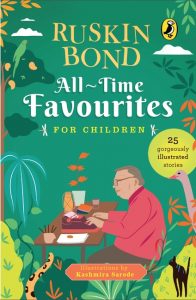
All-Time Favourites for Children
Ruskin Bond
All-Time Favourites for Children || Ruskin Bond, Kashmira Sarode (Illustrator)
Ages: 9+ years
All Time Favourites for Children celebrates Ruskin Bond’s writing with stories that are perennially loved and can now be enjoyed in a single collectible volume. Curated and selected by India’s most loved writer, this collection brings some of the evocative episodes from Ruskin’s life, iconic Rusty, eccentric Uncle Ken, ubiquitous grandmother, and many other charming, endearing characters in a single volume while also introducing us to a smattering of new ones that are sure to be firm favourites with young readers.
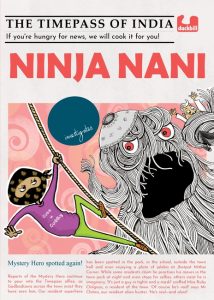
Ninja Nani and the Freaky Food Festival
Lavanya Karthik
Ninja Nani and the Freaky Food Festival || Lavanya Karthik
Ages: 10 to 14 years
It’s time for the annual festival and a special guest is expected to arrive in Gadbadnagar, but has a certain President gone too far? Has Nani finally met her match in the meanest, scariest and awfullest demon ever to crawl out of the Dark Forest? Will the Mayor’s mustache ever run for office?
Wait, there’s more!
Fake Mystery Heroes! Haunted falooda! Giant dogs–
And what’s that again about goats? You’re going to have to read it for yourself.
Mirror, Mirror
Andaleeb Wajid
Mirror, Mirror || Andaleeb Wajid
Ages: 10 to 14 years
Five years earlier, a friend’s nasty comment makes Ananya start hating her body. She decides to change into a new person-one who effortlessly fits into all kinds of clothes, who shuns food unless it’s salad, and who can never be called ‘Miss Piggy’-and to cut everything from her ‘old’ life, including her best friend, Raghu, for being the witness to her humiliation.
Ananya is on her way to becoming the Ananya of her dreams, but she’s still a work in progress.
One day, her parents announce that they’re expecting a baby (at their age!). To make matters worse, Raghu reappears in her life …
Andaleeb Wajid’s latest novel for young adults is a touching and funny story about a young girl’s journey to acceptance and self-love.
What’s the Big Secret?
Sonali Shenoy
What’s the Big Secret? || Sonali Shenoy, Annushka Hardikar (Illustrator)
Ages: 9+ years
Eleven-year-old Aditya really wants to know about periods.
Ever since Rhea Didi began getting brown paper packages, there’s been something that no one is telling him. Mama turns red, Pa chokes on his coffee and Dadi has steam coming out of her ears! Thank goodness for his friends Naveen and Vinay-whom he can talk to.
But when Vinay brings an odd-looking napkin to school that soaks ink, Aditya is even more confused. Doesn’t his sister use a microtip pen?
All of this is only making little Aditya more determined to find out What is going on!
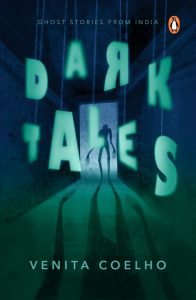
Dark Tales
Venita Coehlo
Dark Tales || Venita Coehlo
Ages: 9+ years
In this collection of eleven very dark and twisted tales, Venita Coelho lays bare the underbelly of contemporary India. Get ready to gasp and cringe in horror as you have the rug pulled out from under you! This is a book you won’t want to read after dark.
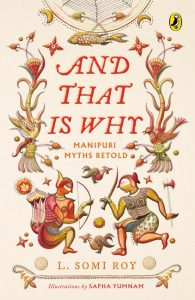
And That is Why
L. Somi Roy
And That is Why || L. Somi Roy, Sapha Yumnam (Illustrator)
Ages: 8+ years
Dear Reader, do you know
· why the deer does not eat rice?
· why man gets wrinkles and a stoop?
· why the cat buries its poop?
· why a doll is worshipped in a village called Kakching?
Discover twelve magical tales from Manipur, the mountain land in the north-east of India on the border with Myanmar. Passed down by learned scholars, balladeers and grandmothers over hundreds of years, these unknown myths and fables are enriched with beautifully rich paintings that will transport you to Manipur!
One of India’s most incredible and enviable cultural aspects is that every Indian is bilingual, if not multilingual. Delving into the fascinating early history of South Asia, Wanderers, Kings, Merchants reveals how migration, both external and internal, has shaped all Indians from ancient times. Through a first-of-its-kind and incisive study of languages, such as the story of early Sanskrit, the rise of Urdu, language formation in the North-east, it presents the astounding argument that all Indians are of mixed origins. It explores the surprising rise of English after Independence and how it may be endangering India’s native languages.
Here’s an excerpt from the book in which the author introduces us to the concept of gestational learning through a personal anecdote, about the process of learning a new language.
*
Indian English comes to most of us not in measured steps, visible day by day, as would happen with a foreign language we learnt in class at school, but mysteriously, gestating inside our heads invisibly for years before it is ready to be ‘born’.
My first glimpse of gestational learning came from observing my daughter. Her first language was Hindi, but English was a language she heard every day at home being used by adults. There is a common belief that children can learn any language they are exposed to before the age of five. Yet while she was hearing English all the time, when she spoke it was only in Hindi.
When she was two and a half, we went abroad for a few months. If she thought that English was something only adults spoke, maybe in a playschool she would meet children her age who spoke English and pick it up from them. But it didn’t happen: she stuck to Hindi, and I had to be her translator.
Wanderers, Kings, Merchants || Peggy Mohan
And then one evening back in Delhi, when she was four, she overheard her father and me wondering in English who to leave her with so that we could go out. She started to cry.
She understood! And then about a week later, she suddenly started speaking to us in English, a bit hesitantly at first, but in full sentences, with the accent of a fluent Indian speaker of English. When I remarked on her speaking English, she looked nonplussed.22 She did not even notice that she was doing anything different from before, she was simply . . . talking!
It is interesting to speculate on what all must have been going on inside the black box that is her mind. The first thing to note is that while Hindi was spoken to her emphatically in sing-song ‘motherese’ and with full eye contact, English was something she encountered in profile, as it were. Adults talking among ourselves, but not directly to her.
When we make films for young children, we use point-of-view shots, with close-up frontal images of people talking directly into camera. If the shots on the screen are profile shots, of people speaking to each other but not directly to children who are watching, their eyes stray away from the screen. They do absorb what is happening, but they do not give it their full attention. They have a clear idea of when they are being spoken to, and what speech can be treated as background noise.
…
It is not clear how the background noise from conversations in another language gets absorbed and eventually comprehended. In linguistics, we believe that children are born with innate clues as to what to expect when they encounter languages, allowing them to construct complete representations in their minds. But the English adults speak between ourselves is not the stripped-down code that we would use to a child, because it is not meant for a child. Adults’ sentences are longer and more complex—our speed of speech is faster, and we use much, much more vocabulary to refer to things that are not a part of a child’s world, including abstract things.
Out of this rich diet, children do eventually sort out basic sentence structure, leaving up in the air a large number of things that cannot make sense to them right away. There is a strong relationship between how difficult incoming data is to sort out and how long a child will delay before beginning to speak. In multilingual homes where two or more languages are used from the start for exactly the same things—with the two parents speaking the two different languages—children do grow up bilingual or multilingual, but they tend to start speaking later. And when they do, they are set to become ideal translators, as they can say exactly the same things in their different languages.
**
For a fascinating insight into learning a new language and the import of languages for a culturally diverse country like India, read Peggy Mohan’s Wanderers, Kings, Merchants.
‘Travel far, pay no fare…A book can take you anywhere.’
– Anne Morrow Lindbergh
The portal to the rest of the world is closer to you than you think. While we advise you to physically stay at home, no one said anything about not travelling!
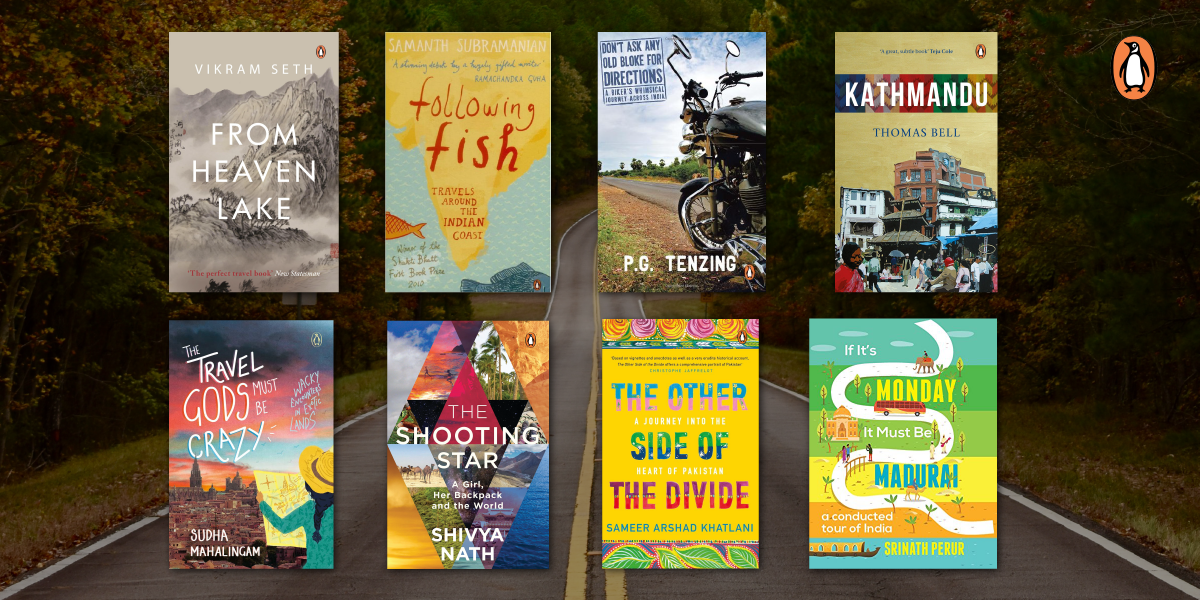
Penguin Random House India brings to you the #PenguinStayList – a list of books that will inform, educate and entertain you as best as they can during this pandemic. Travel around the Indian coast, up to the greatest city of the Himalayas or even to different corners of the world.
‘That’s the thing about books. They let you travel without moving your feet.’
– Jhumpa Lahiri
Following Fish : Travels around the Indian Coast
In a coastline as long and diverse as India’s, fish inhabit the heart of many worlds food of course, but also culture, commerce, sport, history and society. Journeying along the edge of the peninsula, Samanth Subramanian reports upon a kaleidoscope of extraordinary stories. Throughout his travels, Subramanian observes the cosmopolitanism and diverse influences absorbed by India’s coastal societies, the withdrawing of traditional fishermen from their craft, the corresponding growth of fishing as pure and voluminous commerce, and the degradation of waters and beaches from over-fishing.
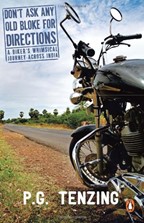
Don’t Ask Any Old Bloke For Directions – A Biker’s Whimsical Journey Across India
After twenty years in the Indian Administrative Service, P.G. Tenzing throws off the staid life of a bureaucrat to roar across India on an Enfield Thunderbird, travelling light with his possessions strapped on the back of his bike. On the nine-month motorcycle journey without a pre-planned route or direction, he encounters acquaintances who appear to be from his karmic past: from the roadside barber to numerous waiters and mechanics― fleeting human interactions and connections that seem pre-ordained.
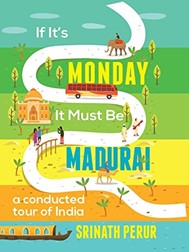
If It’s Monday It Must Be Madurai: A Conducted Tour Of India
This book was first written when author Srinath Perur made the mistake of going on a conducted tour of ten of the most famous sites in India. However, despite being very annoyed at his bovine compatriots and his sonorous tour-guide, he found that there was some merit in traveling in groups, and wrote down his experiences in the form of this book. Witty, Humorous, and insightful, it combines his science-based knowledge and heartfelt experiences to create a tableau of interesting descriptions and adventures.
Shooting Star, The: A Girl, Her Backpack and the World
Shivya Nath quit her corporate job at age twenty-three to travel the world. She gave up her home and the need for a permanent address, sold most of her possessions and embarked on a nomadic journey that has taken her everywhere from remote Himalayan villages to the Amazon rainforests of Ecuador. Along the way, she lived with an indigenous Mayan community in Guatemala, hiked alone in the Ecuadorian Andes, got mugged in Costa Rica, swam across the border from Costa Rica to Panama, slept under a meteor shower in the cracked salt desert of Gujarat and learnt to conquer her deepest fears.
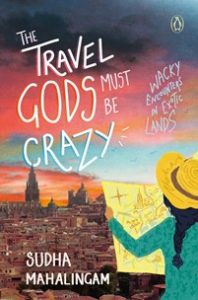
Travel Gods Must Be Crazy, The: Wacky Encounters in Exotic Lands
Dreaming of glorious sunrises and architectural marvels in exotic places, Sudha often landed up in situations that were uproariously bizarre or downright dangerous. Tongue firmly in cheek, she recounts her journeys through the raw wildernesses of Borneo and the African savannah, into the deserts of Iran and Uzbekistan, and up the Annapurna and the Pamirs, revealing the quirky side of solo travel to side-splitting effect. Punctuating her droll stories with breathtaking descriptions and stunning photographs, Sudha invites readers on an unexpected and altogether memorable tour around the world!
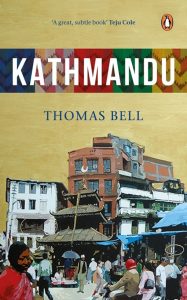
Kathmandu
Kathmandu is the greatest city of the Himalayas a unique survival of cultural practices that died out in India 1000 years ago. It is a carnival of sexual license and hypocrisy, a jewel of world art, a hotbed of communist revolution, a paradigm of failed democracy, a case study in bungled Western intervention and an environmental catastrophe.
Kathmandu follows the author’s story over a decade in the city and unravels the city’s history through successive reinventions of itself. Erudite, entertaining and accessible, this is the distinctive chronicle of a fascinating city.
From Heaven Lake
Hitch-hiking, walking, slogging through rivers and across leech-ridden hills, Vikram Seth travelled through Sinkiang and Tibet to Nepal: from Heaven Lake to the Himalayas, By breaking away from the reliable routes of organized travel, he transformed his journey into an unusual and intriguing exploration of one of the world’s least-known areas.
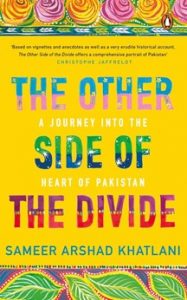
The Other Side of the Divide
Pegged on journalist Sameer Arshad Khatlani’s visit to Pakistan, this book provides insights into the country beyond what we already know about it. These include details on the impact of India’s soft power, thanks to Bollywood, and the remnants of Pakistan’s multireligious past, and how it frittered away advantages of impressive growth in the first three decades of its existence by embracing religious conservatism.
The book attempts to present a contemporary portrait of Pakistan-where prohibition remains only on paper and one of the biggest taxpayers is a Parsee-owned brewery-as a complicated and conflicted country suspended between tradition and modernity.
Well, that’s our list. Where will you travel to first?
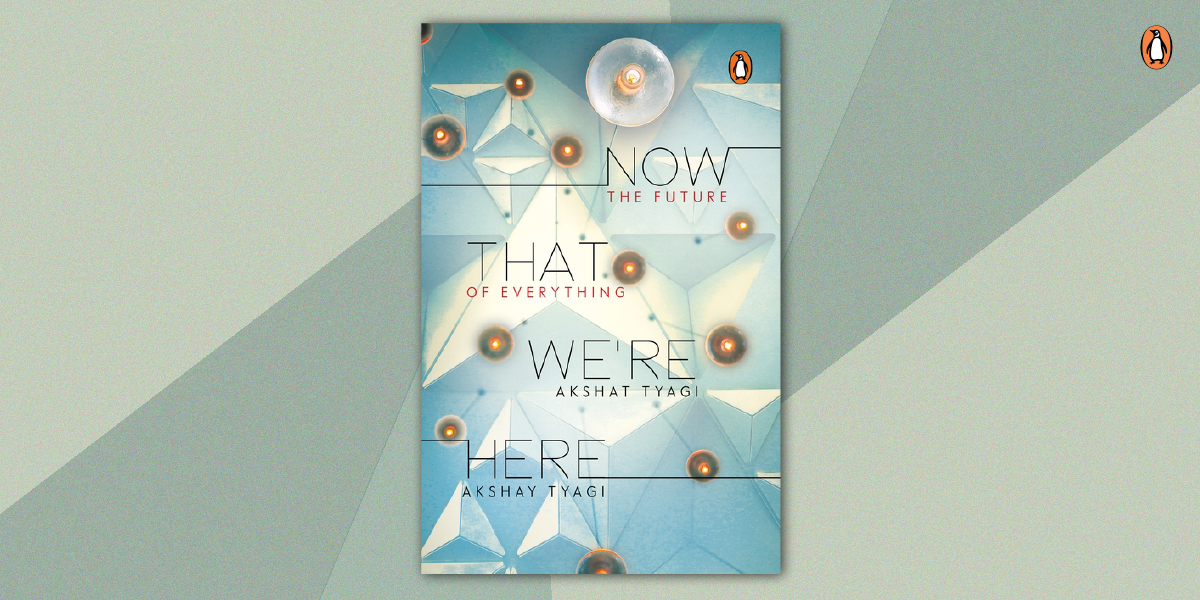
Author’s Note: We didn’t write a generalist guide for the future imagining a once in a lifetime pandemic. This is not the moment of celebration we would have chosen for the book. There’s so much else that needs your love and attention right now. Now that we’re here, we hope the book can offer some comfort and optimism about humanity making it through difficult times, and things getting better.
Now That We’re Here by Akshat Tyagi and Akshay Tyagi is a generalist guide about navigating the future in times of a pandemic. A playful mix of social science and technology, the essays on Data, Design, AI, Behavioural Economics and other important themes provide a peep into what’s coming. The following excerpt is from the chapter Viral Economics, written as the pandemic was unfolding.
—
Even though the collapse of economic prosperity is terrifying, the mourning of its fall should not turn into an endorsement for its previous design. Our economic growth has been highly inequitable, especially so over the last few decades. When your income drops from INR 70,000 a month to INR 40,000, it pinches hard. But even before the crisis, the average monthly income in India was below INR 12,000. We are still an extremely poor country, and we keep forgetting that fact until the next flood, drought or recession arrives.
Our public education hasn’t prepared us to understand the urgency of a pandemic. What you read in this book on data, complexity, economy and technology should be considered basic education. We were so busy bickering over Tipu Sultan’s mention in our history textbooks that we forgot to learn about the history of the Spanish flu and why there wasn’t anything particularly Spanish about the 1918 influenza pandemic.
It is important to maintain civil order by converting a difficult fight against the virus into a temporary celebration of essential workers. But in a different world, our government would be able to explain to us a virus’s non-linear growth graph, and we would pay our workers far better than we do. Making people bang pots and pans is okay only if we understand what we’re dealing with and how long it’s going to last. Otherwise, we are all at the mercy of our beloved leader and his wisdom.
With his utterances about injecting disinfectants and recommending unproven medical cures, Donald Trump may have made daily briefings look like a bad exercise in democracy. But they at least showed us how competent he was as a leader in handling emergencies, helping Americans divert him to other interesting things in the next election. To not show oneself at all during a moment of national crisis or conflict is a signature feature of tyrants. Stalin and Hitler were absent from public appearances for much of the war.
A country of 1.3 billion people with very high linguistic diversity, no universal access to devices for listening to a live broadcast, an unstable electricity supply and a two-hour difference in mean solar times between its easternmost and westernmost points shouldn’t be reliant on a charismatic head of state’s address to the nation. No leader can appeal to the sensibilities and convenience of such a diverse population in an hour’s time.
Now That We’re Here || Akshat Tyagi, Akshay Tyagi
Our Internet penetration is at the highest-ever point in our history, our data rates are the cheapest in the world and journalism is bleeding to death because of its open access—so why then were we still busy rioting as late as February 2020! Arundhati Roy called the madness of communal sickness our version of the coronavirus before we officially got sick with Covid-19.
A pandemic lays bare our structural injustices. Just like with any other disease, the poor are at a disadvantage here too. Pre-existing medical conditions and weak immune systems both increase vulnerability and are, not so surprisingly, correlated in part to one’s economic standing. Little access to nutrition, poor hygiene, few resources shared by more members in the family and safety hazards at repugnant jobs are all risks that Dalits and Muslims have faced for all of our developmental history.
When Ebola spread in a slum in Liberia, the area was sealed off with the help of armed forces. At the rioting of residents, indiscriminate fire helped restore the desired calm. You never heard about this because it didn’t happen in a gated community of rich citizens in a politically significant country.
…
There is no bright side to a pandemic. In fact, ignorant optimism hurts more when the threat is a respiratory virus. Leaders who tell false stories to trick people into staying calm destroy public trust in leadership and create greater chaos. A pandemic is also the time when more and more of us grow comfortable with the idea of compromising our liberty to let the government act. Naomi Klein, a strong advocate against neoliberalism’s worst, has been warning for a decade that emergencies should not be allowed to worsen inequalities and decrease political transparency.
We cannot buy our way out of this virus, but as we wait for medical solutions to arrive we should remain vigilant about the ad hoc measures offered by our governments.
A pandemic is the worst time to stop holding your government responsible.
**
The book explores how our friendships, jobs, health and democracies are changing, and why we must prepare for this new unpredictable world. There aren’t any easy answers, but Now That We’re Here let’s be vigilant and kind.
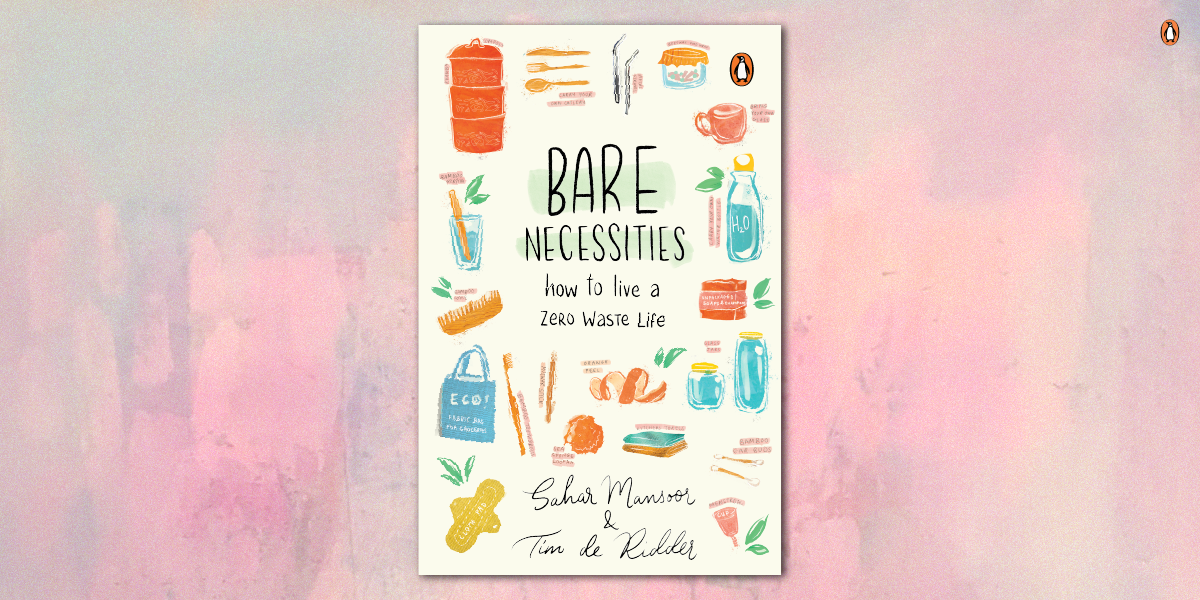
How do you think the Covid-19 pandemic has affected the way industries and individuals are looking at waste generation and sustainability?
-The pandemic created such a large amount of waste from the outset. However, it also rekindled intimacy with parts of our lives that we may have disconnected with. Examples include our kitchen, homes and nature. This reconnection found at an individual level is mirrored by many industries that have grown and/or launched during the pandemic. Specifically, food packaging and e-commerce businesses have developed new ways to operate in a changed world while reducing environmental footprints. In these ways, the pandemic has provided additional perspectives about the things that truly matter on an individual level and what can be innovated and developed at an industry level.
2. The zero-waste life is difficult but as your book has shown clearly doable especially for individuals? Do you have some tips for larger families especially those with infants since infants do generate a lot of waste such as diapers etc.?
One thing that we have focused on in the book is to illustrate that choosing to make a change is the first big step and one that has been undertaken by individuals and organisations across the country. The examples we have used are there to highlight how doable these actions are and what resources are available. For families with infants for instance we have detailed some organisations that retail cloth diapers such as Bumpadum and Super Bottoms. Additionally, In the first two years of life, an average child needs 280 pieces of clothing, most of which are only worn for about two or three months. As a result, a vast amount of kids’ clothing ends up in landfills, losing value and creating adverse environmental impacts. Sharing/circulating clothes among friends and family or at clothes exchanges are ways to reduce waste while making your own gifts for your children and/or involving them in the creation is a unique and memorable way to reduce waste.
3. Capitalism is to a large extent dependent on obsolescence and therefore, on waste. What message can you send to large business concerns that could inspire them to adopt more sustainable practices?
There is no doubt these days that sustainability and reducing waste is the way forward, there is so much research on this now. For businesses wanting to know how to do this make sure to keep it simple by designing out waste from your current system, this could include creating/using high quality products that have a longer life and can be reused in other fashions in the long term. A prime example is e-waste where the core elements of computers, phones and other devices needs to be reused because there is a finite supply of the raw materials. By incorporating models of reuse and refill into business operations each company can make a positive difference for their people, the planet and profit too.
4. Both of you have travelled extensively. Can you describe one incident or anecdote from your travels that really shaped your ideas on sustainability and its impact?
Tim: I’ve been fortunate to visit a number of remote and beautiful locations such as the Himalayas. Yet, when I visited there was always waste that polluted rivers and mountain tops. This impact changes the way that people live and needs to be addressed at a systemic level so that the livelihoods of communities and the environment can improve. I’ve witnessed community-based initiatives recently that promote the sale of sustainable and traditional products rather than imported plastic items that was one of the causes of waste in the area. This type of example illustrates a number of benefits of sustainability.
Sahar : Throughout my narrative, in our book I speak about my time working in northern Karnataka. This opportunity provided me with the opportunity to spend time in rural India and learn from communities that were choosing sustainable practices, including hand sewing traditional clothes designed to last a lifetime not just to be worn a few times and replaced. This type of practice fills my heart with so much love, it is a perfect picture of how sustainable practices value the environment, rural communities and experiences of travelers who are truly fortunate to visit these locations. There are many lessons to be learnt from people across our diverse country.
5. Bare Necessities has some wonderful recipes and DIYs using easily available ingredients that replace many less environmentally-friendly products. Let’s simplify these even further. Can you name 5 ingredients that you could survive with on a desert island?
This is a fascinating case study! I hope I never end up trapped on a desert island but if I did and wanted to create some of the DIY recipes I’d hope to find coconuts, bananas, yellow gram & green gam, along with honey and turmeric. Many of these ingredients form the backbone of the recipes we have shared and could provide sustenance too. For instance, coconut oil/water and the flesh of the coconut can be used for rehydration and if needed for personal care recipes for your skin, hair and teeth. Similarly, bananas, gram, honey and turmeric can be used for nutrition, cleaning and self-care. It’s pretty cool to think about but let’s hope we never get stuck on an island, I much prefer to make these products in Bangalore with my manufacturing team.
6. Have you noticed any positive impacts on your personal health since you switched to more sustainable personal care products?
There are many that I gained from the point where I made the shift to a zero-waste life. I would actually enjoy taking a deep dive into the benefits of the changes to my personal care routine through a longitudinal study now that I use organic face masks among other products. One area that doesn’t need a long-term evaluation is on the impacts in the kitchen. Many of the benefits I gained in my life combined both the decisions in my personal care routines for the things I placed on my body with the items I consumed. Overall my health improved markedly due to this combination of not using products with harmful chemicals while eating more raw and whole foods instead of packaged.
7. Which sector of the economy do you think will experience the most change as more buyers shift to sustainable consumerism in the future?
An area that we mentioned a little above with innovations from businesses aiming to reduce their environmental impact. Specifically, the creation of sustainable packaging is an area that is likely to experience significant growth. The use of hemp, mycelium and seaweed for example is seeing the development of alternatives to packaging made out of plastic and styrofoam among other harmful materials. This is an area of exciting change for the future and one that may well revolutionise business and increase the uptake of people involved in the circular economy, thus enabling a transition to a more sustainable/earth-friendly lifestyle.
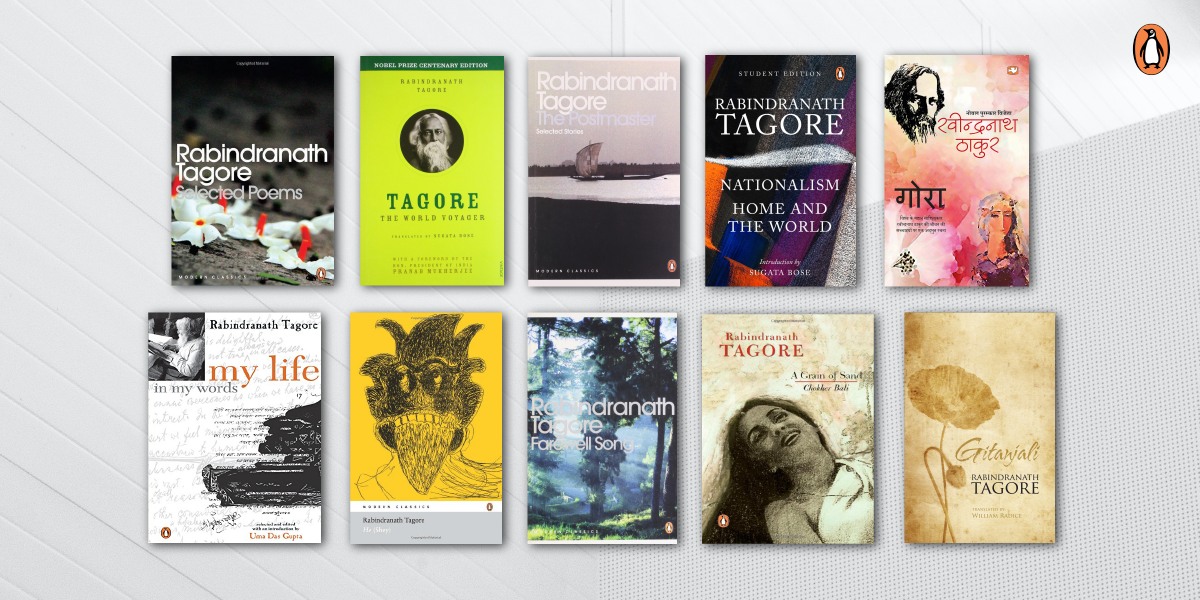
7th May commemorates the birth anniversary of Rabindranath Tagore. His eminence as India’s greatest modern poet remains unchallenged to this day. Tagore was a pioneering literary figure, renowned for his ceaseless innovations in poetry, prose, drama, music and painting, which he took up late in life. His works include novels; plays; essays on religious, social and literary topics; some sixty collections of verse; over a hundred short stories; and more than 2500 songs, including the national anthems of India and Bangladesh.
Born in 1861, Rabindranath Tagore was a key figure of the Bengal Renaissance. He started writing at an early age and by the turn of the century had become a household name in Bengal as a poet, a songwriter, a playwright, an essayist, a short story writer and a novelist.
In 1913 he was awarded the Nobel Prize for Literature and his verse collection Gitanjali came to be known internationally. At about the same time he founded Visva-Bharati, a university located in Santiniketan, near Kolkata. Called the ‘Great Sentinel’ of modern India by Mahatma Gandhi, Tagore steered clear of active politics but is famous for returning his knighthood as a gesture of protest against the Jallianwala Bagh massacre in 1919.
Here is a compilation of some of his work, to celebrate the man.
*
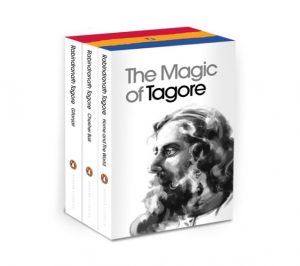
The Magic of Tagore
The Magic of Tagore ||.
A special limited-edition collection of the most beloved works of Nobel laureate Rabindranath Tagore, one of the greatest writers of the Indian subcontinent, featuring two classic novels of profound depth and beauty, and Tagore’s ground-breaking work of poetry. These classic works have been reissued by Penguin Random House India on the occasion of Tagore’s birth month.
*
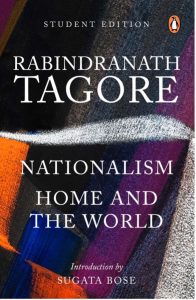
Nationalism and Home and the World
Nationalism Home and the World || .
Combining two classic texts by Rabindranath Tagore, this special edition features a new Introduction by eminent scholar Sugata Bose. Nationalism is based on Tagore’s lectures, warning the world of the disasters of narrow sectarianism and xenophobia. Home and the World is a classic novel, exploring the ever-relevant themes of nationalism, violent revolution and women’s emancipation.
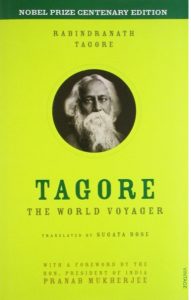
Tagore: The World Voyager
Tagore: The World Voyager || Sugata Bose (Translator)
For long considered untranslatable, Tagore’s songs express most profoundly his romantic and religious perceptions. Prof. Bose aims to convey the artistic value of Tagore’s songs beyond the limits of his province. The first part, ‘Oceanic Songs’, introduces the lyrics and tunes of the songs to a foreign audience through a narrative of Tagore’s travels during which he communicated with the wider world. Since Tagore wrote only forty of his nearly 2500 songs on his journeys abroad, the second part presents a selection of ‘songs in five genres’. This book endeavours to reach Tagore’s songs to people beyond the borders of India, transcending the barriers of language on the wings of music.
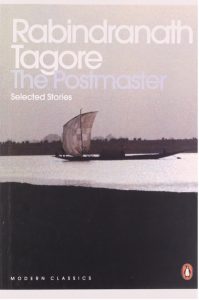
The Postmaster: Selected Stories
The Postmaster || .
Poet, novelist, painter and musician Rabindranath Tagore created the modern short story in India. Written in the 1890s, during a period of relative isolation, his best stories—included in this selection—recreate vivid images of life and landscapes. They depict the human condition in its many forms: innocence and childhood; love and loss; the city and the village; the natural and the supernatural. Tagore is India’s great Romantic. These stories reflect his profoundly modern, original vision. Translated and introduced by William Radice, this edition includes selected letters, bibliographical notes and a glossary.
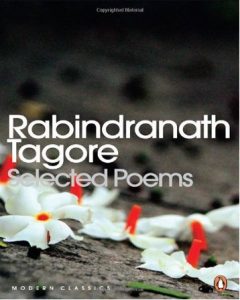
Rabindranath Tagore: Selected Poems
Rabindranath Tagore: Selected Poems || .
The poems of Rabindranath Tagore are among the most haunting and tender in Indian and world literature, expressing a profound and passionate human yearning. His ceaselessly inventive works deal with such subjects as the interplay between God and mortals, the eternal and the transient, and the paradox of an endlessly changing universe that is in tune with unchanging harmonies. Poems such as “Earth” and “In the Eyes of a Peacock” present a picture of natural processes unaffected by human concerns, while others, as in “Recovery14,” convey the poet’s bewilderment about his place in the world. And exuberant works such as “New Rain” and “Grandfather’s Holiday” describe Tagore’s sheer joy at the glories of nature or simply in watching a grandchild play.
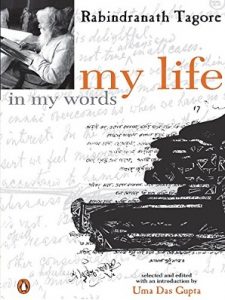
My Life in My Words
My Life in My Words || Uma Das Gupta (Editor)
A unique autobiography that provides an incomparable insight into the mind of a genius. The Renaissance man of modern India, Rabindranath Tagore put his country on the literary map of the world when he won the Nobel Prize for Literature in 1913. My Life in My Words is, quite literally, Tagore on Tagore. The result is a rare glimpse into the world of Tagore: his family of pioneering entrepreneurs who shaped his worldview; the personal tragedies that influenced some of his most eloquent verse; his ground-breaking work in education and social reform; his constant endeavour to bring about a synthesis of the East and the West and his humanitarian approach to politics; and his rise to the status of an international poet. Meticulously researched and sensitively edited, this unique autobiography provides an incomparable insight into the mind of a genius.
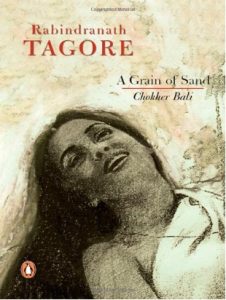
A Grain of Sand: Chokher Bali
A Grain of Sand || .
Chokher Bali is Nobel Prize-winning author Rabindranath Tagore’s classic exposition of an extramarital affair that takes place within the confines of a joint family. A compelling portrayal of the complexity of relationships and of human character, this landmark novel is just as powerful and thought-provoking today as it was a hundred years ago, when it was written.
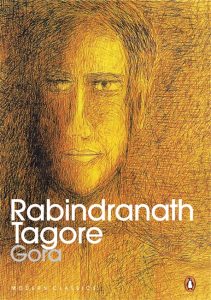
Gora
Gora || .
When Gora had no name, caste, and religion, the circumstances gave him the name – goramohan, caste – Brahmin, and religion – Hindu. While he turned out to be a true advocate of Hinduism, the religion rejected him calling him an outcaste and an untouchable. In this classic masterpiece, Tagore represents the tragedy of Gora in the form of problems faced by all Indian religions.
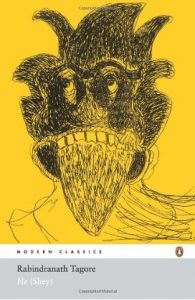
He: (Shey)
He (Shey) || .
Tagore wrote Shey to satisfy his nine year old granddaughter’s demands for stories. Even as Tagore began to create his fantasy, he planned a story that had no end, and to keep the tales spinning he employed the help of ‘Shey’, a “man constituted entirely of words” and rather talented at concocting tall tales. So we enter the world of Shey’s extraordinary adventures, encountering a bizarre cast of characters, grotesque creatures and caricatures of contemporary figures and events as well as mythological heroes and deities – all brought to life through a sparkling play of words and illustrations in Tagore’s unique style.
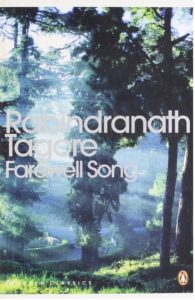
Farewell Song
Farewell Song || .
Rabindranath Tagore reinvented the Bengali novel with Farewell Song, blurring the lines between prose and poetry and creating an effervescent blend of romance and satire. Through Amit and Labanya and a brilliantly etched social milieu, the novel addresses contemporary debates about ‘good’ and ‘bad’ writing, the nature of love and conjugality, and the influence of Western culture on Bengali society. Set against the idyllic backdrop of Shillong and the mannered world of elite Calcutta society, this sparkling novel expresses the complex vision and the mastery of style that characterized Tagore’s later works.
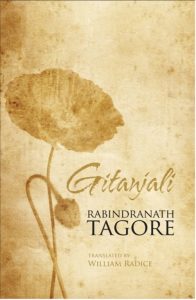
Gitanjali
Gitanjali || William Radice (Translator)
Gitanjali (Penguin Hardback Classics) is a collection of poems by Rabindranath Tagore. This is the English translation of the original Bengali poems. Gitanjali became immensely popular across the globe and was eventually translated into several languages. The book is known for its unmatched style of presentation, fresh poetic structure and spiritual musings.
**
Share this with someone who is fond of – or needs an introduction to – Rabindranath Tagore’s work!