When Hamid Ansari returned to India in 2018, it was a matter of great public interest. He disappeared in November 2012, and wasn’t heard of until Pakistani authorities accused him of espionage. The then External Affairs Minister Sushma Swaraj also took an interest in his case and helped in his restitution.
Hamid Ansari’s mother Fauzia Ansari is the vice-principal of a Mumbai college, and his father Nehal Ansari is a marketing manager in Bank of India. Hamid had completed a degree in engineering and had gone to Dubai for an MBA internship. He did a lot of voluntary social service work with the Rotaract Club, often teaching at regional-language schools, helping students from weaker sections of society, cleaning the streets, etc. Through this club, he became friends with exchange students from Japan, Hong Kong, Afghanistan and other countries. That was how he met Hamdan Khan, from Afghanistan, who offered him a place to say should he ever visit the country.
In November 2012, the then 27-year-old techie told his parents he was going to Afghanistan to interview with an airline company. But a few days after landing in Kabul, Ansari went missing.
Hamid||Hamid Ansari, Geeta Mohan
Ansari went to Pakistan on what he strongly believed was a humanitarian mission. Fiza, the woman he wanted to save, lived in a part of Pakistan well-known for honour killings. Hamid met Fiza on an online chatroom. They became friendly soon, but Fiza’s family was already bent and insistent upon Fiza getting married. Given the beliefs Fiza’s family held, it was a near impossibility that anything would come of their relationship.
But one day, Fiza’s brother shot and killed a boy in their neighbourhood, and shot at his own father. Her father took the blame, but as retribution, the jirga (local tribal council) decided that under the wani custom, Fiza was to be married off to an elder son of the aggrieved family as compensation. There was no space for negotiation in the matter. The word of the jirga was binding.
This turned Hamid’s world upside down in many ways. Jatin Desai, an activist spearheading the mission to get Hamid released, had said that the first time he met Hamid was around six months before he disappeared. Hamid had met with Desai asking for help in acquiring a visa to Pakistan. Hamid had been told by his friends later that he could find an easier passage into Pakistan through Afghanistan. His appeal to the Pakistani High Commission through the Rotaract Club had been rejected after great delay. Having received no communication from Fiza herself, he decided to try entering Pakistan through Afghanistan.
Meanwhile November 14, 2012 onwards, Fauzia stopped receiving any news from Hamid. She checked airline passenger lists and went to the consulate but to no avail. Hamid seemed to have well and truly disappeared.
He was arrested in Kohat, the city where Fiza lived. In all probability he was set up by the people he had trusted, who had taken him to the hotel where he was staying, and promised to take him to Fiza. He had been suspicious of sudden last-minute changes in their plan, but he was also and illegal entrant in a foreign country with dubiously made fake identity cards, he didn’t speak the local language, and he looked conspicuously out of place. He was completely at the mercy of the people he had initially trusted, people who would later make him deeply regret his decision.
Indians and Pakistanis alike worked tirelessly for his release. The story of Hamid Ansari is also the story of individuals caught in the faceless vortex of state power. It showcases individuals as human beings first, and nationally divided citizens after. Activists rallied for him on both sides of the border, Fauzia worked day and night, and Zeenat Shazbadi, the Pakistani journalist who worked his case throughout was also later detained for her links to Ansari and was subjected to ‘enforced disappearance’. Everyone put their lives at stake to fight through this situation. Above all, Hamid is a story of strength and resilience through the most hostile circumstances possible. It gives us activists, lawyers, parents – ordinary people – who are actually heroes in the real world, and it narrates the life of a man who survived impossible conditions dauntlessly, because he believed in the innocence of his cause.
The past year has been indelible in terms of the challenges it presented to humankind. With the unprecedented COVID-19 virus slowly clutching every part of world in its grip, people have increasingly found themselves feeling lost and hopeless. In times of crisis, however, the right words emerging from the right source can prove to be life-changing.
Today, we are presenting to you 10 such unforgettable quotes by His Holiness The Dalai Lama that will act as a salve for you during these difficult times, filling you with optimism and cheer. These thoughts can be found in The Little Book of Encouragement, a specially curated companion volume in which His Holiness shares words of encouragement to deal with new realities in a pandemic stricken world.
**
1. It’s not enough to pray for one’s peace of mind; one must examine what disturbs their mind and eliminate it.
2. Each religion has certain unique ideas or techniques and learning about them can only enrich one’s faith.
3. When this blue planet is viewed from space, there are no national boundaries to be seen. To solely concern oneself with a nation is outdated.
4. I am just one of the seven billion human beings alive today, and as such, I try to promote human compassion based on the sense that all human beings are one.
5. To the young people who are protesting and are desirous of change; to those who are struggling against systems that they see as oppressive, remember—the world is always changing.
The Little Book of Encouragement || His Holiness The Dalai Lama
6. The planet does not need more successful people; the planet desperately needs more peacemakers, healers, storytellers, and lovers of all kinds.
7. Learn through listening and reading, come to an understanding through reflection, and turn that into experience through meditation.
8. We must ethically re-examine what we have inherited, what we are responsible for, and what we will pass on to the coming generations.
9. We must recognize that we are not individuals who are alone. We depend on our community and are a part of it. No matter how rich your family is, without the community you cannot survive.
10. Our life depends so much on others that at the root of our existence lies a fundamental need for love.
Not Many, But One combines knowledge from Sree Narayana Guru’s Advaita philosophy and the latest findings of modern physics, astrophysics and life sciences to tackle some fundamental scientific and philosophical issues. Here is an excerpt from the second volume, which explores how Sree Narayana Guru revived the Advaita philosophy.
~
In India, religion and spirituality are used very often as synonyms. While religion is more to do with rituals, spirituality has more to do with one’s self or, the spirit. In India, spirituality and religion are inherent parts of the day-to-day living of people in all walks of life. In India, people belonging to all the major religions of the world coexist in harmony for centuries. We begin with Hinduism since it is the dominant religion in the subcontinent.
Not Many But One Volume I||G.K.Sasidharan
For the study of Indian spirituality, it is essential to understand the basic tenets of Hinduism, a rich, complex and deeply symbolic religion. Hinduism is otherwise known as sanatana Dharma, or the eternal truth/tradition/religion. the Vedas are considered as superhuman-divine revelations, revealed to sages and seers in higher states of communion with ‘the one’—the Absolute. the Vedas are believed to be the world’s most ancient scriptures.
The Absolute is understood in three ways: one, as Paramatma or nirguna (unattributed) Brahman (the unattributed, all-pervading aspect of the supreme); two, as saguna (attributed) Brahman (the supreme soul as the aspect of God within the heart of all beings); and three, as Parameswara, the Absolute in the Jagrat or visual feature.
The entire universe is an illusion, a Vivartha (reflected image) of the absolute reality. the absolute reality can be seen only by turning inward as if it is you or inside you. the Indian philosophy differentiates between ‘belief’ and ‘faith’. A belief may or can be true, whereas faith can never be so; though faith is very often used to mean acceptance. For example, in earlier times, the earth was believed to be flat (belief). now, we know precisely that the earth is spherical (faith). According to Hinduism, experience is the key to faith.
The mother, father and the guru are akin to God. Ahimsa or non-violence to all forms of life is a basic principle. nothing is considered bad so long as it is within limits and the body accepts it. Hinduism believes in the following aspects: An absolute ‘one’, all-pervading supreme being both immanent and transcendent, the creator of un-manifest reality, though it is the only ‘Reality’.
According to Karma, the law of cause and effect, each individual creates his own destiny by his thoughts, words and deeds. Karma is not fate; for man, his deeds create his own fate. God does not punish anyone; one reaps what he sows. the effect of his acts makes him take several births until all the debts of his deeds—good and bad—are returned. still, prayer and nobility give Divine Grace. Man is not a born sinner. Divine grace is equal for all. Hindu philosophy believes in equality of well-being for all— Lōkā Samasta Sukhinō Bhavantu.
Reincarnation (where the soul evolves through many births) continues until all Karma is resolved. then only one attains Moksha or liberation from the cycle of rebirth. this destiny is common for all souls—the existence of divine beings in unseen worlds, temple worship, rituals and devotion lead to communion with the ‘Devas’ or gods in other worlds.
Not Many But One Volume II||G.K. Sasidharan
The history of spirituality and religion in India extends back to the end of the Palaeolithic period. this is evidenced by early traces of it excavated from different parts of India. there is evidence of ‘fire worship’ and ‘mother goddess’ worship as early as 10,000 BCe to 30,000 BCe. In Baghor situated near Kaimor escarpment Medhauli village in Madhya Pradesh, the excavated triangular stones and altars of fire worship seem to be 30,000 years old. A triangular stone was found incised with triangles, marked in red ochre, at an altar for a goddess. even today this practice continues in many villages in India, where similar stones, smeared in red and incised with triangles are offered to village deities. the triangular shape is generally taken as the basis for creating yantras, which are used for the worship of various deities. In the Indus Valley civilization (Harappan civilization) Kalibangan proto-Harappan age (3500 BCe–2500 BCe), they practised worship of the mother goddess, phallic worship and worship of a male god.
The new ideas of spirituality built up through the last couple of centuries, combining Western materialistic ideas with mystical traditions of Asia; especially of Indian religions. the ultimate endeavour was to find the truth of the individual’s entity ‘I’. With the advent of translations of Hindu texts in the West, mostly during the last century, transcendentalist thoughts started influencing Western thought, which led to the endorsement of universalist ideas and to Unitarian Universalism.
The theosophical society that searched for sacred teachings in Asian religions contributed to the major influence on model spirituality. It was influential on several Asian religions, especially on neo-Vedanta, the revival of theravada Buddhism, and Buddhist modernism, which adopted modern Western notions of personal experience and Universalism and incorporated them in their religious perception.
The perpetual philosophy of Asian tradition furthered the influence on the Western model of spirituality. An important influence on Western spirituality was neo-Vedanta, also called neo-Hinduism and Hindu Universalism, a model interpretation of Hinduism which developed in response to Western thoughts and oriental thoughts. the Unitarianism and the idea of Universalism were brought to India by missionaries and had a major influence on neo-Hinduism. this universalism was further popularized and brought back to the West as neo-Vedanta by swami Vivekananda.
~
The translations, explanations and commentary given in the two volumes of Not Many, But One are simple and conceivable by ordinary readers who may not be well equipped to grasp the complexities of the intuitional spiritual findings of Advaita and hypothetic conclusions of quantum physics-but without compromising on the authenticity of the works.
It is deeply unfortunate that it took a pandemic and its damage to make us realise what we should have known from the very beginning – we owe our environment sustainable and responsible use. No man is an island, and certainly not when it comes to the natural world. Deanne Panday, in her book Balance, takes a deep dive into the climate crisis and the depth of human complicity in the destruction of our natural world.
The climate of the world has seen a drastic global change merely over the past few decades. We have arrived at a point in the Anthropocene where the damaging impact of human footprint has become irreversible. The increased emission of carbon dioxide has increased health risks and long-term respiratory damage. One living in a metropolitan city is no stranger to this – checking the AQI levels of our cities and towns fills us with dread, and yet this dread remains insufficient in motivating us to radically change our lifestyle.
The increase of greenhouse gases such as carbon dioxide and methane has resulted in heat waves, where days are getting hotter. Extreme heat can lead to more droughts and hot, dry conditions can, in turn, spark off wildfires. We have recently seen devastating fires in Australia and California. Heat waves lead to drought, which would translate into food scarcity and eventually famines especially in countries reliant largely on agriculture.
Balance||Deanne Panday
The ozone layer has not been an exception in the damage done to the natural environment of the planet. While in the stratosphere it absorbs ultraviolet rays from the sun, the story changes closer to ground. Ground-level ozone is emitted from industrial facilities and electric utilities, motor-vehicle exhaust, petrol vapours and chemical solvents. Breathing ozone can result in chest pain, throat irritation, coughing and congestion. More ozone is formed in summer because there is more ultraviolent radiation from the sun then. It has been estimated that ozone mortality will be more pronounced in India and China, eastern United States, most of Europe and southern Africa.
Covid-19 is not the only that will plague our lives. Other climate sensitive diseases like cholera, malaria, the West Nile virus etc are expected to magnify. According to the Intergovernmental Panel on Climate Change, the rise in temperatures, along with an increase in population, could put many more people at risk of being infected by it. The reproductive, survival and biting rates of the Aedes aegypti mosquito species, which carries dengue, are strongly influenced by temperature, precipitation and humidity. Mosquitoes are cold-blooded creatures and seek out warmer environments to regulate their body temperatures.
Greenhouse gases also have an impact on the spread of infectious diseases, since they affect rainfall and temperatures. Higher greenhouse gas emissions also impact nutrients in food – A higher carbon dioxide concentration reduces nutrients such as proteins, vitamin A and folate, which are already in short supply for lakhs of people around the world.
Fertilizers are also responsible for several health disorders. Algal and cyanobacterial blooms produce toxins that are harmful to wildlife and humans. Warmer ocean temperatures and precipitation promote their growth, and their main ingredient is nitrogen. The heavy use of nitro-based fertilizers to grow our food causes a range of illnesses in human beings, such as headaches, vomiting, diarrhoea, numbness and tingling.
The planet we inhabit now is vastly different from the one that existed even thirty years ago. The deterioration has been incredibly rapid. At this point, where restoration might be an option anymore, it is high time we at least begin the process of mitigation instead of myopically pursuing personal comforts.
Few holidays induce as vastly differing reactions as Valentine’s Day, or stir up such a storm of emotion. Whether you’re floating on the throes of first love, nursing a broken heart, enjoying the calm fulfillment of your own company, or simply prefer fictional romance to the messiness of the real thing, we have the book for you!
Our Ultimate Valentine’s Day Book List will give you the perfect book to celebrate love and friendship across the spectrum through the most passionate prose and lyrical longing.
Memory of Light || Ruth Vanita
If there was place and time truly meant for romance, it was 18th-century Lucknow, a vibrant city full of musicians, poets and courtesans, of languorous lovers and lilting poetry. Amidst this milieu Memory of Light weaves the exquisite tale of the love between-two women courtesan Chapla Bai and young poet Nafis Bai as they exchange letters and conversations feeding each other the heady fruit of desire.

French Lover || Nasrin Taslima
The greatest and most basic necessity for a healthy relationship is to be able to know and love oneself. French Lover is a young Bengali woman’s search for love and independence in a strange city. Stifled in an unhappy marriage, Nilanjana’s long road to self-discovery is initiated by Benoir Dupont, a blond, blue-eyed handsome Frenchman. In her passionate, sexually liberating relationship with Benoir, she finally begins to have an inkling of her own desires.
Undying Affinity || Sara Naveed
You’ll fall in love as much with the city of Lahore as with the book’s protagonist in this simple yet touching romance by Sara Naveed. Caught between her childhood friend, Haroon and handsome professor, Ahmar, little does beautiful, spoiled Zarish know that one individual can completely change her perspective towards life. Packed with romance, drama and tragedy, Undying Affinity will stay in your heart forever.
The Beauty of the Moment || Tanaz Bhathena
There’s nothing quite as intense or as memorable as the pangs of first love and this delightful YA romance truly celebrates the thrilling ‘beauty of that moment’When sharp and driven ‘new girl’, Susan meets ‘bad boy ‘ Malcolm, sparks fly. The ways they drift apart and come back together are testaments to family, culture, and being true to who you are.
The Rabbit and the Squirrel || Siddharth Dhanvant Shanghvi
The critically acclaimed and delightfully illustrated fable for contemporary times is perfect for lending a dash of elegant whimsy this Valentine’s Day. Lit with longing, and tender questions of the heart, The Rabbit and the Squirrel is an ode to the enduring pleasures of friendship, traced through the poignant love story of the eponymous Rabbit and the Squirrel who against all odds are fated for togetherness.
The Penguin Book of Classical Indian Love Stories and Lyrics || Ruskin Bond
When modern vocabulary fails to evoke romance for you, this extraordinarily lyrical compilation of love stories and poems from the classical literature and folklore of India will come to the rescue. Curated by the master of nuanced emotions, Ruskin Bond and set in regions of great natural beauty where Kamadeva, the god of love, picks his victims with consummate ease, these stories and lyrics celebrate the myriad aspects of love.
An Extreme Love of Coffee || Harish Bhat
If you think of love as life’s greatest adventure that hits you like a caffeine kick An Extreme Love of Coffee is your cup of (not)tea! This faced paced mystery romance follows Rahul and Neha who embark upon a quest for treasure, after drinking a cup of ‘magic’ coffee, discovering their passion for warm frothy concoctions and each other as they race from the plantations of Coorg to Japanese graveyards!
Half Torn Hearts || Novoneel Chakraborty
Sometimes Valentine’s Day is a time to reminisce and to dwell upon the fact that first cut is the deepest. Half Torn Hearts is both a thrilling suspense story and a coming-of-age tale of three layered individuals coming to terms with their first loss, which bares the devil that we all possess but are scared of encountering and which eventually becomes the cause of our own ruins.
The God of Small Things || Arundhati Roy
Arundhati Roy’s modern classic is equal parts powerful family saga, forbidden love story, and piercing political drama. The seven-year-old twins Estha and Rahel see their world shaken irrevocably by the arrival of their beautiful young cousin, Sophie. With its exquisite prose , it makes for an unusual, but lyrical Valentine’s Day pick.
The Secrets We Keep || Sudeep Nagarkar
This thrilling romance will have you hooked from start to finish following the story of Rahul, an intelligence officer on a secret mission, who falls in love with the major’s daughter, Akriti. But is anyone who they seem to be, or is Rahul about to face the biggest shock of his life?
Eleven Ways to Love || Sreshtha, Sangeeta, Nadika Nadja, Dhrubo Jyoti, Meenakshi Reddy Madhavan, Preeti Vangani, Shrayana Bhattacharya, Nidhi Goyal, Anushree Majumdar, Sharanya Manivannan, Maroosha Muzaffar, D
Love stories coach us to believe that love is selective, somehow, that it can be boxed in and easily defined. With a foreword by the luminary, Gulazar these eleven remarkable essays, widen the frame of reference: transgender romance; body image issues; race relations; disability; polyamory; class differences; queer love; long distance; caste; loneliness; the single life; the bad boy syndrome . . . and so much more.
Till The Last Breath || Durjoy Datta
This deeply sensitive story explores love in the context of imminent death and reminds us what it means to be alive. Two patients, a young brilliant girl fighting to stay alive, and a youthful drug addict who can’t wait to die come together in Room 509. Two reputed doctors, fighting their own demons from the past, are trying everything to keep these two patients alive. These last days in the hospital change the two patients, their doctors and all the other people around them in ways they had never imagined.
Singing in the Dark || K. Satchidanandan, Nishi Chawla
If love is vulnerability, these strange times have made us even more vulnerable. This global anthology brings together the finest of poetic responses to the coronavirus pandemic. More than a hundred of the world’s most esteemed poets reflect upon a crisis that has dramatically altered our lives, and laid bare our vulnerabilities.
You Are All I Need || Ravinder Singh (Ed.)
This collection of touching stories selected by Ravinder Singh is an ode to the myriad facets of love . This book will make you laugh, cry, think and feel, all at the same time with its eclectic collection of love stories that will warm the cockles of your heart!
Prem Purana || Usha Narayanan
No one is untouched by love, not even devas and asuras, kings and nymphs. This collection of celestial love stories from Indian mythology celebrates the love of Ravana and Mandodari, Nala and Damayanto among many eithers. Tormented by passion, tortured by betrayal and wracked by the agony of separation, these stories deify love in its many splendorous forms.
With Love || TTT
The go-to portal for sweet, sharp, heart-wrenching stories brings this collection of letters that celebrates all the different forms of love and bonds we make, spanning the spectrum from family to our childhood homes , from former loves and future husbands. Deeply personal and intimate, these letters are a great choice to peruse on Valentine’s Day.
This Time Next Year || Sophie Cousens
A lovely contemporary romance that will give you all the warm fuzzies. Quinn and Minnie are born on the same day, but their lives follow completely different trajectories even as fate conspires to bring them together. This moving, joyful love story, This Time Next Year explores the way fate leads us to the people we least expect–no matter what the odds.
The Time Traveler’s Wife || Audrey Niffenegger
This book is a hugely popular modern classic for a reason, its heartwarming, innovative and a moving depiction of the effects of time on love. Henry is a time traveler–cursed with a rare genetic anomaly that causes him to live his life on a shifting timeline, skipping back and forth through the years with no control. Despite the fact that Henry’s travels force them apart with no warning, and never knowing when they will be reunited, he and his wife Clare try to lead a life of normalcy based on an abiding and passionate love.
The Fault in Our Stars || John Green
One of the most popular and moving love stories of our times, this brilliantly explores the funny, thrilling, and tragic business of being alive and in love. Despite the tumour-shrinking medical miracle that has bought her a few years, Hazel has never been anything but terminal, her final chapter inscribed upon diagnosis. But when a gorgeous plot twist named Augustus Waters suddenly appears at Cancer Kid Support Group, Hazel’s story is about to be completely rewritten.
Simon vs. the Homo Sapiens Agenda || Becky Albertalli
An incredibly funny and poignant, coming-of-age, coming out story—wrapped in a geek romance! When an email falls into the wrong hands, sixteen year old and not-so-openly-gay Simon finds his secret is at risk of being thrust into the spotlight. Now Simon has to find a way to step out of his comfort zone without fumbling a shot at happiness with the most confusing, adorable guy he’s never met.
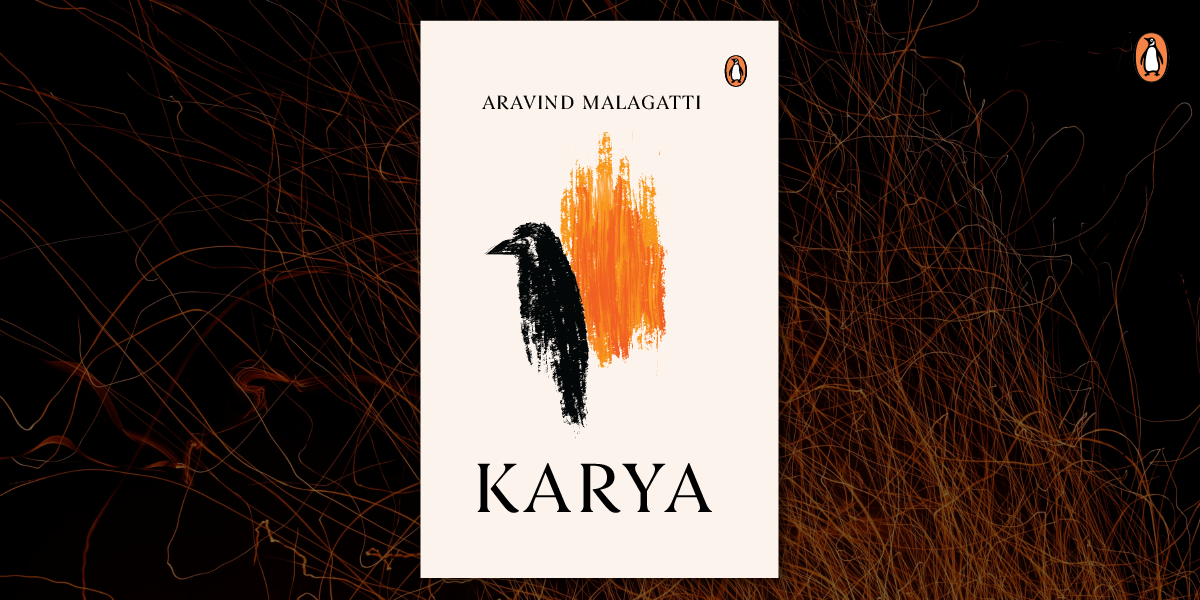
Everyone in Jakar knows that Karma has always defended his village from monsters. But suddenly his friends and neighbours are angry with him and accusing him of crimes he knows he didn’t commit.
Karma suspects he has a doppelgänger who is terrorizing the town, but no one believes him. His friends Chimmi and Dawa and even his mother do not seem to trust him.
But with every monster in Bhutan suddenly turning up in Jakar, will he be able to stop his adversary in time?
Karma Vs The Evil Twin is the third book in the Karma Tandin, Monster Hunter series. Set in Bhutan, it is a rollicking adventure that will keep you riveted till the very end!
**
When I got to school the next morning, half of my classmates stayed far, far away from me. The others clustered around me and glared. I stood at the edge of the assembly ground, trying to look normal and succeeding in looking awkward.
Chimmi pushed his way through the crowd. At least he wasn’t glaring. ‘Karma,’ he whispered. ‘I don’t think people are happy with you.’
‘Why?’
‘Why?’ some kid parroted.
That was when the shouting started. ‘Psycho!’
‘Hoodlum!’
‘Why would you do that?’
As more and more students joined in on the shouting, I found out all the horrible things that I’ve supposedly been doing. According to the angry mob, I pulled up flowers from flower beds. And broke guitars. And threw mud on family dinners. Uh.
‘That wasn’t me,’ I said over and over, but no one was listening.
Principal Ngawang charged on to the crowd. ‘Step aside,’ he said. ‘Get ready for assembly. Don’t start arguing.’
The crowd grumbled a bit, but they split up anyway.
I breathed a sigh of relief. At least the principal had my back.
Then he glared at me.
Gulp.
‘If I hear you pull one more prank against this school . . .’
Great. Even he thought I was destroying everything.
‘I won’t,’ I told him.
‘Thank you.’ And he marched back inside the building. For emphasis, he slammed the door shut behind him.
The words ‘Karma wuz here’ were spray-painted on the wood. He didn’t see it. Yet.
This was a major mystery, the kind that only happened to people like me. Someone was pretending to be me. Someone was trying to take over my life.
A large microphone poked me in the face. ‘What the . . .?’
Do you have any comments?’
Karma VS The Evil Twin || Evan Purcell
That was Priyanka Subba, our school reporter. She was the president of the newspaper club, and she took her job very, very seriously.
‘Hi, Priyanka,’ I said. ‘You look . . . different.’
She glared at me. ‘Yeah. I’m not wearing my hair in pigtails.’
‘Oh,’ I said. That explained it. She always wore her hair in two long pigtails, one on either side of her face. Now, her hair was pulled back, tucked on to the back of her kira.
‘I wonder why,’ she said sarcastically. She pulled up the side of her hair, revealing that someone had cut off one of her pigtails.
‘Looks . . . good,’ I said.
Her mic hit me in the face again. I think it was intentional. Clearly, she thought I had given her the unfortunate haircut.
‘Nice save,’ Chimmi whispered loudly. I forgot he was even there.
‘Listen, Priyanka,’ I said. ‘I’m sorry, but . . .’
‘Don’t apologize,’ she said. ‘Don’t say anything. I’m a reporter, remember? I’m impartial.’
Like I said, veeerry seriously.
‘Which brings me to my next story. Here.’ She handed me a photo. It was blurry, but it showed our school’s new recycling project, and it showed a boy trying to destroy it with a crowbar. The boy looked exactly like me.
The project was a giant metal structure that sorted paper and plastic waste on to bins. It was a special initiative funded by the government, thanks to a proposal from our science teacher Mr Pempa. Every student at Jakar Higher Secondary School helped out to make this happen, and now some kid was trying to destroy it with a crowbar.
Priyanka put the mic right against my bottom lip. ‘Comments?’
The boy in the photo looked like me (a lot), but I knew it wasn’t me.
‘That could be anyone . . . with my exact height and build and hairstyle.’ When I said it out loud, I realized how lame it sounded.
‘Yeah,’ she muttered. ‘Anyone.’ She handed me a second picture of the incident. This time, the mystery boy was looking directly at the camera.
Indian civilization is an idea, a reality, an enigma. In the riveting INDIANS: A Brief History of a Civilization, Namit Arora takes us on an unforgettable journey through 5000 years of history, reimagining in rich detail the social and cultural moorings of Indians through the ages. Enlivening the narrative with the idiosyncratic perspectives of the many famous foreign travellers who visited India over millennia, local folklore and his own inimitable insights, Arora guides us through six iconic places-the Harappan city of Dholavira, the Ikshvaku capital at Nagarjunakonda, the Buddhist centre of learning at Nalanda, enigmatic Khajuraho, Vijayanagar at Hampi, and Varanasi.
Read on for a glimpse into the exciting churn of ideas, beliefs and values that unfolded among our ancestors through the centuries.
INDIANS || NAMIT ARORA
Still, the lack of loud and clear indicators of war or standing armies, so commonplace in other civilizations, is a striking feature of the Harappan Civilization. Further, Harappan cities have not revealed monumental, or even humble, temple structures, a great puzzle for scholars. There aren’t any equivalents of the temples and pyramids of ancient Egypt or the ziggurats of Mesopotamia. Some say the Great Bath of Mohenjo-Daro had a religious purpose but this is highly speculative. Or perhaps the Harappans built religious shrines and large sculptures from perishable materials like wood. In any case, while there are hints, we have no clear sense of Harappan gods and rituals, or whether they had any temples or priests. Scholars have offered divergent interpretations of seals with possible religious content: a handsome seven-inch sculpture of a man named ‘priest-king’, who could well have been an aristocrat; a seal named ‘proto-Shiva’ that depicts a multi-headed, seated figure in a yoga-like pose, one of ‘several other yogi images in the corpus of Mature Harappan materials’; another seal that shows a female (deity?) standing under a Bodhi tree with its heart-shaped leaves, a figure kneeling before her in supplication and seven standing figures watching them; other seals that depict mysterious objects and rituals before a unicorn; the swastika motif appears often; some female figurines have a paste-like substance along the middle parting of their hair; a stone object in the shape of a phallus has been identified; two terracotta male figurines have erections; a small terracotta object in Kalibangan resembles the familiar Shiva lingam. All this is very tantalizing. There can be little doubt about cultural continuities. Harappan beliefs clearly shaped later religions of the Axial Age in the subcontinent. Quite possibly, Indian ideas of meditation and even renunciation have Harappan origins. But it’s difficult to draw firm conclusions about this, or about what the Harappans themselves believed, at least until the script begins to speak. Scepticism is essential: The deciphered Mayan script revealed how wrong many scholars were about the beliefs they had attributed to the Mayans (such as being peaceful). The Harappans did not build monumental sculptures, such as of kings or gods, as did the Mesopotamians and the Egyptians. This doesn’t make them any less complex than others, writes Possehl, rather it’s an alternative way in which a civilization, with a ‘highly complex sociocultural system, has expressed itself’. They did make fine miniature art, as in seals and beadwork. And while their figurines aren’t notable for their artisanship, they still evocatively depict their people ‘in great variety, with many poses: sitting in chairs, lying on beds, holding babies and animals, kneading bread, and other things that people do to round out their existence,’ writes Possehl. Animal puppets, in which a bull might shake its head or pull a cart, reveal a playful sense of humour, perhaps designed to amuse children. There are some fantasy creatures too, but ‘on the whole, the Indus peoples in their art, as in other aspects of their lives, come across as people with a practical bent, a tendency to deal with and represent the real world as they [and we] see it’. That said, what jumps out as the Harappans’ greatest monumental work is the city itself, a marvel of urban design and engineering, city- wide sanitation systems that include the first indoor toilets in the world and sophisticated water management. ‘Probably not until later Roman times did people devise so many clever construction techniques to deal with comforts and discomforts related to water.’ They also excelled at shipbuilding and long-distance trade—another reason to think that they had centralized authority and bureaucracy to mobilize labour, develop trading networks and organize long-distance shipping expeditions. Harappan cities of the mature period (2600–1900 bce) had some walled neighbourhoods with larger buildings and better provisions, suggesting that an elite class resided there. But not everyone agrees. There is ‘no justification’ or archaeological support for this presumption, says archaeologist Jonathan Mark Kenoyer. In fact, in certain stages, the ‘citadels’ in Dholavira and Mohenjo-Daro were hubs of artisanal– industrial activity. There is no evidence of royal palaces; homes differ in size and provisions but not by much. Sanitation and water wells were available to all. Based on the bones of the dead, the rich and the poor seem to have enjoyed similar access to nutrition. Their burials too display a narrow range in their sizes and types of funerary objects. However, as noted earlier, burial practices may have varied across individuals, or social groups. That the Harappans had a social social class hierarchy is clear enough. What’s remarkable is that this hierarchy seems so much flatter than in other ancient (or modern) civilizations.
You left your jokes and funny faces in my mind. You left our secrets and your knitting behind. I’m still sad. I’ll always be. I love you times infiniteeeeeeeey. You don’t mind that I can’t rhyme. I don’t know how to end this, will someone help me?
To help Swara, you’d have to dive into her world during the lockdown. Feel the almost-nine-year-old’s heart break as she loses her favourite person ever, Pitter Paati. Swara pursues clues to find her, but stumbles upon a crime instead. VExpectedly, no one believes her.
Will Swara and her VAnnoying friends from the detective squad find the Ruth of the Matter in time?
Told with humour and sparkle, When the World Went Dark is a compassionate story about finding light in the darkest times of our lives. Here’s an excerpt from the book wherein Swara is trying to understand why the rules of the world around her have suddenly changed.
**
The times were dark, alarming, threatening. Clouds of fear kept people bolted and barred into their own homes. You couldn’t open a window to draw in a deep breath. You couldn’t trust anything that anyone else had touched. In fact, if you remember, you couldn’t even put a toe out of your front door.
Swara should know because she tested it out.
Ruth was the one who’d thrown her the challenge. She claimed to be her best friend, although you might doubt it after this. They lived in apartments opposite each other and often they sat cross-legged on their doormats and chatted, yelling to and fro. It was Ruth who said, ‘Swara, you cannot put even a toe out of your door.’
Swara scoffed at this. ‘Why? What if I do?’
‘Try and see. It is banned! There is a high-tech app that will make your toe shrivel up and fall off.’
If you’ve been almost nine, like Swara was, you knew what absolutely had to be done if thrown down such an outrageous challenge. Swara quite naturally, had to still her beating heart, hold her breath, kick off her chappal and wiggle her big toe an inch out of her open door. It did not fall off and land on the doormat. It stayed firm on her foot.
‘You are full of lies, Ruth!’
‘I am not. I am the Ruth, the whole Ruth and nothing but the . . .’
‘Fine, but my toe is fine too. It is my toe, the whole toe and nothing but the toe.’
‘It will not be. Keep watching it. Over the days, it will turn red, purple, black and then fall right off. Just you
wait.’
Swara retreated, scared. And since then began to watch the toe for signs.
The times were like that as we’d mentioned. Dark, alarming, threatening times.
And then, of course, holidays were declared— out of the blue! No waking up to a screaming alarm clock, or drinking milk while sleepwalking, or pulling on the uniform and buttoning it down wrong, or running down to catch the yellow school bus and missing the favourite seat.
When the World Went Dark || Jane De Suza
Like most kids, she spent the first week playing, eating, sleeping and like most kids, got fed up of it all. Nothing fun was on the Allowed List. No playing downstairs, no eating out, no meeting friends. To add to her dismay, her toe sported a smallish reddish spot one morning, which turned as white as a sheet (just a saying). She held her toe in one hand and hopped over to Appa, who examined it and opined that it was a harmless insect bite and would disappear soon.
‘My toe? My toe will disappear?’
‘No, Swara, the red spot will disappear.’
What was high up on the Rotten List was that she couldn’t meet her favourite person in the world, her paati. Not Madurai Paati, her father’s mother, but her Pitter Paati who lived on the outskirts of Bengaluru. In the same city and not meetable! VStupid (Very Stupid)! Everyone was locked down—Pitter Paati, Thaatha, Anand Maama, Maami and the twins. The whole city was locked into their houses. The whole world, too, from what the TV showed. You could see people in Italy singing and waving while hanging over their balconies. Swara made a point of letting Ruth know that no one’s arms were turning purple, shrivelling up and falling off.
She video called Pitter Paati many times a day, to show her a new poem, the suspicious red-spotted toe, the view of no one on the streets outside, a line of ants creeping towards the dustbin, her fake moustache, anything actually. PP was always interested in whatever Swara was up to.
One Hero. Many Monsters. Before I came to be known as the greatest sailor in the world, I was a young monster who fell in love. As all legendary love stories go, things were…well, not smooth sailing. And of course, there was the problem to the Armageddon.
Kevin Missal’s new book Sinbad promises thrill, fun and adventure. Here is an excerpt from the book.
PRESENT DAY
BASRA, PORT OF ARABIA
The corpse was laid there under the darkening sky.
And Sinbad watched it, in silence, from the bushes.
He could hear his own breathing, his blood pumping in his ears. It was late evening. His almond eyes were focused on the beach, hawk-eyed. Owls hooted. The waves rolled and the blurry skies darkened.
Any time now…
‘Let’s hope the blasted ghoul takes the bait,’ said Husayn, his blue eyes scanning the area. He flicked his frizzy, curly hair back and looked at his friend who crouched down beside him. ‘There’s a lot of money we’re gonna get out of this, tee-hee,’ he said, referring to the tavern owner who had hired Sinbad to end the horror of the Qutrub.
Sinbad turned his head and looked up, his onyx hair falling over his forehead. ‘For the hundredth time, it’s not a ghoul. It’s a subclass of jinnis.’
‘Apples and oranges, to be honest.’ Husayn shook his head in dismay. ‘How do you kill it?’
‘You can’t’ Sinbad signed. ‘You trap them and then send them back. Or keep them locked in a ring or something. And one of the easiest ways to do it is by knowing their true name.’
‘Well, whatever it is, you have no clue how tough it was to get that,’ said Husayn, pointing to the dark mound that they had been eyeing. ‘Let’s see: paid the gravedigger; dug up the ground with him; got drenched in mud; and then finally got it for our friend, the Qutrub, here because you said it would be the perfect bait.’
‘Well, at least you were helpful this time.’ Sinbad rolled his eyes and decided to look at the stars that remained still, distracting himself from the beach. It was only a few times in his life that he had caught them blinking.
‘I’m always helpful, all right?’ Husayn said, his voice growing louder in protest.
Sinbad darted his eyes back to the beach and the corpse. ‘No, please, do yell some more and let the whole world know what we are doing.’
‘Apologies!’ Husayn whispered. ‘And the world knows already. That thing has already killed twenty of our travellers. If more would become its victims, taverns might as well close down.
‘I know.’ Sinbad sighed.
‘You said it’s a jinni, though, right?’ Husayn asked. ‘But aren’t jinnis like wish-granting baboons?’
‘Nor all,’ Sinbad said and shook his head ever so slightly. ‘Only the Marids. While the thing we are waiting for right now is called a Qutrub. Strange creatures. They come from the jinni world of Barzakh. But what I don’t understand is, Qutrubs feed on the dead, and thus are seen around graveyards. Then why is it attacking the living?’ He narrowed his eyes in contemplation.
But before he could mull it over, Sinbad say the unlikely: A couple walking on the shore, a few yards away from their bait, oblivious to it and the gruesome presence that it would invite. They were busy chatting and laughing. Barefoot. The girl was wearing her veil and the man a sailor’s tunic.
‘Humans. Always butting in when they are not supposed to.’ Sinbad gritted his teeth.
‘Aren’t you a human yourself, my dear friend?’ Husayn cheekily asked.
‘Well…’ Sinbad said, ‘the Qutrub would attack them then. Fresh blood.’
‘Um, Sinbad?’ Husayn tapped on his shoulder.
‘What?’ he snapped as his eyes followed the couple’s steps, hoping they won’t notice the trap that had been set on the beach. But the smell would be a dead giveaway!
And they were close…getting closer…
‘Um, Sinbad? Would you please turn around?’ Husayn’s voice had turned into an almost high-pitched scream.
‘What?’ shrieked Sinbad, irritated, as he turned towards Husayn. And it was then that he saw it. A ghastly eight-foot-tall creature – skeletal, scarlet red, dressed in rags. Its elongated mouth and slits, in place of a nose, quivered. A long, black ponytail on its otherwise bald head was the only hair it had. Its ribs were visibly jutting out of its diaphragm. Even the spine was visible, protruding from the skinless skeleton. But the eyes – they were pitch-black as if the creature had no irises. It was so close to him, breathing hard. And it was then that their eyes met.
If that weren’t bad enough, then came a bone-chilling scream. From the side of the beach were the unknowing couple stood.
Moni Mohsin sat with us for an absolutely delightful chat, and we just can’t get enough of her (and her book The Impeccable Integrity of Ruby R of course!)
South Asian literature has historically been seen as heavy and weighted, so do you feel a little more liberated working with a freer style like satire?
MM: It’s not that satire is lighter per se because you can go to really dark places with satire too. I choose to write social commentary that allows me to portray my society as accurately and as truthfully as I can while also exploring its more comedic side.
If you had to pick five desert island reads, they would be:
MM: Ah! This is a difficult one not least because my essential reading keeps changing, but if I have to give you top five today they would be:
George Eliot’s Middlemarch because it is so wise, profound and capacious.
Digging to America by Anne Tyler for its wryness, humour and subtlety.
The Complete Works of Shakespeare because God knows when I’ll be rescued.
Some David Sedaris to lift my spirits.
Nuskha-e-Wafa by Faiz Ahmed Faiz so I can keep myself busy by learning all of his greatest ghazals and nazams by heart and stunning everyone with my brilliance when I finally get rescued.
How have you been spending your days indoors?
MM: Editing, writing, recording my podcast ‘Browned Off’ and watching tons of Netflix. And eating chocolate!
If you didn’t pick satire, what would be another narrative style that you might consider?
MM: I’d write funny romances and whodunnits.
Do you think social media can have a positive impact in a field like politics, or is that too positivist? In theory of course yes, it is possible, like anything else, but do you think the system and political structures create politicians and workers on ground level who could actually wield it as a constructive tool?
MM: Of course social media can have a positive impact. Many activists use it for just such a purpose: they speak truth to power and set the record straight. As with everything else, in using social media too there is a choice involved.
What would Ruby do if she were embroiled in today’s South Asian politics? Do you think she would play the system like a fiddle or is the current situation maybe a bit too much even for her?
MM: She would do exactly what she does in the novel: she’d start off believing she is doing good. But very soon, in order to prove her loyalty to her party, she’d find herself peddling misinformation and abusing anyone who disagreed with the party line. And she’d still believe she was doing good.
There is a general despondency that seems to have settled in amongst people, with the pandemic and the general world-politics vortex where something goes wrong every day. We find ourselves once again in an age of anxiety. Do you think satire has the potential to push society towards introspection at such a time? Or is it consumed more like page 3 entertainment because people are too tired?
The Impeccable Integrity of Ruby R||Moni Mohsin
MM: I don’t really know. I think for satire to act as a catalyst for reform, there has to be some consensus on morality – on what we deem to be right and what we believe to be wrong. But in today’s deeply divided world I’m not sure we have that agreement any longer, if we ever did. My own ambitions as a writer are more modest. I am pleased if I can make someone smile when they read my work or recognize something I’ve written as being truthful.
Power and age very easily sway younger, more impressionable people. It happens with Ruby as well, who listens to one speech by Saif Haq and completely discards her reservations about a figure like him. Was the affair between Saif and Ruby a conscious narrative choice from the very beginning, considering it echoes the #metoo movement very closely, or was it something that born later out of the sequence of narrative events?
MM: It is not just the young who fall prey to the false promises of the powerful and the privileged. The affair between Ruby and Saif, while it is an actual thing in the book, is also meant to function as a metaphor for how we the public, who should know better, allow ourselves to be seduced by celebrity and by the intoxicating but divisive rhetoric of populist leaders.
Saif is said to have been modelled on Imran Khan, although he is an echo of several public figures we have seen. Did you have any specific figure in mind when you wrote him or is he more of an amalgamation?
MM: In creating Saif Khan I channelled the arrogance, entitlement and charisma of several populist leaders who are prominent in the world today.
The heightened focus on integrity in a field that obviously seems to have none is a very striking anomaly through the novel. In India for example politics seems to have given up on pretences and external polish. Do you think perhaps that morally bankrupt politicians are more effective when they work with the façade of integrity, parading the importance of being earnest? Or is the scene changing in that regard?
MM: I don’t think that Indian leaders have dispensed with their soaring rhetoric about purifying their country and returning to some mythical golden age while simultaneously stepping into a glittering future. Populist leaders never tell their adoring public the truth: that they have no quick fixes and that meaningful change comes only through hard work and sacrifice. The best they can do when their hypocrisy or incompetence comes to light is to either blame others (the opposition, or minorities, or bad neighbours or hostile super powers or the ‘lying’ media or whatever) or else, conveniently ignoring the truth.
~
The Impeccable Integrity of Ruby R is an exciting satire on the life and times of our current politics.