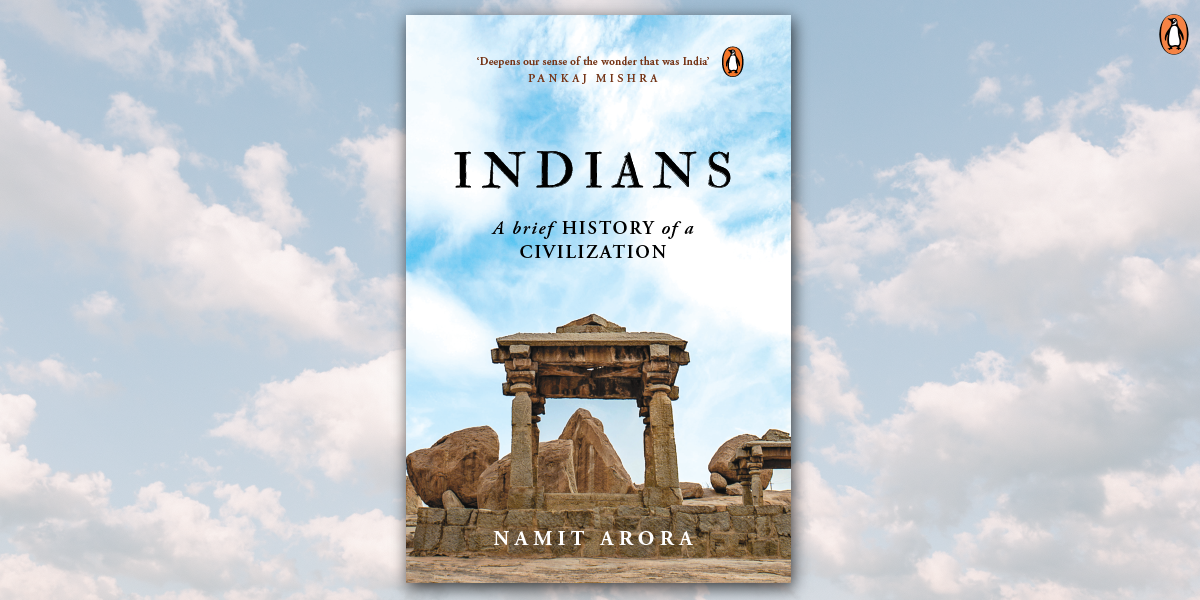
Indian civilization is an idea, a reality, an enigma. In the riveting INDIANS: A Brief History of a Civilization, Namit Arora takes us on an unforgettable journey through 5000 years of history, reimagining in rich detail the social and cultural moorings of Indians through the ages. Enlivening the narrative with the idiosyncratic perspectives of the many famous foreign travellers who visited India over millennia, local folklore and his own inimitable insights, Arora guides us through six iconic places-the Harappan city of Dholavira, the Ikshvaku capital at Nagarjunakonda, the Buddhist centre of learning at Nalanda, enigmatic Khajuraho, Vijayanagar at Hampi, and Varanasi.
Read on for a glimpse into the exciting churn of ideas, beliefs and values that unfolded among our ancestors through the centuries.
INDIANS || NAMIT ARORA
Still, the lack of loud and clear indicators of war or standing armies, so commonplace in other civilizations, is a striking feature of the Harappan Civilization. Further, Harappan cities have not revealed monumental, or even humble, temple structures, a great puzzle for scholars. There aren’t any equivalents of the temples and pyramids of ancient Egypt or the ziggurats of Mesopotamia. Some say the Great Bath of Mohenjo-Daro had a religious purpose but this is highly speculative. Or perhaps the Harappans built religious shrines and large sculptures from perishable materials like wood. In any case, while there are hints, we have no clear sense of Harappan gods and rituals, or whether they had any temples or priests. Scholars have offered divergent interpretations of seals with possible religious content: a handsome seven-inch sculpture of a man named ‘priest-king’, who could well have been an aristocrat; a seal named ‘proto-Shiva’ that depicts a multi-headed, seated figure in a yoga-like pose, one of ‘several other yogi images in the corpus of Mature Harappan materials’; another seal that shows a female (deity?) standing under a Bodhi tree with its heart-shaped leaves, a figure kneeling before her in supplication and seven standing figures watching them; other seals that depict mysterious objects and rituals before a unicorn; the swastika motif appears often; some female figurines have a paste-like substance along the middle parting of their hair; a stone object in the shape of a phallus has been identified; two terracotta male figurines have erections; a small terracotta object in Kalibangan resembles the familiar Shiva lingam. All this is very tantalizing. There can be little doubt about cultural continuities. Harappan beliefs clearly shaped later religions of the Axial Age in the subcontinent. Quite possibly, Indian ideas of meditation and even renunciation have Harappan origins. But it’s difficult to draw firm conclusions about this, or about what the Harappans themselves believed, at least until the script begins to speak. Scepticism is essential: The deciphered Mayan script revealed how wrong many scholars were about the beliefs they had attributed to the Mayans (such as being peaceful). The Harappans did not build monumental sculptures, such as of kings or gods, as did the Mesopotamians and the Egyptians. This doesn’t make them any less complex than others, writes Possehl, rather it’s an alternative way in which a civilization, with a ‘highly complex sociocultural system, has expressed itself’. They did make fine miniature art, as in seals and beadwork. And while their figurines aren’t notable for their artisanship, they still evocatively depict their people ‘in great variety, with many poses: sitting in chairs, lying on beds, holding babies and animals, kneading bread, and other things that people do to round out their existence,’ writes Possehl. Animal puppets, in which a bull might shake its head or pull a cart, reveal a playful sense of humour, perhaps designed to amuse children. There are some fantasy creatures too, but ‘on the whole, the Indus peoples in their art, as in other aspects of their lives, come across as people with a practical bent, a tendency to deal with and represent the real world as they [and we] see it’. That said, what jumps out as the Harappans’ greatest monumental work is the city itself, a marvel of urban design and engineering, city- wide sanitation systems that include the first indoor toilets in the world and sophisticated water management. ‘Probably not until later Roman times did people devise so many clever construction techniques to deal with comforts and discomforts related to water.’ They also excelled at shipbuilding and long-distance trade—another reason to think that they had centralized authority and bureaucracy to mobilize labour, develop trading networks and organize long-distance shipping expeditions. Harappan cities of the mature period (2600–1900 bce) had some walled neighbourhoods with larger buildings and better provisions, suggesting that an elite class resided there. But not everyone agrees. There is ‘no justification’ or archaeological support for this presumption, says archaeologist Jonathan Mark Kenoyer. In fact, in certain stages, the ‘citadels’ in Dholavira and Mohenjo-Daro were hubs of artisanal– industrial activity. There is no evidence of royal palaces; homes differ in size and provisions but not by much. Sanitation and water wells were available to all. Based on the bones of the dead, the rich and the poor seem to have enjoyed similar access to nutrition. Their burials too display a narrow range in their sizes and types of funerary objects. However, as noted earlier, burial practices may have varied across individuals, or social groups. That the Harappans had a social social class hierarchy is clear enough. What’s remarkable is that this hierarchy seems so much flatter than in other ancient (or modern) civilizations.
You left your jokes and funny faces in my mind. You left our secrets and your knitting behind. I’m still sad. I’ll always be. I love you times infiniteeeeeeeey. You don’t mind that I can’t rhyme. I don’t know how to end this, will someone help me?
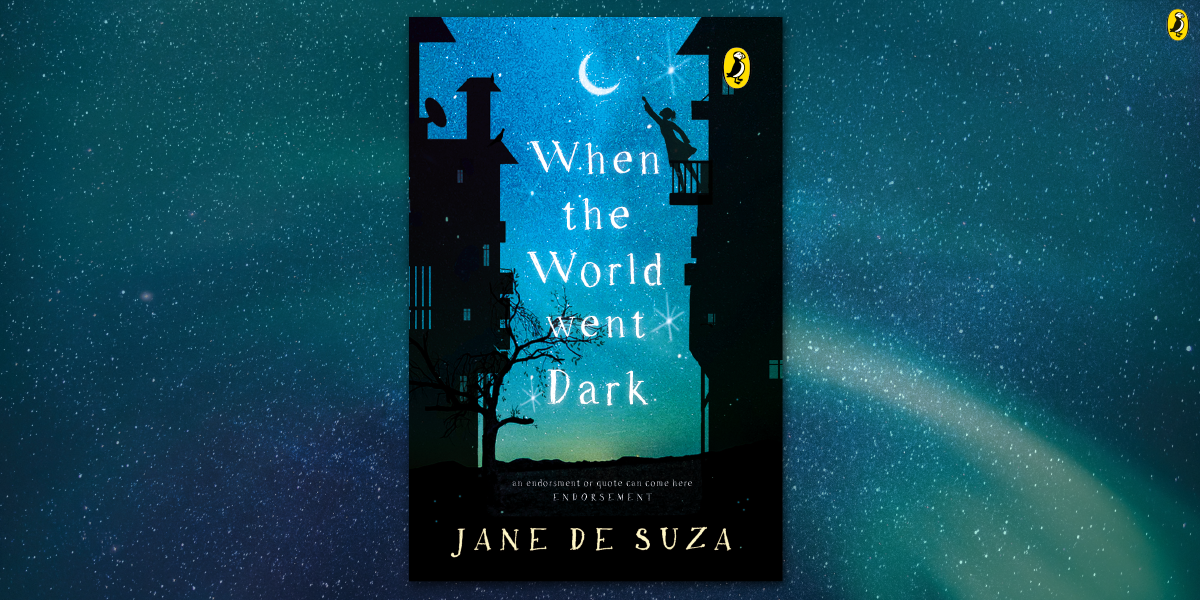
To help Swara, you’d have to dive into her world during the lockdown. Feel the almost-nine-year-old’s heart break as she loses her favourite person ever, Pitter Paati. Swara pursues clues to find her, but stumbles upon a crime instead. VExpectedly, no one believes her.
Will Swara and her VAnnoying friends from the detective squad find the Ruth of the Matter in time?
Told with humour and sparkle, When the World Went Dark is a compassionate story about finding light in the darkest times of our lives. Here’s an excerpt from the book wherein Swara is trying to understand why the rules of the world around her have suddenly changed.
**
The times were dark, alarming, threatening. Clouds of fear kept people bolted and barred into their own homes. You couldn’t open a window to draw in a deep breath. You couldn’t trust anything that anyone else had touched. In fact, if you remember, you couldn’t even put a toe out of your front door.
Swara should know because she tested it out.
Ruth was the one who’d thrown her the challenge. She claimed to be her best friend, although you might doubt it after this. They lived in apartments opposite each other and often they sat cross-legged on their doormats and chatted, yelling to and fro. It was Ruth who said, ‘Swara, you cannot put even a toe out of your door.’
Swara scoffed at this. ‘Why? What if I do?’
‘Try and see. It is banned! There is a high-tech app that will make your toe shrivel up and fall off.’
If you’ve been almost nine, like Swara was, you knew what absolutely had to be done if thrown down such an outrageous challenge. Swara quite naturally, had to still her beating heart, hold her breath, kick off her chappal and wiggle her big toe an inch out of her open door. It did not fall off and land on the doormat. It stayed firm on her foot.
‘You are full of lies, Ruth!’
‘I am not. I am the Ruth, the whole Ruth and nothing but the . . .’
‘Fine, but my toe is fine too. It is my toe, the whole toe and nothing but the toe.’
‘It will not be. Keep watching it. Over the days, it will turn red, purple, black and then fall right off. Just you
wait.’
Swara retreated, scared. And since then began to watch the toe for signs.
The times were like that as we’d mentioned. Dark, alarming, threatening times.
And then, of course, holidays were declared— out of the blue! No waking up to a screaming alarm clock, or drinking milk while sleepwalking, or pulling on the uniform and buttoning it down wrong, or running down to catch the yellow school bus and missing the favourite seat.
When the World Went Dark || Jane De Suza
Like most kids, she spent the first week playing, eating, sleeping and like most kids, got fed up of it all. Nothing fun was on the Allowed List. No playing downstairs, no eating out, no meeting friends. To add to her dismay, her toe sported a smallish reddish spot one morning, which turned as white as a sheet (just a saying). She held her toe in one hand and hopped over to Appa, who examined it and opined that it was a harmless insect bite and would disappear soon.
‘My toe? My toe will disappear?’
‘No, Swara, the red spot will disappear.’
What was high up on the Rotten List was that she couldn’t meet her favourite person in the world, her paati. Not Madurai Paati, her father’s mother, but her Pitter Paati who lived on the outskirts of Bengaluru. In the same city and not meetable! VStupid (Very Stupid)! Everyone was locked down—Pitter Paati, Thaatha, Anand Maama, Maami and the twins. The whole city was locked into their houses. The whole world, too, from what the TV showed. You could see people in Italy singing and waving while hanging over their balconies. Swara made a point of letting Ruth know that no one’s arms were turning purple, shrivelling up and falling off.
She video called Pitter Paati many times a day, to show her a new poem, the suspicious red-spotted toe, the view of no one on the streets outside, a line of ants creeping towards the dustbin, her fake moustache, anything actually. PP was always interested in whatever Swara was up to.
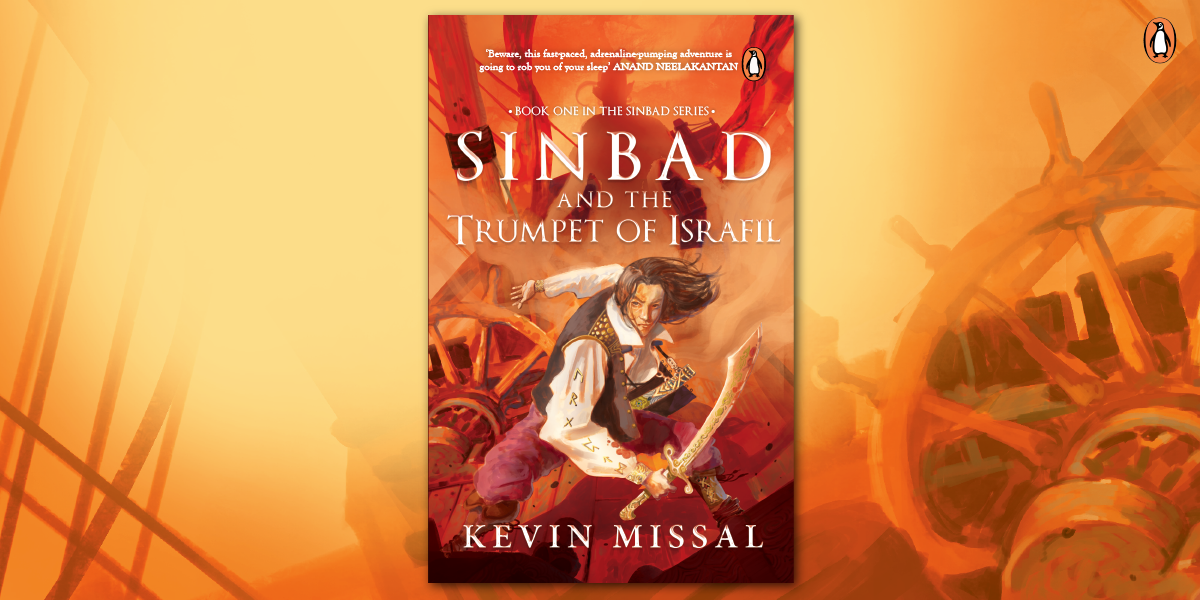
One Hero. Many Monsters. Before I came to be known as the greatest sailor in the world, I was a young monster who fell in love. As all legendary love stories go, things were…well, not smooth sailing. And of course, there was the problem to the Armageddon.
Kevin Missal’s new book Sinbad promises thrill, fun and adventure. Here is an excerpt from the book.
PRESENT DAY
BASRA, PORT OF ARABIA
The corpse was laid there under the darkening sky.
And Sinbad watched it, in silence, from the bushes.
He could hear his own breathing, his blood pumping in his ears. It was late evening. His almond eyes were focused on the beach, hawk-eyed. Owls hooted. The waves rolled and the blurry skies darkened.
Any time now…
‘Let’s hope the blasted ghoul takes the bait,’ said Husayn, his blue eyes scanning the area. He flicked his frizzy, curly hair back and looked at his friend who crouched down beside him. ‘There’s a lot of money we’re gonna get out of this, tee-hee,’ he said, referring to the tavern owner who had hired Sinbad to end the horror of the Qutrub.
Sinbad turned his head and looked up, his onyx hair falling over his forehead. ‘For the hundredth time, it’s not a ghoul. It’s a subclass of jinnis.’
‘Apples and oranges, to be honest.’ Husayn shook his head in dismay. ‘How do you kill it?’
‘You can’t’ Sinbad signed. ‘You trap them and then send them back. Or keep them locked in a ring or something. And one of the easiest ways to do it is by knowing their true name.’
‘Well, whatever it is, you have no clue how tough it was to get that,’ said Husayn, pointing to the dark mound that they had been eyeing. ‘Let’s see: paid the gravedigger; dug up the ground with him; got drenched in mud; and then finally got it for our friend, the Qutrub, here because you said it would be the perfect bait.’
‘Well, at least you were helpful this time.’ Sinbad rolled his eyes and decided to look at the stars that remained still, distracting himself from the beach. It was only a few times in his life that he had caught them blinking.
‘I’m always helpful, all right?’ Husayn said, his voice growing louder in protest.
Sinbad darted his eyes back to the beach and the corpse. ‘No, please, do yell some more and let the whole world know what we are doing.’
‘Apologies!’ Husayn whispered. ‘And the world knows already. That thing has already killed twenty of our travellers. If more would become its victims, taverns might as well close down.
‘I know.’ Sinbad sighed.
‘You said it’s a jinni, though, right?’ Husayn asked. ‘But aren’t jinnis like wish-granting baboons?’
‘Nor all,’ Sinbad said and shook his head ever so slightly. ‘Only the Marids. While the thing we are waiting for right now is called a Qutrub. Strange creatures. They come from the jinni world of Barzakh. But what I don’t understand is, Qutrubs feed on the dead, and thus are seen around graveyards. Then why is it attacking the living?’ He narrowed his eyes in contemplation.
But before he could mull it over, Sinbad say the unlikely: A couple walking on the shore, a few yards away from their bait, oblivious to it and the gruesome presence that it would invite. They were busy chatting and laughing. Barefoot. The girl was wearing her veil and the man a sailor’s tunic.
‘Humans. Always butting in when they are not supposed to.’ Sinbad gritted his teeth.
‘Aren’t you a human yourself, my dear friend?’ Husayn cheekily asked.
‘Well…’ Sinbad said, ‘the Qutrub would attack them then. Fresh blood.’
‘Um, Sinbad?’ Husayn tapped on his shoulder.
‘What?’ he snapped as his eyes followed the couple’s steps, hoping they won’t notice the trap that had been set on the beach. But the smell would be a dead giveaway!
And they were close…getting closer…
‘Um, Sinbad? Would you please turn around?’ Husayn’s voice had turned into an almost high-pitched scream.
‘What?’ shrieked Sinbad, irritated, as he turned towards Husayn. And it was then that he saw it. A ghastly eight-foot-tall creature – skeletal, scarlet red, dressed in rags. Its elongated mouth and slits, in place of a nose, quivered. A long, black ponytail on its otherwise bald head was the only hair it had. Its ribs were visibly jutting out of its diaphragm. Even the spine was visible, protruding from the skinless skeleton. But the eyes – they were pitch-black as if the creature had no irises. It was so close to him, breathing hard. And it was then that their eyes met.
If that weren’t bad enough, then came a bone-chilling scream. From the side of the beach were the unknowing couple stood.
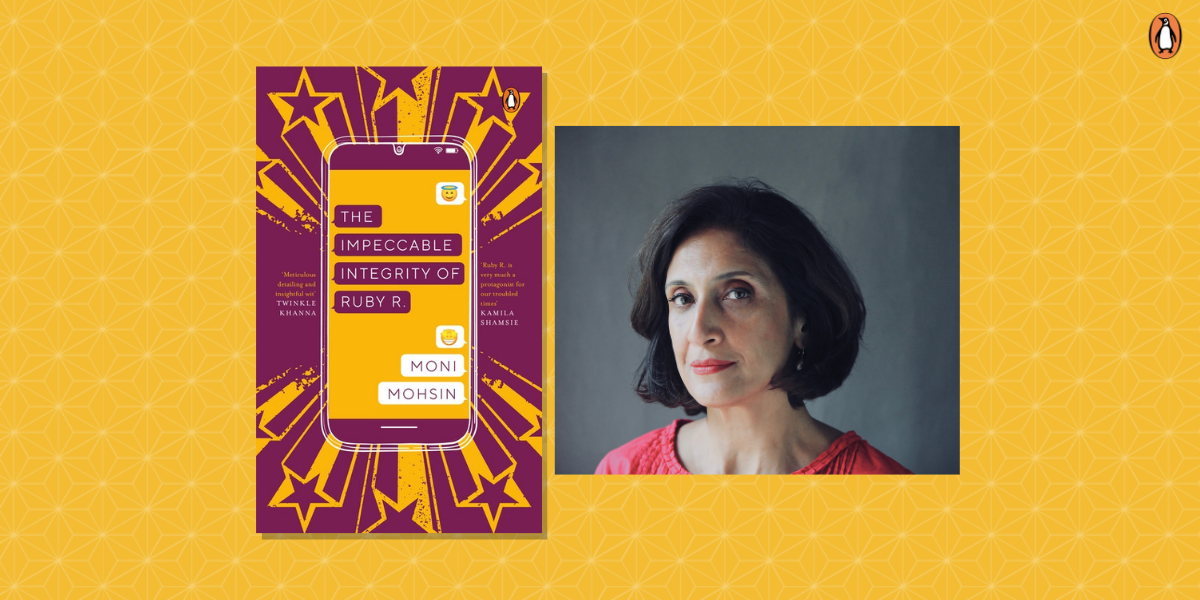
Moni Mohsin sat with us for an absolutely delightful chat, and we just can’t get enough of her (and her book The Impeccable Integrity of Ruby R of course!)
South Asian literature has historically been seen as heavy and weighted, so do you feel a little more liberated working with a freer style like satire?
MM: It’s not that satire is lighter per se because you can go to really dark places with satire too. I choose to write social commentary that allows me to portray my society as accurately and as truthfully as I can while also exploring its more comedic side.
If you had to pick five desert island reads, they would be:
MM: Ah! This is a difficult one not least because my essential reading keeps changing, but if I have to give you top five today they would be:
George Eliot’s Middlemarch because it is so wise, profound and capacious.
Digging to America by Anne Tyler for its wryness, humour and subtlety.
The Complete Works of Shakespeare because God knows when I’ll be rescued.
Some David Sedaris to lift my spirits.
Nuskha-e-Wafa by Faiz Ahmed Faiz so I can keep myself busy by learning all of his greatest ghazals and nazams by heart and stunning everyone with my brilliance when I finally get rescued.
How have you been spending your days indoors?
MM: Editing, writing, recording my podcast ‘Browned Off’ and watching tons of Netflix. And eating chocolate!
If you didn’t pick satire, what would be another narrative style that you might consider?
MM: I’d write funny romances and whodunnits.
Do you think social media can have a positive impact in a field like politics, or is that too positivist? In theory of course yes, it is possible, like anything else, but do you think the system and political structures create politicians and workers on ground level who could actually wield it as a constructive tool?
MM: Of course social media can have a positive impact. Many activists use it for just such a purpose: they speak truth to power and set the record straight. As with everything else, in using social media too there is a choice involved.
What would Ruby do if she were embroiled in today’s South Asian politics? Do you think she would play the system like a fiddle or is the current situation maybe a bit too much even for her?
MM: She would do exactly what she does in the novel: she’d start off believing she is doing good. But very soon, in order to prove her loyalty to her party, she’d find herself peddling misinformation and abusing anyone who disagreed with the party line. And she’d still believe she was doing good.
There is a general despondency that seems to have settled in amongst people, with the pandemic and the general world-politics vortex where something goes wrong every day. We find ourselves once again in an age of anxiety. Do you think satire has the potential to push society towards introspection at such a time? Or is it consumed more like page 3 entertainment because people are too tired?
The Impeccable Integrity of Ruby R||Moni Mohsin
MM: I don’t really know. I think for satire to act as a catalyst for reform, there has to be some consensus on morality – on what we deem to be right and what we believe to be wrong. But in today’s deeply divided world I’m not sure we have that agreement any longer, if we ever did. My own ambitions as a writer are more modest. I am pleased if I can make someone smile when they read my work or recognize something I’ve written as being truthful.
Power and age very easily sway younger, more impressionable people. It happens with Ruby as well, who listens to one speech by Saif Haq and completely discards her reservations about a figure like him. Was the affair between Saif and Ruby a conscious narrative choice from the very beginning, considering it echoes the #metoo movement very closely, or was it something that born later out of the sequence of narrative events?
MM: It is not just the young who fall prey to the false promises of the powerful and the privileged. The affair between Ruby and Saif, while it is an actual thing in the book, is also meant to function as a metaphor for how we the public, who should know better, allow ourselves to be seduced by celebrity and by the intoxicating but divisive rhetoric of populist leaders.
Saif is said to have been modelled on Imran Khan, although he is an echo of several public figures we have seen. Did you have any specific figure in mind when you wrote him or is he more of an amalgamation?
MM: In creating Saif Khan I channelled the arrogance, entitlement and charisma of several populist leaders who are prominent in the world today.
The heightened focus on integrity in a field that obviously seems to have none is a very striking anomaly through the novel. In India for example politics seems to have given up on pretences and external polish. Do you think perhaps that morally bankrupt politicians are more effective when they work with the façade of integrity, parading the importance of being earnest? Or is the scene changing in that regard?
MM: I don’t think that Indian leaders have dispensed with their soaring rhetoric about purifying their country and returning to some mythical golden age while simultaneously stepping into a glittering future. Populist leaders never tell their adoring public the truth: that they have no quick fixes and that meaningful change comes only through hard work and sacrifice. The best they can do when their hypocrisy or incompetence comes to light is to either blame others (the opposition, or minorities, or bad neighbours or hostile super powers or the ‘lying’ media or whatever) or else, conveniently ignoring the truth.
~
The Impeccable Integrity of Ruby R is an exciting satire on the life and times of our current politics.
Who do we laugh at and who do we laugh with? Avay Shukla, an ‘unserious’ writer, has a clear vision of what has been going off-track in India in the past decade. And he says it all with clarity and a biting humour. Here is an excerpt from his book PolyTicks, DeMoKrazy & Mumbo Jumbo: Babus, Mantris and Netas (Un)Making Our Nation.
~
I belong to a generation that was weaned on the Reader’s Di- gest feature “Laughter, the best medicine”, MAD comics, PUNCH magazine, Mark Twain, Oscar Wilde, Groucho Marx and quotations from a mysterious “Confucius” (“a man who be both a fool and an arsehole is an ignoranus”) who bears no resemblance to the original sage. Armed with the understanding of human character acquired from these astute observers I have gone through life realising that humour is the ultimate gift of expression that relieves, criticises, elevates, weeps, embraces. But most important, it always teaches, whether it be by the understatement, the mimicry, the pun, the satire, the suggestio falsi, the paraprosdokian or even the humble limerick. There is no more effective (but civilised) commentary on the times, and no more perceptive (but amiable) assessment of individuals. Societies and civilisations which espouse humour are tolerant. sensitive to public opinion, unbigoted and open-minded. By the same definition, those which seek to curb humour, either by legal fiat or street violence, are just the opposite, destined either for fascism or anarchy.
PolyTicks, DeMoKrazy & Mumbo Jumbo||Avay Shukla
India today seems to be headed in this latter direction. Powerful groups – both state and non-state actors, to use a preferred phrase – who brook no criticism, and mis-guided bleeding hearts or seekers of the two minute fame appear to have launched a war against all forms of humour in this country under the specious banner of “political correctness.” It began with Sashi Tharoor’s “cattle class” comment: in the ensuing din it is still not clear who was more offended – the champions of the poor who did not like the poor being “bovined”, as it were; or the Hindutva brigade who resented the disparaging reference to the cow.
Then came the arrest in Mumbai of the cartoonist Aseem Trivedi who dared to publish a caricatured version of the Ashoka Pillar, in order to show how our polity had been debased, distorted and corrupted over time. Cases were slapped against him for sedition and under the provisions of the Information Technology Act and Prevention of Insult to National Honours Act. One could be forgiven for thinking that he is a member of ISIS! Some time later a once-glamorous member of Parliament complained in the House how lawmakers were being made fun of in the media, and demand- ed steps to curb this tendency – she received a bi-partisan support that has not been seen since. Thereafter the Information and Broad- casting Ministry wrote to all TV channels not to make light of the Prime Minister’s sombre image, and to show more respect for his position. Last year this intolerance continued as criminal cases were registered against the entire team of AIB (All India Bakchod) and the presenters for staging the “Roast” show. There was even a demand to rope in some of the more prominent members of the audience. And this when everybody who watched the show had a rollicking good time and no one had complained!
And things are getting worse. Just yesterday a comedian, Kiku Sharda (a regular on the Kapil Sharma show) was arrested and sent to jail for mimicking – hold your breath – Baba Ram Rahim Insan of Sachha Sauda fame! The charge? (Hold your breath again) – hurting the religious feelings of his followers! (Sec. 295A of the IPC). It’s bad enough when this antiquated law is applied to any of the 33 crore Gods in the Hindu pantheon; now it is being used to protect even so called God men. Asa Ram’s lawyers must be watching these developments keenly – maybe the same argument can be used to spring him from jail.
~
Avay Shukla is a much-needed contemporary voice. His book tackles difficult topics with nuance and an acerbic sharpness.
The decade leading up to the COVID-19 pandemic witnessed the rise of platform business models as they drove stock market gains and extended their influence across economic and political activity. The pandemic has accelerated these platforms further.
Platform Scalefor a Post-Pandemic World by Sangeet Paul Choudary explains the inner workings of platform business models and their ability to scale rapidly. Here is an excerpt from the book that illustrates the same.
Scene One: The Pandemic
In August 2020, Apple became the first company to reach a $2 trillion market cap. That same month, Amazon’s Jeff Bezos became the first man to reach a personal net worth of $200 billion.
Even as most companies struggle to cope with the realities of a post- pandemic world, the platform firms—Amazon, Google, Microsoft, Apple, Facebook—have performed exceptionally well. Relatively smaller firms like Netflix and Shopify have also generated significant shareholder value.
The impact of platform firms during the pandemic has extended far beyond gains in the stock market alone. Google and Apple have joined forces to launch the Google–Apple contact tracing (GACT) platform, which uses application programming interfaces (APIs), Bluetooth technology and operating system (OS) level changes to assist in contact tracing.
While most supply chains reeled under the effect of the pandemic, Amazon and Alibaba came to the rescue. Even as the US–China trade war heats up, Alibaba’s Electronic World Trade Platform initiative is working with countries like Rwanda, Malaysia and Belgium to create a new infrastructure for global trade.
China’s platform economy leaders—Alibaba, Baidu and Tencent— have also been developing AI-driven solutions for COVID-19 diagnosis, vaccine development, contact tracing and risk assessment. Alibaba’s epidemic prediction solution model is trained on public data gathered from across China and predicts the trajectory of a coronavirus outbreak in a specific region with 98 per cent prediction accuracy. Meanwhile, the Alibaba Cloud hosts a virus genome sequencing application to diagnose new COVID-19 cases and has opened up its computing resources to research groups working on vaccine development around the world.
The pandemic has also highlighted the role of platforms as arbiters of discourse. Amazon took down books that it determined carried medical disinformation from its marketplace. Facebook, Twitter, Medium, Reddit and Pinterest have performed similar judge-jury- executioner roles, limiting search results for certain terms or entirely removing content deemed as misinformation.
Platform regulation was on the rise over the second half of the 2010s, and 2020 was supposed to be the year when Big Government would seize power away from Big Tech. Instead, what we’re seeing is quite the opposite.
The pandemic has accelerated the very grounds on which Big Tech was supposed to be regulated. Data access, privacy and usage laws are being revisited to counter the pandemic through contact tracing and other surveillance mechanisms.
As a final testament to the pervasiveness of the platform economy, platforms have started taking over governmental functions during the pandemic. This sounds dramatic but isn’t without precedent. During times of crisis, private firms often step in and take over activities which governments fail to perform. Platforms, as market mediators, are even more likely to take on such roles. Amazon’s directive to stop accepting non-essential products from third-party sellers who use its warehouses is an example of a private firm stepping in as a market regulator.
The pandemic has reinforced the importance of the platform economy. In the 2020s, we will see the platform economy gain further strength as the post-pandemic world uncovers new value pools for platforms to exploit.
Scene Two: The Post-Pandemic World
As we emerge into a post-pandemic world, we are already beginning to see the first signs of massive value migration.
More broadly, the post-pandemic world will see shifts in power across value chain actors. Platform scale and the ability to aggregate large and engaged user bases in order to attract other actors around your business will play a pivotal role. As an example, consider the rise in demand for online streaming services like Netflix and Amazon Prime Video during lockdown. These two brands may not use an open ecosystem of producers as other platforms do, but they benefit from many of the same drivers of platform scale that we explore subsequently in this book.
One might argue that things will return to normal post-lockdown. But it’s quite likely that they won’t. This seemingly transient shift in demand-side behaviour is driving a shift in negotiation power in the value chain.
With the pandemic-induced closure of major theatre chains, studios are breaking what’s known in the industry as the ‘window’— the three-month period between when a movie hits the big screen and when it’s offered for rentals or streaming. This window protects theatre revenues.
But with the pandemic, studios have been launching their films directly on streaming channels, eroding the window. Universal, with Trolls World Tour, announced that it will make movies available at home on the same day as their global theatrical release. In response, AMC Studios barred Universal from ever launching a movie in their theatres. Meanwhile, with AMC Theatres struggling, Amazon was looking to acquire its assets as of June 2020, further driving the consolidation we see during such periods of value migration.
In India, Amazon secured rights to premiere Bollywood movies, originally scheduled for a theatrical release, directly on Prime Video. Pre-pandemic, Amazon was getting into online sales of movie tickets to gain bargaining power over movie theatres and possibly negotiate the release window. With the pandemic, this balance is likely to further tilt in Amazon’s favour.
The post-pandemic world will also see new revenue models emerge. China’s Huanxi Media partnered with Douyin, a streaming platform by ByteDance, to launch its movies and TV shows direct to streaming on a new business model involving a combination of a licensing deal and a share of the advertising revenues. As studios like Huanxi Media test the success of releases on streaming platforms, they will likely use that data to negotiate with theatres post-lockdown. Theatres won’t go away, but their bargaining power may decrease. The combination of demand migration and a shift in bargaining power will likely create a permanent shift in power towards Amazon and Netflix. The longer the pandemic- induced changes last, and the greater the number of hit films and shows released direct to streaming, the more likely such a shift becomes.
The pandemic has induced a similar shift in the food retail value chain. With many countries moving into lockdown during the pandemic, there’s been a significant shift towards e-commerce in food retail. This is further reinforced by the disruption of food supply chains, a supply- side effect. A combination of these demand-side and supply-side effects has driven value towards online grocery platforms that can best harness these shifts. Demand has been increasingly centralized, with a few large online grocery platforms that can use centralized demand data to better predict demand patterns, improve stocking of fulfilment centres and better inform their supply chains. Post-pandemic, supply chain inspections and quality control requirements are likely to increase, and this will again favour larger players. This combination of demand- and supply-side effects will strengthen large grocery platforms.
In the post-pandemic world, we will increasingly see aggregation of demand with a few large players. With centralized and aggregated demand as a control point, large platform firms will be able to effectively orchestrate the entire ecosystem to deliver value to consumers and will be best positioned to harness value in these new value pools. As this book illustrates, leveraging technology—often commoditized—to orchestrate connected users towards new and efficient value-creating interactions holds the key to the business models of the future.
Platform Scale for a Post-Pandemic World serves as a maker’s manual, helping executives design and build platforms, and provides a lens to analyse the shifts currently underway and their implications for future platform-scale businesses.
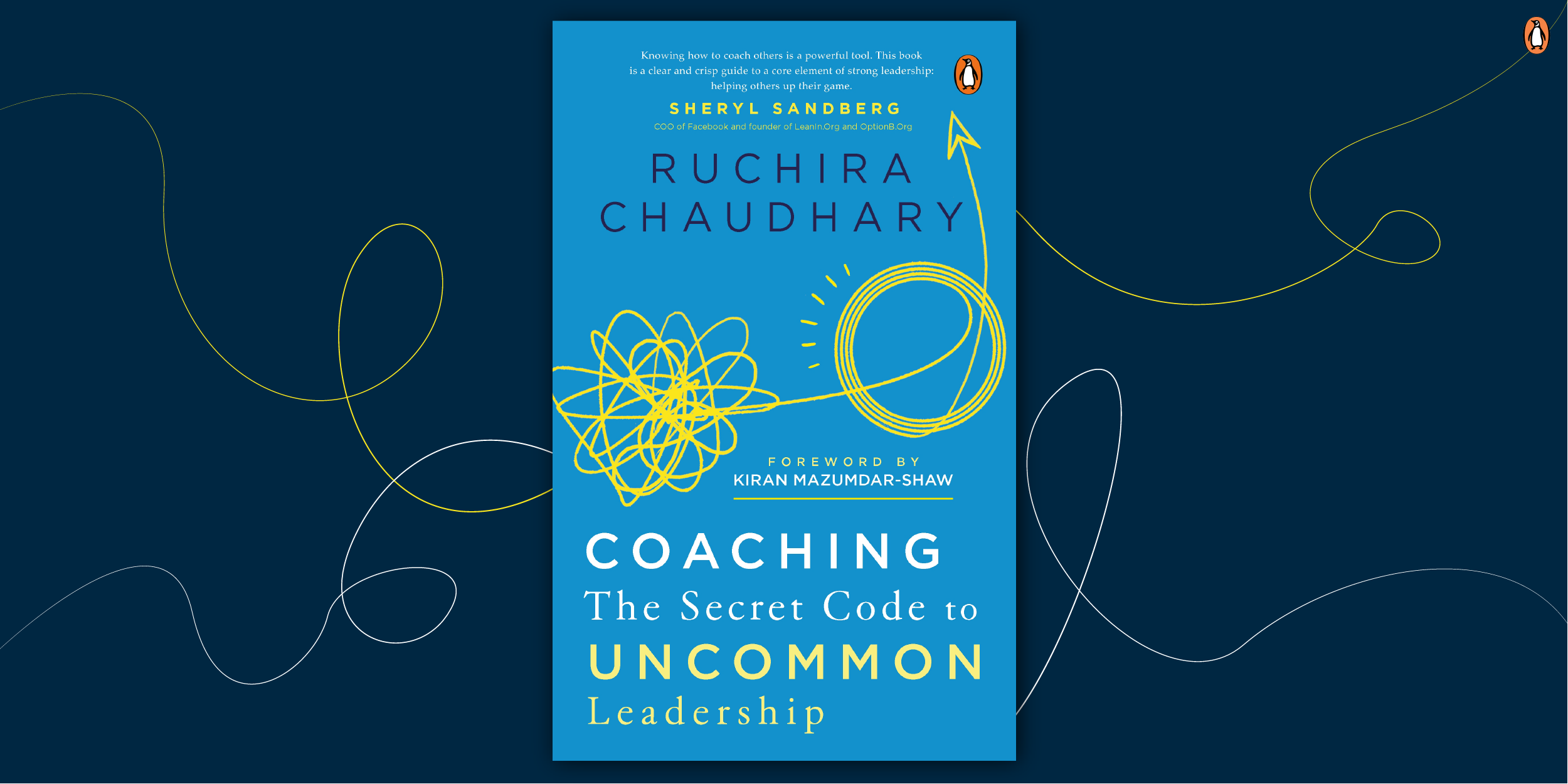
The world today is facing a looming crisis in leadership. Ruchira Chaudhary’s book Coaching: The Secret Code to Uncommon Leadership makes the crucial distinction between controlling from a position of power and coaching from one, which often make the all the difference between success and failure. Here is an excerpt:
‘You are failing us. But the young people are starting to understand your betrayal . . . You have stolen my dreams and my childhood with your empty words. The eyes of all future generations are upon you. And if you choose to fail us, I say we will never forgive you. We will not let you get away with this. Right here, right now is where we draw the line.’
A visibly emotional Greta Thunberg, the teenage climate activist, berated and excoriated world leaders for their inertia over the climate crisis. Her speech at the United Nations summit became symbolic of her generation’s demand for a better world. She has constantly provoked world leadership, demanding ‘how dare’ they not do more for the environment and for the future generations.
Would we—the current leadership of the business world— have to be similarly answerable to our younger colleagues one day for leaving the corporate world bereft of good leadership?
There is a massive leadership shortage in the world today even though there is enough talent, according to leadership gurus James Kouzes and Barry Posner. There are potential leaders out there who have a lot of talent. People who are eager, passionate and keen to succeed. And yet, we find ourselves in the midst of a leadership crisis when looking to steer the organizations (and nations) of tomorrow.
By 2025, 75 per cent of the workforce will comprise of millennials. Yet organizations around the world do not feel they have an ample leadership pipeline for current and future needs. About 86 per cent of the respondents to the latest World Economic Forum Survey (WEF) corroborate the view that we are indeed experiencing a leadership crisis. Companies believe they do not have enough leadership bench strength and the demographic shifts are creating more demand for exemplary leadership than the supply.
They go on to ask that if the need for leaders is so high—why aren’t we developing enough leaders? Why is the pipeline so bare, despite the knowledge that having the right leadership is critical to thriving and surviving in the future?
What holds true with the environment can also hold true for business.
Building sustainable leadership for the future is complex and unfortunately not enough of a priority, yet it is critical to the vitality of future businesses. As with the environment, the choice to act rests with us. We can bridge the leadership gap by nurturing and coaching our teams and our emerging leaders now, creating a much stronger pipeline of future leaders, ready to hold the rudder of the economy, when the time comes.
According to leadership scholar Jack Zenger’s research on the topic—this shortfall is fuelled by inadequate preparation. Potential leaders are simply not ready to lead others and most leaders are not getting adequate training. Not surprising, considering that the average age of a manager who goes through any leadership programme was forty-two!5
Just as you would not seek medical treatment from an untrained physician or allow an untrained mechanic to fix your new car—why would you let untrained, unprepared leaders steer your organization?
Why then aren’t we building enough leaders especially in light of such alarming statistics? Why aren’t organizations, educational establishments and governments spending more time, effort, energy and resources in developing this next line of leaders?
That’s because our approach to building leaders isn’t working!
Organizations (societies and nations) are often run according to ‘the superchicken model’, where the value is placed on star employees who outperform others. The model refers to ‘interactions among chickens’ observed in a study by Purdue University evolutionary biologist, William Muir, and explained later in this section.
As we saw in the case of Dr Big, Sachin and Travis—we are instantly drawn to our best performers, our stars, and there is a natural assumption that these superstars will morph into superstar leaders.
We’ve assumed that success is achieved by picking the superstars, the brightest men, or occasionally women, in the room, and giving them all the resources and all the power. The reality however can be very different says Margaret Heffernan.
The idea that top performers can be selected for desirable characteristics has a long pedigree. Charles Darwin, himself, relied upon animal breeding practices to explain how nature plays the same role as the farmer. During Darwin’s time in the mid-19th century, it was widely assumed that creating a better society was a matter of selecting the most able individuals.
This was the basis of an experiment conducted in the 1990s by Dr William M. Muir, professor of animal sciences at Purdue University. The purpose of the experiment was to increase the egg-laying productivity of hens. The most productive hen from each flock was selected to breed the next generation of hens, and so on and so forth, inevitably resulting in a flock of high-productivity chickens. In this model, scientists at Purdue University set out to build a flock of successful chickens by selectively breeding the best of the flock.
According to a Forbes article, ‘Muir left the chickens alone for six generations, expecting to see the super chicken flock turn into a breed of productivity thoroughbreds. But that’s not exactly what he found. The first group—the average chickens—were the same as before . . .’ These were plump, well feathered, healthy and actually producing more eggs than they were at the start of the experiment. ‘The super chickens, on the other hand, weren’t exactly fat and happy. All but three were dead. The individual superstars had pecked their kin to death.’
What should have amounted to a breed of ‘superchickens’ ended up producing a strain of hyper-aggressive hens that incessantly attacked each other.
Muir’s chicken experiment has become legendary among social scientists because it’s a kind of a parable—window into human behaviour and the way we work, and maybe also a lesson on how we could do better. It is not a surprise that these superflocks seem like an apt comparison to organizations of today. As Margaret Heffernan shares in her TED Talk, ‘Forget the Pecking Order at Work’, superchickens in the workplace can cause super problems.
…The superchicken model tells us many things about teamwork, collaboration and, most importantly, that being a star performer or being naturally gifted at your craft is sometimes not enough. These performers need to be nurtured and their craft honed if we want them to lead with the same panache and excellence.
~
Coaching: The Secret Code to Uncommon Leadership is a must-read for leaders, aspiring leaders and especially those that wish to transition from being just good leaders to extraordinary ones.
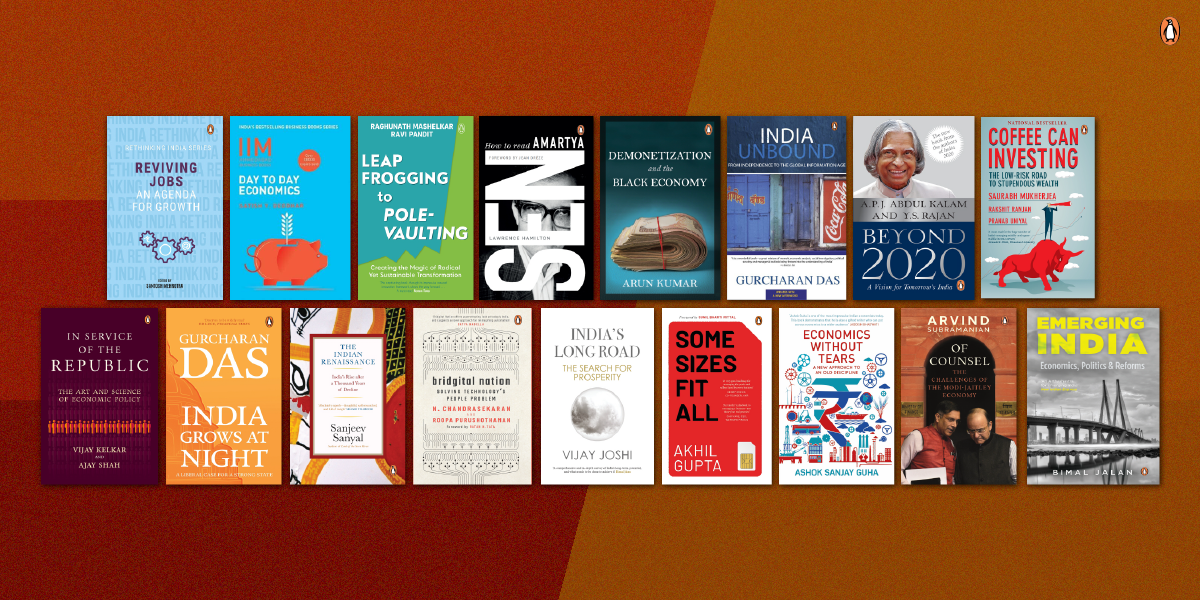
With the Union Budget under discussion, it is a good time to visit some essential reads that examine the socioeconomic landscape of the country. Here is a list of critical reads to keep things in perspective this Budget season:
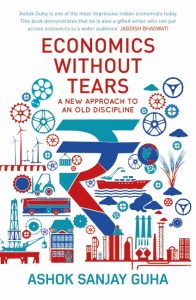
Economics Without Tears||Ashok Sanjay Guha
Economics without Tears
by Ashok Sanjay Guha
If you are a layman wondering what economics is all about or a freshman student of the subject, this is a book you cannot afford to miss. Starting from the first principles and stripped of mathematics and almost all jargon, it introduces you to all the basic concepts of economic theory as well as to some of its more surprising depths.
Economics pervades every aspect of our lives and our world. This book shows how anyone can acquire an understanding of its key principles while finding the exercise not only an exciting intellectual adventure but also great fun.
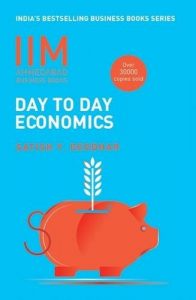
Day to Day Economics||Satish Y. Deodha
Day to Day Economics
by Satish Y. Deodhar
The economy isn’t just for the economists to debate on. All of us are affected by its ups and downs—global recession, rise in interest rates, or hike in food prices. But do we understand the principles at work and how and why they really affect us? Day to Day Economics is an enjoyable, accessible, and extremely user-friendly book that explains the modern day Indian economy to the layperson. In this relevant book, Professor Deodhar explains the role of the government and its involvement in different aspects of the economy; the need for the RBI and its functions; and how taxes, stock markets, and recessions work. Day to Day Economics will help you go beyond the facts and figures in the budget and connect the trends to your daily life. As with all IIMA Business Books, it comes illustrated with numerous Indian examples and case studies making this the ultimate rookie’s guide to the Indian economy.
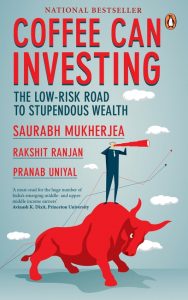
Coffee Can Investing||Saurabh Mukherjea, Rakshit Ranjan, Pranab Uniyal
Coffee Can Investing
by Saurabh Mukherjea, Rakshit Ranjan and Pranab Uniyal
Most people invest in the usual assets: real estate, gold, mutual funds, fixed deposits and stock markets. It’s always the same four or five instruments. All they end up making is a measly 8 to 12 per cent per annum. Those who are exceptionally unfortunate get stuck in the middle of a crash and end up losing a lot of money.
What if there was another way? What if you could make not 10 not 15 but 20 per cent compound annual growth rate (CAGR) on your investments? What if there was a way to grow your money four to five times whilst taking half the risk compared to the overall market?
Bestselling author of Gurus of Chaos and The Unusual Billionaires, Saurabh Mukherjea puts his money where his mouth is. Saurabh follows the Coffee Can approach to high-quality, low-risk investing. His firm, Ambit Capital, is one the largest wealth managers in India which invests with this approach and delivers stupendous returns. In Coffee Can Investing, Saurabh will show you how to go about low-risk investments that generate great returns.
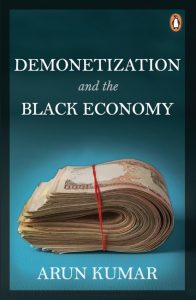
Demonetization and the Black Economy||Arun Kumar
Demonetization and the Black Economy
by Arun Kumar
On 8 November 2016, the prime minister announced the immediate cancellation of all Rs 500 and Rs 1000 denomination notes, wiping out 86 per cent of the currency in circulation. This move, it was claimed, was made to wipe out corruption, deter the generation of black
money, weed out fake Indian currency notes and curb terrorism. India’s well-functioning economy went into a tailspin. Businesses, especially in the unorganized sectors, came to a grinding halt. India continues to grapple with the effects of this move. The black economy has not been dented; counterfeiting and terrorism continue; the credibility of the RBI, banks and currency is damaged; the accountability of the Parliament and the prime minister has been eroded; and the social divide has widened. There have been many arguments and counter-arguments from both sides, but they have missed the complete picture. Demonetization and the Black Economy lucidly explains the story of demonetization along with its effects on the economy.
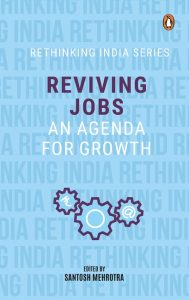
Reviving Jobs||Santosh Mehrotra
Reviving Jobs
by Santosh Mehrotra
Every country in the world experiences the benefits of its demographic dividend, a period that comes but once in the life of a nation-when the share of the working-age population is larger than the non-working-age share. It has the potential to make a country progress towards higher incomes and development. But it can also become a nightmare if there aren’t enough jobs.
Since 2012, the number of youth entrants into the labour force has increased at an accelerating pace, while the number of jobs created has decreased. This situation might become graver between 2020 and 2030 as the labour force swells further. Reviving Jobs, the third volume in the Rethinking India series, offers suggestions on how India can make the best use of the remaining period of its demographic dividend-any failure to do so will cause millions to suffer in poverty for decades to come.
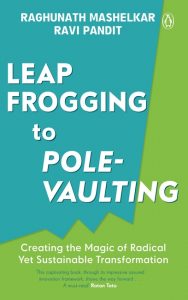
Leapfrogging to Pole-vaulting||RA Mashelkar and Ravi Pandit
Leapfrogging to Pole-vaulting
by RA Mashelkar and Ravi Pandit
An exhilarating manifesto for the future, this book convinces readers to make the shift from reactive leapfrogging to proactive pole-vaulting through radical transformation. The unique ‘3-4-7 framework’ demonstrates how a paralysing mass of problems can be brought down to a formidable formula, thus making every problem solvable, no matter how big and complex. The book is dotted with inspiring case studies that can instil confidence in people from across the world to put this framework into practice for assured success.
Dr Mashelkar and Mr Pandit ably show in this must-read book that-as an interplay of global issues constantly raise the bar for innovation today-there has never been a better time to use our learnings to pole-vault over those bars into a new future!
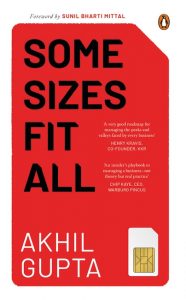
Some Sizes Fit All||Akhil Gupta
Some Sizes Fit All
by Akhil Gupta
An oft-repeated dictum every time a company fails to replicate its past successes when introducing a new product or entering a new market is that one size does not fit all. Business gurus advise that every new situation, market and environment calls for a fresh approach and requires ‘unlearning’ what one might have learnt elsewhere, even if that had met with great success. While this statement may appear to be obvious, it is often quoted out of context. The fact is that certain fundamentals of business-irrespective of line of business, geography or scale-are universally applicable. Some Sizes Fit All is an attempt to explain these fundamental pillars for any kind of business. An authentic and lucid presentation of management concepts and practices-which Akhil Gupta has tried and tested first hand through his illustrious career-this is a must-read for anyone trying to build a robust and financially sound business.
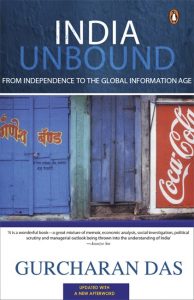
India Unbound||Gurcharan Das
India Unbound
by Gurcharan Das
India Unbound is the riveting story of a nation’s rise from poverty to prosperity and the clash of ideas that occurred along the way. Gurcharan Das examines the highs and lows of independent India through the prism of history, his own experiences and those of numerous others he has met-from young people in sleepy UP villages to chiefs of software companies in Bangalore. Defining and exploring the new mindset of the nation, India Unbound is the perfect introduction to contemporary India.
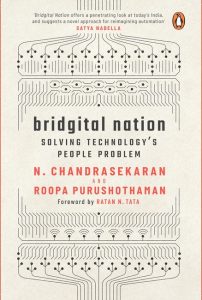
It is 2030. India is among the world’s top three economies. All Indians use advanced technology to either do their job or get their job done. All Indians have access to quality jobs, better healthcare and skill-based education. Technology and human beings coexist in a mutually beneficial ecosystem. This reality is possible. It is within reach. With Bridgital. In this ground-breaking book, N. Chandrasekaran, chairman of Tata Sons, presents a powerful vision for the future. To the coming disruption of artificial intelligence, he proposes an ingenious solution, where India is perfectly positioned to pave a unique path from the rest of the world. Instead of accepting technology as an inevitable replacement for human labour, India can use it as an aid; instead of taking them away, AI can generate jobs.
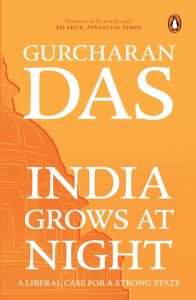
India Grows At Night||Gurcharan Das
India Grows At Night
by Gurcharan Das
Indians wryly admit that ‘India grows at night’. But that is only half the saying: the full expression is: India grows at night . . . when the government sleeps’, suggesting that the nation may be rising despite the state. But wouldn’t it be wonderful if India also grew during the day — in other words, if public policy supported private enterprise? What India needs is a strong liberal state, but, says Das, achieving this will not be easy, because India has historically had a weak state and a strong society.
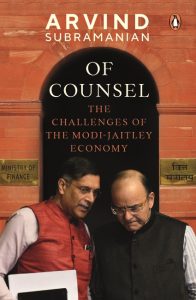
Of Counsel||Arvind Subramanian
Of Counsel
by Arvind Subramanian
For nearly four years, Arvind Subramanian stood at the centre of economic policymaking in India. Through the communication of big ideas and the publication of accessible Economic Surveys, he gained a reputation as an innovator. Through honest pronouncements that avoided spin, he became a figure of public trust. What does it entail to serve at the helm of the world’s fastest-growing economy, where decision-making affects a population of more than a billion people?
In Of Counsel: The Challenges of the Modi-Jaitley Economy, Arvind Subramanian provides an inside account of his rollercoaster journey as the chief economic advisor to the Government of India from 2014-18, succeeding Raghuram Rajan as captain of the ship. With an illustrious cast of characters, Subramanian’s part-memoir, part-analytical writings candidly reveal the numerous triumphs and challenges of policymaking at the zenith, while appraising India’s economic potential, health and future through comprehensive research and original hypotheses.
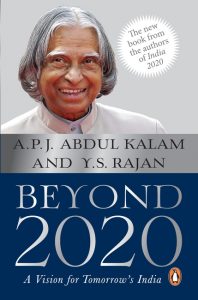
Beyond 2020||A.P.J. Abdul Kalam and Yagnaswami Sundara Rajan
Beyond 2020
by A.P.J. Abdul Kalam and Yagnaswami Sundara Rajan
India 2020 is about to become a reality. Are we ready?
In 1998, Dr Kalam and Y.S. Rajan published the now iconic India 2020, a vision document for the new millennium that charted how India could become one of the top five economic powers in the world by 2020. Now, it is time to take stock of how much India has achieved and what lies ahead. In many ways, India’s growth story in the twenty-first century has been hamstrung by missed opportunities and slowdowns in project execution; but it has also been marked by new opportunities and emerging technologies that make faster and more inclusive growth viable. A renewed policy focus is now needed for agriculture, manufacturing, mining, the chemicals industry, health care and infrastructure to invigorate these sectors and boost economic growth, argue Kalam and Rajan. Alongside, education, job creation, emerging technologies, biodiversity, waste management, national security and the knowledge economy are some of the other vital areas that we need to build now that we have arrived beyond 2020.
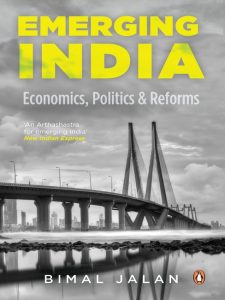
Emerging India||Bimal Jalan
Emerging India
by Bimal Jalan
Bimal Jalan has closely followed the path of India’s economic policies across its changing trajectories, from before the time the economy was liberalized to the present. The pieces in Emerging India study the relationship between political and economic reforms and inclusive and incremental growth.
How to Read Amartya Sen||Lawrence Hamilton
How to Read Amartya Sen
by Lawrence Hamilton
This book offers a much-needed introduction to Amartya Sen’s extraordinary variety of ideas. Lawrence Hamilton provides an excellent, accessible guide to the full range of Sen’s writings, contextualizing his ideas and summarizing the associated debates. Hamilton reconstructs Sen’s critiques of the major philosophies of his time, assesses his now famous concern for capabilities as an alternative for thinking about poverty, inequality, gender discrimination, development, democracy and justice, and unearths some overlooked gems. Throughout, these major theoretical and philosophical achievements are subjected to rigorous scrutiny. How to Read Amartya Sen is a major work on one of the most influential economists and philosophers of the last few centuries. It will be illuminating for readers keen to understand the breadth of Sen’s vision, and an invaluable resource for scholars, policy makers and global activists.
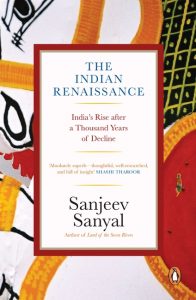
The Indian Rennaissance||Sanjeev Sanyal
The Indian Rennaissance
by Sanjeev Sanyal
One thousand years ago, India was at the height of its power, influencing the world with its ideas and trade. Now, ten centuries later, India’s recent economic performance is once again attracting world attention as the country re-awakens not just as an economy but as a civilization.
In The Indian Renaissance: India’s Rise after a Thousand Years of Decline, Sanjeev Sanyal looks at the processes that led to ten centuries of decline. He also examines the powerful economic and social forces that are working together to transform India beyond recognition. These range from demographic shifts to rising literacy levels and, the most important revolution, the opening of minds and changed attitude towards innovation and risk-fundamental, if India is to take advantage of the twenty-first century.
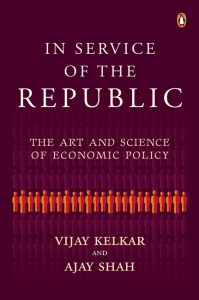
In Service of the Republic||Vijay Kelkar, Ajay Shah
In Service of the Republic
by Vijay Kelkar and Ajay Shah
As a $3-trillion economy, India is on her way to becoming an economic superpower. Between 1991 and 2011, the period of our best growth, there was also a substantial decline in the number of people below the poverty line. Since 2011, however, there has been a marked retreat in the high growth performance of the previous two decades. What happened to the promise? Where have we faltered? How do we change course? How do we overcome the ever-present dangers of the middle-income trap, and get rich before we grow old? And one question above all else: What do we need to do to make our tryst with destiny?
As professional economists as well as former civil servants, Vijay Kelkar and Ajay Shah have spent most of their lives thinking about and working on these questions. The result: In Service of the Republic, a meticulously researched work that stands at the intersection of economics, political philosophy and public administration. This highly readable book lays out the art and the science of the policymaking that we need, from the high ideas to the gritty practicalities that go into building the Republic.
India’s Long Road||Vijay Joshi
India’s Long Road
by Vijay Joshi
India has been the subject of many extravagant predictions and hopes. In this powerful and wide-ranging book, distinguished economist Vijay Joshi argues that the foundations of rapid, durable and inclusive economic growth in India are distinctly shaky. He lays out a penetrating analysis of the country’s recent faltering performance, set against the backdrop of its political economy, and charts the course it should follow to achieve widely shared prosperity.
Joshi argues that for India to realize its huge potential, the relation among the state, the market and the private sector must be comprehensively realigned. Deeper liberalization is very necessary but far from sufficient. The state needs to perform much more effectively many core tasks that belong squarely in its domain. His radical reform model includes a fiscally affordable scheme to provide a regular ‘basic income’ for all citizens that would speedily abolish extreme poverty.
An authoritative work of tremendous scope and depth, India’s Long Road is essential reading for anyone who wants to know where India is today, where it is headed, and what it should do to attain its ambitious goals.
February may be the shortest month, but that doesn’t mean our list of new reads won’t be long! Here are some brand-new delights to make this month fabulous for you and the little ones:
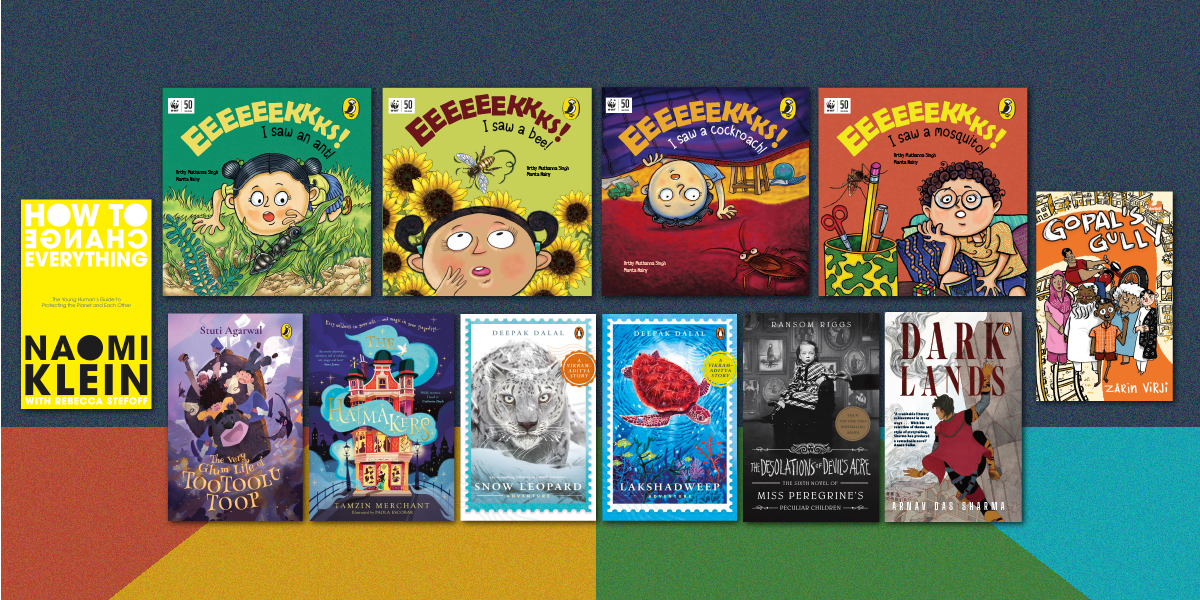
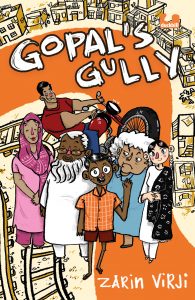
Gopal’s Gully||Zarin Virji
Gopal’s Gully
by Zarin Virji
When Gopal’s mother dies, his uncle brings him to Mumbai to get a job because he has few prospects as a Dalit boy in a UP village. Gopal is cast into the unfamiliar world of Squatters Colony, where he has no family or friends. He gets his first job at the bicycle shop owned by the sage Chacha and rapidly makes friends with the strange and diverse people who live in the community – Chacha’s friendly daughter-in-law, the neighbourhood thug Raja, the three-legged Tiger and beautiful Ayesha. And he learns that when disaster strikes and lives fall apart, he too has a family in the gully.
Eeks Series
by Arthy Muthanna Singh & Mamta Nainy
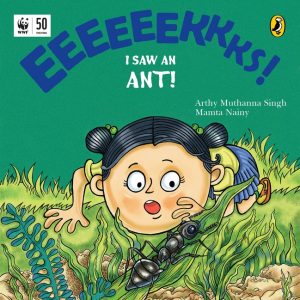
Eeks I saw an ant||Arthy Muthanna Singh, Mamta Nainy
Eeks! I Saw an Ant!
Ants are small but that’s not all! Enter the jaw-dropping world of ants and explore some fascinating facts about one of the most hard-working critters of the insect kingdom!
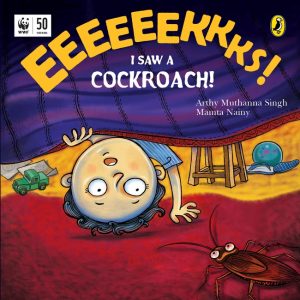
Eeks I Saw a Cockroach||Arthy Muthanna Singh, Mamta Nainy
Eeks! I Saw a Cockroach!
Whether cockroaches fill you with dread or wide-eyed wonder, there’s no denying the fact that they are some of the most amazing creatures of the insect universe. So, dash right into their wonderful world, find out everything about them and be prepared to be super surprised!
Eeks I Saw a Bee||Arthy Muthanna Singh, Mamta Nainy
Eeks! I Saw a Bee!
What’s the buzz about bees? What do they do all day? Why are they important? Find out everything about bees in this buzzing book and discover the big ways in which these little insects contribute to our environment.
Eeks I Saw a Mosquito||Arthy Muthanna Singh, Mamta Nainy
Eeks! I Saw a Mosquito!
Mosquitoes are mostly known as tiny troublemakers. But there are lots of interesting facts about these delicate insects. Read this book to find out about their many species, sizes, diets, homes and-most importantly-why they bite!
The Very Glum Life of Tootoolu Toop||Stuti Agarwal
The Very Glum Life Of Tootoolu Toop
by Stuti Agarwal
‘To every witch, wizard and glum, I’m Tootoolu Toop, a ten-year-old, fully trained witch of the Oonoodiwaga tribe from the Darjeeling mountains. Like every other ordinary human who wants to live a life of magic, us witches and wizards want to experience the non-magical world too (I do for sure). For me, the ‘ordinary’ world is nothing short of an adventure. So I have left my tribe to live life as a glum.
This is my story.’
Tootoolu is on the run. From her mundane life of stirring grasshopper’s legs into potions and her underground home where her tribe has been in hiding for 569 years. Will Tootoolu find what she’s looking for-best friends, books and a chance to be who she truly is?
The Snow Leopard Adventure||Deepak Dalal
A Vikram–Aditya Story: Snow Leopard Adventure
by Deepak Dalal
Vikram and Aditya are back in magnificent Ladakh. Having finally freed their young friend Tsering from the hands of dangerous men, they’ve set themselves up for an even great challenge: to locate the the grey ghost of the Himalayas, the snow leopard. The boys join a team of ecologists and explorers in their search for this immensely rare and beautiful creature of the wild. But high up in the Himalayas, amidst daunting mountains and dark valleys, everyone has just one question on their mind: how do you study an animal you cannot find? Journey in search of the elusive Snow Leopard with an enthralling tale set in one of India’s most splendid destinations.
A Vikram–Aditya Story: Lakshadweep Adventure||Deepak Dalal
A Vikram–Aditya Story: Lakshadweep Adventure
by Deepak Dalal
Far out in the Arabian Sea, where the waters plunge many thousands of metres to the ocean floor, lie a chain of bewitching coral atolls-the Lakshadweep Islands. Vikram and Aditya dive into lagoons with crystal-clear water and reefs that are deep and shrouded in mystery. But when they stumble upon a devious kidnapping plot, their idyllic holiday turns into a desperate struggle for survival. Forced out into the sea in the eye of a raging storm, they endure a shipwreck, only to be marooned on a remote coral island. Journey through these breathtaking islands with a tale of scuba diving and sabotage, set in one of India’s most splendid destinations.
The Desolations of Devil’s Acre||Ransom Riggs
The Desolations of Devil’s Acre
by Ransom Riggs
The last thing Jacob Portman saw before the world went dark was a terrible, familiar face.
Suddenly, he and Noor are back in the place where everything began – his grandfather’s house. Jacob doesn’t know how they escaped from V’s loop to find themselves in Florida. But he does know one thing for certain: Caul has returned. After a narrow getaway from a blood-thirsty hollow, Jacob and Noor reunite with Miss Peregrine and the peculiar children in Devil’s Acre. The Acre is being plagued by desolations – weather fronts of ash and blood and bone – a terrible portent of Caul’s amassing army.
Risen from the Library of Souls and more powerful than ever, Caul and his apocalyptic agenda seem unstoppable. Only one hope remains – deliver Noor to the meeting place of the seven prophesied ones. If they can decipher its secret location. Jacob and his friends will face deadly enemies and race through history’s most dangerous loops in this thrilling page-turner, the final adventure in the beloved Miss Peregrine’s Peculiar Children series.
How To Change Everything||Naomi Klein
How To Change Everything
by Naomi Klein
‘Young people are not just part of the climate change movement. They are
leading the way. Will you be one of them?’
Forget everything you think you know about climate change. Klein presents her urgent message about saving the environment by asking three simple questions: Where are we? How did we get here? What happens next? From the Great Barrier Reef to Hurricane Katrina to school environmental policies to Greta Thunberg – climate change impacts every aspect of the world you live in. How to Change Everything will provide readers with clear information about how our planet is changing, but also, more importantly, with inspiration, ideas, and tools for action. Because young people can help build a better future. Young people can help change everything.
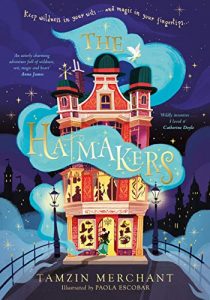
The Hatmakers||Tamzin Merchant
The Hatmakers
by Tamzin Merchant
Cordelia comes from a long line of magical milliners, who weave alchemy and enchantment into every hat. In Cordelia’s world, Making – crafting items such as hats, cloaks, watches, boots and gloves from magical ingredients – is a rare and ancient skill, and only a few special Maker families remain. When Cordelia’s father Prospero and his ship, the Jolly Bonnet, are lost at sea during a mission to collect hat ingredients, Cordelia is determined to find him. But Uncle Tiberius and Aunt Ariadne have no time to help the littlest Hatmaker, for an ancient rivalry between the Maker families is threatening to surface. Worse, someone seems to be using Maker magic to start a war. It’s up to Cordelia to find out who, and why.
Darklands||Arnav Das Sharma
Darklands
by Arnav Das Sharma
India is reeling from an environmental catastrophe-water has replaced oil as the most valuable commodity and our cities have become nightmarish places infested with gangs, secretive corporations and powerful religious figures. An advanced form of technology enables the manufacture of humans in laboratories. In this dystopia, Haksh, born in a lab, does what he shouldn’t have: he falls in love with a human.
Darklands is a coming-of-age novel about violence and transgression, and above all, love: both all-consuming and redemptive. Dark and bleak, it heralds journalist Arnav Das Sharma as a major new voice in Indian YA fiction.
~
Revamp those bookshelves! It’s going to be an exciting month for the young ones (and the older ones!)
In India 2030, thought leaders from twenty diverse fields, ranging from politics, economics and foreign policy to health care and energy, predict what 2030 will look like for India and how the nation will evolve in this decade. The book can be seen as a handbook for citizens, a road map for policymakers and a guide for scholars. Its collection of essays capture the many aspects of a future that will see India becoming the world’s third-largest economy and a regional power before the decade gets over.
Here’s an excerpt from the book on how technology will revolutionise the way we mete out justice in the 2020s.
**
The biggest change in justice in the coming decade will be the use of technology in courts. Artificial intelligence will not only help organize cases, it will also bring references into the judgment at a speed not seen so far. Technology will ensure that those who do not have access to justice due to distance will not be excluded anymore. Appointments of judges to the higher judiciary, the high courts and the Supreme Court, will see a change in the 2020s. The collegium system has exposed its weaknesses; its critics say that the system has degenerated into cronyism and is arbitrary, with merit as a mere sideshow. Again, technology will ensure that by the end of the decade, this system is revamped and rationalized towards objective criteria. When India enters the 2030s, it will do so with a more robust, transparent and credible system.
The law and justice system operates to touch our lives in two ways. First, in the sphere of transactional events in our daily lives. Second, in the sphere of litigation: of lawyers, judges and the various fora for resolution of conflicts and disputes. Indubitably, there need be to be, and will be, drastic changes at both levels. The decade ahead will ensure these constitutional aspirations are fulfilled. Besides, citizens need to be educated generally, and in particular about their basic human rights. They need to be empowered to demand the satisfaction of these basic rights by society. They also need education on the means by which society can be compelled to accord to them the basic necessities of life. These too will expand in the 2030s.
Democracy, Constitution and Justice
These changes will not be easy to make. In a democracy based on adult franchise and wedded to the rule of law, like India, this could be a herculean task. While India has a brilliantly worded constitutional document, there are millions who are unaware of the true nature of the Constitution. There is a crying need to educate the people on their fundamental rights guaranteed in Part III of the Constitution and the Directive Principles of State Policy declared in Part IV, which determine the path of governance for the state.
India 2030 || Gautam Chikermane
Access to information through low-priced telecommunications infrastructure will multiply the speed with which people will be able to learn and exercise their rights. When there is holistic awareness about the rights and the means of exercising those rights, the scene will shift to the legal arena. If the rights are required to be satisfied by the state, and if the state is deficient, the rights can only be enforced by resort to legal machinery and judicial fora. As people understand their rights and access to justice improves, litigation will rise.
…
Technology as a Change Agent
The extended lockdown in the wake of COVID-19 radically changed the lifestyles of all players in the field of justice— litigants, lawyers and judges—forcing them to resort to online resolution of disputes. It has also taught citizens the need for increased use of digitization. That would necessarily entail massive investment in the hardware and software required for effectively running virtual courts in the country. Though feeble attempts were made in the past for e-filing of petitions in the Supreme Court, they turned out to be mostly photo ops. Now there is an opportunity to test the verisimilitude of the words of the bard of Avon, ‘sweet are the uses of adversity’. And the Supreme Court has grabbed this opportunity with both hands and set the stage for speedy and more efficient delivery of justice in the decade ahead.
In May 2020, the Supreme Court introduced a new system of e-filing as a process tool and artificial intelligence as reference support infrastructure, both of which are characterized by efficiency, transparency and access to court- delivery services for every user. Effectively, India’s courts have ushered in a new and future-ready justice dispensation system that is not only in tune with the coming decade, but will also ensure it becomes the base for justice delivery in twenty-first- century India. The four key components of this system—24/7 filing, online communication of defects and scrutiny of matters, e-payment of court fees and digital signature for filing-related conversations—will speed up the court process. These process reforms stand on the infrastructure provided using artificial intelligence, and will play a big role in the organization of courts, categorization of matters and process automation. It will also enable extraction of information from court documents at the rate of one million words per minute and can be used by judges to decide a case. In the middle of COVID-19, these experiments in virtual courts have delivered success. Going forward, they will become the norm.
Once the use of artificial intelligence becomes a judicial standard, it will percolate and fix another problem: the continuing vacancies in judicial posts. Presently, 25–45 per cent of judicial posts remain vacant for unduly long periods, which puts a disproportionately large burden on the incumbents of other posts. This is a problem whose genesis is more in a lack of will than in a lack of resources. With appropriate artificial intelligence solutions, it will be easy to draw up a reserve list of judicial officers that can be kept updated, so that the proper person can be identified and promptly placed in the appropriate vacancy without loss of time. The 2020s will see this being implemented, and a major portion of the judicial pendency issue will be tackled effectively and resolved.