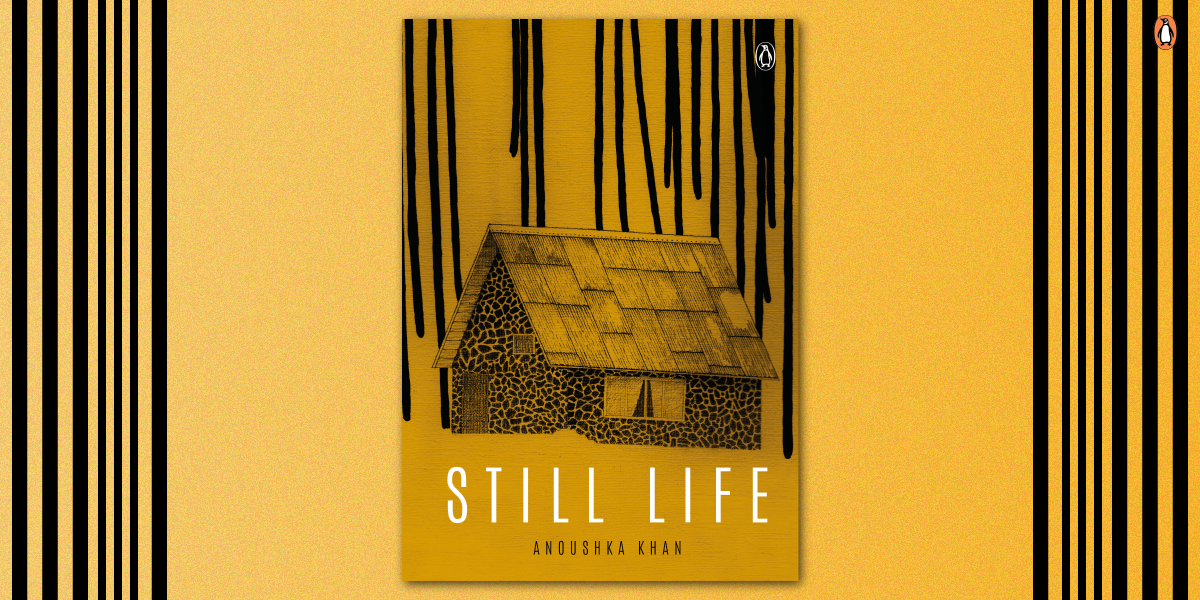
Still Life, by Anoushka Khan is an experiment with visual storytelling, using pictures and words to create a world that is both unsettling and extraordinary. Part road trip, part existential thriller ,it seeks new ways to look at love, isolation, memory and loss, asking what connects us to each other and to the natural world, and how we are governed by impulse we barely understand.
Today we have a chat with the Anoushka to understand how she worked on this masterpiece, and her inputs!
Still Life || Anoushka Khan
When did the idea for this book first come to you?
I was doing the washing up a few years ago and I suddenly thought, I’ll do a novel with paintings! I’d seen that paintings with words scrawled on had the power to move me, as did children’s picture books, and I wanted to recreate that simplicity and intensity.
What is your writer-(and illustrative) routine?
I’m lucky enough to have a home office; I shut the door, look at the artwork I’ve already made as a run-up, and then dive in. I only really get snatched hours here and there.
Was there a different element or zone you had to bring yourself to whenever you’d get down to work on this book?
The only way I can work is with my headphones on playing music—it shines a mental spotlight on the work and makes everything else disappear. I feel like music made this book, it’s far and away the biggest influence on my work.
What was the most challenging, and was the most rewarding experience of this project?
The most challenging aspect was probably my relative ineptitude with technology; I don’t know how many hours I spent trying to figure out how to lasso images in Photoshop or compress PDFs or whatnot. The most rewarding? A couple of people I know nearly cried when they read the book. I was so happy that it made a mark.
What is one thing you would, and one thing you wouldn’t recommend to anyone wanting to work on a book?
Enjoy getting lost in the process, rather than looking to the horizon. Try not to compare your work to others.
How difficult was it to illustrate such dark and complex emotions?
It’s really useful to be able to deploy words as well as images to convey mood or tone, and in some ways you can use one to balance out the other. And you can make it cinematic: focus on the character’s feet or a bowl of fruit while a particularly disturbing train of thought or difficult conversation is taking place. There is a darkness that permeates the book, but it’s from melancholy and mystery rather than bleakness—I think that would be much more difficult to sustain.
Mirza Asadullah Khan Ghalib was born in Agra in the closing years of the eighteenth century. A precocious child, he began composing verses at an early age and gained recognition while he was still very young. He wrote in both Urdu and Persian and was also a great prose stylist. He was a careful, even strict, editor of his work who took to publishing long before his peers.
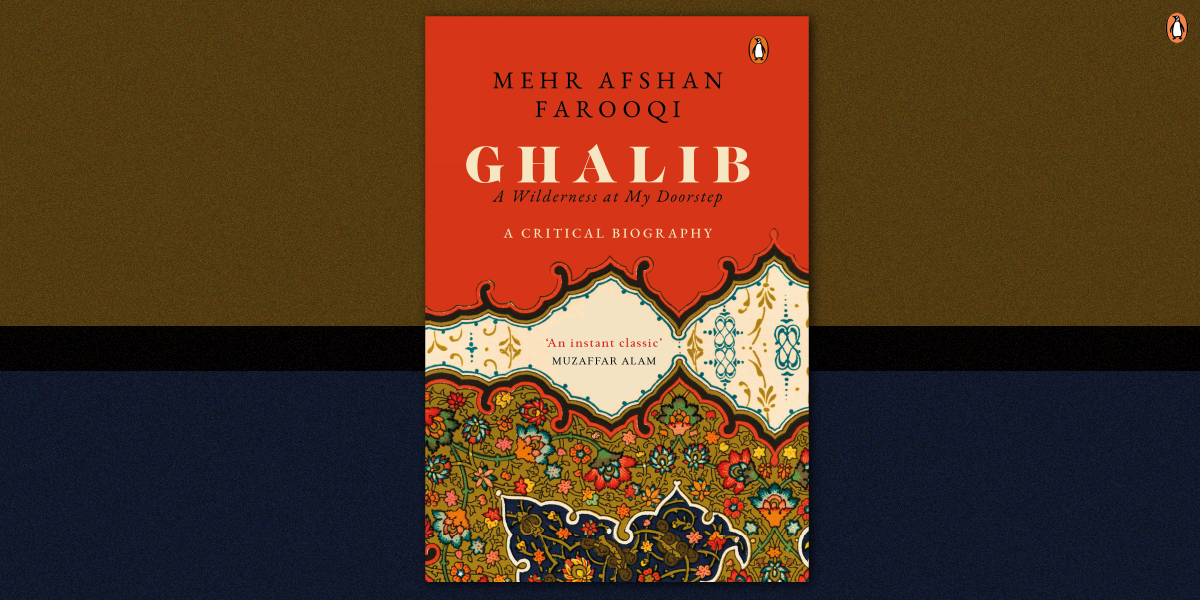
Ghalib’s voice presents us with a double bind, a linguistic paradox. Exploring his life, works and philosophy, Ghalib is an authoritative critical biography of Ghalib and opens a window to many shades of India and the subcontinent’s cultural and literary tradition.
Here is an excerpt from the text by Mehr Afshan Farooqi:
One day, my heart like a paper kite,
Took off on freedom’s string,
And began to shy away from me,
Became so wayward, it pestered me.
Ghalib, from an early composition
To tell the truth – for to hide the truth is not the way of a man free in spirit – I am no more than half a Muslim, for I am free from the bonds of convention and religion and have liberated my soul from the fear of men’s tongues.
Ghalib, in Dastanbuy
Ghalib || Mehr Afshan Farooqi
‘Mirza Asadullah Khan Ghalib, known as Mirza Naushah, titled Najmuddaulah Dabir ul-Mulk Asadullah Khan Bahadur Nizam Jang, with the nom de plume Ghalib for Persian, and Asad for Rekhtah (Urdu), was born on the eve of 8th of Rajab 1212 hijri (27 December 1797) in the city of Agra.’ Thus begins Maulana Altaf Husain Hali’s important biographical account, Yadgar-e-Ghalib.
Indeed, Hali’s critical, path-breaking memoir of his great ustad reconstructs the poet’s life story in a thrilling narrative woven with anecdotes, letters, personal trivia, first-hand observations and, most importantly, a penetrating analysis of Ghalib’s poetry and prose. Ghalib’s colourful personality shines in Hali’s lucid prose. It is hard to imagine how much or how little we would have known of Ghalib without Hali’s seminal work. There were Ghalib’s letters – volumes of them, a vital source of information – but the inspiration and direction that Hali’s work provided to generations of scholars remains undeniable.
In his youth, Ghalib was counted among the most handsome men in the city, be it Agra or Delhi. He was tall, with broad shoulders; his hands and feet were noticeably strong. Even in old age, when Hali first saw him, the signs of beauty were apparent on his face and demeanour. He was married on the 7th of Rajab, 1225 hijri (1810 ce) to Umrao Begam, the daughter of Navab Mirza Ilahi Bakhsh Khan Ma’ruf. Ghalib was thirteen years old at the time, and his bride eleven. Some years after his marriage, Ghalib moved to Delhi. It appears that he lived in Delhi for the next fifty years, till the end of his life. According to Altaf Husain Hali, in this long period, he never bought a house. He chose to live in rented houses; when he got tired of one house, he moved to another, but always remained in the same neighbourhood: Gali Qasim Jan, or Habsh Khan ka Phatak, or a place nearby.
Ghalib became an orphan at the impressionable age of five, when his father, Mirza Abdullah Beg Khan, was killed by a stray bullet in Rajgarh, Rajasthan, where he had gone with a force from Alwar to quell a rebellion. He was buried in Rajgarh. Raja Bakhtawar Singh of Alwar fixed a generous allowance for Ghalib and his siblings – his older sister, known as Chhoti Begam, and his younger brother, Mirza Yusuf. The children and their mother had always lived at the maternal home in Agra. In fact, Ghalib was born in the grand mansion of his maternal grandfather, Khwaja Ghulam Husain Khan Kamidan. Khwaja Ghulam Husain, a military commander (kamidan in colloquial speech) in the province of Meerut, was among the leading elite of Agra. His estate included numerous villages, and he owned many properties in the town itself. Ghalib’s mother, Izzatun Nisa Begam, was literate. Because Ghalib’s father lived with his in-laws, he was fondly known as Mirza Dulha, or Mister Bridegroom. Ghalib himself was known as Mirza Naushah, which, too, means Mister Bridegroom. Such nicknames were terms of affection used for males living with their in-laws. Presumably, Ghalib’s father died in 1801 (although Ghulam Rasul Mehr gives 1803 as the date), because we know that his paternal uncle, Mirza Nasrullah Beg Khan, died some five years later, in 1806, because of the injuries he suffered after accidentally falling off his elephant. Although Ghalib recorded his uncle’s death as an important event in his life, there is no evidence that he was close to his uncle; however, he and his siblings did become entitled to a pension because they were among Mirza Nasrullah Beg’s dependents.
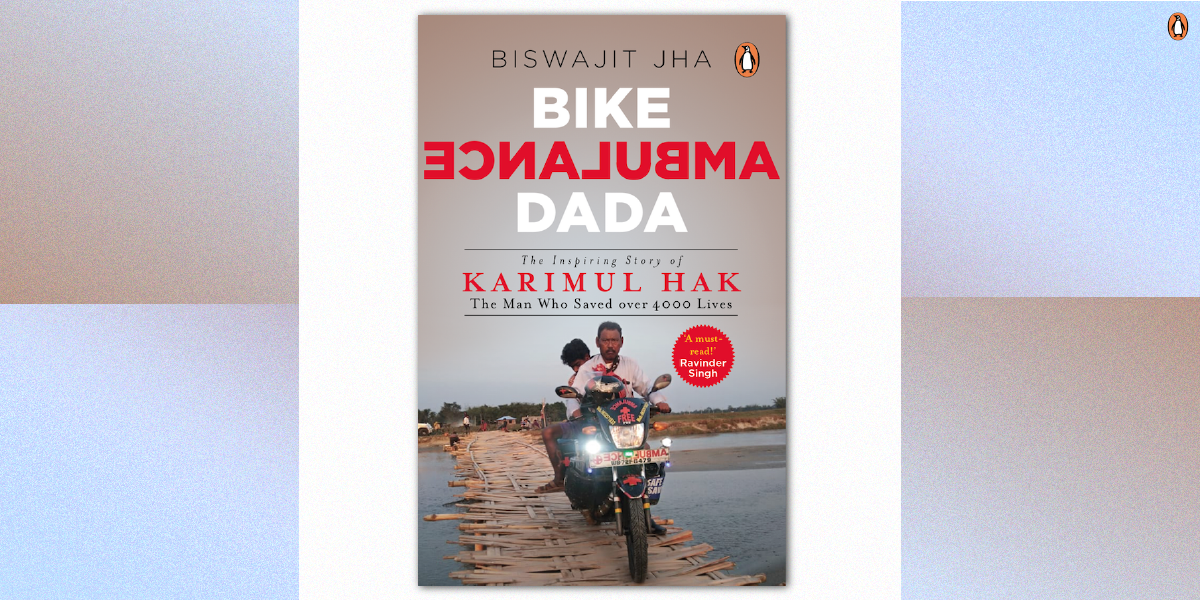
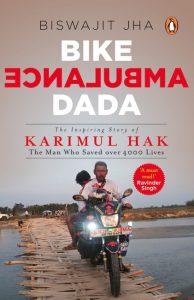
Bike Ambulance Dada, the authorised biography of Padma Shri awardee Karimul Hak, is the most inspiring and heart-warming biography you will read this year. Written by Biswajit Jha, it documents the extraordinary journey of a tea-garden worker who saved thousands of lives by starting a free bike-ambulance service from his village to the nearest hospital. The book is a must-read today as it will inspire us to do and be better in our lives.
In this interview, we talk to the author to understand his personal journey with the book and it’s story.
Where did you come across Karimul Hak’s story?
After I quit my job and came back from Delhi in 2013 to work for the people of my area in the northern parts of West Bengal. I first read about Karimul Hak in a local newspaper and came to know the amazing story of this tea garden worker who carried critically ill patients to the hospital on his motorbike – free of cost.
What inspired you to share this story with the world?
In 2015 when a friend of mine told me that she personally knew Karimul Hak, I felt an urge to meet this person. One day, I, along with my friend, went to meet Karimul Hak in his village much before he received the Padma Shri and much before he became a well-known figure. But I, at once, got hooked to this simple man who does such great work for the people. What amazed me is that despite being a tea garden labourer, he does such incredible work to help his fellow villagers without thinking much about his own family.
After that I started working with him to serve the poor. I made him the brand ambassador of my school which I started in 2017.
I felt people all over the world should know the story of Karimul Hak, who is living proof that you don’t have to be an extraordinary person to do extraordinary work. You can be ordinary and still do outstanding work for people. His life is an inspiration for all of us. When a tea garden labourer with a meagre monthly salary can undertake such a path-breaking journey, we all are capable of doing wonders.
Your own father was very particular about helping others. Can you share some incidents that stuck with you?
My father, from whom I got my first lesson to serve others unconditionally, was a primary school teacher and has always led a simple and honest life. From my childhood I saw my father helping others despite the fact that he was not a rich person.
Bike Ambulance Dada||Biswajit Jha
So, the lesson about doing things for others and sacrificing your own comfort for someone less fortunate than you, I got from my father who, despite being not very well-off, did everything he could in his entire life for the betterment of society. He took on a frontal role in establishing three charitable schools in our village and also worked tirelessly to improve education in and around our village. It is due to his tireless effort that we got the first English medium school in our area. I did not have to go outside my own home to find inspiration to help others.
One incident that stuck with me the most, which I also shared in the book, is a story of a sanyasi. It was a sultry summer noon in the early nineties. Hungry and exhausted, an old sanyasi came to our doorstep. My father ushered him into the puja room. After my mother fed him, the sanyasi expressed his wish to rest inside the puja room. But the room did not have a ceiling fan as we couldn’t afford one in every room. Realizing the old man might not feel comfortable without a fan, my father got the ceiling fan uninstalled from his own room and fixed it inside the puja room so that the sanyasi could sleep well.
The second incident which I remember vividly is that every year there used to take place a fair in our village. Though thousands of people would come to the fair, in those days there was no facility for drinking water in and around the fair. People would suffer due to this. Seeing the sufferings of the people, my father started to carry water in big jars from our home to the fair and started distributing drinking water along with jaggery to the people for free. I was very small at that time but my brother and I also used to go with my father and distribute water to the people. After that he made it a routine of conducting this ‘water camp’ every year. This is another lesson I learnt from my father that whenever you see people suffering, you should come up with some sort of solutions in your capacity.
What was the book-writing experience for you? Particularly knowing you’ve always wanted to write?
I always wanted to write a book. But I did not know when that would actually happen. As I am a social entrepreneur and not a full-time author, writing a book was very challenging. Taking out time from my busy schedule was a challenge. After quitting journalism, I stopped writing for almost two years. That actually helped me. My urge for writing increased manifold during these two years.
When I had started working with Karimul Hak, I felt an urge to take this story to the people all over the world and inspire them. When you have such a mission to accomplish, no job in world seems a challenging. Rather, I enjoyed writing this story. I enjoyed knowing Karimul Hak more closely while researching for this book, talking to him and interacting with people of his close quarters. I was so engrossed with the struggles of his life that I cried several times while writing his story.
What was the biggest challenge in this project?
There were many challenges I faced while writing this book. The biggest challenge was to make Karimul sit and talk. Since he can’t sit for more than 10/15 minutes in a single place, listening to the stories of his life from him was a challenging task. Apart from that he does not remember many incidents of his life. He would keep on telling me only 5/6 stories of his life which were not enough to write a book. Getting information about Karimul’s childhood days was also a challenge. Apart from that I had to write within certain parameters while writing a biography or a real life story. But I wanted this book to be interesting to the readers also so that it does not become monotonous. So, writing a non-fiction in a fictional way was a challenge but I tried to keep that ‘tension’ alive throughout the book.
What made you switch professions, from a journalist to a social entrepreneur?
Like Karimul, I was also born and brought up in a humble family of a small village in Jalpaiguri district of West Bengal. I struggled my way into becoming a national level journalist. I hardly got any support while I grew up. But I wanted that no one should face the same ordeal which I faced in my childhood.
With this thought in mind, me and my wife both quit our jobs and well-settled life in Delhi and came back to my roots in the northern parts of West Bengal which is considered to be the backward area of the state. After that we started serving the poor and helpless people. I basically wanted to be a part of the difficult but successful stories of many struggling men like Karimul.
Apart from many other social activities I am involved in right now, writing this book on this unsung hero is one of my ways of giving back to the society.
How satisfying has the change been and what changes have you experienced in yourself after this switch?
Initially, it was very challenging. To start everything all over again was very tough. I had many sleepless nights. But I kept on doing good for the others in my tough days. That, I think, helped me overcome my personal troubles. When I found that there were thousands of people who did not have basic things like food, clothes and shelter, my problems seemed much lesser compared to theirs.
While working for the others, I became a much better person. I found my true meaning of life. I felt happy within. And when you start to feel happy within, everything around you becomes beautiful. That’s why in my second book, which is a fiction and will be published after my debut book Bike Ambulance Dada, I wrote that the only way to get happiness is to serve others unconditionally.
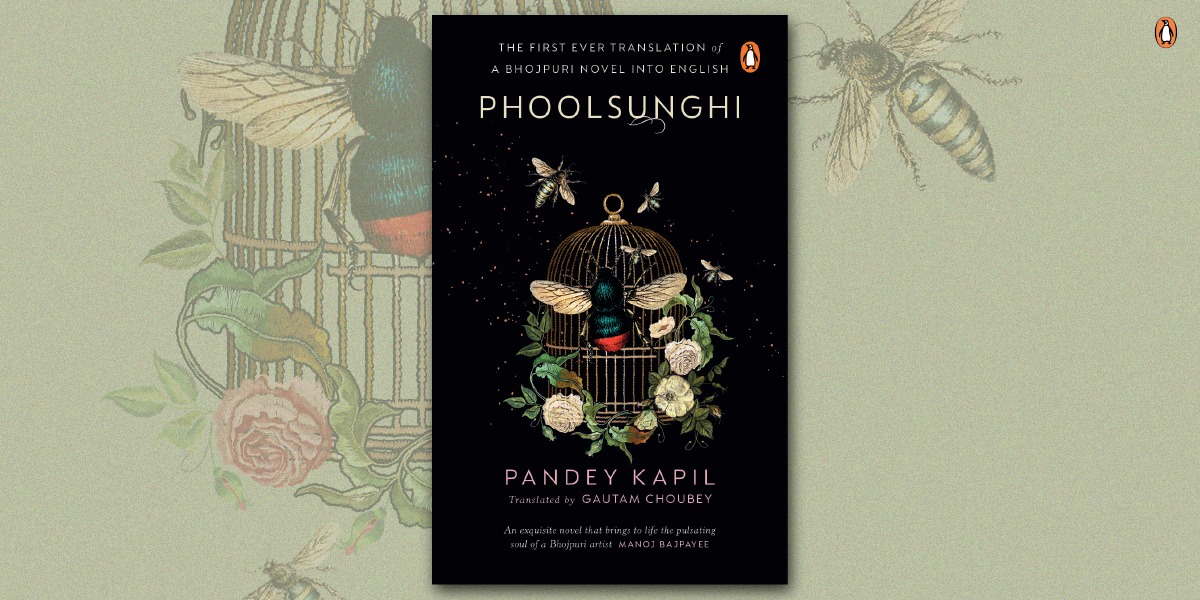
The first ever translation of a Bhojpuri novel into English, Phoolsunghi transports readers to a forgotten world filled with mujras and mehfils, court cases and counterfeit currency, and the crashing waves of the River Saryu. Today we have a chat with the translator, Gautam Chouby to get his take on working on the book, what this means for the community, the challenges he faced and more!
**
1. This is the first Bhojpuri to English translation—what does this mean for the community?
There are about 200 million Bhojpuri speakers in the world and the history of Bhojpuri literature in print in nearly 150 years old. The oral songs and the tradition of folk theatre are older still, dating, in a few instances, to the early 15th century. Yet, Bhojpuri literature has suffered neglect and anonymity. And Bhojpuri culture has been subjected to gross misinterpretation. This book—as is evident from the overwhelming response from readers, scholars and reviewers—has opened up the possibility of a fair reappraisal, connecting the language and its literature with readers everywhere. Since it cannot be adequately emphasised, I will simply say this: Bhojpuri people are thrilled.
2. What inspired you to work on this book?
Phoolsunghiisa sweet story of love, music, friendship and forgiveness thatmakes the finest traditions of Bhojpuri literature visible, in ways perhaps few other book could. It brings two of the best known Bhojpuri figure together: one is the subject of the novel, the other is its author. Besides Phoolsunghialso contests flawed discourses about the Bhojpuri world—notions which, at times, even people from within the region are reluctant to confront and address. At its very core, it is not a culture that glorifies violence and sexual misdemeanours; it is humane, sophisticated world with its own codes of honour and chivalry. It is a sweet world of melody, music and hard-working individuals.The novel brings these aspects to the fore. For example, it celebrates the miraculous rise of a courtesan in a culture that is often considered doggedly patriarchal.
Even though it was written during the days of Emergency and it depicts a colonial world in turmoil—that moves between Banaras to the west and Calcutta to the east—it celebrates gestures of reconciliation, forgiveness and assimilation. Its social alchemy allows the unlikeliest of camaraderies to flourish, in ways that might seem impossible today even in the most cosmopolitan of spaces, let alone Bihar. It is a world where courtesans, musicians, thugs, robbers, zamindars and British sahibs interact uninhibitedly, sharing life values and moral imperatives.
Phoolsunghi || Pandey Kapil
3. What were some of the challenges you faced on your journey?
I grew up speaking Bhojpuri with my mother and till a few years ago, believed that I knew the language pretty well. However, when I started reading its literature, I realised that Bhojpuri in print is somewhat different from the spoken form, as is perhaps the case with all other languages. To begin with, the visual impression of Bhojpuri words, although written in the script that I was all too familiar with, was a little disorienting; for me Devanagari and Hindi were interchangeable, and I could not fathom the script being mobilised by another language. Further, since there is no ‘standardised’ Bhojpuri, there are multiple registers within the language, causing words to have different meanings across different spaces and regions. The proverbial wisdom about language variation in India—‘kos kos pe badle pani, char kos pe bani’ (water tastes different every mile, language sounds different, every four) is true of this case, too. This pushed me to connect with Bhojpuri scholars, writers and people in my village. In a sense, a larger community of Bhojpuri enthusiasts came together for this book.
4. What was your first interaction with Bhojpuri?
I grew up in a Bhojpuri-speaking literary family: my maternal grandfather, Chandradhar Pandey, was a well-known Bhojpuri writer. Understandably, I was somewhat familiar with figures like Mahendra Misir, Bhikhari Thakur, Rameshawar Singh Kashyap, and to some extent, even Pandey Kapil. Besides, the fascinating story of Mahendra Misir and Dhelabai—filled with mujra, music, dacoity, sahibs, zamindars, crime, compassion, court-cases and a Devdas-like central character—is a local legend and a much-harvested theme, explored across three other novels. However, it was only in late 2017, having completed my Ph.D. from the English Department at Delhi University that I turned to Bhojpuri. That too at the behest of a senior colleague. A year later, when I finally Phoolsunghi, I was quite smitten by the story and moved by the sentiments it invokes, in ways I hadn’t experienced earlier; I came to realise the emotive force of feelings expressed in one’s mother tongue. After this chance discovery of a literary gem, and based on my family’s very personal relationship with Bhojpuri literature, I felt duty-bound to share it with the world at large.
5. What do you most look forward to with this book and it’s publication?
What excites me the most is the hope that with the success of this first translation, other scholars and translators would undertake similar projects, making many more literary specimens available to the larger reading public. Equally encouraging—thanks to Penguin Random House India’s unflinching support for Phoolsunghi and the extensive media coverage the book has garnered—is the possibility that other publishers, too, hereafter, are likely to show interest in Bhojpuri books. We are, in a nutshell, looking at quite an upbeat prospect for Bhojpuri literature. That, to me, is a wholesome objective, comprehensively set and partially achieved, through this book.
The Constitution of India came into effect on 26th January, 1950. As we celebrate India’s 72nd Republic Day, let’s dig deeper to understand the journey till this day in 1950, and our journey since then.
Here is a list of books from various authors, including Abhinav Chandrachud, Ramachandra Guha, Khushwant Singh, Sagarika Ghosh, K.R. Narayanan and many more! What’s more, there are titles for the little ones as well!
Republic of Rhetoric || Abhinav Chandrachud
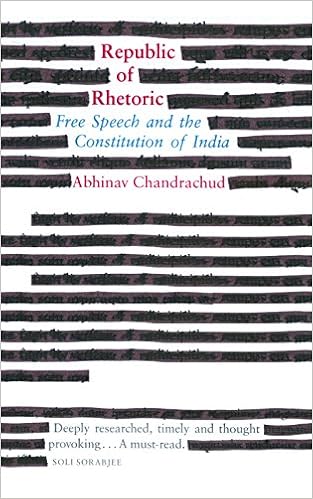
Exploring socio-political as well as legal history of India, from the British period to the present, this book brings to light the idea of ‘free speech’ or what is popularly known as the freedom expression in the country. Analysing the present law relating to obscenity and free speech, this book will evaluate whether the enactment of the Constitution made a significant difference to the right to free speech in India. Deeply researched, authoritative and anecdotal, this book offers arguments that have not been substantially advanced before.
*
How India Became Democratic || Ornit Shani
How India Became Democratic explores the greatest experiment in democratic human history. It tells the untold story of the preparation of the electoral roll on the basis of universal adult franchise in the world’s largest democracy. Ornit Shani offers a new view of the institutionalisation of democracy in India, and of the way democracy captured the political imagination of its diverse peoples.
*
Makers of Modern India || Ramachandra Guha
Makers of Modern India is a detailed source for information about the country’s political traditions. The republic of India had a very tumultuous beginning and the author shows you how 19 political activists were instrumental in the evolution of this country. The author goes beyond a description of the people by including extracts of the speeches they have written. Each phase of the freedom movement and the following years of independent India are shown through the written works produced by these 19 individuals.
*
Democrats and Dissenters || Ramachandra Guha
A major new collection of essays by Ramachandra Guha, Democrats and Dissenters is a work of rigorous scholarship on topics of compelling contemporary interest, written with elegance and wit.
The book covers a wide range of themes: from the varying national projects of India’s neighbours to political debates within India itself, from the responsibilities of writers to the complex relationship between democracy and violence.
*
The Idea Of India || Sunil Khilnani
This long essay makes an eloquent and persuasive argument for Nehru’s idea of nationhood in India. At a time when the relevance of Nehru’s vision is under scrutiny, this book assumes a special significance.
*
The Discovery of India || Jawaharlal Nehru
Jawaharlal Nehru wrote the book The Discovery of India, during his imprisonment at Ahmednagar fort for participating in the Quit India Movement (1942 – 1946). The book was written during Nehru’s four years of confinement to solitude in prison and is his way of paying an homage to his beloved country and its rich culture.
*
India’s Legal System || Fali S Nariman
India has the second-largest legal profession in the world, but the systemic delays and chronic impediments of its judicial system inspire little confidence in the common person. In India’s Legal System, renowned constitutional expert and senior Supreme Court lawyer Fali S. Nariman looks for possible reasons. While realistically appraising the criminal justice system and the performance of legal practitioners, he elaborates aspects of contemporary practice, such as public interest litigation, judicial review and activism.
*
The Case That Shook India || Prashant Bhushan
On 12 June 1975, for the first time in independent India’s history, the election of a prime minister was set aside by a high court judgment. The watershed case, Indira Gandhi v. Raj Narain, acted as the catalyst for the imposition of the Emergency. Based on detailed notes of the court proceedings, The Case That Shook India is both a significant legal and a historical document.
*
The Great Repression || Chitranshul Sinha
The Indian Penal Code was formulated in 1860, three years after the first Indian revolt for independence. Where did this law come from? How did it evolve? And what place does it have in a mature democracy? Concise, incisive and thoughtful, The Great Repression by Chitranshul Sinha, an advocate on record of the Supreme Court of India, tells the story of this outdated colonial-era law.
*
The Burden Of Democracy || Pratap Bhanu Mehta
After nearly seven decades of its existence, there is a pervasive feeling that India’s democracy is in crisis. But what is the nature of this threat? In this essay, republished now with a new foreword from the author, Pratap Bhanu Mehtare minds us what a bold experiment bringing democracy to a largely illiterate and unpropertied India was.
Optimistic, lively and closely argued, The Burden of Democracy offers a new ideological imagination that throws light on our discontents. By returning to the basics of democracy it serves to illuminate our predicament, even while perceiving the broad contours for change.
*
The End Of India || Khushwant Singh
Analysing the communal violence in Gujarat in 2002, the anti-Sikh riots of 1984, the burning of Graham Staines and his children, the targeted killings by terrorists in Punjab and Kashmir, Khushwant Singh forces us to confront the absolute corruption of religion that has made us among the most brutal people on earth. He also points out that fundamentalism has less to do with religion than with politics. And communal politics, he reminds us, is only the most visible of the demons we have nurtured and let loose upon ourselves.
*
India’s Struggle For Independence || Bipin Chandra & Others
India’s Struggle for Independence by Bipin Chandra is your go to book for an in-depth and detailed overview on Indian independence movement . Indian freedom struggle is one of the most important parts of its history. A lot has been written and said about it, but there still remains a gap. Rarely do we get to hear accounts of the independence from the entire country and not just one region at one place. This book fits in perfectly in this gap and also provides a narration on the impact this movement had on the people.
*
Why I Am a Liberal || Sagarika Ghose
The stamping out of difference, the quelling of diversity and the burial of argument is, in fact, most un-Indian. Anyone who seeks to end that dialogue process is ignoring Indianness and patriotism. The liberal Indian argues for the rights of the marginalized in the tradition of Gandhi for trust, mutual understanding and bridge-building. Real patriotism lies in old-fashioned ideas of accommodation, friendship and generosity; not in force, muscle flexing and dominance. Why I Am a Liberal is Sagarika Ghose’s impassioned meditation on why India needs to be liberal.
*
In The Name Of The People || K R Narayanan
In the Name of the People brings together K.R.Narayanan’s most important writings spanning five decades, from his first published article in 1954 to the Republic Day speech of 2000. In these pieces, he covers a diverse range of topics, from Indo–US ties and India–China relations to human development, Islam in India and women in politics; from the benefits of the parliamentary system and the need to build democracy from the grassroots to the role of education and technology in development and the importance of a sustainable environment.
*
Vichhoda || Harinder Sikka
Bibi Amrit Kaur’s life is literally torn apart in the 1947 riots. She’s now in a different country with a different identity. She accepts this new life gracefully and begins a new chapter. She gets married and has two children. Life, however, has something else in store for her. It breaks her apart. Again.
This time the pain is unbearable.
But the hope that she will reunite with her children and be whole again keeps her alive. And she doesn’t let the bitterness cloud her days, becoming a beacon of hope and courage for all.
From the bestselling author of Calling Sehmat comes another hitherto untold story of strength, sacrifice and resilience.
*
Sixteen Stormy Days || Tripurdaman Singh
Sixteen Stormy Days narrates the riveting story of the First Amendment to the Constitution of India-one of the pivotal events in Indian political and constitutional history, and its first great battle of ideas. Drawing on parliamentary debates, press reports, judicial pronouncements, official correspondence and existing scholarship, Sixteen Stormy Days challenges conventional wisdom on iconic figures such as Jawaharlal Nehru, B.R. Ambedkar, Rajendra Prasad, Sardar Patel and Shyama Prasad Mookerji, and lays bare the vast gulf between the liberal promise of India’s Constitution and the authoritarian impulses of her first government.
*
Ambedkar’s Preamble || Aakash Singh Rathore
Although Dr Ambedkar is universally regarded as the chief architect of the Constitution, the specifics of his role as chairman of the Drafting Committee are not widely discussed. Totally neglected is his almost single-handed authorship of the Constitution’s Preamble, which is frequently and mistakenly attributed to B.N. Rau rather than to Ambedkar.
This book establishes how and why the Preamble to the Constitution of India is essentially an Ambedkarite preamble.
*
Vision For A Nation || Ashish Nandy, Aakash Singh Rathore
What is the nation? What is the idea of India? Whose India is it, anyway?
This inaugural volume in the series titled Rethinking India aims to kickstart a national dialogue on the key questions of our times. It brings together India’s foremost intellectuals, academics, activists, technocrats, professionals and policymakers to offer an in-depth exploration of these issues, deriving from their long-standing work, experience and unflinching commitment to the collective idea of India, of who we can and ought to be. Vision for a Nation: Paths and Perspectives champions a plural, inclusive, just, equitable and prosperous India, committed to individual dignity as the foundation of the unity and vibrancy of the nation.
Let’s not leave the children out! Here is a list of books for your children.
We The Children Of India || LeIla Seth
Former Chief Justice Leila Seth makes the words of the Preamble to the Constitution understandable to even the youngest reader. What is a democratic republic, why are we secular, what is sovereignty? Believing that it is never too early for young people to learn about the Constitution, she tackles these concepts and explains them in a manner everyone can grasp and enjoy. Accompanied by numerous photographs, captivating and inspiring illustrations by acclaimed illustrator Bindia Thapar, and delightful bits of trivia, We, the Children of India is essential reading for every young citizen.
*
The Constitution Of India For Children || Subhadra Sen Gupta
Every 26th January, people gather on New Delhi’s Rajpath amidst a colourful jamboree of fluttering flags, marching soldiers and dancing children. What is celebrated on this day is at the heart of our democracy-the magnificent Constitution of India.
The document didn’t only lay down the law but united India with a vision that took two years, eleven months and seventeen days to realise. Subhadra Sen Gupta captures the many momentous occasions in Indian history that led to its making in The Constitution of India for Children. Populated with facts and dotted with cheerful illustrations, this book provides answers to innumerable questions asked over the years.
*
The Puffin History Of India (Vol.1) || Roshen Dalal
The Puffin History Of India (Vol. 2) || Roshen Dalal
These books trace the fascinating story of the social, political, cultural and economic development across the high points of Indian history-from the earliest times to the British conquest, the Nationalist movement and, finally, the triumph of Independence. The informal, engaging style and the colourful descriptions of people, events and cultures provide a comprehensive picture of what life was like in India up to 1947. Informative, well researched and containing a host of illustrations and maps, this amazing reference guide helps bring the past to life for students and young readers like never before.
*
India A To Z
What was India’s very own desi dino called? How did India’s currency come to be named the rupee? Which Indian glacier is the highest battleground in the world? Who wrote the world’s first grammar book? If questions like these make you curious about incredible India, here is a bumper info-pedia packed with fascinating facts, terrific trivia and colourful cartoons on just about everything in India, this book encourages interest in a wide range of subjects.
*
My India || A.P.J Abdul Kalam
My India: Ideas for the Future is a collection of excerpts from Dr A.P.J. Abdul Kalam’s speeches in his post presidency years. Drawn from Dr Kalam’s addresses to parliaments, universities, schools and other institutions in India and abroad, they include his ideas on science, nation-building, poverty, compassion and self-confidence.
The hOle Books are incredibly fun and delightful. Full of beautiful illustrations, they bring to life the lives of young protagonists who face challenges and emerge more well-rounded. There are a million reasons to pick up any of these books. Here are a few:
The Clockwala’s Clues||Varsha Seshan
The Clockwala’s Clues
by Varsha Seshan
Varsha Seshan’s The Clockwala’s Clues will keep you glued to its pages. Jasmine and Sheba want to get stray puppies off the street by encouraging people to adopt them. But Sheba has a problem managing her time, and her father is going to send her off to learn time management over the summer. Who will adopt the puppies then? How will Jasmine manage this feat on her own?
This quick read is more than the adventures of two girls. It is also a fantastic look into solving real parenting issues in creative ways, ways that do not punish children for their excitement and innocent curiosities, but enable them to approach things as challenges.
Chumki and the Elephants||Lesley D. Biswas
Chumki and the Elephants
by Lesley D. Biswas
It is a universal fact that Chumki’s Dadi loves sooji ka halwa. So Chumki is naturally stunned when her Dadi feeds her the entirety of the portion given to her. But in the midst of this domestic confusion, some elephants escape from a nearby reserve. Dadi remembers the last time that the elephants came; now that they are here again, will it help her regain her memory?
Lesley D. Biswas’s adorable story works with some serious themes under the surface – a beloved grandmother who is losing her memory, forgetting her own granddaughter’s name cannot be easy to tackle, but Biswas integrates this wonderfully into the story.
The Chirmi Chasers||Arefa Tehsin
The Chirmi Chasers
by Arefa Tehsin
Nanka’s father Doonga wants to host an inter-school sitola match, which is highly unconventional for everyone he knows. If they win, they will be able to use the sports facilities of Madhopur High to train their students.
If they lose, he will quit his job.
Having picked a rag-tag team of four unlikely players, Doonga proceeds. But will they win?
This is a story not simply about an exciting match with high stakes but also a great exercise on building a team. It shows us that a team can be formed out of unlikely people, that any time people come together to do something and put their mind to it, anything is possible.
~
Share these wonderful books with your young ones; few things are more precious than discovering new worlds with your little readers.
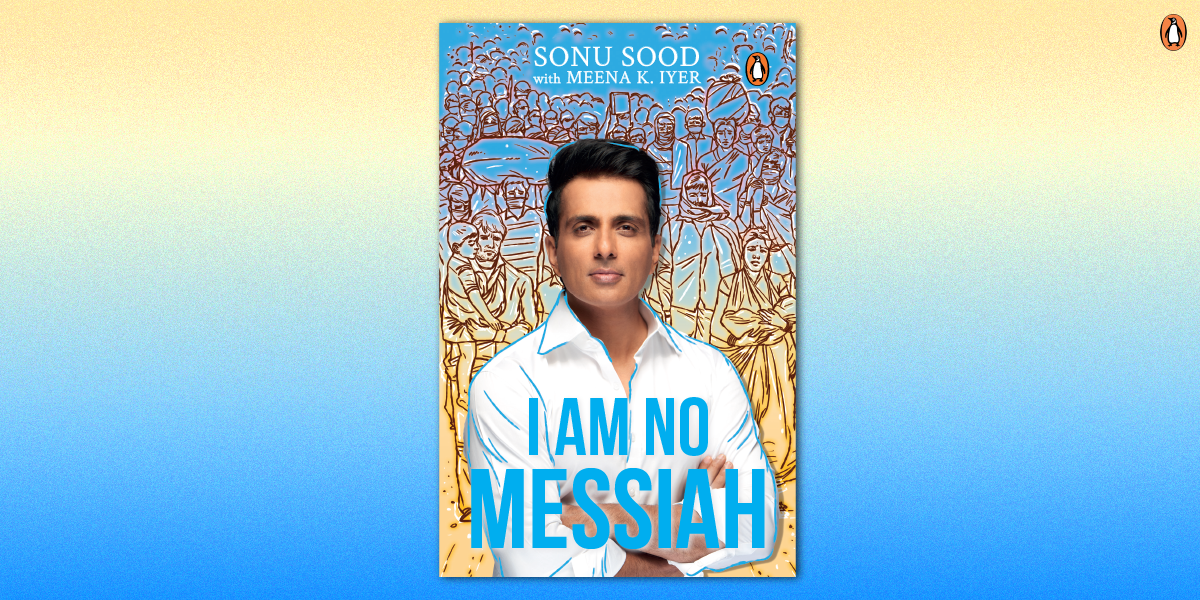
‘Ask not what your country can do for you; ask what you can do for your country.’ says Sonu Sood, quoting John F. Kennedy, as he explains what propelled him to undertake the colossal challenge of helping thousands of migrants get safely to their homes as India reeled with COVID-19.
From taking to the streets and reaching out to the stranded, to setting up a dedicated team and making arrangements for national and international transport, Sonu managed to help thousands of helpless and needy workers. Chartered flights, buses and trains were sanitized and paid for. Distress calls from all over the world were answered.
Here are a few instances from Sonu’s memoir, I am No Messiah that remind us of the beauty of compassion, humanity and the power of one man’s determination to give succour to those in need.
The time when 167 women stranded in Ernakulam, Kerala, were rescued and sent to Odisha –
The women worked in an embroidery workshop. ‘The factory had closed soon after the lockdown was imposed in Kerala, leaving these Odia workers high and dry. The women had no shelter and hardly any food in Kerala. They also barely knew Malayalam, the state’s language. In short, they were cash-strapped and helpless.’
Explaining the logistics involved, Sonu Sood writes, ‘… I first reached out to some authorities at Air Asia. Once they were convinced about the immediacy and the integrity of my request, they agreed to send an aircraft from Bengaluru to Kochi to airlift the girls and take them to Bhubaneswar. In Kerala, we had to arrange for a minimum of seven large buses to fetch the 167 women from Ernakulam and drop them off at the Kochi airport in time to catch the flight.’
The setting up of the Ilaaj India app –
Ilaaj India is a mobile based application to connect people seeking medical help with those equipped to provide it to them.
‘Ilaaj India aims to get the patient the best possible help in the shortest possible time and at the closest possible venue. We strive to get the surgeries or procedures done at hospitals easily accessible to patients. But we can also make arrangements to get them treated in bigger metros like Mumbai or Delhi, depending on the immediacy and the kind of time the patient has.’
I am No Messiah || Sonu Sood
‘For me, Ilaaj India was born when I learnt of the magnitude of the health-care problem that afflicts thousands of Indians. The figures shook me: an unbelievable number of children died due to inadequate medical attention in 2019.’
The quote that best describes Sonu’s effort to better the healthcare facilities in the country is from the book itself where he cites Mahatma Gandhi – ‘The best way to find oneself is to lose oneself in the service of others.’
The ‘Ghar Bhejo’ operation turns international
‘In July 2020, when parents of over a hundred kids beseeched me to airlift their children from Moscow and ferry them to Chennai, I was caught off balance. Chennai was under complete lockdown, there were no flights going in or flying out. It was an insurmountable difficulty because when a state is under lockdown, you can’t procure landing permissions. But the parents were desperate.’
‘On 5 August, they did land in Chennai, all the way from Moscow. I had managed to get last-minute permissions from the authorities in Moscow and Chennai to facilitate this journey of the medical students.’
The beginning of a long journey ahead
Reflecting on his incessant efforts to help those in need, Sood notes ‘It is no longer just about Ghar Bhejo, for getting a migrant home doesn’t mean the end of the journey; it is the beginning of a whole new set of problems. And service to mankind doesn’t begin and end with migrant workers; there are scores of other people too who need help. When you spread your arms to embrace people, you realize that a sea of humanity awaits.’
On a concluding note, we would like to recall these words by Sood that form the core of his life’s philosophy – ‘There isn’t a moment when something doesn’t touch your heart, confirming that by stepping forward to help, you’re doing something right. As I said earlier, one lifetime isn’t enough for what I want to do. But I do know that this lifetime has been earmarked for a dream.’
Prototyping is about engaging with customers in advance and reaching out to them with a very low-resolution solution to get an early feedback. Such an approach of iterative rapid-cycle prototyping helps in securing funding, organizational commitment and customer trust, and in building the team’s morale and making them believe they are headed in roughly the right direction.
The need for prototyping
A good and early prototype serves three core functions:
1. It takes ideas from the abstract to the concrete, giving them the much-needed body and soul
2. A prototype helps get the buy-in from your team members, senior managers and customers, as at least one of the possible outcomes.
3. Prototyping makes it possible to seek feedback and avenues of improvement more objectively and readily.
One of the masters of the prototyping mindset was Thomas Edison, who famously quipped, ‘None of my inventions came by accident. I see a worthwhile need to be met and I make trial after trial until it comes. What it boils down to is one percent inspiration and ninety-nine percent perspiration.’
What to prototype and what all to prototype?
While anything can be prototyped, not everything needs to be. As David Kelley says, you only need to prototype the most unbelievable part of the solution, the leap of faith, and not the entire solution.
To ensure that you are not overdoing the prototype, spending too much time and resources on it, and checking the obvious, it is advisable to perform the last experiment first. If the most critical final frontier does not work, there is no point in reaching there and later wondering why.
When it comes to prototyping, speed matters
The faster your ideas are made tangible, the sooner you can evaluate and refine them and reach the best solution. The failure must be contained in a manner that many experiments could be packed within a given budget and time frame. These must be quick and dirty prototypes, or, as IDEO likes to call them, paper-thin prototypes.
The greater the investment in an idea, the more committed one becomes to it. The goal of prototyping is not to create a working model; it is to give form to an idea to learn about its strengths and weaknesses, and to identify new directions for the next generation of more detailed, more refined prototypes. Don’t let your inner perfectionist slow you down.
Rely on storyboard and scenarios for prototyping services
Services have far fewer tangible components, and there is a lot more involvement of the dimension of time, so you must think in terms of sequence of activities, emotional engagements and ‘moments of truth’.
Scenarios allow you to visualize how your solution interacts with users over time. One could test out multiple future scenarios to tease out customer reactions and validate ideas. Scenarios can also help in anticipating unforeseen challenges and thinking up remedial measures, and these are best done with the customer by the side. Meaningful scenarios keep the audience focused on the core of the idea, without getting lost in its mechanics or aesthetics.
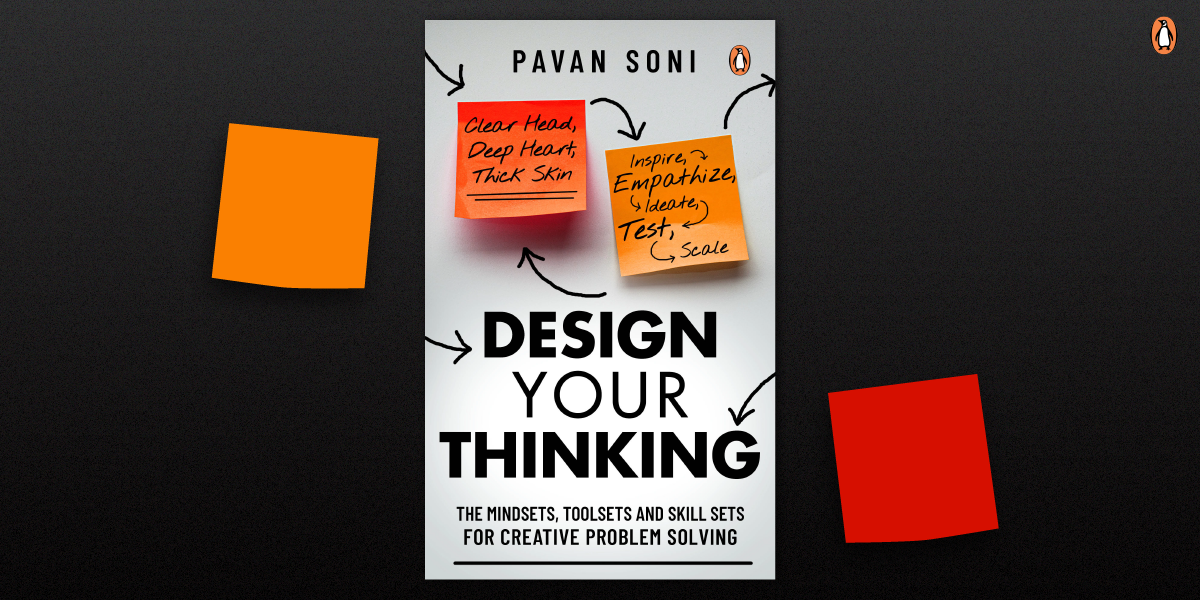
Design Your Thinking || Pavan Soni
Remain open to feedback
One of the key principles of design thinking is to seek timely and honest feedback from the people who matter. A delayed or skewed feedback does not help the progress of your problem-solving or innovation sprint and, resultantly, the mistakes become far too costly to correct.
When demonstrating your prototype, bear in mind that the intent is to solicit honest feedback and not sell the concept. This is a very tricky balance to achieve, especially if you are working under a tight schedule without easy access to your intended customers.
Create an inventory of your failed prototypes
Display it (your failed prototype) for others to draw inspiration from and for you to resort to it when you stumble on your next problem.
**
These insights about prototyping are from Pavan Soni’s Design Your Thinking, a practitioner’s perspective on how the tenets, methods and discipline of design thinking can be applied across a range of domains, including to everyday problems, and help us become expert problem-solvers through the use of the appropriate toolsets, skill sets and mindsets.
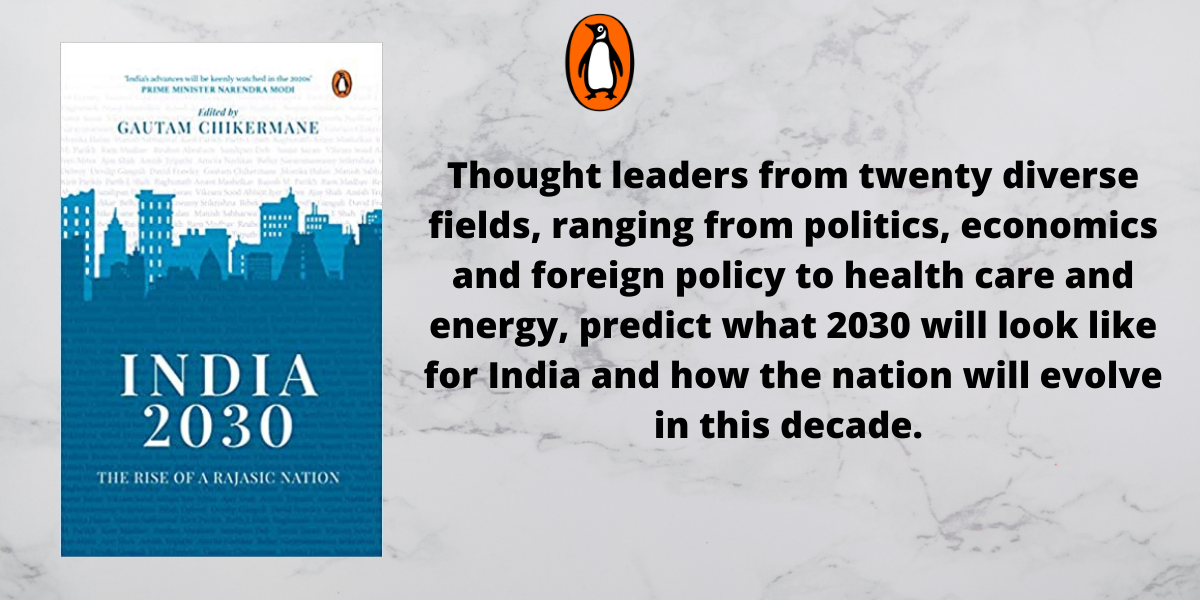
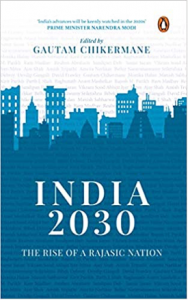
Thought leaders from twenty diverse fields, ranging from politics, economics and foreign policy to health care and energy, predict what 2030 will look like for India and how the nation will evolve in this decade.
Editor Gautam Chikermane has masterfully weaved together essays by Abhijit Iyer-Mitra, Ajay Shah, Amish Tripathi, Amrita Narlikar, Bibek Debroy, David Frawley, Devdip Ganguli, Justice B.N. Srikrishna, Kirit S. Parikh, Manish Sabharwal, Monika Halan, Parth J. Shah, Raghunath Anant Mashelkar, Rajesh Parikh, Ram Madhav, Reuben Abraham, Samir Saran, Sandipan Deb and Vikram Sood into a single volume that looks towards India’s future.
India 2030 | Gautam Chikermane
Here is an excerpt from the book India 2030-
Beyond all other transformations in India, the 2020s will see a rajasic reawakening of the nation. This dynamic surge in the country’s soul will be driven individually, one citizen at a time; it will articulate its self-becoming as a coming together of India’s collective soul. Its manifestations will be physical and mental, its driving force spiritual. Supported by a political leadership that is in tune with the soul of India, Bharat, this change began in the 2010s. It will consolidate in the 2020s and reset the material destiny of India in the 21st century.
It will create a new balance between two forces. First, a centripetal force that will concentrate the energies of India to the principles of its nationhood, be informed by its own intellectual traditions and expressed through a modernity rooted in its soul. And second, a centrifugal force that will expand its footprint outwards, through a deeper and stronger engagement with civilised nations going hand in hand with a self-assured confidence that will keep a check on barbaric powers on its borders.
The 2020s will be a decade of transition. The transition will impact every aspect of India – its psychological approach, its democratic institutions, its diverse people, its global engagements. The shift will impact individuals, bind them, it will be powered by them and will simultaneously serve them as a collective. It will be a time when the very life force of India will be in constant motion towards a new equilibrium that will take inspiration from the nation’s swabhawa (essential character or spiritual temperament) in order to follow its swadharma (express its true essence).
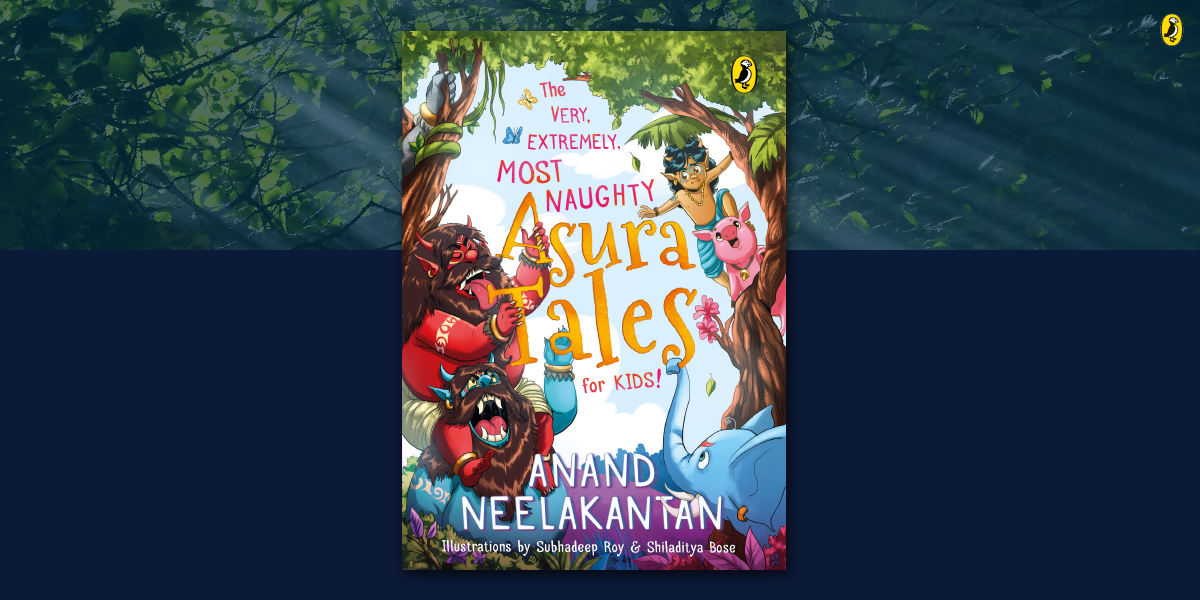
Little asura kids are naughty and troublesome and always up to something! Little will you know when you land in a muddy puddle or your long hair gets chopped off into a bob. They will prod, pull and tug you till you yell-just like the gods in the heavens, especially Vishnu and Shiva who are simply fed up!
This festive season the creator of Bahubali and bestselling author of Vanara-The Legend of Baali, Sugreeva and Tara presents a hilarious romp through the ancient tales of the Puranas in the funniest, most colorful way possible through The Very, Extremely, Most Naughty Asura Tales for Kids!
Just like humans, the beings from Indian mythology are multi-faceted, they’re naughty, mischievous and full of pranks, but they’re also talented, intelligent and spiritual. Some of their acts, hobbies and wishes resonate with all of us-and so we’ve prepared this 100 per cent, fool proof quiz to find out which characteristics are strongest in your personality!
Take this quiz to find out if you’re an Awesome Asura, Divine Deva or Mere Mortal!
Do you think you would be more successful if your mother would just calmly let you run amok?
A-No, mothers give divine guidance
B-Sometimes
C-Yes-just want to be a little demon in peace
‘No, we don’t want to study. We know everything. We want to conquer the world!’ Mandakka roared. ‘Yes, we are so smart and intelligent and bright and strong. We want to rule the world! If only our mother would leave us be,’ Kundakka wailed.
Have you ever cause your parents real embarrassment when guests came around through your clumsiness and stuffing your mouth full of food?
A-Never, you are a model of manners
B-Once or twice
C-Yes, it’s fun to see their shocked expression!
The naughty Bhasmasura looked up and said, ‘No, father, I wasn’t crying because I soiled the food of twenty guests. I am crying because I thought the mango would skip further and spoil the food of at least fifty guests! Poor me, I could spoil only twenty. Baaaaaa ngaaa .
If you could have exactly one superpower granted to you, which one of these would you pick?
A-The ability to bring peace to the world
B-The ability to fly
C-The ability to incinerate things to cinders
‘Put on the spot, Bhasma forgot what he wanted to ask! He was taken aback by the appearance of Lord Shiva. He collected himself and said, ‘Umm . . . uh . . . Whatever I touch should turn to ashes.’
Would you grant a ridiculous boon to a rather dangerous person if they pleaded with you long enough?
A-Yes-everyone deserves a reward
B-You might if it wasn’t too ridiculous
C-Never, you only take boons, not grant them!
‘Hush, Vasuki,’ Shiva said, flashing a serene smile at the cobra that was perched around his blue throat. ‘The poor asura has done such a tough penance. I will have to give him a boon.’ Shiva turned to Bhasma and asked, ‘Son, what boon do you want?’
If there one question all grown-ups love to ask, it is ‘What are your hobbies?’ Which of the following fits your interests best?
A-Listening to the divine singing of apsaras
B-Cricket
C-Annoying the rishis around you
Now Shumba and Nishumba were very naughty, right from the moment they were born. They were wild and uncontrollable. Their hobbies ranged from pouring water over the sacrificial fire of maharishis, to setting fire to hermitages and throwing stones at people’s homes while they slept.
You are what you eat they say and we all love to eat! Which of the following would you pick for your next snack?
A-Milk and honey
B-Pizza
C-A few dozen elephants!
A rice mound as big as a hill, A lake full of sambhar, Another lake full of chutney, A mountain of vegetables, And ninety-six bullock carts full of fruits as dessert. Imagine this lunch, and each meal was double this quantity, for they were twins!
If your friend asks you to carry a message to a special someone, which of the following would be your chosen method of communication?
A-Send a showers of roses from the heavens
B-Send a text message
C-Kidnap the special someone on a flying carpet
‘What—’ he said and there was a flash of explosion. Aniruddha was thrown back from the window to his bed. In her panic, Chitralekha had used more force than necessary in her chant. She flew into the room and jumped out of her carpet. She was scared he was dead. She felt his heartbeat and sighed in relief. He was still breathing. Chitralekha dragged him and put him on the carpet.