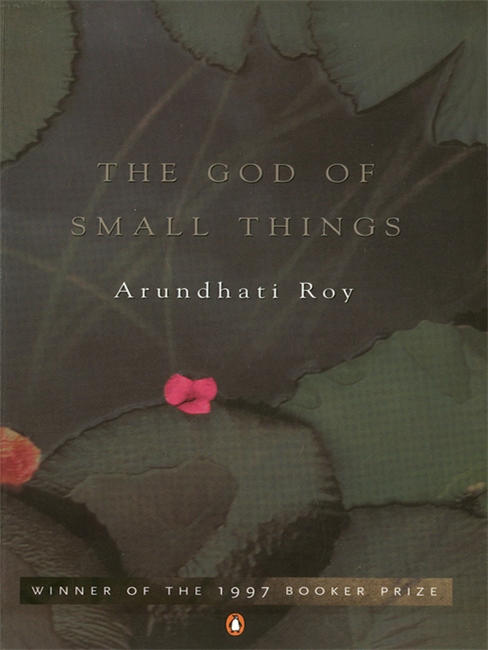
Publish with Us

Follow Penguin

Follow Penguinsters

Follow Penguin Swadesh

What we learnt from the COVID-19 pandemic

In early 2020, the health sector in India was about to shift gears from the policy formulation stage to the implementation stage. It is at this point that the pandemic happened. The importance of having a robust public health system has never been felt more acutely. We have learnt a few things in these nine months into the pandemic, excerpted from Till We Win: India’s Fight against the COVID-19 Pandemic by Dr Chandrakant Lahariya, Dr Gagandeep Kang and Dr Randeep Guleria.

Well-functioning primary healthcare services as well as stronger public health services are essential to keep the society healthy: A majority of COVID-19 patients, nearly 80 per cent, needed only an initial interaction with health systems and no medical intervention during the entire period of recovery. They were either kept at CCCs, mainly to isolate them from healthy individuals, or were allowed home isolation. Such an approach reduced the risk of these patients transmitting the virus to others while visiting large facilities to seek care. Most of the interventions, be it contact tracing, testing, isolation or advising people on COVID-19-appropriate behaviour, were being delivered by primary care and public health staff. It is for this reason that countries with a stronger primary healthcare system (such as Thailand and Vietnam) fared much better than countries with a hospital-centric health system. Taiwan largely controlled the pandemic through effective testing and contact-tracing approaches, delivered through the primary healthcare and public health teams.

Neighbourhood clinics play a bigger role in ensuring good health than large hospitals: The pandemic has shown us the utility of smaller facilities over mega hospitals. In the early period of the outbreak, big hospitals became overburdened as all suspected and sick people thronged them. Panic led even patients with mild illness to rush to these hospitals. This drove home the point that a good referral system helps in balancing out the load of patient care and ultimately leads to better patient care. During the period of the pandemic, a majority of COVID-19 and non-COVID-19 services were provided by the PHCs and neighbourhood clinics.

front cover till we win
Till We Win||Dr Randeep Guleria, Dr Gagandeep Kang, Dr Chandrakant Lahariya

Health is about a broad range of services and providers:

To stay healthy, we all need much more than hospitals and doctors. Health services are a combination of public health (preventive, promotive services) as well as medical care (clinical/curative services), among others. If it were not for preventive and promotive health services, which help in reducing disease, hospital services would never be enough to treat all the people who get sick. Also, health needs multi-sectoral inputs, and the importance of sanitation and infection-control measures have now become more evident. Focusing on only one type of service will not suffice.

Non-pharmacological interventions are equally important and effective: The war against COVID-19 has largely been fought by people adopting and adhering to the non- pharmacological interventions or ‘the social vaccines’ of wearing a face mask, handwashing, and physical distancing. Till (and even after) effective therapies or a few vaccines become available, these interventions will continue to play a key role in decreasing the disease burden. Other than for COVID-19, there are many non-pharmacological interventions that are proven against diseases such as diabetes and hypertension: healthy diet, regular physical activity, no smoking and moderate or no use of alcohol. It is time that the approach of encouraging people to adopt a healthy behaviour becomes mainstream for other health conditions as well.

Laboratory testing and diagnostic services are an important part of overall health service delivery: Testing can help in early identification of infection, prevent the spread of disease, and guide early interventions. This is also applicable for health services in non-emergency times. Testing forms the basis for other strategies which are planned at local and national levels and must be pursued aggressively.

Better functioning government-funded health systems are more effective in an early response to epidemics and pandemics: Pandemics are unprecedented challenges and no health system is fully prepared to respond to these without additional efforts. However, stronger health systems funded by governments mount a more effective response, which also allows for surge capacity.

Health services entail teamwork between health and non- health contributors: Keeping people safe and healthy requires interventions across a broad range of services, including testing for identification of those with infection, tracing the healthy who have been exposed and are at risk of falling sick, isolating those who are sick and can transmit infection, treatment for those who need medical care, and so on. For all of these, we need not only doctors and nurses, but also pharmacists, laboratory technicians and frontline workers. We also need coordination and collaboration with sanitation workers and community members. The pandemic has taught us that to tackle health issues comprehensively we need to move out of silos. Multi-sectoral collaboration is essential for comprehensive preventive and curative health.

Frontline workers are at the heart of health services: When the history of the fight against COVID-19 is documented, the efforts of frontline workers from the ASHAs, AWWs to ANMs will find a special mention. They are the ones who have guided the health system from the field and tracked the infection in the community. They perform yeomen services even during non-pandemic periods.

The health sector faces a paucity of essential supplies needed for delivering services: The shortage of PPE in the initial stage of the outbreak and, subsequently, a shortage of medical oxygen can be taken as indicative of supply issues in the health sector in India. Although the shortage was eventually addressed, this needs to be monitored on a regular basis. These shortages are indicative of an overall shortage of various types of supplies, such as medicines, diagnostic kits and other consumables.

Other things we learnt, specified in more detail in the book are:

  • The private sector has a role to play in health services which can be harnessed with effective regulation.
  • Health sector laws and regulations should be better implemented.
  • Health and economy are interlinked.
  • There is a huge role of epidemiological, operational and scientific research in advancing health.
  • Health outcomes are dependent on collaboration and community participation.


Offering insights on how India continues to fight the pandemic, Till We Win is a must-read for everyone. It is a book for the people, for political leaders, policymakers and physicians, with the promise and potential to transform public health in India.


When life imitated art for Sonu Sood

During the nationwide lockdown, imposed in the wake of the COVID-19 pandemic, when a wave of poverty-stricken migrants set out on foot to make their arduous journey back home, the value of seva, service to mankind, instilled in him by his parents, spurred Sonu Sood into action. From taking to the streets and reaching out to the stranded, to setting up a dedicated team and making arrangements for national and international transport, Sonu managed to help thousands of helpless and needy workers.

In his memoir, I Am No Messiah, Sonu Sood combines the extraordinary experiences of his journey from Moga to Mumbai with the writing skills of veteran journalist and author Meena K. Iyer. Honest, inspirational and heart-warming, this is the story of Sonu Sood and of the people whose lives he continues to transform.

In this excerpt from the book, Sonu Sood shares how his life mirrored the events that were shown in Airlift, a Bollywood movie starring Akshay Kumar that he was deeply moved by.

**

A movie in which I had no part to play but which nonetheless affected me deeply was the inspirational Airlift (2016), directed by Raja Krishna Menon. In this film, Akshay Kumar played a Kuwait-based Indian businessman named Ranjit Katyal. I had my heart in my mouth when the protagonist evacuated 1,70,000 Indians from Kuwait after Saddam Hussein attacked the country; and I felt a lump in my throat when Akshay raised the Indian tricolour at the end of a victorious airlift. Patriotic films usually have that effect on me. And for some reason, Airlift, the movie, stayed with me; it had that kind of strong impact on me.

The inexplicable connection I had with this film showed up on 29 May 2020. I felt a sense of déjà vu when, in the midst of the lockdown, I managed to evacuate and airlift a large group of people from one state to another. A total of 177 men and women had to be picked up from Kochi, Kerala, and carried to safety in Bhubaneswar, Odisha. There was so much detailing in the plan and such fine points to be covered in the execution that I felt I was watching Airlift again.

My personal Airlift thriller, as true to life as Akshay’s film, began with a message on my Twitter timeline. I was informed that there were 167 women stranded in Ernakulam close to Kochi, Kerala, who needed to be rescued and sent to Odisha. They worked in an embroidery workshop. There were ten boys too, who were plumbers, electricians and miscellaneous job workers in and around the factory premises.

The factory had closed soon after the lockdown was imposed in Kerala, leaving these Odia workers high and dry. The women had no shelter and hardly any food in Kerala. They also barely knew Malayalam, the state’s language. In short, they were cash-strapped and helpless. But help comes from the most unexpected sources. Someone guided these women to reach out to me, and that’s when I got their message on my Twitter timeline.

It was a massive, mind-numbing operation for my team and me. There was no local transport available to fetch this group of women from the factory premises where they were bunched up. They had but one intense desire: ‘Come what may, we want to go home.’ I learnt that they all hailed from the same district, Kendrapara, in Odisha.

With local transport unavailable and airports all over the country closed, we had to obtain permissions and coordinate at several levels. Once again, an engineer’s blueprint for action had to be drawn.

Accordingly, I first reached out to some authorities at Air Asia. Once they were convinced about the immediacy and the integrity of my request, they agreed to send an aircraft from Bengaluru to Kochi to airlift the girls and take them to Bhubaneswar. In Kerala, we had to arrange for a minimum of seven large buses to fetch the 167 women from Ernakulam and drop them off at the Kochi airport in time to catch the flight. But it was not smooth sailing.

front cover of I am No Messiah
I am No Messiah || Sonu Sood, Meena K. Iyer


When the buses were loaded, there was a crisis. The ten men, the assorted plumbers and other workers who had also been stranded in and around the factory, wanted to join the women and go home. However, the security guards at the factory did not allow them to board the bus. When one of them dialled me and pleaded for help, another round of talks ensued, this time with the security personnel at the factory. They were convinced and permitted the men to board the buses. As in every operation, whether it was by bus, train or plane, I had to be available round the clock to pick up the phone to sort out last-minute glitches and seek eleventh-hour clearances. It wasn’t possible to delegate responsibility and go lock myself up in an air-conditioned bedroom. It was my voice that opened doors; I had to be on call.

I cannot count the number of phone calls that went back and forth to meet the challenge of opening up two airports, Kochi and Bhubaneswar. Until the airport authorities in both cities were convinced that it was an emergency operation, that this group of men and women had to get back home, I had to keep speaking to people. I could breathe only when both airports were opened for this flight to take off and land.

**


For Paulo Coelho, archery is the vehicle for the clear truths of life

Anyone who reads Paulo Coelho is changed in some fundamental way. The power of his words is rare, and the breadth of his scope is not easily matched. Here is an excerpt from his newest book The Archer, exploring truths of life through an impactful metaphor:

~

‘Tetsuya.’

The boy looked at the stranger, startled.
‘No one in this city has ever seen Tetsuya holding a bow,’ he replied. ‘Everyone here knows him as a carpenter.’

…Tetsuya made as if to resume his work: he was just putting the legs on a table.

‘A man who served as an example for a whole generation cannot just disappear as you did,’ the stranger went on. ‘I followed your teachings, I tried to respect the way of the bow, and I deserve to have you watch me shoot. If you do this, I will go away and I will never tell anyone where to find the greatest of all masters.’

The stranger drew from his bag a long bow made from varnished bamboo, with the grip slightly below center. He bowed to Tetsuya, went out into the garden, and bowed again toward a particular place. Then he took out an arrow fletched with eagle feathers, stood with his legs firmly planted on the ground, so as to have a solid base for shooting, and with one hand brought the bow in front of his face, while with the other he positioned the arrow.

The boy watched with a mixture of glee and amazement. Tetsuya had now stopped working and was observing the stranger with some curiosity.

With the arrow fixed to the bowstring, the stranger raised the bow so that it was level with the middle of his chest. He lifted it above his head and, as he slowly lowered his hands again, began to draw the string back. By the time the arrow was level with his face, the bow was fully drawn. For a moment that seemed to last an eternity, archer and bow remained utterly still. The boy was looking at the place where the arrow was pointing, but could see nothing. Suddenly, the hand on the string opened, the hand was pushed backward, the bow in the other hand described a graceful arc, and the arrow disappeared from view only to reappear in the distance.

‘Go and fetch it,’ said Tetsuya.

The boy returned with the arrow: it had pierced a cherry, which he found on the ground, forty meters away.

Tetsuya bowed to the archer, went to a corner of his workshop, and picked up what looked like a slender piece of wood, delicately curved, wrapped in a long strip of leather. He slowly unwound the leather and revealed a bow similar to the stranger’s, except that it appeared to have seen far more use.

Front cover The Archer
The Archer||Paulo Coelho

‘I have no arrows, so I’ll need to use one of yours. I will do as you ask, but you will have to keep the promise you made, never to reveal the name of the village where I live. If anyone asks you about me, say that you went to the ends of the earth trying to find me and eventually learned that I had been bitten by a snake and had died two days later.’

The stranger nodded and offered him one of his arrows.

Resting one end of the long bamboo bow against the wall and pressing down hard, Tetsuya strung the bow. Then, without a word, he set off toward the mountains.

The stranger and the boy went with him. They walked for an hour, until they reached a large crevice between two rocks through which flowed a rushing river, which could be crossed only by means of a fraying rope bridge almost on the point of collapse.

Quite calmly, Tetsuya walked to the middle of the bridge, which swayed ominously; he bowed to some- thing on the other side, loaded the bow just as the stranger had done, lifted it up, brought it back level with his chest, and fired.

The boy and the stranger saw that a ripe peach, about twenty meters away, had been pierced by the arrow.

‘You pierced a cherry, I pierced a peach,’ said Tetsuya, returning to the safety of the bank. ‘The cherry is smaller. You hit your target from a distance of forty meters, mine was half that. You should, therefore, be able to repeat what I have just done. Stand there in the middle of the bridge and do as I did.’

Terrified, the stranger made his way to the middle of the dilapidated bridge, transfixed by the sheer drop below his feet. He performed the same ritual gestures and shot at the peach tree, but the arrow sailed past.

When he returned to the bank, he was deathly pale.

‘You have skill, dignity, and posture,’ said Tetsuya. ‘You have a good grasp of technique and you have mastered the bow, but you have not mastered your mind. You know how to shoot when all the circumstances are favorable, but if you are on dangerous ground, you cannot hit the target. The archer cannot always choose the battlefield, so start your training again and be prepared for unfavorable situations. Continue in the way of the bow, for it is a whole life’s journey, but remember that a good, accurate shot is very different from one made with peace in your soul.’

The stranger made another deep bow, replaced his bow and his arrows in the long bag he carried over his shoulder, and left.

~

We can’t wait to settle in with The Archer this winter.


Brand Communication for beginners

Nine Timeless Nuggets is a knowledge accelerator for young marketers and an absorbing update for experienced ones. Arranged in three sections-‘How to Think of People’, ‘How to Craft Your Brand’ and ‘How to Go to Market’-the book casts new light on eternal marketing fundamentals and makes us rethink some basic questions.

In the book, Bharat Bambawale proposes new models for customer motivation, customer relationship and twenty-first-century brand building. Together, these models can provide a strong foundation to any brand’s marketing strategy. Here’s a short excerpt from the book on the importance of brand communication for businesses.

**

Many Indian brands focus communication on a single aspect, or at best on a few aspects related to a central concern: acquiring customers. A reason for this is that companies are split into departments. Marketing’s job is often only to bring customers through the door; meeting their needs might fall into the hands of operations, managing their complaints in the hands of customer service and so on. Each department will have a head and its own people, as well as its own objectives and performance measures, and thus silos are created. While everyone is working for the success of the brand and company, common measurements of customer satisfaction elude the team, and with it a comprehensive communication plan across the entire customer journey.

Any customer-brand relationship journey has four elements: discovery, companionship, exclusivity and belonging. During discovery, a customer is finding out about you, a brand she doesn’t know or knows only a little. She might be exploring a curiosity about a new category, one she hasn’t participated in before, through you. In companionship, a customer is spending time with your brand as she expands her research, but she is also spending time with other brands. She is making comparisons, asking for advice and looking at reviews by previous users. In exclusivity, she is making a choice in favour of your brand. This might seem like a moment of triumph for the brand, a completion of the acquisition, but in actual fact this is where the hard work begins. Because when a customer chooses your brand, she lays all her expectations from the category at your brand’s door. Your onboarding has to be great, as well as your subsequent actions. Most important, your brand must now meet pretty much all her expectations from the category, even those that might not be among the strengths of your brand. Finally there’s belonging, where the customer is so happy and fulfilled by your brand that she repeats her business with you or makes your brand a regular part of her customer journey.

front cover of Nine Timeless Nuggets
Nine Timeless Nuggets || Bharat Bambawale


Brand communication for each of these stages is different. What a brand must say and do during the discovery stage is very different from what it must say and do during the companionship, exclusivity or belonging stages. Discovery will take you into online search engine optimization and search engine marketing (SEO and SEM), along with perhaps a TV ad, a few pay-per-click ads and so on. Companionship will take you into comparison sites, influencer recommendations, customer reviews. Exclusivity will take you into emails, phone calls and complaint management. Belonging could take you into special offers and celebratory discounts.

If a brand takes a holistic view of the customer-brand relationship journey, great things will come to it. If it takes a siloed view, the number of not-so-happy customers is likely to be high.

**

Nine Timeless Nuggets provides a 2020 perspective on timeless marketing ideas.


Learn the nuances of managing human capital, the unicorn way

The journey of a business-from a small start-up to a large company ready for an initial public offering-is fraught with pitfalls and landmines. To scale a company, one needs to do more than just expand distribution and ramp up revenue. From Pony to Unicorn lucidly describes the X-to-10X journey that every start-up aspiring to become a unicorn has to go through. The book effortlessly narrates the fundamental principles behind scaling.

Peppered with anecdotes, insights and practical wisdom, the book is a treasure trove of lessons derived from the authors’ rich personal experiences in both building and guiding several start-ups that went on to attain the ‘unicorn’ status and became public-listed companies. Here’s an excerpt from the book on some key takeways about human capital.

**

Of all the enablers of scale, we believe the people side is by far the most critical and nuanced. Poor understanding of the human capital is the single biggest reason for most promising start-ups, we know, getting derailed and coming apart.

The table below captures our assessment of the typical founder competence in a domain vis-à-vis the criticality of the domain in the scaling journey. A deep understanding of ‘customer’ and ‘product’ perspectives are extremely critical for scale, but most founders understand these domains quite well. In fact, a start-up is almost always defined by the ‘product’ and ‘target customer’. Hence, most founders are well placed to navigate the challenges that crop up in these areas from time to time. In contrast, most founders do not have sufficient understanding of human capital issues. The simple reason for this is that most learning in this domain tends to be experiential. Therefore, given the criticality of human capital and the relative ineptitude of most founders in this domain, it often ends up as the ‘Achilles heel’.

front cover of From Pony to Unicorn
From Pony to Unicorn || Sanjeev Aggarwal, T.N. Hari


We have identified some of the most common human capital questions and challenges that start-ups face during the course of their journey of scale, and the choices in front of them.


Here are the key takeaways about human capital

  • Lateral hiring is inevitable. What normally breaks is the assimilation of lateral hires and their seamless collaboration with the home-grown rock stars. it is important to get this piece right. Conflict between these two groups has been the nemesis of many a good start-up.
  • Too few or too many lateral hires are bad. Getting the optimal mix and number is important.
  • It is key to hire the right candidates for leadership roles. timing is important, but more important is to spot the red flags in the hiring process.
  • Most start-ups begin by being very homogeneous in terms of thought process. founders and early-stage employees almost always have something strong in common that brings them together. This homogeneity is helpful in acting with speed in the early stages of growth, but need not necessarily be an asset at a later stage. It actually pays to build diversity into the teams as the start-up begins to scale.
  • At rapidly scaling start-ups, some people start capping out in terms of capabilities and are not able to keep pace with the growing demands. So, when symptoms of things beginning to break begin to show up, it is critical to step back a bit and figure out whether the team needs to be strengthened or whether the leader needs to be replaced.
  • Another important decision is whether generalists would work better or specialists would work better at different points of time for different functions.
  • Learning and development is the cornerstone of creating leadership capacity, but start-ups are always brimming with intense activity and people cannot easily be pulled out of jobs to undergo leadership development. Separating learning from work rarely works, and hence it is important to integrate learning into work.
  • Creating a culture of high performance, dealing with non-performers, coaching and designing the right feedback mechanisms are absolutely crucial for scaling.

There are standard frameworks that could be leveraged to strengthen these programmes.

**

The life and dilemmas of Ruby R.

Ruby finds herself in politics, a field where even the best of people like Saif Haq have the moral compass of a plastic bag. But this is a game where Ruby will not be defeated. Get a glimpse into Moni Mohsin’s delightful new read through this excerpt:


Ruby had intended to push her way through the crowd to congratulate Saif on his rousing speech. Though neither as sophisticated nor as socially connected as Kiran, Ruby was not lacking in confidence. She knew from experience that diffidence in a woman was seldom rewarded. But once near the lectern, she was overwhelmed by unaccustomed shyness. Hugging her folder to her chest, Ruby lingered at the edge of the cluster around Saif. A couple of girls, she saw with a stab of envy, had managed to push through the thicket of boys and were now at his side, their radiant faces turned up to him like sunflowers.

He beamed at them from his great height. His caramel- coloured eyes crinkled at the corners and long vertical grooves creased his cheeks. Their voices raised in excitement, the boys were all speaking at once. One was suggesting they repair to the college canteen; another was asking how Saif intended to win the next election; a particularly loud one was demanding a selfie with him; Jazz was insisting that they go to a restaurant, while the handler with whom Saif had arrived—a beefy, middle-aged man sporting an ill-fitting blazer and a comb-over—stood by impassively.

Saif raised his hands as if in surrender and said in a loud but amused voice, ‘All right, everyone. All right.’ They fell silent at once. ‘I had a prior appointment, but you know what?’ He grinned at his fans. ‘I’ll cancel it. How’s that?’ His announcement was greeted with whoops of joy. Looking over the bobbing heads surrounding him, Saif glanced briefly at his companion who nodded and turned away. Pulling out a cell phone from his jacket pocket, he went towards the exit. Saif turned back to his admirers and laughed.

‘Okay,’ he said, clapping his hands, ‘let’s go to your restaurant then. But it better be a desi place. I’m sick of bland white food.’

Front Cover Ruby R
The Impeccable Integrity of Ruby R||Moni Mohsin

An ecstatic Jazz, his face lit up by a gigantic grin, whipped out his cell phone and spoke rapid Punjabi into it. Then he announced: ‘It’s arranged. Choy Saab says there’s only one small table  of diners and they’re finishing. Restaurant is empty otherwise. He’ll hold it for us.’ Several students peeled away, citing essays and other commitments, and slouched reluctantly towards the exit. Kiran, brushing past Ruby without a word, followed them out. Ruby had to leave for her babysitting job. She would have to hurry if she wanted to be on time. But she was finding it hard to wrench herself away. It was as if Saif exerted some gravitational pull that forced her to stay in his orbit.

‘Ruby?’ Jazz called out. Their posse, now reduced to a core of about fifteen fans and Saif, was heading towards the exit. ‘You coming?’

‘Er, I’d love to, but I have to go somewhere,’ she said, edging away.

‘Can “somewhere” wait?’ asked Saif. He broke away from the crowd and approached her. ‘You’re a student here, right?’

‘Yes, master’s in business and media,’ she said primly, tightening her grip on her files. ‘But I did my undergrad in political science. From Punjab University, Pakistan,’ she added stupidly, colouring in embarrassment.

‘Wow! I would love to hear your views on our plans.’

Ruby patted her hair to ensure that her protuberant ears hadn’t burst through.

‘It’s just that I have this, er . . . commitment and I . . .’

‘Well, if it’s with someone significant then I mustn’t keep you.’ He smiled his crinkly smile at her.

‘Oh? Oh, no.’ Her hand flew to her mouth. ‘It’s not that. Not at all, no, no.’

‘So, then?’ He cocked a teasing eyebrow.

The group was getting restless behind them. Jazz cleared his throat noisily. Saif, his gaze squarely on Ruby, gave no indication that he had heard. Ruby fiddled with her folder. If she didn’t make it to her job tonight, she would be letting down Annie and Jack. She couldn’t really afford to forgo the payment and fall behind in her bills . . .

‘Okay, I’ll come,’ she said impulsively. ‘But I have to quickly send a text first.’

Ruby was not the impulsive sort. She was, in fact, quite the opposite—calm, cautious, deliberate. But much like the committed dieter who gives into temptation and has a slice of cake, and then follows it with a milkshake because the damage is already done, having broken her iron schedule once at Kiran’s behest, Ruby succumbed again. Knowing for certain that tomorrow would find her back at the library table in her usual place beside the window in the third aisle from the door, Ruby allowed herself this one indulgence. It was a once in a lifetime opportunity. In what world would Saif Haq ever invite Ruby Rauf to dinner again?

~

The Impeccable Integrity of Ruby R is exciting, and we can’t help but wonder how Ruby will fare in Saif’s ruthless world.

India and the COVID-19 vaccine

The COVID-19 vaccine: a favourite topic in the present day. When will it arrive? Why are they taking so long? And most importantly, do we really need them, or is herd immunity enough in a country like ours?

In this article we try and answer these questions, from Dr Chandrakant Lahariya, Dr Gagandeep Kang and Dr Randeep Guleria.

India is the largest producer (by volume or number of doses) of vaccines in the world, and provides vaccines to UNICEF which then distributes them in Africa, South America and Asia. For UNICEF to buy the vaccines, the vaccines have to be pre-qualified or approved for purchase by the WHO. The WHO’s approval process relies on the fact that the country which makes the vaccines has a national regulatory authority that meets the standards laid down by the WHO. India’s CDSCO has met these criteria and ensures that the vaccines made in India are of high quality and safe. Indian vaccine manufacturers, which have grown in number and capacity since they were established decades ago, have good and long experience with manufacturing in high volumes. However, they have only recently begun modest investments in research towards new vaccines. With a population of 138 crore, India needs local and indigenous production of the COVID-19 vaccine to ensure widespread availability.

front cover till we win
Till We Win||Dr Randeep Guleria, Dr Gagandeep Kang, Dr Chandrakant Lahariya

The development and availability of the vaccine in India has been part of some of the early discussions on the country’s response to the COVID-19 pandemic. A national task force for vaccine research and development was set up in April 2020. The progress on the vaccines, both globally and in India, has been reviewed by high-level committees, and planning for delivery of the vaccines is ongoing. In early October 2020, the health minister announced a proposal to vaccinate 20 to 25 crore Indians by July 2021. In parallel with many such efforts around the world, discussions are on about the prioritization of target populations for initial vaccination.


When can we expect the first vaccine against COVID-19?

Till October 2020, six vaccines had been given limited licence in China and Russia. While a definite timeline is difficult to predict, there is a possibility that some vaccines may be available by early 2021. However, vaccination will be an ongoing process and it will be two to three years before sufficient vaccines are available to vaccinate all those in need.


There are a number of vaccines in the last stage of clinical trials, why is it taking so much time?

It is true that there are COVID-19 vaccines in phase III of clinical trials across the world, with trials starting in India. However, there are no guaranteed successes, and we need to wait for the results to know what works and what does not. If successful, the data need to be submitted to the regulatory authorities for approval. This is followed by production by one or more vaccine companies and then supply, resulting finally in availability. All these steps are expected to take some time.


What is herd immunity? Do we really need COVID-19 vaccines or is herd immunity enough?

Herd immunity is also called herd effect, community immunity, population immunity or social immunity. It is a form of indirect protection from infectious disease which happens when a defined proportion of the population has been infected and has become immune to an infection. As an increasing number of people are infected or vaccinated, the number of people who can be infected (‘susceptibles’) decreases and transmission or spread also decreases. When herd immunity is reached, it is important to note that this is a feature that works at the population level—a decrease in spread within a defined group; it is not perfect protection of all uninfected people. At the individual level, the status of immunity depends on that person’s exposure or vaccination status. This means that if a susceptible individual is no longer within the ‘herd’, then they are likely to be infected on exposure, and are not ‘immune’.

When the level of infection or vaccination that is required is calculated, then the basic reproductive rate of the virus has to be known. The higher the reproductive rate, the greater the proportion of the herd that needs to be infected or vaccinated to prevent the spread. For measles, which is very infectious, we would like to reach 95 per cent vaccination to prevent outbreaks. At this time, data from sero-surveys in India shows 7 per cent seropositivity in a national survey at the end of August but pockets of high positivity in urban areas (56 per cent in some localities in Mumbai and 51 per cent in areas of Pune and 29 per cent in Delhi). This indicates that herd immunity is still far for most of the country, and we should be looking to a vaccine for more predictable development of immunity.

Offering insights on how India continues to fight the pandemic, their book Till We Win is a must-read for everyone. It is a book for the people, for political leaders, policymakers and physicians, with the promise and potential to transform public health in India.

Poetry in the times of things falling apart

Perhaps one of the most cited lines from Theodore Adorno’s Cultural Criticism and Society is “to write poetry after Auschwitz is barbaric”. Often decontextualized, it is misunderstood as a call to silence poets and artists after the events of the Holocaust. In actuality, Adorno’s reference was in fact to the very opposite – that to write poetry after the Holocaust without addressing the event, without trying to grapple with the unthinkable, was barbaric. His contestation was that art should be able (and arguably has a responsibility) to respond to its times. Poetry, before and after Auschwitz, has continued to change and save lives. Whether through the works of poets like W.H. Auden and Paul Celan who created unsettling and indelible imagery of the horrors of Nazi Germany, or Amiri Baraka and Langston Hughes’s rousing work about black identity and culture, poetry has often addressed the very impossibility of addressing some experiences. Poets have, time and again, through joys and disasters, immortalised events and the subjective experience of being alive in times of unprecedented grief or disaster.


Poetry has the tremendous capacity to shed light on the ineffable experiences to the reader. The collection Singing in The Dark is one such vehicle of experience, a composite body that speaks to and about a time that perhaps nobody anticipated. The pandemic crept upon us, unexpected, and it has altered irreversibly the dynamics of human interaction, and the relationships we share with each other, and most importantly, with nature. Over the past few years, we have seen various environmental and engineered crises, from the protests over the Dakota Access Pipeline and the Amazon fire to the cyclone Amphan and the Australian bushfires among several others. The planet seems to have become a battle zone between indigenous people who seek to preserve the lands they live on and corporations who believe anything can be bought on the clout of money.

Front cover singing in the dark
Singing in the Dark||K. Satchidanandan, Nishi Chawla


Editors Nishi Chawla and K. Satchidanandan write, ‘The anthology will well serve the purpose of capturing the anguish and the trauma, the anger and the befuddlement, as well as the hope for returning to the certainty of the world order that the pandemic has destroyed or the movement towards a more just and egalitarian world.’ As an array of poets from across the world find their works together in this anthology, perhaps the only common thread is the experience of living through a global disaster. Tragedy unites, and the pandemic has been tragic in an unimaginable number of ways. The impact of the coronavirus has been different for the privileged and non-privileged, and it has denuded the fault lines of our social fabric more starkly than ever. It remains up to us of course, to acknowledge the fact that there needs to be a radical change in the structures of the world, and that systems needs to be cleaned from the inside. Any fight for an egalitarian world will remain only theoretical unless the mantle of responsibility is picked up, and things are unstitched and restitched.


Singing in The Dark is an amalgamation of vulnerability and hope, of the dream of a world that can be better, and people who can do better, despite overwhelming evidence of the contrary. There is anger and befuddlement, and anguish and trauma. These will remain for some time, possibly even indefinitely. But poetry and art give us the opportunity to reflect on these, and on our own location within the grander scheme of the world. It pushes us to reconsider the experiential boundaries of our lives, and to reorient our understanding of how the world treats different lives differently. The pandemic forced us to confront the fact that human lives are entangled, that one person’s actions affect others in incomputable ways. Singing in The Dark too, is evidence that despite differences, human beings are not separated from each other, and cannot live insulated and isolated lives. In our experiences, in our fears, hopes, vulnerabilities, frailties and anger, there is an unbreachable commonality; maybe the idea of community is much more far-reaching than commonly believed, surpassing geopolitical boundaries, going into the heart of the very fact of being human and being alive at a time when everything seems to be falling apart.

Cloudy with a chance of fruitfall

Poondy’s weather reports feature fruits. They fall from the skies. But there’s a lot more happening in this quaint town. Get a glimpse into the magic with this excerpt from Arjun Talwar’s delightful new book, Bim and The Town of Falling Fruit:

Bim

Most of Miss Chitty’s passengers were people who’d just arrived to Poondy. This meant that she had to carry their suitcases and put them on top of her car before taking them to town. If the passengers discovered they were in the wrong Poondy, Miss Chitty had to take these down and say sorry, as if it was all her fault. So she had a habit of telling these newcomers where they were before she touched their bags.

‘This is the Poondy where fruit always falls,’ she would say.

Because if there’s anything special about Poondy, it’s the jackfruit, coconut and toddy trees that are always threatening to drop their fruit on everyone’s heads. Most of these trees lean away from their roots at an angle, so fruit floats above the whole town. There are skinny trees, fat trees, trees you could climb and trees you couldn’t, but the sound of fruit falling is always the same: thrrrump.

…There are two approaches to the problem of falling fruit in Poondy. One is simply to always look up. You see when a jackfruit or coconut breaks off its branch. You move away, your head is saved. On the other hand, two up-lookers might bump into each other. But there are ways to avoid this (for example, by whistling). Even then, an up-looker can easily step into a pile of cow poo. Can you imagine scraping poo off your sandals while looking up?

For a long time, this was the only strategy they had in Poondy. Then Falwala came up with the idea of a fruit-helmet.

A fruit-helmet is a piece of headgear, with or without chinstrap, intended to save the skull from the force of falling fruit. What makes a fruit-helmet special is the gap between the top of the helmet and the head below it. Because of the gap, the head is safe, even when a jackfruit lands on it. A statue of Falwala in a prototype fruit-helmet stands in the middle of the Big Square (Falwala didn’t enjoy his success for long; he was pummelled by a coconut while washing the prototype in a pond).

The helmets look silly. But you can walk freely, whistle or not whistle, have clean feet and, in general, lead a normal life, while living in a world of falling fruit. For these reasons, fruit-helmets are popular with Poondizens. They’re traded in various forms—brightly coloured or unpainted, steel or wooden—and can be ready-made or made to order. You can find pointy ones that split the fruit open, so it can be eaten. You can have a hole in the back to put your ponytail through. But the essence of a fruit- helmet is the same as it was in Falwala’s day. It boils down to that invisible ingredient: the gap.

front cover Bim and The Town of Falling fruit
Bim and The Town of Falling Fruit||Arjun Talwar

Our fruit helmets are ready. How about you?


Can economics explain daily events in the lives of ordinary Indians?

Why are all the good mangoes exported from India? Why should we pay our house help more? Why do we hesitate to reach out for that last piece of cake in a gathering? Are more choices really better? Why do many of us offer a prayer but are reluctant to wear a seatbelt while driving? Are Indians hardwired to get grumpy at a peer’s success? What’s common between a box of cereal and your résumé?

Can economics answer all these questions and more? According to Dr Sudipta Sarangi, the answer is yes. In The Economics of Small Things, Sarangi using a range of everyday objects and common experiences like bringing about lasting societal change through Facebook to historically momentous episodes like the shutting down of telegram services in India offers crisp, easy-to-understand lessons in economics. Giving us more insight into his new book, Sudipta Sarangi tell us how economics can answer all our curious questions. Read on!

**

The Economics of Small Things approaches economics, and in particular economic theory by identifying it in the little things around us, in the quotidian as well as the quirky aspects of everyday life. This book promises to be different – it sets itself apart right from the Introduction which begins with a timeline of events like a in Fredric Forsythe thriller. Instead these are daily events in the life of ordinary Indians – like having the morning cup of tea, and the office commute to what happens at lunch. Believe me there is economics in all of that!


Unlike other popular books on economics, The Economics of Small Things has a distinctly Indian flavor. Take Chapter 1 for instance – it explores the unholy trinity of asymmetric information: adverse selection, moral hazard and costly auditing but in the context of the Grameen Bank and joint liability lending. Then the book explains why the village Md Yunus, the village Sahukar and Munimji (aka Jeevan) all succeeded while the formal banking sector did not. The book delves into many other such Indian themes like chappal chori at temples, T20 and ODI, and what is the best strategy for shoe shopping. It has 25 chapters but covers the entire gamut from A to Z!


Generally, depending on your level of exposure, economics is either considered expansive and somewhat stodgy, or filled with indecipherable Greek letters and numbers. The Economics of Small Things provides a surprising departure from this – it is written in an easy style with a dash of humor that almost seems counterintuitive to economic theory. It will appeal not only to high school students and their teachers but also to corporate executives; actually anyone who is curious. The refreshing, lighthearted style makes it an easy read. The chapters are big on ideas, short in size – to be enjoyed just like a delicious petit four.

front cover of The Economics of Small Things
The Economics of Small Things || Sudipta Sarangi


The concluding Coda provides a set of six takeaways. For example, it says that cognitive costs matter – which is why people use heuristics. It is also one reason why we stereotype people. Another take away is that heterogeneity matters – a idea that is not strange to Indians given our wide diversity. But the point really is that since people like different prefer levels of comfort in their airplane or train seats, like different flavours of masala oats, or like a professor and her student have a different values for time, it gives firms an opportunity to sell different products at different prices, thereby making higher profits. Summing it all up The Economics of Small Things says “…economics matters, and it matters not only in the abstract, but it matters in the little things in our personal lives and for a great many of our social interactions.”


**

error: Content is protected !!