Publish with Us

Follow Penguin

Follow Penguinsters

Follow Penguin Swadesh

Inside the $500 Billion Creator Economy: What Brands Need to Know

Let’s dive into the $500 Billion creators economy. Read the excerpt below!

 

As per a Goldman Sachs Report, the Creator Economy could reach half a trillion dollars by 2027.

As of 2023, the Total Addressable Market (TAM) of the Creator Economy is worth $250 billion, with 303 million creators present in the Creator Economy already.

(Note: A report by Adobe states that there are 303 million creators in nine markets comprising the United States, Australia, United Kingdom, Japan, Germany, France, Spain, South Korea and Brazil. You can only imagine how this number extrapolates to the entire world!)

The Goldman Sachs Report goes on to say:

The analysts expect spending on influencer marketing and platform payouts fuelled by the monetisation of short-form video platforms via advertising to be the primary growth drivers of the Creator Economy.

Global marketer and bestselling author Gary Vaynerchuk puts it this way:

If you are not crushing it and focusing on the content that you put out on the most important social platforms, you’re going to become mute and obsolete in the modern day of doing business.

That’s why organic reach (through a creator or an influencer) is so important because the impression you get when someone comes directly to your page is a much more qualified lead and potentially a more valuable customer than someone you got through an ad buy.

Front Cover Pixels to Profits
Pixels to Profits || Ankur Mehra


The how of creator and influencer marketing

I know what you are thinking. Facts are good. What would be helpful to you is to understand how it happens.

Let’s take a deep dive:

The fundamental rule of marketing states that every customer, before becoming a customer, needs to be aware of the product and made familiar with it at least seven times before they become a customer.

We will understand this further by the Attention Interest Desire Action (AIDA) model and the 95:5 rule, and what they mean for creators, collaborators and customers.

In 1898, E St Elmo Lewis developed something called the purchase funnel, which describes the customer’s journey from the time they are made aware of the product till the time they eventually make a purchase.

The purchase funnel10 is very valid in modern day marketing as well, and is often referred to as the AIDA model, which stands for:

A: Attention or Awareness I: Interest

D: Desire A: Action

A customer needs to go from capturing attention, sparking interest and invoking desire to have the product in their journey, that will finally lead them to taking action or making a purchase decision.

As per the 95:5 Rule, Professor John Dawes of Ehrenberg- Bass Institute argues that at any point of time only 5 per cent of buyers in the market are ready to buy in the market, while 95 per cent will either buy it later or still need to be convinced over a period of time.

Combine both these models, and here is what it means for the Creator Economy.

Every collaborator (brand) needs to leverage the power of creators, to take care of infusing attention, interest and desire in their 95 per cent customers and new prospects, so that the influencers can provoke “action” from the 5 per cent.

It is also important that collaborators leverage both creators and influencers, and not only influencers. Like we spoke before, creators and influencers are merely the same person living in the same house, just walking across different rooms (from influencer to creator or creator to influencer), based on what the situation demands.

As per a study by Harvard Business Review:

“It may be tempting to turn to influencers when promoting a new product launch…(however the) ROI for influencer posts announcing new products was 30.5 per cent lower than for equivalent posts that were not about new product launches… While short-term ROI can guide short-term decisions, brands should also consider the potential long-term effects of associating with a particular influencer (read: creator). These effects (whether positive or negative) may take time to materialize but can have a substantial impact on a brand’s identity.”

The best part is that there’s no friction between any of these. A creator can effortlessly choose to become an influencer. An influencer can choose to be a creator. It is fluid. A brand can choose to work with the same person, in a different capacity, either as a creator or an influencer.

Everyone works together to serve the consumer, which is how the Creator Economy functions at its best – keeping all its moving parts together, where everyone wins.

Key takeaways:

  • The Creator Economy is going to be worth half a trillion dollars by 2027.
  • The Attention, Interest, Desire, Action (AIDA) purchase funnel describes the customer’s journey from the time they are aware of the product till the time they eventually make a purchase. A customer needs to go from capturing attention, sparking interest, invoking desire to have the product in their journey, that will finally lead them to taking action.
  • As per the 95:5 Rule, at any point in time, only 5 per cent of buyers in the market are ready to buy in the market, while 95 per cent will either buy it later, or still need to be convinced over a period of time.
  • Combining both these models, every collaborator (brand) needs to leverage the power of creators to take care of infusing attention, interest and desire in their 95 per cent customers and new prospects, so that the influencers can provoke “action” from the 5 per cent.
  • The best part is: A brand can choose to work with the same person in a different capacity, either as a creator or an influencer.

Lost in the Wilderness: A Christmas Eve Alone on Paradise Beach

An exciting recount of a Christmas spent backpacking. Read Below!

Today’s plan was simple and sorted: hike to Paradise Beach, pitch my tent there and spend Christmas Eve camping solo!

Anyone who has been to Gokarna cannot stop going gaga over Paradise Beach. They say it is so secluded that at night glowing phytoplankton make the shore look exactly like the starry sky. Covered with forested hills on all three sides, Paradise Beach is cut off from the nearby villages, Gokarna and Belekan, by dense shrubs. This makes the beach inaccessible by vehicles, and the only way to get there is to either hike all the way through the woods over the hills or take a boat from any of the adjoining beaches.

Front Cover Solo
Solo || Indrajeet More


Hiring a boat was out of question as it would eat up a good chunk of my given budget, so the only option left was to hike. Buckling up my backpack with high enthusiasm, I filled my water bottle and stocked up on four bananas for dinner. I first hitchhiked my way to Om Beach and then started hiking at around 5 pm. My aim was to reach there before it got dark. Acting all cool, I would occasionally track my route on Google Maps as the trail appeared to have faded in some parts. Slowly, the trail started to fade for a few metres and eventually vanished completely. I realised that it was taking a bit longer than I had calculated to reach my destination. Dubiously, I pulled out my phone to check the GPS and realised that I had been hiking in the wrong direction the whole time! The bloody GPS had lost its signal 500 metres back! “NOT AGAIN!” an instant bout of panic rushed through my body. I could see the sun going down, which made me even more anxious. I had no time to process any of this. I was in no mood to die in a forest without ever having sex or tasting baklava or even seeing a whale, just because I had lost the damned GPS signal!

My brain was whizzing away, trying to find a way out: “What options do I have? I could cry for help, but it was probably going to be futile because there was absolutely nobody around. Maybe I could camp in the forest? No way! Or…could I go back to the point where I lost the signal and start from there? Yes!”

I started running back as fast as I could, but the GPS still couldn’t latch onto a signal. By this point, I had totally forgotten about filming the vlog. I needed to find a way out of this mess urgently. Compelling my brain to not assume extreme scenarios, I started to think of a way out of the forest. Mindlessly, I started following the sound of the waves and began descending from the woods onto the rocks, hoping to find a path that parallelly ran to the rocky shore. It was a tough walk, especially with the heavy backpack on. There were times when the rocks were so steep that I had to ascend, fixing my toes and fingers in the cracks, while the gigantic waves crashed just a few feet apart. I didn’t know if that was the right way or the wrong one, but at that moment, I was operating solely on instinct. The red wash of the sky melting down into the ocean at the horizon strangely helped calm my racing heart.

There it finally was! Not more than 100 metres away, in the dark, this fine patch of sand nestled in a nook between the mountains. A grove of coconut trees swayed between the beach and the cliff. It would have made the perfect spot for hanging up a hammock and listening to some light Hindustani melodies. There were no shops or cafes here, but just one man, setting up some fruit on a tiny table. Paradise Beach was just like its name – nirvana, totally cut off from the rest of the world. How could anything be so perfect?

My wonderment was instantly ruined when I heard someone yell, “Abey chutiye, apna tent yahaan hain!” (Our tent is over here, you asshole!) a few metres away, to which another voice replied, “Susu karne ja raha hu! Aaega?” (I am going to take a leak; want to join?) It was a group of IT engineers from Bengaluru, occupying the coconut grove with twenty to thirty tents! My idea of solace broke into pieces. This was the last place I wished to see an engineer, and there they were in abundance, calling each other in slang, flashing torches, playing Bollywood music and peeing in corners.


There is no recreational activity left unexploited by the IT people as compensation to their presumably miserable jobs. I had seen the worst of them when I used to volunteer as a trek leader in 2016. You suppress a kid for years and leave them in a new city with a decent package. What else are they going to do? I really wanted to empathise with them, but when you trek for three hours carrying a heavy tent on your back, cross forests and climb rocks and see this, it becomes really hard to do that.

I walked to the other end of the beach, as far from the crowd as possible, at an elevated part of the cliff. As I started to unpack, the lamplight attracted many moths. To make matters worse, the bananas I had carried all this way had turned soggy. Sweaty and irritated, I managed to set up my campsite in whatever minimal light my head torch provided.

“Are you with them?” a guy asked as he collected dry wood a few feet apart, near his tent.

“Nope, camping solo,” I replied, as I pitched mine.

“Amazing, I am travelling solo too. I am from Kerala,” he said, and we shook hands. “Where are you from?”

“Mumbai,” I replied.

“Cool, let me know if you need anything, bro,” he said, as he continued collecting dry wood. We had the same tents – Quechua Arpenaz 100.

As I sat by the bonfire with the Kerala guy, we bonded over our shared disdain for the IT crowd who earned twice our salaries – myself with none. I recalled being taught that “man is a social animal” but the more I observed, the more I was puzzled by what happens when people gather. Individually, people are sharp and full of independent thought, but together, their collective intelligence seems to dilute into a less insightful version of itself. Their actions become something none of them would choose alone. It makes me wonder about the nature of group dynamics that blurs individual clarity—be it society meetings, religious gatherings, commuters, politicians, college reunions, kitty parties, corporate conventions or the neighbouring IT squad.

The Kerala guy pulled out his pouch and rolled a joint. We sat in silence, each on our own journey. It was 25 December. Merry Christmas to us.

Celebrating a Stellar Lineup: Penguin Random House titles shortlisted for the International Booker Prize 2025

We are thrilled to announce that five out of the six shortlisted titles for The International Booker Prize 2025 are published or distributed by Penguin Random House. This impressive lineup showcases the diversity and excellence of our publishing list and we are honoured to share this news with our readers and authors. 

The shortlisted titles include: 

Heart Lamp by Banu Mushtaq 

In Heart Lamp, Banu Mushtaq exquisitely captures the everyday lives of women and girls in Muslim communities in southern India. Published originally in the Kannada, these portraits of family and community tensions testify to Mushtaq’s years as a journalist and lawyer, in which she tirelessly championed women’s rights and protested all forms of caste and religious oppression. Written in a style at once witty, vivid, colloquial, moving and excoriating, it’s in her characters – the sparky children, the audacious grandmothers, the buffoonish maulvis and thug brothers, the oft-hapless husbands, and the mothers above all, surviving their feelings at great cost – that Mushtaq emerges as an astonishing writer and observer of human nature, building disconcerting emotional heights out of a rich spoken style. Her opus has garnered both censure from conservative quarters as well India’s most prestigious literary awards; this is a collection sure to be read for years to come. 

Front Cover Heart Lamp
Heart Lamp || Banu Mushtaq


A Leopard-Skin Hat by Anne Serre 

A Leopard-Skin Hat may be Anne Serre’s most moving novel yet. A masterpiece of simplicity, emotion and elegance, it is the story of an intense friendship between the Narrator and his close childhood friend, Fanny, who suffers from profound psychological disorders.
A series of short scenes paints the portrait of a strong-willed and tormented young woman battling many demons, and of the Narrator’s loving and anguished attachment to her. Serre poignantly depicts the bewildering back and forth between hope and despair involved in such a relationship, while playfully calling into question the very form of the novel. Written in the aftermath of the death of the author’s little sister, A Leopard-Skin Hat is both the celebration of a tragically foreshortened life and a valedictory farewell.


Front Cover A Leopard-Skin Hat
A Leopard-Skin Hat || Anne Serre


On the Calculation of Volume by Solvej Balle 

On the Calculation of VolumeBalle is hypnotic and masterful in her remixing of the endless recursive day, creating curious little folds of time and foreshadowings: her flashbacks light up inside the text like old flash bulbs.The first volume’s gravitational pull—a force inverse to its constriction—has the effect of a strong tranquilizer, but a drug under which your powers of observation only grow sharper and more acute. Give in to the book’s logic (its minute movements, its thrilling shifts, its slant wit, its slowing of time) and its spell is utterly intoxicating.writing that listens. 


Front Cover On The Calculation of Volume
On The Calculation of Volume || Solvej Balle


Perfection by Vincenzo Latronico 

Anna and Tom, an expat couple, have fashioned a dream life for themselves in Berlin. They are young digital “creatives” exploring the excitements of the city, freelancers without too many constraints, who spend their free time cultivating house plants and their images online. At first, they reasonably deduce that they’ve turned their passion for aesthetics into a viable, even enviable career, but the years go by, and Anna and Tom grow bored. As their friends move back home or move on, so their own work and sex life—and the life of Berlin itself—begin to lose their luster. An attempt to put their politics into action fizzles in embarrassed self-doubt. Edging closer to forty, they try living as digital nomads only to discover that, wherever they go, “the brand of oat milk in their flat whites was the same.” 

Perfection—Vincenzo Latronico’s first book to be translated into English—is a scathing novel about contemporary existence, a tale of two people gradually waking up to find themselves in various traps, wondering how it all came to be. Was it a lack of foresight, or were they just born too late?
  

Front Cover Perfection
Perfection || Vincenzo Latronico


Under the Eye of the Big Bird by Hiromi Kawakami 

In the distant future, humans are on the verge of extinction and have settled in small tribes across the planet under the observation and care of “Mothers.” Some children are made in factories, from cells of rabbits and dolphins; some live by getting nutrients from water and light, like plants. The survival of the race depends on the interbreeding of these and other alien beings–but it is far from certain that connection, love, reproduction, and evolution will persist among the inhabitants of this faltering new world. 

Unfolding over fourteen interconnected episodes spanning geological eons, at once technical and pastoral, mournful and utopic, Under the Eye of the Big Bird presents an astonishing vision of the end of our species as we know it. 

Front Cover Under The Eye of The Big Bird
Under The Eye of The Big Bird || Hiromi Kawakami


These titles represent some of the best in contemporary fiction, exploring themes that range from identity and culture to philosophy and human relationships. We are proud to bring these stories to readers in India and around the world and we look forward to seeing which title will take home the prize. 


Dive into Stories That Inspire, Educate, and Delight!

Books have an incredible way of opening doors to exciting experiences—whether it’s uncovering lost histories, exploring diverse cultures, or finding comfort in relatable stories. Whether you are a young reader eager for adventure, a history buff, or someone seeking heartwarming tales about self-acceptance, these six books are a must-read. From exploring hidden underwater realms to discovering the lives of India’s royal rulers, from learning about the richness of folk music to embracing personal growth, each book on this list offers something special. Let’s dive into why these stories deserve a place on your shelf! 


Submerged Worlds and Other Amazing Stories by Vaishali Shroff 

The job of any river is to flow and as it flows, it nurtures everything around it, everything within it. But when human interference affects this natural flow, it brings floods and droughts, displacement and suffering in its wake. From melting glaciers to urban flooding, sand mining to dammed rivers, river rights to river interlinking projects, dead rivers to river revival, this book is an attempt to understand India’s rivers through their stories and the narratives of those whose lives are interlaced with the life of rivers. Deeply steeped in the historical, spiritual, cultural, political, ecological, and economic fabric of our society, these stories are highly relevant in today’s world where the climate crisis is a water crisis. Compelling readers to listen to the river’s gentle yet urgent voice, it’s a must read for all non-fiction lovers and students keen on understanding life in the subcontinent we call home. 

Front Cover Submerged Worlds
Submerged Worlds || Vaishali Shroff


Fascinating Maharajas of India by Sreelata Menon 

Long, long ago, the vast Indian subcontinent was alive with powerful kingdoms and adventurous maharajas. They expanded with fervour and ruled with aplomb. They lived extravagant lives yet protected their turfs. They introduced reforms and uplifted their people. And despite their many quirks, they laid the foundation for the progress and development of modern India. 

  • How did the Travancore maharajas promote education? 
  • When did the Mysore maharajas begin celebrating Dasara with such pomp? 
  • How unique was the Junagadh nawab’s love for his dogs? 

Discover the answers to these questions and more in this gorgeously illustrated book that chronicles twenty-five such exciting Indian kingdoms—from their origin to when they became princely states under the British to finally merging with the Indian Union at the time of Independence and becoming the backbone of a brand-new nation. 


Front Cover Fascinating Maharajas of India
Fascinating Maharajas of India || Sreelata Menon


The Demon of Dandi by Lavanya Karthik 

All the world’s eyes are on this tiny village by the Arabian Sea, where Mahatma Gandhi will soon break the Salt Law to defy British rule. Dinu would rather be home in Surat, reading his beloved Sherlock Holmes books. Instead, he finds himself wading through mud, battling angry goats and eating burnt food as the youngest of the student volunteers helping prepare Dandi for Bapu’s arrival. When a man is found dead and rumours of an angry demon grip the village, Dinu finds himself drawn into the mystery, even as he grapples with dilemmas of his own. But as Dinu and his friends race against time to find the killer, the demon strikes again 


Front Cover A Demon In Dandi
A Demon in Dandi || Lavanya Karthik


10 Indian Traditions of Folk Music by Mamta Nainy 

This book explores ten traditions of folk music that have long preserved some of the many voices and diverse cultures across India. From the evocative ballads of Kashmir to the soulful rhythms of Bengal, each tradition is shaped by the region where it originated and the challenges and joys of the singers. These traditions are: 

The Bidesia of Bihar
The Gathas and Kathas of Rajasthan
The Ladishah Ballads of Kashmir
The Nizami Qawwali of Dilli
The Pandavani of Chhattisgarh
The Kabir Vaani of Kutch
The Janapadas of Karnataka
The Lavani of Maharashtra
The Li of the Chakhesang Nagas 

The Bhatiyali of Bengal Mamta Nainy explores the origins of these musical forms, and their evolution in the face of modernity, highlighting their power as a means of collective expression. 

Front Cover 10 Indian Traditions of Folk Music
10 Indian Traditions of Folk Music || Mamta Nainy  


Everything Changes and That’s Okay by Carol Dodd 


Change is all around, but it can be overwhelming! Explore how changeexists everywhere in a way that is natural, and even beautiful, in this vibrantly illustrated book with fun rhyming couplets, for children ages 3 to 7.

The moon is full, but then it’s gone,
chased away by the dawn.
Stars that shine all through the night
disappear in morning’s light.

Everything changes, night to day.
Everything changes, and that’s OK.

From an apple seed growing into a brilliant tree to a child watching a family member grow old, this book offers a thoughtful look at why change doesn’t always have to be negative and can instead be observed with appreciation. It poetically presents a story that prompts kids to recognize and adapt to the change they see in their daily lives.

This beautiful exploration of impermanence is accompanied by vibrant illustrations that explore every corner of the world, from rolling fields in Tibet to the cozy, fireplace-lit living room of a family member’s home. The illustrations remind children that everything changes no matter where you are, no matter who you are, and that’s all right.

Front Cover Everything Changes
Everything Changes || Carol Dodd


I Am Quiet by Andie Powers 


Emile is not shy—he is quiet. 

On the outside, Emile may seem reserved, but inside, his imagination is bursting with adventure. While others see a quiet boy who doesn’t raise his hand in class, Emile sees himself as a high-seas adventurer, a fearless explorer, and a friend to wild beasts.
Through heartfelt storytelling and stunning illustrations, I Am Quiet celebrates the power of introversion, self-acceptance, and the richness of an imaginative mind. This beautifully crafted picture book encourages young readers to embrace who they are and reminds us all that being quiet doesn’t mean being small—it means thinking, dreaming, and seeing the world in a unique way.
Perfect for: 

  • Children ages 4+ who love thoughtful, introspective stories 
  • Parents and educators looking for books on self-acceptance and social-emotional learning 
  • Young introverts who want to see themselves represented in stories 


Front Cover I am Quiet
I Am Quiet || Andie Powers

New Books, Same Ever-Growing TBR

Books. They are like time machines that can take us to places we have never been, make us think about things we never considered, and open our eyes to stories that stay with us long after the last page is turned. Some books are easy to forget, but the ones we’re talking about here? They will make you pause, reflect, and maybe even change the way you see the world. From memoirs that explore the heart of human experience to histories that give voice to those often left in the shadows, these books don’t just entertain—they challenge us to think deeper, question more, and, most importantly, feel.  


GeoTechnography: Mapping Our Digital Societies 

In an era defined by rapid technological change, a seismic shift is underway. From the rise of digital platforms that mediate our interactions—with markets, with governments, and perhaps most importantly, with each other as citizens—to the growing tension between our online personas and our real-world identities, the forces of technology, geography, and society are colliding in ways we are only beginning to understand. 

Even as technology opens up new opportunities for civic engagement, it simultaneously disrupts the very foundations of societal cohesion. The digital age has given rise to a new stage for global drama—one where surveillance, the weaponization of information, and the erosion of trust in national and multilateral institutions are playing out in real time. But as these forces evolve, so too must our understanding of how individuals and societies can navigate them. 

Will digital societies endure, or are they doomed to collapse under the weight of their own contradictions? Can democracy as we know it survive in a world where power is increasingly concentrated in the hands of a few tech giants? And as nations grapple with the changing dynamics of governance, how will international norms, laws, and institutions adapt? 

In GeoTechnoGraphy, Samir Saran and Anirban Sarma offer a compelling analysis of the forces reshaping the modern world. Drawing on groundbreaking research and incisive insights, they examine how the convergence of geography and technology—geotechnography—is redefining power and writing new rules for its exercise. 

Front Cover GeoTechnoGrapgy
GeoTechnoGrapgy || Samir Sarani, Anirban Sarma


Solo

Barely a year into college, Indrajeet More is offered to host a travel show on budget backpacking across India. As he undertakes a year-long journey across thirteen cities, what unfolds is a string of surreal life experiences—from getting lost in the forests of coastal Karnataka to camping amid the snowy peaks of the Himalayas, from hunting for the best toddy shop in rural Kerala to dancing to the beats of Naga folk songs. Through this journey, Indrajeet discovers novelty and relatability in diverse cultures by reflecting on his upbringing in a Maharashtrian household. He navigates the inevitable boredom of solo travel and the anxiety of uncertainty, ultimately seeking belongingness in the most unfamiliar of places. Solo is a raw, unfiltered backpacker’s gaze at contemporary India, about learning to read people beyond language, understanding food beyond ingredients, hearing stories beyond regions and, most importantly, finding a sense of home away from home. 

Front Cover Solo
Solo || Indrajeet More


The Indian Stock Market Simplified 

There are three ways in which people can make money through the stock market: by investing, by trading or both. However, whether one invests, trades or does both, a fundamental understanding of how the stock market works is critical. Clichéd as it may sound, this book provides a fresh perspective on how the Indian stock market works. Offering a bird’s eye view of the Indian capital market, it succinctly and incisively analyses its history and discusses the role of its various participants. More importantly, the book offers proven strategies, supplemented by accessible case studies, to beginners to invest and trade in stocks. Lucidly written by two of the most sought-after finance-related content creators with years of experience in investing and trading, The Indian Stock Market Simplified is a must-read for everyone looking to navigate the complexities of the stock market and achieve their financial goals. 

Front Cover The Indian Stock Market Simplified
The Indian Stock Market Simplified || Pankaj Ladha, Anant Ladha


Can We be Strangers Again? 

In the electric haze of college life, three friends are bound by laughter, late-night talks and unspoken promises. But when two of them cross the line from friendship into love, everything changes. Betrayal shatters their world, leaving one friend to pick up the pieces while navigating her own complicated feelings. As friendships fracture and love grows tangled, hearts are broken, and choices become irreversible. Caught between the ache of lost friendship and the bittersweet pull of love, Dev must decide if he’s willing to risk everything—again. 


Front Cover Can We Be Strangers Again
Can We Be Strangers Again || Shrijeet Shandilya


Hedgewar 

Hedgewar chronicles the untold story of the enigmatic founder of the Rashtriya Swayamsevak Sangh (RSS), whose vision for India’s cultural revival continues to shape the nation’s socio-political landscape. Through meticulous research and vivid storytelling, this biography traces Hedgewar’s journey from an orphaned child in colonial India to the mastermind behind one of the world’s most secretive organizations. 

Set against the backdrop of a country grappling with colonial rule, rising communal tensions, and the complexities of modernity, this book opens a window to Hedgewar’s philosophy of cultural nationalism, his challenges with contemporaries like Gandhi, Nehru and Savarkar, and his transformative leadership. More than a biography, this work is a window into the labyrinth of India’s civilizational ethos, offering a nuanced perspective on the RSS’s origins and its impact on India today. Hedgewar: A Definitive Biography is a must-read for those seeking to understand modern India’s complexities through the life of one controversial, yet extraordinary man. 

Front Cover Hedgewar
Hedgewar || Sachin Nandha


Pixels to Profits 

The Creator Economy is estimated to be valued at a staggering half-a-trillion dollars by 2027. Packed with actionable insights, Pixels to Profits aims to help businesses to make the best use of the creator marketplace, help creators better monetize their talent, reach new audiences and inspire you to embark on your content creation journey. With a remarkable journey managing over 120,000 creators across YouTube, Instagram, and Facebook, the author has meticulously deconstructed the intricacies of the Creator Economy in a manner that is both comprehensive and accessible. Whether you’re an executive, an entrepreneur or an aspiring creator in the creator economy, this book will guide you in your steps to success. 


Front Cover Pixels To Profits
Pixels to Profits || Ankur Mehra


You Become What You Think 

This book isn’t just about reading—it’s about tangible change. With actionable insights, it’ll reshape your thinking and empower you to unlock the best version of yourself. 

Are you searching for a way to improve your life, increase your happiness and achieve your full potential? Then this is just the book for you. You Become What You Think is a practical guide to personal growth. Within its pages lie actionable insights that will transform your perspective on life and the world around you. Author Shubham Kumar Singh has carefully crafted this book from his own journey through countless volumes, distilling the most impactful lessons from diverse topics. Each insight is presented in a clear, accessible format, designed for effortless application to your own life. The primary aim? To enhance your self-awareness and nurture personal growth. It will gift you with a fresh outlook on life and a deeper understanding of your true self. 

Front Cover You Become What You Think
You Become What You Think || Shubham Kumar Singh


The New Power Map: How Technology is Redrawing Global Governance.​

Read an exclusive excerpt from GeoTechnoGraphy on how Technology s redrawing global governance.

Front Cover GeoTechnoGraphy
GeoTechnoGraphy || Samir Sarani, Anirban Sarma


So, I sort of thought I lost, and I was OK with that,’ said Donald Trump, describing the final days of the 2016 presidential election to a crowd in Wisconsin. A series of phoney exit poll results had been communicated to the Trump family, decimating all hope of a victory. But soon the real numbers started streaming  in. ‘And then it happened, folks, out of nowhere. Boy, that map was getting red as hell. That map – that map was bleeding red.’ What led to Trump’s improbable win? His victory was influenced by a host of factors. The recovery from the 2008 financial crisis had left many behind. The United States was growing economically, but wages had stagnated for the American working class, and jobs in traditional industries were dwindling. Trump’s promises to bring back manufacturing jobs and renegotiate trade deals resonated with vast swathes of voters in the Rust Belt states. He appealed to the anger of the white working class, and their fears of marginalization and of losing conventional privileges. Across rural and small-town America, voters long neglected by coastal elites and urban policymakers found themselves energized by the prospect of rural revitalization and the reversal of cultural change that Trump held out. Most of his arguments were anchored firmly in the day-to-day reality of people and the land they saw as theirs—immigration was framed as a threat to American jobs and security; gun rights were upheld as a means to personal protection; and the roll-back of environmental regulations was pitched as a route to business growth and wealth creation. What also grabbed the popular imagination was Trump’s blunt and unconventional rhetoric, the like of which hadn’t been heard before. He was every inch the political outsider and revelled in his image as a disruptor of the Washington establishment. His lack of political experience was seen as a plus by voters frustrated with polished career politicians and the status quo they represented.


These attributes fed into Trump’s masterful manipulation of the media, and his use of social media platforms. Trump was a media sensation, with irresistibly contentious statements
and controversial behaviour that led him to dominate the news cycle and keep him in the spotlight. Much of what he said was discredited as lies, empty spectacle, conspiracy theories, browbeating and gaslighting, but the nation was riveted. Trump dominated social media too, commanding the attention of a broad public which included the mainstream media’s digital platforms. Big-seed marketing was one of several strategies he deployed online—a phenomenon which involves seeding messages among many people, as opposed to the viral approach which depends on a few influencers to spread a message to many others. With over nineteen million Twitter followers, eighteen million Facebook fans, and close to five million Instagram followers right before Election Day, Trump had the perfect seedbed. Every message he released reached each of these followers, who then shared them with their networks, creating a cascade of unprecedented scale. The content itself was usually provocative and attention-grabbing. But by using social media to address his audience directly as individuals, tweeting his thoughts on just about everything spontaneously, in an exceptionally unfiltered and no-holds-barred manner, the authenticity and influence he achieved were extraordinary.


In the final analysis though, it was Trump’s understanding of the popular pulse on the ground that carried the day. He tapped into the bitterness, rage and dispiritedness of Americans who believed their concerns had been ignored by the political class. But had his campaign not linked people to place, would he have won?


  ***


Get your copy of GeoTechnoGraphy on Amazon or wherever books are sold.


Brick by Brick: An Unfiltered Blueprint for Aspiring Entrepreneurs to Dream, Act, and Succeed

Read an exclusive excerpt from Brick by Brick and discover the journey from middle-class hustle to entrepreneurial success.


Front Cover Brick By Brick
Brick By Brick || Manish Vij


Aaj bhi truck jana hai, sir? (Will the truck go today as well, sir?)’  I was asked by the Public Call Office (PCO) booth operator, a young enthusiastic chap, who was about my age. That he was  

happy to encounter a high-value customer was evident in his smile. This wasn’t the first time that he had tried to strike up a conversation with me. On other occasions, I would end up spending a few extra minutes responding to his many questions. Today, however, I barely had time to nod and get to the business at hand before rushing in to attend a Business Management class where the professor was a stickler for punctuality.  


I had started flexing my entrepreneurial muscle from a rather unusual workspace. A PCO booth—those yellow kiosks that had at one time ushered in a communication revolution in the country—was the seat of my early entrepreneurial journey. Come to think of it, today’s generation may not have even heard of their existence, let alone seen them stand on street corners, not when everyone carries a phone in their pocket, anyway. I had only recently been packed off to the city of Indore from Delhi, which had been my family’s home for decades. I was to pursue a course in business management at a time when business education was just making an appearance on the scene. These were times when every student worth his salt aspired for a seat at the prestigious Indian Institute of Technology (IIT) or a good medical college. An average student, I had also given  the entrance exam a shot (and failed at it) as a rite of passage.  


Fortunately for me, my parents were far-sighted enough to see that it was time for me to cut my losses and try my hand at something different. When it came to my father’s notice that his friend, Mr. Khandelia, who was working as the CEO of a large spinning mill, was sending his son, Ashish, a bright student, to Indore for a course in business management, he decided that I should follow suit. It was on the Malwa Express enroute to the International Institute of Professional Studies at the Devi Ahilya University in Indore that I first met Ashish who was to be my partner in crime for the next few years. We were to be picked up at Dewas station by Ashish’s uncle, Ashok Chacha. While I was a bit nervous, stepping out of home for the first time, I soon realized that my fears were unfounded. Ashok Chacha, a textile mill owner in Dewas, and his wife, Kanta Chachi, welcomed me with open arms and over a period of time, became my extended family. 


Yarn Trading 

‘Ek business opportunity hai; tere paas time hai karne ke liye (There is a business opportunity; do you have time to pursue it)?’ This question from my father, on our weekly long-distance call from Indore, had sparked an old hustling muscle in me. A textile engineer by profession, my father had spent his entire working life in the textile industry. He had harboured entrepreneurial ambitions at a time when entrepreneurship wasn’t as cool and shiny as it is today. His early attempts to put up a yarn spinning plant had caused him to lose a lot of money but hadn’t prevented him from continuing to hone an entrepreneurial mindset. Driven by his fervour, I had also spent a large part of my school vacations accompanying him as he visited various textile plants. My early interest in the industry had even led me to undertake summer training in a textile factory in Sangrur, Punjab, at a time when summer internships weren’t as regimented as they are now.  

My old interest in entrepreneurship was reignited. Within minutes of my father posing the question, I found myself ready to turn into an entrepreneur from the very PCO booth from which I had made a call to him. It turned out that my father was friends with someone who ran a spinning mill in Nepal, a man who was keen to export yarn to India. He also happened to know a few potential buyers in Ludhiana who were keen to buy their goods. All that was needed was someone who could reliably liaison between the two parties. A few statistics from my father and I had already made a quick calculation that I could stand to make as much as Rs 8000 for every truckload that made its way from Nepal to Ludhiana. 


  ***


Get your copy of Brick By Brick on Amazon or wherever books are sold.


Discover the Magic of Stories: A Journey Through New Children’s Books

Discover the Magic of Stories: A Journey Through New Children’s Books

There’s something truly special about the books we grow up with—the ones that transport us to faraway lands, introduce us to unforgettable characters, and fill our hearts with wonder. The latest collection of children’s books does just that, offering young readers a delightful mix of adventure, wisdom, humor, and heart. Whether it’s timeless folktales, stories of real-life heroes, or whimsical tales that spark laughter, these new releases promise to leave a lasting impression.


Folktales That Whisper Through the Ages

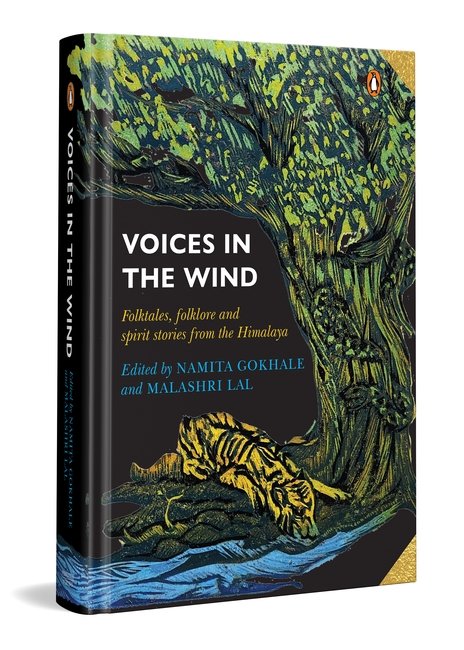
The Whispering Mountains: Greatest Himalayan Folktales
In the heart of the Himalayas, where the mountains hold secrets as old as time, stories have been passed down through generations. This enchanting collection brings together some of the most treasured folktales from the region, inviting young readers into a world of talking animals, mischievous spirits, and nature’s deep wisdom. Each tale is a glimpse into a culture rich with tradition and storytelling magic.

Front Cover The Whispering Mountains
The Whispering Mountains || Namita Gokhale, Malashri Lal


A Hero’s Journey: Inspiring Young Minds

Seeker of Truth: Kailash Satyarthi’s Fight to End Child Labour
Not all heroes wear capes. Some, like Nobel Laureate Kailash Satyarthi, dedicate their lives to fighting for justice. This powerful story introduces children to his inspiring journey, from standing up against child labor to rescuing thousands of children from bonded labor. It’s a book that ignites courage, compassion, and the belief that even one person can change the world.

Front Cover Seeker of Truth
Seeker of Truth || Srividhya Venkat


Whimsical Fun and Mischievous Adventures

The Silly Billy series brings laughter and chaos in equal measure. These books celebrate the joys (and troubles!) of childhood with stories that are both hilarious and heartwarming.

  • Agassi and the Great Cycle Race – Khyrunnisa A.: A madcap race where speed, strategy, and a whole lot of silliness collide!
  • Jumble Sale – Shabnam Minwalla: What happens when you try to sell your stuff and end up creating the world’s funniest mess?
  • Ghosts, Thieves and Aha! Adventures – Asha Nehemiah: A collection of delightfully absurd mysteries, perfect for curious young minds.
Front Cover Agassi and the Great Cycle Race (Silly Billy series)
Agassi and the Great Cycle Race (Silly Billy series) || Khyrunisa A.
Front Cover Jumble Sale
Jumble Sale || Shabnam Minwalla


Front Cover Ghosts, Thieves and Aha! Adventures
Ghosts, Thieves and Aha! Adventures || Asha Nehemiah


Tiny Books, Big Stories

The Hook Book series is all about bite-sized storytelling for young readers, making reading a joyful and effortless experience.

  • Zooni’s Alarm Clock – Vibha Batra: A charming tale about an inventive little girl who learns that sometimes, the best ideas come from the simplest places.
  • Wrestling Day – T. Keditsu: A lively, heartwarming story about tradition, resilience, and the unexpected lessons that come with stepping into the ring.
Front Cover Zooni’s Alarm Clock
Zooni’s Alarm Clock || Vibha Batra
Front Cover Wrestling Day
Wrestling Day || T. Keditsu


A Treasure Trove for Young Readers

These books are more than just stories—they are invitations to dream, to laugh, to wonder, and to believe in the magic of words. Whether your child loves thrilling adventures, meaningful true stories, or lighthearted fun, this collection has something for every little reader. Because at the end of the day, a great book is not just one that we read—it’s one that stays with us forever.

Which of these books will you pick up first? Let the reading adventures begin!

Essential Audiobooks to Celebrate Women’s Voices This Women’s Day

Women’s Day is a time to celebrate the achievements, resilience, and wisdom of women across the world. What better way to honor this day than by immersing yourself in stories and insights that highlight their journeys, struggles, and triumphs? Whether you’re looking for personal memoirs, feminist perspectives, or cultural narratives, here’s a list of audiobooks that are perfect for this special occasion.

1. Unfinished by Priyanka Chopra

A deeply personal and inspiring memoir, Unfinished takes you through the incredible journey of global icon Priyanka Chopra Jonas. From her childhood in India to her rise as an international star and philanthropist, this book is a testament to ambition, resilience, and the power of believing in oneself.

Front Cover Unfinished
Unfinished || Priyanka Chopra Jonas


2. Sita by Devdutt Pattanaik

A retelling of the Ramayana from Sita’s perspective, this audiobook presents her as a strong and independent figure, rather than just a victim of fate. Devdutt Pattanaik offers a refreshing look at this iconic character, making it a must-listen for those interested in mythology and feminist narratives.

Front Cover Sita
 Sita || Devdutt Pattanaik


3. Grandma’s Bag of Stories by Sudha Murty

Perfect for listeners of all ages, this collection of heartwarming tales by Sudha Murty brings back the nostalgia of childhood storytelling. Through simple yet powerful stories, she imparts wisdom, values, and a deep appreciation for Indian culture.

Front Cover Grandma's Bag of Stories
Grandma’s Bag of Stories || Sudha Murty


4. Sati Savitri by Devdutt Pattanaik

Devdutt Pattanaik brings to life the stories of legendary women like Sati, Savitri, and others from Indian mythology. These tales explore themes of devotion, courage, and sacrifice, shedding light on the evolving role of women in cultural narratives.

Front Cover Sati Savitri
Sati Savitri || Devdutt Pattanaik


5. Equal Yet Different by Anita Bhogle

An insightful audiobook that explores gender dynamics in the professional world, Equal Yet Different provides a practical guide to overcoming challenges and leveraging unique strengths. Anita Bhogle offers valuable perspectives on leadership, ambition, and the evolving role of women in various industries.

Front Cover Equal, yet Different
Equal, yet Different || Anita Bhogle


6. Seeing Like a Feminist by Nivedita Menon

For those looking for a thought-provoking read on feminism, Seeing Like a Feminist challenges societal norms and structures that define gender roles. Nivedita Menon’s sharp and engaging analysis makes this audiobook a must-listen for anyone interested in gender equality.

Front Cover Seeing Like A Feminist
Seeing Like A Feminist || Nivedita Menon


7. Dr. Cuterus by Tanaya Narendra

Dr. Tanaya Narendra, popularly known as Dr. Cuterus, brings a refreshing and informative take on women’s health in this audiobook. With humor and scientific accuracy, she debunks myths about reproductive health, sexuality, and overall well-being, making it an essential listen for every woman.

Front Cover Dr. Cuterus
Dr. Cuterus || Dr. Tanya Narendra


8. Treasures of Lakshmi by Namita Gokhale

This audiobook beautifully explores the mythology and symbolism of Goddess Lakshmi, representing abundance, prosperity, and feminine power. Namita Gokhale’s storytelling weaves together history, devotion, and cultural insights, making it a fascinating listen.

Front Cover Treasures of Lakshmi
Treasures of Lakshmi || Namita Gokhale


Why Audiobooks?

In today’s fast-paced world, audiobooks provide an accessible way to absorb knowledge and inspiration while commuting, exercising, or simply relaxing. These stories and perspectives serve as powerful reminders of the strength, wisdom, and contributions of women across history and modern society.

This Women’s Day, let’s celebrate by listening, learning, and empowering ourselves through these incredible audiobooks.

The Disruption Playbook: How Startups are Breaking Rules and Rewriting Success

Read an exclusive excerpt on how startups are breaking rules and rewriting success!

Front Cover Mastering Disruption
Mastering Disruption || K.Ganesh


As per popular legend, in 1997, Reed Hastings, a software entrepreneur, was fined $40 at his local video store for returning the DVD of the movie Apollo 13 late. This unpleasant experience got him thinking: there has to be a better business model for video rentals. He started Netflix, a DVD-by-mail service with no late fees, which was later transformed into a subscription-based online streaming service. Today, Netflix is a global behemoth in the entertainment industry, all thanks to a business model that was born out of a sense of personal frustration. In India, a man named Arunachalam Muruganantham embarked on a mission to produce affordable sanitary pads for the women in his village. His business model was built around empowering rural women, not just by providing access to affordable sanitary products but also by offering them an opportunity to earn a living. His company, Jayaashree Industries, supplied semi-automatic machines to women-led self-help groups who produced and sold the pads, turning a societal challenge into an entrepreneurial opportunity. This model has been hailed as a breakthrough in socially conscious business innovation.

At the dawn of the twentieth century, the Ford Motor Company revolutionized the automobile industry not just through the invention of the assembly line but also through an innovative business model. Henry Ford’s vision of making a car for the great multitude required a drastic reduction in prices, which led to the development of a business model based on cost efficiencies and economies of scale. This story serves as a classic example of how business model innovation can drive growth and disrupt industries. All these examples show that business models are not static; they are dynamic and change with time. They are not set in stone; they need to evolve with changing market conditions and customer needs. Did you know that each year, more than half of the Fortune 500 companies have to innovate their business models to stay on the list? A business model that worked in the past might not be successful in the future, and companies that fail to innovate their business models risk being left behind.


Business Model

So, what is a business model? In simple terms, it is a conceptual structure that supports the viability of a business and explains how it operates and makes money, and how it intends to achieve its goals. More importantly, a business model encapsulates the value proposition for customers—that unique cocktail of products, services and experiences that make a business stand out from the crowd. Imagine walking into a bustling marketplace filled with vendors, each trying to outshine the others, vying for your attention and your hard-earned money. Their strategies for enticing you differ significantly—one offers a subscription for a basket of fresh produce every week, another entices you with a bundle of complementary products at a discounted rate, a third proposes a franchise model to help you set up your own thriving business, and yet another offers the convenience of on-demand service, where you get what you want, when you want it. All of these are business models in action, strategically designed to create, deliver and capture value.

An Examination of Traditional

Business Models

We begin our exploration of business models by examining the conventional, time-honoured structures that have enabled businesses to create and capture value throughout history. Each model has its own distinctive strengths, weaknesses and unique elements, which need to be grasped for achieving business success. It’s worth noting that these models are not mutually exclusive and can often be interwoven and amalgamated.

Manufacturer Business Model:

This model involves the creation of products from raw materials or component parts by a company. The products can be sold directly to consumers, or through an intermediary. Example: Tata Motors exemplifies this model, designing and manufacturing an array of vehicles sold via their dealer network. Ford Motor Company represents this model on a global scale, selling its extensive range of vehicles through worldwide distribution channels.

Strengths and weaknesses: The manufacturing model offers control over production, quality and pricing. Higher volumes can lead to economies of scale, reducing costs and increasing profitability. However, high initial costs, continuous maintenance expenses and potential supply chain complexities can be challenges. The ability to change the established infrastructure to match evolving market dynamics and consumer preferences can also be a hurdle.

error: Content is protected !!