Publish with Us

Follow Penguin

Follow Penguinsters

Follow Penguin Swadesh

Get to know your author – A factual glimpse into Bilal Siddiqi

Bilal Siddiqi, a shining star among the young authors has authored four novels. His fifth – The Phoenix – is an exciting new release, hot off the press and will transport you into a world of secret missions, uncertain loyalties and retribution.

Siddiqi is a fan of the world of espionage and thrillers. His novel The Bard of Blood has been adapted into a Netflix series.


Upon the release of his new book, we bring you some fascinating facts about the dazzling author who has brought us one nail-biter after another.


1. His first novel was called The Bard of Blood, which he wrote he was 19 years old. It was published when he was 20.


2. It wasn’t only James Bond, Robert Ludlum and Fredrick Forsyth that drew him to the genre of the spy thriller. His interest in studying the patterns of religious conflict and the roots of extremism drove him to write The Bard of Blood


3. He is an avid reader, and loves fiction.


4. Not only did Bollywood actor Emraan Hashmi star in the Netflix adaptation of The Bard of Blood but he also co-authored The Kiss of Life with Siddiqi (bet you didn’t know this one!)


5. Siddiqi enjoyed reading Shakespeare in college.


6. The first and only advance copy that Penguin India gave Siddiqi was presented to him by Shah Rukh Khan.


7. Siddiqi is not bound by genre. He likes to write in different styles. The Bard of Blood was a spy thriller, The Kiss of Life a biography, The Stardust Affair a romantic thriller, and The Pheonix is a fast-paced thriller.


8. He considers author Hussain Zaidi his mentor. He started working with Zaidi after Zaidi had asked for 10 volunteers to help him with research for his novel Mumbai Avengers in 2014. Siddiqi was shortlisted.


Siddiqi says he started writing his novel but getting published was not his goal. He was writing for himself, so that years later, he would have something to look back upon as a piece of himself from the past. Well, he did get published. And the rest is history.


[The Phoenix is out now.  Get your copy today!]

Epic tales for the young readers!

From fierce women warriors to never-told-before stories behind your greatest epics, we are bringing to you some eternal tales to introduce the next generation of readers to!

Scroll down for stories of EPIC proportions!


The Puffin Mahabharata
by Namita Gokhale
The Puffin Mahabharata Front Cover
The Puffin Mahabharata || Namita Gokhale (Author), Suddhasattwa Basu (Illustrator)


‘A long, long time ago, in the ancient lands of India, known in those days as Bharatvarsha, a family quarrel grew into a bloody war. There had been wars before, and there have been wars since, but that mighty battle between warring cousins of the Kuru clan has become a part of the mythology and history of India. Told and retold a million times, the story of the Mahabharata is about defeat as much as victory, about humility as much as courage. It is the greatest story ever told.’

Like a modern-day suta or storyteller, Namita Gokhale brings alive India’s richest literary treasure with disarming ease and simplicity.

*

The Serpent’s Revenge: Unusual Tales from the Mahabharata
by Sudha Murty
The Serpent's Revenge
The Serpent’s Revenge || Sudha Murty


How many names does Arjuna have?
Why was Yama cursed?
What lesson did a little mongoose teach Yudhisthira?

Award-winning author Sudha Murty reintroduces the fascinating world of India’s greatest epic through the extraordinary tales in this collection, each of which is sure to fill you with a sense of wonder and bewilderment.

*

The Man from the Egg: Unusual Tales about the Trinity
by Sudha Murty
The Man from the Egg Front Cover
The Man from the Egg || Sudha Murty


Did you know that Brahma once had five faces?
Why do snakes have a forked tongue?
Do gods cheat?
Why does Shiva sport a crescent moon on his head?

Sudha Murty walks by your side, weaving enchanting tales of the three most powerful gods from the ancient world. Each story will take you back to a magical time when people could teleport, animals could fly and reincarnation was simply a fact of life.

*

Two-Epics-in-One (The Girl Who Chose and The Boys Who Fought)
by Devdutt Pattanaik
Two-Epics-in-One Flipbook Cover
Two-Epics-in-One || Devdutt Pattanaik


What were Sita’s choices?
What was the outcome of the fight of the five brothers against a hundred princes?
A tale told two thousand years ago, of Ram and Ravan-the sun-prince of Ayodhya who follows the family rules and the king of Lanka who had little respect for others’ choices-is one that has been reinterpreted in myriads of ways, exalting the virtues of the princes. Few notice, however, that the story is actually lead by the girl who chose, Sita.

The other is the tale of the five Pandavas and their cousins, the hundred Kauravas, who threw out the family morals. Instead of taking care of their five orphaned cousins, the princes burnt their house, abused their wife and stole their kingdom. This is the saga of the boys who fought not for revenge but for dharma.

The country’s favourite mythologist, Devdutt Pattanaik, empowers and entertains with a double bill of the Ramayana and the Mahabharata for a whole new generation of readers!

*

The Daughter from a Wishing Tree: Unusual Tales about Women in Mythology
by Sudha Murty
The Daughter from a Wishing Tree front cover
The Daughter from a Wishing Tree || Sudha Murty


Did you know that the Trinity often turned to goddesses to defeat the asuras?
Did you know that the first clone in the world was created by a woman?

The women in Indian mythology might be fewer in number, but their stories of strength and mystery in the pages of ancient texts and epics are many. They slayed demons and protected their devotees fiercely. From Parvati to Ashokasundari and from Bhamati to Mandodari, this collection features enchanting and fearless women who frequently led wars on behalf of the gods, were the backbone of their families and makers of their own destinies.

*

The Upside-Down King: Unusual Tales about Rama and Krishna
by Sudha Murty
The Upside Down King front cover
The Upside Down King || Sudha Murty


Did you know there was a time when bears spoke, the moon laughed and babies were found inside fish?
Have you heard of the two-horned sage who had never seen a woman in his life?
Did you know Ravana’s half-brother was the god of wealth?
Have you ever seen a man with a thousand arms?

The tales in this collection surround the two most popular avatars of Lord Vishnu-Rama and Krishna-and their lineage. Countless stories about the two abound, yet most are simply disappearing from the hearts and minds of the present generation.

An incredible history of Sanjeev Sanyal

Now that we know that Phoenicians probably sailed around the Cape of Good Hope 2000 years before Vasco da Gama, we’re here to find out more about the man who gave us that amazing fact and others like them! Get to know writer Sanjeev Sanyal a little better.

1) He was one of the first Indians to get a paragliding pilot license. He was part of the first batch of Indians in 1990 to earn a pilot’s license after undergoing training in Himachal Pradesh. Since there was no Indian certification body at that time, the license was given by the British Association of Paragliding Clubs.


An image of a person paragliding

*

2) He also has an Instructor grade certification for kayaking and canoeing from way back in 1991. He was one of the earliest certified instructors of the Indian Kayaking and Canoeing Association.


Illustration of a boy rowing a boat

*

3) He is a martial arts black belt (Taekwondo) which he earned in 2008.


Illustration of a boy in a white Taekwondo attire with a black belt

*

4) He is currently researching a book on the contributions of armed Revolutionaries in India’s freedom struggle


Illustration of a man's silhouette addressing a gathering

*

5) He collects old maps of India, Indian cities and of the Indian Ocean.


An illustration of the world map without borders


Sanjeev Sanyal has given us a fascinating maritime history of the Indian Ocean, with the most beautiful illustrations.

Front cover of The Incredible History of the Indian Ocean
The Incredible History of the Indian Ocean || Sanjeev Sanyal

First love, first heartbreak and a slice of life

Love, heartbreak, family complications and the nuances of relationships – Jennifer Niven tackles it all with her captivating prose. Through reminiscence or present lived reality, Breathless resonates with us all. Relive your own special moments with an excerpt:

I stand for a long time, staring out over the water, black and endless except for the glow of lights in the far distance. And this, I know, is the mainland. It might as well be light-years away.

I wait for a boat to appear. I wait for Miah to come.
I wait.
I wait.

Suddenly, I don’t feel the rain on my skin or my hair or my clothes because the only thing I feel is the ache in my heart. An ache like I’ve never felt before. It’s both terrible and beautiful. And it fills me. It fills me.

We were supposed to have more time.

We’re always supposed to have more time.

I sink onto the bench, which is damp and which leaves me damper. At some point the rain stops completely. I look up and the stars overhead are a carpet of light. There’s this feeling I have here. Miah’s a part of it. But he’s not all of it. It’s the summers of childhood when I was eight, ten, twelve. And those kinds of beautiful moments where everything is full of love and light and possibility.

I rest one hand on the wood of the seat and my fingers bump into something cool and smooth. I look down. A shark tooth. The largest one I’ve ever seen. And there, drawn around it, a circle.

***

I turn back up the path and walk toward the inn, shark tooth in my pocket. Through the trees, the porch lights shine like beacons, like lanterns illuminating the way to the world beyond. I go up the steps, feet splashing in the little dips inthe wood. I slip on my shoes, brush the hair off my face, but otherwise I don’t bother. This is me, take it or leave it—wet and rumpled and missing Miah.

“Claude?” Mom’s voice calls out to me from the end of the porch. She is perched on the edge of the swing, as if she’s been watching for me. I walk over and sit down beside her, a lump in my throat as large as the ocean.

“Everything okay?” she says. And she knows. I can see it in her face.

Breathless Front Cover by Jennifer Niven
Breathless || Jennifer Niven

“It will be.” But my heart doesn’t believe it.

She takes my hand, and the swing rocks back and forth, back and forth, as we listen to the rain.

At 9:53, I feel it. The island is emptier because he’s no longer on it.

I don’t want to go home yet, so I head to the beach, not caring if I run into alligators or snakes or wild hogs. Under the trees, over the dunes, onto the sand, until I’m beneath the moon and all this sky. I’m too restless to sit. I drop my bag and kick off my shoes and walk. The tide rolls in like thunder and I’m the only one here.

I walk for at least a mile. I’m trying not to look at the lights in the distance, the ones that are the neighboring islands. Because beyond those islands is the mainland, and on that mainland is Jeremiah Crew, who didn’t say goodbye.

***


Breathless is a beautiful celebration of the joys and pangs of stepping into adulthood, and moments that are uniquely memorable to us all.

On startups and the post-COVID world

Was there a specific ah-ha moment or an incident that made you realize how necessary a book like this was?

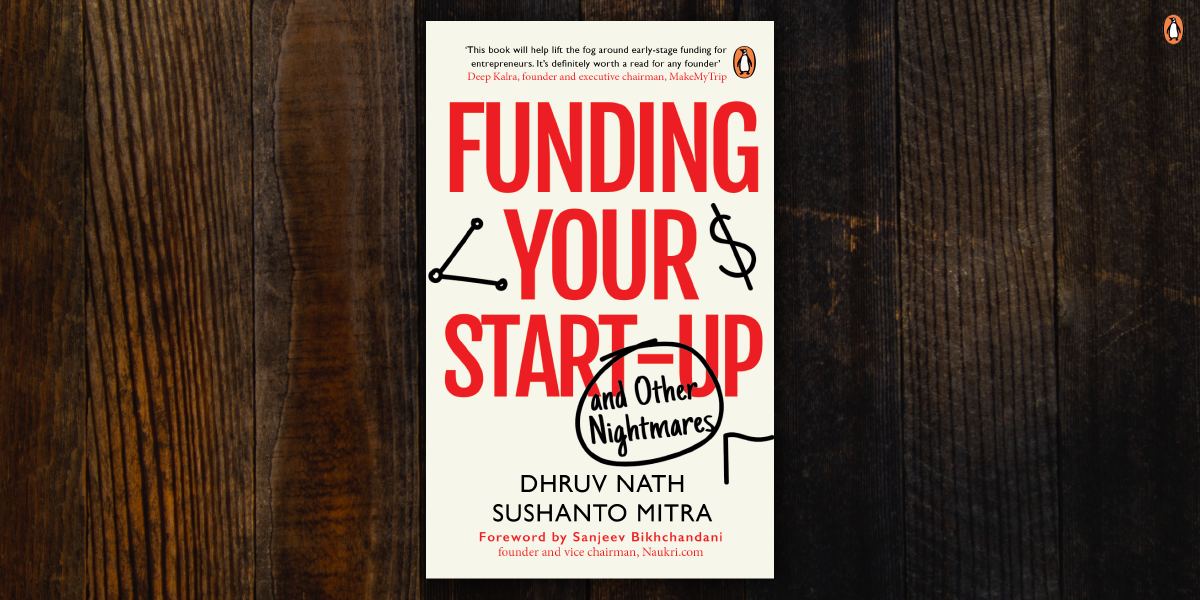
Oh there were hundreds. Between the two co-authors, we have met several hundred start-up founders, and they have all been looking for that elusive manna from heaven, namely funding. But we were surprised at how clueless most of them were about how to go about it. Many of them had no entry barrier – something that investors insist on. Most of them did not have scalable businesses, without which investors would simply pass. In fact many of them had no real business plan – they were simply executing.

We used to advise mentor these founders on all the above issues. And then it hit us. Why not write a book about it. And reach not hundreds, but thousands of start-up founders. And that’s where out book was born.


Co-authoring a book comes with its own asset of challenges but the authorial voice in this is so consistent. How did you manage that?

Right from the beginning, we realized that the style of writing had to be consistent right through. Both the authors provided content – and each one clearly had his own strengths. Both wrote drafts. There were the usual fist fights over some of the material – ending amicably over beer, of course. But the final version was penned by one of us – with both the authors concurring.


Is there a secret sauce for a successful start-up?

Yes there is, but its not secret. It’s a framework that the authors have developed after studying hundreds of start-ups – both successes and failures. And its called PERSISTENT. To explain, P stands for PROBLEM. In other words, are you solving a problem for your customer? E refers to EARNINGS MODEL, or simply, how will you make money? R is the RISKS associated with the business. S stands for SIZE OF THE MARKET. I refers to INNOVATION, which your product or solution must have. The second S implies SCALABILITY. After all, even if you are operating in a gigantic market, you will not get anywhere unless your business is scalable. T refers to the TEAM – starting with the founders of course. E stands for ENTRY BARRIER, or how the business will keep competitors at bay. N refers to NICHE – if you are in a large, crowded market, identify a non-crowded NICHE within it. And the final T stands for TRACTION. You many have everything else, but are you actually getting customers and rupees?

We have found that successful start-ups are PERSISTENT, whereas unsuccessful ones lose out on one or more of the PERSISTENT  parameters. And that’s what we have focused on in our book.

Funding Your Startup Front Cover
Funding Your Startup || Dhruv Nath, Sushanto Mitra
From an investor’s perspectives which sectors do you think would be the best to invest in right now?

We would like to divide sectors into three categories. Those which have been negatively impacted by Covid – such as hotels, restaurants, gyms, movie halls, taxi and bus services, travel, etc. These are a clear no-no for investors right now. After all, why would you invest in such uncertain times?

Then there are those sectors which have not been impacted, either negatively or positively – such as FMCG and agritech. These are evergreen sectors, and will remain so. In fact, Lead Angels has been investing actively in these sectors, even during the pandemic.

Finally, we have the star sectors – those that have been impacted positively by Covid. Sectors that have boomed because people were forced to stay at home and change their lifestyle. On-line gaming is one. After all, what do you do, if you have to sit at home 24×7? You play games, don’t you? Another area is On-line education, all the way from little kids to adults. In fact, several investments that Lead Angels has made in these sectors over the past couple of years, have just skyrocketed beyond our own expectations. And of course there is health. People are getting more and more concerned about health, and that is leading to a surge in businesses in health-tech. As well as businesses which are into organic or natural products. You see, eat healthy, be healthy, and invest healthy is the mantra now.


What kind of impact will the pandemic have on startups?

Apart from the sectoral shifts that we have spoken about earlier, there are two significant impacts. First of all, founders have begun to cut costs dramatically – simply to survive in a low-business environment. Salaries have been reduced, plush offices are being vacated and business are shifting to smaller, lower cost environments. Work from home is becoming a bit of a norm. We believe some of these trends will be permanent – such as the trend in increasing work from home.

The second major impact is that Covid has separated the men from the boys. Here we mean the founders of course. There are those who have simply thrown up their hands and are waiting for God – or the appropriate vaccine – to help. But there are those who are fighting. Those who have pivoted their business model, either temporarily or permanently, to stay afloat in this pandemic. Interestingly, this has given investors a great way to separate out the investible companies from the rest. Namely, look for founders who are fighters. Those who have figured out ways to survive. They are the winners of the future, and they deserve your money, dear investor.


Have you observed some startups that have become successful without funding?

Sure. Unfortunately, funding has become a kind of “In-thing”. You have to get funding because your peers have got it. How else will you hold a glass of beer at the next party and talk nonchalantly about Series A and Series B? Funds should be raised because you need them, and not because it is fashionable to do so. Two highly successful companies mentioned in the book – InfoEdge and IndiaMart – started off over twenty years ago and steadfastly refused to raise funding, except when it was really necessary. They are now both market leaders in their respective fields. Among the recent ones, we have an interesting company called Gadgetrestore, which is into the business of repairing and refurbishing mobile phones. They started just over a year ago, never raised funding, are profitable, and are growing. What more can you ask for? Remember, funding is to be taken when you need it, not when your friend has taken it!


Invaluable dissenters in troubled democracies

What is the value of freedom of speech and dissent in a democracy today, and how does it affect the very pillars of this system of governance? These are difficult questions, often leaving us with no answers. T.T. Ram Mohan navigates these tensions in his book:


We don’t like dissenting voices and we don’t like to express dissent. Authority, in particular, doesn’t like to be questioned or challenged. And people don’t like to challenge or question authority because they know there’s a price to be paid for doing so. We are exhorted by wise men and women to ‘stand up for what is right’ and ‘speak truth to fear’. We are careful not to heed these exhortations. Our survival instincts tell us otherwise. It’s far more rewarding to stay quiet, nod assent or, better still, practise unabashed sycophancy.


In recent years, we have heard a great deal in India about intolerance and the supposed muffling of dissent on the part of the present government. Governments everywhere do try to stifle or manage dissent in varying degrees and in different ways. But the situation is not very different in other spheres of life, such as the corporate world, the bureaucracy, non-government organizations or even academia.


This is truly a sad state of affairs. Dissent is invaluable. We need dissent, whether in government or in the other institutions of society, in order to ensure accountability of those in authority. Dissent is also vital for generating ideas and solving problems. It is only through the clash of ideas that the best solutions emerge. Herd mentality or ‘group think’, as it is now called, is the surest recipe for mediocrity and underperformance. Institutions must be designed to protect and foster dissent.


Since dissent is all too rare, it’s worth celebrating dissenters. In this book, I profile seven of them from different walks of life. The personalities I have chosen are not necessarily the most famous or the most effective dissenters. The American linguist and intellectual, Noam Chomsky, would have easily qualified. So would the economist and Nobel Laureate Joseph Stiglitz. But these are celebrities whose ideas are quite well known. I have chosen to write about individuals whose dissenting ideas may not be known to many. Ideally, I would have liked to meet the individuals in person or at least interview them over the Net. Alas, I had no luck, except with Kancha Ilaiah.


I have not attempted to be comprehensive in my treatment of these personalities and, indeed, lay no claim to being familiar with all of their works. They are all so prolific that whole books could be written about them. Rather, I have focused on some of their works or themes just to capture the flavor of their dissent.


In what ways are these dissenters questioning the mainstream view? What challenges have they mounted to the establishment? How have they managed to shape public perceptions on important issues? These are the questions I have attempted to answer. The impact the dissenters in this book have had is quite modest. Roy has been able to influence policy on large dams and the rehabilitation of displaced individuals. Stone has contributed to the anti-war sentiment in the US and to the conspiracy theories about the assassination of President Kennedy. Ilaiah has raised awareness of the inequities in the Hindu order but hasn’t had much luck in stopping the Hindutva juggernaut. U.G. Krishnamurti has got people thinking seriously about spirituality and the pursuit of enlightenment. Varoufakis languishes on the margins of European politics. Irving is a virtual pariah amongst historians and in the mainstream media. Pilger’s journalism thrives mostly on the Net.


The value of these dissenters is to be judged by positing the counterfactual: If it were not for the likes of them, how would the establishment have behaved? These individuals may not have been able to change the dominant narrative. But they have, at times, been able to apply the brakes on it. That is a valuable contribution.


With the possible exception of Irving, the dissenters in this book have been professionally and financially successful. This suggests that despite the hostility of the establishment, there is room in the market economy for dissent of high quality. Indeed, as I note later, it is the celebrity status of these dissenters that acts as a protective charm and keeps them from being trampled on. The moral in today’s world seems to be that if you want to express serious dissent, make sure that you are rich and famous enough to be able to afford it.


Rebels With a Cause does the difficult work of explaining the real value of dissent, and therefore, a democracy. Read it here.

Shahana Raza on translating her grandmother’s memoir

Saeeda Bano was the first woman in India to work as a radio newsreader, known then and still as the doyenne of Urdu broadcasting. Over her unconventional and courageous life, she walked out of a suffocating marriage, witnessed the violence of Partition, lost her son for a night in a refugee camp, ate toast with Nehru and fell in love with a married man who would, in the course of their twenty-five-year relationship, become the Mayor of Delhi. Though she was born into privilege in Bhopal-the only Indian state to be ruled by women for four successive generations-her determination, independence and frankness make this a remarkable memoir and a crucial disruption in India’s understanding of her own past.


Read below an interview with the translator of the book, Shahana Raza:


Q: The seed to translate this book was sown back in the day when your grandmother got her friend to read and record it on to audio cassettes for you. Could you shed some light on this incident/process?

My grandmother wrote the book in Urdu. When I told her, I can’t read or translate it as she has written it in a language I can understand well but can’t read, she asked her friend to narrate and record the entire book on to analog audio cassettes. I had no clue she was doing this! One fine day, 8 neatly marked cassettes were handed to me just as I was leaving for America. The tapes travelled with me – from India to the US and are finally here with me in Dubai. When I decided to translate Bibi’s book, (we all called Saeeda Bano, Bibi) I found Syeda Shan who read the entire book out as I transcribed it word for word. Not only was her Urdu fabulous she also had a huge lughat –Urdu dictionary. Then Urdu

litterateur, translator and writer Zakia Zaheer combed through the entire translation with me to ensure my writing had done justice to the original. My grandmother’s Urdu vocabulary was highly erudite.


Q: Translation requires a certain degree of transparency. How did you manage to indulge and also be detached, especially when this book must have rekindled old memories of your grandmother?

Initially I felt awkward, especially the chapters after her marriage when one realizes her experiences as a wife are not entirely joyful! At this point Bibi quotes Mirza Ghalib,

Phir waza e ahteyat se …. rukne laga hai dum….’

I am so consumed with the anxiety of being discreet, I feel suffocated

I realized this was my grandfather she was talking about! Though he passed away before I was born, everyone who knew him said he was a kind man and a loving father. So, that was not easy. But I strongly believe, people have several sides to their personality, we are not unidimensional creatures. I mean, for example, I may be a better daughter and mother, than a wife or a sister … we can’t judge a person from the perspective of one relationship.  I kept this focus while translating. I saw both her (and him) for who they were – a young couple unable to navigate the complex world of marriage, not from the point of view of my relationship with them. This helped me to flesh out the various shades of emotions Bibi has expressed so beautifully in her memoir.


Q: Is there any section from the book that you look back to in times of uncertainty/adversity?

Several actually, but the main one is the determination with which she leaves behind the life of comfort and familiarity she was used to in Lucknow and comes to Delhi in August 1947, to start working in a male dominated industry as the first woman news reader for AIR’s Urdu service. She chooses to live in a single woman’s hostel (in YWCA) instead of with family friends, experiences communal riots, endures financial hardships and despite tackling occasional bouts of self-doubt, never ever looks back or gives me. I admire the fact that she did what she did without making an apology of the truth, curtailing her innate spirit or bowing down to societal expectations. I am quite fascinated that she could sit and write whatever she faced in life, this candidly.


Q: Which people, other than your grandmother, inspired you while you were growing up?

Most definitely my mother Naushaba. She was quite something herself! Extremely gutsy, loving, fiery, bold, great sense of humour, she could zap boredom out of any experience and make it memorable – from a torturously bumpy rickshaw ride to a formal Parent-Teacher meet. I remember her telling my teachers that they should let me focus on my extra-curricular activities instead of pressurizing me to get better grades! Like all dynamic women she too had several sides to her personality. She is no more, but my aunts and my Mum’s close friends inspire me in many ways to keep focus but not miss the wood for the trees. These ladies have carved strong identities for themselves despite all odds, we have to accept them for the women they are, not just as mothers, aunts and grandmothers.


Get your copy here to get to know about the life and times of Saeeda Bano

Wonderful October releases for the young readers

Wondering how to spend one more month at home? Wonder no more! October is here and so is a brand-new list! Our new releases will keep you and your beloved young readers company and take you on a varied and delightful literary adventure. Tuck in with this list!

The Wild Wisdom Quiz Book Volume 3
By WWF

The Wild Wisdom Quiz Book Volume 3
The Wild Wisdom Quiz Book Volume 3 || WWF


Which colour cannot be seen by bees?
What are fossilized dinosaur droppings called?

Delve deeper into the world of animals, plants and more with this indispensable quiz book that helps you explore our planet’s natural beauty and myriad facets. Based on India’s only international-level quiz on wildlife, The Wild Wisdom Quiz Book Volume 3 is packed with exciting new chapters on biomimicry, evolution, conservation heroes and so much more.


Nava Durga – The Nine Forms of the Goddess
By Nalini Ramachandran
Illustrated by Priyanka Pachpande

Nava Durga by Nalini Ramachandran
Nava Durga || Nalini Ramachandran


Durga, is a powerful warrior-goddess with nine special forms!

Shailaputri, Brahmacharini and Chandraghanta,
Kushmanda and Skandamata,
Katyayani and Kaalratri,
Maha Gauri and Siddhidatri . . .

Each form is unique and together they are the Nava Durga. This is their story!


Ogd 
By Anushka Ravishankar

ogd by Anushka Ravishankar
OGD || Anushka Ravishankar


Once upon a time, in the kingdom of Ogd, a messiah was born, with her foot in her mouth. She travels through many dimensions, and teaches us about the nature of apocalypse, cartography, education, inter-dimensional travel, mathematics, monarchy, philosophy, physics, poetry and toenails. A seemingly nonsensical enquiry into things which addresses complex issues of the world.


A Box of Stories: A Collector’s Edition
By Ruskin Bond

A Box of Stories by Ruskin Bond
A Box of Stories || Ruskin Bond


Featuring some of Ruskin Bond’s finest stories, poetry and non-fiction pieces, this special collector’s edition brings together the best works of India’s best-loved author. Included in the collection are the two treasuries The Room of Many Colours and Uncles, Aunts and Elephants. With illustrations and a varied group of characters, this box set is a perfect collection for fans of the master storyteller.


The Puffin Mahabharata
By Namita Gokhale
Illustrated by Suddhasattwa Basu

The Puffin Mahabharata by Namita Gokhale
The Puffin Mahabharata || Namita Gokhale

‘A long, long time ago, in the ancient lands of India, known in those days as Bharatvarsha, a family quarrel grew into a bloody war… That mighty battle between warring cousins of the Kuru clan has become a part of the mythology and history of India. The story of the Mahabharata is about defeat as much as victory, about humility as much as courage. It is the greatest story ever told.’

This is a retelling of a timeless tale in a clear, contemporary style. It brings the epic to life through brilliant illustrations, and is a treat to be cherished.


The Grand Chapati Contest
By Asha Nehemiah
Illustrated by Chetan Sharma

The Grand Chapati Contest by Asha Nehemiah
The Grand Chapati Contest || Asha Nehemiah


When the Royal Chapati Cook quits, there is no one to make the fluffy-puffy chapatis that the king loves. Can they find another champion chapati maker at the Grand Chapati Contest?

In this Hook Book, join Hawaldar Hook as he takes our little friends (aged 5 and above) on a colourful journey!


Moodunnit
By C.G. Salamander
Illustrated by Aindri C.


Moodunnit by C.G. Salamander
Moodunnit || C.G. Salamander


Hawaldar Hook is back with another adventure!

The vegetables from Ammu’s parents’ cart have disappeared! Who could have stolen them? Amma and Appa are sure the thief comes in a helicopter. But Ammu, following a trail left by the thief, finds some very strange clues  …

Come join us as we try to find out where these vegetables are going!

From the pen of a President – ten transformative books by Dr A.P.J. Abdul Kalam

If there is truly an uncontested, unparalleled hero, transcending generations and opinions in these divisive times, it is indeed Dr. A.P.J Abdul Kalam-Missile man, former President of India, scientist, teacher, author-poet, and above all a human of uncompromising integrity and humility.

To celebrate his birth anniversary on the 15th of October we bring to you some of his greatest works, filled with his guidance, wisdom and vision that continue to inspire children and adults alike to grow, think and evolve to fulfill his dream of a better India.


India 2020: A Vision for the New Millennium

Dr A.P.J. Abdul Kalam, Dr. Y.S. Rajan

India 2020 || A.P.J. Abdul Kalam, Y.S. Rajan

The original, iconic visionary blueprint that set the imagination of the nation afire was published in Dr A.P.J. Abdul Kalam and Y.S. Rajan offer a blueprint for India to be counted among the world’s top five economic powers by the year 2020, sketching a strong sense of purpose that can yet be ignited to make us a prosperous, strong nation in a matter of years.


Beyond 2020: A Vision for Tomorrow’s India

Dr A.P.J. Abdul Kalam, Dr. Y.S. Rajan

Beyond 2020 || A.P.J. Abdul Kalam, Y.S. Rajan

A successor to India 2020, Beyond 2020 takes stock of how much we have achieved and what lies ahead. Amidst a year marked by global crisis, this book is more relevant than ever, offering a renewed policy focus on agriculture, manufacturing, education, health care and infrastructure— vital areas that we need to build on as we look beyond 2020. A blueprint for our future development, Beyond 2020 is a book every Indian must-read.


Target 3 Billion

Dr A.P.J. Abdul Kalam, Srijan Pal Singh

Target 3 Billion || A.P.J. Abdul Kalam, Srijan Pal Singh

Another extraordinarily relevant and impactful book for India. With 750 million people residing in villages, India is home to the largest rural population in the world. Dr Kalam recommends a sustainable and inclusive development system called PURA—Providing Urban Amenities in Rural Areas—to uplift rural areas through entrepreneurship with community participation, and shows us how individuals armed with only entrepreneurial spirit and a burning desire to make a difference, have successfully generated and tapped into the potential of the rural population!


The Scientific Indian

Dr A.P.J Abdul Kalam, Dr. Y.S. Rajan


The Scientific Indian || A.P.J. Abdul Kalam, Y.S. Rajan

Nuclear capability; self-sufficiency in food production; an array of indigenous satellites and missiles; an unmanned Moon mission—India’s achievements in the scientific domain in recent years have been spectacular. The country’s best-known scientist Dr. Kalam and his close associate Y.S. Rajan; celebrate these, while sketching out a lucid, scientific explanation of the innovations that will propel us to success on the world stage!


Ignited Minds

Dr A.P.J. Abdul Kalam

Ignited Minds || A.P.J. Abdul Kalam

In this wonderful, inspirational book Dr Kalam spoke straight to the hearts of the youth—offering an extraordinary, irresistible premise: that people do have the power, through s hard work, to realize their dream of a truly good life. This vision document of aspiration and hope continues to motivate us to unleash the dormant energy within India and guide the country to greatness.


The Life Tree: Poems

Dr A.P.J. Abdul Kalam

The Life Tree || A.P.J. Abdul Kalam

In this moving collection of poems, Dr. Kalam takes us into his world, full of simplicity and beauty, understanding and compassion.  Each word thrills with his love for the country, transcending caste, religion and language, his love for nature and gentle observation of human relationships. The Life Tree is an intimate introduction to Kalam the man, his life and his inspirational thoughts.


My India: Notes for the Future

Dr A.P.J Abdul Kalam

My India || A.P.J. Abdul Kalam

A project very close to his heart, in Dr Kalam’s last book for children he sketches a road map for every child to pursue their dreams. He draws on the lives of stalwarts such as Marie Curie, Dr Vikram Sarabhai to encourage and inspire his young readers to think and evolve through valuable lessons in humility, resilience, and determination.


Reignited

Dr A.P.J. Abdul Kalam, Srijan Pal Singh

Reignited || A.P.J. Abdul Kalam, Sirjan Pal Singh

Will robots take over the world? When will we meet aliens? How are memories stored inside the brain?

Dr A.P.J. Kalam is really in his element here, as a teacher and scientist inspiring young minds to take up the careers that will shape our future! Co-written with Srijan Pal Singh, this book features exciting and cutting-edge career paths in areas such as robotics, aeronautics, neurosciences, pathology, paleontology and material sciences, and  offers a plethora of ground-breaking ideas that will make youngsters think out of the box.


Mission India: A Vision For Indian Youth

Dr A.P.J. Abdul Kalam, Dr. Y.S. Rajan

Mission India || A.P.J. Abdul Kalam

Mission India challenges the Indian youth to bring about multifaceted positive changes in the country, amidst a time where the youth truly are both the present and the future with 540 million youth and 20 million Indians across the globe. With insights into industry, infrastructure and education, Dr Kalam and Y.S. Rajan fire the spirit of every individual and organization to work upon the goal of transforming the nation.


What Can I Give? Learnings from My Teacher, Dr Kalam

Srijan Pal Singh

What Can I Give? || Srijan Pal Singh

Dr Kalam is often remembered as a teacher par excellence, whose words, thoughts and very life were lessons in many ways. In this heart-warming memoir by his lifelong student, Srijan Pal Singh recollects his mentor’s values, oaths and the lessons Dr Kalam taught beyond the classroom. What Can I Give? inspires and enlightens through the words and actions of the greatest Indian of contemporary times.

Are you breathing correctly?

There is nothing more essential to our health and well-being than breathing. Yet, as a species, humans have lost the ability to breathe correctly, with grave consequences.

Journalist James Nestor travels the world to track down men and women exploring the hidden science behind ancient breathing practices like Pranayama, Sudarshan Kriya, and Tummo, and covers modern research that shows that that making even slight adjustments to the way we inhale and exhale can jump-start athletic performance, rejuvenate internal organs, even halt auto-immune disease.

Drawing on thousands of years of medical texts and recent cutting-edge studies in pulmonology, psychology, biochemistry, and human physiology, Breath is here to transform how we perform our most basic biological function,

Read on for an excerpt from this extraordinary book:


Breath || James Nestor

The freedivers told me they’d previously been “most people.” Their transformation was a matter of training; they’d coaxed their lungs to work harder, to tap the pulmonary capabilities that the rest of us ignore. They insisted they weren’t special. Anyone in reasonable health willing to put in the hours could dive to 100, 200, even 300 feet. It didn’t matter how old you were, how much you weighed, or what your genetic makeup was. To freedive, they said, all anyone had to do was master the art of breathing. To them breathing wasn’t an unconscious act; it wasn’t something they just did. It was a force, a medicine, and a mechanism through which they could gain an almost superhuman power. “There are as many ways to breathe as there are foods to eat,” said one female instructor who had held her breath for more than eight minutes and once dived below 300 feet. “And each way we breathe will affect our bodies in different ways.” Another diver told me that some methods of breathing will nourish our brains, while others will kill neurons; some will make us healthy, while others will hasten our death. They told crazy stories, about how they’d breathed in ways that expanded the size of their lungs by 30 percent or more. They told me about an Indian doctor who lost several pounds by simply changing the way he inhaled, and about another man who was injected with the bacterial endotoxin E. coli, then breathed in a rhythmic pattern to stimulate his immune system and destroy the toxins within minutes. They told me about women who put their cancers into remission and monks who could melt circles in the snow around their bare bodies over a period of several hours. It all sounded nuts. During my off- hours from doing underwater research, usually late at night, I read through reams of literature on the subject. Surely someone had studied the effects of this conscious breathing on landlubbers? Surely someone had corroborated the freedivers’ fantastic stories of using breathing for weight loss, health, and longevity? I found a library’s worth of material. The problem was, the sources were hundreds, sometimes thousands, of years old. Seven books of the Chinese Tao dating back to around 400 bce focused entirely on breathing, how it could kill us or heal us, depending on how we used it. These manuscripts included detailed instructions on how to regulate the breath, slow it, hold it, and swallow it. Even earlier, Hindus considered breath and spirit the same thing, and described elaborate practices that were meant to balance breathing and preserve both physical and mental health. Then there were the Buddhists, who used breathing not only to lengthen their lives but to reach higher planes of consciousness. Breathing, for all these people, for all these cultures, was powerful medicine.

**

Inhale.

Exhale.

error: Content is protected !!